Tag: Gaza

  • Can Trump turn Gaza into the ‘Riviera of the Middle East?’

    There are plenty of legitimate questions to be asked about the Trump-Blair peace plan for ending the conflict with Israel. Will Hamas ever agree to it? Will any peace deal hold? Will the wider Middle East get behind it? But there is also another question that we must ask. If this peace does hold, can Trump and Tony Blair turn Gaza into a cross between Dubai and Singapore – or is that completely deluded?

    All the immediate attention will, of course, be on whether this new deal actually ends the fighting. We will find out over the next few weeks. But assuming it does, the President and the former British prime minister have ambitious plans for the strip of land that has been fought over so fiercely.

    There will reportedly be a “Trump economic development plan to rebuild and energize Gaza” crafted by a “panel of experts who have helped birth some of the thriving modern miracle cities in the Middle East.” It will be a “special economic zone… with preferred tariff and access rates to be negotiated with participating countries.”

    It is not hard to work out what President Trump has in mind. Back in February, he declared he wanted to transform Gaza into the “Riviera of the Middle East” and put out an AI video of a new Gaza complete with a Trump tower, golf courses, luxury hotels, and gleaming, air-conditioned offices and apartment complexes. Meanwhile, earlier this year there were reports that staff from the Tony Blair Institute had worked on plans for a “Trump Riviera” in the region.

    It is not hard to work out what President Trump has in mind

    Could that possibly work? On the surface, of course, it sounds completely crackers. It is hard to imagine that anyone is going to want to play a leisurely round of golf over land best known for its tunnels, hostages and booby traps. Or indeed that the Palestinians want their country to be turned into a strip of casinos and condos, or a tax haven for jet-hopping expats. And, in fairness, it certainly faces plenty of obstacles. 

    And yet, this plan not entirely crazy. After all, the booming statelets of the Gulf have clearly shown that entirely new financial and business centers can be built out of a desert in a remarkably short space of time. From 2000 to 2022, the GDP of the United Arab Emirates, which includes Dubai and Qatar, grew from $157 billion to $550 billion. Work has already started on the Ras El Hekma Project, a $35 billion joint venture between Egypt and the UAE to build a new city on its Mediterranean coast, while Saudi Arabia is building new cities and business centers as well. 

    With its prime Mediterranean location and closer flying times to Europe, Gaza might well be able to do at least as well. Of course, it will take complete peace and security to have a chance of success, plenty of American and Israeli money, and tariff-free access to the US market. But low tax, entrepreneurial statelets are one of the boom industries of the 21st century. There is no necessary reason why the Trump-Blair vision of Gaza should not join them – as far-fetched as it might sound right now.

  • Trump pitches Gaza peace plan

    Trump pitches Gaza peace plan

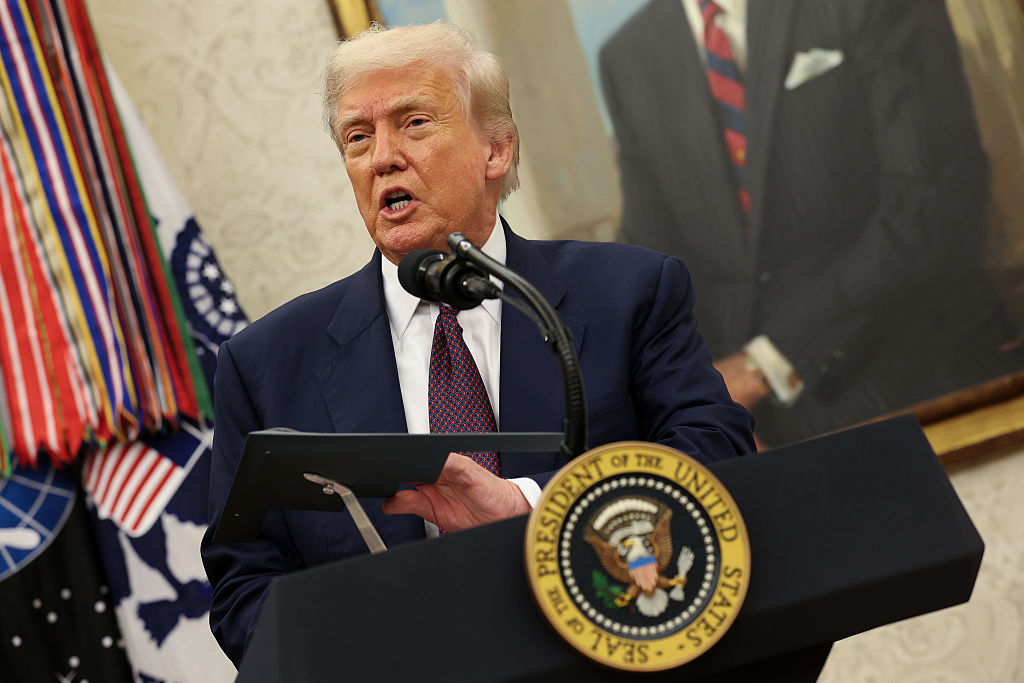
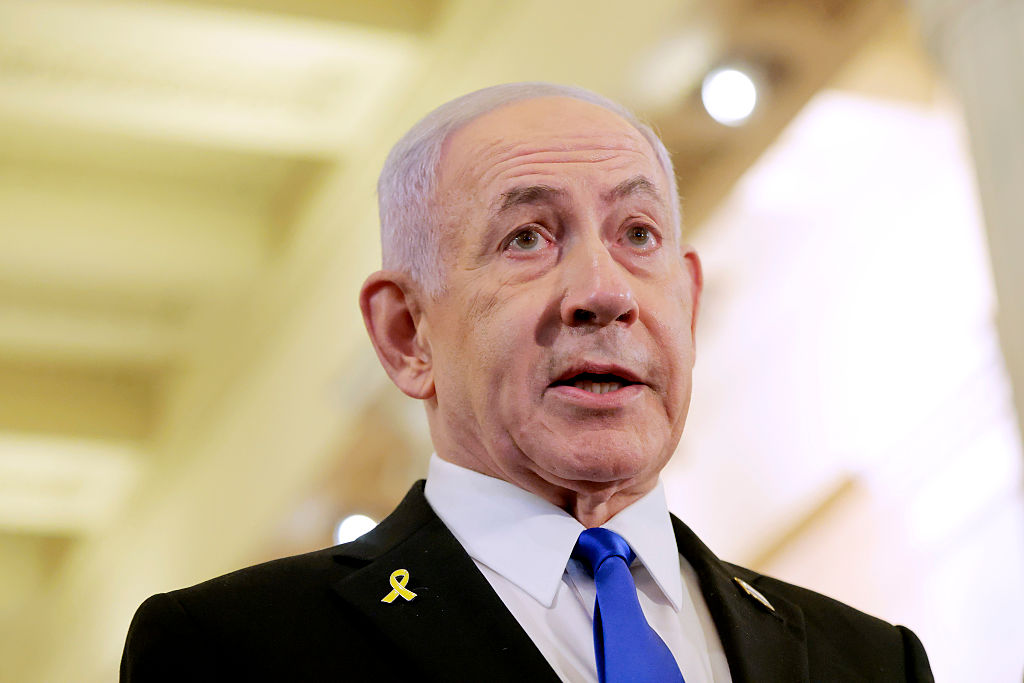
    Donald Trump is perhaps one of the world’s most gifted salesman. But as he was speaking at the White House with Israeli Prime Minister Benjamin Netanyahu today, even he had trouble selling his 20-point peace plan to end the war in Gaza.

    This wasn’t for a lack of trying. “Today is an historic day for peace,” Trump told the assembled press corps. Calling today “a beautiful day, potentially one of the great days ever in civilization,” Trump went on to outline in broad strokes his diplomatic initiative, which aimed to thread the needle between Netanyahu’s vocal objections to a Palestinian state and the Arab world’s demand that any plan put forth provide the Palestinians in Gaza and the West Bank with an opportunity to take control of their own future. Trump earned Netanyahu’s support and received buy-in from the Arab states, but the positions of those two actors will eventually clash. And that even assumes Hamas, which wasn’t given a copy of the White House’s draft agreement and is now only digesting the material, agrees to play along.

    There is some good in Trump’s 20-point plan. For instance, it stresses that the Israeli Defense Forces (IDF) will pull out of Gaza in a staged fashion as Palestinian police officers and their international supporters, presumably led by the Arab states, stabilize the enclave. Hamas will demilitarize and hand over its weapons, and those who renounce violence will be allowed to leave Gaza for a third-country. The hostages still in Hamas’s grasp will be released 72 hours after the accord comes into force, and humanitarian supplies will surge into the territory. Gaza, meanwhile, won’t be annexed by Israel; instead, it will be ruled by a consortium of Palestinian technocrats and international figures, where they will preside over a reconstruction and rehabilitation process until a reformed Palestinian Authority is up to the task.

    But even if Hamas agrees to such a scheme – and given the plan’s call for what is in effect Hamas’s complete and total surrender, it’s hard to picture the militant group doing so – the implementation problems will be gargantuan. The plan is loose on timelines and execution mechanisms. Although the so-called International Stabilization Force will cooperate with vetted Palestinian police officers to dismantle the tunnels and terrorist infrastructure that still exist in the enclave, the criteria for what is considered adequate demilitarization – and which party determines whether demilitarization has succeeded or failed – is a big red flag. If Netanyahu holds veto power over this decision, then the phased troop withdrawals the Israeli military signed onto will be delayed for as long as possible. We can say this with a reasonable degree of certainty because Netanyahu was very reticent to pull the Israeli military back during the January truce. The reticence has thinned out with age.

    Trump doesn’t want Israel to annex Gaza, and he made that position clear in his plan. Commentators will refer to this item as a big deal. In reality it’s the definition of low-hanging fruit. First, rejecting Israeli annexation is simply a reiteration of decades of bipartisan U.S. foreign policy on the Israeli-Palestinian issue. Second, Trump has a personal interest in kicking the annexation can down the road because whatever hopes he may have of expanding the 2020 Abraham Accords will be extinguished the moment Israel goes down that path. He can kiss an Israeli-Saudi normalization agreement goodbye in such a scenario, and you can bet that somebody in the president’s orbit – perhaps his son-in-law Jared Kushner – brought this to Trump’s attention.

    Netanyahu, however, isn’t following Trump’s schedule. As important as retaining Trump’s support is, it’s not the be-all, end-all in the Israeli premier’s calculations. The people who hold this honor continue to be the hardliners, nationalists and extremists in the Israeli cabinet, including Itamar Ben-Gvir, Bezalel Smotrich and Israel Katz, who could destroy Netanyahu’s career by imploding his government. The first two men continue to harbor the dream of kicking out all of Gaza’s more than two million Palestinians, formally annexing it into the State of Israel and rebuilding – and expanding – the very Jewish settlements that were torn down back in 2005. Yes, Netanyahu accepted Trump’s plan and everything in it, but he’s a canny political operator and knows how to throw wrenches into a diplomatic process. It’s likely Netanyahu will play a similar game, as he’s done repeatedly when other Gaza peace negotiations were nearing the finish line.

    The biggest error in Trump’s scheme, however, was something that wasn’t even written into the plan. In essence, Netanyahu was gifted an escape clause. Trump stressed that Israel would have Washington’s full support for continuing the war if Hamas rejected the agreement.

    Many won’t find this comment objectionable. Yet for a guy who is supposedly a master negotiator and understands the power of leverage, Trump effectively killed whatever leverage he held over Netanyahu by giving the Israeli premier an incentive to do anything in his power to push Hamas into saying “no.” Even if Hamas accepts the deal with reservations, Netanyahu can now claim to Trump that the terrorist group is an intransigent party that can’t be reasoned with. The only alternative, the logic goes, is a resumption of the war.

    Sharing a stage with Trump in Washington, DC, Netanyahu laid it on thick and claimed that peace was just around the corner. But mark these words: once he lands back in Israel, Netanyahu will tell his coalition allies that the deal he agreed to is merely a general framework whose details are still to be negotiated. Trump will then have a decision to make: tether the United States even closer to Israel’s war in Gaza, try diplomacy again or wash his hands of the conflict.

  • Why does Trump want Tony Blair to run Gaza?

    Why does Trump want Tony Blair to run Gaza?

    The former British prime minister Tony Blair is a man for all seasons, a political operator who knows precisely on which side his bread is buttered, the side of the super-rich oil and gas sheikhs and the well-connected elites of the Middle East. It is no coincidence, then, that his name has emerged as a potential candidate for a role envisioned by President Donald Trump’s administration: effectively serving as governor of Gaza if, and when, the ongoing war there comes to an end.

    Driving his candidacy is Jared Kushner, Trump’s son-in-law, who continues to accumulate vast wealth from investments backed by Saudi, Qatari and Emirati funds. Kushner is once again returning to mediation in the Israeli-Palestinian-Arab arena, though unlike during Trump’s first term – when he acted as an official advisor and diplomatic envoy – he now operates largely behind the scenes, wielding influence in a more informal but potent capacity.

    Alongside them, Steve Witkoff serves officially as the Trump administration’s envoy to the Middle East and other global conflicts, including the Ukraine-Russia confrontation. Collectively, this group – Trump, his sons, Kushner, Witkoff and Blair – shares a common thread in their extensive, interwoven networks. They operate in the twilight zone between the formal and the hidden, between the visible and the opaque. Their potential conflicts of interest are glaring.

    Their agenda is ambitious: to end the war in Gaza and establish a regional framework linking Israel with the Arab states, supported by Qatar, the Emirates and Saudi Arabia. Simultaneously, their companies, foundations and investment funds continue to receive vast sums from these very same states.

    In Israel, there is notable support for appointing Blair to head the transitional administration that would govern Gaza’s more than two million residents, 70 percent of whom have lost their homes in Israeli bombings and are displaced, cramped into tented camps. This administration is intended to replace the Hamas government.

    Should Trump succeed in compelling Israeli Prime Minister Benjamin Netanyahu to accept his 25-point plan for ending the Gaza conflict, and Blair – keen for the post – is appointed, the role will undoubtedly extend over many years, until the Gaza Strip is stabilized and rendered liveable.

    “Tony is a worthy candidate,” Danny Ayalon, former Israeli ambassador to Washington and deputy foreign minister, told me. “He knows the Middle East intimately from his time as prime minister and from the other roles he has held since. He is acceptable both to Netanyahu and Trump and to leaders across the Arab world.”

    Even more enthusiastic about the idea of Tony Blair heading a kind of international management and oversight body is Ehud Barak, Israel’s former prime minister and defense minister. “I know him well and remained in contact with him even after our official roles ended. Although I haven’t met with him in the past year,” he told me. “This is a good idea that will allow Arab states, including Egypt, to create a kind of buffer between themselves and Israel. If a year ago Trump’s plan was to save Gaza and its people, now, after the destruction, Trump’s plan is in effect an attempt to save Israel from the quagmire – without the Arabs being criticized at home for essentially coming to Israel’s aid.”

    Barak added: “Tony maintains informal ties with the key players in the Middle East, and he knows how to use them as political and economic levers to promote stability and arrangements.”

    Yet not all in Israel welcome his potential appointment. Far-right circles remember his long-standing support for a two-state solution and fear that Blair will implement Trump’s plan, which envisions the Palestinian Authority – led by Abu Mazen, whom they view as a thorn in their side – as part of Gaza’s transitional administration. Meanwhile, extremist Jewish settlers continue to push for the destruction of the Palestinian Authority, annexation of the West Bank, the expansion of settlements and the displacement of its three million Palestinian residents to Jordan.

    The Palestinian perspective is decidedly cooler still. Many see Blair as a staunch friend of Israel. “Tony is clearly pro-Israel,” a senior Palestinian Authority official told me, “but we have few alternatives. If Trump succeeds in ending the war and channeling Arab funds into the rehabilitation of the Palestinian people, Blair is certainly a reasonable default choice.”

    The central question remains whether Blair is suited to this nearly impossible task. It should not be forgotten that he faced a similar task in the past – and did not succeed.

    Upon leaving Downing Street in 2007, Blair accepted the position of special representative for the Middle East on behalf of the Quartet (US, EU, Russia, UN), a post he held until 2015. His mandate focused primarily on Palestinian economic development and institution-building rather than political negotiations, and his tenure sparked debate over its effectiveness.

    Through the Tony Blair Institute (TBI), Blair has advised Palestinian institutions and Arab governments on governance, public administration and economic reform. TBI’s involvement in Palestinian projects, and its commercial links, have been a recurring source of controversy. Blair consistently emphasized the importance of building Palestinian institutions and economies as prerequisites for progress, at times prioritizing these over a visible push for immediate political settlements.

    In 2010, the Daily Mail published an investigative report connecting Blair to Wataniya, a Palestinian mobile telecommunications company launched in 2009 as a joint venture between the Palestine Investment Fund and Wataniya International (a subsidiary of Qatar Telecom, with JP Morgan involvement). The report suggested that Abu Mazen and his sons benefited financially from the company, and alleged that Blair had used his official position to serve the interests of one of his employers.

    At the time, Blair’s spokesman said: “Tony Blair raised Wataniya at the request of the Palestinian Authority in his role as Quartet Representative. He has no knowledge of any connection between QTel [Qatar Telecom] and JP Morgan and has never discussed the issue with JP Morgan nor have they ever raised it with him. Any suggestion that he raised it for any reason other than the one stated to help the Palestinians or that in some way he has benefited from Wataniya is untrue and defamatory.”

    The longevity of Blair’s mission stands as a stark indicator of the stagnation and bankruptcy of what is commonly referred to as the “peace process”.

    Yet for Blair to assume another complex, long-term role, he must clear the ultimate hurdle. Trump, his son-in-law and Witkoff must bend Netanyahu’s will, as the Israeli prime minister fears that any agreement ending the war could also mark the end of his own time in office.

  • Queers for Palestine burst Pride

    Queers for Palestine burst Pride

    The annual Ottawa Pride rally was cancelled on Sunday after the group, Queers for Palestine, blocked the parade, owing to the refusal of the organizers, Capital Pride, to agree to the demands of “pro-Palestine” activists. Among the demands was for Capital Pride to back a complete boycott of Israel, and for Ottawa Mayor Mark Sutcliffe to apologize for not attending last year’s parade, which was described by Jewish groups as more a ‘protest against Israel’ than a rally for LGBT rights.

    Regardless of one’s position on the conflict, for supposed human rights activists in a North American capital city to successfully hold the rights of the local gay community hostage to developments in the Middle East, is illustrative of the state of activism in the West and the succumbing of local authorities to “pro-Palestine” thuggery. Not only is there nothing “pro-Palestine” about insulting queer Palestinians by glorifying their jihadist persecutors Hamas, whom Gazans have been protesting against for years, but it takes a colossal lack of introspection to demand that an LGBT rights movement call for the boycott of a state that does a much better job of safeguarding those very rights than anyone in that far-away region of focus.

    Perhaps what busts the gauge on the hypocrisy-meter is the silence of groups such as Queers for Palestine on the single largest threat facing LGBT rights in the world today.
    One is unlikely to find, for instance, anywhere on the Instagram page of Queers for Palestine-Ottawa that Islam is the sole religion and organized ideology in the world today that still codifies death for homosexuality, with over 10 Muslim-majority countries upholding the capital punishment, and numerous others mandating caning or harsh prison sentences for the “crime” of being queer.

    When certain Jewish groups found last year’s Capital Pride statement on Israel to be “antisemitic”, they chose to boycott the rally, a right Queers for Palestine could have exercised this year. There are numerous pro-Palestine demonstrations taking place across the West, including in Ottawa, where these activists can register their protests against Israel, without harming the rights of those very people they are using to propel themselves into recognition.

    The histrionics of the current pro-Palestine groups in the West are even alienating those who have for long stood for Palestinian rights, with many LGBT activists in Ottawa accusing Queers for Palestine of “hijacking” the movement.

    Queers for Palestine of Ottawa should ask themselves why there is no Queers for Palestine in any of the Arab states? Why do Gulf monarchies not allow any public pro-Palestine or anti-Israel rallies, at all? Why isn’t Queers for Palestine protesting against the Arab states, including Israel’s neighboring states of Jordan, Egypt, and Syria that have aligned themselves with Israel’s security policies and want to have nothing to do with the Palestinians?

    In fact, one is freer to demonstrate for Palestinians, including queer Palestinians, in Israel more so than Arab states, as evidenced by the ongoing protests in Tel Aviv.

    Surely Queers for Palestine should have a word or two to say about Saudi Arabia? Saudi has not only hanged and lashed members of the LGBT community, but has more Muslim blood on its hand than any non-Muslim state, having long used Palestinian lives to propel Salafi jihad around the world.

    There should also be some self-reflection over evident Muslim hostility towards the queer community in the West, whether it’s the US’s first Muslim-led city council banning pride emblems in Hamtramck or Muslim parents rallying for LGBT erasure in British school curricula, or Muslim kids being asked to stomp on pride flags in Canada.

    But, of course, instead of protesting against these unsavory views, policies, regimes and groups, Queers for Palestine are misusing the freedoms of the West to champion the Islamists who hold them. Israel fits a one-point agenda for these activists who seek to paint Jews as the perpetual aggressors and Muslims as the perennial victims. Unfortunately, they have fallen too far deep in narcissistic echo chambers to realize that their anti-Israel, and often anti-Jewish, hysteria, is doing absolutely nothing to help the real queers of Palestine who are being persecuted and killed by Hamas.


  • Netanyahu is getting desperate

    Netanyahu is getting desperate

    As the IDF announced the imminent mobilization of some 80,000 reservists in preparation for the decisive battle to seize Gaza City, the prospect of a negotiated deal with Hamas – one that could secure the release of the 20 hostages believed to still be alive, along with the remains of 30 others presumed dead – appears to be slipping further out of reach.

    Prime Minister Benjamin Netanyahu, according to political and diplomatic sources within the far-right coalition that has dominated Israel’s government for nearly three years, is “resolute in pursuing the war, even at the grave cost such a course is expected to exact.” For him, the campaign has become not merely a matter of policy but of survival.

    Yet even within the military’s top brass, doubts run deep. The mobilization order was issued by Chief of Staff Lieutenant General Eyal Zamir, despite his opposition to the plan. In a tense cabinet meeting, Zamir warned that entering Gaza City – a densely populated urban labyrinth that is home to nearly 1 million Palestinians, half the Strip’s inhabitants – would be nothing less than a “death trap.” His estimate was that at least 100 soldiers were likely to be killed (adding to the 1,000 who have already been killed since October 7, 2023) and that some, if not all, of the hostages would perish as well, either in IDF bombardments or at the hands of Hamas in revenge.

    Netanyahu, his government, and even the chief of staff are all wagering on one crucial assumption: that most Israelis – including former top IDF and security chiefs who oppose Netanyahu and his rule – will stop short of calling for outright refusal to serve. This stands in stark contrast to the United States during the Vietnam War, or even Israel itself during the First Lebanon War, which dragged on from 1982 until 2000.

    And yet the hypocrisy is glaring. The ultra-Orthodox public – whose parties form an indispensable pillar of Netanyahu’s coalition – continues, under rabbinical edict, to refuse sending their sons into uniform, let alone into the line of fire.

    Where refusal does exist, it is expressed in quieter, grayer forms. Tens of thousands of reservists have simply failed to report for duty, cloaking their absence in explanations that are, in reality, acts of passive resistance: that they have already served 200 to 300 days, that their families are suffering, their businesses collapsing, their lives falling apart. Add to this some 15,000 wounded and traumatized veterans, and the picture becomes even starker. The army is also grappling with a sharp rise in suicides among soldiers.

    The IDF, fully aware of the phenomenon, prefers to turn a blind eye rather than confront it head-on, tacitly accepting these “explanations.” What makes this tolerance possible is money. The government has been compensating reservists generously, sometimes lavishly, to the point where service becomes not only bearable but, for some, financially profitable. The line between patriotic duty and mercenary work grows disturbingly thin.

    Meanwhile, the families of the hostages – and the public that stands with them against Netanyahu – are sinking into despair. On Sunday, nearly a million and a half Israelis once again poured into the streets, paralysing wide swaths of the country, even as the trade unions, tightly controlled by Likud, refused to lend their support. But exhaustion is palpable; the Israeli public is weary.

    Among the anguished voices, Einav Zangauker – whose son Matan is among the captives – delivered perhaps the most searing indictment yet. “If my son and the hostages die, their blood will be on your hands,” she declared to Netanyahu, “and I will haunt you for the rest of your life.” But if her words stung, Netanyahu showed no sign of it. Once again, he displayed an almost clinical indifference to the hostages’ fate, choosing instead to double down on the belief that this time, unlike so many times before, his military gamble will succeed and Hamas will be crushed and expelled from Gaza. His record of broken promises makes such confidence ring hollow, yet he remains undeterred.

    The Gaza war is part of a larger design

    Political analysts across the spectrum – including some who have long been sympathetic to him – increasingly agree: Netanyahu’s overriding motive is not national defense but political survival. For him, the war itself has become a kind of insurance policy, a means of diverting public attention from the crises metastasizing at home: economic strain, deepening social fractures, and Israel’s accelerating international isolation.

    The war will likely grind on for as long as it serves Netanyahu’s political interests – and for as long as Donald Trump continues to give him a free hand. This, despite Trump’s repeated lips service and rhetorical nods to the humanitarian disaster unfolding in Gaza, and despite the fact that his own special envoy, Steve Witkoff, was the one who crafted the framework for a deal: the release of ten hostages and 18 bodies in exchange for hundreds of Palestinian prisoners and a two-month ceasefire.

    But what is happening in Gaza cannot be understood in isolation. It must be seen in the broader context of Netanyahu’s far-right coalition, without whose support he has no government. Ministers in that camp now speak openly of their intention to expel Gaza’s 2 million Palestinians and to plant Jewish settlements in their place – a replay of the West Bank project Israel has pursued since 1967. There, settler violence and terror against Palestinians are on the rise, with the Israeli military largely turning a blind eye.

    The Gaza war, then, is not merely a military campaign; it is part of a larger design. It is inseparable from Netanyahu’s wider effort to engineer a religious-nationalist regime change – a slow-motion coup aimed at dismantling Israel’s liberal-democratic order.

    What began as a justified response to a brutal terrorist attack has become, above all, one man’s desperate crusade for power.

  • What is the aim of Israel’s Gaza City operation?

    What is the aim of Israel’s Gaza City operation?

    Israel’s security cabinet on Thursday approved the Israeli Defense Forces’ plans for a major operation into Gaza City. The cabinet decision comes after the mobilization of 60,000 IDF reservists over the past week. Israeli forces are already operating on the outskirts of the city. Should the operation commence, it appears set to bring five Israeli divisions into areas of Gaza as yet untouched in the course of nearly two years of war.

    At a certain point a decision must be made. Hamas must be either conceded to or destroyed

    Prime Minister Benjamin Netanyahu has described Gaza City as containing Hamas’s “last strongholds.” In a statement made before Thursday’s cabinet meeting, Netanyahu described the war as at its “decisive stage.” He also, however, appeared to hint that he has not abandoned the path of a negotiated settlement to the war, noting that he has ordered a new round of negotiations for the release of all remaining hostages and an end to the war “on terms favorable to Israel.”

    The opposition in Israel, along with representatives of hostages’ families are determinedly opposed to the Gaza City operation. They demand that Israel should agree to the latest proposal put forth by Qatari and Egyptian mediators, according to which Israel should accept a 60-day ceasefire in return for the release of ten hostages.

    More fundamentally, the opposition want an end to the war, in return for the release of all hostages, even if this means that Hamas survives as an organized political and military force in Gaza when the guns cease. Their contention is that Hamas is anyway massively damaged, and that failure to bring home the hostages will cause irreconcilable damage to Israel’s social cohesion and the contract between state and society.

    The internal strains currently apparent in Israel indicate that the contradictions that have been apparent from the outset in Israel’s war aims are now becoming increasingly irreconcilable. This in itself is testimony to the demonic cunning that has lain at the heart of Hamas’s strategy for the conduct of the war since its outset. It remains to be seen if this strategy will yet lead to the group’s survival of, and hence victory in, the struggle now under way.

    Israel’s stated twin aims in the war in Gaza are the bringing home of the Israeli hostages and the destruction of the Hamas authority which has ruled in the Strip since 2007. There is a fundamental contradiction at the heart of these two aims. It is not possible to negotiate with an entity and at the same time determinedly seek its wholesale destruction. Ultimately, logic and reality dictate that you will have to favor one aim over the other.

    The opposition in Israel and the main organizations representing the hostages’ families have a clear eyed solution to this dilemma: namely, prioritizing the former goal and effectively abandoning the latter. A smaller but no less notable population on the hard right of the Israeli political spectrum favor the opposite route – prioritizing the conquest of the entirety of Gaza, to obliterate the organized Hamas presence there, to the detriment of other considerations.

    For nearly two years, the government of Prime Minister Benjamin Netanyahu has tried to juggle these two aims, applying military pressure on Hamas while at the same time negotiating for the release of hostages. Netanyahu has achieved considerable success with this fudge. Hamas has suffered massive damage. A large number of hostages have come home (in return also for the release of large numbers of convicted Palestinian terrorists guilty of the murder of Israelis).

    This attempt to square the circle is also the reason for the sometimes apparently incoherent appearance of Israel’s ground campaign, in which areas of the Strip have been conquered, then abandoned, then conquered again. No effort to conquer the Strip in its entirety was being made. Rather, the intention was to keep Hamas under pressure and reduce its capacities, while negotiating for the return of the hostages. Of course, it is also the case that the prolonged, indecisive campaign which has resulted has led to damage to Israel’s international standing and alliances. There is little evidence, however, that this is of current pressing concern to the prime minister.

    The problem is that the contradiction cannot be glossed over indefinitely. Hamas will not release the final hostages and then consent to its own destruction. It will also not, as must now be apparent, agree to relinquish control of Gaza, release the remaining hostages, disarm and depart, regardless of the amount of pressure applied. Rather, it will end the war and release the remaining hostages only in return for its own guaranteed survival. Which means at a certain point a decision must be made. Hamas must be either conceded to or destroyed.

    As of now, Israel is in control of around 75 percent of the Gaza Strip. Gaza City and its environs account for a considerable part of the remaining area. The city is well fortified, and contains high rise buildings as well as a warren of alleyways. Taking it is likely to be complex and costly.

    If Hamas comes out of the current war battered but intact, which is its current state, and if Israeli forces withdraw from Gaza as part of a deal to end the war, then a historic precedent will have been set. It is one which will be unlikely to escape the attention of Israel’s enemies.

    An Arab military force will, for the first time since 1948, have taken and held territory west of the Jordan River, and then successfully resisted by military means an Israeli attempt to recover that territory. The taking of Israeli civilian hostages will be understood to have been the decisive factor in ensuring this achievement.

    Hamas’s leveraging of Israel’s concerns for its citizens (in stark contrast to Hamas’s evident indifference to the fate of its own civilians) will have the appearance of strategic brilliance about it, albeit brilliance of the most evil and cruel variety. It will then be likely to spawn many repeats and imitations, among the sizable Islamist camp committed to Israel’s destruction.

    This is the matter now under contention. In the days ahead, Netanyahu’s decision (or his preference for continuing to refuse to decide) will become apparent.

  • What would an Israeli occupation of Gaza look like?

    In a decision of historic weight, the Israeli government has formally approved a plan to expand its military operation and establish full control over the Gaza Strip. This has come despite the opposition of Chief of Staff Eyal Zamir, who raised pointed warnings during a meeting that began at 6:00 pm Israeli time last night and stretched late into the night. 

    Tensions between Zamir and Prime Minister Benjamin Netanyahu surfaced throughout the protracted session, with several ministers directly challenging the chief of staff over his stance. Eventually, the Political-Security Cabinet voted by an “overwhelming” majority to endorse Netanyahu’s proposal to defeat Hamas through a combination of military occupation, strategic disarmament, and post-conflict governance.

    The new plan confirms what had been building for weeks: Israel is preparing to enter Gaza City and take direct control over what remains of Hamas’s operational stronghold. It is the most decisive phase of the war yet, and it carries with it a magnitude of risk, cost, and complexity that has few historical parallels in modern Israeli warfare.

    According to the statement released by the Prime Minister’s Office, the cabinet adopted five foundational principles to conclude the war. Firstly, the disarmament of Hamas, followed by the return of all hostages, living and deceased. Thirdly, the full demilitarisation of the Gaza Strip and permanent Israeli security control over Gaza. And finally, the establishment of an alternative civilian government – one that is neither Hamas nor the Palestinian Authority.

    These are not abstract aims. They reflect the growing consensus in Jerusalem that the status quo is unsustainable, and that partial solutions – international pressure, containment, diplomacy – have all run their course.

    Israel already controls a large percentage of the Gaza Strip. Through successive operations, including the recent “Gideon’s Chariot” campaign, the IDF has cleared and now holds areas such as Rafah, Beit Hanoun, Beit Lahia, and large sections of Khan Yunis and Jabalia. But the northern corridor, including Gaza City, remains contested, and that is where the war will now focus.

    Who will take responsibility for civil life in Gaza once the guns fall silent?

    The cabinet’s decision follows months of strategic stalemate. Despite substantial battlefield success, Hamas remains operational. Crucially, the hostages taken during the 7 October 2023 attacks, while mostly returned (some alive and many not), have become pawns in a gruesome psychological campaign. Palestinian terrorist groups have refused further negotiations, releasing sickening propaganda videos of emaciated captives, including footage of one digging what he was forced to declare was his own grave. The videos are not just acts of cruelty but calculated provocations aimed at breaking Israeli will.

    That effort has failed. The government has now resolved to act, believing that the only way to secure Israel’s future and to rescue the remaining hostages is to dismantle Hamas physically, structurally, and politically.

    As part of this next phase, the IDF will initiate what is expected to be the largest civilian evacuation of the war, directing nearly one million Gazans from the north into central zones. There, humanitarian corridors and aid operations are being scaled up to accommodate a population already displaced multiple times. Israel insists that civilians will be kept outside combat zones, and aid will be delivered systematically under military supervision.

    Yet the challenges remain immense. Militarily, the IDF will be entering terrain that Hamas knows intimately, where tunnels, traps, and guerrilla tactics are expected. Politically, the idea of long-term Israeli ‘security control’ over Gaza without actual annexation or direct governance presents an unsolved riddle: who will take responsibility for civil life once the guns fall silent?

    Netanyahu has said Israel does not seek to govern Gaza. But the cabinet also rejected the Palestinian Authority as a viable alternative, owing to its corruption and unwillingness to properly abandon support for terrorism. The prospect of bringing in external Arab forces remains vague and possibly unworkable without significant international coordination and legitimacy.

    Still, for Israel, the calculus has shifted. The events of 7 October were not simply an outrage, they were a turning point. The goal now is not merely deterrence, but dismantlement. Not another ceasefire, but an end-state.

    Twenty years ago, Israel unilaterally withdrew from Gaza. Within a month, the rockets resumed. Within two years, Hamas ruled the enclave. The promise of that disengagement, peace through distance, collapsed under the weight of ideology and violence. What is being attempted now is, in essence, a reversal of that failure. To re-enter Gaza not to reoccupy it in perpetuity, but to crush the architecture of terror and replace it with something not yet defined but necessarily different.

    This may not be clean. It may not be swift. It may not even succeed. But for a government that sees no other viable path, and a public that, though divided, largely refuses to live under the threat of another 7 October, Netanyahu and his cabinet see it as the only course left to pursue.

  • Donald Trump has bent reality to his will for 200 days

    Donald Trump has bent reality to his will for 200 days

    Donald Trump remains the master of political reality 200 days into his second term. His administration drives the headlines, not the other way around. Take the fracas that erupted over last week’s downward adjustment to the previous month’s employment numbers. Any other president would have been put immediately on the defensive, desperate to justify his performance to the whole country. Trump simply fired the chief of the Bureau of Labor Statistics – and all the headlines since then have been about the firing, not the numbers.

    Not only is President Trump not a prisoner of the press, he’s not a prisoner to his own legacy. In his first term, Trump involved America in no new wars. Less than six months into his second term, he took America to war with Iran. This was what the non-interventionist wing of MAGA had feared most and had hoped against hope would never happen. And it was what those elements of the neocon-adjacent right that hadn’t abandoned the GOP with the rise of Trump had most ardently desired. Yet Trump defied the expectations of both sides: he started and promptly ended the war. 

    ​War with Iran isn’t supposed to be the kind of thing you can finish in two days. Once the conflict begins, its own logic takes over. Look at what happened when George W. Bush took America to war in Afghanistan and Iraq. Look how long it took for America to get out of Afghanistan and what little agency America had as Biden sounded the retreat. Even the mightiest nation doesn’t really run a war – the war runs you. Unless you’re Donald Trump: somehow, he did what couldn’t be done. There were headlines aplenty questioning whether Trump’s June 22 air strikes against Iranian nuclear facilities really accomplished their objective. But the headlines didn’t last long; Trump had moved on to other things, and the press could only follow.

    If the ten years since he came down that escalator have been one long fight between Donald Trump and reality as we know it, reality is losing.

    ​The story has been the same with Trump’s acrimonious breakup with the doge of DoGE, Elon Musk. It’s been the same with the Jeffrey Epstein scandal, which is the closest any story has come to capturing Trump in its gravitational pull. Just as the President turned the tables on vocal elements in his own base by bombing Iran, he defied his supporters by refusing to release the Epstein Files, alternately downplaying them entirely or claiming they’re a Democratic hoax concocted to besmirch him. The story hasn’t gone away, but its oxygen is dwindling, not least because influential voices in the elite media have deemed the story too appealing to right-wing populists. It must therefore be a “conspiracy theory,” like “Pizzagate” and QAnon. 

    ​The next big story that will test whether Trump is still the biggest story of all will be the economic consequences of his tariffs, which have now gone into effect on much of the world. The Great Recession was a story that dwarfed George W. Bush in his final year in office. Will an economic crash do the same to Trump at the start of his second term? Or will the doom conventional economists confidently predict from the trade war turn out to be as hallucinatory as the long war foreign-policy experts foresaw in Iran? Tariff panic broke out several times during the first 200 days – and every time, Trump prevailed, striking new trade deals advantageous to Americans while the stock market kept bouncing back.

    Surely at some point gravity must triumph over the tightrope-walker. How long can reality be kept at bay? The global economy is bigger than any nation, let alone any man, president or not. The world is at war – the carnage in Gaza and Ukraine hasn’t yet stopped for Trump. Five years ago, a pandemic and race riots did dictate headlines Trump couldn’t overcome. This president can be cut down to size, however feeble his opposition presently appears to be. Then again, Trump’s setback five years ago only proved to be the prelude to his victory last year. If the ten years since he came down that escalator have been one long fight between Donald Trump and reality as we know it, reality is losing.

    ​That says something remarkable about Trump, but it also says something about the rules of politics, economics, and foreign affairs as most educated persons understand them. Those rules simply do not exist, at least not in the form that has been taken for granted in respectable circles for the last 35 years. The world is a stranger, richer place than the politicians of the pre-Trump era dared to imagine – or most other Trump-era politicians dare to imagine even now. This doesn’t mean Trump’s next 200 days, or the 1,061 days his administration will have left after that, will be as easily dominated by the President as these first 200 have been. But if the last decade is any indication, the odds are in his favor.

  • Israel’s plan to occupy Gaza is a last resort

    Israel’s plan to occupy Gaza is a last resort

    Reports last night from Israeli Channel 12 quoting a senior official in Prime Minister Benjamin Netanyahu’s office have confirmed what has long been rumored, feared and for some, awaited: the decision has been made to occupy the Gaza Strip. This is not yet formal policy, pending cabinet approval, but the trajectory is now unmistakable. The prelude has ended. The war is entering a new, graver phase.

    Western commentary will, as usual, rush to treat this as a moral failure of Israeli restraint, or as the inevitable result of hawkish ideology. Yet that interpretation is not only false, it is profoundly dishonest and the opposite of the truth. The occupation of Gaza is not a first resort. It is, tragically, the last. And it is an outcome born of many missteps by many international actors, including the UK. 

    For 22 months, Israel has pursued every conceivable alternative. When the United States and international community demanded a surge in humanitarian aid, Israel complied. When ceasefire negotiations gained momentum, Israel displayed unprecedented flexibility, including territorial compromises around the Morag axis. When Hamas rejected yet another comprehensive offer mediated by Egypt, Qatar and the US, it was not for lack of effort by Jerusalem or Washington. It was the result of a calculated decision by Hamas to extract political and material gain by prolonging conflict.

    For a while, it looked like it might all go the other way. The timeline speaks for itself: Israeli envoys traveled to Doha in early July; by mid-month, a new draft agreement was on the table. The US special envoy, Steve Witkoff, was scheduled to fly to Doha on July 23 to finalize the deal. But by then, Hamas had already sabotaged the process, following a Western joint statement led by Britain’s Foreign Secretary David Lammy, calling for an unconditional end to the war and an unrestricted flow of aid. From the UK, Hamas recognized that it could secure its objectives without giving up the hostages. It raised new demands, withdrew consent on earlier terms and collapsed the negotiations entirely.

    The hostages remain starving underground. The war grinds on unrelentingly. And the challenging humanitarian situation will not end yet.

    To this, some Western governments have responded with gestures of abstract symbolism. In September, the UK, France, Canada and others are set to recognize a Palestinian state, ostensibly to reinvigorate the peace process. But as Shany Mor, lecturer in political thought at Reichman University, has noted, symbolic actions which incentivize maximalist violence do not break cycles of war, they perpetuate them. The July 21 statement did not bolster diplomacy. It destroyed it.

    Israel is now faced with the consequences of that destruction. The IDF, reportedly reluctant to engage in renewed full-scale combat, has nonetheless been preparing a range of military scenarios, including encirclement strategies and targeted incursions. Yet none offer a quick resolution. The reality is that without a decisive shift on the ground, the hostages will starve to death in captivity, Hamas will not be deterred and Gaza will remain a base for Palestinian jihadist aggression.

    Some argue that occupation will not bring peace. Perhaps not. But what the critics fail to answer is: what will? Not diplomacy – that has been exhausted. Not incentives – those have been lavished. Not restraint – that has only emboldened the most violent actors. Hamas has not surrendered, moderated or compromised. It has neither proposed a viable end-state nor shown any interest in the norms of conflict expected by civilized states. Instead, it has starved its captives and its own civilians for propaganda, hoarded aid and continued to fire into Israeli towns.

    The decision to occupy Gaza is not born of ideology but necessity. It is not an act of vengeance but of grim strategic calculation. And it has been made only after every alternative was tried, and each was thwarted by an opponent committed to endless war. Internally, those who pushed for this outcome all along will now be inclined to argue that they were the realists 20 months ago, and even 20 years ago when they opposed Israeli disengagement from Gaza in the first place.

    It will bring new criticism, especially from the Western press and political class, which has grown adept at condemning outcomes without tracing their causes. But this condemnation cannot erase the facts. As much as Israel is choosing this path, it has also been chosen for it, by a jihadist movement that values leverage over lives, spectacle over peace and whose only reliable negotiating tactic is to demand the rewards of surrender while offering none. And by a coalition of international actors determined to scupper every diplomatic or military step Israel had towards victory over ruthless Palestinian jihadism and maximalism.

    All of this signposting could be performative distraction from a different but no less decisive Israel-American action about to unfold. This would be similar to the elaborate pre-12 Day War playbook used when Netanyahu and Trump put out misleading signals before their coordinated joint actions. 

    If the occupation proceeds, it may be long, costly and fraught with danger. But it may also be the only remaining way to establish the minimal conditions of security and order. The problem of Gaza, tragically, has not left Israel with a choice. It has left it with a burden.

  • Israel, you’ve gone too far

    Israel, you’ve gone too far

    If any other country in the Middle East had behaved as monstrously as Israel has in recent weeks, the jets would be lined up on our runways ready to do a bit of performative bombing. Never mind BDS (boycott, divestment and sanctions) and diplomatic pressure. I mention this because those of us who support Israel, and have done so largely uncritically since October 7 2023, need the scales to fall from our eyes a little – for the good of Israel, as well as the good of those starving Palestinians.

    I have been to Israel many times, as a journalist, as a holiday-maker, as a friend. I accept without demurral the argument that it is the region’s only democracy – and a liberal democracy at that – surrounded on all sides by authoritarian failed states which wish to see it wiped from the face of the Earth. I subscribe to the notion, too, that if Palestine got what Palestine wants – from the river to the sea and all that vainglorious spite – then they would turn one of the most remarkable countries in the world into a variant of Somalia within about six months (if that), no matter how much money its gullible white liberal well-wishers poured into the place. I have an absolute lack of respect for the impoverished Arab countries that are governed, in the main, by bloodthirsty and intellectually challenged religious maniacs, just as I have an absolute lack of respect for the rich Arab countries that were lucky enough to find a reservoir of oil in their sandpits and have created odious totalitarian slave states as a consequence.

    This may be unfair, but I have the distinct feeling that the Arab culture, when allied to Islam, makes for a uniquely toxic mindset; one fueled by absolutism, hatred and a disrespect for human life. I despise the feral savages of Hamas and was wholly in support of Israel’s incursion into Gaza, even if, at the time, I thought it might be more useful to begin by lobbing a few missiles at Tehran. Why not target the organ grinder rather than its imbecilic monkeys? Equally, I have a fierce loathing of the Keffiyeh Klan, the deluded legions of affluent western liberals who have embraced anti-Semitism with gusto and when asked to identify the sins of the world have only one answer.

    In short, I am instinctively, politically, morally and pragmatically on the side of Israel. I do not wish our country to recognize Palestine as a sovereign state (and my Prime Minister Keir Starmer’s decision to do so is a crass genuflection to his idiot backbenchers. Just what is it you are recognizing, you abject little man?). Nor do I think, pace Starmer, that Palestinians have “an inalienable right” to independent statehood. Just to press the point home, I believe that from the Maghreb to the Levant and then eastwards, over those vast dunes, into what was once much better off when it was called Persia, corrupt and vindictive regimes govern a corrupt and vindictive culture, one that is responsible for much of the misery in the world. Israel, then, is an oasis – which is why we cannot afford to allow it to pollute its own waters. And that seems very much like what it is doing right now.

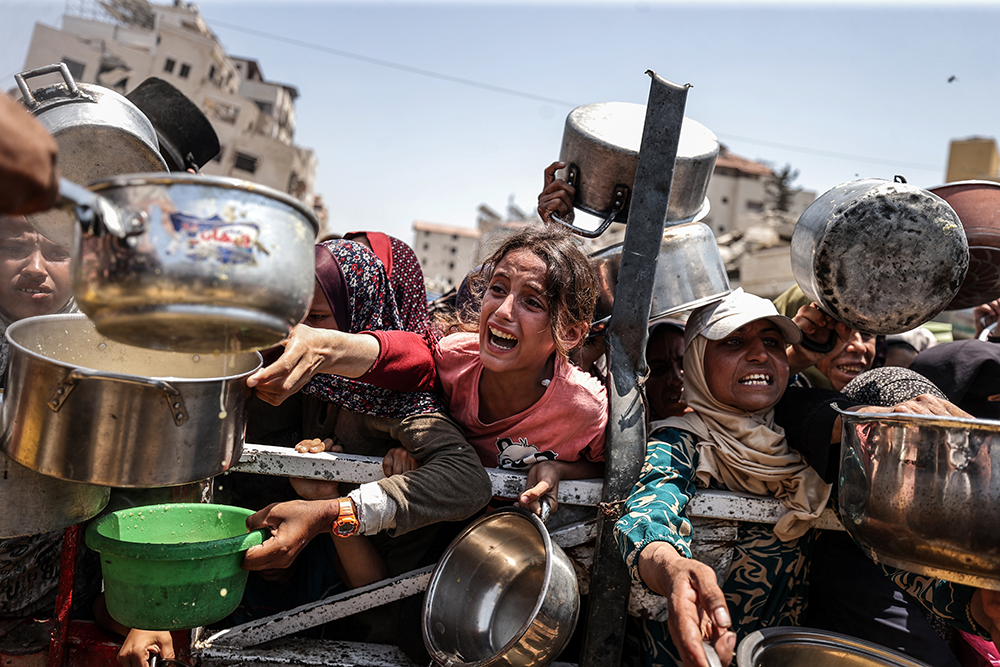
    If you are already howling that I have swallowed Hamas propaganda, and that either it is Hamas who is stopping the aid getting through or that the far-from-starving Palestinians are tucking into three square meals per day, eggs Benedict, shrimp étouffée, bananas Foster and so on, then you are laboring under a delusion. If virtually every non-aligned observer in the world, including the President of the USA, believes that the people of Gaza are starving to death and Israel is primarily responsible, then that’s good enough for me, frankly.

    Of course Hamas has looted aid convoys and of course it lies to the press and the press is often far too quick to report what it says as being the truth. But that does not alter the fact that people – largely blameless people – are dying and that Israel is in large part to blame. Of course this conflict has, in the West, become hideously polarized and so it is all too easy simply to continue repeating the mantra that everybody is against Israel and one should believe only what one hears from the mouth of Benjamin Netanyahu and the IDF press office. (Even in that case, Netanyahu accepts that there are several areas where assistance has not made it through.) But if you sign up to that credo, you are morally lost. We have to form opinions based upon the evidence that is put before us, not have them devolve from partisan loyalties, no matter how well-founded those loyalties might be.

    It has to be said that the United Nations should be held primarily responsible for the partisan nature of the debate. Supposedly neutral, it has vilified Israel at every turn, just as in the past 20 years it has entertained resolution after resolution condemning Israel while ignoring every other transgression which occurs anywhere else on Earth. It came as no surprise to discover that Hamas terrorists were actively involved in UN programs. As soon as that was revealed, the awful secretary-general, Antonio Guterres, should have resigned. Meanwhile, we should take our leave of an organization which cleaves to the palpably stupid view that the wrongs of the world are the consequence of colonialism, except when those wrongs are committed by Israel. It is very far from being a force for good. Instead, it has become a force for disseminating demonstrably absurd post-Marxist delusions.

    I do not have a solution to the crisis. Frankly, Donald Trump’s idea of turning the Gaza Strip into a kind of Las Vegas, except with falafel in place of T-bone steak, has much to commend it, but that simulacrum of Sodom should not be built over the bodies of dead children. We support Israel because of its erudition and its strength but most of all because it has decency. Had decency. Please let it get that decency back.