Author: Alexander Larman

  • Zach Cregger’s Weapons is a new kind of cinema

    Zach Cregger’s Weapons is a new kind of cinema

    Weapons, Zach Cregger’s sophomore picture after the acclaimed Barbarian, was a conspicuous success story in its opening weekend: brilliant reviews, an A- CinemaScore from audiences (rare for the horror genre, in which anything above a B is considered a major hit) and, of course, a massive box office. Its first weekend gross was $43.5 million, an astonishing amount for a film without an existing intellectual property, A-list stars (although Josh Brolin, Alden Ehrenreich and Julia Garner are hardly unknowns) or big-name director. Instead, its success lay in a superbly orchestrated marketing campaign by its studio, New Line, pent-up audience desire to see something different and audiences desperate to have the question answered that was posed by the posters: what on earth happened to the 17 grade-school children who suddenly fled from their homes one night at precisely 2:17am?

    The eventual revelation of what happens in Weapons may be underwhelming for some, just as the film’s gradual shift in tone – from hushed, funeral horror to Grand Guignol, almost Evil Dead-esque black comedy – will be divisive for audiences. But if you’re willing to buy into Cregger’s vision, the picture is quite the ride and is aided immeasurably by the third-act appearance of probably the strangest and most memorable human antagonist in this kind of film since Kevin Spacey terrified picturegoers in Seven three decades ago as the omniscient serial killer John Doe. Yet while Spacey’s grand plan unfolded with hideous philosophical control, the ultimate twist here is nothing so cutting-edge or contemporary. Instead, it’s as solidly traditional as an MR James or Edgar Allen Poe short story, and indicates that horror works best when it’s based on time-honored foundations.

    Nonetheless, before it goes big, Weapons has some interesting and perceptive things to say about small-town America, from the way that Brolin’s character is deftly painted as a Republican-leaning gun obsessive (he even fantasizes about assault rifles!) to the fashion in which the disappearance of the children, and subsequent paranoia of the community from which they have vanished, clearly has parallels with the many school shootings that have taken place over the last few decades. (The clue is in the title, which has an elegant double meaning.) Certainly, there is an insightful degree of social commentary here that you won’t find in, say, F1 or Superman, and it’s yet another indication – after the success of Sinners earlier this year and the work of Jordan Peele – that horror is where the smart filmmakers are going in contemporary Hollywood.

    It isn’t hard to see why. Since the early days of the medium, directors such as James Whale and Tod Browning were able to smuggle outrageous sexual innuendo and horrific implied violence into their pictures in a way that no other studios would have countenanced. (There was a special certificate, “H” for horror, which was routinely doled out to such films.) Watched today, early Thirties classics such as Bride of Frankenstein or Dr. Jekyll and Mr. Hyde stand up far better than their often-stilted peers because of the sly wit and ahead-of-their-time double entendres that the films are rich in.

    Nearly a century later, while Hollywood seems ever more frightened about making pictures aimed at adults, the success of Weapons and Sinners surely indicates that over-18s are still interested in unusual, challenging projects that aren’t just the usual banal superhero slop (although Ryan Coogler has proven that he can move from the Black Panther films to similarly African American friendly fare with ease) and that they will be rewarded at the box office and critically. Expect to see Weapons nominated for numerous awards next year (and if that villainous actor, whose name I won’t spoil for the uninitiated, doesn’t win quite a few of them, I’ll be astonished). And, if it makes bank as it’s supposed to, this may yet be the making of a new kind of cinema. Here’s hoping, anyway.

  • Did I underestimate Harry and Meghan?

    It is important for any self-respecting writer to admit when they get it wrong. So it is with an element of contrition that I must report that, despite my confident belief that the dynamic duo themselves, the Duke and Duchess of Sussex, would not have their lucrative Netflix deal renewed, such an event has, indeed, come to pass. Amid what must surely be the raucous sound of organic kombucha bottles being opened in Montecito in celebration, it has been announced that Netflix and Hal & Megs will be in business for another five years, giving the haters and naysayers ample reason to weep and gnash their teeth.

    The treats on offer will include not just a second series of the Duchess’s largely unloved and unpopular lifestyle show With Love, Meghan, but a Christmas special – no doubt filmed about now – and a range of potential projects from Archewell’s hitherto undistinguished film and television production arm. This might potentially include their feature film debut, an adaptation of Carley Fortune’s romantic novel Meet Me At The Lake, and worthy-sounding documentaries, including one about orphans in Uganda, tentatively entitled Masaka Kids, A Rhythm Within. If all goes according to plan, then the schedules will be choc-a-bloc with Archewell programming over the next few years. Springtime for Netflix and the Sussexes; winter for the rest of us.

    Certainly, the smug quotes from all parties suggest that this particular fait accompli has worked out very well indeed. Meghan, forever with an eye on the prize, announced that: 

    “We’re proud to extend our partnership with Netflix and expand our work together to include the As Ever brand. My husband and I feel inspired by our partners who work closely with us and our Archewell Productions team to create thoughtful content across genres that resonates globally and celebrates our shared vision.” 

    Netflix’s Chief Content Officer Bela Bajaria, meanwhile, gushed that:

    “Harry and Meghan are influential voices whose stories resonate with audiences everywhere. The response to their work speaks for itself – Harry & Meghan gave viewers an intimate look into their lives and quickly became one of our most-watched documentary series. More recently, fans have been inspired by With Love, Meghan with products from the new As Ever line consistently selling out in record time. We’re excited to continue our partnership with Archewell Productions and to entertain our members together.”

    So there we are. The wholesome, upstanding couple has been vindicated, sarcastic detractors like me humiliated, and we can expect a happy half-decade of shows ahead. Well, not quite. 

    Springtime for Netflix and the Sussexes; winter for the rest of us

    Dig beneath the PR carapace and in fact there’s a sting in the tail. The Sussexes have indeed signed a new five-year deal with Netflix, but it’s on considerably reduced terms from the original $100 million handout. Instead, it is trumpeted as a “multiyear, first-look deal,” which sounds impressive enough, but in reality means that Netflix are not obliged to make any of the shows that Archewell pitches, simply that they will be the first port of call for their offer. 

    Should, heaven forfend, they not meet with the streaming service’s interest, they can attempt to flog their wares elsewhere. But given the negligible viewing figures for all the non-Sussex shows – and the unexceptional numbers for the much-maligned With Love, Meghan – this is by no means an inevitability.

    Therefore, one cannot begrudge Harry and Meghan a moment of relief after what has been a largely rough and difficult year so far, particularly for the Duke. Yet it is hard to believe that this really does represent the triumphant return to our screens that this has been superficially marketed as. If most of these mooted shows and films do make it to Netflix, I will take pleasure in eating my As Ever-branded raspberry spread (“with a hint of lemon”) in public, with the smallest spoon I can find. But if they don’t, then this should be seen as a face-saving retreat rather than a progression in an increasingly tarnished media empire.

  • Is it safe to be conservative in Hollywood?

    Is it safe to be conservative in Hollywood?

    The news that the actress Gina Carano has secured a climbdown and undisclosed (but undoubtedly) generous settlement from Disney over her dismissal from The Mandalorian television series in 2021 is sure to have far-reaching consequences that stretch far beyond La La Land. Carano posted a triumphant statement on X, saying, “I hope this brings some healing to the force,” thanked Elon Musk for bankrolling her case and concluded by saying “Yes, I’m smiling.” Disney, meanwhile, released their own, terse assessment in which they announced, “We look forward to identifying opportunities to work together with Ms. Carano in the near future.”

    It was a win for Carano on every level. She was humiliatingly dismissed from The Mandalorian after comparing her status as a Hollywood conservative to being a Jew during the Holocaust. While this might have had some hyperbole to it, the actress rightly pointed out that her co-star Pedro Pascal – an actor firmly to the Hollywood Left – made similarly emotive statements on social media, using the Holocaust comparison, and went undisciplined by the higher-ups at Disney. The question now is what the settlement means not just for Carano, but for conservatives in the industry more generally.

    It used to be that gay actors were advised to keep their sexuality to themselves, for fear of alienating their potential audience, but this has been soundly disproved thanks to the mainstream success of everyone from Jonathan Bailey and Luke Evans to Kate McKinnon and Ncuti Gatwa. However, Hollywood conservatives are still a rare breed. There are many leading actors, from Mel Gibson to Dennis Quaid, who have been vocal in their support of Donald Trump, but comparatively few younger A-listers who have dared to voice right-wing or Republican sympathies in public. The revelation that Sydney Sweeney was a registered Republican, and the subsequent anger – coupled with the storm-in-a-teacup American Eagle–jeans advert that she starred in – that this engendered in liberal circles would make you believe that she was a fully paid-up fascist, rather than simply a supporter of the current governing party in the United States.

    Still, Hollywood has always been a left-leaning industry, and while its most vocal practitioners may find that their invective damages their careers irreparably (step forward John Cusack, whose transformation from ’90s indie darling to furious keyboard warrior is now complete), the likes of Pascal and Mark Ruffalo can offer their unvarnished opinions without pushback from the executives who hire them. Still, a more intriguing subsection of the industry are those who are, in the words of Jon Voight’s clandestine dining society, “Friends of Abe”: actors or filmmakers who have right-wing or conservative views that they are unwilling to share in public for fear of jeopardizing their career. It is a long, long list – any reader of this could probably name a dozen leading figures who are likely to vote Republican, even if not all of them remain full MAGA supporters – but it has been, up until now, a kind of McCarthyite club in reverse. Nobody wants to lose a successful career because they have voted the wrong way.

    It therefore will be fascinating to see whether Carano’s victory leads to a permanent sea change in the industry, or whether it’s just a blip before business-as-usual resumes. Certainly, the success of faith-based films, often starring openly conservative actors such as Kelsey Grammer, indicates that there is a market for films that the American Right, in particular, will lap up, and the news that Mel Gibson’s Passion of the Christ sequel, currently titled Resurrection, has begun filming for release in 2027 will be catnip for its considerable fanbase. Yet these might be isolated examples rather than a new trend. What will change the industry forever is when there are as many Sydney Sweeneys as Scarlett Johanssons, whose political views are regarded as unexceptional, and then – and only then – being a Hollywood conservative will no longer seem like an oxymoron, or worse.

  • The strange life of Lindsay Lohan

    The strange life of Lindsay Lohan

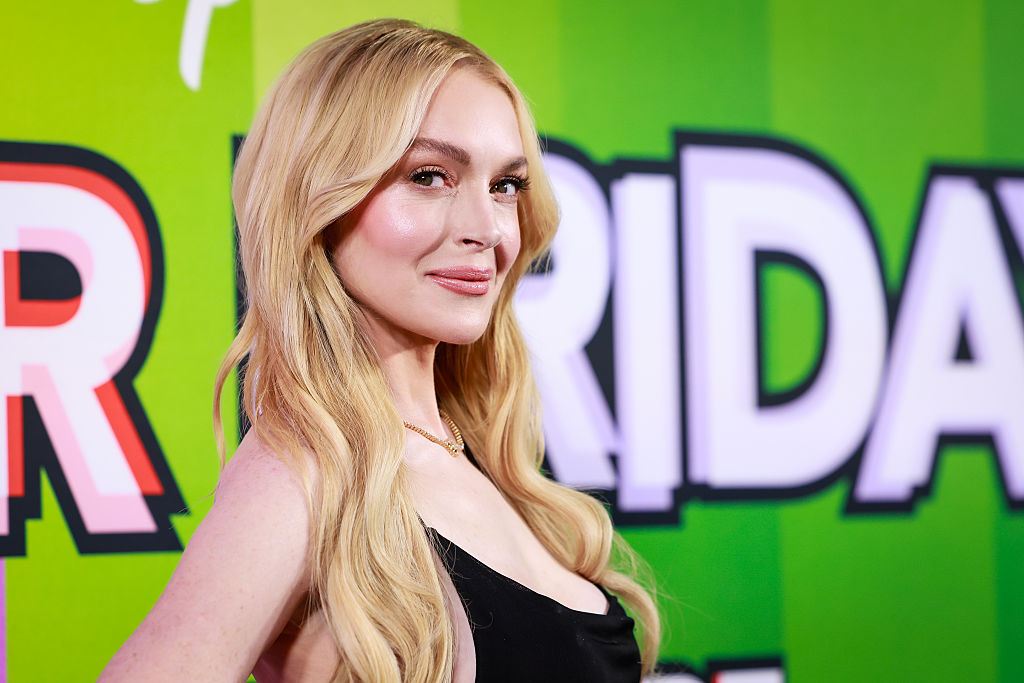
    You may not have realized it, but the actress Lindsay Lohan has been quietly orchestrating a comeback over the past few years. In 2022, she signed a multifilm deal with Netflix that led to such forgettable pieces of fluff as the Oirish romantic comedy Irish Wish, and now she has returned in her highest-profile film in years, the Freaky Friday sequel, Freakier Friday. Lohan stars opposite the Oscar-winning Jamie Lee Curtis in what is clearly (and cynically) intended as a piece of four-quadrant fluff, and Disney will be hoping that the sequel recaptures some of the 2003 original’s box-office alchemy; it grossed $160 million worldwide on a $26 million budget.

    Yet the appearance of Lohan, who is front and center in the film’s publicity, can only be described as something of a gamble on the part of the filmmakers, given how eventful the past decades have been for her. When she broke out around the time of Freaky Friday, the former child star – who had attracted plaudits for her role in The Parent Trap remake – looked like one of the few youthful actors likely to turn into a convincing adult performer. She showed more range in the excellent Mean Girls, released a million-selling debut album, worked with Robert Altman and seemed to be at the forefront of Hollywood. What could possibly go wrong?

    Almost everything, it seemed. From 2007, Lohan’s previously gilded existence turned into a constant parade of drug- and drink-induced mishaps that included, among other things, repeated legal issues, incarceration, an ill-fated and bizarre romance with Mark Ronson’s sister Samantha, a series of high-profile fallings-out with other celebrities, a supposed flirtation with becoming Muslim and media-baiting public appearances. For a considerable period, if you were an ambitious photographer who wanted an easy story, all you had to do was to lurk outside one of Los Angeles’s many exclusive nightclubs and, invariably, Lohan would appear at 3am, under the influence of God knows what, and the pictures would duly appear online within moments.

    It is fair to say that Lohan did not help herself with public statements, such as when she announced, “I am saddened to hear about the allegations against my former colleague Harvey Weinstein. As someone who has lived their life in the public eye, I feel that allegations should always be made to the authorities and not played out in the media.” She briefly announced that she was a Republican and that she would vote for Mitt Romney, only to backtrack almost immediately amid a chorus of vitriol. She moved to London in 2014, only to leave after the country voted Leave in the 2016 Brexit referendum. She is now a resident of Dubai, which she has praised for “a certain calmness that I find there… There’s no paparazzi, no cameras. That’s a big deal for me.” The deeply repressive regime, one presumes, doesn’t bother her all that much. And her own father Michael, a disgraced financier-turned-television personality, announced that she had become an escort, saying “Lindsay is getting paid to date rich men. [Her mother] Dina is pimping her out. It’s disgusting.”

    Likewise, Lohan’s film career turned into a series of self-parodying cameos in pictures such as Scary Movie 5 and Machete. A role that should have been a comeback, the lead in the Paul Schrader–Bret Easton Ellis collaboration, The Canyons, descended into chaos when she behaved badly on set and refused to publicize the film for fear of “jeopardizing my sobriety.” Schrader wrote a thoughtful article on the experience of working with her, in which he compared her to Marilyn Monroe and said, “Similarities? Tardiness, unpredictability, tantrums, absences, neediness, psychodrama – yes, all that, but something more, that thing that keeps you watching someone on screen, that thing you can’t take your eyes off of, that magic, that mystery.” He concluded, “It’s not a positive environment for the performer. It’s difficult to maintain self-discipline in a world of easy gratification. And it’s exhausting. As I said to Lindsay on a number of occasions, ‘It must be exhausting to be you.’”

    Lohan is 40 next year. She has far outgrown the ingenue days of her youth, and, in her 39 years on the planet, has led a larger, more contentious and outrageous life than most people could manage in ten existences. If Freakier Friday is a hit – and first reviews have praised both the picture and her – then it could represent a return to Hollywood and to stardom on her own terms. Whether she now has the maturity to make a success of it or a second round of chaos and event is coming our way, still remains to be seen.

  • The evolution of Andrew Lloyd Webber

    The evolution of Andrew Lloyd Webber

    Unless you have been rock-bound over the last few weeks – or avoiding all social media, which in 2025 amounts to much the same – you can scarcely have missed the controversy over the recent three-night gala staging of the Andrew Lloyd Webber and Tim Rice rock opera Jesus Christ Superstar at the Hollywood Bowl. Jesus, you see, is not played by a white man, as is customary, but Cynthia Erivo, the Wicked star who is black, female and queer.

    This has not gone down well with traditionalists, but Erivo is one of the most talented singers working today – as well as a fine actress – and so, if the first reviews are to be believed, she blew the roof off the Hollywood Bowl, stealing the show entirely from a starry cast including Adam Lambert and Josh Gad. As a Forbes critic sighed, “If you missed Jesus Christ Superstar at the Hollywood Bowl this past weekend, you really lost out on seeing one of the great and memorable stage extravaganzas that Los Angeles has witnessed in recent years.”

    The night was clearly a triumph for Erivo, Lambert, Gad and the director-choreographer Sergio Trujillo, but it was also an impressive achievement for the show’s original creators. Jesus Christ Superstar was first performed on Broadway in 1971, and over the intervening five and a half decades, it has overcome some rather half-hearted religious protests (mainly because it does not show Christ’s resurrection, only his crucifixion) to become a much-loved and massively successful musical. Yet its latest, most glittering incarnation raises a question that few would have thought would be asked in 2025: how did the now 77-year-old Lloyd Webber become the hottest composer on both sides of the Atlantic?

    When I was growing up, Lord Lloyd Webber, as he has now become, was two things: immensely successful and hugely unfashionable. Although such musicals as Cats, Phantom of the Opera and Starlight Express were the blockbuster shows of their day, running for years if not decades to rapturous and sold-out audiences, he was damned with that most sneering of sobriquets – “middlebrow” – and his work was thought to be basic and undemanding in the extreme. Leaving aside the essential weirdness of much of it – who else would have thought of turning a series of TS Eliot poems into a musical entertainment? – there was always a sense that Lloyd Webber’s unpopularity stemmed in part from jealousy, and in part from his right-wing political views, which saw him raised to the House of Lords as a Conservative peer: anathema to a traditionally left-leaning institution (though he left the red benches in 2017.)

    He never stopped being successful, although flop after flop a few years ago dented his standing: his Phantom sequel, Love Never Dies, was a notorious flop, and a musical about the true protagonist of the Profumo affair, Stephen Ward, was an uneasy mixture of lushness and realism. A collaboration with that most divisive of writers, Emerald Fennell, resulted in a flop Cinderella, and many might have assumed that Lloyd Webber was yesterday’s man.

    But two collaborations with that most thrusting and successful of young British directors, Jamie Lloyd, in the form of the Nicole Scherzinger – starring Sunset Boulevard and Rachel Zegler in Evita, have brought his musicals back into the mainstream (not that he ever left) and given him a newfound credibility. In London at the moment, Zegler’s nightly appearances outside the Palladium theater, where she performs Evita’s signature number “Don’t Cry for Me, Argentina” live to an audience of grateful passers-by – for free! – has become one of the summer’s most popular tourist attractions. Should she repeat the feat on Broadway, doubtless the same will happen there, too. This, along with the Erivo-starring Jesus Christ Superstar, has made Lloyd Webber, of all unlikely things, hip. Not bad for a septuagenarian peer of the realm.

    And the debacle of the Cats film (2019) revealed that he had a sense of humor, too. Sensibly distancing himself from Tom Hooper’s appalling picture, Lloyd Webber announced that “There wasn’t really any understanding of why the music ticked at all. I saw it and I just thought, ‘Oh, God, no.’ It was the first time in my 70-odd years on this planet that I went out and bought a dog.” The puppy, however, came in handy. As Lloyd Webber told Variety,“I wrote off and said I needed him with me at all times because I’m emotionally damaged and I must have this therapy dog. The airline wrote back and said, ‘Can you prove that you really need him?’ And I said ‘Yes, just see what Hollywood did to my musical Cats. Then the approval came back with a note saying, ‘No doctor’s report required.’” It is hard not to agree.

  • Return of the King of the Hill

    Return of the King of the Hill

    The world has changed a great deal since September 2009, when the final episode of Mike Judge’s sitcom King of the Hill aired, and it has altered immeasurably since January 1997, when the show was first broadcast. Given that legacy television has become the new vogue – how else to explain the apparently endless resurrections of Dexter? – Judge can be forgiven for bringing back his second most popular animated show for a new audience. But the suspicion lingered that King of the Hill was a series very much of its time, and that the adventures of its well-meaning but vaguely idiotic patriarch, Hank, and his overbearing wife, Peggy, would not translate especially well to the colder, more demanding brave new world we now inhabit.

    Judge has half-succeeded with the new incarnation of King of the Hill: it is likely to appeal to the show’s greatest admirers while still attracting those who would have been casually watching it, beer in hand, when it was airing on Fox one evening in the early Aughts. Whether it will have any appeal to the uninitiated is harder to gauge. I can’t imagine that it will have any crossover to younger audiences, many of whom would not have been born when the show first aired, and those who disliked it when it first came along are unlikely to warm to it now.

    Still, Judge deserves credit for how he deals with the considerable passage of time. Hank and Peggy begin the show returning from Saudi Arabia (where he has had the very Hank-appropriate job of selling propane to earn enough money to pay for their retirement) and re-enter a different America to the one they left. It is a country of cancel culture and a fear of saying or doing the wrong thing, but it is also a place in debt to paranoid ideas of conspiracies, where Hank, Mr. Middle America himself, begins to feel like a foreigner in his own homeland of Texas.

    There are, obviously, jokes about the signs on bathroom doors and whether you should rate your taxi driver five stars on the app (Hank, of course, rates him four, “so that he has something to aspire to” and gets a punitive two stars in response), but there’s also something darker and sadder lurking in the shadows. Literally, in the case of Stephen Root’s now-gargantuan Bill, who took to his bed during the pandemic and has not left in the last five years, surviving on takeaways and completing Netflix in the process. Still, at least their son Bobby is now grown up, working in a restaurant and finding it just as hard to deal with life as a 21-year-old chef in a Japanese–German fusion restaurant.

    At its best, King of the Hill was always as much a character drama as it was a comedy, and so this decidedly autumnal return may be lower on laughs than its most devoted fans may have hoped for (although Peggy’s pronunciation of “Saudi Arabia” is one for the ages), but it manages to be a fresh and mainly engaging look at contemporary America through the eyes of a man who was cursed not to have come of age in the Fifties. If Judge’s masterpiece, Beavis and Butt-Head Do America, was the full satirical treatment of Clinton-era America, and Beavis and Butt-Head Do the Universe was an outraged response to post-Covid strictures, then perhaps the 14th series of King of The Hill is something grown-up and more reflective. There will be those who blitz through all 10 episodes as quickly as they can, but in order to savor its disaffection with the changing world, this should be sipped like a frozen margarita, and not chugged down like beer. A fifteenth series would, on this evidence, be far from unwelcome.

  • Sydney Sweeney, Gwyneth Paltrow and the misogynists

    Dear God, please help me. The winged monkeys of incel outrage have mobilized in their millions. Basement warriors have exerted more sputum and energy than the average American would find imaginable. And all because of a 27-year-old actress, best known for starring in a romcom with Glen Powell, who, when I last checked, was spared such opprobrium. But we are in a different age, and if you are a woman, you’re fair game.

    In the Fifties, there might have been an outraged headline. “Pretty young blonde woman wears denim jeans to promote a product!” But in 2025, Sydney Sweeney is less a thespian and more a product in her own right. In the great carnival of modern celebrity, where every gesture is dissected and every utterance weaponized, she’s a moving target. For the uninitiated, Ms. Sweeney is the doe-eyed, large-breasted darling of Euphoria and The White Lotus who has been taken to pieces because of an American Eagle jeans campaign that dared to employ the tagline “has great jeans/genes.” A harmless pun, one might think, a bit of cheeky wordplay to sell denim to the TikTok generation. But no.

    Those who wanted to be outraged have been. There have been accusations of “Nazi propaganda” and “eugenics endorsement.” Their logic, such as it is, hinges on the word “genes” evoking some sinister nod to genetic purity. Sweeney, admittedly, shares the blame as a producer and star of the campaign, but I doubt she had any hand in crafting the copy. American Eagle’s chief marketing officer described it as “potentially one of the biggest gets in American Eagle history.” The backlash was swift, with none other than the Juicy hitmaker Doja Cat lampooning the ad on TikTok and commentators decrying Sweeney’s silence as complicity.

    Alas, this is not the first time that such outrage has been brought out into the open. Sweeney has long been a lightning rod for conservative fetishization and progressive scorn because she has large breasts and dares to be unashamed of exhibiting them in low-cut tops. Her appearance on Saturday Night Live last year even prompted a Spectator piece hailing her as a return to “real body positivity.” The right venerates her as someone whom their bedroom-dwelling representatives can pin their hopes and dreams upon; the left merely detests her as a symbol of all that is rotten about their country today. The American Eagle debacle is merely the latest chapter in this ongoing culture war, where a young woman wearing a pair of denim jeans is less a reflection of her talent than a Rorschach test for society’s obsessions.

    If it’s any consolation to her, a senior figure in the industry has recently found themselves at the epicenter of peculiar controversies. Compared to the opprobrium exhibited towards Gwyneth Paltrow, who has been ritually humiliated by the publication of Amy Odell’s Gwyneth: The Biography, Sweeney has it easy. When Paltrow was Sweeney’s age, she was subjected to a similar degree of prurient fascination. She was the most-talked-about actress of her generation, a muse for Harvey Weinstein, an Oscar winner for Shakespeare in Love (over Cate Blanchett, who deserved it more for Elizabeth), and an object of ridicule for her tears on that night and for her famous boyfriends. Ben Affleck, Brad Pitt, anyone else who was there and available – Paltrow was sneered at for her naked lust for fame. Even in the pre–social media age, she went viral.

    Two and a half decades later, her successors have come for Sydney Sweeney. It has become acceptable to sneer at a beautiful woman of a certain age because, in some sense, she deserves it, and we have to be aware that in this sharp, cold Instagram age, daring to use your looks to advertise a product will lead to your being ridiculed and belittled. Gwyneth had it before her, and someone else will have it after her. The millions that she will make from the company are cold company when all that Sweeney sees on social media the misogyny leveled at her. But that, alas, is the game, and it has been like that since the inception of the industry, even if things seem only to be getting worse. Dear God, please help us.

  • Will Steven Knight ruin James Bond?

    Will Steven Knight ruin James Bond?

    Up until yesterday, I was beginning to feel cautiously optimistic about the new James Bond film. After a long hiatus in which the franchise’s new owners Amazon and the previous Bond producers, Barbara Broccoli and Michael G. Wilson, seemed unable to compromise, the matter was settled. Broccoli and Wilson were paid a Jeff Bezos-sized ransom, and others took artistic control of the series. The producers – America’s Amy Pascal and Britain’s David Heyman – were good choices, and the decision to hire Dune’s Denis Villeneuve to direct was inspired, to say the least. But the news that Peaky Blinders creator Steven Knight will be writing the script has sent my confidence that the picture will be any good spiraling right down.

    Knight may not be a household name, but he’s an extraordinarily prolific screenwriter who has racked up a vast number of credits since he began his career co-creating Who Wants to Be a Millionaire in the Nineties. When he moved into television and feature films, he started out extremely well. If you haven’t seen the Chiwetel Ejiofor immigration thriller Dirty Pretty Things, David Cronenberg’s Eastern Promises or the Tom Hardy one-man-show Locke, you really ought to. Had Knight continued along this path, then his working on the new 007 picture would be something to look forward to. But then Peaky Blinders became a phenomenon, and Knight became a powerful figure in the industry. The results have been messy and bizarre.

    I sometimes wonder, given how prolific he is, whether Knight is in fact a pseudonym given to a small cottage industry of screenwriters, all charged with creating wildly disparate screenplays. In the credit column are dramas such as Stephen Graham’s boxing show A Thousand Blows and the early, more dynamic seasons of Peaky Blinders. In the debit column are uninspired, rote projects such as Bradley Cooper chef drama Burnt, a failed attempt to continue the Lisbeth Salander series in the form of 2018’s The Girl in the Spider’s Web and the inexplicably popular military porn SAS: Rogue Heroes. But these are but an amuse bouche compared to what happens when Knight is really let off the leash, and then true nonsense comes out.

    Knight wrote and directed a film in 2019, Serenity, that attracted some of the worst reviews in living memory, not least because its big twist – that its stars Anna Hathaway and Matthew McConaughey were in fact trapped in a computer game played by Hathaway’s character’s son – was laughed off the screen. Still, this reaction was mild compared to the horror that his two Dickens adaptations, A Christmas Carol and Great Expectations, were greeted with. A Christmas Carol at least had novelty on its side – scenes in which Jacob Marley announced “this isn’t a fucking game” and Mrs. Cratchit offered herself to Ebenezer Scrooge sexually were unusual, if nothing else. But when the deeply woke, essentially unwatchable Great Expectations rolled around, this magazine’s television critic argued it demonstrated, “once again the strange modern neediness to believe in our superiority to all those benighted bigots who came before us. (Please tell us we’re the best people who ever lived! Please!) Or rather, it takes those ideals to new heights that are either infuriating or hilarious depending on your mood.”

    Knight will be reined in to a large extent on the new Bond film. They are not, and never have been, vehicles for screenwriters, although Roald Dahl wrote You Only Live Twice and Flashman creator George MacDonald Fraser was one of the many hands who put together Octopussy. Even the much-heralded hiring of Phoebe Waller-Bridge to work on the most recent picture, No Time To Die, made little difference: there were no scenes of Bond smirking to camera and delivering arch monologues about his sex life, although the film would probably have been improved if there had been.

    Yet the news that Knight will be taking on the new Bond film – over many more interesting, exciting screenwriters – is still very depressing.

  • Gillian Anderson: Ice Queen

    Imagine, for a moment, that a respected middle-aged British male character actor – Jason Isaacs, let’s say – had been cast in the lead role of a sex therapist in a popular, Gen Z-focused Netflix series, called something like Love Lessons. Then imagine that Isaacs had become seemingly so obsessed with blurring the lines between himself and his character that he had not only edited a book about men’s sexual fantasies, anonymously including one of his own in there, too, but had begun a secondary career appearing on podcasts in which he encouraged men to freely discuss their peccadilloes and penchants, however taboo they might seem.

    It would, of course, never happen – not even for a man as likable as Isaacs. Yet something very similar has taken place with his Salt Path and Sex Education co-star Gillian Anderson, a woman who seems to have turned into her Sex Education character Jean Milburn, only with added froideur and grandeur. (Her Instagram profile, where she boasts 3.5 million followers, describes her as “Actor. Author. Activist. Dog Mum.”) When Anderson recently appeared on Davina McCall’s podcast Begin Again, the blurb gushed that “this episode is about giving yourself permission to explore your wildest fantasies, the power of desire and the importance of asking what you truly WANT – not only in the bedroom but in LIFE!”

    The territory of mom-fluencer of a certain age is hardly unknown, and Anderson cannot be blamed for embracing extra-curricular activities. Her most recent book, 2024’s Want, was a bestseller on both sides of the Atlantic, and she has segued smoothly into a career that has encompassed television, film and theatre, as well, now, as that of author. (We will draw a tactful veil over the trio of fantasy novels, The Earthend Saga, that she co-authored, or at least put her lucrative name to, between 2014 and 2016.) She is one of the best-known actresses in Britain, thanks to her star-making role in The X Files and her subsequent high profile, and remains a sought-after A-list guest at any party or soirée. So why, then, is Gillian Anderson so difficult to warm to?

    Most actors try and give an impression of warmth and likability in press interviews and in public appearances on things like The Graham Norton Show. Even if, privately, they detest everyone around them and consider themselves part of a rarified species, they have been given extensive media training to make themselves seem down-to-earth and accessible. Anderson, however, has gone entirely the other way. If ever she is compelled to appear on a chat show, she wears an air of regal hauteur that suggests that she regards the whole affair as deeply beneath her, and carries this sense of superiority into interviews. Journalists use the words “frosty” or “steely” in profiles about her; a polite way of describing someone who clearly has little interest in ingratiating herself with those who she finds beneath her.

    Why is Gillian Anderson so difficult to warm to?

     If Anderson’s work was consistently extraordinary, she might be forgiven much of this aloofness. Many of the greatest actors in history could not be described as “nice”, from Marlene Dietrich to Tommy Lee Jones. Anderson would also probably argue that it is a misogynistic canard that she should have to be seen as warm and fuzzy because she is a woman. She might, of course, be right, but the difficulty is that she is a variable screen talent, to say the least.

    Anderson was indeed magnificent in Terence Davies’s little-seen Edith Wharton adaptation The House of Mirth, and gave very fine performances indeed in both the BBC’s adaptation of Bleak House and the serial killer drama The Fall, which both made use of her icy beauty and cool intelligence. But she was devastatingly bad as Margaret Thatcher in the fourth series of The Crown, pitching her performance just this side of pantomime in an apparent attempt to convince viewers that she, herself, was nothing like this dreadful woman that she was playing, and that she didn’t share an iota of her politics or thoroughly reprehensible views.

    By the time that Anderson popped up in Sex Education, an enjoyable if silly show that overstayed its welcome, it was clear that she had come to regard herself as a Great British Institution; ironic, really, for a woman born in Chicago and who rose to prominence playing American characters. So it is amusing that her most recent performance may yet turn out to be one of her most controversial.

    Anderson and Isaacs played Raynor and Moth Winn, the beleaguered protagonists of The Salt Path, in the successful film adaptation of the book, which has since run into trouble after the revelations that Winn had been more than a little economical with the actualité. Ironically, Anderson had already inadvertently conveyed her own misgivings about Winn, saying in an interview that: “I was surprised at how guarded she was…it was interesting to encounter a certain steeliness.” Or, indeed, a fear that being lifted to another level of recognition altogether would lead to her subsequent exposure by the British newspaper the Observer.

    Anderson has not commented publicly on the scandal, and it is unlikely that she will be prepared to do so until it is settled one way or the other. Yet were she to break her silence, and admit that she felt annoyed, even betrayed, by the undeniably embarrassing situation, it would be a rare chink in the armor of this ice queen, sex therapist and, it would appear, all-round Renaissance woman. Just a tinge of vulnerability, you cannot help thinking, would make the Magnificent Anderson that bit more human, and therefore likable. Whether it will ever happen, however, is a mystery worthy of Agent Scully’s investigative powers.