Author: Ben Domenech

  • Inside Trump’s war on the cartels

    Inside Trump’s war on the cartels

    To deal with big problems, the second presidency of Donald Trump adopts a three-step approach. First, the declaration of authority: in this case, the designation announced in February of multiple Mexican and South American cartels as international terror organizations, opening up new avenues for legal, intelligence and potential military responses.

    Next, eye-popping kinetic action: this came with SOUTHCOM’s deployment in August of eight warships to the Caribbean and Pacific Oceans, including three Aegis guided-missile destroyers parked off the coast of Venezuela along with a landing dock, amphibious assault ships and a fast-attack nuclear submarine. These vessels can carry 4,500 Navy and Marines along with helicopters, advanced surveillance equipment and cruise missiles that can strike anywhere at will.

    Earlier this month, we saw a missile kill 11 “narco-terrorists” on a boat coming out of Venezuela. “Instead of interdicting it, on the President’s orders, we blew it up,” confirmed Secretary of State Marco Rubio. “And it’ll happen again.”

    The third step involves a very public forging of Trumpian symbolism: look to Defense Secretary Pete Hegseth’s announcement last month of the restoration of the Mexican Border Defense Medal, an award given originally to the armed forces that supported the expedition of General “Black Jack” Pershing (a personal favorite of Trump’s) in Mexico more than a century ago. The bronze Roman sword and crossed sabers on a medal emblazoned “For Service on the Mexican Border” could hardly send a louder message. Watch out, Mexico: MAGA has found the one war it wants.

    If this second administration has a motto, it’s “again this time, but for real.” Tweets fired off from the hip, now in the form of Truth Social posts, could once be dismissed even by the President’s supporters as something to be taken seriously, but not literally. Now, the Donald’s outbursts are gospel. In his first term, Trump and the likes of then-secretary of state Mike Pompeo publicly entertained the idea of escalating the mission against Mexico’s cartels to a military priority, but never formally did so. This time, the primary Mexico brief landed not at State, Homeland Security or Justice – but with gung-ho Defense Secretary Pete Hegseth.

    On his first call in January with Mexican officials, the newly confirmed Hegseth delivered an unequivocal message: that unilateral US military action was on the table if Mexico didn’t step up action against the cartels – a statement that left the Mexican brass “shocked and angered” according to the Wall Street Journal, but directly preceded the unprecedented handover of 29 top cartel officials for extradition.

    If that was supposed to satisfy Hegseth, it hasn’t – in the months since, he has publicly stated that “we’re taking nothing off the table – nothing,” when it comes to potential strikes and that “we’re watching [the cartels], and we know a little bit more than they think we know about them.”

    A network of drones and spyplanes provide an eye-in-the-skyview of cartel assets and activity

    What the US knows is largely thanks to a network of drones and spy planes which provide an eye-in-the-sky view of cartel assets and activity. They are technologically capable of transforming from watchers to weapons as they have to great effect in Africa and the Middle East. Razing targets from the sky is not something the Mexican military is built to defend against: their assignment is the control of the Mexican people. One analyst told me: “There is no part of Mexico we cannot reach.” But this White House and the key players in Trump’s cabinet also recognize that declaring war on the cartels – by wiping out fentanyl labs, demolishing training camps in Jalisco, or killing drug kingpins – is pointless if, Hydra-like, the monster’s heads simply grow back.

    That’s why for this White House, success is defined as forcing the Mexican government to do what it doesn’t want to. As Hegseth indicated on that first call, Mexico must handle the cartel problem itself, lest the Americans handle it instead.

    One reason war on the cartels has become a MAGA priority is due to the forward-looking politics of the top men surrounding the President. Vice President J.D. Vance, Rubio and even Hegseth himself could conceivably run in 2028, and Trump’s close advisors, such as Stephen Miller, have warned that a temporarily quiet border isn’t enough. Mexico is a problem to be solved now, not when the cartel’s spigot of drugs and trafficking presumably turns back on in three years’ time.

    It’s telling that Rubio is aligned with this stepped-up mission, potentially breaking with the prevailing views among long-serving diplomatic experts such as Spanish-born former ambassador to Mexico Christopher Landau, currently Deputy Secretary of State, who prefer the public-facing perception of cooperation and fear potential blowback over military action. While officials who prioritize the status quo are loath to openly criticize Mexican leadership, within the administration there is a sizable faction, possibly including the President himself, who no longer believe Mexico’s President Claudia Sheinbaum when she says she’s cooperating. “The Mexicans are just trying to buy time until the White House changes hands again,” one analyst told me.

    For Mexican nationalists and anti-war critics on right and left, Trump’s burgeoning cartel war is framed as an act of imperial authoritarianism: simply the next step for a President who talked of buying Greenland and making Canada the 51st state. The less radical criticism raised in the pages of the New York Times and the Wall Street Journal has focused more on the lack of effectiveness: that Hydra problem again. But the truth is that Trump and his team of warriors have no designs to conquer Mexico, or even to eliminate the cartels completely – instead, they view the aim of kinetic military action as a threat designed to force Mexico to end the dominance of the cartels itself.

    Left to its own devices, Mexico would have little appetite for this. The protection of these powerful entities has become the number one priority of the state. The cartels raked in billions from trafficking millions of people and poisoning tens of thousands during the Joe Biden years, and they paid a pretty penny to the Mexican government to do so. This effectively turned our neighbor into a quasi-failed narco state.

    In Mexico, politicians work for criminals – or else they are the criminals. And the politicians have hardly been quiet about it – see former president (and still the most influential politician in Mexico) Andrés Manuel López Obrador, who declared any assault on the cartels as tantamount to war on all Mexicans. He called it “demonization,” saying that the cartels were “respectful people” who “respect the citizenry.”

    The former ruler now presides from the security of his ranch, La Chingada (translated, it means “the fucking thing” or “the one who’s fucked”), where he exercises control of the ruling party via his son and a vast network of cronies. On the rare occasions where Sheinbaum has opposed an AMLO decision, such as nominations for various offices, the former president’s loyalists in the Mexican Congress have reminded her who’s actually boss. They remain loyal to the leader who enriched them so well with decades of bribes and kickbacks. But there is a crack in the facade: AMLO is well aware he enjoys his quasi-retirement (he is ostensibly writing a history of Mexico) only so long as his successor succeeds in keeping the US out.

    As AMLO’s chosen heir, Sheinbaum is a true believer following a more pragmatic leftist nationalist – imagine a Bernie superfan inheriting the mantle from the man himself. Berkeley-educated Sheinbaum has managed her relationship with Trump relatively well, praising him in English and saving her criticisms for Mexican audiences. Yet part of the reason AMLO chose her in the first place is her weakness – she has no organic base within the Morena party apart from him. And her naive ideological commitment to AMLO’s utopian program has earned her disdain and even naked contempt from the former president’s cronies, who were spotted earlier this year declining to shake her hand after a major public speech. 

    There’s a distinct lack of on-the-ground human intelligence about the cartels’ activity, but a series of recent court deals could play an important role. Information from Ismael “El Mayo” Zambada, the co-founder of the Sinaloa Cartel who faces a life sentence after pleading guilty in New York, and from Ovidio Guzmán López, son of El Chapo, who pleaded guilty in Chicago, could change that. Both have the ability to inform on key figures within the cartels and the Mexican government itself.

    Mexico hawks believe recent improvement on the border is not due to Sheinbaum, but to a change of mindset by the cartels and their government cronies who have perhaps calculated that a few lean years under Trump are tolerable, especially if Gavin Newsom takes over next. But a temporarily quiet border isn’t enough for this version of Trump, and Mexico is one area where the MAGA base and its brain trust seem open to the idea of more aggressive action.

    “There’s a 1,950-mile border that changes the calculus for MAGA, with a much more present awareness of the danger because of that proximity,” says Heritage Foundation President Kevin Roberts. He emphasizes that the institutional right would be “categorically supportive” and dismisses the idea of backfire from the President’s base. “There are a lot of us outside the White House who are working with the folks on the inside on raising up Monroe Doctrine 2.0, including key players in the administration. If you do what needs to be done to wreck the cartels, who would complain on the right?”

    Roberts also believes that a motivating factor for some is Mexico’s Chinese connection – comparing it to Germany’s Zimmermann Telegram of 1917 – both through investment and as a source for the basic elements of drug production. “[MAGA] people who want us to be less active in the Middle East and Europe are aware of this,” Roberts says. “The threat of increased presence of China in our hemisphere makes this a problem people are willing to confront, even if they are more uncertain about how to deal with challenges like Taiwan.”

    Ryan P. Williams, president of the California-based Claremont Institute, echoes this view. “This is about reflexive Jacksonian values. Our hemisphere has been the central focus of American foreign policy going back to a more responsible era when our statesmen were better educated by eighth grade than our leaders today,” he says, comparing the moment to John Quincy Adams’s defense of Andrew Jackson’s conquest of Florida. “If you have sovereign control over territory and you lose it, and violence comes from that which hurts our citizens, it’s our right to fix a situation if you can’t or won’t, including with force.”

    This is the one war MAGA believes is worth starting. “The bureaucratic institutional culture in Washington at places like the State Department thinks of problems as something to be managed and under no condition ever disrupted,” Williams says. “But a big course correction when it comes to Mexico has been long overdue, and the threat of a quasi-failed state run by cartels, with regular incursions over our southern border by drones and other forces, with drugs flowing into our streets fueled by Chinese materials – we should not put up with this any longer.”

    The drones are silent for now. Trump’s current approach is an encirclement strategy led by SOUTHCOM – going after the Venezuelans, the Cubans and the Nicaraguans, partnering with friendly governments such as Ecuador to eliminate Mexican criminals in their own state, and operating in a concentric fashion in an attempt to accomplish America’s aims without pulling the trigger. But the government stands ready, should that approach fail, in all likelihood followed by a solemn statement sincerely thanking our willing partners in the Mexican government for their cooperation and help – whether or not they gave it.

    This article was originally published in The Spectator’s September 15 2025 World edition.

  • Why is ESPN ruining NFL RedZone?

    Why is ESPN ruining NFL RedZone?

    Until this week, NFL RedZone stood alone as an untainted representation of hyper fandom in the sports television arena, in the midst of what Cory Doctorow labeled the “enshittification” of everything. The channel, exclusive to NFL Sundays, promised every highlight, every score and what narrator and host Scott Hanson branded “seven hours of commercial-free football”. For the multitude of Americans who lacked the funds to pay for all the games on Sunday Ticket, or an at-home assemblage of televisions to create their own octo-box, RedZone was the perfect compliment to your main game – a running second screen of every big play, with the fantasy and gambling information to boot. The thrill of hearing the clock strike at the beginning of “the witching hour, when wins become losses and losses become wins,” was a moment of nationwide fan solidarity delivered direct to your couch.

    Such purity cannot last without corruption, and oh were we so young and innocent to believe otherwise. That promise has turned to ash and dust with the launch of commercials during the broadcast, a clear precedent for larger and more ubiquitous ad content once the channel makes the jump from ownership by the league itself to the greedy House of Mouse next year. And in such effort, ESPN rolled out their most corporate spokesmen this week – the affable Pat McAfee in his trademark black wife-beater, maintaining that no fans are angry about the ads, and Adam Schefter (who had previously tweeted about RedZone just once) posting repeatedly about the de minimis nature of the ad invasion. They even forced (if not at gunpoint) the man himself, Scott Hanson, to rep the new ad regime:

    He added in a follow-up post:

    1.  No one told me to post this.
    2.  The 4 total commercials tomorrow will be: 15 seconds and in a double box, in between plays.  *none* during the Witching Hour.
    3.  Adding commercials was not a @Disney @espn decision.  
    4.  Opening catch phrase will change – (you & I will have to get used to it together.)
    5.   Sending you this info because if roles were reversed, I would want *you* to tell *me*. 

    That last point is the key, because it indicates where things are headed – with beer, trucks, fast food and the LiMu Emu on the horizon. And what after that? Well, they’ll make RedZone+ and charge you double. Consumers are already willing to shell out about 12 bucks a month for a channel they only tune into for one afternoon 18 weeks a year – why not charge them 20 to get the “Whopper Whopper Whopper Whopper” song out of their head? If you don’t like being pounded with even more product placement, just turn it off. Who told you you had to buy all $750-plus of services to see every game? Maybe you’re the one with the problem.

    There is something else interesting going on here though, which threatens RedZone and its seemingly exclusive hold on this all-highlight feed. During Friday’s Chiefs-Chargers game in Brazil, broadcaster YouTube invited multiple major YouTube personalities to host along with the game, providing their own coverage and running commentary. They haven’t previously been able to stream the games on the same platform for these shared watch parties. But the possibility of offering alternatives to the main RedZone could provide some added appeal – at least until Disney can just find another way to enshittify it.

  • By taking on the cartels, Trump is reasserting American authority

    By taking on the cartels, Trump is reasserting American authority

    The reporting process on Donald Trump’s war on the cartels for my latest cover story for The Spectator, published here today, mostly focused on the administration’s theory of the case: what they intend to do about the challenge of the drug running, human trafficking and terrorist activity by the narco syndicates to America’s south and why they believe a major escalation is necessary. In the intervening time between filing a piece and going to press, the theoretical became very real with the fiery destruction of a boat carrying drugs in international waters, allegedly steered by 11 now-dead members of Venezuela’s Tren de Aragua cartel. 

    Secretary of State Marco Rubio, asked about the shocking (to those who haven’t been paying attention) military strike, made clear that the rules of engagement have changed, and they are not going back to the old pattern of interdiction and trial. 

    “The President has been very clear that he’s going to use the full power of America and the full might of the United States to take on and eradicate these drug cartels, no matter where they’re operating from and no matter how long they’ve been able to act with impunity,” Rubio told journalists after traveling back from meetings in Mexico City. “Those days are over.” He added:

    I think as long as those vessels are in the region and as long as the President’s in the White House, he’s made very clear he’s not going to allow the United States to continue to be flooded with cocaine and fentanyl and other drugs coming from different places – this one is from Venezuela, which is a common route. But by the way, some of it ends up in Europe. A lot of it ends up in Puerto Rico and then on into the United States mainland. So no one should be surprised.  That’s why they’re there on a counter-drug mission, and they’re going to continue to operate. As far as specifics and future operations, I have to refer you to the Pentagon on that. This is a DoD operation…

    The President was very clear, and that is we destroyed a drug boat that left Venezuela operated by a designated narcoterrorist organization, which is what these are, and he’s been clear that the days of acting with impunity and having an engine shot down or a couple drugs grabbed off a boat, the – those days are over.  Now it is we are going to wage combat against drug cartels that are flooding American streets and killing Americans.

    The election-year depictions of Trump as a dovish isolationist who adopts a Lindberghian attitude toward America’s role in the world has never been accurate, and it has consistently been proven wrong not just in his first term but even more so in his second. The President’s attitude toward Canada, Greenland and the like have been dismissed as foolish talk, but the truth is that he is presiding over a reassertion of American authority over the Western Hemisphere that is long overdue. The war footing this administration is adopting now toward the cartels is still in its early days, but the die is cast – and there is no going back.

  • Exclusive poll: are you proud to be an American?

    With the 250th anniversary of America’s founding approaching next year, the majority of Americans are happy to applaud their country – with 63 percent saying that yes, the birthday of the United States is a moment to celebrate, a new poll from Cygnal released exclusively to The Spectator reveals.

    But unfortunately for those who would like such an event to be bipartisan and unifying, that majority is overwhelmingly driven by Republicans, 89 percent of whom say America’s anniversary is a moment of triumph. On the other side of the aisle, only 37 percent of Democrats say there’s something to celebrate at 250 years, with 58 percent of Democrats saying “no, there’s not much to celebrate” or “no, there’s nothing” to celebrate. 

    The group most likely to find fault in the United States is J.D. Vance’s “childless cat ladies”: 64 percent of single female Democrats say there isn’t anything to celebrate after two and a half centuries of America, with just 28 percent answering in favor of the country in which they live.

    The racial make-up of respondents also illustrate a major divide. White Democrats (of which 37 percent say yes, there is something to celebrate versus 60 percent who disagree) are much more pessimistic than black Democrats, (of whom 42 percent say yes and 50 percent no).

    Perhaps the driving element is a divide over the effect of America’s policies on the world writ large. Overall, 58 percent of Americans say that after 250 years the United States remains a force for good in the world, while 36 percent disagree. In the breakdown, Republicans are emphatic that the USA is a force for good, by a margin of 86 percent to 10 percent. But just 31 percent of Democrats say America is a force for good, with 61 percent disagreeing. Democrats are particularly emphatic on this point – three times as many say America is definitely not a force for good (31 percent) as say it definitely is a force for good (11 percent).

    Once again, white leftists are the drivers of the anti-American sentiment. Hispanic Democrats say America is a force for good at a 33 percent clip, and 41 percent of black Democrats think, regardless of the propaganda surrounding the ills of American racism, that the United States is a force for good.

    Cygnal’s survey encompassed 1500 likely voters, with a margin of error of 2.5 percent.

  • Why Trump is right to take over DC

    Why Trump is right to take over DC

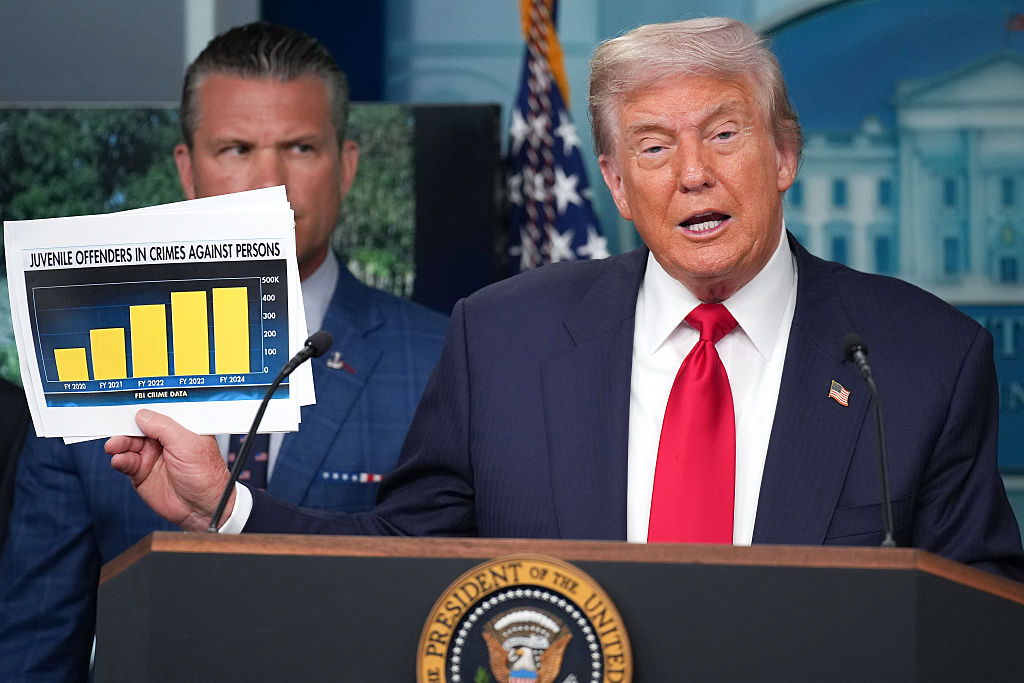
    Donald Trump‘s press conference announcing a federal takeover of Washington, DC‘s police force was packed to the gills with White House reporters – many of whom live in DC and the surrounding area, and are more than familiar with the degradation of law and order in the region. But just because they know it’s bad doesn’t mean they want to give Trump any credit for trying to clean up the city – in fact, they’re likely to attack the move from both sides.

    The ramifications of Trump’s takeover, under Section 740‘s emergency rule, will have undetermined ripple effects in the capital city, but the initial reaction to it illustrates the difficult position in which it puts the president’s critics. Arguments from commentators on CNN and MSNBC immediately turned to official statistics, which show declines in violent crime in the past year and a half. The only problem? A DC police commander has already been suspended for cooking the books on those numbers, a practice that the DC police union claims is commonplace.

    “When our members respond to the scene of a felony offense where there is a victim reporting that a felony occurred, inevitably there will be a lieutenant or a captain that will show up on that scene and direct those members to take a report for a lesser offense,” Fraternal Order of Police Chairman Gregg Pemberton said. “So, instead of taking a report for a shooting or a stabbing or a carjacking, they will order that officer to take a report for a theft or an injured person to the hospital or a felony assault, which is not the same type of classification.”

    Ever since the violent summer of George Floyd, Washington has struggled to achieve the same return to normalcy that has been the case in other major cities. A major driver is the lack of sufficient police staffing, with the Metro Police Department running almost a thousand officers short of needed levels. Carjackings and vehicle theft are three times the national average, and the homicide rate is six times that of New York City. The poor response times and lack of an ability to disburse gang activity is taken for granted by residents, with restaurant closures and other venues seeing less foot traffic because of the crime concerns.

    “Over the last two years, DC has experienced a 52 percent drop in violent crime and is now at a 30-year low,” tweeted Councilman Charles Allen of the DC Council. “While any crime is one too many, every local leader in DC is committed to the work and progress of safer communities and preventing violence.” These words are particularly rich coming from Allen, who faced a recall campaign after being the council’s leading voice on reducing the number of MPD officers and pushing for slack sentencing guidelines for teenage perps.

    The overall result of Trump’s move in media terms will be to make national figures finally pay attention to how bad things are in DC, if only to deny they justify his actions – but they’ll also be set to use any criminal activity that does happen going forward to argue that the administration methods are ineffective. But this is a sideshow: the real question is how DC’s citizens feel about what comes next, and whether it makes DC feel safe again. As a local who hasn’t been willing to risk taking my children into the city late in the day, I can hope that changes soon.

  • Theater kids are holding Texas hostage

    Theater kids are holding Texas hostage

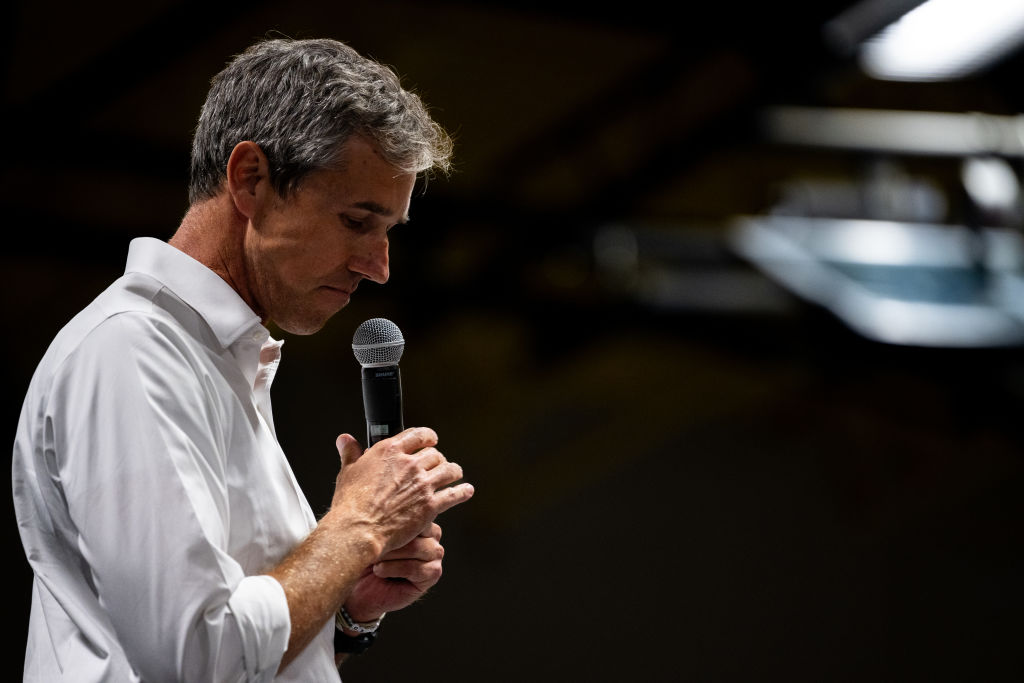
    The theater kids are at it again. The Texas Democratic party is engaged in yet another performative act of resistance – one perhaps less embarrassing than the likes of Representative Greg Casar’s iconic nine-hour “thirst strike,” but far more damaging to Texans in the moment.

    The decision by more than 50 Texas representatives to flee the state for the climes of California, New York and Illinois rather than confront the realities of their political margins doesn’t just act as a grandstanding method of opposition to a redistricting policy that would stand to Republicans’ benefit – it also is holding up the legislative response to the recent flooding disaster, something of significant need to the damaged communities. 

    The entire escapade seems only designed to slow things down and gin up donations from the Democratic base, while turning the political rhetoric about the normal battles of redistricting into the comfortable Democratic language of racial resentment. Speaking to Don Lemon, Democrat Texas State Representative Jolanda Jones likened their battle against the new districts to the Holocaust. No wonder we’re seeing such over-the-top drama, given that the whole escape to the borders is funded by the OG Texas Democrat “born to run” theater kid, Beto O’Rourke.

    In response, Governor Greg Abbott has threatened the legislators with arrest, and President Trump suggested he may have to deploy the FBI to bring them back to the state – both posturing threats, in their own right. The most hypocritical aspect of this is that California, New York and Illinois are all some of the most gerrymandered states in the country: in California, Republicans won 40 percent in the last election but netted just nine seats. And Governor Gavin Newsom seems intent on making an initial idle threat of nuclear response into a reality, promising to meet the Lone Star state’s attempt to add five more GOP-favorable districts with five more Democrats from on the West Coast.

    This type of escapade never really results in a positive outcome – gerrymandering is too explicitly partisan of an issue for anything otherwise. But in the meantime, it does give resistance people another thing to be mad enough to send in some cash – which is why it’s happening in the first place. Some theater works.