Author: David Sypher Jr.

  • Trump’s $500 million fine wasn’t justice

    Trump’s $500 million fine wasn’t justice

    The New York Appellate Division’s decision to overturn the half-billion-dollar civil fraud penalty against Donald Trump should not be seen as a partisan victory. It is a constitutional one. The court ruled that the judgment – originally $354 million before interest ballooned it past $500 million – violated the Eighth Amendment’s prohibition on excessive fines. This was an overdue reminder that even a former president is entitled to the same constitutional protections as every American.

    This judgment threatened to become less about enforcing the law, and more about making an example out of a political enemy.

    The Constitution does not permit prosecutors to weaponize financial penalties into tools of annihilation. The Eighth Amendment exists precisely to stop government officials from piling on punitive fines in order to crush those they dislike. If half a billion dollars can be extracted from a former president in the name of justice, what chance does a mid-sized developer, entrepreneur, or family-owned company have when it runs afoul of an ambitious attorney general?

    That question matters, because this case was political from the start. New York Attorney General Letitia James campaigned on a promise to “get Trump.” Her case succeeded before a trial judge who eagerly embraced the role of scourge. But when the appeals court reviewed the judgment, it found the punishment was grossly out of proportion – even while upholding aspects of liability and oversight of Trump’s businesses.

    Conservatives have long warned about the dangers of lawfare: the use of legal tools to punish opponents who cannot be beaten at the ballot box. Excessive fines are a subtle but devastating form of lawfare. They bankrupt reputations, erase livelihoods, and chill entire industries. Once a government realizes it can levy ruinous penalties with impunity, no one who falls out of favor is safe.

    The Framers of our Constitution knew this danger. That is why they wrote into the Bill of Rights a clear prohibition on “excessive fines.” They had seen how European monarchies used monetary penalties not to enforce justice but to confiscate wealth and crush dissent. To ignore that history is to forget why America was founded in the first place.

    The Trump case now stands as a warning. It tells us what happens when the constitutional limit is forgotten in the heat of partisan zeal. Half a billion dollars is not a fine; it is political theater masquerading as justice. If such judgments are allowed to stand, we risk normalizing the idea that state officials can obliterate businesses and individuals simply because they hold the wrong views or sit on the wrong side of power.

    Some will object: Trump is not “ordinary,” so why should we care? But the Constitution does not recognize “ordinary” and “extraordinary” citizens. Its protections are universal. The Eighth Amendment was not written for the sympathetic defendant, but for the unpopular one. If the law does not restrain the state in its dealings with those we dislike, then it will not restrain the state at all.

    New York’s appeals court has done the country a service by restoring that balance. Liability remains. Oversight remains. But the crushing fine is gone, replaced by a principle older and stronger than any one man’s controversies: proportionality under the Constitution.

    In the months ahead, Democrats will no doubt rail against this outcome as proof of judicial bias. Republicans will hail it as Trump’s vindication. Both miss the larger point. This decision is not about Donald Trump’s fate. It is about whether constitutional guardrails still mean something in America’s legal system.

    They do. And every business owner, taxpayer, and citizen should breathe a sigh of relief.

  • Sandwich arrest reveals lawless Justice Department

    Sandwich arrest reveals lawless Justice Department

    It’s one thing to hear about political radicals clashing with federal officers in the streets. It’s another thing entirely when one of those radicals is a Department of Justice employee.

    On August 10, in Washington, DC, 37-year-old Sean Charles Dunn – then working in the DoJ’s Criminal Division – hurled a Subway sandwich at a federal law enforcement officer during President Trump’s controversial federal crime crackdown in the city. It wasn’t a case of mistaken identity. Video shows Dunn yelling profanity-laced insults – “f– you! … I don’t want you in my city!”– before throwing the sandwich and running. When caught, Dunn admitted it outright: “I did it. I threw a sandwich.”

    The aftermath was swift. Attorney General Pam Bondi announced his immediate firing. US Attorney for DC Jeanine Pirro filed felony charges for assaulting, resisting or impeding a federal officer. Bondi didn’t mince words: “If you touch any law enforcement officer, we will come after you. Not only is he fired, he’s been charged with a felony.”

    Here’s the part that should make every law-abiding American pause: this wasn’t just a rowdy college protester or a fringe activist. This was someone who worked inside the very department tasked with upholding the rule of law.

    When you sign on to serve in law enforcement – or even in its administrative ranks – you are pledging to respect the work of officers, even when you don’t like the political decisions guiding them. That doesn’t mean blind loyalty. It does mean you understand that the men and women in uniform are not your personal punching bags for political grievances.

    What’s most alarming is that Dunn’s outburst wasn’t just a lapse in judgment – it was a glimpse into how normalized political violence has become in certain quarters of the left. The progressive defense of “punch a Nazi” rhetoric, the romanticizing of “direct action,” the social media clout economy that rewards confrontation – all of it has made some people genuinely believe that expressing dissent through physical aggression is noble.

    It’s not.

    There are plenty of valid criticisms of Trump’s DC crackdown. You can argue, as many conservatives have, that deploying federal agents in local jurisdictions without consent is a serious violation of states’ rights and local governance. You can oppose the policy without ever laying a hand – or a sandwich – on the officers tasked with carrying it out. Those officers didn’t set the policy. They are doing their jobs.

    The problem here isn’t just Dunn’s personal anger – it’s the set of political values that make him think assault is a legitimate response to disagreement. When you believe that your cause is so righteous that the rules don’t apply to you, you’ve already abandoned the principles of a free society.

    Political violence doesn’t have to involve Molotov cocktails or deadly weapons. It can be a brick through a campaign office window, an activist spitting on a political opponent, or yes—a sandwich thrown at a federal agent. It’s all the same root: contempt for lawful, peaceful disagreement.

    The left loves to paint conservatives as the real threat to political stability – January 6, they remind us, is proof that right-wing political violence is the danger of our time. But you won’t hear them talk about their own side’s flirtations with it. From Antifa riots to congressional Democrats refusing to condemn attacks on pro-life centers, the double standard is glaring.

    If Dunn’s victim had been a progressive protester and Dunn a MAGA-hat-wearing Trump appointee, the media would be calling this an act of fascist intimidation. Instead, it’s treated as an oddball “sandwich story” with a bit of late-night comedy potential.

    But there’s nothing funny about it. It’s a reminder that the institutions we’re supposed to trust to uphold the law are not immune from harboring people who openly disrespect it. It’s a reminder that political tribalism can eat away at basic civic decency. And it’s a reminder that, increasingly, the left’s answer to disagreement isn’t persuasion – it’s escalation.

    Conservatives should be consistent here. We can criticize federal overreach while still defending the dignity of the people carrying out lawful orders. We can condemn both January 6 rioters and DoJ sandwich-throwers without hypocrisy, because our standard isn’t “my side, right or wrong.” It’s the rule of law.

    Dunn’s case will move through the courts. His career in government is over. But the deeper issue – an emerging culture where some Americans think they have moral permission to attack those they disagree with – is far from resolved.

    We have to start calling it out, no matter which political jersey the offender wears. Because if you’re willing to assault “the other side” today, you’re one step away from justifying something far worse tomorrow.

    It’s OK not to agree with what’s going on in your city. It’s OK to protest, to organize, to speak your mind. That’s America. But when you cross the line into physical confrontation, you’re not defending democracy – you’re corroding it. And if you work for the Department of Justice, you should know that better than anyone.

  • The devaluing of American citizenship

    The devaluing of American citizenship

    President Trump’s call for a new US census that excludes illegal immigrants has stirred up exactly the kind of debate this country needs – but not necessarily in the way he’s proposed it.

    Let’s be clear: the spirit of Trump’s order is right. It’s outrageous that congressional seats and federal funding are based, in part, on populations that include people who entered this country illegally. Sanctuary states like California, New York and Illinois benefit politically and financially from shielding those who bypassed our laws, while law-abiding states are left underrepresented. The American people have every right to demand that representation reflect citizenship, not lawbreaking.

    But even as I share the outrage, I can’t support the tactic. The execution is wrong – legally, constitutionally and strategically. As a conservative who believes in limited government and the rule of law, I can’t selectively apply those principles when the outcome suits my politics. That’s not conservatism. That’s opportunism.

    When the Founders wrote the Constitution, they imagined a nation governed by its people – not by everyone who happened to be physically present. The 14th Amendment requires counting the “whole number of persons,” but that was written in a time before mass illegal immigration, anchor cities and weaponized border policy.

    Including illegal immigrants in the census inflates power for liberal strongholds, allowing states that ignore federal immigration laws to gain disproportionate influence in the House of Representatives and the Electoral College. This isn’t just unfair – it’s unsustainable. In effect, it rewards non-compliance and punishes sovereignty.

    For conservatives, this is more than a numbers game. It’s a matter of preserving national integrity, legal coherence and respect for citizenship. If citizenship doesn’t define who counts, then we’ve lost the moral foundation of self-governance.

    That said, our frustration doesn’t exempt us from constitutional constraints. Trump’s proposed solution – ordering a new mid-decade census – is not only legally dubious, it’s logistically unrealistic.

    The US census isn’t a quick survey you can conduct by executive order. It takes years of planning, field testing, funding and coordination to execute properly. Even if Trump were to win re-election and green-light the process immediately, the legal battles alone would stall it well past 2026. Courts already blocked similar efforts in his first term. In Trump v. New York (2020), the Supreme Court dodged a definitive ruling but made it clear that any attempt to exclude undocumented immigrants from apportionment would face intense judicial scrutiny.

    Conservatives don’t need a shortcut – we need a constitutional strategy. That means pushing Congress to pass legislation clarifying that apportionment should be based on citizens or legal residents. It also means enforcing immigration law and ending sanctuary policies that incentivize illegal entry in the first place.

    Part of the reason Democrats fight so hard to keep illegal immigrants in the count is because it serves their political interests. The more bodies in blue states – regardless of legal status – the more seats they get in Congress and the more power they hold in national politics. That’s not a secret. That’s the plan.

    But conservatives can’t afford to fight this power grab with legally shaky gimmicks. We need real solutions: secure the border, stop catch-and-release, end chain migration and reform the census process the right way.

    There’s also a cultural angle to this issue that rarely gets addressed: the devaluation of citizenship. We’ve reached a point where simply being in America – legally or illegally – confers nearly the same privileges as earning the right to be here. That sends a dangerous message not just to immigrants, but to American citizens themselves: that their status means less and less with each policy that blurs the line between legal and illegal.

    As a black American whose ancestors earned freedom the hard way, I refuse to let citizenship become meaningless. Citizenship is sacred. It’s not a handout, it’s not a loophole, and it shouldn’t be a political bargaining chip.

    Trump is right to call attention to the imbalance. A nation that fails to distinguish between citizens and illegal entrants is a nation slipping into lawlessness. But the Constitution matters. Process matters. And if we truly want to fix this broken system, we need to do it through proper channels – not through executive fiat that’s destined for the shredder in federal court.

    The left will claim that wanting to exclude illegal immigrants from the census is racist or xenophobic. But this isn’t about race – it’s about rules. It’s about fairness. And it’s about a long-term strategy that respects both the law and the people it’s meant to protect.

    So yes, count citizens. Count legal residents. Count people who’ve earned their place in this country. But don’t count lawbreakers – and don’t break the law to prove the point.

  • Democrats don’t hate gerrymandering

    Democrats don’t hate gerrymandering

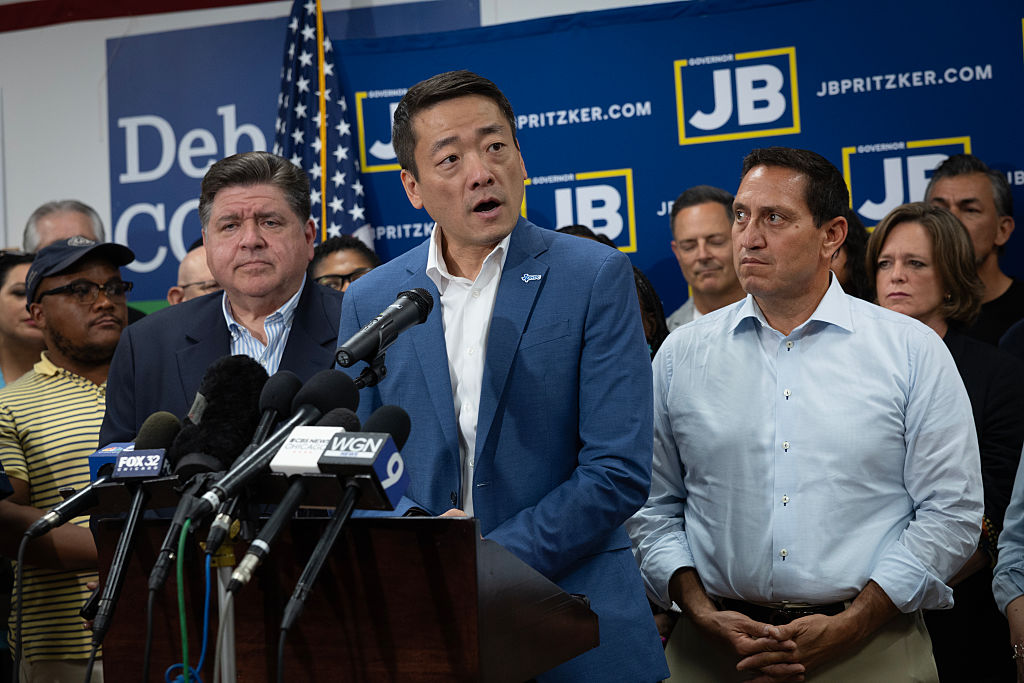
    When more than fifty Texas House Democrats bolted for Illinois to deny Republicans a quorum, legacy media lauded them as modern-day freedom riders. Spare us. The walk-out is no act of moral resistance; it is partisan self-preservation wrapped in civil-rights cosplay. Democrats don’t despise gerrymandering – they despise losing control of the process.

    Texas Republicans, who hold both chambers and the governor’s mansion, are pursuing a mid-decade redraw that could net five new GOP-leaning congressional seats. That is tough, bare-knuckle politics, but it is also constitutional. Map-making belongs to state legislatures, and nothing in Texas law forbids drawing lines more than once a decade. Faced with that reality, Democrats chose not to debate, amend, or even vote “no.” They chose to run.

    This sudden squeamishness about partisan maps is rich coming from a party that gerrymanders with surgical precision whenever it can. New York Democrats ignored their own “independent” commission, rammed through a cartoonishly lopsided map, and only retreated after the courts slapped it down. Illinois has spent the last decade erasing Republican districts from the political landscape altogether. Maryland’s lines meander like spilled ink – by design.

    Yet those same map manipulators now clutch their pearls in Chicago hotel suites, tweeting about democracy while Texans go unrepresented.

    Look closer and you’ll see the deeper motive: desperation. Texas Democrats have hemorrhaged credibility at home. Crime is up, test scores are down and housing costs outpace wages in the urban districts they dominate. Voters notice. So leadership reaches for the one trick that still excites the base – dramatic protest. Anything to suggest they still have a spine.

    By fleeing the chamber, they trade policy defeats for viral theatrics, banking on images of lawmakers on buses and group selfies in O’Hare to prove they can “fight back.” It is camouflage, not courage – an attempt to hide a record of failure beneath a banner of resistance.

    Suppose Democrats truly believe partisan line-drawing disenfranchises voters. They could champion real reform: an independent redistricting commission with teeth. Not the performative panels blue states tout – actual neutrality. Membership chosen by citizen lottery or bipartisan balance; bans on using party registration, racial data, or incumbency protection; meetings livestreamed and maps insulated from legislative override. Enshrine it in the state constitution so neither party can claw the pencil back.

    Yes, some Republicans will balk at surrendering a tool they presently wield. But conservatives who preach limited, accountable government should welcome rules that keep both sides honest. Power worth having is power worth checking – even when it’s ours.

    Democrats will never take that deal, and we know why: outrage is easier than self-restraint. Calling the Texas map “Jim Crow 2.0” rouses donors and distracts from the party’s policy drought. Meanwhile, friendly gerrymanders in Illinois or California remain sacrosanct. Their moral compass points due partisan.

    Walk-outs aren’t new. In 2003 and again in 2021, Texas Democrats fled to block bills they lacked the votes to defeat. Both times the legislation eventually passed. This sequel will end the same way: Republicans will pass a map, courts will sift the details and the spectacle will fade. What remains is a public further convinced that politics is performance art.

    Democratic lawmakers insist they left to defend democracy. In truth they left to defend a narrative – that they’re still relevant, still fighting, still worth the checks small-dollar donors write. It is easier to board a plane than to explain why neighborhoods they represent remain unsafe, schools underperform and budgets bleed red.

    Texans deserve better than Kabuki theatre. They deserve representatives who stay in the chamber, duke it out and then face voters on the merits. They deserve a redistricting process neither party can rig. Until Democrats (and, yes, many Republicans) submit to that principle, every map will be suspect and every session one tantrum away from paralysis.

    The moral crisis here isn’t that partisan maps exist; it’s that politicians would rather stage-manage outrage than fix the rules. Gerrymandering will survive this drama. Public trust may not.

    Because the problem with gerrymandering isn’t which party does it. The problem is that anyone can – and both parties will, until we make it impossible.