Author: Owen Matthews

  • Putin’s trap: how Russia plans to split the western alliance

    Though you wouldn’t know from the smiles around the table at the White House this week, a trap has been set by Vladimir Putin designed to split the United States from its European allies. In Washington on Monday, Europe’s leaders, plus Sir Keir Starmer and Volodymyr Zelensky, agreed with Donald Trump that the killing in Ukraine should and can be ended as soon as possible. They lavished praise on Trump for reaching out to the Kremlin, despite having themselves treated Putin as a pariah for the past three years. And they even enthusiastically applauded the notion of security guarantees similar to NATO’s Article 5 “all-for-one and one-for-all” mutual defense clause as a way to safeguard Ukraine’s borders in the future.

    But behind every one of these apparently promising areas of agreement lurks a fatal misunderstanding of the intentions of the one man in the world who has the power to make the war stop – Putin.

    Let us not forget that the Washington talks were based on Trump and his team’s highly optimistic interpretation of what Putin had agreed to in Anchorage, Alaska. That team included precisely zero Russia experts capable of reading the hidden meaning behind Putin’s weasel words. Steve Witkoff, Trump’s leading point man on Kremlin affairs, is a real estate lawyer with no experience of diplomacy. And the last time that Trump himself spoke in person to Putin, in Helsinki in 2018, he was quickly persuaded by his Russian counterpart that Kremlin election interference was all just a big hoax.

    One of Putin’s great skills is appearing to be measured and constructive when in fact he’s being insincere, intransigent or plain threatening. Take his innocuous-sounding remarks at the post-summit Anchorage press conference. In order to achieve a long-term settlement in Ukraine, Putin said: “We need to eliminate all the primary root causes of the conflict.” Decoded, that is a clear reference to Putin’s historical thesis that Ukraine is an invented country that has been used for centuries by Russia’s enemies as a base from which to attack Moscow – and in his view remains so today. He called, apparently reasonably, for Trump to “consider all the legitimate concerns of Russia and reinstate a just balance of security in Europe and in the world on the whole.” But to Putin that “just balance” means a withdrawal of most Nato forces from countries along Russia’s borders.

    The remark that has caused most excitement among European leaders was Putin’s assurance that “naturally we are prepared to work on” Trump’s suggestion that “the security of Ukraine should be secured.” Trump and his team came away from Anchorage in the belief that Putin had acquiesced to western security guarantees – and Secretary of State Marco Rubio and Witkoff himself have been touting that as a major breakthrough.

    In truth it’s no such thing. Security guarantees were discussed at length during the abortive peace talks between Russia and Ukraine in Istanbul in April 2022, and detailed plans of what those guarantees might look like were included in three drafts of a peace deal that was never signed. Back then Russia, absurdly, tried to insist on itself being a guarantor of Ukraine’s security as in the Budapest Memorandum of 1994, and on having a veto over any intervention. But that point was never resolved after Europe promised Ukraine it could win the war in the field rather than compromise at the negotiating table.

    Trump was caught on a hot mic in the White House telling his European guests: “I think Putin wants to make a deal. You understand that? As crazy as it sounds!” In fact, it doesn’t sound crazy at all – Putin undoubtedly does want to make a deal. But what Trump has not yet grasped is that Putin wants to make it on his own terms.
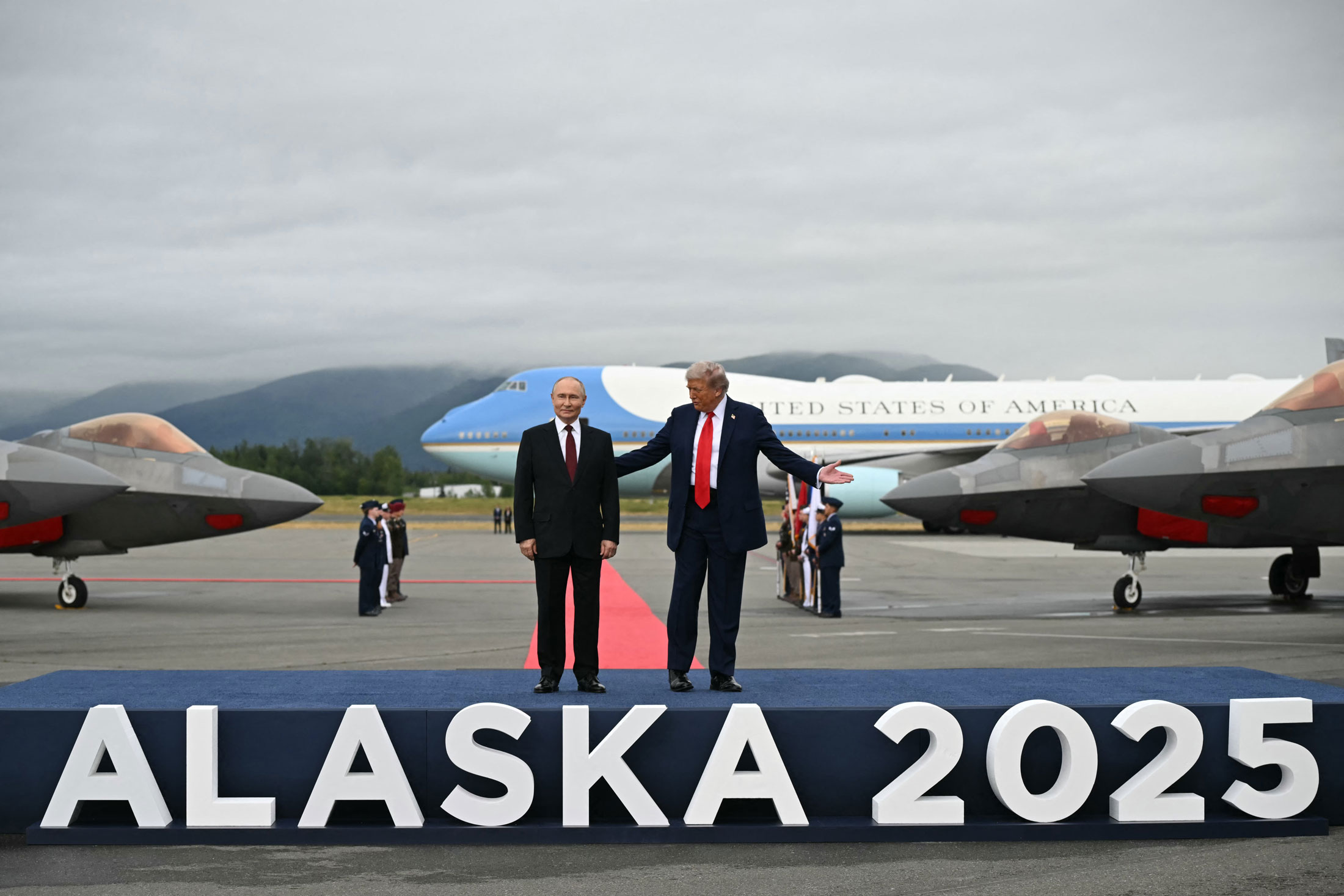
    Putin and Trump in Anchorage, Alaska, August 15 2025 (Getty)

    And therein lies Putin’s trap. His plan for the endgame in the war is to do everything in his power to convince Trump – his new best buddy and business partner – that he is behaving reasonably, making concessions, bending over backwards to keep dialogue open. At the same time, he will lay down a series of conditions that Zelensky will refuse to accept.

    At which point Europe will be forced to choose between heroic and principled words about refusing to compromise Ukraine’s sovereignty – which would mean supporting Ukraine’s war effort without US assistance – and an ignoble compromise with the Kremlin.

    Take the “land swaps” which Trump has mentioned so many times. In reality, that’s a reference to Putin’s demand that Kyiv surrender control of the third of Donetsk and a small sliver of Luhansk provinces that he has so far failed to take. In exchange, Putin proposes to withdraw from small chunks of Sumy and Kharkiv provinces that he occupies, and also drop his claim on the remainder of Kherson and Zaporizhia. Effectively he’s demanding some very valuable and heavily defended real estate – including the fortress cities of Kramatorsk, Sloviansk and Konstantinovka – in exchange for land that he has not yet been able to conquer.

    Amazingly, Trump has reportedly agreed that this is a reasonable price for Kyiv to pay for peace. Yet Zelensky cannot surrender this territory either politically or practically. Tens of thousands of Ukrainians have died defending those positions, and it’s possible that his troops would refuse orders to withdraw even if he tried to make them. And Ukraine’s ultranationalists would be literally up in arms over such a betrayal, making Ukraine instantly ungovernable.

    The brutal truth is that for the past three years the Europeans have been lying to Ukraine and themselves

    Putin has laid a similar political minefield for Zelensky and his European allies over legal recognition of the territories he has occupied. Again, Trump is reportedly in favor of forcing Kyiv to de jure recognize Crimea as Russian, while leaving the rest of occupied Ukraine in a legal limbo. Again, such a humiliation would be political death for any Ukrainian leader who made it and incur the armed wrath of legions of angry, heavily armed, well-organized and politically vocal veterans groups such as Azov.

    Putin has dozens more such humiliations in store for Kyiv and its backers before he is ready to end his assault on Ukraine. On the economic front, his wish list includes the lifting of sanctions, a resumption of flights and the unfreezing of billions of Central Bank assets. On the geopolitical front, he wants a constitutional guarantee that Ukraine will never join Nato and restrictions on weapons and troops NATO can deploy to border countries such as the Baltic states, Romania and Poland, as well as an assurance of no more Nato eastward expansion to Moldova and Georgia.

    In Ukraine, he would demand the enshrinement of Russian as an official language, granting Russian-speaking regions the right to their own education and examinations, and the restoration of the properties of the wing of the Ukrainian Orthodox Church which remains loyal to the Moscow Patriarchate. He would also insist on scrapping Ukrainian laws banning Soviet symbols and suppressing the memory of Soviet-era war heroes and cultural figures, in addition to allowing towns to restore demolished monuments to Russian czars and writers. Putin would have Kyiv un-ban Russian-language radio and TV stations and newspapers, as well as political parties sympathetic to Moscow, and unfreeze the assets of the 5,000 people sanctioned for being pro-Russian by Ukrainian presidential decree.

    That’s to mention just the top dozen of Putin’s demands. Some he will get, some he won’t. But we can be sure that he will push for all of them, and more.
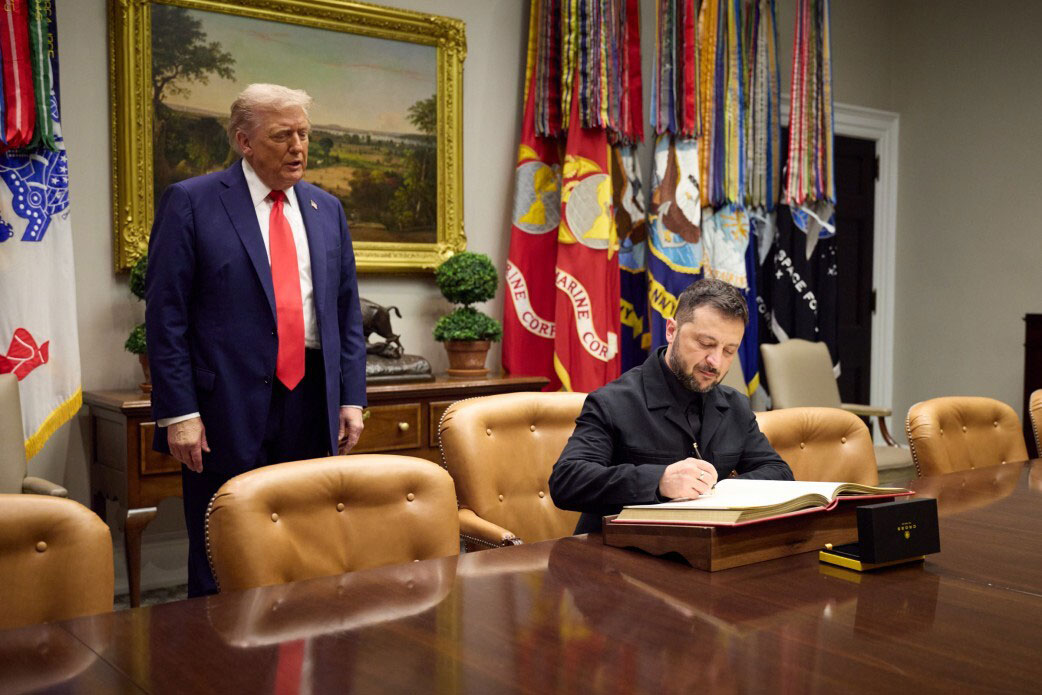
    Zelensky signs the guest book following his meeting with Trump in Washington, August 19, 2025 (Getty)

    The question for Europe is stark: what will they do if and when Ukraine refuses to submit? If Trump is fine about surrendering the remainder of Donbas, we can be sure that he’s not likely to take a stand against Putin over such details as statues of Pushkin or the rights of the suppressed Russian Church (a major grievance for religious-minded MAGA supporters).

    J.D. Vance has made his position on Europe clear. “This is your neck of the woods… you guys have got to step up and take a bigger role in this thing,” the Vice President said earlier this month. “If you care so much about this conflict you should be willing to [fund] this war yourself.” The US, for its part, “wants to bring about a peaceful settlement to this thing, we want to stop the killing,” he added. Trump has repeatedly promised to do his best to play the peacemaker. But if the Ukrainians and their allies don’t wish to agree, Washington will walk away. “Keep fighting,” wrote Trump last week. “Good luck.”

    The brutal truth is that for the past three years the Europeans have been lying to Ukraine and themselves. In the spring of 2022, Europe, led by Boris Johnson, encouraged Zelensky to fight on and promised Ukraine “as much support as they need for as long as they need it.” Ukraine kept its part of the bargain, and with the help of hundreds of billions in military and financial aid pushed Putin’s far larger army back from over half of the territory it once occupied.

    That’s an extraordinary achievement. But it hasn’t been enough to win. And by this point many of Kyiv’s most passionate defenders in Europe are starting to acknowledge that there is little military or political point in fighting on. Others, like the Baltic nations, disagree.

    For those allies who believe that it’s time to call it a day, the main point that remains to be decided is how Ukraine’s reduced new borders can be protected in a way that Putin will not dare to challenge. Starmer and Emmanuel Macron’s idea of putting NATO boots on the ground is foolish and misunderstands that the basis of Putin’s paranoid logic in starting the war was to avoid precisely that outcome.

    The “NATO Article 5-like” security guarantees of which Italy’s Giorgia Meloni spoke in Washington this week (albeit accompanied by extravagant air quotes) sound formidable. The problem is that security guarantees have to be credible to work. And will Putin believe that Starmer or Macron will send their voters’ sons to fight over Donbas, when they have already said that their proposed minuscule peacekeeping force will be “backstopped” by US air power?

    Of more practical use is a proposal to create a network of air defences made of Patriot batteries and drones along the length of Ukraine’s border, funded by Europe. That’s what Ukraine’s reported offer to buy $100 billion in US weaponry is about, and includes a staggering $50 billion to develop new-generation drones in partnership with the world’s biggest experts in Ukraine itself.

    Ben Wallace, the former UK defense secretary, has called Trump the “appeaser-in-chief” and warned that the peace process could be “another Munich 1938,” when independent Czechoslovakia was sacrificed to Hitlerite aggression. But that is a bad analogy. At Munich, Sir Neville Chamberlain failed to avert war. Today’s Ukraine, with western help, has failed to win a war. But neither have they lost. Instead, like Finland in 1941, they have heroically fought a much stronger adversary to a halt and saved 80 percent of their country and now face a bloody, attritional stalemate.

    Putin would like nothing more than for Europe to encourage Ukraine to fight on, and to lose even more of their land and independence. The question Ukraine’s friends must ask themselves today is whether it’s time to choose an unjust peace over a righteous but never-ending war.

  • Between Trump and Zelensky, there was no breakthrough

    Between Trump and Zelensky, there was no breakthrough

    What a lovely meeting Volodymyr Zelensky and his European allies had with Donald Trump. The US President complimented Zelensky on his outfit, German Chancellor Merz on his “great tan,” and said that Finnish President Alexander Stubb was “looking better than I’ve ever seen you look!” Everyone – especially Zelensky – laughed uproariously at all Trump’s jokes. And all eight leaders present were at great pains to pretend that they were on the same page when it came to achieving peace in Ukraine. 

    But there was one small thing missing from this White House festival of bonhomie and mutual flattery, and that was a substantive discussion of the actual nuts and bolts of a deal that Vladimir Putin would be prepared to accept. 

    One of the elephants in the room was the question of whether Zelensky would be prepared to cede more territory in the Donbas as the price of peace. Another was whether Zelensky was ready to recognize formally part or all of the territories occupied by Putin since 2014 as parts of Russia. Indeed any questions to which Zelensky would be likely to say “no way!” remained tactfully un-discussed

    Trump seemed to have taken a page from the great diplomatist Bing Crosby’s playbook – you’ve got to accentuate the positive, eliminate the negative and (preferably) not mess with Mr. In-Between. Which is preferable, all agreed, to the course Trump took during Zelensky’s last visit to the Oval Office in February where the Ukrainian president was browbeaten, talked over, insulted and then dismissed. So in that important sense relations have improved considerably. True, unlike Putin, Zelensky got no red carpet, nor a ride in Trump’s presidential limousine. But he did at least receive a warm welcome and immediate words of praise for having worn a suit this time. 

    Anyone who hoped that Monday’s meeting would achieve a major breakthrough was disappointed. Trump repeatedly made it clear that it was he and Putin who were the main deciders of the peace process, Europe’s leaders the subordinates. He told his European visitors that he had spoken to Putin just before their meeting and would be calling him again right after. Trump was in his element as he acted as master of ceremonies, treating the European leaders like a CEO consulting his board members before top-level negotiations with a rival company. 

    There was one clear signal, though, of the key issue which will be pivotal in the endgame of the war – security guarantees for Ukraine from its Western allies. Putin, in his remarks after his meeting with Trump in Alaska, mentioned that he was “naturally prepared to work on” security guarantees to Ukraine. Trump later claimed in calls to his European colleagues that Putin had “agreed” to such guarantees – and later leaks from the White House suggested that the US would also be amenable to signing up too. 

    In the White House on Monday Giorgia Meloni led the charge on trying to define what those guarantees would look like, suggesting that they should mirror NATO’s Article 5 that calls for (but, importantly, does not oblige) members to regard an attack on one as an attack on them all. Sir Keir Starmer suggested that “we’re talking about security not just of Ukraine, we’re talking about the security of Europe and the United Kingdom as well.”

    In TV appearances, both Secretary of State Marco Rubio and Trump’s special envoy to Russia Steve Witkoff have emphasized the idea of security guarantees to Ukraine as a major breakthrough. In truth, such proposed covenants are nothing new. In Istanbul in April 2022 several draft agreements drawn up in the course of talks between Ukraine and Russia included detailed clauses on the scope and nature of possible Western security guarantees outside the framework of NATO. But those peace talks were abandoned in favor of isolating Russia and encouraging Ukraine to defeat Moscow’s forces in the field.  

    Crucially, in Istanbul the Russians had – absurdly – demanded to be a guarantor of Ukraine of future security, just as they had been in the Budapest Memorandum of 1994, and to have a veto over any international intervention. That would obviously have rendered the whole idea of a security guarantee ridiculous. It remains to be seen if Putin chooses to reprise that extraordinary, deal-breaking demand. But more likely the Kremlin will suggest that China be one of the future guarantors of Ukraine’s security, which will pose a mind-bending new set of challenges for Ukraine’s allies. 

    Overall, though, all sides can be content with the Washington conference. There was no breakthrough, but neither was there a trainwreck. Importantly, Trump forbore from browbeating the Europeans for freeloading on US military budgets, for failing to pull their weight in arming Ukraine, or for failing to stop the war when they could have – all previous MAGA talking points. And Trump also did not push back on a single European argument, even when France’s Emmanuel Macron and Merz both spoke of returning to the idea of a ceasefire before final peace talks. That point had already been jettisoned by Trump at Anchorage when he bought into Putin’s new timetable, but he was tactful enough not to remind his guests of that. 

    The Europeans, for their part, did not blast Trump for abandoning Ukraine by cutting off weapons and money, nor accuse him of selling Kyiv’s interests down the river, nor did they denounce him for giving an indicted war criminal the red carpet treatment or demand why Putin had not been arrested on arrival in Anchorage. In short, everyone in the room – including Trump himself – was on best behavior.  

    Is best behavior the same as actual Western unity? It is as long as nobody raises the difficult questions such as land giveaways, Russian language rights, return of stolen children, payment of reparations, lifting of sanctions on Russia, unbanning pro-Russian political parties and TV stations, lifting Ukrainian sanctions on five thousand of Zelensky’s political opponents, or holding long overdue elections, to name just a few of the thorny issues that stand on the road from war to peace. 

    Trump’s next step, he says, will be to organize a trilateral meeting with himself, Putin and Zelensky. It’s a tall order – not least because Putin has made it clear that he doesn’t consider Zelensky a legitimate leader and Zelensky passed an actual law in 2022 forbidding negotiations with the Putin regime. And if it does happen, we can be sure that all the thorniest of questions will be asked right up front – and nobody will be on their best behavior. 

  • What Alaska means to Putin

    What Alaska means to Putin

    From the Kremlin’s point of view, holding a US-Russia summit in Anchorage, Alaska is an idea of fiendish brilliance. The venue itself determines the agenda. Literally half a world away from the petty concerns of the European continent, Donald Trump and Vladimir Putin can flex the vastness of their respective countries. Anchorage is an eight-hour flight from Washington D.C. and roughly the same distance from Moscow, flying over no other country but Russia for most of the way. By traveling to the point where their countries almost touch in the North Pacific, both leaders can feel justified in prioritizing issues that concern just the two of them, from arms control treaties to space cooperation to Arctic mineral rights. Seen from Anchorage, Ukraine seems a very distant and very local problem. 

    The summit is the brainchild of Yuri Ushakov, a veteran diplomat who joined the USSR’s foreign ministry in 1970. Ushakov is a wily old attack dog who learned the ways of Washington during a decade-long stint as Russian ambassador from 1998 to 2008. And in suggesting Alaska as a meeting point, Ushakov clearly knows how to flatter not only Trump’s ego but also his own President’s obsession with history. 

    For Putin, Russia’s conquest of northeast Asia and much of the coast of America’s Pacific Northwest is the founding myth of his country’s modern greatness. In the 16th century Muscovy and Spain had both defeated Muslim occupiers and began expanding into rich new worlds east and west – in Spain’s case, gold-rich America; in Muscovy’s, fur-rich Siberia. Spanish conquistadors and Russian Cossacks reached the Pacific from different sides and started settling colonies along the coasts. In 1776, the Spanish Crown ordered the foundation of San Francisco – in the form of a Franciscan Mission and garrisoned Presidio – in direct response to news that Catherine the Great had started assembling a major Russian fleet to grab the unclaimed territory of northern California. In the event, Catherine’s fleet was redeployed to fight a war with the Swedes, leaving most of California to the Spanish. Who was to say who was the more logical ruler of America’s north-west coast, distant Madrid or distant St Petersburg?

    For Putin, Russia’s conquest of northeast Asia and much of the coast of America’s Pacific Northwest is the founding myth of his country’s modern greatness

    From 1816 until 1842 the southernmost frontier of the Russian empire was 70 miles north of San Francisco at Fort Ross on the Russian River (hence the name). For a brief period in the early 19th century Russia had a colony on Kaua’i island in Hawaii. And until 1867 the modern state of Alaska with its 6,500-mile coastline was known as Russian America and was a possession of the czar’s. 

    In the wake of the Crimean War, during which a Royal Navy force bombarded and briefly occupied the port of Petropavlovsk on Kamchatka, Czar Alexander II realized he lacked the naval power to maintain control of his American colonies. He first offered Russian America to the British prime minister Lord Palmerston for the eminently logical reason that the territory was contiguous with British Columbia. Palmerston, however, was uninterested in acquiring half a million square miles of mostly unexplored North American wilderness. The only other plausible buyer was the US. But it took two years, and the distribution of tens of thousands of dollars in bribes to congressmen, for the Russians to persuade a reluctant secretary of state, William Seward, to write a cheque for $7.2 million for the Alaska Purchase – mocked at the time as “Seward’s Folly.” 

    Even today, Alaska still bears the stamp of its century and a half as part of the Russian empire. A third of Alaska’s population is Native American (by far the largest proportion of any US state) and most of the Aleut and Tlingit peoples still adhere to the Russian Orthodox faith. The major feature of every coastal town from Sitka to Kodiak is a distinctively Russian church, and there are communities of black-robed monks on out-lying islands – though most are Americans and their services are in English. Colonial echoes of Britain, France and Spain are commonplace in other countries, whether Anglican worshippers in Simla, French baguettes in Saigon or Spanish missions in California. Living echoes of a vanished Russian empire are much rarer and exist mostly in Alaska. 

    It is clearly flattering and heartwarming for Putin to meet his American counterpart on what was once Russian territory. Some more excitable western commentators have claimed that hosting a summit in Anchorage encourages Putin’s neo-imperial ambitions – including, supposedly, reclaiming the American lands sold by Alexander II. But the idea that “Alaska Nash” (Alaska is Ours) is anything other than a Russian pub joke is absurd. A roadside billboard bearing that slogan and featuring a map of Russia including all of Alaska has been doing the rounds of Twitter as supposed evidence of Putin’s revanchism. In fact it’s just a jokey advertisement for a real estate company called Alaska. 

    Rather than dog-whistling Russian imperialism, the location allows Putin to appeal to a bygone age of Russian-American cooperation where the two nations divided up large swaths of the world. The most recent example is, to Putin’s mind, the Yalta conference of February 1945 where Stalin, Roosevelt and Churchill pored over maps and divided spheres of influence in the crumbling Nazi empire. A similar carve-up of Ukrainian territory is exactly what Volodymyr Zelensky fears and he has spent the week since the summit was announced gathering European support to insist that no deal can be done over the heads of the Ukrainians. 

    Unfortunately for Kyiv, and for the Europeans, they’re not invited. It’s also highly likely that even if Putin and Trump reach some kind of a deal on a ceasefire, it will be largely on Russia’s terms. But it’s also possible that Moscow and Washington could agree on other, non-Ukraine related issues, such as getting Putin back on board with the New START treaty limiting the number of deployed nuclear weapons – the kind of deal that nuclear superpowers make between each other. And there is nothing that both Putin and Trump enjoy more than playing the role of imperial presidents.

  • Talks with Trump will be a boon for Putin

    Talks with Trump will be a boon for Putin

    With just a day to go until the expiry of his ultimatum to Vladimir Putin to halt the war on Ukraine or face dire consequences, Donald Trump has once more reset the clock. Trump intends to meet in person with President Vladimir Putin of Russia as soon as next week, the New York Times has reported. That summit will be followed by a second, trilateral meeting including Trump, Putin and President Volodymyr Zelensky of Ukraine, Trump reportedly told top European leaders in a conference call on Wednesday night.

    The announcement came after Trump’s envoy, real state developer Steve Witkoff, met Putin for three hours of talks at the Kremlin. Trump wrote on social media that he had “updated some of our European Allies” about the Witkoff talks. “Everyone agrees this War must come to a close, and we will work towards that in the days and weeks to come.”

    A week before, Trump had professed himself “disappointed” with Putin’s continuous broken promises and moved up a previous 50-day deadline for the Kremlin to cease fire to just eight days – an ultimatum due to expire this Friday. And just hours before he hinted that he was ready for direct talks with Putin, Trump followed through on a threat to impose secondary sanctions on countries which imported Russian oil. “India… doesn’t care how many people in Ukraine are being killed by the Russian War Machine,” Trump said before announcing a 25 per cent tariff on Indian exports to the US due to begin in 21 days. Whether Trump will now actually impose those tariffs in light of his new plan to open talks with Putin is unclear. 

    Trump has offered a quick route to the end of the war. The bad news is that it’s likely to be on Putin’s terms. 

    Trump, famously, considers himself a master of the art of the deal. He favours high-profile, face-to-face summit meetings with world leaders, whether friend or foe. In 2018 he met Putin in Helsinki for a long meeting that cosplayed the high-stakes summits between Ronald Reagan and Mikhail Gorbachev that laid the groundwork for the end of the Cold War. But no deals resulted from that Trump-Putin summit, despite the fact that Putin was at the time already illegally occupying Crimea and his proxies controlled parts of eastern Ukraine. Instead, the main soundbite was Trump appearing to side with Putin over his own intelligence establishment on the subject of Russian interference in the 2016 US elections. 

    “No prior president has ever abased himself more abjectly before a tyrant,” wrote the late Republican Senator John McCain, decrying Trump’s toadying to Putin as a “disgraceful performance”. 

    This time, the stakes for a Trump-Putin summit will be much higher. People are dying every day, Russian troops are relentlessly advancing, and Ukraine faces critical shortages of air defence missiles and military manpower. Trump has repeatedly vowed to bring an end to the conflict in Ukraine, and has made several threats to impose devastating sanctions on Moscow’s oil and gas clients if Putin does not comply. The pressure will be on for Trump to actually persuade, cajole or force Putin to stop his air and ground offensives in Ukraine. 

    It’s significant that Europe will be completely sidelined from the proposed talks. Clearly, Trump expects to present whatever he agrees with Putin to the rest of the world as a fait accompli

    But in one important sense, direct talks between Washington and Moscow will break a deadlock. Putin has resisted being seen to bow before US pressure. At the same time, the full-scale sanctions threatened by Trump would wreak chaos on the world economy by removing the 10 per cent of the world’s oil supply provided by Russia from markets, sending energy prices spiralling. The result of this standoff has been a near-farcical game where Putin pretended to negotiate while Trump pretended to assemble a formidable battery of imaginary sanctions. 

    That phase of phoney negotiations will soon be over. The next question is what incentive Putin will have to end a war that he believes that he is winning. Russian forces appear to be accelerating their encirclement of the strategic railhead of Pokrovsk in Donbas and are advancing towards Kharkiv. At the same time political unrest in Kyiv is growing, both over Zelensky’s disastrously misguided attempt to bring anticorruption agencies under his control as well as the forced conscription of men into Ukraine’s severely depleted army. Desertions of Ukrainian troops from the front line are, reportedly, soaring. Head of Ukrainian Military Intelligence General Kyrylo Budanov has warned that the country could face a military collapse this summer. Putin can be forgiven for believing that time is on his side. 

    The stark answer to what Putin wants is that he is not fighting for land but rather is fighting to subordinate Ukraine and, as he sees it, prevent it from becoming a threatening Western proxy. That’s importantly different to destroying Ukraine, occupying Ukraine, exterminating all Ukrainians, or other hysterical assessments of the Kremlin’s intentions. 

    But Putin has been very clear from the start of hostilities that he will not countenance Ukraine as a member of Nato. He also demands limits on the Ukrainian military and the restoration of rights to Russian language speakers and adherents of the Moscow-loyal party of the Ukrainian Orthodox Church. Most importantly, Putin wants regime change in Kyiv, which means the end of Zelensky – who is already six-and-a-half years into a five-year presidential term.  

    How many of Putin’s demands will Trump concede during their face-to-face negotiations? Many Ukrainians will ask what right Trump has to negotiate over their heads – exactly what President Joe Biden vowed never to do? Many Ukrainians fear that they are about to be sold down the river in a great power stitch-up reminiscent of the 1945 Yalta carve-up of post-war Europe.

    “The war must end [but] it must be done honestly,” tweeted Zelensky on Wednesday after a conference call with Trump alongside other European leaders. “We all need a lasting and reliable peace. Russia must end the war that it itself started.”

    Trump’s apparent answer to Europeans’ concerns has been to symbolically offer a follow-up trilateral meeting involving himself, Putin and Zelensky to give at least an illusion of Ukrainian participation.

    That seems to be a recipe for disaster. Putin hates Zelensky for defying him and turning the short, victorious war he planned into a long and bloody quagmire. Zelensky hates Putin for massacring and abusing thousands of his people – as well as for sending murder squads to Kyiv with orders to murder him in the first days of the war. Zelensky and Trump had a cordial meeting in Rome at Pope Francis’ funeral – but the bad blood after Zelensky’s humiliation in the Oval Office in February persists. Meeting Zelensky would legitimise him as the leader of a sovereign Ukraine, which is anathema to Putin. In short, the meeting is as unlikely as it would be disastrous if it ever happened. 

    The good news is that in calling for direct talks with Putin, Trump has offered a quick route to the end of the war. The bad news is that it’s likely to be on Putin’s terms.