The costs of not dealing with climate change are, of course, much higher than the costs of dealing with it. We know this because, as climate campaigners keep telling us, climate change is going to set the world alight and unleash mad tempests which are going to wreak destruction on the global economy. Not a few of them have been trying to prove this by parroting a paper by the Potsdam Institute for Climate Impact Research published in the journal Nature in 2024 which concluded that a rise of 8.5 Celsius in global temperatures by 2100 will shrink the economy by 62 percent. Never mind that hardly anyone thinks that such temperature rises are even remotely likely – we are certainly not presently experiencing even nearly such an upwards trend in global temperature – the paper was widely reported as scientific fact rather than as a piece of highly speculative modeling.
But now it appears that the paper fails even as a piece of speculative modeling. Following a critique by economists at Stanford University in August the paper has been withdrawn by Nature. A cock-up with the data for a single country, Uzbekistan, turns out to have skewed the figures so much that, when corrected, the paper suggested a fall of 23 percent in global economic output, not 62 percent.
Needless to say, the reaction of some climate campaigners has been to say that 20 percent of the global economy is still quite a lot of money, and still shows the dramatic impact of a changing climate. But that is hardly the point. If you can magically reinstate 40 percent of global output by correcting some statistics for Uzbekistan, what does it tell you about the whole exercise? This, and all other modeling of its kind, are essentially useless. Economic forecasts for 12 months ahead have shown themselves to have a pretty appalling record. Why does anyone think that a study trying to predict the global economy in 75 years’ time – climate change or no climate change – has any veracity whatsoever? All the model is doing is reflecting the assumptions which are put into it, which are themselves skewed by the prejudices of the people who build it. In this case, and in the case of all this kind of research, that tends to focus on negative effects of a changing climate – higher temperatures and rainfall – while ignoring the positive changes: fewer cold extremes and a world which appears to be becoming steadily less windy.
According to one often-repeated claim, crop yields are going to collapse, causing widespread hunger – a claim which is in direct odds to real world data showing that crop yields continue to increase. When you look a little more carefully at the models which show yields will collapse you find that they analyze all kinds of negative effects of climate change – that some places may experience desertification, without any attempt to acknowledge that other locations will see more favorable conditions for growing food nor that technology is surely going to continue to boost yields by other means, such as gene-editing and improved cultivation techniques.
One apocalyptic paper in a scientific journal has been exposed as deeply flawed – a piece of news which is unlikely to be reported with nearly as much enthusiasm as the original paper. But that doesn’t mean that we won’t continue to be bombarded with fanciful, doom-laden predictions regarding climate change. There is a deep negative bias in this kind of work, and that will remain the case.
Author: Ross Clark
-

Climate doom is not science
-
Has the AI jobs bloodbath finally arrived?
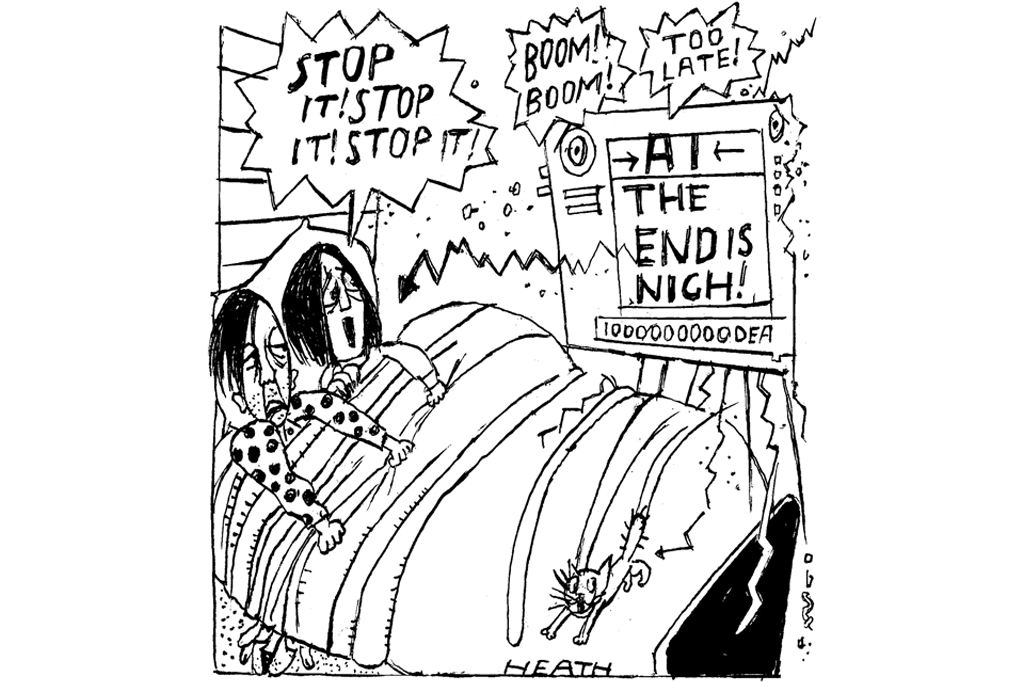
There has been much wallowing over news that Amazon and UPS have each just cut 14,000 jobs. Some Amazon employees report of being fired with all the heartlessness you might expect in a world where tech has taken over: by automated email. Maybe it was even AI which handpicked them to be de-emphasized, to use that dreaded 1990s expression. This, then, seems to be the future: where an elite of AI entrepreneurs grow rich while the rest of us slop off into idleness and unemployment. So much for those who have been gleefully predicting the implosion of the AI boom. Nvidia has just been revealed to be the world’s first $5 trillion company, with a market capitalization greater than the whole of Germany.
There is just one thing wrong with this analysis – and not just because it is hazardous to treat Amazon as if it were the entire economy (even if it seems sometimes to be so). If there are job losses in some areas, it doesn’t show up in the overall employment figures. The US Bureau of Labor Statistics recently reported that the number of payrolled positions was up another 22,000 in August. While job-creation has been a little on the quiet side since April, employment is up 1.466 million over the past 12 months – and this following on from a few thumping years of job-creation. This is a remarkably dry bloodbath.
It has become a received wisdom in recent years that AI is the industrial revolution of the white collar classes. Where agricultural workers saw their jobs ravaged by the development of threshing machines and later factory workers saw themselves made redundant by more efficient machinery, now it is the turn of the professional classes. Lawyers, accountants, marketing people; all will be swept aside as AI romps through their professions. Yet take a look at the employment figures and they show a more nuanced story. “Professional and business services” show a fall, down 55,000 payrolled positions over the past year. Yet there has been a huge expansion in jobs in “private education and health services” – both of them industries which have been slated for mass job losses thanks to AI but which have grown 862,000 jobs over the past 12 months. If we are using AI to do our accounts we do not, at least yet, seem to be using it to educate our children or to take a look at our dodgy knees.
The biggest source of job losses over the past 12 months has been in manufacturing, where 78,000 jobs have been lost – continuing a tale of the past few decades as rustbelt industries shed jobs. Whether or not AI is responsible for some of that, the figure certainly doesn’t say much for Donald Trump’s trade wars. Wasn’t that the whole point of the tariffs, to protect US manufacturing jobs?
If AI does go on to lead to a mass net destruction of jobs it would be the first technology in history to do so. Similar claims have been made about all labor-saving technologies in history, from ploughs, to power looms to robotics. Yet for every job they destroyed, they provoked the creation of more than one new job in some other industry. They freed up labor to be used elsewhere, enriching society in the process. Why should we expect AI to be any different?
There is just one way in which AI is a bit different, though: it has a habit of consuming its own children. Among the jobs being lost at the moment is reported to be a large number of coding jobs as their jobs start to be done by… AI. The technology is taking over from the very people who have been creating it. Unless you are right at the forefront of the coding profession, you should be watching your back – or rather your phone for an automated redundancy notice.
-

Why did Trump even want the Nobel Peace Prize?
Did anyone seriously think that Donald Trump was going to emerge this morning as winner of the Nobel Peace Prize? First, there were the mechanics. Nominations for the prize closed on 31 January, at which point Trump was only 11 days into his second term and there was hardly a glint of hope in Gaza. The prize committee will have met for the last time around a week ago, when there was still doubt as to whether Hamas would accept this deal. The committee will have had to make its decision a few days before the announcement, because certain formalities have to be undertaken ahead of time, such as checking whether the recipient actually wants the prize.
For those reasons, next year was always going to be a more appropriate time for Trump to win the prize. But even then, don’t hold your hopes. While the prize committee prides itself on its independence, it is not really free of outside pressure. As we have seen many times, part of the liberal mindset is a tendency to put yourself in a straightjacket of thought, sewn together by the opinions of other liberals. Had they awarded the prize to Trump, members of the committee would have faced cancellation. Dinner invitations would have dried up, high-powered jobs at universities and NGOs would have been denied to them. Norway has a pretty small establishment. There would have been nowhere to hide from angry liberal opinion. Even had the committee members been prepared to face up to that, it is only natural that a committee – even one not made up by liberals – would be a bit irritated by the brazen way in which Trump and his people have been lobbying for the prize, and be inclined to award it elsewhere as a result.
That said, what Trump has achieved over the past couple of weeks is surely deserving of the prize. While other world leaders such as Keir Starmer and Emmanuel Macron dealt with the world they would like to exist, Trump dealt with the one which really does exist. It is hard to imagine anyone but him being able to moderate Benjamin Netanyahu and simultaneously being able to apply pressure on Egypt and other Arab countries to influence what is the effective surrender of Hamas. It is laughable to think that it could have happened under Joe Biden, and not much more far-fetched to think that Barack Obama – who really is a Nobel Peace laureate – could have achieved it.
The big mystery, though, is why Trump actually wants the Nobel Peace Prize. He has spent his time in office scorning international bodies. He has withdrawn from the Paris Climate Agreement, from the World Health Organization. He has treated the United Nations pretty sniffily. His whole philosophy in international affairs revolves around the idea that international bodies have grown too big for their boots: they are run by unelected busybodies who deserve to be cut down to size. He likes to see the world as being run by strong men, not worthy NGO types. So why does he even want the Nobel Peace Prize? He should want to scorn the idea of a bunch of aloof worthies appointed by the Norwegian government trying to sit in judgment on who is good and who is bad in the world.
A little note ought also to be added for Maria Corina Machado, the actual recipient of the prize. It was always likely, given the lobbying by the Trump, that the Nobel committee would go for someone few have heard of. But there is the possibility, of course, that Machado is actually a deserving choice. Had it not been for Trump and Gaza we would this morning be heralding the Venezuelan opposition leader who was robbed on victory in her country’s elections by Nicolas Maduro. Trump doesn’t need a Nobel Peace Prize and shouldn’t really want it. For Machado and the people of Venezuela, on the other hand, the prize might actually do some good, by rewarding someone who has stood up against dictatorship.
-

Bessent’s private message reveals a Milei gamble
The first lesson for Treasury Secretary Scott Bessent is that digital photography has totally changed politics, as wiser practitioners have long since realized. You might have got away with reading private communications in public 30 years ago, but you can no longer do so. The second lesson is that if you build an administration on the promise that you will always serve the American interest, certain foreign policy decisions become difficult.
Bessent has been caught reading a message on his phone from Agriculture Secretary Brooke Rollins expressing her anger at the Trump administration’s deal to establish a $20 billion loan facility with Argentina, or “the Argentine” as Rollins prefers still to call it. How did Argentina’s embattled President Milei respond to being thrown a lifeline? In the words of Rollins, they “removed the export tariffs on grains, reducing their price, and sold a bunch a soybeans to China, at a time we would normally be selling to China.”
In fact, a “bunch” was 20 shiploads of soybeans, eagerly bought up by China as it tries to sidestep US producers in the midst of a US-China trade war.
In vain has the White House argued that Argentina’s agricultural produce would even cheaper if the country was allowed to go bust. As far as American soy bean farmers are concerned they have been shafted.
That is the reality of a trade war. It might seem like a straightforward battle between one country’s producers and another’s, yet the victims of tariffs imposed by your own government are as likely to reside in your own country – and they are not going to be the least bit happy. But the incident also raises questions about the Trump administration’s support for Milei’s government. As far as Trump is concerned, Milei is a rare friend in a world which often seems mostly hostile towards him. Milei in some ways is cut from the same cloth – he is of the “move fast and break things” school of governing. Or in his case, slice through them – he famously appeared at political rallies using a chainsaw as a prop, symbolizing what he intended to do to Argentina’s bloated state. He did not disappoint. Whole government departments were expunged in a blizzard of executive orders which possibly left even Trump in awe.
Milei achieved his first goal of taming runaway inflation, although it is still far from healthy levels – it is down to 33 percent from over 200 percent in 2023 when Milei took office.
Trouble is, when you start off like that you tend to make many enemies along the way. And now Milei has slipped up – he has cleared out Argentina’s currency reserves in trying to prop up the peso, hence the need for a bailout. It is natural that Trump might want to help out an ideological soul mate in need, but spending US taxpayers’ dollars doing this is not necessarily going to win him many friends at home. If you are a US soybean producer, Argentinian farmers are your rivals, not friends deserving of a bailout.
If Milei burns through his latest lifeline, he may find himself relying on the IMF alone. The White House vaults are not likely to be opened to him again.
-

Trump’s new pharma tariffs will punish Americans
Donald Trump has punished European pharmaceutical companies by imposing 100 percent tariffs on their branded products unless they are prepared to set up a manufacturing plants in the US. That is one way of putting it, but why is the issue of tariffs so often seen from the point of view of the producers and so rarely seen from the position of the consumers? Besides punishing drugs companies, the President has also whacked the American public – or at least that section of the population which relies on patented medicines made outside the US. The cost of treatment for many of these patients will soar as a result. Does Trump think that people will somehow fail to realize this?
If he had imposed punitive tariffs on imports of generic medicines – those whose patents have expired and can be manufactured by any company, anywhere in the world – while leaving branded medicines alone, it would have made some kind of sense. It wouldn’t have left consumers untouched, because they would no longer be able to source medicines so cheaply from India, where many generic drugs are made, but US producers would be able to step up production of generic medicines and hope to compete with overseas competition. It wouldn’t cause mass upheaval for consumers. But instead Trump has done the opposite: he has left generic medicines untouched, while whacking tariffs on patented medicines. Patented medicines can only be manufactured by the company which holds the patent, or by anyone who is licensed by that company.
Will drugs companies which currently make patented drugs overseas shift production to the US, as Trump intends? Maybe some will, but it is almost certain that some will not, forcing Americans who are seriously unwell to pay a punitive tax to the US government for the right to continue to use life-saving drugs. Some drugs companies will make the calculation that Americans are a captive market for their products and that consumers will simply have to pay whatever it costs to obtain them – so why go to the expense of building a manufacturing plant in the US to sidestep the 100 percent tariffs? In any case, Trump has shown himself to be so inconsistent on tariffs – and other policies for that matter – that deciding to invest in the US in response to this week’s announcement would present a serious commercial risk: Trump might well have changed his mind by the time you get your plant open, making your investment pointless.
The same is true of all the tariffs which Trump has announced since “Liberation Day” in April. They are good news for some producers, who are now better able to fend off foreign competition. But that only comes at the price of punishing consumers, who face less choice and more expensive goods as a result. And it is not just end-of-the-line consumers who suffer, either – many manufacturers rely on imported components, tariffs on which drive up their costs.
We might appreciate the double-sided effects of tariffs a bit more if we started calling them by what they really are: import taxes. That would refocus minds on their effect on the consumer, and make it harder for Trump, or any other protectionist, to present them as a win-win solution to a country’s economic malaise.
-

Is Trump right to link autism with Tylenol?
Donald Trump’s apparent suggestion that people could protect themselves against Covid by injecting themselves with bleach marked a low point in his first administration. It provided his critics with evidence that he was an erratic president trying to ride roughshod over scientific evidence as well as common sense. It is easy, therefore, to dismiss the American president’s announcement that government health warnings will henceforth be printed on packets of Tylenol – the brand name for acetaminophen – telling pregnant women to avoid the painkiller for fear it will cause autism in their unborn children as yet another anti-scientific diatribe.
The involvement of health secretary Robert F. Kennedy Jr. – a long-term vaccine skeptic – adds to the impression that the association between autism and acetaminophen might be a little cooked-up. The American College of Obstetricians and Gynecologists lost no time in branding the presidential announcement as “irresponsible.”
But is there any genuine link between autism and the consumption of Tylenol? There is quite a lot of evidence on this and interestingly, it doesn’t entirely dismiss a link, although if there is one, it does not appear to be very strong.
A review of the evidence was published in the journal Environmental Health in August – carried out by a team of scientists from several universities, including Harvard and the University of California. It looked at 46 studies, 27 of which found a link between acetaminophen use and neurodevelopmental disorders in children (not just autism but also attention deficit and hyperactivity disorder, ADHD). Of the others, nine found a null link and four found a negative association – i.e., suggesting that acetaminophen could actually lower the risk of neurodevelopment disorders. It didn’t classify the remainder of the studies into either of those groups. Pointedly, however, the review suggested that the higher-quality studies were more likely to show a positive association between acetaminophen use and neurodevelopmental disorders.
But how big is the link? One of the most comprehensive studies on this subject uses data on 2.5 million Swedish children born between 1995 and 2019. It found that 1.42 percent of children whose mothers had taken acetaminophen during pregnancy went on to develop autism, compared with 1.33 percent of children whose mothers didn’t take the painkiller. There are other things to consider behind this rather weak association – mothers who took acetaminophen were quite likely to have been in worse general health than those who did not, so their acetaminophen use is surely not the only thing going on here.
Yesterday’s announcement is not purely some off-the-cuff move by Trump – it is backed by Jay Bhattacharya, Director of the National Institutes of Health (whose background is nevertheless in economics rather than medicine). He was one of the signatories of the Great Barrington Declaration in 2020, which called for young people less at risk of Covid to be allowed to get on with their lives during the pandemic.
While evidence for any link between Tylenol and autism is certainly not strong, it is not unreasonable to ask whether pregnant women – and many other people, for that matter – should try to avoid taking Tylenol if they can. Taking medical drugs is often a trade-off between risk and reward, and while the risks in this case might not be great, nor, in many cases, will be the rewards.
A lot of people are taking painkillers far too routinely without considering that pain is there for a reason: it is telling you not to put too much weight on that injured ankle or warning you that there might be some serious problem in your stomach. Kill the pain and you kill the warning with it.
The presentation of the Trump administration’s policy, however, is dreadful. Trump’s assertion that the Amish community don’t have autism because they don’t take painkillers does seem a little dubious, as does RFK Jr.’s claim that there aren’t many 70-year-olds with full-blown autism. The diagnosis of autism has certainly increased dramatically in recent decades but it seems to me to be strongly related to it being a fashionable diagnosis. There are plenty of 70-year-olds living in institutions who were never diagnosed with autism when they were young but who would be now.
-

Trump returns to backwater Britain
President Trump returns to Britain this week for his second state visit, to a country which is much changed yet depressingly still the same. On his first, six years ago, Britain had yet to complete its departure from the EU, Elizabeth II was still on the throne and the Conservatives still in power – with three Prime Ministers to go before their eventual ejection from office. He will no doubt receive a warm and dignified welcome from King Charles, whatever is going through the monarch’s head – the impeccable neutrality of the British throne has survived the change of reign. Yet the President will find a country that is anything but transformed by Brexit or by its change of government.
Brexit presented Britain the opportunity to take a sharply different route from the low-growth track on which socially democratic Europe is trapped. Yet neither this government nor the previous one have chosen to exercise their new-found freedoms. Britain instead has become just another brand of European social democracy. It has a few new trade deals, not least a more favorable regime with the US, which it would not otherwise have. Yet far from controlling its borders, Britain has opened them up while politicians promised to do the opposite. Illegal arrivals in boats from France (who account for a small proportion of overall migration but a very visible one) have mushroomed, the government apparently powerless in the face of human rights lawyers. Few migrants even need to complete the crossing in their rubber dinghies – they are picked up and delivered to UK shores by coastguard patrol. Many are then put up in hotels. The public seems finally to have had enough: when an Ethiopian asylum-seeker was arrested for suspected sex offenses against a 14-year-old girl in July (he was later convicted) it sparked a summer of protests outside the hotel.
But above all else, Britain remains trapped in economic mediocrity. Keir Starmer’s Labour party came to power in July last year promising “growth, growth, growth” – the same promise made by Liz Truss in her short-lived spell as Prime Minister in 2022. The economy failed to register any growth in July, and is up a weak 1.5 percent in the past year. In terms of GDP per capita the UK economy is no larger than it was at the time of Trump’s 2019 state visit. Moreover, the government seems to have few policies which are likely to achieve growth. On the contrary, one forthcoming parliamentary bill threatens to make it far harder to fire inadequate staff and will make it easier for unions to go on strike. Having escaped from EU regulation, Britain now seems intent on outdoing the bloc on job-destroying laws. It doesn’t help that the Labour government, in one of its first acts, awarded large pay rises to doctors, train drivers and other public sector workers without attaching any conditions to improve productivity. Rising UK government bond prices are a hint as to how dispassionate global investors see Britain: a country trying to live beyond its means, and consequently where inflation is bound to run ahead of other countries. Even Greece, thought of as a basket-case until recently, has lower yields on its long-dated bonds.
Britain’s lack of confidence is there to be seen in the sinking fortunes of its governing party. Prime Minister Keir Starmer was never as popular as his huge parliamentary majority suggested – he commanded only just over a third of the popular vote last year, in spite of his party winning a handsome majority of its seats. Yet there is a serious possibility that Starmer will not make it to fight another general election due in 2029. He is deeply unpopular even within his own party. He has been badly damaged by two recent resignations: first of deputy Prime Minister Angela Rayner, who admitted to underpaying tax on an apartment she bought on the south coats, and then that of US ambassador Peter Mandelson, after details of his close relationship with Jeffrey Epstein were revealed. Starmer, it seems knew some of the details but had chosen to appoint him to the job anyway.
For the moment, the political future seems to belong to Reform UK and its charismatic leader Nigel Farage. The party is steadily displacing the Conservatives as the party of the right, yet is also picking up disaffected working classes in Labour-held seats. Not unlike the US, Britain is undergoing a political transformation in which the party of the right is becoming the party of the working class and the party of the left the party of educated professionals. Yet Reform UK only has five seats in the House of Commons, and has already lost two of its MPs elected last year, one of them in a very public bust-up. It is going to have its work cut out finding enough credible candidates to win an election in four years’ time.
In the meantime, Britain faces a swing to the left. If Starmer is forced out of office his replacement will very likely be someone who favors wealth taxes and yet more regulation on business. Britain’s long economic night seems far from over.
-
Will Trump’s tariffs survive the courts?
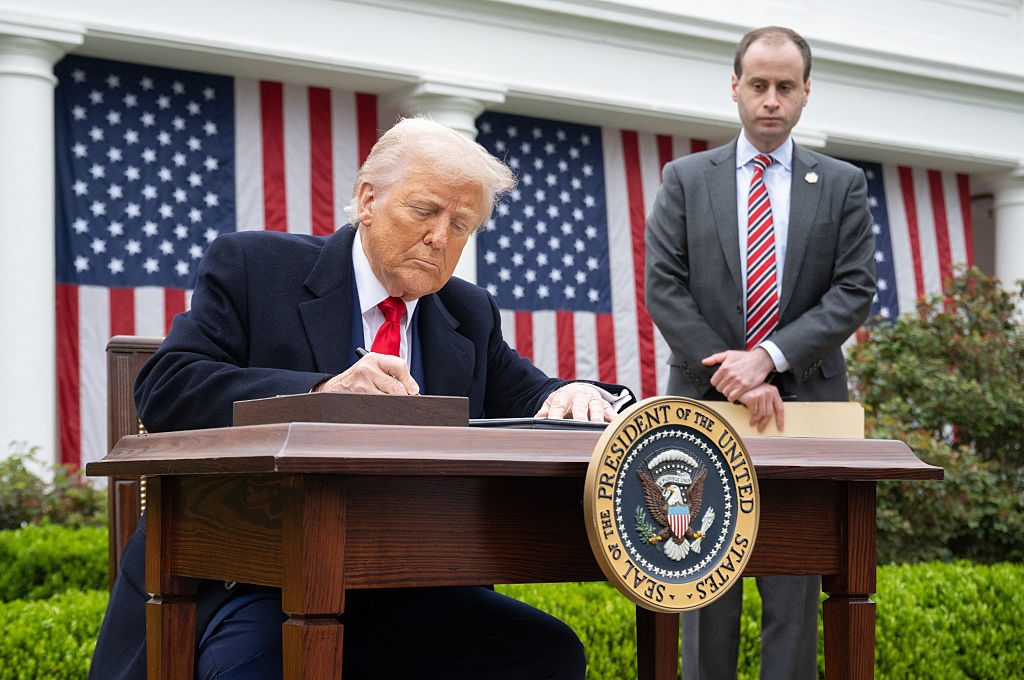
Trying to work out what is going on with global trade doesn’t get any easier. Just as the world was settling down to the new reality of Donald Trump’s trade war – and governments were stitching up hurried trade deals to minimize the sweeping damage from the tariffs announced on ‘Liberation Day’ in April – the Court of Appeals for the Federal Circuit has thrown a very large spanner into the works.
It has ruled that the whole exercise is unlawful because the tariffs were not approved by Congress. They will not be removed immediately – the court has allowed them to remain in place until 14 October to give Trump a chance to appeal to the Supreme Court – which he will almost certainly do. But it does rather look as if the matter of trade tariffs will ultimately be decided by judges.
In some ways, that will suit Trump. The ruling plays to his narrative that the establishment is out to thwart him. Moreover, given that the Supreme Court has a conservative majority, he might expect to win when the case is referred there. But then again, history shows that Supreme Court judges tend to veer away from acting along partisan lines over time. They cannot be guaranteed to favor Trump’s way of doing things. They would not, after all, be voting against tariffs as such – they would be ruling on the extent of presidential executive powers, not on the merits of tariff wars themselves. Trump may well find himself having to take his tariff wars to Congress and take a chance with the very narrow Republican majority there.
Either way, it will mark a crucial moment in Trump’s presidency. Anyone impressed by the speed and determination of Trump’s first few weeks in office, when executive orders flew out of the White House like confetti, will have to appreciate that his decisions will be challenged in the courts. If the President wanted to stop judicial involvement in the processes of his administration, he would have to change the constitution. Secondly, this week’s court ruling will make Trump look a little less powerful to many foreign observers. Since April, there has been a remarkable lack of foreign leaders prepared to fight his tariffs. Many have meekly given way and agreed to trade deals weighted in the US’s favor. The European Union was remarkably accommodating when it came to mitigating the damage from Trump’s tariffs. Would the European Commission President Ursula von der Leyen have given in so easily had she seen Trump under pressure from judges back home?
Trump will no doubt try to turn the appeal court’s ruling to his advantage, turning it into a case of him and the people against the judges. But it certainly changes the mood of the trade war – and produces yet more uncertainty for businesses which are just trying to sell goods and services around the world.
-
The trade war isn’t over yet
Maybe Trump doesn’t always chicken out after all. Rapid trade deals with the UK, Japan, the EU and others in recent weeks may have given the impression that the trade war was essentially over. Today, though, comes Trump’s Ardennes offensive, with immediate tariffs of 35 per cent announced for Canada. Other countries have been given a week to prepare for steep increases: India will be subject to 25 per cent tariffs, Taiwan 20 per cent and Switzerland – far from neutral in this particular conflict – 39 per cent.
Those who insist Trump has a very clever strategy and is winning tend also to be people who, in any other context, are in favor of low taxes
According to Trump, Canada has been singled out for harsh treatment because it has failed to cooperate on the flow of fentanyl across the border. Trump also hinted that he was punishing Canada for recognizing Palestine, but then he has just done a trade deal with the EU in spite of France taking the same action, and didn’t make any trade threats to Britain in spite of Keir Starmer saying this week that the UK will recognize Palestine in September if Israel does not meet certain conditions.
It seems rather more likely that Trump is saying: look, other countries have yielded and agreed to one-sided trade deals with the US – I’m going to carry on beating you about the head until you agree to do the same. But will they? So far, the countries which have agreed to Trump’s rather rough and ready trade deals have acted as if the benefits of a trading relationship with the US are one-way – they have more to lose than the US if a deal cannot be struck. But of course that is not always true. Taiwan, for example, produces over 90 per cent of the world’s high-end microchips, which are implanted in just about every device manufactured in the US. What benefit does it bring America if those chips are in future taxed at 20 per cent?
There is a strange dislocation in attitudes towards Trump’s tariffs. Those who insist he has a very clever strategy and is winning tend also to be people who, in any other context, are in favour of low taxes. But a tariff is just a tax like any other – it adds costs to business and so suppresses economic activity. If tariffs are set at modest levels, it may be worth putting up with tariffs’ depressing effect in return for the revenue they raise. Raise them above a certain level, however, and revenue will start to decline as business activity is discouraged – the classic Laffer effect. US growth may have proved more resilient than many feared it would be after Liberation Day, but it is certain that tariffs on raw materials and components are a negative influence on US manufacturing industry.
A country does not “win” by taxing its imports more than other countries tax its exports – if it did, the US would be one of the poorest countries in the world while many African countries would be startlingly rich. The US has done brilliantly well out of a regime of low import tariffs – as has Singapore, one of the few countries which, prior to Liberation Day, imposed even lower tariffs than did the US.
But even if you do think that imposing higher tariffs than your trading partners amounts to “victory,” it is far from clear that Trump will emerge the eventual winner. Some countries may have yielded to him, but others are clearly holding out, and may well make the calculation that the US has more to lose from a trade war than they do. This war has a long way to run yet.