Category: Place

  • Inside the gruesome world of the ‘human safari’

    Inside the gruesome world of the ‘human safari’

    “People don’t actually do that, right?” my publisher asked nervously. “No one actually goes on a human safari, do they?”

    Eight years ago, I didn’t know for sure. There had certainly been rumors for years that wealthy foreigners were traveling to conflict zones to kill civilians at random. Gradually I had concluded that some people were indeed heading off to complete their bucket list of horrors.

    In my novel To The Lions, I placed the “human safari” in a fictional refugee camp in southern Libya. Concrete proof, however, was almost impossible to find.

    Several times during my years as an investigative journalist, I heard stories about nightmarish things going on in places where law and order had collapsed. As part of my job, I visited refugee camps close to the Syrian border and in southern Bangladesh, where hundreds of thousands of Rohingya refugees have fled over years of conflict.

    Anyone who has spent time in refugee camps knows that human trafficking is almost routine. If someone isn’t worried about trafficking a preteen girl into a brothel, it’s not an enormous leap to assume that they might be open to enabling other forms of abuse. Slowly, depressingly, I started to realize that if you really wanted to – and, importantly, you had the cash – human safaris were indeed possible.

    And now evidence is finally starting to emerge. Prosecutors in Milan have just opened an investigation into Italians who allegedly visited Sarajevo during the Bosnian war in the 1990s to shoot at people trapped in the besieged city. Early on in that war, the main street running into Sarajevo became known as “Sniper Alley.” Thousands of people were killed there over a four-year period. Now prosecutors believe some of these deaths occurred because rich foreigners allegedly paid members of the Bosnian Serb army to escort them to the hills above Sarajevo to shoot and kill citizens.

    The prosecution in Milan doesn’t surprise me. When societies collapse, some people will go out and do exactly what they want. While I was reporting in Libya shortly before Muammar Gaddafi was killed in 2011, I watched excitable young men drive very expensive cars extremely fast along the seafront. They’d always wanted to do it, they said cheerfully, and now they could. A few days later they all ran out of gasoline and that was that.

    But what would you do if there was no risk of being caught? Some people want to kill. And in our globalized world, I believe that some of those people jump on a plane and head off to those collapsed societies in order to embark on the worst sort of tourism.

    The rumors were almost impossible to prove. The people who went on human safaris weren’t going to talk. Those in their sights – some of the most vulnerable people in the world – had no way of knowing what was going on until it was too late. Even if they had their suspicions, they had no one to tell. The rumors continued to emerge in odd places. While I was chasing Somali pirates around the Indian Ocean with the British Navy, the Royal Marines took several captives. It hadn’t been the most equal battle – a US Navy ship on one side of the tiny pirate ship, a British ship on the other and a Lynx helicopter firing rows of bullets straight over the pirate ship’s bow – but the pirates themselves were heavily armed with guns and rocket-propelled grenades.

    In the aftermath of the arrests, I went out to the tiny pirate ship with the Marines and spoke to the captives. Most of them were uncommunicative. One pirate – who memorably had six fingers on each hand and six toes on each foot – was rather more chatty. He soon realized I was a journalist and attempted to spark up conversation with me first in fluent Italian and then in fluent German. He couldn’t speak English, but we eventually established that we could both speak French.

    After we had discussed the pirate’s cousin (who lived in Manchester), and he had suggested that we get married – a proposal I had to turn down – we moved on to stories he had heard about Russians prowling around the Red Sea attacking Somali pirates. These people, he insisted, were not Russian armed forces. They weren’t mercenaries hired by shipping magnates, either. These were people on expensive, glamorous yachts who wanted to kill someone – anyone. They were there for fun, the pirate said, and it was clear that no expense had been spared.

    As my would-be fiancé pointed out, absolutely no one was going to care if a Somali pirate was killed. Out on the high seas, no one would ever even know. And if anyone did find out, they might conclude that the pirate had got what he deserved.

    It is this gray area – where people manage to convince themselves that they’re meting out “justice” – that I suspect drives some “human safaris.” It is easy to find videos on social media of vigilantes claiming to have gunned down illegal immigrants who are attempting to cross the US/Mexico border. Heavily armed groups of civilians routinely patrol the border areas.

    “We were going out huntin’,” Bryan C. Perry, of Clarksville, Tennessee, announced on TikTok as he set out his plans to head down to the border in 2022. And he was going to “shoot to kill.” If you’re off to kill someone and you’re clearly going to enjoy it, where exactly is the line? Perry is now serving several life sentences.

    The late critic A.A. Gill faced a storm of complaints after he admitted that he had shot a baboon to “get a sense of what it might be like to kill someone, a stranger.” He was open in his curiosity, at least. Some people are fascinated by the idea of killing. They want to know how it feels to kill a man, a woman or a child. And in some parts of the world, they can satisfy that urge – and absolutely no one will stop them.

    This article was originally published in The Spectator’s December 8, 2025 World edition.

  • Charleston notebook: following an English country band through the Holy City

    Charleston notebook: following an English country band through the Holy City

    My impression of Charleston, a city I’ve been visiting since my late teens, is that it is oddly more European than American. Real Charlestonians, they say, have more in common with their cousins across the pond than with their compatriots in America’s big cities. I’ve found that to be true.

    I’m here for the birthday of one such real Charlestonian, my friend Toto. A former White House staffer, Toto now works in the private sector, but he is destined for a return to politics – his great grand uncle was an accomplished South Carolina statesman and Toto, as he puts it, “feels a deep sense of purpose and mission to ensure South Carolina continues to be the greatest state in union”.

    As it happens, a dozen European friends are also in town, following an English country band called Alan Power and the Take Twos. Hailing from Frome, Somerset, Alan and the band, known to friends as The Cowboys, have made a name for themselves by commuting to London every Thursday and Friday to play the city’s hottest venue, the Fat Badger. Dressed in Stetsons, boots and western suits, they blaze through country classics and some original numbers for an adoring fanbase that includes Margot Robbie and Olivia Rodrigo. Charleston is the first stop on their debut tour of the American South – what the boys in tow are calling “the Redneck Riviera Tour.” They won’t come across many rednecks in Charleston or their next stop Savannah, but they are sure to run into some trouble further south. 

    Toto’s celebrations begin with cake and champagne at an antebellum mansion in Charleston’s historic quarter, known as South of Broad – a delightful maze of cobblestone streets and alleyways hung with Spanish moss and magnolia. Sometimes called the Holy City for the spires that dot its skyline, “Charles Town” (named after the “Merry Monarch,” King Charles II) is also famed for its unholier elements and consistently ranks among America’s drunkest cities. The birthday bar crawl begins at O’Malley’s and ends at The Blind Tiger, with one member of the group being repeatedly ejected for severe inebriation. Having myself made a promising start to the evening by striking up a conversation with four charming College of Charleston seniors, I end my night alone in the parking lot of Southern Belle, a strip club north of town, where, graciously, they don’t serve alcohol past 2 a.m.

    “Twixt cup and lip is many a slip” goes the old English proverb. Well, for whatever reason, the band’s first gig the following evening is cancelled at the last minute. But thanks to Toto’s friend Beau, we have a backup venue – his backyard. The invite goes out far and wide: members of the television show Southern Charm, every college girl met the night before, some politicos – even a senior cabinet member. But the response is lukewarm, and in the end, my friend resorts to sending out a sort of severe weather alert message saying BRUNO MARS DOING A SURPRISE SET IN SOMEONE’S BACKYARD. This does the trick with the college girls, though not with the cabinet member.

    Neighbors curious about the commotion trickle in as the Cowboys launch into “Dead Flowers” and “Angel From Montgomery.” After thirty minutes, the cops arrive and politely ask them to go acoustic. A crowd of about 50 now huddles around the band making requests, “Country Roads!” “Wagon Wheel!” Elderly couples two-step under a sunken moon. A Charleston dame volunteers her house for the after-party with bottomless supplies of bourbon and cigarettes, proving Southern hospitality is no myth. 

    The next day we lunch at Leon’s, the city’s best spot for fried chicken. Here I’m introduced by my friend Byron to the michelada, a spicy beer cocktail which does all the heavy lifting of a Bloody Mary without feeling like a meal. 

    Leon’s Fine Poultry & Oyster Shop. Charleston’s best spot for fried chicken (Peter Frank Edwards)

    That evening, the power cuts while we’re drinking at Henry’s, a favorite college tavern. Candles are lit; beers are on the house; the mood is conspiratorial. This is meant to be an “off-night” for the band but a guitar appears and someone suggests Burns Alley, a watering hole down an alleyway on Meeting Street. There are five people at the bar when we walk in. The bartender, bemused by cowboys with English accents, says, “Sure you can play, just make sure you’re done by 2 a.m.” Within half an hour, the place is heaving.

    On Sunday the boys skip town, crossing the Ashley River in a convoy of cars and pickup trucks emblazoned with “Socialism Sucks” stickers. Some don MAGA hats for the full effect. By the time they cross into Georgia, news has already reached Savannah that British are coming. 

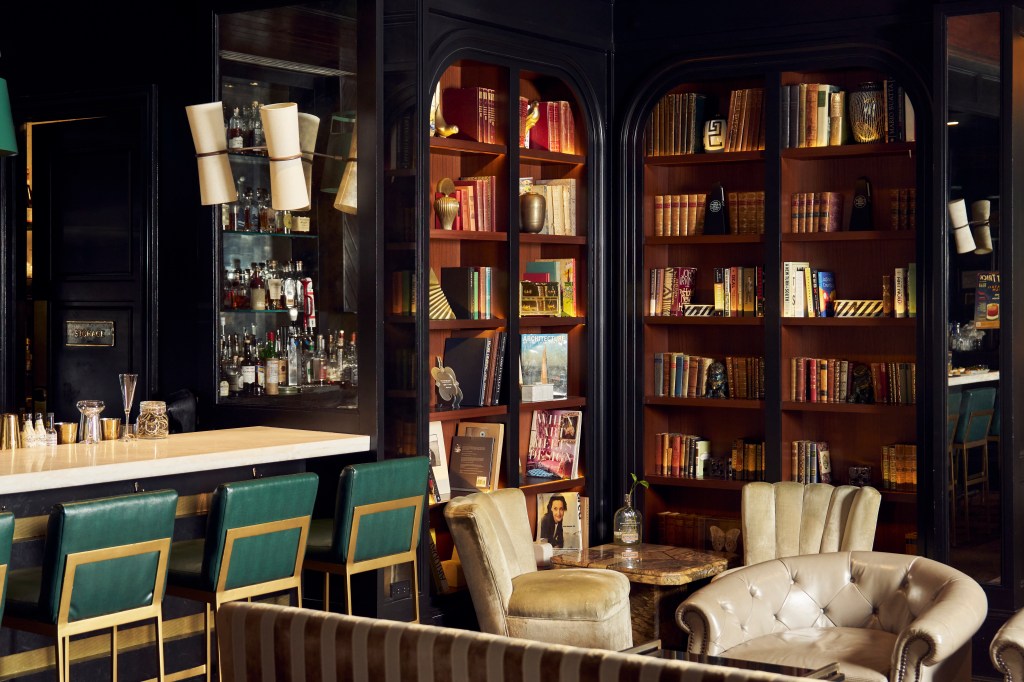
    I nurse my hangover at Sunday lunch with Toto’s family at the Yacht Club, before returning to my hotel, the Spectator Hotel (can you believe it?), to pack my bags. The Spectator Hotel is a five-star boutique hotel located right in the heart of town, steps from the French Quarter. It prides itself as the only hotel in the state with butlers. My butler, Chuck, is a real charm, an Anglophile who speaks wistfully of his youth in the “old country.” The hotel’s prohibition style bar is among the city’s best places to sip a cocktail.

    The twenties inspired Speakeasy Bar at The Spectator Hotel, Charleston (The Spectator Hotel)

    I return to New York as the boys plough South; Spinal Tap fast becoming Sherman’s March. Back at my desk in Manhattan, a shell of my former self, I live for updates from the road, like this one from Byron:

    Destin, Florida, once fancied itself the “world’s luckiest fishing village.” What began, in the early 20th century, as a genteel fishing outpost has mutated – somewhere between Reagan and Kid Rock – into the so-called Redneck Riviera. It’s Florida as imagined by someone who thought “elegant” meant a ceiling fan and frozen daiquiri. There’s something almost tragic: the Edenic landscape debased by its own popularity. Still, there’s a democratic beauty to Destin’s descent. It’s Florida with the filters off – part paradise, part parking lot, and wholly American in its refusal to be embarrassed by the clash.

    “O MAGNET-SOUTH! O glistening perfumed South!” cried Walt Whitman in Leaves of Grass. “O to be a Virginian! O to be a Carolinian!” Here’s hoping Toto accomplishes his mission and South Carolina continues to be the greatest state in the union.

    Rooms at The Spectator Hotel begin at $269. For more information, visit: www.thespectatorhotel.com

  • Franco Zeffirelli’s slice of paradise in Positano

    Franco Zeffirelli’s slice of paradise in Positano

    If you say the name Franco Zeffirelli to anyone under about 40, you’re likely to be met with bemusement. Find any opera or film lover over that age, however, and you will be greeted with a warm exclamation – “Ah!” – followed by a recitation of the Italian director’s greatest achievements.

    From his emergence in international culture in the 1960s with his seminal film of Romeo and Juliet to his legendary work on stage with such operatic titans as Maria Callas and Plácido Domingo, Zeffirelli became synonymous with tasteful, intelligent productions of the classics, all of which made him, for a time, the best-known cultural figure in Italy.

    It is fair to say that Zeffirelli, who died in 2019, didn’t always get it right, personally or politically. As his career went on, some of his films tended towards the self-parodic and as a man, he seemed torn between his right-wing political instincts and his own sexuality. To further the former, he joined Silvio Berlusconi’s Forza Italia party and came out with reactionary, even shocking public statements on such subjects as abortion and, ironically, homosexuality; as regards the latter, a string of young, handsome actors who worked with the director have come forward since his death in 2019 to testify to his distinctly hands-on working process.

    Still, while one would never wish to whitewash Zeffirelli’s actions, there is no doubt that he was a man of exquisite taste, which he extended into both his work and his private residence, Villa Treville, just outside Positano on Italy’s Amalfi Coast. When Zeffirelli’s biographer David Sweetman was summoned to meet the great man there, it was an inauspicious journey. “It took hours. The taxi bill was unreal, but eventually we arrived at the top of this little winding road. And there was just a gate, and I had to go down all these bloody stairs to the villa.”

    However, the destination soon justified the expense and effort. “Eventually, some ancient servant let me in, and I was shown on to this opera set. I’ve never seen anything like it. It seemed, just possibly, the most beautiful place on Earth.”

    Sweetman was not wrong. Zeffirelli lived at Villa Treville for more than 40 years, during which time he saw Positano change from an obscure fishing village and occasional haunt of the glitterati into one of the world’s most celebrated destinations for cultured A-listers. He did more than his share to bring in international icons, musing on his guests as he sold his home in 2007: “Leonard Bernstein, Laurence Olivier, Maria Callas, Elizabeth Taylor – it sounds like a legend, doesn’t it?”

    Now, a decade and a half since it first changed from being a private home of legendary status to what is surely even this ultra-exclusive area’s most impressive boutique hotel Villa Treville is keen both to honor its past and, in particular, its legendary owner, but also to look to the future. Other five-star options are available, in an area filled with opulent accommodations, but none has quite this level of cachet or history.

    The hotel is reached via private transfer from Naples, which takes about an hour and a half. The last part of the journey is comfortably the most spectacular, as the car must negotiate the narrow roads hugging the Lattari Mountains, and peerless views of the Amalfi Coast are on offer to the enraptured passengers: assuming, of course, that the winding, vertiginous journey has not led to carsickness. Yet upon arrival, earthly cares and worries slip away in moments. Not for Villa Treville some grand, attention-seeking entrance. Instead, the car suddenly turns off through a discreet private gate and you walk down a small track into the reception, where the views – the peerless views – of glittering blue sea and the houses of Positano alike are enough to make even the most jaded and weary of travelers pause, slack-jawed in admiration.

    Wandering round Villa Treville is an education both in aesthetics and in history. While the hotel has been carefully and sympathetically expanded from Zeffirelli’s day – it now comprises six houses, rather than the three (or tre ville) that it originally consisted of when the director lived here – it retains his sense of chutzpah and style in every well-furnished nook and cranny. There have, inevitably, been a few nods to the present day, with a useful lift connecting the various floors and, of course, wifi, along with the usual conveniences of a five-star hotel, but what is so refreshing about Villa Treville is that it has been kept as close to Zeffirelli’s own lifestyle and taste as possible.

    To this end, the director’s books, personal possessions and objets d’art are festooned around the hotel, along with countless photographs of him and his famous friends. If you’re an opera lover, you’ll be delighted to find Zeffirelli’s original sketches for many of the set designs of the shows that he staged at the Met, the Royal Opera House and beyond. But this sense of the impresario just having popped out for a few moments extends far beyond simple décor. At breakfast in the appropriately named Maestro’s restaurant, for instance, guests are encouraged to walk into what was Zeffirelli’s kitchen to choose from a comprehensive and generous buffet selection of fresh fruit, locally sourced cheeses and deliciously decadent cakes and pastries, all of which are accompanied by a wider selection of eggs and pancakes from the à la carte menu.

    The views are peerless, the food sublime; it’s enough to make you want to stay here forever. Zeffirelli was nothing if not well-connected: many of the suites bear the names of some of the famous guests at Villa Treville. Many of them have individual quirks that extend far beyond decorative decisions. The Bernstein suite, named after the composer, conductor and regular visitor Leonard Bernstein, contains a shower in the form of a converted bread oven and an outdoor bathtub in its tropical garden, just as the largest and most lavish suite, named after Zeffirelli himself, has been kept largely as it was when it was his bedroom.

    Yet even the humbler accommodations, junior suites named after operas he staged such as Tosca and Carmen, still feature whitewashed tiles on the floors, walk-in showers, wonderfully large and comfortable beds and, of course, those breathtaking views, which manage to enrapture even the most seen-it-all of travelers whether by day or night.

    The whole point of coming to the hotel is to relax and unwind, rather than embark on a hectic program of activities. Which is not to say that there aren’t plenty of things on offer to entertain you. Peerless treatments, complete with Barbara Sturm cosmetics, are conducted in the La Traviata spa, which itself is housed in a greenhouse rescued from one of Zeffirelli’s opera productions. It’s as peaceful and tranquil a place to unwind as you can imagine.

    Then, if you wish to pep things up a bit, slide over to the all-white, appropriately named Bianca Bar, and admire the Moorish decor (again, another Zeffirelli holdover) while sipping one of the beautifully made and deceptively strong cocktails. Whether you fancy a classic espresso martini, a negroni or a twist on an old favorite, there will be something palate-cleansing on offer for a pre-prandial.

    One of the joys of Villa Treville – and presumably the reason why it pays host to A-list celebrities who have recently included Madonna and Jennifer Lopez – is that it sticks firmly to a policy of complete discretion. The only people who are welcome here are guests of the hotel, meaning that dinner at Maestro’s, which is usually held outside on the terrace, is a relaxed and relatively informal affair. Chef Vincenzo Castaldo specializes in the pasta dishes of your dreams – if you want to see how they’re made, private cookery classes can be arranged, along with everything from ceramics decoration to cocktail masterclasses – and they’re served up along with a selection of pescetarian-heavy dishes, accompanied by a finely chosen variety of local Italian wines.

    Yet even here, the maxim is one of pleasing the guests. I remarked in passing how much I’d love an oyster; a few moments later, a pair of beautifully dressed specimens, complete with apple granita, appeared before me, as if by magic. And magic, in its various forms, is what’s to be found in this most blissfully sybaritic corner of the Amalfi Coast. There is something otherworldly about Villa Treville, which clings to the side of the mountain like an especially opulent barnacle. Immersing oneself in this lifestyle for a few days is as enjoyable an experience as it’s possible to imagine.

    Zeffirelli once remarked that, “Now I could start creating my dream world out of the three villas.” Entering into his dream is opulent, extravagant and unique. Just like its famous creator, then.

    From €830 ($950) per night. For more information, visit: www.villatreville.com.

    This article was originally published in The Spectator’s November 24, 2025 World edition.

  • Uzbekistan by high-speed rail

    Uzbekistan by high-speed rail

    I am in Tashkent, the capital of Uzbekistan. I am standing in a historic complex of madrasas and mosques, courtyards and dusty roses and I am staring at the “oldest Quran in the world.” It is a strange and enormous thing: written in bold Kufic script on deerskin parchment; it was supposedly compiled by Uthman ibn Affan, the third Caliph of Islam, who was murdered while reading it. And so it is, as I linger here and reverently regard the Book, while scrolling my phone for more fascinating info, that I discover the world’s oldest Quran is actually in Birmingham.

    Yes, that’s right, Birmingham, England. It’s probably in some obscure library, lodged between a thesis on post-colonial emojis and a flyer for Falafel Night. I can’t help feeling Birmingham should make more of this, maybe to distract tourists from other parts of Birmingham.

    In other words, the Uzbek claim is a fib. Or at least a fabulation, an exaggeration, a concoction. But that, in a way, sums up this remarkable and compelling country, with its history of illusions and cruelties, Islam and Marxism, terrifying materialism and lyrical mysticism. It is a place of dreams and deceptions, all of it alongside some of the most spellbinding, beautiful cities on Earth.

    Tashkent, however, isn’t one of them. Designed as something of a showpiece city for communism in Central Asia, it boasts big wide boulevards, bragging monuments, impressive metro stations and a lot of concrete. Nonetheless, there are raisins of prettiness amid the stodgy architectural plov. (Plov is the national dish around here: a kind of meaty, slow-cooked paella: it’s an acquired taste.)

    One of these occasional gems is Tashkent’s theater, built in Islamo-Uzbek style and designed by the man who did Lenin’s mausoleum in Red Square. It’s as if the Alhambra mated with a coke dealer’s palace. Try to catch a performance, if you can.

    And now, the stomach stirs. You can do a lot of walking in sprawling Tashkent. And when you’re hungry, there is only one place to go: Chorsu Bazaar, with its concrete UFO-ish dome protecting a compelling warren of cafés, pop-ups and fruit shacks, selling pickles and plov and cumin and steaming “Uzbek lasagna.” There are sun god bread-wheels and sliced fresh baklava, warm spicy samosas and fresh pomegranate juice – marvelously tart and refreshing on a hot sunny day, of which there are many.

    There is a sheltered hall right by the market stalls where you can eat your food washed down with Coca-Cola or tamarind cordial, or maybe a cold beer from the nearest booze-friendly corner shop. There’s been a market here since the second century, and it’s likely changed a bit: they no longer trade Circassian slaves with the Tibetans, but it still thunders along, merrily. Uzbeks say a good market is like your mother and father. If so, this family is particularly welcoming, albeit very noisy.

    Onward to Samarkand via, I am not joking, high-speed train. The Uzbeks have linked all their main cities with high-speed rail, including the tourist honeypots of Samarkand and Bukhara, and, very soon, Khiva. The trains are clean, fast, efficient. They are also incredibly cheap, like everything in Uzbekistan, and decidedly popular. Book weeks ahead or get your tour operator to do it.

    What to say of Samarkand that has not been said before? Let me have a go. The historic sites are marvelous, from the extraordinary 15th-century Ulugh Beg Observatory, which includes a huge underground sextant like the buried curving rib of a god-giant, to the 7th-century pre-Islamic murals of Afrasiab, the city under Samarkand.

    These intoxicating murals, now in their own museum, depict a wildly cosmopolitan, almost psychedelic, vision of a lost Silk Road world, where Chinese princesses ride elephants, Koreans in fur hats bring tribute, and Indian dignitaries wave incense at Central Asian deities. Peerlessly strange, brilliantly unforgettable.

    And then there’s central Samarkand. And the Registan. If you’ve ever seen photos of Samarkand, this is what you will have seen, and for good reason. By day, the Registan must be one of the most beautiful public spaces in the world. It rivals St. Mark’s in Venice. Exquisitely harmonious with its echoing arches and minarets, its ochers, cobalts and turquoise, the three madrasas and mosques are decorated with dancing lions and spinning stars, like a trio of wonky Taj Mahals dunked in a tub of Isfahan blue paint and decorated by Van Gogh during his starry night phase.

    By night, the Registan is arguably even lovelier. The Uzbeks have mastered the art of nocturnal lighting. The mighty square becomes a swooning dreamscape, with the Sher-Dor Madrasa softly lit in dusty yellow and pomegranate red, shimmery and sad-sweet, even as kids quietly play beneath the spotlights, overseen by indulgent parents licking purple ice creams.

    Before you leave Samarkand, there is one other must-see: the Tomb of Tamerlane, the fearsome warlord who conquered half of Asia in one hell of a life. Known as the Gur-e-Amir, the gilded, golden-tiled interior rivals anything at the Registan. The great man lies forever under a slab of nephrite jade, beneath a dome of lapis, enamel, vivid calligraphy and dusky starlight. Or so it feels.

    Our last stop is Bukhara, which is only fitting as this is where old Uzbekistan finally fell. The city is like the Central Asian Cambridge to Samarkand’s Oxford. Softer, more delicate, perhaps sadder, more ethereal. In the center, you’ll find a mini-Registan and also some excellent poolside cafés for shish kebabs and tolerable wine. From here, mazy lanes extend into the old Jewish town, full of whispered rumors, all the way to the famous Ark, a brooding citadel that symbolizes the city.

    But my favorite spot, it turns out, is on the outskirts, at the summer palace of Amir al-Mu’minin. The Commander of the Faithful, Khan of the Manghit Dynasty, Shadow of God on Earth, Sultan of the Faithful and Sword of Islam. And the Last Emir of Bukhara.

    In this quixotic palace, half Islamic, half European, the very last emir lived a quite ridiculous life. Born in 1880, he was surrounded by eunuchs, mystics, torturers, gramophones and a harem rumored to number in the hundreds. He believed in djinn, held séances, smoked opium and consulted astrologers before making policy. He also wrote decorous Persian poetry and kept a wind-up automaton that bowed on command. In 1920, the Bolsheviks came for him, and he fled into the deserts of Afghanistan with trunks of gold, carriages of terrified dancers and prayer books coated with poison. It is said that the emir died in Kabul in 1944, writing poignant verses for his lost Bukhara, even as he drank English gin in total silence.

    Like the emir, my time here is almost done. So I retreat to the shady side of the last Emir’s last harem. Once I would have been thrown in the infamous pit of vipers and spiders for my effrontery. These days, it’s a charming café. I recommend the excellent cakes.

    Sean was a guest of Cox & Kings, which offers a 12-day small group tour, Uzbekistan: Heart of Central Asia.

    This article was originally published in The Spectator’s November 10, 2025 World edition.

  • In awe of Fuji-san

    In awe of Fuji-san

    My personal version of hell? Shibuya station, Tokyo. Shibuya Scramble is one thing: the busiest pedestrian intersection on the planet, it sees two million people elbow each other, every day. But the train station that thousands of them are trying to get to? That’s where my hopes go to die. A place where you’ll find me near tears, wondering if I’ll ever see my loved ones again. It’s almost impossible to navigate, spread across a dizzying number of floors and stuffed with throngs of human beings speaking a dozen languages. New platforms spring up all the time, often at the top of an unassuming escalator, or via a tiny hidden exit of the Hikarie shopping mall. There are (one or two) signposts, sure, but my Japanese leaves much to be desired.

    Hopping on a limousine bus from Shibuya Mark City, which is attached to Shibuya Station, to Kawaguchiko had sounded doable, positively luxurious compared to my myriad disastrous transport experiences in the world’s most populous city. Like most wide-eyed first-time travelers to Japan, for reasons I wasn’t quite sure of, I just had to get to Mount Fuji. There’s something intangible, even magical about that volcano, its indelible shape scoring our collective consciousness through pop culture: I must have absorbed it through anime, wall posters and Godzilla movies.

    A friend and I would spend three nights at Hanz Outdoor Retreat, a mini-village of glamping villas and dome tents amid forests and lakes, Fuji (or “Fuji-san” as the locals call it) providing a pretty unforgettable backdrop. It would be the perfect escape from the maelstrom that is Tokyo.

    “Run!” Claire screeched via a voice note. I had seven minutes to follow photos she hurriedly sent through WhatsApp, breadcrumbing essential directions needed to find the series of escalators and narrow staircases hidden behind random doors that would eventually lead to the tiny coach terminal at Shibuya Mark City, found inexplicably on “4F.” Sweating, I found my comrade, and we tracked down the right vehicle by sheer luck. On instinct, I followed a tourist wearing a T-shirt printed with an image I’d associated with Japan as long as I could remember – Mount Fuji peeking out from behind a huge white-crested wave, in a storm-tossed sea. If anyone knew where I was going, it was this guy.

    Like most first-time travelers to Japan, for reasons I wasn’t quite sure of, I just had to get to Mount Fuji

    As the journey wore on, he and the rest of the passengers pressed their noses and phones to the windows, distracted by the mountain’s sheer magnificence, said to have formed over the past 2.6 million years.

    Picked up two hours later by our guide Savvas, we had no difficulty settling into the peaceful hotel complex, stopping in the grounds to stare up at the volcano. Our villa was reminiscent of an old-fashioned nagaya (Japanese row house), laden with heavy fur throws and slouchy bean bags. A cavernous private Jacuzzi bath tempted us for a quick soak before a porter arrived with the ingredients for a tremendously large Sukiyaki hot pot to cook ourselves, on our freezing private terrace. We duly put on our coats.

    “We call it wine beef,” Savvas explained, talking us through the types of Wagyu bubbling in an umami broth as he unwrapped huge plates of pickled butterbur and tuna carpaccio. “The meat is from Kodagu and Koshu,” Savvas explained. After weeks of being spoiled by Japan’s precision flavors, meticulous food rituals and exceptional regional specialities, I’d set impossibly high standards. Yet this meal stood out as the best of our six-week trip, the hot pot loaded with thick noodles and fresh vegetables.

    “Umami is more than a flavor; it’s an essence,” Savvas added, using chopsticks to push slabs of beef deeper into the pot. Stays at the retreat are hands-on; at the breakfast counter we found marshmallows for toasting on a huge outdoor fire. Guests are given camping stoves at each table to heat sausages and cook their eggs any way they choose. Later, Claire took great pleasure in chopping a piece of firewood cleanin half.

    “I feel… powerful!” she yelled, hotel staff erupting in applause. The main building is made with materials purchased from a Samurai’s family home and held up by old wooden rafters. Inside are small, gendered bathing areas – ubiquitous in Japan – with waters heated to a toasty 107°F. One ten-person villa comes with a private chef, for groups who want to live as the Japanese do. Parties gather around the irori – a sunken hearth for feasting and keeping warm – while getting tipsy on chunky regional sake. I prefer a craft peach Chu-hi, a sweet, low-alcohol drink made from potato or wheat.

    “What animals live here?” we asked. “Cows… frogs. Plenty of deer. Look out for flying squirrels, too.”

    Our first morning took us to Fujiyoshida Sengen shrine, a Shinto sanctuary at the volcano’s base. Through relentless rain, we huddled under umbrellas to admire the stone lantern-lined entrance, purify our hands and purchase amulets for fortune and safe travels. The main trail to Fuji’s summit – a six-hour climb – was closed for the season. Instead, we’d tackle a shorter ascent that promised yet another perspective of the mountain’s perfect symmetry.

    After filling our bottles with Fuji water from the retreat’s well and raiding a local bakery for matcha bread and pork cutlet sandwiches, we strapped ice grips to our boots. Ascending Dragon’s Mountain on snow-covered pathways proved challenging – to put it politely – but the view of Motosuko, one of the Fuji Five Lakes, rewarded our efforts. An hour later and just shy of the top, we admitted defeat, stopping to open flasks of coffee. The snow-capped peak of Mount Fuji was starting to feel like a family member.

    “She was worth it,” Claire nodded, pleased with herself.

    “She’s a she?” I pondered.

    “Look at her. How could she be anything else?” said Claire. A quick Google found Claire to be correct: Mount Fuji is often referred to as a woman, or “Onna Fuji” (with a gently sloping ridgeline and a huge crater at the summit, go figure). My internet search informed me somewhat ironically that women were forbidden from climbing mountains in Japan until 1872.

    We felt the guilt for not continuing on, but we had a villa to vacate, a forest to camp in, and charcoal that wasn’t going to light itself.

    Cooking our next meal by lamplight, on an open flame, I prayed to any god who might be listening that I’d cooked the chicken through. I scraped garlicky ajillo sauce from a jar, and warmed vegetables dipped in oil. We skipped beers at the bar stationed next to our tent and passed out under thick blankets.

    The next day, after burning our breakfast sandwiches, we slid our feet into Crocs and crunched across the icy forest floor to an outdoor sauna. There we remained until it was time to bid the retreat, and our girl Onna Fuji, “jaa ne.”

    It was a tough goodbye, one that had us resolving to come back one summer – but she wasn’t done with us just yet.

    Feeling brave, we opted to take the train back to Tokyo, Savvas helpfully translating ticket machine instructions. We waved him and Mount Fuji goodbye, before pulling out laptops and phones to catch up on work. Two hours later, I surfaced from a sea of emails to check on our progress.

    “Um, Claire. Why can I still see her?”

    A gasp.

    “We missed the stop. We were supposed to change trains a while ago. Oh my god, we’ve been going in a circle.”

    We laughed hard, counting exactly how many angles from which she’d now silently judged our navigational prowess.

    A sweet young commuter named Yoshi kindly directed us to the correct train line and the new tickets that would help us finally wave off our sister. Chatting until we reached our stop, I asked him if he might know the name of the artist responsible for the T-shirt print that had helped us find Mount Fuji in the first place.

    He took out his phone, and together we found it to be Katsushika Hokusai, or Hokusai, a painter and printmaker from the Edo period. “It is a woodblock print! It is called ‘The Great Wave off Kanagawa.’” Reading over his shoulder, I started laughing again.

    “Claire. That artwork with the wave. It’s from a series of prints. Guess what they’re called.”

    “Go on.”

    “Thirty-six Views of Mount Fuji.”

    This article was originally published in The Spectator’s October 27, 2025 World edition.

  • The theater of the Galápagos Islands

    The theater of the Galápagos Islands

    It was stiflingly hot in the middle of the Pacific Ocean. I was exploring the eastern Galápagos Islands, living cheek-by-jowl on a former casino ship with a cast of characters plucked straight from a murder mystery novel: a former British supermodel, an Ecuadorian presidential candidate, the ex-drummer of a band who once supported the Who and an influencer couple who looked like they had stumbled off the set of Triangle of Sadness.

    The stars of the show – and boy did they know it –were the sea lions

    While the trip had all the ingredients to cook up an irresistible whodunit, I was not just there to inspect the wildlife on board but to observe the wildlife off it. The Galápagos Islands are a volcanic archipelago of 21 islands 600 miles off the coast of Ecuador, and they are rightly considered to be one of the greatest national parks on our planet. The islands are home to some 4,000 species, around 40 percent of which are found nowhere else on Earth.

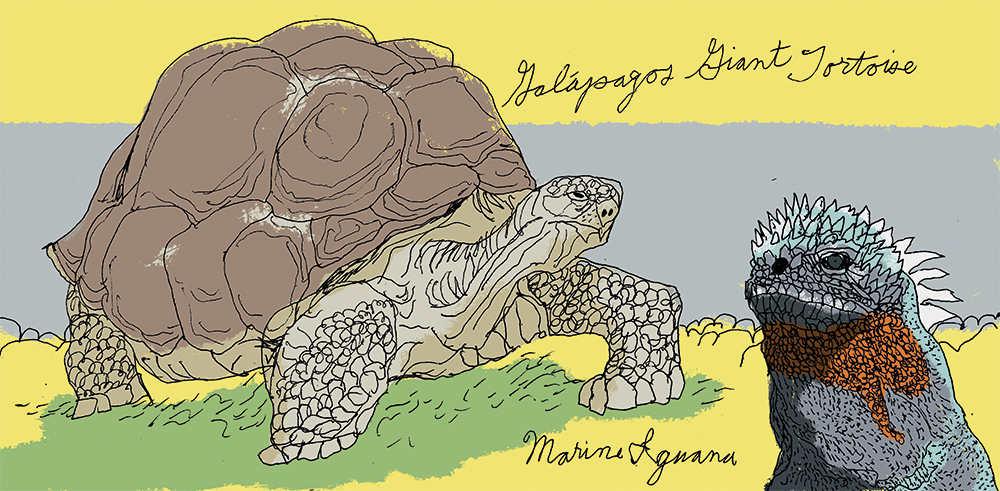
    It is almost 500 years since the accidental discovery of these islands by Tomás de Berlanga in 1535. Berlanga was the bishop of Panama and he was tasked with travelling to Peru to mediate a dispute between Francisco Pizarro and the Spanish Crown. Midway through his journey, wild winds knocked him off course and he drifted towards an unknown island. Berlanga and his crew arrived cotton-mouthed, so parched they began to drink cactus water. Soon, they came across giant tortoises, sea lions and marine iguanas. “Like serpents!” Berlanga wrote to the Spanish king, describing his surreal encounter. “And so silly they don’t know how to flee.”

    Three centuries later, in 1835, a 22-year-old naturalist named Charles Darwin sailed to the islands on HMS Beagle after completing a surveying mission of the South American coast. He was fascinated by the volcanic nature of the islands but, like Berlanga, was hardly enamored. “Nothing could be less inviting than the first appearance,” he recorded. But during his five weeks on the islands, living among fluttering finches and prickly pear cacti, Darwin’s theories of evolution began to take shape. In 1859, On the Origin of Species was published: we know it as the foundation of evolutionary biology.

    I confess that I, too, was guilty of judging the islands too quickly. On first glance, many of them – with their harsh, rugged and sun-scorched terrain – can seem uninviting, even post-apocalyptic. But the magic of these islands is that once you get closer, a whole spectacle begins.

    A trip to the Galápagos is, of course, a far more curated and bureaucratic affair than what would have taken place in Berlanga and Darwin’s day. The archipelago is a UNESCO World Heritage site and national park, so it is subject to strict conservation laws. The Ecuadorian government, along with various international organizations, works tirelessly to protect this fragile ecosystem, particularly as tourism increases.

    Visitors must: obtain a transit control card, travel with an authorized guide, stay on marked trails and never feed or touch the animals. “Please do not touch the sea lions!” the guides – long-suffering but commendably patient – repeated, even as the sea lions, coquettish as ever with their cartoonish eyes, wobbled up to our ankles. It often felt like the wildlife had more freedom on these islands than we did.

    [Eric Hanson]

    Our voyage on yacht La Pinta looped east from Baltra to Santa Fé and San Cristóbal before swerving south to Española and Punta Suárez. As we boarded the dinghy to reach the islands themselves, a fleet of frigatebirds – known as the “pirates” of the sky – heralded our arrival, slicing through the wind with their black plumage and forked tails. A trip to the Galápagos Islands is pure theater. Each island is a different stage; each animal plays a different part. Visitors merely sit back and watch the show.

    The overture began on South Plaza, one of the smallest islands in the archipelago, known for its fiery red carpetweed. It changes to purple, green and orange as the seasons shift. Creeping through the color were dinosaur-like marine iguanas, a remarkable example of natural selection and the only seafaring lizard in the world. South Plaza is also the place to spot the rare marine-land hybrid iguana, a mishmash of species with distinctive black coloring and long yellow stripes believed to be able to survive in both marine and terrestrial environments.

    Next came Santa Fé (or Barrington) Island, one of the oldest in the archipelago. Unlike its neighbors, its formation stems from geological uplift rather than a volcanic eruption, creating a relatively flat terrain punctuated with prickly pear forests and crab-covered rocks. The island teemed with endemic species: the Santa Fé land iguana, Darwin’s finches, Galápagos hawks and swallow-tailed gulls, whose red-rimmed eyes made them look as though they hadn’t slept since 1535.

    The stars of the show – and boy did they know it – were the sea lions, who sprawled across the rocks like Titian’s “Venus of Urbino.” If they weren’t basking in the sun they were lolloping onshore, flapping their fins like quarreling siblings and barking with an emphysemic honk. They showed no fear and were consummate performers. Thespians of the highest pedigree.

    The easternmost island is San Cristóbal, which is composed of extinct volcanoes and lava fields. Darwin noted the remarkable tameness of the animals during his visit – and so did we. As we wound our way up a trail, it felt like the show’s crescendo had begun when we finally glimpsed the comical feet of a blue-footed booby. “Look! Love is in the air,” Pancho, our peppy, silver-haired naturalist exclaimed. A male frigatebird was just ahead of the booby, inflating his bright red throat pouch as if it were a whoopee cushion. Pancho explained that once puffed up – a process that can take half an hour –  the males begin their mating call: shaking their wings, swaying their heads and drumming their bills on the pouch. Females hover above, judging the performance. “It’s a crazy time to be in the Galápagos,” Pancho grinned. “This is one of the best mating rituals to see.” It was 95 degrees and not yet 10 a.m., but for these frigatebirds, the action had begun.

    Our curtain call came on Española Island, the southernmost point in the archipelago and the primary nesting site for the world’s entire population of waved albatrosses. Here we found “Christmas iguanas” – marine iguanas colored festive red and green – and colonies of wheeling, squawking seabirds. On the return from the trail, we paused to look at a Galápagos hawk’s nest: the apex predator of the islands. “Nature is full of surprises!” Pancho beamed once more, explaining that the female hawk mates with multiple males, leaving paternity an open question – the Mamma Mia! of the bird world.

    The trip felt like one big open-air opera. Berlanga and Darwin may have escaped the constraints of modern-day tourism, but the wildness they encountered here remains unchanged by time. This is nature in its purest form: unscripted, unfiltered, unchained.

    Saffron visited Ecuador and the Galápagos lslands with Metropolitan Touring. Yacht La Pinta offers four- and six-night itineraries around the islands with luxury cabins starting from US $5,870.

    This article was originally published in The Spectator’s October 13, 2025 World edition.

  • Why I hate Paris

    Why I hate Paris

    It smells, very badly. And even after decades of complaints, it seems Parisians still consider themselves too chic to pick up after their dogs. Taxis are a nightmare. The traffic makes central London seem like a village in Ireland. Uber drivers park as far away as possible from the designated pick-up point, fail to answer messages or calls, then charge a fortune in waiting time.

    The expense is phenomenal. For three coffees, one mint tea and a croissant that had the texture of a carpet slipper, I was charged more than £30 ($40). And don’t get me started on the coffee: if Paris is the home of café culture, shouldn’t it also be that of good coffee? Wrong! It usually tastes like recycled dishwater, or as if it’s been dredged from the bottom of the Seine. It must be bad if it leaves me hankering after a Nespresso. I asked a Parisian (who I know, and who is less defensive than many of his compatriots) why it is so bad. He replied, “Because Parisians don’t go to cafes to drink coffee, but to socialize, read the paper and watch the world go by.”

    Oh, I see! Because in other capital cities, we go into windowless booths, are served the good stuff, and leave after slugging it back without speaking a word to another soul? This arrogance about the unique, cultured “Parisian experience” drives me mad. Another example of this refusal to take criticism can be found in many travel guides: “When people hate Paris, it’s usually that they want to travel, but they want everything to be just like home at the same time,” goes the excuse.

    When visitors to London say they hate the city, most Londoners will respond with a sympathetic “I don’t blame you” or “I can see why.” I am a huge fan of my city, but this doesn’t blind me to its faults.

    This is more than can be said of Parisians. Mention the rude waiters and bartenders, and you will be told in no uncertain terms that this is “just their style.” Really? When I ask for something very simple, in straightforwardly accurate French – say, a glass of red wine – why do I have to be met with a blank look before the waiter switches to English in an unfriendly and dismissive manner, leaving me feeling embarrassed and reluctant to speak French again?

    Despite being recommended up the wazoo in food guides, and by locals, most of the restaurants are mediocre or bad. They often give the impression that you, the customer, are bothersome, and should be very grateful to have a table, despite the ridiculous prices. If you don’t believe me, try asking for a second napkin – then resist the temptation, following the response from the waiter, to get up, cross the room and find one yourself.

    God knows, Italians can be rude, too. But it seems they do it for their own amusement, and it doesn’t feel malevolent at all. However, even the French hate Parisians – possibly because of how dangerous and scary some of the central areas have become in the past decade or so. As I stepped off the train last week, I felt surrounded by groups and pairs of men, all hanging around looking for tourists, and – given that they weren’t offering cab rides or accommodation – I can only assume they were there for the pickpocketing.

    The streets stink of urine, and the place is absolutely filthy, including the Métro – way worse than anything you’ve seen on the Underground in London, which is an achievement in and of itself. Locals must drop rubbish, because I have never seen as much trash on the pavement, despite the proliferation of rubbish bins in the city. I asked about this at my hotel, only to be told petulantly: “London has trash too!”

    Feted in the movies and in literature, Paris has a reputation for being the most romantic city on the planet. I think this only adds to the bitter disappointment many experience when they visit. It’s high time that reputation, built on sand, was finally demolished.

    Yes, there are some impressive sights, such as Montmartre and the panoramic views from the Sacré-Cœur – but up close many of those tall, impressive-at-a-distance buildings are grubby, held up by decaying cement and stone. Mildew oozes from cracks, there’s rust on the banisters and used condoms everywhere, from all the prostitution sex that happens in grubby alleyways across the city. In short, there are far nicer cities in Europe, where you will very likely get a far better cup of coffee.

  • Is this America’s most racist town?

    Is this America’s most racist town?

    On a suffocatingly humid Friday morning in August, I sat in a rental car parked outside the home of Thom Robb, the leader of the Ku Klux Klan, wondering if I should knock on his door. A shirtless, muscle-bound, heavily tattooed carpenter who lived down the road – and swore he wasn’t racist or a Klansman – said Robb was “a really nice guy” who wouldn’t mind my turning up at his house without an appointment.

    Klansmen, I reckon, aren’t “nice” guys by definition, and as Robb’s mean-sounding dog barked at me from the other side of his fence, I feared the neighbor was setting me up to get my head blown off. I wondered if Arkansas, the only state in the Union where they’ll throw you in prison for failing to pay your rent, had a stand-your-ground law that would justify Robb spraying a few bullets in my general direction. I wanted to leave, but I knew I’d probably never again be in the backwoods of Arkansas with an opportunity to meet one of the country’s most notorious racists. I really wanted to meet this man, for reasons I still do not completely understand.

    I met Justin, a portly young man who, when I asked if he was from Harrison, said ‘unfortunately, yes’

    Why was I visiting Arkansas solo in August, the swampiest month of the year in a state that sees comparatively few visitors from outside the region? Arkansas may not lead the country in much, but it has had its share of colorful nicknames: the Bear State, the Toothpick State, the Land of Opportunity, Rackensack and the Natural State. It has the Ozark Mountains; it was the home state of the “Man from Hope,” Bill Clinton; it has the most Walmart locations per capita and hosts the company’s headquarters; it is the birthplace of cheese dip. But it is often overshadowed by its Deep South neighbors. A popular YouTuber, for example, rates it as only the second most redneck state in America, behind Mississippi. And while Mississippi and Alabama typically place 49th and 50th in poverty and other socioeconomic metrics, Arkansas usually lands 46th or 47th – forgettable in its sub-mediocrity.

    That’s a shame, because, as I found out this summer, it’s a strangely appealing place, full of surprises. Who knew the second-most redneck state in the country was also full of antique shops, bookstores and charming small towns with perfect squares? Places like Leslie, Conway, Wilson, Mountain Home and Pocahontas are virtually unknown outside the state but are as delightful as any small towns I’ve visited anywhere in America. But I didn’t travel to Arkansas to sightsee.

    My primary purpose was to explore two communities accused of racism. Harrison and the neighboring hamlet of Zinc, population 90, have been jointly branded the “most racist town” in the US thanks to a pair of men named T(h)om: Robb, whose Christian Identity Church and KKK headquarters are in the unincorporated backwoods between the two places, and Tom Bowie, a Zinc resident who’s been labeled “America’s most racist man” in a host of viral YouTube videos. I also wanted to visit Return to the Land, an intentional “whites only” community three hours to the east.

    Robb’s pontificating gave me a headache, but I still had more racists to meet

    For a place with a serious PR problem, Harrison – with its quaint town square and appealing shops – made an unexpectedly good first impression, though a barbershop just off the square with a Confederate flag out front isn’t something you see in most states. Outside the bustling Town House Café on the square, I met Justin, a portly young man who, when I asked if he was from Harrison, said “unfortunately, yes.” I asked him if the YouTubers who’ve accused Harrison of being the “most racist town” were accurate and he said, “I think they’re very accurate.” A gay man, Justin said the town was full of bigotry of all sorts and insisted he planned to leave as soon as he finished nursing school.

    Elsewhere in Harrison, I met a young couple about to leave their home for the long commute to their jobs at the Trump store in Branson, Missouri. The young man was wearing a T-shirt depicting a muscle-bound Donald Trump and the phrase, “Everyone Wants to Be Trump, Until it’s Time to Do Trump Stuff.” Both insisted that theirs isn’t a racist town. “The most popular kids in high school were black,” said the woman. On the gravel road leading to the KKK compound, the shirtless man who said Robb was a nice guy also maintained that neither Harrison nor Zinc is racist. “He’ll show you his church,” he said of Robb, “just stop by his house.”

    He then gave me directions to the house, which is right around the corner from the compound. On the way there, I met Tom Bowie and his wife, who were hauling jugs of water back to their home. I told him that his racist musings on YouTube had helped several black creators make a lot of money and he didn’t disagree. His wife insisted that Arkansas was considered racist long before her husband moved to the state from Maryland. She said he was speaking “truths” that others were too afraid to. Some of these included her contentions that “the Indian people that come over here do not know nothing” and “the Jews run a lot of things.”

    I don’t know if Robb has a side hustle – I imagine being head of the KKK renders you unemployable – or if he draws a salary as the head of the Knights party and pastor of the Christian Identity Church, but the man has a pleasant two-story home with a wide porch and an expansive lawn. I let his dog bark for a bit to see if Robb would come out to greet me. When he didn’t, I drove to the gates of the compound, which were locked. A middle-aged woman – you guessed it, white – who introduced herself as Rebecca was parked outside the gate. I told her I had a travel YouTube channel called Mad Traveler and liked to visit offbeat places, which is true and seemed more innocuous than saying I was a journalist. She promised to go get Robb. Five minutes later he arrived, driving a white Jeep with a novelty Confederate flag license plate on the front.

    Robb is 78 and gives off a grandfatherly vibe, at times grasping, Biden-like, for words. “I don’t like to waste my time with most YouTubers,” he said. “But Rebecca said you seemed nice.” I hopped in my car and followed him up the gravel path between rows of American flags toward the KKK headquarters. Robb wore jeans, a checked short-sleeve button-down shirt, and a cowboy hat. He was initially cordial, but when we walked by a sign listing the Ten Commandments and I asked him if being a Klansman was compatible with the Golden Rule (love thy neighbor), he grew combative. “So, that’s why I can’t understand why people don’t love their heritage,” he said. “They claim to believe in the commandments, but they don’t love the people. They’re willing to watch white people being genocided, and they don’t care.”

    There wasn’t much to see. The church – whose parishioners are roughly half Klan members, Robb said – was unremarkable. The KKK headquarters could have been a branch of State Farm if it weren’t for the black-and-white photos of hooded Klan members at rallies of yesteryear on the walls. We sparred a bit unproductively. Robb kept asking me to “name a white neighborhood where I’d be afraid to visit.” I explained that if he looked up my YouTube channel, he’d see I wasn’t afraid to go anywhere. I had just recently visited some of South Africa’s most notorious black townships and found nothing but nice people in them. He insisted that he wasn’t giving Harrison or Zinc a bad name and pointed to modest population growth in the area. “People want to live in safe white areas,” he said.

    Democrats and those who list their pronouns on social media are unlikely to be accepted

    Robb’s pontificating gave me a headache, but I still had more racists to meet that day, outside the tiny town of Ravenden. Return to the Land is a 160-acre community with a private membership of “a few dozen,” according to the co-founders, Eric Orwoll and Peter Csere. One must apply to join, and only straight white people who are Christian or not “militant” atheists are accepted. As I drove the lonely country roads of northeast Arkansas heading to their compound, I saw numerous Trump flags and a massive billboard that said “TRUMP WON – BIDEN CHEATED.”

    Ravenden is 97 percent white. I asked Orwoll, 35, why it was necessary to restrict non-whites since such people would be unlikely to apply anyway. “America is becoming less white so unless we have intentional spaces for white Americans, there’s no guarantee that’s going to be an option for my kids and grandkids and they should at least have that option,” he said, noting that he grew up in Southern California but “no longer feels welcome there” due to immigration. A burly man named Scott, who wore a heavy plaid shirt despite the heat, said, “We want to live around other whites… and you never know, it only takes one business to bring in tons of foreign workers, change the whole demographics of the town.” Scott told me there’s no requirement to be a Republican but acknowledged that Democrats and those who list their pronouns on social media would be unlikely to be accepted. Csere, 34, is a former liberal who founded a vegan commune in Ecuador where he lived for nine years. He said he didn’t want to live near gay people because he claimed that they are more likely to molest children. Days before I arrived, the New York Times published a deeply critical piece on the Arkansas community, noting that Csere was once arrested in Ecuador for stabbing a miner (he says it was self-defense and was apparently never convicted of a crime) and stands accused of stealing tens of thousands of dollars from the vegans. The Times also rehashed a story from London’s Daily Mail that Orwoll and his ex-wife, who also lives in the community, used to livestream sex acts on a porn website, where her profile said she was into men, women and trans people.

    I steered clear of all these allegations because I was primarily interested in why they felt the need to form this community, but nevertheless Orwoll and the rest were on edge in the wake of the Times hit piece. I asked him, his fiancée Allison and Scott if they’d rather live with white liberals or black conservatives. They all said they preferred white liberals because they could possibly change their politics. But this question and others I asked irritated Orwoll, who said I was “ruder and pushier” than reporters from the New York Times and CNN. Apparently, he thought that since I’m generally conservative, I was coming to town to tell them what a great idea their community was and was disappointed that wasn’t the case.

    I had recently taken a 23andMe DNA test which revealed that I have 5 percent African ancestry. Orwoll said this blemish wouldn’t “necessarily” scuttle my application should I choose to apply to Return to the Land, but he made it sound like it was a strike against me. I wanted to interview some of the women in the community, but Orwoll said he couldn’t recommend me, since I didn’t seem “friendly” to their goals.

    On my way out, I went to say goodbye to Steve, a Canadian who had been cordial to me when I arrived. He was hammering nails into his half-built home, listening to loud country and western songs with liberal use of the n-word and other racial epithets including “coons.” Apparently, Eric had by that point sent a Telegram message to the community advising them to steer clear of me. Steve wouldn’t look at me or shake my hand when I extended it to him. “Nah, I’m good,” he said, turning his back.

    This article was originally published in The Spectator’s September 29, 2025 World edition.

  • Confessions of a bear hunter

    Confessions of a bear hunter

    Southwest Virginia, October. Gravel groaned under my creek-numbed feet. I looked up at a mountain laid out like a fist and I climbed toward the most violent knuckle. But before I got there, the world turned on its side. I don’t know for sure why I collapsed. Maybe it was food poisoning, maybe a heart attack. I felt my face resting on cold stone and gripped the dark walnut of my rifle stock as I passed out.

    Eleven hours later, a new day started. A distant pickup truck with glass-pack mufflers fired up, then idled in a deep rumble. I stood – before the sun came up – and did squats for warmth, surprised I felt as good as I did, but I had a decision to make: walk off the mountain or hunt my way out. May as well hunt.

    I did not grow up hunting bears, and bear hunting is as different from deer hunting as cage fighting is from arm wrestling. More effort, yes, but even more than that, because in bears we see ourselves. Because we’ve castrated him, turned him from wild animal to plush toy. Because we’ve forgotten our tangled past. But I was here to understand it. And to get meat for my family and fat for my friend in Choctaw, Mississippi.

    Songbirds chattered and a dead fog masked the valley. My head throbbed and I shivered as I sipped a cold batch of rehydration salts. And the mountain top teased me, lying just a hundred feet upslope. Distant dogs yapped, searching. In time, the sounds came more quickly. Their individual voices, distinct as yours or mine, blended and rose, choir-like. Then all hell broke loose.

    I’d never killed a bear before. I’d hunted other animals: deer, rabbits, doves, ducks, turkeys and so on

    The dogs’ gleeful barks told me they had driven a bear up into a tree, and I imagined them circling and trying to channel their inner cat and climb.

    Feeling stronger than I should have, I started uphill toward them. The most natural thing would have been for a bear or a dinosaur to step out of the thick primeval woods. Neither did, but indentations through the leaf litter told a story I trusted so I followed the trail down the knife ridge toward the road that lay a couple miles away.

    My plan was this: sneak along as slowly as I could manage, like eight hours for one mile slow. If I took a bear, I’d dress it, load my pack, hang the rest and walk out. The mountain was a refrigerator, so no meat would be lost waiting for my return.

    When the wind blew, I moved. I scratched the leaves to emulate a turkey. Then I’d stand stock-still, listening for any footfall and watching for movement in the vertical world of trees. I’d squat. Study the signs and listen. And so it went, until the sun lay low across the mountain. Bears were omnipresent ghosts.

    Something shifted – on the mountain and within me. Everything fell in new rhythms. The limbs of two oaks nearly intertwined as they dropped elongated acorns, pat-pat, pat-pat. A thick-chested hickory dropped large round nuts in rarer thuds. And beechnuts landed like bugs’ feet on the dry leaves.

    The leaves were turned up where bears had been eating and there were signs of fresh scat. It wouldn’t get any better than that. So I sat and waited. The animals, I reckoned, would come from the thicker slope. So just over the crest I tucked into the base of a broad oak. Now and again I tossed stones to imitate falling acorns and rubbed them together to imitate squirrels’ teeth grinding on hickory nuts. In time, related or not, squirrels came in. Then turkeys. Then deer. And I willed bears.

    When the sun dropped over the ridge, strands of spider silk glowed like blown glass. The temperature dropped. Bear dogs sounded, back in their kennels, resting for tomorrow. In the dying light, thermal currents snatched my scent safely away.

    I felt it was about to happen. I stood, leaned into the oak and mouthed what I could recall of that old bear hunters’ incantation, “Now surely we and the good black things, the best of all, shall see each other.”

    Then there it was. “Nita,” as my friends in Choctaw, Mississippi know it. I raised my rifle. An American black bear, weighing about 100 pounds or so, stopped and rooted. And I watched him. He had not a clue I was there. There was an intimacy to watching it all unfold so close to me that I could hear the acorns and the hickory nuts popping and grinding in his jaws.

    I’d never killed a bear before. I’d hunted other animals: deer, rabbits, squirrels, doves, ducks, turkeys and so on, since I was five or so. But I’d never killed a bear. We didn’t have them to hunt. They’d been nearly extirpated in Mississippi, where I grew up.

    My finger considered the trigger. I settled the crosshairs. And when he turned, I lowered my gun and backed away. It wasn’t that I couldn’t pull the trigger, rather that I didn’t feel impelled to do so. It just wasn’t necessary. The adventure was complete. Being so near a wild bear unmolested was the perfect punctuation. That was the climax. There’s just no explaining some things. This was one. I walked off the mountain.

    But soon I was back in the mountains with my bow. And that time I walked away with a bear. But that’s a different story.

    This article was originally published in The Spectator’s September 15, 2025 World edition.

  • Fresh tracks in ancient territories

    Fresh tracks in ancient territories

    By complete fluke, my delayed shuttle bus rose through the Coast Mountains at dusk. I pressed against the window, outing myself as a tourist amid seasonaires snoozing through another spectacular sunset. Hot pinks and deep purples streaked between towering pines, transforming the outline of snow-capped peaks. I’d crash with local friends for a month, with support from Vail Resorts to explore stories beyond the slopes. Tales of Whistler Kids ski school were already family lore – I’d once visited as a 10-year-old, buzzing to see snow.

    Stuck at Vancouver International, I’d pulled up a chair at Salmon n’ Bannock on the Fly – Canada’s only Indigenous restaurant in an airport. As travelers, how often do we pause to ask whose land we’re actually on? I wasn’t thinking about that in 2000, and neither were my parents as we geared up for our first big ski trip. Flatbreads, wild fish and game dishes made clear I was on unceded First Nations territory. 

    Tourism Whistler/Justa Jeskova

    The mountains I’d flown to ski are sacred. They belong to the Squamish and Lil’wat Nations, whose knowledge and care shape these lands. Building luxury tourism here is complicated, no doubt. But done thoughtfully, tourism can support cultural preservation, benefitting Indigenous communities directly.

    Jet lag had me blinking snowflakes from my eyelashes, beholden to The Bunker café’s 7.30 a.m. opening every day for a week. I acclimated among a revolving cast of resilient mountain-town types, fueling up for another perfect ski day (or a 15-hour bar shift). Baristas balked at $2,500 room rental listings as I shared a maple bacon croissant with Marina, fresh from a three-week Chilean trek (her dry food arrived by horse – Canadians are tough, I was discovering).

    “You see brown bears on your walk home from the bar in summer,” she said. “I just keep walking, fast. Too cold to see ’em now. Too cold to ski! I’m not going up there.”

    SLCC Winter Feast, Squamish Lil’wat Cultural Centre Tourism Whistler/Justa Jeskova

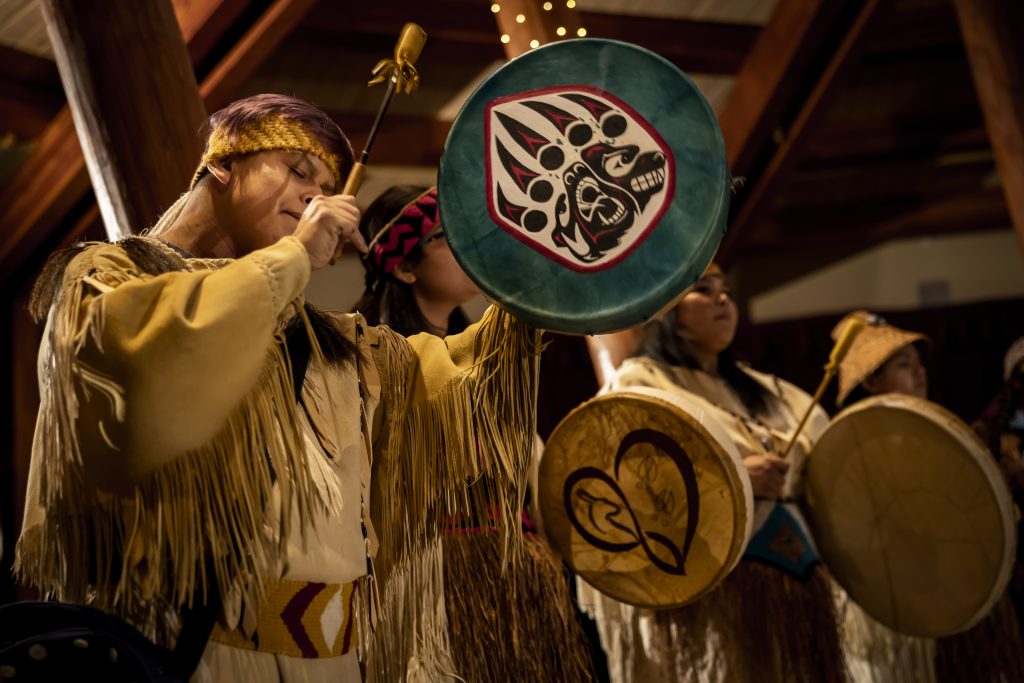
    Bunking in with friends gave me a rare chance to get to know the Whistler Blackcomb behind the brochures. During a long, cold snap (at -15°C/ 5°F, the term hardly seemed adequate), I skipped the mountain to explore the Squamish Lil’wat Cultural Center, one of Vail Resort’s partners. A museum-gallery-café hybrid, it’s filled with carvings and canoes, offering Indigenous-led forest walks, workshops and storytelling. The Audain Art Museum is home to massive Northwest Coast cedar masks, alongside a collection of moody Emily Carr landscapes. I was reminded to swerve any gift shop replicas.  

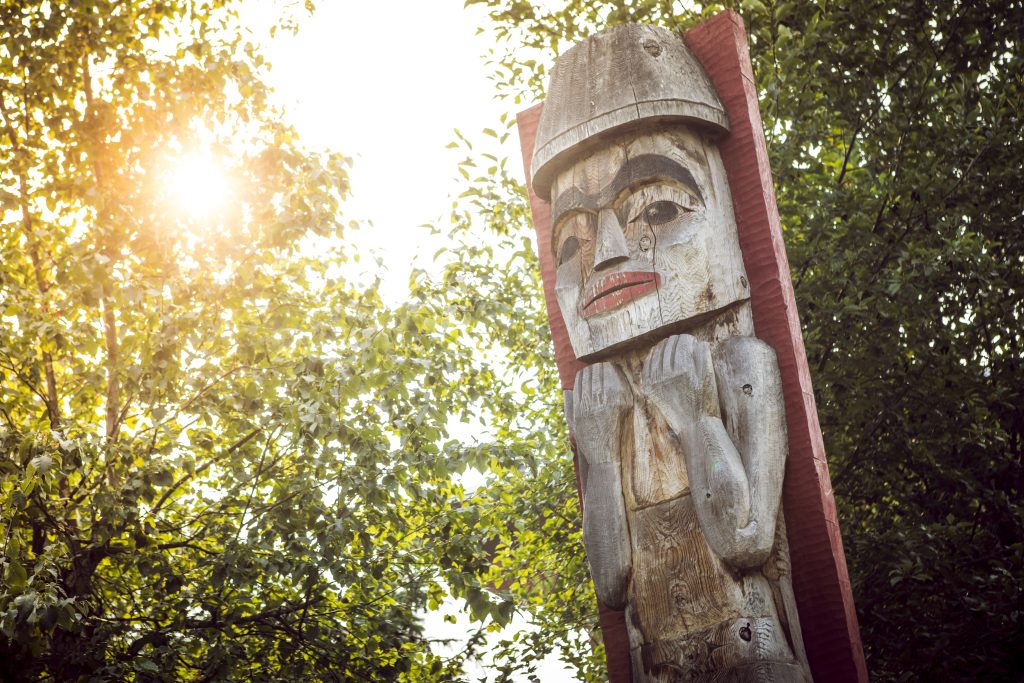
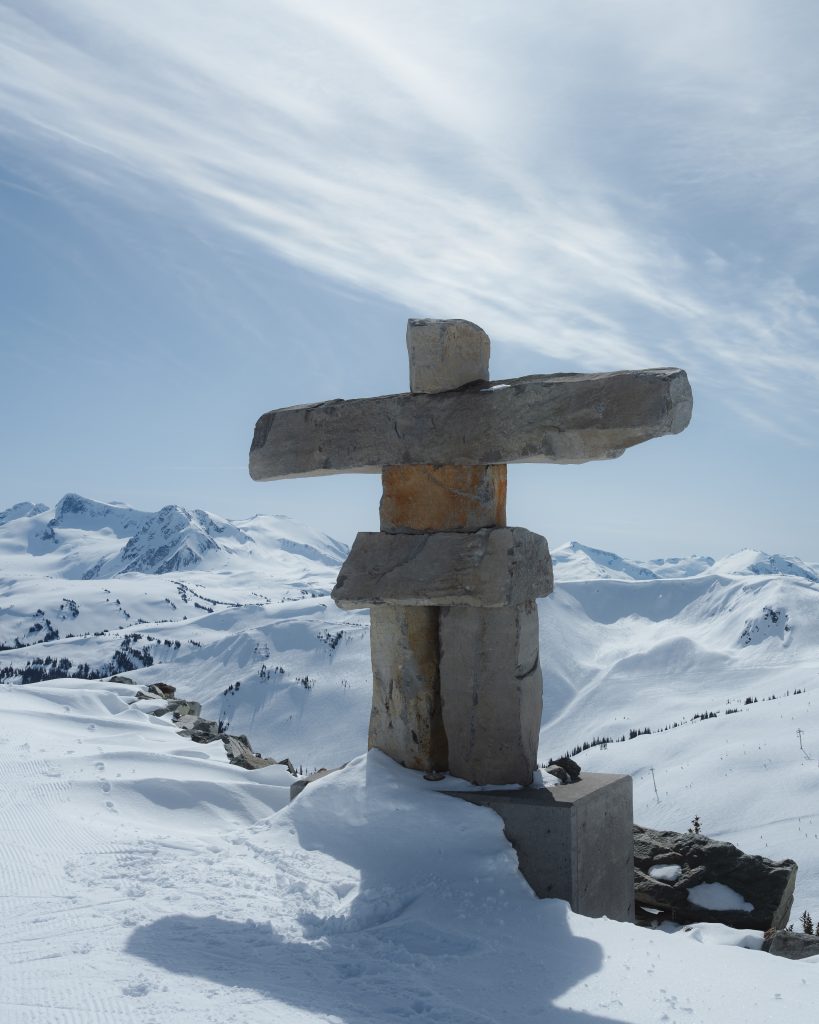
    The resort highlights its roots, offering quiet invitations to reflect – like the Peak 2 Peak gondola, its cabins wrapped in Indigenous art. Dotted between Whistler Village Stroll’s thumping bars and clubs are public installations, towering carved Welcome Figures and First Nation statues depicting nature, strength and legend. More snow-covered carvings peek mythically from the slopes. “The Squamish and Lil’wat Nations have agreements with the resort,” my museum guide said. “There are programs now for revenue sharing, employment and training.”

    Matt Sylvester

    With a new appreciation for the land’s history, I wanted to explore. A trip highlight: Phoebe from Black Tie Ski Rentals pulling up at my friends’ place with three pairs of boots and skis. What luxury, to skip the usual queue in a stuffy rental shop. Owner Todd’s team had dubbed me “aggressive” based on my emailed stats, sparing me the embarrassing shop weigh-in. Village-level exchanges with free swaps make them worth every Canadian dollar, especially in unpredictable conditions.

    Something I’d been wary of: TikTok-famous lift queues snaking through town on peak days. On weekdays in February, I found almost none. On weekends, beating the lines just meant getting out early. Pro tip: avoid “the maze” – the Whistler Gondola entrance – and head straight to the Fitz, Garb or Emerald chair route. While tourists wait, you’ll already be carving first tracks down Raven. That, plus a breakfast roll from Splitz Grill, became my daily ritual (after a quick check of Whistlerpeak.com’s webcams). I skied – and ate – like a local: $12 chicken udon at Samurai Bowl and late-night Fuji Market dashes for half-price sushi.

    The biggest resort in North America, Whistler Blackcomb’s stats justify the hype. More than 200 runs, 8,050 acres of skiable terrain, 16 bowls and three glaciers for me to throw myself down. I found powder-filled chutes and bowls, tree runs spaced just right and wide-open groomers, plus terrain parks to please the pickiest of park rats. 

    Embracing my “aggressive” label, I took the Glacier Express to boot-hike Spanky’s Ladder, and drop into Garnet, Diamond, Ruby and Sapphire Bowls. Some of the most thrilling – and humbling – skiing I’ve done, helped by a hip flask of Baileys. A shift from three weeks of drought and sun to 20+ cm of fresh came fast, conditions swinging from wind-packed and crusty in exposed areas to buttery soft in sheltered bowls.

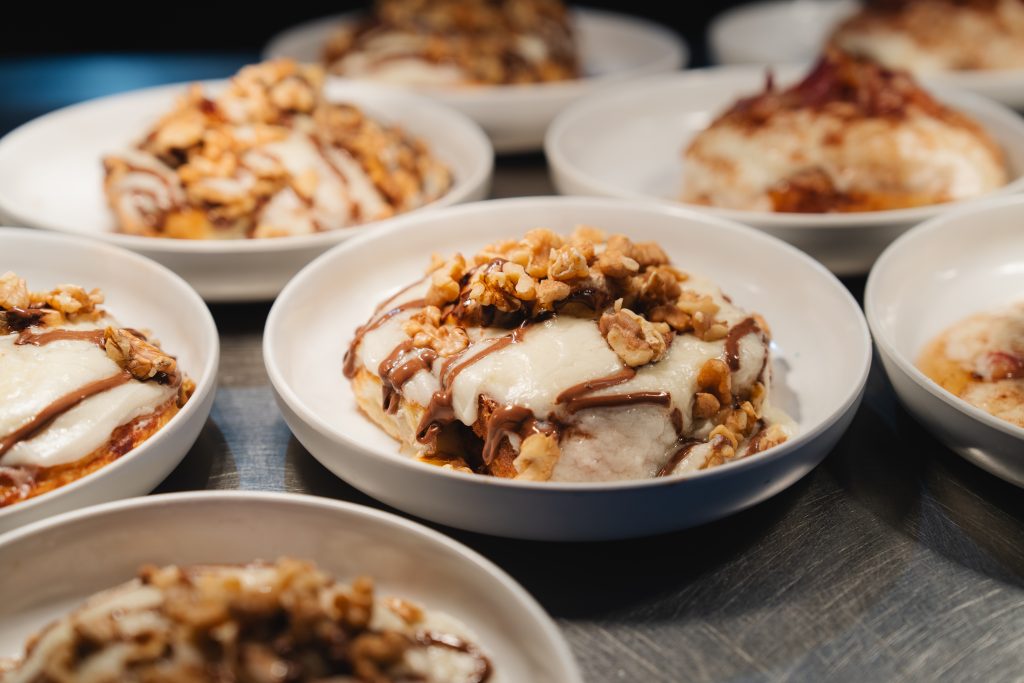
    At 7:15 a.m. on a freezing Tuesday, I understood why the die-hards keep coming back (and why lock-ins at Irish bars aren’t advised on ski trips in your 30s). Two espressos down, I joined Dawn Patrol – Whistler Heli-Skiing’s grounded-flight backup. That kicked off several packed days organized by Vail, showing me lines I’d never have found solo. There’s quiet magic in slipping away before the village stirs, carving through untouched powder in total silence. My guide pointed out off-the-map runs only locals know, and by 9 a.m., I was buzzing on adrenaline and sugar. Chic Pea’s oven-fresh cinnamon buns were a fine reward for the brutally early start.

    Lunch arrived at Christine’s on Blackcomb, where well-heeled skiers gather for panoramic views, charcuterie boards and rich massaman curry. A local friend jealous of my rather posh itinerary had shared a review: “Order a Bloody Caesar (vodka, clamato juice, Tabasco and celery salt). They used to make you apologize to a turtle if you asked for a plastic straw.” Now, local produce is hauled up the mountain by gondola – a logistical challenge that speaks to their commitment to high-quality sourcing.

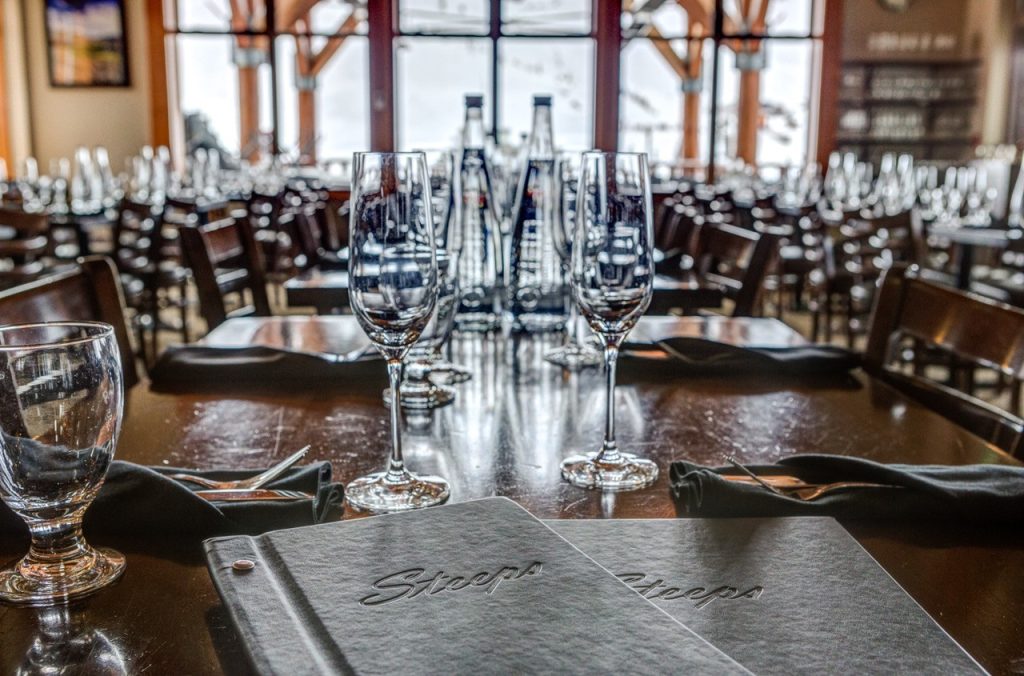
    Another elevated experience came via a six-course Winemaker Lunch at Steeps Grill & Wine Bar: beautiful regional bottles, delicate plates and 1,850 vertical meters between punters and a red wine nap (the lift’s there if you lack hubris). Also delicious: Spirit Bear coffees and Ravens Brewing beers on the sunny patio at Raven’s / Sḵewḵ’ / Yecwlào7 – the first Indigenous-inspired restaurant at the Creekside Gondola summit. 

    The Fairmont delivers peak mountain lodge luxury – cozy fireplaces and big panoramic windows. Ski-in/ski-out access sees guests swap skis for hot chocolates by an on-slope fire. The Mallard Lounge has the buzz everyone’s looking for after a day on the hill. Vida Spa’s heated pools, jacuzzis and private barrel saunas are undeniably luxe (I kept it real with a Meadow Park membership). The Gold floor offers a hotel-within-a-hotel setup, with a private concierge and lounge designed for eating cheese in fluffy robes. Fog rolls over the pines as Blackcomb Gin is poured out, infused with cedar tips and Pemberton hops.

    Tourism Whistler/Justa Jeskova

    At the base of Blackcomb, staying here drops you into the center of nightlife that stretches far beyond boot-stomping and Burt Reynolds shots (those rum-and-butterscotch shooters show up everywhere). Evenings aren’t about the usual ski “scene” so much as subcultures – part fur-trim and velvet ropes, part champagne super-soakers, part open-mic night chaos. Vallea Lumina is a sort-of multimedia night walk through an old-growth forest, gently sharing ancestral stories. Fire & Ice features St’át’imc Nation hoop dancers telling the story of Spo7ez, an ancestral village buried by a massive rockslide – said to be triggered by the mythical Thunderbird to restore peace. It’s a powerful reminder of Indigenous values of coexistence. 

    Helicopter tours with Blackcomb Helicopters offer the perspective needed to grasp Whistler’s scale. Every hour in the air is offset by forest preservation on Quadra Island, once earmarked for development. Banking over Whistler Peak, I watched glacier walls glow electric blue. Below, skiers traced threads across vast mountainsides, heading for hidden bowls of powder caches. Our pilot pointed out the Cheakamus Community Forest, co-managed by the Lil’wat and Squamish Nations with the resort. Indigenous knowledge shapes modern conservation, ensuring the land is treated with respect.

    Whistler Blackcomb delivers on every skier’s dream – but its heart lies in the land’s history and the people working hard to honor it.

    Amy’s trip was supported by Vail Resorts. 

    Rates at the Fairmont Chateau Whistler start from $600 per night (7-night minimum) in winter, and $407 per night (2-night minimum) in summer.

    Now is also the best time to lock in the Epic Pass at its lowest price of the year, with expanded access to Verbier and the 4 Vallées, plus the new Epic Friend Tickets for 2025/26 season giving friends of Epic Pass holders major discounts.

    More at: www.epicpass.com | www.fairmont.com/whistler