Israel’s audacious strike against the leaders of the Hamas terrorist organization in Qatar exemplifies the Jewish state’s new security doctrine – one of boldness and risk-readiness. The Hamas massacre on October 7, 2023, was a watershed moment that reset security calculations in Israel in a significant way. The results are Iran’s proxy network defanged, and a Tehran shaken after its own 12-Day War with Israel. Many observers believe that Israel’s strikes in Qatar risk unraveling the Abraham Accords and undermining U.S. interests. But as past episodes have demonstrated, there is likely to be immediate outrage followed by a reversion to the status quo.
On September 9, Israel shocked the world by launching a military operation to kill senior Hamas leaders who were gathering for a meeting at their longtime refuge in Qatar. Preliminary reports suggested that among the targets were senior officials Khalil al-Hayya, Zaher Jabarin, Muhammad Darwish, and Khaled Mashal. The strike took place on the territory of Qatar, which has long played both sides of the fence. It has created the impression it is a key U.S. partner in hosting an American airbase despite providing funding for Hamas, a U.S.-sanctioned terrorist organization with the blood of U.S. citizens on its hands and providing financial resources to media networks which incite hatred against Israel, putting Jewish Americans at risk.
Public reporting indicates the strike was not successful in eliminating the top rung of Hamas leadership. There has also been handwringing that Israel’s daring attack – while tactically sensible – is nevertheless strategically unwise as it risks alienating the very Arab partners that Israel has been courting as a part of the Abraham Accords to counter the shared threat from Iran. Yet Israeli officials have been reframing it as achieving one objective in signaling that Qatar will no longer be immune from consequences in harboring terrorists.
But history counsels that the initial alarmist reactions from Israel’s Qatar strike should be treated warily. This episode was reminiscent of two botched targeted killings in Israel’s history: in 1997 against then Hamas Political Leader Khaled Mashal in Jordan and in 2010 against Mahmoud Mabhouh in Dubai. In 1997, Netanyahu was prime minister as he is today. In that year, he ordered the assassination of Mashal in Amman. The timing of this decision came only three years after the Israel-Jordan peace treaty of 1994 – which is similar to the state of play in the current context with the Abraham Accords in force, even though Qatar is not a member.
News accounts at the time reported that Israel’s prime minister authorized the operation against Mashal after a Hamas suicide bombing in Jerusalem. Fast-forward to today, Netanyahu similarly greenlit the strike on Hamas in Qatar following a shooting on Jerusalem’s Ramot Junction that killed six civilians and wounded 12 others.
Then, as now, there was also sensitive diplomacy under way as Israel mounted a daring counterterrorism operation. In 1997, Jordan reportedly sent to Israel an offer for it to mediate a suspension of suicide bombings from Hamas. In 2025, Hamas was considering a U.S. proposal for a ceasefire in Gaza and the release of hostages.
Nevertheless, there were some differences. In 1997, Israel acted through the Mossad in fomenting a covert assassination plot. Today, the Mossad reportedly opposed the strike in Qatar, and it was instead done through the Israel Defense Forces, which resulted in it being a military attack.
In the immediate aftermath of the Mashal poisoning, there were angry recriminations. King Hussein conditioned the release of two Israeli agents who were captured on Israel identifying the drug it used on Mashal so that his life could be saved. King Hussein had threatened to close the Israeli embassy in Jordan and hold a public trial for imprisoned Israeli operatives if Mashal died. There were fears about the future of Israeli-Jordan relations, damage it could do to the 1994 peace treaty, part of then-President Clinton’s legacy, as well as intelligence ties between Israel and Jordan.
Crown Prince Hassan of Jordan observed in 1997, “I think it is an act of gross stupidity. We are always reminded that Israel is the only democratic state in the region… and yet you find the only democratic state in the region being associated with an act of terror.” Similarly, Qatar’s foreign minister in 2025 labeled the Israeli military strike on the Hamas compound “state terrorism.” Multiple news reports citing anonymous Arab diplomats have been warning that Israel’s attack against Hamas in Qatar risks making the Jewish state a pariah in the region, as opposed to Iran, and undercuts the spirit of the Abraham Accords, which is President Trump’s legacy as well as U.S. security guarantees.
In the end, despite all the predictions of doom, the 1994 Israel-Jordan peace treaty survived despite a temporary strain in relations.
A similar dynamic played out in 2010 when Israel, with Netanyahu as prime minister again, killed Mahmoud Al-Mabhouh, a co-founder of Hamas’s military wing, in a Dubai hotel. The local police then published CCTV footage which revealed embarrassing details about Israeli tradecraft and caused a rift in its relations with a few countries after non-Israeli passports were used in the operation. The killing took place just as the United Arab Emirates and Israel were engaged in sensitive and covert diplomacy to improve relations. Despite the warnings of rupturing relations, an Israeli cabinet minister visited Dubai in 2014 and the United Arab Emirates joined the Abraham Accords a decade later.
It is true that the current geopolitical context is different from the previous episodes of Israeli targeted killings – especially with Israel increasingly isolated internationally over Gaza. However, this history of absorbable diplomatic fallout from Israeli targeted killings likely motivated Israeli decision-makers to take a gamble in the strike on Hamas in Qatar. While there are loud denunciations of Israel, skepticism should prevail over dramatic, substantive fallout. The Middle East has seen a version of this movie before.
Category: Middle East
-

Doha attack was a blast from the past
-

What Israel’s Qatar strike reveals
“We are ready to accept a deal (with Hamas) that would end this war, based on the cabinet decision,” Israeli foreign minister Gideon Sa’ar said this morning. Yet whatever diplomatic momentum existed evaporated into thin air hours later. In an unprecedented Israeli operation in Qatar, Israel targeted the very Hamas officials they were supposed to be negotiating with. In the blink of an eye, smoke was rising from a building in the Qatari capital, Doha. Hamas’s chief negotiator, Khalil al-Hayya, was targeted in the attack. Israel said the raid was in response to this week’s Jerusalem bus attack and the atrocities of October 7.
The Qataris are livid; Israeli prime minister Benjamin Netanyahu not only made a mockery of the diplomatic process but ordered what could arguably be called a hostile act against a country in the Middle East whose diplomatic services are in high demand.
“While the State of Qatar strongly condemns this assault, it confirms that it will not tolerate this reckless Israeli behavior and the ongoing disruption of regional security, nor any act that targets its security and sovereignty,” Qatari government spokesman Majed al-Ansari wrote on X.
Operations like this aren’t new for Israel, of course. The Israelis are known to have some of the best intelligence assets available; the Mossad is one of the most sophisticated, capable and impressive intelligence services in the world. The list of successful tactical strikes like the one that took place in Qatar today is long, from the years-long campaign against the Black September terrorist group, the 2008 assassination of Hezbollah military official Imad Mughniyeh in Syria to the 2010 killing of Mahmoud al-Mabbouh in Dubai. The message is as clear as day: if Israel wants you dead, you will eventually be dead.
The difference between those cases and today, however, is that Israel wasn’t technically engaged in negotiations with those groups at the time.
The latest draft ceasefire to end the war in Gaza, put together in part by Steve Witkoff, US President Donald Trump’s Middle East envoy, was tabled days just a few days ago. The proposal would have compelled Hamas to release all of the remaining 50 or so hostages on the first day of a 60-day truce, mandated a gradual Israeli troop withdrawal from Gaza and establish a process whereby negotiations would continue until the two sides finally reached a permanent ceasefire. But that deal now lies in tatters, if it was a serious proposal to begin with.
If Israel’s latest hit tells us anything, it’s that Netanyahu and his government aren’t interested in a negotiated resolution to the war in Gaza. This relatively mundane observation won’t come as a surprise to anybody who has been paying attention to the conflict for the last two years, but it’s worth pointing out nonetheless. Indeed, despite the Trump administration’s sporadic attempts to mediate between Israel and Hamas – and Trump’s own boasts about solving a bitter conflict his dim-witted predecessor couldn’t – the Trump White House hasn’t been any more successful in its diplomatic endeavors than the Biden White House was. Palestinian civilians are still dying. Israeli hostages, in dreadful conditions, are cowering in Hamas’s tunnel network. A humanitarian disaster is getting worse by the day. And Israel, its international reputation at its lowest in history, is drilling further down.
Of course, a big part of this can be chalked up to the stubbornness of the combatants and their propensity to treat diplomacy as gamesmanship. Getting the two sides to agree on anything is more difficult than herding cats. The positions of Israel and Hamas remain poles apart. Whenever one side appears open to the certain peace framework, the other throws wrenches into the works. Following the October 7 attack, Israel remains committed to defeating Hamas as an institutional, political and military force, essentially wiping out the movement in totality. Yet Hamas isn’t going to sign its own death warrant, and Netanyahu knows this perfectly well. Describing this entire process as trying to jam a square peg into a round hole would be an understatement.
The Americans, though, deserve a portion of the blame as well. Trump vacillates between wanting peace in Gaza and then enabling Israel’s military strategy, with the end result being incoherence. At times, Trump rightly wags his finger at Netanyahu and contradicts the Israeli premier in public, particularly on the subject of what is happening in Gaza. But the next day, he basically writes off Gaza as Israel’s problem and suggests that whatever the Israelis decide to do, he will unabashedly support it.To the extent the Trump administration has a Gaza policy, it’s akin to throwing various peace proposals into the ether – all of which eventually die on the vine – that are designed more to convince Washington’s Arab partners that the United States is doing something than to actually end a war in which tens of thousands of people have been killed.
One thing is for sure: with this latest strike on Hamas in Qatar, Netanyahu has dealt a serious blow to a diplomatic process that was already on life support. And this was likely the goal all along.
-

Queers for Palestine burst Pride
The annual Ottawa Pride rally was cancelled on Sunday after the group, Queers for Palestine, blocked the parade, owing to the refusal of the organizers, Capital Pride, to agree to the demands of “pro-Palestine” activists. Among the demands was for Capital Pride to back a complete boycott of Israel, and for Ottawa Mayor Mark Sutcliffe to apologize for not attending last year’s parade, which was described by Jewish groups as more a ‘protest against Israel’ than a rally for LGBT rights.
Regardless of one’s position on the conflict, for supposed human rights activists in a North American capital city to successfully hold the rights of the local gay community hostage to developments in the Middle East, is illustrative of the state of activism in the West and the succumbing of local authorities to “pro-Palestine” thuggery. Not only is there nothing “pro-Palestine” about insulting queer Palestinians by glorifying their jihadist persecutors Hamas, whom Gazans have been protesting against for years, but it takes a colossal lack of introspection to demand that an LGBT rights movement call for the boycott of a state that does a much better job of safeguarding those very rights than anyone in that far-away region of focus.
Perhaps what busts the gauge on the hypocrisy-meter is the silence of groups such as Queers for Palestine on the single largest threat facing LGBT rights in the world today.
One is unlikely to find, for instance, anywhere on the Instagram page of Queers for Palestine-Ottawa that Islam is the sole religion and organized ideology in the world today that still codifies death for homosexuality, with over 10 Muslim-majority countries upholding the capital punishment, and numerous others mandating caning or harsh prison sentences for the “crime” of being queer.
When certain Jewish groups found last year’s Capital Pride statement on Israel to be “antisemitic”, they chose to boycott the rally, a right Queers for Palestine could have exercised this year. There are numerous pro-Palestine demonstrations taking place across the West, including in Ottawa, where these activists can register their protests against Israel, without harming the rights of those very people they are using to propel themselves into recognition.
The histrionics of the current pro-Palestine groups in the West are even alienating those who have for long stood for Palestinian rights, with many LGBT activists in Ottawa accusing Queers for Palestine of “hijacking” the movement.
Queers for Palestine of Ottawa should ask themselves why there is no Queers for Palestine in any of the Arab states? Why do Gulf monarchies not allow any public pro-Palestine or anti-Israel rallies, at all? Why isn’t Queers for Palestine protesting against the Arab states, including Israel’s neighboring states of Jordan, Egypt, and Syria that have aligned themselves with Israel’s security policies and want to have nothing to do with the Palestinians?
In fact, one is freer to demonstrate for Palestinians, including queer Palestinians, in Israel more so than Arab states, as evidenced by the ongoing protests in Tel Aviv.
Surely Queers for Palestine should have a word or two to say about Saudi Arabia? Saudi has not only hanged and lashed members of the LGBT community, but has more Muslim blood on its hand than any non-Muslim state, having long used Palestinian lives to propel Salafi jihad around the world.
There should also be some self-reflection over evident Muslim hostility towards the queer community in the West, whether it’s the US’s first Muslim-led city council banning pride emblems in Hamtramck or Muslim parents rallying for LGBT erasure in British school curricula, or Muslim kids being asked to stomp on pride flags in Canada.
But, of course, instead of protesting against these unsavory views, policies, regimes and groups, Queers for Palestine are misusing the freedoms of the West to champion the Islamists who hold them. Israel fits a one-point agenda for these activists who seek to paint Jews as the perpetual aggressors and Muslims as the perennial victims. Unfortunately, they have fallen too far deep in narcissistic echo chambers to realize that their anti-Israel, and often anti-Jewish, hysteria, is doing absolutely nothing to help the real queers of Palestine who are being persecuted and killed by Hamas. -

Netanyahu is getting desperate
As the IDF announced the imminent mobilization of some 80,000 reservists in preparation for the decisive battle to seize Gaza City, the prospect of a negotiated deal with Hamas – one that could secure the release of the 20 hostages believed to still be alive, along with the remains of 30 others presumed dead – appears to be slipping further out of reach.
Prime Minister Benjamin Netanyahu, according to political and diplomatic sources within the far-right coalition that has dominated Israel’s government for nearly three years, is “resolute in pursuing the war, even at the grave cost such a course is expected to exact.” For him, the campaign has become not merely a matter of policy but of survival.
Yet even within the military’s top brass, doubts run deep. The mobilization order was issued by Chief of Staff Lieutenant General Eyal Zamir, despite his opposition to the plan. In a tense cabinet meeting, Zamir warned that entering Gaza City – a densely populated urban labyrinth that is home to nearly 1 million Palestinians, half the Strip’s inhabitants – would be nothing less than a “death trap.” His estimate was that at least 100 soldiers were likely to be killed (adding to the 1,000 who have already been killed since October 7, 2023) and that some, if not all, of the hostages would perish as well, either in IDF bombardments or at the hands of Hamas in revenge.
Netanyahu, his government, and even the chief of staff are all wagering on one crucial assumption: that most Israelis – including former top IDF and security chiefs who oppose Netanyahu and his rule – will stop short of calling for outright refusal to serve. This stands in stark contrast to the United States during the Vietnam War, or even Israel itself during the First Lebanon War, which dragged on from 1982 until 2000.
And yet the hypocrisy is glaring. The ultra-Orthodox public – whose parties form an indispensable pillar of Netanyahu’s coalition – continues, under rabbinical edict, to refuse sending their sons into uniform, let alone into the line of fire.
Where refusal does exist, it is expressed in quieter, grayer forms. Tens of thousands of reservists have simply failed to report for duty, cloaking their absence in explanations that are, in reality, acts of passive resistance: that they have already served 200 to 300 days, that their families are suffering, their businesses collapsing, their lives falling apart. Add to this some 15,000 wounded and traumatized veterans, and the picture becomes even starker. The army is also grappling with a sharp rise in suicides among soldiers.
The IDF, fully aware of the phenomenon, prefers to turn a blind eye rather than confront it head-on, tacitly accepting these “explanations.” What makes this tolerance possible is money. The government has been compensating reservists generously, sometimes lavishly, to the point where service becomes not only bearable but, for some, financially profitable. The line between patriotic duty and mercenary work grows disturbingly thin.
Meanwhile, the families of the hostages – and the public that stands with them against Netanyahu – are sinking into despair. On Sunday, nearly a million and a half Israelis once again poured into the streets, paralysing wide swaths of the country, even as the trade unions, tightly controlled by Likud, refused to lend their support. But exhaustion is palpable; the Israeli public is weary.
Among the anguished voices, Einav Zangauker – whose son Matan is among the captives – delivered perhaps the most searing indictment yet. “If my son and the hostages die, their blood will be on your hands,” she declared to Netanyahu, “and I will haunt you for the rest of your life.” But if her words stung, Netanyahu showed no sign of it. Once again, he displayed an almost clinical indifference to the hostages’ fate, choosing instead to double down on the belief that this time, unlike so many times before, his military gamble will succeed and Hamas will be crushed and expelled from Gaza. His record of broken promises makes such confidence ring hollow, yet he remains undeterred.
The Gaza war is part of a larger design
Political analysts across the spectrum – including some who have long been sympathetic to him – increasingly agree: Netanyahu’s overriding motive is not national defense but political survival. For him, the war itself has become a kind of insurance policy, a means of diverting public attention from the crises metastasizing at home: economic strain, deepening social fractures, and Israel’s accelerating international isolation.
The war will likely grind on for as long as it serves Netanyahu’s political interests – and for as long as Donald Trump continues to give him a free hand. This, despite Trump’s repeated lips service and rhetorical nods to the humanitarian disaster unfolding in Gaza, and despite the fact that his own special envoy, Steve Witkoff, was the one who crafted the framework for a deal: the release of ten hostages and 18 bodies in exchange for hundreds of Palestinian prisoners and a two-month ceasefire.
But what is happening in Gaza cannot be understood in isolation. It must be seen in the broader context of Netanyahu’s far-right coalition, without whose support he has no government. Ministers in that camp now speak openly of their intention to expel Gaza’s 2 million Palestinians and to plant Jewish settlements in their place – a replay of the West Bank project Israel has pursued since 1967. There, settler violence and terror against Palestinians are on the rise, with the Israeli military largely turning a blind eye.
The Gaza war, then, is not merely a military campaign; it is part of a larger design. It is inseparable from Netanyahu’s wider effort to engineer a religious-nationalist regime change – a slow-motion coup aimed at dismantling Israel’s liberal-democratic order.
What began as a justified response to a brutal terrorist attack has become, above all, one man’s desperate crusade for power.
-

What is the aim of Israel’s Gaza City operation?
Israel’s security cabinet on Thursday approved the Israeli Defense Forces’ plans for a major operation into Gaza City. The cabinet decision comes after the mobilization of 60,000 IDF reservists over the past week. Israeli forces are already operating on the outskirts of the city. Should the operation commence, it appears set to bring five Israeli divisions into areas of Gaza as yet untouched in the course of nearly two years of war.
At a certain point a decision must be made. Hamas must be either conceded to or destroyed
Prime Minister Benjamin Netanyahu has described Gaza City as containing Hamas’s “last strongholds.” In a statement made before Thursday’s cabinet meeting, Netanyahu described the war as at its “decisive stage.” He also, however, appeared to hint that he has not abandoned the path of a negotiated settlement to the war, noting that he has ordered a new round of negotiations for the release of all remaining hostages and an end to the war “on terms favorable to Israel.”
The opposition in Israel, along with representatives of hostages’ families are determinedly opposed to the Gaza City operation. They demand that Israel should agree to the latest proposal put forth by Qatari and Egyptian mediators, according to which Israel should accept a 60-day ceasefire in return for the release of ten hostages.
More fundamentally, the opposition want an end to the war, in return for the release of all hostages, even if this means that Hamas survives as an organized political and military force in Gaza when the guns cease. Their contention is that Hamas is anyway massively damaged, and that failure to bring home the hostages will cause irreconcilable damage to Israel’s social cohesion and the contract between state and society.
The internal strains currently apparent in Israel indicate that the contradictions that have been apparent from the outset in Israel’s war aims are now becoming increasingly irreconcilable. This in itself is testimony to the demonic cunning that has lain at the heart of Hamas’s strategy for the conduct of the war since its outset. It remains to be seen if this strategy will yet lead to the group’s survival of, and hence victory in, the struggle now under way.
Israel’s stated twin aims in the war in Gaza are the bringing home of the Israeli hostages and the destruction of the Hamas authority which has ruled in the Strip since 2007. There is a fundamental contradiction at the heart of these two aims. It is not possible to negotiate with an entity and at the same time determinedly seek its wholesale destruction. Ultimately, logic and reality dictate that you will have to favor one aim over the other.
The opposition in Israel and the main organizations representing the hostages’ families have a clear eyed solution to this dilemma: namely, prioritizing the former goal and effectively abandoning the latter. A smaller but no less notable population on the hard right of the Israeli political spectrum favor the opposite route – prioritizing the conquest of the entirety of Gaza, to obliterate the organized Hamas presence there, to the detriment of other considerations.
For nearly two years, the government of Prime Minister Benjamin Netanyahu has tried to juggle these two aims, applying military pressure on Hamas while at the same time negotiating for the release of hostages. Netanyahu has achieved considerable success with this fudge. Hamas has suffered massive damage. A large number of hostages have come home (in return also for the release of large numbers of convicted Palestinian terrorists guilty of the murder of Israelis).
This attempt to square the circle is also the reason for the sometimes apparently incoherent appearance of Israel’s ground campaign, in which areas of the Strip have been conquered, then abandoned, then conquered again. No effort to conquer the Strip in its entirety was being made. Rather, the intention was to keep Hamas under pressure and reduce its capacities, while negotiating for the return of the hostages. Of course, it is also the case that the prolonged, indecisive campaign which has resulted has led to damage to Israel’s international standing and alliances. There is little evidence, however, that this is of current pressing concern to the prime minister.
The problem is that the contradiction cannot be glossed over indefinitely. Hamas will not release the final hostages and then consent to its own destruction. It will also not, as must now be apparent, agree to relinquish control of Gaza, release the remaining hostages, disarm and depart, regardless of the amount of pressure applied. Rather, it will end the war and release the remaining hostages only in return for its own guaranteed survival. Which means at a certain point a decision must be made. Hamas must be either conceded to or destroyed.
As of now, Israel is in control of around 75 percent of the Gaza Strip. Gaza City and its environs account for a considerable part of the remaining area. The city is well fortified, and contains high rise buildings as well as a warren of alleyways. Taking it is likely to be complex and costly.
If Hamas comes out of the current war battered but intact, which is its current state, and if Israeli forces withdraw from Gaza as part of a deal to end the war, then a historic precedent will have been set. It is one which will be unlikely to escape the attention of Israel’s enemies.
An Arab military force will, for the first time since 1948, have taken and held territory west of the Jordan River, and then successfully resisted by military means an Israeli attempt to recover that territory. The taking of Israeli civilian hostages will be understood to have been the decisive factor in ensuring this achievement.
Hamas’s leveraging of Israel’s concerns for its citizens (in stark contrast to Hamas’s evident indifference to the fate of its own civilians) will have the appearance of strategic brilliance about it, albeit brilliance of the most evil and cruel variety. It will then be likely to spawn many repeats and imitations, among the sizable Islamist camp committed to Israel’s destruction.
This is the matter now under contention. In the days ahead, Netanyahu’s decision (or his preference for continuing to refuse to decide) will become apparent.
-
Israel’s plan to occupy Gaza is a last resort
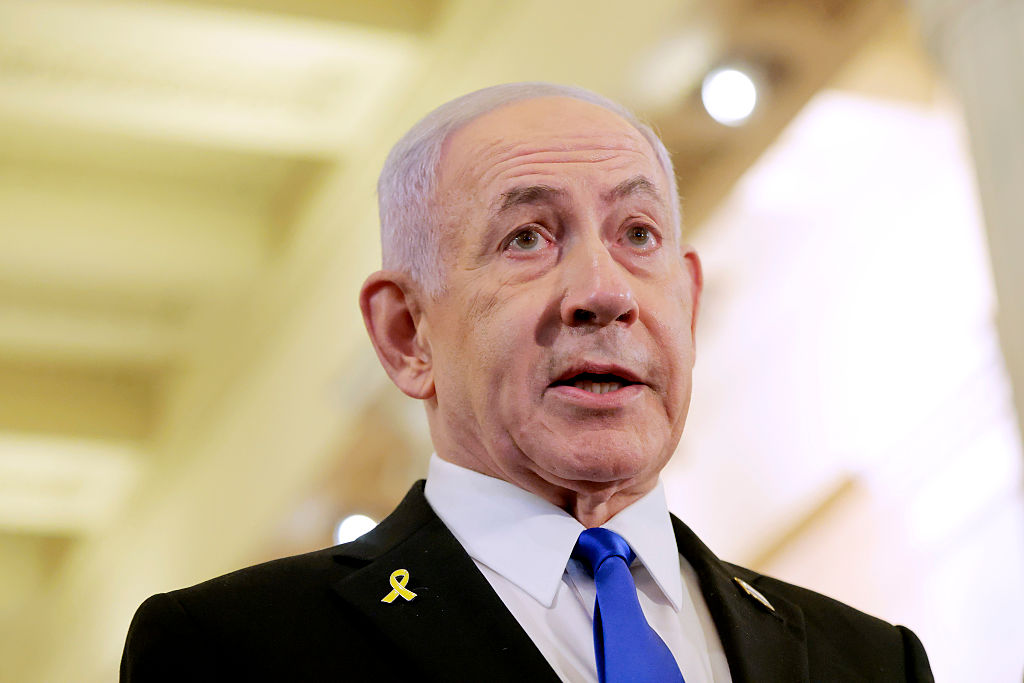
Reports last night from Israeli Channel 12 quoting a senior official in Prime Minister Benjamin Netanyahu’s office have confirmed what has long been rumored, feared and for some, awaited: the decision has been made to occupy the Gaza Strip. This is not yet formal policy, pending cabinet approval, but the trajectory is now unmistakable. The prelude has ended. The war is entering a new, graver phase.
Western commentary will, as usual, rush to treat this as a moral failure of Israeli restraint, or as the inevitable result of hawkish ideology. Yet that interpretation is not only false, it is profoundly dishonest and the opposite of the truth. The occupation of Gaza is not a first resort. It is, tragically, the last. And it is an outcome born of many missteps by many international actors, including the UK.
For 22 months, Israel has pursued every conceivable alternative. When the United States and international community demanded a surge in humanitarian aid, Israel complied. When ceasefire negotiations gained momentum, Israel displayed unprecedented flexibility, including territorial compromises around the Morag axis. When Hamas rejected yet another comprehensive offer mediated by Egypt, Qatar and the US, it was not for lack of effort by Jerusalem or Washington. It was the result of a calculated decision by Hamas to extract political and material gain by prolonging conflict.
For a while, it looked like it might all go the other way. The timeline speaks for itself: Israeli envoys traveled to Doha in early July; by mid-month, a new draft agreement was on the table. The US special envoy, Steve Witkoff, was scheduled to fly to Doha on July 23 to finalize the deal. But by then, Hamas had already sabotaged the process, following a Western joint statement led by Britain’s Foreign Secretary David Lammy, calling for an unconditional end to the war and an unrestricted flow of aid. From the UK, Hamas recognized that it could secure its objectives without giving up the hostages. It raised new demands, withdrew consent on earlier terms and collapsed the negotiations entirely.
The hostages remain starving underground. The war grinds on unrelentingly. And the challenging humanitarian situation will not end yet.
To this, some Western governments have responded with gestures of abstract symbolism. In September, the UK, France, Canada and others are set to recognize a Palestinian state, ostensibly to reinvigorate the peace process. But as Shany Mor, lecturer in political thought at Reichman University, has noted, symbolic actions which incentivize maximalist violence do not break cycles of war, they perpetuate them. The July 21 statement did not bolster diplomacy. It destroyed it.
Israel is now faced with the consequences of that destruction. The IDF, reportedly reluctant to engage in renewed full-scale combat, has nonetheless been preparing a range of military scenarios, including encirclement strategies and targeted incursions. Yet none offer a quick resolution. The reality is that without a decisive shift on the ground, the hostages will starve to death in captivity, Hamas will not be deterred and Gaza will remain a base for Palestinian jihadist aggression.
Some argue that occupation will not bring peace. Perhaps not. But what the critics fail to answer is: what will? Not diplomacy – that has been exhausted. Not incentives – those have been lavished. Not restraint – that has only emboldened the most violent actors. Hamas has not surrendered, moderated or compromised. It has neither proposed a viable end-state nor shown any interest in the norms of conflict expected by civilized states. Instead, it has starved its captives and its own civilians for propaganda, hoarded aid and continued to fire into Israeli towns.
The decision to occupy Gaza is not born of ideology but necessity. It is not an act of vengeance but of grim strategic calculation. And it has been made only after every alternative was tried, and each was thwarted by an opponent committed to endless war. Internally, those who pushed for this outcome all along will now be inclined to argue that they were the realists 20 months ago, and even 20 years ago when they opposed Israeli disengagement from Gaza in the first place.
It will bring new criticism, especially from the Western press and political class, which has grown adept at condemning outcomes without tracing their causes. But this condemnation cannot erase the facts. As much as Israel is choosing this path, it has also been chosen for it, by a jihadist movement that values leverage over lives, spectacle over peace and whose only reliable negotiating tactic is to demand the rewards of surrender while offering none. And by a coalition of international actors determined to scupper every diplomatic or military step Israel had towards victory over ruthless Palestinian jihadism and maximalism.
All of this signposting could be performative distraction from a different but no less decisive Israel-American action about to unfold. This would be similar to the elaborate pre-12 Day War playbook used when Netanyahu and Trump put out misleading signals before their coordinated joint actions.
If the occupation proceeds, it may be long, costly and fraught with danger. But it may also be the only remaining way to establish the minimal conditions of security and order. The problem of Gaza, tragically, has not left Israel with a choice. It has left it with a burden.
-
Will Trump take a stand against the Muslim Brotherhood?
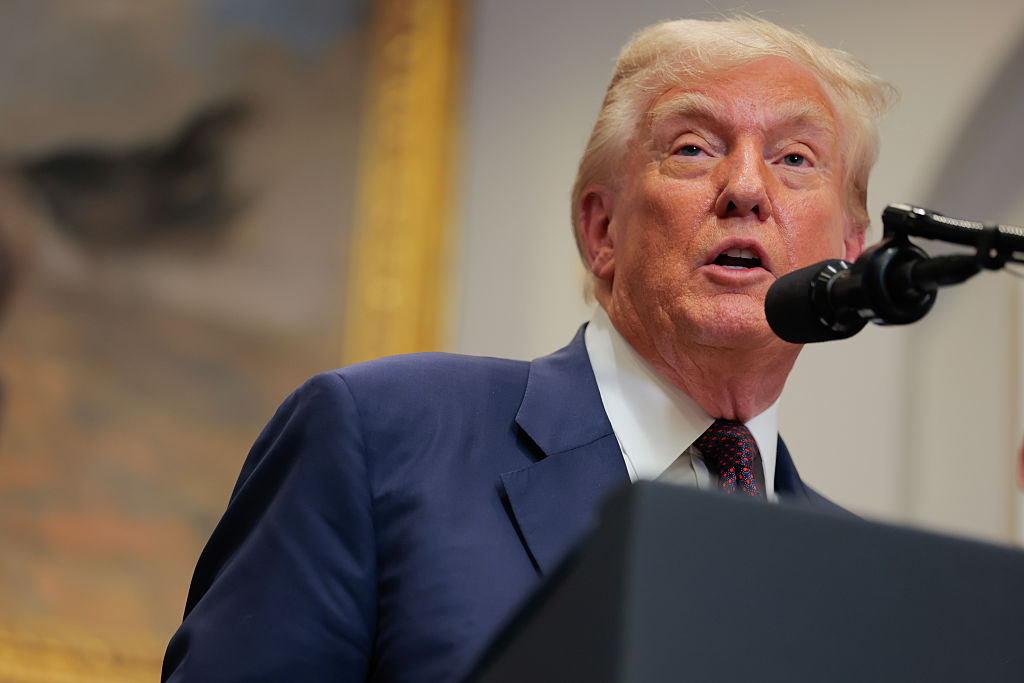
Senator Ted Cruz isn’t giving up. Cruz, who believes that the Muslim Brotherhood serves as the “key foundation stone for radical Sunni terrorism,” has just reintroduced – together with five Republican senators and bipartisan support in the House of Representatives – the Muslim Brotherhood Terrorist Designation Act, which he first proposed in 2015. Cruz is no stranger to controversy when it comes to Islam: in March 2016, following a terrorist attack in Brussels, he said that it was imperative to “patrol and secure Muslim neighborhoods” in America before they became radicalized.
Now he is reupping his call to focus on the Muslim Brotherhood. Founded in Egypt in 1928, it is a dangerously militant Islamic organization with affiliates around the globe. While the US State Department has designated some branches of the Brotherhood as terrorist organizations, it has not targeted the main group. Has the moment arrived to take a stand?
A growing chorus of voices is arguing that it has. According to Andrew McCarthy in National Review, “Ted Cruz understands the threat and is distinguishing himself by charting a very different policy direction. It will serve him well. And it would serve the country well.” Writing in the Middle East Forum, Jim Hanson agreed: “The Muslim Brotherhood represents a danger to the civilized world and designating it a Foreign Terrorist Organization will help curb its influence. An indication that this is a correct move can be seen in the actions of Egypt, Saudi Arabia, the United Arab Emirates, Bahrain and Jordan. These countries all know the Brotherhood well; each has designated the Brotherhood as a terror group.”
These apprehensions about the Muslim Brotherhood are not the sole province of American conservatives. As early as 1948, King Farouk of Egypt banned the group. Today, alarm about the Brotherhood exists in France, where President Emanuel Macron is seeking to address the threat of Islamic radicalism. In May, a state-commissioned report on the Muslim Brotherhood was leaked, and its conclusions caused a furor. It stated that “political Islam” posed a mounting danger to the democratic values of the French republic. “The reality of this threat,” the report declared, “even if it is long-term and does not involve violent action, highlights the risk of damage to the fabric of society and republican institutions.”
Critics of Cruz’s motion contend that it will boomerang, stirring up more hostility toward America in the Islamic world and stoking broader fears about Islam. Dov Zakheim, the former undersecretary of defense in the George W. Bush administration, observes that the claim that singling out the Brotherhood would promote Islamophobia is misplaced – the Brotherhood is already banned by a welter of countries, including Saudi Arabia, Bahrain, Jordan and the United Arab Emirates.
The pressure is building in Congress. In early June, Congresswoman Nancy Mace introduced the Muslim Brotherhood Is A Terrorist Organization Act. “The Muslim Brotherhood doesn’t just support terrorism, it inspires it,” said Mace. “President Trump was right when he said the Muslim Brotherhood is a threat to global security, and it’s long past time we call them what they are: terrorists.”
Will Trump act to try and counter a pernicious ideology that has brought destruction to so many lives? The President has a history of taking bold action in the Middle East, from the assassination of Iranian major general Qasem Soleimani to bombing Iranian nuclear facilities to meeting with interim Syrian president Ahmed al-Sharaa. He has a variety of choices, from issuing an executive order banning the Brotherhood to imposing Treasury sanctions. With bipartisan backing in Congress, it seems more likely than ever that Trump will seek to target the Muslim Brotherhood for destruction.
-
Israel, you’ve gone too far
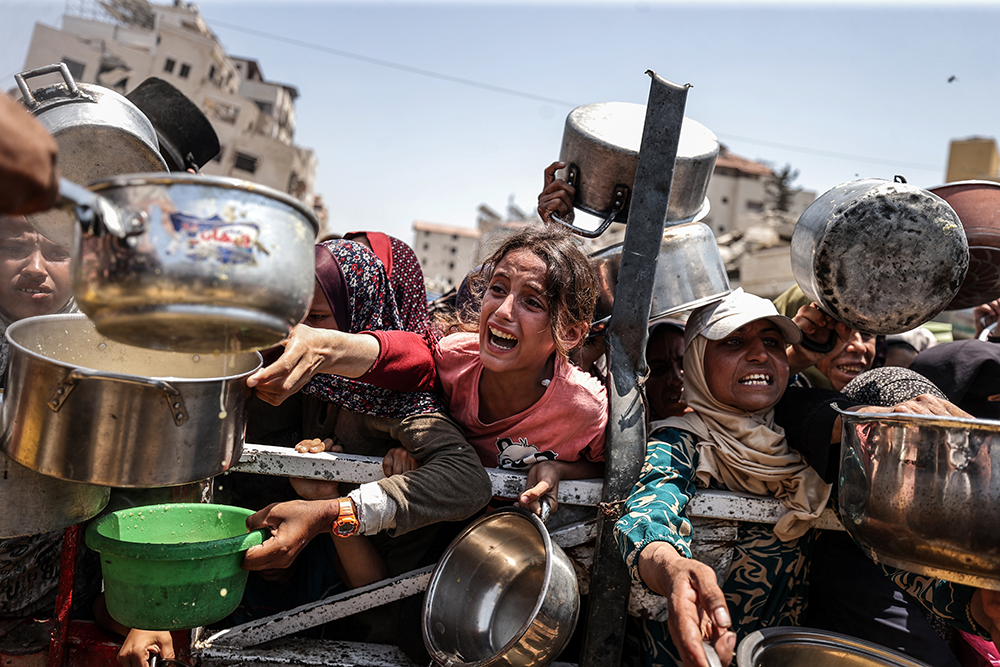
If any other country in the Middle East had behaved as monstrously as Israel has in recent weeks, the jets would be lined up on our runways ready to do a bit of performative bombing. Never mind BDS (boycott, divestment and sanctions) and diplomatic pressure. I mention this because those of us who support Israel, and have done so largely uncritically since October 7 2023, need the scales to fall from our eyes a little – for the good of Israel, as well as the good of those starving Palestinians.
I have been to Israel many times, as a journalist, as a holiday-maker, as a friend. I accept without demurral the argument that it is the region’s only democracy – and a liberal democracy at that – surrounded on all sides by authoritarian failed states which wish to see it wiped from the face of the Earth. I subscribe to the notion, too, that if Palestine got what Palestine wants – from the river to the sea and all that vainglorious spite – then they would turn one of the most remarkable countries in the world into a variant of Somalia within about six months (if that), no matter how much money its gullible white liberal well-wishers poured into the place. I have an absolute lack of respect for the impoverished Arab countries that are governed, in the main, by bloodthirsty and intellectually challenged religious maniacs, just as I have an absolute lack of respect for the rich Arab countries that were lucky enough to find a reservoir of oil in their sandpits and have created odious totalitarian slave states as a consequence.
This may be unfair, but I have the distinct feeling that the Arab culture, when allied to Islam, makes for a uniquely toxic mindset; one fueled by absolutism, hatred and a disrespect for human life. I despise the feral savages of Hamas and was wholly in support of Israel’s incursion into Gaza, even if, at the time, I thought it might be more useful to begin by lobbing a few missiles at Tehran. Why not target the organ grinder rather than its imbecilic monkeys? Equally, I have a fierce loathing of the Keffiyeh Klan, the deluded legions of affluent western liberals who have embraced anti-Semitism with gusto and when asked to identify the sins of the world have only one answer.
In short, I am instinctively, politically, morally and pragmatically on the side of Israel. I do not wish our country to recognize Palestine as a sovereign state (and my Prime Minister Keir Starmer’s decision to do so is a crass genuflection to his idiot backbenchers. Just what is it you are recognizing, you abject little man?). Nor do I think, pace Starmer, that Palestinians have “an inalienable right” to independent statehood. Just to press the point home, I believe that from the Maghreb to the Levant and then eastwards, over those vast dunes, into what was once much better off when it was called Persia, corrupt and vindictive regimes govern a corrupt and vindictive culture, one that is responsible for much of the misery in the world. Israel, then, is an oasis – which is why we cannot afford to allow it to pollute its own waters. And that seems very much like what it is doing right now.
If you are already howling that I have swallowed Hamas propaganda, and that either it is Hamas who is stopping the aid getting through or that the far-from-starving Palestinians are tucking into three square meals per day, eggs Benedict, shrimp étouffée, bananas Foster and so on, then you are laboring under a delusion. If virtually every non-aligned observer in the world, including the President of the USA, believes that the people of Gaza are starving to death and Israel is primarily responsible, then that’s good enough for me, frankly.
Of course Hamas has looted aid convoys and of course it lies to the press and the press is often far too quick to report what it says as being the truth. But that does not alter the fact that people – largely blameless people – are dying and that Israel is in large part to blame. Of course this conflict has, in the West, become hideously polarized and so it is all too easy simply to continue repeating the mantra that everybody is against Israel and one should believe only what one hears from the mouth of Benjamin Netanyahu and the IDF press office. (Even in that case, Netanyahu accepts that there are several areas where assistance has not made it through.) But if you sign up to that credo, you are morally lost. We have to form opinions based upon the evidence that is put before us, not have them devolve from partisan loyalties, no matter how well-founded those loyalties might be.
It has to be said that the United Nations should be held primarily responsible for the partisan nature of the debate. Supposedly neutral, it has vilified Israel at every turn, just as in the past 20 years it has entertained resolution after resolution condemning Israel while ignoring every other transgression which occurs anywhere else on Earth. It came as no surprise to discover that Hamas terrorists were actively involved in UN programs. As soon as that was revealed, the awful secretary-general, Antonio Guterres, should have resigned. Meanwhile, we should take our leave of an organization which cleaves to the palpably stupid view that the wrongs of the world are the consequence of colonialism, except when those wrongs are committed by Israel. It is very far from being a force for good. Instead, it has become a force for disseminating demonstrably absurd post-Marxist delusions.
I do not have a solution to the crisis. Frankly, Donald Trump’s idea of turning the Gaza Strip into a kind of Las Vegas, except with falafel in place of T-bone steak, has much to commend it, but that simulacrum of Sodom should not be built over the bodies of dead children. We support Israel because of its erudition and its strength but most of all because it has decency. Had decency. Please let it get that decency back.
-

A chat with the Princess of Iran
The Princess of Iran is casual over email. Noor Pahlavi, the 33-year-old eldest daughter of Iran’s Crown Prince in exile, Reza Pahlavi, is American-born, a potential heir to the Iranian throne and ready for regime change in the Middle East.
“Hi it’s been a crazy couple of weeks,” she wrote me a few days after the US plopped some 400,000 pounds of bombs on the Islamic Republic’s nuclear sites. That same week, Reza began to appear across Western media, calling for rebellion within Iran and support from without: “This is our Berlin Wall moment.”
Reza is the son of the last Shah of Iran. His family has become a symbol of a Persian, pre-Islamist Iran, and Reza casts himself as the transitory figure to lead the country into a more liberal post-regime future. Whether that future involves a republic or a restoration of the constitutional monarchy must be left up to the people, he consistently says. Should they choose the latter, he has self-effacingly suggested he would accept the responsibility.
This means that Noor, an impeccably styled New Yorker who works in venture capital, has a shot at the throne. In fact, following Reza’s reign, she may be the most viable successor. This raises a question: is she simply an American businesswoman, or is she a future empress?
The rules for the Persian line of succession are messy. The most detailed potential source of guidance comes from Iran’s pre-Revolution constitution, which declared that the Shah must be succeeded by his closest male heir. But Reza has only three daughters. The closest thing he has to a male heir is his nephew, Keykhosrow Jahanbani – a man about whom zero public information seems to exist. But Keykhosrow is partially descended from the family that the Pahlavis toppled to take the throne, the Qajar, and a caveat in the constitution forbids a Qajar from ever holding power again. So this 50-something-year-old dispossessed royal, wherever he is, doesn’t have a chance. That leaves us with the Pahlavi daughters. The old constitution, according to some Iranians, could permit Reza to nominate one of these three as heir.
As for Noor: the State Department couldn’t dream up a more ideal Iranian royal. She was born in DC, raised in Maryland’s suburbs, graduated from Georgetown University (magna cum laude) in psychology and is involved in a variety of human-rights philanthropy networks. The Pahlavi dynasty’s lineage is Muslim, but the women are certainly not the hijab-wearing type. On the contrary: Noor is one of New York’s more glamorous denizens; She pops up at the Hamptons and galas in designer gowns and runs in a designer crowd, and the Arabian editions of Vogue and Harper’s Bazaar play up her blending of Persian fashion with Western styles at events in New York and Paris. Her allure has become a symbol to Iranians in exile of the banished Persian empire’s wealth and luster.
Noor’s idea of post-regime Iran combines that fragrant vision of Persia with something that sounds an awful lot like liberalism. She wants an Iran “where Persian culture is celebrated rather than washed away” and one “where citizens can love who they want, practice whatever religion they want.” She says the regime is “weaker than it’s ever been” and bemoans “outside forces” keeping it on life support.
But whether she sees herself leading that nation is a trickier question. Should the regime fall, I ask her, would she return to Iran?
“I personally would love to spend time in Iran and help see the Iran Prosperity Project, which my dad and many others have been working on, come to fruition,” she tells me. The answer doesn’t exactly betray ambitions for lifelong dominion, and at no point in our correspondence did she indicate plans to remain in Iran long-term. If she were harboring regal ambitions, you’d expect her to take on a more public-facing political role than she has – the jump from venture-capital principal to princess isn’t small.
What about her siblings, then? The second daughter, Iman, works in finance as well. She maintains a lower public profile than her older sister, but she brought Reza his first son-in-law, Bradley Sherman, a Chicago-born, Jewish New Yorker. This marriage may have inquisitive minds asking an intriguing question: could an American Jew be the future leader of Iran?
No, probably not. But Dick Cheney can dream. Historically, Iranians haven’t accepted rulers of non-Iranian lineage. But the marriage – a glitzy Parisian party earlier this year – shows just how starkly the family contrasts with the Islamic Republic. If the wedding had taken place in Tehran, it’d be a death sentence for the couple.
The connections with the Jewish people are political as well as familial: in 2023, Reza accepted an invitation from Benjamin Netanyahu to visit Israel, where he prayed at the Western Wall. Add to this the fact that he saw Israel’s bombardment of Iran as a springboard for regime change in the country, and it certainly appears that he and Bibi are at least tenuous allies.
Iman, however, rarely appears at such political events and is less visibly involved in her father’s campaigning. She appears basically Americanized and does not play up her royalty in any public way – Iranians familiar with the family say she was raised as an American, not a Persian queen in the wings.
Same goes for the youngest daughter, Farah, who attends the University of Michigan and seems to be living an essentially American youth, complete with summer internships and UMich vs. Ohio State football games. (If she were handed the throne, you have to wonder whether Buckeye fans would side with ousted ayatollah.) But, as with Iman, Farah’s upbringing doesn’t seem designed to prepare her for monarchy.
All of this poses a problem for Reza, should the Iranian people choose to restore his dynasty. He and his wife, now empty-nesters, recently sold their Maryland home (listed for $3 million), and they seem to spend much of their time in Paris, where Reza’s elderly mother lives. Within Iran, there’s definite nostalgia for the Pahlavis and hope for their return: Reza’s face appears at protests across the country. But even the Iranians yearning for his family’s return must recognize its improbability. And it’s unclear how this royal line – absent from its homeland for nearly 50 years and thoroughly Americanized – can survive its patriotic patriarch’s death. This explains in part why some in the Iranian dissident movement look to leaders other than Reza, such as the journalist Masih Alinejad and the lawyer Nasrin Sotudeh, who still lives in Iran. Homesick, patriotic, glamorous – the Pahlavis may one day return to Iran. But their exile from the life their family once lived may not.
-

What does Trump really want in Gaza?
UK Prime Minister Keir Starmer, French President Emmanuel Macron and the rest of Europe’s leaders are clear about what they want to see in Gaza: an immediate ceasefire, the release of the 50 remaining hostages in Hamas’s grasp, an acceleration of aid supplies and an end to a nearly two-year war that has turned the coastal enclave into a real-life version of Dante’s Inferno. Macron went one step further several days ago, announcing that France will recognize an independent Palestinian state at next month’s UN General Assembly meetings in New York. Starmer, under pressure from Labour backbenchers, is moving in a similar, albeit more conditional, direction.
Compare this to President Trump, who often has trouble articulating what US policy goals in Gaza are and what he actually envisions happening there.
The confusion started weeks into his second term, when Trump, hosting Israeli Prime Minister Benjamin Netanyahu at the White House, shocked the world by telling everybody that his grand plan for the war-shattered Palestinian territory was to expel the roughly two million Palestinians who lived there to make room for a bunch of resorts and spas. The Trump administration insisted that this plan – if you could call it that – was based the president’s humanitarian motives. It was simply too dangerous and chaotic for Palestinians to continue living in Gaza, the White House said.
It didn’t take long before Trump’s idea collapsed. Palestinians were universally opposed to the prospect of what would be a forced dislocation. Arab states like Egypt and Jordan, who would be relied on to take in the bulk of the Palestinians, vocally denounced it. The Arab League proposed an alternative that would keep the population in select areas of Gaza temporarily to buy time for a massive rebuilding to the tune of $53 billion. As the months went by, Trump largely moved on, claiming credit for compelling the Arab world to offer up their own ideas.
Then, in March, Trump green-lit Netanyahu’s decision to resume the war after a six-week truce suspended hostilities with Hamas. That was the same truce that then-President Elect Trump vocally supported, and which his own envoy, Steve Witkoff, helped broker back in January. The ceasefire bought some quiet in Gaza, paved the way for a partial release of hostages and provided time for the two parties to negotiate a long-lasting end to the conflict. Netanyahu, however, was never particularly enthralled with the ceasefire, likely only signed on the dotted line because Trump insisted on his cooperation and believed – accurately – that Washington would eventually support a return to war. Whether this was a bid by Trump to increase the pressure on Hamas to sign a deal on Israel’s terms or due to frustration with the entire diplomatic process playing out at the time was unclear.
Trump’s twists and turns on Gaza have only gotten more feverish since then. On some days, he appears willing to buck Israel, such as when he authorized Adam Boehler, his hostage envoy, to negotiate directly with Hamas in an attempt to get the last American hostage out of the enclave (it worked; Edan Alexander returned home in May). On other days, he doesn’t mention Gaza at all, viewing it as Israel’s problem to solve. Then a week passes and Trump sounds awfully like Netanyahu, as if he had a metamorphosis in his sleep, telling the Israel Defense Forces to “finish the job” and egging on the Israelis to push for a military solution to Hamas that simply doesn’t exist.
This week, Trump sounds quite different, favoring his humanitarian side yet again. Asked whether he agreed with Netanyahu that there was no starvation in Gaza, the president said no and reiterated that everybody needed to step up – including the Israelis – to ensure food got into the area. “We can save a lot of people, I mean some of those kids,” Trump remarked. “That’s real starvation; I see it and you can’t fake that. So we’re going to be even more involved.” Even so, Trump largely blamed Hamas for stealing the humanitarian shipments, this despite the IDF’s own officers acknowledging in an internal assessment that evidence for aid diversion is lacking.
All of this unleashes a swirl of questions, none of which we have answers too. Indeed, it’s likely Trump doesn’t have answers for them either. And that’s a big part of the problem.
First and foremost, is Trump really committed to becoming the so-called peacemaker he packaged himself to be on the campaign trail? Right now, at least with respect to Gaza, it doesn’t look like it. He says one thing and does another. He castigates Israel for the humanitarian abomination that is unfolding under its watch but nevertheless continues to implement a US policy that defers to Netanyahu, who has demonstrated no interest in a peace agreement short of an outright surrender by Hamas. This is especially surprising because Trump knows he possesses leverage over the Israeli premier; it was only a month ago when Trump dressed down Israel in front of the cameras for threatening the ceasefire with Iran he announced hours earlier. The Israelis got the angry message, and the ceasefire has held to the present day. Is Gaza some kind of exception to the rule in Trump’s mind?
Another question we should ask: is Trump content to write-off Gaza as a problem Israel and the Arab world have to manage on their own? This would be a reasonable position to take; the United States, after all, doesn’t have core interests at stake in Gaza like Saudi Arabia, Jordan, Egypt, Lebanon and Israel do. The last thing Washington should be doing is plunging deeper into the Gaza muck. Yet time and again, Trump is content with following Netanyahu’s lead on this issue, to the point where one genuinely wonders whether he understands that American and Israeli interests aren’t completely aligned.
Trump doesn’t know what he wants. This serves Netanyahu’s strategy just fine.