Category: Politics

  • Has Xi Jinping been reduced to a figurehead?

    China will celebrate the 80th anniversary of the end of the “war of resistance against Japanese aggression” (i.e. what we call VJ day) tomorrow. Given that Japan’s invasion of China started some four years earlier than Japan’s attack on Pearl Harbour in 1941, and cost an estimated 20 to 30 million Chinese lives, this week’s military parade is a major milestone. As the People’s Liberation Army Daily newspaper has explained:

    “One of the highlights is a grand military parade at Beijing’s Tian’anmen Square themed on commemorating the great victory and promoting the enduring spirit of the War of Resistance.”

    Not surprisingly, China is pushing the boat out in terms of its invitation list. It includes 16 presidents and ten other world leaders. Apart from the president of Serbia, Aleksander Vucic, and the prime minister of Slovakia, Robert Fico, European leaders will be notable for their absence.

    Most importantly, the attendance of Vladimir Putin and Kim Jong Un as guests of honor is being heralded as a diplomatic coup for Xi Jinping by much of the West’s media. Thus, the BBC, reflecting its dislike of Donald Trump, has gleefully headlined one of its pieces “Xi shows Trump who holds the cards as he sets up meeting with Kim and Putin.”

    But is it a triumph? Or are Putin and Kim coming to the party to find out if Xi is still running China? Since July this year there have been two conflicting narratives about what is going on in the opaque world of Chinese politics.

    One narrative, largely proposed by new media, notably expat Chinese watchers and academics hostile to China, who rely on discretely relayed inside information, suggests that Xi is now just a figurehead; he is in power but not in office. The other narrative, largely supported by Chinese and western legacy media, reports that nothing has changed; for them, Xi is still the all-powerful authoritarian leader who broke the mould by organizing an unprecedented third five-year term as general secretary of the Chinese Communist party (CCP). Britain’s Economist magazine has recently opined that “there is no immediate threat to Mr. Xi’s leadership.”

    The “Xi has lost power” narrative proposed by the new media world is as follows. At or shortly after the 3rd CCP plenum in July 2024, Xi Jinping, overweight and reputedly a heavy drinker of Kweichow Moutai – the most expensive brand of baiju, a hard liquor distilled from sorghum and wheat – reportedly had a health scare and was taken to hospital. These reports have not been confirmed. But video footage of Xi’s recent trip to Tibet suggests that he is not a healthy man. His wobbling gait was painful to watch.

    In his absence, Xi’s enemies pounced. The coup is said to have been led by the Central Military Commission (CMC) vice chairman Zhang Youxia. This highly regarded military leader, a princeling like Xi, and a rare veteran of military action in the China-Vietnam War, had provided the military backing that underwrote Xi’s taking of a third term of office. Subsequently, their relationship faltered. Seemingly, Zhang had argued with Xi about the advisability of a high-risk military attempt to take Taiwan.

    Xi, who, from his public utterances, seemed to see the re-taking of Taiwan as the fulfillment of his legacy to “restore the nation,” “helicoptered” Fujian clique ally General He Weidong into the co-vice chairmanship of the CMC. Zhang found himself surrounded by Xi’s appointees.

    One narrative suggests that Xi is now just a figurehead; he is in power but not in office

    But now, an isolated Zhang is said to have taken his chance to save his own skin by launching a coup against Xi’s loyalists in the military. Admiral Miao Hua, another member of Xi’s Fujian clique, was suspended in November 2024 and removed from the CMC in June. Even more dramatically, in March, He Weidong disappeared. Strangely, neither of these CMC members seems to have been replaced.

    Over the last year, dozens of high-ranking officers have been dismissed or have disappeared, mainly on grounds of corruption. Albeit an endemic problem in the People’s Liberation Army (PLA) it seems likely that the charges of corruption have been a cover for a purge of Xi’s military allies. Most notable has been the sacking of the generals who led the Rocket Force, which was particularly close to Xi.

    The Chinese leader’s high-profile wife, Peng Liyuan, has also largely disappeared from public view. She is a famous Chinese folksinger whom Xi incongruously promoted to the rank of major general and to a key role in the CMC’s opaque cadre selection committee. General Zhang Youxia was reportedly furious that promotions and appointments in the army were being made by a celebrity singer. As for Xi, he has not attended a CMC meeting for a year.

    Zhang’s alleged move has allowed Xi’s political enemies to come out of the shadows. Hu Jintao, Xi’s predecessor as general secretary, who was shockingly manhandled out of the 20th CCP congress on Xi’s orders, has reemerged as a leading figure in the cabal seeking to overthrow the General Secretary. His liberal Communist Youth League faction is now in the ascendancy.

    In addition, the “princelings,” the name given to the Red aristocracy that emerged from the early political and military leaders of the CCP, have come out in force to criticize Xi’s building of a Mao-style personality cult. These include Deng Pufang, son of Deng Xiaoping, the supreme leader who banned Mao’s personality cult. Deng Pufang’s back was broken when he was thrown off a roof by red guards during Mao’s Cultural Revolution. No wonder that he and many other princelings who were banished to the countryside during the cultural revolution baulked at Xi’s return to Maoist authoritarianism.

    Though Jiang Zemin, former general secretary between 1989 and 2002, died in November 2022, his Shanghai faction continues to have a presence. They are thought to be jockeying for position in case of a restructuring of the Politburo’s current all-powerful seven-man standing committee.

    The factions opposed to Xi are said to have agreed on a few policies. Xi’s Mao-style personality cult must not be repeated; the restoration of a maximum of two five-year terms for a general secretary has been agreed; the CCP will return to Deng Xiaoping’s liberal reform path; and Xi’s foreign policy, which has generated a great deal of pushback in both Asia and the west, should become less aggressive.

    Supposedly not yet decided by the opposition factions is whether Xi Jinping should be replaced immediately or at the 20th CCP congress in 2027. It seems likely that General Zhang would like a rapid resolution of the leadership issue. As the leader of what has, in essence, been a military coup, he knows that his head is on the line. A Xi comeback could end his life.

    By contrast Hu Jintao, for the sake of party stability and public face, would reputedly like Xi to continue as a “figurehead only” leader until the next congress. The situation is complicated by the fact that potential Xi replacements are thought to be reluctant to become CCP general secretary unless they are also appointed to Chairmanship of the CMC.

    Historically, this is not surprising. The only two general secretaries who did not hold the chairmanship of the CMC were sacked from office; Hu Yaobang in 1987 and Zhao Ziyang in 1989. Both these leaders were removed by Deng Xiaoping, who never held the post of CCP general secretary; Deng’s role as China’s supreme leader rested solely on his chairmanship of the CMC from 1981 to 1989 – a clear indication that, in China, the ultimate ring of power is held by the army.

    In July, it was noted that at the dinner held to celebrate the 98th anniversary of the founding of the Chinese People’s Liberation Army, several of Xi’s enemies were seated on top tables. The biggest surprise was the reappearance of General Liu Yuan. After disputes with Xi Jinping, Liu made a dramatic resignation from the PLA in 2015.

    The Chinese leader’s high-profile wife, Peng Liyuan, has also largely disappeared from public view

    Liu is the son of Liu Shaoqi, who succeeded Mao as chairman of the People’s Republic of China. Liu Shaoqi was subsequently arrested and killed during the Cultural Revolution. His crime was to favor liberalization of the Chinese economy. Indeed, during the Cultural Revolution, Mao referred to Liu Shaoqi and Deng Xiaoping as the “number one and number two capitalist roaders.” The reemergence of General Liu Yuan after a 10-year interval seems to confirm the dramatic political shift back to the ‘capitalist roader’ path forged by Deng Xiaoping.

    Given the parallel but opposing narratives of current Chinese politics, China watchers will be fixated on what happens at tomorrow’s military parade. Protocols and placements at the parades and dinners will be analyzed in detail. Some have even suggested the possibility of a coup.

    This seems highly unlikely. Instead, China watchers should wait for the 4th plenum of the 20th congress. It was announced on July 30 that this will take place in October. If there are major changes in the Chinese leadership before the 21st CCP congress in 2027, they are most likely to take place at a plenum session of which there are usually seven during a five-year National Congress term.

    The most talked-about successors to Xi are Hu Chunhua and Wang Yang. Hu, an acolyte of Hu Jintao and his Communist Youth League faction, is a liberal who was surprisingly pushed out of the Politburo’s Standing Committee at the 20th national congress in 2022. Wang Yang, another liberal and a former Standing Committee member, was similarly discarded when Xi embarked on his third term of office.

    These are interesting times in China; perhaps President Trump should have accepted the Chinese invitation to attend the September 3 celebrations after all – if only to get a peek inside the secret world of Chinese politics.

  • The dangerous rise of ‘Chinese Bezique’

    The dangerous rise of ‘Chinese Bezique’

    In one of Joseph Conrad’s early stories he mentions an old seaman who delighted in a card game he called “Chinese Bezique.”  Captain Lingard considered the game as “a remarkable product of Chinese genius – a race for which he had an unaccountable liking and admiration.” 

    This passage somehow popped into mind as I read the New York Times expose, “How China Influences Elections in America’s Biggest City.” The article has nothing to do with card games – or Borneo, where Conrad’s novel is set-but it exemplifies the same odd combination of admiration and disdain. The four authors of the Times’ article are clearly impressed with the elaborate efforts of the Chinese consulate in New York City to recruit the City’s Chinese social clubs into instruments of Beijing’s foreign policy.  And they are appalled at China’s ability to swing American elections through a combination of bribery and intimidation. 

    “Chinese Bezique,” incidentally, is a real card game played with six decks, in which the cards that count as trumps change in every round. In Chinese it is called sheng ji, and its appeal is its complexity. You never know whom to trust. Card playing is very popular in Chinatown, where it is easy to find people playing ban luck (black jack) and guandan, the object of which is to get rid of all your cards.  I’m not sure whether Captain Lingard’s favorite game retains a following, though Winston Churchill was an enthusiast.  

    The Times’ article is a beautifully reported account of both local corruption and international intrigue. The authors focus on the role of “hometown associations,” which are groups organized by having shared an ancestral village, which are constantly replenished by new immigrants. These hometown associations do some of what immigrant clubs from every ethnicity do. They maintain ties to the old country; and they provide newcomers a sense of community as well as practical help in negotiating their new home. 

    But these Chinese hometown associations do something more. They help the Chinese consulate suppress any Chinese who support Taiwan’s independence or Hong Kong’s freedoms. In at least one case, a hometown association provided cover for a covert Chinese “police station” in New York. They illegally raise money for political candidates, they quash any candidates that refuse to toe the line, and they attempt to project an image of pro-Beijing unity within the Chinese America diaspora.  

    I commend the precision and detail of the Times’ reporting.  I’ve spent more than a decade attempting to track Chinese influence in American colleges and universities, and I know how hard it is to get past the blockades, the fearful silence, and the façade of normalcy. Push ever so slightly and Beijing’s defenders will raise accusations of racism and Sinophobia.  

    The Times’ venture into this fraught territory took more than the four bylined authors. We’re told nine reporters worked on the story tracking “more than 50 organizations” that do China’s bidding despite their non-profit charters that forbid involvement in electoral politics. The reporters gathered videos of dozens of events in which Chinese New Yorkers pledge allegiance to the Motherland. Michael Goodwin writing in the New York Post was, like me, impressed with the scale of the journalistic effort but impressed as well that the reporters pulled their punches.  They documented a widespread pattern of illegal activity in elections without ever challenging the validity of the votes. 

    What makes all this news at the moment is the potato chip bag that Winnie Greco gave to Katie Honan.  

    Winnie was an advisor to NYC Mayor Eric Adams-his former Director of Asian Affairs. He had to let her go last year when she was implicated in Chinese government interference during Adams’ 2021 election, but she was still working as a volunteer on the mayor’s current campaign. Then on August 20 came the great potato chip fiasco. Winnie gave Katie, a reporter for The City, a bag of the crunchy delights that also held a red envelope containing $100. 

    Some observers concluded that Winnie was attempting to buy favorable press. I’m skeptical.  Favorable press costs a lot more. $100 sounds more like a tip.

    This hardly counts as the tip of the iceberg when it comes to NYC Chinese influence operations.  But the potato chip bag – Herb’s Sour Cream – was the kind of detail that caught public interest.  Adams has an unfortunate record of attracting aid from dubious sources.  The lock-step support of a portion of the Chinese community tied to the Chinese consulate doesn’t help him.  

    The bigger story is perhaps the fate of honest Chinese politicians in the city that Beijing needed to unseat or remove from contention. The Times’ article gives a compelling account of figures such, a retired U.S. Army chaplain “who helped lead the Tiananmen Square uprising when he was a student,” who tried to run for Congress in a district that includes parts of the city with many Chinese people. China opposed him with a variety of underhanded means, spied on him, threatened his supporters, and smeared him.  He lost the election and left the state. 

    I rather doubt that Times’ readers will be exercised by Xiong’s fate and similar stories. It is more or less accepted that China operates by its own rules of influence peddling and the veiled threat of violence.  City authorities ignore this as long as Chinese electoral corruption has more to do with manipulation of American Chinese and immigrants than it does the city as a whole.

    This may, however, be a mirage. In Chinese Bezique, the trump suit keeps changing. So keep up.

    Beijing’s interference in American self-government extends pretty far.  Hunter Biden’s lucrative deals are but one instance of guanxi, China’s perfected policy of paying off the family members of elected leaders. What, if anything, did Joe Biden do for China? For one thing, he put a stop to the U.S. government’s nosy investigations into how China was corrupting American universities. Those investigations had already yielded some fearful results. Charles Lieber, chairman of Harvard’s Department of Chemistry and Chemical Biology, was arrested in January 2020 for “tax offenses.”  He had failed to report the very large amounts of money China had been paying him. For what? Something to do with his services to the Wuhan University of Technology, but we will never know exactly what. He was convicted, sentenced to two days in prison, and retired from Harvard.  Perhaps he was handed a bag of Herb’s Sour Cream potato chips on the way out.

    How many others like Charles Lieber are there in our universities? Certainly hundreds, and perhaps more than that, recruited through China’s “Thousand Talents Program” and other dodges. American universities have been a Niagara Falls of American intellectual property flowing to China. Much of that intellectual property is the result of U.S. taxpayer funded research contracts with professors, some of whom are cut in Lieber’s cloth.  But the labs run by those professors are often filled with graduate students and post-docs who are Chinese nationals.  This is even the case at academic programs doing highly sensitive military research.  

    Can these folks be trusted?  During the Biden years the American government lost most of its curiosity about that. My organization, the National Association of Scholars, succeeded in getting the attention of members of Congress who followed up on tips we provided about Alfred University and Georgia Tech.  We encountered the delightful policy that China’s military calls “picking flowers in foreign lands to make honey in China.”

    Let’s change trump suits again.

    President Trump may take a more heedful approach, though Trump’s new proposal to welcome 600,000 Chinese students into American universities (up from the current 270,000) suggests a certain lack of caution. Those students may pay a lot of tuition dollars, but they also represent 600,000 new security risks and the loss of a great deal of whatever American technology that hasn’t already been stolen.  

    It may be that Trump is playing his own game of Chinese Bezique. His announcement of the 600,000 new visa was met with consternation by MAGA supporters  who correctly drew attention to the devastating effect on national security. Trump responded by feigning innocence, telling The Daily Caller, in effect, that admitting the students is part of his international diplomacy:

    “I think that it’s very insulting to a country. I have a very good relationship with President Xi. I think it’s very insulting to a country when you say you’re not going to take your students, and they have probably 300,000 –  [600,000 over] two years – but they have, let’s say 300-350,000 students. It’s also good for our system, when you take them out and you know who’s going to be affected, the lesser colleges, the top colleges aren’t going to be, it’s the lesser colleges that are.”

    And perhaps a useful way to fill the empty seats at America’s “lesser colleges” in light of declining enrollments.

    Will these dangers be offset by Defense Secretary Hegseth’s “letter of concern” that Microsoft has been using Chinese nationals to service the Pentagon’s cloud computing?  No, not likely.

    These matters may seem remote from the concerns of most Americans. But China’s subversion of American education actually has consequences that touch us all. We have tied ourselves in knots to fight “climate change.”  China has played a major role in promoting American climate hysteria primarily through our universities. Tsinghua-China’s top university-founded the Global Alliance of Universities on Climate (GAUC), and Tsinghua takes the lead in promoting fear of climate change through agreements with America’s top universities. It has been particularly successful in California where it has partnered with the University of California Berkeley to create the California-China Climate Institute (CCI), which has worked hand-in-glove with the state’s political leadership. 

    California of course stands out for its extreme political aversion to fossil fuels, led by Governor Newsom. He visited China in 2023, leading to an agreement on “Enhanced Subnational Climate Action and Cooperation Between the State of California and the People’s Republic of China.” As it happens, Article I of our Constitution prohibits states from entering into agreements with foreign powers, but what does the Constitution matter in the existential war against the internal combustion engine?

    The appeal of Chinese Bezique, as I said before, is its multi-deck complexity.  China plays this game with exquisite finesse.  Corrupting local elections in New York City by suborning “hometown associations” is just one small trick in a relentless and sophisticated program of gaining influence around the world.  Now and then a detail comes tumbling out. We just learned that Beijing managed a years-long espionage campaign called “Salt Typhoon” that monitored government and private communication in 80 countries including the U.S. 

    That seems like a big thing. So is China’s stunning advances in its navy and its bold moves towards Taiwan. But China’s game of Bezique also aims at sectors that most Americans don’t often think about, such as those hometown associations.  Here in New York China even maintains little Red Guard-style groups such as the Party for Socialism and Liberation that turn out for street protests on whatever cause China’s agents decide suits their goals. China also buys assets that are mostly out of sight, such as those 380,000 acres in places such as Grand Fork, North Dakota.  China targets our universities because they are engines of American culture, high-tech invention, and policy ideas-and they have operated at least until now as little principalities with no outside oversight. They can be plundered with hardly anyone noticing. 

    Like Conrad’s Captain Lingard, I find myself admiring the game, even though my side appears to be losing.  I trust at some point we will switch to something we are better at. Under President Trump, that might be poker. 

  • Ukraine’s own Wagner Group

    Ukraine’s own Wagner Group

    As peace in Ukraine seems still far and the conflict is witnessing a new escalation of violence, a new breed of private military companies is already emerging, ready for a post-conflict Ukraine. Rooted in a draft legislation “On International Defense Companies” proposed on April 2024, the Ukrainian government aims to channel combat-seasoned veterans into regulated, transparent security firms rather than leave them adrift or, worse, turn them into mercenaries for hire in distant conflicts from the Sahel to the DRC.

    By framing Private Military Companies (PMCs) as legitimate employers under strict oversight, complete with licensing, arms registers and accountability mechanisms, a well-crafted law could both ease demobilisation pains at home and forestall the proliferation of unaccountable fighters abroad. Regulated PMCs could also provide financial stability for former soldiers and create a new revenue stream for Ukraine’s post-war reconstruction budget.

    Moscow has taken notice. Some voices in Russia are already signalling that a condition for any long-term ceasefire could be a ban on Ukrainian PMCs, particularly those operating abroad. The concern is clear: future Ukrainian PMCs are likely to field not just battle-hardened boots on the ground but also elite combat drone operators, especially the frontline drone pilots, skilled intelligence analysts, hackers with cyberwarfare expertise and access to cyber weapons and frontline-experienced medical teams, all for hire.

    In effect, they would form a highly capable force and be a direct competitor to Russia’s Wagner Group, but with even more sophisticated capabilities in modern warfare and, most importantly, being palatable to the West. These PMCs will also capitalize on the combat experience of Ukrainian fighters, turning them into a force multiplier for regular armies worldwide by offering highly sought-after training in battle-tested tactics.

    It is not by chance that at a June 4 news conference in Berlin, President Volodymyr Zelensky signaled he may be open to the creation of private entities in Ukraine, a pointed response to a recent Russian memorandum demanding that Kyiv dismantle all “nationalist formations” and private military companies.

    The danger is that without proper regulation, highly trained and heavily armed veterans could operate abroad in a legal grey zone, behaving more like mercenaries than legitimate private military contractors. History offers a grim preview of what can happen when such forces operate without oversight. Russian veterans returning from the brutal urban combat of the Second Chechen War, many scarred by PTSD, often fell into cycles of addiction or found new purpose in criminal syndicates and mercenary outfits, some enlisted in a little-known outfit at the time, the Wagner Group.

    The modern mercenary landscape abounds with such examples: Colombian ex-soldiers linked to the assassination of Haiti’s president, to former ISIS fighters serving as proxies in the Libyan civil war. Together, these forces blur the line between statecraft and criminality, embedding themselves in the global black market that trades in weapons, narcotics and human trafficking.

    At the same time, the legality, accountability and military utility of PMCs are still highly debated. One certainty is that rogue PMCs have the same corrosive effect on societal cohesion as mercenary groups.

    The urgency is clear: the privatisation of warfare is not slowing down, and mercenaries are increasingly deployed as tools of state influence, operating in a legal grey zone where plausible deniability meets profit. The Wagner Group, now rebranded Africa Corps, keeps client government weak and the security situation in flux, ensuring continued demand for their services while securing access to lucrative natural resources. It’s no coincidence that the group’s chilling motto, “Death is our business,” endures, even after its leader, Yevgeny Prigozhin, perished in a fiery plane crash following his failed coup.

    Today, this privatised model of conflict complicates traditional notions of state-controlled violence. Without clear rules, rogue PMCs can destabilise regions, undermine peacekeeping efforts, and siphon talent from local security forces. Worse, history suggests that mercenaries, driven by profit, are often incentivised to prolong conflicts rather than resolve them. While the societal costs of unaccountable PMCs and mercenaries are borne locally, the consequences ripple globally.

    Yet not all private military firms operate in the shadows. Stringent international standards, accountability and adherence to human rights by PMCs could play a constructive role in regions where states are unable or unwilling to provide security services.

    If Ukraine’s future framework for regulating its veterans succeeds and prevents a mercenary Wild West, it may offer a blueprint for other nations grappling with the aftermath of conflict. The alternative, a world increasingly dominated by shadow armies, risks normalising a privatised form of violence with few checks, vast profits and long-term negative effects on social cohesion.

  • Wishing Trump dead only makes him stronger

    Wishing Trump dead only makes him stronger

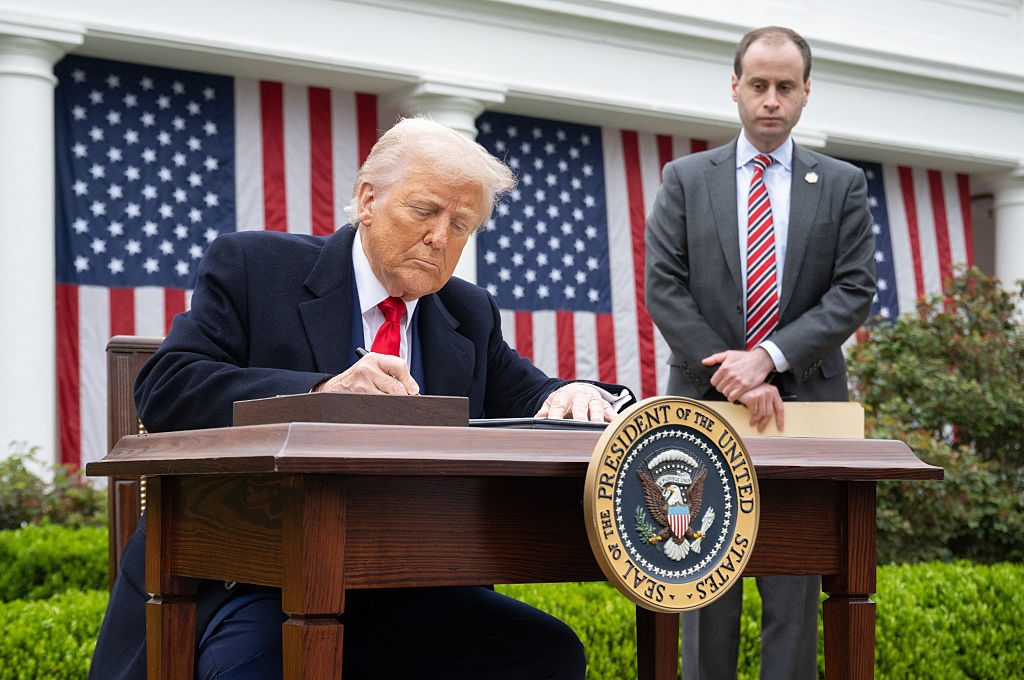
    Maybe you heard that Donald Trump died over the weekend. First, the internet began to buzz over some bruising on the President’s hand during an executive-order signing ceremony. Then people started noticing that no one saw Trump on Friday, and that he didn’t have any events scheduled over the weekend. J.D. Vance gave an interview with USA Today in which he said, “if, God forbid, there’s a terrible tragedy, I can’t think of better on-the-job training than what I’ve gotten over the last 200 days.”

    Trump has become so ubiquitous in our lives that there was only one conclusion to reach from his temporary semi-absence: He is dead. A TikTok video making that claim got 600,000 likes. There were tens of thousands of Twitter posts on the topic, almost trying to will it into reality.

    That all quickly poofed away on Saturday when the Daily Caller’s Reagan Reese revealed that Trump had spent at least part of Friday doing an extensive interview with her. Then people spotted him golfing and playing with his grandkids, perfectly normal things for a 79-year-old to do on a holiday weekend. But still, people clung to the possibility. Just like the long-ago “Paul Is Dead” rumors, they still believed in yesterday.

    The celebrity death rumor is a common phenomenon in an unreliable online world. Justin Bieber, Lil Wayne and George Clooney have all been very dead in our time. Betty White fake-died so many times that when she actually passed away we were all ready for it. But the Un-Death of Trump is different because of the absolute glee with which certain segments world received it.

    I don’t know if you were aware, but a lot of people really don’t like Donald Trump. People online greeted the news of his “death” with joyful innuendo. Twitter fashion maven “Derek Guy” posted on Saturday, “so many babies are going to be born exactly 9 months from today.” Yes, Derek, because nothing makes couples want to hop into bed and make babies more than news that the President is dead.

    It all felt gross and pathetic, and it just shows how powerless and backed into a corner Trump’s opponents truly are. Trump has consumed the brains of millions; he has driven them mad. They couldn’t lock him up, they couldn’t vote him out, they don’t seem to be able to stop any of his policies or his relentless cultural onslaught. All they have are nanny-nanny-boo-boo Twitter accounts and show-dancing on a pretend grave.

    If history is any guide, you don’t want to live through the death of a sitting President. We’ve built the system to accommodate for it, but it creates chaos, instability, and figurative if not literal violence. Do people really think that Trump won’t leave office after his term is over? He’ll be 82. He’s going to leave. Just like the weather in Chicago, if you don’t like the President, wait a minute.

    But people also need to realize that their hatred of Donald Trump doesn’t kill him. It makes him stronger. A more spiteful man has never lived, and he’ll live forever just to spite them.

    When he does die, someday, in the far future, some people will mourn, some people will celebrate, but most people’s lives will just go on as if Trump never existed. He’s not your enemy, he’s not your savior. He’s just a President looking for an electorate to love him.

    Yet still the rumors persisted. One fervently shitlib anti-Trump account said, “Sure seems like someone is staying awful close to Walter Reed, doesn’t it?” Another posted this: “He’s not dead, but I think he had another stroke/TIA/CVT. I think this one affected his speech, which is why they haven’t let him near a microphone or press pool in almost a week. No close up pics, either. Some things can’t be covered with orange makeup.”

    Naturally, the Troll-In-Chief emerged from a short weekend off on Sunday night, posting on Truth Social, “NEVER FELT BETTER IN MY LIFE.” I hate to break the news, but Trump, like Frankenstein’s monster, is alive. But with his post, the dreams of thousands of extremely sad, terminally online liberals perished forever.

  • Why September 1 is the worst day of the year

    How are you feeling about the first day of fall? If, like me, you get a distant sense of foreboding, then you might suffer from seasonal affected disorder, aptly acronymed SAD, caused by the body’s inability to produce enough serotonin. Surveys suggest up to five million of us, over in Britain, are afflicted to some degree – from people whose mood dips a bit, to those who, as the nights draw in, experience anything from anxiety, lethargy and sleeplessness to a general feeling of hopelessness. Sad indeed.

    The awful thing is that SAD can kick in as early as late summer, when days start to get noticeably shorter. September 1 is particularly depressing. Those who follow the astronomical calendar might convince themselves there’s still three more weeks of summer, but we SAD sufferers think differently. For us, fall starts today, with that long slope towards Christmas, pockmarked with other nasty dates, like September 22, when we enter the darkest half of the year, followed by the darkest third a month later. You get the picture. Or, rather, by that stage, you don’t, because it’s too grey and horrible to see anything.

    An elderly relative has always rejoiced at “the changing of the seasons,” and insists she gets as much pleasure from a grim late-fall afternoon as from a gorgeous June morning. I suppose she must be telling the truth, as she always seems so darn cheerful. But I, and other SAD sufferers, struggle to accept it.

    Fall, for me, is worse than winter. December has Christmas, and by January each day gets a bit longer. But September through the end of November? Endurance is the word most suited to it. And it seems to attract life’s worst events. A friend dies before their time? It usually happens in the fall. I come down with an epic dose of flu? Likewise. I fall out with a friend? You guessed it.

    If I have a really good fall day it’s despite the darkness, not because of it. If it were possible to hibernate through the whole thing, and on through winter, I’d certainly consider it. Or, better still, I’d have enough money to hop on a plane to Australia each October, returning home once spring was in the air.

    But the vast majority of SAD sufferers don’t have the means for any such thing. So, we must be creative. I keep a SAD lamp on my desk, which tricks the body into believing it’s sunny, even when it’s midnight. When I first acquired this beautiful little gadget, I was so keen to get immediate benefit that I tore off its packaging and switched it on without bothering with the instructions. You’re not meant to point it straight at your face (I did) and you’re not meant to use it for more than 15 minutes (I supped for a good hour). The result was like a bad hangover. It was worth it, though. Okay, since then, I’ve been more moderate, but this thing still works overtime.

    Then there are daylight-simulation light bulbs, though they can mean walking to the bathroom at 2am in blazing sunshine. Or you could try a light-based alarm clock, which gradually fills your bedroom with pretend sunlight until you wake up bang on time.

    If I have a really good fall day it’s despite the darkness, not because of it

    What else? Well, there are drugs, which can be broken down into prescription and non-prescription. I’m not dissing those who go to their doctor for a pharmaceutical intervention. I’m told they really help, especially those with the very worst of it. Solidarity. Personally, though, I turn to the one socially acceptable drug that works every time. Red wine. A glass a night does the trick. And if you have the TV on, choose a movie with loads of tropical blue skies. My parents always wondered why, as a child, I loved watching Papillon – a story of unrelenting human misery. The truth is I ignored the plot and just binged on the weather.

    Some SAD sufferers go down the counselling route. There’s something called ecotherapy, which encourages outdoor pursuits in nature. And if all else fails – and this one is a bit out there – you can write a letter to winter, or in my case fall, explaining your feelings. According to researchers at Glasgow University, this might make a difference, just like it might help you deal with the workplace bully to let them know about their awful impact. Well, it wouldn’t work for me. My letter would be full of expletives, and I can’t imagine that being much help.

    You must, of course, choose your own remedy from the many available, but for me it remains a touch of booze, blue sky on the telly and a SAD lamp. And the certain knowledge that, however miserable the next six months are, spring will, eventually, arrive.

  • Will Trump’s tariffs survive the courts?

    Will Trump’s tariffs survive the courts?

    Trying to work out what is going on with global trade doesn’t get any easier. Just as the world was settling down to the new reality of Donald Trump’s trade war – and governments were stitching up hurried trade deals to minimize the sweeping damage from the tariffs announced on ‘Liberation Day’ in April – the Court of Appeals for the Federal Circuit has thrown a very large spanner into the works. 

    It has ruled that the whole exercise is unlawful because the tariffs were not approved by Congress. They will not be removed immediately – the court has allowed them to remain in place until 14 October to give Trump a chance to appeal to the Supreme Court – which he will almost certainly do. But it does rather look as if the matter of trade tariffs will ultimately be decided by judges.

    In some ways, that will suit Trump. The ruling plays to his narrative that the establishment is out to thwart him. Moreover, given that the Supreme Court has a conservative majority, he might expect to win when the case is referred there. But then again, history shows that Supreme Court judges tend to veer away from acting along partisan lines over time. They cannot be guaranteed to favor Trump’s way of doing things. They would not, after all, be voting against tariffs as such – they would be ruling on the extent of presidential executive powers, not on the merits of tariff wars themselves. Trump may well find himself having to take his tariff wars to Congress and take a chance with the very narrow Republican majority there. 

    Either way, it will mark a crucial moment in Trump’s presidency. Anyone impressed by the speed and determination of Trump’s first few weeks in office, when executive orders flew out of the White House like confetti, will have to appreciate that his decisions will be challenged in the courts. If the President wanted to stop judicial involvement in the processes of his administration, he would have to change the constitution. Secondly, this week’s court ruling will make Trump look a little less powerful to many foreign observers. Since April, there has been a remarkable lack of foreign leaders prepared to fight his tariffs. Many have meekly given way and agreed to trade deals weighted in the US’s favor. The European Union was remarkably accommodating when it came to mitigating the damage from Trump’s tariffs. Would the European Commission President Ursula von der Leyen have given in so easily had she seen Trump under pressure from judges back home?

    Trump will no doubt try to turn the appeal court’s ruling to his advantage, turning it into a case of him and the people against the judges. But it certainly changes the mood of the trade war – and produces yet more uncertainty for businesses which are just trying to sell goods and services around the world.

  • Boomer hate has gone too far

    Boomer hate has gone too far

    Charles Murray, whose work on race and IQ has made him something of a darling of the online right, found himself out of favor with his fan base when he posted on X that a young married couple – each making $15 an hour and working 48-hour weeks – can afford a baby and a place to live.

    The reaction was furious. “Charles Murray is a good man,” wrote Zarathustra, a popular dissident right-wing poster. “Sadly, however, he’s also a Boomer. Which by necessity, means his bumper sticker talking points on political economy are comically out of touch garbage, and read like a moldy Reagan Youth pamphlet from 1982.” Murray’s post broke X containment and made it to the subreddit r/BoomersBeingFools. Indeed, most of the anger directed toward Murray followed the same theme: he was wrong because he is a baby boomer. 

    Boomer hate is nothing new, and it’s more or less a bipartisan phenomenon. The “OK boomer” meme appeared on 4chan as early as 2015 and took off as a mass cultural phenomenon in November 2019, when it went viral on TikTok with the influencer Neekolul wearing a Bernie Sanders crop-top lip-syncing to “Oki Doki Boomer.” Just months later, Covid lockdowns took over the world, and the global public-health apparatus shut down the schools and colleges and parties and workplaces of the young in an attempt to preserve the final years of the old. During that time, the left’s distaste toward boomers remained relatively surface-level – they’re old and out of touch, for example – but the right’s resentment toward the generation grew far deeper. In its opposition to mandates, conservatives began to react against a politics and a society that privileged the aging at the expense of everyone else.

    The Silent Generation (with certain big exceptions, such as Anthony Fauci and Joe Biden) has drawn little contempt online, perhaps because it was never memed, perhaps because its members are generally too old and out of the spotlight – but boomers? They embody, for the right, the worst sort of self-preservation, weaponizing their outsize power and numbers in public health and government to fight for policies that were utterly destructive for younger people, to whom they seemingly felt no responsibility. And it wasn’t just about Covid: it was about the fact that they had let insane ideologies – so-called racial reckonings and pediatric sex changes – take over mainstream American life and institutions, crushing the young on top of material concerns such as runaway inflation and housing prices and crime. In other words, they climbed the ladder and then pulled it out from under them, as Helen Andrews argued in her 2021 book, Boomers: The Men and Women Who Promised Freedom and Delivered Disaster.

    And yet, these days, most of the ire directed toward boomers seems to be toward the idea that they, like Charles Murray, promote “pulling yourself up by the bootstraps,” with many on the right having joined their counterparts on the left in assuming there can be essentially no self-improvement in the face of material problems. They’re not wrong in that Murray does sound a bit out of touch when he insists on a model that doesn’t entirely account for inflation, the increased prices of insurance and education and assumes more hours than most entry-level jobs are willing to provide employees. But beyond raging against the system – which is precisely what many boomers did during their 1960s youths – and encouraging constant, mostly online outrage, it’s not clear what alternative the anti-boomer right is offering. Meanwhile, a young person might actually be able to make a change in his or her life by taking Murray’s advice seriously, if not literally. At some point, following conventional boomer wisdom becomes a Pascal’s Wager of sorts: if pulling ourselves up by the bootstraps doesn’t work, the worst that can happen is we try something new – but if it does, our work will reward us in ways that wallowing in self-pity never will.

    That’s not the end of unjustified boomer hate. The young right’s antipathy toward boomers is ostensibly about the generation’s entitlement and overeagerness to toss aside tradition, but is, ironically, grounded in entitlement toward boomers’ money and a desire to snub whatever tradition and wisdom it is that boomers themselves have passed on, even if we don’t recognize it as such.

    Indeed, while many on the right look forward to boomers stepping aside – some even gloating over the “Boomer Die Off” in the coming decades – what they don’t realize is that, for better or for worse, boomers are the last link to the old world, being the last generation to truly remember it. Many of the opera houses, symphonies and mainline churches will likely shutter with the boomers, as will any last memory of decorum, of a world in which left hands are for forks, in which suits are for the office, and in which men remove their hats when entering a building.

    The idea that Western civilization will be better off without the boomers is laughably naïve. What’s far more likely is that the small number of people in younger generations who care enough about art and culture and manners will become de facto hobbyists, while those in the greater majority won’t even know what they’ll be missing. 

    Boomers may be flawed, but aren’t we all? To blame them for all our ills, especially as younger generations gain prominence and replace them in positions of power, is to abdicate responsibility. And if we do indeed fall into that trap, those of us in younger generations will have no one to blame but ourselves.

  • Europe is a paper tiger

    Europe is a paper tiger

    “The purpose of NATO,” Lord Hastings Ismay, the alliance’s first secretary general, once quipped, was “to keep the Americans in, the Russians out, and the Germans down.” That formula defined Europe’s security for decades, and it worked because US power anchored the alliance. But as President Donald Trump’s administration demands its European allies carry their share of the burden, shows little appetite for sending troops to Europe and worries more about the Southeast Asian theater, Europeans are being forced to confront their lack of political will for their own security, underinvestment in defense and dwindling public appetite to fight for their country. 

    Following the meeting with President Donald Trump at the White House, discussions among European leaders and Volodymyr Zelensky began on potential security guarantees for Ukraine, should a peace settlement with Russia be achieved. Italian Prime Minister Giorgia Meloni described the proposition similar to NATO’s “Article 5-like” framework, a collective commitment that would assemble a coalition of the willing to deploy European troops. Reportedly, plans envision European states taking a lead in ground deployment, while the United States would focus on providing air support, logistical assistance and other non-combat roles.

    “Nobody believes that NATO countries would join the war. So, the promise of a NATO Article 5 is a red herring,” Matthew Savill, director of military sciences at the London-based Royal United Services Institute told The Spectator. “They talk about air policing, but what does that mean? Are you going to shoot down Russian jets?”

    That goes to the heart of the issue: would a European force genuinely deter Moscow, or merely create the appearance of resolve?

    During the Cold War, deterrence stood where troops stood. More than 300,000 US troops were stationed across Europe, on the ground in Germany (250,000) and elsewhere, ready to fight if the Soviet Union moved west. By the time Russia launched its full-scale war in Ukraine in 2022, that number had dwindled to about 60,000.

    As the Western European nations prospered through the 1960s and 70s, defense budgets rarely matched economic growth, and after the Soviet collapse in the 1990s, spending plummeted further. Only a handful of countries, such as France, the UK and Poland, kept spending close to NATO’s 2 percent target. Others including Germany, Italy, Spain and the Netherlands let defense spending fall to just 1 percent of GDP. Decades of neglect left the industry on the continent scrambling. Arms industries were neglected, with little investment in air and naval power, and NATO’s eastern flank continues to rely on Washington’s backbone.

    “We decided that we weren’t going to face a major war,” Savill explained. 

    In Europe tens of billions of euros were redirected each year to other priorities, particularly social welfare. Germany alone saved more than €20 billion annually compared with what it would have spent at higher levels of military investment. 

    “If tomorrow Russia would invade NATO, the only army that would be ready to fight is Turkish,” a Ukrainian senior official who spoke on the condition of anonymity told The Spectator. “All the other ones are good for parades, not for real war.”

    The continent is now playing catch up. The European Union announced that it will mobilize €800 billion for defense investments, a plan Brussels wants to spread over four years through higher deficits, joint borrowing and redirected EU funds. Germany voted for historic military investments, while Italy ramps up arms production and Poland wants to double its military. 

    “The big problem Europeans have is that when you point at something they have and say, ‘oh, this is quite good,’ they just don’t have much of it, and much of it isn’t at a high level of readiness. It takes time before you can deploy it or use it. France and the UK have maintained very good armed forces, but they are small,” Savill points out.

    At the NATO summit in the Hague in June of this year, NATO allies agreed to raise defense spending to 5 percent. But few leaders are willing to touch the social spending that makes up one-fifth of the EU budget.

    “It turns out that Germany has lots of jets that don’t fly. Their army isn’t that deployable,” Savill said. “It will take several years to ramp production back up. Rheinmetall can’t suddenly produce shells, and MBDA can’t suddenly produce missiles. The trend has been reversed, but it will take years.” 

    Much of Europe spends more than twice as much on defense as Russia, but money doesn’t translate into military strength. Moscow pays its soldiers far less and maintains equipment at a fraction of Western costs. When adjusted for what each side can actually buy, the picture flips: Russia fields almost five times the military power of France’s defense budget, and six times that of Germany or the UK.

    Budgets and capabilities are not Europe’s only challenge. Public spirit is just as much of a problem. Gallup polls show the EU with the lowest readiness worldwide: only a third of citizens say they would fight for their country while non-EU states report far higher levels – a vulnerability money alone cannot solve. 

    As Europe begins to learn from its mistakes, Russia already has. It has rebuilt its military industry and armed forces, while fighting a high-intensity war. By late 2024, more than 600,000 Russian soldiers were on the frontlines, nearly double the initial invasion force. Moscow’s defense industry has been put on a war footing, opening new factories and converting civilian production lines. This has allowed Russia to replace its battlefield losses: in one year alone, it’s expected to roll out 1,500 tanks, 3,000 armored vehicles, and 200 Iskander missiles, while producing 250,000 artillery shells every month. Stockpile three times greater than the US and Europe combined. 

    Zelensky, fearing another onslaught, insists on 100,000 foreign troops in Ukraine under any settlement. Military arithmetic makes that impossible. A front-line force requires three times as many in reserve and support. Europe might muster 10,000 quickly but it would be a political gesture more than a shield and would still rely heavily on US enablers. The 100,000 Zelensky wants would take months, if not years, and expose shortages in weapons and ammunition, and be unsustainable without Washington.

    Germany and Italy have already ruled out deployments. Britain and France may be willing, but their forces are too small for long-term operations. The Europeans hope to resolve the dilemma with so-called “tripwire” assurances which entails that even small deployment on the Ukrainian soil, can trigger larger intervention if attacked, preferably from the United States. 

    With its grand claims to be able to protect Ukraine, Europe has become a paper tiger. And Putin is very well aware. However guarantees are dressed up, they will rest not on Brussels but on Washington, and on a president whose stance, observers note, often shifts depending on who spoke to him last.

  • Can Bruno Retailleau defeat France’s Islamists?

    Can Bruno Retailleau defeat France’s Islamists?

    When France played Algeria at soccer in their national stadium, the Stade de France, in 2001, the French player Thierry Henry said afterwards he felt – disturbingly – as if he were playing away. The game had to be abandoned after dozens of Algerian fans, furious at being 4-1 down, invaded the pitch. 

    Bruno Retailleau, the interior minister of France since September last year and a key figure in the small boats crisis, has been known to cite Henry’s comment. Retailleau is carving out a distinct role for himself in government as the tribune of the growing number of his compatriots who share the same sense that they, too, are “playing away.” In other words, the millions who believe that they have become strangers in their own country.

    There is a trinity of issues at the heart of his agenda – porous borders, rampant crime and an increasingly self-confident Islamist movement that is on a long march through the institutions of the Fifth Republic.

    Jean-Luc Mélenchon, leader of La France Insoumise, the populist party which is currently the most powerful force on the left, thinks Retailleau is the man to watch. “For many right-wing people, Bruno Retailleau is more reassuring than [Le Pen],” he wrote in La Tribune. “Retailleau is the reactionary movement’s best chance at this time.” Retailleau’s prominence is all the more remarkable considering he leads Les Républicains, the once dominant force on the right, which long ago lost its position to Rassemblement National and has been written off by many as a dead party. Yet there’s an outside chance now that he can make it all the way to the Élysée when President Macron’s second term ends in 2027.

    So who is he? Retailleau was born in 1960 in the Vendée – a department best known in history for an unsuccessful royalist revolt against the revolutionary authorities in the 1790s. This revolt elicited Jacobin repression from Paris which was brutal enough to inspire Lenin. Retailleau’s great-great-great grandfather was part of the cross-class alliance that turned to the local aristocracy for military leadership; in his mother’s house there is a certificate of appreciation from Louis XVIII for their loyalty in an era of unprecedented upheaval.

    What happens when the rule of law starts to facilitate crime – and people can see that it’s doing so?

    But Retailleau is a conservative, not a reactionary, despite what Mélenchon may claim. His view of the French Revolution was influenced more by Edmund Burke than by 19th-century French royalists such as Joseph de Maistre. “I owe much of my understanding to Edmund Burke. There was the constitutional change of 1789, which Burke sympathized with, and the Terror of 1793, which he of course rejected. But the Terror of 1793 was not inevitable,” he says, when we meet in London during the recent state visit. “The Revolution could have been more liberal and respectful. But it gave a blueprint for totalitarianism – later communist and in our times Islamist absolutism, the ends justifying the means. And the total vision of society encompassing and politicizing every aspect of life. Meaning the attempt to perfect man from a tabula rasa.”

    The invocation of Burke is typical of the man who is one of the few top-level politicians who manages to keep up his reading while in office. Among writers directly addressing more contemporary issues, his choices are not always easy to predict: many on the French right would cite Jean Raspail’s anti-immigration novel The Camp of the Saints or Michel Houellebecq’s Soumission, an imaginary account about an Islamist takeover of France. 

    Retailleau, however, admires the French-Algerian writer Boualem Sansal, who is currently in prison in Algeria and is a staunch critic of the nationalist regime there and of the Islamists: Retailleau is now the most vocal member of the government calling for Sansal’s release. He is also keen on the writings on art and philosophy of Régis Debray, the tiers monde-iste friend of Che Guevara and Mitterrand adviser. Retailleau enjoys the company of Parisian intellectuals such as the cultural critic Alain Finkielkraut and the political philosopher Pierre Manent – who form a contrast with his circle of intimates from the Vendée, a difference of cultures which he relishes.  

    Retailleau’s career choices have also been unconventional. Most graduates of one of the grandes écoles would go on to become a mandarin serving an apprenticeship in the Cabinet of a minister. Retailleau, by contrast, after Sciences Po, returned to the Vendée – where his grandfather and father, a grain merchant, had both been mayor of Saint-Malo-du-Bois. His grandfather was severely wounded at the first Battle of the Marne in September 1914. His father served in the Algerian War and later ran the family farm.

    Retailleau himself has served as a reservist in the Régiment de Saumur, one of the best-known of the French cavalry regiments; and dressage is his competitive sport of choice. Today, his favorite pastime is riding alone in the Vendée (sometimes to the alarm of his security detail) and he has retained the figure of a jockey until well into his sixties. “I’ve had a few falls,” he notes, but his enthusiasm for the saddle remains undiminished. 

    His children presented him with a she-donkey for his 60th birthday. “When I have the time, I will take her on a journey to the Cévennes – in tribute to Robert Louis Stevenson, another of my favorite authors.” But for now, the crisis at the French borders makes this a luxury he cannot afford: he is a workaholic, often waking at 3:30 a.m. to read his official papers.  

    Retailleau started his career at Puy du Fou – the nearby theme park on French history that was founded by the local aristocrat Philippe de Villiers, a key figure in French Euroskepticism.

    He was a keen participant in Puy du Fou’s pageants and re-enactments. Under de Villiers’s guidance, he rapidly rose to become a member of the National Assembly, president of the Vendée departmental council, president of the Pays de la Loire regional council and finally leader of Les Républicains in the Senate. But the apprentice outstripped the master and there was a parting of the ways.

    ‘Islamophobia is a bogus concept. It conflates all Muslims with Islamism, which is not true’

    The difference in approach between the two men is meaningful. There is a certain non-sectarianism in Retailleau’s approach: behind his desk in the Interior Ministry at Hôtel de Beauvau hang portraits of the two greatest Vendéens – Jean de Lattre de Tassigny, a French marshal of World War Two, and Georges Clemenceau, the victor of the first world war. It’s hard to imagine a purist Catholic of de Villiers’s vintage revering an atheistic anti-clerical like Clemenceau. 

    And when it comes to Russia, Retailleau is firmly in the Giorgia Meloni camp: he parts company with those on the French right who see Vladimir Putin as a defender of family values and Christian civilization. Retailleau sees Putin not as the inheritor of Czarist tradition, but rather as a product of the KGB. 

    Retailleau believes in defending moral as well as physical borders – hence his opposition to euthanasia and his concern about the consequences of gender transitions in children. But restoring the status quo ante on capital punishment, abortion and gay marriage is hardly the mainstay of his policy vision. And he tells me that the restoration of Notre-Dame-de-Paris after the fire of 2019 will rank as one of Emmanuel Macron’s greatest achievements – less for religious reasons than as evidence of what the state can still accomplish in terms of grand projets that really matter, when it can summon the will to sweep aside bureaucratic obstacles. 

    Although the attention is now on what the French call les aspects régaliens of Retailleau’s current role – matters relating to the direct authority of the state – it was his economic agenda that mattered most to him in the Vendée. Retailleau is the antithesis of corporate man (he is proud of banning the word “management” from all departmental discourse), but he was nonetheless a big booster for business in the region. 

    Since the Revolution, the Vendée has got relatively little from the state, making it highly self-reliant. It therefore has some of the lowest claims for unemployment benefit of any department, at 6 percent compared to a 7.4 percent national average. The bulk of businesses comprise what Germans would call the Mittelstand – family-owned enterprises chafing under Parisian and Bruxellois regulations. 

    Intriguingly, Retailleau cites no one economic mentor like Milton Friedman or Friedrich Hayek – nor even that staunchest of French critics of Keynes, Jacques Rueff, who was also an adviser to Charles de Gaulle. Rather, he tells me, his economic inspirations are the Vendéen entrepreneurs who create real prosperity and jobs.

    His answer is shrewd, because it’s hard to be accused of being a “globalist” for extolling the virtues of local enterprises; but it says something about the French right that economic issues are now more internally divisive than cultural matters.

    If the state has interfered too much in the economy, Retailleau also believes it has been too laissez-faire in the realm of security. He poses to me a key theme of his: “What happens when the rule of law starts to facilitate crime – and people can see that it’s doing so? When the endless invocation of the rule of law becomes the enemy of honest people?”   

    Retailleau is referring to what he sees as the excessive solicitude of wide swaths of the French legal profession and judiciary for the rights of individuals accused of crimes at the expense of the collective rights of the law-abiding majority. A mere 7 percent of deportation orders for illegal migrants are implemented, and too often, in his view, that is because French judges rule that a procedural technicality has been breached.   

    This failure of the state on immigration and crime has a particular piquancy for Retailleau: his close friend, Fr Olivier Maire, was murdered in 2021, allegedly by a Rwandan asylum seeker with mental health issues. The suspect had been released on bail after being accused of setting fire to Nantes Cathedral and was being sheltered by Maire at the time. 

    Retailleau has therefore long wanted to re-empower the people by reforming article 11 of the Constitution on procedures allowing for a popular referendum on immigration – something which is not possible today. He also advocates cutting full medical aid for illegal immigrants, preferring to allow them just emergency care.

    ‘Islamists have a smooth narrative: to employ our freedoms to destroy our freedoms. It’s an all-of-society project’

    How did this shift in the ethos of the French judiciary and legal profession come about? Retailleau points the finger at the spirit of ’68 – and, in particular, the long-term effects of the Harangue de Baudot, the 1974 address delivered by the liberal Marseille magistrate Oswald Baudot urging new judges to side with “the weak against the strong,” which is now the sacred text for the left-wing Syndicat de la Magistrature, effectively the trade union for the Bench. 

    In Retailleau’s view, the price of this broad approach is also being paid by the 15,000 security personnel who were injured in France in 2023. Significantly, his first visit as interior minister was to the préfecture at La Courneuve in the Parisian banlieue of Seine-Saint-Denis, where he met three hurt gendarmes: one of the perpetrators of these assaults, a juvenile, already had 33 convictions to his name. 

    Success or failure in crime or immigration policy can at least be measured in numbers. It’s much harder to mark progress in the struggle against political Islam – which Retailleau believes constitutes the greatest subversive threat to the Fifth Republic. “They are a formidable enemy, despite the relatively small numbers of their core cadres,” he says. “They have a smooth narrative: to employ our freedoms to destroy our freedoms. It’s an all-of-society project. For example, they aim to ‘Islamize’ knowledge. And their message is as follows: ‘We will colonize you and we will dominate you.’”

    One of the first steps he took on Islamism after assuming office was to declassify the Interior Ministry’s 74-page report on the Muslim Brotherhood in Europe: his purpose was to alert the public via an approach of “name and shame.” It’s little secret now that Retailleau struggled with the Elysee to maximise its revelations about individual Islamist institutions; partly because the President’s office was initially reluctant to be seen to be dancing to Retailleau’s tune. 

    Retailleau is thus the one making the political weather on this issue: the Defense Council met again recently under the chairmanship of Macron to discuss, in the light of this most comprehensive official analysis of frère-isme to date,  just how to enforce the landmark 2021 French separatism law. The old pre-war French right saw laïcité as the enemy of Catholic France; now, it sees it as a bulwark to protect the country. As ever, practical implementation is the key to Retailleau’s way of doing things.

    This included new ways of disbanding the Brotherhood’s endowments in France which promote hatred – by exposing and then freezing its assets. Also high on the priority list are the law’s demands for neutrality in the public space (no display of symbols of religion by officials at any level) and support for public servants, notably teachers, who face threats because of discharging their public duties – a particular concern after false allegations of “Islamophobia” from a pupil were weaponized against the schoolmaster Samuel Paty in 2020, leading to his decapitation by a Chechen refugee.

    Mélenchon has, unsurprisingly, accused him of cultivating an “Islamophobic climate,” but Retailleau retorts: “The concept of Islamophobia is one of the defining messages of the Muslim Brotherhood and its allies, but it’s a bogus concept to tie our hands intellectually and to prevent us from criticizing Islamism. And it suits the Islamo-Gauchiste project of Mélenchon to build up a communalist bloc based upon a sectarian appeal to anti-state grievances. It conflates all Muslims with Islamism, which is not true.”

    Retailleau is gratified by the favorable official responses which the Brotherhood report has enjoyed in Europe – such as in Sweden and Belgium. Over 20 years ago, French intelligence bestowed the soubriquet “Londonistan” upon the British capital – because it was seen as a “safehouse” for Islamists. Are we still Londonistan, I ask? Retailleau diplomatically sidesteps my question, but his omission of the UK as an enthusiast for this report speaks volumes. 

    Controversial as these issues are, they may (counterintuitively) form the basis of a potential future national consensus. Retailleau respects republicans from the right and the left who want to maintain traditional French laïcité against the New Left’s identity politics: reaching out across party divides, he particularly notes the rigor of the former Socialist prime minister and interior minister Manuel Valls.

    What, then, are his chances in the 2027 presidential election? The conventional wisdom of the Parisian media holds that Retailleau is too old-fashioned to win. How, when he is hovering at around 10 percent in the polls, can he hope to make it through to the second round?

    But the issues of the era – “order, order, order” is how he characterized his priorities when he took office – are cutting in his favor. He remains the most popular minister in a very unpopular government. More-over, despite its poll lead, the Rassemblement National is struggling to find a fully credible candidate, with Le Pen’s legal difficulties potentially preventing her standing and Jordan Bardella, her 29-year-old deputy, lacking frontline experience. 

    Retailleau quotes to me the well-known French political maxim of the author Maurice Druon, who served as Georges Pompidou’s culture minister: “There are two parties of the left in France, one of which is called the right!” There is an opening for a force that is genuinely right-wing, and which stays right-wing in government.

    The question now is how long Retailleau, who is very much his own strategist, remains in government. On the one hand, the Interior Ministry has been a perfect platform for his policy agenda – and the police and fire brigades, with whom he has developed a genuine rapport, would miss him. But if he stays too long, his unique brand risks cross-contamination with that of Emmanuel Macron. That is why, as leader of Les Républicains, Retailleau is increasingly distancing himself from the President on several issues (notably public subsidy for wind farms, which he wants to end). Such open free-thinking does not always endear him to the Élysée. 

    Sir Roger Scruton – one of Retailleau’s heroes – would certainly have appreciated the apparent paradox of his public life to date: the story of a ruggedly individualistic son of La France profonde vindicating the long-neglected rights of the national and cultural collective, at the heart of power.

  • Mexico seethes over cartels, ‘gringos’ and migrants

    Mexico seethes over cartels, ‘gringos’ and migrants

    Mexico has been rocked by massive popular protests as the Hispanic world’s largest nation seethes with a fizzing cocktail of grievances ranging from the fate of 130,000 people who have ‘disappeared’ in the country’s drug wars, to discontent over the ‘gentrification’ of Mexico City in a bid to attract tourists.

    Hundreds of thousands of people marched in the streets of the country’s major cities on Saturday, many carrying portraits of loved ones who have vanished since 2007 when the then President Felipe Calderon launched a “war on drugs” to combat the narcotics cartels who increasingly dominated the nation of 130 million people.

    Since then, vast numbers of people have “disappeared”; most are thought to have been murdered and buried in mass graves for resisting the cartels, while others are said to have been forcibly recruited by the gangs and moved away from their families. Some are believed to have died at the hands of Mexico’s police and security forces. The death and missing toll far surpasses the number of victims of other Latin American slaughters like the 40,000 who died in Guatemala’s civil war of the 1960s to the 1990s, or the 30,000 who disappeared in the “dirty war” waged by Argentina’s military junta against the Left in the 1970s.

    But the “disappeared” of the drugs wars is not the only crisis confronting Mexico. Earlier in the week demonstrations erupted in some of the ritzier quarters of Mexico City – the world’s most populous metropolis – as residents protested against the gentrification of the city to try and lure foreign tourists.

    Bars and coffee shops catering to foreign visitors were invaded by the protesters, some yelling “Gringos out!” The protests were a sign of popular discontent among poorer Mexicans that their needs are being neglected by the government and city authorities in favor of the interests of tourists.

    A third source of popular anger is the problem of migration. Mexico is the final frontier for millions of migrants hoping to cross the border in search of a new life in the U.S. As such, the northern provinces are flooded with migrants on the move, both from Mexico itself and other Latin American states such as Venezuela and Colombia.

    Millions crossed the border under the Biden administration, but since Donald Trump became President this year he has taken steps to close the border as well as detaining illicit and undocumented migrants living in the U.S. illegally – deporting many back to Mexico where their presence adds to the country’s social woes.

    It all adds up to a huge headache for the leftist government of President Claudia Sheinbaum – elected just over a year ago as Mexico’s first ever woman and first ever Jewish President.
    So far, Sheinbaum has won praise for the adroit way she has handled the temperamental Trump. In months of delicate negotiations she won the nickname “the Trump whisperer” for her skill in blunting Trump’s threats to impose swinging tariffs on his southern neighbor, but there are signs that their mutual grudging respect may be about to end.

    Trump has deployed 10,000 troops along the Mexican border to enforce his anti-migrants line; and he has declared Mexican drugs cartels to be terrorist organizations. In addition the President has withdrawn the visitor visas for several Mexican politicians and renewed his tariff threats. Porfirio Diaz, the dictator who ruled Mexico with a rod of iron in the late 19th century once famously sighed: “Poor Mexico! So far from God and so close to the United States”. Mexico may soon come to learn the truth of that saying all over again.