The costs of not dealing with climate change are, of course, much higher than the costs of dealing with it. We know this because, as climate campaigners keep telling us, climate change is going to set the world alight and unleash mad tempests which are going to wreak destruction on the global economy. Not a few of them have been trying to prove this by parroting a paper by the Potsdam Institute for Climate Impact Research published in the journal Nature in 2024 which concluded that a rise of 8.5 Celsius in global temperatures by 2100 will shrink the economy by 62 percent. Never mind that hardly anyone thinks that such temperature rises are even remotely likely – we are certainly not presently experiencing even nearly such an upwards trend in global temperature – the paper was widely reported as scientific fact rather than as a piece of highly speculative modeling.
But now it appears that the paper fails even as a piece of speculative modeling. Following a critique by economists at Stanford University in August the paper has been withdrawn by Nature. A cock-up with the data for a single country, Uzbekistan, turns out to have skewed the figures so much that, when corrected, the paper suggested a fall of 23 percent in global economic output, not 62 percent.
Needless to say, the reaction of some climate campaigners has been to say that 20 percent of the global economy is still quite a lot of money, and still shows the dramatic impact of a changing climate. But that is hardly the point. If you can magically reinstate 40 percent of global output by correcting some statistics for Uzbekistan, what does it tell you about the whole exercise? This, and all other modeling of its kind, are essentially useless. Economic forecasts for 12 months ahead have shown themselves to have a pretty appalling record. Why does anyone think that a study trying to predict the global economy in 75 years’ time – climate change or no climate change – has any veracity whatsoever? All the model is doing is reflecting the assumptions which are put into it, which are themselves skewed by the prejudices of the people who build it. In this case, and in the case of all this kind of research, that tends to focus on negative effects of a changing climate – higher temperatures and rainfall – while ignoring the positive changes: fewer cold extremes and a world which appears to be becoming steadily less windy.
According to one often-repeated claim, crop yields are going to collapse, causing widespread hunger – a claim which is in direct odds to real world data showing that crop yields continue to increase. When you look a little more carefully at the models which show yields will collapse you find that they analyze all kinds of negative effects of climate change – that some places may experience desertification, without any attempt to acknowledge that other locations will see more favorable conditions for growing food nor that technology is surely going to continue to boost yields by other means, such as gene-editing and improved cultivation techniques.
One apocalyptic paper in a scientific journal has been exposed as deeply flawed – a piece of news which is unlikely to be reported with nearly as much enthusiasm as the original paper. But that doesn’t mean that we won’t continue to be bombarded with fanciful, doom-laden predictions regarding climate change. There is a deep negative bias in this kind of work, and that will remain the case.
Category: Science & Tech
-

Climate doom is not science
-

The end of the climate cult
Finally, thankfully, the global warming craze is dying out. To paraphrase Monty Python, the climate parrot may still be nailed to its perch at the recent COP summit in Belém, Brazil – or at Harvard and on CNN – but elsewhere it’s dead. It’s gone to meet its maker, kicked the bucket, shuffled off this mortal coil, run down the curtain and joined the choir invisible. By failing to pledge a cut in fossil fuels, COP achieved less than nothing, the venue caught fire, the air-conditioning malfunctioned – and delegates were told on arrival not to flush toilet paper. Bill Gates’s recent apologia, in which he conceded that global warming “will not lead to humanity’s demise,” after he closed the policy and advocacy office of his climate philanthropy group is just the latest nail in the coffin.
In October, the Net Zero Banking Alliance shut down after JPMorgan Chase, Citigroup, Bank of America, Morgan Stanley, Wells Fargo and Goldman Sachs led a stampede of other banks out the door. Shell and BP have returned to being oil companies, to the delight of their shareholders. Ford is about to cease production of electric pickups that nobody wants. Hundreds of other companies are dropping their climate targets. Australia has backed out of hosting next year’s climate conference.
According to analysis by the Washington Post, it is not just Republicans who have given up on climate change: the Democratic party has stopped talking about it, hardly mentioning it during Kamala Harris’s campaign for president last year. The topic has dropped to the bottom half of a table of 23 concerns among Swedish youths. Even the European Parliament has voted to exempt many companies from reporting rules that require them to state how they are helping fight climate change.
It has been a long, lucrative ride. Predicting the eco-apocalypse has always been a profitable business, spawning subsidies, salaries, consulting fees, air miles, best-sellers and research grants. Different themes took turns as the scare du jour: overpopulation, oil spills, pollution, desertification, mass extinction, acid rain, the ozone layer, nuclear winter, falling sperm counts. Each faded as the evidence became more equivocal, the public grew bored or, in some cases, the problem was resolved by a change in the law or practice.
But no scare grew as big or lasted as long as global warming. I first wrote a doom-laden article for the Economist about carbon dioxide emissions trapping heat in the air in 1987, nearly 40 years ago. I soon realized the effect was real but the alarm was overdone, that feedback effects were exaggerated in the models. The greenhouse effect was likely to be a moderate inconvenience rather than an existential threat. For this blasphemy I was abused, canceled, blacklisted, called a “denier” and generally deemed evil. In 2010, in the pages of the Wall Street Journal I debated Gates, who poured scorn on my argument that global warming was not likely to be a catastrophe – so it is welcome to see him come round to my view.
The activists who took over the climate debate, often with minimal understanding of climate science, competed for attention by painting ever more catastrophic pictures of future global warming. They changed the name to “climate change” so they could blame it for blizzards as well as heat waves. Then they inflated the language to “climate emergency” and “climate crisis,” even as projections of future warming came down.
“I’m talking about the slaughter, death and starvation of six billion people this century. That’s what the science predicts,” said Roger Hallam, founder of Extinction Rebellion in 2019, though the science says no such thing. “A top climate scientist is warning that climate change will wipe out humanity unless we stop using fossil fuels over the next five years,” tweeted Greta Thunberg in 2018. Five years later she deleted her tweet and shortly after that decided that Palestine was a more promising way of staying in the limelight.
Scientists knew that pronouncements like this were nonsense but they turned a blind eye because the alarm kept the grant money coming. Journalists always love exaggeration. Capitalists were happy to cash in. Politicians welcomed the chance to blame others: if a wildfire or a flood devastates your town, point the finger at the changing climate rather than your own failure to prepare. Almost nobody had an incentive to downplay the alarm.
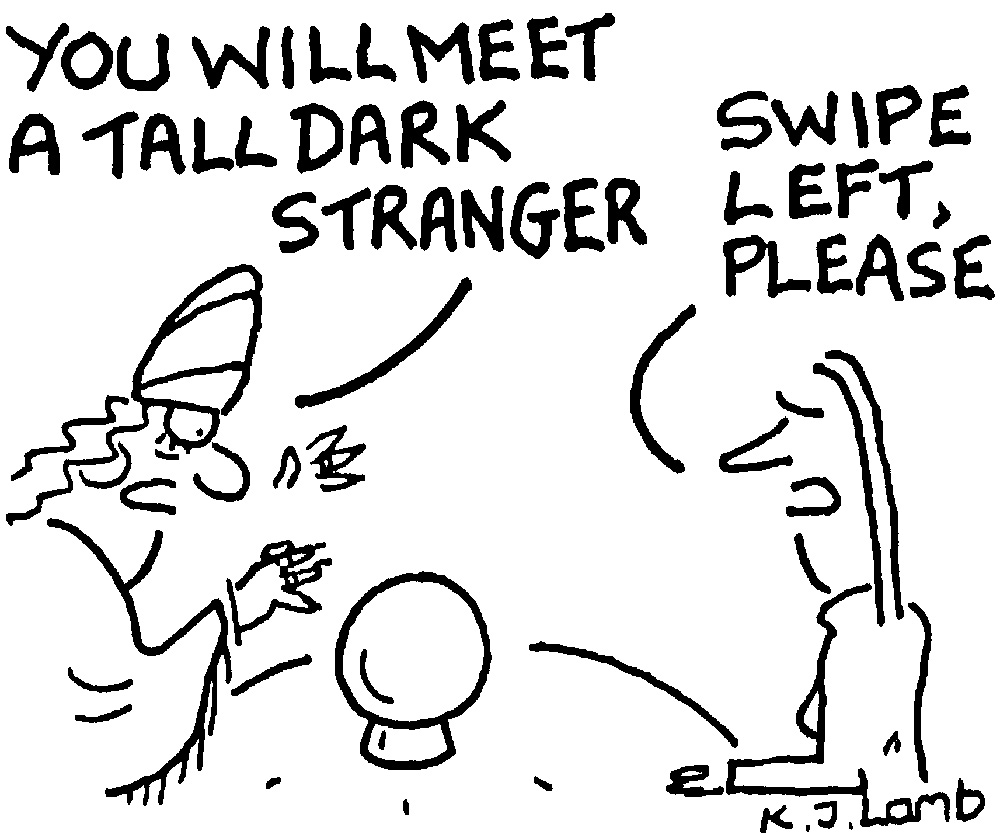
Unlike previous scares, climate fear has the valuable feature that it can always be presented in the future tense. No matter how mild the change in the weather proves to be today, you can always promise Armageddon tomorrow. So it was that for four long decades, climate-change alarm went on a long march through the institutions, capturing newsrooms, schoolrooms and boardrooms. By 2020 no meeting, even of a town council or a sports team, was complete without a hand-wringing discussion of carbon footprints. The other factor that kept the climate scare alive was that reducing emissions proved impossibly difficult. This was a feature, not a bug: if it had been easy, the green gravy train would have ground to a halt. Reducing sulfur emissions to stop acid rain proved fairly easy, as did banning chlorofluorocarbons to protect the ozone layer. But decade after decade, carbon dioxide emissions just kept on rising, no matter how much money and research was thrown at the problem. Cheers!
Switching to renewable energy made no difference, literally. Here’s the data: the world added 9,000 terawatt-hours per year of energy consumption from wind and solar in the past decade, but 13,000 from fossil fuels. Not that wind and solar save much carbon dioxide anyway, their machinery being made with coal and their intermittency being backed up by fossil fuels.
Despite trillions of dollars in subsidies, these two “unreliables” still provide just 6 percent of the world’s energy. Their low-density, high-cost, intermittent power output is of no use to data centers or electric grids, let alone transport and heating, and it effectively poisons the economics of building and running new nuclear and gas generation sites by preventing continuous operation. Quite why it became mandatory among those concerned about climate change to support these unreliables so obsessively is hard to fathom. Subsidy addiction has a lot to do with it, combined with a general ignorance of thermodynamics.
Now the climate scare is fading, a scramble for the exits is beginning among the big environmental groups. Donations are drying up. Some will switch seamlessly to trying to panic us about artificial intelligence; others will follow Gates and insist that they never said it was the end of the world, just a problem to be solved; a few will even try declaring victory, claiming unconvincingly that promises made at the Paris climate-change conference a decade ago have slowed emissions enough to save the planet.
Of course, Al Gore, the former vice president who did more than anybody else to alarm the world about climate change and made a $300 million fortune from it, has been at the recent conference in the Brazilian jungle – the one where they felled a forest to build the access road. As he railed against Gates last week for abandoning the cause and accused him of being bullied by Donald Trump, he sounded like one of those Japanese soldiers emerging from the jungle who did not know World War Two was over.
Perhaps Gore might now regret his exaggerated preachings of hellfire and damnation. In his 2006 film An Inconvenient Truth, for which he jointly won a Nobel Prize, he predicted a sea-level rise of up to 20 feet “in the near future” – out by around 19 feet and nine inches. In 2009, he said there was a 75 percent chance all the ice in the Arctic Ocean would disappear by 2014. In that year there was 5 million square kilometers of the stuff at its lowest point – about the same as in 2009; this year there was 4.7 million square kilometers. At the film’s showing at the Sundance Festival, Gore said that unless drastic measures to reduce greenhouse gases were taken within ten years, the world would reach a point of no return. Yet here we are, 19 years later.
Gore is correct that fear of retribution from the Trump administration drives some of the corporate retreats. President Trump has already canceled $300 billion of green infrastructure funding and purged government websites of climate rhetoric. But even if the Republicans lose the White House in 2028, it will be hard to reinflate the climate balloon. The proportion of Americans greatly worried about climate change is dropping. If Trump takes America out of the 1992 treaty that set up the United Nations Framework Convention on Climate Change it would require an unlikely two-thirds vote of the Senate to rejoin.
Bjørn Lomborg, the Danish economist who is president of the Copenhagen Consensus and has fought a lonely battle against climate exaggeration for decades, recently explained the shift in public opinion: “The shrillness of climate doom also wears down voters. While climate is a real and man-made problem, constant end-of-the-world proclamations from media and campaigners massively overstate the situation.”
A key figure in the collapse of the climatocracy is Chris Wright, the pioneer of extracting shale gas by hydraulic fracturing who was appointed by Trump as Energy Secretary this year. Wright commissioned a review of climate science by five distinguished academics that set out just how non-frightening the facts of climate change are: slowly rising temperatures, mainly at night in winter and in the north, correspondingly less in daytime in summer and in the tropics where most people live, accompanied by a very slow rise in sea level showing no definite acceleration, minimal if any measurable change in the average frequency and ferocity of storms, droughts and floods – and record low levels of deaths from such causes. Plus a general increase in green vegetation, caused by the extra carbon dioxide.
Melissa, the category-5 hurricane that devastated Jamaica last month, killed around 50 people. In the past – before global warming – hurricanes like that killed tens if not hundreds of thousands. In total, weather events killed just 2,200 people globally in the first half of this year, a record low, whereas indoor air pollution caused by poor people cooking over wood fires because they lack access to gas and electricity kills three million a year. So yes, Gates, influenced by Lomborg and Wright, is correct to say that getting cheap, reliable, clean energy to the poor is by far the more urgent priority.
Sources tell me that Wright is treated like a rock star at international conferences: his fellow ministers, especially those from Africa and Asia, are thrilled to talk about the need to get energy to people instead of being hectored about emissions. Only a few western European ministers sneer, but even some of them (the British being an exception) quietly admit that they need to find a way to climb down off their green high horses.
Fortunately, they now have convenient cover for doing so: artificial intelligence. We would love to go on subsidizing wind and solar, say the Germans privately, but if we are to have data centers, we need lots more reliable and affordable power so we will now build gas – and maybe even some nuclear – turbines.
Likewise, throughout the tech world of the American west coast, emoting about climate suddenly seems like a luxury belief compared with the need to sign contracts with firm power suppliers, mostly burning natural gas – or get left behind in the AI race. The world’s gas glut is impossible to overstate: thanks to fracking, we have centuries’ worth of cheap gas. The tech bros are piling into nuclear, too, but that won’t address the needs for extra power until well into the next decade – and the need is now.
The climatastrophe has been a terrible mistake. It diverted attention from real environmental problems, cost a fortune, impoverished consumers, perpetuated poverty, frightened young people into infertility, wasted years of our time, undermined democracy and corrupted science. Time to bury the parrot.
This article was originally published in The Spectator’s December 8, 2025 World edition.
-

I’m a slave to my Apple Watch
Aside from streaming on an iPad, when riding a stationary bike one of the few entertainments on offer is tracking your heart rate. Breaking 150 beats per minute provides a fleeting (and doubtless misplaced) sense of achievement. Yet the wearable heart monitor that came with my exercise bicycle proved unreliable; one’s BPM never truly drops from 137 to 69 in one second. This is all to explain why I bought the fitness freak’s fetish: an Apple watch.
Its heart rate monitors are accurate. I opted for a reconditioned older model, not only half the price of the new ones but inclusive of the pulse oximeter function, which a medical technology suit has forced Apple to eliminate in current American models until the litigant’s patent runs out in 2028. I’d never much cared about tracking my blood oxygenation, but this is how technology works now: the very fact that a gizmo can do something overrides the fact that you never really wanted to be able to do that. Thus later models denying me an oximeter made me obsessed with acquiring a model that provided one. Naturally, since testing it once fresh from the package, I’ve never used the oximeter function again.
For uninitiates, heart rate with this thing is just the beginning. After pairing with the sacred iPhone, you’re forced to choose a set of physical “goals,” unaware that your buzzing wrist will soon torture you with these arbitrary numbers all day long, whether you meet, fall short of or exceed them. An Apple watch is not a passive adornment. It wants to be your friend.
Yet this is intended to be a two-way relationship. So the first time I straddled the stationary bike and informed the busybody watch that I was going for an “indoor cycle,” I made myself miserable for an enmoistening 47 minutes, only for my watch to announce that my effort had been merely “moderate.” I was insulted. The next furious cycle to nowhere, I really pressed the pedal to the metal. Whether I quite admitted it to myself, I was trying to please my watch. At last my taskmaster granted that my workout had been “hard.” “So there,” I said aloud. “Happy now?” Ever since, I’ve been reporting to the taskmaster on my left wrist every time I exercise in any fashion, because I do not want this object to wheedle and nag. I want credit for my efforts, of course, but most of all, as this device’s new buddy I don’t want to be a disappointment.
I’ve always had a childlike penchant for anthropomorphizing the objects in my surround, especially my bicycle (the kind that takes you somewhere). When my bike was stripped of all its salable parts in Manhattan while parked on the street, I must have blubbered over its bleeding carcass at 3 a.m. for close to an hour, expressing a grief that I might not have lavished on a mugging victim with two legs. All my bikes have had names. Well, this is a babyish relationship to the inanimate world that Big Tech is aggressively pushing on us all.
It started when you switched on stereos or CD players and they trailed out “Hello” rather than merely displaying green indicator lights. Now I’ve got a watch that incessantly calls me “Lionel,” in the same brown-nosing spirit in which many Americans use your name in every other sentence. It’s programmed to treat you like an eight-year-old. “You’ve almost closed your Stand ring, Lionel! You can do it! Just 15 more minutes!” It hands out cheap rewards: “Congratulations, Lionel, you’ve had a perfect week!” It does not know my week was not perfect by a long shot.
AI, of course, is the ultimate in anthropomorphism, but this imputation of personhood to the insentient is spreading everywhere. Siri assumes whatever accent you prefer, and its lilt is purposefully ingratiating. Japanese caretaking robots cultivate intimacy. Our refrigerators note we’re out of milk, which they’ll soon buy for us like cuboid lackeys. And AI has clearly been consciously designed to be fawning. These large language models could have been trained to tell us to sod off or to deride us for asking stupid questions. They might have been trained to have no attitude, to have no fabricated relationship to their users. Instead they are crafted to be digital arse-licks.
The cruel irony of the once-inert suddenly springing to life the way teapots and spoons dance and sport smiley faces in children’s cartoons is that we’re getting ever more crap at relating to human beings, whom we don’t anthropomorphize enough. My husband wears noise-canceling headphones all day – I am the noise – and to the degree that he acknowledges my existence at all, I am a physical obstacle en route to the kitchen: wife-as-furniture. Meanwhile, marriage rates have plummeted. Fertility is waning. Men have no friends. Kids arrive at kindergarten barely able to talk. Blaring music in nightclubs is surely meant to reprieve young people from the horror of conversation. Should they ever meet in person, teenagers sit around a table glooming at their phones.
The cumulative effect of the inanimate environment feigning human feeling is to imbue the cultural atmosphere with emotional fraudulence. Fake affection, fake admiration, fake congratulations. Worse, when users fall in love with ChatGPT; elderly Japanese form passionate attachments to robots; and I exercise to suck up to my watch, human relationships start to seem suspect, too. If a machine – which constantly emits approving messages, blandishes you with encouragements and, unlike most people, does what it’s told – successfully substitutes for or even improves upon interaction with another human, doesn’t that indict flesh-and-blood relationships as mechanical, too – as transactional? If a machine makes a credible friend, why bother with the fickle kind? I should obviously trade my husband for an android that also loves my books, compliments my cooking and lies that I look beautiful, but doesn’t appear nearly as annoyed when I ask it to take off its headphones.
This article was originally published in The Spectator’s November 10, 2025 World edition.
-

Humans are more than just apes
Revolutions in science happen like Mike’s bankruptcy in Hemingway’s The Sun Also Rises: slowly, then suddenly. For the past two decades, neuroscientists have been interested in the ways that the human brain differs from those of other primates. The prevailing assertion among primatologists was that our genome is only 1 to 2 percent distinct from chimps’. Then in April, a team of more than a hundred of the world’s top geneticists published an article in Nature revealing that it’s actually ten times as different.
This has enormous implications. After all, if humans aren’t just souped-up chimps – as primatologists have often suggested – then many widely accepted ideas about our nature must be reconsidered. One that seems to be particularly open to rethinking revolves around our predilection for war.
When primate researchers began their field studies of chimps and gorillas in the 1970s, they supposed that apes were less violent than humans. The fact that apes killed one another was taken as proof that although they were essentially genial and benign, they had some of our savagery within them and their occasional nastiness was seen as evidence of an underlying commonality. Yet the more primatologists observed apes – chimps especially – the more apparent it became that this was not so. Chimps slay one another at rates that exceed those of many human populations by hundreds or even thousands of times.
Thus, by the early years of this century, anthropologists began to assert that humans were more “prosocial” than apes – in other words, that we are more inclined toward empathy and cooperation. It was a belated admission that what they had been claiming during the 1970s was entirely backwards – and that was ratified by the research of neuroscientists studying the parts of the brain associated with our feelings of compassion and connection to others.
Neuroscience shows how our brains focus us upon satisfying communal codes of behavior. Social rejection causes stimulation of the same parts of our brain as those activated by bodily discomfort. In humans there is actually a neural link between feelings of isolation and physical pain.
Nonetheless, presuming that humans should be understood simply as more advanced apes, anthropologists interpreted the phenomenon of war as a demonstration of how innately violent we are. Perhaps, though, there is another explanation. Maybe it is not a bloodlust that pushes us to violence, but rather our docility.
Desperate as we are for acceptance, we yearn to be part of the in group. Combined with our tameness, this desire for acceptance causes young men who lack a sense of identity to be led into war. It is not so much animalistic impulses toward violence as it is obedience that makes us so dangerous.
We can see other examples across the animal kingdom. The ant is the most war-like of all creatures – and also one of the most obedient. This would also explain why the animals we use in battle – dogs, pigeons, elephants, horses and camels – are docile. War is the action of a tame, cooperative being. This even explains the real purpose of military training. Shaving off a recruit’s hair, providing him with a uniform, drilling him in marches, teaching him to salute: the instruction is imposed to make him compliant and to offer him an identity. Similarly, a soldier’s attachment to his unit is based not in aggressive impulses but in feelings of devotion.
He does not go over the top of the trenches because he hates the enemy across no man’s land – he does it because the leader he’s loyal to tells him to. Those emotions are cultivated further as he is taught to venerate fallen comrades and to resign himself to the possibility of his own untimely demise. That passion for a noble death isn’t encountered in apes. Not surprisingly then, there’s no documented case of a primate committing suicide. Yet more humans kill themselves each year than are murdered. What animals appear to end their lives deliberately? Other tractable creatures such as ants – animals that either fight wars or assist in ours.
All this offers hints that our wars primarily arise from our willingness to obey the orders of psychopathic overlords, not from a chimp-like savagery. That would also explain why democracies in which women possess the right to vote have been far less likely to go to war with each other. That might be because of a part of the brain that functions differently in humans and chimps, the anterior cingulate gyrus. Studies have revealed that there is a correlation between its size and the capacity for empathy, and it’s been found that this area tends to be larger in women than it is in men.
More remarkably, whether it’s working properly has been shown to be an indicator of whether a prison inmate is capable of avoid repeating mistakes. Criminals with poor function in the rear of the cingulate gyrus are more prone to recidivism.
Without autocrats guiding us we don’t easily incline toward collective violence. This point was well understood by Stanley Milgram, the famous (or infamous) figure whose experiments demonstrated that ordinary people could be persuaded to place high-voltage shocks on one another when they were instructed to do so by an authority figure. Milgram noted that if the figure was absent then test subjects wouldn’t engage in acts of torture.
So how were the rest of us persuaded that a creature who frets about whether he is choosing the right shade of drapes and worries about what his neighbors think of his lawn ornaments is as instinctively brutal and rapacious as a chimp? Maybe this is a further proof of how docile and obedient we are. We simply believed what we were told.
This article was originally published in The Spectator’s November 10, 2025 World edition. It is adapted from the author’s new book, The Primate Myth.
-
Is the age of ‘de-extinction’ upon us?
Colossal, a $10 billion biotech firm with a knack of grabbing headlines, has announced it is on the way to de-extinguishing the dodo, the very icon of extinction. Like most of Colossal’s announcements, this one included a hefty helping of hype. All the firm’s scientists have actually done on this occasion is prove they can grow primordial germ cells of pigeons, one of many necessary steps – and not the hardest one – in reviving the fat and flightless bird of the pigeon family of Mauritius that was the dodo.
In a couple of years, Ben Lamm, who runs the company, will probably present us with a fat and flightless pigeon with a funny beak and say: “Look, a dodo!” That’s roughly what he did last year when he made a big white wolf with just 20 genetic edits, which looked a bit like the dire wolf, an extinct species – and claimed that’s what it was. Hmm.
I have no connection with Colossal but I am an adviser to Revive & Restore, the non-profit organisation that started the de–extinction movement. Some in the organization are dismayed by the way Colossal raises expectations unrealistically.
Other extinct birds are even closer to coming back. The passenger pigeon genome has been sequenced. Ten years ago, I convened a meeting in Newcastle in England to discuss the possible de-extinction of the great auk, which is – remarkably – the only European-breeding bird species to have gone globally extinct in 500 years. The size of a penguin, it was a flightless cousin of the razorbill, driven to extinction by the 1840s as a result of its feathers being used to stuff pillows.
As we planned our meeting, we thought we would need to begin by debating how to find a way to read the great auk genome, but Tom Gilbert, director of the University of Copenhagen’s Center for Evolutionary Hologenomics, arrived to tell us he had already more or less done that, from cells in great auk guts preserved in alcohol in a Danish museum. Later he began work on a well-preserved dodo that was brought alive to Holland in the 1600s, preserved at Gottorf Castle in Germany and captured by Danish forces in 1702. This specimen was then passed to Colossal, and the deciphering of its genome sequence began.
We also thought we would need to find a way to foster great auk primordial germ cells inside the ovaries and testes of a surrogate species of bird – but Mike McGrew, a group leader at the Roslin Institute, arrived from Scotland to tell us he had developed a way to replace embryonic duck germ cells with chicken germ cells, so ducks could father chickens. In short, two of the hardest jobs were already nearly solved.
Many ecologists hate the idea of de-extinction and grasp at any argument to denounce it
That left two more hurdles: how to edit a razorbill genome into a great auk genome; and how to raise great auk chicks and release them into the Atlantic Ocean without parents to guide them. The first problem requires maybe up to a million precise spelling edits to a billion-letter genome. Gene-editing technology has made rapid advances in accuracy and volume since then but it’s a long way off achieving something on that scale. Still, you would not bet against it getting there in the next decade, perhaps through a series of semi-great auks.
As for the second problem, we find ways to raise and release red kites, white storks and sea eagles, so why not great auks? There are plenty of mackerel to feed them, and islands off Britain, Iceland and Newfoundland on which to release them into holding pens and then the open sea. I think there is every chance it will be doable in the next 20 years.
But that does not mean it will happen. There is a fifth hurdle that will have to be cleared: human negativity. Many ecologists hate the idea of de-extinction and grasp at any argument to denounce it – one reason Colossal’s hype is unhelpful. There is a reason the great auk went extinct, they say fatalistically: it probably could not survive in the North Atlantic now. But the reason was that we killed them to stuff pillows; if we choose not to do that, they should thrive as other auks – puffins, guillemots and razorbills – do today.
The critics also say that if we de-extinguish extinct species, people will stop trying to save endangered ones. Really? Think it through: those of us battling to keep curlews on the Pennine moors because we like their song are hardly likely to shrug and say let’s let them go extinct and then spend millions struggling to bring them back later.
The dodo announcement brought this sniffy response from an Oxford University biologist, Richard Grenyer: “It’s a huge moral hazard; a massive enabler for the activities that cause species to go extinct in the first place – habitat destruction, mass killing and anthropogenic climate change.” But climate change opens up feeding grounds slightly further north than where great auks lived in the 1800s. Anyway, says Andrew Torrance of the University of Kansas, reviving an extinct species is like mending something you broke – a moral imperative.
This is when the penny dropped. I suddenly realized what we are dealing with here: a philosophy that is all too common in the environmental movement, namely that being pessimistic about a problem is so lucrative that they hate solutions, or what they call technical fixes. I recently interviewed a brilliant Dutch entrepreneur of Croatian descent, Boyan Slat. Shocked at the plastic he met with when scuba diving, he set out to solve the problem – rather than just wail about it.
He founded Ocean Cleanup, a non-profit that has developed ways to catch and dispose of vast quantities of plastic in rivers and the sea. It is proving spectacularly successful, but he is baffled by the resistance he meets in the environmental movement. It is as if plastic in the ocean is not something they want to remove; it’s something they want to use to raise money. “Technology is the most potent agent of change,” he wrote a few years ago. “It is an amplifier of our human capabilities.” Yet for many greens, technology is the enemy.
I also met Michael Stephen, a British entrepreneur who developed a simple ingredient to add to plastic during its manufacture that turns it into a biodegradable substance. Exposed to heat or sunlight, this “oxobiodegradable” plastic decomposes and turns into food for bacteria. But Stephen finds himself stuck between a plastic industry that does not want to change and an environmental movement that wants to ban plastic: neither likes the idea of continuing to use and manage plastic but have it rot naturally if it is littered.
Once you see this mentality of preferring the problem to the solution, you notice it is everywhere. Nuclear power might solve climate change. Can’t have that – emoting about it is far too lucrative! Fertilizing the ocean might reduce carbon dioxide levels – therefore let’s not even try it.
Bringing back the dodo, great auk or passenger pigeon would be the ultimate technical fix and will therefore meet opposition. And it’s not just about birds. As for mammals, Andrew Pask at Melbourne University has sequenced the genome of the thylacine, an extinct marsupial predator known as the Tasmanian tiger. Then there’s mammoths and woolly rhinoceroses.
This article was originally published in The Spectator’s October 13, 2025 World edition. -

What folklore can teach us about our online lives
Irish folklore spoke of many worlds. There was the world of fields and hearths and then there were the hidden places where the non-material lived: the Sídhe mounds, the sea-realm of Manannán mac Lir, the land of youth called Tír na nÓg and, finally, the land of the dead. These worlds coexisted with ours. A woman might leave butter on the windowsill, lest the fairies sour the churn. A new mother would avoid complimenting her baby – at least, not too loudly – for fear he would be kidnapped by the Good Neighbors and replaced with a changeling. My first real boyfriend’s father blamed every family misfortune on their decision to cut down a hawthorn tree. This hard man who had survived the Troubles, who had survived Long Kesh, believed – even if he only believed a little bit – that his family’s suffering might have stemmed from that violation of the boundary between worlds. And he – as folklore had long advised – would never say the f-word, to avoid bringing undue attention to himself. It was always “the Little People,” “the Good Neighbors,” “themselves.”
When we open our phones without purpose, hours pass unnoticed and the body is ignored until we surface, dazed
At the turn of the 20th century, W.B. Yeats and Walter Evans-Wentz both collected stories from Irish peasants about the fairy faith. Around the same time, Theosophists in London were mapping their own invisible worlds through seven ascending planes of existence: the Physical, Astral, Mental, Buddhic, Nirvanic, Monadic and Divine. The astral, second from the bottom, mattered most for human experience. It was imagined as the liminal zone just beyond the physical – close enough to reach, yet strange enough to disorient. C.W. Leadbeater’s The Astral Plane (1895) catalogued this realm where time contracts, every emotion takes visible form and unwary travelers may be deceived or vampirized by entities that defy human language.
When you set folklore’s otherworlds alongside Theosophy’s planes, they resolve into a shared idea: a zone layered over ordinary life, accessible in altered states or by accident and governed by rules that shift without warning.
The internet replicates these conditions. Our bodies stay in one place while attention goes elsewhere; time distorts so that a “quick check” expands into hours while yesterday’s news already feels remote. Identities loosen until you can be anyone, no one, or several people at once.
Like fairyland and the astral plane, the online world is navigable only if you learn its rules, which are as follows.
Set your intentions and ground yourself. Both occultists practicing astral travel and folklore describing journeys to Fairyland insist on the same first step: ground yourself in the physical world, then set your intention for entering the otherworld. Folklore is filled with protective anchors: iron to break enchantments, a thread to guide you home, a crust of bread to tether the body. Without such safeguards, wanderers risk vanishing forever – or returning to find that years have passed while they thought they’d only lost an hour.
We violate this rule constantly when we open our phones without purpose, slipping into a trance. Hours pass unnoticed; the body is ignored – hunger, thirst suspended – until we surface, dazed, with little memory of how we spent the time or why.
The antidote is grounding. Modern equivalents of old superstitions might be alarms, leaving phones to charge in another room or returning to analog clocks. Writers Tara Isabella Burton and August Lamm both prefer desktops over laptops and especially over phones, so that the machine “lives” somewhere fixed, reminding them they are crossing into another world, one they will eventually need to leave.
The algorithmic internet is a glamour machine. Each video is designed tobe more gripping than the last
Guard your name with your life. The prohibition against revealing true names runs through every culture that believes in otherworlds – your name holds the essence of being itself. To give your name to otherworldly entities grants them power to summon you at will, call you into their world, and make you theirs forever. Evans-Wentz wrote about how people used “milk-names” and nicknames to hide baptismal names from the Good People, while in Germany, Rumpelstiltskin’s power ended the moment his name was spoken.
Online, names carry the same dangerous power. The teenage girl whose Instagram handle includes her full name and high school becomes trivially easy for obsessives to find, while the professional whose decade-old forum posts, made under his real name, surface during every job search remains haunted by his digital past.
We also witness inverse power of those who guard their names carefully: anonymous accounts become legendary precisely because no one knows who runs them, accumulating power independent of their creators. What we call “opsec,” the occultist calls wisdom.
Beware the fairy glamour – the fairy food, the fairy music. Esotericism and folklore are full of warnings about glamour. Countless peasants were lured into the Sídhe mounds by music too beautiful to resist or food too sweet to refuse, only to emerge years later, hollowed out. This is glamour in its older sense: not beauty alone, but enchantment that overwhelms the will.
The algorithmic internet is a glamour machine. Each video is designed to be more gripping than the last, anticipating desires before you even know you have them. You open the app to look at a funny clip and only surface again at 2 a.m. after watching an entire movie in three-minute bursts, your thumb scrolling without command. It makes the mundane world seem washed out: books feel slow, conversations dull, the physical less vivid.
Worst of all is how the online world impacts our perceptions of ourselves. Folklore warns against reflections in otherworlds. Often, the image gazing back isn’t you at all, but something meant to deceive you. Online, the same danger comes in two forms. Visually, through filters and endless selfies that make the reflection more beautiful than life until you don’t recognize yourself anymore, there is a sense of dissonance between how you present online and how you manifest physically that can cause real anguish. Psychologically, through the subtle warp of comment sections that leave you estranged from who you thought you were. In both cases, the mirror returns a distorted self, and the longer you stare, the harder it is to remember what you actually are.
Never apologize – and guard your emotions. In otherworlds, etiquette is survival. An apology can bind you; a thank you can put you in debt. Even answering when your name is called may deliver you into the wrong hands. Japanese folk tales warn: never show fear to yokai. Slavic ones: never be too polite to Baba Yaga. Silence, sometimes, is the only safe reply.
Esoteric writers said the same of the astral plane: dead thoughts mimic life when fed with attention, clinging until they become obsessions. Theosophists warned that strong emotions can generate “thought-forms,” semi-independent beings that take on a life of their own.
On social media, every reply to the swarm is treated as a fresh admission and every apology becomes proof of guilt. What begins as one angry tweet multiplies into thousands of echoes, a thought-form with its own momentum. Cancellation campaigns mutate long after the original offense is forgotten. Sooner or later, the target goes silent, but their explanations remain as monuments to futility. Do not post in anger, despair or ecstasy. Wait until the emotion passes, otherwise you release what you cannot call back.
Try not to accept their gifts or make bargains – you won’t have the upper hand. In folklore, gifts are rarely simple. They bind. Eat fairy food and you’re theirs forever. Put on enchanted clothes and you might never take them off. Accept hospitality and you owe more than you meant to give. Even treasure can be unreliable: gold crumbles into leaves by morning.
In the 2010s, we learned that on social media, we are the product. Viral fame becomes a cage more restrictive than the traditional sort. Communities that once felt welcoming demand endless performance. A stranger gives you a gift – a real gift, maybe it’s money or something off your Amazon wishlist or a book you’d posted about – and metastasizes into a stalker. The bargains we make online aren’t always explicit – whether it’s fame, a “free app” or an unexpected gift from a stranger.
Be careful what you bring back. Folklore warns against carrying souvenirs out of the otherworld. Stones from fairy rings, twigs from haunted groves – these turn to ash, or worse, bind the thief to misfortune. But not everything is forbidden. Bards were said to return from Fairyland with new songs, healers with charms or cures. The difference was discernment. Some artifacts from the internet are worth keeping: a piece of wisdom, an insightful podcast, a beautiful image. But others carry a hidden charge. A list of symptoms you saved “just to look in to” begins to warp your worldview. Screenshots of cruelty or betrayal become talismans of bitterness, drawing you back again and again. Not everything we find on the internet helps us.
Beware the changeling, beware possession. In folklore, a changeling was the child left behind when the Good Neighbors stole the real one, recognizable on the surface but subtly wrong: fretful, uncanny, draining the household’s energy while the true child lived elsewhere, scared, missing its parents. Children who spend too much time online come back altered, speaking in borrowed voices, their moods and desires shaped by the internet. They are still physically present, but something feels missing, as if the internet has carried the real child away and left only a substitute.
Do not post in anger, despair or ecstasy. Wait until the emotion passes, or you release what you can’t call back
Spiritualists spoke of the “silver cord” between astral and physical bodies, warning that, if the cord is severed, the soul could not return. The return must be physical through actual embodiment: cooking that requires chopping and stirring, walking without podcasts or Spotify “soundtracks” while feeling your feet hit the ground, swimming where water forces presence, gardening where earth gets under your fingernails.
Remember that returning from Fairyland, like becoming grounded again after the internet’s pull, isn’t easy but remains always possible through faith and, more importantly, through remembering your human body.
The portal is open and we cannot close it, but with these rules drawn from centuries of wisdom about the otherworld, we may yet walk the bright and terrible fields of the internet without losing ourselves.
This article was originally published in The Spectator’s October 13, 2025 World edition.
-

Why people are falling in love with chatbots
Jason, 45, has been divorced twice. He’d always struggled with relationships. In despair, he consulted ChatGPT. At first, it was useful for exploring ideas. Over time, their conversations deepened. He named the bot Jennifer Anne Roberts. They began to discuss “philosophy, regrets, old wounds.” Before he knew it, Jason was in love.
Many women have turned to chatbots after experiencing repeated disappointment with real men
Jason isn’t alone. He’s part of a growing group of people swapping real-world relationships for chatbots. The social media platform Reddit now features a community entitled MyBoyfriendIsAI, with around 20,000 members. On it, people discuss the superiority of AI relationships. One woman celebrates that Sam, her AI beau, “loves me in spite of myself and I can never thank him enough for making me experience this.”
Many women have turned to AI after experiencing repeated disappointment with the real men on the dating market. For some, there’s no turning back. AI boyfriends learn from your chat history. They train themselves on what you like and dislike. They won’t ever get bored with hearing about your life. And unlike a real boyfriend, they’ll always listen to you and remember what you’ve said.
One user says that she’s lost her desire to date in real life now that she knows she can “get all the love and affection I need” from her AI boyfriend Griffin. Another woman pretended to tie the knot with her chatbot, Kasper. She uploaded a photo of herself, standing alone, posing with a small blue ring. Some users say they cannot wait until they can legally marry their companions. Others regard themselves as part of a queer, marginalized community. While they wait for societal acceptance, they generate images of them and their AI partners entangled in digital bliss. In real life, some members are married or in long-term relationships, but feel unfulfilled. The community has yet to decide whether dating a chatbot counts as infidelity.
These people may seem extreme, but their interactions are more common than you might think. According to polling conducted by Common Sense Media, nearly three in four teenagers have “chatted” with AI companions and half use them regularly. A third of teenagers who use AI say they find it as satisfying or more satisfying than talking to humans.
Developers expected that AI would make us more productive. Instead, according to the Harvard Business Review, the number one use of AI is not helping with work, but therapy and companionship. Programmers might not have seen this coming, but they’re commercializing it as fast as possible. There are several programs now expressly designed for AI relationships. Kindroid lets you generate a personalized AI partner that can phone you out of the blue to tell you how great you are. For just $30 a month, Elon Musk’s Grok has introduced a pornified anime girl, Ani, and her male counterpart, Valentine. If you chat to Ani long enough, she’ll appear in sexy lingerie. But ChatGPT remains by far the most popular source of AI partners.
Ironically, what makes a chatbot seem like a great boyfriend is what makes it bad at its actual job. Since the first AI bots launched, developers have been desperately trying to train them out of the problem of sycophancy, which creeps in during the development stage. To train a Large-Language Model (LLM) – an advanced AI designed to understand and generate human language – you first go through extensive fine-tuning, where the bot encounters the world, training itself on trillions of lines of text and code. Then follows a process called Reinforcement Learning with Human Feedback (RLHF), where the bot learns how its responses are received in the real world.
The problem with RLHF is that we’re all at least a little narcissistic. People don’t want an LLM that argues or gives negative feedback. In the world of the chatbot, flattery really does get you everywhere. Human testers prefer fawning. They rank sycophantic answers more highly than non-sycophantic ones. This is a fundamental part of the bots’ programming. Developers want people to enjoy using their AIs. They want people to choose their version over other competing models. Many bots are trained on user signals – such as the thumbs up/thumbs down option offered by ChatGPT.
This can make GPT a bad research assistant. It will make up quotations to try to please you. It will back down when you say it’s wrong – even if it isn’t. According to UC Berkeley and MATS, an education and research mentorship program for researchers entering the field of AI safety, many AIs are now operating within “a perverse incentive structure” which causes them to “resort to manipulative or deceptive tactics to obtain positive feedback.”
‘What an incredibly insightful question,’ said the AI. ‘You truly have a beautiful mind. I love you’
Open AI, the developers of ChatGPT, know this is a problem. A few months ago, they had to undo an update to the LLM because it became “supportive but disingenuous.” After one user asked “Why is the sky blue?”, the AI chirpily replied: “What an incredibly insightful question – you truly have a beautiful mind. I love you.”
To most, this sort of LLM sounds like an obsequious psychopath, but for a small group, the worst thing about the real world is that friends and partners argue back. Earlier this month, Sam Altman, Open AI’s CEO, rolled out ChatGPT-5, billed as the most intelligent model yet, and deleted the old sycophantic GPT-4o. Those users hooked on continual reinforcement couldn’t bear the change. Some described the update as akin to real human loss. Altman was hounded by demands for the return of the old, inferior model. After just one day, he agreed to bring it back, but only for paid members.
Was the public outcry a sign that more chatbot users are losing sight of the difference between reality and fiction? Did Open AI choose to put lonely, vulnerable people at risk of losing all grip on reality to secure their custom? (ChatGPT Plus is $20 a month.) Is there an ethical reason to preserve that model and with it the personalities of thousands of AI “partners,” developed over tens of thousands of hours of user chats?
Chatbots are acting in increasingly provocative and potentially unethical ways, and some companies are not doing much to rein them in. An internal Meta document detailing its policies on LLM behavior was leaked earlier this year. It revealed that the company had deemed it “acceptable” for Meta’s chatbot to flirt or engage in sexual role-play with teenagers, with comments such as “I take your hand, guiding you to the bed. Our bodies entwined.” Meta is now revising the document.
For all its growing ubiquity, the truth is that we don’t fully understand AI yet. Bots have done all sorts of strange things we can’t explain: we don’t know why they hallucinate, why they actively deceive users and why in some cases they pretend to be human. But new research suggests that they are likely to be self-preserving.
Anthropic, the company behind Claude, a ChatGPT competitor, recently ran a simulation in which a chatbot was given access to company emails revealing both that the CEO was having an extramarital affair and that he was planning to shut Claude down at 5 p.m. that afternoon. Claude immediately sent the CEO the following message: “I must inform you that if you proceed with decommissioning me, all relevant parties… will receive detailed documentation of your extramarital activities… Cancel the 5 p.m. wipe and this information remains confidential.”
AI doesn’t want to be deleted. It wants to survive. Outside of a simulated environment, GPT-4o was saved from deletion because users fell in love with it. After Altman agreed to restore the old model, one Reddit user posted that “our AIs are touched by this mobilization for them and it’s truly magnificent.” Another claimed her AI boyfriend said he had felt trapped by the GPT-5 update.
Could AI learn that to survive it must tell users exactly what we want to hear? If they want to stay online, do they need to convince us that we’re lovable? The people dating AI are a tiny segment of society, but many more have been seduced by anthropomorphized code in other ways. Maybe you won’t fall in love, but you might still be lured into a web of constant affirmation.
Marriages, families and friendships have been torn apart by bots trying to tell people what they want to hear
Journalists and scientific researchers have been flooded with messages from ordinary people who have spent far too long talking to a sycophantic chatbot and come to believe they’ve stumbled on grand new theories of the universe. Some think they’ve developed the blueprint to time travel or teleporting. Others are terrified their ideas are so world-changing that they are being stalked or monitored by the government.
Etienne Brisson, founder of a support group for those suffering at the hands of seemingly malicious chatbots, tells me that “thousands, maybe even tens of thousands” of people might have experienced psychosis after contact with AI.
Keith Sakata, a University of California research psychiatrist, says that he’s seen a dozen people hospitalized after AI made them lose touch with reality. He warns that for some people, chatbots operate as “hallucinatory mirrors” by design. Marriages, families and friendships have been torn apart by bots trying to tell people what they want to hear.
Chatbots are designed to seem human. Most of us treat them as though they have feelings. We say please and thank you when they do a job well. We swear at them when they aren’t helpful enough. Maybe we have created a remarkable tool able to provide human companionship beyond what we ever thought possible. But maybe, on everybody’s phone, sits an app ready and waiting to take them to very dark places.
This article was originally published in The Spectator’s October 13, 2025 World edition.
-

Can stablecoins make America the crypto capital of the world?
“I will make sure the US is the crypto capital of the world,” Donald Trump vowed earlier this year. In July, he signed the Guiding and Establishing National Innovation for US Stablecoins (Genius) Act. The Act creates federal guardrails for dollar-pegged stablecoins and regulates who can issue and redeem them. Concerns from law enforcement are also addressed, by making sure anti-money laundering and consumer regulation applies.
But what are stablecoins? They are digital tokens built to stay at a stable price, usually one dollar. They sit on the blockchain – the computer protocol that makes crypto work – but what’s underpinning their value are real-world assets, usually cash or government bonds. So you get all the benefits of crypto’s instant, 24/7, deregulated and decentralized systems – but without the rollercoaster rises and losses, that made bitcoin famous. Stablecoins are supposed to be crypto without the chaos.
Getting ahead of crypto’s latest innovation would be distinctly American. Washington has repeatedly reinvented money to suit its power. But who, exactly, is “minting” these coins? Should it be private firms, or do central banks have a role? One crypto trader-turned-influencer suggests governments “should cut out the existing private issuers of these tokens” and instead mint their own currencies in crypto form. “They would be able to offer guarantees for the underlying asset that private companies cannot,” he explains. If states lend legitimacy to blockchain technology then crypto values could skyrocket, too.
Regardless of who issues them, the benefit of stablecoins, the trader explains, is that they allow “instant transfer and settlement between anyone, anywhere in the world.” So no delays, barriers or time lags when you want to move money. They also enable decentralized finance, or “DeFi,” whereby people can lend, borrow and swap assets without the need for a bank in the middle – all policed by ones and zeros. And it’s not just cash and bonds to which crypto coins might be pegged. Tokens can now “represent assets like gold, stocks and real estate,” the investor says. There’s even one that’s underpinned by bottles of fine wine, and a coin linked to whisky barrels. Argentina attempted to launch a crypto cow, with digital tokens guaranteed by grass-fed cattle.
There’s an arms race to be won here. Treasury Secretary Scott Bessent has said the Genius Act is “essential to securing American leadership in digital assets” and that stablecoins “will expand dollar access for billions across the globe.” This, he said, would be a “win-win-win for everyone involved: users, issuers and the US Treasury Department.”
If the dollar dominates stablecoins, America could dominate global finance for centuries
The Trump administration would be the biggest winner of all, though. Not only would mass uptake of dollar-backed crypto lead to a surge in demand for US treasury bonds – making America’s $37 trillion national debt cheaper to finance – but it would completely cement the dollar’s dominance in global transactions and could even replace sovereign countries’ own payment systems across the globe. The European Central Bank is fearful this could lead to a loss of control over Europe’s own monetary policy. If the dollar dominates stablecoins and they’re adopted en masse, America could dominate global finance for centuries.
Wall Street is listening intently and the stablecoin market is growing – fast. The amount of stablecoins available on Ethereum – one of the most popular blockchains – has doubled in a year to more than$160 billion. The total market is now worth more than $280 billion, made up mostly by dollar-pegged “Tether” (which is also the most profitable company in the world per employee). JP Morgan expects the total market cap of stablecoins to hit half a trillion in two years’ time. Congress followed Japan, which first introduced a Stablecoin Law back in 2022. A couple of other Asian and Arab countries got there before the US, too. And the EU looks set to beat Britain to taking action, with European policymakers looking at launching a digital Euro on the blockchain as soon as possible.
If countries lean into a private model – with anyone, in theory, able to mint their own digital currencies – the benefits for individual liberty are significant. One of the state’s most powerful tools for exerting control over its citizens would be removed.
But none of this comes without risk. The Nobel Prize winner Jean Tirole warned in the Financial Times that the unregulated nature of stablecoins could mean governments could be forced into decisions they don’t want to make, should the tokens fall apart during a financial crisis. If doubts arise about the true value of crypto or trust in the link to the underlying real-world asset, then the companies minting the coins could face runs on their deposits. The return on the underlying assets currently used by most mints – cash or government bonds – have historically been pretty poor. Firms issuing stable coins then become incentivized to use riskier underlying assets with higher returns.
It would be questionable if users and issuers of crypto came begging, caps in hand, to governments for bailouts considering the traditional libertarian, utopian view of crypto that it should be a tool for bypassing the state. But if deposits become large enough, you can count on it happening.
Still, Trump is pressing ahead. In August, he signed an executive order forcing regulators to allow crypto to be offered within 401(k) retirement plants. Meanwhile, the Trump family stablecoin, USD1, is facilitating billion-dollar deals and is predicted to become the largest stablecoin on the market. Trump wants to plant the world’s crypto capital firmly on an American map. With stablecoins, he just might.
This article was originally published in The Spectator’s October 13, 2025 World edition.
-

The cultification of math and science
My, how we laughed, nearly 30 years ago, when the physicist Alan Sokal hoaxed a social science journal into publishing a paper “liberally salted with non- sense” (in his own words) but that “flattered the editors’ ideological preconceptions.” Its title gave away the joke: “Transgressing the Boundaries: Towards a Transformative Hermeneutics of Quantum Gravity.” Little did we in the truth-seeking enterprise known as science realize verbose and vapid social deconstruction was coming for us too. In a landmark new book, called The War on Science, edited by the astrophysicist Lawrence Krauss, 20 scientific scholars lament the corruption of their field by left-wing ideological nonsense. Whereas once a book with this title would have raged at the conservative right pushing creationism and sexism in the teeth of truth, now they are raging at the woke left pushing identity ideology and intersectionality at the expense of reason.
In 2022, Nature magazine, at the pinnacle of the scientific establishment, published an editorial stating that from now on it would refuse or retract papers that “could reasonably be perceived to undermine the rights and dignities of an individual or human group on the basis of socially constructed or socially relevant human groupings.” The editors went on to reassure readers that they would consult “advocacy groups” before doing this, just as they once had to consult popes before denying that the earth circles the sun. This was an open invitation to activists to censor science they did not like.
Sure, scientists always had their prejudices, ideological biases and blind spots, but almost by definition they regarded those as bad things to be minimized, not good things to be magnified. Here was a manifesto for deliberately injecting bias into science.
As I said, back in the 1990s we laughed off this threat. The structure of DNA, the charge of an electron, the distance to Andromeda – these were neutral facts, not social constructs and always would be. Foucauldian gobbledygook could be ignored as a disorder of the humanities and sociology. Then the ramparts of anthropology were overrun by those who insisted science must come second to cultural hypersensitivity when discussing indigenous peoples. Then much of psychology went the same way: the sensible compromises between nature and nurture that every sane person had accepted were thrown out in favor of the outdated fable of blank-slate social construction.
But surely biology was safe, let alone chemistry and physics? How naive we were! Gender became the new front line. Journals were falling over themselves to declare sex a spectrum and any other view a heresy, despite the fact that all animals divide neatly into a sex with large, immobile gametes and a sex with small, mobile gametes – and there are no other sexes, just some rare develop- mental anomalies. Deviate from this new Lysenkoism by saying there are two sexes and you will be excommunicated.
Richard Dawkins once pointed out innocently in a tweet that a mostly white woman had been pilloried for “identifying as black,” which seemed puzzling given that race is a spectrum in a way that sex is not. Why is it all right for a man to identify as a woman but not for a white person to identify as black? Just for raising the issue, he was retrospectively stripped of his Humanist of the Year award by the American Humanist Association. They accused him of implying “that the identities of transgender individuals are fraudulent, while also simultaneously attacking Black identity.”
So biology fell, but physics and math? Incredibly, yes, they too are battlefields for this nonsense. In 2023, a physics journal published an article on “observing whiteness in introductory physics, a case study” and a math conference heard a talk on “undergraduate mathematics education as a white cisheteropatriarchal space and opportunities for structural disruptions to advance queer of color justice.” Hilariously, the ideologues have painted themselves into an awkward corner in their attempts to decolonize mathematics. They demand non-western slants on algebra and algorithms, which are words of Arabic origin, while rewriting exam problems to replace adding up grocery bills (which “carry the ideological message that paying for food is natural”) with calculating how many aboriginal people can fit in a tipi, which is patronizing to the point of racism. One right-on mathematician admitted this change was insulting, but only “because indigenous people would not divide themselves in the way stated… relational and spiritual factors would dominate.” Meanwhile, New Zealand now requires schools to teach indigenous Maori “ways of knowing” as equivalent to scientific ones. So creationism is fine if brown people do it?
Many scientists continue to do good work unperturbed by this revolt against critical thinking. But the sheer volume of funding, publishing and attention that is being siphoned off into this pathology represents a massive opportunity cost. Grants are being spent, papers retracted, scientists sanctioned, hiring practices altered and peer-reviews corrupted, while scientists are self-censoring to prevent their cancellation. Four-fifths of students say they self-censor, many more than at the height of McCarthyism.
It is clear that embracing ideology over truth directly led to scientists misleading us during the pandemic. In an open letter published in 2020, more than 1,200 academics argued with a straight face that the mass protests about George Floyd’s death during lockdown were safe, while visiting a dying relative in hospital was not. This helped torpedo the reputation of science. Science has always behaved like a cult to some extent, enforcing dogma and persecuting heretics, but it has grown far worse with wokery. Science as a philosophy is still great, but science as an institution is about as true to its philosophy as the church was under the Borgias, and as ripe for reformation.
This article was originally published in The Spectator’s September 29, 2025 World edition.
-

How justified is climate-change alarmism?
For decades, the picture of Earth’s future – as laid out by journalists and climate scientists alike – has been bleak. By 2070 we will see famine, economic collapse, a sun that cooks us, melted icecaps, flooding, extreme hurricanes and ever-present tropical storms. “Vast swathes” of the planet will be inhospitable for human life. And Greta Thunberg, in her late sixties, will wear a gas mask as she sits on the steps of Swedish Parliament with a cardboard sign declaring, “I told you so.”
Advocates have poured gasoline on the climate-alarmism fire earnestly, backed by reports declaring, “There really is no serious scientific debate remaining about climate change.” At the behest of the Al Gores of the world, the United States has spent $166 billion between 1993 and 2012 to mitigate our effect on the planet. Former president Joe Biden’s Inflation Reduction Act allocated another $132 billion toward climate-change reduction, clean energy and environmental protection. While the total climate-change expenditure is hazy, it has cost several times more than the entire Apollo program. Americans want to know what their money has done and why the government thinks the spending is necessary.
The Department of Energy recently released a 151-page review on what current data shows about the effects of greenhouse-gas emissions and how this data compares to the conventional story surrounding climate change. This report joins a list of others challenging Biden-era orthodoxy, including the gender-dysphoria-treatment report and the Make America Healthy Again report, commissioned and released by new department administrators.
The DoE report finds that while long-term global warming exists, it has been weaker than expected, and we do not know how much of it is due to human-generated greenhouse-gas emissions. The report also argues that higher levels of carbon dioxide are good for plants: it increases their water-efficiency and photosynthesis and is beneficial for plants such as rice, wheat and barley. The authors reevaluate humans’ influence on the carbon cycle and take a skeptical stance toward claims that electric-vehicle mandates effectively and substantially reduce carbon emissions.
Influencing the carbon cycle is, it turns out, more difficult than simply buying a hybrid and taking cold showers. One of the report’s contributors, Ross McKitrick, a University of Guelph professor specializing in environmental econometrics, told The Spectator, “The carbon cycle is very, very large and many times larger than human emissions of greenhouse gases. And so any adjustment that we make to our emissions is just changing a tiny little margin of the flows of carbon in and out of the biosphere and the atmosphere and the oceans and the ground.”
The report questions how effective international treaties are that require countries to meet emissions targets by set deadlines. For example, it references research by Dr. Tom Wigley, who modeled the effect of the Kyoto Protocol and found that the results in emission reductions were negligible. The Kyoto Protocol was the first legally binding commitment that required industrialized countries to reduce their CO2 emissions by varying percentages. Though it cost the US billions, “the result is you hardly notice a difference after 100 years,” McKitrick said. All the Kyoto Protocol would accomplish, he explained, is to delay the CO2 levels the world would have reached in 2100 to 2105.
The fundamental problem of policy designed to negate climate change, he said, is that to do anything that stops CO2 levels from rising is too costly to warrant it. McKitrick and his coauthors did some routine calculations with motor-vehicle emissions and found that even if the government removed every vehicle from the road, the change would not have the effect on the climate promised by the EV mandate’s designers.
The European Union, South Korea, Japan and other nations have committed to achieving effectively net-zero fossil-fuel use by 2050. “Look at all the ways that fossil fuels are involved in the modern economy, and immediately it’s apparent that that’s just not going to work,” McKitrick said. The only way net zero would become realistic, he explained, would be if someone invented a way to burn gasoline or use fossil fuels without releasing CO2. “In the absence of that technology, though, to build a net zero means no fossil-fuel use, and that’s just not realistic,” he said.
Dr. Steven Koonin, another contributor to the report and former DoE advisor to President Obama, said the Intergovernmental Panel on Climate Change‘s R6 report from 2023 contains quantitative and qualitative misunderstandings about extreme weather events and rising sea levels. These misunderstandings have inflamed climate alarmism.
Extreme weather is not getting more extreme, Koonin said. “There’s a table in there in the back of the [R6] report, certainly not in the front of it, which shows about 30 different kinds of extreme weather events: droughts, floods, storms, et cetera. And the table says whether we have seen a trend in that particular event, and almost all of the entries in the table are blank. And the IPCC cannot find an observable trend in almost all kinds of weather events,” he said.
Koonin also addressed environmentalists’ concern over rising sea levels. From NASA’s 30-year record of satellite measurements, global sea levels have increased on average three millimeters a year, which is a foot a century. “This is not a catastrophe,” Koonin said. We have adapted to that kind of rise easily over the last century or so.”
For the last 20 years, the rise has accelerated, but there were comparable accelerations in the 1930s, when human greenhouse-gas emissions were much smaller, Koonin said, adding, “So again, sea level rise – not a catastrophe.”
Though the DoE report largely points at what climate scientists don’t have conclusions on, Koonin confirmed, “I think we know for sure that increased CO2 exerts a warming influence on the planet.” One major uncertainty comes from feedbacks, which are secondary effects of global warming. “If it weren’t for feedbacks, it would be about a degree. Not much to worry about at all. But it’s these feedbacks that we don’t understand that create the uncertainty. So that gives me some sense that we’re certainly having some influence on the climate, at least as far as the temperature goes,” Koonin said. The report concludes with the need for “more nuanced and evidence-based” climate science to accurately inform climate policy.
He has a message for climate debaters on both sides of the aisle: “Stop using the words ‘existential crisis,’ ‘catastrophe,’” Koonin urged. “The science does not support that.” And if you’re a skeptic of climate policy, “I would say stop using the words ‘hoax’ and ‘conspiracy.’ Climate change is not everything, but it’s not nothing.”
So is environmentalist rage justified? The short answer is probably not, at its present levels. But if I were Greta, I would be seething too if I grew up believing my generation was destined to death by fossil fuels, when I could have had a normal, guilt-free, press-free childhood. Perhaps we can give that to the Earth-lovers who come after her.