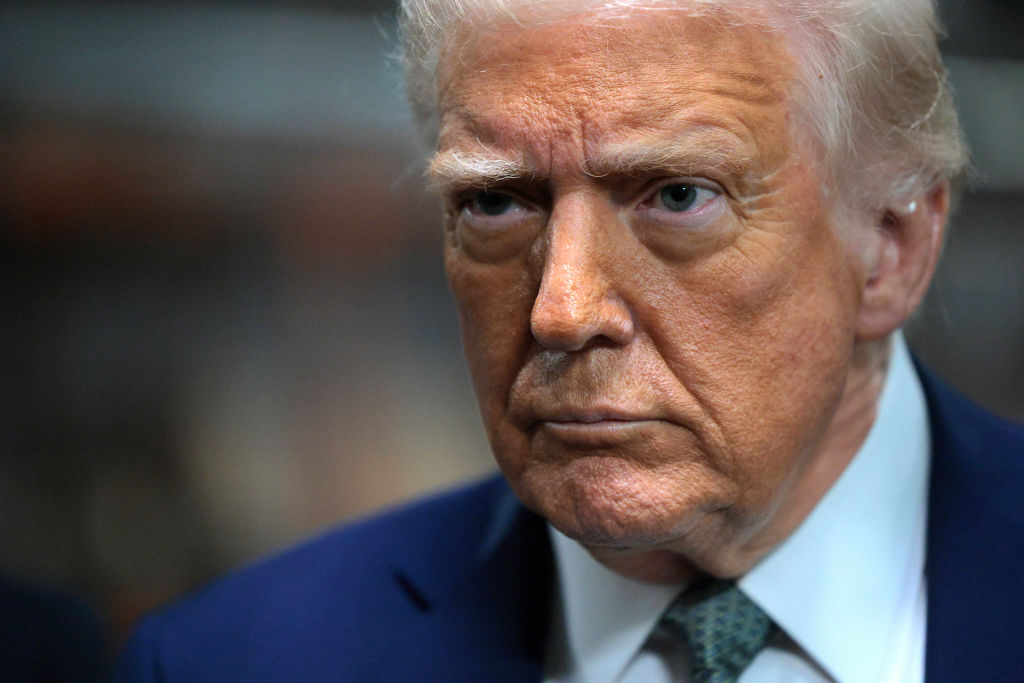
Donald Trump thinks “tariff” is the “most beautiful word in the dictionary.” Today is “Liberation Day,” and the President is holding true to his campaign trail promise to impose tariffs on imports. Cars, steel and aluminum are expected to be hit with levies of up to 25 percent. A 10 to 20 percent universal tariff on all goods imported into the United States is also said to be on the table.
Trump isn’t the first to think tariffs are a secret weapon. A century ago, the British Conservatives were obsessed with tariffs. Like Trump, they saw them as an ideal tool to promote industrial revival and lower taxes. Unfortunately, as Trump will likely discover, the results were disappointing.
From the repeal of the Corn Laws in 1846 until the Great Depression of 1929, free trade was an article of faith for the British electorate, who associated it with the prosperity of the mid-19th century. However, like the United States today, by the late 19th century, there were growing fears of national decline relative to emerging industrial powers such as Germany and the United States. The UK’s share of the global market for manufactured goods fell from 41 percent to 30 percent between the late 1870s and 1913.
At the same time, the Conservatives’ electoral strategy of securing working-class voters by emphasizing the importance of empire and the union with Ireland was losing its appeal to an electorate increasingly concerned with social issues. A new political approach was needed.
And so, in 1903, the then-Colonial Secretary Joseph Chamberlain announced his support for introducing tariffs. Chamberlain was still technically a Liberal Unionist at the time, but that party had been increasingly allied with the Conservatives since 1886 and would ultimately merge with them in 1912. After some internal struggle, tariff reform became official Conservative policy.
On paper, tariffs offered a neat solution to multiple problems. Abroad, they would ensure Britain remained great by consolidating the British Empire. By erecting external tariff walls against countries outside the Empire, so the idea ran, the British government could then negotiate preferential trading agreements with its colonies and dominions. This, in turn, would keep them more tightly bound to the mother country and, in so doing, preserve Britain’s global influence.
Like Trump today, British Conservatives also hoped that tariffs would solve problems closer to home. With growing industrial competition, tariffs would protect UK industries, such as iron, steel and textiles, from “unfair” foreign competition that risked destroying the UK’s industrial base. As one economist argued in 1911, “England could not remain the workshop of the world; she is fast becoming its creditor, its mortgagee, its landlord.”
Echoing Trump’s desire to replace income tax with tariffs, Conservatives also hoped to use them to forestall the introduction of more progressive taxation. Instead of raising taxes on income, land, and inheritance to fund social reforms such as old-age pensions or unemployment relief, the plan was to fund them through tariffs.
Unfortunately – as most economists would tell you today – tariffs were bound to fail, both politically and economically.
Politically, they backfired spectacularly and severely damaged the Tories’ electoral fortunes. First, at the 1906 election, only three years after the introduction of tariffs, the Tories suffered one of their worst-ever electoral defeats, collapsing to just 157 seats to the Liberals’ 400. They also lost both the subsequent 1910 elections to the explicitly pro-free trade “progressive alliance” of Liberal, Labour and Irish Nationalist MPs.
Like Trump today, British Conservatives hoped that tariffs would solve problems closer to home.
Tariffs continued to wreak electoral havoc even after the Great War. In 1923, the new Conservative leader and prime minister, Stanley Baldwin, unexpectedly called an election to secure a mandate for introducing tariffs. His gamble backfired: he threw away the parliamentary majority that his predecessor, Andrew Bonar Law, had won just the year before at an election where he had expressly ruled out introducing tariffs.
Tariffs failed at the ballot box due to fears they would drive up the cost of living by increasing the price of imported food on which ordinary Britons depended. A defense of free trade and cheap food was a defining issue at the 1906 and 1923 elections. With imports of key groceries such as fruit and vegetables already falling under Trump’s 25 percent tariffs on Canadian and Mexican imports, the electoral risks for Republicans are clear.
When the Conservative-dominated national government finally introduced permanent tariffs in 1932, after the Great Depression turned public opinion against free trade, they failed to deliver their supposed economic benefits. The promised preferential trading agreements with British colonies and dominions largely failed to materialize. Mindful of the likely electoral backlash, basic foodstuffs remained exempt from the UK’s new tariffs.
They also did little to revive British industry. While tariffs increased the share of goods imported from the Empire from 30 percent to 40 percent of the global total between 1932 and 1935, they did little to boost the UK’s declining share of global exports. Instead, protected by tariff walls, they served only to reward inefficient industries. If the United States wishes to help struggling domestic industries, the UK experience suggests tariffs are not the solution.
While Trump sees them as a panacea, the British experience shows tariffs only offer pain – particularly where they are seen as a threat to voters’ living standards. If he is even slightly concerned about the Republicans’ prospects in the midterms, Trump should take note – and learn a lesson from history.
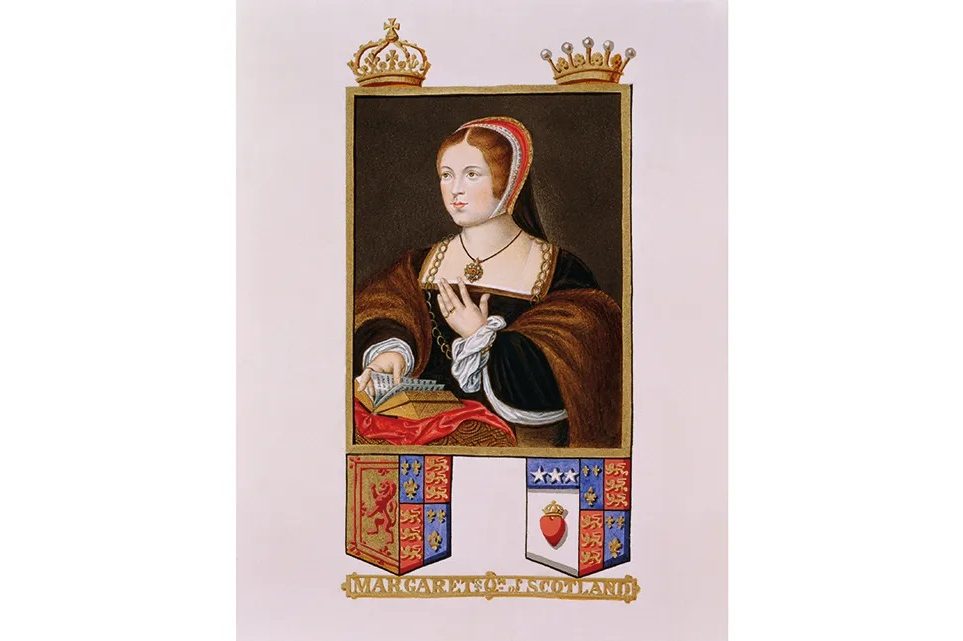
The history of princesses and queens has become well-trodden ground in the women’s history genre, particularly the Tudors. Linda Porter’s The Thistle and the Rose, a life of Margaret Tudor, queen consort to James IV and mother of James V, provides a refreshing change in subject.
Margaret has had to share the stage with some of the most famous names and voices of the sixteenth century: Henry VII and his queen, Elizabeth of York; Henry VIII and his wives; and, of course, her namesake, Margaret Beaufort, the formidable Tudor matriarch who deftly helped place her son, the victor of Bosworth, on the throne. Margaret Tudor, though less considered in popular history, held equal if not greater sway in her contribution to history, as Porter demonstrates in her meticulously detailed biography of the English princess turned queen of Scotland.
The relationship between England and Scotland was fraught, with two centuries of war played out in the borderlands, a frontier zone peppered with garrisons. Margaret’s marriage to James IV of Scotland was intended to put an end to the fighting. Margaret’s importance to Anglo-Scottish peace has perhaps been overlooked by historians, but to her contemporaries, her marriage was a significant one. Aged thirteen (young even by the standards of the time), Margaret traveled from Richmond to Scotland while still in mourning. The recent loss of her mother and her brother Arthur “shook the royal family to its core.” Henry VII and Elizabeth had lived in fidelity, having built a marriage on love as well as duty, a union following the Wars of the Roses. If Margaret had the same expectations for her relationship with James IV she would be disappointed.
James was young, attractive and a notorious philanderer, with an established mistress. (His reputation later prompted Walter Scott to suggest that en route to Flodden he seduced the Lady Heron, resulting in her abandoning the defense of Ford Castle.) Nonetheless, James doted on his young wife, gifting her an intricately detailed Book of Hours which later included a miniature of Margaret kneeling at an altar bearing the words “God us Defend.” As queen, she did her duty and throughout her late teens she was almost constantly pregnant. Though there was much adversity in her life, the real tragedy was the loss of nearly all of her eight children, some in utero, others in the cradle or childhood. The emotional impact of this must have been unbearable, which perhaps — this being such an important part of a woman’s life — could have been given more attention in the narrative.
The couple did, however, have one healthy son, the future James V. His birth precipitated the death of his father at the Battle of Flodden in 1513, a scene colorfully described, from the position of the armies to the detail of the cannons and the eventual bloody fate of James IV. Noting the atrocity of the battle, Porter writes: “The scene of slaughter was so appalling that, at its height, the loss of life rivaled in intensity some of the actions of the Somme.”
It was James IV’s wish that his wife would act as regent in the event of his death, and she did so with grit. Her main incentive was the security of her surviving son and, this being a man’s world, her regency soon felt unsteady. Margaret made the ill-fated decision to remarry. In a secret ceremony, she wed Archibald Douglas, a member of one of Scotland’s oldest and most notorious families. For Porter, this was not a lustful whim but a carefully considered decision to protect the future of her children, “looking to shore up her power base and build on it.” Her plan rendered her regency obsolete and she was forced to flee to Henry VIII’s court, but following a well-timed return to Scotland, she eventually saw to it that her son was installed as James V.
Telling the lives of women is challenging, owing to the scarcity of information available. Even for royal women the evidence is scant. The archive itself is gendered. When the record has little to offer, there is even greater need for a close reading of the material that is available. In places, the book might have offered a bolder, more creative perspective to avoid the story orbiting around “great men.”
A valuable source, however, is a collection of Margaret’s personal letters. These detail her disputes with her brother Henry VIII, indicating Margaret’s determination to secure her immediate family by showing strength and resolve against a notorious tyrant. The letters, interwoven with literary material and immense detail concerning the state of Anglo-Scottish politics, make The Thistle and Rose a fine example of royal biography and a welcome addition to Tudor narrative history.
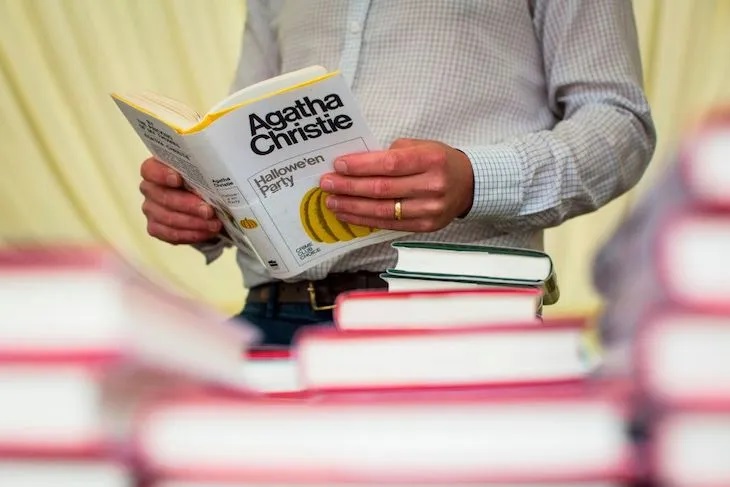
A hundred years ago, the Golden Age of detective fiction was taking off. In the years that followed, Agatha Christie, Dorothy L. Sayers and their contemporaries wrote classics that still delight readers today. But the great crime books of the inter-war years — and the politics of the people who wrote them — have long been misunderstood.
There was no shortage of left-wing authors of Golden Age detective fiction
Critics routinely dismissed the stories as cozy, conservative and conventional. Lavish TV and film adaptations reinforced the stereotype. The reality is that many fascinating writers of classic crime fiction were left-wing or even — like Bruce Hamilton (the godson of Sir Arthur Conan Doyle) and his better-known brother Patrick — Marxist. Their books reflected their politics in a variety of ways.
Even the twentieth century’s leading historian of the genre, Julian Symons, fell into the trap of thinking otherwise. In his influential Bloody Murder, he argued that “Almost all the British writers of the twenties and thirties…were unquestionably right-wing.” When he came up with that generalization, Symons was a recovering Trotskyist. Perhaps that influenced his attitude. The truth is that he’s wrong. It’s certainly the case that Christie, Sayers, Anthony Berkeley (who founded the elitist Detection Club in 1930) and the excellent Henry Wade — in real life a baronet, Sir Henry Aubrey-Fletcher — were instinctive conservatives. Nevertheless, Symons airbrushed out of his version of a history a wide range of intriguing novelists with a left-wing political agenda.
Even the term ‘“the Golden Age” was coined, in 1939, by John Strachey during his Marxist phase prior to becoming a minister in Attlee’s Labour government. Strachey heaped praise on young detective writers such as Nicholas Blake (the poet Cecil Day-Lewis), who had recently published a superb mystery, The Beast Must Die. Day-Lewis was a Communist Party member, but that didn’t debar him from being elected to membership of the elitist Detection Club, founded by Anthony Berkeley in 1930, in which Christie and Sayers were leading lights. Their concern was literary merit, not politics or prejudice.
When he attended Detection Club dinners in Soho, Day-Lewis found plenty of companions from the political left. The Club’s founder members included the economist G.D.H. Cole and his wife Margaret, stalwarts of the Fabian Society who wrote over twenty detective novels together, and Lord Gorell, who served in David Lloyd George’s government before switching to Labour. Elected two years before Day-Lewis, Ralph Woodthorpe was a DailyHerald journalist who excoriated Fascism in two of his detective novels as well as in newspaper columns.
Two prominent women in the Labour Party made use of their political know-how when they turned to mystery writing after losing their seats in the Conservative landslide of 1931. Mary Agnes Hamilton wrote Murder in the House of Commons, while Ellen Wilkinson — “Red Ellen,” of Jarrow March fame — published a locked room mystery before returning to the political fray and serving as Attlee’s minister of education. The Division Bell Mystery is a pleasing debut but the book vanished from the shelves before resurfacing eighty years later in the British Library’s Crime Classics series — with a prefatory note by Rachel Reeves.
Ivy Low, wife of the Communist revolutionary Maxim Litvinov, spent the “Golden Age” living in Stalin’s Russia. Moscow in the twenties supplied her with an evocative background for His Master’s Voice, published by Victor Gollancz, a radical who published scores of detective novels as well as founding the Left Book Club.
Like Hamilton and Wilkinson, Ivy only wrote one mystery novel. Christopher St John Sprigg, the Marxist poet better known under his less posh writing name Christopher Caudwell, managed to dash off eight whodunits before being killed in Spain while fighting against Franco.
After World War One, detective novelists and their readers were intent on having fun after the horrors of the trenches and the nightmarish “Spanish flu” pandemic. Authors concocted puzzles that challenged readers to try to solve the mystery before the great detective, but before the end of the twenties, astute writers like Sayers and Berkeley realised that the future lay in puzzles of character.
As the world economy slumped and dictators flexed their muscles, detective novelists grappled with the burning question of the times: what should we do when we can’t trust the legal system to deliver justice? This theme underpins two Christie masterpieces, Murder on the Orient Express and And Then There Were None, and it also preoccupied her left-leaning colleagues in the Detection Club. Milward Kennedy, a senior figure in the International Labour Organisation, devoted a whole novel, Sic Transit Gloria, to exploring “justified murder.”
Helen Simpson — whose attempt to become a Liberal members of parliament was derailed by cancer — wrote Vantage Striker!, in which a populist politician turns out to be a closet fascist who is dealt with ruthlessly by extra-legal means. Margaret Cole’s brother Raymond Postgate included an epigraph by Marx in his scathing jury trial novel, Verdict of Twelve.
Bruce Hamilton even wrote a novel about a homicidal dentist, Middle Class Murder, expressly designed to show the rottenness of the bourgeoisie. He followed this up with Traitor’s Way and The Brighton Murder Trial: Rex v. Rhodes, two anti-fascist novels which failed spectacularly to anticipate Stalin’s pact of non-aggression with Hitler. Perhaps that sapped his morale, since he only managed one more crime novel over the next thirty years, while Postgate concentrated on democratizing gourmet dining by founding The Good Food Guide.
So despite Symons’ claim, there was no shortage of left-wing authors of Golden Age detective fiction. But they lacked the staying power of Christie, Sayers, and their fellow conservatives. And, most important of all, their stories weren’t as enjoyable.
This article was originally published on The Spectator’s UK website.
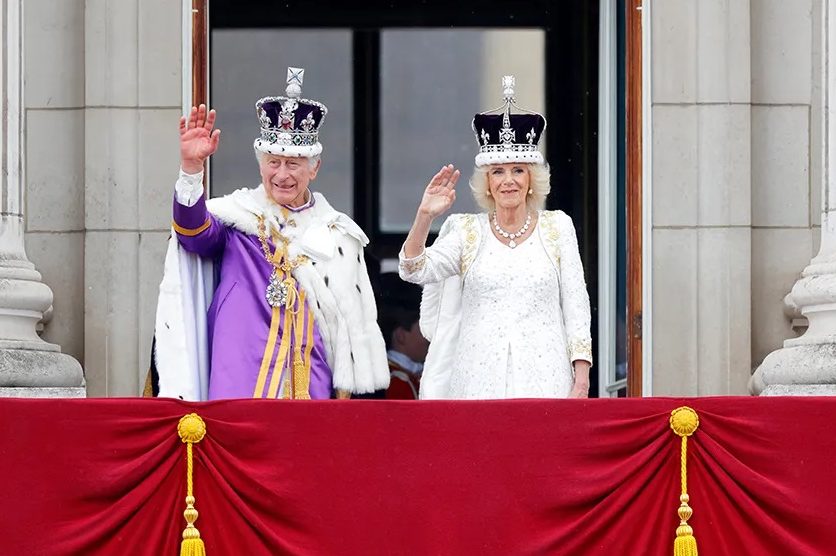
When he was Prince of Wales, the king began to advocate the need for a slimmed-down monarchy. The perception was that there were too many royals, an image confirmed in the eyes of the media and the public when they all appeared together on the balcony following the Trooping the Colour, a ceremonial event in London. The ill-informed man in the street would go away thinking the taxpayer was supporting all these disparate family members. This was a misconception, but it lingered. At the time of the Diamond Jubilee, the queen’s advisors, were delighted when only a handful of royals appeared on the balcony after the service at St. Paul’s Cathedral in 2012 — the queen, the Prince of Wales, the Duchess of Cornwall, the Duke and Duchess of Cambridge and Prince Harry (the Duke of Edinburgh was in hospital at the time). This image was what media advisors would describe as a better “optic.”
The queen and Prince Philip had many patronages and presidencies which it is proving a problem to fill
Then at the time of the Platinum Jubilee a new category was devised — the so-called working royals. These were the queen, the Prince of Wales and the Duchess of Cornwall, the Duke and Duchess of Cambridge, the Princess Royal (accompanied by Sir Tim Laurence, her husband), the Earl and Countess of Wessex, the Duke and Duchess of Gloucester, the Duke of Kent and Princess Alexandra. So there it was — the slimmed-down monarchy just as the king-to-be had always wanted.
Frankly, I never thought it would work. Nor did the Princess Royal (who is always worth listening to). Last year she was asked about it. “Well, I think the ‘slimmed-down’ [monarchy] was said in a day when there were a few more people around to make that seem like a justifiable comment… It doesn’t sound like a good idea from where I’m standing, I have to say.”
The announcement of the king’s cancer diagnosis is a reminder of what a foolish idea a slimmed-down monarchy is. The whole point of the royal family is that they support the king (definitionally not slimmed-down), undertaking the duties and responsibilities that he simply does not have time to do. The most successful members of the royal family are those who support the monarch, rather than those who compete (as we have seen). In the coming days, as the king undergoes his treatment, we will no doubt see much of Queen Camilla out and about. The Queen Mother stood in for George VI a great deal between 1948 and 1952 — at times she was effectively the head of state. Princess Anne has already proved immensely supportive to her brother. Prince William has resumed public duties. It is said that Prince Edward is resting from his duties, but his wife Sophie will be busy.
Of the others, the Duke of Kent is recovering from an operation and is now eighty-eight, and his sister Princess Alexandra has not been seen in public since last summer. Recently the king invited the Duke and Duchess of Gloucester to Sandringham for the first time in decades. This indicates his increased reliance on them. Their public duties have increased enormously in the last months.
When I did some conversations with the Duke of Kent for his book A Royal Life, he spoke of his role in the late queen’s reign: “I always felt I wanted to support her. That’s by far the most important thing in life.” When the Duchess of Kent asked me why I wanted to do the book with him, I told her that he was always seeking ways to lighten the queen’s burden, and she said: “Well that’s absolutely perfect. Exactly what he does.”
There was a time in the early 1950s when there were as few active members of the royal family as there are today. So the young duke was sent off to take the Independence ceremony in Sierra Leone in 1961. Princess Alexandra paid a long visit to Australia and other countries in 1959, when she was only twenty-two and she undertook a vitally important visit to Japan in 1961, which opened the way for better post-war Anglo-Japanese relations and paved the way for Emperor Hirohito’s state visit to Britain in 1971. When not helping the queen, these members of the royal family pursued their own duties. The Duke of Kent was a dedicated president of the Commonwealth War Graves Commission for fifty years. In 2022 he presided at the burial of World War One soldiers whose bodies were discovered years later. This got no mention in the press, but was hugely appreciated by the families of those involved.
For public events these days, members of the royal family — or celebrities — are wanted more than the mayors, councilors or lords of the manor of earlier times. And you get a better deal from the royal family than from most celebrities (who can be expensive and demanding). The queen and Prince Philip had many hundreds of patronages and presidencies between them. They were involved with numerous regiments. It is proving a problem to fill these now that they have gone — not to mention the many public engagements for which royal participation is sought.
Another crucial role for some royals is to act as Counselor of State. Six are appointed if the monarch goes abroad for an appreciable period of time or is unable to fulfil his duties. There is no need for them at present, but should there be; the two who would act in tandem would most likely be Queen Camilla and Prince William. At one time they used to be the Queen Mother, Prince Philip and the next four in line. When the queen went to Paris on her state visit in 1972, Prince Philip was exempted as he was with her, as were Prince Charles, serving in the navy, and Princess Margaret, who happened to be abroad. The media suggests Prince Harry might be one but he is automatically excluded as he lives abroad. Under the Counselors of State Act of 2022, Prince Edward and Princess Anne are also eligible to serve.
The king may well find he needs more support to advance the slimmed-down cause from his family. I would encourage further involvement from Princess Beatrice and Princess Eugenie, two very well-raised girls, with university degrees, both of whom already support many charitable endeavors. I am sure they would rise to the challenge.
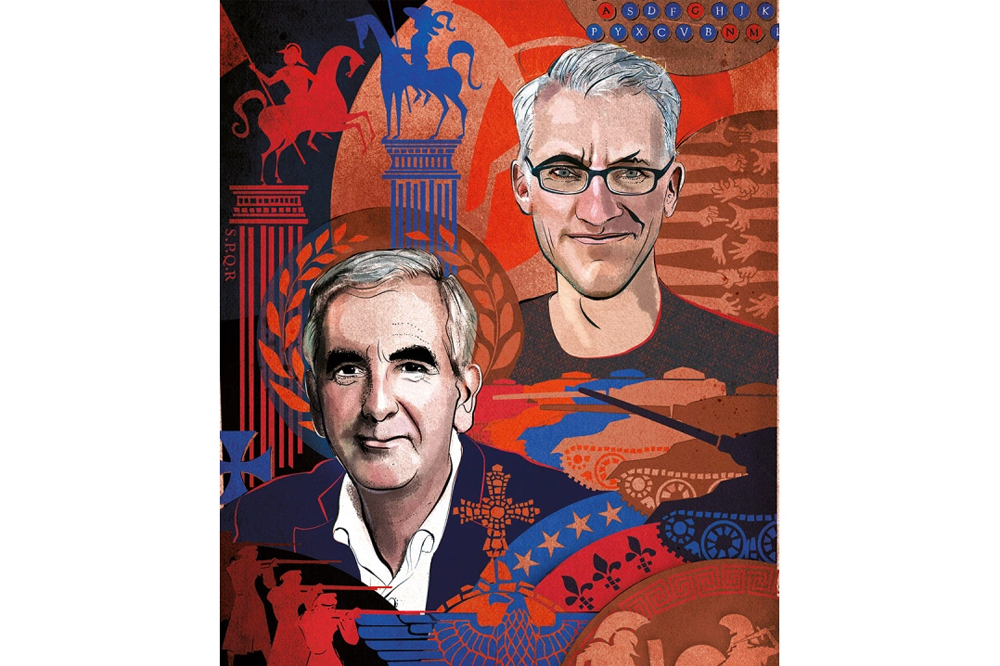
Tom Holland: Here’s something I always wonder when I read one of your books. You’ve written novels set in the present, you’ve even written a novel set in the future, but overwhelmingly your fiction is set in past periods, spanning ancient Rome up to the second world war. What is it about the past that appeals most to you as a novelist? The mirror that it holds up to the present or the sense of difference from the way we see the world?
Robert Harris: I’ve always been very interested in history. Really, but for the accident of having an English teacher who pushed me towards studying English, I would probably have studied history and indeed thought of changing halfway through my course in Cambridge. But it would have meant doing four years. So I didn’t. I’ve always been fascinated by how people lived, with the way societies were organized, with what it might have been like to have been alive in the past. I was born twelve years after the end of the second world war, and it was still a very real thing when I was growing up. I felt the weight of the past in the present as I lived it.
TH: I remember you did an article about it in the Sunday Times [of London] in the 1990s. I think it was accompanied by a picture of Hitler with the EU flag. And you made comparisons between Hitler’s plans for Europe and the EU, which in light of what subsequently happened, I thought it was an interesting irony that it should have been you in that article who was making the comparisons. Was that something that you found particularly provocative when you wrote Fatherland?
RH: I wrote Fatherland as a result of writing a book about the Hitler diaries, during which I read a lot of Hitler’s table talk. He laid out his plans for Europe as it would be after his victory, which he thought was coming. It would have been a Europe organized around German domination of currency and trade and so on. It was a time when Germany had reunified and become once again this country of 80 million at the heart of Europe. So it was a kind of jeu d’esprit, really. Listen folks, I don’t mean you to take me seriously! It was mischievous. No more than that. But it is interesting because the great question remains: how do you accommodate a country as powerful as Germany within a European polity? That question doesn’t go away. It amuses me that everyone thinks the question of Britain’s relationship with Europe was settled at 9 p.m. on June 23, 2016, when actually the story has been going on for centuries. It will never be settled.
TH: And then you went on to write Pompeii and the trilogy of books about Cicero. People have often assumed the Cicero books reflect your experience of engagement with New Labour. Was that part of the appeal of turning to Rome?
RH: Not really. I turned to Rome because politics has always fascinated me. I had just finished Pompeii, and then I read your book Rubicon and it struck me that here was the political novel I could write. I could write it because so many of the great Roman public figures at that time you could recognize as archetypes. Cato was an Enoch Powell or Tony Benn. Crassus — the millionaire trying to buy his way into politics. Cicero — the crafty lawyer playing one side off against another. It struck me as a way of writing about politics and the struggle for politics. Now, my greatest first-hand experience of politics was with New Labour and particularly Tony Blair. So I was able to draw on that experience. But the books, if they’re about anything, are about America and the end of a republic that collapses because it can no longer sustain the pressure.
TH: The collapse of a republic — that is also the theme of your new book, Act of Oblivion. Again, to come back to this question of whether the interest of the past is the fact that it’s different from us or that it holds a mirror up to us. The seventeenth century, and particularly the Civil War, is resonant for a country as divided as Britain is at the moment. Was that the source of the appeal or was it the inherent drama of the story that you tell, the pursuit of the regicide, the men who signed the death warrant for King Charles I?
RH: It’s always the drama of the story. That’s why I’m a novelist, rather than a historian. In this case, it was the idea of inventing the figure who might have pursued these regicides year after year, across America, in England. Who would have organized it? How would they have done it? It’s always the story. And then you find, as most people do who write historical novels, that you’re really writing about the present. There’s something subconsciously that drew you to the story because of its nature. It calls out to you, beneath the surface, and that’s what you respond to. I don’t think: “Oh, I’m going to write about divided Britain.” That would be boring.
TH: I guess the reason I ask is that when it comes to the two men who are pursued and in whose heads we live quite a lot in the book, you show us the inner workings of their minds, their hopes, their emotions and their religious convictions. You bring to life people who in many ways are quite distant from us. How much of a challenge was that?
RH: It was a very big challenge. As I say, I was drawn to the drama of the chase. Then I realized I’d landed myself with a problem of writing about two Puritan colonels [Edward Whalley and William Goffe]. I had a similar thing, oddly enough, when I was starting out to write Pompeii, which I thought was a crazy venture. I went to Pompeii and walked through the ruins. I felt the heat on my back and saw the outline of Vesuvius in the dazzling August sky and smelt water on stone. I realized I was experiencing everything that my character would have experienced.
A sunny morning in the empty forum of ancient Pompeii, Italy in the shadow of Mount Vesuvius (Alamy)
Well, with Whalley and Goffe, I started by thinking: what are the similarities that we have with them? First of all, they are practical men. They are essentially very successful career soldiers. They have their relationship, father-in-law and son-in-law, which seemed to me quite interesting. I was very fond of my late father-in-law, but I wouldn’t have wanted to go on the run with him. Whalley was a political moderate; he opposed Cromwell’s punitive expedition to Ireland, and that humanized him. What humanized Goffe was his love for his wife, Whalley’s daughter, which we know about from very tender letters they wrote to one another. So gradually I pieced together, I hope, rounded characters without sacrificing the fact that they would have read the Bible at least twice a day and they would have filled their speech with biblical references. I tried to meld all these things together.
TH: They are the quarry, they are the parliamentarians, they are the regicides. But you also have a Javert figure, Richard Nayler, the man who is constantly on the hunt and he becomes possessed by a sense of his quest. Did you come to dislike him?
RH: No, I liked him. One of the things I realized as I read more about the Civil War was that I was no Puritan. I might have been a Parliamentarian, but I was not a Puritan. My instincts are far more Cavalier.
TH: Would you rather have lived under Cromwell or Charles II, do you think?
RH: Charles II because I would have liked to have gone to the theater. I would have liked to have listened to music. I would not like to have some miserable devil telling me that I couldn’t celebrate Christmas. There was much wrong with Charles II’s court, but I did have an admiration for Sir Edward Hyde, Lord Clarendon, who is in the kind of Ciceronian tradition of wanting to keep the show on the road. Nayler is ruthless and reflects the cruelty of the age. But I put into his mouth and thoughts a lot of how I would have felt going out to Puritan New England and trying to make progress through this crazy landscape with all these religious zealots all around.
As I wrote, I realized, here is a very important strand of the DNA of modern America. One of the things a visitor from Europe to America always finds striking is the way that religion is woven into politics. It’s completely unlike anything in this country. Cromwell’s religious and political revolution sailed on after its defeat in England in the arc of New England.
TH: It’s strange that the trace elements of the Civil War and of Cromwell’s period of power are more palpable in America than they are in England. And yet obviously the impact in England — and Britain more generally and Ireland — is incredibly profound. It was Michael Foot’s father who famously asked the question “On which side would you have fought at Marston Moor?”, the great Civil War battle fought between Cromwell and Prince Rupert. The answer was the key to his understanding of the person’s politics. Whose side would you have fought at Marston Moor?
RH: Instinctively I would have been on the side of parliament against the king. But I don’t think I would have been one of the Ironsides, the Protestant Taliban, as it were, that eventually smashed parliament and expelled those members who didn’t agree with the army in order to put the king on trial. If there is a guiding thread through most of my books, it is an aversion to certainty and a fondness for those who doubt. I dislike certainty. I dislike the way people twist the facts and adjust them to their philosophy. I’ve seen that throughout my career as a journalist and I know how destructive that is. That tendency seems to have got worse and worse as time has gone on.
***
TH: Was the Civil War a period that you knew well before you began writing?
RH: I’d certainly never dressed up in uniform at weekends and gone into battle. I’m familiar with the era, but it’s curiously secondary in Britain to the Tudors, who are inescapable not only in academic work, but in popular culture. For some reason the Civil War isn’t. And yet it’s a stark fact that England was a republic for eleven years in the seventeenth century, 150 years before the French, 250 years before the Russians. We didn’t just get rid of Charles I, we got rid of the institution of the monarchy, the lords and the bishops. It is a huge thing in our nation’s history. It was a curious accident that a week after the book came out, the Queen died and then we had the accession of King Charles III. The name alone links us to that period. Then there was the accession with the Privy Council on the Saturday and the dealing with all the oaths about the Church of Scotland on the Sunday — the language was all seventeenth century. You realize that this is where we come from; it all stems from the seventeenth century and the settlement with parliament.
TH: What was your emotional response to the death of the Queen and the accession of the King?
RH: It moved me and it fascinated me. Years ago, I was a republican. Just logically, it seems that a modern state should not be organized in this way. Now my opinion is completely switched. I had a conversation with Eric Hobsbawm just before he died, and he said that the most civilized countries to live under, with the best guarantee of freedom in the world, were constitutional monarchies. He was right. After the Brexit division and the political chaos that has ensued, the madness of all these various prime ministers and resignations, it was a relief to see, from the passing of the Queen, the new figurehead marching through London. In my old age I found the continuity moving and important. Who would want to live under the political constitution of the United States at the moment, with their elected king? This country’s separation of politics from the state is serving us well in what might otherwise be a much worse and more divided time. So I can see why some people regard General Monck as one of the great figures of history.
A painting of George Monck by Sir Peter Lely (Alamy)
TH: He is a parliamentarian who brings the army round to back Charles II and presides over the spirit of compromise – the essence of the restoration.
RH: Exactly. The deal struck between Sir Edward Hyde and General Monck was the Act of Oblivion. We will start again, no recriminations, except for the people who executed the king. This aftermath of a revolution, the clearing up, the smell of gunpowder still lingering in the air — it’s always an interesting time in history.
***
TH: I read your book during the final two weeks of Truss’s prime ministership. What affected me reading it with that background was the incredible sense of yearning that your characters have for a degree of normality, to feel that chaos has been brought to an end. I felt that very strongly as a result of the political context that we were living through. Britain in the seventeenth century was a byword on the continent for a kind of mad political experiment and a kind of monstrous anarchy. We are used to thinking of ourselves now as a byword for constitutional stability and for sensible, pragmatic politics. But perhaps there’s a faint sense in which the past few years have been a return in that sense to the seventeenth century.
RH: Yes, I think that that’s true. I’ve just got back from Germany, and they’re wondering what’s happened to this country, with its reputation for pragmatic deal-making, no big grand schemes, no sudden lurches, observance of the rule of law, stability: where on earth has that country gone?
***
TH: You’ve written a lot about the past, but you’ve also written a really extraordinary work of science fiction [The Fear Index], which is a kind of blend of cyberpunk and Frankenstein. And then also you wrote a novel, The Second Sleep, set in the very distant future — 800 years, isn’t it? — where it’s a Britain that turns out to have forgotten industrialization. Does science fiction interest you as well as historical fiction?
RH: It’s an interesting question. I hadn’t really thought about science fiction very much, but I realized when I look back that one of the writers I used to read an awful lot when I was a boy was H.G. Wells. Wells was incredibly interested in politics and used the tools of his imagination to address political and social issues. I know that a lot of people thought a post-apocalyptic novel was a strange thing for me to have written. But it was part of my fascination with politics. I’m not interested in writing something set in outer space.
TH: You might be!
RH: I’ll be writing something set in a new galaxy. Every time I think that I’ve finally stopped wandering, I set off down some other avenue. You asked right at the beginning how I see the past and I think one of the things I do strongly feel — I don’t know whether you’d agree with this — is that a man like Cicero is virtually no different to us. He’s not an alien figure.
TH: I think there are aspects of him that are very familiar, worrying about the cracks in the wall of one of his villas or whatever. But I think the Roman Republic is, in a way, unfathomably weird. What I have found over the course of thinking and writing about Rome is, the more I do it, the stranger the Romans seem. Cicero is a really fascinating example because he has conditioned us. And when I say us, I mean West Europeans. People have been reading him for centuries and centuries and he has been the bedrock of education. In that sense, he has forged our understanding of what politics is and what philosophy is.
RH: I’m struck by the similarity of his philosophy to the message of Christianity: the good life is the life of helping others and doing good. That’s the only way to peace, and that’s the only way to immortality, to a settled feeling of not being afraid of death. If you live a life like Caesar, he thinks his is a wretched life. That seems to me to be quite a bridge to our times.
TH: You see, I think that we are closer to the religious radicals that you write about in Act of Oblivion than we are to Cicero. Cicero is a more distant, stranger figure than those are, even though you can absolutely imagine sitting down and having a chat with him about what’s going on in the world. But if you think about the utter conviction that the religious radicals have — that the last should be first and the first should be last, or the Fifth Monarchist, the idea that Christ will come and that the world is threatened with its end — I think that those are the instincts that are ruling contemporary society.
RH: The Fifth Monarchist instinct is one of the reasons America’s religious right supports Israel. It is to do with the rapture and the return of Christ to Earth. Really, in a sense, that’s my point: the rationality of a Cicero is certainly closer to me than the seventeenth century or the religious right in America now.
TH: It’s not just on the religious right. I was thinking more in the context of the JustStopOil protesters who’ve been videoing themselves on bridges over the M25 — the sense of their utter passionate conviction and that their message has to be proclaimed and that without their message, there will be no salvation. It’s not so distant from what the radicals in your book believed. I mean, the author of the apocalypse is different. It’s not God’s will; it’s not an apocalypse that’s been written in the Book of Revelation. But it is an apocalypse that is being visited on us for our sins.
RH: There’s definitely a puritanical belief on the left that consumption is sinful: shut down people’s modes of transport or attack works of art. That’s quite extraordinary, isn’t it? That’s like an instinct from the Cromwellian era: smashing up the stained glass.
***
RH: I have a kind of quantity theory of humanity. When I look at the Roman period or the seventeenth century or nineteenth-century France with its antisemitism and corruption, I still think that roughly half the population are pretty decent, actually. Maybe 30 percent obey the law, but they’ve got some nasty impulses. They’d go to watch the hangings at Tyburn — and a lot of them would. And then you’ve got — and here I’m starting to lose track of the proportions — but you’ve got maybe 5 percent of really brilliant people and you’ve got 10 percent psychopaths. It’s quite good. Societies go wrong, of course — Rome or Germany in the 1930s or Russia now when the psychopaths get into the position of power. But those quantities of human nature and human society don’t really alter. Look at the American midterm elections: it’s almost exactly 50:50. You feel the same about the Roman Republic when it teeters over the edge. It was 50:50.
TH: 48:52, you might say.
RH: But it’s so close! Why aren’t we just overwhelmingly one way or the other? It’s as if we have to create this 50:50 division constantly.
TH: It seems to me the tension that runs throughout so many of your novels is the question of what is the man in the middle to do about that.
RH: Precisely. There’s a wonderful letter that Cicero writes about how he thinks of the role of a statesman as like that of a doctor to tend to ills and change remedies, and let people enjoy life. Those are the sort of politicians that I admire. They have been in pretty short supply, I must say, in recent times.
TH: One last question. Can you say what your next book is about or is that too soon?
RH: I hope you’ll forgive me, but if I reveal an idea too soon, all you would need to do, Tom, was raise a skeptical eyebrow and I would think: “That’s a bad idea!”
TH: You have an incredible knack for picking on the most interesting angle of the most interesting periods, so keep it a secret. But I’m sure when the revelation comes, it will be worth the agony of having to wait. Robert, thank you so much.