Tag: Children

  • The reality of raising an autistic child

    The reality of raising an autistic child

    Although I disagree with Donald Trump’s and Robert F. Kennedy Jr.’s suggestion that mothers who took Tylenol during pregnancy may have caused the huge rise of children born with autism in the US, I also can’t agree with the spate of articles and interviews that have followed – several by high-functioning autistic adults, others by parents of autistic children – basically saying it is great to be autistic. I understand that they are fearful that Trump’s idea of a “cure” could result in anyone with special needs being regarded as subnormal and a second-class citizen, but it’s not helpful, either, to pretend that autism is without its many frightful drawbacks.

    My son, 42, was diagnosed with Asperger syndrome on his 13th birthday in 1996. Then, not so much was known about the condition, and my ex-husband, my daughter and I went through hell wondering why my son was so difficult – and then dealing with his strange, often explosive behavior. I would invite children over to play with him and his older sister, but he seemed to regard them as an alien species and she would end up playing with both visiting children.

    When he went to kindergarten, in the room with all his peers, he would often put his hands over his ears and scream. He preferred to be alone in the corridor. When I asked why he didn’t like his companions he said: “They have squeaky voices” and imitated them. Instead of toys, he had his obsessions – balloons, then houseplants, the cartoon film Robin Hood, tarantulas. The obsessions seemed to give him as much pain as pleasure. The balloons burst or flew away or weren’t the right type. (One category he called “All March Down the Room Balloons.”) He would think a houseplant was dying when it wasn’t and scream with frustration, even grief, and throw the plant and its pot down.

    Aged 11, he announced: “My obsessions have ruined my life!” Years later, I recall his only real friend Peter, then 31, who also had Asperger’s, waiting with me in a car park for my son to turn up. Peter turned to me and said seriously: “We don’t want to have our obsessions. We’d rather not have them.”

    Their obsessions, their high anxiety, their misunderstanding of others’ talk and gestures and their inability to hold conversations, make even high-functioning autistic people isolated and unable to lead a calm, fulfilling life.

    My son’s condition causes him to reiterate the same obsessive stories going round and round in his head

    My son has tried several simple jobs such as cleaning in a supermarket, being a night porter in a hotel, working in a care home for the elderly, but has failed through misunderstanding the social behavior of his coworkers. (In the care home he was intimidated by the advances of what he called “yee-ha girls” – forward young female workers.)

    Much is made now of special interests and the genius of certain people with autism being able to concentrate on their great skills, but I wonder which of them wouldn’t sacrifice these just to have one proper friend. Peter no longer lives near my son, so he is mostly reliant on part-time carers, tolerant women of my age and his father’s elderly relatives. The overtures of a sweet local artist of his age were rejected.

    To be blunt, he is no further on with his contemporaries than he was as a child. His autism causes him to reiterate the same obsessive stories going round and round in his head, often about the past, even about dead relatives – such as my father – whom he has never met. How can most people relate to this? My son wants to marry and have a family but does not know how to go about it and says if the children don’t fit his criteria he won’t like them.

    And would anyone wish to live, as he does, with a terror of dragonflies, convinced they bite? Or with an exaggerated fear of certain local areas, making travel difficult because of a past misunderstanding with a bus driver or passenger? (Actually it is my son, over 6ft, sometimes shouting on a bus, who probably frightens other passengers.)

    And what about us mothers and fathers? In my experience, there are constant discussions and often blame between the parents of these children on how best to treat them. Studies show that 80 percent of parents of autistic children split up. The financial strain – difficulties getting funding for them – stress and emotional toll associated with raising any child with a disability are all contributing factors. There’s also the frequent problem of physical aggression, surely a manifestation of extreme frustration and surging hormones, when the autistic child reaches adolescence. At 14, my son would would often lash out at me, his father – we split up when he was eight – and his sister.

    And it can continue into adulthood. A friend’s nonverbal autistic adult son caused a knee injury to a carer which will never properly heal. Another friend’s adult autistic son, intelligent and articulate as my son also can be, smashed up his parents’ house during lockdown. My son once destroyed the staircase of a rented apartment and the police have been called because of his behavior. At 17 he was involuntarily hospitalized for 28 days and in his twenties was in a psychiatric unit. And what about nonverbal autistic adults who need the physical care normally given to babies? How much I admire parents and carers who have to deal with that.

    On the plus side, my son is a good artist who has sold paintings to strangers, he is an excellent cook and can perform hilarious imitations of people and situations. He likes to make meals for his three young nephews and has given them many well-thought-out gifts. He is in some ways more compassionate than I am to people who are bereaved.

    I will let him have the last word: “Some people with Asperger’s can do extremely well and have successful jobs. But autism, OCD and ADHD get in the way of learning and living life.”

    This article was originally published in The Spectator’s October 13, 2025 World edition.

  • The new eugenics dilemma

    The new eugenics dilemma

    What comes to mind when you think about the maximum amount of love a parent can have for their child?

    For me, I think of Dick Hoyt pushing his son Rick, who had cerebral palsy, in a wheelchair through the Ironman World Championship course. I think of the parents of Nick Vujicic, born without arms or legs, raising Nick with confidence, and cheering him on as he became an international motivational speaker. I think of the mother of a child with Down Syndrome, choosing each day to recognize the absolute gift of their child. I think of the parent at the dinner table comforting a child upset by a ‘C’ on their report card.

    Noor Siddiqui, founder of Orchid Biosciences, sees things differently. In a recent interview with The New York Times, Siddiqui made it clear that the “maximum amount of love and care” a parent can have for their child comes in the form of choosing which child they would like to bring into the world prior to their birth – a choice that is now possible through genetic selection technologies that screen for traits like susceptibility to disease, height and even IQ.

    Genetic selection technology is becoming more advanced and widely available. Orchid Biosciences, as well as other companies like Herasight, Nucleus Genomics and Genomic Prediction each offer services that take cells from IVF-created embryos, and run the DNA of those cells through databases that link gene patterns to certain outcomes. Each embryo is given a “polygenic score,” which is basically a probability estimate for different traits. Parents are then shown a chart giving them information like “Embryo A will likely be the tallest, Embryo B has the highest predicted IQ…” and so on. After this, parents choose which embryo to implant based on these scores.

    At the societal level, what can we expect as this technology becomes more mainstream? To start, we must consider the quasi-eugenic consequences of genetic selection – how choosing certain traits could, over time, reshape the population. As parents begin to choose only those embryos who will have higher IQs, other parents will fear their children will be left behind, gradually creating social pressure to select for higher IQs, and marginalizing children with lower scores. Genetic selection advocates argue that screening for these traits is a matter of parental autonomy, not a matter of government control. Thus, the improvement in the intelligence of the human race would resemble governmental eugenicist experiments, but because the motive is private rather than state-directed, it resembles eugenics in effect, if not in intent.

    Even if genetic selection remains voluntary, the cost – ranging from $6,000 to $50,000 – means that only the wealthy could afford these advantages. Over time, this economic barrier could turn into a genetic divide, with the rich consolidating genetically superior traits like IQ, creating a new type of caste system in which the less affluent fall behind, with little chance of rising the ranks with the passing of each generation. Any dwindling form of meritocracy would thus transform into an aristocracy. When asked about these implications, Siddiqui does not shy away from the concern: she hopes that “we’ll be able to mobilize enough excitement… so that it’s something that’s going to be covered for everyone.”

    In other words, widespread genetic selection could very well create a new caste system – unless society mandates universal access through government programs mimicking socialism.
    But let’s say the government did decide to step in and pay for genetic selection for all. And let’s even say that this goes economically and politically well. Where does this leave the family unit? Where does it leave each individual child?

    Sophocles once said that “no one loves the child for what he will become, but because he is already theirs.” Parental love is unconditional affection, protection, sacrifice and commitment. Genetic selection, however, brings a child into the world with a set of conditions and expectations. If a parent selects an Embryo B because of Embryo B’s predicted IQ, what happens if Embryo B turns out to be not so smart after all? It’s hard to comprehend how immense the psychological pressure will be for a child to live up to the person his parents chose him to be.

    When a child is chosen through control rather than accepted as a gift given through love, children become commodities and a means to an end for their parents. Love is characterized by service to another, but by allowing only those children we choose to come into the world, we risk treating children more as extensions of our will than as gifts to be loved.

    Even if we screen for certain attractive characteristics, we cannot select for the very qualities that make someone a force for good or evil in the world. We cannot screen out traits like pride, greed, cruelty, apathy and delusion. We cannot choose traits like kindness, integrity, humility, perseverance, hope and courage.

    We can select embryos predicted to be the healthiest, strongest or smartest – but can the parents, who feel compelled to screen their children, truly raise them to use those gifts for the flourishing of humanity?

  • Tiffany Trump and the awfulness of the baby shower

    Tiffany Trump and the awfulness of the baby shower

    Tiffany Trump’s baby shower photos emerged this week, a Peter Rabbit-themed extravaganza thrown by her sister Ivanka in a Palm Beach mansion, so lavish that Beatrix Potter would have needed a second mortgage to attend. Think balloon arches as big as monuments, themed cocktails and swag bags worth more than your monthly car payment.

    But Tiffany’s showy shower reveals something beyond just tone-deafness among the rarefied class of people with billions of dollars, or presidencies, in the family – it spotlights how baby showers themselves have morphed more broadly from modest celebrations into full-throttle wealth and status flexes. These once-intimate gatherings thrown by your great-aunt in the living room now resemble extravagant weddings requiring their own party planners, unrecognizable from their original purpose of preparing new parents for the practical realities ahead. Welcome to 2025, where your unborn child’s social debut outweighs the importance of your birth plan.

    The Instagram baby shower, where there are 45 million posts with the hashtag, is by far the most popular of the many new garish social media birthing rituals, popularized by the likes of Beyoncé (who spent $500,000 on one) and Meghan Markle (who reportedly spent $200,000 on Archie’s). Gender reveal parties, my personal bête noire, have cost my friends who throw them thousands of dollars, with three-tier cakes custom made with pink or blue frosting, and in some cases fireworks. The ultrasound printout isn’t even dry before the Pinterest board for the party is created. Then there are the baby registries. Gone are the days of asking for a couple of onesies and a box of diapers – the last three registries I’ve been sent have been full of multiple $200 items on an Amazon wishlist that get sent straight to the recipient’s house, sometimes anonymously.

    But the key to a successful shower, in the eyes of social media, is less about the unborn child and more about the guestlist and the images generated. And while the Trumps, America’s first family of subtle-as-a-sledgehammer opulence, didn’t invent the phenomenon, they have perfected it. The spring flowers, rabbit-shaped hors d’oeuvres, macaroons and Ivanka’s $1,000 dress were less of a celebration of new life and more of a boardroom-approved brand extension.

    The event served as a public rebuttal to the longstanding rumors of Ivanka and Tiffany’s feud, which reportedly eased sometime during Trump’s first term, with a source telling People, “They used to not get along but now they’re bonded over their shared trauma of being the most hated kids in America.” The shower also acted as Don Jr.’s girlfriend Bettina Anderson’s debut into the Trump clan, which, despite their relationship being six months long, took a while because, reportedly, “Donald Trump, specifically, hates her [Anderson].”

    The Tiffany-Ivanka dynamic has long fascinated Trump-watchers. Tiffany’s recent re-emergence, along with Ivanka’s declaration that she does not “plan to be involved in politics” this time around suggests a quiet power shift within America’s First Family. While Ivanka spent years as the polished First Daughter, complete with her own West Wing office and carefully curated public persona, Tiffany remained relegated to occasional Christmas photos and clunky campaign appearances where she seemed perpetually out of focus. Forget the Trump dynasty celebrating a new heir, the baby shower — with its calculated opulence and strategic photo opportunities — was a carefully orchestrated declaration of Tiffany Trump’s renewed relevance.

  • Our growing family

    Our growing family

    London

    I am now well into my second pregnancy. Having conceived through IVF the first time, we were fortunate to have another embryo stored away in a freezer. It is incredible that a tiny cluster of frozen cells, already a life, can survive, suspended in time for years. The science behind the process continues to amaze me.

    This second pregnancy is very different from the first, partly because I’ve been battling morning sickness. I’ve never had it before and now feel like I’ve been swaying on a boat for months. Although the second pregnancy is less consuming than the first, I still lie in bed trying to detect a heartbeat. But I don’t compare the size of the baby with items in my fruit bowl each day (yes, there is an amazingly popular app that does that). And I don’t stress over the pepperoni I had on my pizza last night. My two-year-old ensures I don’t have the time for any of these things.

    A growing family means a need for more space. Our flat is on the market and we are house-hunting. We seem to be losing out in frenzied bidding wars on houses I’ve already mentally moved into and redecorated, imagining our family gathered around the kitchen table or playing in the garden. I have mixed emotions about leaving the little space we’ve lived in for so long. I’ll have lasting memories of us moving in as newlyweds, building our first home together and having a baby. Yet I’m equally excited at the thought of the next stage. Meanwhile, our dachshund, Budgie, is bound to be unimpressed. Not only are we uprooting her territory, but there’s a new family member on the way and she can sense it. She’s become far too accustomed to getting all of my husband’s attention and she treats me like her personal assistant.

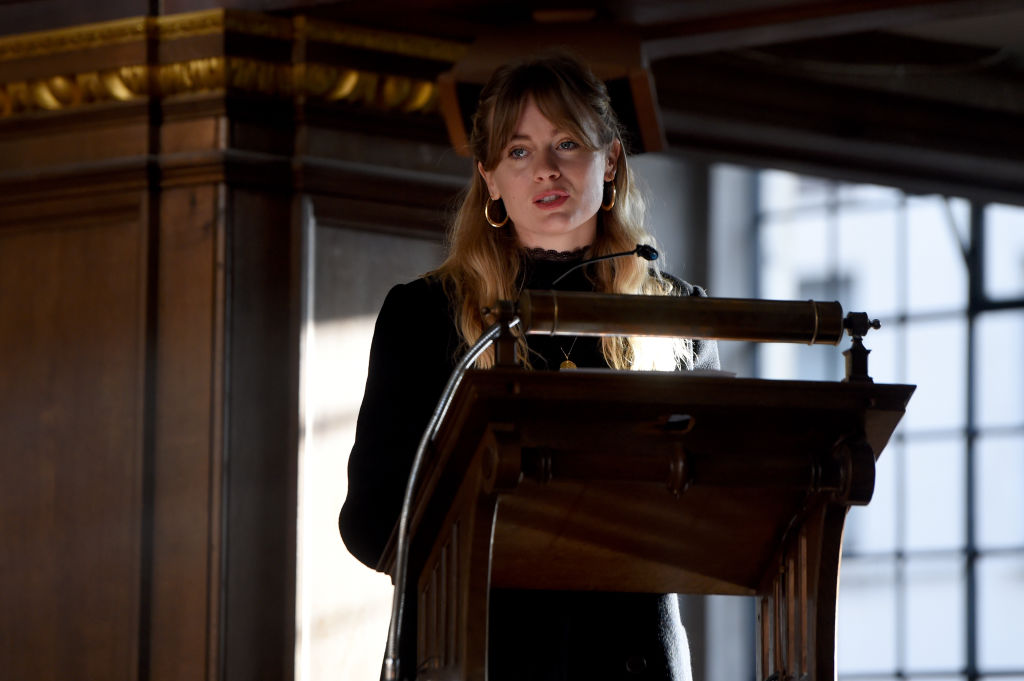
    In December, I took part in a concert celebrating Elvis Presley and the American idea of Christmas at St. Paul’s Knightsbridge for the Chelsea Pensioners Outreach Programme. I had to read after brother and sister Freddie and Emilia Fox – tough acts to follow. I read Helen Steiner Rice’s “A Christmas Poem”:

    For when I send a Christmas card
    that is addressed to you,
    It is because you're on the list
    that I'm indebted to.

    Feeling quite ill from the aforementioned sickness, I hoped I’d be able to get through my reading, and I did. Phew! After that, the Elvis tribute artist Rob Kingsley sang in a voice so close to the real Presley’s that it was uncanny. Then “Blue Suede Shoes” met Red Felt Coats after Elizabeth McGovern pulled the pensioners from their seats for a dance at the altar.

    Having parents and in-laws spread across four separate homes means clocking up the miles at Christmas as we travel across the country to see everyone. This year, we finally returned home on New Year’s Eve: exhausted, in bed by nine, only to be awoken by a petrified Budgie at the stroke of midnight. She hates fireworks. We saw in the new year comforting our little dog, afraid she’d have a heart attack, until the bangs stopped at 3 a.m. Perhaps we should have gone out after all.

    I tried to take on new projects last year, which I hope will bear fruit this year. I took a writing course in rhyme and meter to help me craft the short stories I’m writing. I also began a project with my sister, Isabella: a podcast called Lessons from Our Mothers which launches on UK Mother’s Day. It’s a series of conversations with people about maternal influence in their lives. So far, we’ve had wonderful discussions with guests such as Mishal Husain and Kate Winslet. As mothers ourselves now, it’s been useful for Isabella and me too.

    Last year will always be marked by sadness for our family, though. We’ve moved into 2025 without my sister Pandora, which has been unsettling and strange. She died last year following a long battle with cancer. There’s a fear that as the months roll by, people move on. But I hope her name comes up in more conversations and that people will be reminded of her. She’s still here in so many little things — her favorite songs, a phrase she always used to say (“You’re as mad as a goose”), or the way I approach decisions, imagining what she would have thought. On the one hand, the passing of time separates us further, but I take comfort in knowing that I will continue to carry her with me. She guides me in every aspect of my life — and always will.

    This article was originally published in The Spectator’s February 2025 World edition.

  • The rise of the child-free influencers

    The rise of the child-free influencers

    At around five weeks into my pregnancy my phone found out about it, and from that point on I was subjected to a barrage of social media content about how much children suck. The first was a video by a woman with the username @childfreemillennial, who filmed herself walking through the children’s clothing aisle at a supermarket. She paused, turned to the camera and gagged. I was so shocked at the sheer nastiness and so hormonal that I cried. According to @childfreemillennial, the most loving thing we can do for our children is to never have them — in this economy, in this society, in this climate.

    This woman was not a one-off. In the weeks that followed, I was plagued by posts from influencers goading and laughing at pregnant women and mothers. There were child-free therapists, child-free accountants, child-free authors and endless podcasts and gatherings and conferences. I began to watch these child-free influencers like a spectator sport.

    Maggie Dickens is a clinical counselor from America living in Portugal. She is one of the bigger “child-free by choice” influencers and thinks what we are seeing with declining fertility rates is a generational trend. “We have learned to not simply just do as we’re told,” she told me on the phone. “We were taught to have critical thinking, to have individual thought and to question the world.”

    The day I spoke to Maggie was the day that the World Health Organization announced that global fertility rates had crossed below the replacement level. I asked her if she felt somewhat responsible. “I grew up seeing the suffering in the world. Poverty was everywhere. I saw the commercials and was fed all this information about how there’s starving children, there’s domestic violence, childhood cancer. For me, the question was: why do we bring more people into this world? When we talk about the declining birth rate, we have to ask, why are we freaking out? Why are we panicking?”

    Maggie was a pioneer in the cultivation of an online community for the child-free. “It started back in 2012, but our community back then was not necessarily 100 percent child-free by choice,” she said. “It started with 12 of us on an online forum. We were everything from what I call a pre-parent, those that wanted to have kids someday, to fence-sitters, the ‘I’m not sure’” After spending a decade building the community, Maggie took it to Instagram. “A couple of friends came over to my house and said: ‘You think it’s so easy because you’ve been doing it for so long. You don’t want kids, you surround yourself with people who don’t want kids like it’s easy-peasy. Give a voice to it. Nobody knows about it.’ I think the child-free movement is gaining momentum, not because it’s new, but because we’re normalizing it. It’s not the spinster, the barren old lady who everyone’s afraid of. It’s not the broken woman, all of these horrible stereotypes that we’ve had for women in the past who didn’t have kids.”

    But normalizing childlessness doesn’t have to mean picking on mothers. When I announced my pregnancy to friends and family, the reaction was jarring. Sprinkled in with the congratulations and well-wishing were negative comments. Even friends in their mid- to late thirties expressed their own feelings of not being ready to have children, of concerns over financial instability or general anxiety about the whole thing. I can’t help but think that they, and all millennial women I know, have been tricked by people like Maggie on social media into thinking that child-rearing is harder, more expensive and less fun than it is.

    The prevalent theme among the child-free-by-choice influencers is anxiety. @childfreemillenial posts videos about her daily panic attacks. This is also true of the millennial women I know who want children but are concerned with “readiness.” Isn’t raising kids expensive? Time-consuming? Hard? The child-free influencers like to point to dirty nappies as a reason they would never have kids. But in the past 12 weeks of having a daughter, not once have I thought of changing a dirty nappy as hard or even unpleasant. Giving birth to my daughter was hard, and so was watching my husband’s face as he had to decide whether to stay by my side or go to the neonatal ICU with our daughter — a relative stranger — as soon as she was born. Parenting is hard, but it is self-infantilizing and offensive to think that wiping a bum is the most grinding part.

    A little while into my relationship with the online child-free community, one of the funnier influencers I had been following dropped a bombshell: Brittany Brantley was pregnant. She posted a photo of a positive test with the caption: “I’m so glad I didn’t get what I thought I wanted. The moment I saw the second pink line, I always knew I wanted to be a mom.” I raced to the comments and found things like “I’m so sorry you ruined your child-free life,” “I would off myself,” “You should have aborted,” “The earth isn’t a good place and that makes me not want to bring kids into it,” “I don’t want kids ever. I’m happy and calm without them.”

    On the phone to Brittany, I asked her how she felt at the backlash. “You have to understand that perspective,” she replied. “The belief that kids are a nuisance, that kids are a problem, that kids don’t belong in spaces — the people who think that are speaking from their own experience. The truth is that as kids, they felt like they weren’t allowed in spaces. They felt like a burden to the adults that they were around, and they felt rushed. That doesn’t necessarily mean that you’ll grow up not to have kids, but it definitely means it’s coloring your perspective.”

    Brittany gave birth a few weeks after I did, and we message weekly about our daughters, how hard life sometimes is with a newborn, and how glad we are that they are here. Like Brittany, I spent a large portion of my twenties thinking I would never have kids because of how much I would have to give up. But I took the same leap of faith that women of previous generations have done — and I find that though the world still seems scary and full of tragedies, it is undoubtedly better now that my daughter is in it.

  • Why I changed my mind on content warnings

    Why I changed my mind on content warnings

    As we sat down at the Royal Opera House in London to watch one of the Royal Ballet’s soloists perform Letter to Tchaikovsky, an announcement began. “Tchaikovsky is understood to have been a gay man, who was forced by the conventions of society to marry a woman,” explained an earnest female voice from off-stage. “The music, words and dance describe the pain and guilt he experienced as a closeted queer person… but like many others before and since, the fact that he was queer meant that he had to stay secret about who he really was… It is still illegal to be gay or queer in sixty-nine countries, and queer people continue to face discrimination or violence all over the world, including here in Britain.”

    As we bombard children with the world’s ills, is it any wonder that childhood anxiety is soaring?

    The audience didn’t seem hugely concerned by this news. They were, however, very bothered by who would get to sit on the limited number of beanbags at the front of the auditorium. The performance was part of a family event for small children, and a few parents did look a little perplexed as to why the announcement was necessary. At least we were spared the details of Tchaikovsky’s incestuous relationship with his own nephew, a concept possibly too advanced for even the most enlightened in London.

    Afterwards, I wrote to the Royal Opera House to find out if there had been a “content warning” that I might have missed. The ROH is not typically shy about these: ticket holders for Donizetti’s Lucia di Lammermoor were duly warned about the opera’s graphic depictions of sex and violence.

    The reply I received directed me to the QR codes, which — had I spotted and chosen to use them — would have alerted me to the show’s message that “Everyone should be free to live openly wherever they are in the world.” “We will ensure going forwards that there is a clearer summary of the content themes in each piece, so parents and children can be better informed to choose whether particular events are right for them,” I was told.

    Navigating modern parenthood is tricky, especially when trying not to come across as a reactionary pearl-clutcher. Yes, yes, of course it is wrong that it is still illegal to be gay in so many countries. I imagine every adult member of the audience felt the same. We’re the sort of smug, self-consciously liberal types who choose the Royal Opera House over church on a Sunday morning. But had I known my four-year-old daughter was about to be introduced to queer persecution, I might have suggested we head to the puppet-making stand instead.

    Was I being homophobic? I don’t think so. It’s not so much the subject matter that unsettled me as the fact that a political point was being shoehorned into a performance aimed at infants. At some point, my daughter will inevitably learn about the grim realities of the world: how Iran executes gay teenagers, say, or how in Saudi Arabia, gay men face lashings and imprisonment. When she does, I imagine she’ll want to do something about it, even if the obvious truth is she can’t.

    It’s that sense of agency that seems important to try to preserve for children. We should avoid burdening them with serious problems they feel powerless to fix. Yet, as we bombard them from increasingly young ages with the world’s ills, from racism and slavery to genocide and human rights abuses, is it any wonder that childhood anxiety is soaring? Greta Thunberg’s rallying cry for children to solve climate change is, for all its sincerity, as much a fairy tale as anything you might find by Hans Christian Andersen. In trying to raise activist warriors, we’ve produced anxious worriers.

    So I have become that neurotic mother, firing off letters about content warnings, desperately trying to shield my child from the harshness of the world. I don’t agree with content warnings in general, so why am I writing to the ROH asking about theirs? Get a grip, Lara. Don’t be that person.

    But then a week later, at a friend’s house, my daughter picks a book from the Little People, Big Dreams series for me to read to her. It is about Princess Diana — a story that will, I suppose, teach her that not all princesses live happily ever after. We begin to read. “Whenever she felt alone, [Diana] sought relief by eating all the cakes she could find in the royal kitchen. But that sweet feeling of comfort didn’t last long. Once it was gone, she would try to get rid of all the food she had eaten by making herself sick… Even though her life seemed to be taken from the pages of a fairy tale, she soon realized that the prince’s heart belonged to someone else. Over time that sadness grew into an eating disorder called b…u…l…i…”

    I slam the book shut. I can’t do it. I don’t want my daughter to know that word, not yet, not for as long as I can possibly prevent her from learning it. I feel angry at the publishers for thinking an eating disorder is an appropriate detail to include in a book aimed at young girls. Could they not have brushed over it? I note the book avoids talking about Diana’s death but three pages are devoted to her eating disorder. I suggest we choose something else instead. Roald Dahl? Let’s find Charlie and the Chocolate Factory, the unedited version, with fat Augustus Gloop, the little brute.

    I immediately revise my position on content warnings, suddenly feeling hardline on the matter. The Princess Diana book should have had a very clear content warning on the front cover and yes, maybe Letter to Tchaikovsky should have had one too. I don’t want to feel ambushed by activism.

    When I later check the ROH website, I see that the next Family Sunday performance of Letter to Tchaikovsky now comes with a more detailed description. “Tchaikovsky composed some of the world’s most loved fairytale ballets. In his life, however, he found it challenging to find his ‘happy ever after’ because of his love for another man.” I may have triggered a content warning, and I am not sure how I feel about it. All I can conclude is that I do not feel cut out for the confusing dance that is modern parenthood — but I suspect I am not the only one.

    What are Spectator columnists highlights — and lowlights — of the year? Rod Liddle, Lionel Shriver, Matthew Parris and Mary Wakefield join Lara, and William Moore, on the Christmas special of The Edition podcast to discuss:

    https://audioboom.com/posts/8622930-christmas-special-2024-with-rod-liddle-lionel-shriver-matthew-parris-and-mary-wakefield
  • Road-tripping with Wittgenstein

    Road-tripping with Wittgenstein

    North Carolina

    The ancients used the sun and moon to measure time, but modern man has a more exact instrument at his disposal: the odometer. It has ticked up a thousand-plus miles, a sure sign the 2024 holiday season has just ended. The children are all struggling in the backseat — against one another, their own bladders and the nylon straps the Car Seat Cartel has foisted upon them — and are thus unable to see the dash’s mileage ticker, as well as the incriminating orange “service reminder” messages your wife is pretending to ignore. When you read aloud the “Welcome to North Carolina” sign, your most intelligent child says, “Are we still in the United States?”You make a mental note to increase the 401(k) contribution for you will be on your own for retirement; then you read the odometer and remember that you eschewed a 401(k) to pay for the roof rack.

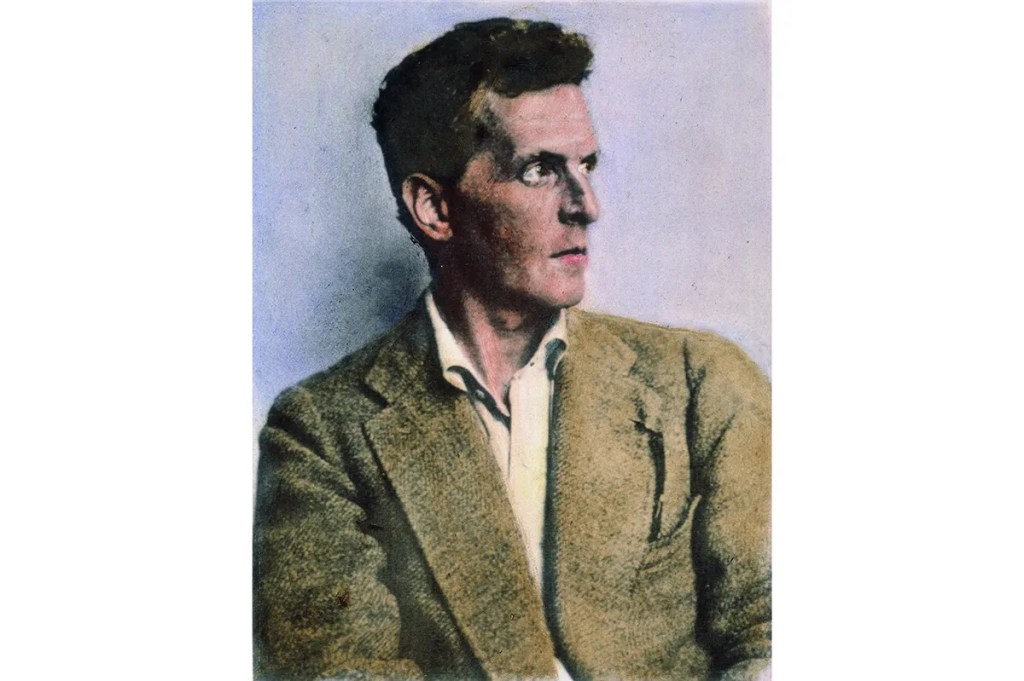
    In his Philosophy of Psychology, Wittgenstein introduces the concept of “aspect blindness,” in which a person fails to understand the deeper meaning behind what is right in front of them. “Could there be human beings lacking the ability to see something as something — and what would that be like?” he asks. The most brilliant philosopher of the twentieth century then spends several pages imagining what that would be like. You need only to turn to the backseat and contemplate those seven words: “Are we still in the United States?”

    Of course we are. This is I-95, the most American of roadways. Look there, you tell your child, a blue sign for fried chicken delivered quickly. And over there a billboard for a motorcycle accident attorney looking formidable and genuine in his leather jacket. This is a far cry from Virginia where the motorcycle accident attorney looks formidable and genuine in his leather vest, and the fried chicken logo is red.

    And it dawns on you that Wittgenstein, childless though he was, would be sympathetic to the plight of the twenty-first century father trying to help children navigate a world that is impatient with the aspect blind, yet insistent on erasing all demarcations that would help them learn to see something as something.

    Prior generations of children grew up with definitive signs of when they had entered an adult space. Their senses told them so. They could look around the restaurant and see white tablecloths and formal dress. They could smell the aroma of tobacco coming from the den and know that boring discussions of tax rates and lawn care were taking place. They could feel the weight of their mother’s hand on their backside and know they should retreat outside to the other children.

    Children today lack such tell-tale signs. The dress and décor of patrons at a TGI Fridays are no different than that of a Zagat-rated restaurant; my daughters are the only people in either establishment not wearing yoga pants or glorified pajamas. We should forgive a child for spying a dog and giant Jenga blocks in the eatery and discerning that it is not a serious place or recognize that a public green is a place where children may do cartwheels, even if a grown man sees it as an ideal reading spot. The only way to discern an adult-space from that of freedom is the hissing that arises after the kids have run afoul of etiquette.

    Our egalitarian age eliminated the high-low distinction to free adults from neckties and social obligations that did not jibe with their self-conceit. The result is a mushy middle culture that has grown more childish and yet childfree. Manners may have been relaxed, but etiquette will always be with us, and the burden for instilling in our children ever more nebulous rules of our cultural language falls upon parents. It is a language game that Wittgenstein would recognize as rigged.

    The infantilization of America is not unlike I-95, where the only sign anything has changed is the odometer that is not visible to the backseat. There is an easy fix, one that a startling number of parents opt for out of social pressure. The adults who have commandeered public spaces want to see your child become an iPad drone, seen but too distracted to be heard. They are no doubt aware of the brain rot that accompanies the screen. They do not care, for it is not their child. It is your job as a father to opt out of a game designed to sacrifice your child’s wellbeing so Anastacia and her girlfriends can gab about the latest developments on the reality show they’ve been binge-watching on their own devices.

    iPads have their place — on the back of the passenger headrest during interstate Christmas travel — but they should never be mistaken for tools of socialization. If modern etiquette dictates that children must become automata, then damn etiquette. Ignore the hissing. The best tool you can provide your child is exposure to adult spaces with clear forewarnings about how to behave. The best tool you can provide an entitled man-child is to help him resolve his own aspect blindness, in which he sees children as non-humans, dogs as children, oversized Jenga as a worthy adult activity, and nothing as something.

    This article was originally published in The Spectator’s January 2025 World edition.

  • My parental lobotomy

    My parental lobotomy

    On August 25, 1953, neurosurgeon William Beecher Scoville drilled holes into the skull of a young epileptic named Henry Gustav Molaison and vacuumed out part of his brain. In August 2023, Mrs. McMorris watched her husband turn his hat backward while teaching her daughters to fish — and then she drank wine.

    Modern man tends to think “botched lobectomy” is redundant, though the frequency and severity of Molaison’s seizures receded. Picture the neurosurgeon, contemplating the forthcoming medical association medals, the ceremonies he would keynote as the Jonas Salk of drilling holes into skulls, the Clara Barton of vacuuming-out brain tissue. Mr. Molaison left the operating room able to recount his childhood crush but could not tell you whether his parents were alive.

    Over the next six decades Patient H.M., as he came to be known, became a human guinea pig. His inability to form new memories altered our understanding of the brain.

    None of the literature I have read has linked Dr. Scoville’s groundbreaking brain vacuuming to the propagation of our species, but in my experience anterograde amnesia is just as essential to the creation of new life as wine. There is no other way to explain why mothers so easily forget the trauma of childbirth, nor for that matter why fathers are surprised anew by forty consecutive weeks of hormonal earthquakes. “This time will be different!” we say with each pregnancy test.

    After a certain number of children, people expect a heightened level of expertise, particularly if you are writing a lifestyle column for which the sole qualifications are: “has kids; male.” I have failed this sort of test before. When my wife married the oldest of nine children, she assumed he would be able to answer queries about vital milestones in infant development. I didn’t mean to mislead her. I truly have been changing diapers since the age of ten, but you develop other skills when you’re barraged by newborns from the age of two to seventeen: namely, the ability to sleep through the night no matter how loud a baby cries.

    After #1 was born, Mrs. McMorris was just as frustrated as Dr. Scoville must have been about his unfortunate breakthrough. But now that #6 is here, she too has fallen victim to anterograde amnesia. Thirteen years of sleep deprivation will do that. Here is a short list of the things we forget each go-round:

    • The age at which babies outgrow Size 1 diapers (however old she was Tuesday)
    • Every baby is born a beer snob. Instead of boring you with a disquisition about how a bottle does not allow the hops to breathe, she shrieks in your face to demonstrate her preference for tap, which is altogether a more pleasant experience than spending time with beer snobs
    • The age at which babies experience sleep regression (the day they start blowing out Size 1 diapers)
    • To retrieve the older children from school

    Mr. Molaison may have lost his ability to form new memories, but his intelligence remained. He passed the time in hospital wards filling out crossword puzzles and was by all accounts good at them so long as clues predated 1953 — back when the Braves played in Boston, John F. Kennedy was a congressman and the dolorimeter was an acceptable medical instrument.

    Dolorimeters delivered concentrated heat rays to a patient’s skin. They were designed to measure pain tolerance. Medical researchers of the day may have been fine with questionable brain surgery, but they believed enough in informed consent to allow patients to self-administer the death ray and withdraw it when they felt discomfort. The tougher patients could withstand a few seconds before throwing the instrument across the room. The problem is Molaison never budged even as researchers maxxed out the temperature. By day’s end he had no memory of holding the device.

    And here is where the parent-as-infamous-amnesiac metaphor falls apart. For the pains associated with childrearing are real. The diapers need changing, the sheets need sterilizing, the cries need soothing — at least until month five when sleep training begins, a milestone as unforgettable to dad as Molaison’s childhood crush was to Patient H.M. You may grow accustomed to the discomfort of nature’s dolorimeters, but you can never grow numb to them. A funny thing happens as you clutch those self-administered death rays. All the particulars of discomfort are lost amid the milestones that matter: the first step, the first word, the first fish they catch while your wife is drinking wine. You adjust your hat. “This time it will be different.”

    This article was originally published in The Spectator’s October 2024 World edition.

  • Waste not want not

    Waste not want not

    Alexandria, Virginia 

    I sit on bathtub’s edge, back spasming, left leg numb, inner cheek bitten raw — pain that must be endured if I am to triumph over fatherly futility. #5 is only twenty months old but understands that in a household of eight people the toilet is the optimal, if not the only, place for contemplation. I am reflecting, too, on an event that occurred three years earlier, one that will be with me on my deathbed. I was in a rush for reasons I cannot recall as #4 sat lost in thought or perhaps the fiftieth reading of Yertle the Turtle. I grew frustrated. “Go pee! Go poo!” She looked up at me and said with the calm gravity befitting a statesman: “Go Mets.” Only then did she poop.

    John Harington, godson to the spinster usurper Elizabeth I, is most widely known today for his clever meditation on betrayal: “Treason doth never prosper: what’s the reason? / For if it prosper, none dare call it treason.” He does not get enough credit for inventing the modern toilet. Harington was consumed by the idea that foul odors contributed to the outbreak of “the measels, the hemorhoids, the small poxe” and, of course, the Plague itself, as he outlined in A New Discourse of a Stale Subject, called the Metamorphosis of Ajax. It was published the same year Shakespeare penned Romeo and Juliet — even patent filings were literary treatises in the Elizabethan era. The toilet was to be a gift to his royal godmother. She banished him instead. The invention was too noisy; the accompanying book contained one too many digs at her court. The first patent for a flush toilet would not be granted until 1775.

    “The master of waste and the warden of souls are one and the same,” Dominique LaPorte tells us in History of Shit. The French psychoanalyst was on to something: if we are to maintain the patriarchy, dads must seize control of the means of production of feces. Aside from kettle-tossing babe to ceiling’s edge, potty training is the only practical thing a father can do during the opening years of a child’s life. Mother is awash in infant DNA, her bosom teems with lifegiving milk, her ear is attuned to the particular pitch of the babe’s cry, but she is wholly lacking in buddy-cop literacy.

    Lethal Weapon 2 is the only instance in which Hollywood avarice and the obsessive quest for franchising served the greater good. If Shane Black had had his way the sequel would be remembered for Mel Gibson’s sacrificial death as a purgative forest fire raged about him. The viewer would have been in tears as Danny Glover cradled his partner, grief intermingled with the joyful tears of redemption. Only Black could elevate the genre’s trademark philia to agape. The studio sent it back for a rewrite. Black quit. We got a toilet bomb instead.

    Any child can transition out of diapers in a weekend so long as Dad commits to the Lethal Weapon 2 method of potty training. The babe is placed on the toilet seat regardless of need and will remain there for the duration of the weekend. Mealtimes are dictated according to the latest bowel movement. Dad will find himself reading aloud the same children’s books and, of course, the latest edition of The Spectator World. “He’s been on there eighteen, twenty hours, he can’t walk, let alone hop off the can,” Gibson’s Riggs warns the bomb squad about his trapped partner at one point; you will repeat this line to any child who dares darken the threshold, curious as to why Dad is yelling, “It’s your ass, Cochise.”

    By Monday, you will have a potty-trained child and a grateful wife. The nighttime accidents may recur, but that can be solved with the Loaded Weapon 1 method of making the child sleep in the nude. A few nights spent tossing and turning in soaked sheets, rather than the cozy confines of a diaper, will teach the babe the value of continence even more effectively than if you adopted Harington as bedtime reading: “To keepe your houses sweete, clense privie vaultes / To keepe your souls as sweete, mend privie faults.”

    Which is just a florid way of saying: go Mets.

    This article was originally published in The Spectator’s August 2024 World edition.

  • A history of the LGBTQ+ aspects of the Boy Scout movement

    A history of the LGBTQ+ aspects of the Boy Scout movement

    Today, gay activism may seem synonymous with incompetent nonprofit employees shutting down traffic to demand you use ze/zir pronouns because made-up pronouns, and only made-up pronouns, will fix global warming. But once upon a time, gays understood strategy better than nearly any other special-interest group in America. They were the best in the game.

    Sarah Schulman’s masterful AIDS history, Let the Record Show: A Political History of ACT Up New York1987-1993, details how the HIV activist group ACT UP took a good-cop/bad-cop approach to fighting for life-saving medication. While radical homosexuals lay down pretending to die in the middle of churches, passed out mocked-up New York Crimes pamphlets outside the Times building and performed other public stunts, a group of gay, often white, corporate publicists met with the same officials ACT UP was protesting. They’d call Times reporters and give them information for their stories. They’d meet in offices with DC fame whores (see: Dr. Anthony Fauci) and negotiate with them. As Schulman writes:

    ACT UP was probably the first movement of deeply oppressed people whose lives were at stake to have included such a large group of designers, advertising professionals, studio artists, marketers and publicists well versed in the visual language of branding and experienced in the selling of ideas, fresh out of art school and with relationships to institutions of cultural influence.

    Gays were powerful in the anti-AIDS fight because they understood the arts and corporate branding. Who better to negotiate with the powerful than some of America’s best flacks? (After all, PR is essentially professional schmoozing, image-making and gossiping; it’s a gay man’s profession.) The backdoor manipulation was just as vital as the radical outdoor performance art.

    In other words, ACT UP developed a strategy designed to accomplish a clear goal: to convince powerful institutions to develop and deliver lifesaving medications to dying gay men.

    It’s a blessing to live as a gay man in Truvada’s America, but recent gay activists’ cancellation attempts, preaching about microaggressions and insistence on drugging teens en masse with life-altering puberty blockers have aggravated the general public. According to CNN’s Nicole Chavez, the nonprofit PRRI’s 2024 study found acceptance of gay rights has decreased. “Last year, 76 percent of adults said they supported those policies, down from 80 percent in 2022,” Chavez writes. But who can blame them when groups like the Human Rights Campaign have abandoned common-sense strategy for sloganeering that makes HRC volunteers feel good but alienates average Americans? Who cares about accomplishing goals when stoking fears of homophobia and transphobia make you millions of dollars in donations? No money in a cure.

    It can be deeply depressing to be a concerned gay man, when you see gay institutions driving people off a cliff, all the while being the most annoying activists in America. (I’m a gold star gay, and even I can find gay activists annoying, so I can only imagine how my straight Republican relatives feel.) So in this environment it was a joy to read journalist and former Boy Scout Mike De Socio’s Morally Straight: How the Fight for LGBTQ+ Inclusion Changed the Boy Scouts — and America, detailing how forty years of gay activism diversified the Boy Scouts for the better.

    De Socio’s history covers the era of rotary phones to that of Google Hangouts. He divides it by looking at three different types of courts, where gay Boy Scouts faced off against homophobes: literal judicial courts, the court of public opinion and Scouting’s own court of honor. He details the strategies different groups deployed in their mission to let gay kids, and then gay parents, participate in Boy Scouts of America.

    The key lawsuit was James Dale’s suit against the group. In 1990, the Boy Scouts of America expelled him as a Scoutmaster for his homosexuality, even though the Scouts’ “moral code” didn’t bar gay male activities. With the help of the legal aid group Lambda, he filed a lawsuit. By 2000 it had gone all the way to the Supreme Court. De Socio recounts debates between Justices Breyer and Scalia in a riveting courtroom chapter which he narrates suspensefully.

    The results were grim. Dale lost. So the gay Scouts pivoted to the court where gays often fare best, the court of public opinion. In 2012, when the Scouts evicted lesbian mom Jennifer Tyrrell from her position as a den leader, other lesbian moms and their children united against the Scouts. “I don’t want the kids to think that this is OK. Because it’s not,” said Tyrrell, and the episode ignited a firestorm resulting in the foundation of Scouts for Equality, which wages a public battle to let gay parents be active in the Boy Scouts. As with ACT UP, lesbians play a pivotal role in Scouts for Equality, pushing back against homophobic, outdated policies.

    De Socio details their collaboration with a different iteration of the nonprofit advocacy group GLAAD. Instead of issuing fatwas about falsely accused transphobes like Jesse Singal, GLAAD helped pair Scouts for Equality with journalists, for example by partnering petition-signers with reporters for one-on-one interviews. It’s simple, effective, organized media relations. The Boy Scouts eventually reversed course, letting gay boys serve as Scouts.

    In the wake of this success, Scouts for Equality targeted the ban on gay parents’ participation in Scouting, eventually prevailing because they’re practical. When they see that certain tactics don’t work, they pivot. “The plan, then, would shift Scouts for Equality away from the traditional campaign tactics, toward a volunteer-driven, chapter-based model,” De Socio writes. Scouts for Equality and their partners aren’t about fundraising, raising public fear, or attacking their opponents. They are just about letting gays participate in the age-old American tradition of scouting.

    And Scouts for Equality succeeded in reversing the ban on gay parent participation. In the wake of their success, they first floundered, then found another cause: trans Boy Scouts. Instead of signing up to push for puberty blockers or other unpopular policies that would spur backlash, though, they mostly focused on letting trans kids be, well, kids. They fought for the simple goal of letting trans boys participate in the Boy Scouts. A simple, reasonable goal, and a radical feat in today’s atmosphere; a decade or so ago, it seems, gays were far more logical and, as the book shows, far more effective in reversing homophobic policies.

    Overhanging the entire history, though, is the organization’s pedophile problem, which led it to file for bankruptcy in 2020 after sexual assault lawsuits pushed it toward insolvency. John Halsey, a BSA member for sixty years, tells De Socio how for years the Boy Scouts scapegoated gay men, painting them as pedophiles, to avoid taking responsibility for letting Scouts get molested. “They decided the way to create a scapegoat was to create division within the membership by placing blame on the gay community, which has nothing to do with the problem at all,” Halsey says. It’s disturbing but predictable.

    The gay Scouts overcame this by taking an Andrew Sullivan approach and simply acting normal. They weren’t freaks. They were just other Scouts, other Americans who wanted to camp and explore and teach kids about honor and reliability.

    De Socio goes into inordinate depth on the internal politics of the Boy Scouts, and it can be difficult to keep track of every proud lesbian mom and gay Scout in the book. I could see a critique that his history warrants a magazine article, not a book.

    However, you can learn as much about America from the Boy Scouts or other niche subcultures as you can from business or government. Studies of American culture can be pretty dumb — do we need college courses about Taylor Swift? But the Boy Scouts are a 114-year-old organization, as American as apple pie. And these Scouts — along with their families and other adult activists — actually accomplished their goals. The same cannot be said for many adult, pushing-forty, millennial gay activists issuing GLAAD fatwas.

    Thankfully, we are more than millennials blocking traffic on a bridge, screaming about pronouns. Gays can still be practical. Gays can still merge common sense with artistic sensibility. Apparently, those gays are just at the Boy Scouts. Maybe we should let the Scouts take over the HRC?

    This article was originally published in The Spectator’s June 2024 World edition.