Tag: Drink

  • Charleston notebook: following an English country band through the Holy City

    Charleston notebook: following an English country band through the Holy City

    My impression of Charleston, a city I’ve been visiting since my late teens, is that it is oddly more European than American. Real Charlestonians, they say, have more in common with their cousins across the pond than with their compatriots in America’s big cities. I’ve found that to be true.

    I’m here for the birthday of one such real Charlestonian, my friend Toto. A former White House staffer, Toto now works in the private sector, but he is destined for a return to politics – his great grand uncle was an accomplished South Carolina statesman and Toto, as he puts it, “feels a deep sense of purpose and mission to ensure South Carolina continues to be the greatest state in union”.

    As it happens, a dozen European friends are also in town, following an English country band called Alan Power and the Take Twos. Hailing from Frome, Somerset, Alan and the band, known to friends as The Cowboys, have made a name for themselves by commuting to London every Thursday and Friday to play the city’s hottest venue, the Fat Badger. Dressed in Stetsons, boots and western suits, they blaze through country classics and some original numbers for an adoring fanbase that includes Margot Robbie and Olivia Rodrigo. Charleston is the first stop on their debut tour of the American South – what the boys in tow are calling “the Redneck Riviera Tour.” They won’t come across many rednecks in Charleston or their next stop Savannah, but they are sure to run into some trouble further south. 

    Toto’s celebrations begin with cake and champagne at an antebellum mansion in Charleston’s historic quarter, known as South of Broad – a delightful maze of cobblestone streets and alleyways hung with Spanish moss and magnolia. Sometimes called the Holy City for the spires that dot its skyline, “Charles Town” (named after the “Merry Monarch,” King Charles II) is also famed for its unholier elements and consistently ranks among America’s drunkest cities. The birthday bar crawl begins at O’Malley’s and ends at The Blind Tiger, with one member of the group being repeatedly ejected for severe inebriation. Having myself made a promising start to the evening by striking up a conversation with four charming College of Charleston seniors, I end my night alone in the parking lot of Southern Belle, a strip club north of town, where, graciously, they don’t serve alcohol past 2 a.m.

    “Twixt cup and lip is many a slip” goes the old English proverb. Well, for whatever reason, the band’s first gig the following evening is cancelled at the last minute. But thanks to Toto’s friend Beau, we have a backup venue – his backyard. The invite goes out far and wide: members of the television show Southern Charm, every college girl met the night before, some politicos – even a senior cabinet member. But the response is lukewarm, and in the end, my friend resorts to sending out a sort of severe weather alert message saying BRUNO MARS DOING A SURPRISE SET IN SOMEONE’S BACKYARD. This does the trick with the college girls, though not with the cabinet member.

    Neighbors curious about the commotion trickle in as the Cowboys launch into “Dead Flowers” and “Angel From Montgomery.” After thirty minutes, the cops arrive and politely ask them to go acoustic. A crowd of about 50 now huddles around the band making requests, “Country Roads!” “Wagon Wheel!” Elderly couples two-step under a sunken moon. A Charleston dame volunteers her house for the after-party with bottomless supplies of bourbon and cigarettes, proving Southern hospitality is no myth. 

    The next day we lunch at Leon’s, the city’s best spot for fried chicken. Here I’m introduced by my friend Byron to the michelada, a spicy beer cocktail which does all the heavy lifting of a Bloody Mary without feeling like a meal. 
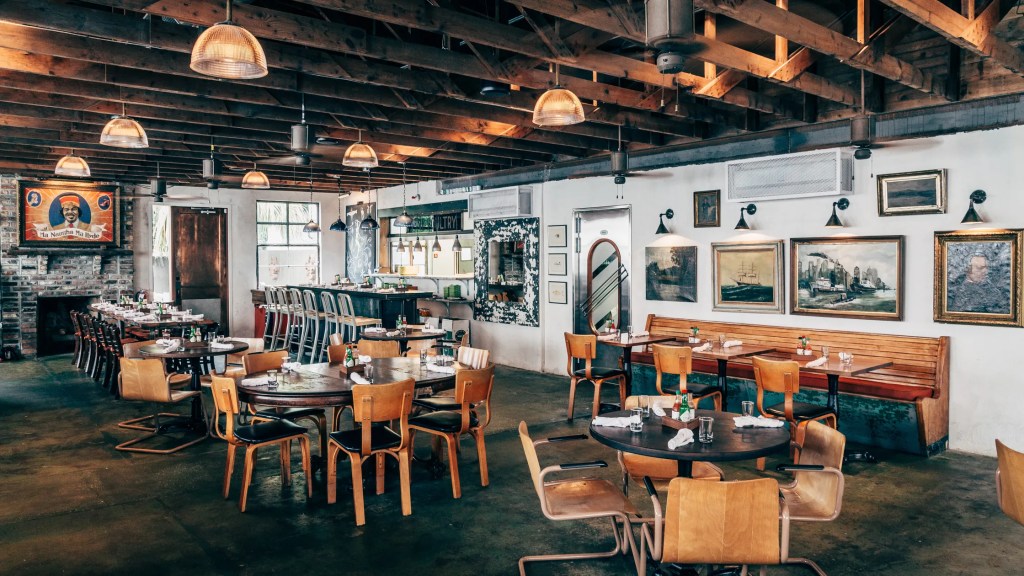
    Leon’s Fine Poultry & Oyster Shop. Charleston’s best spot for fried chicken (Peter Frank Edwards)

    That evening, the power cuts while we’re drinking at Henry’s, a favorite college tavern. Candles are lit; beers are on the house; the mood is conspiratorial. This is meant to be an “off-night” for the band but a guitar appears and someone suggests Burns Alley, a watering hole down an alleyway on Meeting Street. There are five people at the bar when we walk in. The bartender, bemused by cowboys with English accents, says, “Sure you can play, just make sure you’re done by 2 a.m.” Within half an hour, the place is heaving.

    On Sunday the boys skip town, crossing the Ashley River in a convoy of cars and pickup trucks emblazoned with “Socialism Sucks” stickers. Some don MAGA hats for the full effect. By the time they cross into Georgia, news has already reached Savannah that British are coming. 

    I nurse my hangover at Sunday lunch with Toto’s family at the Yacht Club, before returning to my hotel, the Spectator Hotel (can you believe it?), to pack my bags. The Spectator Hotel is a five-star boutique hotel located right in the heart of town, steps from the French Quarter. It prides itself as the only hotel in the state with butlers. My butler, Chuck, is a real charm, an Anglophile who speaks wistfully of his youth in the “old country.” The hotel’s prohibition style bar is among the city’s best places to sip a cocktail.
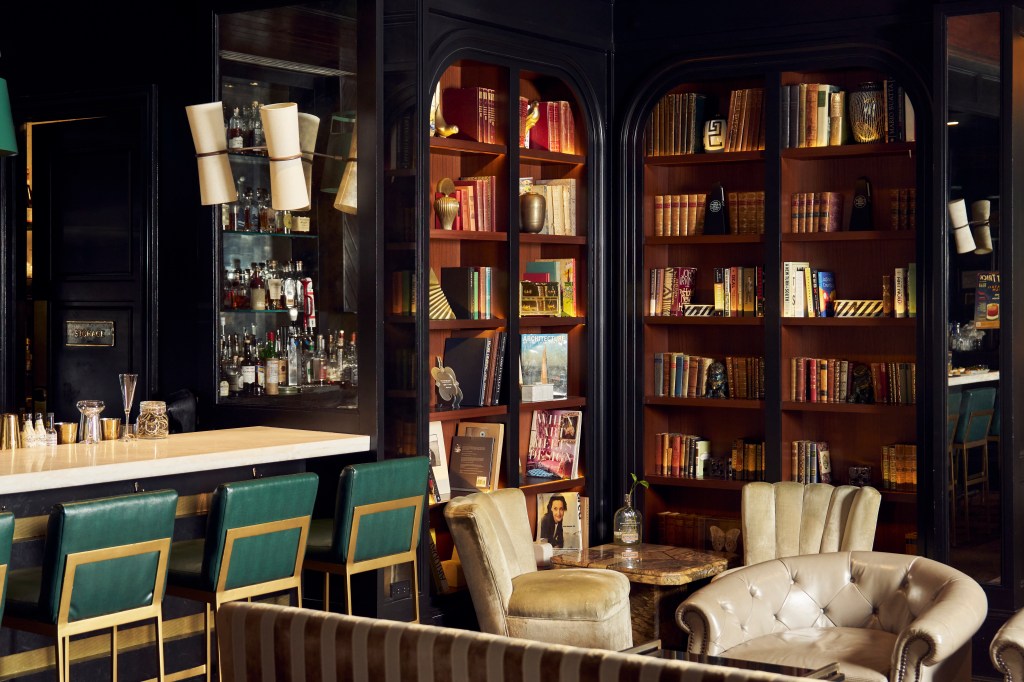
    The twenties inspired Speakeasy Bar at The Spectator Hotel, Charleston (The Spectator Hotel)

    I return to New York as the boys plough South; Spinal Tap fast becoming Sherman’s March. Back at my desk in Manhattan, a shell of my former self, I live for updates from the road, like this one from Byron:

    Destin, Florida, once fancied itself the “world’s luckiest fishing village.” What began, in the early 20th century, as a genteel fishing outpost has mutated – somewhere between Reagan and Kid Rock – into the so-called Redneck Riviera. It’s Florida as imagined by someone who thought “elegant” meant a ceiling fan and frozen daiquiri. There’s something almost tragic: the Edenic landscape debased by its own popularity. Still, there’s a democratic beauty to Destin’s descent. It’s Florida with the filters off – part paradise, part parking lot, and wholly American in its refusal to be embarrassed by the clash.

    “O MAGNET-SOUTH! O glistening perfumed South!” cried Walt Whitman in Leaves of Grass. “O to be a Virginian! O to be a Carolinian!” Here’s hoping Toto accomplishes his mission and South Carolina continues to be the greatest state in the union.

    Rooms at The Spectator Hotel begin at $269. For more information, visit: www.thespectatorhotel.com

  • How America fell in love with the G&T

    How America fell in love with the G&T

    The gin and tonic has had quite the journey. From humble beginnings protecting British explorers against malaria, it has become the country’s favorite cocktail. Abroad, Italians grown tired of spritzes now opt for it come aperitivo hour. The Japanese bow before it. The world stumbles after it. Yet there is one land the G&T has been slow to conquer: America, the land of vodka sodas and zero-calorie seltzers.

    In recent years that has begun to change. While overall consumption of spirits is down, sales of gin in the US are on the rise and expected to grow some 6.5 percent a year for the rest of this decade. Craft distilleries are in the vanguard: in California, gin is infused with citrus and coastal herbs. In the South, it might be perfumed with watermelon rind or magnolia blossoms. And while US liquor stores still devote more space to vodka and whiskey than anything else, gin is getting more of a look-in. Whole Foods stocks cans of ready-to-drink Tanqueray gin and tonic. After all, there’s only so many shots of kombucha one can stomach.

    As youngsters turn away from alcohol and toward their smartphones, those still drinking increasingly look for smaller quantities of better-quality alcohol. Slamming shots is out; “mindful drinking,” low-ABV tipples and “savoring the mouthfeel” are in. Bright young things have discovered that the G&T looks chic without adding to the waistline. In a social media age, its “old money” good looks are important. It is certainly more photogenic than a whiskey and Coke.

    It helps that the G&T is so easy to make: during the pandemic, we saw the rise of home bartending. Many Americans discovered they could make a better G&T at home than they’d ever got from a harassed Manhattan bartender. You can dress it up with rosemary sprigs or a cucumber slice – but you don’t have to. All you really need is a highball glass and a slice of lemon or lime, and you’ve got something that looks suitably sophisticated.

    But the G&T’s rise is about culture, not just calories or convenience. Gin has never occupied the same place in the American psyche as other cocktails. Hemingway drank his way across the States, from Michigan trout streams to Florida sunsets, but he was a man of daiquiris, rum and whiskey, rather than the gin and tonic. Meanwhile, Don Draper may have toyed with a G&T while lounging in a well-cut Brooks Brothers suit on a summer afternoon, but Mad Men’s soul was really soaked in martinis and old fashioneds. It is gin’s foreignness that creates the G&T’s appeal today. The biggest-selling gin brands in the US are British – Gordon’s, Tanqueray and Bombay Sapphire. And in an era where everything must be artisanal, sustainable and storied, the G&T arrives pre-packaged with a sense of history and exoticism. Once a form of medicine, soaked in Empire, gin is a drink with a grand story. Gin’s curious-sounding botanicals create a sense of sophistication. “Juniper, coriander seed and angelica root have the reassuring ring of Old World complexity and Continental charm.”

    Americans import European drinks – and drinking rituals. The aperitivo hour was once alien; then suddenly every rooftop bar in New York was a sea of Aperol spritzes. Never mind that Europe today is economically stagnant and politically fractious; culturally, it remains unimpeachable. To sip a G&T on a Brooklyn terrace is to feel oh so suave, to be in touching distance of London.

    Nostalgia for the aristocratic drawing room may have helped leaven the G&T moment. The real-life Downton Abbey – Highclere Castle in Hampshire, England – produces its own gin, which it sells across the US. Adam von Gootkin, who co-founded the brand alongside the 8th Earl of Carnarvon (whose family seat is Highclere), told me: “American palates are rediscovering the elegance of gin. People want story, terroir and craftsmanship. The gin and tonic is the revenge of the classics. For too long, we let neon drinks and novelty shots steal the spotlight. Now, people want authenticity – and you can’t fake that with food coloring.”

    Inevitably, celebrities are getting in on the act. Ryan Reynolds has Aviation Gin. Margot Robbie – who has confessed that she used to stash vanilla rooibos teabags in her handbag to rescue bad G&Ts at London nightclubs – is behind Papa Salt Coastal Gin.

    Perhaps tonic will be the next component to get the celeb treatment: the market for premium bottled mixers is booming. The British brand Fever-Tree is doing spectacularly well in the US. It now holds the pole position for both tonic water and ginger beer. Not bad in a country with a long-standing attachment to soda from a gun.

    America will inevitably make the G&T its own. Espressos were for Italians, then Starbucks came along. Sushi went from Japanese delicacy to everyday LA lunch. The G&T may never dethrone the vodka soda or the bourbon old fashioned but a drink that’s journeyed from the balmy terraces of the British Raj to Brooklyn will take a fair bit of stopping. Downton’s preferred drink is coming downtown.

    This article was originally published in The Spectator’s November 24, 2025 World edition.

  • Cheers to corkscrews!

    Cheers to corkscrews!

    For the first 50 years of the corked bottle, there was no easy way to get into it. The combination of cork and a strong glass bottle came together around 1630, but the first mention of a device to open the bloody thing wasn’t until 1681. Cavalier get-togethers must have resembled the teenage parties I attended, with everyone desperately trying to open bottles using keys, pens, knives etc. Or using that technique where you bang the bottle against a wall with the heel of a shoe. Halcyon days. More likely the Cavaliers would have just taken the top off cleanly with a swift blow from a saber.

    Early devices for extracting corks were called “bottle screws.” According to wine writer Hugh Johnson, the word “corkscrew” was first used in 1720. From there, this handy little piece of equipment has conquered the world, from early versions which were simply a piece of metal with a wooden handle to the full nerdery of the $130 Screwpull – beloved by wine bores of a certain vintage. The most common one when I was taking my first steps as a wine drinker was the metal man with his hands up, which usually just drilled a hole in the cork rather than removing it. As someone who has opened thousands of bottles of wine, I can safely say that the best corkscrew is a good quality waiter’s friend. I never leave home without one.

    If you want to see the sheer imagination and thought humans have put in to removing a bit of tree bark from a glass receptacle, I’d highly recommend visiting the corkscrew museum (yes, there really is one, I literally have the T-shirt) at Domaine Gerovassiliou near Thessaloniki in Greece. There are corkscrews with winged demons on, others that look like medieval torture devices and some that fit into the top of walking canes, so a gentleman need never be without one.

    But at some point, will this essential piece of drinker’s kit be seen only in a museum? A report from kitchenware retailer Lakeland says just over a quarter of British 18- to 24-year-olds own a corkscrew – compared with 81 percent of over-65s. I’m not entirely sure this is the killer statistic everyone thinks it is, though. One in four youngsters having a corkscrew means you’re in with a good chance of finding one in shared accommodation. We didn’t all have corkscrews when I was in my early twenties. But I did. I was a budding wine bore.

    There’s no doubt, however, that the traditional cork is dying out, thanks to the ubiquitous screw cap. This has gone from being seen only on the cheapest wines to an entirely respectable way to close a bottle, especially in the Antipodes. Something like 70 percent of Australian and 95 percent of New Zealand wines are sealed this way. Screw caps are more reliable, too. It’s estimated that between 3 and 8 percent of  corks are tainted with a compound called TCA (2,4,6-trichloroanisole) which produces the characteristic “corked” smell of damp basements. Extremely annoying when you’ve been keeping a bottle for a special occasion.

    And yet for all its occasional unreliability, I’ll miss the cork when it finally disappears. A large part of the appeal of wine is the ritual of opening the bottle, the satisfying pop followed by the gurgle of the pour. It all builds anticipation. Now, where did I put my corkscrew?

    This article was originally published in The Spectator’s November 24, 2025 World edition.

  • Why bother banning US booze in Canada?

    Why bother banning US booze in Canada?

    You know what they say about America: beautiful for spacious skies, for amber waves of grain and purple mountain majesties above the fruited plain. But its fruited plains – specifically its vineyards – and amber waves of grain aren’t doing her neighbor to the north much good at the moment – at least not in the beverage department.

    In the Loyalist province of Ontario, just as in la belle province of Québec, no California wines have graced the store shelves for more than half a year. American tipple is out. As far as eastern Canada is concerned, the minions of Francis Ford Coppola crush grapes in vain, all is quiet along the Yakima and it matters not whether pinot noir still reigns supreme in the Willamette Valley. Ask not for whom the Napa flows; it’s not for thee.

    Last spring, as part of a pushback against Trump’s tariffs, a number of provinces, including Ontario, Québec, Saskatchewan, Alberta and British Columbia, put a ban on the sale of American alcoholic beverages. The move didn’t soften the Trumpian heart, nor did it weaken his resolve. But it did leave Canadian consumers scratching their heads, wondering why all the rum was gone from the Kraken shelf.

    It had, as it turned out, been strong-armed off the displays, along with California wine and Tennessee whiskey. It was not, as in Pirates of the Caribbean, used to build a massive distress-signal fire, but packed sternly away into warehouses on pallets, sealed in layers of plastic wrap and red tape. Shops weren’t even allowed to sell off the stock already imported.

    Alberta, growing into its future role as the voice of Canadian common sense, soon rescinded the ban, but others – notably Ontario, whose short-sighted premier Doug Ford came up with the plan in the first place, and Québec – stayed stuck on the program.

    How times change. Once, America was the country dumping tea into the harbor, prohibiting alcohol, pouring Champagne down the drain and generally playing havoc with the nation’s drinking supply. Back then, Canada sat cheerfully up north, light-hearted and reasonable, sipping on tea, whiskey, bubbly and anything else it fancied, while happily expanding its national economic activity to bootlegging and the manufacture of ginger ale.

    Indeed, if it weren’t for the American temperance movement, Canada Dry might never have gotten off the ground. Its ginger ale sold well in Prohibition-era America, because the extra sugar in ginger ale was just the thing to cover up the taste of bathtub gin.

    Canadians are just as easygoing as they used to be, but it’s now their leaders’ turn to launch into political theatrics, loudly banning American drinks until morale improves. As most Americans don’t worry a huge amount about Canada, let alone what people drink here, the main audience for this little bit of performative whimsy is, sadly, the citizens of Canada. It’s a virtue-signal, intended to make Canadians feel – every time they go grocery shopping – that Something is Being Done, however pointless.

    If you try to buy American products online from the Liquor Control Board of Ontario (the Crown corporation that controls the import and distribution of alcoholic beverages) you’re told, rather sanctimoniously, “This US product is no longer available in response to US tariffs on Canadian goods. Check out our recommended Canadian alternatives.”

    Supporting Canadian winemakers and distilleries (and there are some very good ones, such as Grey Monk in BC or Eau Claire Distillery in Alberta) is not the problem. It’s the hypocritical pretense that the government is helping Canadians, when actually, it’s capitalizing on one more petty method of controlling them. As the Jack Daniel’s man said, why not simply impose a counter-tariff?

    Still, they can go ahead and ban it if they want to. The Canadian smuggling tradition is too good to lose. Canadian author Farley Mowat recounts in The Boat Who Wouldn’t Float, published in the 1960s, how he was invited to participate in a smuggling venture running alcohol between Saint-Pierre and Miquelon and Newfoundland. As Mowat was, in his own words, in favor of anything that takes the mickey out of duly constituted authority whenever that authority intrudes on the freedom of the individual, and (also in his own words) in favor of inexpensive booze, he agreed.

    The local lads on Saint-Pierre helped him prepare his craft: on the sailboat deck, they installed wooden troughs to hold the crates – hinged, so that with the simple pull of a rope, the cargo could be jettisoned in case of visitation by the coast guard.

    In the dark of night, the crates were delivered to the boat and installed in the troughs, each one lashed to a heavy sack. The practice was to tie bags of fisherman’s salt, known as “insurance,” to the smuggled goods. If the crates were thrown overboard, the heavy bags of salt would drag them down to the bottom of the sea. In 15 to 24 hours, depending on the size of the bag, the salt would dissolve and the crates would pop back up to the surface, ready to be collected by any boat that happened to be lingering in the area.

    Out they sailed toward the shore of Newfoundland, ill-gotten goods lashed to the hinged contraptions on deck, keeping a weather eye out for the cops. Sure enough, the RCMP boat roared down upon them in the fog, siren wailing horribly. Mowat and his pal hurled themselves upon the ropes, tossing everything into the sea.

    They were greeted with self-satisfied smiles from the constabulary, who noted that not only had they tossed their cargo unnecessarily, having made it safely into international waters, but that they, the fuzz, were on to the salt bag game and intended to lie in wait on that very spot until each and every crate floated back up. “And we’ll sink every last one of them!” they promised.

    Mowat and crew headed off despondently to the shores of Selby’s Cove, where they were greeted with wild enthusiasm. As it turns out, their operation was only a decoy, and the jettisoned cargo consisted of rocks, attached to sacks not of salt, but of sand. The real operation arrived on shore a few hours later: three boats packed to the gunwales with kegs and cases of smuggled alcohol.

    In the subsequent rejoicings, it is hard to say if anyone spared a thought for the poor coast guard officers, eyeing the waters that never give up their dead.

    This article was originally published in The Spectator’s November 10, 2025 World edition.

  • What doesn’t kill Egly-Ouriet makes it stronger

    What doesn’t kill Egly-Ouriet makes it stronger

    In recent columns, we have visited some lesser known spots in Burgundy – Saint-Romain, Maranges, Ladoix – where the wines are good and the prices reassuring.  This time, I’d like to travel to Champagne to introduce you to one of my most exciting recent discoveries, the wines of Egly-Ouriet. You know about Dom Pérignon, Krug, Bollinger and Taittinger. They can be very good. Egly-Ouriet is something else.

    Remember that Champagne occupies the northernmost precinct of French wine production. The northeastern bit of the area borders Belgium. It’s chilly up there, and damp. Nietzsche famously declared that, “What doesn’t kill me makes me stronger.” That may not be true of people. I am pretty sure it is not. But the observation has a certain application to wine. Difficult conditions make the grapes try harder.

    This is something that Champagne makers understand instinctively. It is said the Egly family and its ancestors have been growing grapes in and around the eastern valley of Montagne de Reims since the 18th century. The vineyards around Ambonnay, Bouzy and Verzenay are their epicenter. At first, Egly-Ouriet sold most of its fruit to other winemakers. But in the mid-20th century, the family began marketing its own wine. After Francis Egly took over the business in the 1980s, the winery developed a cult following. Today, it makes some of the most complex and sumptuous Champagne in the world.

    A word one often sees in connection with Egly-Ouriet is “precise.” In some ways that is curious, because Egly’s approach to winemaking can also be described as laissez-faire or “minimalist.” His spots of dirt offer some of the choicest grand cru and premier cru terroir in Champagne. Some of his grand cru vines in Ambonnay date from 1946. Planted on shallow chalk soils with only about a foot of topsoil, they make, in Egly’s hands, some remarkable wines.

    Egly takes great pains to let nature do the talking. He uses local yeasts and minimal pressing. He listens hard to the weather, the “unheard melodies” of the land that he is blessed to cultivate. Galileo said that wine is sunlight caught in water. Francis Egly makes the sunlight sparkle. Time equals money. One reason Champagne is expensive is that it requires a lot of time to make. By law, nonvintage Champagne must age for a minimum of 15 months, vintage for 36 months. Some of Egly-Ouriet’s offerings age for 60 months, some of its grand crus age for 84 months, a few for an astonishing 96 months, eight years, in the barrel and sur-lattes. Look for the initials “V.P.,” which stands for “vieillissement prolongé,” or “prolonged aging.”

    So what does all this time and cultivation cost? Some of Egly-Ouriet’s Champagnes are expensive. Vintage Grand Cru Brut Millesime and Extra-Brut Blanc de Noirs Les Crayères are dear. Bring along five or six Benjamins for a recent vintage, more for older ones. But some of its wines are, as these things go, veritable bargains. Its premier cru Brut Les Vigne de Bisseuil, for example, can be yours for about $100. Its Les Prémices is about $70. They are all delicious, with that bread-like yeastiness and blooming, succulent mouthfeel that most of the best Champagnes feature.

    I have had several bottles of Champagne from Egly-Ouriet in the last few years. After a gala event in Washington at the end of last month, I repaired with some friends to Butterworth’s, DC’s trendy and most politically mature refectory (at 319 Pennsylvania Avenue SE) with a bottle of the Rosé Grand Cru Extra Brut. The cuvée was from vineyards in Ambonnay, Bouzy and Verzenay – 70 percent pinot noir, 30 percent chardonnay, tinctured with 5 percent still red wine from Ambonnay. It was nonvintage, but on a base of 2019 grapes, disgorged in October 2024; the wine had lingered 48 months on the lees.

    We were in a mood to be appreciative, but even with an appropriate discount for what (in another context) Alan Greenspan called “irrational exuberance,” we all agreed that the wine was spectacular. It started with an intense nose, redolent of a pâtisserie, proceeded with a kaleidoscope of shifting tones and flavors and adumbrations, and finished long, with that bright intensity that all good Champagne deploys. This wine is not cheap, but neither is it exorbitant. A bottle can be yours for about $200.

    I will end by noting the Egly-Ouriet also makes an excellent still pinot noir called Coteaux Champenois Rouge. It comes from vines that are 60 years old or older in a single south-facing vineyard in Ambonnay directly below the Les Crayères chalk pit. We followed the Champagne with a bottle of the 2022. It was unlike any Burgundy pinot noir I have had. Intense yet balanced, full-fruited yet reticent, severe yet coaxable. Bottled by hand directly from the barrel, it is a wine that had a pampered yet strenuous upbringing. It is usually about $300 a bottle. Definitely vaut le voyage, as Baedeker would say.

    This article was originally published in The Spectator’s November 10, 2025 World edition.

  • How to survive a Chinese banquet

    When heading to China on a business trip, I was somewhat bemused to be warned about the banquets I would be attending. Do not sit next to the host, I was told. I was to find out why.

    Learning the rituals of banquets is an essential part of doing business in China. I was treated to at least one every day on a ten-day trip around the country – and sometimes two or three. There is no such thing as a casual business lunch. Any meal will turn into a semiformal event held in a private room and hosted by the most senior person in the organization.

    The meal starts slowly, with a few rather unappealing cold dishes laid out on a lazy Susan that sits on a round table, though initially no one sits down. The host will welcome everyone and dominate the conversation, mostly talking in Chinese to his or her colleagues. Then suddenly, without any overt signal, everyone sits down.

    Drinks are offered, usually in the form of a tiny glass and a small jug filled with a transparent liquid. A second warning: go slowly because this is rice wine, which can be as much as 50 proof. The custom is then for all to clink glasses and down the first round.

    Meanwhile, other more appetizing dishes appear, sometimes so numerous that the staff struggle to squeeze them onto the lazy Susan. This gets to be more and more of a problem as no dish seems ever to be finished. That’s partly because there is always far too much food, but also because empty dishes are likely to be instantly refilled.

    No one seems to order the food. It just arrives, either because there is a secret menu or it has been organized beforehand. The dishes are varied but first you need to understand the drinking process, which continues throughout the meal. After the initial drink or so, people get up at random intervals and walk over to another guest, welcome each other and clink glasses. This goes on throughout the meal, with people making sure they have greeted every other guest at least once and usually several times. Being able to hold your drink – and chopsticks – are considered impressive feats.

    The fare ranges from cold meats and plain vegetables to every possible combination of meat, fish, tofu and seafood in sauces from the bland to the burning hot.

    Here’s where the seating advice comes in. If you sit next to the host, they will ply you with portions of every dish, however obscure. It was the sea snails I found the hardest to stomach. I had seen them alive in the restaurant entrance, finger-sized slugs with disconcertingly human-looking mouths, their only organ apart from an anus, struggling to breathe in a bowl of water.

    Away from the host, you can ignore the more exotic dishes and concentrate on the fabulous ones that suit your taste. These seem never to stop coming, so eat slowly and leave room for more. Just as you are flagging, out comes the pièce de résistance, often a whole fish in a lavish sauce. Finally the dumplings arrive, familiar to dim sum diners but tastier. There may then be a small bowl of rice, though not always, and to round off, a small fruity dessert or just pieces of fruit, but desserts do not seem to be a common feature and I never saw a lychee. Nevertheless, no one ever leaves hungry.

    This article was originally published in The Spectator’s November 10, 2025 World edition.

  • Should you mix whisky and potash?

    Should you mix whisky and potash?

    “‘I am not screwed,’ replied the Caterpillar, solemnly. ‘Whisky and potass does not agree with everybody; but I am not screwed, not at all.’ So speaking he sat down rather suddenly.”

    By screwed he meant “drunk” of course. The Caterpillar is the nickname of a pupil in The Hill (1905) by Horace Annesley Vachell about boys at an English boarding school, more particularly the love between them.

    The Caterpillar was drunk on whisky, then sometimes mixed with potassium bicarbonate water. In Doctor Claudius (1883) by F. Marion Crawford, in a scene in Baden-Baden, we hear of an English duke drinking “curaçao and potass water.” Crawford was an American man who settled in Italy. Curiously, potassium carbonate is used in glassmaking and his death was attributed to his inhalation a decade earlier of toxic gases at a glassworks in Colorado.

    But far more remarkable to me than that small chime of potassium references is that the word potassium derives from the earthy English word potash. “I discovered sodium a few days after I discovered potassium, in the year 1807,” Humphry Davy noted in 1812. So it is true that, as it says in the first clerihew ever composed by Edmund Clerihew Bentley:

    Sir Humphry Davy
    Abominated gravy.
    He lived in the odium
    Of having discovered sodium.

    It is not as simple as Sir Humphry Latinizing potash by calling it potassium. The leached remnants of wood or vegetable ashes were called in Germanic languages pot-asschen (Dutch) or pottasche (German). Romance languages borrowed the words as potasse (French) or potasa (Spanish). Davy succeeded in separating the metallic element potassium from the compound.

    But the symbol K for the element, short for kalium, derives from the Arabic al-qali (from qala, “to bake”) in use from the Middle Ages for potash, which gives us alkali.

    This article was originally published in The Spectator’s November 10, 2025 World edition.

  • Beneath the foam of the Pisco Sour cocktail lies a border feud

    Beneath the foam of the Pisco Sour cocktail lies a border feud

    The Pisco Sour is poured by Maria, my business partner’s wife and the quiet boss of a small empire of bars and restaurants. It is served in the living room, the windows cracked open, friends drifting in and out, the kids out of school. It has rained and something in the air has lifted. Then comes the coupe glass: perfectly chilled, capped in silken foam, dots of bitters shaped like a closing parenthesis. I’ve had Pisco Sours before. But this one makes sense.

    In Peru, the drink is practically sacred, served at protests and presidential inaugurations alike

    The ingredients shouldn’t work – harsh grape brandy, raw citrus, egg – but in the glass, they harmonize. Chocolate at the edge, grape in the middle, something like spring itself underneath. Not refreshing in the LaCroix sense, but fecund. Alive. South American, like it’s been filtered through jungle and stone.

    And look at it. No over-the-top garnish, no sugar rim, no pipette of nonsense. Just balance. A drink that could have debuted last week at Brooklyn’s Long Island Bar and sparked a thousand imitators. But it didn’t. The Pisco Sour is a century old, born in a smoky Peruvian saloon during Prohibition, and it’s barely changed since.

    Still, don’t let its understated nature fool you. Beneath that soft foam lies a border feud, a renamed city, embargoes, lawsuits and a cocktail so beloved it became a matter of national identity for two countries, each unwilling to let it go.

    Victor Morris didn’t go to Peru to make cocktails – he went to build a railroad. A Mormon from Salt Lake City with a wooden leg and a gambler’s streak, he landed in the Andes in the early 1900s to work for the Cerro de Pasco Railway. But Lima got under his skin: the climate, the chaos and a local woman kept him there.

    In 1916, he opened Morris’ Bar just off the city center, a wood-paneled refuge for expats dodging Prohibition. He served American classics, but when he swapped pisco for whiskey in a sour, something clicked. Someone – maybe Morris, maybe a young bartender such as Mario Bruijet, who worked at Morris’ – added egg white and bitters and the drink took off. By the 1920s, the Pisco Sour had graduated to hotel bars and high society. Morris didn’t live to see it. He died in 1929, broke and fading. His bar closed. His drink lived on.

    The Pisco Sour didn’t stay in Lima. Like a catchy tune, it drifted – first to Peru’s provinces, then across the border to Chile. And that’s where the trouble began.

    In Chile, the drink got a makeover. Egg white? Optional. Bitters? Passé. The proportions skewed sharper, sweeter – less opera house, more dance hall. It was still a Pisco Sour, but louder, brasher, like a cover band hitting the same notes with more reverb. Chileans loved it. Peruvians squinted.

    The problem wasn’t just style. It was the spirit itself. Pisco, in Peru, is a craft –distilled once, no water added, from eight grape varieties grown in regulated regions. It’s complex, like a wine that’s been to therapy. Chilean pisco, distilled multiple times, is cleaner, punchier and often blended with water to smooth it out. Both are pisco, but they’re cousins, not twins. And when two countries claim the same drink, made with their own spirit, the question becomes: who owns it? Chile answered with geography. In 1936, it renamed a dusty mountain town Pisco Elqui, planting the country’s flag in the name itself. Peru countered with patrimony. Pisco, it argued, was the country’s soul – born in the Port of Pisco, codified by law, etched into its history.

    The fight got petty quickly. In the 1960s, Chile banned Peruvian pisco imports. Peru hit back with trademarks and pride. Both nations declared their own National Pisco Sour Day – Peru’s on the first Saturday in February, Chile’s on May 15. Even today, Peruvian pisco can’t be sold as “pisco” in Chile, and Chilean bottles are snubbed in Peruvian competitions. Pisco Sour is less a cocktail than a liquid border dispute.

    Step into a bar in Lima – Carnaval, La Emolientería – and the Pisco Sour arrives with a touch of ceremony. The bartender moves with quiet precision, shaking until the egg white lifts into a fine, glossy cap. Three drops of bitters land like punctuation and the drink sits there, upright and weightless. It tastes the way Peru feels: elegant, historical, a little wistful.

    In Santiago, it’s a different energy entirely. At places like Chipe Libre, the sour is stripped down – no egg white, no bitters, just lime and pisco on a joyride. It’s bright, fast and a little loud. Gone before you can overthink it.

    Each country pours its own identity into the glass. Peru’s pisco is tightly defined – single distillation, no aging, no dilution, rooted in native grapes such as Quebranta and Italia. The result is earthy, floral and a little stern. Chile’s is looser, broader – grapes like Pedro Ximénez and Muscat, often aged in oak, distilled more than once and brought to proof with water. It’s softer on the edges, a little flashier, often more familiar to drinkers of Cognac or Armagnac. Both drinks are good. But Peru’s carries the weight. It’s the version closest to what Morris might have poured behind his bar a century ago.

    Today, the Pisco Sour is enjoyed everywhere – from beach bars in Valparaíso to rooftop lounges in Tokyo. In Peru it’s practically sacred, served at protests and presidential inaugurations alike. In Chile, it’s more playful – no foam, no ritual, just lime and spirit and heat. The feud between them still simmers, but the drink has outgrown the fight. What matters is that it endures. No garnish, no gimmick, just balance. A drink that can hold a hundred years of history and still feel light in the hand.

    Tonight, it wasn’t a symbol or a battle. It was a coupe glass after the rain, clinked around a living room with the windows cracked. And it tasted like something lifting.

    The Peruvian Pisco Sour


    The classic. Creamy, balanced and defiant.

    – 2 oz Peruvian pisco (La Diablada, acholado style, is my go-to)

    – 1 oz fresh lime juice

    – ¾ oz simple syrup

    – 1 egg white

    – 3 dashes Angostura bitters

    Dry shake (no ice) everything but the bitters for 10 seconds. Then shake again with ice.  Strain into a chilled coupe. Dot the foam with bitters – triangle, always. Sip like you mean it.

    The Chilean Pisco Sour

    Tangier, louder and a little unbuttoned.

    – 2 oz Chilean pisco (try Lapostolle)

    – 1 oz fresh lime or lemon juice

    – 1 oz simple syrup

    – (Optional) ice chips or a cube

    Shake hard with ice and strain into a rocks glass. No egg white. No bitters. Add a lime wheel if you must – but only if you’re drinking it outdoors.

    Cheers to borders, blur and a drink worth arguing over.

    This article was originally published in The Spectator’s September 15, 2025 World edition.

  • The best bargain burgundies

    The best bargain burgundies

    Apropos the subject of this column, videlicet, wine, a friend told me an arresting story about the once-famous British theater critic and playwright Kenneth Tynan (1927-1980). Sometime in the 1960s, when the prickly Gamal Abdel Nasser ruled Egypt, Tynan went sailing on the Nile. One night, he came ashore to enjoy dinner at the Luxor Hotel. The wine list was impressive. He ordered a famous bottle that cost practically nothing. The head waiter swept over to tell him, so sorry, they’d drunk the wine out. Tynan manfully looked again at the list and asked for the second best bottle. Alas, the waiter replied, that wine, too, had been exhausted. “Well, what do you recommend?” Tynan asked. To which the answer was: “We have no wine of any kind.”

    That hasn’t happened to me yet. But it is a truth universally acknowledged that a lover of Burgundy must be in want of a bargain. The storied vineyards and famous names are eye-wateringly expensive. Take a step down from the Montrachets and Romanée-Contis and you are still talking about serious pelf, a solid three figures usually. So I set myself the task of performing a public service and finding some burgundies that were both delicious and easy, or at least easier, on the wallet.

    Much have I travell’d in the realms of gold (and red),/ And many goodly bottles drunk. Two realms in particular I wish to bring into what Keats might call your “ken,” Saint-Romain and Maranges. Have you heard of either? Although still little-known here, these villages on the Côte de Beaune are fast becoming trendissimus. Santenay lies southwest and Saint-Aubin to the north.

    The hip winemaker Nicolas Potel, son of the famous vintner Gerard Potel, died in a car accident at 56 in June. But he left behind a great winery called Domaine de Bellene.  Created in 2005, the house is quietly organic, features old vines and makes a suite of chardonnays, aligotés and pinot noirs. (Did you know that aligoté, which names both a grape and an appellation, is the second-most widely planted white varietal in Burgundy after chardonnay? Nor did I.)

    Potel actually dropped his prices by 10 percent a couple of years ago. A 2022 Saint-Romain chardonnay “vieilles vignes,” can be yours for about $60, not bargain basement, but still a bargain. It is fresh yet succulent, full in the mouth and bristling with minerally afterthoughts and adumbrations.

    Close by in Saint-Romain is Domaine Henri & Gilles Buisson. The Buisson family has been padding about the area for a millennium. In days of yore they were farmers, mostly, selling to négociants. In 1947, Henri and Marguerite began bottling wine and established the domaine. Their son Gilles took over, and his sons run the house today. Robert Parker has high praise for their 2021 Saint-Romain pinot noir “Sous Roche,” “a medium- to full-bodied, fleshy and supple wine evocative of plums, raspberries and rose petals.” Another commentator notes that the vines average about 50 years old and feature low, highly concentrated yields. “There is great purity to this organically grown fruit and the ultimate wine is somewhat rustic in nature with notes of wild red fruits in the nose and flavors.” A bottle can be yours for about $70.

    One more Saint-Romain, the 2022 “Les Cinq Climats” chardonnay from Alain Gras, one of the most celebrated vintners in this until-recently uncelebrated spot. Tasters have discerned a hint of hazelnut, toast and vanilla pod in the wine. I concur and will add the five climats that contributed grapes to the wine merge in a harmonious, well balanced and food-friendly ensemble. Expect to pay between $45 and $60 a bottle for this excellent wine.

    Let’s head over to Maranges, which is nestled between the Côte-d’Or and the Saône-et-Loire. It is home to seven premiers crus climats, devoted almost exclusively to pinot noir and chardonnay. Red wines from the appellation may also claim the title Côte de Beaune-Villages.

    Domaine Maurice Charleux et Fils – the fils in question being Vincent, who now runs the house – dates from 1894 and covers less than ten hectares (about 25 acres), predominantly limestone streaked with clay. Their production is small: fewer than 3,500 cases per year. The 2023 Bourgogne Rouge, about $33, is berry-bright and floral. The 2022 Premier Cru pinot noir “La Fussière” comes from 35- to 50-year-old vines. It, too, is well-balanced and boasts added layers of complexity sumptuousness. It is a steal at about $42.

    Charleux also makes an inviting chardonnay. I had a bottle of the 2022 vintage with a plank of hearty grilled salmon au poivre and asparagus. It was the perfect clean accompaniment to the food, tartly ripe in the mouth, fruit and acid in salubrious harmony. Another steal at $34 – if you can find it. Tynan would have been happy to have snagged a bottle for his ultimately abstemious meal on the banks of the Nile.

    This article was originally published in The Spectator’s September 15, 2025 World edition.