Journalist Andrew Ross Sorkin’s DealBook summit, sponsored by the New York Times, made a lot of news yesterday, though it felt more like 1975 than 2025, particularly when it came to “women’s issues”. We were one degree of separation from participants arguing over galleys of Ms. Magazine or getting into shouting matches with Norman Mailer.
In the role of Phyllis Schlafly, the beautiful right-wing career woman leading a charge for a return to traditional values, was Erika Kirk, CEO of Turning Point USA and recent widow of Charlie Kirk. She claimed it was “ironic” that women in New York City had voted for Zohran Mamdani, given that many of them are childless but voiced support for his promise to provide free childcare for children under six years old. Kirk said that women were using government as a “replacement” for marriage and family.
This was somewhat ironic in itself because Erika Kirk didn’t marry Charlie until she was 32, with an already successful career and a full life – and is now a major public figure, studying for a PhD. Also, there’s the fact that women might have voted for Mamdani because their other choices were Andrew Cuomo and Curtis Sliwa, neither of whom have a lot of curb appeal to young female voters. Regardless, the right looked at the comments and continued to consider Erika Kirk a hero of the revolution, and the left looked at them and continued to consider her some sort of sinister she-devil, so the needle didn’t actually move.
More surprising was the appearance of actress Halle Berry, in a new role as some sort of hybrid version of Gloria Steinem and Shirley Chisholm. Berry ripped into California Governor and potential 2028 presidential candidate Gavin Newsom for not supporting a Menopause Care Equity Act in California. “With the way he’s overlooked women, half the population, by devaluing us in midlife, he probably should not be the next president,” Berry said. She said that menopause and perimenopause are staggering health problems that affect the entire national economy, causing one of six women to leave the workforce. If men “had a medical condition that disrupted their sleep, brain function and sex life, we’d be calling that a health crisis on par with Covid, and the whole world would shut down.”
“I need every woman in this country to fight with me,” Berry said. “But the truth is, the fight isn’t just for us women. We need men too. We need all of the leaders, every single one of you in this room – this fight needs you.”
Newsom himself appeared at the DealBook summit, but spent his headline-making moment by claiming that if Hakeem Jeffries somehow doesn’t become Speaker of the House just over a year from now, the United States will descend into permanent autocracy – with show elections like the ones in Russia. Newsom urged the people in the crowd, most of whom were Democrats, to wake up from their stupor and elect Democrats, the only way to save America. This seemed like a bit of an exaggeration, a reach, and a fear tactic, Gavin Newsom specialties, given that he has his own authoritarian tendencies.
Halle Berry couldn’t have been too pleased, as Newsom didn’t once mention menopause, though he did decry the bill earlier this year as too expensive. Governor Newsom, Bella Abzug and Germaine Greer would like to have a word with you. Even Erika Kirk might like to have a word. And Halle Berry isn’t going to cede ground. She said, “At this stage of my life, I have zero fucks left to give.”
Tag: Gavin Newsom
-

Halle Berry vs. Erika Kirk
-

Slouching towards Gavin
More through historical accident than anything else, Gavin Newsom has emerged as the de facto leader of the Democratic resistance. His dubious attempt to redistrict California along partisan lines won at the ballot box last month. It was a gamble – an open and explicit attempt at gerrymandering – which voters have rewarded. He is conspicuously modeling his image on Bill Clinton’s and Slick Willie is returning the compliment by letting insiders know that he is hugely impressed by Newsom’s talents.
Newsom is also audaciously recasting himself as a working-class hero. He has said he spent his childhood “hustling” and that he “raised himself.” That rather downplays his rise as a protégé of the Getty family, which employed his father as its lawyer. In 1991, a young Newsom was photographed with the Getty children as part of a newspaper story titled “The Children of the Rich.” It’s unlikely that the San Francisco elite, who have financed his ruse, are fooled; nor is anyone else for that matter. Yet the act goes on, without a hint of shame.
In November, his former chief of staff was indicted for wire fraud and falsifying tax returns, using fake contracts to deduct the cost of luxury handbags and private jet travel. Dana Williamson’s defense team say federal investigators had sought her cooperation with an as-yet undisclosed investigation into Newsom himself. His team denies any knowledge of such an investigation – an increasingly common occurrence in the one-party state.
Whatever the truth of the Williamson case, Newsom’s record as Governor alone ought to be fatal. California has led the globe in culture and technology for more than a century. If the state were a country, it would be the fourth-largest economy in the world, as Newsom endlessly brags. But look under the hood and California has become a disaster for most workers.
This economic regime is, as former director of the California labor department Michael Bernick puts it, an “upstairs, downstairs” autocracy. Newsom’s state has a phenomenally wealthy class above a large, low-wage underbelly. Of course he rarely discusses the other California; the state has the highest proportion of those living in poverty, tepid job growth and the country’s highest rates of unemployment.
Among teenagers the unemployment rate tops 21 percent, just short of twice the national average. For Gen Z, unemployment ranks second, just ahead of Mississippi. California is the single worst state at creating jobs that pay above average; it hemorrhaged 1.6 million above-average-paying jobs in the past decade, more than twice as many as any other state. In the past year, the only new jobs created in California were in government-financed healthcare and government itself.
Yet the Governor likes to bask in California’s glow. He inherited an economy that is home to five of the top ten companies in the world. No other region on the planet comes close. The presence of these firms, and their capital gains, along with a highly inflated property market, do much to propel the state’s GDP. That’s partly why he now dominates the race to be the presidential candidate for 2028, as his long-time rival Kamala Harris fades towards well-deserved obscurity.
The notion of an enlightened California coming to rescue the nation from Trump also plays well with large sections of Silicon Valley. Despite the tech world’s flirtation with MAGA, loyalties remain decisively on the side of the Democrats. The Republicans haven’t won a statewide race in almost two decades. Partly that’s down to demographics. Young workers are fleeing. Left behind is a rapidly aging population, many rich from real-estate investments, a large coterie of affluent professionals, state-dependent individuals and, most importantly, public-sector workers, whose unions funded Newsom’s successful redistricting drive. Leading Democratic pollster Paul Mitchell told me that, thanks to these demographic changes, the GOP’s chances of recapturing the Governor’s Mansion would be “a one in every 200 years event.”
Newsom’s agenda is shaped largely by public-employee unions and tech-financed green lobbies. But these same policies have devastated the state’s blue-collar economy. Once a major oil producer, the state now suffers the nation’s highest energy prices and is utterly dependent on foreign imports from South America and Saudi Arabia. California’s regulations have added to the erosion of industrial jobs. Since 1990, one-third of manufacturing jobs – 1.3 million positions – have disappeared. Newsom likes to present himself as a member of the hustling classes and yet, in truth, he has destroyed them, encouraged by the established wealth of unions and tech oligarchs. It’s a story that makes much more sense when you learn of his early years.
Over the past two decades, four million net domestic migrants have left California – that’s the population of San Francisco, Anaheim and San Diego combined. In the past decade, the four leading destinations for young people were all in the South – Nashville, Austin, San Antonio and Dallas-Fort Worth. Austin’s growth in educated-millennial migration was almost three times that of New York and twice that of San Francisco. This has only accelerated under Newsom.
Some suggest that California’s tech sector will make up for this decline in jobs. But companies, too, are leaving. Along with energy firms such as Chevron and Occidental, the recent exodus includes Tesla, SpaceX, McKesson, Jacobs Engineering and Oracle. The big winner is California’s arch-rival, Texas. Hollywood is also suffering a major loss of jobs to other states and countries. Tech employment is heading downward, with more than half of all national tech job losses occurring in the Golden State. Texas, Mississippi, Tennessee and South Carolina are projected to enjoy the biggest growth in tech over the next decade.
Optimists point to artificial intelligence as a new source of growth, but California’s high energy prices make that unlikely. The soaring need for affordable electricity is leading firms such as Nvidia and Samsung to locate centers which fabricate advanced chips and processors in areas with lower prices for electricity. This includes Texas, where a new quantum-computing center is being planned, and energy-rich states such as Pennsylvania, which is seeking AI growth as a way to reanimate its industrial sector.
To be sure, many AI firms began life in San Francisco. But they are unlikely to create more tech jobs. City economist Ted Egan suggests that layoffs from other companies, largely due to AI replacing workers, have wiped out gains from the new tech. AI will, if anything, accelerate the rewards to the investor class, a handful of entrepreneurs and well-compensated “genius” programmers. What seems to be happening is that a few highly paid executives and developers stay on their campuses, while computing power shifts to places where energy is cheaper. California is becoming the oligarch’s state, led by the oligarch-in-chief.
Nothing drives the mass departure from America’s most blessed state more than affordability. This of one of issues that excites both the “abundance” advocates and the increasingly socialist-oriented YIMBY movement. Newsom, who bought a new $9 million house last year, claims to be taking bold steps to improve the state’s housing market. But he has overseen laughably poor results. Many Californians will never own a home or find an affordable rental. Despite hundreds of “pro-housing” initiatives, the state’s housing crisis is getting worse. California consistently lags in the construction not just of single-family homes but multifamily homes as well, while the state dominates the list of the nation’s most expensive ZIP codes.
Home prices in coastal California are nearly 400 percent above the national average, and statewide the median cost of a home is 2.5 times higher than in the rest of the country. Not surprisingly, California has the second-lowest home-ownership rate in the nation, 56 percent (New York’s is lowest, at 54 percent). Nor have Newsom’s policies helped renters. The average cost of a two-bedroom apartment in Los Angeles is just shy of $3,000 a month, according to apartments.com, about $1,000 more than the national average.
Housing is just one of the many Newsom policies that may not play so well in the vast center of America, where single-family homes are the norm and prices are far lower. Certainly, his long-standing assault on fossil fuels will win over few workers in Texas, Oklahoma, Louisiana, the Dakotas and Pennsylvania, the epicenters of the US’s enormous energy production. Laid-off factory hands in Michigan may not welcome an agenda that includes the wiping out of profitable gasoline-fueled cars. Progressive mantras that play well in California may prove Newsom’s undoing in a 2028 presidential run.
But it would be foolish to underestimate Newsom. Burdened by dyslexia, he has compensated with extreme discipline and hard work. Never an object of adulation, like his predecessor Ronald Reagan, or of respect like the more cerebral former California governor Jerry Brown, his career trajectory has evolved carefully, along very pragmatic lines, even while Newsom embraces progressive bromides. “He is trying to be the anti-Trump,” notes long-time Democratic consultant Dave Gershwin, “but if he needs to cut ties with the left, he’ll do it.” There is little sign of that yet in his cultural stances, such as his preference for transgender over parental rights or his embrace of climate-change religion, which still resonate with his state’s progressive-dominated media.
An ability to shift from ideology to practicality has been a hallmark of Newsom’s career. Expect a move right on these questions in the coming months. As mayor of San Francisco, he often sided with business interests against the local radical left. As lieutenant governor under Brown, he resorted to visiting Texas in search of a more viable economic model. Just this year he displayed his skill at shifting with the winds by trying to reach out to conservatives such as the late Charlie Kirk when it seemed MAGA was on the rise.
When necessary, Newsom is willing to jettison progressive demands. He vetoed a bill that would have legalized “shooting alleys” – so-called safe drug-injection sites. He worked to keep the state’s last nuclear and natural-gas plants in operation to prevent politically unpalatable blackouts. To do otherwise would have been madness: these plants account for half of California’s electricity. Newsom is many things, but mad is not one of them. Facing a dismal fiscal reality, he has been forced to fend off proposals from Sacramento progressives that included a 32-hour work week, raising the state’s income tax – already the nation’s highest – and adding new payroll taxes for universal healthcare.
To balance practicality with ideology, Newsom uses his media skills – ultra-friendly Politico claims he has “won the internet” – to assert himself. The donor class, which has always liked him, now sees him as the best option at a time when a majority of under-40s embrace socialism. Particularly threatening to Palo Alto is a survey that found that a majority of under-40s now favor restricting incomes, with a large portion seeking limits of less than $1 million annually.
GOP opponents say that Newsom is the “tier one” to fear in 2028. “He’s really smart,” according to California’s Republican national committeeman Shawn Steel, “besides having great hair.” Even the American Conservative proclaimed him “the big winner” of the 2025 elections, thanks to his gerrymandering initiative.
Of course, Newsom’s record of failure for working people could provide fodder for a challenger from the left, and in November 2028 from the GOP. But right now, anti-Trumpism overwhelms serious progressive critiques of Newsom’s record. He is no great statesman. But, with his media savvy and good looks, he could well play one on TV, and that may be more than enough against either his party’s socialists or the remnants of a disintegrating MAGA.
This article was originally published in The Spectator’s December 8, 2025 World edition.
-

Gavin Newsom flies to UN climate summit
“We’re in Brazil,” California Gavin Newsom said. “One of our great trading partners. One of the world’s great democracies. I mean, hell, you need rare Earth minerals, this is the country we should be engaging with. Instead, middle finger with 50 percent tariffs. That’s shameful.”
That’s certainly a point to argue, but the question is why, exactly, was Newsom in Brazil, telling the gathered at a UN climate summit that the Trump administration had “disrespected” them?
“I’m here in the absence of leadership of Donald Trump,” he told a Sky News reporter. “He’s abdicated responsibility on a critical issue. I’m here to show up on behalf of my country. I’m here to showcase California’s leadership, dominance in the low-carbon greenco space. I’m here because it’s about more than electric power, it’s about economic power, and I’m not going to cede America’s economic leadership to China.”
Newsom was all over the summit, meeting with Sonia Guajajara, Brazil’s minister of indigenous peoples, appearing on a panel saying that his zero-emissions vehicle mandate has “shifted consciousness,” and saying in regards to green energy competition from China, that “the United States of America is dumb as we wanna be on this topic, but the state of California is not.” He also blamed the Los Angeles wildfires on climate change, even though authorities recently arrested an arson suspect in connection with the Palisades Fire.
As he usually does, Newsom got the White House’s attention. In a statement, the press office said, “Governor Newscum flew all the way to Brazil to tout the Green New Scam, while the people of California are paying some of the highest energy prices in the country. Embarrassing! If Gavin Newscum’s support for the climate agenda was sincere, he would not be attending a climate summit that required chopping down thousands of acres of protected Amazon rainforest for a special purpose highway. It’s time for Newscum and other countries to drop the climate façade! President Trump will not allow the best interest of the American people to be jeopardized by the Green Energy Scam. These Green Dreams are killing other countries, but will not kill ours thanks to President Trump’s commonsense energy agenda.”
It’s not as though Newsom’s critiques lack substance. China is dominating the green-energy space while the Trump administration provides endless carveouts for big oil. There’s also something deeply disingenuous about Newsom’s endless climate crowing, in his behavior as a self-appointed shadow President to the corners of world politics who don’t like what Trump is up to on climate and other issues. Right-wing populism and Democratic socialism may be ascendant and may garner all the headlines and headspace, but there’s still a lot of money behind Great Reset neoliberalism. Newsom is its slick-haired, alarmist American avatar, a harbinger for a set of policies that people won’t like much when they arrive at their doorsteps.
Even though Newsom’s fire-management policies helped exacerbate an unprecedented disaster in America’s second-largest city, he still had the nerve today to sign a Memorandum of Understanding with a Brazilian territorial governor on wildfire prevention and response. “We’re identifying areas of risk, enhancing forest monitoring, and sharing research and expertise for emergency response.” Ask the people of Altadena how “enhanced forest monitoring” went for them.
“We’re on the tip of the spear of climate change,” Newsom said. The wildfires in LA occurred “in the middle of winter,” which, mind you, can often be warm and dry and windy in Southern California. But Shadow President Newsom, preening about Brazil, doesn’t have to be a weatherman to know which way the wind blows.
-

Trump is creating a political Frankenstein
During the 2016 presidential campaign, Donald Trump depicted himself as synonymous with winning. “We’re gonna win so much,” he said, “you may even get tired of winning and you’ll say please, please, it’s too much winning we can’t take it anymore.” Lately, however, Trump has been losing – losing not only in the court of public opinion, but also the courts themselves.
The latest instance came with the decision of Utah judge Dianna Gibson to reject a congressional map that Republican lawmakers drew to try and ensure that a Democrat cannot win even a single seat in the state. Gibson ruled that the map “unduly favors Republicans and disfavors Democrats.” Utah Democrats rejoiced. This is a win for every Utahn,” they said on social media. “We took an oath to serve the people of Utah, and fair representation is the truest measure of that promise.”
The pickle for Trump is that in demanding that Republican state legislatures tilt the election playing field in their direction, he may have created something of a political Frankenstein. Democrats, incensed by what they see as a decades-long effort by Republicans to employ legislative skulduggery to squeeze them out of office, whenever and wherever possible, are starting to respond in kind. Gavin Newsom gambled that he could upend California’s legislative map with Proposition 50 and won. He not only boosted the chances of Democrats to gain an additional five congressional seats, but also his own presidential chances. Elsewhere, Democrats are looking to pad their margins, including in Maryland. Meanwhile, Republicans are starting to get cold feet. In Kansas, for example, top Republican legislators are balking at redrawing their districts.
Some of it may be principle. And some of it may be cold political realities. Divvying up districts, as Trump is demanding, could backfire on Republicans. There is no guarantee that Hispanics will vote for the GOP in large numbers in Texas. So the very efforts the right is adopting to try and shore up Republican prospects in 2026 could inadvertently undermine them. Trump, in other words, may be too clever by half.
Crybaby Republicans like Utah state representative Matt MacPherson are trying to go a step further. He’s demanding the impeachment of Judge Gibson. “I have opened a bill to file articles of impeachment against Judge Gibson for gross abuse of power, violating the separation of powers and failing to uphold her oath of office to the Utah Constitution,” MacPherson announced on X. This dog won’t hunt. Impeaching judges simply because they issue judges that politicians don’t like isn’t a winning political issue, any more than it was when conservatives erected billboards demanding “Impeach Earl Warren,” after the Supreme Court Justice issued the Brown v. Board of Education ruling in 1954 that banned racial segregation in American schools.
Trump’s real problem remains the fact that his popularity rating continues to sink as quickly as the fortunes of the Washington Commanders football team. The Economist reports that 39 percent of Americans approve of his presidency while 57 percent disapprove. Its verdict is terse: “dissatisfaction with Mr. Trump is widespread even in states that voted for him just a few months ago. The numbers will make anxious reading for Republicans facing competitive races in next year’s midterm elections.”
Small wonder. As he threatens to prosecute what may well prove to be a disastrous war in the Caribbean against Venezuela, Trump is neglecting domestic issues in favor of playing battleship. No amount of gerrymandering can compensate for a presidency that is literally at sea. Trump must right the ship of state or the GOP will run aground in the midterms.
-

California’s Prop 50 passed because grifters were scared of losing their grift
While it’s premature for a full autopsy of the No on Prop 50 campaign, the opposition clearly faced structural hurdles that went well beyond Governor Gavin Newsom’s thinly veiled presidential ambitions. The pundits are quick to make it a referendum on President Donald Trump, but upon deeper inspection, we’re seeing big government going all in to retain power behind the Sierra Curtain. The grifters are scared of losing their grift
The progressive left rallied effectively to boost Newsom’s ego-play because its core supporters, especially government unions and allied special interest, depend on taxpayer resources to sustain their influence, giving them strong incentives to mobilize. Watching DoGE cuts slash welfare programs, housing subsidies, federal educational grants and infrastructure dollars cease or go to red states was just too much to bear for the blue staters.
By contrast, the center-right coalition’s challenges stem from decades of neglecting local political infrastructure while fixating on high-profile exodus narratives from the state. Many would rather stay home and complain about the system and lose than get in the game. While unions and progressive special interests can line people up and scour the neighborhoods for loose ballots to be cast.
Progressive dominance in legislative battles over the past two decades has made Republicans largely irrelevant in Sacramento, deterring out-of-state donors from investing in what appear to be long-shot defenses of a handful of congressional seats. Their dollars stretch further in red states with lower barriers to impact. And conservatives and political moderates have given up on the beautiful climate in California and made a permanent change by voting with their feet. The once reliable votes are stacking their fortunes in echo chambers while those who stay and battle it out wonder if the state can be golden again.
So, the immediate commentary is going to be focused on the funding shortages and inability for formerly prolific fundraisers, like ex-Speaker Kevin McCarthy who promised to raise $100 million and fell well short. While that’s an easy target, it misses the point.
The lack of funds was not the reason the No on Prop 50 teams lost. What the campaign truly lacked was a unifying, charismatic voice like former governor Arnold Schwarzenegger. His disdain for Trump, combined with his commonsense independence and once-in-a-generation celebrity appeal, could have supercharged opposition messaging through videos, posters and mailers.
Newsom’s victory didn’t prevail on the merits or even unlimited funds alone. He was able to puppeteer the legislative support he needed, stifle litigation on the merits in the courts and remind other politicos dependent upon the state’s good graces that any commentary contrary to his wishes was met with pain. We saw it during the 2021 recall and he still had a lot of people with their head on a swivel after that adventure, In the end, Newsom didn’t have to make that much of a sell when he knew that the opposition campaign was splintered. So we watched him filibuster all he wanted while the center-right faltered by failing to articulate a crisp, compelling alternative vision for fair redistricting process.
What the people needed was a legitimate hero who could move the needle. Instead, California’s last action hero mailed it in.
Rather than show up for prime time and throw everything he had to protect his legacy of the independent redistricting commission, the Governator kept his activism to wearing a provocative t-shirt several weeks ago followed by a few token guest appearances on television with some light talk on opposing Prop 50. And that’s it. Rather than go all out and battle the man who has besmirched everything he fought for while he toured Sacramento 15 years ago, he retreated to the green room. The temporary changes in Congressional lines we were promised will be made permanent.
Will there be lawsuits on processes and the role of federal law? Yes, the opposition to Prop 50 has those ready to drop. There is going to be some panic as a handful of radically gerrymandered Congressional seats are heading into an unfair fight for 2026. Who know how that will all shake out for California, the state that is set to lose at least 3 seats in the 2030 reapportionment. And for the several red states that are watching a leftist takeover of California and New York City, it’s likely we’ll have another couple dozen Republican seats carved up before the end of the year, negating anything that Newsom and his cronies thought they were accomplishing.
Newsom won this battle, but we all lost the war.
-
The folly of Newsom’s redistricting plans
“Vanity of vanities, saith the preacher; all is vanity” may very well be the epitaph of Gavin Newsom’s political career when he leaves office in January 2027. Driven by his presidential ambitions, California’s governor is torching a quarter-billion taxpayer dollars on a redistricting scheme that would make Elbridge Gerry himself blush. What Newsom calls “fighting Trump,” voters increasingly recognize as #GavinMandering, a transparent attempt to override the independent redistricting commission they approved to end exactly this kind of political manipulation.
The political implications are staggering, not just for California but for the future of Democratic Party credibility nationwide. If the nation’s bluest state balks at dismantling fair redistricting, it raises serious doubts about the Democratic Party’s commitment to small-d democratic norms.
Here’s what should terrify Democratic strategists: despite overwhelming Democratic registration advantages and a new tranche of money from George Soros, polling suggests that voters are split on Newsom’s redistricting power grab, spending massive sums to redraw congressional maps that an independent commission already completed in 2022. For many voters, this is about process integrity, not partisan preference.
Californians remember why they created the independent redistricting commission in the first place. After decades of gerrymandered districts that protected incumbents and ignored competitive elections, voters demanded reform. They got it through Proposition 11 in 2008 and Proposition 20 in 2010, establishing a 14-member commission with equal Republican, Democratic, and independent representation. Voters also handily rejected Proposition 27, a plan to dismantle the commission entirely, proof that the system has broad bipartisan legitimacy.
Now Newsom wants to scrap the independently drawn maps that were constructed over a year with thousands of hours of input from every interest group in the state for nakedly partisan reasons. His justification? Other states like Texas engage in gerrymandering, so California should, too. This race-to-the-bottom argument reveals everything wrong with modern political leadership, sacrificing principle for short-term tactical gain.
The legislative process surrounding this redistricting push in Sacramento has been a masterclass in obfuscation. Democratic lawmakers’ public responses sounded more like word salads than thoughtful deliberation. When this process began several months ago, not one Democratic legislator wanted to admit who determined where the final wobbly lines would be drawn. Behind-the-scenes consultants and supposedly neutral officials turned out to be partisan players, undermining confidence in the entire independent process.
This lack of transparency undermines any claims about good governance and feeds voter cynicism. When politicians won’t answer simple questions about who dictated where the data guy should draw district lines, why should those voters trust them?
Newsom’s redistricting gambit represents a fundamental misreading of California’s political moment and the Democratic Party’s national trajectory. The governor positions himself as Trump’s chief antagonist, adopting a resistance posture that may play well with progressive donors but increasingly alienates moderate voters who want effective governance over political theater.
By catering to activist bases of the far-left fringe, Democrats risk losing the pragmatic center that once made California the economic envy of the world.
Instead of focusing on California’s real challenges with housing costs, public safety, education outcomes, and infrastructure needs, Newsom is expending scarce political capital and taxpayer money on a cynical scheme designed to boost his national profile.
Beyond political and fiscal implications lies a deeper constitutional issue. When politicians override voter-approved independent processes for partisan gain, they undermine the foundational principle that the people should determine electoral rules rather than defer to the political elites who caused the problem in the first place.
California voters have repeatedly chosen independent redistricting to remove politicians from map-drawing decisions. Newsom’s end-run around this process sends the dangerous message that voter preferences matter only when they align with political ambitions. This precedent threatens democratic norms far beyond redistricting.
Constitutional attorney Mark Meuser has outlined the legal complexities Newsom won’t honestly address, particularly regarding federal court oversight and interstate redistricting disputes. The governor’s simplistic “Texas did it first” narrative ignores these legal realities and not only puts California’s federal relationships in serious jeopardy, but risks alienation from Democratic partners in other states who are sure to lose congressional power in reflexive redistricting battles.
California deserves better. Voters may not totally appreciate the arguments for principled governance, but they should be able to see through political opportunism.
“Vanity of vanities,” indeed. California voters are going to render a verdict that will reflect poorly on Newsom regardless of how Proposition 50 fares at the ballot box. Democrats nationwide should take notice. Americans want leaders, not schemers. California shows what happens when ambition comes before service and it isn’t pretty.
-

Gavin Newsom’s fossil-fuel flip-flop
Gavin Newsom once touted California as the fossil fuel industry’s “foe.”
In 2024 he declared energy workers “the polluted heart of the climate crisis.” Together with Attorney General Rob Bonta he famously filed an outlandish climate lawsuit in 2023 demanding oil majors pay the costs of climate change.
And under Newsom anti-energy lawfare has been coupled with burdensome environmental regulations, delays in permitting and punitive legislation such as a pledge to end oil drilling across the state by 2045.
But now, a decade since the madness started, the strategy has turned out to be a dud.
The “bold” climate plan has produced no reliable or affordable alternatives to oil and gas – and has even forced major refineries to up and leave. Phillips 66’s and Valero’s upcoming exits from the state spell disaster. The two refineries represent a significant percentage of the state’s refining capacity.
With less supply and demand only increasing, prices will likely rise even further for Californians who already face the highest gas prices in the nation.
That looming crisis has forced Sacramento to reverse course. California state lawmakers recently agreed on a sweeping energy and climate package that focused on affordability – and included plans to ease permitting requirements for up to 2,000 new oil wells per year.
The move is proving popular even with members of Newsom’s own party. Democratic State Senator Henry Stern: “Call me born again, but I have seen the light on exactly what you’re [Republican colleagues] talking about. Kern County should be unleashed.”
Kern county, where the new wells will be created, is home to about three quarters of the state’s crude production, and the new bill locks in approvals through 2036. It is a small step of certainty in a state that has created one of the most uncertain environments for energy investment.
Matt Rodriguez, a longtime Democratic consultant, outlined Newsom’s current thinking, especially as the governor is rumored to be considering running in the 2028 presidential campaign: “The reality is that gas prices are higher here than the rest of the nation. That’s just undeniable. If there are storm clouds on the horizon, you can’t just sit there and ignore it… Any way that he can keep gas prices from ballooning, that’s his imperative.”
The state shift on energy followed other legislative attacks on oil and gas that died earlier this year. Two bills advertised as “Polluters Pay Climate Superfund Act,” failed. They sought to impose retroactive fees on large fossil fuel producers operating in California.
However, rejecting flawed ideas and passing emergency measures to keep refineries open will not, on their own, resolve California’s rising energy costs. Real solutions will require a more deliberate strategy, one that gives producers a clear reason to invest and operate in the state, rather than burdensome regulations and frivolous lawsuits that drive them away.
Industry leaders saw this coming. Andy Walz, Chevron’s president of downstream, midstream and chemicals, told Politico that California officials have made the state “uninvestable” for companies like his and that it had been only a matter of time before a refiner pulled the plug. “I don’t think they believed the industry was in trouble,” Walz said of California officials. “I think they misread what was really going on, and it took some real action by some competitors to get them woken up.”
California’s failed experiment should serve as a national warning. Newsom spent years pursuing lawsuits and bans instead of solutions, and Californians are paying the price. The Governor now faces a choice as he prepares for a likely presidential campaign: continue his pivot toward policies that stabilize supply and lower costs – or cling to failed experiments that leave Californians poorer and angrier.
-

Trump leads tributes to Charlie Kirk
Charlie Kirk’s senseless murder on a Utah college campus yesterday led to an instant and disgusting avalanche of celebration from a small minority on the extremely online left. But Kirk’s friends and allies also rallied to pay tribute to the slain conservative activist. They know what we lost.
President Trump gave a four-minute message from the Resolute Desk and Truth Social, “The Great, and even Legendary, Charlie Kirk, is dead. No one understood or had the Heart of the Youth in the United States of America better than Charlie. He was loved and admired by ALL, especially me, and now, he is no longer with us. Melania and my Sympathies go out to his beautiful wife Erika, and family. Charlie, we love you!”
In his video address, Trump took a somber, more combative tone, accurately calling this “heinous assassination” a “dark moment for America.” At a 9/11 commemoration this morning, the President announced he would be posthumously awarding Kirk the Presidential Medal of Freedom.
Kirk also received tributes from world leaders. Javier Milei of Argentina called him a “formidable spreader of the ideas of liberty and staunch defender of the West” and “the victim of an atrocious assassination in the middle of a wave of left-wing political violence.” Israel’s Benjamin Netanyahu referred to him as a warrior for freedom and a “lion-hearted friend of Israel.” “It is heartbreaking that a young family has been robbed of a father and a husband,” said British Prime Minister Keir Starmer. “We must all be free to debate openly and freely without fear – there can be no justification for political violence.”
Vice President J.D. Vance published a lengthy tribute to Kirk on X. “Charlie had an uncanny ability to know when to push the envelope and when to be more conventional,” the VP wrote. “I’ve seen people attack him for years for being wrong on this or that issue publicly, never realizing that privately he was working to broaden the scope of acceptable debate.”
Secretary of State Marco Rubio said he was “heartbroken” and called Kirk “an incredible husband and father and a great American.” Donald Trump Jr. called Kirk “a true inspiration,” “like a little brother to me” and “one of the most courageous, principled men I’ve ever known.”
“Charlie was never a threat to anyone,” Don Jr. wrote. “He was civil, he was kind, he listened and responded with respect. The only ‘threat’ he ever posed was that he was incredibly effective. He was a powerful messenger of truth, and people heard that truth. That’s what made him a target.”
The Daily Wire’s Ben Shapiro wrote, “It was a privilege to watch this principled man stand up for his beliefs and create the single most important conservative political organization in America.”
Dave Portnoy of Barstool Sports said, “It doesn’t matter what your opinion is of Charlie or his politics; if you don’t view this as one of the darkest days in American history than you are part of the problem.”
In a country so deeply divided, it was good to see kindness from Democratic politicians too. Governor Gavin Newsom of California, who hosted Kirk on his podcast, wrote that the “senseless murder is a reminder of how important it is for all of us, across the political spectrum, to foster genuine discourse on issues that deeply affect us all without resorting to political violence.”
Mayoral candidate Zohran Mamdani, speaking at a New York campaign event, took the opportunity to condemn a “plague” of gun violence, said, “it’s not a question of political agreement or alignment that allows us to mourn. It must be the shared notion of humanity.” Mamdani struck the right tone; there’s a reason why he’s winning.
-

Newsom rigs California
Judging from how much Gavin Newsom talks about Donald Trump these days, the governor’s real project isn’t governing California – it’s raising his national profile ahead of an inevitable presidential run. He’s found an issue that lets him pit himself against Trump and gain coveted national media attention: reconfiguring California’s congressional districts to put more Democrats in Congress. He’s pitching it as a way to “fight fire with fire” after Texas Republicans passed their own partisan maps. In reality, it’s a political power grab dressed up as righteous urgency.
The problem is that in 2010, Californians voted to take redistricting away from politicians and hand it to an independent citizen commission – a reform meant to end gerrymandering. Newsom’s plan to temporarily override it until 2030 needs a constitutional amendment, which requires the Legislature to cut short its summer recess, pass his so-called “Election Rigging Response Act” with a two-thirds vote before August 22, and put it on the ballot for a special election in November.
That election will cost taxpayers an estimated $250 million, at a time when the state is facing a budget crisis. “No price tag for democracy,” Newsom shrugged. Newsom is going all in on this gamble, despite the fact that California voters aren’t buying it. According to an August 14 poll, 64 percent want to keep the independent commission, and just 36 percent support Newsom’s plan. The opposition is bipartisan: 66 percent of Republicans, 61 percent of Democrats, and 72 percent of independents want the commission left alone. In a state where Trump barely scraped 34 percent in 2020, that’s a resounding rejection.
Faced with those numbers, Newsom is saturating the debate with the magic word that never fails to electrify his base: “Trump.” At a Thursday press conference in Los Angeles, he assembled a who’s who of California’s Democratic power structure. Among them was Jodi Hicks, head of Planned Parenthood California and wife of Paul Mitchell, a key player in the state’s redistricting world. Several union bosses took the microphone, including David Huerta of California SEIU – whose June arrest while confronting ICE officers helped spark anti-ICE riots. Huerta exhorted the crowd in Spanish to “correct the errors of November,” meaning Trump’s election.
From there, it was a parade of Democratic officials hitting the familiar notes: Trump’s immigration policies, January 6, abortion, “the wealthy,” and the apocalypse if the President is not thwarted. Not a single speaker offered details about how the governor’s plan would actually work– just moral posturing. The mantra was “protect democracy,” though in this case “democracy” seems to mean “Democratic Party control.”
Newsom and his allies openly framed this as a power grab, emphasizing the need to bend rules in the face of a unique threat. “We want to model better behavior [by having a nonpartisan redistricting commission],” Newsom explained, “but we can’t unilaterally disarm.” Senator Alex Padilla, switching to Spanish, added: “These are not normal times.” Apparently, if you’re a Democrat in 2025, there’s a convenient Trump exception to the rule that two wrongs don’t make a right.
Underneath the official script, Newsom’s choice of guests sent quieter messages. The first was aimed at state legislators, whose votes he needs. Labor’s heavy presence was a reminder of who bankrolls campaigns and supplies the ground troops for Democrats in California. Oppose the measure, and you might find yourself on the wrong side of your biggest benefactors.
The second audience was national Democratic leadership. Newsom wanted to show he’s a loyal soldier, willing to bend California’s rules and spend its taxpayers’ money to serve the Party’s larger goals. Most pundits think the plan is a long shot, but he doesn’t necessarily need to win to score points. Regardless of the outcome, he’s signaled to national party bosses that he’s ready to go to the mat for them – something that could pay dividends in 2028, given how shallow the Democrats’ bench is after years of rewarding loyalty over leadership skills.
Perhaps he’s calculated that if he pleases the party’s power brokers, he won’t have to worry too much about the ire of California’s voters.
Newsom’s repeated refrain of “Wake up, America!” emphasized that he was playing to a national audience. He warned that without his plan, the country will cease to exist because Trump will secure a third term. “Mark my word,” he insisted, citing as proof a hat someone sent him emblazoned with “Trump 2028.” For anyone immune to Trump Derangement Syndrome, the claim was laughable, but plausibility isn’t the point. The point is presenting Newsom as the hero standing between democracy and the abyss, the only man brave enough to take on Trump and the dastardly red states.
For those not buying this fairytale, the episode serves as a reminder of how quickly politicians will discard principles when there’s political capital to be gained. Californians voted to end gerrymandering, and now Newsom wants to override that mandate to boost his party’s power. The excuse is that Trump is too dangerous for the rules to matter. But few things pose a bigger threat to democracy than overturning voter decisions simply because they’re inconvenient to your side.
-
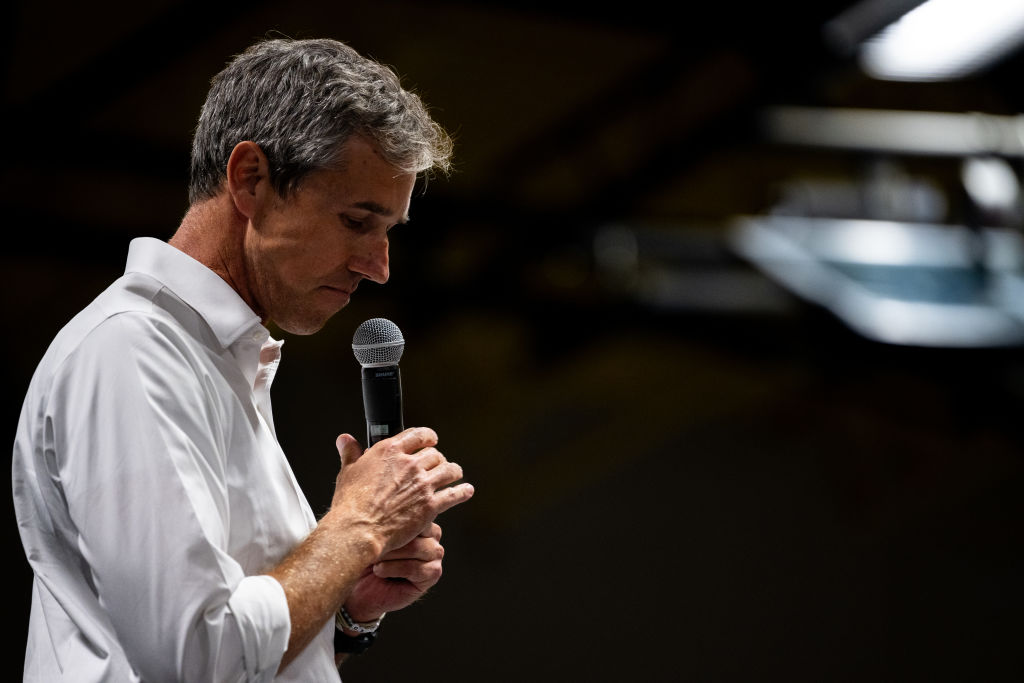
Theater kids are holding Texas hostage
The theater kids are at it again. The Texas Democratic party is engaged in yet another performative act of resistance – one perhaps less embarrassing than the likes of Representative Greg Casar’s iconic nine-hour “thirst strike,” but far more damaging to Texans in the moment.
The decision by more than 50 Texas representatives to flee the state for the climes of California, New York and Illinois rather than confront the realities of their political margins doesn’t just act as a grandstanding method of opposition to a redistricting policy that would stand to Republicans’ benefit – it also is holding up the legislative response to the recent flooding disaster, something of significant need to the damaged communities.
The entire escapade seems only designed to slow things down and gin up donations from the Democratic base, while turning the political rhetoric about the normal battles of redistricting into the comfortable Democratic language of racial resentment. Speaking to Don Lemon, Democrat Texas State Representative Jolanda Jones likened their battle against the new districts to the Holocaust. No wonder we’re seeing such over-the-top drama, given that the whole escape to the borders is funded by the OG Texas Democrat “born to run” theater kid, Beto O’Rourke.
In response, Governor Greg Abbott has threatened the legislators with arrest, and President Trump suggested he may have to deploy the FBI to bring them back to the state – both posturing threats, in their own right. The most hypocritical aspect of this is that California, New York and Illinois are all some of the most gerrymandered states in the country: in California, Republicans won 40 percent in the last election but netted just nine seats. And Governor Gavin Newsom seems intent on making an initial idle threat of nuclear response into a reality, promising to meet the Lone Star state’s attempt to add five more GOP-favorable districts with five more Democrats from on the West Coast.
This type of escapade never really results in a positive outcome – gerrymandering is too explicitly partisan of an issue for anything otherwise. But in the meantime, it does give resistance people another thing to be mad enough to send in some cash – which is why it’s happening in the first place. Some theater works.