Tag: Hollywood

  • Will Dwayne Johnson always be The Rock?

    Will Dwayne Johnson always be The Rock?

    Over the past couple of weeks, two expensive, auteur-driven films with big stars have been released at the American box office, both conscious throwbacks to the kind of Seventies cinema that isn’t supposed to be made any longer. In the case of Paul Thomas Anderson, his Leo DiCaprio-starring Thomas Pynchon fantasia One Battle After Another seems to have been a success by the skin of its (yellowed) teeth: it has already made over $100 million worldwide, helped by excellent reviews and strong word of mouth. But in the case of another A-lister, Dwayne “The Rock” Johnson, the critical and commercial reception of The Smashing Machine has been rather more muted, suggesting that audiences know what they want from Johnson, and it sure as hell isn’t arthouse fare.

    There comes a point in the careers of many actors who are so bored of being pigeonholed as musclebound lunks that they take on an altogether more challenging and interesting role. Stallone did it in Copland, Jean-Claude Van Damme appeared as himself in the decidedly meta JCVD and Mickey Rourke nearly won an Oscar for The Wrestler, the picture that most closely resembles Johnson’s attempt at respectability. While the last of these was based on a fictitious wrestler, Benny Safdie’s The Smashing Machine tells the life story of the wrestler and MMA fighter Mark Kerr – who is still very much with us. It is constrained by biography, as well, inevitably, an obligation to present its protagonist in a reasonably positive light.

    Johnson is an actor who has always excelled at being liked. Even reports of some of his more bizarre off-screen behavior – urinating in water bottles and handing them to assistants, tardy timekeeping on set, a strange feud with his Fast and Furious co-star Vin Diesel – have done little to tarnish his appeal. His blockbuster films are usually successful, though he was unable to begin his own superhero franchise with DC’s Black Adam, in which he was more convincing as the heroic than villainous incarnation of the character. He appeared to be sliding into well-paid self-parody over the past few years, coasting on screen with a practiced charm that at times saw him turn into a more musclebound version of “Alright, alright, alright” era Matthew McConaughey. Escaping from a straitjacket was a skill that Houdini perfected; might Johnson do the same?

    The major problem with The Smashing Machine, and the reason for its lackluster box office performance, is that it does not appear to know who it has been made for. Audiences who want a rousing sports film with their hero in the lead will be disappointed, on the grounds that Safdie – best known for co-directing the anxiety-inducing Uncut Gems with his brother Josh – has made a strangely muted, decidedly unheroic version of Kerr’s life, which offers almost random vignettes of his existence rather than sticking to any conventional biographical narrative, and concluding in a downbeat, almost shrugging fashion. Yet A24 habitués, who are far more likely to enjoy the film, are also not the obvious audience for a film about MMA that stars the man formerly known as The Rock. Hence the disappointing opening weekend (a mere $6 million at the box office, a third of what it was expected to make) and the indifferent-to-poor response from audiences, who awarded the picture a poor B- CinemaScore.

    There is no denying Johnson’s commitment to the part, which he undoubtedly hoped would win him an Oscar. (The film won the Silver Bear at the Venice Film Festival, the second highest accolade.) He is unrecognizable as Kerr, thanks to prosthetics and a wig, and he manages to strip away any vestige of his usual persona to portray a big, frustrated man whose almost comical disparity in size with his wife, Emily Blunt’s Dawn Staples, makes their scenes together both humorous and poignant. It is, by any reckoning, a brave, even daring performance, which attempts to shrug off the bondage of The Rock forever, but audiences refuse to accept him, or it.

    Johnson will, of course, be fine. There is a supposedly final Fast and Furious film coming in 2027, which he will be returning for, and, more interestingly, there is a new Martin Scorsese film, billed as a Hawaii-set answer to Goodfellas and The Departed, which is also set to reunite the wrestler-turned-actor with Blunt again alongside Scorsese’s usual collaborator DiCaprio. Yet The Smashing Machine’s failure will undoubtedly hurt more than all his various bouts in the ring, and even this most cheerful and charismatic of public figures might be forgiven for experiencing a twinge of self-doubt as a result. Can Dwayne Johnson, actor, ever be taken seriously? The jury, alas, remains out.

  • The Emmys are a waste of time

    The Emmys are a waste of time

    On NPR, they were busy ignoring the Charlie Kirk assassination story by focusing on what really matters: this year’s Emmy Awards, which took place in Beverly Hills. I realized I didn’t recognize a single show – or actor. Then I remembered that I haven’t watched an actual television series in years. What is there to watch?

    At its core, the reason is because everyone in Hollywood hates you

    The Emmys are a celebration of TV stars I’ve never heard of, shows I don’t watch and a never-ending succession of narcissists delivering the same woke diatribes into the microphone. You hate Trump, too? That’s one we’ve never heard before, how original. The nation is eager to hear from the best supporting actress winner about how the right must atone for causing Kirk’s death. I await your suggestions, O Emmy winner!

    The good news about these execrable awards shows is that they tend to expose who these people are in real life: fools with foolish political stances.

    This same talent pool is the reason Hollywood and TV production are in such dire straits. The people in front of and behind the cameras are, almost without exception, people of the left. The decision-makers who pay them are not yet willing to do what must be done to prevent their steep slide into cultural irrelevance and economic collapse.

    But, stricken with falling box-office revenues and realizing that going woke is making it go broke, Hollywood has recently made the slightest feint to the right. It is cynically exploiting certain “right-wing” aesthetics in a naked attempt to seem “unwoke,” but it is a paper-thin attempt at best.

    For example, Disney recently announced it is going to be looking for pitches that appeal to young male audiences – stories free of the usual woke bromides. According to reports, Disney Studios is actively looking for movie ideas aimed at males aged 13 to 28 about “splashy global adventures and treasure hunts” that evoke “classic tales of heroism and exploration.”

    Yes, if only Disney owned any adventure stories that could appeal to boys and young men! Like, I don’t know, some sort of giant epic space saga about a young knight, a gunslinger and robots, and they all get to use swords made of lasers. Or maybe they could make a series about swashbucking pirates, or marvelous superheroes with special powers? Ah well, never mind. I’m sure Disney will come up with something.

    Just a few short years ago, it made a Buzz Lightyear spinoff movie that was all about Buzz and his black lesbian best friend. Imagine my shock when I heard most little boys had no interest in seeing it.

    Taylor Sheridan, Hollywood’s token cowboy creator, has found enormous success with red-blooded all-American series such as Yellowstone (Montana ranchers) and Landman (Texas oil men), and he’s in development on even more stories set in the heartlands of America. But his stars and some of his storylines skew left wing. His creative choices and his hatred for President Trump reveal his true beliefs – and, let’s face it, no openly conservative creative would ever be allowed to enjoy the mainstream success that he has.

    Even the new Superman movie was infected with tired talking points reminiscent of Kamala Harris’s presidential campaign. A major plot point revolved around Superman, the illegal “immigrant” to America. I guess that makes ET: The Unaccompanied Minor Extra-Terrestrial a sure thing.

    Nothing coming out of Hollywood these days can truly appeal to the other half of the country the way it used to because even its weak attempts to do so (for example, the Formula One movie) are cast with actors who hate the right and producers, set designers, cinematographers and so on who secretly, or publicly, cheered a political assassination.

    When the news of Kirk’s death was announced, a friend in Hollywood was on the phone with his producing partner, a normie Democrat. The friend heard the news and gloated. “Good. Awesome. One fewer of them for us to deal with.”

    This is the sentiment of a large number of the people making television and movies in the United States. And we wonder why there never seems to be anything good to watch, and why so many shows are needlessly politicized with tacky left-wing messaging. At its core, the reason is because everyone in Hollywood hates you. They want to make two kinds of TV shows: one to entertain their political allies and the other to re-educate and indoctrinate their political foes.

    A new Apple TV+ series that was set to premiere on September 26 perfectly exposes Hollywood’s clumsy approach to the right. The Savant stars Jessica Chastain as an all-knowing, genius undercover investigator who spends her nights on her computer “deep in extremist and alt-right online communities, trying to anticipate and stop domestic terror plots and hate-fueled violence before they happen.” Oh dear. Apparently her character is based on a real woman who works at the Anti-Defamation League and looks for “right-wing extremists” on the internet.

    Imagine debuting this show a mere two weeks after a left-wing extremist deep in questionable online communities murders a right-wing activist. This premise is offensive and absurd – but to the creators and stars I’m sure it felt relevant and timely.

    So, in the aftermath of Kirk’s murder and the wave of political violence that is happening on a regular basis in the United States, Apple wisely decided to shelve The Savant. Maybe they can make it relevant by totally rewriting it. May I suggest you have Chastain’s character go undercover in the furry communities on Discord?

    But the structural problem with Hollywood is not going away. To them, the obstacle to success is not their lame story ideas that always make the bad guy a conservative. The problem is that you are still too stupid to agree with them.

    This article was originally published in The Spectator’s October 13, 2025 World edition.

  • J.K. Rowling’s brutal takedown of Emma Watson

    J.K. Rowling’s brutal takedown of Emma Watson

    J.K. Rowling has broken her silence on Emma Watson. And if I was Ms. Watson I would lie low for a few months. In fact I would go full hibernation and spend the rest of winter in some far-flung cottage sans internet. For Rowling’s critique of Watson and her lazy, luxury beliefs is devastating. It is one of the truest and most cutting takedowns of the blissful ignorance of moneyed moral poseurs I have ever read.

    Watson is the actress who gained fame and riches from playing Hermione in the Harry Potter films. Of late, she has become a one-woman foghorn of the luxuriant moralism that passes for virtue in celebrity circles. She fell in with the Black Lives Matter contagion, ostentatiously confessing that she had “benefited” from “white supremacy”. (Hilariously, she got flak for putting a white border around the black square she posted on Instagram for BLM’s Blackout Tuesday in June 2020. The color white? On a day for blacks? Demon!)

    She thinks Israel is committing genocide in Gaza. Of course she does – the invites to cultural soirées dry up quicksmart for those who refuse to partake of the Israel-bashing that has become the moral glue of the chattering classes. And she is a faithful servant of the most lunatic luxury belief of all: that “trans women are women”. Translation: men are women. Hearty supping from the Kool-Aid of gender insanity is a must for anyone wishing to maintain their position in the starry firmament of high-status ideology.

    It was this latter wacky belief that brought Ms. Watson and the other overgrown brats of the Harry Potter franchise into conflict with the author of their fame. Because, of course, Rowling is a witch to correct-thinkers for her quaint belief that people with penises are men. Over the years, Watson and her fellow Potter alumni made sly swipes at Rowling and her heretical belief in biological fact. Rowling, being more classy, said nothing. Until now.

    Her 600-word X post about Watson is a masterwork of critical demolition. It is cool, restrained and cataclysmic. She dismisses the conciliatory remarks Watson made in an interview last week, when she said she still “treasured” her relationship with Rowling. “Adults can’t expect to cozy up to an activist movement that regularly calls for a friend’s assassination, then assert their right to the former friend’s love”, she said. Oof.

    She reveals that in 2022 Watson asked someone to pass her a handwritten note that said: “I’m so sorry for what you’re going through”. This was when “the death, rape and torture threats against me were at their peak”, says Rowling. Watson had “publicly poured more petrol on the flames” of this hatred, Rowling writes – not least in a speech she had recently given – and yet she thought a “one-line expression of concern from her would reassure me of her fundamental sympathy and kindness”.

    This is as brutal a calling out of unsisterly behavior as I have seen. In shining a light on the moral chasm between Watson’s public “petrol pouring” and her private utterance of a fleeting, paltry sympathy, Rowling exposes the failures of feminism more broadly in the post-truth era of trans. Many high-status women have giddily sacrificed solidarity with their own sex at the altar of validating the delusional identities of men in dresses. They betrayed womankind so that they might gain access to the rarefied realm of elite opinion – moral treachery masquerading as progressivism.

    But it is Rowling’s calm assault on Watson’s class privilege that hits hardest. “Like other people who’ve never experienced adult life uncushioned by wealth and fame, Emma has so little experience of real life she’s ignorant of how ignorant she is”, she writes. It’s easy, she says, for the affluent to parrot such luxury lunacy as “trans women are women” because they will never have to face the social consequences of this unhinged dismantling of the truth of sex and the rights of women.

    A virtue-hoarder like Ms. Watson can afford to be blasé about the linguistic destruction of the reality of womanhood because “she’ll never need a homeless shelter”, says Rowling. “She’s never going to be placed on a mixed sex public hospital ward.” Watson’s “public bathroom” is “single occupancy and comes with a security man standing guard outside the door”, Rowling writes. It is only – whisper it – women poorer than Ms. Watson who will find themselves on a crammed ward alongside a huge man or in a bathroom that’s seen better days in which a strange man is doing his make-up.

    Rowling has nailed it. The purveyors of luxury beliefs rarely have to live with the fallout of their cranky ideologies. Rich celebs bow to Black Lives Matter with nary a thought for the impact that BLM’s psycho cry of “Defund the police” has had on poor black communities in the United States. Britain’s bourgeois leftists luxuriously rail against “Islamophobia” and seem not to care that it was officialdom’s very fear of being called Islamophobic that abandoned so many white working-class girls to the scarce mercy of those “grooming gangs”. And pious celebs can cavalierly say “Trans women are women” because they will never be that poor girl who just wants to go swimming without being flashed at by a man putting on a bikini.

    Luxury beliefs benefit the rich but they are lethal for everyone else. Preach, Joanne.

  • Robert Redford was one of the last of the old school

    In the end, the Sundance Kid died in his sleep. The death of the actor, director and Sundance Film Festival founder Robert Redford at the age of 89 removes one of the last great American icons of cinema from the world stage. 

    Redford was preternaturally youthful, even towards the end of his life, never quite losing that shock of blonde hair that first made him stand out as a star of the Sixties and Seventies. However, he was never a dumb blonde, being one of the most politically savvy actors of his generation, as well as an astute businessman who managed to avoid falling foul of the changing shifts in fashion and taste. His status as a Hollywood legend was assured long before he died, but now it will be cemented in history.

    The first film in which he appeared was 1962’s forgotten War Hunt, and the last picture that he starred in was – bizarrely – a cameo in Avengers: Endgame in 2019, in which he played the nefarious Alexander Pierce. Nevertheless, he was better used in 2019’s The Old Man & the Gun, in which he played an octogenarian bank robber whose ability to commit crimes well into his dotage was only matched by the charm and courtesy with which he conducted himself.

    Over the intervening five decades, Redford became legendary for such pictures as Butch Cassidy and the Sundance Kid, the peerless conspiracy thriller Three Days of the Condor and the political satirical drama The Candidate. Yet everyone will have their own favourite incarnation of Redford. Journalists love him as the idealistic Bob Woodward, bringing down the Nixon administration by revealing the Watergate conspiracy in All The President’s Men; lovers of caper films treasure his second collaboration with Paul Newman in The Sting; and aficionados of old-school weepies are all about his falling in love with Barbra Streisand in The Way We Were. It was a more successful romantic pairing than the later Out of Africa, in which Redford was bizarrely cast as the Old Etonian Denys Hatton. Such was his charisma and the power of the film, though, that it, too, won Oscars.

    Redford mixed charisma, charm, political engagement and good old-fashioned star quality

    Seeing where the changing tastes in Hollywood were going after the Seventies, Redford took the smart decision to pivot away from acting into directing with 1980’s Ordinary People, a none-more-American family drama which won him Best Picture and Best Director at the Oscars for his debut as a filmmaker. Although many would question the wisdom of the Academy awarding Redford the Oscars for his well-observed but ultimately conservative film over the far more enduring The Elephant Man and Raging Bull, it proved that Redford was a true son of the industry, and he continued an acclaimed career alternating between directing and appearing on screen himself for the rest of his working life. He was magnetic in the Tony Scott thriller Spy Game opposite the actor usually compared to a younger version of himself, Brad Pitt, and he directed Pitt in one of his breakthrough roles, in the elegiac A River Runs Through It.

    Redford could be accused of a certain middlebrow tastefulness as a director that meant that the films he made, while never less than intelligent and thought-provoking, perhaps endure less well than the ones that he acted in. To watch him in Butch Cassidy, bringing the mischief and irreverence as Sundance to Paul Newman’s more stately Butch, is to see a truly great actor having fun, even early in his career. This sense of joie de vivre never left him. 

    His performance in the Marvel films as Pierce brought him to a whole new audience, and even if the young viewers of The Winter Soldier may not have quite understood why this old guy was cast (spoiler alert: because the directors wanted to bring back memories of the great paranoid thriller Three Days of the Condor), he managed to remain relevant and brilliant right up until the end, bringing old-school Hollywood pizzazz and chutzpah into a generation who were not even born in his heyday.

    He mixed charisma, charm, political engagement and good old-fashioned star quality. While the phrase is overused, it is true to say of the great Robert Redford that we shall not see his like again.

  • Is Austin Butler a movie star?

    Is Austin Butler a movie star?

    In the old days of Hollywood, stars and starlets alike were anointed as “It” girls and men. Nobody was ever quite sure what “It” denoted – star quality, sex appeal, charisma, a willingness to sleep with studio executives – but when they were told they had “It,” their careers appeared made, for the present time at least.

    Today, however, with Marvel and superhero films largely making the idea of the movie star irrelevant, the concept of “It” is ever decreasing. I am sure that David Corenswet, this year’s Superman, is a lovely man, but I would struggle to recognize him if I passed him on the street without his Super-costume on. Tom Cruise and Brad Pitt aside, it seems as if the era of the old-school male leading man is past us now. Which in turn, bluntly, means that nobody is going to see the pictures that younger, supposedly hot actors are appearing in.

    While we must wait and see whether Edgar Wright’s new version of The Running Man, with borderline movie star Glen Powell, will be a hit or flop, another leading man has recently appeared in a similarly kinetic picture. When Austin Butler emerged onto screens in Baz Luhrmann’s Elvis, it was one of those rare star-is-born moments that seemed the perfect synthesis of actor, role and vehicle. He was nominated for an Oscar (which he should have won) and since then has capitalized on his success with roles in everything from Dune Part Two and Eddington to the main part in the megabudget series Masters of the Air. Now, he has his first bona fide cinematic lead in Darren Aronofsky’s Caught Stealing, which should, by rights, catapult him into the Hollywood A-list.

    It says a lot for the perverse Aronofsky (the man, lest we forget, who gave us the horrors of Requiem for a Dream and Black Swan) that he should take his handsome leading man and subject him to untold horrors through the relatively brief course of the picture. These horrors include, in no particular order: Butler’s character being beaten so hard that he loses a kidney; following sundry threats, having his face rearranged so often that it begins to look like an abstract work by Picasso (late period); and, perhaps most egregiously of all, being required to sport a deeply unflattering Mohican hairstyle for reasons that become clear while watching the film.

    Butler’s character is a once-promising baseball player turned alcohol-loving bartender who finds himself involved in grim levels of violence after he reluctantly agrees to mind his British punk rocker neighbor’s cat. Various criminals are after something – money – and Butler’s good-natured Hank finds himself, in classic Hitchcockian fashion, becoming the wrong man in a series of vicious pursuits. By the time that a wonderfully deadpan Liev Schrieber and Vincent D’Onofrio turn up as a pair of deeply observant and deeply violent Hasidic Jews, all one can do is surrender to this wild, often horribly unpleasant ride.

    Will it do anything for its young star’s career? It’s hard to say. The character is not wholly sympathetic – the reason for his baseball career being abandoned is that he causes the death of his best friend in a drunken car accident – and Hollywood tends to like its heroes to be square-jawed and masculine. Look at Cruise in Top Gun, Pitt in FI: they are playing Men with a capital M, thoroughly heterosexual archetypes who can save the day and get the (age appropriate) girl with time to spare. Butler may be just as good looking as those two sexagenarians, but there’s an angst and a wryly observant wit to both character and actor that means he probably doesn’t want to be the next standard-issue heartthrob. Lest we forget, this is the man who carried on speaking like Elvis for months after he stopped filming, on the grounds that he could no longer remember what his natural accent sounds like.

    Caught Stealing may not be a masterpiece, or anything close to Aronofsky’s best film. But it is trashy, nasty B-movie fun that channels the spirit of After Hours and The Big Lebowski to entertaining effect, and it proves that Butler might be something even more interesting than the next leading man: he might be the next Jude Law. And that, as anyone who’s followed Law’s remarkably varied and entertaining career, is something worth aiming for.

  • What has Emerald Fennell done to Wuthering Heights?

    What has Emerald Fennell done to Wuthering Heights?


    “Come undone,” the billboard reads. Two hands are clasped together. On another a blonde-haired woman lies prone on a fuzzy peach mattress, her hands tightly gripping the sheets. “Drive me mad,” implores the caption. In theaters Valentine’s Day 2026.

    Despite appearances, this isn’t the latest boilerplate steamy romance for women to drag their boyfriends to in February, but the official marketing for Emerald Fennell’s Wuthering Heights. The trailer, released on Thursday, sets the tone for an apparent massacre of Emily Brontë’s magnum opus.

    It opens with a shot of Aussie heart-throb Jacob Elordi as Heathcliff, sucking the fingers of erstwhile Barbie Margot Robbie while her not-insubstantial breasts heave out of an anachronistic corset. Almost every one of the following clips suggests we’re in for a bodice-ripping thriller, replete with horse whips, numerous instances of Elordi stripping off, and Cathy being cut out of her dress. All set to the soundtrack of the “Everything is Romantic” remix by pop star Charli XCX. In the only lyrics given we are told to “fall in love again and again.” What was wrong with a bit of Kate Bush?

    The official theatrical release poster shows Heathcliff cradling Cathy’s head in a perfect rip-off of Gone with the Wind. Except this isn’t Gone with the Wind. This is not a historical romance, but the film adaptation of a story about psychological and physical abuse.

    Maybe this explains why the title of the film appears on the poster in scare quotes. This isn’t a Wuthering Heights that any reader would recognize – an adaptation in name only. What on earth is going on? Granted, it’s impossible to reach a final verdict before Fennell’s film hits the silver screen. But test audiences certainly haven’t been impressed.

    Kharmel Cochrane, the casting director, already let that on after confirming at the Sands film festival that “there’s definitely going to be some English Lit fans that are not going to be happy.” After all, it’s “just a book,” she shrugged. “Just a book” it may be to her. But if the original text is so wildly unimportant to Fennell and Cochrane, then why are they adapting it? I’m sure “Fifty Shades of Grey but make it Georgian” would have sold perfectly well. Nothing was stopping Fennell from making a film about how good Jacob Elordi looks with his shirt off. She’s undoubtedly a talented film-maker, as proved by the success of Saltburn two years ago.

    Why do directors claim that they are ‘adapting’ novels that they clearly loathe?

    Instead, it seems Fennell has channeled her creative instincts into a disturbing exercise in pointless destruction. Heathcliff is not the sort of identikit Christian Grey-esque bad-boy love interest found in your latest romantasy stocking filler – a damaged but fixable man. He is a raging psychopath. Readers will recall that at one point he hangs Isabella Linton’s dog in front of her in a show of dominance and then strongly implies he’d like to see her meet the same fate. He kidnaps Cathy, holds her hostage and forces her to marry his son.

    Fennell’s butchery is part of a wider trend. The last decade has seen numerous directors shamelessly adopt period novels in title alone. There was Netflix’s Persuasion, which read more like a Sex and the City remake than anything Jane Austen penned. Then there was Steven Knight’s BDSM-infused take on Great Expectations, which was almost unrecognizable as an adaptation of Dickens.

    Why do directors claim that they are “adapting” novels that they clearly loathe? Clearly, Fennell came to Wuthering Heights with her own ideas for a story. Casting the 35-year-old blonde Margot Robbie to play the teenage Cathy seems to prove this. Has Hollywood become so unimaginative that production companies don’t trust themselves to sell an original film? Do they need to hang their marketing efforts on Emily Brontë’s good name to flog tickets? Audiences have been quite clear: they like original period dramas. Look at the success Bridgerton received. And no genre-defining authors or classic novel were harmed making it.

    If Fennell wants to tell a story of wild sex and falling in love that will make readers “come undone,” then I’m sure there are thousands of screenplay writers who would have sold her one. But as Madeline Grant has already begged Hollywood: please leave our period dramas alone!

  • Terence Stamp owned the Sixties

    There are two famous images of the late Terence Stamp, one taken from one of his films, the other from a photoshoot by Terry O’Neill in 1963. In the first, he is shown in his regimental outfit, in character as the dashing but weak Sergeant Troy from the 1967 adaptation of Far From the Madding Crowd, with his inamorata Julie Christie, who played Bathsheba Everdene, beside him. In the second, he is shown looking intensely directly into O’Neill’s camera next to another lover of his, the model Jean “the Shrimp” Shrimpton, in a startlingly modern image that looks as if it could have been taken today. In both cases, Stamp looks like what he was: the single coolest man alive.

    When he was given a good script and a good director, Stamp was still magnificent

    When people tend to write about the legacy of the Sixties, it’s usually a lazy list of clichés: Woodstock, the Beatles, “Summer of Love,” long hair, great billowing clouds of marijuana smoke. What should always be on this list is the Kinks’ song “Waterloo Sunset,” which is not only one of the greatest singles of the decade, but an ode to Stamp and Christie, specifically in the lyrics “Terry meets Julie / Waterloo station / Every Friday night” and then “But Terry and Julie / Cross over the river / Where they feel safe and sound.” Ray Davies, the songwriter, then goes on to suggest, impishly, “And they don’t need no friends / As long as they gaze on Waterloo sunset / They are in paradise.”

    Stamp was perhaps, as one wag dubbed him, “the most beautiful man in the world,” just as Christie had fair claim to be the most beautiful woman of her time. Yet while her career prospered and she rose in global acclaim throughout the Sixties, her one-time paramour seemed largely uninterested in fame and celebrity. He turned down the lead role in Alfie, which made his former roommate Caine a superstar, and picked and chose the kind of parts that led to critical acclaim without making him a great deal of money, such as the obsessed lead in the John Fowles adaptation The Collector and Ken Loach’s first foray into cinema, Poor Cow. 

    It was somehow typical of Stamp that, offered the role of James Bond when Sean Connery quit the series, he refused and instead went to Italy to star in Federico Fellini’s Toby Dammit, an Edgar Allan Poe adaptation. Then, tiring of the acting life altogether, he disappeared off to India for the best part of a decade in order to live on an ashram and explore an altogether simpler, meditative existence.

    For largely financial reasons, Stamp was coerced back into acting with the Superman pictures, in which he was amusingly arch as the baddie General Zod, and thereafter found a second career as an elder statesman in often undistinguished projects. If you’d seen the BBC’s recent adaptation of His Dark Materials, there’s Stamp in a small role, just as he popped up as a galactic politician in the deathly dull Star Wars Episode 1I: The Phantom Menace. Yet when he was given a good script and a good director, as he was with Steven Soderbergh’s The Limey and the riotous cross-dressing comedy The Adventures of Priscilla, Queen of the Desert, he was still magnificent, channeling all the energy, gravitas and eccentricity that he had shown from early on in his career.

    Still, it is not for his latter-day work that Stamp will ultimately be remembered, but for his iconic and legendary presence in that most myth-laden and misunderstood of decades. Many of the greatest people in the 20th century did much of their best work throughout the Swinging Sixties, but Terence Stamp, that bloody-minded and deeply individualistic actor, did not so much define the decade as bend it to his will. And that is an accomplishment that you imagine most of his peers would have given up vast amounts of their success to match.

  • Is it safe to be conservative in Hollywood?

    Is it safe to be conservative in Hollywood?

    The news that the actress Gina Carano has secured a climbdown and undisclosed (but undoubtedly) generous settlement from Disney over her dismissal from The Mandalorian television series in 2021 is sure to have far-reaching consequences that stretch far beyond La La Land. Carano posted a triumphant statement on X, saying, “I hope this brings some healing to the force,” thanked Elon Musk for bankrolling her case and concluded by saying “Yes, I’m smiling.” Disney, meanwhile, released their own, terse assessment in which they announced, “We look forward to identifying opportunities to work together with Ms. Carano in the near future.”

    It was a win for Carano on every level. She was humiliatingly dismissed from The Mandalorian after comparing her status as a Hollywood conservative to being a Jew during the Holocaust. While this might have had some hyperbole to it, the actress rightly pointed out that her co-star Pedro Pascal – an actor firmly to the Hollywood Left – made similarly emotive statements on social media, using the Holocaust comparison, and went undisciplined by the higher-ups at Disney. The question now is what the settlement means not just for Carano, but for conservatives in the industry more generally.

    It used to be that gay actors were advised to keep their sexuality to themselves, for fear of alienating their potential audience, but this has been soundly disproved thanks to the mainstream success of everyone from Jonathan Bailey and Luke Evans to Kate McKinnon and Ncuti Gatwa. However, Hollywood conservatives are still a rare breed. There are many leading actors, from Mel Gibson to Dennis Quaid, who have been vocal in their support of Donald Trump, but comparatively few younger A-listers who have dared to voice right-wing or Republican sympathies in public. The revelation that Sydney Sweeney was a registered Republican, and the subsequent anger – coupled with the storm-in-a-teacup American Eagle–jeans advert that she starred in – that this engendered in liberal circles would make you believe that she was a fully paid-up fascist, rather than simply a supporter of the current governing party in the United States.

    Still, Hollywood has always been a left-leaning industry, and while its most vocal practitioners may find that their invective damages their careers irreparably (step forward John Cusack, whose transformation from ’90s indie darling to furious keyboard warrior is now complete), the likes of Pascal and Mark Ruffalo can offer their unvarnished opinions without pushback from the executives who hire them. Still, a more intriguing subsection of the industry are those who are, in the words of Jon Voight’s clandestine dining society, “Friends of Abe”: actors or filmmakers who have right-wing or conservative views that they are unwilling to share in public for fear of jeopardizing their career. It is a long, long list – any reader of this could probably name a dozen leading figures who are likely to vote Republican, even if not all of them remain full MAGA supporters – but it has been, up until now, a kind of McCarthyite club in reverse. Nobody wants to lose a successful career because they have voted the wrong way.

    It therefore will be fascinating to see whether Carano’s victory leads to a permanent sea change in the industry, or whether it’s just a blip before business-as-usual resumes. Certainly, the success of faith-based films, often starring openly conservative actors such as Kelsey Grammer, indicates that there is a market for films that the American Right, in particular, will lap up, and the news that Mel Gibson’s Passion of the Christ sequel, currently titled Resurrection, has begun filming for release in 2027 will be catnip for its considerable fanbase. Yet these might be isolated examples rather than a new trend. What will change the industry forever is when there are as many Sydney Sweeneys as Scarlett Johanssons, whose political views are regarded as unexceptional, and then – and only then – being a Hollywood conservative will no longer seem like an oxymoron, or worse.

  • Is Hollywood’s woke tide finally turning?

    On reading that Dean Cain (the actor who played the television Superman) had become an Immigration and Customs Enforcement (ICE) agent, I felt a thrill of insurrection – so hot on the heels of the revelation that naughty Sydney Sweeney is a registered Republican! I imagined Rosie O’Donnell crying into her morning decaf, Lizzo swearing at her gender-fluid cat, Ellen DeGeneres taking it out on the help from sheer liberal frustration. Because celebrities aren’t allowed to be right-wing (‘right-wing’ now being dunce-speak for anyone against limitless illegal immigration and transvestite men colonizing women’s spaces.)

    Undaunted, Cain told Fox News:

    “I’m actually a reserve police officer… so now I’ve spoken with some officials over at ICE, and I will be sworn in as an ICE agent, ASAP. This country was built on patriots stepping up, whether it was popular or not, and doing the right thing. I truly believe this is the right thing. We have a broken immigration system. Congress needs to fix it, but in the interim, President Trump ran on this. He is delivering on this. This is what people voted for. It’s what I voted for and he’s going to see it through, and I’ll do my part and help make sure it happens.”

    Cain has previous on stepping up, whether popular or not. I think we can safely say that being a “liberal” (a liberal in the modern sense, being a censorious nag, rather than the old sense, one who is inclined to live and let live) has been for a long time the only political stance acceptable in show business and entertainment, especially in Hollywood. Often, especially when used by men, this is merely a “wokescreen” – think of Harvey Weinstein, of whom Rebecca Corbett (the journalist who oversaw the New York Times investigations into allegations of rape and sexual abuse by Weinstein) said in the 2020 Reuters Memorial Lecture:

    “At the beginning of the Weinstein investigation, we had no idea whether the producer had done anything wrong. He cast himself as a champion of actresses, a Democratic Party fundraiser, a feminist who joined marches – a man considered reliable enough that Barack Obama’s older daughter had worked as a summer intern at his studio.

    Dean Cain needs no wokescreen from behind which to conduct evil deeds and is therefore refreshingly honest. He recently came out as a Hollywood outsider for mocking the latest Superman film as “woke” after director James Gunn described the character as an immigrant, telling TMZ: “How woke is Hollywood going to make this character? We know Superman is an immigrant – he’s a freaking alien… the ‘American way’ is immigrant-friendly, tremendously immigrant-friendly. But there are rules… there have to be limits, because we can’t have everybody in the United States.”

    Cain is an interesting man. He’s partly of Japanese descent, a Democratic voter as a youngster, teenage boyfriend of Brooke Shields when they were at university, dater of Playmates and swimsuit models, he also trolled Dylan Mulvaney in a spectacular fashion when he commented on a video of Mulvaney and another cross-dresser, saying “Neither of you are girls.”  “You were never Superman either,” snarked an “ally”. “Correct. I pretended,” Cain replied.

    In 2021 he gave a sparky interview after DC Comics had Superman’s son come out as a bisexual:

    “I say they’re bandwagoning… Robin, of Batman & Robin, just came out as bi or gay recently. And honestly, who’s really shocked about that one? The new Captain America is gay. My daughter in Supergirl where I played the father, she was gay… So I don’t think it’s bold or brave or some crazy new direction. If they had done this 20 years ago, perhaps that would have been bold and brave. Brave would be having him fighting for the rights of gay people in Iran, where they’ll throw you off a building for the offense of being gay… They’re talking about him fighting real-world problems like climate change, the deportation of refugees and he’ll be dating a “hacktivist”, whatever a “hacktivist” is… Why don’t they have him fight the injustices that created the refugees whose deportation he’s protesting? That would be brave.

    Cain has a hinterland, it’s fair to say. What he doesn’t have – unlike most celebrities, are “luxury beliefs,” the phrase created by Rob Henderson as “ideas held by privileged people that make them look good but actually harm the marginalized.” These can be found in many professions, but it’s probably when they’re propagated by the massively-privileged showbiz “community” that they irritate most, preaching defunding of the police from their privately-policed gated communities.

    Regrettably, the stars who aren’t left-wing these days are a mixed bag. I was cheered to hear that we have Kelsey Grammar, Chris Pratt, James Woods, Alice Cooper, Gary Sinise (who, in parts both poignant and amusing, started up Friends of Abe, a support group for Hollywood Republicans) and the iconic ex-Runaways singer Cherie Currie. I am less happy with Mel Gibson, Kid Rock and Vince Vaughn. 

    But does which way entertainers swing politically really matter anymore? The last American election indicated not. As I wrote in May of the actor James Corden’s political ambitions in Britain, “How dim would a political party need to be to understand that not only do celeb endorsements/involvements not work, but have an actual repelling effect? Beyonce and ‘The Boss’ sure helped cook Kamala’s goose; when the rich and famous swank around telling hoi polloi who to vote for, the masses have a habit of doing exactly the opposite.”

    When that wily old fox the tax-avoiding Mick Jagger allegedly said “My heart is Labour but my money is Conservative” he was being honest in a way most pop stars (see the financial behavior of U2) would never dare to, lest their fans turn on them. Entertainers follow the path they do because they want attention and they want to be rich. If they really cared about making things better for people, they’d have trained to become nurses or firefighters.

    Still, celebrity Democrats could learn a lesson from Republicans like Cain and Sweeney, who don’t see the non-famous as Deplorables put on earth to be preached at.

  • The strange life of Lindsay Lohan

    The strange life of Lindsay Lohan

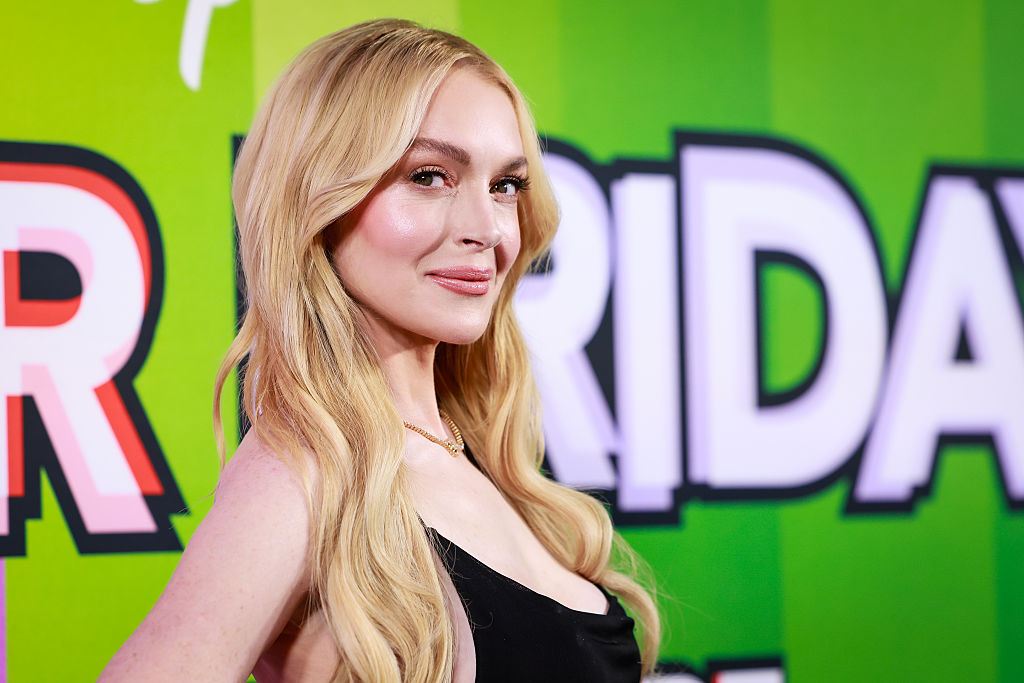
    You may not have realized it, but the actress Lindsay Lohan has been quietly orchestrating a comeback over the past few years. In 2022, she signed a multifilm deal with Netflix that led to such forgettable pieces of fluff as the Oirish romantic comedy Irish Wish, and now she has returned in her highest-profile film in years, the Freaky Friday sequel, Freakier Friday. Lohan stars opposite the Oscar-winning Jamie Lee Curtis in what is clearly (and cynically) intended as a piece of four-quadrant fluff, and Disney will be hoping that the sequel recaptures some of the 2003 original’s box-office alchemy; it grossed $160 million worldwide on a $26 million budget.

    Yet the appearance of Lohan, who is front and center in the film’s publicity, can only be described as something of a gamble on the part of the filmmakers, given how eventful the past decades have been for her. When she broke out around the time of Freaky Friday, the former child star – who had attracted plaudits for her role in The Parent Trap remake – looked like one of the few youthful actors likely to turn into a convincing adult performer. She showed more range in the excellent Mean Girls, released a million-selling debut album, worked with Robert Altman and seemed to be at the forefront of Hollywood. What could possibly go wrong?

    Almost everything, it seemed. From 2007, Lohan’s previously gilded existence turned into a constant parade of drug- and drink-induced mishaps that included, among other things, repeated legal issues, incarceration, an ill-fated and bizarre romance with Mark Ronson’s sister Samantha, a series of high-profile fallings-out with other celebrities, a supposed flirtation with becoming Muslim and media-baiting public appearances. For a considerable period, if you were an ambitious photographer who wanted an easy story, all you had to do was to lurk outside one of Los Angeles’s many exclusive nightclubs and, invariably, Lohan would appear at 3am, under the influence of God knows what, and the pictures would duly appear online within moments.

    It is fair to say that Lohan did not help herself with public statements, such as when she announced, “I am saddened to hear about the allegations against my former colleague Harvey Weinstein. As someone who has lived their life in the public eye, I feel that allegations should always be made to the authorities and not played out in the media.” She briefly announced that she was a Republican and that she would vote for Mitt Romney, only to backtrack almost immediately amid a chorus of vitriol. She moved to London in 2014, only to leave after the country voted Leave in the 2016 Brexit referendum. She is now a resident of Dubai, which she has praised for “a certain calmness that I find there… There’s no paparazzi, no cameras. That’s a big deal for me.” The deeply repressive regime, one presumes, doesn’t bother her all that much. And her own father Michael, a disgraced financier-turned-television personality, announced that she had become an escort, saying “Lindsay is getting paid to date rich men. [Her mother] Dina is pimping her out. It’s disgusting.”

    Likewise, Lohan’s film career turned into a series of self-parodying cameos in pictures such as Scary Movie 5 and Machete. A role that should have been a comeback, the lead in the Paul Schrader–Bret Easton Ellis collaboration, The Canyons, descended into chaos when she behaved badly on set and refused to publicize the film for fear of “jeopardizing my sobriety.” Schrader wrote a thoughtful article on the experience of working with her, in which he compared her to Marilyn Monroe and said, “Similarities? Tardiness, unpredictability, tantrums, absences, neediness, psychodrama – yes, all that, but something more, that thing that keeps you watching someone on screen, that thing you can’t take your eyes off of, that magic, that mystery.” He concluded, “It’s not a positive environment for the performer. It’s difficult to maintain self-discipline in a world of easy gratification. And it’s exhausting. As I said to Lindsay on a number of occasions, ‘It must be exhausting to be you.’”

    Lohan is 40 next year. She has far outgrown the ingenue days of her youth, and, in her 39 years on the planet, has led a larger, more contentious and outrageous life than most people could manage in ten existences. If Freakier Friday is a hit – and first reviews have praised both the picture and her – then it could represent a return to Hollywood and to stardom on her own terms. Whether she now has the maturity to make a success of it or a second round of chaos and event is coming our way, still remains to be seen.