When the superintendent of Iowa’s largest school district was detained by ICE on Friday, the story startled parents, educators and anyone paying attention to the integrity of our institutions. Dr. Ian Roberts, a man with a final deportation order, allegedly fled law enforcement, leaving behind a vehicle containing a loaded handgun, a fixed-blade knife and thousands in cash. Yet for months, he led thousands of children, set policy for an entire district and enjoyed the prestige and authority that comes with public office.
The question society must ask is unavoidable: How did someone with an outstanding removal order rise to the top of a school district? How did a man technically in violation of federal law gain the trust of an entire community?
This is not merely the story of one man flouting the law. It is a story about systemic failure, a window into the erosion of public trust and a lesson about what happens when the rule of law becomes optional. Immigration law is meant to maintain order, fairness and accountability. When enforcement is selective – ignored for some while ruthlessly applied to others – the system itself loses credibility. That credibility is the backbone of a functioning society, yet in Roberts’ case, it was nowhere to be found.
The first failure lies in bureaucracy. A final deportation order is the result of a legal process that should have barred him from holding public office. Yet somehow, the vetting systems that are supposed to catch such issues failed completely. ICE did not notify the school board, and the board apparently did not discover his legal status during the hiring process. Ordinary Americans face background checks and employment verification at nearly every stage of life. They show identification to get jobs, pay taxes and secure professional licenses. Yet here, in a position of immense public responsibility, the system looked the other way.
When bureaucracies fail, it is the public who suffers. The lesson is clear: if the government cannot enforce the law at the leadership level, why should citizens expect enforcement anywhere else?
The second failure is in public trust. Schools are institutions that require adherence to rules, standards and moral leadership. Parents entrust their children to teachers and administrators expecting competence, integrity and respect for the law. If children are told to follow rules while their superintendent ignores one of the most consequential laws in the country, the message is destructive. Hypocrisy at the top does not stay at the top. It trickles down, eroding respect for rules, authority and the social contract itself. Parents should be able to assume that the adults in charge of their children operate by the same standards they demand of everyone else. When that assumption is violated, confidence in the entire system collapses.
The third, and perhaps most important, issue is selective enforcement. Justice cannot bend based on convenience, identity or social standing. Rules should apply equally to all citizens, regardless of occupation, ideology or demographic profile. Yet in practice, the powerful and politically sensitive are often shielded, while ordinary citizens are held to the full force of the law. That is the definition of selective justice, and it is corrosive to the idea of America as a nation of laws rather than a nation of preferences.
The pattern is easy to recognize. If a white conservative school leader had a firearm charge and a deportation order, the media and progressive activists would demand immediate resignation. There would be op-eds and social media campaigns insisting on accountability. In Roberts’ case, there is caution, hesitation, even implicit deference. Identity, status and perceived ideological alignment appear to confer immunity. This is not about prejudice; it is about principle. Justice that applies to some and not others is not justice at all.
Some observers are already framing Roberts not as a man defying a lawful order, but as a victim of ICE. This is identity politics in action: shielding misconduct because the individual occupies a “preferred” category. Conservatives understand that such selective leniency corrodes both public trust and the legitimacy of the law. Excusing wrongdoing based on identity, occupation, or political sympathy is not compassion – it is hypocrisy. And hypocrisy, once institutionalized, becomes a cultural norm, weakening the foundations of governance and public life.
The Iowa case is a flashpoint, but the lessons extend far beyond Des Moines. First, immigration enforcement must be consistent and credible. The law cannot be optional, or it ceases to function as law at all. Second, vetting and accountability mechanisms in public institutions must be strengthened. Leadership positions, particularly those entrusted with children and taxpayer resources, should not be available to anyone operating outside the bounds of the law. Third, society must confront the corrosive effects of double standards. Parents, students and taxpayers deserve institutions that are honest, lawful and accountable – not institutions that bend the rules for elites or shield them from consequences.
Dr. Roberts’ arrest is more than a scandal; it is a mirror of the erosion of authority in public institutions. Selective enforcement teaches children and adults alike that rules matter only when convenient. It undermines respect for leadership, weakens bureaucracies and erodes confidence in the system of laws meant to protect everyone equally. Conservatives understand that respect for the law is the foundation of liberty. When that foundation cracks, the consequences ripple through every corner of society.
This is the real story from Iowa: a superintendent detained by ICE should be an anomaly, a cautionary tale about the consequences of ignoring the law. Instead, it reveals a pattern in which rules bend, oversight fails and selective justice becomes normalized. America cannot survive as a nation of laws if enforcement is optional, particularly for those in positions of authority.
Until these principles are restored, public trust will continue to erode, and the next child, parent or taxpayer will see that rules matter only if you are powerless enough to be held accountable.
Dr. Roberts’ case is a stark reminder: justice that applies only to some is no justice at all. Until the law is enforced consistently, America’s institutions – schools, government agencies and the legal system itself – will continue to crumble under the weight of favoritism, bureaucratic failure and selective leniency.
Tag: Immigration
-

Des Moines school superintendent is not a victim of ICE
-

Trump admonishes the United Nations
Was there a plot against President Trump at the United Nations? Upon his arrival, the escalator apparently stopped working. Next his teleprompter failed. Small wonder that Trump was in less than a concessive mood as he delivered his speech denouncing the UN itself as a colossal failure. The result was the kind of talk he would give to a political rally – except it was to an unreceptive, if not hostile, audience.
Throughout, Trump made it clear that his estimation of his abilities is very different from his view of the UN. “I’m really good at this stuff,” he declared. “I’ve been right about everything.” As for everyone else: “Your countries are going to hell.”
Presumably his dire verdict does not apply to close allies such as Javier Milei, the president of Argentina, who is depleting the country’s financial reserves to prop up the peso. Treasury Secretary Scott Bessent has vowed to lend Argentina up to $30 billion, presumably in the hopes of shoring up Milei’s political fortunes on the eve of midterm legislative elections on October 26. Milei, like Brazil’s Jair Bolsonaro, is a favored son.
When it came to Europe, Trump had nothing but scorn. “We have an ocean in between. Europe has to step it up. They’re buying oil and gas from Russia while they’re fighting Russia.” True enough. But Europe has been stepping it up. The suspicion in Europe that Trump will concoct excuse after excuse to avoid fracturing his bromance with Russian president Vladimir Putin is not an unjustified one.
After vowing to reassess the relationship should Putin remain refractory after the Alaska summit meeting in mid-August, Trump has done nothing to up the pressure on Russia. Instead, he has watched passively as Moscow bombards Ukraine and sends drones and fighter jets into NATO’s eastern flank. When all the world is a hopeless jumble, Trump wants to pretend that somewhere over the rainbow the dreams that you dare to dream really do come true.
Indeed, as he hectored the assembled heads of state, bellowing about his own greatness, Trump’s aim wasn’t to dwell on conflict but to portray himself as the true peacemaker. He, not the UN, is creating a new pacific era – a golden age, if you will. According to Trump, “I ended seven wars and in all cases they were raging with countless of thousands of people being killed.” The claim that he, and he alone, terminated the conflict between Pakistan and India is likely to further sour relations with President Narendra Modi, whom Trump has steadily driven into the arms of a receptive China.
By the end of his speech, Trump struck a friendlier tone. His teleprompter, after all, had begun to function again. “Let us all work together to build a bright, beautiful planet,” Trump said, “a planet that we all share, a planet of peace in a world that is richer, better, and more beautiful than ever before. That can happen. It will happen.”
Hmm. For all the enmity his earlier rebarbative remarks may have created, they at least had the virtue of reflecting Trump’s true convictions. As always, Trump is least persuasive, or least believable, when he adopts the saccharine language of more conventional politicians. The more credible Trump at the UN was the one who warned drug cartels that he would “blow you out of existence.” Yeah, baby!
-

Magnificent – but is it war?
When Donald Trump made building a “big, beautiful” wall along the southern US border a priority in his first term, he was widely derided. There wasn’t enough concrete or steel to build such a structure. Anyway, it was futile because migrants would find some way over or around it. It was a heartless and evil project being promoted to distract from other failures. When shutting off immigration from Mexico became an unrealized project from that first term, Trump’s critics enjoyed themselves.
Campaigning for his second term, Trump hardly mentioned the wall. Yet something remarkable has happened. Undocumented migration across the border has all but ceased. In the four years to Inauguration Day this January, under President Joe Biden’s watch, there were an average of 155,000 illegal crossings every month. In February it fell to 28,000 and in March to just 7,000.
Crossings have remained at very low levels in the months since. Despite some protests on the Democratic left, Trump has achieved what he promised to do nearly a decade ago: he has closed the border. And by doing so, he has proven that the arrival of large numbers of illegal migrants is not some inevitable fact of modern life. It is a political choice.
The President needs to move on from the insurgency stage of his second administration
How has Trump achieved what many said was impossible? He handed the job of policing the border over to the military. This required a little inventiveness to get around the law, but no steamrolling over human rights. Under the Posse Comitatus Act of 1878, the government is forbidden from deploying the armed forces to keep order in civilian situations, except with the express permission of Congress. But there was a loophole. The military was still allowed to police the boundaries of military installations. Trump’s solution? Designate the most critical and vulnerable parts of the US-Mexico border as military sites – or extensions of existing military sites – and the Army would be allowed to patrol them regardless. As a result, hardly any migrants are now prepared to chance the crossing.
There is something to admire in a leader who achieves what others said couldn’t be done. Too often, government becomes stuck in a rut of its own making. Now and again, you need someone who’s not afraid to come along and break things.
There are still plenty of questions to be asked of Trump’s border policy. It is beginning to look a little performative, with more than 100 Stryker armed combat vehicles deployed to police the border, and the heavy talk of deporting up to ten million illegal immigrants has always been far-fetched.
Yet the President has intelligently joined up border policy and the war on drugs. As Ben Domenech details in our cover piece on p8, the Trump administration is using its military assets in Central and Latin America to fight what Marco Rubio now likes to call “narco-terrorism.” It’s a typically Trumpian win-win: the administration’s neoconservatives can enjoy flexing American muscles and killing bad guys abroad, while MAGA nationalists thrill at the forceful protection of the American people.
Rubio and Defense Secretary Pete Hegseth are right to argue that the war against the drug cartels cannot be waged at the border alone. But, as ever with Team Trump, the difference between theatrics and serious policy can be hard to decipher. Eliminating a boatload of alleged Venezuelan drug dealers with a missile in the Caribbean makes for good television, especially in the age of social media. But stunts can – and do – go wrong: what if the Trump administration mistakenly launches a fatal attack on an innocent crew or a fishing boat? This White House should not forget the tale of Esequiel Hernández, an American teenager who was herding goats close to the Texas-Mexico border in 1997 when he was shot dead by Marines who mistook him for a member of a drugs gang. The fallout set back efforts to police the border for years.
Trump has always had a weakness for men in uniform and for military solutions to political problems. He is more than willing to use emergency loopholes to send the National Guard into Washington to curb crime, or Los Angeles to stop violent protests. Such moves are not necessarily unpopular: law-abiding urban residents tend to be grateful for any government which makes them feel safer. Judges may continue to rule against such actions after the fact. But White House spokesmen will call them “rogue” or “activist” for doing so, and round and round the arguments will go.
The irony is that, in attempting to stop America becoming Latin America, the second Trump administration risks imitating an inept third-world government, endlessly invoking emergency powers and using armed forces to advance its agenda.
Washington, DC, is the heart of the American government and an important commercial center – a civilian environment if ever there was one. That such places are generally free from military presence in spite of the constant terrorist threat marks a very visible difference between a democracy such as the US and the dictatorships which blight much of the world.
The President should be applauded for being prepared to look at problems differently and take bold action where his predecessors have not. But he needs to move on from the insurgency stage of his second administration and be a little more careful. Closing the border to illegal immigrants is a triumph. But it is one which will be wasted if Trump ends up offending the citizenry through an overbearing and inappropriate deployment of the military in everyday life.
This article was originally published in The Spectator’s September 15, 2025 World edition.
-

Can Bruno Retailleau defeat France’s Islamists?
When France played Algeria at soccer in their national stadium, the Stade de France, in 2001, the French player Thierry Henry said afterwards he felt – disturbingly – as if he were playing away. The game had to be abandoned after dozens of Algerian fans, furious at being 4-1 down, invaded the pitch.
Bruno Retailleau, the interior minister of France since September last year and a key figure in the small boats crisis, has been known to cite Henry’s comment. Retailleau is carving out a distinct role for himself in government as the tribune of the growing number of his compatriots who share the same sense that they, too, are “playing away.” In other words, the millions who believe that they have become strangers in their own country.
There is a trinity of issues at the heart of his agenda – porous borders, rampant crime and an increasingly self-confident Islamist movement that is on a long march through the institutions of the Fifth Republic.
Jean-Luc Mélenchon, leader of La France Insoumise, the populist party which is currently the most powerful force on the left, thinks Retailleau is the man to watch. “For many right-wing people, Bruno Retailleau is more reassuring than [Le Pen],” he wrote in La Tribune. “Retailleau is the reactionary movement’s best chance at this time.” Retailleau’s prominence is all the more remarkable considering he leads Les Républicains, the once dominant force on the right, which long ago lost its position to Rassemblement National and has been written off by many as a dead party. Yet there’s an outside chance now that he can make it all the way to the Élysée when President Macron’s second term ends in 2027.
So who is he? Retailleau was born in 1960 in the Vendée – a department best known in history for an unsuccessful royalist revolt against the revolutionary authorities in the 1790s. This revolt elicited Jacobin repression from Paris which was brutal enough to inspire Lenin. Retailleau’s great-great-great grandfather was part of the cross-class alliance that turned to the local aristocracy for military leadership; in his mother’s house there is a certificate of appreciation from Louis XVIII for their loyalty in an era of unprecedented upheaval.
What happens when the rule of law starts to facilitate crime – and people can see that it’s doing so?
But Retailleau is a conservative, not a reactionary, despite what Mélenchon may claim. His view of the French Revolution was influenced more by Edmund Burke than by 19th-century French royalists such as Joseph de Maistre. “I owe much of my understanding to Edmund Burke. There was the constitutional change of 1789, which Burke sympathized with, and the Terror of 1793, which he of course rejected. But the Terror of 1793 was not inevitable,” he says, when we meet in London during the recent state visit. “The Revolution could have been more liberal and respectful. But it gave a blueprint for totalitarianism – later communist and in our times Islamist absolutism, the ends justifying the means. And the total vision of society encompassing and politicizing every aspect of life. Meaning the attempt to perfect man from a tabula rasa.”
The invocation of Burke is typical of the man who is one of the few top-level politicians who manages to keep up his reading while in office. Among writers directly addressing more contemporary issues, his choices are not always easy to predict: many on the French right would cite Jean Raspail’s anti-immigration novel The Camp of the Saints or Michel Houellebecq’s Soumission, an imaginary account about an Islamist takeover of France.
Retailleau, however, admires the French-Algerian writer Boualem Sansal, who is currently in prison in Algeria and is a staunch critic of the nationalist regime there and of the Islamists: Retailleau is now the most vocal member of the government calling for Sansal’s release. He is also keen on the writings on art and philosophy of Régis Debray, the tiers monde-iste friend of Che Guevara and Mitterrand adviser. Retailleau enjoys the company of Parisian intellectuals such as the cultural critic Alain Finkielkraut and the political philosopher Pierre Manent – who form a contrast with his circle of intimates from the Vendée, a difference of cultures which he relishes.
Retailleau’s career choices have also been unconventional. Most graduates of one of the grandes écoles would go on to become a mandarin serving an apprenticeship in the Cabinet of a minister. Retailleau, by contrast, after Sciences Po, returned to the Vendée – where his grandfather and father, a grain merchant, had both been mayor of Saint-Malo-du-Bois. His grandfather was severely wounded at the first Battle of the Marne in September 1914. His father served in the Algerian War and later ran the family farm.
Retailleau himself has served as a reservist in the Régiment de Saumur, one of the best-known of the French cavalry regiments; and dressage is his competitive sport of choice. Today, his favorite pastime is riding alone in the Vendée (sometimes to the alarm of his security detail) and he has retained the figure of a jockey until well into his sixties. “I’ve had a few falls,” he notes, but his enthusiasm for the saddle remains undiminished.
His children presented him with a she-donkey for his 60th birthday. “When I have the time, I will take her on a journey to the Cévennes – in tribute to Robert Louis Stevenson, another of my favorite authors.” But for now, the crisis at the French borders makes this a luxury he cannot afford: he is a workaholic, often waking at 3:30 a.m. to read his official papers.
Retailleau started his career at Puy du Fou – the nearby theme park on French history that was founded by the local aristocrat Philippe de Villiers, a key figure in French Euroskepticism.
He was a keen participant in Puy du Fou’s pageants and re-enactments. Under de Villiers’s guidance, he rapidly rose to become a member of the National Assembly, president of the Vendée departmental council, president of the Pays de la Loire regional council and finally leader of Les Républicains in the Senate. But the apprentice outstripped the master and there was a parting of the ways.
‘Islamophobia is a bogus concept. It conflates all Muslims with Islamism, which is not true’
The difference in approach between the two men is meaningful. There is a certain non-sectarianism in Retailleau’s approach: behind his desk in the Interior Ministry at Hôtel de Beauvau hang portraits of the two greatest Vendéens – Jean de Lattre de Tassigny, a French marshal of World War Two, and Georges Clemenceau, the victor of the first world war. It’s hard to imagine a purist Catholic of de Villiers’s vintage revering an atheistic anti-clerical like Clemenceau.
And when it comes to Russia, Retailleau is firmly in the Giorgia Meloni camp: he parts company with those on the French right who see Vladimir Putin as a defender of family values and Christian civilization. Retailleau sees Putin not as the inheritor of Czarist tradition, but rather as a product of the KGB.
Retailleau believes in defending moral as well as physical borders – hence his opposition to euthanasia and his concern about the consequences of gender transitions in children. But restoring the status quo ante on capital punishment, abortion and gay marriage is hardly the mainstay of his policy vision. And he tells me that the restoration of Notre-Dame-de-Paris after the fire of 2019 will rank as one of Emmanuel Macron’s greatest achievements – less for religious reasons than as evidence of what the state can still accomplish in terms of grand projets that really matter, when it can summon the will to sweep aside bureaucratic obstacles.
Although the attention is now on what the French call les aspects régaliens of Retailleau’s current role – matters relating to the direct authority of the state – it was his economic agenda that mattered most to him in the Vendée. Retailleau is the antithesis of corporate man (he is proud of banning the word “management” from all departmental discourse), but he was nonetheless a big booster for business in the region.
Since the Revolution, the Vendée has got relatively little from the state, making it highly self-reliant. It therefore has some of the lowest claims for unemployment benefit of any department, at 6 percent compared to a 7.4 percent national average. The bulk of businesses comprise what Germans would call the Mittelstand – family-owned enterprises chafing under Parisian and Bruxellois regulations.
Intriguingly, Retailleau cites no one economic mentor like Milton Friedman or Friedrich Hayek – nor even that staunchest of French critics of Keynes, Jacques Rueff, who was also an adviser to Charles de Gaulle. Rather, he tells me, his economic inspirations are the Vendéen entrepreneurs who create real prosperity and jobs.
His answer is shrewd, because it’s hard to be accused of being a “globalist” for extolling the virtues of local enterprises; but it says something about the French right that economic issues are now more internally divisive than cultural matters.
If the state has interfered too much in the economy, Retailleau also believes it has been too laissez-faire in the realm of security. He poses to me a key theme of his: “What happens when the rule of law starts to facilitate crime – and people can see that it’s doing so? When the endless invocation of the rule of law becomes the enemy of honest people?”
Retailleau is referring to what he sees as the excessive solicitude of wide swaths of the French legal profession and judiciary for the rights of individuals accused of crimes at the expense of the collective rights of the law-abiding majority. A mere 7 percent of deportation orders for illegal migrants are implemented, and too often, in his view, that is because French judges rule that a procedural technicality has been breached.
This failure of the state on immigration and crime has a particular piquancy for Retailleau: his close friend, Fr Olivier Maire, was murdered in 2021, allegedly by a Rwandan asylum seeker with mental health issues. The suspect had been released on bail after being accused of setting fire to Nantes Cathedral and was being sheltered by Maire at the time.
Retailleau has therefore long wanted to re-empower the people by reforming article 11 of the Constitution on procedures allowing for a popular referendum on immigration – something which is not possible today. He also advocates cutting full medical aid for illegal immigrants, preferring to allow them just emergency care.
‘Islamists have a smooth narrative: to employ our freedoms to destroy our freedoms. It’s an all-of-society project’
How did this shift in the ethos of the French judiciary and legal profession come about? Retailleau points the finger at the spirit of ’68 – and, in particular, the long-term effects of the Harangue de Baudot, the 1974 address delivered by the liberal Marseille magistrate Oswald Baudot urging new judges to side with “the weak against the strong,” which is now the sacred text for the left-wing Syndicat de la Magistrature, effectively the trade union for the Bench.
In Retailleau’s view, the price of this broad approach is also being paid by the 15,000 security personnel who were injured in France in 2023. Significantly, his first visit as interior minister was to the préfecture at La Courneuve in the Parisian banlieue of Seine-Saint-Denis, where he met three hurt gendarmes: one of the perpetrators of these assaults, a juvenile, already had 33 convictions to his name.
Success or failure in crime or immigration policy can at least be measured in numbers. It’s much harder to mark progress in the struggle against political Islam – which Retailleau believes constitutes the greatest subversive threat to the Fifth Republic. “They are a formidable enemy, despite the relatively small numbers of their core cadres,” he says. “They have a smooth narrative: to employ our freedoms to destroy our freedoms. It’s an all-of-society project. For example, they aim to ‘Islamize’ knowledge. And their message is as follows: ‘We will colonize you and we will dominate you.’”
One of the first steps he took on Islamism after assuming office was to declassify the Interior Ministry’s 74-page report on the Muslim Brotherhood in Europe: his purpose was to alert the public via an approach of “name and shame.” It’s little secret now that Retailleau struggled with the Elysee to maximise its revelations about individual Islamist institutions; partly because the President’s office was initially reluctant to be seen to be dancing to Retailleau’s tune.
Retailleau is thus the one making the political weather on this issue: the Defense Council met again recently under the chairmanship of Macron to discuss, in the light of this most comprehensive official analysis of frère-isme to date, just how to enforce the landmark 2021 French separatism law. The old pre-war French right saw laïcité as the enemy of Catholic France; now, it sees it as a bulwark to protect the country. As ever, practical implementation is the key to Retailleau’s way of doing things.
This included new ways of disbanding the Brotherhood’s endowments in France which promote hatred – by exposing and then freezing its assets. Also high on the priority list are the law’s demands for neutrality in the public space (no display of symbols of religion by officials at any level) and support for public servants, notably teachers, who face threats because of discharging their public duties – a particular concern after false allegations of “Islamophobia” from a pupil were weaponized against the schoolmaster Samuel Paty in 2020, leading to his decapitation by a Chechen refugee.
Mélenchon has, unsurprisingly, accused him of cultivating an “Islamophobic climate,” but Retailleau retorts: “The concept of Islamophobia is one of the defining messages of the Muslim Brotherhood and its allies, but it’s a bogus concept to tie our hands intellectually and to prevent us from criticizing Islamism. And it suits the Islamo-Gauchiste project of Mélenchon to build up a communalist bloc based upon a sectarian appeal to anti-state grievances. It conflates all Muslims with Islamism, which is not true.”
Retailleau is gratified by the favorable official responses which the Brotherhood report has enjoyed in Europe – such as in Sweden and Belgium. Over 20 years ago, French intelligence bestowed the soubriquet “Londonistan” upon the British capital – because it was seen as a “safehouse” for Islamists. Are we still Londonistan, I ask? Retailleau diplomatically sidesteps my question, but his omission of the UK as an enthusiast for this report speaks volumes.
Controversial as these issues are, they may (counterintuitively) form the basis of a potential future national consensus. Retailleau respects republicans from the right and the left who want to maintain traditional French laïcité against the New Left’s identity politics: reaching out across party divides, he particularly notes the rigor of the former Socialist prime minister and interior minister Manuel Valls.
What, then, are his chances in the 2027 presidential election? The conventional wisdom of the Parisian media holds that Retailleau is too old-fashioned to win. How, when he is hovering at around 10 percent in the polls, can he hope to make it through to the second round?
But the issues of the era – “order, order, order” is how he characterized his priorities when he took office – are cutting in his favor. He remains the most popular minister in a very unpopular government. More-over, despite its poll lead, the Rassemblement National is struggling to find a fully credible candidate, with Le Pen’s legal difficulties potentially preventing her standing and Jordan Bardella, her 29-year-old deputy, lacking frontline experience.
Retailleau quotes to me the well-known French political maxim of the author Maurice Druon, who served as Georges Pompidou’s culture minister: “There are two parties of the left in France, one of which is called the right!” There is an opening for a force that is genuinely right-wing, and which stays right-wing in government.
The question now is how long Retailleau, who is very much his own strategist, remains in government. On the one hand, the Interior Ministry has been a perfect platform for his policy agenda – and the police and fire brigades, with whom he has developed a genuine rapport, would miss him. But if he stays too long, his unique brand risks cross-contamination with that of Emmanuel Macron. That is why, as leader of Les Républicains, Retailleau is increasingly distancing himself from the President on several issues (notably public subsidy for wind farms, which he wants to end). Such open free-thinking does not always endear him to the Élysée.
Sir Roger Scruton – one of Retailleau’s heroes – would certainly have appreciated the apparent paradox of his public life to date: the story of a ruggedly individualistic son of La France profonde vindicating the long-neglected rights of the national and cultural collective, at the heart of power.
-
Where did it all go so wrong for Britain?
If I had to summarize, in a word, the mood of Britain in 2025, I’d probably plump for fraught. It’s not just the protests against illegal migrants in hotels, or the apparent collapse of the political parties which have governed us for so long, or the anger for and against free speech.
There is something in the air that I can’t quite recall having sniffed before, the kind of crackle that might be quite exciting or intriguing if you were standing a little bit further back from it, flicking through the pages of a history book, maybe. But it’s rather different to live through it.
People like me, and probably you over in America, were socialized in a more stable and reliable world, where everyone and everything muddled along. So we find it very hard to adjust to the return of history with a capital H.
That lost age on the domestic front in Britain, which lasted from about the end of the miners’ strike in 1985 up to the subprime crunch of 2008, was the era in which we assured ourselves that “things will sort themselves out.” We told ourselves that things would probably turn out fine; there was nothing much you can do about it, after all, so best just to potter along. No one wanted to run about squawking like Chicken Licken, who thought the sky was falling in.
This complacency was justified, because often – in that curious interregnum, which we mistook for how things were just going to be from now on – things often did sort themselves out, or at least they appeared to.
How quaint Britain’s big worries of the 1990s now seem
How quaint Britain’s big worries of the 1990s now seem! Let’s look back thirty years to the big news stories of 1995. Nick Leeson crashed the stately old Barings Bank, a soccer player kung fu kicked a fan at Selhurst Park stadium, pubs stayed open for the first time on Sunday afternoons, and Princess Diana granted TV interviews. Ethnic strife and economic murk were forgotten, things of the past. It’s dizzying to realize that this was the country, presided over by John Major’s slightly hapless Conservative Government, that Tony Blair’s 1997 slogan “things could only get better” came from.
True, it was often the boring people during boring times who led us to where we are now. The subsequent first term of Tony Blair was also colossally dull, at least on the home front. But under that screen of fog, it ripped up and tore apart centuries of vital constitutional structure. We looked away, to Big Brother and Eminem as much that we rested so blithely upon was smashed up, boringly. Net migration, for example, rose from 48,000 in 1997 to 273,000 in 2007, reflecting the cumulative impact of incredibly tedious policies that nobody looked at. Were the results of that ever likely to just sort themselves out?
Where are we now? The years since 2008 have been ever more rancorous and turbulent. It’s been tempting to cling on to our illusions, and imagine we will somehow drift back to the age of security. Perhaps we’re imagining it all – after all, we still live (mostly) uneventful lives in an affluent, if retrenching, society.
But I fear we are just at the start of a return of ferments and upheavals, with our foundations seriously weakened. World politics is slipping back to the age of empires, with the big difference that this time we haven’t got one. We are back in the world of Shakespeare’s history cycles; endless battles, reverses, false hopes, the strange alliances of sworn enemies. It rumbles on and on and on, with the little people tossed about in the tides, grabbing whatever driftwoods of solace that they can.
And that is not unusual. Crack open any history book. It’s the natural state of things.
When Keir Starmer’s Labour got in last year, we had a good old laugh at clownish figures like the liberal journalist Otto English, who tweeted tweely that the “quiet” was going to be such a refreshing change. “For the first time in many of our lives, actually Britain looks like a little haven of peace and stability,” said the veteran newsman Andrew Marr on Question Time. He might as well have donned a flashing neon sign reading HOSTAGE TO FORTUNE.
But. If we are feeling honest, and generous – and I do have occasional twinges of both – those of us of the same generation as such silly people can understand the impulse, their longing to believe in the return of the apparent stillness of our young adulthood (even if it was at least partly illusory).
Now even Tory-in-name-only Lord Finkelstein is admitting that he’s had his doubts all along, writing in the London Times of the simmering atmosphere of 2025. “People’s failure to live and let live baffles me,” he says. On the immediate level, that sentence terrifies me; that someone so divorced from the basic reality of human beings could have been attached to the Conservative Party. But I understand too, because I also come from that world and that lost “family of man, Kumbaya, it’ll be fine” age.
Believing what is convenient or reassuring rather than what’s true is great, so long as you can afford it. Continuing with it when you can’t is disastrous. For all we know, the Britain of 2025 may look like a paradise to the Britons of 2055. And that’s the scariest thing.
-
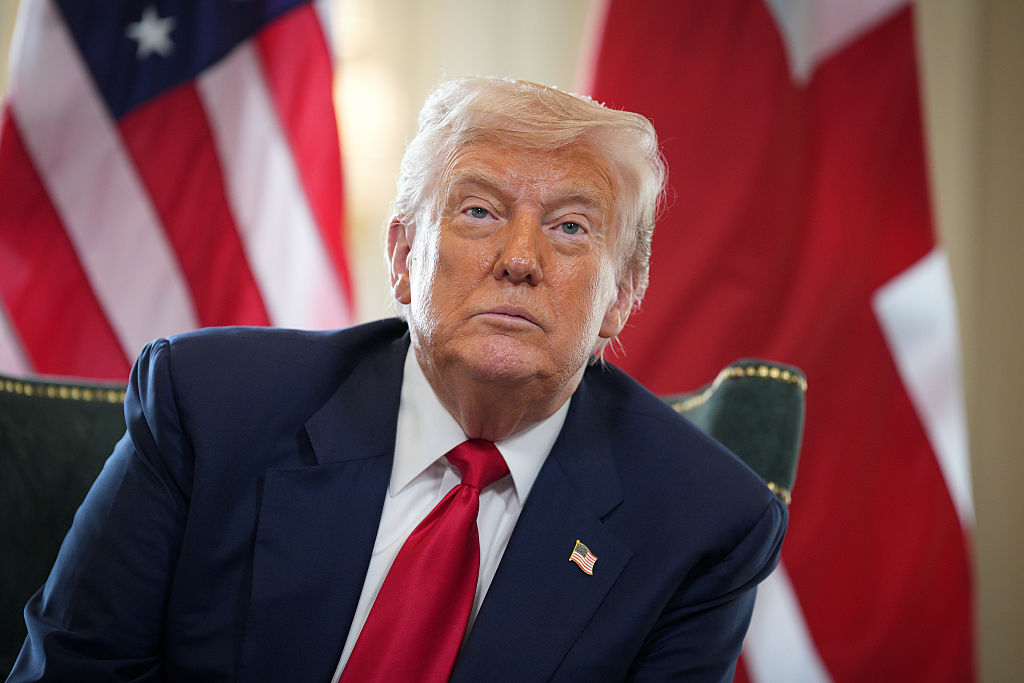
The devaluing of American citizenship
President Trump’s call for a new US census that excludes illegal immigrants has stirred up exactly the kind of debate this country needs – but not necessarily in the way he’s proposed it.
Let’s be clear: the spirit of Trump’s order is right. It’s outrageous that congressional seats and federal funding are based, in part, on populations that include people who entered this country illegally. Sanctuary states like California, New York and Illinois benefit politically and financially from shielding those who bypassed our laws, while law-abiding states are left underrepresented. The American people have every right to demand that representation reflect citizenship, not lawbreaking.
But even as I share the outrage, I can’t support the tactic. The execution is wrong – legally, constitutionally and strategically. As a conservative who believes in limited government and the rule of law, I can’t selectively apply those principles when the outcome suits my politics. That’s not conservatism. That’s opportunism.
When the Founders wrote the Constitution, they imagined a nation governed by its people – not by everyone who happened to be physically present. The 14th Amendment requires counting the “whole number of persons,” but that was written in a time before mass illegal immigration, anchor cities and weaponized border policy.
Including illegal immigrants in the census inflates power for liberal strongholds, allowing states that ignore federal immigration laws to gain disproportionate influence in the House of Representatives and the Electoral College. This isn’t just unfair – it’s unsustainable. In effect, it rewards non-compliance and punishes sovereignty.
For conservatives, this is more than a numbers game. It’s a matter of preserving national integrity, legal coherence and respect for citizenship. If citizenship doesn’t define who counts, then we’ve lost the moral foundation of self-governance.
That said, our frustration doesn’t exempt us from constitutional constraints. Trump’s proposed solution – ordering a new mid-decade census – is not only legally dubious, it’s logistically unrealistic.
The US census isn’t a quick survey you can conduct by executive order. It takes years of planning, field testing, funding and coordination to execute properly. Even if Trump were to win re-election and green-light the process immediately, the legal battles alone would stall it well past 2026. Courts already blocked similar efforts in his first term. In Trump v. New York (2020), the Supreme Court dodged a definitive ruling but made it clear that any attempt to exclude undocumented immigrants from apportionment would face intense judicial scrutiny.
Conservatives don’t need a shortcut – we need a constitutional strategy. That means pushing Congress to pass legislation clarifying that apportionment should be based on citizens or legal residents. It also means enforcing immigration law and ending sanctuary policies that incentivize illegal entry in the first place.
Part of the reason Democrats fight so hard to keep illegal immigrants in the count is because it serves their political interests. The more bodies in blue states – regardless of legal status – the more seats they get in Congress and the more power they hold in national politics. That’s not a secret. That’s the plan.
But conservatives can’t afford to fight this power grab with legally shaky gimmicks. We need real solutions: secure the border, stop catch-and-release, end chain migration and reform the census process the right way.
There’s also a cultural angle to this issue that rarely gets addressed: the devaluation of citizenship. We’ve reached a point where simply being in America – legally or illegally – confers nearly the same privileges as earning the right to be here. That sends a dangerous message not just to immigrants, but to American citizens themselves: that their status means less and less with each policy that blurs the line between legal and illegal.
As a black American whose ancestors earned freedom the hard way, I refuse to let citizenship become meaningless. Citizenship is sacred. It’s not a handout, it’s not a loophole, and it shouldn’t be a political bargaining chip.
Trump is right to call attention to the imbalance. A nation that fails to distinguish between citizens and illegal entrants is a nation slipping into lawlessness. But the Constitution matters. Process matters. And if we truly want to fix this broken system, we need to do it through proper channels – not through executive fiat that’s destined for the shredder in federal court.
The left will claim that wanting to exclude illegal immigrants from the census is racist or xenophobic. But this isn’t about race – it’s about rules. It’s about fairness. And it’s about a long-term strategy that respects both the law and the people it’s meant to protect.
So yes, count citizens. Count legal residents. Count people who’ve earned their place in this country. But don’t count lawbreakers – and don’t break the law to prove the point. -

Ann Coulter: On immigration, Trump 2.0 and the Epstein Files
Ann Coulter, an American author, lawyer and conservative media pundit, joined Freddy Gray on the Americano podcast last Friday to discuss why she backs the UK’s Reform party, why she supports Trump in his second term, what’s really going on with the Epstein files and more.
Here are some highlights from their conversation.
Why don’t politicians follow through on illegal immigration promises?
Ann Coulter: Americans have been voting not to give illegals benefits, to deport them, to make sure they can’t vote, for now almost half a century, and the politicians will never give it to us. That was what was so striking about Boris Johnson and Donald Trump. Oh my gosh, they really seemed to mean it. At least with Trump, every single rally for 18 months, the chant was, “build the wall,” the signs “build the wall,” their etchings “build the wall” and he gets it (the presidency). And he doesn’t build the wall.
Freddy Gray: What do you think is the real factor there? Is it the economy? Is it that businesses just have that way of pressuring? I mean, I think with what’s now called the Boris wave of the huge influx of immigration during Boris Johnson’s premiership, really, it was pressure from the Treasury to make sure that wages are suppressed because everyone was worried about Covid and so on. Is that the real driving factor?
AC: Well, there are at least two driving factors. For the Republicans, it’s the donors. They want the cheap labor, which it’s worth pointing out as the as the cliché goes, cheap labor is only cheap for the employer. It’s the middle class that are subsidizing the rich’s poor labor or cheap labor. They are nannies. They are cooks. They are, you know, farm workers because they accept massive amounts of welfare, which leads to the other special interest group supporting illegal immigration, and that’s the entire Democratic Party, because illegals are accepting so much social welfare. Which party do they vote for and their kids can vote in? I mean, now the number of anchor babies who are of voting age is probably 20 million.
On the future of the UK
FG: You’ve been spending some time with Reform. What do you like about them in particular?
AC: Immigration. Immigration. Immigration.
FG: You think they will make good on their promises? Because quite often we see these parties, when they get into power, they can’t actually make good on.
AC: Yeah. To take two little examples, Boris Johnson and first-term Donald Trump. That was stunning. It’s been happening in the US for 20 years. It’s been a bigger issue for us, I think. And states, I mean, this was back in the early 70s. Texas voted to have no free public education for illegals, and the Supreme Court, very left wing, overturned it. And that’s when Justice Brennan, incidentally, made up the concept of anchor babies. The court never ruled on it. No legislature has passed it.
FG: Please explain what an anchor baby is.
AC: An illegal pregnant Mexican runs across the border and drops a baby. The baby is allegedly an American citizen. No court has ever found that. No legislature. It was just dropped in a footnote of this Justice Brennan opinion. Maybe that’s a side note, but it’s a big, big problem in some hospitals along the border. 80 percent of the babies born are born to illegal aliens. El Chapo. You’ve heard of him? The big, massive drug lord? When his wife got pregnant, she’d run across to San Diego and drop a baby. They’re all American citizens. I’ll just give you one more. I think it was Sinaloa cartel. The cartels are just monstrous. I don’t want to hear about, you know, Hamas throwing rocks and dropping a few bombs. The cartels are beheading people. They are beheading Americans. They are committing heinous, hideous crimes.
Ann’s disappointment with the first Trump administration
FG: I think it is fair to say you were disappointed, even fuming, about about the first Trump administration, which was funny because at one point you were pretty much the only American who supported him.
AC: Yes! Oh, before he got in, I was worried… I was still yelling at him for some things. I guess, it was like March. He wasn’t hiring the right people during the transition. That was a bad sign. It was February or March. I showed up in the Oval Office, and like I say, I never told anyone this, but he told people. I just stood at the resolute desk, haranguing him, hectoring him. I was not the first one to use the F- word, but once it got used… Well it was about, you’re not keeping your promises; you’re you’re not building the wall; you’ve done nothing on the wall; you’re only pushing for tax cuts. The moment when he got really angry, which I think really speaks in his favor, was when I said, “You’re governing like Jeb Bush.”
FG: The Big, Beautiful Bill upsets fiscal conservatives, but it does give a lot of money to the border. I think it’s probably a mixed bag for people of a conservative disposition. What would you say?
AC: Yes. I mean, overall, but I can’t blame Trump alone for this. It’s hard to cut anything. You know, a good motto is, “There are a lot of bad Republicans. There are no good Democrats.” So I kind of hate my party. I’m totally with Elon. If they could cut government by 90 percent, the world would be a better place. They’re mostly useless bureaucrats spending their days trying to make our lives worse. First – and I should say I’m not against tax cuts; I think they’re good and important – it’s just that that’s all we’ve ever gotten from the Republican Party. And what was special and different about Trump was he seemed to care about middle America and working class America. He was going to bring back manufacturing. No more stupid wars. The whole America first and mostly immigration, immigration, immigration. So when he blows off those three unusual and important parts of his campaign and does what a Bush would have done. Yes. It was a little disappointing.
FG: We’re almost 200 days into Trump’s second term. How many marks out of ten would you give Trump in his second terms?
AC: I guess nine. He gets one taken away for not releasing the Epstein stuff.
Epstein, Israel, Saudi Arabia?
FG: Why won’t he release it? Is it because there is evidence of him?
AC: I think he has donors who are involved. Yeah. And also a favored country in the US. I’ve been following it since 2006. I spent part of my time in Palm Beach, where the whole story broke and the Palm Beach Police were great. National media did not cover it… We were thinking maybe it was like a concierge operation where he runs the sex shop for for rich guys like the private clubs, but that doesn’t make any sense. He would have done it free. I mean, I’m trying to answer the question of where he got his money. He was getting a lot of money. Coincidentally, all the ones he was getting money from are gigantic Israel supporters. All of them. Some foreign country has to be behind it. So you basically get down to, “Is it Saudi Arabia, or is it Israel?”
Are tariffs good for the US?
FG: Are you pro-tariffs?
AC: Totally pro-tariffs. I’m with Trump on it. It needs to be fair, and we have been giving it away. That’s one thing, just for years and years and years, and I’m sick of the free-traders. We’ve been trying your way for 50 years. Manufacturing has been wiped out. We used to have, like, 20 million people working in manufacturing. I think when I wrote Adios America, or maybe it was in Trump We Trust, I don’t know, we were down to like 11 million. The working class and the middle class has been suffering enormously. And I noticed Wall Street is doing quite well. So how about let’s try not having this – what is called free trade. And I think Trump is right. It’s unfair trade.