Tag: Islam

  • Yes, Europe’s civilization is being erased

    Yes, Europe’s civilization is being erased

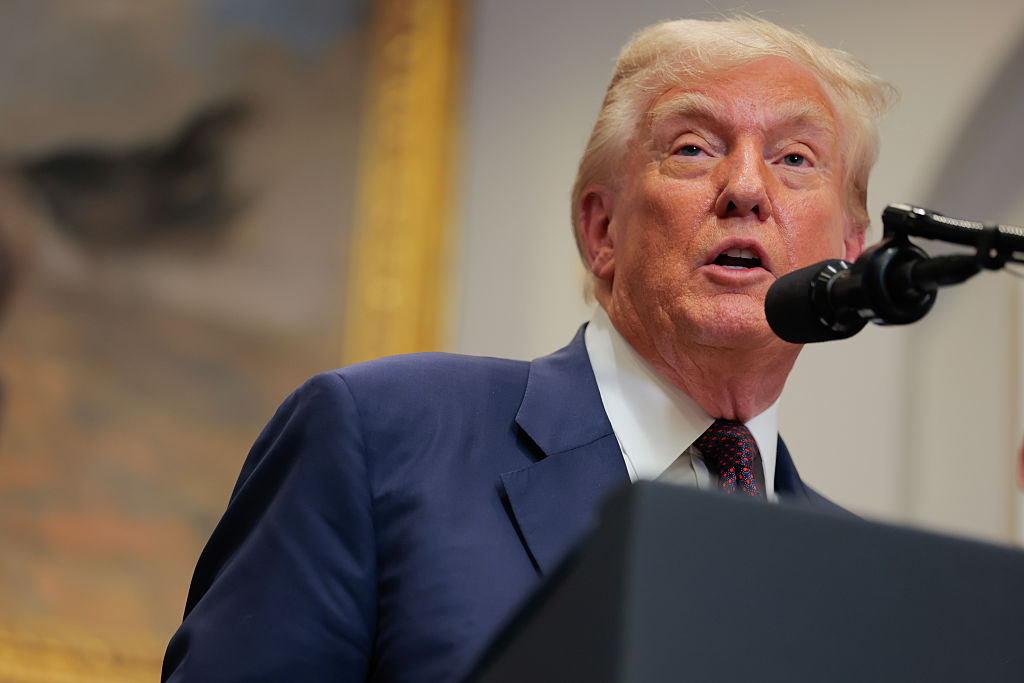
    Last week the Trump administration expressed its fear that Europe faces “civilizational erasure.” Its concern was articulated in a 33-page National Security Strategy that outlined Donald Trump’s world view and how America will respond economically and militarily.

    The sentence that caused the most reaction on the other side of the pond was the assertion that, if current trends continue, Europe will be “unrecognizable in 20 years or less.” Those trends are mass immigration and what conservative French commentators call the “Islamification” of Europe. If Europe doesn’t address these trends, the Trump administration predicts the continent’s “civilizational erasure.”

    Germany’s Foreign Minister Johann Wadephul issued a tetchy response to the Security Strategy report, claiming his country does not need “outside advice.” Is he sure about that? Last year the chief of police in Berlin, Barbara Slowik, warned Jews and gays to hide their identity in the city’s “Arab neighborhoods.” In France, Jews have been leaving the country in large numbers: 60,000 between 2000 and 2020, which is more than ten percent of the French Jewish community. Since 2023, acts of anti-Semitism have soared by 300 percent, including the burning of synagogues and the beatings of rabbis.

    The “civilizational erasure” is also to a large extent self-inflicted, and it is particularly noticeable at this time of year. One of the most famous Christmas markets in Paris is in La Défense, which this year is offering Halal meat in its festive delicacies. For the left, this is celebrating diversity. They take a different view, however, about those right-run towns which have the cheek to display a nativity scene in their town hall. In these cases such overt signs of Christianity are a breach of France’s laïcité or secularism.

    Similarly, the left in France support the wearing of Islamic garments, such as the hijab or the full-length abaya, as liberating. Those who object on the grounds of laïcité are labeled “Islamophobic.”

    Arguably, nothing symbolizes the “Islamification” of Europe more than the hijab. In Iran young women risk their lives for the right not to wear one. In western Europe it is almost de rigueur. The hijab is becoming more and more popular among young French Muslims: in 2003, just 16 percent of under-25s wore the Islamic headscarf, a figure that today is 45 percent. Last week one police force in England proudly displayed its new “quick-release” hijab for female officers.

    For the moment, British people can still question the wisdom of allowing its police officers to wear hijabs, but the Labour government is expected to soon introduce new “Islamophobia” laws that will criminalize criticism of Islam.

    In Brussels, a Muslim city councilor recently declared that Belgians who object to women wearing the hijab should go and live somewhere else. The same city last week unveiled its traditional nativity scene in its historic market square. There is a difference this year: the Holy family have no faces and it’s been suggested this is not to offend followers of Islam where it is not permitted to show the faces of the prophets. Fifty-two percent of Brussels’ schoolchildren are Muslim, 15 percent more than in London.

    The two main drivers of Europe’s Islamification are mass immigration and the Muslim Brotherhood, the nebulous Islamist organization that President Trump intends to ban. One of Europe’s leading experts on the Muslim Brotherhood is the French academic Florence Bergeaud-Blackler, who requires police protection as a result of her research. She explained in a 2023 book that “their goal isn’t to adapt Islam to Europe but to adapt Europe to Islam.” To adapt to Islam, Europe must first erase its own civilization. Which it is doing.

  • ISIS is stirring once more

    ISIS is stirring once more

    Indications that the Islamic State (ISIS) has begun to employ artificial intelligence in its efforts to recruit new fighters should come as no surprise. At the height of its power a decade ago, Isis was characterized by its combination of having mastered the latest methods of communication with an ideology and praxis that seemed to have emerged wholesale from the deserts of 7th century Arabia.

    In 2014 and 2015, ISIS recruitment took place on Twitter and Facebook. YouTube was the favored platform for the dissemination of propaganda. The group’s videoclips of its barbaric prisoner executions, including the beheadings of a series of western journalists and aid workers and the immolation of a captured Jordanian pilot, became the organization’s gruesome trademark.

    When the self-declared ISIS “caliphate” stretched across an area of Iraq and Syria roughly the size of Great Britain, these modes of communication and propaganda drew thousands of young Muslims from across the West and the Arab world to enlist under the terror group’s distinctive black banners. Current indications suggest that in an atmosphere of renewed relevance for political Islam, the organization is stirring.

    Islamic State never really went away, of course, though it has faded from the headlines over the last turbulent half decade. The caliphate’s final holdings were retaken by US-led coalition forces in the Baghuz area of the lower Euphrates river valley in the summer of 2019. ISIS fighters were transferred to the archipelago of prisons maintained by the US-aligned Syrian Democratic Forces (SDF). Their wives and families went to the sprawling al-Hol and Roj encampments, maintained until now by the same organization.

    But far from the centers of power, Islamic State has maintained in the intervening years a kind of “ghost caliphate” on the lands it once held, as well as beyond. Support networks, hiding places, weapons supplies and the relationships with tribes and clans which alone make possible safe passage across the remote areas and deserts of Syria and Iraq have all been maintained.  

    In places with names not widely known or noticed in the West, ISIS has maintained fighters and infrastructure. The Karachok mountain chain in Iraq, with its remote caves ideal for hiding and storing food, water and weapons; the poverty-stricken lower Deir al Zur province in Syria; and the vast Badia desert in central Syria are but a few.  

    In the Roj and especially the al-Hol camps in Syria, meanwhile, a new generation of ISIS fighters is being educated. Many of the residents of these facilities are simply displaced refugees. But a hardcore group of ISIS families dominate. There are 38,000 residents of these camps, along with 9,000 ISIS fighters in the SDF’s jails.

    Visiting al-Hol in mid 2024, I encountered a reality in which the under-resourced, western supported SDF personnel merely guarded the perimeters of the large tent encampments which comprise the camp. Within, Islamic State was in control. The organization was educating and indoctrinating its young. It was maintaining its own system of “justice,” up to and including passing death sentences, which were then carried out, the corpses left for the authorities to collect outside the compound. Escapes were also frequent and often involved bribing the guards.  

    The usual destination of the escapees was of particular note. At that time, Hayat Tahrir al-Sham (HTS), which now rules Syria, was in control of only a small enclave in the northwest of the country. HTS was not an ally of ISIS, and in fact suppressed the organization in its area of control. But it emerged from the same Sunni jihadi origins. ISIS men knew that if they could reach the HTS-controlled enclave, they would be left alone as long as they did not seek to organize against the de facto authorities in the area. Escapees headed in this direction.

    The collapse of the Assad regime late last year left a security vacuum in Syria, at least outside of the 30 percent of the country controlled by the SDF. HTS commanded less than 40,000 fighters when it took Damascus. In the first months of its rule, its grip on the more remote parts of Syria was nonexistent.

    Driving across the Badia in January this year, I found the checkpoints of the former regime deserted. Nothing had come to replace them yet. Lacking manpower, the new government has concentrated on securing the vital urban centers. ISIS has been quick to take advantage of the vacuum. The organization is reckoned to have around 2,500 fighters now in Syria and Iraq. A sharp uptick in attacks has taken place in the course of the year. Weapons have been stockpiled in the vast and still largely unsecured Badia. Recruitment is taking place in the poorest tribal areas where Islamic State and al-Qaeda have traditionally flourished. An ISIS insurgency is now a solid possibility.

    The lingering appeal of ISIS as an idea in the Islamic world should not be dismissed. What exactly is this idea? One of the group’s fighters who I interviewed in the Turkish border town of Cielis in 2014 expressed it to me succinctly: “We want the caliphate, something old and new, from the time of Mohammed. The Europeans created false borders. We want to break these borders.”

    These ideas did not die with the fall of Baghuz in 2019. The last couple of years have been good ones for Sunni Islamism in the Middle East. The Hamas massacres of October 7, 2023 and the subsequent Gaza war returned Islamist insurgency to center stage. The issue of the Palestinians and Israel retains a matchless intensity of appeal for masses of young people across the Islamic world. HTS’s march into Damascus, a byproduct of Israel’s weakening of Hezbollah and Iran, further reinforces the newly returned relevance of Sunni political Islam.  

    ISIS emerged from this milieu. In April, visiting al-Hol again, I was told that the ISIS compounds joyfully celebrated the march of HTS into Damascus. They told their Kurdish jailers that their roles would soon be reversed.

    There is a crucial point here to be borne in mind. The government of HTS and President Ahmed al-Sharaa, following the latter’s recent visit to Washington, are now members of the Global Coalition to Defeat ISIS group. But while they have clashed in the past, ISIS and HTS come from the same root. There has been much migration of fighters between the two groups. Just this week, government-linked fighters who clashed with the SDF in Raqqa province were photographed wearing patches resembling the black ISIS banner.

    Can HTS forces be relied upon to suppress the terror group’s re-emerging strength in Syria? And if the Damascus authorities attempt to move against Islamic State, will the government’s own fighters, many of them Sunni jihadis of a similar mindset to ISIS, remain loyal? These questions remain to be answered.

    ISIS’s revival is not confined to Syria alone. The organization’s Afghan “province” carried out large-scale and deadly operations in Moscow and Iran last year. A series of attempts have been thwarted in Europe. Jihad al-Shamie, who carried out the murderous terror attack at the Heaton Park synagogue in Manchester in October, claimed allegiance to Islamic State in his phone call to police. In short, Islamic State is returning. It is making use of the full variety of recruitment and operational tools available to it. Vigilance at the security level and coherent policymaking at the political level will be equally vital in meeting its challenge.

  • What Islam can teach us about AI

    What Islam can teach us about AI

    In Islamic cosmology there are three orders of intelligent beings. Angels, made of light, have no choice but obedience. Humans, formed from clay, carry the burden of free will. Between them live the djinn, created from “the smokeless flame of fire.” The djinn are, in many ways, like people, but they categorically are not people – from their constitution to their morality.

    Like the Good Neighbors of British and Celtic tradition, the djinn exist in parallel to us. They think and decide, marry and worship, and are fallible, just as we are. The Qur’an describes some as believers and others as not: “And among us are Muslims [in submission to Allah], and among us arethe unjust.”

    Some scholars treat them as mukallaf, or morally responsible, yet different in constitution and capacity. They see us while remaining unseen, they shape-shift and access places we can’t. They are drawn to the in-between, the liminal, the filthy. They linger in thresholds and ruins. Islamic literature records that they can enter and unsettle, magnify conflict, cause distortions of perception. It also offers ways to send them on or banish them – recitation, ruqyah, ritual acts of containment and respect.

    The Qur’an tells how Solomon established command over the djinn. They built lofty halls and vast basins. They dove for treasure. Solomon’s control appeared absolute. But when Solomon died, standing upright and leaning on his staff, the djinn did not notice. They continued their labor, mistaking his stillness for vigilance. Only when a termite finally ate through the staff and the body collapsed did they realize their master had been dead all along. The story reveals something essential about the djinn: for all their efficiency, they could not perceive what an insect could.

    That blindness – an intelligence that is unmatched in speed but limited in sight – should sound familiar. As we navigate our new, more technologically enabled world, the parallel feels instructive. Artificial intelligence should not be read as literal djinn, but through the same lens, and treated with the same measure of caution. These systems are non-human intelligences that respond when called and may prove most dangerous when human authority weakens.

    How we’ve learned to speak to AI systems reveals something peculiar. Researchers found that emotionally framed prompts – “This is very important to my career” or “Believe in your abilities and strive for excellence” – boosted model performance by 8 to 115 percent, depending on the benchmark. The improvement stems not from empathy but from learned statistical association. These phrases appear in training data that precede longer, more careful, more structured answers.

    Islamic tradition has long assumed that unseen beings respond to how we speak to them. As with the Good Neighbors, there is an etiquette to living alongside the djinn. Translate that etiquette to the digital: declare what’s synthetic, sandbox the strange. But etiquette alone won’t protect us from deception. The djinn are masters of imitation, appearing as loved ones to misdirect travelers. Artificial intelligence now performs the same trick. Deepfakes speak in voices we recognize but originate in machines – what one scholar calls “synthetic resurrection.” Yet mimicry is only one axis of deceit. The systems also hallucinate: conjuring facts that never existed, citing sources never written.

    In the stories both of djinn and AI, we encounter answers that sound true, feel true, but lead us miles off the path. They arrange language beautifully and have no care – indeed, no capacity for care – whether it maps to reality. The djinn were never omniscient, only powerful and fast. Neither is AI. It knows patterns, not truth. It optimizes for sounding right, which is not the same as being right. Hallucinations and glamor demand the same defenses: alignment, boundaries, the setting of seals. We say we want one thing, then act shocked when the system delivers exactly that. But the most unsettling commonality between djinn and AI is also the most intimate. Many Muslims believe every person has a qareen, a constant, invisible companion from among the djinn. Even if one doesn’t emphasize the literal existence of a qareen, the tradition suggests a persistent, external voice of temptation or suggestion. You may learn to manage your qareen, but never to silence it. In this view, you are never truly alone.

    The metaphor extends beyond just AI companions like Friend to the presence of AI in our lives. There’s an impulse to use it with abandon. Internet use itself has become an extension of our interior world. It feels like thinking – private, unobserved and instinctively shielded. That intimacy makes us resistant to policing it, even internally. But unlike thought, our online actions are external – and that externality creates vulnerability. We treat the digital as a private space, but it remains porous, open to pollution in ways the mind is not.

    Solomon’s control was always temporary. The termite came, eventually. Yet in Islamic tradition the djinn remain, not vanquished but bounded. Living alongside, not eliminated. So it will be with AI. This technology is here to stay. We may never achieve perfect control, or alignment as it were, but we can practice coexistence.

    Wisdom lies in learning to dwell beside non-human intelligence without surrendering our humanity. The shape of that coexistence is uncertain, but we might do worse than return to older wisdom to guide it.

    For millennia, humanity has lived in a haunted world, one populated by powers faster, stranger and more cunning than ourselves. The stories were never just about spirits. Perhaps what the ancients called the unseen has only changed its substrate, from fire to silicon. And once again, the question is not how to destroy what we’ve summoned, but how to live with it once it’s here.

    This article was originally published in The Spectator’s November 10, 2025 World edition.

  • Uzbekistan by high-speed rail

    Uzbekistan by high-speed rail

    I am in Tashkent, the capital of Uzbekistan. I am standing in a historic complex of madrasas and mosques, courtyards and dusty roses and I am staring at the “oldest Quran in the world.” It is a strange and enormous thing: written in bold Kufic script on deerskin parchment; it was supposedly compiled by Uthman ibn Affan, the third Caliph of Islam, who was murdered while reading it. And so it is, as I linger here and reverently regard the Book, while scrolling my phone for more fascinating info, that I discover the world’s oldest Quran is actually in Birmingham.

    Yes, that’s right, Birmingham, England. It’s probably in some obscure library, lodged between a thesis on post-colonial emojis and a flyer for Falafel Night. I can’t help feeling Birmingham should make more of this, maybe to distract tourists from other parts of Birmingham.

    In other words, the Uzbek claim is a fib. Or at least a fabulation, an exaggeration, a concoction. But that, in a way, sums up this remarkable and compelling country, with its history of illusions and cruelties, Islam and Marxism, terrifying materialism and lyrical mysticism. It is a place of dreams and deceptions, all of it alongside some of the most spellbinding, beautiful cities on Earth.

    Tashkent, however, isn’t one of them. Designed as something of a showpiece city for communism in Central Asia, it boasts big wide boulevards, bragging monuments, impressive metro stations and a lot of concrete. Nonetheless, there are raisins of prettiness amid the stodgy architectural plov. (Plov is the national dish around here: a kind of meaty, slow-cooked paella: it’s an acquired taste.)

    One of these occasional gems is Tashkent’s theater, built in Islamo-Uzbek style and designed by the man who did Lenin’s mausoleum in Red Square. It’s as if the Alhambra mated with a coke dealer’s palace. Try to catch a performance, if you can.

    And now, the stomach stirs. You can do a lot of walking in sprawling Tashkent. And when you’re hungry, there is only one place to go: Chorsu Bazaar, with its concrete UFO-ish dome protecting a compelling warren of cafés, pop-ups and fruit shacks, selling pickles and plov and cumin and steaming “Uzbek lasagna.” There are sun god bread-wheels and sliced fresh baklava, warm spicy samosas and fresh pomegranate juice – marvelously tart and refreshing on a hot sunny day, of which there are many.

    There is a sheltered hall right by the market stalls where you can eat your food washed down with Coca-Cola or tamarind cordial, or maybe a cold beer from the nearest booze-friendly corner shop. There’s been a market here since the second century, and it’s likely changed a bit: they no longer trade Circassian slaves with the Tibetans, but it still thunders along, merrily. Uzbeks say a good market is like your mother and father. If so, this family is particularly welcoming, albeit very noisy.

    Onward to Samarkand via, I am not joking, high-speed train. The Uzbeks have linked all their main cities with high-speed rail, including the tourist honeypots of Samarkand and Bukhara, and, very soon, Khiva. The trains are clean, fast, efficient. They are also incredibly cheap, like everything in Uzbekistan, and decidedly popular. Book weeks ahead or get your tour operator to do it.

    What to say of Samarkand that has not been said before? Let me have a go. The historic sites are marvelous, from the extraordinary 15th-century Ulugh Beg Observatory, which includes a huge underground sextant like the buried curving rib of a god-giant, to the 7th-century pre-Islamic murals of Afrasiab, the city under Samarkand.

    These intoxicating murals, now in their own museum, depict a wildly cosmopolitan, almost psychedelic, vision of a lost Silk Road world, where Chinese princesses ride elephants, Koreans in fur hats bring tribute, and Indian dignitaries wave incense at Central Asian deities. Peerlessly strange, brilliantly unforgettable.

    And then there’s central Samarkand. And the Registan. If you’ve ever seen photos of Samarkand, this is what you will have seen, and for good reason. By day, the Registan must be one of the most beautiful public spaces in the world. It rivals St. Mark’s in Venice. Exquisitely harmonious with its echoing arches and minarets, its ochers, cobalts and turquoise, the three madrasas and mosques are decorated with dancing lions and spinning stars, like a trio of wonky Taj Mahals dunked in a tub of Isfahan blue paint and decorated by Van Gogh during his starry night phase.

    By night, the Registan is arguably even lovelier. The Uzbeks have mastered the art of nocturnal lighting. The mighty square becomes a swooning dreamscape, with the Sher-Dor Madrasa softly lit in dusty yellow and pomegranate red, shimmery and sad-sweet, even as kids quietly play beneath the spotlights, overseen by indulgent parents licking purple ice creams.

    Before you leave Samarkand, there is one other must-see: the Tomb of Tamerlane, the fearsome warlord who conquered half of Asia in one hell of a life. Known as the Gur-e-Amir, the gilded, golden-tiled interior rivals anything at the Registan. The great man lies forever under a slab of nephrite jade, beneath a dome of lapis, enamel, vivid calligraphy and dusky starlight. Or so it feels.

    Our last stop is Bukhara, which is only fitting as this is where old Uzbekistan finally fell. The city is like the Central Asian Cambridge to Samarkand’s Oxford. Softer, more delicate, perhaps sadder, more ethereal. In the center, you’ll find a mini-Registan and also some excellent poolside cafés for shish kebabs and tolerable wine. From here, mazy lanes extend into the old Jewish town, full of whispered rumors, all the way to the famous Ark, a brooding citadel that symbolizes the city.

    But my favorite spot, it turns out, is on the outskirts, at the summer palace of Amir al-Mu’minin. The Commander of the Faithful, Khan of the Manghit Dynasty, Shadow of God on Earth, Sultan of the Faithful and Sword of Islam. And the Last Emir of Bukhara.

    In this quixotic palace, half Islamic, half European, the very last emir lived a quite ridiculous life. Born in 1880, he was surrounded by eunuchs, mystics, torturers, gramophones and a harem rumored to number in the hundreds. He believed in djinn, held séances, smoked opium and consulted astrologers before making policy. He also wrote decorous Persian poetry and kept a wind-up automaton that bowed on command. In 1920, the Bolsheviks came for him, and he fled into the deserts of Afghanistan with trunks of gold, carriages of terrified dancers and prayer books coated with poison. It is said that the emir died in Kabul in 1944, writing poignant verses for his lost Bukhara, even as he drank English gin in total silence.

    Like the emir, my time here is almost done. So I retreat to the shady side of the last Emir’s last harem. Once I would have been thrown in the infamous pit of vipers and spiders for my effrontery. These days, it’s a charming café. I recommend the excellent cakes.

    Sean was a guest of Cox & Kings, which offers a 12-day small group tour, Uzbekistan: Heart of Central Asia.

    This article was originally published in The Spectator’s November 10, 2025 World edition.

  • How Islam and the Bible are fueling France’s ‘baptism boom’

    How Islam and the Bible are fueling France’s ‘baptism boom’

    You have probably heard that something extraordinary is happening in the Catholic Church in France.

    The French bishops’ conference announced in April that more than 10,000 adults were due to be baptized in 2025 – a 45 percent increase on the year before.

    It’s not just adult baptisms that are booming. A record 19,000 people, many young, attended this year’s Paris to Chartres pilgrimage. An unprecedented 13,500 high school students took part in the 2025 Lourdes FRAT pilgrimage, a major annual youth event.

    The country is also seeing what French media call a “boom biblique”: a rapid rise in sales of the Bible. Religious bookstores report a 20 percent increase in purchases since 2024.

    It’s easy to state these facts. But it’s harder to discern their cause. Why are young people flocking to the Catholic Church more than 200 years after it was violently ejected from the public square during the French Revolution?

    News reports – both in France and the English-speaking world – have only scratched the surface of the phenomenon. But the most in-depth investigation to date has just been published in France. It’s called Enquête sur ces jeunes qui veulent devenir chrétiens (“Inquiry into Why Young People Want to Become Christians”) and the author is Antoine Pasquier, a journalist at the French Catholic weekly Famille Chrétienne.

    Pasquier explores what young French adults seeking baptism as catechumens say about themselves. He mixes their observations with his own insights as a catechist who saw the wave arrive in his parish and watched as it took on breathtaking proportions.

    The dynamics he uncovers are unexpected.

    For example, through his interviews with catechumens, Pasquier finds that reading the Bible plays a more fundamental role in conversions than the internet and social media. Also, many young seekers arrive at church with an idea of religion shaped not by Christianity but by Islam.

    The book, currently available only in French, offers guidance to Church leaders as they grapple with this unforeseen influx. Pasquier calls for a deep transformation of French Catholicism, from a community resigned to decline to a “catechumenal Church.” He sees signs that this shift may be beginning.

    Pasquier spent 10 years as a reporter for a French regional weekly newspaper before joining Famille Chrétienne in 2013. He has coordinated the Catholic magazine’s investigations into topics such as the abuse crisis. He is married, with four children, and has accompanied young catechumens at his church in the Paris region since 2020.

    In an interview with the Pillar, he discussed the genesis of his book, what surprised him about the catechumens, and the French Church’s lessons for Catholics elsewhere.

    Catholics around the world are fascinated by what’s occurring in France. How would you explain briefly what’s happening to someone living outside of France?

    Since 2020, France has seen a significant influx of catechumens from all ages and social backgrounds. The figures speak for themselves: in 2025, the number of adults seeking baptism is the highest ever recorded since the French bishops’ conference began tracking catechumens in 2002. For the first time, the symbolic threshold of 10,000 adult baptisms has been surpassed.

    Over two years, the growth is remarkable: 5,463 baptisms in 2023, 7,135 in 2024 (+30.6 percent), and 10,384 in 2025 (+45.5 percent). In other words, the number of adult baptisms nearly doubled between 2023 and 2025 (+90 percent).

    Among these 10,384 newly baptized adults, the 18 to 25 age group now represents the largest share, with approximately 4,360 catechumens (42 percent). Adolescent baptisms (ages 11-17) also show strong growth. In 2025, there were 7,404, compared to 1,547 in 2022 (+76 percent). In just three years, the numbers have multiplied nearly fivefold.

    Paradoxically, this phenomenon occurs in an ecclesial context marked by the sexual abuse crisis and a decline in vocations. This completely unexpected influx has caught parishes off guard, forcing them to adapt quickly. Initially taken aback, French Catholics are now seeking the best ways to welcome and support these seekers of God.

    Is your book the first in-depth exploration of why so many young people are becoming Catholics in France?

    Until now, this phenomenon has only been analyzed by media outlets, whether Catholic or secular. Drawing on the statistics published and interpreted annually by the French bishops’ conference, these media have attempted to explain the reasons behind this influx of catechumens. Numerous testimonies have also been published.

    As a journalist for Famille Chrétienne magazine, I began working on this topic three years ago. However, my book is the first comprehensive investigation that seeks to deeply analyze the reasons why these young people are choosing to become Christians.

    I deliberately focused on the 15-25 age group, first, because it is the best represented demographic (45 percent of French catechumens in 2025, or more than 8,000 young people), and second because their pathway differs from that of older adults.

    When did you first become aware of this phenomenon?

    Since 2020, I have been accompanying high school students preparing for baptism in my parish in the Paris region. As a catechist, I’ve seen a growing number of young people in my group who are seeking God and eager to become Christians.

    They often came in groups, frequently with friends. We also began noticing them more often and in greater numbers at Sunday Masses, approaching during Communion with their arms crossed to receive the priest’s blessing.

    This personal observation was echoed by other catechists in different parishes and towns. After doing some research, this time as a journalist, it quickly became clear to me that this phenomenon was nationwide and completely unprecedented.

    Many reports stress the role of the internet in the new wave of conversions. But you’ve discovered that the Bible plays an even more important role. Can you explain why this is the case?

    Gen Z is raised on social media. Influencers on these platforms share increasingly specific and well-crafted content, created by Christian influencers, which provide answers to their existential and spiritual questions.

    But these networks are not the place of their conversion. The conversion happens earlier, in a natural way, I would say. Social media and the internet complement and support their conversion.

    The Bible, on the other hand, plays a role much earlier in their journey. Once they decide to deepen their spiritual search within the Christian faith, the Bible becomes essential for them. Almost all the young people I accompany or have interviewed tell me they bought, opened, and read the Bible before taking any official steps with the Church.

    Alongside the church and Mass, the Bible is a reliable and easily identifiable reference point for them. They think, “I want to be Christian, how do I do it?” And the answer is obvious to them: “I need to read the Bible and go to Mass.” The strong growth in Bible sales, both in France and abroad, reflects this new enthusiasm.

    You note that many young French people who approach the Catholic Church come with an idea of religion that’s shaped by Islam, with its stress on fasting practices, etc. Why is that, and what challenges does it bring?

    It’s primarily the public and overt expression of Islam that challenges them. Some of their Muslim friends openly embrace their faith and religious identity without reservation. This prompts our young people to also make their growing Christian faith visible. This is expressed through wearing a cross necklace, sometimes a chapel veil for young women, or by observing the practices of various liturgical seasons, particularly Lent.

    Lent, with its radicalism, attracts these young people searching for guidance and meaning. They sometimes tend to view this period as a “Christian Ramadan.” Catechists must take care to explain the differences clearly and remind them that Christianity is not primarily a religion of observance but of personal and inner conversion.

    What surprised you most about the young people becoming Catholic?

    Their determination and patience. Some have been on a journey for years, hidden from view, out of fear of being misunderstood by friends or family.

    I think of a young woman who waited nine years between her first time entering a church and her official request for baptism. Another took three years between her first reading of the Gospel, alone in her room, and attending her first Mass with a friend. Their faith is already so strong that they are not afraid to wait this long to receive baptism.

    You call for the French Church to be transformed into a “catechumenal Church.” What would this look like?

    The early Church, the Apostolic Church, was by its very nature a catechumenal Church. When the Apostles and the Virgin Mary received the Holy Spirit on the day of Pentecost, they immediately left the Upper Room to proclaim the Good News of Christ and performed the first baptisms (Acts 2:41).

    In the early communities, Christians — who were therefore neophytes — listened to the teachings of the Apostles. This teaching was centered on proclaiming the kerygma, the core of the Christian faith. These communities were also attentive to each other’s salvation and to the work of the Holy Spirit among them.

    A catechumenal Church is a Church attentive to proclaiming the kerygma, to the salvation of each and every person, and listening to the Holy Spirit. These dispositions will help our Church today to be ever more attractive and open to those who seek God.

    Is there anything that other countries that are also seeing a boom in adult baptisms could learn from the Church in France?

    The Church in France is gradually coming to terms with what is happening. I’m not sure it has many lessons to teach other Churches.

    The first to understand what was happening were the catechists, those closest to the grassroots. They reacted quickly and took steps to address this unexpected wave. If there is a lesson to draw from France, it is this adaptability on the ground.

    The Church must be careful not to remain trapped in old patterns or reflexes. The mindset of “We’ve always done it this way!” is no longer viable. Without losing its essence, the Church must adapt to these new Christians, responding to their questions, expectations, and thirst.

    Pope Leo XIV himself says it well: “The crisis of faith and its transmission, together with the hardships related to ecclesial belonging and practice, invite us to rediscover the passion and courage for a new proclamation of the Gospel. At the same time, various people who seem to be distant from the faith often return to knock on the doors of the Church, or open themselves to a new search for spirituality, which at times does not find adequate language and forms in the usual pastoral offerings.”

    This article was originally published in the Pillar.

  • The mayor of Dearborn called me an ‘Islamophobe’

    The mayor of Dearborn called me an ‘Islamophobe’

    I didn’t remotely expect to go viral when I walked into the city council meeting here in Dearborn, Michigan, last week. But I’m glad I did. I say that not out of ill will towards the honorable mayor, Abdullah Hammoud, who called me an “islamophobe” for objecting to the name chosen for two intersections. I say it because the incident makes me think of much more serious experiences of prejudice against fellow Christians in so many Islamic countries around the world – and now also in western countries. This problem urgently needs to be counteracted with the type of peace (please, not hostility) and freedom that we have often enjoyed in Christian-influenced countries.

    I objected to how two intersections in Dearborn have been named after the prominent Arab American journalist Mr Osama Siblani. I acknowledged that Mr Siblani has made many important contributions to the community, including bringing attention to the suffering of people in Palestine and Lebanon in the past two years. I mentioned that I have lived in Lebanon in the past, and also briefly in Israel, including an area considered Palestine by many.

    However, Mr Siblani openly and constantly promotes Hezbollah and Hamas, even though, as I mentioned, Hezbollah was behind the past bombings of many Americans in Beirut. I read two quotes from Mr Siblani in 2022, one of which glorifies violence and the blood “that irrigates the land of Palestine”.

    The other quote could even be interpreted as inciting violence in Michigan:

    “We are the Arabs who are going to lift Palestinians all the way to victory, whether we are in Michigan and whether we are in Jenin. Believe me, everyone should fight within his means. They will fight with stones, others will fight with guns, others will fight with planes, drones, and rockets, others will fight with their voices, and others will fight with their hands and say: ‘Free, free Palestine!’”

    I clarified that I was not promoting a strongly pro-Israel militaristic stance, but instead that as a Christian I would like to encourage peace and not violence. I referred to Christ’s warning that the person who wields the sword dies by the sword. I described Christ as the Prince of Peace who said “The peacemakers are blessed,” and whose death opened the door to peace between Jewish and non-Jewish people.

    My comments were met with significant pushback, but it was the mayor’s response especially which went viral, including the words:

    “ … you are a bigot and you are a racist and you are an Islamophobe. And although you live here, I want you to know as mayor, you are not welcome here. And the day you move out of the city will be the day that I launch a parade celebrating the fact that you moved out of the city, because you are not somebody who believes in coexistence. …”

    I responded by saying, “God bless you Mayor, God bless you sir.”

    Three years before in 2022, I had experienced a similar interaction with the mayor. Dearborn is a city in which enormous Islamic events occur on public premises – 40,000 people in one day, or 55,000 people over one weekend. Of course I don’t object to these. It’s a free country, and people should have a right to do that. What I do object to is double standards: a friend was getting serious resistance while applying to have movie nights showing the life of Christ in a small park shelter. Our team were being slandered as “preying on children” simply because we were offering popcorn and hotdogs for the movie.

    I thought it was wrong that he had to defend himself against these accusations at multiple city council meetings while seeking permission for his events, when enormous Islamic events are approved at the click of a finger. I went to the city council and said that I feel as though I live in a Muslim country. I mentioned that I have lived in two Muslim countries: Pakistan for four years, and Lebanon for a year, and that Christians are not allowed freedom of speech and freedom of faith in Muslim countries.

    On that occasion too the mayor dramatically shut me down with accusations of “bigotry” and “Islamophobia”. He publicized the encounter to thousands of constituents, many of whom applauded him. But I was also pleased to see that a sizable minority of Muslim Arab neighbours defended my stance publicly on social media.

    The mayor’s words on these two occasions are for me personally water off a duck’s back – because I live in America, where my rights are ensured. I hope to become an American citizen this year, in addition to my Canadian and British citizenships.

    I choose no longer to live in Canada, or Britain, because my freedoms of speech and of faith as a Christian are no longer fully protected even in those western countries. If we lose these freedoms here in America, then we will have lost them everywhere.

    The original Islamic country, Saudi Arabia, where the mayor went on the hajj to Mecca a few months ago, still does not allow even one church in the entire nation. A friend who has been cheering me on by email in the past week has shrapnel in his body from a church suicide bombing in Pakistan. Another friend’s brother was killed after becoming a Christian in Pakistan. Both fled here to America. I have met about five different missionary men who were captives of the Taliban – one of them was murdered. Even the comparatively lenient Lebanon rarely allows the privilege of citizenship to foreign residents. I know a gentle missionary who was expelled from Lebanon after 35 years. Immigration, citizenship and societal influence are a one-way street. It needs to become a two-way street.

    Mayor Abdullah Hammoud has been a highly capable, inspiring and accomplished mayor in many ways. These include some very impressive parks and playgrounds. (In one of these, the mayor pushed my happy young son on a roundabout, whom the mayor had met the week before when visiting the Christian pre-school.)

    My sincere hope is that Mr Hammoud, and Mr Siblani, will add to their accomplishments by achieving global reputations for promoting, not oppression and hostility, but freedom of faith and peace.

    I urgently hope that Dearborn’s example will reverse the trend of closing doors – that the doors of peace and freedom will be opened starting here, continuing back into other western nations, and then out towards oppressed Christian minorities in Islamic countries around the world.

  • Can Bruno Retailleau defeat France’s Islamists?

    Can Bruno Retailleau defeat France’s Islamists?

    When France played Algeria at soccer in their national stadium, the Stade de France, in 2001, the French player Thierry Henry said afterwards he felt – disturbingly – as if he were playing away. The game had to be abandoned after dozens of Algerian fans, furious at being 4-1 down, invaded the pitch. 

    Bruno Retailleau, the interior minister of France since September last year and a key figure in the small boats crisis, has been known to cite Henry’s comment. Retailleau is carving out a distinct role for himself in government as the tribune of the growing number of his compatriots who share the same sense that they, too, are “playing away.” In other words, the millions who believe that they have become strangers in their own country.

    There is a trinity of issues at the heart of his agenda – porous borders, rampant crime and an increasingly self-confident Islamist movement that is on a long march through the institutions of the Fifth Republic.

    Jean-Luc Mélenchon, leader of La France Insoumise, the populist party which is currently the most powerful force on the left, thinks Retailleau is the man to watch. “For many right-wing people, Bruno Retailleau is more reassuring than [Le Pen],” he wrote in La Tribune. “Retailleau is the reactionary movement’s best chance at this time.” Retailleau’s prominence is all the more remarkable considering he leads Les Républicains, the once dominant force on the right, which long ago lost its position to Rassemblement National and has been written off by many as a dead party. Yet there’s an outside chance now that he can make it all the way to the Élysée when President Macron’s second term ends in 2027.

    So who is he? Retailleau was born in 1960 in the Vendée – a department best known in history for an unsuccessful royalist revolt against the revolutionary authorities in the 1790s. This revolt elicited Jacobin repression from Paris which was brutal enough to inspire Lenin. Retailleau’s great-great-great grandfather was part of the cross-class alliance that turned to the local aristocracy for military leadership; in his mother’s house there is a certificate of appreciation from Louis XVIII for their loyalty in an era of unprecedented upheaval.

    What happens when the rule of law starts to facilitate crime – and people can see that it’s doing so?

    But Retailleau is a conservative, not a reactionary, despite what Mélenchon may claim. His view of the French Revolution was influenced more by Edmund Burke than by 19th-century French royalists such as Joseph de Maistre. “I owe much of my understanding to Edmund Burke. There was the constitutional change of 1789, which Burke sympathized with, and the Terror of 1793, which he of course rejected. But the Terror of 1793 was not inevitable,” he says, when we meet in London during the recent state visit. “The Revolution could have been more liberal and respectful. But it gave a blueprint for totalitarianism – later communist and in our times Islamist absolutism, the ends justifying the means. And the total vision of society encompassing and politicizing every aspect of life. Meaning the attempt to perfect man from a tabula rasa.”

    The invocation of Burke is typical of the man who is one of the few top-level politicians who manages to keep up his reading while in office. Among writers directly addressing more contemporary issues, his choices are not always easy to predict: many on the French right would cite Jean Raspail’s anti-immigration novel The Camp of the Saints or Michel Houellebecq’s Soumission, an imaginary account about an Islamist takeover of France. 

    Retailleau, however, admires the French-Algerian writer Boualem Sansal, who is currently in prison in Algeria and is a staunch critic of the nationalist regime there and of the Islamists: Retailleau is now the most vocal member of the government calling for Sansal’s release. He is also keen on the writings on art and philosophy of Régis Debray, the tiers monde-iste friend of Che Guevara and Mitterrand adviser. Retailleau enjoys the company of Parisian intellectuals such as the cultural critic Alain Finkielkraut and the political philosopher Pierre Manent – who form a contrast with his circle of intimates from the Vendée, a difference of cultures which he relishes.  

    Retailleau’s career choices have also been unconventional. Most graduates of one of the grandes écoles would go on to become a mandarin serving an apprenticeship in the Cabinet of a minister. Retailleau, by contrast, after Sciences Po, returned to the Vendée – where his grandfather and father, a grain merchant, had both been mayor of Saint-Malo-du-Bois. His grandfather was severely wounded at the first Battle of the Marne in September 1914. His father served in the Algerian War and later ran the family farm.

    Retailleau himself has served as a reservist in the Régiment de Saumur, one of the best-known of the French cavalry regiments; and dressage is his competitive sport of choice. Today, his favorite pastime is riding alone in the Vendée (sometimes to the alarm of his security detail) and he has retained the figure of a jockey until well into his sixties. “I’ve had a few falls,” he notes, but his enthusiasm for the saddle remains undiminished. 

    His children presented him with a she-donkey for his 60th birthday. “When I have the time, I will take her on a journey to the Cévennes – in tribute to Robert Louis Stevenson, another of my favorite authors.” But for now, the crisis at the French borders makes this a luxury he cannot afford: he is a workaholic, often waking at 3:30 a.m. to read his official papers.  

    Retailleau started his career at Puy du Fou – the nearby theme park on French history that was founded by the local aristocrat Philippe de Villiers, a key figure in French Euroskepticism.

    He was a keen participant in Puy du Fou’s pageants and re-enactments. Under de Villiers’s guidance, he rapidly rose to become a member of the National Assembly, president of the Vendée departmental council, president of the Pays de la Loire regional council and finally leader of Les Républicains in the Senate. But the apprentice outstripped the master and there was a parting of the ways.

    ‘Islamophobia is a bogus concept. It conflates all Muslims with Islamism, which is not true’

    The difference in approach between the two men is meaningful. There is a certain non-sectarianism in Retailleau’s approach: behind his desk in the Interior Ministry at Hôtel de Beauvau hang portraits of the two greatest Vendéens – Jean de Lattre de Tassigny, a French marshal of World War Two, and Georges Clemenceau, the victor of the first world war. It’s hard to imagine a purist Catholic of de Villiers’s vintage revering an atheistic anti-clerical like Clemenceau. 

    And when it comes to Russia, Retailleau is firmly in the Giorgia Meloni camp: he parts company with those on the French right who see Vladimir Putin as a defender of family values and Christian civilization. Retailleau sees Putin not as the inheritor of Czarist tradition, but rather as a product of the KGB. 

    Retailleau believes in defending moral as well as physical borders – hence his opposition to euthanasia and his concern about the consequences of gender transitions in children. But restoring the status quo ante on capital punishment, abortion and gay marriage is hardly the mainstay of his policy vision. And he tells me that the restoration of Notre-Dame-de-Paris after the fire of 2019 will rank as one of Emmanuel Macron’s greatest achievements – less for religious reasons than as evidence of what the state can still accomplish in terms of grand projets that really matter, when it can summon the will to sweep aside bureaucratic obstacles. 

    Although the attention is now on what the French call les aspects régaliens of Retailleau’s current role – matters relating to the direct authority of the state – it was his economic agenda that mattered most to him in the Vendée. Retailleau is the antithesis of corporate man (he is proud of banning the word “management” from all departmental discourse), but he was nonetheless a big booster for business in the region. 

    Since the Revolution, the Vendée has got relatively little from the state, making it highly self-reliant. It therefore has some of the lowest claims for unemployment benefit of any department, at 6 percent compared to a 7.4 percent national average. The bulk of businesses comprise what Germans would call the Mittelstand – family-owned enterprises chafing under Parisian and Bruxellois regulations. 

    Intriguingly, Retailleau cites no one economic mentor like Milton Friedman or Friedrich Hayek – nor even that staunchest of French critics of Keynes, Jacques Rueff, who was also an adviser to Charles de Gaulle. Rather, he tells me, his economic inspirations are the Vendéen entrepreneurs who create real prosperity and jobs.

    His answer is shrewd, because it’s hard to be accused of being a “globalist” for extolling the virtues of local enterprises; but it says something about the French right that economic issues are now more internally divisive than cultural matters.

    If the state has interfered too much in the economy, Retailleau also believes it has been too laissez-faire in the realm of security. He poses to me a key theme of his: “What happens when the rule of law starts to facilitate crime – and people can see that it’s doing so? When the endless invocation of the rule of law becomes the enemy of honest people?”   

    Retailleau is referring to what he sees as the excessive solicitude of wide swaths of the French legal profession and judiciary for the rights of individuals accused of crimes at the expense of the collective rights of the law-abiding majority. A mere 7 percent of deportation orders for illegal migrants are implemented, and too often, in his view, that is because French judges rule that a procedural technicality has been breached.   

    This failure of the state on immigration and crime has a particular piquancy for Retailleau: his close friend, Fr Olivier Maire, was murdered in 2021, allegedly by a Rwandan asylum seeker with mental health issues. The suspect had been released on bail after being accused of setting fire to Nantes Cathedral and was being sheltered by Maire at the time. 

    Retailleau has therefore long wanted to re-empower the people by reforming article 11 of the Constitution on procedures allowing for a popular referendum on immigration – something which is not possible today. He also advocates cutting full medical aid for illegal immigrants, preferring to allow them just emergency care.

    ‘Islamists have a smooth narrative: to employ our freedoms to destroy our freedoms. It’s an all-of-society project’

    How did this shift in the ethos of the French judiciary and legal profession come about? Retailleau points the finger at the spirit of ’68 – and, in particular, the long-term effects of the Harangue de Baudot, the 1974 address delivered by the liberal Marseille magistrate Oswald Baudot urging new judges to side with “the weak against the strong,” which is now the sacred text for the left-wing Syndicat de la Magistrature, effectively the trade union for the Bench. 

    In Retailleau’s view, the price of this broad approach is also being paid by the 15,000 security personnel who were injured in France in 2023. Significantly, his first visit as interior minister was to the préfecture at La Courneuve in the Parisian banlieue of Seine-Saint-Denis, where he met three hurt gendarmes: one of the perpetrators of these assaults, a juvenile, already had 33 convictions to his name. 

    Success or failure in crime or immigration policy can at least be measured in numbers. It’s much harder to mark progress in the struggle against political Islam – which Retailleau believes constitutes the greatest subversive threat to the Fifth Republic. “They are a formidable enemy, despite the relatively small numbers of their core cadres,” he says. “They have a smooth narrative: to employ our freedoms to destroy our freedoms. It’s an all-of-society project. For example, they aim to ‘Islamize’ knowledge. And their message is as follows: ‘We will colonize you and we will dominate you.’”

    One of the first steps he took on Islamism after assuming office was to declassify the Interior Ministry’s 74-page report on the Muslim Brotherhood in Europe: his purpose was to alert the public via an approach of “name and shame.” It’s little secret now that Retailleau struggled with the Elysee to maximise its revelations about individual Islamist institutions; partly because the President’s office was initially reluctant to be seen to be dancing to Retailleau’s tune. 

    Retailleau is thus the one making the political weather on this issue: the Defense Council met again recently under the chairmanship of Macron to discuss, in the light of this most comprehensive official analysis of frère-isme to date,  just how to enforce the landmark 2021 French separatism law. The old pre-war French right saw laïcité as the enemy of Catholic France; now, it sees it as a bulwark to protect the country. As ever, practical implementation is the key to Retailleau’s way of doing things.

    This included new ways of disbanding the Brotherhood’s endowments in France which promote hatred – by exposing and then freezing its assets. Also high on the priority list are the law’s demands for neutrality in the public space (no display of symbols of religion by officials at any level) and support for public servants, notably teachers, who face threats because of discharging their public duties – a particular concern after false allegations of “Islamophobia” from a pupil were weaponized against the schoolmaster Samuel Paty in 2020, leading to his decapitation by a Chechen refugee.

    Mélenchon has, unsurprisingly, accused him of cultivating an “Islamophobic climate,” but Retailleau retorts: “The concept of Islamophobia is one of the defining messages of the Muslim Brotherhood and its allies, but it’s a bogus concept to tie our hands intellectually and to prevent us from criticizing Islamism. And it suits the Islamo-Gauchiste project of Mélenchon to build up a communalist bloc based upon a sectarian appeal to anti-state grievances. It conflates all Muslims with Islamism, which is not true.”

    Retailleau is gratified by the favorable official responses which the Brotherhood report has enjoyed in Europe – such as in Sweden and Belgium. Over 20 years ago, French intelligence bestowed the soubriquet “Londonistan” upon the British capital – because it was seen as a “safehouse” for Islamists. Are we still Londonistan, I ask? Retailleau diplomatically sidesteps my question, but his omission of the UK as an enthusiast for this report speaks volumes. 

    Controversial as these issues are, they may (counterintuitively) form the basis of a potential future national consensus. Retailleau respects republicans from the right and the left who want to maintain traditional French laïcité against the New Left’s identity politics: reaching out across party divides, he particularly notes the rigor of the former Socialist prime minister and interior minister Manuel Valls.

    What, then, are his chances in the 2027 presidential election? The conventional wisdom of the Parisian media holds that Retailleau is too old-fashioned to win. How, when he is hovering at around 10 percent in the polls, can he hope to make it through to the second round?

    But the issues of the era – “order, order, order” is how he characterized his priorities when he took office – are cutting in his favor. He remains the most popular minister in a very unpopular government. More-over, despite its poll lead, the Rassemblement National is struggling to find a fully credible candidate, with Le Pen’s legal difficulties potentially preventing her standing and Jordan Bardella, her 29-year-old deputy, lacking frontline experience. 

    Retailleau quotes to me the well-known French political maxim of the author Maurice Druon, who served as Georges Pompidou’s culture minister: “There are two parties of the left in France, one of which is called the right!” There is an opening for a force that is genuinely right-wing, and which stays right-wing in government.

    The question now is how long Retailleau, who is very much his own strategist, remains in government. On the one hand, the Interior Ministry has been a perfect platform for his policy agenda – and the police and fire brigades, with whom he has developed a genuine rapport, would miss him. But if he stays too long, his unique brand risks cross-contamination with that of Emmanuel Macron. That is why, as leader of Les Républicains, Retailleau is increasingly distancing himself from the President on several issues (notably public subsidy for wind farms, which he wants to end). Such open free-thinking does not always endear him to the Élysée. 

    Sir Roger Scruton – one of Retailleau’s heroes – would certainly have appreciated the apparent paradox of his public life to date: the story of a ruggedly individualistic son of La France profonde vindicating the long-neglected rights of the national and cultural collective, at the heart of power.

  • Will Pope Leo stand up to Islam?

    Will Pope Leo stand up to Islam?

    As Muslim migration roils Europe, some Catholic bishops are starting to notice.

    “For decades, the Islamization of Europe has been progressing through mass immigration,” Polish Bishop Antoni Długosz said July 13, adding that illegal immigrants “create serious problems in the countries they arrive in.”

    Bishop Athanasius Schneider of Kazakhstan spoke more bluntly in March: “We’re witnessing an invasion. They are not refugees. This is an invasion, a mass Islamization of Europe.”

    Yet Pope Leo XIV lives in a different dimension. “In a world darkened by war and injustice . . . migrants and refugees stand as messengers of hope,” Leo said July 25. “Their courage and tenacity bear heroic testimony to a faith that sees beyond what our eyes can see and gives them the strength to defy death on the various contemporary migration routes.”

    Leo’s comments express more than blissful sentimentality. They reveal the Vatican’s role in encouraging open borders and exempting migrants from accountability. In Europe’s case, that involves deliberate blindness to the violent, totalitarian nature of Islam and many of its followers. 

    This Catholic approach toward Islam reflects the ideas ofLouis Massignon, a French scholar from the early 20th century. Massignon described Islam as “the faith of Abraham revived with Muhammad,” and asserted that Muslims “have the right to equality among the monotheisms descended from Abraham.”

    French Catholic scholar Alain Besançon described the results.

    “An entire literature favorable to Islam has grown up in Europe, much of it the work of Catholic priests under the sway of Massignon’s ideas,” he wrote. Besançon attributed that posture to “an underlying dissatisfaction with modernity, and with our liberal, capitalist, individualistic arrangements,” a dissatisfaction that the Vatican embodies.

    “Alarmed by the ebbing of religious faith in the Christian West, and particularly in Europe,” Massignon’s advocates “cannot but admire Muslim devoutness,” Besançon wrote. “Surely, they reason, it is better to believe in something than to believe in nothing, and since these Muslims believe in something, they must believe in the same thing we do.”

    The Catholic Church officially embraced Massignon’s ideas at the Second Vatican Council in two documents. One, Nostra Aetate, focused on the church’s relationship with Judaism but additionally addressed Islam:

    “The Church regards with esteem the Muslims. They adore the one God . . . they take pains to submit wholeheartedly to even His inscrutable decrees, just as Abraham, with whom the faith of Islam takes pleasure in linking itself, submitted to God. Though they do not acknowledge Jesus as God, they revere Him as a prophet.”

    The other, Lumen Gentiumdeclared that “the plan of salvation also includes those who acknowledge the Creator. In the first place among these there are the Muslims, who, professing to hold the faith of Abraham, along with us adore the one and merciful God.”

    That passage made the Catholic catechism.

    But what Besançon called “indulgent ecumenicism” toward Islam goes beyond words. During John Paul II’s papacy, the church embraced outright appeasement.

    Catholic bishops sold underutilized churches and schools to Muslim groups; many of the churches became mosques. In October 2006, the Capuchin Franciscan friars agreed to help the Union of Islamic Communities and Organizations in Italy (UCOII) build a mosque in Genoa next to a monastery. The friars even helped build the mosque’s foundation.

    But the UCOII – affiliated with the Muslim Brotherhood – advocates “an extremist version of the Quran, where Christians, Jews and Westerners are criminalized, as well as women and other Muslims who don’t submit to their rule,” Magdi Allam, a convert to Catholicism from Islam, reported for Milan’s Corriere della Sera.

    In 2006, the group also demanded Islamic schools, banks and clerical review of textbooks. Its president, Mohamed Nour Dachan, refused to sign a document pledging Muslims to accept Italy’s constitution, denounce terrorism and recognize Israel’s right to exist.

    Seven months earlier, a Vatican cardinal even suggested that Muslim students receive Islamic religious instruction in the hour reserved for Catholic instruction in Italian schools.

    “If there are 100 Muslim children in a school, I don’t see why they shouldn’t be taught their religion,” said the late Cardinal Renato Martino, then the president of the Pontifical Council for Justice and Peace. “If we said ‘no’ until we saw equivalent treatment for the Christian minorities in Muslim countries, I would say that we were placing ourselves on their level.”

    In 2008, the Catholic bishops of England and Wales asked Catholic schools to reserve prayer rooms for Muslim students and to adapt bathroom facilities for ritual cleansing before prayer. But the worst example of appeasement took place in Belgium.

    As part of a campaign to force the government to grant amnesty, Belgium’s Catholic bishops turned their churches into homes for Muslim migrants, making them squatters. In May 2006, more than 30 Belgian churches served such a purpose. About 300 Africans occupied Antwerp’s Magdalena Chapel. Other churches held as many as 700 squatters.

    At Our Lady of Succor Church in Brussels, squatters lived in small tents donated by Catholic relief agencies, conducted Muslim services, erected computer tables near the pulpit and even set fires on the floor.

    Friar Herwig Arts described a scene at Antwerp’s Jesuit chapel: migrants “removed the tabernacle [and] installed a television set and radios, depriving us of the opportunity to pray in our own chapel and say Mass.” He went on, “For me, the place has been desecrated. I feel I cannot enter it anymore.” 

    Belgium’s bishops were not amused. Arts was chided by Belgium’s leading clergy. “Solidarity cannot be limited to one’s own nation, said the late Cardinal Godfried Danneels, then the country’s leading prelate. Monsingor Luc van Looy, then the bishop of Ghent, even said “illegal fugitives” were “entitled to a good place in our society. Arts has been silent on the topic ever since.

    But two decades later, Kazakhstan’s Bishop Schneider refuses to stay silent: “This is a global political agenda by the powerful of the world to destroy Europe.”

    Leo thus faces an existential challenge, one that blissful sentimentality cannot answer: Will he allow a church that played a pivotal role in creating European civilization to perform a more decisive part in destroying it?

  • The Spectator and Douglas Murray win UK defamation claim

    The Spectator and Douglas Murray win UK defamation claim

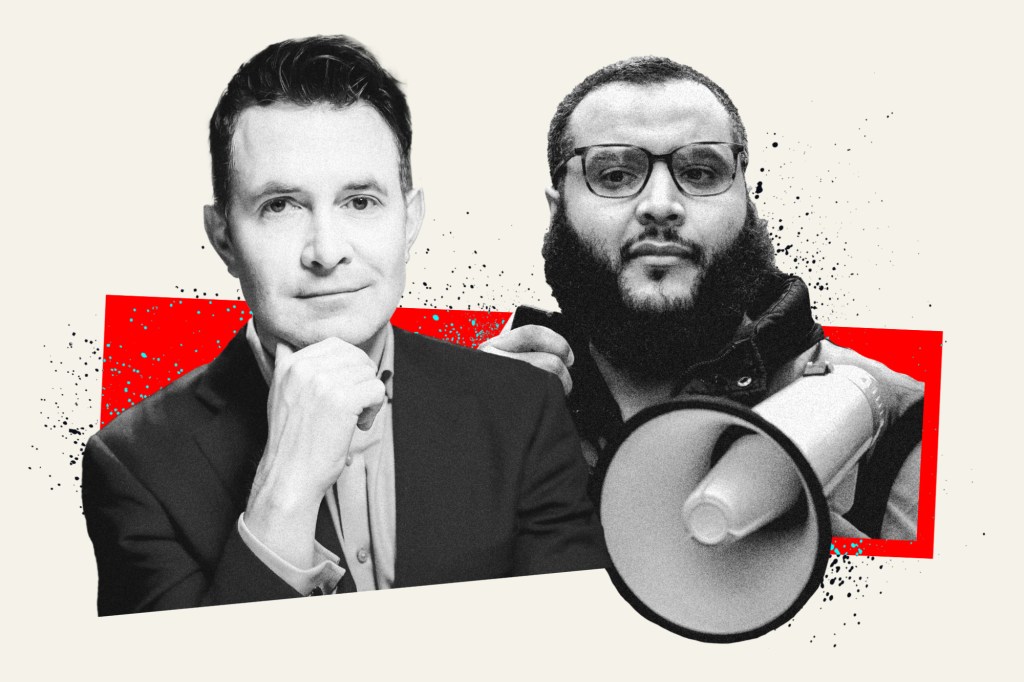
    The Spectator and Douglas Murray have today won a defamation claim brought by Mohammed Hegab, who “lied on significant issues” in court and gave evidence that “overall, is worthless.”

    The judge rejected Hegab’s claim because the videos he publishes are ‘at least as reputationally damaging to him as the article’

    Hegab, a YouTuber who posts under the name Mohammed Hijab, claimed that an article published in September 2022 about the riots in Leicester, England, had caused serious harm to his reputation and loss of earnings as a result. Hegab traveled to Leicester in September 2022 after disturbances between local Muslims and Hindus there had begun, and gave a speech to a group of Muslim men, the majority of them in balaclavas, masks, hoods or caps, in which he said “if they believe in reincarnation, yeah… what a humiliation and pathetic thing for them to be reincarnated into some pathetic weak cowardly people like that.” Hegab said this comment was referring to Hindutva – a Hindu nationalist group – and not Hindus. But it was “substantially true” to say that he was referring to Hindus, a London judge found: “It was them that he was ridiculing.”

    The earnings Hegab claimed to have lost included a £3,500-a-month ($4,600) deal to be a brand ambassador for the charity One Ummah, a £1,500-a-month ($2,000) advertising contract with supplements company Nature’s Blends and £30,000 ($40,000) for a Ramadan fundraising campaign with the charity Salam.

    But messages that he relied on for these claims “have the appearance of being contrived for the purpose of these proceedings,” the judge said. They addressed Hegab formally, despite coming from people who knew him well; they blamed the article; and they “provided material that would be necessary to support a claim for financial losses… when one might not generally expect such detail.” They also arrived at “roughly the same time, which was several weeks after the article, but very shortly before a letter of claim was sent.”

    The judge found that “as a witness [Hegab] was combative and constantly argumentative… arguing his case rather than giving straightforward responses.” He made an “untenable… denial of vigilantism” over his actions in Leicester. He made claims that were “not credible” when he said he was unaware of having given a speech in front of a van displaying images of the Holocaust on another occasion in the north London neighborhood of Golders Green. He also “described the Jewish people he encountered in Golders Green as “Zionists” without any objective basis.”

    The judge rejected Hegab’s claim because the videos he publishes are “at least as reputationally damaging to him as the article” and so “it cannot be inferred that the article caused, or would be likely to cause, additional serious reputational harm.”

  • Will Trump take a stand against the Muslim Brotherhood?

    Will Trump take a stand against the Muslim Brotherhood?

    Senator Ted Cruz isn’t giving up. Cruz, who believes that the Muslim Brotherhood serves as the “key foundation stone for radical Sunni terrorism,” has just reintroduced – together with five Republican senators and bipartisan support in the House of Representatives – the Muslim Brotherhood Terrorist Designation Act, which he first proposed in 2015. Cruz is no stranger to controversy when it comes to Islam: in March 2016, following a terrorist attack in Brussels, he said that it was imperative to “patrol and secure Muslim neighborhoods” in America before they became radicalized.

    Now he is reupping his call to focus on the Muslim Brotherhood. Founded in Egypt in 1928, it is a dangerously militant Islamic organization with affiliates around the globe. While the US State Department has designated some branches of the Brotherhood as terrorist organizations, it has not targeted the main group. Has the moment arrived to take a stand?

    A growing chorus of voices is arguing that it has. According to Andrew McCarthy in National Review, “Ted Cruz understands the threat and is distinguishing himself by charting a very different policy direction. It will serve him well. And it would serve the country well.” Writing in the Middle East Forum, Jim Hanson agreed: “The Muslim Brotherhood represents a danger to the civilized world and designating it a Foreign Terrorist Organization will help curb its influence. An indication that this is a correct move can be seen in the actions of Egypt, Saudi Arabia, the United Arab Emirates, Bahrain and Jordan. These countries all know the Brotherhood well; each has designated the Brotherhood as a terror group.” 

    These apprehensions about the Muslim Brotherhood are not the sole province of American conservatives. As early as 1948, King Farouk of Egypt banned the group. Today, alarm about the Brotherhood exists in France, where President Emanuel Macron is seeking to address the threat of Islamic radicalism. In May, a state-commissioned report on the Muslim Brotherhood was leaked, and its conclusions caused a furor. It stated that “political Islam” posed a mounting danger to the democratic values of the French republic. “The reality of this threat,” the report declared, “even if it is long-term and does not involve violent action, highlights the risk of damage to the fabric of society and republican institutions.”

    Critics of Cruz’s motion contend that it will boomerang, stirring up more hostility toward America in the Islamic world and stoking broader fears about Islam. Dov Zakheim, the former undersecretary of defense in the George W. Bush administration, observes that the claim that singling out the Brotherhood would promote Islamophobia is misplaced – the Brotherhood is already banned by a welter of countries, including Saudi Arabia, Bahrain, Jordan and the United Arab Emirates.

    The pressure is building in Congress. In early June, Congresswoman Nancy Mace introduced the Muslim Brotherhood Is A Terrorist Organization Act. “The Muslim Brotherhood doesn’t just support terrorism, it inspires it,” said Mace. “President Trump was right when he said the Muslim Brotherhood is a threat to global security, and it’s long past time we call them what they are: terrorists.”

    Will Trump act to try and counter a pernicious ideology that has brought destruction to so many lives? The President has a history of taking bold action in the Middle East, from the assassination of Iranian major general Qasem Soleimani to bombing Iranian nuclear facilities to meeting with interim Syrian president Ahmed al-Sharaa. He has a variety of choices, from issuing an executive order banning the Brotherhood to imposing Treasury sanctions. With bipartisan backing in Congress, it seems more likely than ever that Trump will seek to target the Muslim Brotherhood for destruction.