Tag: King Charles

  • King Charles will make a splash at US-250

    King Charles will make a splash at US-250

    If only work had started sooner on the new extension to the East Wing of the White House. Then President Donald Trump might be able to inaugurate it with a party for the man who owns arguably the grandest ballroom in the world (one Mr. Trump knows well).

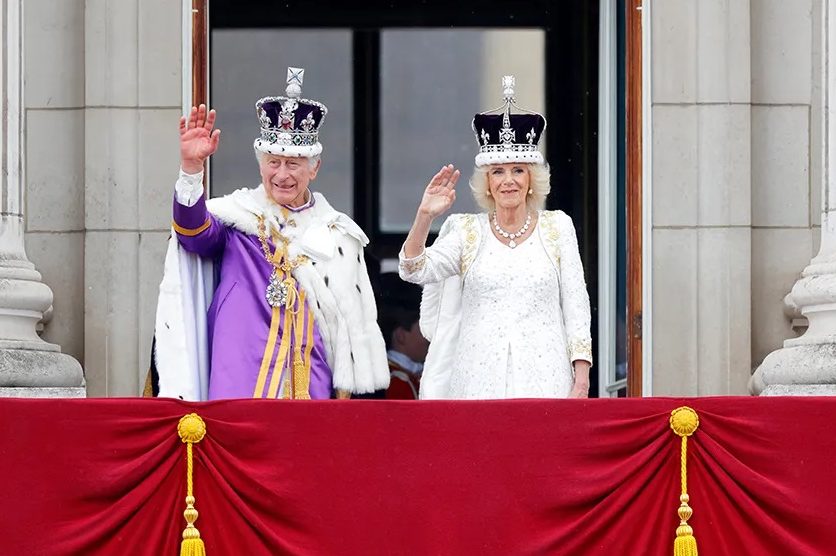
    Discussions are ongoing for a state visit to the US by King Charles III and Queen Camilla next year. President Trump has now logged an unprecedented two state visits in an easterly direction and common courtesy dictates a return invitation for the Windsors to pay a visit to the White House.

    Next year is the obvious date. It will be 250 years since the US came into being by extracting the colonies from the rule of the King’s fifth great-grandfather, George III. As divorces go, it has proved to be the most enduring and amicable bust-up in history – and that surely warrants a party. Some readers will be old enough to remember the euphoric events in honor of the 200th in 1976. The late Queen Elizabeth II was the guest of honor back then. Next year will also be her centenary so there will be a poignant subtext to the visit, not least because Trump was the last state visitor of her record-breaking reign.

    So how will things pan out this time? Overall, they will certainly be more upbeat than might have been expected had Kamala Harris won the presidential election. The last administration was treading very warily around the 250th for fear of looking triumphalist. Back in 1976, the anniversary celebrations were a straightforward “three cheers for the heroes of the Revolution,” “down with the evil Redcoats” and “no hard feelings.” Philadelphia turned out in force to welcome the Queen sailing in aboard the Royal Yacht Britannia carrying a brand new Liberty Bell from the same Whitechapel foundry that had made the original. And the partying went on and on. Ahead of 2026, the Democrats were agonizing about the elephant in the corner of Independence Hall. How to handle the Founding Fathers’ extensive links with slavery while those villainous Brits, rather awkwardly, had been offering emancipation? Maybe it was time to tone down all that revolutionary hoopla.

    Trump is certainly not going down that route. He will see things in much the same way Gerald Ford saw them in 1976: this was the birth of the greatest nation on Earth, warts and all, with all the freedoms that followed. In other words, it’s going to be big. Very big. And there is really only one other nation which needs to be at the party (though the French might claim an invitation to the top table).

    In 1976, the only debate was choosing which day the Queen should arrive. She had been invited for July 4 but thought it best to let the US have its moment. “Forgiveness can only go so far,” a waspish British embassy spokesman told the New York Times. It was decided that she should arrive on July 6 instead. No sooner had she stepped off the Britannia than she was delivering the first of several George III jokes. As she declared in Philadelphia: “Without that great act in the cause of liberty 200 years ago, we could never have transformed an Empire into a Commonwealth!”

    The bicentennial royal tour included Boston and New York, where the Queen insisted on a trip to Bloomingdale’s and Prince Philip jauntily wore a “Big Apple” sticker on his dinner jacket. The centerpiece was the White House ball in Washington, with Bob Hope acting as master of ceremonies. It also featured a fabulous faux pas which enraged Ford and greatly amused the Queen. As he led her on to the dance floor, the bandmaster chose that moment to strike up “The Lady is a Tramp.”

    I would envisage a little more history in the mix this time around. The King has always been fascinated by George III – whom he feels is greatly misunderstood – and the Royal Archives have recently digitized hundreds of thousands of Georgian documents with generous American support from organizations such as the Omohundro Institute of Early American History. I made a program about it all for the BBC. What sticks in the mind – along with firing guns at Yorktown and seeing Ivan Schwartz create the first American statue of the tyrant King since 1776 – is the way in which George moved on so swiftly from his “America is lost!” trough of despair to building the foundations of today’s “special relationship.”

    That, incidentally, was a banned phrase in British diplomatic circles at the time of the bicentennial. Timid Foreign Office mandarins were worried that it sounded presumptuous and that it might irk the UK’s European allies (Prince Charles was specifically ordered to remove it from his 1970 speech to the Pilgrims Society of Great Britain). That will certainly not be the case next year. Expect to hear it trumpeted at every turn following the President’s heartfelt words on the bilateral relationship at the Windsor state banquet in September: “‘Special’ does not begin to do it justice.”

    It should be a great party. Make that two parties if the Prince and Princess of Wales (as I expect) also undertake a US 250 tour of their own. Mr. Trump just needs to keep a close eye on his bandmaster.

    Robert Hardman writes for the Daily Mail and is the author of The Making of a King: Charles III and the Modern Monarchy (Pegasus Books). This article was originally published in The Spectator’s November 10, 2025 World edition.

  • King Charles and Pope Leo share the same religion

    King Charles and Pope Leo share the same religion

    The historic meeting October 23 between Pope Leo XIV and King Charles III – the first between a pope and an English monarch since before the Reformation – goes beyond the obvious religious significance. It suggests future cooperation in promoting an entirely different religion, one favored by most of the world’s elites.

    That religion preaches environmental sustainability through draconian measures that demand humanity’s submission at the expense of common sense and science. Not for nothing did Leo and Charles meet less than three weeks before the start of COP30, the United Nations’ annual conference on climate change.

    Throughout his public life, Charles positioned himself as Defender of the Environment. His portfolio supports replacing fossil fuels with alternative energy sources, farming without nitrogen-based fertilizers and instituting carbon taxes and carbon credits. His Majesty even advocates radically changing international economics to achieve environmentalist goals.

    “We must recognize that our economic system is at the heart of the problem precisely because it is at odds and not in harmony with nature’s own economy,” Charles said in 2022. “This situation is indeed dire and the consequences of inaction and business as usual are unimaginable. However, this same economic system of ours, if retargeted, is key to the solution.”

    Charles’ rhetoric and actions match what Pope Leo’s predecessor produced. Pope Francis made environmental activism his papacy’s hallmark when he wrote in 2015 the encyclical Laudato Si, in which he demanded radical, immediate change to avert an environmental collapse that would devastate social and political systems and wreak havoc on the poor.

    “Halfway measures simply delay the inevitable disaster,” Francis wrote. “Put simply, it is a matter of redefining our notion of progress. A technological and economic development which does not leave in its wake a better world and an integrally higher quality of life cannot be considered progress.”

    Francis solidified his agenda in 2021. On May 14, the Vatican held a one-day conference on environmental and economic issues. John Kerry delivered a keynote address for a panel on “Integral Ecological Sustainability” regarding energy and food.

    Eleven days later, Francis announced the Laudato Si Platform, a seven-year campaign to implement the UN’s Sustainable Development Goals. Francis described it as belonging to a thrust toward what he called “green economics,” “green education” and “green spirituality.”

    Francis and Charles thus forged a close relationship. In 2017, Francis hosted Charles and his wife Camilla for a papal audience In April, the king and queen made an informal visit to Francis 12 days before his death.

    Most importantly, both backed the World Economic Forum’s Great Reset and the UN’s Sustainable Development Goals, part of its Agenda 2030. Charles lent his voice to a video introducing the WEF’s program in 2020.

    “We need nothing short of a paradigm shift, one that inspires action at revolutionary levels and pace,” Charles said. “We simply cannot waste anymore time, and the time to act is now.”

    Four months after issuing Laudato Si, Francis addressed the UN. He called Agenda 2030 “an important sign of hope” because “a selfish and boundless thirst for power and material prosperity leads both to the misuse of available natural resources and to the exclusion of the weak and disadvantaged.”

    Tellingly, the Vatican entitled its 2021 conference on environmental and economic issues, “Dreaming of a Better Reset.”

    Leo intends to continue Francis’ activism. The new pope indicated that commitment clearly as the Vatican commemorated Laudato Si’s 10th anniversary October 1.

    “We inhabit the same planet, and we must care for it together,” Leo said. “I therefore renew my strong appeal for unity around integral ecology and for peace! We must shift from collecting data to caring; and from environmental discourse to an ecological conversion that transforms both personal and communal lifestyles.”

    But the European Union’s focus on solar and wind power makes it dependent on energy sources that are more expensive, less reliable and counterproductive to economic growth. Italy, Britain, Ireland, Germany, the Netherlands and Denmark pay the highest electric bills yet the EU wants to reduce carbon emissions by 90 percent by 2040.

    Meanwhile, such developing nations as China, India, Brazil and Indonesia invest heavily in fossil fuels despite emissions.

    “This climate crusade is a masterclass in self-sabotage, chaining its economy to ruinous policies while preaching moral superiority,” said environmental analyst Bjorn Lomborg. “It is economic suicide dressed in eco-virtue.”

    Even Bill Gates believes the panic ranges beyond overstatement.

    “Although climate change will have serious consequences – particularly for people in the poorest countries – it will not lead to humanity’s demise,” Gates wrote. “People will be able to live and thrive in most places on Earth for the foreseeable future.”

    Given such problems as clerical sex abuse and the breakdown of societal order due to unchecked Muslim immigration, St. Peter’s and Buckingham Palace, respectively, abandon their responsibilities and identities for the sake of intellectual fashion.

  • Does Prince William need to ‘change’ the British monarchy?

    Does Prince William need to ‘change’ the British monarchy?

    Of all the people who might be expected to get revelatory public comments out of the Prince of Wales, the beetle-browed actor Eugene Levy would not be high on the list. Yet during the Schitt’s Creek and American Pie thespian’s new show, The Reluctant Traveler, Levy ticks off a series of “bucket list” experiences – one of which was getting close to the royal family. While it would, presumably, have been fairly easy to get an audience with Prince Harry, Levy’s intentions instead lay with Britain’s actual royal family, and so the encounter took place between him and Prince William.

    The most striking remarks that the heir to the throne made to Levy were that he clearly regards his father’s reign as an interregnum between two rather more significant periods on the throne: his grandmother’s, and his own. Not, of course, that he was so tactless or brazen to make such a comment, but Levy managed to elicit some unusually candid remarks from William, who was filmed drinking a pint of cider with him in Windsor’s best pub, the Two Brewers.

    “I like a little bit of change,” said William. “I want to question things more. I think it’s very important that tradition stays. And tradition has a huge part in all of this. But there are also points where you look at tradition and go, ‘Is that still fit for purpose today?’ So I like to question things.”

    Levy, scenting something of a scoop, pressed him by saying “it sounds like the monarchy will be shifting in a slightly different direction”, to which the Prince of Wales expressed agreement.

    It was notable that, while William talked fondly about his grandmother at several points during the interview, his father King Charles was barely mentioned, save for the rather blasé observation that: “My father needs a bit of protection but he’s old enough to do that himself as well.” In other words, recent gossip that the relationship between king and heir has been strained of late will only be fanned by this, rather than dispelled.

    There were, of course, fond comments about his family. Unsurprisingly, William described 2024 as “the hardest year I’ve ever had”, remarking that “it’s important my family feel protected and have the space to process a lot of the stuff that’s gone on [in the] last year.”

    Sounding more like his estranged brother than usual, he went on to sigh: “I enjoy my job but sometimes there are aspects of it, such as the media, the speculation, the scrutiny…” And, he might have added, participating in such pieces of entertainment as The Reluctant Traveler.

    Yet whether it worked or not as television, it was a fascinating insight into a very private man’s psyche. It is widely expected that William will be a transformative monarch in a way that his father has not been. His comments that he will not be looking to the past were more telling than might have been intended. William said that: “I think if you’re not careful history can be a real weight and an anchor around you. And you can feel suffocated by it and restricted… It’s important to live for the here and now. But also I think if you’re too intrinsically attached to history, you can’t possibly have any flexibility because you worry that the chess pieces move too much and therefore no change will happen.”

    This may be true. However, one hopes that if William has a trusted courtier or two at his side, that they might be able to convince him that change – presumably on the significant scale that he is intending – is not always a good or even necessary thing. In any case, a reign that many have pre-emptively dismissed as dull might yet surprise the world, although whether for good or ill remains to be seen.

  • Trump will be on his best behavior for King Charles

    Trump will be on his best behavior for King Charles

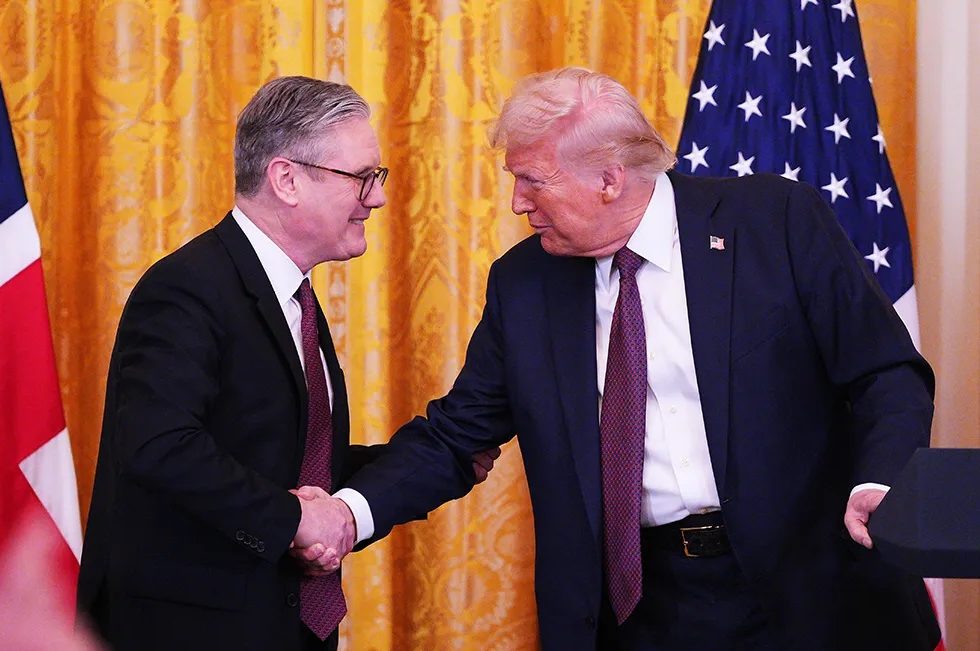
    The Donald has touched down in Britain for his unprecedented second state visit. It makes sense in a way that this most unconventional of American presidents is being granted a privilege that has never been offered to any other US leader, namely a repeat performance of pageantry and pomp that will flatter this Anglophile’s ego to its considerable core. That the event is happening against King Charles’s wishes might bother any other prime minister, but such was Keir Starmer’s desire to curry favor with Trump that he even waved the King’s handwritten invitation on camera. And with that he ensured favorable treatment for the country he is (barely) governing. The question is what happens next.

    Unusually, Trump is not the issue at hand, at least as far as things currently stand. For all of his volatility and unpredictability, he is a fully paid-up admirer of the royal family. He has proudly, if erroneously, boasted that he was the late Queen’s favorite president. As such, he is unlikely to make any sort of trouble during his notably brief visit to Britain.

    He will be feted during Charles’s speech at Windsor Castle during the formal banquet, given every kind of pomp and respect that he surely sees as his due, and will generally be treated like a major global politician. Trump is a man of considerable ego, and that ego will be flattered. From Starmer and the government’s perspective, it is unlikely to be a troublesome trip.

    However, from Charles’s perspective, Trump’s ingress into Britain is less welcome. The two men may only be three years apart in age, but they could scarcely be more different. Charles is a liberal horticulturalist who has a great love of art, literature and history. Trump is a McDonald’s-munching pragmatist whose bestselling book was entitled The Art of the Deal; meanwhile, his host’s best-known publication is called A Vision of Britain.

    The King is a traditionalist – and a small, rather than large, ‘c’ conservative – who likes to think of his country as a fine place besmirched by ugly progress. Trump, meanwhile, shares the monarch’s idea of his own country having fallen behind, but his rabble-rousing slogan of “Make America Great Again” will find no echo this week. For Charles, Britain has never stopped being great.

    There are other issues that might prove contentious. The King has begun cautious steps towards a rapprochement with his younger son, and Trump’s last reported comment on Prince Harry was to say that, although he was now prepared not to deport him over his admitted drug use, “I’ll leave him alone. He’s got enough problems with his wife. She’s terrible.” It is probably accurate to say that Charles’s thoughts on his daughter-in-law may be similar, but he would rather see his throne fall than ever be caught making such an indiscreet admission.

    This sums up the difference between the two men and their respective values. One has always believed that “never complain, never explain” is an admirable way to live one’s life; the other has complained, explained, and then, for good measure, hurled invective at his enemies. How they will make small talk off camera remains to be seen.

    Still, one thing that decades spent as Prince of Wales have taught Charles is the value of smiling and waving, even when a situation – or a person – is not to his taste. Veteran royal watchers can easily see when the King has exerted his own influence (witness his reception of Zelensky at his private home of Sandringham, a conspicuous mark of regard after his appalling treatment by Trump and his Vice President J.D. Vance in the Oval Office earlier this year). Although Trump will be on his best behavior this week, every tactless or crass remark of the President’s will be noted. You can be sure that Starmer’s government will never be allowed to forget the help that Charles has given them – assuming, that is, Starmer is still in office, if not Labour in power, long enough for the King to ever call in his favor.

  • Trump returns to backwater Britain

    Trump returns to backwater Britain

    President Trump returns to Britain this week for his second state visit, to a country which is much changed yet depressingly still the same. On his first, six years ago, Britain had yet to complete its departure from the EU, Elizabeth II was still on the throne and the Conservatives still in power – with three Prime Ministers to go before their eventual ejection from office. He will no doubt receive a warm and dignified welcome from King Charles, whatever is going through the monarch’s head – the impeccable neutrality of the British throne has survived the change of reign. Yet the President will find a country that is anything but transformed by Brexit or by its change of government.

    Brexit presented Britain the opportunity to take a sharply different route from the low-growth track on which socially democratic Europe is trapped. Yet neither this government nor the previous one have chosen to exercise their new-found freedoms. Britain instead has become just another brand of European social democracy. It has a few new trade deals, not least a more favorable regime with the US, which it would not otherwise have. Yet far from controlling its borders, Britain has opened them up while politicians promised to do the opposite. Illegal arrivals in boats from France (who account for a small proportion of overall migration but a very visible one) have mushroomed, the government apparently powerless in the face of human rights lawyers. Few migrants even need to complete the crossing in their rubber dinghies – they are picked up and delivered to UK shores by coastguard patrol. Many are then put up in hotels. The public seems finally to have had enough: when an Ethiopian asylum-seeker was arrested for suspected sex offenses against a 14-year-old girl in July (he was later convicted) it sparked a summer of protests outside the hotel.

    But above all else, Britain remains trapped in economic mediocrity. Keir Starmer’s Labour party came to power in July last year promising “growth, growth, growth” – the same promise made by Liz Truss in her short-lived spell as Prime Minister in 2022. The economy failed to register any growth in July, and is up a weak 1.5 percent in the past year. In terms of GDP per capita the UK economy is no larger than it was at the time of Trump’s 2019 state visit. Moreover, the government seems to have few policies which are likely to achieve growth. On the contrary, one forthcoming parliamentary bill threatens to make it far harder to fire inadequate staff and will make it easier for unions to go on strike. Having escaped from EU regulation, Britain now seems intent on outdoing the bloc on job-destroying laws. It doesn’t help that the Labour government, in one of its first acts, awarded large pay rises to doctors, train drivers and other public sector workers without attaching any conditions to improve productivity. Rising UK government bond prices are a hint as to how dispassionate global investors see Britain: a country trying to live beyond its means, and consequently where inflation is bound to run ahead of other countries. Even Greece, thought of as a basket-case until recently, has lower yields on its long-dated bonds.

    Britain’s lack of confidence is there to be seen in the sinking fortunes of its governing party. Prime Minister Keir Starmer was never as popular as his huge parliamentary majority suggested – he commanded only just over a third of the popular vote last year, in spite of his party winning a handsome majority of its seats. Yet there is a serious possibility that Starmer will not make it to fight another general election due in 2029. He is deeply unpopular even within his own party. He has been badly damaged by two recent resignations: first of deputy Prime Minister Angela Rayner, who admitted to underpaying tax on an apartment she bought on the south coats, and then that of US ambassador Peter Mandelson, after details of his close relationship with Jeffrey Epstein were revealed. Starmer, it seems knew some of the details but had chosen to appoint him to the job anyway.

    For the moment, the political future seems to belong to Reform UK and its charismatic leader Nigel Farage. The party is steadily displacing the Conservatives as the party of the right, yet is also picking up disaffected working classes in Labour-held seats. Not unlike the US, Britain is undergoing a political transformation in which the party of the right is becoming the party of the working class and the party of the left the party of educated professionals. Yet Reform UK only has five seats in the House of Commons, and has already lost two of its MPs elected last year, one of them in a very public bust-up. It is going to have its work cut out finding enough credible candidates to win an election in four years’ time.

    In the meantime, Britain faces a swing to the left. If Starmer is forced out of office his replacement will very likely be someone who favors wealth taxes and yet more regulation on business. Britain’s long economic night seems far from over.

  • My call with Donald Trump following Keir Starmer’s visit

    My call with Donald Trump following Keir Starmer’s visit

    Two months into President Donald Trump’s second term, the habitual liberal hysteria about his rollercoaster presidential style is reaching shrieking banshee levels again. But as always with my friend in Pennsylvania Avenue, I urge patience and a focus on what he does rather than what comes out of his inflammatory machine-gun mouth. I sense cold, calculating method to all the apparent madness, entirely in keeping with Trump’s election campaign pledges, and predict that – after the current bumpy ride – he will get the US economy purring again, America’s border under firm control and win the Nobel Peace Prize for ending the wars in Ukraine and Gaza. Oh, and he’ll annoy a lot of the right people in the process.

    The morning after Sir Keir Starmer’s successful recent visit to the White House, I texted Trump to say I’d never seen more positive press coverage for the president in Britain, with front pages waxing ecstatically about our revived Special Relationship. He phoned me immediately, eager to hear more about his soaring popularity in his late mother’s homeland. (Ironically, later that day, he had the Oval Office bust-up with President Volodymyr Zelensky, which led to some of the most negative press coverage Trump’s ever had in Britain, much of it demanding an immediate end to the Special Relationship.) The president was very excited about his unprecedented second UK state visit invitation from King Charles, delivered personally by Starmer – a canny move, playing beautifully to Trump’s ego and genuine love of the royals – and especially when I pointed out that he’ll have been uniquely hosted by different monarchs. We spoke for 15 minutes about everything from Ukraine and Starmer – “He’s kind of the complete opposite to me, but I like him” – to mocking Joe Biden’s senility. “Can you imagine him ever calling you like this?” Trump scoffed. “He wouldn’t know how to work the phone.”

    During our chat, I was in a black cab whose driver kept peering through his rear-view mirror with eye-popping incredulity. When the call finished, he said: “Piers, mate, I don’t mean to pry, but I couldn’t help hearing some of that conversation. Were you just talking to… DONALD TRUMP?” I laughed. “Yes.” “Bloody hell!” the driver exclaimed. “I’ve been doing this job for 30 years and never had anyone speaking in the back of my cab to the president of the United States!”

    I turn 60 on March 30, making me the same age as Boris Johnson, Nigel Farage, Kamala Harris, Sandra Bullock, Lenny Kravitz and Russell Crowe. Some have weathered slightly better than me, others significantly worse. My spirit animal is Dame Joan Collins, who is 91 but will garotte anyone who reminds her of it and has the energy of a 30-year-old. As she says: “I don’t look my age, I don’t feel my age and I don’t act my age. To me, age is irrelevant unless you’re a bottle of wine.” Joan’s secret is a ferocious work ethic (she’s about to start filming a new movie), strict portion control and keeping her brain firing on all cylinders. We had dinner with friends at the Ritz last week, and Joan was on waspish form. After three hours of verbal sword-fighting, she declared: “Piers, you’re the person I love annoying more than anyone else in the world.”

    Dame Joan and I are both movie stars with expansive bodies of work, albeit in my case I’ve only ever played myself, appearing in nine films as Piers Morgan, including Flight with Denzel Washington, Criminal with Kevin Costner, One Chance with James Corden, World War Z with Brad Pitt, Men In Black International with Liam Neeson, Entourage with Jeremy Piven and The Campaign with Will Ferrell, the biggest political comedy in Hollywood history. I was only on screen in the last for 22 seconds, but because of its huge success, the residuals still pour in 12 years later, including $789.68 last month alone. As I informed an incredulous Dame Joan, surely this makes me, per second of airtime, the highest-paid movie star ever?

    I’m writing a new book, Woke is Dead, about how we’ve finally found an antidote to the insidious woke mind virus that made Covid-19 look like a minor irritation. It’s called “common sense” and helped power Trump to victory against a Democratic Party that thinks men should compete in women’s sport. Nothing better illustrates the insanity than the row over Disney using CGI animated dwarfs rather than human dwarfs in the new Snow White, because they didn’t want to stereotype dwarfs. Desperate to signal its inclusive virtue towards marginalized groups, Disney excluded dwarf actors from the most coveted jobs in their community. Dumbo would be proud.

  • The issue with a ‘slimmed-down’ monarchy

    The issue with a ‘slimmed-down’ monarchy

    When he was Prince of Wales, the king began to advocate the need for a slimmed-down monarchy. The perception was that there were too many royals, an image confirmed in the eyes of the media and the public when they all appeared together on the balcony following the Trooping the Colour, a ceremonial event in London. The ill-informed man in the street would go away thinking the taxpayer was supporting all these disparate family members. This was a misconception, but it lingered. At the time of the Diamond Jubilee, the queen’s advisors, were delighted when only a handful of royals appeared on the balcony after the service at St. Paul’s Cathedral in 2012 — the queen, the Prince of Wales, the Duchess of Cornwall, the Duke and Duchess of Cambridge and Prince Harry (the Duke of Edinburgh was in hospital at the time). This image was what media advisors would describe as a better “optic.”

    The queen and Prince Philip had many patronages and presidencies which it is proving a problem to fill

    Then at the time of the Platinum Jubilee a new category was devised — the so-called working royals. These were the queen, the Prince of Wales and the Duchess of Cornwall, the Duke and Duchess of Cambridge, the Princess Royal (accompanied by Sir Tim Laurence, her husband), the Earl and Countess of Wessex, the Duke and Duchess of Gloucester, the Duke of Kent and Princess Alexandra. So there it was — the slimmed-down monarchy just as the king-to-be had always wanted.

    Frankly, I never thought it would work. Nor did the Princess Royal (who is always worth listening to). Last year she was asked about it. “Well, I think the ‘slimmed-down’ [monarchy] was said in a day when there were a few more people around to make that seem like a justifiable comment… It doesn’t sound like a good idea from where I’m standing, I have to say.”

    The announcement of the king’s cancer diagnosis is a reminder of what a foolish idea a slimmed-down monarchy is. The whole point of the royal family is that they support the king (definitionally not slimmed-down), undertaking the duties and responsibilities that he simply does not have time to do. The most successful members of the royal family are those who support the monarch, rather than those who compete (as we have seen). In the coming days, as the king undergoes his treatment, we will no doubt see much of Queen Camilla out and about. The Queen Mother stood in for George VI a great deal between 1948 and 1952 — at times she was effectively the head of state. Princess Anne has already proved immensely supportive to her brother. Prince William has resumed public duties. It is said that Prince Edward is resting from his duties, but his wife Sophie will be busy.

    Of the others, the Duke of Kent is recovering from an operation and is now eighty-eight, and his sister Princess Alexandra has not been seen in public since last summer. Recently the king invited the Duke and Duchess of Gloucester to Sandringham for the first time in decades. This indicates his increased reliance on them. Their public duties have increased enormously in the last months.

    When I did some conversations with the Duke of Kent for his book A Royal Life, he spoke of his role in the late queen’s reign: “I always felt I wanted to support her. That’s by far the most important thing in life.” When the Duchess of Kent asked me why I wanted to do the book with him, I told her that he was always seeking ways to lighten the queen’s burden, and she said: “Well that’s absolutely perfect. Exactly what he does.”

    There was a time in the early 1950s when there were as few active members of the royal family as there are today. So the young duke was sent off to take the Independence ceremony in Sierra Leone in 1961. Princess Alexandra paid a long visit to Australia and other countries in 1959, when she was only twenty-two and she undertook a vitally important visit to Japan in 1961, which opened the way for better post-war Anglo-Japanese relations and paved the way for Emperor Hirohito’s state visit to Britain in 1971. When not helping the queen, these members of the royal family pursued their own duties. The Duke of Kent was a dedicated president of the Commonwealth War Graves Commission for fifty years. In 2022 he presided at the burial of World War One soldiers whose bodies were discovered years later. This got no mention in the press, but was hugely appreciated by the families of those involved.

    For public events these days, members of the royal family — or celebrities — are wanted more than the mayors, councilors or lords of the manor of earlier times. And you get a better deal from the royal family than from most celebrities (who can be expensive and demanding). The queen and Prince Philip had many hundreds of patronages and presidencies between them. They were involved with numerous regiments. It is proving a problem to fill these now that they have gone — not to mention the many public engagements for which royal participation is sought.

    Another crucial role for some royals is to act as Counselor of State. Six are appointed if the monarch goes abroad for an appreciable period of time or is unable to fulfil his duties. There is no need for them at present, but should there be; the two who would act in tandem would most likely be Queen Camilla and Prince William. At one time they used to be the Queen Mother, Prince Philip and the next four in line. When the queen went to Paris on her state visit in 1972, Prince Philip was exempted as he was with her, as were Prince Charles, serving in the navy, and Princess Margaret, who happened to be abroad. The media suggests Prince Harry might be one but he is automatically excluded as he lives abroad. Under the Counselors of State Act of 2022, Prince Edward and Princess Anne are also eligible to serve.

    The king may well find he needs more support to advance the slimmed-down cause from his family. I would encourage further involvement from Princess Beatrice and Princess Eugenie, two very well-raised girls, with university degrees, both of whom already support many charitable endeavors. I am sure they would rise to the challenge.

    This article was originally published in The Spectator’s UK magazine. Subscribe to the World edition here.

  • Princess Diana and other theatrical ghosts

    Princess Diana and other theatrical ghosts

    In the final series of the Netflix program The Crown, Princess Diana will appear as a ghost. We are told that her apparitions will be “thoughtful and sensitive” — which is rather disappointing for anyone hoping for her to have a recurring role, like Marty Hopkirk in Randall and Hopkirk (Deceased), perhaps wearing that white dress she wore to the British Fashion Awards. Yet this has not stopped the “friends of the King” from saying that the program has lost all the credibility it had in its earlier years. It is true that, in the first series, The Crown was more like Shakespeare than soap opera, with actors trained at the Royal Shakespeare Company delivering grand speeches about the nature of monarchy. But what could be more Shakespearean than a ghost?

    It depends, of course, on what the poor ghost shall unfold. When Shakespeare wrote Hamlet, it was generally understood that ghosts appeared “for the instructing and terrifying of the lyving” — Ludwig Lavater put it in his 1569 treatise De Spectris. According to Lavater, it is also “an horrible and heinous offense, if a man give no succor to such as seek it at his hands, especially if it be the soul of his parents, brethren or sisters.”

    And this is what Shakespeare’s ghosts do: they seek the succor of revenge for foul and most unnatural murder. In The Lion King — a far more Shakespearean epic than The Crown could ever be — Mufasa’s spirit tells Simba to take up his destiny (which is just Disney for avenge his foul and unnatural murder).

    But this is not, apparently, what Princess Diana’s ghost will do. She is, says Netflix’s advance publicity, going to tell her husband that he looked handsome in the hospital, and the Queen to be more comfortable with her emotions. She is there to give succor to the living — as if the spirit realm were a supernatural counseling service, passing on platitudes about loving yourself and #selfcare. This is more like those scenes in Channel 4’s satirical series The Windsors, in which a parade of British character actors show up as the ghosts of kings and queens of England’s past.

    This is, perhaps, a more realistic portrayal of ghosts than Hamlet’s father. Crisis apparitions — the ghosts of people who have recently departed, appearing to those they have loved — are one of the most common forms of spectral manifestation; they may not, of course, even be paranormal at all. A friend of mine is a medium and has many stories of hearing from the other side — and all her ghosts ever want to do is convince the living that they have nothing to reproach themselves for. Or maybe those are the only ones where her clients accept the message as completely authentic (which are, naturally, the only ones she has stories about).

    It does seem like a waste, though. I have always felt that if you are going to go supernatural, you should really commit to it. (I was very disappointed when the police procedural Whitechapel hinted that the devil lived in E1 and was canceled before this was confirmed.) I would like to see the ghost of Princess Diana haunting the palace, demanding vengeance against drunk drivers, and causing each particular hair to stand on end like quills upon the fretful porcupine.

    This article was originally published in The Spectator’s UK magazine. Subscribe to the World edition here.

  • A united royal Christmas… without Meghan and Harry

    A united royal Christmas… without Meghan and Harry

    It was no surprise that Prince Harry and Meghan were absent from Britain’s royal Christmas celebrations at Sandringham after their recent outbursts. Their Netflix documentary cemented what we already knew: there is no going back.

    Instead, the pair opted for a Californian Christmas. Away from the pomp and pageantry of the royal family’s traditions, the day was described as low-key, choosing to spend their days playing games like “pin the tail on the Catherine” and throwing darts at King Charles’s face. I’m kidding, they’re far too mature for that.

    In Britain, we saw a family in unity. Even Prince Andrew attended the Christmas Day church service at St. Mary Magdalene and, somehow, was received well by crowds. The disgraced prince was even spotted cracking a joke with one well-wisher. Christmas cheer must even extend to the Duke of York.

    One by one the new and improved Firm, brought closer by the treachery of the King and Queen of Cali, walked through Norfolk with their heads held high. Some have noticed that a lot of the family, including the Princess of Wales and Princess Beatrice, were wearing the same colors. The Wales boys wore the same shade of blue, with crowd favorite Prince Louis even making his Sandringham walk debut. Could this be a response to Meghan’s claim that she was forced to wear beige, as not to impose on the bright colors of the rest of the family?

    King Charles’s speech was reminiscent of the late Queen. He started by paying tribute to his beloved mother, before paying tribute to the nation’s grief, and going on to talk about Christian values and the importance of tradition. The Prince and Princess of Wales were the only family members to get a mention, which for some reason caused a minor uproar. When King Charles made his first broadcast as king, he expressed his “love for Harry and Meghan as they continue to build their lives overseas.” To the king, this was a pivotal point and solidified that they were no longer part of the Firm.

    As the new year looms, we get ready for a fresh start. But the Windsors would be so lucky, as Prince Harry’s memoir, Spare, is getting packed into boxes ready to arrive on our doorsteps for January 10. Publishers are said to be worried about how the book will fare after the poor reviews of the Sussex’s Netflix documentary, which was described as a cringeworthy “pity party,” even by publications that are traditionally more supportive of the pair.

    One thing is for sure: while Christmas is a time for joy and faith for the rest of us, these last few weeks have been a period of calculated scheming for Meghan and Harry. 2023 isn’t looking like it’ll be any less of an opportunity for their critics to be vindicated. ’Tis the season!