Tag: London

  • Loud luxury in London

    Loud luxury in London

    If you count among the Anglophiles emerging from Downton Abbey: The Grand Finale misty-eyed, you might be interested to hear that London’s cultural calendar is having a maximalist moment. Harking back to eras of pomp, excess and pouffy outfits, two exhibitions showcase icons who made extravagance an art form: David Bowie and Marie Antoinette.

    In South Kensington, the Victoria and Albert Museum is hosting Marie Antoinette Style, dedicated to the most fashionable teen queen in history. Across town, the David Bowie Centre in the brand-new V&A East Storehouse space (bigger than 30 basketball courts) reveals over 90,000 items from the singer’s archive.
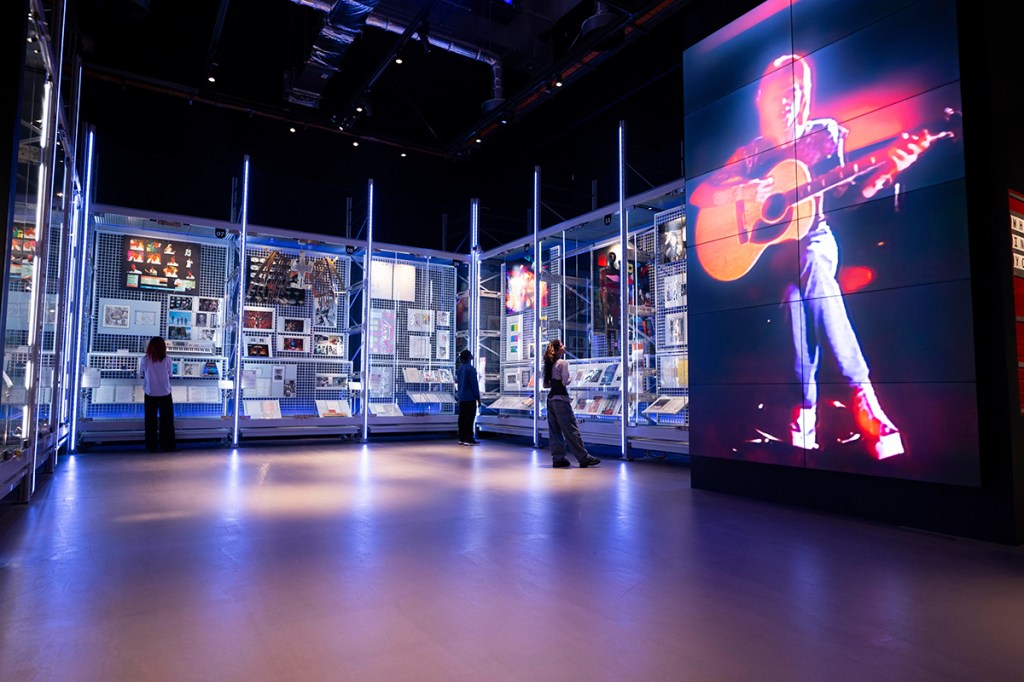
    The David Bowie Centre (David Parry, PA Media Assignments via Victoria and Albert Museum, London)

    Using style as cultural storytelling, these are two meditations on color, sumptuousness and experimentation. “Men’s dresses” that led the peacock revolution and slippers sexy enough to cause court scandals are a welcome antidote to my increasingly homogenous algorithm. After being constantly targeted with beige activewear, biohacking tips and minimalist wellness hotels, I’ve found myself craving true escape. Don’t we all want to shut off the news cycle and get dolled up somewhere nice, now and again? London’s a great place to embrace good, old-fashioned glam – here’s where to live your royal (or rock star) fantasy.
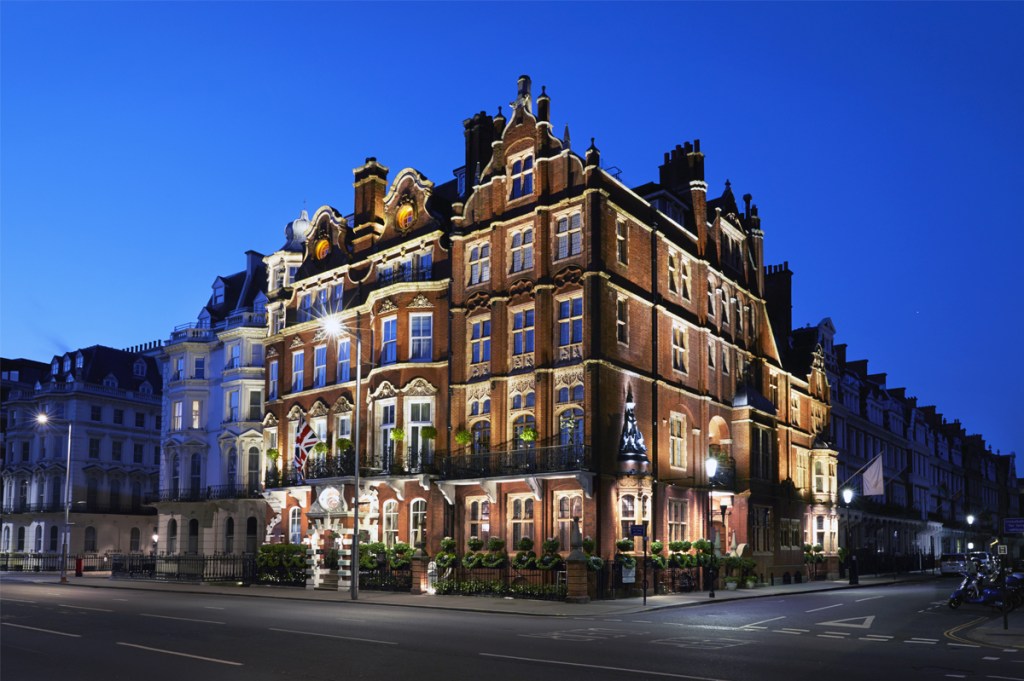
    The Milestone Hotel

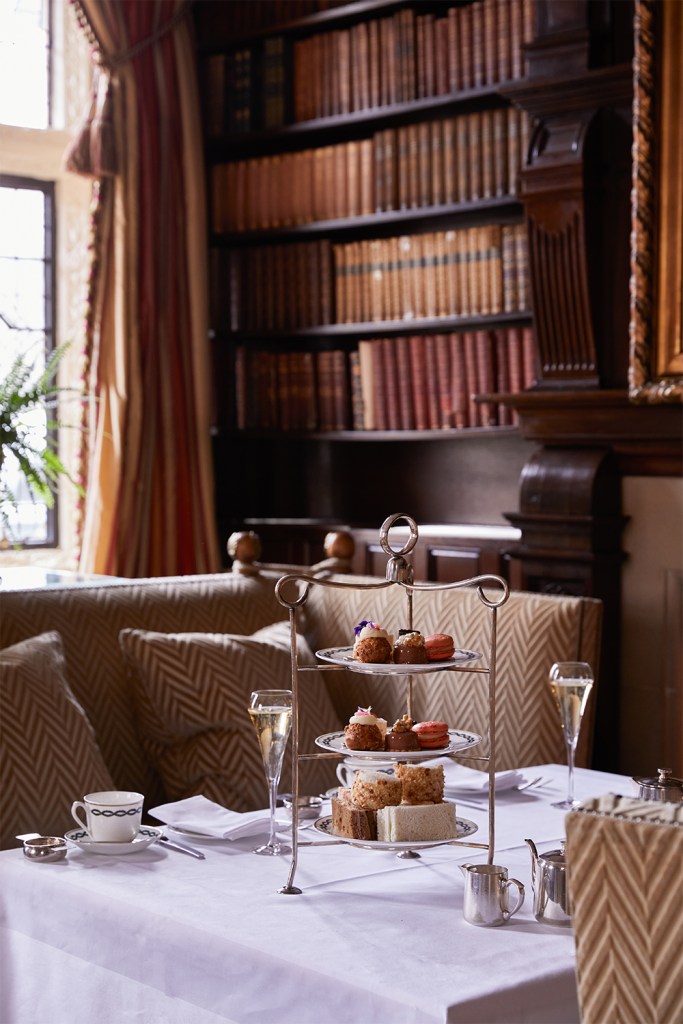
    Afternoon tea at The Milestone Hotel, a Victorian building next to the Royal Albert Hall, invites your best Antoinette impression (resist “let them eat cake” quips; a quick Google confirms the quote is widely misattributed). Festive visits have become a ritual in my family, a somewhat nostalgic constant. Doorman Steve remains at his post in emerald coat tails, guiding us through the Park Lounge swathed in rich fabrics, to our favorite couches in front of the fireplace. On the bottom cake stand tier sit finger sandwiches with the crusts dutifully removed (smoked salmon with dill and lemon crème fraîche, chicken mayo studded with toasted almonds, sharp mature Cheddar and pickle). Ask for more, and they’ll arrive without question. 

    Middle tier: warm scones with all the accoutrements (I spread the Cornish clotted cream first, which is technically the Devon way). On top, hand-crafted French pastries, tartlets and cakes to complement loose-leaf Earl Grey steaming in silver teapots, or a glass of Lanson. Today’s Marie Antoinette is pastiche, shorthand for the evils of excess, but I’ll admit it’s fun to be this spoiled.
    The Other House

    Perhaps a wider reaction to the state of the world, the fashion set confirmed the death of “quiet luxury” in 2025 – understated elegance is out, dramatic prints and theatrical silhouettes are back in, confirmed Spring/Summer shows from Valentino to Ganni. Interior designers are following suit, introducing outrageous color clashes and boisterous patterns. Sumptuous, art-stuffed hotel openings like Marrakech’s Jnane Rumi and Jakarta’s 25hours Hotel The Oddbird were among the buzziest this year, as anticipation builds for Italy’s Airelles Venezia, opening spring 2026.

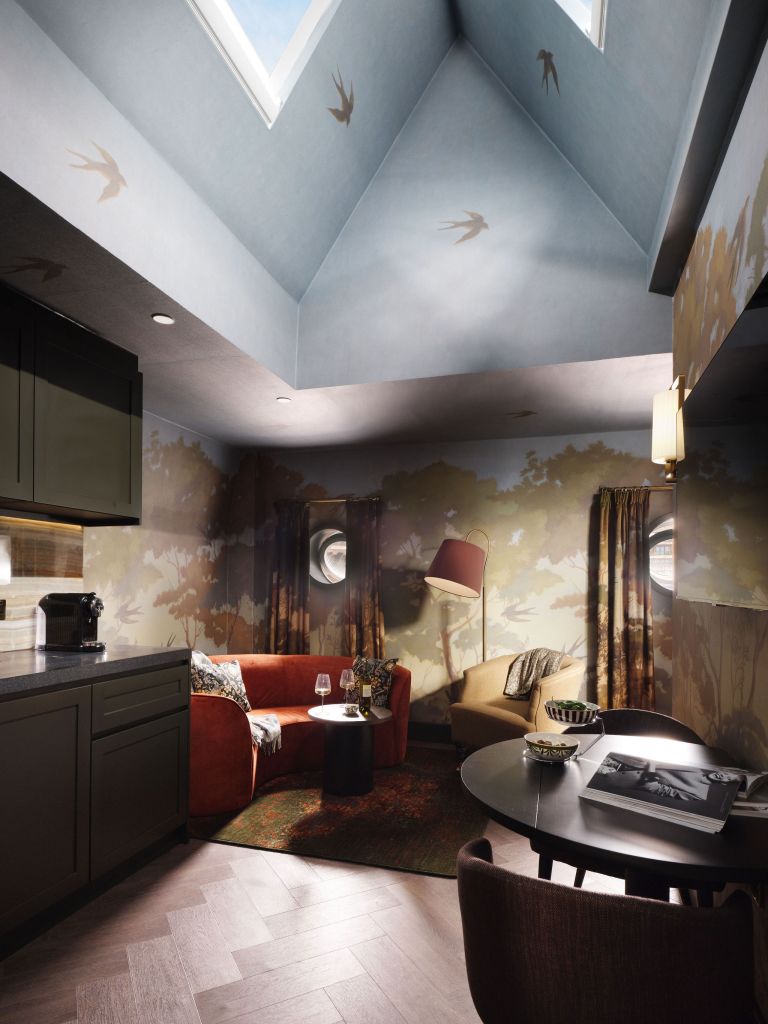
    The Other House was ahead of the curve, emerging as London’s first hybrid hotel-residence concept in 2022, a dense mishmash of jungle print wallpaper, zebra hide seating and gilded picture frames. A chi chi pied-à-terre, it’s a fifteen-minute walk from the V&A, transforming 11 period townhouses into something between apartments and a private members’ club. I checked into a Greater Club Flat sleeping up to four people, traveling with some trusted companions (old school friends) primed not for a state-of-the-art sleep retreat, nor a digital detox, but the radical act of having a good time. We duly experimented with lengthy toilette routines (read: bothering to moisturize beyond our faces) and lavish lunches, newly-opened café The Lavery offering elevated post-museum power-ups.

    The Other House’s wellness studio would have served a French queen quite nicely – Antoinette’s own regime centering around daily aromatic baths, natural skincare and nightly conditioning rituals. What she’d have made of the modern program of exercise classes, hypnotherapy and sound healing is anyone’s guess, but the holistic massage blending deep tissue and Swedish techniques with natural oils would no doubt have been well-received. I emerged feeling restored, chasing a proper hour of relaxation in the sauna’s rich, dark woods. The cozy indoor pool was pleasingly quiet on a rainy Saturday afternoon; flopping onto the small fleet of loungers, we felt we had our own private residence.

    One thing I can guarantee against AI-generated destinations and reviews is my own experience. Growing up, exploring high-class London was a rare treat, bookended by long train journeys. Stepping out of bed to soak up South Kensington’s grandeur will never lose its sparkle. The Other House sits fifteen minutes away from Buckingham Palace by black cab (delete Uber if you want the real London experience). You’ll pass by Ciné Lumière, hosting daily screenings of French and world cinema, and Librairie La Page on Harrington Road, stocking the capital’s largest selection of French language books.

    Our digs’ private kitchenettes encouraged casual cooking, but sans private chef, I was pleased to discover an app offering room service. Had I the budget of a royal, I’d stuff the fridge with eye-wateringly expensive kumquats from Bens of Kensington greengrocer, gourmet sweets and organic meats from Kensington Farmer’s Market, and bubbles from where else but Jeroboams, its local branch housing a wine merchant.
    The Other House

    A plentiful breakfast spread is served in the French brasserie, artisanal cheeses and cured meats arranged with a bit of Parisian flair. Evenings are for sampling cocktails at the Owl & Monkey bar to the tune of a live DJ, or if you get the right night, some jazz. Stay on theme with a French Kiss, mixing Veuve Clicquot Brut with Apros Black Forest rosé, plum & rhubarb elixir, and Franklin & Son’s grapefruit soda.

    True locals would probably kick off their shoes and hold court over the British furniture dotted around the quiet Club Lounge, tending to some business or finishing off that book they’ve been meaning to. Perhaps they’d mosey over to the Body Lab for a casual spot of flotation therapy, acupuncture or red-light therapy, before browsing art at Christie’s, picking out homewares in the Conran Shop or donning sunglasses to pose on Sloane Avenue. They’d certainly have already visited two talked-about dinner spots I’d recommend to really take things over the top. 

    The first is Jacuzzi, a riotous palazzo-style restaurant on Kensington High Street. Opening to fanfare in 2023, you still can’t open Instagram without seeing its foliage-stuffed mezzanine, retractable roof and white tablecloths. The place was designed to ooze the luxury of a Venetian villa, crammed with Murano glass and lemon trees. The ground floor’s cozy circular banquettes invite salacious gossip as guests sip silky-smooth cocktails of home-made bergamot sorbet spiked with liqueur and limoncello, and spaghetti is mixed tableside in a hollow cheese round.

    Dishes are designed to wow: go for homemade ravioli stuffed with slow-cooked chicken and Parmigiano Reggiano, crumbled with dried Taggiasche olives. I love the Piedmontese Vittello tonnato (thinly sliced veal) swirled with a creamy tuna sauce, and the Neapolitan pizzas that fight for table space. A homemade profiterole arrives with gelato al pistachio, doused in thick dark chocolate sauce on request, but the Tiramisu is their unbeatable classic, infused with marsala, and flamboyantly dolloped onto plates. 

    Any trip devoted to shameless indulgence demands a finale in London’s most expensive post code. Twenty minutes in a taxi from “South Ken” delivers you to Mayfair’s the Dover, ex Soho House COO Martin Kuczmarski’s New York Italian. An unassuming entrance gives way to a lot of wood paneling; pull back the velvet curtain and you half expect to find David Bowie in full 1970s NoLita getup, lit just so by a chandelier. No nightclub-esque playlists to shout over, nor cacophonous menus to divide attention. This type of luxury trades on whispers – excited ones – proof that “quiet luxury” hasn’t altogether disappeared. 
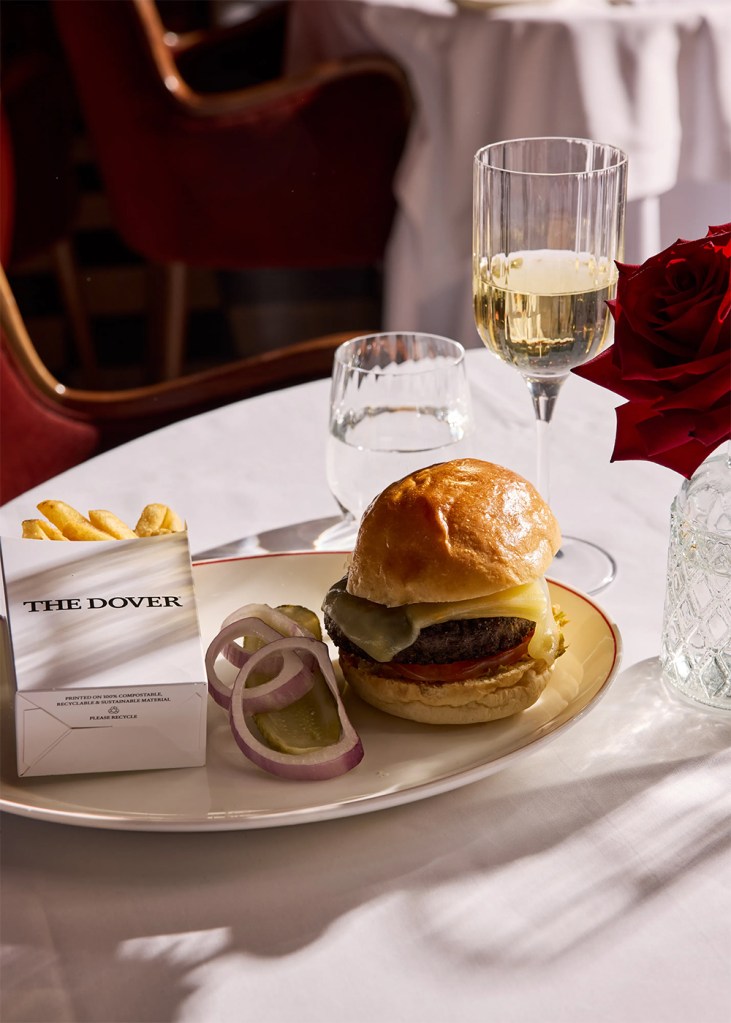
    The Dover

    Start with a drink. The New York Sour mixes Maker’s Mark, tawny port, citrus, and aquafaba as sharp as the outfit Bowie would have pulled up in. They’re smartly blending high and low culture here; mini hot dogs are a cute surprise on the bar menu, tempting with pulled pork, würstel and fried onion, while seated guests fork smoked salmon onto dinky blinis. The joy is in the little details: perfectly crunchy French fries are funneled into paper cartons, “The Dover” sole (clever) is zesty, flavored with chili, lime and samphire sauce. A plate of Peruvian dark chocolate and Piemonte hazelnuts sounds simple enough, but spooning the rich praline into your mouth to cap off the meal feels whoppingly decadent. As it should – sometimes life’s about eating the damn cake.

    Marie Antoinette Style is on view at the V&A Museum until March 22, 2026.  The David Bowie Centre is a permanent display at V&A East Storehouse with free, ticketed access and new ticket drops every six weeks.

  • Crime and no punishment in London

    Crime and no punishment in London

    Those of us trapped in Mayor Sadiq Khan’s London are now obedient, resigned. We expect a car journey of under a mile to take 40 minutes. We don’t hope for anything more. On a recent Sunday, around five o’clock, my son and I stuck fast in Dalston Lane, but as we settled down to wait in a mist of carbon monoxide, there was a commotion up ahead. Down the wrong side of the road, horn blaring, lights flashing, came a Mercedes G-wagon, matte black with that handy snorkel up the side, the favorite ride of north London’s gangsters. It was interesting how calm everyone was about it, how unsurprised. A souped-up tank of a car coming at us head-on, and no one shouted or beeped. Each car in the line ahead pulled seamlessly to one side, like the teeth in a well-functioning zipper. They don’t shift like this for ambulances or police cars any more.

    There are cameras everywhere; the eyes of the state in the sky. Not for the gangs, though

    We all know who drives the G-wagons. There are two rival drug gangs in north London, the Tottenham Turks, aka the Tottenham Boys, and their rivals, the Hackney Turks, aka the Bombacilars. In May last year, the Tottenham Boys attempted a hit on the Bombers and a nine-year-old girl was caught in the crossfire, shot in the head as she ate ice cream just a short walk from my house. And the Tottenham Boys got away with it. Only the getaway driver, a non-Turkish stooge called Javon Riley, was ever arrested, found guilty this summer of grievous bodily harm and three counts of attempted murder. The Sun newspaper did a big feature on the gangs: “Inside the Turkish drug lords’ medieval London turf war, with shootouts and soundproof torture cells, leaving cops terrified.” When Riley was asked by the police to provide the names of gang members, and of the hitman whose bullet hit that nine-year-old, he refused. He feared for his family. The Turks are too ruthless and too effective.

    The G-wagon blared past, faded away, and we law-abiding cars crawled our way to Kingsland Road, where we were careful not to speed up. If, in the euphoria of a clear-road moment, you drive just 4mph over the 20mph limit, you’ve had it. That’s a £100 fine and three points on your license. Then there are fines for pausing in the wrong place, for turning into one of the increasing number of restricted zones, for doing a U-turn. There are cameras every-where; the eyes of the state in the sky. Not for the Turks, though. They do as they please. As I drove, I imagined all the charges piling up in the marbled hall of some gated mansion in the Edmonton area, all the court summons swept up, thrown away. It’s not two-tier justice or two-tier policing, it’s gaslighting.

    Just to enrage myself, I like to play a sort of memory game, where I pair a nasty crime that’s gone entirely uninvestigated with another minor infraction that’s been diligently, exhaustively policed. The speeding and opioid-dealing of the Turks vs minor parking misdemeanors; the virtual violence of “hateful” tweets vs the real violence on real streets.

    My favorite recent Twitter case revolves around a journalist, Greg Hadfield, who last year tried to warn the Labour party that one of its own former MPs was posting pictures of penises on his X account. Hadfield posted a screenshot of one of the tweets with a comment suggesting that Labour should have a word. As a result, Hadfield was charged himself, for passing the picture on. His crime was to “send by a public communication network an offensive, indecent, obscene or menacing message or matter,” and he has just found out that he’s lost his appeal to have the case dropped and must go to trial. The CPS made a “not unreasonable” decision to prosecute, said senior district judge Paul Goldspring. Not unreasonable! All Greg did, as far as I know, was try to prevent indecency and obscenity. I’d pair his crime in my mind with all the offensive, indecent, obscene and menacing matters that I see as I pass police-free Finsbury Park tube station on an average evening – for instance, a few weeks ago, a group of young men that looked like proper trouble: black clothes, black masks, circling like jackals. The Nextdoor app confirmed it: “If you have teenage children around Finsbury Park station, please tell them to be vigilant as there are around 30 youths masked up, robbing and violently attacking local kids.”

    “Hope the police are aware,” read one comment. “They are about as useful as a chocolate teapot,” read the next. “Why not report someone’s hurt feelings and they’ll soon show up?”

    Round the corner, the usual mental case was standing and shouting with his trousers down, groin at eye level for a nine-year-old in a car. Violent attacks on passing children and public nudity – that’s menacing and indecent, Judge Goldspring. If the police just walked up and down past Finsbury Park tube all day, they’d be earning their keep.

    I try to shield my son from the absence of policing. I want him to believe that there’s a robust and vigilant army of officers between him and criminal chaos. “Just youngsters having fun!” I say to him blithely as I lock the car doors in the Finsbury underpass. “They wear masks because they’re paranoid about germs… and that man? Well, darling, some people do just forget to put their trousers on.”

    On the main street that runs perpendicular to mine, there’s been a spate of burglaries, a youngish man smashing in through basement windows. We know it’s the same man every time because there’s footage of him in action on the Ring doorbell cameras. One neighbor offered the video to the police, but was told they couldn’t use it, that actual footage of the crime being committed wasn’t good enough evidence. See? Gaslighting.

    This article was originally published in The Spectator’s October 13, 2025 World edition.

  • Is the cult of Obama finally over?

    Is the cult of Obama finally over?

    Everyone wanted to get close to the president. For three hours outside the O2 Arena in London, a line of admirers pawed at and posed with a fifteen-foot-tall billboard of Obama’s face. All of the marketing for yesterday’s event, titled “An Evening with President Barack Obama,” had used his official presidential portrait from 2012 in the Oval Office. It was a reminder of the good old days – before Trump ever happened. “I’m just looking forward to being in the same room as him,” said a woman called Fran who had taken a photo with the billboard, leaning on it for support. She started crying. “I’m looking for a little bit of hope.”

    All Obama’s life people have staked their hopes on him. His white mother was the first. When he was a child she played him recordings of Mahalia Jackson and the speeches of Martin Luther King, and told him that his destiny was to carry their glorious burdens. Then his grandparents. In 1971 when Obama moved to Hawaii to live with them, he realized that they had given up on their own ambitions and put their dreams onto him. “So long as you kids do well, Bar”, his grandmother told him, “that’s all that really matters.” In time, the whole liberal world would lean on Obama. Ten months into his first term, he was presented with the Nobel Peace Prize. In his memoir A Promised Land, he records his reaction: “For what?”

    Now in London he came on stage as a reluctant messiah. The crowd had been made hyper by a montage of powerful snippets of his speeches, set to cinematic music, but when he arrived in the flesh he was diminutive and physically far away. He said “Hello, London!” and sat in a too-big chair opposite the British historian David Olusoga, who was hosting the evening. Obama kept talking over the applause until it stopped. He drank from a takeaway coffee cup.

    Olusoga began by asking Obama what he now spends his time doing, squinting and quietly straining his voice when he spoke, feigning poignancy as he tried to meet the promised specialness of the evening. Obama replied that he has been trying to “dig myself out of a hole with Michelle,” using almost identical wording to the answer he gave when he was asked the same question at the Jefferson Educational Society in Pennsylvania a fortnight ago. Even the garbled punchline – “I’m almost level” – was copied. (Michelle never wanted Barack to run for president, but he did so anyway, he’s said before, not for his own reasons, but because he wanted black kids and Hispanic kids and “kids who don’t fit in” to “see themselves differently.”)

    Obama can turn it on when he wants, but at the O2 he did not. Olusoga asked for his analysis of current affairs and his response was boring and wrong. After World War Two, he said, it was clear that “blood and soil nationalism” and “castes and hierarchies” did not work, and so new ways of politics emerged. “Things kept getting better,” he said, aside from a war in Vietnam, a genocide in Rwanda, millions of deaths from conflicts in the Middle East, and “terrorism.” Then “we got complacent, we got smug,” he said, and liberalism failed to create “a language that made everybody feel like they had a stake.” In Obama’s telling of the 21st century, America pre-Trump was consistently going the right way. The country’s good course was not altered by 9/11 or the financial crisis of 2008. No, things only went bad after 2016. 

    For people like Fran who wanted answers, Obama gave none. He just seemed depressed. He said that Britain, like America, is at a “fork in the road.” He said that we’re too materialistic, and have lost two historic defenses against consumerism: religion and counterculture. (Hip-hop used to have a purpose, now rappers just talk about money.) He said there was a “significant risk” that AI becomes a tool of oppression and censorship, and said that Donald Trump has committed “violence against the truth.” “Old men hanging on who are afraid of death” cause 80 percent of the world’s problems, he told the audience, with exasperated frankness. His world view had lost.

    After an hour-and-a-bit he was done. Olusoga said “Mr President, thank you for your leadership,” and Obama smiled, waved and left. People ran for the doors. To get the train home, to rush to their friends and loved ones, to proclaim that their king was dead.