Tag: RFK Jr

  • Olivia Nuzzi tells all on RFK Jr.

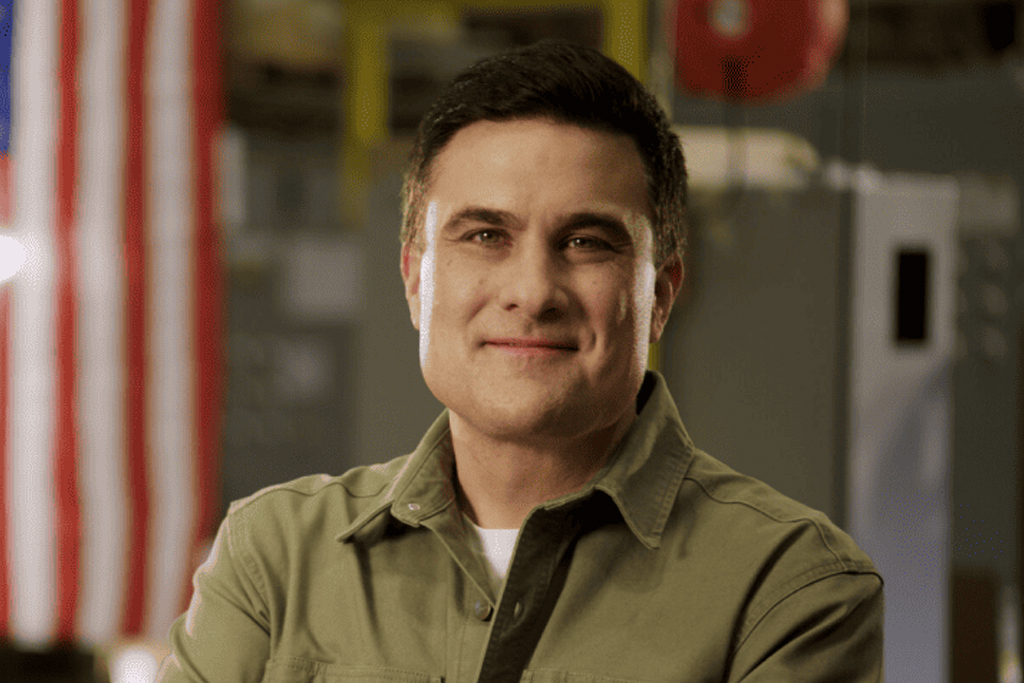
    ​​Olivia Nuzzi’s memoir about her scandalous affair with Robert F. Kennedy Jr., then a presidential candidate and now the country’s leading health bureaucrat, comes out next month. She’s called it American Canto, not to be confused with the bestselling novel Bel Canto, about terrorists who occupy an opera-themed party at a South American mansion. Instead, Nuzzi has trapped us all in the opera of her mind, and there’s no escape. 

    ​Nuzzi has the apparent ability to turn otherwise rational, educated men into blubbering masses of jelly. In a rather glowing profile over the weekend, accompanied by video of her blonde hair flowing in the wind on the Pacific Coast highway, the New York Times’s Jacob Bernstein said that “Nuzzi disappeared for a year, in self-imposed exile in Los Angeles” after details of the RFK affair came out. “She drives around in a white Mustang convertible, like a Lana Del Rey song come to life.” In reality, she has a job as an editor at Vanity Fair and lives in a house in Malibu. If that’s exile, then Cockburn has been dreaming of exile for decades. 

    ​In the book, Nuzzi continues to insist that she and RFK Jr. didn’t have sex. “We were not sleeping together,” she said in an interview last year. But they were very much in love, in a pretentiously intimate way that will make a normal person yak. She adored his “particular complications and particular darkness.” According to the Times, “he called her ‘Livvy’ and wrote her poems. He said he wanted her to have his baby. He promised to take a bullet for her.”

    ​Good grief. Nuzzi also writes that both she and RFK “moved through the world with amused detachment and deep sensitivity, contradictions that worked somehow in concert.” You don’t say. Then there was the matter of RFK’s “brain worm,” about which he told her, “baby, don’t worry.” In the book, she writes, “I loved his brain. I hated the idea of an intruder therein.”

    ​This sort of love has kept therapists and screenwriters busy for decades. “He was not quite mad the way they thought, but I loved the private ways that he was mad. I loved that he was insatiable in all ways, as if he would swallow up the whole world just to know it better if he could,” Nuzzi writes. 

    ​If that all seems like a bit much, Cockburn really choked on his morning bagel when he read this excerpt, which starts about RFK’s falconry hobby and gradually turns him into a Fabio romance-novel cover hero:

    ​Like all men but more so, he was a hunter. In a literal sense, he used not a bullet but a bird. It was not about a chase but about a puzzle of logic and skill that amounted to a test of his self-mastery. He was the mouse and the architect of his maze. The giver of his own pleasure and torment… He desired. He desired desiring. He desired being desired. He desired desire itself. I understood this just as I came to understand the range of his kinks and complexes and how they fit within what I thought I understood of his soul.

    The book may be called American Canto, but a better title might be TMI. Cockburn finds himself wondering why we know all this extremely icky private information at all. She has a job. He has a job. They can both get their names into the papers whenever they want. Our job, apparently, is to read about them and gossip about them. They’re like the lovers at the Coldplay concert, but they wanted to get caught for reasons of professional advancement. Don’t worry, baby. We all have a brain worm now.

  • The medical emergency in the Oval Office

    The medical emergency in the Oval Office

    The buzzword in politics, in the wake of the socialist takeover of New York City, is “affordability.” That was certainly on Donald Trump’s mind today during an Oval Office announcement for cheaper GLP-1s, or, as Trump called them, “fat drugs.” Trump took brief potshots at Gavin Newsom and the Obama Presidential Library, and, of course, continued to urge pregnant women not to take Tylenol. 

    Commerce Secretary Howard Lutnick, when Trump called him out, said he was “not yet” on GLP-1s. “Good,” Trump said, adding “CMS administrator Mehmet Oz, he doesn’t take it” – obviously, since we can all agree Dr. Oz looks great. Trump did, however, roll call the quite large White House head of communications Steven Cheung. “He’s taking it,” Trump said.

    Duly outed, Cheung later said, less troll-like than in his usual style, “It’s important to encourage others to explore options to address concerns by speaking openly and honestly about it.” 

    HHS Secretary Robert F. Kennedy Jr., spoke, and so did Dr. Oz, who also touted reduced costs for fertility drugs, saying he was hoping it would lead to more “Trump babies,” a phrase that could lead to lots of frightening AI meme images. The event cut short at its midpoint during remarks from David Ricks, CEO of Eli Lilly, when an attendee fainted behind the lectern. “You OK?” Ricks asked to the person, who was obviously not OK at that moment. Dr. Oz rushed to his side. RFK Jr. rushed off stage left. A half hour or so later, the event resumed, and Trump said that the man, who did not appear to be in need of GLP-1s, was, in fact, OK.

    “You saw he went down. And he’s fine. They just sent him out,” Trump said. “He’s got doctors’ care. But he’s fine.”

    Trump sat at the Resolute Desk and took what felt like 100 questions. No one takes questions like Trump. There were some fun statements about tariffs, which Trump claims have brought $21 trillion into the federal coffers. The ongoing Supreme Court tariff case is “one of the most important cases in the history of our country,” of “the eight wars I ended, I would say five or six were ended because of tariffs,” and, of course, “If I didn’t come along, our country would be destroyed right now.”

    Then it was back to the fat drugs. A reporter asked about potential side effects. Trump isn’t a doctor, but he’s friends with Dr. Oz, Dr. Phil, and, we presume, Dr. Drew. He said what you might expect the average Sunday afternoon football viewer to say: “I’ve heard about very little side effects in respect to these drugs. It’s all positive. And that’s usually not the case. You see these crazy commercials on television where they tell you 15 different things that can go wrong. And then they tell you to buy it.”

    True enough, Mr. President. Next, the press conference came full circle to affordability. Trump would not address repeated questions about grocery prices. But a reporter, obviously quite friendly to the administration, brought up yesterday’s Wal-Mart statement that this year’s Thanksgiving dinner will cost less than last year’s. Thank you for bringing that up, said President Trump. 

    “Our Thanksgiving meal this year will cost 25 percent less than Joe Biden’s. To me, that’s better than anything there is. That’s better than a poll. You’ve got everything included. From the trimmings from the turkey. From everything. Lotta different items. That is a big factor. And I was angry last night with the Republicans. I said, you don’t talk about this stuff. I had to rely on a question from a reporter to get that out. We should be talking about it. We had the highest inflation in the history of our country under Biden. Gas prices are close to two dollars a gallon. Under them, it was four or five. When gasoline goes down and energy goes down, everything else follows. What the Democrats do is they lie. We are the ones who’ve done great on affordability. They’ve done horribly at it. They take commercials out, ‘under Democrats you have affordability.’ It’s just the opposite. Every price is down.”

    This includes, after today’s announcement, the price of GLP-1s, which many people will need after an inexpensive Thanksgiving feast. Trump closed with this less-than-gracious thought about the retiring Nancy Pelosi:  “I thought she was an evil woman who did a poor job, who cost the country a lot in damages and in reputation.” You’d expect nothing less about Pelosi from Trump, her sworn enemy. But she’s got doctors’ care, and she’s fine. 

  • By order of the non-doctor

    By order of the non-doctor

    Health and Human Services Secretary Robert F. Kennedy Jr. did not say, in yesterday’s cabinet meeting, that circumcision causes autism. But the fact that we’d even consider that a real statement shows just how far down the rabbit hole into the MAHA Wonderland of his mind RFK has dragged us. In fact, RFK said that after doctors circumcise boys, they give them too much Tylenol, and that causes autism. President “Don’t Take Tylenol” responded, “there’s a tremendous amount of proof or evidence. I would say as a non-doctor, but I’ve studied this a long time.” 

    A non-doctor is right, and I say this as someone who’s not a fan of male circumcision, a practice based on dated religious superstition. If we abhor female circumcision as a barbaric practice (and we should), then why is male circumcision any different? This is a personal issue for me. My wife didn’t want to circumcise our son more than 20 years ago, but my Jewish parents, now deceased, threatened to disown him, and me, if we didn’t do it. There was no bris. We didn’t enjoy wine and bagels afterwards. A urologist strapped our baby to a board and caused him untold pain, for no reason. I’ll never be able to unhear those screams.  

    Thank you for allowing me to process that trauma. But the point here is that the doctor probably gave our son Tylenol, and our son doesn’t have autism. I’m also circumcised, as are most men I know, or at least I assume they are. We don’t talk about such things. No one ever interviewed me for the studies that RFK cited at the cabinet meeting. “Circumcision leads to autism” is just embarrassing crankery that plays on people’s emotions.  

    Then, on the same day we saw “RFK claims circumcision causes autism” headlines, the Wall Street Journal decided to run a light feature story on RFK’s strange habit of working out wearing jeans. They show photos of him bench-pressing in denim and climbing Phoenix’s Camelback Mountain in denim. I grew up in Phoenix and did that Camelback hike many times. It’s no fun in workout shorts; hiking in jeans is suicide.  

    We live in interesting health times, where the Health Secretary issues a joint “fitness challenge” with the Secretary of War, does a gym circuit wearing Levis, and claims that vaccines and Tylenol cause autism. At least there’s no more Red Dye #12 in our beef tallow Steak and Shake fries. And I have to wonder if this is actually making us healthier, or if we’re just fetishizing the lifestyle eccentricities of a wealthy bulked-up falconer from America’s most famous political family.  

    This movement is starting to feel like a mirror image of the “more doctors smoke Camels” ads that the tobacco industry used to produce. In 1930, Lucky Strike said that “20,679 Physicians say ‘LUCKIES are less irritating” because of a “toasting” process. Millions of people died because of those campaigns. 

    It’s a long way down the path from that to MAHA claiming that sugar is poison (true) and that brief morning exposure to sunlight helps regulate our circadian rhythms (also true). So let’s bring it all together and list my true prescription for a healthy life: eat moderately, exercise often but not excessively, don’t smoke, don’t get circumcised, DON’T TAKE TYLENOL, and, for god’s sake, don’t climb a mountain in jeans.  

  • The reality of raising an autistic child

    The reality of raising an autistic child

    Although I disagree with Donald Trump’s and Robert F. Kennedy Jr.’s suggestion that mothers who took Tylenol during pregnancy may have caused the huge rise of children born with autism in the US, I also can’t agree with the spate of articles and interviews that have followed – several by high-functioning autistic adults, others by parents of autistic children – basically saying it is great to be autistic. I understand that they are fearful that Trump’s idea of a “cure” could result in anyone with special needs being regarded as subnormal and a second-class citizen, but it’s not helpful, either, to pretend that autism is without its many frightful drawbacks.

    My son, 42, was diagnosed with Asperger syndrome on his 13th birthday in 1996. Then, not so much was known about the condition, and my ex-husband, my daughter and I went through hell wondering why my son was so difficult – and then dealing with his strange, often explosive behavior. I would invite children over to play with him and his older sister, but he seemed to regard them as an alien species and she would end up playing with both visiting children.

    When he went to kindergarten, in the room with all his peers, he would often put his hands over his ears and scream. He preferred to be alone in the corridor. When I asked why he didn’t like his companions he said: “They have squeaky voices” and imitated them. Instead of toys, he had his obsessions – balloons, then houseplants, the cartoon film Robin Hood, tarantulas. The obsessions seemed to give him as much pain as pleasure. The balloons burst or flew away or weren’t the right type. (One category he called “All March Down the Room Balloons.”) He would think a houseplant was dying when it wasn’t and scream with frustration, even grief, and throw the plant and its pot down.

    Aged 11, he announced: “My obsessions have ruined my life!” Years later, I recall his only real friend Peter, then 31, who also had Asperger’s, waiting with me in a car park for my son to turn up. Peter turned to me and said seriously: “We don’t want to have our obsessions. We’d rather not have them.”

    Their obsessions, their high anxiety, their misunderstanding of others’ talk and gestures and their inability to hold conversations, make even high-functioning autistic people isolated and unable to lead a calm, fulfilling life.

    My son’s condition causes him to reiterate the same obsessive stories going round and round in his head

    My son has tried several simple jobs such as cleaning in a supermarket, being a night porter in a hotel, working in a care home for the elderly, but has failed through misunderstanding the social behavior of his coworkers. (In the care home he was intimidated by the advances of what he called “yee-ha girls” – forward young female workers.)

    Much is made now of special interests and the genius of certain people with autism being able to concentrate on their great skills, but I wonder which of them wouldn’t sacrifice these just to have one proper friend. Peter no longer lives near my son, so he is mostly reliant on part-time carers, tolerant women of my age and his father’s elderly relatives. The overtures of a sweet local artist of his age were rejected.

    To be blunt, he is no further on with his contemporaries than he was as a child. His autism causes him to reiterate the same obsessive stories going round and round in his head, often about the past, even about dead relatives – such as my father – whom he has never met. How can most people relate to this? My son wants to marry and have a family but does not know how to go about it and says if the children don’t fit his criteria he won’t like them.

    And would anyone wish to live, as he does, with a terror of dragonflies, convinced they bite? Or with an exaggerated fear of certain local areas, making travel difficult because of a past misunderstanding with a bus driver or passenger? (Actually it is my son, over 6ft, sometimes shouting on a bus, who probably frightens other passengers.)

    And what about us mothers and fathers? In my experience, there are constant discussions and often blame between the parents of these children on how best to treat them. Studies show that 80 percent of parents of autistic children split up. The financial strain – difficulties getting funding for them – stress and emotional toll associated with raising any child with a disability are all contributing factors. There’s also the frequent problem of physical aggression, surely a manifestation of extreme frustration and surging hormones, when the autistic child reaches adolescence. At 14, my son would would often lash out at me, his father – we split up when he was eight – and his sister.

    And it can continue into adulthood. A friend’s nonverbal autistic adult son caused a knee injury to a carer which will never properly heal. Another friend’s adult autistic son, intelligent and articulate as my son also can be, smashed up his parents’ house during lockdown. My son once destroyed the staircase of a rented apartment and the police have been called because of his behavior. At 17 he was involuntarily hospitalized for 28 days and in his twenties was in a psychiatric unit. And what about nonverbal autistic adults who need the physical care normally given to babies? How much I admire parents and carers who have to deal with that.

    On the plus side, my son is a good artist who has sold paintings to strangers, he is an excellent cook and can perform hilarious imitations of people and situations. He likes to make meals for his three young nephews and has given them many well-thought-out gifts. He is in some ways more compassionate than I am to people who are bereaved.

    I will let him have the last word: “Some people with Asperger’s can do extremely well and have successful jobs. But autism, OCD and ADHD get in the way of learning and living life.”

    This article was originally published in The Spectator’s October 13, 2025 World edition.

  • Tyl and error

    Tyl and error

    “DON’T TAKE TYLENOL,” the President advised pregnant women, forcefully, in the Oval Office yesterday afternoon, because his Administration now says that acetaminophen causes childhood autism. Trump said it at least a dozen times. Also, he said, don’t give Tylenol to your children after they get a shot. Speaking of shots, President Trump said, kids shouldn’t get their Hepatitis B vaccine until they’re 12, because Hepatitis B is a sexually transmitted disease. In addition, he recommends breaking up the MMR vaccine into three separate shots, because that’s a lot of liquid. “It’s a fragile little child and it looks like they’re pumping it into a horse,” he said.

    It was a typically eccentric Trump event. The main three speakers were Trump, RFK Jr., and Dr. Oz. Trump said that pregnant women should only take Tylenol in an emergency. “If you can’t tough it out, if you can’t do it, that’s what you’re gonna have to do,” Trump said. But any attempts to spin this as quackery unfounded in science are going to fall flat.

    In fact, the acetaminophen warnings come from a study that the Harvard School of Public Health, hardly a Trump-driven institution, published a month ago. FDA Commissioner Dr. Marty Makary also announced a push to give a drug called leucovorin to children with autism. Leucovorin is essentially a vitamin supplement used to address folate deficiency in cancer patients, and studies have found it’s effective in treating autism symptoms, which now affect approximately one in 31 of American children, and one in a dozen boys. That was the essential substance of the press conference, during which Trump showed a lot of sympathy for children with autism and their families. He also said that he has a lot of “fat friends” who take Ozempic. “Let me tell you,” he said. “They don’t look so good.”

    But beyond the President’s War On Tylenol, which will clearly grab all the headlines, this press conference signified something much more important. Appearing with Trump were RFK Jr. from HHS, Dr. Jay Bhattacharya from the National Institutes of Health, Makary from the FDA, and Dr. Oz, who these days only appears on TV to talk about his work in running the Medicaid program. They spoke in a unified voice about this issue.

    RFK said, “we have broken down barriers between agencies, and fast-tracked solutions.” This will be the first in a series of autism announcements that “will be a model to deliver the framework for similar results for other chronic conditions that plague Americans.” Makary said “this is The start of a historic shift in medical culture. A charge to identify root causes. We’re not going to stop until we address the root causes of this suffering. It may be entirely preventable.”

    This marks an extraordinary cultural shift. Typically, the FDA, HHS, NIH, and Centers for Disease Control have operated within silos of research and information. Their lack of coordination and communication have led to a massive public-health crisis that formed the basis for the MAHA movement. This is significant way beyond the President issuing the same warning about Tylenol for pregnant women a dozen times in an hour. He’s just the very loud messenger. But the health and medicine branch of his Administration is united with common purpose, and it’s going to yield extremely interesting and highly controversial results.

    Quite telling is the fact that the major voice speaking out against the Administration’s Tylenol warnings is Kenvue, the drug’s manufacturer. Oh, and also The American College of Obstetricians and Gynecologists, which issued a statement saying that Tylenol is safe for pregnant women. At the event, a reporter brought this up. After Trump was doing calling it a “nasty question,” he said, dismissively, “That’s the establishment. They’re funded by lots of different groups. Maybe they’re right.”
    “But I don’t think they are.”


  • Rand Paul needles fired CDC director Susan Monarez

    Rand Paul needles fired CDC director Susan Monarez

    Kentucky Senator Rand Paul and recently-fired CDC director Susan Monarez exchanged “testy” words about vaccines in a Senate hearing today. That should come as little surprise. Paul has long been a vaccine skeptic, if not an outright opponent.

    The day started with Monarez telling Congress that RFK Jr. tried to get the White House to fire her because she refused to “rubber-stamp” approve a schedule of HHS vaccinations. “He just wanted blanket approval,” Monarez said. “If I could not commit to blanket approval to each of the recommendations I would need to resign.”

    She added, “I refused to do it because I have built a career on scientific integrity, and my worst fear was that I would then be in a position of approving something that would reduce access to lifesaving vaccines to children and others who need them.”

    On the table is an HHS recommendation that people vaccinate newborns against Hepatitis B, which it has continually recommended since 1991. RFK Jr.’s advisory panel is scheduled to rescind that later this week. Paul supports the move, whereas Monarez said she would only support it if “science” backs it up. “All of us had agreed that the science evolves and we need to see the data and the evidence to ensure that we are protecting our children,” she said.

    That’s when the testiness began.

    “Does the Covid vaccine reduce hospitalization for children under 18?” Paul asked.

    “It can,” Monarez said.

    “It doesn’t… You resisted firing people who have this idea that the Covid vaccine should be at six months. That’s what this is about. You didn’t resist firing the beautiful scientists, the career people… unobjective and unbiased. You wouldn’t fire the people who are saying that we have to vaccinate our kids at six months of age. That’s who you refuse to fire.”

    The sarcasm dripped thickly from Paul’s tongue as he said this. He’s never gotten satisfactory answers from the government about social-distancing recommendations, or lockdowns, or school closures, or federal vaccine mandates. Those are in the past now, but people who opposed them haven’t forgotten. If today’s exchange seems like an anti-vax head-scratcher, that’s the context.

    Though this was supposed to be a hearing about RFK Jr.’s plans for HHS, and, in particular, his plans for childhood vaccine schedules, in reality it was part of a slow-moving ongoing referendum on America’s disastrous Covid policies during the Biden administration and the first Trump administration. We’ve never had a real truth and reconciliation commission on the topic, except maybe in Rand Paul’s mind, so today’s congressional hearings were really part of an ongoing concern.

    The hearings did nothing but further retrench the teams. On one side you have “trust the science” people, who believe in the infallibility of the medical establishment, even though that establishment, or at least the immunology end of it, completely failed us during Covid, which is part of the reason we have an RFK, Jr.-led CDC in the first place. On the other hand, you have people who believe that shots contain slow-acting poisons that will kill us sooner or later. Ordinary people are just waiting to hear whether or not the government thinks they should vaccinate their children. Today’s exchange, between the former head of the CDC and a Senator who used to be a ophthalmologist, left no one satisfied.

  • Is RFK Jr. Trump’s Achilles’ heel?

    Is RFK Jr. Trump’s Achilles’ heel?

    Secretary of Health and Human Services Robert F. Kennedy Jr.’s quest to prove himself President Donald Trump’s most destructive Cabinet member continues apace. 

    On Wednesday, the Department of Health and Human Services abruptly announced that “Susan Monarez is no longer director of the Centers for Disease Control and Prevention.” She had been nominated to the key post in March, and actually served in it for less than a month. Shortly after that, Monarez’s lawyers issued a fiery statement asserting that she had neither been fired, nor resigned, and was being targeted by Kennedy for refusing to “rubber-stamp unscientific, reckless directives,” and help him weaponize “public health for political gain.”

    Shortly after that, the White House announced that Monarez had officially been relieved of her duties. Several other top CDC officials – including its chief medical officer – subsequently resigned in protest.

    The proximate cause of the Kennedy-Monarez showdown was reportedly the latter’s refusal to support the former’s push to rescind approvals for coronavirus vaccines. According to The Washington Post, Kennedy and his team grilled the short-lived director on Monday over her alignment – or lack thereof – with his effort “to change vaccine policy.”

    That is, of course, quite the euphemism. Kennedy has spent decades advancing a novel’s worth of anti-vaccine conspiracy theories. The founder and former leader of “Children’s Health Defense,” the organization behind the instant classic Vaxxed III: Authorized to Kill, Kennedy once boasted that, “I see somebody on a hiking trail carrying a little baby and I say to him, ‘Better not get them vaccinated.’”

    Samoan authorities blame him for a 2019 measles outbreak that claimed the lives of more than 80 people. As the families of the victims picked up the pieces, Kennedy suggested that a “defective vaccine” may have been to blame.

    To win a fraught confirmation fight earlier this year, Kennedy adopted a simple, time-honored strategy: he lied.

    “All of my kids are vaccinated, I’ve written many books on vaccines, my first book in 2014, the first line of it is ‘I am not anti-vaccine’ and the last line is ‘I am not anti-vaccine,’” he insisted at the outset of his hearing before the Senate Finance Committee. The missing context is that he had said he would “do anything” and “pay anything” to go back in time and change his own kids’ vaccination status. Asked about his incendiary past claims about the CDC, he denied having ever compared the agency’s actions to “Nazi death camps” and the Catholic Church’s “pedophile scandal.” It’s public record that he did exactly that.

    The Kennedy now running the federal government’s largest Cabinet department has – surprise, surprise – better resembled the kook who walked into his confirmation hearing rather than the moderate victim of a smear campaign he portrayed himself as during it. Despite the empty promise to Senator Bill Cassidy (R-LA), a medical doctor and stalwart vaccine advocate, during the confirmation process, Kennedy has worked tirelessly to undermine public trust in vaccines during his short tenure at the top of HHS. In June, he fired every member of the federal Advisory Committee on Immunization Practices, decrying the federal panel as a “rubber stamp” for vaccines, and announced that the administration would deny Gavi, an international vaccine agency, funding. Then, earlier this month, Kennedy announced that the second Trump administration would either cancel or alter all of its existing mRNA vaccine projects. The first Trump administration, of course, championed Operation Warp Speed, the expedited research and approval process that led to the development of several safe and effective coronavirus vaccines in a matter of only a few months. Trump himself hailed that effort as “one of the greatest achievements ever” only a few days ago.

    By now, Kennedy’s playbook is no mystery. Surely, if not so slowly, Kennedy is purging HHS of those who would forthrightly push back on his anti-vaccine agenda. He complains of rubber stamps for vaccines, but demands a rubber stamp for his every effort to undermine them.

    The president and his allies ought to be alarmed. While Trump has cornered the Democrats on any number of issues – crime, gender ideology, immigration, etc. – by presenting himself as the moderate alternative to a party with ideas so extreme that they’re unrecognizable to most Americans, Kennedy’s actions put his boss in danger of being on the opposite end of this equation.

    Trump lost the 2020 presidential election in large part because of the perception that he was not taking the Covid-19 pandemic seriously enough. Imagine the fallout if any significant number of American children die in an outbreak that could be reasonably attributed to Kennedy’s vaccine skepticism. Or the pandemonium that would ensue if Kennedy greeted another pandemic with inaction and a refusal to pursue a vaccine. Besides costing some untold number of lives, it would utterly destroy Trump’s presidency – and his legacy.

    Kennedy’s appointment was a reward for his endorsement of the president last year. Trump rewards loyalty above all else, and views Kennedy as a dependable ally. But if he must suffer the embarrassment that is Robert F. Kennedy Jr. on his team, he must not allow him free rein to continue to wreak havoc. To do so is to court a disaster so great as to dwarf every other controversy, mistake, and scandal Trump has survived to date.

  • Are you MAGA or in DRAG-A?

    Are you MAGA or in DRAG-A?

    Trash talk

    Who gets to call themselves MAGA these days, anyway? Politico Playbook declared this weekend that “MAGA is whatever Trump decides it will be” – the administration’s go-to defense when the President does something the further-right side of his base doesn’t care for, such as dispatching military support to Ukraine, say, or running interference for the Ghost of Jeffrey Epstein.

    Heading into the midterms – and we’re past the halfway point of 2025, so we are heading into the midterms – Republican candidates up and down the country are already attempting to bill themselves as the most “MAGA” in the field, in hope of garnering a Trump endorsement that could see them win office.

    Take Nate Morris, who is running for the US Senate seat set to be vacated by Kentucky’s Mitch McConnell. Morris is a garbage magnate – not an insult, his actual line of work as the founder of a waste management and recycling company. And Morris leans into his past in trash in a recent campaign ad, in which he mans a garbage truck, recycles a McConnell cardboard cutout and placards and describes himself as “a Trump America First conservative.” That’s opposed to his fellow contenders, Representative Andy Barr and Lieutenant Governor Daniel Cameron. “Unlike establishment politicians, Morris isn’t a controlled puppet of Mitch McConnell,” his campaign website declares.

    Back in February, the Daily Caller reported how Morris had donated to McConnell and Nikki Haley’s 2024 presidential campaign – and appointed Obama advisor David Plouffe, who went on to run the Kamala Harris presidential campaign, to his company’s board. Federal donation records also show that Morris has donated to his opponent Barr, as well as Kentucky mavericks Senator Rand Paul and Representative Thomas Massie – neither of whom are on the President’s good side after the One Big, Beautiful Bill debacle. So is Morris MAGA or in DRAG-A?

    In a second ad, Morris tells his life story as a ninth-generation Kentuckian, interspersed with shots of coal and miners. It’s an intriguing approach, given his background in recycling and the many ESG (environment, social and governance) initiatives with which he has publicly associated himself over the years. Morris has started to distance himself from ESG since exploring his run. Perhaps he’s hoping to channel the fortunes of another Appalachian with a history of being down on Trump: the current Vice President…

    Maxwell power

    “I’m done talking about Epstein for the time being,” Charlie Kirk, the gee-whiz media standard bearer for MAGA goodness, told his viewers yesterday. “I’m gonna trust my friends in the administration.” But people are still talking about Jeffrey Epstein, including Representative Hank Johnson, who tweeted a video of himself playing an Epstein-themed parody of Jason Isbell’s “Dreamsicle” on a guitar in his congressional office. “Epstein died by suicide,” he sang. “Believe that and you must be blind.” 

    According to the Daily Mail, Epstein associate Ghislaine Maxwell is ready to reveal the contents of her ex’s client list to Congress. It’s about time, says disgraced actor Kevin Spacey, who was himself suspected to be in the Epstein Files. “Release the Epstein files. All of them,” he posted this morning. “For those of us with nothing to fear, the truth can’t come soon enough.” Cockburn guesses that Charlie Kirk won’t be interviewing Spacey any time soon.

    On our radar

    FED DAWN Treasury Secretary Scott Bessent said the nomination of the next head of the Federal Reserve, after Jay Powell, is “President Trump’s decision and it’ll move at his speed.”

    WE ALL SCREAM Health Secretary Robert F. Kennedy Jr. and Agriculture Secretary Brooke Rollins announced a joint initiative to remove petroleum-based dyes from ice cream.

    SECOND TIME LUCKY Former national security advisor and congressman Mike Waltz is currently being grilled by the Senate Foreign Relations committee over his nomination for UN ambassador.

    The AI girlfriend you never asked for

    On Monday, Elon Musk announced the newest “cool feature” his team of world-class coders and engineers added to X. It’s called “Grok Companions.” As the name suggests, they’re supposed to be your artificial, er, confidants.

    There are two companions to choose from. Your first option is a blonde, quadruple-D cup, itty-bitty-waist anime caricature named Ani who will undress down to lacy lingerie if you talk to her nicely. Your second option is a red panda wearing a short-sleeved sweatshirt and shorts (thank heavens they made him decently clothed). He is appropriately named Bad Rudy and will shower you with profanities and insults unprovoked.

    One X user responded to Musk’s announcement, “Just wait till they throw her in an Optimus bot with a silicone skin to replicate her.” And Musk responded, “Inevitable.” As to be expected, two camps seem to be materializing after the Companions’ drop. One group wonders if it’s “possible to undress her even more?” and the other calls her “the extinction of the human species looking me in the eyes.” Another pundit wrote, of Musk, “Is it possible for someone to be more divorced?”

    Cockburn remembers reading Walter Isaacson’s 2023 biography of Musk last summer and feeling concerned for the billionaire when he would ask his romantic partners to insult him. Perhaps Musk simply didn’t realize this was an unhealthy desire before he mass-produced it for all of his subscribers paying $300/month. 

    Feeling concerned? Be at ease, The Spectator just released all sorts of pieces related to AI in its August 2025 edition.  

    Sign up here to get Cockburn’s Diary in your inboxes on Tuesdays and Fridays.

  • MAHA must harness the power of Gwyneth Paltrow

    MAHA must harness the power of Gwyneth Paltrow

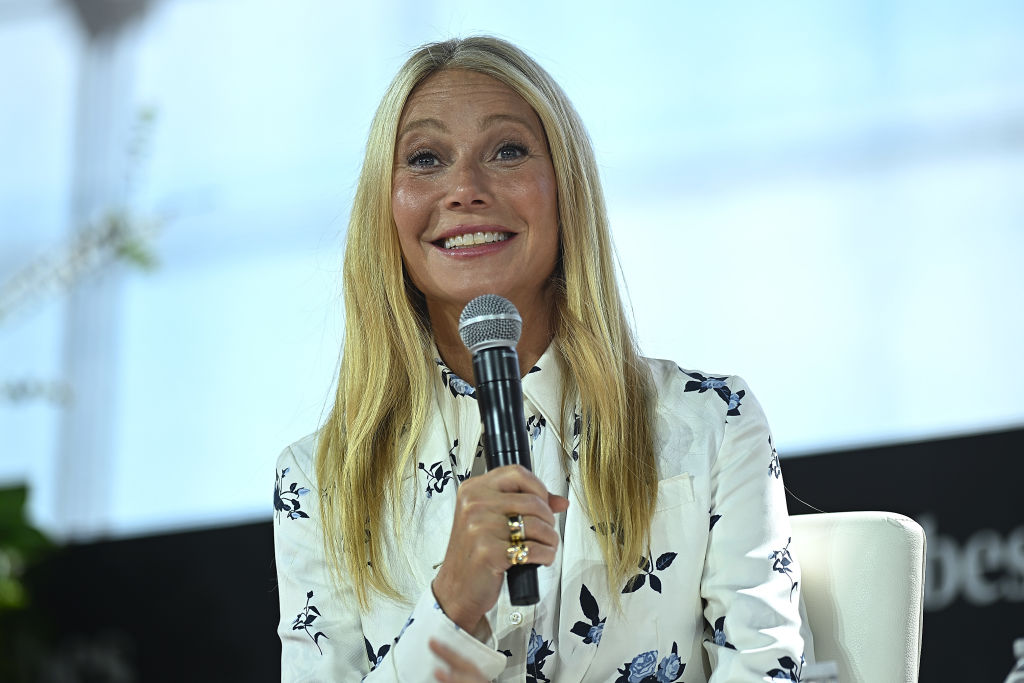
    Gwyneth Paltrow may be set to pass her celebrity-everyone-loves-to-hate crown to another out-of-touch elitist. The Goop founder and queen of outrageous “wellness” hacks has announced – gasp! – that she’s begun eating like the rest of us.

    Paltrow has followed a Paleo diet for years – meaning she cut out virtually all culinary joy for the sake of eating like a cavewoman, though I assume she did more gathering than hunting. Yet on her Goop podcast last week, Paltrow announced, “I’m a little sick of it if I’m honest. I’m getting back into eating some sourdough bread and some cheese. There, I said it. A little pasta. After being strict with it for so long.”

    Paltrow’s foray into normal-people food is serendipitous; or perhaps it’s ingenious timing. Paltrow is advocating for “eating foods that are as whole and fresh as possible” at the same time Health and Human Services Secretary Robert F. Kennedy Jr. has begun his crusade against toxic food dyes, with an eye on severely regulating ultra-processed foods at large. What a dream Make America Healthy Again team this pair would make: RFK Jr., a crunchy sort of pseudo-Democrat whose overly weathered face and vibrato voice make him not quite the picture of health, and Paltrow, a dewy, glamorous 52-year-old with the vibrancy of a woman half her age (her 20-year-old daughter basically looks a clone of her!).

    Paltrow can obviously be supremely annoying, like the know-it-all-aunt at the family reunion lecturing you across the Jell-O casserole about the magic of her six-day cleanse. But in her defense, health trends these days are about as dependable as the Trump administration tariffs. I was a die-hard hater of carbs for a couple of years, firmly entrenched, along with my guru, Dr. Mercola, in the energizing, fat-burning, brain-boosting benefits of the ketogenic diet. Research has emerged now, however, as Mercola openly acknowledges, showing that avoiding carbohydrates increases the body’s cortisol levels. Except in extreme circumstances, the body performs better with some carbs.

    Then there’s the controversy over fats: I grew up with a grandmother whose nutrition mindset was shaped by USDA dietary guidelines of the 1960s. She regarded butter and full-fat dairy products with horror as she slathered seed-oil-saturated Crisco and margarine on everything. We’ve been allowed to learn lately, however, that these guidelines were heavily funded by Procter & Gamble, the inventor of Crisco.

    As the girth of the average American citizen has ballooned along with our healthcare costs, researchers like Nina Teicholz, author of 2014 New York Times bestseller The Big Fat Surprise: Why Butter, Meat and Cheese Belong in a Healthy Diet, and Calley Means, co-founder of TrueMed and RFK Jr. advisor, have pulled back the curtain on America’s obesity crisis. They’ve concluded that eating a well-rounded diet full of a variety of whole foods – including healthy fats – is vital to a long, healthy life.

    It appears Gwyneth Paltrow has come to the same conclusion. She may be a little wacky, what with her “five-step guide to yawning” and “eyebrow-raising Goop moments,” but she’s also unapologetically open-minded. Her website declares, “We operate from a place of curiosity and nonjudgment, and we start hard conversations, crack open taboos, and look for connection and resonance everywhere we can find it.” And the strategy has been working for years. Her newsletter has 8 million subscribers. CEO magazine reported in 2021:

    In the past decade, Goop has grown steadily into a multinational powerhouse valued at more than US $250 million. Paltrow scaled down her movie acting to a few cameo appearances including Pepper Potts in The Avengers franchise, redefined herself as an affectionately eccentric lifestyle guru and, much to the surprise of her detractors, proved herself to be an astute businesswoman, steering the company on instinct alone and attracting high-profile backers.  

    Even if you’ve developed a Paltrow intolerance, there’s no denying she has massive influence. If she can use her goopy powers to change the eating habits of Americans to make the nation healthy again through moderate eating, go for it, Gwyneth.

  • Gabbard and RFK Jr. head closer to confirmation

    Gabbard and RFK Jr. head closer to confirmation

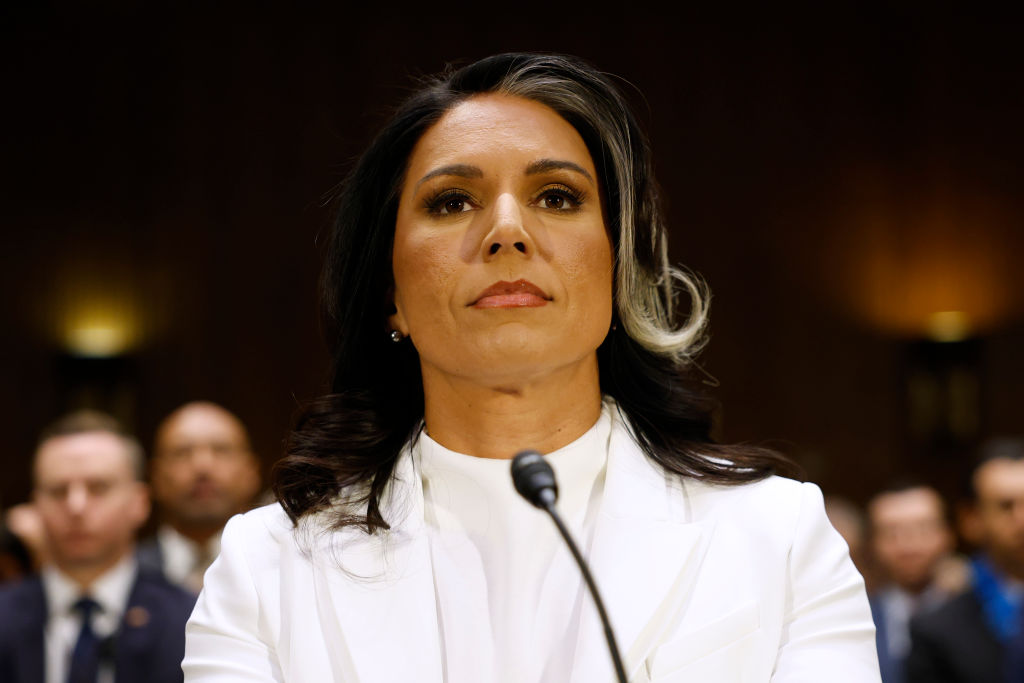
    For the past month, the tone among Washington insiders was dour as it related to the confirmation prospects of Donald Trump’s edgier nominees. Sure, the argument went, Marco Rubio is a slam dunk, and no one takes issue with Doug Burgum or Sean Duffy. But the attitude toward Robert F. Kennedy Jr.’s nomination for health and human services secretary and Tulsi Gabbard’s nomination as director of national intelligence were grim. More than a dozen Republican insiders in the past week assured me that one or both nominations were doomed, citing the opposition from the Wall Street Journal editorial page, legacy newspaper columnists such as David French and Marc Thiessen and the editors of National Review, who took a particularly aggressive stance against Gabbard.

    All of them lost. All of them were wrong. And it’s another indication that this time around, the Trump 2.0 machine is working much better than the first time. The representation on Capitol Hill has changed and woken up to the fact that their refusal to approve nominees consistent with what the president promised and what his supporters expect will have serious consequences. In the old dynamic, it was a question of, “What will the donors/the New York Times/my neocon friends think of me?” Now the evaluation is: would you like your next primary to be ten times as expensive and feature a well-funded opponent? The choice is yours.

    For RFK, the key component was Senator Bill Cassidy of Louisiana, a doctor whose skepticism about Kennedy’s answers was obvious in the recent HELP committee hearing. But Cassidy came around after pressure from Kennedy’s supporters, including a deluge of phone calls and commitments from the nominee behind the scenes. For Gabbard, the distrust was palpable in her hearing, where Todd Young of Indiana and James Lankford of Oklahoma — the latter of whom had already endorsed her for the job — added their names to the skeptic list alongside Maine’s Susan Collins. But when Collins moved in Gabbard’s direction after her hearing, it was a sign of more to come: Lankford and Young came in line, and now her confirmation on the Senate floor is virtually assured.

    There is a long list of people who exercised power over the Republican coalition for a very long time without necessarily earning it or having the experience to justify a position where they pass judgment on cabinet nominees, policy choices and the like. The days where those old-fashioned internal leaders held sway are now over. A new cadre of rainmakers and sidekicks is taking their place, lifted up by social media presence and their own brand of modern gravitas. It will be interesting to see what they do differently now that they hold the reins — or if they just choose to emulate those who came before whose time is now firmly in the past.