Tag: Venezuela

  • Dog Man Vs. Antifa and other kids’ books to ‘own the libs’ with

    Dog Man Vs. Antifa and other kids’ books to ‘own the libs’ with

    Liberals are in a tizzy as usual over Pete Hegseth, our slick-haired Secretary of War. And in particular over his nonchalant attitude toward blowing Venezuelan drug boats out of the water, acting like the US is attacking the Old Man and the Sea or some bachelorette party boat instead of some highly organized narcotraficantes. That said, Hegseth did issue a bizarrely immature meme yesterday, tweeting out a fake cover of the children’s book character Franklin the Turtle called “Franklin Targets Narco Terrorists.” In it, Franklin, wearing a helmet and a gunbelt in addition to his usual protective carapace, fires an RPG and blows up a drug boat near some sort of tropical shore.

    You could ask what Franklin, usually depicted running off to school or going to the pharmacy with grandpa, has to do with the War on Drugs. But we now live in an era where you can be a cabinet secretary and also a shitposter, so let’s just roll with it. Like Pete Hegseth, I also enjoy using AI to make children’s book parody memes. Here are some other suggestions for Republicans who want to lightly troll their opponents.

    Amelia Bedelia Rides The Bus For Free In New York City

    Everyone’s favorite ditzy housekeeper learns to navigate the realities of Zohran Mamdani’s New York.

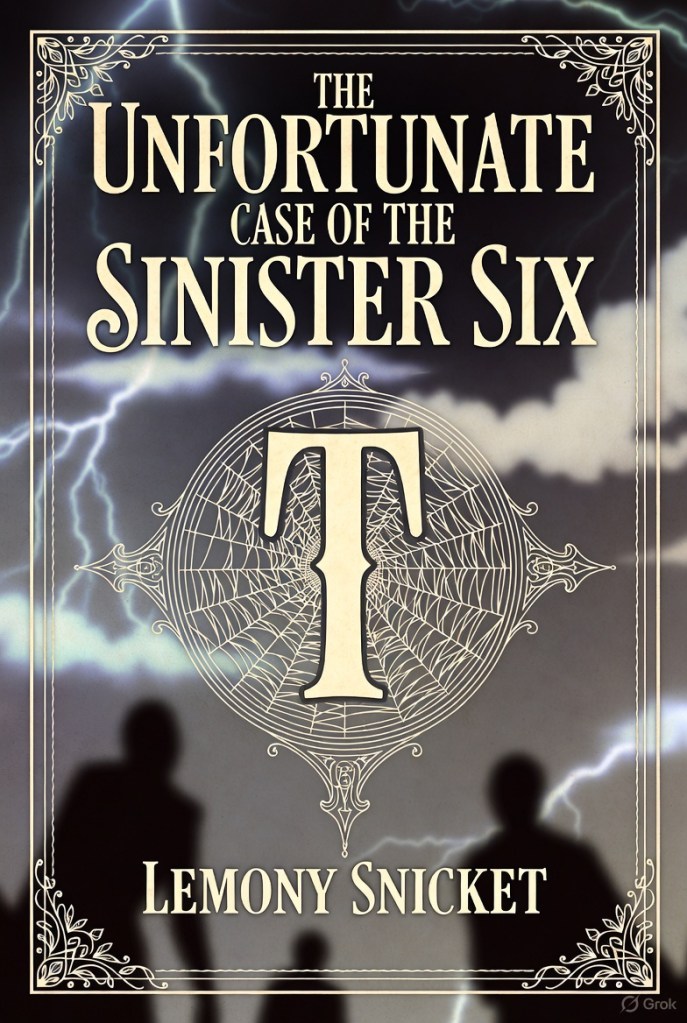
    The Unfortunate Case of the Sinister Six

    We’ll call them the “Sinister Six” instead of the “Seditious Six” because, well, frankly, I mistyped it into ChatGPT. But it definitely sounds like a Lemony Snicket book. Mark Kelly is a Count Orloff type for sure.

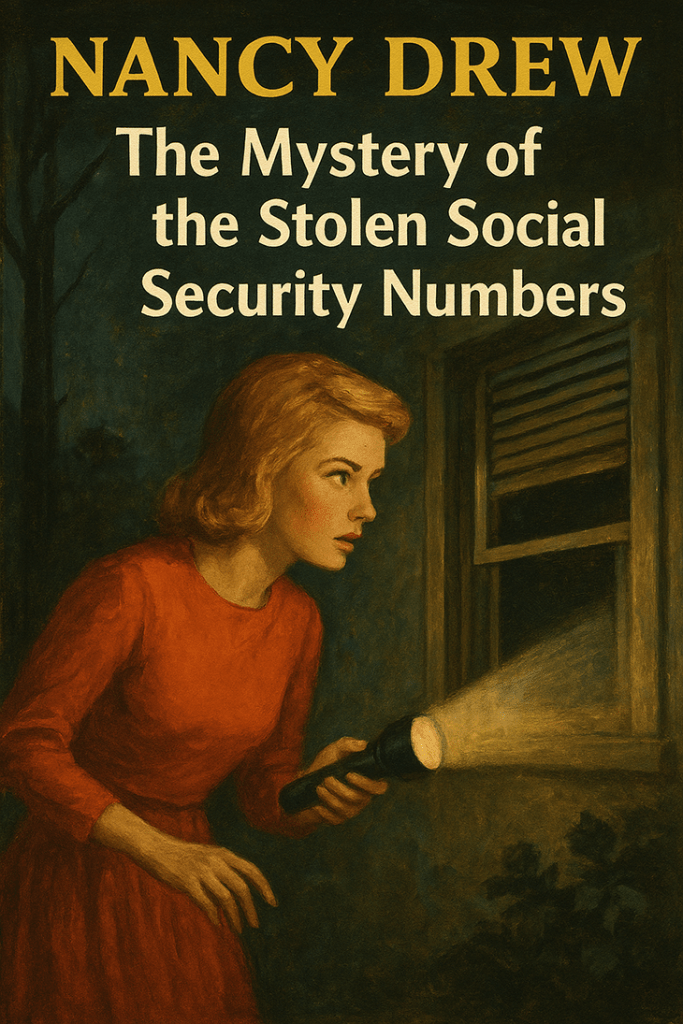
    Nancy Drew: The Mystery of the Stolen Social Security Numbers

    The teen girl sleuth – and her chums – investigate the shadowy world of immigration fraud.

    Choose Your Own Adventure: You Are a Somali Warlord In Minnesota

    Speaking of immigration fraud, don’t think Tim Walz is getting out of this meme-free. I’ve chosen my favorite 1980s childhood book series for this story. Will you save the princess? Or will the Yeti eat you?

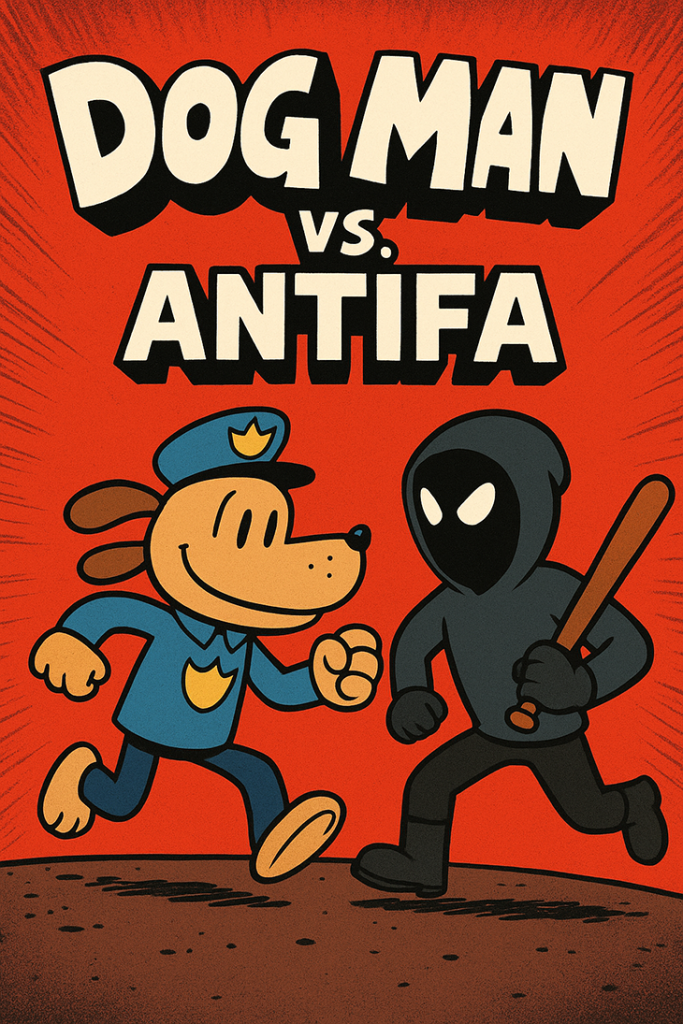
    Dog Man Vs. Antifa

    Let’s not forget our favorite domestic terrorist organization. Maybe Kash Patel or Kristi Noem can tweet out this Dav Pilkey-style book cover.

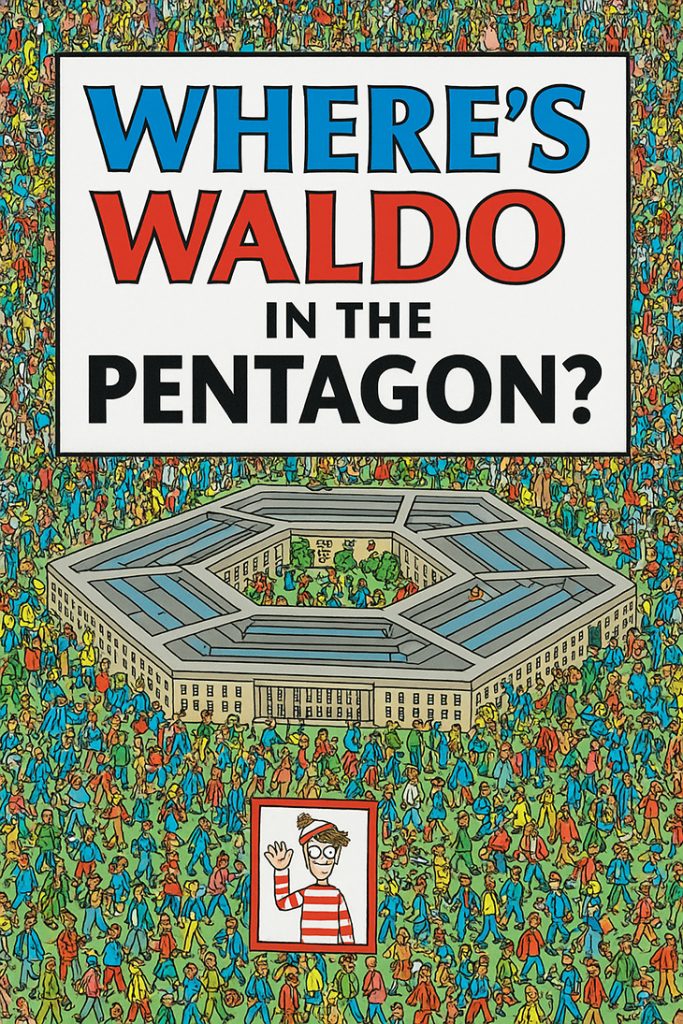
    This doesn’t have to be limited to Republicans. Maybe someone from Gavin Newsom’s savvy social-media team can join in on the fun and give Pete Hegseth a taste of his own medicine with Where’s Waldo In The Pentagon?

    Really, why does this have to be partisan at all? Let’s close this magical journey back to childhood with a book riffing on the Olivia Nuzzi/RFK Jr. relationship, which people of all ideological stripes love to hate.

    It’s Olivia and the Bear In Central Park.

    This American Canto will bring us all together.

  • Fact-checking the Venezuela war hawks 

    Fact-checking the Venezuela war hawks 

    As the US Navy remains primed for action in the Southern Caribbean, Venezuelan dictator Nicolás Maduro prepares for what could be an American attempt to remove him. And as President Trump alternates between calling Maduro on the phone and authorizing air strikes, a bevy of misinformation is being peddled by public figures with an agenda. There are so many claims and counter-claims on the air waves right now that it’s difficult to separate fact from fiction.

    A sizable chunk of this disinformation is of course being sold by Maduro himself, a man who has learned from his predecessor and mentor, the late Hugo Chávez, that it’s easier to blame the United States for all of your problems than own up to your own catastrophic policy errors. Maduro’s biggest fraud occurred in the summer of 2024, when he lost the Venezuelan presidential election to former diplomat Edmundo González Urrutia in astounding fashion but claimed victory anyway.

    Maduro, however, is hardly the only one throwing falsehoods into the air. The Venezuelan opposition movement led by Nobel Peace Prize laureate María Corina Machado and a vocal group of far-right Venezuelan exiles in Miami are just as guilty. Machado, whose entire career has been devoted to ending the Chavismo politics that have ruled Venezuela for a quarter-century, has given countless interviews in the American press about how Maduro rigged the 2020 US presidential election, unleashed the Tren de Aragua gang and directed a massive criminal organization dubbed the Cartel de los Soles, with the express purpose of weakening America by turning its citizens into drug addicts. “Everybody knows that Venezuela is today the main channel of cocaine,” Machado told CNN last month, “and that this is a business that has been run by Maduro.”

    Machado is hardly the only one making claims designed to push the Trump administration into military action. Emmanuel Rincón, a writer and activist, alleged on Fox News this week that Maduro declared war on the United States long ago and is “one of the main architects” of the drug epidemic in the US Ryan Berg of the Center for Strategic and International Studies went on the same network and called Maduro a dire threat who was turning Venezuela into a Russian and Chinese colony only 600 miles from the US mainland.

    It also sounds quite scary until you turn off the noise and start dealing with the facts. The truth is that proponents of regime change are throwing spaghetti at the wall to see what sticks. Their aim is to inflate the threat, not educate the public.

    Take Maduro’s involvement in the drug trade and his supposed control of Cartel de los Soles as a prime example. Yes, Maduro’s regime is implicated in drug smuggling. We know this because several high-profile regime figures, including Maduro himself, have been indicted by the US Justice Department on various drug-related charges. Maduro is currently wanted by the FBI and has a $50 million bounty for information leading to his capture. Some senior Venezuelan officials and Maduro family members have been implicated in cocaine trafficking as well; two of Maduro’s nephews were prosecuted for cocaine distribution in 2017 and sentenced to 18 years in prison (they were later released in a prisoner exchange).

    But the notion that Maduro is giving orders to the region’s drug trafficking networks gives the former bus driver and union leader far too much credit. Indeed, the so-called Cartel of the Sons that Maduro supposedly leads isn’t even a cartel in the traditional sense of the word; it has no top-down structure or hierarchy of any kind. Command-and-control is lacking. Those who have studied drug trafficking for decades essentially refer to it as a loose, relatively laissez-faire connection between Colombian cocaine traffickers and Venezuelan army officers, who look the other way and take a cut of the drug shipments transiting Venezuelan territory for export to Europe and the United States. While this morally disturbing and certainly criminal, it’s not exactly a shocking development: corrupt politicians and officers in Latin America have participated in similar arrangements for decades. And the phenomenon is not exclusive to Venezuela – former Honduran President Juan Orlando Hernández, who was feted by the first Trump administration as a major partner in Central America, ran a narco-state himself. For Maduro, dabbling in the drug business is likely less about attacking the United States as the Trump administration claims and more about giving his support base the opportunity to access criminal rents to get rich, thereby binding their economic fortunes to his political longevity. In other words, it’s a survival strategy, not a grand conspiracy.

    Another key question should be put into perspective: is Venezuela the central node in the drug trade? Listen to Machado and her supporters and you could easily think that cutting Maduro down to size would magically win the war on drugs. But this is laughable. According to the Drug Enforcement Administration’s own statistics, only 8 percent of the cocaine heading to the United States transits the so-called Caribbean Corridor, where Venezuela is located. The vast majority, 74 percent, is shipped from Ecuador and Colombia’s Pacific coast. The 2025 DEA drug threat assessment report didn’t even bother to mention Venezuela in the context of drug trafficking, which is a curious omission for an administration that frequently describes Maduro’s Venezuela as the epicenter of the narco world.

    Moreover, one of Machado’s biggest selling points is her contention that Venezuela will inevitably turn into a democracy once Maduro’s regime is deposed. She insists there is a 100-day plan to take over the reins of government and guide Venezuela through a political transition. Freedom of speech, free-markets, elections, justice and accountability will apparently replace repression and criminality. It all sounds pretty good.

    There’s just one problem: Machado’s camp hasn’t bothered to provide any details whatsoever about how they intend to accomplish this utopian objective. There are far more questions than answers. How will they re-build the institutions that Maduro has gutted over the last 12 years? How will they convince the Venezuelan army leadership that its interests are best served switching their support to a new government? What incentives are they willing to offer? Why are they so confident that the Venezuelan generals who made a killing under Maduro will choose cooperation over resistance, particularly when Machado continues to declare that anyone who perpetrated crimes will be prosecuted to the fullest extent? And what about the armed criminal groups and paramilitary pro-Maduro forces whose number are even greater than the regular Venezuelan military?

    The Venezuela policy debate won’t be going away anytime soon. Unfortunately, as the days go by, emotion, ideology and political agendas are displacing reality. And that’s a recipe for terrible policy.

  • Why Iran needs the Maduro regime

    Why Iran needs the Maduro regime

    The aircraft carrier Gerald R. Ford and three warships have been sent to the Caribbean, where they are joining a dozen Navy warships already off the coast of Venezuela, in an unprecedented show of military force.

    President Trump and his administration are taking aim at the administration of Nicolas Maduro, over his alleged role in the drug trade which presents a national security threat to the United States. It’s clear that if the US succeeds in destabilizing and displacing President Maduro’s regime, it would be a blow to the region’s drug traffickers. What is less known is that it would also hit Iran.

    Venezuela has long served as a launchpad for Iranian operations to establish a foothold in South America. The Islamic Revolutionary Guard Corps (IRGC), its Quds Force, and Iran’s Intelligence Ministry have all had a presence in Venezuela. The Quds Force has used economic delegations to Venezuela and other countries around the world as cover for terrorist activity. According to reports, in September 2020 an Iranian delegation landed in Caracas comprised of businessmen who acted as Quds Force facilitators.

    The Quds Force’s Unit 840, which plots terror schemes abroad, has historically been active in Venezuela. Evidence suggests the son of a senior intelligence advisor close to the supreme leader was at one point responsible for Unit 840’s Latin America operations. He has traveled to Venezuela to nurture these illicit networks. His presence shows the importance of Caracas for Iran.

    Another Quds Force group, Unit 11000, was recently implicated in a plan to assassinate Israel’s Ambassador to Mexico. Critically, a Unit 11000 operative who spearheaded the plot operated out of Iran’s embassy in Caracas. This is a strategy Tehran has employed elsewhere, particularly Europe, where IRGC Quds Force and intelligence agents are given diplomatic cover and use of Iran’s embassies worldwide as a staging ground for assassinations, bombings and surveillance.

    Another arm of the Iranian state, its intelligence ministry, also works out of Venezuela. Majid Dastjani Farahani, who is an Iranian intelligence officer, has launched operations to harm American citizens in retaliation for the killing of the late IRGC Quds Force Commander Qasem Soleimani. Farahani is wanted by the Federal Bureau of Investigation, and its notice indicates he has ties to Venezuela. It’s the same for Mohammad Mahdi Khanpour Ardestani, another Iranian intelligence ministry officer, who has also worked out of Venezuela.

    In a 2021 indictment concerning a plot to kidnap Iranian-American journalist Masih Alinejad from New York, Iranian operatives researched seizing her and transfer her to Venezuela by sea. The Quds Force has also used Venezuela to fund its campaigns, sending gold from Caracas to generate income in exchange for Iranian oil. In 2024, the US Justice Department successfully seized a former Iranian-owned Boeing aircraft. It had been transferred from the Quds Force-affiliated Mahan Air to a Venezuelan cargo airline. Its crew included a former IRGC commander.

    Iran’s proxy Hezbollah has also used Venezuela as a hub to support its own terrorism, drug trafficking and business interests. For example, Ghazi Nasr Al Din, whom the US Treasury Department sanctioned in 2008, doubled as charge d’ affaires at the Venezuelan embassy in Syria and director for political aspects at its embassy in Lebanon. At the same time, he facilitated travel for Hezbollah operatives and raised funds in Venezuela for the terrorist organization.

    A former member of the Venezuelan National Assembly and Maduro ally Adel El Zabayar was indicted in 2020, with the US government alleging he served as a go-between in recruiting terrorists from Hezbollah and Hamas to carry out terror attacks on the United States.

    Likewise, Iran’s defense ministry has maintained its own pipeline in Venezuela. Qods Aviation Industries, which is a defense ministry subsidiary, has exported drones to Caracas, including the Mohajer-2.

    The defense ministry also manages an oil venture with Venezuela to fund defense projects, according to the US Treasury. In 2023, the US government sanctioned Iran’s then-defense attaché in Caracas for facilitating these deals.

    Public reports also suggest Iran has developed a drone development base at El Libertador Air Base, where it trains Venezuelan military personnel. As the Trump administration has intensified its pressure campaign against Caracas in recent months, Venezuela has asked Iran for “passive detection equipment,” GPS scramblers, and “almost certainly drones with 1,000 km range,” according to the Washington Post.

    Over the years, Maduro has reportedly sought missiles from Iran as well. The possibility of this triggered a crisis for the Biden administration in the summer of 2021, after Iranian warships headed for the region.

    If Maduro is ousted, Iran stands to lose many of its assets in Venezuela. Venezuela, much like Syria under the Assad regime, helps further Iranian interests across the region – military, terror, economic, and political. At a time when Tehran and its proxies across the Middle East have been weakened after the war with Israel, the loss of Maduro would be another blow to the Iranian regime.

  • How Trump could attack Venezuela

    How Trump could attack Venezuela

    President Trump has assembled the largest naval force in the Caribbean since the Cold War. How will it be used? Is he considering an attack on Venezuela to overthrow the Maduro regime? Will he pursue the drug cartels by attacking them in Venezuela? Or will the President simply continue America’s counter-drug operations at sea? With all of these possibilities there is the hope that the Maduro regime will collapse under the pressure of America’s military might.

    At present, the United States is countering the flow of illegal drugs by sinking suspected drug-carrying boats off the coast of Venezuela. The effort is in its 11th week and has led to at least 21 vessels being destroyed. US counter-drug operations in the Caribbean have been going on for decades and have bipartisan support (although the use of lethal force does not). In 2023, President Trump campaigned against drug smuggling, calling it an attack on US citizens. Yet he also cautioned against being involved in foreign conflicts. As he said in his inaugural address: “We will measure our success not only by the battles we win, but also by the wars that we end, and perhaps most importantly, the wars we never get into.” The current approach to Venezuela balances these two commitments.

    The political challenge is that, having built up such military strength and made explicit threats against the regime (with Trump saying “Maduro’s days are numbered”) if America doesn’t attack, it could be characterized as another instance of TACO – “Trump always chickens out.” Maduro would celebrate having successfully stood up to the gringos for a second time. President Trump would need some sort of diplomatic success to stand down without looking weak.

    The arrival of the Gerald R. Ford seems to signal some sort of direct action against Venezuela. The aircraft carrier, a scarce and powerful military asset, is not suited for plinking small drug boats. Aerial gunships, maritime patrol aircraft and drones have been doing this fine on their own. However, the Ford, in combination with bombers and other naval assets, is perfect for attacks on the mainland. The United States has enough Tomahawk missiles and other land attack munitions in the region for such strikes. Indeed, the Pentagon has reportedly briefed the president on attack options.

    What are these options? The United States could expand its ongoing counter-drug campaign by using this assembled military force to attack the drug cartels in Venezuela: destroying drug production facilities, disrupting seaports and airports used for smuggling, and killing cartel leaders. Such strikes would hit a major drug transit hub and deter would-be cartel members. Even when the cartels adjust, as they will, the attacks set a precedent for a muscular way of countering the flow of drugs. Attacking the cartels ashore is also attractive because it is easy to stop and claim victory, as the strikes will have visibly destroyed some drug smuggling capabilities.

    The administration could decide to overthrow the Maduro regime, which it sees as leading an illegitimate narco-terrorist state. It has put in place a narrative that would justify such a step. An air campaign could attack the headquarters of the Venezuelan security forces and Maduro’s United Socialist party, as well as bases for internal security forces, and perhaps some military air defenses.

    An air campaign might also try to kill Venezuela’s leaders, including Maduro himself. But even putting aside the legality of this, it is hard to hit a target that is moving and hiding. In the 2003 invasion of Iraq, for example, the United States launched an aggressive air campaign against “high-value targets.” None were successful in killing senior Iraqi leaders. It took a decades-long intelligence effort for Israel to penetrate Hezbollah to track and kill its leadership in 2024. It is unclear whether the United States has a similar level of reach within the Maduro regime.

    In the background of all of these options is the hope that the regime collapses internally – an implicit goal from the beginning of the campaign. The intimidation effort has increased over time with the rising military capability, operations close to the Venezuelan coast, flybys of US bombers, and covert CIA action to undermine the regime. Perhaps an element of the Venezuelan security forces could be induced to break away and launch a coup. To prevent this, Maduro has worked hard to ensure his military’s loyalty, incorporating senior officers into his kleptocracy and weeding out any who showed unreliability. Yet the United States is quietly pointing out to military figures that when it overthrew Saddam’s government, the Iraqi military was disbanded. The message is clear: change sides or face social and economic ruin.

    A ground invasion, despite all the attention it has garnered, is not possible at the moment. The United States has about 2,200 Marines in the region, whereas Venezuelan ground forces number about 90,000 between the army, national guard, and marines. Conducting a ground invasion would require massive, multi-divisional reinforcements of at least 30,000 troops and likely much more. There are no signs of such deployments.

    Yet current situation is unsustainable. The United States is like an archer who has drawn his bow. Eventually, the archer must launch an arrow or stand down. An armada – particularly the USS Ford – cannot remain in thCaribbean for more than a few weeks. These assets will be needed elsewhere to respond to crises in other parts of the world, conduct exercises with allies, or show force to competitors like China. There is immense pressure to begin operations or back down. President Trump says he has “sort of” made up his mind. What he does now will reveal his theory of victory.

  • Why Trump is freezing out Five Eyes allies

    Why Trump is freezing out Five Eyes allies

    The most powerful intelligence alliance in the world is breaking up. In January, Donald Trump restricted intelligence-sharing on Russia and Ukraine, cutting allies out of negotiations and freezing certain channels entirely. Then in March came the so-called “Ukraine intel blackout,” an unprecedented freeze that shut Britain and Australia out of updates on Russian troop movements. And last month, the Dutch said they were scaling back intelligence-sharing with America over fears of “politicization.”

    Trump tends to treat intelligence as leverage, a tool to reward countries that fall in line with Washington and punish those that don’t. In his hands, intelligence and secrets have become bargaining chips. But by holding information back, he’s weaponizing the very trust that built the western alliance and sustained the power of the Anglosphere. The “Five Eyes” – the spying network that comprises the US, the United Kingdom, Canada, New Zealand and Australia – is not a commercial arrangement. It can’t survive if its members start haggling over access.

    There are good reasons for Trump to be wary of the Five Eyes. British and Australian agents, after all, were at the heart of the Russiagate saga which did so much to derail his first administration. More broadly, the alliance allows governments to spy on their own citizens through one another’s networks, sharing the results without technically breaking their own laws.

    We like to believe our governments need warrants, oversight and law to reach into our private lives. In truth, the invasion of privacy in the West takes place on an industrial scale. Almost every phone call, search and message passes through a web of monitoring that’s rarely acknowledged and almost never constrained by law. Its defenders insist this cooperation keeps the West safe. Its critics call it institutionalized hypocrisy. Both are right to a degree.

    American law forbids the National Security Agency from targeting US citizens without a warrant. British law requires GCHQ to obtain one under the Investigatory Powers Act. So the NSA collects on Britons. GCHQ collects on Americans. Data is exchanged. It’s a system built on plausible deniability. Each agency claims it is merely receiving “foreign intelligence.” The scale of the intelligence-gathering and analysis is staggering.

    The US’s NSA alone intercepts hundreds of millions of text messages, emails and call records every day. Under its “Upstream” and “Prism” programs, the agency taps the world’s main fiber-optic cables and demands user data directly from US tech giants. Britain’s matching operation, GCHQ’s “Tempora,” stores three days of transatlantic internet traffic at any one time, with metadata retained for a month. Australia’s Signals Directorate monitors entire oceanic cable systems linking Asia to the Pacific. Canada’s Communications Security Establishment sits astride the Atlantic routes into North America, feeding bulk intercepts into shared databases that analysts in all five countries and beyond can query.

    The alliance’s reach extends into almost every form of modern communication – mobile networks, satellite relays and social media platforms. Few of its targets are terrorists or spies. The agreement that started this system, known as UKUSA, was signed in 1946. It has never been ratified by any legislative body and remains classified in full. What we know comes from leaks, court rulings and declassified scraps. Over the years, the network has quietly expanded beyond its original five members to include associate and “third-party” partners in Europe, the Middle East and Asia. These extensions, often referred to as “Nine Eyes” or “Fourteen Eyes,” have turned the alliance into a sprawling global surveillance web, linking western intelligence agencies through shared databases, cables and monitoring systems that cover the planet.

    The Five Eyes were born of Churchill’s idea of “the English-speaking people,” bound by language, law and a shared sense of moral purpose. Yet the values that once made Five Eyes a moral community have fractured. Today, the alliance binds countries that no longer see liberty, privacy or speech in the same way. In Britain, police arrest citizens for online “hate incidents.” In Canada, the government froze protesters’ bank accounts. Australia’s diplomats helped ignite an FBI investigation into a US presidential candidate.

    The secrecy and the overreach are real, but Trump’s crusade against Five Eyes is not about curbing surveillance. It’s about dominance over the system. At the start of the year, the President began starving Washington’s allies of intelligence they’d once taken for granted. Then screenshots from a White House Signal chat appeared online, revealing private exchanges between senior aides discussing US military options in Yemen, shared by allies. The breach exposed not only sensitive operations but also the chaotic way Trump’s team handled classified material. British and Australian intelligence officers were said to be furious, prompting allies to scale back contributions. Former GCHQ staff described a collapse of confidence among the Five Eyes intelligence services.

    London and Canberra have since formed smaller, closed sub-groups to coordinate without US participation. Canada, meanwhile, has scaled back its contributions after Trump publicly threatened to expel it from the alliance altogether, following months of tariff disputes. Inside Washington, intelligence veterans describe an atmosphere of suspicion not seen since the Cold War.

    For Trump and his allies, the intelligence alliance is not a bond of friendship, but a nest of unelected bureaucrats, the “deep state abroad.” To him, distrust is not paranoia but prudence. He views the exchange of intelligence as a transaction and intelligence itself as a commodity. That’s not altogether wrong. The Five Eyes alliance has always been transactional, a system of barter between intelligence services, trading data for access, reach or favor. Trump’s battle is not against the surveillance itself. He is targeting the independence of allies who refuse to submit. Intelligence does not obey the laws of supply and demand. It depends on the unspoken belief that what is shared will not be politicized. Once that trust collapses, the value of the intelligence collapses with it. Trump is destroying Five Eyes by destroying the trust that underpins it. Whether that’s deliberate or not is hard to say.

    This article was originally published in The Spectator’s November 24, 2025 World edition.

  • Why is Trump sending an aircraft carrier to Venezuela?

    Why is Trump sending an aircraft carrier to Venezuela?

    Venezuela has been on tenterhooks for weeks, waiting as the United States gathers an armada of warships. The world’s largest aircraft carrier, USS Gerald R. Ford, looks likely to arrive in the Caribbean from the Mediterranean early next week to join the assortment of destroyers, frigates, amphibious assault vessels and a nuclear-powered submarine. 

    No one seems to know exactly what this magnificent display of American naval firepower is all about. Has it been sent to destroy the cocaine smuggling networks in Venezuela, or topple President Nicolás Maduro, the egregious leader of that poor country? Or is its purpose to remind the Latin American region that the US under Donald Trump could come in guns a-blazing whenever it wants?

    Whatever the answer, Trump is currently examining all the options for some form of possible military action over and above the target practice granted the US Navy to knock out any speedboat coming out of Venezuela suspected of carrying cocaine. So far at least 17 vessels have been destroyed, including one semi-submersible, resulting in the death of 70 people. 

    This, however, is not the sort of mission appropriate for the mighty Gerald R. Ford, a carrier with space for up to 90 aircraft on board. There has to be a grander plan. This, at least, will be the thinking of President Maduro, who has been appealing for military help from his backers, including Vladimir Putin.

    Apart from Maduro himself, his regime flunkies, the police and the army who get paid high wages to stay loyal, there can’t be many people in Venezuela who would not welcome US intervention to get rid of a president who has destroyed the country’s economy through gross mismanagement, corruption and greed since he came to power in April 2013. Nearly eight million people have already fled the country, leaving behind their unsellable homes and businesses.

    The options in front of Trump are said to include: comprehensive strikes within Venezuela on the known drug cartels’ strongholds; attacks on the military protecting Maduro; seizing the country’s oil fields; and going for Maduro directly, just like the US did in Panama three decades ago, when Mmore than 26,000 US troops swept in by helicopter and landing vessels to capture General Manuel Noriega, the country’s leader. Noriega, like Maduro, was designated by Washington as a drug trafficking baron.

    Trump, however, is already being criticized for the attacks on drug boats. They are not justified under international maritime law, experts have said. The Trump administration has argued that the US is engaged in an armed conflict against drug cartels and that those killed were “unlawful combatants.” This was the phrase used by President George W. Bush’s administration to justify the extra-judicial capture and detention in Guantanamo of suspected al-Qaeda terrorists following 9/11.

    The Trump administration has reportedly been seeking advice from the Justice Department about the legality of attacking facilities in Venezuela associated with the drug cartels, as well as, potentially, a direct targeting of Maduro. 

    Judging by leaks in Washington, it would seem the advice was that the administration does not have legal justification for strikes on Venezuela. Officials have been quoted as telling Congress that Trump was not currently planning to launch strikes inside the country. 

    If this is the case, then the arrival of USS Gerald R. Ford and its accompanying warships presents Trump with a conundrum. Deploying a carrier from the Mediterranean via the Atlantic to the Caribbean Sea, a journey of around 2,700 nautical miles, is not done for fun. It’s a deliberate and provocative move, authorized by the president to send the most potent warning that the US means business.

    The US Navy already has at least 13 surface warships and a nuclear-powered submarine operating near Venezuela. Some of the warships and the submarine are armed with Tomahawk land-attack cruise missiles, the weapon system favoured by previous US presidents to carry out strikes without the need for sending troops. In addition to warships, the US has reactivated a Cold War era naval base in Puerto Rico, about 500 miles from Venezuela’s coast, and sent troops, F-35B stealth fighters, Marine Corps helicopters and heavy transport aircraft.

    The US is essentially facing off against not just the Venezuelan cartels, but Maduro’s military too. There is intelligence evidence that the Venezuelan army plays a role in ensuring the successful trafficking of drugs out of the country. The biggest cartel, the Cartel de los Soles, is allegedly led by high-ranking members of the Venezuelan armed forces. Military facilities identified as being linked to the drug cartels could be targets for Tomahawks. 

    But will Trump go this far? Having deployed so much firepower to the Caribbean, is he going to give the order to launch strikes, or will he listen to the Justice Department lawyers, counselling caution?

    The sudden announcement last month of the early retirement of Admiral Alvin Holsey, commander of Southern Command, which oversees American operations in the South Caribbean and Latin America, suggests there may be growing internal concerns about what the Commander in Chief has in mind.

  • Trump is being misled on Venezuela

    Trump is being misled on Venezuela

    President Trump is being misled into a regime-change war close to home. Few Americans nowadays find much to celebrate in the Iraq War or the intervention that overthrew Libya’s Muammar Gaddafi. Regimes were successfully changed both times, but what came after the dictators’ downfall was civil war, regional instability and mass-migration flows that exported many of those nations’ troubles to their neighbors.

    Now the Trump administration wants to do to Venezuela’s despot, Nicolás Maduro, what George W. Bush did to Saddam Hussein and Barack Obama did to Gaddafi. That will predictably do to the Americas – including the US – what the War on Terror did to the Middle East, North Africa and Europe.

    Why would Donald Trump make such a mistake? Bush and Obama’s foreign-policy blunders gave the President one of his strongest campaign themes in 2016, and his first term was distinguished by his success at keeping America out of new wars. His use of force abroad has typically been selective – why depart from what’s worked?

    If the examples of Bush II and Obama aren’t enough, the Trump administration should consider what happened when Ronald Reagan and Jimmy Carter intervened in places such as El Salvador. The US-backed civil war in El Salvador sent waves of refugees and immigrants northward, including to the US, where some of the new Salvadoran communities formed gangs – notably MS-13.

    The tension in the Trump coalition isn’t just between foreign-policy hawks and doves – it’s between hawks and immigration restrictionists. Refugees and mass migration are inevitable consequences of today’s wars. And the Trump administration’s policy does not make sense as a tactic to stop illegal drugs, especially fentanyl, from reaching our border: the chaos and population flows that regime change triggers are a boon to drug networks and human traffickers.

    It’s true that Maduro and his predecessor Hugo Chávez have also caused some migration by remaining in power, but the people fleeing because of socialism are often middle-class and freedom-loving; war uproots everyone, especially the poor.

    Despite claiming in 2016 that George W. Bush should simply have taken Iraq’s oil, Trump is probably not contemplating an invasion to seize Venezuela’s petroleum resources. He’s conducting a “maximum pressure” campaign to make an example out of Maduro, regardless of whether or not the socialist dictator can be forced out of power.

    Trump wants to show that there are rewards for America’s friends and painful punishments for her enemies, and he takes the Western Hemisphere particularly seriously. Maduro’s agony will be a lesson to anyone else in Latin America who thinks of making a foe out of Washington. At least, that’s the theory – but the US has a long history of throwing its weight around in Latin America and only making enemies in the process.

    The model Trump should adopt isn’t Reagan’s strategy in Latin America but rather the one that won the Cold War in Europe: stabilizing America’s friends and helping them prosper, thereby heightening the contrast between life under freedom and life under socialism.

    Seeing that contrast inspired Europeans to liberate themselves, tearing down the Berlin Wall and replacing communist governments with democratic ones. If Latin Americans want freedom – and they do, as Argentina’s election of Javier Milei indicates – they can achieve it just as Eastern Europeans did.

    The examples of those places where the US relied most on force during the Cold War are overwhelmingly negative. Even the great triumph of Reagan-era political warfare in Afghanistan defeated a Soviet puppet only to create conditions that brought the Taliban to power and provided al-Qaeda a haven from which to attack the US. That’s a Pyrrhic victory if ever there was one.

    The Trump administration’s interest in toppling Maduro preceded Marco Rubio’s tenure as secretary of state, and sources with ties to the administration say it’s unfair to blame Rubio for the neocon tilt of Venezuela policy. But if there’s a war, it will be Rubio’s at least as much as Trump’s, and if it goes badly, Rubio will get the blame – not least from the President himself.

    Rubio has earned a great deal of respect from many in the MAGA movement who once thought of him as a Bush Republican – weak on immigration, neocon in foreign policy. He risks proving his detractors right if he embraces a regime-change program left over from the days of Mike Pompeo.

    As for Trump himself, he sees force as another form of leverage in negotiations. He won’t bomb allies in trade talks, but he will use America’s military might to change the way adversaries think. And if he’s not about to start a war with China, he’s fully prepared to demonstrate what he can do on Maduro.

    Making an educational point, rather than actually changing the regime in Caracas, may be his objective. But there’s a constituency in the Republican party that wants more than that, and Trump likes to give everyone in his coalition something they have their hearts set on.

    In this case, however, he can’t please neocons or hawks without harming immigration restrictionists as well as doves. Obama, Bush II, Reagan and Carter have shown that when America tries to change other regimes, the result is mass migration that changes Europe and the US. Regime change abroad leads to regime change at home, and right now Trump is the regime.

    This article was originally published in The Spectator’s November 10, 2025 World edition.

  • Is America at war?

    Is America at war?

    President Trump’s undeclared war on Latin America’s drug smugglers escalated dramatically on Tuesday when US air strikes destroyed four more boats allegedly carrying narcotics – this time in the eastern Pacific Ocean 400 miles south of the Mexican coastal city of Acapulco.

    At least fourteen crew members died in the attacks, and one was rescued alive by the Mexican navy, bringing the total number killed by the US campaign in the last two months to 57.

    Mexico’s President Claudia Sheinbaum condemned the attacks as a violation of international law, and said Mexico’s ambassador in Washington would lodge a protest and demand an explanation from US officials.

    The latest strikes were personally authorized by Trump and announced by War Secretary Pete Hegseth. Videos were released showing the boats hit and bursting into flames. One of them appeared to be laden with large parcels which Hegseth claimed were drugs bound for America’s cities.

    Although the nationality of the vessels was not disclosed, the location of the strikes in the Pacific suggests that they were Colombian. The left-wing Colombian President, Gustavo Petro, has been engaged in a war of words with the Trump administration who accuse him of ties to the drugs cartels. During a recent visit to the UN in New York, Petro called the strikes a war crime, and Washington responded by sanctioning him and his family members.

    The previous US air strikes hit Venezuelan vessels in the Caribbean, and were aimed at another leftist regime – Venezuela’s authoritarian President Nicolás Maduro. Eight Venezuelan vessels have been sunk by the strikes since August , and dozens of their crew members killed.

    Maduro responded to the attacks by accusing Trump of planning to overthrow his regime, and mobilized his defense militia to resist. Trump has made little secret of his desire to be rid of the socialist President, whose rule has plunged the oil rich nation into economic chaos and has led to one in three Venezuelans fleeing their country, with many heading towards the America. Trump has openly ordered the CIA to carry out covert operations inside Venezuela aimed at deposing Maduro, whose reelection last year is widely thought to have been rigged.

    The Trump administration is shaking a very big stick against its Latin American neighbours. The Gerald Ford carrier group, whose eponymous flagship is the world’s biggest warship, is currently sailing from the Mediterranean to join the Naval task force already patrolling the Venezuelan coast.

    Although the aggressive US air war against drug smugglers has been denounced by several Latin American states, Trump is gambling that it proves popular in the US where cities have been ravaged by drugs like cocaine and fentanyl that have their origins south of the Rio Grande.

    Mexico, which has historically fought several shooting wars with America, is in the front line of this latest conflict. However, President Sheinbaum is constrained in her protests because she is currently engaged in delicate trade talks with Trump to try and moderate the tariffs that he is imposing on this, the most populous and powerful Latin American nation.

  • What was Graham Platner inking?

    What was Graham Platner inking?

    Has anyone seen Graham Platner’s tramp stamp?

    “I grew up as a little punk rock kid listening to Dead Kennedys and Dropkick Murphys,” Graham Platner, the front-runner for the Democratic nomination for the open Maine Senate seat said yesterday at a town hall in Ogunquit. He neglected to include the information that as a little punk rock kid he attended Hotchkiss, a private boarding school in Connecticut that currently costs more than $70,000 a year for tuition and meals, whose alumni include the founders of Morgan Stanley and Lehman Brothers. Such details rarely appeal to the common people.

    Platner, who runs an unprofitable oyster farm, served eight years in the Marines after high school. Before he served, he was protesting the Iraq War, saying “I might have read too much Hemingway” – even though Hemingway never saw a lick of combat. He also worked for Blackwater and liked to post on Reddit, including this from 2018: “Fight until you get tired of fighting with words and then fight with signs, and fists, and guns if need be.” Even worse, he worked as a volunteer bartender at Capitol Hill’s Tune Inn in 2013.

    That could just be the PTSD talking, but Platner is having trouble explaining away his tattoo that greatly resembled the Totenkopf, a skull-and-bones insignia worn by Hitler’s SS. The fact that Platner revealed his Totenkopf while guesting an episode of Pod Save America (equally offensive, frankly) means he realized it was going to be a political problem. He and some fellow Marines got their Totenköpfe while on leave in Bosnia.

    Cockburn has some questions for Platner. What’s the appropriate length of time between finding out your drunk Balkan tattoo is a Totenkopf and getting it removed or covered? How does that relate to your unwillingness to take money from AIPAC “or any group that supports the genocide in Gaza?” Also: wat other tattoos are you hiding? The voters of Maine deserve to see it all. Brigitte Macron’s not too big for it, nor should you be Graham!

    Skeptic that he is, Cockburn doesn’t know what to be more suspicious of: Platner’s somewhat shady backstory, or the fact that all of these negative stories about him emerged just after Chuck Schumer’s favored option, 77-year-old governor and purported former snow bunny Janet Mills, jumped into the race. It’s astroturf-on-astroturf violence.

    Yet Platner, another in a line of weird but interesting left-wing candidates of late, appears destined to win the nomination, Totenkopf or not. He’s running a modern version of a whistle-stop campaign, appealing to voters by talking about Gaza from the open rear bed of a pickup truck. Here’s what one voter had to say about him: “I’m not dissuaded by a bad tattoo, or some bad comments. I’ve lived long enough to know people make mistakes, and I’ve never been someone to throw a person by the wayside because they misstep.”

    As the Dropkick Murphys once sang to that little punk-rock kid at Hotchkiss: you’ll never walk alone.

    On our radar

    MALAY AWAY President Trump departs on a week-long trip to Asia tonight, which will take him through Malaysia and South Korea.

    HIT THE ROAD, JACK Former special counsel Jack Smith is asking to testify in open hearings after being summoned by the House Judiciary Committee.

    BLOWING UP Inflation edged up to 3 percent in September, according to a delayed report from the Bureau of Labor Statistics.


    Going Caracas

    The President of Peace sure seems ready to declare war in South America after he ordered another strike against an alleged Venezuelan drug boat this week. If you’re in Venezuela, Cockburn advises, don’t go near the ocean. But Donald Trump appears to be lighting lantern number one as well. “The land is going to be next,” Trump said yesterday. “I think that we are going to kill people that are bringing drugs into our country, OK? We are going to kill them, you know? They are going to be, like, dead.”

    They’re either going to be dead or not, Mr. President, there is no “like.” Trump appears to have no patience for the fentanyl, and he’s sick of Nicolás Maduro’s posturing. He’s declared the Trump Doctrine. Given that the distance between Caracas and Miami is approximately the same as the distance between New York and Miami, this makes some sense. We all share the same hemisphere – and you’re either with Trump or you’re, like, against him.

    Close Encounter

    The dry cleaners of DC have dollar signs in their eyes: gala season is once again upon us. Kicking things off was last night’s Encounter Books Gala at the Mellon Auditorium, where guests supped Laurent Perrier, scoffed beef Wellington and a beet salad, and left with tote bags stuffed with dangerous literature. Cockburn’s Speccie comrade Roger Kimball was the gracious host, while the night’s honorees were Penn professor Amy Wax and Claremont Review of Books editor Charles Kesler, who were introduced by Ilya Shapiro and Senator Tom Cotton respectively. There was an unusual amount of thirsting after Senator Cotton from female attendees within earshot of Cockburn during his remarks, proof of how low the bar for men is in this wretched city.

    Spotted: Larry Arnn, Scott Atlas, Christopher Caldwell, Kelly Chapman, Kara and Nick Clairmont, John Eastman, Mollie Hemingway, Antonia Hitchens, Raheem Kassam, Joshua Katz and Solveig Gold, Heather Mac Donald, Daniel McCarthy, Charles Murray, Chloe Ross, Christopher Scalia, Eugene Scalia, Robby Soave, Sarah Beth Spraggins, Jade Warwick and about half of The Spectator’s US masthead.

    Subscribe to Cockburn’s Diary on Substack to get it in your inbox on Tuesdays and Fridays.

  • Schrödinger’s covert action

    Schrödinger’s covert action

    While much of the pushback from the right wing to Donald Trump’s international hawkishness has come from voices focused on the Middle East, and feared potential for wider wars prompted by support for Israel, the actual test of a break within the Republican coalition on foreign policy disputes could come over the president’s stepped up focus on Venezuela.

    The most recent development, with Trump issuing a rare public acknowledgement that he has authorized covert CIA actions on land. “I authorized for two reasons, really,” he explained this week. “Number one, they have emptied their prisons into the United States of America. And the other thing are drugs, we have a lot of drugs coming in from Venezuela and a lot of the Venezuelan drugs come in through the sea.”

    Think of it as Schrödinger’s covert action – does it really stay covert once you announce it? This would also seem to go against Trump’s stand against starting new wars, particularly those with a mind on regime change, which some of the president’s more hawkish supporters would clearly like to be the ultimate aim. It also includes newly ordained Nobel Prize winner Maria Corina Machado, who took to the airwaves in an interview with Christiane Amanpour this week practically begging Trump to greater action against Nicolas Maduro’s regime.

    The sheer amount of resources the United States has moved into the region is impressive, well beyond the drones being used to take out a series of Venezuelan drug shipments at sea. As The Wall Street Journal reports:

    “The U.S. has moved advanced weaponry into the Caribbean and in the skies north of Venezuela, including eight Navy warships, an attack submarine, F-35B jet fighters, P-8 Poseidon spy planes and MQ-9 Reaper drones. The Pentagon has deployed elite special operations forces, including the Army’s secretive 160th Special Operations Aviation Regiment, the ‘Night Stalkers,’ a U.S. official said. Large troop-carrying and attack helicopters are part of the mix, with some aircraft conducting training flights fewer than 90 miles from Venezuela, the official said.”

    This is definitely a significant force, but what it isn’t is a prelude to a land invasion of the sort likely necessary to take on Maduro’s armed forces. Instead, for now at least, Trump seems happy with the kind of actions that disturbs Rand Paul and Thomas Massie, but doesn’t commit larger troop numbers or personnel to a regime change project.

    A fundamental aspect of the Trump tenure in his second term is that everyone is mindful about the future and what it will bring – namely, if his personally defined version of America First is the enduring approach of the GOP, or if there is a shift toward either further pullback around the world or back toward a default pre-Trump Republican security policy.

    There are plenty of observers on both sides who emphatically believe they will be the beneficiaries once that post-Trump sort happens. Their reactions, and the reactions of voters on the American right, to whatever does happen in Venezuela in this ramped up non-covert covert action could determine where the wind is blowing headed into 2028. Or it could become an object lesson in how even the president most resistant to starting new farflung foreign wars might end up in one much closer to home.