Category: Law

  • A presidential pizza delivery service

    A presidential pizza delivery service

    The excited word went out late Thursday afternoon that President Trump was going to do an evening ridealong with the National Guard. According to Twitter, he was now officially the roughest dude to occupy the White House since Teddy Roosevelt. Bad boys, bad boys, watcha gonna do? Whatcha gonna do when the Trump gets you?

    Fight fight fight!

    At the height of rush hour, POTUS climbed into “The Beast,” the Presidential limo, in a motorcade that included chief of staff Susie Wiles, Interior Secretary Doug Burgum, most-hated-man-in-America Steven Miller, and Attorney General Pam Bondi, among others. This was going to be one hell of a ridealong.

    At 5:32 pm, Trump arrived at U.S. Park Police headquarters, where he was met by 300 warriors from the DEA, ATF, US Marshals, National Guard, Police HSI, the DC Metropolitan Police and the FBI.

    “You are nice healthy looking people,” he said, and the crowd laughed.

    He was about to make them less healthy, as he presented them with bags of hamburgers from the White House kitchen, and stacks of pizzas from “a good place,” which turned out to be Wise Guy Pizza. Then the enforcer-in-chief motivated the troops. “We had a country that was laughed at a year ago,” he said.

    The world thought the U.S. was finished, he added, but “they couldn’t understand what was happening. And it’s about leadership. But we had a country that was a dead country in many ways.”

    Then, because it was Trump, and it was a day of the week, he pivoted to talking trash about windmills. But he also promised these brave men and women that he would fight mightily to improve Washington, D.C., vowing to “regrass” the city’s parks.

    “I know more about grass than any human being, I think, anywhere in the world,” The President said. “And we’re going to be regressing all of your parks, all brand new sprinkler systems, the best that you can buy.”

    After remarks from a few Administration officials, including former Fox News commentator Judge Jeanine Pirro, Trump got back into The Beast, and was home at the White House just a little after 6 p.m. It hadn’t been much of a ridealong. But thanks to the person who knows more about grass than anyone in the world, the streets of D.C. were safe once again.

  • Trump’s $500 million fine wasn’t justice

    Trump’s $500 million fine wasn’t justice

    The New York Appellate Division’s decision to overturn the half-billion-dollar civil fraud penalty against Donald Trump should not be seen as a partisan victory. It is a constitutional one. The court ruled that the judgment – originally $354 million before interest ballooned it past $500 million – violated the Eighth Amendment’s prohibition on excessive fines. This was an overdue reminder that even a former president is entitled to the same constitutional protections as every American.

    This judgment threatened to become less about enforcing the law, and more about making an example out of a political enemy.

    The Constitution does not permit prosecutors to weaponize financial penalties into tools of annihilation. The Eighth Amendment exists precisely to stop government officials from piling on punitive fines in order to crush those they dislike. If half a billion dollars can be extracted from a former president in the name of justice, what chance does a mid-sized developer, entrepreneur, or family-owned company have when it runs afoul of an ambitious attorney general?

    That question matters, because this case was political from the start. New York Attorney General Letitia James campaigned on a promise to “get Trump.” Her case succeeded before a trial judge who eagerly embraced the role of scourge. But when the appeals court reviewed the judgment, it found the punishment was grossly out of proportion – even while upholding aspects of liability and oversight of Trump’s businesses.

    Conservatives have long warned about the dangers of lawfare: the use of legal tools to punish opponents who cannot be beaten at the ballot box. Excessive fines are a subtle but devastating form of lawfare. They bankrupt reputations, erase livelihoods, and chill entire industries. Once a government realizes it can levy ruinous penalties with impunity, no one who falls out of favor is safe.

    The Framers of our Constitution knew this danger. That is why they wrote into the Bill of Rights a clear prohibition on “excessive fines.” They had seen how European monarchies used monetary penalties not to enforce justice but to confiscate wealth and crush dissent. To ignore that history is to forget why America was founded in the first place.

    The Trump case now stands as a warning. It tells us what happens when the constitutional limit is forgotten in the heat of partisan zeal. Half a billion dollars is not a fine; it is political theater masquerading as justice. If such judgments are allowed to stand, we risk normalizing the idea that state officials can obliterate businesses and individuals simply because they hold the wrong views or sit on the wrong side of power.

    Some will object: Trump is not “ordinary,” so why should we care? But the Constitution does not recognize “ordinary” and “extraordinary” citizens. Its protections are universal. The Eighth Amendment was not written for the sympathetic defendant, but for the unpopular one. If the law does not restrain the state in its dealings with those we dislike, then it will not restrain the state at all.

    New York’s appeals court has done the country a service by restoring that balance. Liability remains. Oversight remains. But the crushing fine is gone, replaced by a principle older and stronger than any one man’s controversies: proportionality under the Constitution.

    In the months ahead, Democrats will no doubt rail against this outcome as proof of judicial bias. Republicans will hail it as Trump’s vindication. Both miss the larger point. This decision is not about Donald Trump’s fate. It is about whether constitutional guardrails still mean something in America’s legal system.

    They do. And every business owner, taxpayer, and citizen should breathe a sigh of relief.

  • Cash in a bag? We’ll miss you, Eric Adams

    Cash in a bag? We’ll miss you, Eric Adams

    If Eric Adams were a normal incumbent New York City Mayor, he’d have a decent chance of winning re-election against slick TikTok-mastering bourgeois communist Zohran Mamdani and the decaying boomer persona of Andrew Cuomo. But Adams and his cronies can’t manage that. His New York is so corrupt it makes Coleman Young’s Detroit look like deacons passing a church collection plate. Even in the height of election season, Adams Inc. can’t help itself. 

    Yesterday the NYC political website the City reported a story involving Adams advisor Winnie Greco, who, unbidden, approached a City reporter named Katie Honan and ended up dragging her into a Whole Foods, where Greco handed Honan, as the City put it, “a wad of cash in a red envelope stuffed inside an opened bag of Herr’s Sour Cream & Onion ripple potato chips.” 

    “Honan,” the City reported, “thinking it was an offer of a light snack, told Greco more than once she could not accept the chips, but Greco insisted that she keep them.” First of all, Cockburn rejects the concept of flavored chips. Chips should taste only of two things: potatoes and corn. Maybe pepper and salt. Regardless, Katie Honan should have realized that in Adamsland, it’s never just a “light snack.” 

    Honan looked at the money, “at least” one $100 bill and several twenties, and attempted to find Greco to return the money to her. This didn’t happen. Later, when the City contacted her, Greco said, “I make a mistake,” she said. “I’m so sorry. It’s a culture thing. I don’t know. I don’t understand. I’m so sorry. I feel so bad right now. I’m so sorry, honey.”

    To make matters more hilarious, Greco (and the campaign’s) attorney is Steven Brill, founder of Court TV, who said to the City, “I assure you that Winnie’s intent was purely innocent. In the Chinese culture, money is often given to others in a gesture of friendship and gratitude. Winnie is apologetic and embarrassed by any negative impression or confusion this may have caused.” The campaign then removed Winnie Greco from its payroll. 

    Cockburn isn’t as scrupulous as the City, and may very well have just taken that money and run to the nearest underground baccarat parlor to try and spin it into a real bankroll. But Greco, one of Adams’s many shady associates, didn’t offer him a red envelope. She instead chose to target a news outlet with integrity. 

    Greco wasn’t the only Adams associate in the news this week. The New York Post reported yesterday that longtime Adams adviser and “campaign confidant” Ingrid Lewis-Martin is facing a fresh set of charges for “allegedly accepting bougie handouts in exchange for political favors.” They’re also investigating whether or not politically-connected businessmen paid for Lewis-Martin’s “well-known karaoke parties.” Lewis-Martin, who left City Hall in December, allegedly received $100,000 in bribes from a hotelier and a real-estate investor, which she then used to buy a used Porsche for her son. The Post says the bribes are related to the “McGuinness Boulevard revamp across Greenpoint.” Cockburn has no idea what that is, but it sounds very New York City. 

    All this grift and graft is a bit too petty to be outrageous. A clumsy cabal of mayoral cronies flew too close to the sun, cash in hand, and it looks like the justice system isn’t going to let them get away with it. Soon their greasy-fingered reign will end. 

    Cockburn is going to miss the Eric Adams administration. It hasn’t been perfect, but it’s also been an enjoyable throwback to the low-riding days of the 1970s, where every single public official was unapologetically on the take. Two months into the TikTok dances at city-run grocery stores in Mamdani’s New York, and we’ll all be wishing that reporter took the bribe in the potato-chip bag. 

  • Wesley LePatner and the sinister rise of ‘Luigism’

    Wesley LePatner and the sinister rise of ‘Luigism’

    Shane Tamura walked into a lobby on 345 Park Avenue on July 28 and opened fire on the crowd leaving work. He was mentally unwell, angry about football giving him head injuries, and wanted to target the NFL Headquarters to enact his revenge. But he got off at the wrong floor, and ended up spraying bullets into a group of office workers unaffiliated with the sports organization. Then it became clear that one of these victims, Wesley LePatner, was CEO at a large investment company. And when the followers of the prophet Luigi Mangione heard the news, they had a different take: an accident is just what they want you to believe.

    Before she died, the 43-year-old LePatner was the CEO of Blackstone Real Estate Income Trust in New York. And for countless people on social media, that fact alone was enough to make this story a lot more interesting than any random and senseless act of violence. In last month’s Spectator, I covered the gripping rise of the Luigi Mangione cult: the new social media driven subculture which glorifies the killing of C-suite executives as acts of revolutionary murder. I had secretly hoped it was just a blip. And whilst this time’s outburst was more modest than last year’s, I still suspect I was wrong to believe it might dissipate. These posts received millions of views. Luigism is here to stay. 

    The first reaction from Mangione sympathizers was textbook: this was a cover-up. Shane Tamura clearly embodied the leonine spirit of Luigi and had purposely killed LePatner following the call for revolt against capitalist elites. The fact that the “mainstream media” was covering up the truth by saying he was mentally ill was to be expected. The ruling class will say anything to keep their foot on our throats, and attention off a revolt. After all, didn’t the killings of these CEOs happen mere blocks from one another? 

    When it became clear that Tamura probably did have head injuries, the conspiracy line collapsed. But then, something even worse came to replace it. Across social media, the cry went out: it’s not a conspiracy – but she deserved it anyway. LePatner was guilty of a series of heinous crimes against the American working class. This was because, they say, Blackstone has been buying up homes, jacking up the rents and financially destroying millions of Americans since the 2008 crash. Like the former CEO of UnitedHealthcare Brian Thompson, LePatner was part of a cabal of exploiters who merit the violence they receive. And, they said, the country is much better off without them.

    Then – just as with Luigi Mangione – this violence was promptly immersed in the bizarre online ecosystem of memes. Luigi from Nintendo featured prominently, for obvious reasons. But the most significant new example is called “CEO Down,” and often involves some kind of weird cartoonish star smiling wildly at the viewer. On X, the phrase “CEO Down” grew exponentially in the weeks following the murder, and we’re likely to see it reemerge the next time around. The phrase has swiftly become the new finishing bell for another Luigi-inspired assassination, or at least one which the saint would approve. 

    And just as distressingly for her family, LePatner’s face was quickly plastered over X with the phrase “Luigi’d” all over it. We’ve seen the term growing in use, especially on Reddit. Dictionaries add eponymous verbs all the time: “to Boycott” (from Charles Boycott) or “to Gerrymander” (from Elbridge Gerry) are two classic examples. I wonder if they might add another. “To Luigi” (from Luigi Mangione): to murder someone based on their professional status as a high level executive in an industry that affects many Americans. Usually found on social media, or video-gaming forums. 

    This justification of violence against executives reflects two patterns on the left: external locus of control and authoritarianism. A great many Americans feel that they have absolutely no power over their economic or political future – and violent revolution is the answer.

    It’s easy to dismiss these social media comments as nothing more than jetsam floating on top of an ocean of slop and nonsense. Don’t. Permission structures that lead to violence always start this way. And we’ve seen countless examples of comments with identical phrasing across social media platforms. They’re still nibbling at the edges of mainstream politics, true. But with every killing, these bites are getting just a little bit bigger. 

  • Jussie Smollett’s conspiracy theory

    Jussie Smollett’s conspiracy theory

    Like a cold sore that pops up when your immune system is busy elsewhere, or a text-thread chain that you thought had concluded, Jussie Smollett has returned to the conversation. He has a new single from Rowdy Records, a movie (which he directed, co-wrote, and stars in) on Tubi, a role in the Fox reality series ‘Special Forces’ that airs in September and he features in a Netflix documentary, The Truth About Jussie Smollett? that airs later this month. Now he’s doing interviews as well.

    In a chat with Variety’s Tatiana Siegel this week, Smollett claims that the alleged hate-crime at the hands of two MAGA-hat wearing, noose-holding, bleach-splashing white guys he experienced in 2019, later revealed to the world as a hoax, was, in fact, not a hoax. Not only did it happen, he says, but it was part of a deeper conspiracy that involved the Chicago Police Department and then-Chicago mayor Rahm Emanuel.

    “I’m not an investigative reporter or a detective,” Smollett tells Siegel. “I can’t sit and tell you exactly, beat by beat, what happened. I can only tell you what did not happen. And what did not happen is the story that’s been out there for almost seven years, that somehow I would have even a reason to do something as egregious as this.”

    On the one hand, Smollett is small potatoes, a strange E! True Hollywood story sidebar to the era when woke peaked and everything was a hate crime. When the farce of his situation came to light, the bubble popped, the fever broke and we all had a nice laugh. Jussie got a (later-overturned) conviction for felony disorderly conduct, and the Nigerian brothers who he drew into his scheme wrote a book called Bigger Than Jussie: The Disturbing Need for a Modern-Day Lynching.

    But now he’s back, certainly not bigger than ever, but giving it another shot, and showing that, no matter how much someone disgraces themselves in American life, there’s always an avenue for a comeback, as long as people are willing to self-perpetuate myths and accept a little debasement. “Every single other person’s story has changed multiple times,” Smollett says in the interview. “Mine has never. I have nothing to gain from this.”

    In fact, he has everything to gain. He can gain money, a shred of his former stellar reputation, and, most importantly, publicity. “Every time I have to go do something now, I tell myself, ‘Time to be Whitney Houston,’” he tells Variety. “It’s like a role that you’re playing when you go out there, where it’s who you are, but it’s not really who you are.”

    It doesn’t matter who Jussie Smollett really is in private, or in his own mind. He could be the kindest and tenderest son, brother, friend, coworker and fiancé who ever lived. But to the public, he’s someone who tried to exploit a tense political climate around race for personal gain, and failed in the stupidest way possible. The grift is eternally real, and in his comeback apology tour he’s acting just as disingenuous as he did during his headline-grabbing moment. If he’s Whitney Houston, then I’m Charles Dickens.

    Smollett has got less juice than the average real housewife or B-tier podcaster. But in a world where Netflix has its own reality universe, and where reality stars and former A-list celebrities can endlessly compete for cash and publicity on various platforms, there may still be a path forward for Jussie. Bottom feeders can survive in a rich media ecosystem. Sometimes, they even rise to the top.

  • Trump’s shrewd move in DC will resonate across the US

    Trump’s shrewd move in DC will resonate across the US

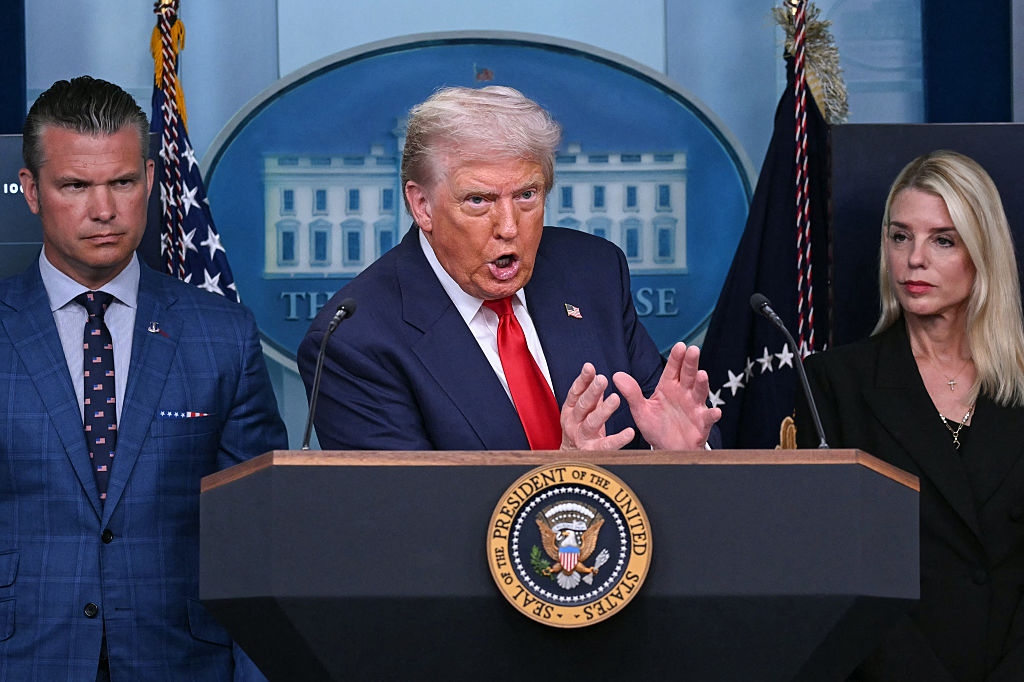
    President Trump’s initiative to restore law and order to the streets of the nation’s capital is a smart political move. All Americans consider Washington “our city,” and we want it safe. We can see on the nightly news that it is not, and we’re not happy about it. If Trump can turn that around, he will get well-deserved credit, not from the legacy media but from the public.

    Trump and his party will reap a second major benefit, as well. If he can lessen the muggings, car jackings and armed robberies, if he can move the homeless off downtown streets, he will highlight the difference between his approach and the painful failures in Chicago, New York, Los Angles and other major cities, all of them governed by Democrats. That’s a huge political benefit, if he can secure it.

    The president can take action in Washington because he has unique authority there, despite some laws granting the city “home rule” powers. Trump is taking full advantage of that unique authority, declaring a “crime emergency” in the nation’s capital.

    What happens on the streets of Washington resonates across the country for several reasons. Americans focus on the nation’s capital, as we have been taught since elementary school. We travel there by the millions as tourists and consider it an important visit for our school-age children. And, of course, we see it on the news every night.

    This prominence means crime in areas close to the White House and Capitol Building get lots of coverage, as we saw again recently when a DOGE staffer was pummeled by a gang of young thugs. Because the national media is pervasive in DC, street crime gets more coverage there than in any city besides New York. That means Americans know the streets of Washington are none too safe, and they are none too happy about it.

    Of course, restoring public safety, if Trump can manage it, won’t get the same coverage as the rampant crime for two reasons. The first and most obvious is media bias. The legacy media never awards its glittering prizes to a president they loathe. The second is that violent crime is far more newsworthy than the dull regularity of safe streets. “Dog bites man” is a lot more newsworthy than “Man quietly walks dog.”

    Still, restoring public safety in DC has a huge potential payoff for Trump and the Republicans. Every major American city is plagued with violent crime, and every one is governed by Democrats. Most are very “progressive,” as are their local judges and city councils. The result is that violent, repeat offenders get bail immediately, and those who are convicted typically receive only a slap on the wrist. Punishment is even softer if offenders are under 18, as many are. Gangs are well aware of that loophole and rely on younger members to commit crimes.

    This passive treatment of violent crime has predictable effects, which have been especially visible in recent years. Since the George Floyd riots in 2020, urban crime has spread like a dark, bloody stain. Young, well-armed gangs are a special problem. The mystery is why progressives use the term “social justice” for lenient treatment of this crime, which imperils law-abiding victims. It’s not social justice for them.

    It’s no mystery why Trump has seized this issue. Nor is it the first time. He did it in Los Angeles, which pitted him against Mayor Karen Bass and Governor Gavin Newsom. Smart move. Restoring order in DC is even smarter since the goal is to contrast the restoration of public safety there with its absence in Democratic-run cities across America.

    Expect DC judges and local officials to try to stop him. Expect federal courts to question Trump’s authority and enjoin him if they can. Trump will relish the fight since it illustrates the Democrats’ reflexive opposition to his policies and their “soft on crime” stance.

    They will also respond that “things are getting better,” that violent crime is down in some cities, including Washington. That’s true, but the numbers are still higher than in 2019 and the response seems to justify crime levels that are still terrifyingly high. That’s not a winning formula.

    Still, Trump faces two political risks in pursuing this policy. The first is practical. Will his policies succeed? That poses a risk only if the courts don’t obstruct him. If they do, he will lay the blame at their door, and rightly so. The other risk is public alarm at the use of federal agencies and even National Guard troops on American streets. The public is understandably wary of the militarization and federalization of law enforcement, which has always been a local responsibility.

    Despite the risks, Trump’s emphasis on restoring order to Washington is a winning political strategy. It worked with border security, and it is likely to work in the nation’s capital. If it does, the president and his party can draw a sharp contrast between Republican law enforcement and Democratic failures across America.

  • President and prince differ over exorcism of Epstein’s ghost

    President and prince differ over exorcism of Epstein’s ghost

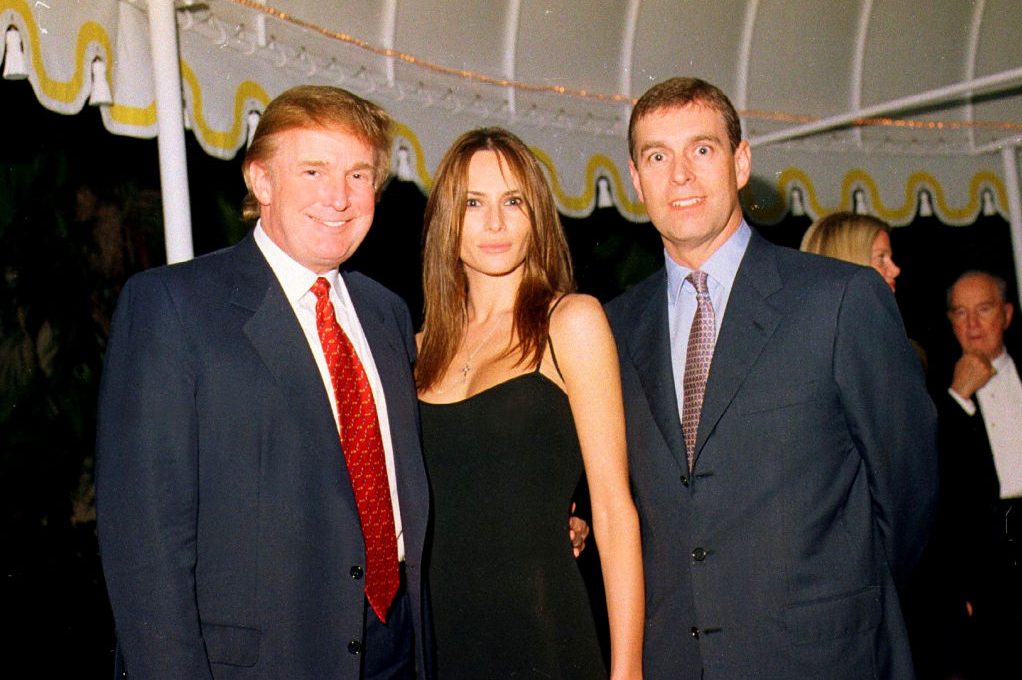
    Jeffrey Epstein’s ghost, a specter of elite scandal, continues to haunt both the American presidency and British monarchy. Donald Trump, embodying the presidency’s assertive role, and Prince Andrew, entangled by Epstein ties, face persistent scrutiny. Court documents from Virginia Roberts Giuffre’s 2015 lawsuit against Ghislaine Maxwell, unsealed in 2024, name both amongst Epstein’s associates, fuelling public demands for clarity. A 2025 poll shows 58 percent of Americans follow the saga, with bipartisan calls for document releases reflecting a quest for justice. Trump’s confrontational playbook and the monarchy’s reserved silence, though starkly different, are each tailored to their institutional contexts, proving appropriate despite Epstein’s lingering shadow.

    Trump’s playbook is defined by bold engagement. He rejects Epstein-related reports as “fake,” filing a July 2025 lawsuit against the Wall Street Journal over an alleged 2003 letter from Epstein. Through press conferences and social media, he labels the scandal a “hoax” driven by a hostile media, asserting he cut ties with Epstein after a 2004 dispute over staff poaching at Mar-a-Lago. In July 2025, Maxwell, serving a 20-year sentence for sex trafficking, told Deputy Attorney General Todd Blanche she saw no concerning behavior from Trump, per ABC News sources. This supports his defense, countering critics’ claims. Republican subpoenas targeting Bill Clinton’s Epstein ties (e.g., four 2002–2003 flights) redirect scrutiny, aligning with Trump’s strategy to challenge establishment tropes. His 2025 decision to withhold Epstein files, despite campaign pledges, aims to shield allies from media distortion. While some supporters – 33 percent of Republicans, per surveys – seek openness, most back his resistance to perceived bias. This approach suits the presidency’s need for visibility in a polarized landscape, where assertive leadership resonates with supporters expecting defiance against a critical press.

    The monarchy’s playbook, conversely, is one of dignified restraint. Prince Andrew, after his flawed 2019 BBC Newsnight interview, withdrew from public duties in May 2020 and settled with Giuffre in 2022 for $16 million (£12 million), denying liability. Buckingham Palace issues brief denials, labeling allegations “categorically untrue.” This silence preserves the monarchy’s role as an apolitical symbol of continuity, avoiding spats that could erode its dignity. A new biography, Entitled by Andrew Lownie, detailing Andrew’s Epstein ties and financial misconduct, has heightened scrutiny, with only 9 percent public approval (YouGov, Q2 2025). Palace insiders discuss stripping Andrew’s titles – Duke of York, even “Prince”– via parliamentary action, a step Prince William may pursue as king, reflecting a cautious shift from King Charles III’s traditional approach. Andrew’s presence at events like Queen Elizabeth II’s 2021 memorial sparks criticism, but the monarchy’s restraint aligns with public expectations of regal composure, allowing time to temper public discontent.

    These divergent playbooks suit their contexts. Trump’s confrontational strategy, leveraging Maxwell’s testimony and political tactics, fits the his style for bold leadership, meeting supporters’ expectations in a divided media environment. The monarchy’s silence, rooted in tradition, upholds its symbolic role, with title-stripping discussions showing measured adaptation to public pressure. Both approaches aim to preserve legitimacy, addressing the Epstein scandal in ways that reflect their unique roles: Trump’s visibility counters the media, while the monarchy’s restraint maintains national unity.

    Epstein’s phantom persists through victims’ voices. Giuffre’s advocacy and Johanna Sjoberg’s testimony of misconduct lend weight to public demands, cutting through conspiracy tropes. Teresa Helm’s criticism of a potential Maxwell pardon highlights the human toll, resonating across ideologies. Bipartisan lawmakers pushing for Epstein document releases reflect a call for justice, not mere sensationalism, underscoring the scandal’s gravity.

    Both navigate Epstein’s haunting legacy. Trump’s defiance, supported by Maxwell’s statement, aligns with his base’s distrust of media, though pardon speculation raises concerns. The monarchy’s silence faces accountability demands, as the Prince’s unpopularity fuels title removal calls. Yet, each playbook remains appropriate: Trump’s engagement suits a combative political arena, while the monarchy’s restraint preserves its symbolic gravitas.

    Leadership demands balancing reputation with trust. Trump sustains his base’s confidence by challenging media stories, while carefully managing file releases. The monarchy, addressing Andrew’s titles, upholds its role whilst responding to concerns, avoiding perceptions of aloofness. Both confront victims like Giuffre and Helm, whose voices keep Epstein’s ghost alive.

    Epstein’s shadow lingers, but Trump’s bold playbook and the monarchy’s cautious one each fit their purpose. For observers, the monarchy’s restraint reflects enduring tradition, adapting slowly to scrutiny. Trump’s defiance meets the MAGA movement’s need for action, navigating Epstein’s ghost with resolve suited to a polarized era.

  • How to jail the Russian hoax colluders

    How to jail the Russian hoax colluders

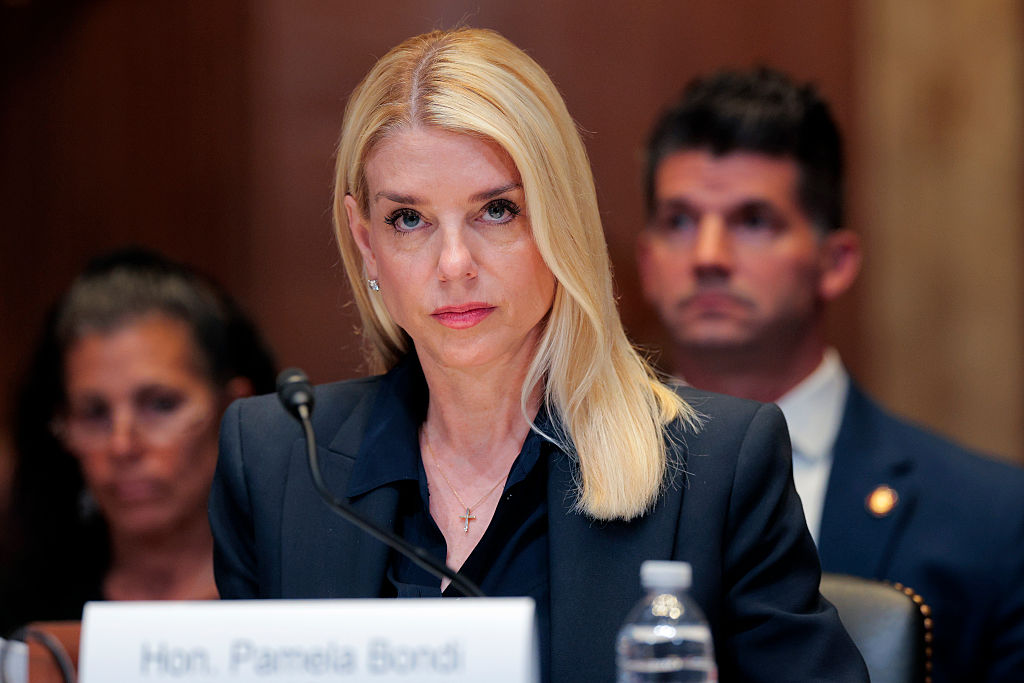
    Now comes word that Attorney General Pam Bondi is opening a grand jury investigation into the attempt to falsely dragoon President Donald J. Trump with criminal Russian meddlers during the 2016 presidential election. In attempting to direct some measure of sunlight to ground that has been well trod and littered with distracting debris, the US Department of Justice will be facing a significant uphill battle.

    First, various government officials planted seeds of disinformation and sowed misdirection during the first Trump administration, aided and abetted by the Biden administration in subsequent years. Robert Mueller was appointed in May 2017 to investigate alleged Russian interference in the 2016 election and purported ties to the Trump campaign. Mueller’s appointment came on the heels of the President’s decision to fire FBI Director James Comey, who had already arranged to leak classified information to the press in his own bid to bring down the President.

    After nearly two years of dragging the President through the mud, Mueller’s “investigation did not establish that members of the Trump Campaign conspired or coordinated with the Russian government in its election interference activities.” No matter. Massive reputational damage had been done, and nearly half of American voters have been deceived into thinking President Trump colluded with the Russians to win elected office. As well, Mueller indicted a half dozen of the President’s associates for false statements and fraud, but no election interference crimes.

    Second, the DoJ already investigated the matter of deep state prejudice, under the authority of Attorney General William Barr and Special Counsel John Durham. Barr, a brilliant attorney and one of the President’s first term attorneys general, as well as Durham, a career prosecutor with unimpeachable credentials, did not procure the smoking gun for which the President was searching. Durham’s three-year investigation concluded that the FBI committed a grievous wrong when it launched Operation Crossfire Hurricane, used a lower standard when it evaluated wrongdoing by the Clinton campaign, and “failed to uphold their important mission of strict fidelity to the law.”

    For all their good faith and hard work, Barr and Durham, against massive deep state resistance to their investigation, suffered two acquittals but secured one guilty plea from an FBI lawyer who admitted doctoring a document It is difficult to fathom a different result with a different cast of prosecutors, nearly a decade after the fact.

    Third, the DoJ is acting upon a referral from the Office of the Director of National Intelligence, Tulsi Gabbard. Despite her many talents, Director Gabbard is not an attorney. Nor is the ODNI a traditional law enforcement agency tasked with investigating criminal violations. ODNI does not possess the resources, training, or expertise to bring to bear that a more typical law enforcement partner would, such as the FBI or IRS. For example, it does not appear that ODNI has identified any particular section of the federal criminal code transgressed, how the elements of those statutes were violated and which actors in particular committed what violations.

    Director Gabbard did state that there was a “treasonous conspiracy” to “lay the groundwork for what was essentially a years-long coup against President Trump” by “President Obama and his national security team.” Treason is the most serious federal criminal offense chargeable; indeed it is the only crime defined by the Constitution itself. Treason is punishable by death.

    In the history of the republic, only about 12 people have been convicted of treason, and the government has prosecuted only about 40 cases. According to the U.S. Constitution, “Treason against the United States, shall consist only in levying War against them, or in adhering to their Enemies, giving them Aid and Comfort.” Under existing caselaw, a conviction for treason would require the DoJ to prove two elements: (i) adherence to an enemy of the United States demonstrating an intent to betray; and (ii) the provision of aid and comfort to that enemy through a specific act or acts. At least two witnesses must testify as to the same overt act, unless the DoJ obtains a confession from the accused in open court. In other words, treason goes beyond sabotaging a current government; it requires championing an alien government. As the Supreme Court observed, “The law of treason… properly makes conviction difficult but not impossible.”

    The DoJ will have to invest significant resources into the heavy lifting of investigating who did what and when, and all before any relevant statutes of limitations expire. Witnesses must testify, voluminous records must be subpoenaed and produced, and appropriate legal theories must be researched. Then, the DoJ must compile a cohesive and credible chronicle of how the Russian hoax was perpetrated on the world. That record must be demonstrated to a grand jury by probable cause and proven to a petit jury beyond a reasonable doubt. The burden and time pressure this puts on the DoJ could not be overstated.

    Thus far, the mainstream media has largely ignored the origins of the “Donald J. Trump as Russian asset” defamation diatribe. The fourth estate’s failure to engage in investigative journalism when the targets are Democrats is yet another egregious example of media bias that distorts the public narrative. Perhaps the opening of a grand jury investigation will make the press’s continued silent treatment impossible. Certainly, the American people as well as President Trump deserve the truth. The pressure is now on Attorney General Bondi to deliver.

  • My battle to buy pierogi might end up in court

    I have been going to the farmers market in Martha’s Vineyard for nearly half a century. I buy corn, tomatoes and homemade products. Until last week every vendor at the market treated me with respect and loved to have my business. I spent about $100,000 on farm and home products over the years, so I was shocked when one vendor refused to sell me their pierogi.

    It turns out that this particular vendor, Krem Miskevich, doesn’t approve of Zionism – that is support for Israel’s right to exist as the nation-state of the Jewish people. To be a Zionist does not require agreement with Israel’s policies or actions – just its right to be. I strongly believe in Zionism. It is an essential aspect of my religion. Jewish prayer, going back thousands of years, asks God to help the Jewish people return to Zion, which is Israel. The Jewish bible and prayer book is filled with references to God’s decision to give the holy land to the Jewish people. Indeed, the bible warns that those who curse Israel shall be cursed. Israel is at least as central to Judaism as the Vatican is to Catholicism, as Mecca is to Islam and as Salt Lake City is to Mormonism.

    Jerusalem is mentioned in Jewish religious sources thousands of times. (Not in the Quran.) The very flag of Israel is based on the Jewish prayer shawl: The tallit. Its most basic symbols – the star of David and the menorah – are deeply religious in nature. To deny the religious connection between Zionism and Judaism is itself an act of anti-semitism, as well as ignorance. So it is difficult to separate the religious, nationalistic and political aspects of Zionism and Judaism. Not all Jews are Zionists, but not all Jews keep kosher or obey the Sabbath. That doesn’t mean that keeping kosher isn’t an important aspect of Judaism. So is Zionism. If a vendor refused to sell to all people who keep kosher, that would be unlawful, even though many Jews don’t.

    Accordingly, when Krem Miskevich refused to sell his pierogi to Zionists, they were engaged to a significant degree in religious discrimination, since most Jews are Zionists. To date I’m aware of no court that has ruled on whether Zionists who base their Zionism on the Jewish religion, are a protected class under the Constitution. That issue may be tested in court based on the vendor’s refusal to serve me. If they had refused to serve a customer because he was black or gay or Israeli or a Jew that would be expressly prohibited by Massachusetts law, as well as the law in many other states.

    This case is different from the supreme court case involving the baker who refused to design a cake for the marriage of a gay couple. Designing the cake involved artistic input and was therefore protected by the First Amendment. Selling already made pierogi, that was sitting on the counter, is not protected speech. It is like refusing to rent to somebody based on race, religion and other invidious factors. It is also wrong as a matter of morality: vendors who hold themselves out as selling to the public should not discriminate on the basis of political or religious views. If they were to, there would have to be two pierogi stands at the farmers market – one that sells to non-Zionists only; and one that sells to Zionists as well.

    After Miskevich’s refusal to sell me their pierogi was made public, a number of people called to advise me that Miskevich has engaged in antisemitic in addition to anti-Zionist protests. They are among the leaders of an organization on the vineyard that not only supports Hamas, but also protests Jewish cultural events that emphasize Jewish music, food, art and other aspects of Judaism that have nothing to do with Zionism. In other words, Krem Miskevich is strikingly similar to the infamous “Soup Nazi” on the Seinfeld show. “No pierogi for you” because you’re a Jew who supports Israel.

    They claim that their refusal to serve me is based on who I have represented as a lawyer. That, of course, is the essence of McCarthyism. In other words, their defense against accusations of anti Zionism is McCarthyism. I don’t know which is worse!

    Many residents of Martha’s Vineyard have shown their support for my fight against bigotry, but a considerable number support the bigot. Not surprisingly, his refusal to sell to me increased his pierogi sales at the farmers market. There is a very strong anti-Israel component on Martha’s Vineyard, as there is a strong element of hard-left radicalism. So I don’t know whether the farmers market will adopt the rule I’ve asked them to adopt: namely that in order to be a vendor at the farmers market one has to be willing to sell to everybody. I hope they will do that, but if not, this case may end up in the judicial system, which will have to decide whether Zionists are included in the class of people against whom discrimination is prohibited. Based on the close connection between Zionism and Judaism, they should be.

  • Jailed for embarrassing the Canadian government

    Jailed for embarrassing the Canadian government

    At long last, the Ontario government’s drawn-out legal proceedings against the organizers of the Freedom Convoy is winding to a conclusion. In a move seen as surprisingly vindictive, the Crown is seeking minimum sentencing of seven and eight years of jail time respectively for leaders Tamara Lich and Chris Barber.

    As Conservative leader Pierre Poilievre posted on X, “Let’s get this straight: while rampant violent offenders are released hours after their most recent charges and antisemitic rioters vandalize businesses, terrorize daycares and block traffic without consequences, the Crown wants seven years prison time for the charge of mischief for Lich and Barber. How is this justice?”

    Other MPs called the sentencing demands “excessive and vindictive,” and said “this is political vengeance, not actual justice.”

    What is going on here?

    Tamara Lich has no prior convictions; she has committed no violence and damaged no property. A tiny little lady at five foot nothing, she’s been subjected to leg shackles, solitary confinement, and has already been held in jail for 49 days.

    Chris Barber is a family man and father of two who owns a small trucking company. In addition to an eight-year jail sentence, the Crown seeks to confiscate his truck, his chief means of livelihood, which he has affectionately nicknamed Big Red. No one has accused Barber of threatening anyone, inciting violence or damaging property.

    Indeed, all sides agree that he and Tamara Lich consistently called for protestors to stay peaceful during the protest in early 2022, be respectful of police and cooperate if arrested. They also agree that Barber worked with police on arriving in Ottawa to park the trucks in designated areas, to try to keep emergency lanes free and to coordinate the relocation of trucks and vehicles with police.

    And even the Crown concedes that Tamara Lich and Chris Barber led the convoy to Ottawa legally and with good intentions. So at what point did this perfectly legal protest turn into a crime worthy of seven to eight years of jail?

    Apparently, when the protest began to inconvenience Ottawa residents with noise and traffic obstructions in the downtown area, Lich and Barber committed mischief by saying “Hold the line,” and encouraging protestors to remain.

    When a court order was issued banning honking, Chris Barber told the protestors to heed the injunction, unless their trucks were swarmed and broken into by riot police. He said drivers should honk in this situation to alert others. This suggestion earned him a separate conviction – and, the Crown hopes, an extra year of jail time.

    The pettiness of it has to be seen to be believed. Clearly Doug Ford’s government is out to make an example of Lich and Barber. Why? To punish them for embarrassing the government in the eyes of the world, and to stifle public debate about Canada’s pandemic management.

    On the surface, this situation is all about civil liberties, and balancing the right to protest with someone else’s right to enjoy their property. But underneath, it’s about the government twisting every which way to avoid accountability.

    The Freedom Convoy came to Ottawa to draw the government’s attention to a pressing issue, something that had put a large number of Canadians into a state of severe distress: vaccine mandates and lockdowns.

    These Canadians were either ignored by politicians and the media, or demonized as racist misogynists, people who should be excluded from society and even from their own families. They were kicked out of school and university, fired from their jobs, and subjected to intimidation by journalists and politicians, who suggested they should pay extra taxes or even be jailed.

    Let’s not forget that what kicked off the convoy movement was the decision of some government genius to make 16,000 truckers’ jobs conditional on yet another draconian Covid restriction – this, with a supply chain in shambles, and years of changing the rules every couple of weeks.

    Few of us want to dwell on the dark days of Covid, now happily over, or reflect on the human cost of the decisions made in that time of crisis. But burying the past is not a luxury in which governments are entitled to indulge.

    The truckers didn’t sit there blocking traffic and honking horns for the sheer joy of it. They did so because every other mode of public expression was barred to them and those they represented. The stunning outpouring of popular support that accompanied the truckers as they made their way across the country gave them a clear mandate to make themselves heard.

    And while certainly some Ottawa residents were inconvenienced (though tthe prosecution’s talk of “lasting psychological scars” is surely a little overwrought), the issues brought forward by the truckers were of significant national interest and of a pressing nature, considerations that did not appear to weigh heavily in Lich and Barber’s conviction.

    They persisted because the government refused to engage. Instead, it chose to arrest their leaders and invoke the Emergencies Act (illegitimately, as a federal court ruled last year) and cleared the streets by force.

    And now the government wants Chris Barber’s truck, and a criminal record, so he can no longer earn his living by hauling freight into the States. They want grandmother Tamara Lich, a model of good citizenry and peaceful protest, behind bars for seven years.

    Most importantly, the government wants the seal of silence stamped on what happened during the pandemic. Does the Canadian justice system really want to be perceived as helping them with that?