Category: Policy

  • Stop the Medicaid ambulance grift

    Stop the Medicaid ambulance grift

    With Congress back in their districts for the August recess, GOP members will undoubtedly be bragging to their base about the Medicaid abuses they stopped by passing President Trump’s One Big Beautiful Bill. These reforms include enrollment reductions and new work requirements for enrollees.

    However, many Members are hoping that no one calls them out for failing to address an intergovernmental transfer grift. This little-known accounting trick has turned this basic entitlement program into a bloated scam that enriches public agencies while squeezing out private providers.

    In theory, many of the services Medicaid covers, such as emergency ambulance rides, officially known as Ground Emergency Medical Transport (GEMT), should be straightforward. Someone calls 911, an ambulance arrives and someone gets paid. It should be a clean transaction, one that reflects the actual cost of service. But that is not what happens.

    The problem starts when public ambulance agencies file inflated cost reports to state Medicaid offices, claiming that a single ride costs as much as $1,600. In reality, private providers perform the same service for about $339. The state uses the inflated figure to extract extra federal funding, then hands the surplus to local governments. None of it improves care. It is a rigged operation that rewards false accounting, punishes honest providers and burns through taxpayer dollars.

    Many of these public entities do not even operate ambulances. They subcontract the work to private companies, then skim the excess funding for unrelated local spending.

    Private providers do not have access to this scheme. They bill Medicaid based on fixed rates and get paid for services rendered. They cannot inflate their books or use transfers to game reimbursements.

    This is not an accident. It’s collusion. Public agencies have formed a closed loop with state Medicaid offices. They submit inflated costs, receive enhanced reimbursements and funnel the money wherever they choose.

    Private ambulance companies, meanwhile, are left to survive in a distorted market. To stay afloat, they cut wages, reduce staff and extend equipment usage longer than necessary. Service quality drops. Morale declines. Lawsuits follow. Plaintiff attorneys pounce. Insurance costs surge. States respond with half-measures, such as tort reform, but nothing changes because the core distortion remains untouched.

    That is what the One Big Beautiful Bill ignored. Worse, it may have expanded the imbalance, creating even more favorable reimbursement schemes for the government’s preferred players.

    This is not market failure. It is a government-manufactured failure. The GEMT scheme is one example (likely out of tens of thousands) that shows how federal programs, once hijacked by local actors, produce outcomes that defy logic and destroy market discipline. It reveals how dysfunction is tolerated, even protected, in the name of political favoritism and cronyism. And it proves that despite all the media noise about oligarchy, it is bureaucracy that is bleeding the system dry.

    The irony is that the media rarely touch it. Activists rail against corporate greed and so-called late-stage capitalism, yet here is a textbook case of bureaucratic capture. Public entities use private contractors, overcharge taxpayers and hide behind paperwork.

    California is a prime example. The state aggressively uses the Intergovernmental Transfer (IGT) scheme to draw down massive reimbursements from Washington. While the Biden administration claimed to support tax relief for private providers, it gave California approval to collect more than ten times the IGT payments of any other state. In the private sector, a scheme like this would land you in prison.

    There is a fix: reimbursement parity. If an ambulance ride costs $339, then every provider, public or private, should be paid $339. Or tie the rate to a regional wage index. But stop allowing inflated reports. Stop allowing backdoor subsidies. Require transparent cost reporting. State governments should not be allowed to overpay themselves so blatantly with federal funds or curry favor through these schemes while punishing the providers who actually deliver the care.

    Medicaid is already the largest line item in many state budgets. Members should tout their success in the OBB, but they can’t pretend like the job is done.

    The GEMT program is budget laundering masquerading as healthcare. It erodes trust, wastes resources, and drives out the most efficient players. Congress should make fixing it a priority when they return to DC.

  • The Democratic party is now messianic

    The Democratic party is now messianic

    The New York Times recently announced that Democrats face a “voter registration crisis.” With its delicate, frilly font, the Times story agonized over younger voters, Latinos, and men, especially young black men, who appear to be drifting away from the Democratic party. The Times diagnosis? It’s an accounting problem: The party isn’t signing up enough people. Its cure, predictably, was more money, more organization and more clipboards.

    This is the answer you’d expect from a bureaucracy. If the shelves are full of unsold tins of beans, the problem is obviously the warehouse.

    In truth, Democrats don’t have a logistics problem. They have a product problem. Americans don’t want to buy the party they are selling.

    For decades Democrats have treated politics as an engineering exercise. Build the machine, crank the levers, identify and register the aggrieved which, conveniently, they manufacture. Registering black voters, the Times worries, “cost $575 per vote in 2020,” about the same as 100 Grande Blonde Vanilla Lattes at Starbucks! But the cost of collecting these customers is high because they keep walking out of the shop. They are spitting out the drink.

    The Democratic party has come to embody a politics of national and personal self-degradation: Democrats are required to apologize for living in a strong country, profiting from its economy, and displaying the well-known privilege of ambition. The only time Democrats can define manhood is when they demand it request forgiveness.

    Millions of young men, Latinos, and blue-collar workers are not impressed.

    It isn’t simply immigration or inflation driving men out of the Democratic party. The fuel for the exodus is cultural. When a man works hard, plays by the rules and still can’t support his family, the wound is to his identity, not just his wallet. When he’s laughed at for his alleged toxicity, it is emasculating.

    American culture has spent decades mocking fatherhood and sanding down the manly virtues of competitiveness and responsibility. Now the bill has come due. After years of derision, masculinity is walking out of the Democratic party and fighting back.

    Trump’s language of strength resonates with women who want to put back the man back into manliness. It resonates with Hispanics, young Black men, Gen Z men, and union workers. In Republican strength, they see an antidote to chaos: not just to national chaos, but the chaos of their own diminished lives.

    The Left has traded a culture of common strength for a government of weakness and separation. Democrats who used to carry rifles to defend the country now carry tote-bags to get a chai tea. But American men are not ready to give up on who they could still be.

    When Democrats invent new genders and quarrel over pronouns, they assault the connective cultural tissue that holds our nation together. The Democrats have not merely tolerated this erosion; they’ve fed on it. A confident nation does not require a self-anointed clerisy to micro-manage its language and thought. It does not need political priests to enforce woke commandments. But a weakened, divided people may. That is why the Democratic party exists.

    If Democrats were honest, they would admit their woke hierarchy has failed. Defunding police unleashed crime. Open borders invited chaos. Spending produced crushing inflation. Pretending men can be women destroyed women, not just women’s sports.

    But they cannot say these things because the Democratic party has become messianic. It does not pass laws to solve problems. It passes them to award its supporters a halo of moral superiority. Failure is irrelevant; every new radical program delivers the one thing the party truly values: a sense of being better than the rest of us.

    The Times and the Democratic party, to the vanishing degree they remain separate entities, are wrong. They don’t have a voter-registration crisis. They have an identity crisis. Our saviors can’t admit they cannot save us. The Democratic party is broken because its soul is.

  • Can Trump end mail-in voting?

    Can Trump end mail-in voting?

    President Donald J. Trump, burned in 2020 at the height of Covid by some states’ shenanigans ranging from rule changes regarding absentee voting to registration requirements, is now on a quest to reform mail-in voting and traditional ballot tabulation machines. On August 18, the President posted the following missive on Truth Social:

    “I am going to lead a movement to get rid of MAIL-IN BALLOTS, and also, while we’re at it, Highly ‘Inaccurate,’ Very Expensive, and Seriously Controversial VOTING MACHINES, which cost Ten Times more than accurate and sophisticated Watermark Paper, which is faster, and leaves NO DOUBT, at the end of the evening, as to who WON, and who LOST, the Election.”

    Some of the voting practices the President has critiqued are unusual, to say the least. For example, eight states comprising nearly 20 percent of the U.S. population automatically send ballots to every registered voter, alive and sometimes dead. It appears that only Switzerland follows a similar practice. Scholars have highlighted the dangers of robo-voting by means of the unusually unreliable United States Postal Service. Even The New York Times, the flagship of the liberal press, declared that “votes cast by mail are less likely to be counted, more likely to be compromised, and more likely to be contested than those cast in a voting booth.” Ending mail-in voting altogether would be a heavy lift, given that nearly one-third of ballots cast in 2024 were cast by mail; in 2020, mail ballots accounted for 43 percent of votes cast.

    Moreover, fourteen states and Washington, D.C. have no voter identification requirements. This is a vulnerability highly susceptible to manipulation. About 1200 cases of voter fraud have been documented. The Supreme Court recounted this unfortunate history while upholding Indiana’s state photo identification laws:

    “It remains true, however, that flagrant examples of [voter] fraud in other parts of the country have been documented throughout this Nation’s history by respected historians and journalists, that occasional examples have surfaced in recent years, and that Indiana’s own experience with fraudulent voting in the 2003 Democratic primary for East Chicago Mayor – though perpetrated using absentee ballots and not in-person fraud – demonstrate that not only is the risk of voter fraud real but that it could affect the outcome of a close election.”

    On Truth Social, the President went further and questioned the role of states in federal elections:

    “Remember, the States are merely an ‘agent’ for the Federal Government in counting and tabulating the votes. They must do what the Federal Government, as represented by the President of the United States, tells them, FOR THE GOOD OF OUR COUNTRY, to do.”

    In fact, Article I, Section 4 of the United States Constitution grants states the authority to prescribe the time, place and manner of holding elections for most federal elections, although Congress may amend these rules, and has, repeatedly over the years. This joint state and federal authority is exercised under the watchful eye of the federal executive branch, of which the President is the head. Violations of federal voting laws may be prosecuted by the U.S. Justice Department. So it takes a village, and oh so many village chiefs, to enforce the relevant voting laws across the country.

    The power to vote is a precious and fundamental right. For millions of Americans, it is a freedom bought by blood. It ought not be diluted by fraud or lightly revoked by disenfranchisement. The challenge for the President and both major political parties is to find the appropriate balance between integrity and access. We all are responsible for maintaining one of our nation’s defining values in retaining lawful and open access to the ballot box, thereby ensuring the people’s enduring right to choose their own government.

  • Why Trump may regret investing in Intel microchips

    Why Trump may regret investing in Intel microchips

    When President Trump unveils a massive investment in the microchip manufacturer Intel on behalf of the American people it will no doubt be accompanied by all the usual hyperbole. No doubt we will hear all about how it will be the “deal of the century,” delivered personally by the “investor in chief.” But hold on. Sure, we can understand why the President wants to help one of the US’s most strategic companies. But the blunt truth is that Intel is well past its peak – and it will prove to be a terrible deal. 

    It will be one of the largest industrial investments the White House has ever made. According to reports today, the government is discussing taking a 10 percent stake in Intel, making it the largest shareholder. In total, the government might pump around $10 billion into the company, although a big chunk of that will come from converting the billions in grants and subsidies it received from President Biden’s CHIPS Act into equity. Either way, Intel will get a big chunk of extra cash.  

    Intel has become hooked on subsidies and grants

    In fairness, there is a case to be made for state support. Microchips are a key strategic industry, and, just like Joe Biden, President Trump wants to make sure that the United States has enough manufacturing capacity on its home soil. He wants to ensure the country is not completely reliant on imports from South Korea, Japan or, most worryingly of all, Taiwan, given that it could be invaded by China one day. It is probably significant that one of Intel’s biggest projects is a new plant in Ohio, which also happens to be the home state of Vice President J.D. Vance

    The trouble is, the company also faces huge challenges. The days when laptops proudly boasted “Intel Inside” are long in the past. The company’s share price has halved over the last five years. It has been overtaken in chip technology by Nvidia, now the largest company in the world measured by market value, as well as Taiwan’s TSMC. It has abandoned its plans to invest in Germany, despite receiving billions of euros from the government in Berlin to build a plant in the country, because it couldn’t work out how to make it pay. In the mass market, Samsung has overtaken it, and Chinese manufacturers are snapping at its heels. It may have been one of the pioneers of the computer age, but it is now looking well past its prime.

    In reality, Intel has become hooked on subsidies and grants. The company has become very good at hustling cash out of governments. It has not been so good at making chips or serving customers. It is very hard to see how a few more billions from the White House is going to turn that around now. President Trump will no doubt boast that he has secured “the best deal ever.” But it is likely to prove a terrible investment. 

  • Will Omar Fateh become America’s most radical mayor?

    Will Omar Fateh become America’s most radical mayor?

    American politics is often reactionary. Barack Obama rode the dip of the 2007-2008 financial crash, but after eight years of neoliberal slog Middle America chose Donald Trump to extract the globalist cancer from their venerated land.

    The Democrats staged a counterattack in the 2018 midterms, thrusting names like Ilhan Omar and Alexandria Ocasio-Cortez into the spotlight. A reaction to a reaction to a reaction.

    And right on time, now that Trump has returned to office, a new breed of even more radical young Democrats is on the ascent.

    Democratic New York City mayoral candidate Zohran Mamdani is committed to radical socialism and will likely be enthroned as America’s most powerful local executive in November thanks to a tide of support from the young, wealthy and highly educated.

    In Minneapolis, there stirs the potential for a similar uprising. State Senator Omar Fateh is a near carbon copy of Mamdani. The 35-year-old son of Somali immigrants shares similar disdain for white people and the police. But unlike New York’s socialist, Fateh has amassed a collection of political scandals that expose him as a reckless and naive political player.

    In 2022, Fateh assured Democratic party leaders he had no ties to a man later convicted of lying to a grand jury in a 2020 ballot fraud case. The man in question was his own brother-in-law, who had volunteered for his campaign. In doing so, he misled Democratic-Farmer-Labor party leadership in a state where the DFL holds immense sway over Democrats.

    Fateh also faced an ethics complaint for failing to disclose a $1,000 payment to Somali TV for airing multiple campaign ads. More seriously, he was accused of running his campaign out of an adult day care center rent-free, without reporting it as an in-kind donation — an allegation Senate President Dave Osmek called “a big, big problem.” State regulators responded by suspending the license of the day care instead of punishing the young progressive.

    The Marxist vision demands clean divisions – class, race, sex – to stress the perpetual power struggle between warring groups. To that end, Fateh caught heat in 2023 when he called white folks who “look like” his Republican colleagues America’s “greatest domestic threat.” We can thank Biden’s Homeland Security team for that assessment, as they laughably singled out white supremacist violence as the nation’s singularly vicious menace.

    Fateh’s progressive platform echoes that of young politicos of similar stripes. His support for eliminating the police, once emblazoned on his campaign website, has since vanished. He’s called for a $20 minimum wage, free public transit (in the spirit of Mamdani), and legislation to dismantle legal protections for cops by ending qualified immunity and repealing laws that make it a crime for civilians to falsely report police misconduct.

    On the bright side, slashing police budgets would open up funds for “economic justice” services for “LGBTQ+ and BIPOC people,” like the Trans Equity Summit, which Fateh vows will be “fully funded and prioritized.”

    Life for those “experiencing homelessness” is also set to improve – not with the hard, unpopular work of pulling people off the streets or prying them loose from the grip of fentanyl – but supplying encampments with handwashing stations and needle disposal bins.

    His legislative record hints at an even more radical agenda: he sponsored a bill for slavery reparations despite the practice never having been legal in Minnesota, a bill to ban bottled water, and, peculiarly, a bill seeking to outlaw the sale of dogs and cats. He’s managed a couple of small successes – pushing through protections for Uber and Lyft drivers and a bill that promised free college tuition for working-class families.

    Omar Fateh now stares down incumbent Mayor Jacob Frey. Frey, who entered office as a moderate Democrat but was crushed by 2020’s fiery-but-mostly-peaceful BLM upheaval, has since lost the sympathies of the far left. Frey has won both re-election races since entering office in 2017. But Fateh has the Mamdani momentum behind him: the seething anti-establishment fervor hungry for revolution – a revolution against Democratic obeisance to Trump’s perceived tyranny.

    When conservatives put their blinders on, seeing only a string of Trump victories, they lose sight of Democrats’ abhorrence for the man and his movement. For this reason, don’t be surprised if Trump’s steamroller agenda results in Mayors Mamdani and Fateh, and President Alexandria Ocasio-Cortez.

    Politics is a funny thing, like fashion or music. What’s old can become new again, and what’s popular now can be tossed away in the blink of an eye.

  • Newsom rigs California

    Newsom rigs California

    Judging from how much Gavin Newsom talks about Donald Trump these days, the governor’s real project isn’t governing California – it’s raising his national profile ahead of an inevitable presidential run. He’s found an issue that lets him pit himself against Trump and gain coveted national media attention: reconfiguring California’s congressional districts to put more Democrats in Congress. He’s pitching it as a way to “fight fire with fire” after Texas Republicans passed their own partisan maps. In reality, it’s a political power grab dressed up as righteous urgency.

    The problem is that in 2010, Californians voted to take redistricting away from politicians and hand it to an independent citizen commission – a reform meant to end gerrymandering. Newsom’s plan to temporarily override it until 2030 needs a constitutional amendment, which requires the Legislature to cut short its summer recess, pass his so-called “Election Rigging Response Act” with a two-thirds vote before August 22, and put it on the ballot for a special election in November.

    That election will cost taxpayers an estimated $250 million, at a time when the state is facing a budget crisis. “No price tag for democracy,” Newsom shrugged. Newsom is going all in on this gamble, despite the fact that California voters aren’t buying it. According to an August 14 poll, 64 percent want to keep the independent commission, and just 36 percent support Newsom’s plan. The opposition is bipartisan: 66 percent of Republicans, 61 percent of Democrats, and 72 percent of independents want the commission left alone. In a state where Trump barely scraped 34 percent in 2020, that’s a resounding rejection.

    Faced with those numbers, Newsom is saturating the debate with the magic word that never fails to electrify his base: “Trump.” At a Thursday press conference in Los Angeles, he assembled a who’s who of California’s Democratic power structure. Among them was Jodi Hicks, head of Planned Parenthood California and wife of Paul Mitchell, a key player in the state’s redistricting world. Several union bosses took the microphone, including David Huerta of California SEIU – whose June arrest while confronting ICE officers helped spark anti-ICE riots. Huerta exhorted the crowd in Spanish to “correct the errors of November,” meaning Trump’s election.

    From there, it was a parade of Democratic officials hitting the familiar notes: Trump’s immigration policies, January 6, abortion, “the wealthy,” and the apocalypse if the President is not thwarted. Not a single speaker offered details about how the governor’s plan would actually work– just moral posturing. The mantra was “protect democracy,” though in this case “democracy” seems to mean “Democratic Party control.”

    Newsom and his allies openly framed this as a power grab, emphasizing the need to bend rules in the face of a unique threat. “We want to model better behavior [by having a nonpartisan redistricting commission],” Newsom explained, “but we can’t unilaterally disarm.” Senator Alex Padilla, switching to Spanish, added: “These are not normal times.” Apparently, if you’re a Democrat in 2025, there’s a convenient Trump exception to the rule that two wrongs don’t make a right.

    Underneath the official script, Newsom’s choice of guests sent quieter messages. The first was aimed at state legislators, whose votes he needs. Labor’s heavy presence was a reminder of who bankrolls campaigns and supplies the ground troops for Democrats in California. Oppose the measure, and you might find yourself on the wrong side of your biggest benefactors.

    The second audience was national Democratic leadership. Newsom wanted to show he’s a loyal soldier, willing to bend California’s rules and spend its taxpayers’ money to serve the Party’s larger goals. Most pundits think the plan is a long shot, but he doesn’t necessarily need to win to score points. Regardless of the outcome, he’s signaled to national party bosses that he’s ready to go to the mat for them – something that could pay dividends in 2028, given how shallow the Democrats’ bench is after years of rewarding loyalty over leadership skills.

    Perhaps he’s calculated that if he pleases the party’s power brokers, he won’t have to worry too much about the ire of California’s voters.

    Newsom’s repeated refrain of “Wake up, America!” emphasized that he was playing to a national audience. He warned that without his plan, the country will cease to exist because Trump will secure a third term. “Mark my word,” he insisted, citing as proof a hat someone sent him emblazoned with “Trump 2028.” For anyone immune to Trump Derangement Syndrome, the claim was laughable, but plausibility isn’t the point. The point is presenting Newsom as the hero standing between democracy and the abyss, the only man brave enough to take on Trump and the dastardly red states.

    For those not buying this fairytale, the episode serves as a reminder of how quickly politicians will discard principles when there’s political capital to be gained. Californians voted to end gerrymandering, and now Newsom wants to override that mandate to boost his party’s power. The excuse is that Trump is too dangerous for the rules to matter. But few things pose a bigger threat to democracy than overturning voter decisions simply because they’re inconvenient to your side.

  • My brush with death in DC

    My brush with death in DC

    The last thing I heard before my ears started ringing was my left turn signal clicking.

    I was stopped at a red light on a Saturday afternoon, waiting to glide into my parking lot near the Waterfront Metro stop in Washington, DC when a loud crack suddenly deafened me. Out of the corner of my eye, I saw a bullet-sized wound in my windshield. 

    It wasn’t a windy day, and no cars had been passing by to kick a loose stone up at my beloved Camry, so it only took me only a half-second to realize what had happened. When the fight or flight kicked in, I briefly (and foolishly) fled the vehicle before diving back in to take a left on red. 

    The two Metropolitan Police Department officers my 911 call summoned didn’t show up until a half-hour later, even though the nearest station was only a two-minute walk away. Gesturing toward my broken windshield, I asked them for confirmation of what I already knew had happened. Yes, my car had probably been shot with me in it, they agreed before informing me that all they could do was record the incident. 

    If I wanted, they said, I could ask nearby apartment buildings and businesses for security footage and report back to them. And then they were off; my ears were still ringing.

    That was only the most notable of my many experiences with the post-Covid crime wave that made DC such an unsettling place to live during my two years in the district. There was also the time a man on a motorcycle swerved onto the sidewalk to stare me down as my fiancée hid behind me; the time her cousin was mugged; and the time my friend from college was killed in a hit-and-run. On our way home from the grocery store one afternoon, we observed a high school boy beating up a girl roughly his age as their presumed classmates looked on. I called the police and began loudly describing the situation as I approached the culprit and victim, causing all involved to flee. I sat outside for over an hour waiting for the cops to show. They never did. 

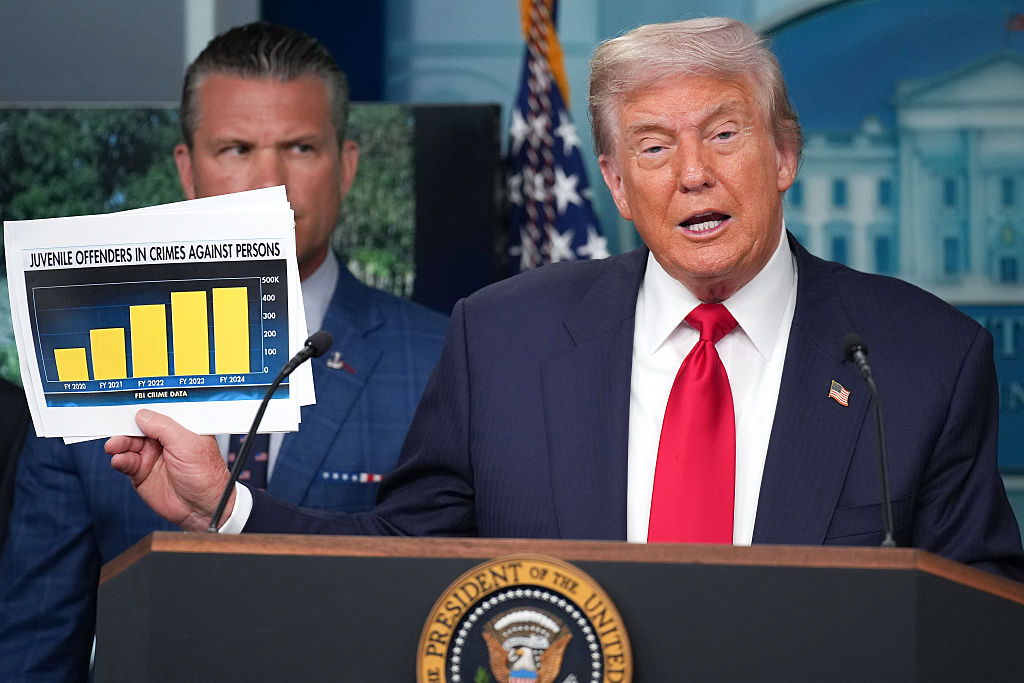
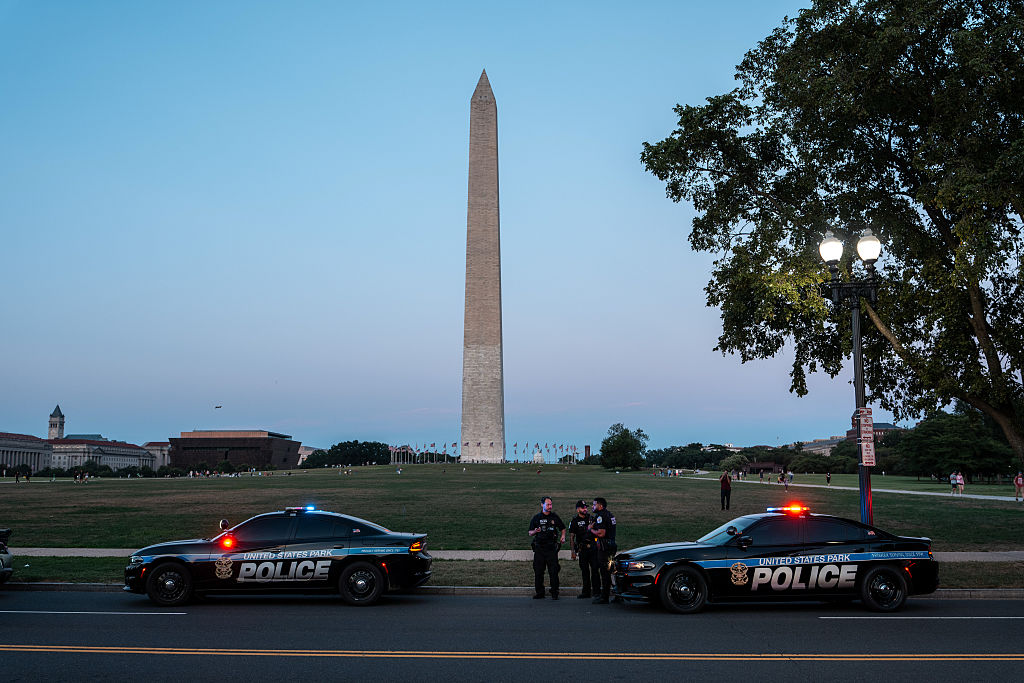
    On Monday morning, President Donald Trump announced that his administration would be taking control of MPD, as well as deploying the National Guard inside of the district. “Our capital city has been overtaken by violent gangs, and bloodthirsty criminals, roving mobs of wild youth, drugged out maniacs and homeless people,” asserted Trump. “And we’re not going to let it happen anymore.”

    For those of us who have lived that reality, it was like watching the sun rise for the first time after a half-decade of darkness.

    Trump’s critics have portrayed his decision to take action in DC as a thinly-justified power grab. After only a little reflection, though, it’s hard to believe it took this long for a president to do something, anything, about its embarrassing state.

    “But the murder and violent crime rates are down!” wailed America’s shameless progressive establishment on Monday. Yes, from the historic highs they reached in 2023. It’s only August and the district – which has a population of only a little over 700,000 –  has already seen 189 carjackings, 99 homicides, and 2,909 motor vehicle thefts this year. Last year, it had one of the highest murder rates of any major American city. Early Monday evening, just a few hours after Trump’s press conference, a man was shot and killed around the affluent Logan Circle neighborhood. During a visit back to the city last year, I walked to our favorite sushi restaurant near my fiancée’s old apartment to make it for happy hour. On the way back, I found a street I had used only an hour earlier had been shut down after a gunfight. Try – if you’re brave enough – walking around DC for a few hours and then uttering the words “this a safe, clean and pleasant place to live” without laughing or crying. You’d be lucky if you made it without coming across a crime scene – or becoming a crime statistic.

    And as if the “but crime rates are down” argument couldn’t get any more pathetic, there is a scandal brewing over the books being cooked by high-ranking city police officials to downplay the ongoing crisis.

    Washington, DC is a city with endless potential and should be a point of pride for all Americans. It is a cultural melting pot filled with fantastic restaurants, moving monuments and stunning museums. It’s also the political center of not just the country, but the world. Yet for years now, it has been the modern model of corrupt, complacent governance – a national embarrassment that no one seemed to care enough about to try to fix.

    Should Trump have activated the National Guard? Could he have possibly used a lighter touch? Such questions pale in importance compared to this one: did something need to be done in the federal district to carry out government’s most basic mandate, the protection of its citizens?

    The President answered, “Yes” yesterday. God bless him for it. 

  • Why Trump is right to take over DC

    Why Trump is right to take over DC

    Donald Trump‘s press conference announcing a federal takeover of Washington, DC‘s police force was packed to the gills with White House reporters – many of whom live in DC and the surrounding area, and are more than familiar with the degradation of law and order in the region. But just because they know it’s bad doesn’t mean they want to give Trump any credit for trying to clean up the city – in fact, they’re likely to attack the move from both sides.

    The ramifications of Trump’s takeover, under Section 740‘s emergency rule, will have undetermined ripple effects in the capital city, but the initial reaction to it illustrates the difficult position in which it puts the president’s critics. Arguments from commentators on CNN and MSNBC immediately turned to official statistics, which show declines in violent crime in the past year and a half. The only problem? A DC police commander has already been suspended for cooking the books on those numbers, a practice that the DC police union claims is commonplace.

    “When our members respond to the scene of a felony offense where there is a victim reporting that a felony occurred, inevitably there will be a lieutenant or a captain that will show up on that scene and direct those members to take a report for a lesser offense,” Fraternal Order of Police Chairman Gregg Pemberton said. “So, instead of taking a report for a shooting or a stabbing or a carjacking, they will order that officer to take a report for a theft or an injured person to the hospital or a felony assault, which is not the same type of classification.”

    Ever since the violent summer of George Floyd, Washington has struggled to achieve the same return to normalcy that has been the case in other major cities. A major driver is the lack of sufficient police staffing, with the Metro Police Department running almost a thousand officers short of needed levels. Carjackings and vehicle theft are three times the national average, and the homicide rate is six times that of New York City. The poor response times and lack of an ability to disburse gang activity is taken for granted by residents, with restaurant closures and other venues seeing less foot traffic because of the crime concerns.

    “Over the last two years, DC has experienced a 52 percent drop in violent crime and is now at a 30-year low,” tweeted Councilman Charles Allen of the DC Council. “While any crime is one too many, every local leader in DC is committed to the work and progress of safer communities and preventing violence.” These words are particularly rich coming from Allen, who faced a recall campaign after being the council’s leading voice on reducing the number of MPD officers and pushing for slack sentencing guidelines for teenage perps.

    The overall result of Trump’s move in media terms will be to make national figures finally pay attention to how bad things are in DC, if only to deny they justify his actions – but they’ll also be set to use any criminal activity that does happen going forward to argue that the administration methods are ineffective. But this is a sideshow: the real question is how DC’s citizens feel about what comes next, and whether it makes DC feel safe again. As a local who hasn’t been willing to risk taking my children into the city late in the day, I can hope that changes soon.

  • Congress should seize control of DC

    Congress should seize control of DC

    The world judges a country by its capital. Paris, London and Rome are showcases of national ambition and a source of pride. How might one judge the United States after visiting Washington, DC? Corrupt, lawless and increasingly unsafe after dark?

    In a city meant to project strength and stability, one finds instead great domes and marble colonnades sharing the streets with open-air crime scenes.

    This July, a 21-year-old congressional intern, Eric Tarpinian-Jachym, was shot to death after being caught in an ongoing dispute between two rival groups.

    In 2023, Phillip Todd, a staffer for Senator Rand Paul took a knife to the chest. The attacker punctured Todd’s left lung, slashed his left ear and inflicted “a puncture wound to the left side of his head, which penetrated the skull and likely caused an internal brain bleed,” according to court documents. 

    Earlier this month, Edward Coristine, who had formerly worked for the Department of Government Efficiency, was violently assaulted during an attempted carjacking. Grisly photos of the aftermath were shared online, a shocking reminder for the rest of the country of just how dangerous DC has become.

    Residents in our nation’s capital have become increasingly numb to these types of headlines. 

    In 2023, the city recorded more homicides than at any time in the last two decades. Carjackings doubled. Tourists, residents and government employees are now interchangeable prey.

    In too many cases, these criminals face little or no meaningful punishment.

    The DC Council’s response to this breakdown was not to stiffen penalties or support law enforcement, but to join the fashionable chant to “defund the police.” They sought to decriminalize dangerous drugs and reduce sentences for armed robbery, carjacking and even homicide. Congress was forced to step in to block what would have been a catastrophic criminal-code overhaul.

    Time and again, the council was given opportunities to clean up the city. Time and again, it refused.

    In the face of this crime and the warnings from President Trump that failure to act would force his hand, one might have expected a flicker of contrition. Instead, February produced the spectacle of the DC Council being forced to expel one of its own, Trayon White, who was indicted for pocketing $156,000 in bribes to funnel millions into “violence prevention” schemes. Well-padded, soft-on-crime grifts such as these soothe the conscience of the political class while leaving the streets to the predators. The charges include videotaped exchanges of cash-stuffed envelopes and the promise of a 3 percent kickback.

    In any functioning government, that would be the end of a political career. But this is DC. In July, White won a special election for the very same Ward 8 seat he had been expelled from. He was sworn back into office this past week. An indicted councilman is now making laws for the nation’s capital while awaiting trial. 

    In Federalist No. 43, Madison warned that the seat of the federal government must not be “left in the hands of a single State” and that any such arrangement would “abridge its necessary independence.” He could just as easily have been warning against what we see today: a capital captive to its own small-time operators and their rackets. Washington, DC, is not a state. It was never intended to be one. Our Founders deliberately placed the capital under the “complete authority” of Congress to ensure the nation’s government would never be held hostage to the petty politics of a single jurisdiction.

    President Trump has said what is blatantly obvious to anyone who has visited Washington, DC: the capital is “out of control.” Now he is federalizing the police, deploying the National Guard and taking direct control of DC’s public-safety apparatus, as provided in Section 740 of the Home Rule Act. 

    But restoring order long-term requires Congress to do what the DC Council will not. That’s why I introduced the Bringing Oversight to Washington and Safety to Every Resident (BOWSER) Act. It would repeal the Home Rule Act one year after passage, returning full governing authority over DC to Congress.

    Under the Constitution, that is precisely where it belongs.

    President Trump should use every tool at his disposal to restore law and order and make Washington the “shining city on a hill” that Reagan said America was meant to be. Congress should follow his lead and pass the BOWSER Act to ensure that the safety of our seat of government is not dependent on the current occupant of the White House. 

    We have no other choice. The district’s government has proven unable and unwilling to meet even the basic obligations of governance. It’s gotten to the point where Washington is no longer merely a local embarrassment. To allow it to remain a showcase of crime, corruption and incompetence is an act of national self-harm.

  • Ron Paul’s 90th birthday and the ‘tyranny of the majority’

    Ron Paul’s 90th birthday and the ‘tyranny of the majority’

    Texas

    Ron Paul celebrated his 90th birthday on Saturday at a freshly-built college events center in Southeast Texas. More accurately, hundreds of beaming Ron Paul fans and various libertarian podcast influencers celebrated Ron Paul’s birthday, and Ron Paul showed up to give a speech at the end. But everyone, Cockburn included, had a delightful time, full of amiable conversations, mostly modest self-promotion, and, of course, endless discussions about smashing the US financial system.

    “I’m so enraged by the corruption I see around me, I would have dropped dead of a heart attack by now without the influence of Ron Paul,” Clint Russell of the Liberty Lockdown podcast was saying during an afternoon of speeches and Ron Paul testimonials. Russell then had to rush off to a VIP podcasting area to record an episode with antiwar podcaster Scott Horton and anti-Zionist podcaster Dave Smith. “If you want to take on what I’m saying, then take on what I’m saying,” Dave Smith said, with his usual self-aggrandizing volume.

    Celebrity wattage was fairly low at the Ron Paul 90th Birthday Celebration. In the VIP area, we fell into conversation with a young man from Dallas who was holding, he informed Cockburn, a fifth edition copy of John Locke’s Treatise on Government. He’d gotten Thomas Massie and Justin Amash to sign it, and hoped to gain more signatures. Then he showed Cockburn a video on his cell phone – a private video, never shared to social media – of a grinning Massie slicing a plastic water bottle in half with a 400-year-old Japanese sword. “I bought the sword,” the man said, “and I like to break it out for special occasions.”

    Back in the auditorium, Fox commentator Kennedy made an onstage appearance, wearing a pink caftan with glittery pineapples and tropical birds on it, “from the Helen Roper collection,” she said. “Part of embracing freedom is the freedom to dress like an 80-year-old woman in Palm Springs.” Cockburn admires the sentiment.

    “We’re not only fighting for the right for us to party, we’re fighting for the right of anyone to party,” Kennedy said, adding, “we are the fun ones.” Then she introduced another one of the fun ones, black-leather-jacket wearing Reason editor-at-large and friend of Cockburn’s Nick Gillespie, who she called “the vampire of liberty.”

    Gillespie said, of Ron Paul, “we celebrate his first 90 years and look forward to his second 90 years.” A bit later, he escorted Cockburn around the events center, introducing him to various characters, including Thomas Walls, the Minister of Foreign Affairs for Liberland, “the world’s freest country,” a microstate that has taken up shop in a formerly disputed area along the Danube between Serbia and Croatia. Walls, who also has a Florida address for “conducting business,” introduced Cockburn to a fellow Liberlander who technically lives in Singapore but has a Liberland “e-citizenship card.” Cockburn isn’t entirely sure how all this Liberland stuff works, but intends to do some more research.

    Above-average BBQ was served, and while Cockburn gorged himself on pulled pork and smoked chicken, he heard Dave Smith say “objectivism is the wrong fucking word,” and immediately moved to a different area so he didn’t have to listen to the rest of the conversation.

    The evening program began and soon Tulsi Gabbard, the US Director of National Intelligence appeared, looking fine as always. She didn’t release any files, though Cockburn and everyone else in the ballroom would have liked her to. She said that Ron Paul “carries with him what we call in Hawaii the Aloha Spirit wherever he goes.”

    About five minutes before she went on, Gabbard said, Ron Paul came up to her and said “People keep saying, Dr. Paul, you have inspired me, you have moved me, you have changed my life. But I’m just talking about monetary policy. How can I have changed your life?”

    Because, Gabbard told Paul, “you give people hope.”

    After a video message from Senator Rand Paul, who’d be coming to Texas in a few weeks, he said, for a “family celebration,” Ron Paul himself took the stage.

    The crowd rose as one and began chanting “END THE FED! END THE FED!”

    “So it’s over and done with?” Ron Paul said. “We can retire? Where did all these people come from?”

    He then proceeded to give a somewhat rambling but not atypical for Ron Paul speech about the dangers of US monetary policy and of foreign military adventuring. He spoke for 15 minutes, without notes. “I happen to be annoyed by the word democracy,” he said. “That’s nothing more than the tyranny of the majority.”

    This line, as did many others, got a roaring, standing ovation. The crowd, young and old, hung on every word. No one was yawning or using their phone to do anything other than take video.

    “When you get together with like-minded people, you’re supposed to have fun,” Ron Paul said. “So let me ask you one thing: have you been having fun at this meeting?”

    The crowd whooped.

    “Freedom is POPULAR!” Ron Paul said.

    Everyone stood and applauded, and began chanting Ron Paul’s name.

    “RON PAUL! RON PAUL! RON PAUL!”

    “Oh,” said Ron Paul. “OK.”

    They all sang “Happy Birthday.” Ron Paul waved and thanked his supporters. And then everyone poured into the lobby, buoyed by good vibes and a modest amount of beer, and went home to their families, happy and free.