Category: Policy

  • The devaluing of American citizenship

    The devaluing of American citizenship

    President Trump’s call for a new US census that excludes illegal immigrants has stirred up exactly the kind of debate this country needs – but not necessarily in the way he’s proposed it.

    Let’s be clear: the spirit of Trump’s order is right. It’s outrageous that congressional seats and federal funding are based, in part, on populations that include people who entered this country illegally. Sanctuary states like California, New York and Illinois benefit politically and financially from shielding those who bypassed our laws, while law-abiding states are left underrepresented. The American people have every right to demand that representation reflect citizenship, not lawbreaking.

    But even as I share the outrage, I can’t support the tactic. The execution is wrong – legally, constitutionally and strategically. As a conservative who believes in limited government and the rule of law, I can’t selectively apply those principles when the outcome suits my politics. That’s not conservatism. That’s opportunism.

    When the Founders wrote the Constitution, they imagined a nation governed by its people – not by everyone who happened to be physically present. The 14th Amendment requires counting the “whole number of persons,” but that was written in a time before mass illegal immigration, anchor cities and weaponized border policy.

    Including illegal immigrants in the census inflates power for liberal strongholds, allowing states that ignore federal immigration laws to gain disproportionate influence in the House of Representatives and the Electoral College. This isn’t just unfair – it’s unsustainable. In effect, it rewards non-compliance and punishes sovereignty.

    For conservatives, this is more than a numbers game. It’s a matter of preserving national integrity, legal coherence and respect for citizenship. If citizenship doesn’t define who counts, then we’ve lost the moral foundation of self-governance.

    That said, our frustration doesn’t exempt us from constitutional constraints. Trump’s proposed solution – ordering a new mid-decade census – is not only legally dubious, it’s logistically unrealistic.

    The US census isn’t a quick survey you can conduct by executive order. It takes years of planning, field testing, funding and coordination to execute properly. Even if Trump were to win re-election and green-light the process immediately, the legal battles alone would stall it well past 2026. Courts already blocked similar efforts in his first term. In Trump v. New York (2020), the Supreme Court dodged a definitive ruling but made it clear that any attempt to exclude undocumented immigrants from apportionment would face intense judicial scrutiny.

    Conservatives don’t need a shortcut – we need a constitutional strategy. That means pushing Congress to pass legislation clarifying that apportionment should be based on citizens or legal residents. It also means enforcing immigration law and ending sanctuary policies that incentivize illegal entry in the first place.

    Part of the reason Democrats fight so hard to keep illegal immigrants in the count is because it serves their political interests. The more bodies in blue states – regardless of legal status – the more seats they get in Congress and the more power they hold in national politics. That’s not a secret. That’s the plan.

    But conservatives can’t afford to fight this power grab with legally shaky gimmicks. We need real solutions: secure the border, stop catch-and-release, end chain migration and reform the census process the right way.

    There’s also a cultural angle to this issue that rarely gets addressed: the devaluation of citizenship. We’ve reached a point where simply being in America – legally or illegally – confers nearly the same privileges as earning the right to be here. That sends a dangerous message not just to immigrants, but to American citizens themselves: that their status means less and less with each policy that blurs the line between legal and illegal.

    As a black American whose ancestors earned freedom the hard way, I refuse to let citizenship become meaningless. Citizenship is sacred. It’s not a handout, it’s not a loophole, and it shouldn’t be a political bargaining chip.

    Trump is right to call attention to the imbalance. A nation that fails to distinguish between citizens and illegal entrants is a nation slipping into lawlessness. But the Constitution matters. Process matters. And if we truly want to fix this broken system, we need to do it through proper channels – not through executive fiat that’s destined for the shredder in federal court.

    The left will claim that wanting to exclude illegal immigrants from the census is racist or xenophobic. But this isn’t about race – it’s about rules. It’s about fairness. And it’s about a long-term strategy that respects both the law and the people it’s meant to protect.

    So yes, count citizens. Count legal residents. Count people who’ve earned their place in this country. But don’t count lawbreakers – and don’t break the law to prove the point.

  • The fog of tariffs

    It was an all-caps kind of evening for the President. “RECIPROCAL TARIFFS TAKE EFFECT AT MIDNIGHT TONIGHT!” Donald Trump wrote on Truth Social last night, minutes before the clock struck 12am. “BILLIONS OF DOLLARS, LARGELY FROM COUNTRIES THAT HAVE TAKEN ADVANTAGE OF THE UNITED STATES FOR MANY YEARS, LAUGHING ALL THE WAY, WILL START FLOWING INTO THE USA. THE ONLY THING THAT CAN STOP AMERICA’S GREATNESS WOULD BE A RADICAL LEFT COURT THAT WANTS TO SEE OUR COUNTRY FAIL!”

    The Santa imagery is interesting, and fitting. For decades now, one could be forgiven for thinking some kind of magic was being conjured up, as consumer choice skyrocketed while prices plummeted at the same time, and once-deemed luxury items became accessible for the vast majority of households. Not quite a bearded man, “LAUGHING ALL THE WAY,” dropping them down through the chimney. But not far off.

    No one knows if Trump those yuletide blessings of free(ish) trade have come to an end. Very early evidence suggests US businesses have been trying to swallow the costs of the universal 10 per cent tariff on imported goods, which came into effect this spring. Slowly but surely, that cost looks like it’s getting passed onto American consumers. 

    Nor do we know what the fallout will look like in the coming hours, and weeks, as the “receipriocal tariffs” go into effect for dozens of America’s trading partners. Attempts are ongoing to get trade deals over the line, which would reduce some of the headline tariff rates. It’s a move Trump has signalled he is still open to. Were deals to keep rolling in after tariffs take effect, it would help ease the mixed market reaction that appears to be taking place: a market rally this morning was essentially erased by this afternoon.

    The confusion is understandable. No one really knows the details of what’s coming into effect. Even countries that have secured trade deals have not firmed up many of the specifics, especially around key areas like pharmaceuticals, which the President has his eye on. Meanwhile Trump is dramatically changing tariff rates here and there, as well as announcing new ones for specific sectors: India had an additional 25 per cent tariff added just yesterday for its decision to keep using Russian oil. The decision to put a tariff of “approximately 100 percent on chips and semiconductors” was also announced yesterday.

    This makes it far harder for investors to grasp the full scale of the New World Order: one which Trump and his administration are counting on to return manufacturing and output to US soil. This has prompted some headline announcements, including this week that Apple would invest an additional $100 billion into its US manufacturing. Yet the picture overall suggests tariffs are stifling companies: economic activity connected to manufacturing is actually down since Trump took office for the second time in January. The only certainty so far is that these tariffs are indeed bringing in revenue, as Trump has been boasting today on social media. The part left out is that it’s not other countries, but American business and consumers that are paying for it. 

    What is being billed as the largest tax hike on Americans in modern history has been fully ushered in today – one that Trade Secretary Howard Lutnick is estimating could bring in “$50 billion a month in tariff revenue.” It’s a kind of stealth tax that might make Zohran Mamdani or AOC green with envy. Let’s see how America stomachs it. 

  • Will Trump kill Britain’s pharma industry?

    Will Trump kill Britain’s pharma industry?

    The global trading system is adjusting to the tariffs levied by the United States: for most goods they look likely to settle at roughly 15 percent. The microchip industry will carry on much as before, the auto manufacturers will adjust, and even if it means drinking more Californian instead of French wine, the drinks trade will settle down. There is just one exception: pharmaceuticals. President Trump is determined that drugs should be manufactured on American soil. And if he follows through on that, Britain risks losing one of its last major industries.

    The tariffs on pharma imports will start with just a few percentage points, but the plan is for them to escalate very quickly. “In one year, one and a half years maximum, it’s going to go to 150 percent and then it’s going to go to 250 percent because we want pharmaceuticals made in our country,” Trump said yesterday. It is a punitive level, and one that will force the major drug companies to shift production to the US, or else see their sales and profits wiped out.

    In fairness, the President has a point. The drugs industry has long treated the American market as a source of easy profits, with prices for the same medicine on average 2.7 times higher in the US than in the rest of the world. In effect, it keeps the entire global industry afloat. Even worse, it has also side-stepped American corporate taxes by manufacturing elsewhere, declaring the bulk of the profits in other countries and shipping the final pills across the Atlantic. Ireland in particular has created a booming industry making drugs for the American market – Ringaskiddy in County Cork is even known as Viagra village – but so have Switzerland and the UK. Overall, it is a bad deal for American consumers, and it is easy to see why Trump wants to change it.

    The trouble is, unless we can find a way to carve out an exemption, the UK looks like it will be one of the major losers. Life sciences is one of our few remaining major industries, led by giants such as AstraZeneca and GSK. AZ’s CEO Sir Pascal Soriot has already discussed moving the company’s headquarters and listing to the US. True, drugs companies can always just ramp up their manufacturing operations in the US, as both Astra Zeneca and GSK have said they will, but with the bulk of their revenues, research and profits in the US, it may only be a matter of time before they relocate completely.

    Trump may be mistaken in believing that domestic manufacturing is a matter of national security, although he is right that US prices are too high.

  • Trump starts Christmas now

    Trump starts Christmas now

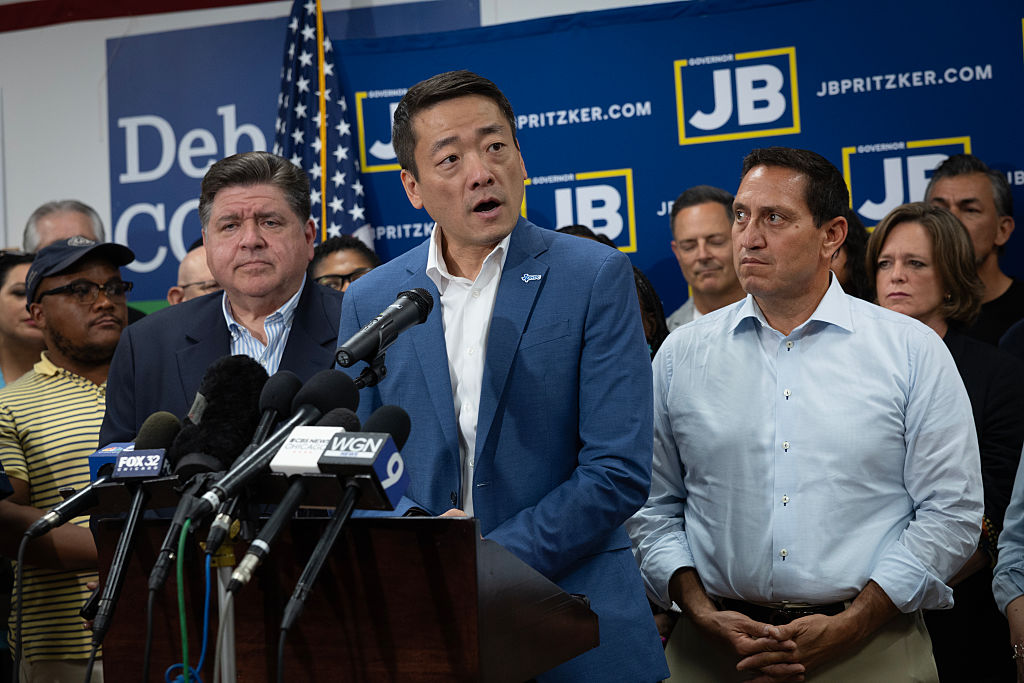
    There’s no small irony in the fact that Texas Democratic state legislators, fleeing a congressional redistricting attempt by Texas’s Republican majority, have sought shelter in Illinois. They’re acting like political refugees in what is, in fact, the most gerrymandered state in the country.

    Look at Illinois District 13, which snakes up from the Missouri border nearly to the gates of Indiana, bisecting the state (and District 15) like Illinois’s small intestine. Chicago is a very populous city, but the state has carved up its Congressional districts like a turducken, giving us as many (D-Chicagos) as humanly possible.

    The Illinois Democratic machine has had an outsized influence on American politics, much less Illinois politics, for decades. Its favorite son, Barack Obama, even became president. Now that Texas is serving up a gerrymandering machine that’s just as powerful, and just as corrupt, Illinois is offering asylum. That’s rich.

    Cockburn has been to both states. They both offer occasional moments of grace punctuated by millions of acres of cow manure. May they gerrymander each other out of existence and let a non-corrupt state devoted to direct democracy, wherever that may exist, take control of Congress.

    With Trump, Christmas starts now

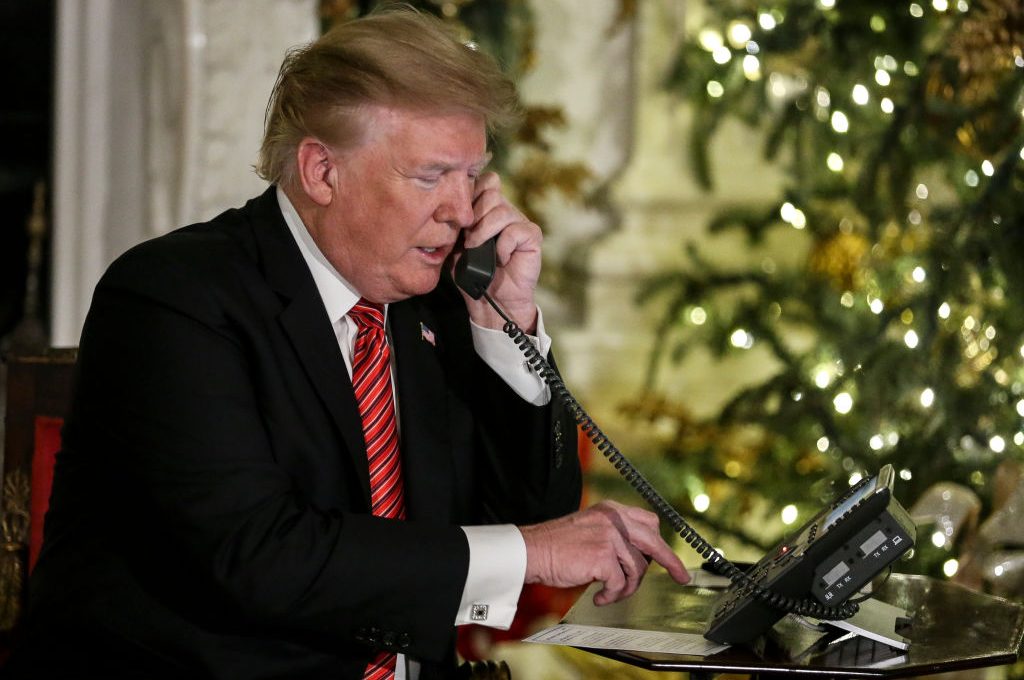
    It’s August, which means that Christmas is just around the corner. While Cockburn hangs around the house drinking spritzes and swatting mosquitos on the patio, the White House has announced it’s time to receive applications to help with Christmas decorations and to perform at holiday open houses. ’Tis the season, I guess! To the administration’s credit, they didn’t announce they’re officially renaming the holiday The First Lady Melania Trump Christmas Spectacular.

    While countless school choirs and dance teams will certainly bring the jolly, Cockburn would like to see various administration figures appear as part of the festivities. Director of National Intelligence Tulsi Gabbard can finally reveal who was behind the cover-up of the Santa Files (not David Sedaris’s, the real ones). Pete Hegseth can dress up as Santa and send selfies to the group chat. We look forward to Barron Trump’s Christmas Crypto Bash. Most prominently, J.D. Vance can fulfill his destiny by dressing as Buddy the Elf and proclaiming “Santa? I know him!!!” – a nice summary of his relationship with President Trump.

    On our radar

    UP ON THE ROOFTOP Joined by several men in suits this morning, President Trump took questions from the roof of the White House. Apparently, he was surveying the building for his recently announced $200 million ballroom.

    RUSSIA RUSSIA RUSSIA Pam Bondi directed the DoJ to launch a grand jury investigation into allegations that the Obama administration manufactured intelligence about 2016 election interference.

    EPSTEIN UPDATE Ghislaine Maxwell has been transferred to a minimum security prison in Bryan, Texas. Meanwhile, Bill and Hillary Clinton are set to be deposed by the House Oversight Committee this October for their connection to Epstein.

    Going Postal

    News broke this week (in the New York Post, appropriately enough), that the paper is soon to begin publishing a California edition, called the California Post. These happy tidings are almost enough to make Cockburn want to move back to California, where he spent some very happy, idle months at the Chateau Marmont in the 80s, and also the 90s.

    Regardless, this is great news for California’s bleak, bland, hyper-woke media offerings, punctuated only by the occasional conservative opposition blog, Adam Carolla X account or grouchy late-night AM radio hosts. An active Page Six alone will help burst the Hollywood PR bubble, and Cockburn relishes the idea of holding Gavin Newsom and Karen Bass’s feet to the fire on any number of issues. Newspapers aren’t, in fact, dead. They’re just not giving people something that they want to read. And as much as they hate to admit it, everyone wants to read the Post.

  • Trump is winning. That’s the GOP’s biggest problem

    Trump is winning. That’s the GOP’s biggest problem

    Nothing is more dangerous than success. In America, anyone can survive failure – you get up, dust yourself off and try again. But few politicians, or political parties, survive success because success kills urgency. And without urgency, voters don’t vote.

    President Donald Trump has been dangerously successful.

    With a seeming snap of his fingers, he has restored our nation’s borders. He has dismantled elite wokeness – rescuing our God-given pronouns and kicking men out of women’s sports. He has neutered Iran’s march toward nuclear weapons, ended taxpayer-funded pro-Hamas campus activism and quashed Bidenflation. To the astonishment of our foreign policy establishment, he has strengthened Europe’s support of NATO to match our 5-percent-of-GDP goal.

    Trump has blown up the USAID’s corrupt funding of a global anti-American bureaucracy. His tariffs breathe life into the people’s economy, while unemployed bureaucrats flee Washington’s economy, leaving their homes behind like empty shells.

    That’s all great news – and the Republican Party’s big problem, too.

    Why would anyone still need to vote for Republicans in the 2026 midterm elections? When we’ve driven in all the nails, what is left for a hammer to do? Even Winston Churchill, two months after winning World War II, was tossed from power. Why? Because no one needed a wartime leader after the war.

    Nothing is more dangerous than success. Without urgency, voters don’t vote

    If they had any strategic sensibility, Democrats would embrace a few of Trump’s accomplishments and argue for post-war peace and quiet. They’d say, “We should preserve some of the good Trump has done, but this election, we need to calm things down.” That’s the campaign that would produce a Democratic House. That’s the campaign we should expect smart Democrats to run.

    Fortunately for Republicans, the radicals who dominate the Democratic Party find it unbearably difficult to concede Trump any measure of accomplishment. Even so, we should expect Democrats with a keener sense of self-preservation to adjust course.

    So, what must Republicans do? Perhaps the most important thing I’ve learned in five decades of campaigning is this: Politics is the business of competitive purpose. Who would choose to give their vote to a lesser cause? Republicans must offer midterm voters a purpose worthy of a Presidential year election. I’d suggest this: We must make sure President Trump’s successes endure.

    Step One: Take every single Trump executive order and turn it into a one-page bill. Every few days, starting this fall, bring one to the House floor and force Democrats to vote “No.” Force them to vote against closed borders, against women’s sports, against energy independence. Force them to vote against English as our official language. With a uniparty-controlled Senate and a slim, one-vote majority in the House, these bills are unlikely to pass. That’s why Trump issued them as Executive Orders. But that’s good because…

    Step Two: We turn those failed votes into the 2026 GOP campaign for Congress. We put them in their urgent and truthful context: Trump’s success is fragile. It’s not something we can count on beyond his tenure. His accomplishments leave with him: They are not American law.

    If President Trump doesn’t expand his majority in Congress in 2026 while he remains in office, it’s game over. His wins vanish the day he leaves the White House for Mar-a-Lago.

    The border may be closed now – but without law, it reopens. Wokeness is on the ropes now – but without Congress, it comes back with a roar. America is strong again – but that strength will dissolve in coming elections with a different President and a different set of Executive Orders unless we carve it in legal stone.

    That is the Republican case for 2026: make the Trump agenda permanent or watch it all disappear. Give Democrats the House, and they will spend two years impeaching Trump again, trying to jail him, setting the nation on fire and organizing to reverse his triumphs. And the Democrats who are still laughing at mainstream America will laugh harder than before.

    The 2026 midterms must be a Presidential election in disguise. Which side are voters on? The one that believes in women, borders, safety and sanity? Or the one that believes men are women, criminals are victims and you are the problem?

    Donald Trump is one of a kind. He is irreplaceable. And if we want his accomplishments to outlast him, we must give him the tools to finish the job.

    The war is not over. There is still work to do. This time, don’t just vote for Trump. Vote to make the good he’s done last longer than the next election – or the chaotic cultural fires that preceded him will return and burn hotter. That’s dangerous for all of us.

  • Democrats don’t hate gerrymandering

    Democrats don’t hate gerrymandering

    When more than fifty Texas House Democrats bolted for Illinois to deny Republicans a quorum, legacy media lauded them as modern-day freedom riders. Spare us. The walk-out is no act of moral resistance; it is partisan self-preservation wrapped in civil-rights cosplay. Democrats don’t despise gerrymandering – they despise losing control of the process.

    Texas Republicans, who hold both chambers and the governor’s mansion, are pursuing a mid-decade redraw that could net five new GOP-leaning congressional seats. That is tough, bare-knuckle politics, but it is also constitutional. Map-making belongs to state legislatures, and nothing in Texas law forbids drawing lines more than once a decade. Faced with that reality, Democrats chose not to debate, amend, or even vote “no.” They chose to run.

    This sudden squeamishness about partisan maps is rich coming from a party that gerrymanders with surgical precision whenever it can. New York Democrats ignored their own “independent” commission, rammed through a cartoonishly lopsided map, and only retreated after the courts slapped it down. Illinois has spent the last decade erasing Republican districts from the political landscape altogether. Maryland’s lines meander like spilled ink – by design.

    Yet those same map manipulators now clutch their pearls in Chicago hotel suites, tweeting about democracy while Texans go unrepresented.

    Look closer and you’ll see the deeper motive: desperation. Texas Democrats have hemorrhaged credibility at home. Crime is up, test scores are down and housing costs outpace wages in the urban districts they dominate. Voters notice. So leadership reaches for the one trick that still excites the base – dramatic protest. Anything to suggest they still have a spine.

    By fleeing the chamber, they trade policy defeats for viral theatrics, banking on images of lawmakers on buses and group selfies in O’Hare to prove they can “fight back.” It is camouflage, not courage – an attempt to hide a record of failure beneath a banner of resistance.

    Suppose Democrats truly believe partisan line-drawing disenfranchises voters. They could champion real reform: an independent redistricting commission with teeth. Not the performative panels blue states tout – actual neutrality. Membership chosen by citizen lottery or bipartisan balance; bans on using party registration, racial data, or incumbency protection; meetings livestreamed and maps insulated from legislative override. Enshrine it in the state constitution so neither party can claw the pencil back.

    Yes, some Republicans will balk at surrendering a tool they presently wield. But conservatives who preach limited, accountable government should welcome rules that keep both sides honest. Power worth having is power worth checking – even when it’s ours.

    Democrats will never take that deal, and we know why: outrage is easier than self-restraint. Calling the Texas map “Jim Crow 2.0” rouses donors and distracts from the party’s policy drought. Meanwhile, friendly gerrymanders in Illinois or California remain sacrosanct. Their moral compass points due partisan.

    Walk-outs aren’t new. In 2003 and again in 2021, Texas Democrats fled to block bills they lacked the votes to defeat. Both times the legislation eventually passed. This sequel will end the same way: Republicans will pass a map, courts will sift the details and the spectacle will fade. What remains is a public further convinced that politics is performance art.

    Democratic lawmakers insist they left to defend democracy. In truth they left to defend a narrative – that they’re still relevant, still fighting, still worth the checks small-dollar donors write. It is easier to board a plane than to explain why neighborhoods they represent remain unsafe, schools underperform and budgets bleed red.

    Texans deserve better than Kabuki theatre. They deserve representatives who stay in the chamber, duke it out and then face voters on the merits. They deserve a redistricting process neither party can rig. Until Democrats (and, yes, many Republicans) submit to that principle, every map will be suspect and every session one tantrum away from paralysis.

    The moral crisis here isn’t that partisan maps exist; it’s that politicians would rather stage-manage outrage than fix the rules. Gerrymandering will survive this drama. Public trust may not.

    Because the problem with gerrymandering isn’t which party does it. The problem is that anyone can – and both parties will, until we make it impossible.

  • Trump must end the National Endowment for Democracy once and for all

    Trump must end the National Endowment for Democracy once and for all

    Readers of J. K. Rowling’s Harry Potter entertainments will recall that the number-one bad hat, Tom Marvolo Riddle, AKA Voldemort, had a clever way of preserving himself. Rightly worried that the forces of good might try to destroy him, the Dark Lord devised a way of infusing living bits of himself into various objects and people. The resulting magical charm was called a “Horcrux.”  

    “If the body of a Horcrux owner is killed,” we read in a Potter gloss, “that portion of the soul that had remained in the body does not pass on to the next world, but will rather exist in a non-corporeal form capable of being resurrected by another wizard.” Nice work if you can get it. 

    I have often wondered whether the architects of the deep state have been inspired by Rowling’s tale. For like Voldemort, they have taken care to distribute their essence in external objects and institutions. Wizards like Donald Trump and Elon Musk pronounce anathema upon their activities. They cast death spells that evaporate the elixir that imparts life – dollars in all their glory – but somehow the deep staters manage to evade death.  

    Consider, to take one  prominent example, the National Endowment for Democracy. This private entity depends entirely on a federal subsidy of some $315 million in order to carry on. And what do they do? Essentially, they are a front for the neoconservative, globalist wizardry that has made the world safe for bureaucracy. As James Piereson explained in the New Criterion this winter, the NED is a holdover from the Cold War.  

    “With the end of the Cold War and the collapse of the Soviet Union,” Piereson wrote

    the NED adjusted its mission to support democratic reforms in countries in non-communist countries with authoritarian governments, many of which were never adversaries of the United States in the first place. Over the years, the NED adopted a view of democracy that held that nationalist and populist leaders campaigning for office around the world were in fact authoritarians, and a threat to democracy. Many foreign leaders were tossed into that bucket – not only Russia’s Vladimir Putin, but also Hungary’s Viktor Orbán, Brazil’s Jair Bolsonaro, Poland’s Mateusz Morawiecki, and others. Many of these leaders were popularly elected but were nevertheless branded by the ned as authoritarians. It surprised no one when ned officials deemed Donald Trump, too, an authoritarian, lumping him together with these leaders.

    Indeed, although it was originally a bi-partisan organization, the NED has in recent years veered sharply to the left. In 2016 and after, it emerged as a virulent opponent of Donald Trump and the entire America First agenda.  

    In 2016, Carl Gershman, a former president of NED, contributed to the Trump-is-Vlaidmir-Putin’s-puppet hoax in the Washington Post and elsewhere. Trump was elected in a free and open democratic election, but somehow, according to Gershman, his victory showed that “our democracy” was “broken.” Commentators like Anne Applebaum, Bill Kristol and deep-state apparatchiks like Victoria Nuland joined Gershman as cheerleaders in the anti-Trump campaign for the NED. 

    Since the NED was an ostentatious enemy of Trump and his agenda – and since it was pursuing a foreign policy that was not just separate from, but actively opposed to, Trump’s foreign policy – it was no surprise that Trump and his cost-cutters at the Department of Government Efficiency took aim at its budget. Just a couple of weeks ago, NED’s subsidy had been zeroed out in Congress’s proposed budget. 

    Abracadabra! A look at the most recent recision shows that what had been zero was suddenly transmuted back into $315 million, with provisions for additional contracts. Voldemort chose some unlikely objects – including, if I remember correctly, Harry Potter himself – as the Horcruxes into which he deposited his spirit. Just so, the deep state has chosen some apparently unlikely objects – various GOP members of Congress, for example – into which it has infused its soul. How else to explain the sudden resurrection of the NED? 

    A Horcrux cannot be destroyed by conventional means: by being smashed or ripped or burnt, for example. What is needed, we are told, is Basilisk venom, the Sword of Gryffindor or a magical, inextinguishable flame. 

    That’s the bad news. The good news is that deep-state outposts like the NED, though remarkably hardy, are not necessarily immortal. Like cockroaches, they can survive a lot, especially when they can depend on the support of lily-livered RINOs who are so numerous in the GOP.  But they are not immortal. What is needed to extinguish the NED is not Basilisk venom but the concerted attention of Donald Trump. Perhaps the President had thought he had gotten rid of the NED already. I am here to remind him that that essential piece of work is but half done. It is time to finish the job.  

  • Newsom won’t create abundance

    With great fanfare, California Governor Gavin Newsom recently signed “historic” legislative package designed to “advance an abundance agenda.” It’s a nod to the recent (and fashionable) book Abundance by the liberal bloggers Ezra Klein and Derek Thompson, and it’s supposed to reform a state best known for a punitive cost of living and chronic shortages of everything essential – including housing, water, and energy. 

    Key to Newsom’s new legislation are Assembly Bill 130 and Senate Bill 131, both of which make fundamental changes to how the California Environmental Quality Act (CEQA) is enforced. 

    Passed in 1970, CEQA required any project developer applying for a building permit to submit an environmental impact statement, along with a plan to mitigate any “significant” harm that the project might inflict on the environment. Over the decades, CEQA metastasized from 4500 words to nearly half a million as California’s state legislature turned the law into a notorious procedural obstacle to any new construction in the state. For major projects, whether it’s housing, infrastructure, or commercial and retail developments, CEQA has become a weapon used by dozens of state, regional, and local agencies and outside litigants to punish developers with years of delays and millions in additional expenses. 

    CEQA reform is an important test for Newsom and the Democrats: can the American left make a sufficient break with the NGOs and activist lawyers to generate growth? Don’t hold your breath. In signing these two latest bills, Newsom and the State Legislature have only streamlined the CEQA process for their favored projects, while failing to provide relief to everyone else. Significantly, California’s Legislature is exempting from the excesses of CEQA only those projects having to do with “water, transportation, clean energy and housing.” It’s easy enough to read between the lines: “transportation” means more money for light-rail projects, “clean” energy means more utility-scale solar, wind and battery farms, and “housing,” of course, means more high-density infill.

    The fundamental, across-the-board reforms that CEQA really needs are, unsurprisingly, off the table for this governor and this legislature. They aren’t restricting the right to litigate under CEQA to district attorneys, aren’t ending the opportunistic lawsuits by extortionate third parties, or requiring the loser to pay legal fees in frivolous lawsuits. Nor are they limiting for others the time periods allowed for permit processing and appeals. These steps would rectify CEQA for everyone, but everyone is not a concern.

    Just how dense the Legislature will require housing to get in order to be exempt from CEQA provisions is found in the State Government Code Title 7, Division 1, Chapter 3, Article 10.6 “Housing Elements,” where the “lowest” permissible density is 10 units per acre. That would only be allowable, however, in an “unincorporated area of a nonmetropolitan county.” If the area is incorporated, it’s 15 units per acre. If the site is in a “suburban jurisdiction,” 20 units per acre, and if that suburban jurisdiction is in a “metropolitan county,” 30 units per acre.

    This is not a solution that will lower the cost of housing in California. It is a “reform” that is only supported by land developers who feed on subsidies and tax incentives. The deceptive excuse used to justify this selective, non-solution to CEQA’s ongoing suppression of new housing is to prioritize “infill,” that moral imperative that deems any development outside of existing urban boundaries to be a crime against the planet. But why?

    Contrary to popular belief, California’s urban density is the highest in America, with just over 94% of the population living on only 5 per cent of the land. California’s urban areas have an average of nearly 4,800 people per square mile, also the nation’s highest.

    The implications of this reveal the cruelty of streamlining CEQA merely to further densify California’s urban areas. Forcing development into limited geographic areas, confined within “urban containment boundaries” is a large part of the reason housing is so expensive in California. This politically contrived shortage of available land for building causes the value of eligible land to rise well beyond what it would be worth if land could be developed outside existing urban areas.

    Moreover, when developers build high density housing that has four or more floors, the cost per square foot increases compared to one- and two-story wood framed homes. These factors, all the result of political choices, are the reason housing is scarce and overpriced in California.

    The greatest irony is that there is no need to limit the land where new housing projects are permitted. For example, if you built 2.5-million new homes on quarter acre lots, with an equal amount of land set aside for streets, parks, schools and commercial and industrial centers, and if each of these homes were occupied by four people, you could fit a population of 10 million into an area under 2,000 square miles. That ultra low density development would only increase California’s urban footprint from 5 per cent to 6.2 per cent of its total land. There is plenty of room.

    Instead of recognizing this gift, and permitting practical water, energy and transportation infrastructure to realize it, California’s lawmakers prefer a hyper-regulated housing environment. That favors the wealthy, the politically connected and the subsidy hounds. But it denies private sector builders a chance to make a profit, without subsidies, building homes people want to buy, at a price they can afford.

    But the central premise of Newsom’s purported CEQA reform is this concept of “Abundance,” something only belatedly adopted by Democrats in an attempt to restore mainstream appeal to their discredited party. Democrats will never accept reforms that might facilitate affordable abundance. The Democratic Party – both its leadership and its voters – is comprised of special interests and factions that have little regard for each other, and each has a specific niche that is served by the status quo. 

    Take these interests in turn and it soon becomes clear that there is, practically speaking, no coalition for any kind of abundance agenda. Will, for example, the heavily subsidized developers of affordable housing consent to a deregulated environment where they would have to compete with private and unsubsidized builders that could again construct and sell single-family homes that people could afford to buy?

    Will environmentalist NGOs, conservancies, and real estate speculators that profit from artificial scarcity permit new homes to be built on inexpensive land outside the packed cities? Will public employees and their unions permit government budgets to again prioritize the enabling infrastructure that might bring roads and utility services to new housing developments on raw land, when they want all that money for their pay and pensions?

    I could certainly go on. Will the renewables industry, the climate zealots, and the network of consultants, brokers, traders, investors, and public utilities permit the price of energy to dramatically fall thanks to a resurgence of conventional fuels? Will the Homeless Industrial Complex support new laws and programs that actually solve the homeless problem?

    Will “equity” entrepreneurs and trial lawyers ever agree to a rollback of all the mandates that have made them prosper? Will unions consent to projects that aren’t subject to project labor agreements?

    These powerful special interests are the Democratic Party. They bankroll the political campaigns of Newsom and his allies who control California’s state legislature, and they control what laws are enacted and what agency appointments are made. These special interests thrive on scarcity, and while they recognize the rhetorical power of an “abundance movement” led by Democrats, they will make absolutely certain it never crosses the line from rhetoric to action. Governor Newsom – and the Democratic Party writ large – are now being forced to choose between economic growth and these interests, and they’re coming down on the side of the latter.