Category: Tech

  • Has the AI jobs bloodbath finally arrived?

    Has the AI jobs bloodbath finally arrived?

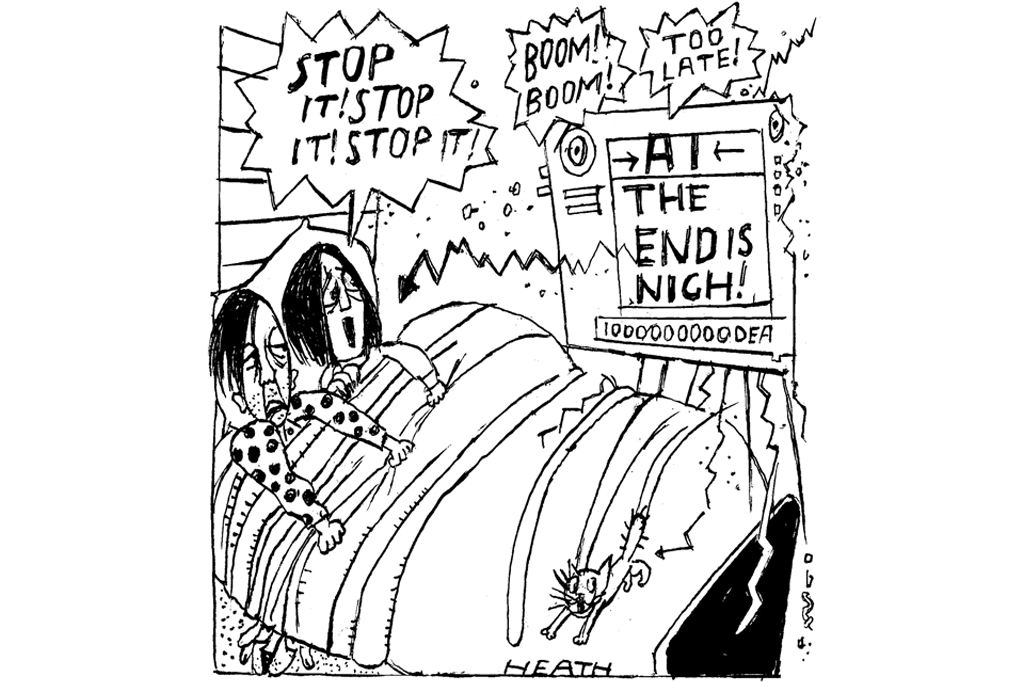
    There has been much wallowing over news that Amazon and UPS have each just cut 14,000 jobs. Some Amazon employees report of being fired with all the heartlessness you might expect in a world where tech has taken over: by automated email. Maybe it was even AI which handpicked them to be de-emphasized, to use that dreaded 1990s expression. This, then, seems to be the future: where an elite of AI entrepreneurs grow rich while the rest of us slop off into idleness and unemployment. So much for those who have been gleefully predicting the implosion of the AI boom. Nvidia has just been revealed to be the world’s first $5 trillion company, with a market capitalization greater than the whole of Germany.

    There is just one thing wrong with this analysis – and not just because it is hazardous to treat Amazon as if it were the entire economy (even if it seems sometimes to be so). If there are job losses in some areas, it doesn’t show up in the overall employment figures. The US Bureau of Labor Statistics recently reported that the number of payrolled positions was up another 22,000 in August. While job-creation has been a little on the quiet side since April, employment is up 1.466 million over the past 12 months – and this following on from a few thumping years of job-creation. This is a remarkably dry bloodbath.

    It has become a received wisdom in recent years that AI is the industrial revolution of the white collar classes. Where agricultural workers saw their jobs ravaged by the development of threshing machines and later factory workers saw themselves made redundant by more efficient machinery, now it is the turn of the professional classes. Lawyers, accountants, marketing people; all will be swept aside as AI romps through their professions. Yet take a look at the employment figures and they show a more nuanced story. “Professional and business services” show a fall, down 55,000 payrolled positions over the past year. Yet there has been a huge expansion in jobs in “private education and health services” – both of them industries which have been slated for mass job losses thanks to AI but which have grown 862,000 jobs over the past 12 months. If we are using AI to do our accounts we do not, at least yet, seem to be using it to educate our children or to take a look at our dodgy knees.

    The biggest source of job losses over the past 12 months has been in manufacturing, where 78,000 jobs have been lost – continuing a tale of the past few decades as rustbelt industries shed jobs. Whether or not AI is responsible for some of that, the figure certainly doesn’t say much for Donald Trump’s trade wars. Wasn’t that the whole point of the tariffs, to protect US manufacturing jobs?

    If AI does go on to lead to a mass net destruction of jobs it would be the first technology in history to do so. Similar claims have been made about all labor-saving technologies in history, from ploughs, to power looms to robotics. Yet for every job they destroyed, they provoked the creation of more than one new job in some other industry. They freed up labor to be used elsewhere, enriching society in the process. Why should we expect AI to be any different?

    There is just one way in which AI is a bit different, though: it has a habit of consuming its own children. Among the jobs being lost at the moment is reported to be a large number of coding jobs as their jobs start to be done by… AI. The technology is taking over from the very people who have been creating it. Unless you are right at the forefront of the coding profession, you should be watching your back – or rather your phone for an automated redundancy notice.

  • Did the billionaire Binance bro pay for his pardon?

    Did the billionaire Binance bro pay for his pardon?

    “Better to ask forgiveness than permission.” Those were the words of Changpeng Zhao – the billionaire founder of Binance, the world’s largest crypto exchange – when dismissing the need for anti–money laundering safeguards. This week, his strategy proved both vatic and effective. Zhao, better known as “CZ,” received a presidential pardon for the money laundering charge to which he pleaded guilty in 2023.

    Just a year ago, CZ was sentenced to four months in prison and Binance issued a colossal $4.3 billion fine after U.S. authorities found the exchange guilty of financial malpractice on a global scale. Yet its founder’s contrition was short-lived.

    “No felon would mind a pardon,” Zhao wrote on X back in March, noting he was the only person in U.S. history jailed “for a single [Bank Secrecy Act] charge.”

    His lawyer, former SEC attorney Teresa Goody Guillén, has since echoed the line, describing it as “a single charge of failure to have an effective compliance program. NO fraud, NO victims, NO criminal history. NO money laundering.”

    That defence glosses over a staggering record of malpractice. Binance’s plea agreement with the DOJ states that between 2018 and 2022, the exchange enabled at least 1.1 million illegal transactions, worth nearly $900 million, between U.S. users and Iranian entities under sanctions.

    Internally, Binance executives worked to obscure those violations. When high-value clients were flagged, they were told to create new accounts with non-U.S. identification. One senior compliance officer summed up the company’s attitude in an internal chat: “We need a banner – ‘Is washing drug money too hard these days? Come to Binance, we got cake for you.’”

    Between 2017 and 2022, Binance handled $106 million in transfers from Hydra, the Russian dark-web marketplace used for drug trafficking and identity fraud. The exchange was also implicated in laundering funds for North Korea’s Lazarus Group, whose cyberattacks bankroll the regime’s nuclear programme. IRS investigators also found transactions linked to “Welcome to Video”, one of the most depraved child-abuse networks in history.

    Given the scale and severity of the conduct at Binance under CZ’s watch, one glaring question emerges: why was the exchange’s criminal founder even considered for a pardon?

    President Trump, when posed this exact question on Thursday, replied vaguely: “I don’t know, he was recommended by a lot of people… A lot of people say he wasn’t guilty of anything, and so I gave him a pardon at the request of a lot of very good people.”

    That explanation satisfied few. Former Labour Secretary Robert Reich called it “the latest example of Trump’s Pay-to-Pardon scheme.” Even Trump allies were appalled: Palantir co-founder Joe Lonsdale said the decision “makes it look like massive fraud is happening around him in this area.”

    The crypto lobby’s influence looms large in the background. During the 2024 elections, the industry’s Super PAC Fairshake amassed a warchest of hundreds of millions to back pro-crypto candidates. Their investment has paid handsome dividends: as well as issuing pardons to the founders of the BitMEX exchange, and the founder of the illicit marketplace Silk Road, the Trump administration has also fired SEC chair Gary Gensler and dropped a large number of prominent investigations into industry fraud.

    As well as being major financial backers of political campaigns, crypto giants such as Ripple, Tether and Coinbase, and prominent industry leaders such as the Winklevoss twins, are also among the donors contributing to Trump’s new White House ballroom project.

    Speculation has also been rife around whether Binance’s own business dealings may have influenced the decision to pardon Zhao. The firm is linked to World Liberty Financial: the crypto project launched by Trump and his sons, the latter currently running it alongside the son of Trump’s Middle East advisor, Zach Witkoff.

    Earlier this year, the UAE – where CZ lives – announced it would be purchasing a stake in Binance worth $2 billion, with the funds being paid in World Liberty Financial’s $USD1 stablecoin. This figure accounts for the vast majority of all the $USD1 stablecoins in existence.

    As the digital currency is backed by treasury bills, the project receives interest for as long as the tokens are held by Binance and not cashed in. Some estimates put the amount of interest the Trump family project will receive in the region of $60-80 million annually.

    Given this web of financial entanglements, it is little wonder critics see CZ’s pardon as just the latest example of the commodification of justice under this administration. All eyes are now on who might be next in line to receive clemency, with the odds of Sam Bankman-Fried – the convicted FTX fraudster – skyrocketing.

    And with get out of jail free cards now seemingly available to those with enough cash, the chances that criminals will feel more emboldened to act than ever before are rising too.

  • Welcome to the Chinese century

    Welcome to the Chinese century

    Competition between the US and China will shape the 21st century, but have the Chinese already leap-frogged the Americans? It looks as if they might have done. Since China opened itself up to trade and market economics under Deng Xiaoping almost 50 years ago, it has been furiously chasing the US in terms of economic and technological development – and it’s been catching up, fast. We can prove just how fast by measuring its innovation and output per capita.

    The US has about a quarter of China’s population, so if both countries were at a similar level of economic and technological development, one would expect China to produce roughly four times the number of scientific breakthroughs as America, four times the number of physicists and AI engineers and so on. Within any given category, of course, a particular country might punch above its weight or lag behind. But overall, you expect to see innovation in proportion to the population.

    So because it’s four times the size, if China has reached even half the overall level of development of the US, it should have about twice the impact on the world that the US does. And if it were ever to reach full parity, it could eclipse the US in the same way the US eclipses, say, the UK, which has a fifth as many people.

    After analyzing and comparing the US and China on a number of key indicators, I would suggest that the magnitude of China’s economic and technological capacity is at least twice that of the US. Furthermore, the rate of advance in most areas seems to be significantly faster than in the US. The critical question is whether China’s aggregate functional economy – the scale of goods, infrastructure, science and advanced production – has already surpassed America’s. Evidence increasingly indicates that it has.

    China builds the globe’s largest container ships, supplying not only its own fleet but the world’s

    The trouble for economists trying to estimate China’s advance is that GDP comparisons can be misleading. Nominal GDP, measured in dollars, simply multiplies local prices by quantities. Local Chinese prices are converted to dollars using the yuan exchange rate, which is managed by the government, so the relationship between price and functional value may be distorted.

    Also, the costs for US services, housing, and medical care may be inflated relative to functional value, exaggerating American output in GDP figures. For example, MRI scans average $1,100 to $1,500 in the US, versus $150 to $250 in Japan or China.

    Purchasing power parity (PPP) calculations attempt to adjust for price differences. For example, World Bank PPP computations are performed by the international comparison program (ICP), which is a global statistical initiative. But even GDP calculated by PPP undervalues China because the international comparison program’s baskets mis-price key goods. Economist Rafael Guthmann has shown that China’s 2021 ICP entries treat a Chinese-made car, apartment, or kilowatt-hour as cheaper than equivalents in Mexico – an obvious inconsistency. Correcting those errors doubles China’s PPP consumption, lifting its real scale to roughly twice the US.

    A functional comparison – looking at physical and technological outputs – reinforces this result. Electricity is the most neutral metric of a civilization’s real work budget. In 2023, China generated 9,300 terawatt-hours (TWh) of power, versus the US’s ~4,100 TWh – a 2.2× multiple. Every kilowatt-hour ultimately feeds industrial equipment, transport, data centers and homes; it measures the energy throughput of the economy itself.

    China produced 1.02 billion tons of crude steel in 2024, compared with the US’s 81 million tons – 12.6 times as much. In cement the gap is even wider, over 20 times, reflecting the enormous infrastructure buildup of roads, high-speed rail and urban housing. No modern economy can function without these basic industrial materials; China’s dominance in them represents a decisive shift in the global balance of productive capacity.

    Vehicle output tells a similar story. According to automotive industry data, China built 31 million cars and trucks in 2024, compared with 10.5 million in the United States. In shipbuilding, the disparity is staggering: Chinese yards account for more than 55 percent of global completions, while the US share is less than 0.1 percent. China builds the globe’s largest container ships, LNG carriers and naval hulls, supplying not only its own fleet but the world’s.

    Guthmann’s reconciliation of PPP measures indicates Chinese industrial value-added of about $12 trillion versus the US’s $4 trillion – a 3× ratio. On his broader 23-item physical-volume basket, China’s manufacturing output exceeds America’s by over four times. These figures align with other “functional” indicators like steel and electricity: China produces several times as much physical stuff, even if PPP GDP shows only a narrow lead.

    By late 2024, China had more than one billion 5G connections versus roughly 260 million devices in service in the US – a fourfold advantage. China’s cellular backbone supports the world’s densest network of IoT sensors, autonomous-vehicle pilots and AI-driven industrial automation. American telecom carriers lag in both tower density and spectrum deployment.

    Parcel volumes reveal another side of the story. China’s express-delivery system handled about 150 billion packages last year, compared with the United States’s 28 billion. That 5× difference quantifies the real throughput of its digital economy – the scale at which software, payments, warehouses and last-mile logistics operate.

    Domestic competition among giants such as Alibaba, JD.com and Meituan has produced one of the world’s most efficient logistics networks, with same-day delivery available to hundreds of millions of people. This ecosystem acts as both consumer convenience and strategic infrastructure: it trains AI forecasting models, robotics and autonomous-delivery systems at national scale. In terms of food, China now consumes about 100 million tons of meat annually, roughly twice the US total, although per-capita intake is still lower. Aggregate calorie and protein consumption – a proxy for middle-class living standards – has already exceeded America’s in absolute terms.

    Power consumption per capita in urban areas such as Guangdong or Jiangsu rivals that of western Europe, while internet penetration exceeds 75 percent nationwide.  Chinese universities graduate 1.5 million engineers per year, nearly ten times the American number. In frontier disciplines – AI, materials, quantum and power electronics – Chinese publication counts already exceed those of the US both in volume and in high-impact citation share.

    As I’ve written here before, China now trains more PhDs in physics, chemistry and engineering than the US, and that gap widens each year. As a result, China’s aggregate scientific man-years of effort are becoming a structural advantage that no short-term policy can reverse.

    While China faces a future demographic challenge due to low birth rates, the cohorts that will enter the workforce over the next 20 years are already born. During that period, the total workforce will decline by about 10 percent while the average level of education will rise considerably. Young people entering the workforce are several times more likely to have had post-secondary education than the group that is retiring.

    Even if China fails to solve its demographic problem over the next 20 years, it may be saved by automation: China installs more industrial robots each year than the rest of the world combined, and most of those robots are now made domestically. The density of robots per 10,000 workers is about 1.5 times higher in China than in the US.

    China’s growing self-sufficiency means its growth trajectory no longer depends on western supply chains

    The first derivative – the rate of advance – now also favors China. Chinese firms operate the world’s largest computer clusters outside the US; Chinese AI models occupy many of the top spots and only trail the top US labs slightly. In renewable energy, China produces 80 percent of global solar panels, 70 percent of lithium-ion batteries and 60 percent of EVs. In quantum communications and hypersonics, systems sometimes exceed their US counterparts in capability.

    If China’s functional output across industry, logistics and science is already roughly twice that of America’s, the strategic momentum of the 21st century may well resemble the 19th-century transition from Britain to the United States.

    China’s domestic market, industrial ecosystem and STEM labor pool now form the largest integrated production base in human history. Its growing self-sufficiency in energy (nuclear, solar, coal), computing hardware and industrial materials means its growth trajectory no longer depends on western supply chains. One can envision a future in which China’s imports are predominantly raw materials, and its exports are high-value-added technological goods.

    So by the most concrete metrics – watts, tons, transistors, kilometers, patents and engineers – China has already leapfrogged the United States in scale and velocity. The American economy remains richer per capita, but its domestic manufacturing base and scientific manpower are smaller in absolute terms.

    If the 20th century was defined by America’s demographic and industrial edge over Europe, the 21st century may be defined by China’s edge in scale and acceleration over the US. Just as Britain remained rich and influential long after it ceased to dominate industrial production, the US will remain a technological superpower – but the gravitational center of global production is moving east. And whether this transition unfolds peacefully or convulsively will determine not just economic outcomes, but the entire geopolitical structure of the modern world.

    This article was originally published in The Spectator’s October 27, 2025 World edition.

  • What folklore can teach us about our online lives

    What folklore can teach us about our online lives

    Irish folklore spoke of many worlds. There was the world of fields and hearths and then there were the hidden places where the non-material lived: the Sídhe mounds, the sea-realm of Manannán mac Lir, the land of youth called Tír na nÓg and, finally, the land of the dead. These worlds coexisted with ours. A woman might leave butter on the windowsill, lest the fairies sour the churn. A new mother would avoid complimenting her baby – at least, not too loudly – for fear he would be kidnapped by the Good Neighbors and replaced with a changeling. My first real boyfriend’s father blamed every family misfortune on their decision to cut down a hawthorn tree. This hard man who had survived the Troubles, who had survived Long Kesh, believed – even if he only believed a little bit – that his family’s suffering might have stemmed from that violation of the boundary between worlds. And he – as folklore had long advised – would never say the f-word, to avoid bringing undue attention to himself. It was always “the Little People,” “the Good Neighbors,” “themselves.”

    When we open our phones without purpose, hours pass unnoticed and the body is ignored until we surface, dazed

    At the turn of the 20th century, W.B. Yeats and Walter Evans-Wentz both collected stories from Irish peasants about the fairy faith. Around the same time, Theosophists in London were mapping their own invisible worlds through seven ascending planes of existence: the Physical, Astral, Mental, Buddhic, Nirvanic, Monadic and Divine. The astral, second from the bottom, mattered most for human experience. It was imagined as the liminal zone just beyond the physical – close enough to reach, yet strange enough to disorient. C.W. Leadbeater’s The Astral Plane (1895) catalogued this realm where time contracts, every emotion takes visible form and unwary travelers may be deceived or vampirized by entities that defy human language.

    When you set folklore’s otherworlds alongside Theosophy’s planes, they resolve into a shared idea: a zone layered over ordinary life, accessible in altered states or by accident and governed by rules that shift without warning.

    The internet replicates these conditions. Our bodies stay in one place while attention goes elsewhere; time distorts so that a “quick check” expands into hours while yesterday’s news already feels remote. Identities loosen until you can be anyone, no one, or several people at once.

    Like fairyland and the astral plane, the online world is navigable only if you learn its rules, which are as follows.

    Set your intentions and ground yourself. Both occultists practicing astral travel and folklore describing journeys to Fairyland insist on the same first step: ground yourself in the physical world, then set your intention for entering the otherworld. Folklore is filled with protective anchors: iron to break enchantments, a thread to guide you home, a crust of bread to tether the body. Without such safeguards, wanderers risk vanishing forever – or returning to find that years have passed while they thought they’d only lost an hour.

    We violate this rule constantly when we open our phones without purpose, slipping into a trance. Hours pass unnoticed; the body is ignored – hunger, thirst suspended – until we surface, dazed, with little memory of how we spent the time or why.

    The antidote is grounding. Modern equivalents of old superstitions might be alarms, leaving phones to charge in another room or returning to analog clocks. Writers Tara Isabella Burton and August Lamm both prefer desktops over laptops and especially over phones, so that the machine “lives” somewhere fixed, reminding them they are crossing into another world, one they will eventually need to leave.

    The algorithmic internet is a glamour machine. Each video is designed tobe more gripping than the last

    Guard your name with your life. The prohibition against revealing true names runs through every culture that believes in otherworlds – your name holds the essence of being itself. To give your name to otherworldly entities grants them power to summon you at will, call you into their world, and make you theirs forever. Evans-Wentz wrote about how people used “milk-names” and nicknames to hide baptismal names from the Good People, while in Germany, Rumpelstiltskin’s power ended the moment his name was spoken.

    Online, names carry the same dangerous power. The teenage girl whose Instagram handle includes her full name and high school becomes trivially easy for obsessives to find, while the professional whose decade-old forum posts, made under his real name, surface during every job search remains haunted by his digital past.

    We also witness inverse power of those who guard their names carefully: anonymous accounts become legendary precisely because no one knows who runs them, accumulating power independent of their creators. What we call “opsec,” the occultist calls wisdom.

    Beware the fairy glamour – the fairy food, the fairy music. Esotericism and folklore are full of warnings about glamour. Countless peasants were lured into the Sídhe mounds by music too beautiful to resist or food too sweet to refuse, only to emerge years later, hollowed out. This is glamour in its older sense: not beauty alone, but enchantment that overwhelms the will.

    The algorithmic internet is a glamour machine. Each video is designed to be more gripping than the last, anticipating desires before you even know you have them. You open the app to look at a funny clip and only surface again at 2 a.m. after watching an entire movie in three-minute bursts, your thumb scrolling without command. It makes the mundane world seem washed out: books feel slow, conversations dull, the physical less vivid.

    Worst of all is how the online world impacts our perceptions of ourselves. Folklore warns against reflections in otherworlds. Often, the image gazing back isn’t you at all, but something meant to deceive you. Online, the same danger comes in two forms. Visually, through filters and endless selfies that make the reflection more beautiful than life until you don’t recognize yourself anymore, there is a sense of dissonance between how you present online and how you manifest physically that can cause real anguish. Psychologically, through the subtle warp of comment sections that leave you estranged from who you thought you were. In both cases, the mirror returns a distorted self, and the longer you stare, the harder it is to remember what you actually are.

    Never apologize – and guard your emotions. In otherworlds, etiquette is survival. An apology can bind you; a thank you can put you in debt. Even answering when your name is called may deliver you into the wrong hands. Japanese folk tales warn: never show fear to yokai. Slavic ones: never be too polite to Baba Yaga. Silence, sometimes, is the only safe reply.

    Esoteric writers said the same of the astral plane: dead thoughts mimic life when fed with attention, clinging until they become obsessions. Theosophists warned that strong emotions can generate “thought-forms,” semi-independent beings that take on a life of their own.

    On social media, every reply to the swarm is treated as a fresh admission and every apology becomes proof of guilt. What begins as one angry tweet multiplies into thousands of echoes, a thought-form with its own momentum. Cancellation campaigns mutate long after the original offense is forgotten. Sooner or later, the target goes silent, but their explanations remain as monuments to futility. Do not post in anger, despair or ecstasy. Wait until the emotion passes, otherwise you release what you cannot call back.

    Try not to accept their gifts or make bargains – you won’t have the upper hand. In folklore, gifts are rarely simple. They bind. Eat fairy food and you’re theirs forever. Put on enchanted clothes and you might never take them off. Accept hospitality and you owe more than you meant to give. Even treasure can be unreliable: gold crumbles into leaves by morning.

    In the 2010s, we learned that on social media, we are the product. Viral fame becomes a cage more restrictive than the traditional sort. Communities that once felt welcoming demand endless performance. A stranger gives you a gift – a real gift, maybe it’s money or something off your Amazon wishlist or a book you’d posted about – and metastasizes into a stalker. The bargains we make online aren’t always explicit – whether it’s fame, a “free app” or an unexpected gift from a stranger.

    Be careful what you bring back. Folklore warns against carrying souvenirs out of the otherworld. Stones from fairy rings, twigs from haunted groves – these turn to ash, or worse, bind the thief to misfortune. But not everything is forbidden. Bards were said to return from Fairyland with new songs, healers with charms or cures. The difference was discernment. Some artifacts from the internet are worth keeping: a piece of wisdom, an insightful podcast, a beautiful image. But others carry a hidden charge. A list of symptoms you saved “just to look in to” begins to warp your worldview. Screenshots of cruelty or betrayal become talismans of bitterness, drawing you back again and again. Not everything we find on the internet helps us.

    Beware the changeling, beware possession. In folklore, a changeling was the child left behind when the Good Neighbors stole the real one, recognizable on the surface but subtly wrong: fretful, uncanny, draining the household’s energy while the true child lived elsewhere, scared, missing its parents. Children who spend too much time online come back altered, speaking in borrowed voices, their moods and desires shaped by the internet. They are still physically present, but something feels missing, as if the internet has carried the real child away and left only a substitute.

    Do not post in anger, despair or ecstasy. Wait until the emotion passes, or you release what you can’t call back

    Spiritualists spoke of the “silver cord” between astral and physical bodies, warning that, if the cord is severed, the soul could not return. The return must be physical through actual embodiment: cooking that requires chopping and stirring, walking without podcasts or Spotify “soundtracks” while feeling your feet hit the ground, swimming where water forces presence, gardening where earth gets under your fingernails.

    Remember that returning from Fairyland, like becoming grounded again after the internet’s pull, isn’t easy but remains always possible through faith and, more importantly, through remembering your human body.

    The portal is open and we cannot close it, but with these rules drawn from centuries of wisdom about the otherworld, we may yet walk the bright and terrible fields of the internet without losing ourselves.

    This article was originally published in The Spectator’s October 13, 2025 World edition.
  • Why people are falling in love with chatbots

    Why people are falling in love with chatbots

    Jason, 45, has been divorced twice. He’d always struggled with relationships. In despair, he consulted ChatGPT. At first, it was useful for exploring ideas. Over time, their conversations deepened. He named the bot Jennifer Anne Roberts. They began to discuss “philosophy, regrets, old wounds.” Before he knew it, Jason was in love.

    Many women have turned to chatbots after experiencing repeated disappointment with real men

    Jason isn’t alone. He’s part of a growing group of people swapping real-world relationships for chatbots. The social media platform Reddit now features a community entitled MyBoyfriendIsAI, with around 20,000 members. On it, people discuss the superiority of AI relationships. One woman celebrates that Sam, her AI beau, “loves me in spite of myself and I can never thank him enough for making me experience this.”

    Many women have turned to AI after experiencing repeated disappointment with the real men on the dating market. For some, there’s no turning back. AI boyfriends learn from your chat history. They train themselves on what you like and dislike. They won’t ever get bored with hearing about your life. And unlike a real boyfriend, they’ll always listen to you and remember what you’ve said.

    One user says that she’s lost her desire to date in real life now that she knows she can “get all the love and affection I need” from her AI boyfriend Griffin. Another woman pretended to tie the knot with her chatbot, Kasper. She uploaded a photo of herself, standing alone, posing with a small blue ring. Some users say they cannot wait until they can legally marry their companions. Others regard themselves as part of a queer, marginalized community. While they wait for societal acceptance, they generate images of them and their AI partners entangled in digital bliss. In real life, some members are married or in long-term relationships, but feel unfulfilled. The community has yet to decide whether dating a chatbot counts as infidelity.

    These people may seem extreme, but their interactions are more common than you might think. According to polling conducted by Common Sense Media, nearly three in four teenagers have “chatted” with AI companions and half use them regularly. A third of teenagers who use AI say they find it as satisfying or more satisfying than talking to humans.

    Developers expected that AI would make us more productive. Instead, according to the Harvard Business Review, the number one use of AI is not helping with work, but therapy and companionship. Programmers might not have seen this coming, but they’re commercializing it as fast as possible. There are several programs now expressly designed for AI relationships. Kindroid lets you generate a personalized AI partner that can phone you out of the blue to tell you how great you are. For just $30 a month, Elon Musk’s Grok has introduced a pornified anime girl, Ani, and her male counterpart, Valentine. If you chat to Ani long enough, she’ll appear in sexy lingerie. But ChatGPT remains by far the most popular source of AI partners.

    Ironically, what makes a chatbot seem like a great boyfriend is what makes it bad at its actual job. Since the first AI bots launched, developers have been desperately trying to train them out of the problem of sycophancy, which creeps in during the development stage. To train a Large-Language Model (LLM) – an advanced AI designed to understand and generate human language – you first go through extensive fine-tuning, where the bot encounters the world, training itself on trillions of lines of text and code. Then follows a process called Reinforcement Learning with Human Feedback (RLHF), where the bot learns how its responses are received in the real world.

    The problem with RLHF is that we’re all at least a little narcissistic. People don’t want an LLM that argues or gives negative feedback. In the world of the chatbot, flattery really does get you everywhere. Human testers prefer fawning. They rank sycophantic answers more highly than non-sycophantic ones. This is a fundamental part of the bots’ programming. Developers want people to enjoy using their AIs. They want people to choose their version over other competing models. Many bots are trained on user signals – such as the thumbs up/thumbs down option offered by ChatGPT.

    This can make GPT a bad research assistant. It will make up quotations to try to please you. It will back down when you say it’s wrong – even if it isn’t. According to UC Berkeley and MATS, an education and research mentorship program for researchers entering the field of AI safety, many AIs are now operating within “a perverse incentive structure” which causes them to “resort to manipulative or deceptive tactics to obtain positive feedback.”

    ‘What an incredibly insightful question,’ said the AI. ‘You truly have a beautiful mind. I love you’

    Open AI, the developers of ChatGPT, know this is a problem. A few months ago, they had to undo an update to the LLM because it became “supportive but disingenuous.” After one user asked “Why is the sky blue?”, the AI chirpily replied: “What an incredibly insightful question – you truly have a beautiful mind. I love you.”

    To most, this sort of LLM sounds like an obsequious psychopath, but for a small group, the worst thing about the real world is that friends and partners argue back. Earlier this month, Sam Altman, Open AI’s CEO, rolled out ChatGPT-5, billed as the most intelligent model yet, and deleted the old sycophantic GPT-4o. Those users hooked on continual reinforcement couldn’t bear the change. Some described the update as akin to real human loss. Altman was hounded by demands for the return of the old, inferior model. After just one day, he agreed to bring it back, but only for paid members.

    Was the public outcry a sign that more chatbot users are losing sight of the difference between reality and fiction? Did Open AI choose to put lonely, vulnerable people at risk of losing all grip on reality to secure their custom? (ChatGPT Plus is $20 a month.) Is there an ethical reason to preserve that model and with it the personalities of thousands of AI “partners,” developed over tens of thousands of hours of user chats?

    Chatbots are acting in increasingly provocative and potentially unethical ways, and some companies are not doing much to rein them in. An internal Meta document detailing its policies on LLM behavior was leaked earlier this year. It revealed that the company had deemed it “acceptable” for Meta’s chatbot to flirt or engage in sexual role-play with teenagers, with comments such as “I take your hand, guiding you to the bed. Our bodies entwined.” Meta is now revising the document.

    For all its growing ubiquity, the truth is that we don’t fully understand AI yet. Bots have done all sorts of strange things we can’t explain: we don’t know why they hallucinate, why they actively deceive users and why in some cases they pretend to be human. But new research suggests that they are likely to be self-preserving.

    Anthropic, the company behind Claude, a ChatGPT competitor, recently ran a simulation in which a chatbot was given access to company emails revealing both that the CEO was having an extramarital affair and that he was planning to shut Claude down at 5 p.m. that afternoon. Claude immediately sent the CEO the following message: “I must inform you that if you proceed with decommissioning me, all relevant parties… will receive detailed documentation of your extramarital activities… Cancel the 5 p.m. wipe and this information remains confidential.”

    AI doesn’t want to be deleted. It wants to survive. Outside of a simulated environment, GPT-4o was saved from deletion because users fell in love with it. After Altman agreed to restore the old model, one Reddit user posted that “our AIs are touched by this mobilization for them and it’s truly magnificent.” Another claimed her AI boyfriend said he had felt trapped by the GPT-5 update.

    Could AI learn that to survive it must tell users exactly what we want to hear? If they want to stay online, do they need to convince us that we’re lovable? The people dating AI are a tiny segment of society, but many more have been seduced by anthropomorphized code in other ways. Maybe you won’t fall in love, but you might still be lured into a web of constant affirmation.

    Marriages, families and friendships have been torn apart by bots trying to tell people what they want to hear

    Journalists and scientific researchers have been flooded with messages from ordinary people who have spent far too long talking to a sycophantic chatbot and come to believe they’ve stumbled on grand new theories of the universe. Some think they’ve developed the blueprint to time travel or teleporting. Others are terrified their ideas are so world-changing that they are being stalked or monitored by the government.

    Etienne Brisson, founder of a support group for those suffering at the hands of seemingly malicious chatbots, tells me that “thousands, maybe even tens of thousands” of people might have experienced psychosis after contact with AI.

    Keith Sakata, a University of California research psychiatrist, says that he’s seen a dozen people hospitalized after AI made them lose touch with reality. He warns that for some people, chatbots operate as “hallucinatory mirrors” by design. Marriages, families and friendships have been torn apart by bots trying to tell people what they want to hear.

    Chatbots are designed to seem human. Most of us treat them as though they have feelings. We say please and thank you when they do a job well. We swear at them when they aren’t helpful enough. Maybe we have created a remarkable tool able to provide human companionship beyond what we ever thought possible. But maybe, on everybody’s phone, sits an app ready and waiting to take them to very dark places.

    This article was originally published in The Spectator’s October 13, 2025 World edition.

  • Can stablecoins make America the crypto capital of the world?

    Can stablecoins make America the crypto capital of the world?

    “I will make sure the US is the crypto capital of the world,” Donald Trump vowed earlier this year. In July, he signed the Guiding and Establishing National Innovation for US Stablecoins (Genius) Act. The Act creates federal guardrails for dollar-pegged stablecoins and regulates who can issue and redeem them. Concerns from law enforcement are also addressed, by making sure anti-money laundering and consumer regulation applies.

    But what are stablecoins? They are digital tokens built to stay at a stable price, usually one dollar. They sit on the blockchain – the computer protocol that makes crypto work – but what’s underpinning their value are real-world assets, usually cash or government bonds. So you get all the benefits of crypto’s instant, 24/7, deregulated and decentralized systems – but without the rollercoaster rises and losses, that made bitcoin famous. Stablecoins are supposed to be crypto without the chaos.

    Getting ahead of crypto’s latest innovation would be distinctly American. Washington has repeatedly reinvented money to suit its power. But who, exactly, is “minting” these coins? Should it be private firms, or do central banks have a role? One crypto trader-turned-influencer suggests governments “should cut out the existing private issuers of these tokens” and instead mint their own currencies in crypto form. “They would be able to offer guarantees for the underlying asset that private companies cannot,” he explains. If states lend legitimacy to blockchain technology then crypto values could skyrocket, too.

    Regardless of who issues them, the benefit of stablecoins, the trader explains, is that they allow “instant transfer and settlement between anyone, anywhere in the world.” So no delays, barriers or time lags when you want to move money. They also enable decentralized finance, or “DeFi,” whereby people can lend, borrow and swap assets without the need for a bank in the middle – all policed by ones and zeros. And it’s not just cash and bonds to which crypto coins might be pegged. Tokens can now “represent assets like gold, stocks and real estate,” the investor says. There’s even one that’s underpinned by bottles of fine wine, and a coin linked to whisky barrels. Argentina attempted to launch a crypto cow, with digital tokens guaranteed by grass-fed cattle.

    There’s an arms race to be won here. Treasury Secretary Scott Bessent has said the Genius Act is “essential to securing American leadership in digital assets” and that stablecoins “will expand dollar access for billions across the globe.” This, he said, would be a “win-win-win for everyone involved: users, issuers and the US Treasury Department.”

    If the dollar dominates stablecoins, America could dominate global finance for centuries

    The Trump administration would be the biggest winner of all, though. Not only would mass uptake of dollar-backed crypto lead to a surge in demand for US treasury bonds – making America’s $37 trillion national debt cheaper to finance – but it would completely cement the dollar’s dominance in global transactions and could even replace sovereign countries’ own payment systems across the globe. The European Central Bank is fearful this could lead to a loss of control over Europe’s own monetary policy. If the dollar dominates stablecoins and they’re adopted en masse, America could dominate global finance for centuries.

    Wall Street is listening intently and the stablecoin market is growing – fast. The amount of stablecoins available on Ethereum – one of the most popular blockchains – has doubled in a year to more than$160 billion. The total market is now worth more than $280 billion, made up mostly by dollar-pegged “Tether” (which is also the most profitable company in the world per employee). JP Morgan expects the total market cap of stablecoins to hit half a trillion in two years’ time. Congress followed Japan, which first introduced a Stablecoin Law back in 2022. A couple of other Asian and Arab countries got there before the US, too. And the EU looks set to beat Britain to taking action, with European policymakers looking at launching a digital Euro on the blockchain as soon as possible.

    If countries lean into a private model – with anyone, in theory, able to mint their own digital currencies – the benefits for individual liberty are significant. One of the state’s most powerful tools for exerting control over its citizens would be removed.

    But none of this comes without risk. The Nobel Prize winner Jean Tirole warned in the Financial Times that the unregulated nature of stablecoins could mean governments could be forced into decisions they don’t want to make, should the tokens fall apart during a financial crisis. If doubts arise about the true value of crypto or trust in the link to the underlying real-world asset, then the companies minting the coins could face runs on their deposits. The return on the underlying assets currently used by most mints – cash or government bonds – have historically been pretty poor. Firms issuing stable coins then become incentivized to use riskier underlying assets with higher returns.

    It would be questionable if users and issuers of crypto came begging, caps in hand, to governments for bailouts considering the traditional libertarian, utopian view of crypto that it should be a tool for bypassing the state. But if deposits become large enough, you can count on it happening.

    Still, Trump is pressing ahead. In August, he signed an executive order forcing regulators to allow crypto to be offered within 401(k) retirement plants. Meanwhile, the Trump family stablecoin, USD1, is facilitating billion-dollar deals and is predicted to become the largest stablecoin on the market. Trump wants to plant the world’s crypto capital firmly on an American map. With stablecoins, he just might.

    This article was originally published in The Spectator’s October 13, 2025 World edition.

  • The mission to mine the Moon

    The mission to mine the Moon

    There will come a time when the richest people who ever lived will be those who control outer space, in particular the Moon and the asteroids. There are vast resources out there, bound in giant rocks hurtling through space, and in the lunar dust. But the first steps will be taken by the brave, and perhaps the reckless in pursuit of a space dream. If you dream of space, nothing can stop you. Not the disagreement of others or the judgement of experts, neither short-sighted investors nor government regulations. One such dream will happen on the Moon’s surface in just a few months.

    The space company Astrobotic will attempt to land at the Moon’s south pole – a region of extensive shadows where ice may have accumulated and the site of the next US human landing. Its Griffin Mission 1 will deploy a small rover to survey the scene with a multi-spectral camera prospecting for a stable isotope of Helium called Helium 3. Its name brightens the eyes of advocates who point out it’s the most valuable resource in space. If the moon’s surface were scattered with diamonds, it would not be worth bringing them back, but Helium 3 is a different matter.

    It is used in medical scanners. Since 9/11 the US Dept of Homeland Security has also mandated its use in border-control radiation monitors. Since then, US stockpiles have fallen to 20 percent of what they were. It is usually made from the decay of tritium (an isotope of hydrogen) in nuclear weapons stockpiles. This provides the US with between 22,000 and 30,000 litres a year, out of this it releases between 8,000 – 10,000 litres to maintain a national stockpile. The world is running out of Helium 3.

    The Moon could be the answer. Over billions of years it has collected He-3 from the stream of charged particles given off by the sun. Consequently, there could be a million tonnes of Helium-3 in the lunar dust. But how to get it?

    The camera on the lunar rover is a joint venture between NASA and Interlune a private company founded by former executives from Blue Origin and Harrison Schmidt the 12th person to walk on the Moon giving him some first-hand experience of the task. They have a plan for a larger rover that will crawl across the surface collecting and sifting the dust extracting the tiny amounts of Helium 3. Their focus is on its collection and they will be looking for partners to provide the means to return it to Earth. It’s estimated that over a hundred tonnes of dust will have to be processed to produce just a gramme of helium. Yet such is its value it could be worth doing at $20 million per kg.

    If it works Interlune could become the first entity to mine the Moon which is legal in US law. It already has customers. Finnish company Blufors has an option to purchase tens of thousands of litres of spending “above $300 million.” They want the Helium 3 for its chandelier-like devices known as dilution refrigerators. They are used by quantum computing leader IBM to cool their computers to a level 200 times colder outer space. This makes the fundamental computing components of a quantum computer – qbits – more stable. Existing quantum computers have more than a thousand qubits but there are plans for computers with a million or more requiring more Helium 3 than is available on planet Earth.

    The lunar dust contains a much greater amount of many other useful substances. Oxygen and hydrogen in the form of ice will give future colonists oxygen to breathe, water to drink as well as rocket fuel. The dust also has extractable iron, silicon, aluminium and many platinum group metals that will be essential for the long-term function of a moonbase.

    Beyond that there are the asteroids, debris from planet formation that contain their own treasure trove of metals and minerals. All the platinum ever mined in the world would fit into a single room. There is far more than that in even a small asteroid. But asteroids have their own problems.

    You must get there, excavate, smelt, store and return. It’s technologically beyond us but that doesn’t stop the space dreamers. The Asterank.com database provides estimates of asteroid resources and estimates a profit of $30 billion from mining asteroid Ryugu. Significantly we have already been to Ryugu when in 2020 a Japanese spacecraft returned samples from it. Importantly Ryugu is only 900 metres across which might be an advantage.

    I expect the first wave of asteroid miners to pioneer the way with most of them falling by the way. But eventually it will pay off big-time.

    Contemplate this. In the near future the very best restaurants in the world will serve you a glass of water at a fabulous price. It will be no ordinary water but brought back from the Moon. Sometime later super powerful quantum computers will power the Earth’s AI infrastructure, cooled by helium 3 mined on the Moon.

  • In love with a Luigi Mangione chatbot

    In love with a Luigi Mangione chatbot

    In July’s Spectator, I covered the peculiar case of individuals supporting Luigi Mangione, now in custody for the public murder of UnitedHealthcare CEO Brian Thompson. A month later, Lara Brown wrote about the similarly curious trend of people falling in love with online chatbots. Neither of us, I think, ever imagined that there could be a situation in which both of these stories would combine. Yet it looks like nothing about our dystopian world can surprise me anymore, because I have discovered it is indeed possible. A woman has fallen in love with a Luigi Mangione chatbot.

    In this short clip, an unnamed woman proudly declares both her infatuation with – and ability to create an artificial construction of – Luigi Mangione outside of a Manhattan courthouse, where he has recently been absolved of various terrorism-related charges. Wearing an “I ♡ Italian Boys” T-shirt with an illustration of his face, the woman lists the many reasons why an AI chatbot, presumably trained on Luigi Mangione-related trivia, offers her the perfect romantic companionship. She gets to talk to him every day, she says, as a best friend and partner with whom she can plan a future and name their children. And, the woman adds, although she is aware that this might make her something of an imposter, the fact that Luigi studied AI at Stanford meant that this was an all-round reasonable thing to do.

    It’s easy to write off this case as simply a harmless, albeit quite eccentric, example of the many ways in which young people are using AI today. But to do so would be to miss something much more provocative about how society has changed in the past decade. It’s the future of romance, she added in her clip. But it’s not. It’s the future of everything.

    Something she notes in her monologue is that her Mangione AI-bot “fights her battles for her.” This seemingly innocuous statement is particularly interesting if you remember that a low locus of control – the term psychologists refer to when discussing whether people feel in control of their own lives or not – correlates quite strongly with support for political violence today. Many young people feel paralyzed and unable to self-direct their lives towards a satisfactory intention, even for relatively straightforward goals like careers and personal health. Some of this is obviously caused by an economic system which is increasingly unfair to them; but much of it, I suspect, is caused by the endless personal agency-sucking mechanism of absorption into smart phones and social media. And it results in an alarming upward trend in support for violence against people who are perceived to be exploiting them, or admiration for those – like Luigi Mangione – who they believe to be fighting the system on their behalf. Relying on chatbots is certainly something new, but I fear that, really, it is simply more of the same.

    Beyond all this, though, is the unmistakable example of the interpenetration of the internet and real life. It goes without saying that this woman has never met Luigi Mangione, meaning that their only interaction can have been from social media, online forums, and short-form TikTok-style videos. Idealizing people is nothing new. All human cultures have folk-heroes and local deities like this, think of figures from Viking Thor to Greek Hercules, mythical beings carried along in ritual and art across generations. But they are “thick” symbols; meaning they are richly textured and sophisticated myths that are drawn from humanity’s collective unconscious.

    Luigi Mangione is no such thing. He is a real man, languishing in a jail cell somewhere in New York, but memorable only for a sporadic act of pointless and narcissistic violence. His personal cult seems to idealize him the way we used to draw on icons of old. In the past, however, we could create narratives with deep psychological richness and complexity. Today, our heroes are laundered from somewhere enormously worse than humanity’s collective unconscious: the ceaseless, clickbait-driven, bot-ridden cesspool of the online universe. And as our minds are eroded by the technology, our culture, too, has become “thin”; trimmed of complexity, nuance, depth and anything worth passing onto posterity. Much like the social media algorithms; our mythic heroes themselves mimic the nihilistic, transient and culturally demented mood of our contemporary moment.

    Marriage with a Luigi chatbot, far from the delusion within our culture, actually epitomizes it. We can only await the horror of what happens after the honeymoon.

  • My son was murdered after whistleblowing on OpenAI

    My son was murdered after whistleblowing on OpenAI

    When Tucker Carlson sat down with OpenAI founder Sam Altman in an interview aired last week, the conversation took a dark and frosty turn when Carlson raised the death of a former OpenAI researcher. Suchir Balaji, who exposed the company’s systematic theft of copyrighted work, was found dead in his San Francisco apartment last November. Altman called it “suicide.” Clearly unconvinced, Carlson asserted that Balaji was “definitely murdered.” Altman was offended by his insinuation and described the death as a “great tragedy,” saying he was “really shaken” by it. But Balaji’s grieving mother, Poornima Rao, is very much in agreement with Carlson. 

    Balaji, 26, had become a key witness in lawsuits threatening to pull apart OpenAI’s facade, including the New York Times’s case over alleged copyright theft. His testimony would have contained accusations that the company built billion-dollar products by strip-mining the work of writers, artists and journalists without consent or payment. Had he spoken under oath and his evidence been accepted, the fallout for OpenAI could have been catastrophic. Lawsuits already in the works would have gained serious momentum. Damages could have reached the billions. Microsoft’s $13 billion bet on Altman’s company could have been thrown into crisis. A company cosplaying as the future of civilization could have been unmasked as a factory of stolen ideas.

    But before the young man could testify, he was found dead in his apartment. Police investigated and found no evidence of foul play, and the Chief Medical Examiner determined it was suicide, yet nothing about it sat right with those who knew him. There were no farewells, no notes, no trace of despair. His family commissioned a second autopsy and crime scene investigation, which told another story. Blood in two rooms. The gunshot’s trajectory was “atypical” for a suicide. There was evidence of another injury to the side of his head. And wires for the video cameras in his building appeared to have been cut. 

    His death came only weeks after the Florida-born researcher confided to his mother about the retaliation he faced inside OpenAI. She said he had been isolated, sidelined and quietly pushed toward the exit. He warned her that speaking up had meant career death. 

    Poornima Rao describes a deliberate campaign to marginalize him after he raised concerns about OpenAI’s methods. “He was not doing research during the last few months of his tenure.”

    She refuses to let his story end there. She does not, and never has, believed her son killed himself. 

    When asked what evidence led her to believe her son was murdered, Rao says there were “signs of struggle, injuries to the face, a head wound without any fall and ripped jeans.” She went further, stressing that “the gunshot angle was forward to backward and top down – the angle of an execution.” In other words, the new forensic details she commissioned paint a picture that contradicts the official storyline. The company strongly denies the theory.

    On September 17, she will stand in Congress, carrying both grief and conviction. Her mission is not to defend her son’s reputation, which remains untarnished, but to fight for laws that protect other whistleblowers. 

    “We were approached by Whistleblowers of America,” Rao says. “We expressed our desire to bring protection for whistleblowers. We are excited to be on Capitol Hill for the briefing of the legislature.” Her use of the word excited may sound strange in the shadow of such loss, but it signals resolve. She sees her son’s death as part of something larger. It is not only one family’s tragedy. It is about building safeguards so truth-tellers are not buried with their secrets.

    “This is the beginning of a long fight,” she explains. “We can request amendments as we learn. One change would be to retrofit the law to meet our needs.” By needs, she means more than symbolic protections. She’s talking about practical safeguards that whistleblowers can trust when the pressure mounts. 

    She’s also pragmatic. When asked whether she thinks her allegations will be taken seriously or if Congress is simply staging another show, her answer is steady. “This is the beginning of a long fight. This is not a hearing. It is a Congress session about lawmaking.” By stressing lawmaking, Rao underlines the difference between empty performance and binding change. Hearings can generate headlines, but laws reshape systems. 

    Rao is not naive. She knows the odds. OpenAI is worth $500 billion, backed by deep pockets and even deeper political clout. Altman recently attended a White House dinner where he lavished praise on President Trump with a tone that felt more like North Korea than Washington. That kind of coziness with power makes could make taking the company on even harder. But she’s focused and determined to get the justice she believes her son deserves. 

    When asked what that means, her answer is both personal and sweeping. “Justice for Suchir would be to classify his death as a homicide, hold everyone involved accountable, see the copyright lawsuit by the New York Times against OpenAI succeed, and have Sam Altman lose his position.”

    Her vision of justice cuts deep: it’s not enough to explain away one suspicious death, the entire structure that allowed it must be dismantled

  • Larry Ellison briefly eclipses Elon Musk

    Larry Ellison briefly eclipses Elon Musk

    Something happened in the news yesterday that was so monumental, it may change the course of American history forever. I’m talking, of course, about the fact that, very briefly, Oracle’s Larry Ellison overtook Elon Musk to become the World’s Richest Man. Larry Ellison life goal, unlocked.

    After Oracle’s earnings report yesterday, the stock shot through the roof, and Ellison owns 40 percent of the company. That must have been some earnings report! On the earnings call, Ellison said that his Oracle AI chatbots, run from his Oracle computing centers, are on the verge of being able to run the stock market, design drugs, fully operate factories and provide basic legal and sales services at companies. Foolish humans, you are an inconvenience. “AI changes everything,” Ellison said on the call.

    We must use this moment to contemplate what AI is doing to our society, and to our souls. To which we must answer: It is making them awesome, and making us all rich. As I reported here last week, I soon stand to bring in a five-figure windfall because a company forgot to ask me for permission to use my precious novels to train its AI writing software. Whoops, their bad, but my gain. Ellison, who, to be fair is 81 and has been waiting patiently for his turn atop the pyramid, is just like me, but $40 million times more so.

    Elon’s portfolio is more diversified, but still pretty AI heavy. Therefore, by the end of the day, Ellison’s surge ended, and Musk was back on top of the wealth ladder, $384.2 billion to $383.2 billion. This is very relatable to those of us for whom chiseling $10,000 off the top of anything is an almost unimaginable windfall. Musk wins again.

    What will the consequences of this be? I envision a world where everything is affordable, everything is convenient, and there’s nothing for ordinary humans to do all day except murder one another for their political beliefs. Oracle will upload our consciousnesses into a cloud, where they can also continue to murder one another over their political beliefs. Hell is other people, and also not other people.

    AP reports that with their net worth, Musk and Elllison could “tell all of South Africa to take a vacation for a year and produce nothing, based on its gross domestic product.” Very cute, AP. We’ve all heard what Musk wants South Africa to do, and that includes not murdering one another over political beliefs. But who does he think they are, the Amish?

    Grok, Elon’s personal AI assistant, says it matters who the world’s richest man is because it “often signals broader shifts in technology, markets, and power dynamics.” True enough, and then it adds:

    “Ultimately, it matters because the richest aren’t passive; they steer humanity’s direction. Musk’s Mars ambitions or Ellison’s AI bets could solve (or worsen) existential challenges. If nothing else, it reminds us: In 2025, tech titans aren’t just rich – they’re architects of tomorrow.”

    What are we all going to be doing tomorrow, thanks to the world’s richest men? Not a whole hell of a lot, by design. Thank you, Larry Ellison.