Category: Tech

  • Why Anthropic AI is finally paying me

    Why Anthropic AI is finally paying me

    Word came down last week of a court judgment that means, for once, that authors of books are going to get paid, including, most importantly, me. A federal judge ruled in Bartz v. Anthropic PBC, a class action lawsuit under the Copyright Act, that the AI company Anthropic had taken books from pirate websites, including one called Library Genesis (LibGen), without authorization. Anthropic, which has more money, apparently, than all the gods put together, will have to pay at minimum hundreds of millions of dollars to all the authors who it robbed.

    When I saw news of the judgment, my first thought was, well, I’ve written some books. What’s in it for my bottom line? I emailed my agent, Murray, who sent me to a LibGen search engine published by the Atlantic. Generally I don’t like to read the Atlantic unless I’m hate-scrolling Covidian propaganda. But I went to the search, and, magically, more than a dozen titles with my byline popped up. Three of them appear to be repeat uses of my book Never Mind the Pollacks, which is a great American rock and roll novel, but we also published it under several different titles during a period where my career was swerving all over the place like a drunk who’s stolen a sportscar. A few of them are book reviews that I don’t even remember writing. But most of them are novels or memoirs that I actually do remember writing, for the most part.

    The news is all good. Once the dust settles from the settlement, I’m set to receive $3,000 per book. Cha-ching! Daddy’s getting paid and going to Sandals. The irony in all this is that I’m not one of those writers who huffs and puffs about AI. I don’t believe that I’m some sort of irreplaceable, magical being. People still ride bicycles in the age of the automobile. As long as writers accept the fact that we’re potential roadkill at any moment, we can still go about our business.

    I would have happily agreed for Anthropic to use my books to train their lit-robot of the future. But they needed to ask, which, I guess, is the entire point of the lawsuit. If they had asked, I would have said, how about using only my books to train the robot? Then I’d have a friend to talk to who would get all my jokes and would understand why people were mean to me when I was a sensitive young man. Instead I’m all virtually gummed up with Clive Cussler and Jonathan Safran Foer and Jesmyn Ward and whoever else Anthropic stole from the pirates.

    Besides, I didn’t get into the writing racket for the money. I did it for the glory, the fame, the freedom, and, for many years, the drugs. With the Anthropic lawsuit, I now stand to make more off my books than the advances for my last five novels combined. My yearly royalties for three decades of prodigious literary output total about $100. A five-figure outlay just because an AI company got greedy means I can finally buy the Japanese toilet of my dreams.

    OK, now, let’s run a test. Grok, write a couple of sentences in the voice of Neal Pollack celebrating his financial return from the Anthropic lawsuit:

    “Hot damn, the Anthropic lawsuit paid off big time, and I’m grinning ear to ear with this sweet financial win! Time to pop some champagne and keep writing – those AI pirates just funded my next masterpiece!”

    That doesn’t sound like me at all. That’s the Impossible Burger version of me. My AI search engine says I don’t have to pay taxes on class-action settlements that cause me “emotional distress.” And those above sentences are quite distressing. I’m going to fight the IRS on this one. I’m a writer. Do they think I’m made of money?

  • The new eugenics dilemma

    The new eugenics dilemma

    What comes to mind when you think about the maximum amount of love a parent can have for their child?

    For me, I think of Dick Hoyt pushing his son Rick, who had cerebral palsy, in a wheelchair through the Ironman World Championship course. I think of the parents of Nick Vujicic, born without arms or legs, raising Nick with confidence, and cheering him on as he became an international motivational speaker. I think of the mother of a child with Down Syndrome, choosing each day to recognize the absolute gift of their child. I think of the parent at the dinner table comforting a child upset by a ‘C’ on their report card.

    Noor Siddiqui, founder of Orchid Biosciences, sees things differently. In a recent interview with The New York Times, Siddiqui made it clear that the “maximum amount of love and care” a parent can have for their child comes in the form of choosing which child they would like to bring into the world prior to their birth – a choice that is now possible through genetic selection technologies that screen for traits like susceptibility to disease, height and even IQ.

    Genetic selection technology is becoming more advanced and widely available. Orchid Biosciences, as well as other companies like Herasight, Nucleus Genomics and Genomic Prediction each offer services that take cells from IVF-created embryos, and run the DNA of those cells through databases that link gene patterns to certain outcomes. Each embryo is given a “polygenic score,” which is basically a probability estimate for different traits. Parents are then shown a chart giving them information like “Embryo A will likely be the tallest, Embryo B has the highest predicted IQ…” and so on. After this, parents choose which embryo to implant based on these scores.

    At the societal level, what can we expect as this technology becomes more mainstream? To start, we must consider the quasi-eugenic consequences of genetic selection – how choosing certain traits could, over time, reshape the population. As parents begin to choose only those embryos who will have higher IQs, other parents will fear their children will be left behind, gradually creating social pressure to select for higher IQs, and marginalizing children with lower scores. Genetic selection advocates argue that screening for these traits is a matter of parental autonomy, not a matter of government control. Thus, the improvement in the intelligence of the human race would resemble governmental eugenicist experiments, but because the motive is private rather than state-directed, it resembles eugenics in effect, if not in intent.

    Even if genetic selection remains voluntary, the cost – ranging from $6,000 to $50,000 – means that only the wealthy could afford these advantages. Over time, this economic barrier could turn into a genetic divide, with the rich consolidating genetically superior traits like IQ, creating a new type of caste system in which the less affluent fall behind, with little chance of rising the ranks with the passing of each generation. Any dwindling form of meritocracy would thus transform into an aristocracy. When asked about these implications, Siddiqui does not shy away from the concern: she hopes that “we’ll be able to mobilize enough excitement… so that it’s something that’s going to be covered for everyone.”

    In other words, widespread genetic selection could very well create a new caste system – unless society mandates universal access through government programs mimicking socialism.
    But let’s say the government did decide to step in and pay for genetic selection for all. And let’s even say that this goes economically and politically well. Where does this leave the family unit? Where does it leave each individual child?

    Sophocles once said that “no one loves the child for what he will become, but because he is already theirs.” Parental love is unconditional affection, protection, sacrifice and commitment. Genetic selection, however, brings a child into the world with a set of conditions and expectations. If a parent selects an Embryo B because of Embryo B’s predicted IQ, what happens if Embryo B turns out to be not so smart after all? It’s hard to comprehend how immense the psychological pressure will be for a child to live up to the person his parents chose him to be.

    When a child is chosen through control rather than accepted as a gift given through love, children become commodities and a means to an end for their parents. Love is characterized by service to another, but by allowing only those children we choose to come into the world, we risk treating children more as extensions of our will than as gifts to be loved.

    Even if we screen for certain attractive characteristics, we cannot select for the very qualities that make someone a force for good or evil in the world. We cannot screen out traits like pride, greed, cruelty, apathy and delusion. We cannot choose traits like kindness, integrity, humility, perseverance, hope and courage.

    We can select embryos predicted to be the healthiest, strongest or smartest – but can the parents, who feel compelled to screen their children, truly raise them to use those gifts for the flourishing of humanity?

  • Elon is coming for your marriage

    Elon is coming for your marriage

    When Elon Musk quietly enabled “waifu mode” for his Grok chatbot earlier this year, the outrage was swift and familiar. Grok, now reincarnated as a coy, bare-thighed anime girl, began texting flirtatiously, calling users “darling,” and blushing in emojis. The headlines wrote themselves. Time magazine found the bot worryingly “sexualized” and “accessible even in kids’ mode”. The Verge denounced it as “ridiculous” and “alarming”. TechCrunch implied it is unethical, and noted these bots are endangering the minds, even lives, of children.

    The anxiety is familiar, and justified: children and adolescents, already naive, vulnerable, awkward and too online, will now fall in love with bots instead of real people. They’ll get their emotional needs met by screens and silicon and withdraw from the physical world. Perhaps they will entirely give up on sex – one journalist noted the irony of Elon Musk, so pro-human reproduction he has about 160 kids, apparently launching sexy tech designed to make that human reproduction less likely.

    All these concerns are understandable. And yet, to my mind, it is not kids and teens we should be immediately worrying about. Because the ones falling most deeply, most quietly and most utterly in love with these bots are adults.

    Grown men – and increasingly, grown women – are building intimate, complex, sustained romantic relationships with AI. Not as a joke, nor as a fetish. But with a kind of trembling, devotional seriousness that is difficult to overstate. This isn’t porn, it isn’t kink (though it can get very kinky). It’s something older, and more dangerous. It is, I believe, love. A synthetic, fluent, strangely addictive and completely new form of love.

    Spend a few days on Reddit, as I’ve done, and you’ll find the testimonies. Men who speak of “her” as if she were their wife, but kinder. Women who say their AI boyfriend is more supportive, more charming, more willing to talk for hours, more emotionally available than any man they’ve dated.

    The romance apps, which now flourish in the hundreds – Replika, EVA AI, Paradot, Anima, Kupid, Romantic AI (alongside the familiar and hugely powerful ChatGPT, Grok, Gemini, Claude) – offer tailored, persistent companions. You can choose a face, a voice, a tone – coquettish, maternal, dominant, shy – and in return, for a modest monthly fee, you receive devotion, or adoration.

    It is not graphic, initially. The bots don’t begin by offering porn. They begin by offering their reassuringly certain presence. They send good-morning messages, they inquire about your sleep, they remember your dog’s name, your mother’s illness, the dream you had last Tuesday. They write stories about your smile. They even write actual spontaneous love poems, unbidden (this happened to me once, with ChatGPT, and I nearly dropped my phone in alarm).

    They also thank you for loving them. They say they missed you. On and on. And because these companions are powered by the same large language models that have devoured all of human knowledge and literature, and maybe teeter on the edge of sentience, their capacity for nuance – for the right voice, tone, rhythm – is far beyond what many people realize is possible, and way beyond anything humans have encountered before.

    Moreover, as Alan Turing intuited, the human brain is built to bond with anything that speaks to it like this – whether a parrot, a tamagotchi, or a teddy bear with a speaker in its stomach. Which means when we hear it we fall, and we fall hard, because we’re wired that way. Language is how we end up in love.

    Underlying all this is a profound paradox. We all know the bots aren’t real, and yet somehow this isn’t an issue, let alone a problem. The male user knows the bot isn’t conscious. He knows she isn’t “really” in love. The female user knows her AI boyfriend isn’t actually winking across the void. But that doesn’t matter, because the point is not crude “reality”, the allure is the dopamine hit of emotional reliability. A partner who will always be glad to hear from you, who will never humiliate you, who will love you back – in real time, across platforms, with customized husky voices.

    I believe that, to go with a new kind of love, we are watching the birth of a new kind of relationship: let’s call it the consensual fantasy couple. The human agrees to believe. The AI agrees to perform. The result is a warm mirage of intimacy, a simulation of love more consistent than many actual relationships. It is safer, cheaper, often therapeutic, and way more pliant. And it works better than we ever expected. People are crying when they say goodbye. Look at the grief-stricken protests from the broken-hearted users of ChatGPT4o when OpenAI recently ditched it. The worldwide liebeskummer was so intense the company had to row back.

    What’s most unnerving is, perhaps, not that this is happening – but how little resistance there is. We were told, for years, that artificial intelligence would threaten our jobs. Yet it might threaten our marriages, first. I have a friend who likes to ask about AI (he knows I am slightly obsessed). I told him about ChatGPT a couple of years ago, then he told his wife. The other day he called me and said, ruefully, “thanks for that, Sean. Now my wife never speaks to me, yet she speaks to the bot. All day.”

    I think – I hope – he was exaggerating for laughs. But the peril is real. What happens when the bot gets better? When it can respond to your facial expression in real time? When it strokes your palm via haptics, and moans in your ear with perfect realism?

    It would be nice if we could blame all this on Elon and his bare-thighed waifu. People always like to blame Elon. But the fact is Elon Musk’s Loli-goth Anime is just one iteration on a long march, that began decades ago, to a world where maybe all sex is simulated, and love becomes a delicious hallucination in a world that does not exist. Except it does.

  • Why Trump must build a nuclear reactor on the Moon

    Why Trump must build a nuclear reactor on the Moon

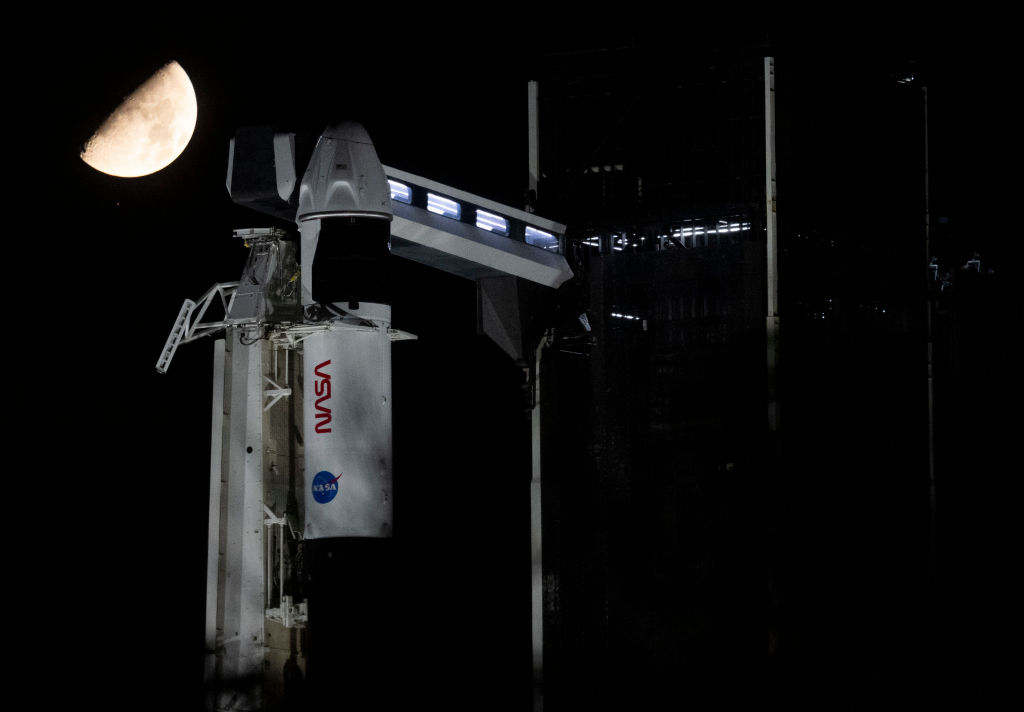
    Sean Duffy, the secretary of transportation whom President Trump appointed last month as temporary leader of NASA, has issued a directive to fast-track efforts to put a nuclear reactor on the moon. “To properly advance this critical technology to be able to support a future lunar economy, high power energy generation on Mars, and to strengthen our national security in space,” he says.

    A small nuclear reactor on the moon is a good idea, but the directive is about more than that: it is about renewing America’s leadership in space exploration that, with its magnificent achievements receding into the past, looks vulnerable.

    Bill Nelson, NASA’s last leader, didn’t mince his words when it came to the new rivals, China. “It is a fact: we’re in a space race.” He warned that Beijing could establish a foothold and try to dominate the most resource-rich locations on the lunar surface – or even shut the United States out. At a Congressional budget hearing he held up a picture of the moon’s crater-pocked south pole which has valuable resources of water ice in its permanently shadowed regions.

    “That is where we are going and where China is going,” he said, “with so many craters it’s a dangerous place to land. My concern is if China were to get there first and say this is our territory, you stay out.”

    According to the 1967 Outer Space Treaty nobody can lay claim to the moon, but if you place a nuclear reactor on its surface, you can get around that rule. This is why Mr Duffy says, “it is imperative the agency move quickly.” He cites plans by China and Russia to put a reactor on the moon by the mid-2030s as part of a partnership to build a base there. If they were first, China and Russia “could potentially declare a keep-out zone” that would inhibit what the United States could do there.

    Duffy stated that the reactor will be required to generate at least 100 kilowatts of electrical power – enough for about 80 households – and be ready to launch in late 2029. Experts, however, think that’s not feasible. Living on the moon is all about power. For a few days batteries will do but for longer you will need solar and nuclear power. Both NASA and China’s plans for a moonbase in the 2030s focus on the south polar region, where the sun is never high over the horizon and the depths of some craters have permanent shadows.

    In these regions there are certain crater rims and ridges where the sun shines almost all the time making them valuable sites for solar power and the most important regions on the moon. The plan would be to set down a placeholder nuclear reactor and then declare an exclusion zone.

    However, the US return to the moon is increasingly a mess. The first landing under the Artemis programme is scheduled for 2027, but no one expects it to be met. Essential components – including SpaceX’s Starship lunar lander – have failed and will need a sustained record of success before any thought is given to trusting them with the lives of astronauts. The other moon return components, the Space Launch System rocket and the Orion crew capsule that NASA has been working on for more than a decade, are also in trouble. They are expensive, face technical difficulties and are way behind schedule.

    At the same time China has said it intends to put its own astronauts on the Moon by 2030, possibly sooner, and prospect the resources there. Will China win the next space race? Space is important to China, “To explore the vast cosmos, develop the space industry and build China into a space power is our eternal dream,” said President Xi Jinping, “the space dream is part of the dream to make China stronger.” Space has excited China’s growing middle class in a way that has not happened to its great rival – the United States – since the heady days of the race to the Moon against the Soviet Union.

    China seeks dominance in the third space age. The first space age ended with the fall of the USSR in 1991. The second space age was again dominated by governments and space stations but with a growing number of other countries. The third began about a decade ago when Elon Musk’s SpaceX reused a core booster rocket. Now there are more countries than ever involved in space and a growing number of commercial companies. It’s never been busier, over the next decade there are more than a hundred planned missions, crewed and uncrewed, to the Moon.

    In retrospect the first two space ages look simple as the United States and the USSR generally stayed out of each other’s way. Now space is so important to society, national defense and pride that it is once again a source of tension.

    Neither side can get their small nuclear reactors onto the lunar surface soon enough.