Tag: Benjamin Netanyahu

  • Israel, you’ve gone too far

    Israel, you’ve gone too far

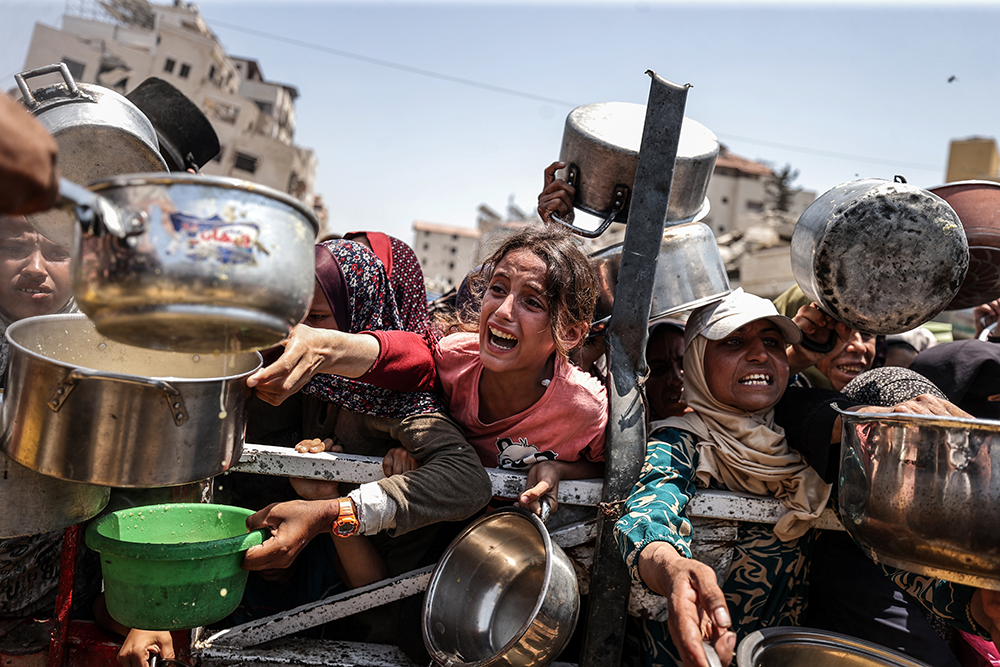
    If any other country in the Middle East had behaved as monstrously as Israel has in recent weeks, the jets would be lined up on our runways ready to do a bit of performative bombing. Never mind BDS (boycott, divestment and sanctions) and diplomatic pressure. I mention this because those of us who support Israel, and have done so largely uncritically since October 7 2023, need the scales to fall from our eyes a little – for the good of Israel, as well as the good of those starving Palestinians.

    I have been to Israel many times, as a journalist, as a holiday-maker, as a friend. I accept without demurral the argument that it is the region’s only democracy – and a liberal democracy at that – surrounded on all sides by authoritarian failed states which wish to see it wiped from the face of the Earth. I subscribe to the notion, too, that if Palestine got what Palestine wants – from the river to the sea and all that vainglorious spite – then they would turn one of the most remarkable countries in the world into a variant of Somalia within about six months (if that), no matter how much money its gullible white liberal well-wishers poured into the place. I have an absolute lack of respect for the impoverished Arab countries that are governed, in the main, by bloodthirsty and intellectually challenged religious maniacs, just as I have an absolute lack of respect for the rich Arab countries that were lucky enough to find a reservoir of oil in their sandpits and have created odious totalitarian slave states as a consequence.

    This may be unfair, but I have the distinct feeling that the Arab culture, when allied to Islam, makes for a uniquely toxic mindset; one fueled by absolutism, hatred and a disrespect for human life. I despise the feral savages of Hamas and was wholly in support of Israel’s incursion into Gaza, even if, at the time, I thought it might be more useful to begin by lobbing a few missiles at Tehran. Why not target the organ grinder rather than its imbecilic monkeys? Equally, I have a fierce loathing of the Keffiyeh Klan, the deluded legions of affluent western liberals who have embraced anti-Semitism with gusto and when asked to identify the sins of the world have only one answer.

    In short, I am instinctively, politically, morally and pragmatically on the side of Israel. I do not wish our country to recognize Palestine as a sovereign state (and my Prime Minister Keir Starmer’s decision to do so is a crass genuflection to his idiot backbenchers. Just what is it you are recognizing, you abject little man?). Nor do I think, pace Starmer, that Palestinians have “an inalienable right” to independent statehood. Just to press the point home, I believe that from the Maghreb to the Levant and then eastwards, over those vast dunes, into what was once much better off when it was called Persia, corrupt and vindictive regimes govern a corrupt and vindictive culture, one that is responsible for much of the misery in the world. Israel, then, is an oasis – which is why we cannot afford to allow it to pollute its own waters. And that seems very much like what it is doing right now.

    If you are already howling that I have swallowed Hamas propaganda, and that either it is Hamas who is stopping the aid getting through or that the far-from-starving Palestinians are tucking into three square meals per day, eggs Benedict, shrimp étouffée, bananas Foster and so on, then you are laboring under a delusion. If virtually every non-aligned observer in the world, including the President of the USA, believes that the people of Gaza are starving to death and Israel is primarily responsible, then that’s good enough for me, frankly.

    Of course Hamas has looted aid convoys and of course it lies to the press and the press is often far too quick to report what it says as being the truth. But that does not alter the fact that people – largely blameless people – are dying and that Israel is in large part to blame. Of course this conflict has, in the West, become hideously polarized and so it is all too easy simply to continue repeating the mantra that everybody is against Israel and one should believe only what one hears from the mouth of Benjamin Netanyahu and the IDF press office. (Even in that case, Netanyahu accepts that there are several areas where assistance has not made it through.) But if you sign up to that credo, you are morally lost. We have to form opinions based upon the evidence that is put before us, not have them devolve from partisan loyalties, no matter how well-founded those loyalties might be.

    It has to be said that the United Nations should be held primarily responsible for the partisan nature of the debate. Supposedly neutral, it has vilified Israel at every turn, just as in the past 20 years it has entertained resolution after resolution condemning Israel while ignoring every other transgression which occurs anywhere else on Earth. It came as no surprise to discover that Hamas terrorists were actively involved in UN programs. As soon as that was revealed, the awful secretary-general, Antonio Guterres, should have resigned. Meanwhile, we should take our leave of an organization which cleaves to the palpably stupid view that the wrongs of the world are the consequence of colonialism, except when those wrongs are committed by Israel. It is very far from being a force for good. Instead, it has become a force for disseminating demonstrably absurd post-Marxist delusions.

    I do not have a solution to the crisis. Frankly, Donald Trump’s idea of turning the Gaza Strip into a kind of Las Vegas, except with falafel in place of T-bone steak, has much to commend it, but that simulacrum of Sodom should not be built over the bodies of dead children. We support Israel because of its erudition and its strength but most of all because it has decency. Had decency. Please let it get that decency back.


  • A chat with the Princess of Iran

    A chat with the Princess of Iran

    The Princess of Iran is casual over email. Noor Pahlavi, the 33-year-old eldest daughter of Iran’s Crown Prince in exile, Reza Pahlavi, is American-born, a potential heir to the Iranian throne and ready for regime change in the Middle East.

    “Hi it’s been a crazy couple of weeks,” she wrote me a few days after the US plopped some 400,000 pounds of bombs on the Islamic Republic’s nuclear sites. That same week, Reza began to appear across Western media, calling for rebellion within Iran and support from without: “This is our Berlin Wall moment.”

    Reza is the son of the last Shah of Iran. His family has become a symbol of a Persian, pre-Islamist Iran, and Reza casts himself as the transitory figure to lead the country into a more liberal post-regime future. Whether that future involves a republic or a restoration of the constitutional monarchy must be left up to the people, he consistently says. Should they choose the latter, he has self-effacingly suggested he would accept the responsibility.

    This means that Noor, an impeccably styled New Yorker who works in venture capital, has a shot at the throne. In fact, following Reza’s reign, she may be the most viable successor. This raises a question: is she simply an American businesswoman, or is she a future empress?

    The rules for the Persian line of succession are messy. The most detailed potential source of guidance comes from Iran’s pre-Revolution constitution, which declared that the Shah must be succeeded by his closest male heir. But Reza has only three daughters. The closest thing he has to a male heir is his nephew, Keykhosrow Jahanbani – a man about whom zero public information seems to exist. But Keykhosrow is partially descended from the family that the Pahlavis toppled to take the throne, the Qajar, and a caveat in the constitution forbids a Qajar from ever holding power again. So this 50-something-year-old dispossessed royal, wherever he is, doesn’t have a chance. That leaves us with the Pahlavi daughters. The old constitution, according to some Iranians, could permit Reza to nominate one of these three as heir.

    As for Noor: the State Department couldn’t dream up a more ideal Iranian royal. She was born in DC, raised in Maryland’s suburbs, graduated from Georgetown University (magna cum laude) in psychology and is involved in a variety of human-rights philanthropy networks. The Pahlavi dynasty’s lineage is Muslim, but the women are certainly not the hijab-wearing type. On the contrary: Noor is one of New York’s more glamorous denizens; She pops up at the Hamptons and galas in designer gowns and runs in a designer crowd, and the Arabian editions of Vogue and Harper’s Bazaar play up her blending of Persian fashion with Western styles at events in New York and Paris. Her allure has become a symbol to Iranians in exile of the banished Persian empire’s wealth and luster.

    Noor’s idea of post-regime Iran combines that fragrant vision of Persia with something that sounds an awful lot like liberalism. She wants an Iran “where Persian culture is celebrated rather than washed away” and one “where citizens can love who they want, practice whatever religion they want.” She says the regime is “weaker than it’s ever been” and bemoans “outside forces” keeping it on life support.

    But whether she sees herself leading that nation is a trickier question. Should the regime fall, I ask her, would she return to Iran?

    “I personally would love to spend time in Iran and help see the Iran Prosperity Project, which my dad and many others have been working on, come to fruition,” she tells me. The answer doesn’t exactly betray ambitions for lifelong dominion, and at no point in our correspondence did she indicate plans to remain in Iran long-term. If she were harboring regal ambitions, you’d expect her to take on a more public-facing political role than she has – the jump from venture-capital principal to princess isn’t small.

    What about her siblings, then? The second daughter, Iman, works in finance as well. She maintains a lower public profile than her older sister, but she brought Reza his first son-in-law, Bradley Sherman, a Chicago-born, Jewish New Yorker. This marriage may have inquisitive minds asking an intriguing question: could an American Jew be the future leader of Iran?

    No, probably not. But Dick Cheney can dream. Historically, Iranians haven’t accepted rulers of non-Iranian lineage. But the marriage – a glitzy Parisian party earlier this year – shows just how starkly the family contrasts with the Islamic Republic. If the wedding had taken place in Tehran, it’d be a death sentence for the couple.

    The connections with the Jewish people are political as well as familial: in 2023, Reza accepted an invitation from Benjamin Netanyahu to visit Israel, where he prayed at the Western Wall. Add to this the fact that he saw Israel’s bombardment of Iran as a springboard for regime change in the country, and it certainly appears that he and Bibi are at least tenuous allies.

    Iman, however, rarely appears at such political events and is less visibly involved in her father’s campaigning. She appears basically Americanized and does not play up her royalty in any public way – Iranians familiar with the family say she was raised as an American, not a Persian queen in the wings.

    Same goes for the youngest daughter, Farah, who attends the University of Michigan and seems to be living an essentially American youth, complete with summer internships and UMich vs. Ohio State football games. (If she were handed the throne, you have to wonder whether Buckeye fans would side with ousted ayatollah.) But, as with Iman, Farah’s upbringing doesn’t seem designed to prepare her for monarchy.

    All of this poses a problem for Reza, should the Iranian people choose to restore his dynasty. He and his wife, now empty-nesters, recently sold their Maryland home (listed for $3 million), and they seem to spend much of their time in Paris, where Reza’s elderly mother lives. Within Iran, there’s definite nostalgia for the Pahlavis and hope for their return: Reza’s face appears at protests across the country. But even the Iranians yearning for his family’s return must recognize its improbability. And it’s unclear how this royal line – absent from its homeland for nearly 50 years and thoroughly Americanized – can survive its patriotic patriarch’s death. This explains in part why some in the Iranian dissident movement look to leaders other than Reza, such as the journalist Masih Alinejad and the lawyer Nasrin Sotudeh, who still lives in Iran. Homesick, patriotic, glamorous – the Pahlavis may one day return to Iran. But their exile from the life their family once lived may not. 

  • What does Trump really want in Gaza?

    What does Trump really want in Gaza?

    UK Prime Minister Keir Starmer, French President Emmanuel Macron and the rest of Europe’s leaders are clear about what they want to see in Gaza: an immediate ceasefire, the release of the 50 remaining hostages in Hamas’s grasp, an acceleration of aid supplies and an end to a nearly two-year war that has turned the coastal enclave into a real-life version of Dante’s Inferno. Macron went one step further several days ago, announcing that France will recognize an independent Palestinian state at next month’s UN General Assembly meetings in New York. Starmer, under pressure from Labour backbenchers, is moving in a similar, albeit more conditional, direction. 

    Compare this to President Trump, who often has trouble articulating what US policy goals in Gaza are and what he actually envisions happening there. 

    The confusion started weeks into his second term, when Trump, hosting Israeli Prime Minister Benjamin Netanyahu at the White House, shocked the world by telling everybody that his grand plan for the war-shattered Palestinian territory was to expel the roughly two million Palestinians who lived there to make room for a bunch of resorts and spas. The Trump administration insisted that this plan – if you could call it that – was based the president’s humanitarian motives. It was simply too dangerous and chaotic for Palestinians to continue living in Gaza, the White House said. 

    It didn’t take long before Trump’s idea collapsed. Palestinians were universally opposed to the prospect of what would be a forced dislocation. Arab states like Egypt and Jordan, who would be relied on to take in the bulk of the Palestinians, vocally denounced it. The Arab League proposed an alternative that would keep the population in select areas of Gaza temporarily to buy time for a massive rebuilding to the tune of $53 billion. As the months went by, Trump largely moved on, claiming credit for compelling the Arab world to offer up their own ideas.

    Then, in March, Trump green-lit Netanyahu’s decision to resume the war after a six-week truce suspended hostilities with Hamas. That was the same truce that then-President Elect Trump vocally supported, and which his own envoy, Steve Witkoff, helped broker back in January. The ceasefire bought some quiet in Gaza, paved the way for a partial release of hostages and provided time for the two parties to negotiate a long-lasting end to the conflict. Netanyahu, however, was never particularly enthralled with the ceasefire, likely only signed on the dotted line because Trump insisted on his cooperation and believed – accurately – that Washington would eventually support a return to war. Whether this was a bid by Trump to increase the pressure on Hamas to sign a deal on Israel’s terms or due to frustration with the entire diplomatic process playing out at the time was unclear.

    Trump’s twists and turns on Gaza have only gotten more feverish since then. On some days, he appears willing to buck Israel, such as when he authorized Adam Boehler, his hostage envoy, to negotiate directly with Hamas in an attempt to get the last American hostage out of the enclave (it worked; Edan Alexander returned home in May). On other days, he doesn’t mention Gaza at all, viewing it as Israel’s problem to solve. Then a week passes and Trump sounds awfully like Netanyahu, as if he had a metamorphosis in his sleep, telling the Israel Defense Forces to “finish the job” and egging on the Israelis to push for a military solution to Hamas that simply doesn’t exist.

    This week, Trump sounds quite different, favoring his humanitarian side yet again. Asked whether he agreed with Netanyahu that there was no starvation in Gaza, the president said no and reiterated that everybody needed to step up – including the Israelis – to ensure food got into the area. “We can save a lot of people, I mean some of those kids,” Trump remarked. “That’s real starvation; I see it and you can’t fake that. So we’re going to be even more involved.” Even so, Trump largely blamed Hamas for stealing the humanitarian shipments, this despite the IDF’s own officers acknowledging in an internal assessment that evidence for aid diversion is lacking.

    All of this unleashes a swirl of questions, none of which we have answers too. Indeed, it’s likely Trump doesn’t have answers for them either. And that’s a big part of the problem.

    First and foremost, is Trump really committed to becoming the so-called peacemaker he packaged himself to be on the campaign trail? Right now, at least with respect to Gaza, it doesn’t look like it. He says one thing and does another. He castigates Israel for the humanitarian abomination that is unfolding under its watch but nevertheless continues to implement a US policy that defers to Netanyahu, who has demonstrated no interest in a peace agreement short of an outright surrender by Hamas. This is especially surprising because Trump knows he possesses leverage over the Israeli premier; it was only a month ago when Trump dressed down Israel in front of the cameras for threatening the ceasefire with Iran he announced hours earlier. The Israelis got the angry message, and the ceasefire has held to the present day. Is Gaza some kind of exception to the rule in Trump’s mind? 

    Another question we should ask: is Trump content to write-off Gaza as a problem Israel and the Arab world have to manage on their own? This would be a reasonable position to take; the United States, after all, doesn’t have core interests at stake in Gaza like Saudi Arabia, Jordan, Egypt, Lebanon and Israel do. The last thing Washington should be doing is plunging deeper into the Gaza muck. Yet time and again, Trump is content with following Netanyahu’s lead on this issue, to the point where one genuinely wonders whether he understands that American and Israeli interests aren’t completely aligned.  

    Trump doesn’t know what he wants. This serves Netanyahu’s strategy just fine.