Tag: Europe

  • Father Ted and Havel’s Greengrocer

    A softer version of totalitarianism has been gnawing its way through the British body politic like a cancer for many years now. With the Graham Linehan (creator of the classic sitcom Father Ted) arrest at London’s Heathrow Airport this week, it seems to have metastasized into something entirely malignant. If Linehan’s arrest isn’t a bright red line for Britain, what on earth would be?

    A decade ago, living in the US at the dawn of the Great Awokening, I began hearing from older people who had fled to America from the Soviet bloc, seeking freedom. They were telling me that the things they were starting to see in their adopted country reminded them of what they had left behind. 

    They spoke of people having to watch their words for fear that they would step on an invisible land mine, and put their jobs and businesses at risk. They talked about the abandonment of classical liberal values, and the adoption of “social justice” norms that judged people based on group identity. They witnessed ideological mobs intimidating people into silence, and institutional elites changing language to fit a utopian leftist paradigm.

    I found this hard to grasp at first. If this was totalitarianism, where were the gulags? Where was Big Brother? This was precisely the problem, I came to understand. The fact that relative to life in the Soviet bloc, the West remained free and prosperous helped conceal the totalitarian threat. That, and the fact that this new ideology presented itself in largely therapeutic terms: as a program not only for achieving social justice, but of easing the burden of groups suffering the pain of marginalization.

    Yet the more conversations I had with these people, the more I experienced their anger at the inability of Americans to comprehend what was happening. Said one professor in the Midwest, “I was born and raised in the Soviet Union, and I’m frankly stunned by how similar some of these developments are to the way Soviet propaganda operated.”

    Another émigré professor, this one from Czechoslovakia, was equally blunt. He told me that he began noticing a shift even further back in time: friends would lower their voices and look over their shoulders when expressing conservative views. When he expressed his conservative beliefs in a normal tone of voice, the Americans would start to fidget and constantly scan the room to see who might be listening.

    “I grew up like this,” he tells me, “but it was not supposed to be happening here.”

    My conceptual breakthrough happened when I realized that growing up during the Cold War, I had come to imagine totalitarianism according to George Orwell’s novel Nineteen Eighty-Four. In fact, the emerging therapeutic totalitarianism in the West today is far more like Aldous Huxley’s model in Brave New World. The outcome is the same: the gradual erosion of liberty and individuality, and the seizing of power by ideological fanatics who asserted the power to alter reality. By the time the book I wrote about this phenomenon, Live Not By Lies, was published in 2020, wokeness had conquered US institutions, and one could be sent to the unemployment line for refusing, say, to agree that men could be women. 

    For all the madness that ensued, no American had to fear arrest for stating anti-woke opinions, because we have a constitutional right to free speech guaranteed by the First Amendment. This is why the fate of Graham Linehan, like the fate of so many lesser known UK dissidents from the ruling ideology, could not happen in America. But it can happen in Britain, and is happening. The spectacle of English patriots being taken into custody for flying the Union Jack, on grounds that it might cause distress to foreigners, many of whom came into the country illegally, reveals the absolute state of the tyranny now reigning in once-free Britain.

    Yet if the Soviet bloc emigres reveal to us the truth of what was and is overtaking the West, those who stayed behind tell us how to resist and overcome it. In researching Live Not By Lies – the title is taken from a Solzhenitsyn communique to his Soviet followers, on the eve of his exile – I traveled through the former communist lands to ask ex-dissidents for their advice.

    The core lesson: you must be willing to suffer for the sake of the truth. Those in power count on a population cowed by fear. Nearly everyone is willing to live under the yoke of ideological lies, because they are understandably afraid of what will happen to them if they don’t. Those brave souls who dare to tell the truth, and who are willing to suffer for it, hold the key to society’s liberation.

    Czech dissident leader Vaclav Havel explained why in his famous Parable of the Greengrocer, from his 1977 book-length essay, The Power Of The Powerless. Imagine, he said, a simple greengrocer in a communist city, in whose shop window hangs a sign saying, “Workers Of The World, Unite!” He doesn’t believe it, nor do any of the other shopkeepers who display the same sign. They do it out of fearful conformity.

    One day, the shopkeeper decides he won’t lie anymore. He removes the sign. What happens next? He is arrested. The state confiscates his business. He must endure punishment, including loss of privileges, and becoming a social pariah to his former friends. He pays a significant price.

    But what does he gain? For one, he gains self-respect, for having defending his own integrity. For another, he demonstrates to society that it is possible to live in truth, provided you are willing to suffer for it. If enough people within that oppressed society take courage from his example, and accept the challenge of suffering for truth, then eventually the entire system built on lies will crumble.

    Solzhenitsyn said something similar in his 1974 “Live Not By Lies” message. It is not possible to go to Red Square and shout, “Down with communism!” he said. But that does not mean ordinary people are without means of resistance. He recommended practical everyday means of refusing to cooperate with the official lies. 

    “Our way must be: never knowingly support lies!” he wrote. You may not have the strength to stand up in public and say what you really believe, but you can at least refuse to affirm what you do not believe. If we must live under the dictatorship of lies, the writer said, then our response must be: “Let their rule hold not through me!”

    Graham Linehan is a comedian and actor, but he is also Havel’s Greengrocer. So is J.K. Rowling – and though it must be conceded that it’s easier to live not by lies if you are sitting on a mountain of cash from book sales, she has nevertheless become a total pariah to many of her peers and admirers, because she would not bow her head to the misogynistic lies of gender ideology.

    The British people are being put through an extraordinary test now by their government, their media, and all the institutions of the ruling class. They are being forced to endure humiliation, criminality, displacement, and the virtual expropriation of their land, with its ancient liberties, by an ideologically captured ruling class. 

    Earlier this year, I was in London for a screening of the documentary film series Angel Studios made from Live Not By Lies. I had seen the film many times before, but watching it in the British capital, it struck me how many of the people in the documentary are British people, talking about actual existing tyranny in Britain today. 

    They are people like Isabel Vaughan-Spruce, the Christian pro-life campaigner shown on camera being arrested for praying inside her head near an abortion clinic. Vaughan-Spruce is also Havel’s Greengrocer – a brave person who possessed enough self-respect and love of truth to suffer arrest, multiple times, for thoughtcrime.

    The older men and women of Eastern Europe know what the British are suffering. The fact that British totalitarianism is softer than its Soviet antecedent makes it no less totalitarian in spirit. A former Soviet citizen now living in America told me what is coming for us if we don’t derail the totalitarian train now.

    “You will not be able to predict what will be held against you tomorrow,” she warned. “You have no idea what completely normal thing you do today, or say today, will be used against you to destroy you. This is what people in the Soviet Union saw. We know how this works.”

    Then as now, there remains only one sure antidote to it: ordinary citizens realizing that enough is enough, and at personal risk to themselves, choosing to live not by lies. This is the hope that Solzhenitsyn offered to his people in 1974 – and the challenge.

  • As an American Anglophile, I can’t defend Britain

    For much of my career, beginning as a foreign adviser to the U.S. Congress, I have proudly stood as one of America’s strongest advocates for Britain. 

    I have defended her history, her institutions and her role as the original home of liberty. 

    I have championed the UK in forums throughout the US and in publications across the globe, reminding audiences that our shared values of liberty and democracy, bequeathed by our mother, England, form the bedrock of transatlantic strength. 

    Today, for the first time, I find Britain indefensible. The affection and historical respect remains. The confidence is gone.  

    Britain now prosecutes her own citizens not for violence or treason but for words. Lucy Connolly was sentenced to 31 months in prison for a tweet in the wake of the Southport tragedy; she served ten. 

    Her crime was expression, harsh perhaps but still speech. Graham Linehan, the award‑winning creator of Father Ted, was arrested at Heathrow by armed officers with guns for online comments defending women’s spaces. Arrested, by police carrying weapons, for his opinions. 

    This is the country that once gave the world John Stuart Mill.  

    Such cases expose what Britain has become: a two‑tier system of justice. Those branded far‑right, nationalist or “Islamophobic” are prosecuted with zeal. Those spreading incendiary rhetoric from Islamist or minority factions are met with indulgence. The 2024 riots exposed the imbalance in plain sight. Swift punishment for those the state distrusts. Hesitation and leniency for those it fears. Law as weapon, not protection.  

    This has not happened by accident. Britain’s institutions have been captured. Its police, judiciary and permanent bureaucracy answer less to the people than to a class of activists embedded at the top. 

    Leading them is a man who knows the law not as a shield for the people but as a sword for ideology: Keir Starmer. Starmer did not merely elevate activist lawyers to high office. He is one. He has built his career knowing how to bend legal frameworks into blunt instruments. Now in Downing Street he deploys those instruments against the liberties Britain once bequeathed the world.  

    A particularly chilling example lies in the push to enshrine a definition of “Islamophobia.” What is presented as tolerance is in practice a new blasphemy law, criminalizing criticism of religion and culture whenever it offends official sensitivities. The land that abolished the Star Chamber is now flirting with prosecuting thought crimes.  

    The suspicion of national pride runs just as deep. During the 2024 riots, Starmer cautioned against using the St George’s Cross or the Union Jack “divisively.” To ordinary Britons these flags are symbols of unity and heritage. To their government they are red flags of extremism. 

    Meanwhile, foreign flags fly freely across London without question. The message is unmistakable: pride in your own country is suspect. Allegiance to any other is acceptable.  

    Immigration policy tells the same story. Labour boasts of progress, yet more than 32,000 asylum seekers remain in taxpayer‑funded hotels at a cost of £2.1 billion a year. Whole communities are expected to accept disruption without complaint, and if they speak out they are branded intolerant. Concerns about security or cohesion are brushed aside as if no decent Briton could possibly hold them.  

    From abroad the shift is impossible to ignore. Elon Musk has called Britain’s censorship Soviet‑style. JD Vance has condemned its crackdown on speech. The US State Department now lists Britain as a country presenting significant risks to free expression. I never imagined America would place Britain alongside nations that treat liberty as a nuisance. That day has come.  

    For those of us who have long defended Britain, it is heartbreaking. This is the country whose strong institutions enabled America’s own rise and whose commitment to liberty inspired ours. Yet under its current leadership Britain has stumbled into repression, constraint and fear, where ordinary citizens look over their shoulders before speaking.  

    And still there is a chance for recovery. A counter‑movement exists. Figures such as Nigel Farage, Robert Jenrick, Ben Habib and the Reform UK party speak plainly about borders, free speech and sovereignty. They refuse to accept that patriotism is extremism or that questioning official orthodoxy is hate. For this they are demonized by the governing elite, but for this they are listened to by ordinary citizens who have had enough and are reasserting their national pride as manifested in the tidal wave of Union and St. George flags that have flooded cities throughout the UK through efforts such as Operation Raise the Colors. 

    Britain must decide. It can continue down its present course, where speech is policed, justice is politicised and Starmer’s legal class governs not on behalf of the nation but against it. Or it can remember its own inheritance, trusting its people and restoring freedom as the organizing principle of national life.  

    The world does not need a Britain that jails her patriots. It needs the Britain that once taught us all to be free.

  • Where did it all go so wrong for Britain?

    If I had to summarize, in a word, the mood of Britain in 2025, I’d probably plump for fraught. It’s not just the protests against illegal migrants in hotels, or the apparent collapse of the political parties which have governed us for so long, or the anger for and against free speech.

    There is something in the air that I can’t quite recall having sniffed before, the kind of crackle that might be quite exciting or intriguing if you were standing a little bit further back from it, flicking through the pages of a history book, maybe. But it’s rather different to live through it.

    People like me, and probably you over in America, were socialized in a more stable and reliable world, where everyone and everything muddled along. So we find it very hard to adjust to the return of history with a capital H.

    That lost age on the domestic front in Britain, which lasted from about the end of the miners’ strike in 1985 up to the subprime crunch of 2008, was the era in which we assured ourselves that “things will sort themselves out.” We told ourselves that things would probably turn out fine; there was nothing much you can do about it, after all, so best just to potter along. No one wanted to run about squawking like Chicken Licken, who thought the sky was falling in.

    This complacency was justified, because often – in that curious interregnum, which we mistook for how things were just going to be from now on – things often did sort themselves out, or at least they appeared to.

    How quaint Britain’s big worries of the 1990s now seem

    How quaint Britain’s big worries of the 1990s now seem! Let’s look back thirty years to the big news stories of 1995. Nick Leeson crashed the stately old Barings Bank, a soccer player kung fu kicked a fan at Selhurst Park stadium, pubs stayed open for the first time on Sunday afternoons, and Princess Diana granted TV interviews. Ethnic strife and economic murk were forgotten, things of the past. It’s dizzying to realize that this was the country, presided over by John Major’s slightly hapless Conservative Government, that Tony Blair’s 1997 slogan “things could only get better” came from.

    True, it was often the boring people during boring times who led us to where we are now. The subsequent first term of Tony Blair was also colossally dull, at least on the home front. But under that screen of fog, it ripped up and tore apart centuries of vital constitutional structure. We looked away, to Big Brother and Eminem as much that we rested so blithely upon was smashed up, boringly. Net migration, for example, rose from 48,000 in 1997 to 273,000 in 2007, reflecting the cumulative impact of incredibly tedious policies that nobody looked at. Were the results of that ever likely to just sort themselves out?

    Where are we now? The years since 2008 have been ever more rancorous and turbulent. It’s been tempting to cling on to our illusions, and imagine we will somehow drift back to the age of security. Perhaps we’re imagining it all – after all, we still live (mostly) uneventful lives in an affluent, if retrenching, society.

    But I fear we are just at the start of a return of ferments and upheavals, with our foundations seriously weakened. World politics is slipping back to the age of empires, with the big difference that this time we haven’t got one. We are back in the world of Shakespeare’s history cycles; endless battles, reverses, false hopes, the strange alliances of sworn enemies. It rumbles on and on and on, with the little people tossed about in the tides, grabbing whatever driftwoods of solace that they can.

    And that is not unusual. Crack open any history book. It’s the natural state of things.

    When Keir Starmer’s Labour got in last year, we had a good old laugh at clownish figures like the liberal journalist Otto English, who tweeted tweely that the “quiet” was going to be such a refreshing change. “For the first time in many of our lives, actually Britain looks like a little haven of peace and stability,” said the veteran newsman Andrew Marr on Question Time. He might as well have donned a flashing neon sign reading HOSTAGE TO FORTUNE.

    But. If we are feeling honest, and generous – and I do have occasional twinges of both – those of us of the same generation as such silly people can understand the impulse, their longing to believe in the return of the apparent stillness of our young adulthood (even if it was at least partly illusory).

    Now even Tory-in-name-only Lord Finkelstein is admitting that he’s had his doubts all along, writing in the London Times of the simmering atmosphere of 2025. “People’s failure to live and let live baffles me,” he says. On the immediate level, that sentence terrifies me; that someone so divorced from the basic reality of human beings could have been attached to the Conservative Party. But I understand too, because I also come from that world and that lost “family of man, Kumbaya, it’ll be fine” age.

    Believing what is convenient or reassuring rather than what’s true is great, so long as you can afford it. Continuing with it when you can’t is disastrous. For all we know, the Britain of 2025 may look like a paradise to the Britons of 2055. And that’s the scariest thing.

  • Are the walls closing in on Emmanuel Macron?

    Are the walls closing in on Emmanuel Macron?

    French Prime Minister François Bayrou has recalled parliament for a confidence vote on September 9, betting he can outmaneuver a surging protest movement before it paralyzes France. The grassroots “Bloquons tout” campaign, echoing the gilets jaunes (“Yellow vests”) of 2018-19 and fueled by the hard left, plans to halt trains, buses, schools, taxis, refineries and ports. It is a general strike in all but name. Bayrou’s move aims to reassert control before chaos takes hold, but with the vote just two days before the open-ended strike begins, failure could topple his government and ignite a broader assault on President Macron’s authority. This morning, Jean-Luc Mélenchon’s hard-left La France Insoumise (LFI) announced its plans to file a motion of destitution against Macron on September 23 if Bayrou falls, raising the stakes further.

    At the heart of this crisis is the economy. France’s debt has blown past 110 percent of GDP and the budget hole for 2025 stands at around $55 billion. Before the summer break, Bayrou proposed the deepest spending cuts in a generation, in a country where public spending accounts for nearly 60 percent of GDP. The unions are furious. The French are addicted to public spending and there’s a deep-seated mentality that the government owes people ever more. Mélenchon has turned the budget battle into a populist crusade against Macron’s “rich man’s government,” rallying the left and calling on supporters to shut the country down unless the cuts are scrapped. Gilets jaunes veterans have been readying to go back on the streets.

    Within minutes of the end of the press conference in Paris at which Bayrou announced the confidence vote, Marine Le Pen’s hard-right National Rally, Jean-Luc Mélenchon’s LFI and others declared they would not support the government. It also appeared yesterday evening that the Socialists were leaning against Bayrou, an immediate slap in the face for him and indirectly for Macron. This morning, Mélenchon escalated the pressure, vowing to push for Macron’s impeachment on September 23 if the vote fails, blaming the president for the crisis rather than Bayrou.

    Bayrou’s move was designed to seize the initiative before the country slides into chaos, but the arithmetic is now completely against him. To survive, he needs 289 votes. His Macron-centrist alliance can deliver barely 165. The consensus yesterday evening among journalists and leading Paris-based analysts is that the government has almost no chance of surviving. Marine Le Pen’s National Rally was the only possible lifeline, and immediately after the announcement they made clear that they would not help Bayrou. A curt statement from the RN said it was “not inclined to support” the government. Bayrou and Macron’s gamble has almost certainly failed. It looks as though Macron and Bayrou completely miscalculated their move.

    Bayrou’s bold move was meant to buy Macron time. But it now threatens to blow up his presidency

    Le Pen no doubt very rapidly concluded that there is no need to save Macron’s prime minister to satisfy her own ambitions. Polls suggest she would emerge from early parliamentary elections as the largest force in the Assembly, even if personally she cannot run. Her party would still, however, fall short of a majority, making her refusal to back Bayrou cost-free and politically advantageous. If the government falls, Macron’s authority erodes further, and the RN’s narrative of “ordinary France versus Parisian elites” hardens. Mélenchon, meanwhile, is actively pushing for Bayrou’s downfall. LFI has seized control of the anti-austerity message and united Socialists, Greens and hard-left radicals behind him. For Mélenchon, an early election offers the chance to turn street anger into parliamentary power.

    Bayrou’s bold move was meant to buy Macron time. But it now threatens to blow up his presidency. If indeed Bayrou loses the confidence vote, Macron will face an impeachment process. He could try to appoint another sacrificial prime minister to preside over austerity and strikes, but no one credible will want the job. He could also call an early election, risking handing power to Mélenchon or leaving the country even more paralyzed. Or he could simply sit tight and let the blockades and market jitters spiral while he waits out the end of his term. If Bayrou falls, Macron may limp on in the Élysée, but the Fifth Republic itself risks a reckoning.

    As Bayrou battles parliament, the markets are signaling that France’s fiscal credibility hangs by a thread. Bond yields are creeping up. Somehow the ratings agencies haven’t yet let things slide. France has held on to its top-tier status long past the point of credibility. Perhaps this is only thanks to the assumption that the country, Europe’s second biggest economy, is too big to fail. But that indulgence has its limits. Come mid-September, when the numbers are on the table and the budget battle begins, a downgrade from the rating agencies seems inevitable. This will damage France and will certainly damage Europe. A downgrade would spike borrowing costs, potentially triggering a broader sell-off in European markets.

    For eight years, Macron’s political brand has rested on him outmaneuvering his opponents and keeping France just stable enough to get by. If the government loses this confidence vote, Macron’s authority breaks. He may cling on in the Élysée, but his presidency will be weakened beyond repair. France risks months of paralysis, street unrest and financial turmoil.

  • Mossad’s secret allies in Operation Wrath of God

    Mossad’s secret allies in Operation Wrath of God

    More than half a century ago Palestinian terrorists stormed the 1972 Munich Olympics, murdering two of the Israeli team and taking another nine hostage. The West German authorities, ill-equipped to deal with such incidents, agreed to fly the terrorists and their hostages to Egypt. Mossad, the Israeli intelligence service, offered to mount a rescue operation. The Germans launched their own, resulting in the deaths of a police officer, four of the seven terrorists and all the hostages.   

    One consequence was the Israeli government’s Operation Wrath of God, a program to assassinate any leaders or planners associated with the massacre. Ten missions were organized in Europe, each signed off by the Israeli prime minister Golda Meir on condition that no innocent bystanders were killed.

    There have been several books about the operation and a 2005 film by Steven Spielberg. Aviva Guttmann’s account does not merely rehearse the stories, though each operation is outlined. Rather, she shows how the security services of European nations cooperated in identifying, monitoring and investigating international terrorists in general and how this aided Mossad in its pursuit of vengeance. 

    Cooperation was via the Club de Berne, an intelligence exchange between eight countries founded in 1969 in response to the growth of international terrorism. Soon expanded to include other countries, among them Israel, it handled communications via encrypted telegrams (which Guttmann calls cables) using the code word Kilowatt. Guttmann found these communications in publicly available Swiss archives. She analyzes each assassination, showing how the exchange of Kilowatt information helped Mossad identify and locate their targets, how the various security services learned about terrorist tactics, such as the recruitment or duping of young European women, and how hitherto unknown plots to murder or hijack were prevented.

    The first assassination was only a month after Munich. Wael Zwaiter, a young Palestinian translator in Rome, returned to his flat to find two men on the stairway leading to his apartment. They shot him 11 times, a bullet for each Munich victim. Journalistic opinion at the time and since concluded that Mossad got the wrong man – a bit-part player at best. But the Kilowatt telegrams show that he had an important logistical role.

    One operation that Mossad very definitely got wrong was in the small Norwegian town of Lillehammer in 1973 when they shot an innocent Moroccan waiter alongside his seven-months pregnant wife. Not only that, but the assassins were caught. Contributing factors to this debacle were an inexperienced, hurriedly assembled team and insufficient research – the poor man was confused with a real terrorist solely on photographic resemblance. Mossad teams generally comprised about 15 people – two to do the killing, two to guard them, two to organize cover and facilities, six to eight to research the target’s routines and movements and two to communicate both within the team and back to Israel.

    Guttmann’s principal concern – oft-repeated – is that European security services “played a vital role in the organization and execution of Operation Wrath of God.” The extent to which they did so knowingly is not always clear, although they could not have failed to know after Lillehammer. There is no doubt, though, that the information they exchanged with Israel (including their own investigations into Mossad killings) facilitated assassinations within their own borders. “One would simply not expect Europeans to help kill Palestinians… Governments… failed in their duty to keep safe all citizens,” Guttmann notes. Her disapproval is evident throughout, though not explicitly stated or argued. This is a pity because the opposite case – whether it can be justifiable to murder those seeking to murder you – is nowadays too prevalent to be dismissed without argument. We witness its effects daily on our screens.

    She concedes, however, that all participants benefitted from the exchange and that Israel was itself a significant contributor.  But in claiming that the various agencies “did not need to respect the same normative considerations as official foreign policy lines” she implies that they acted independently or against their own governments’ policies. On this side of the Channel at least, actions by the intelligence agencies, including exchanges with liaison services, require government approval. MI5 does not simply do what it likes. It is not the case that relying on “foreign intelligence shows… weakness and dependency,” as Guttmann says of Mossad.  Nor are attributing information to “friendly services within the region,” or claiming a source has “direct access,” forms of boasting; they and other formulae are necessary and conventional guides to assessing reports.   

    She is on firmer ground in questioning the effectiveness of targeted killings, as assassinations are now often called. In the short term they can be highly disruptive and satisfy an understandable thirst for revenge; but in the longer term leaders may be succeeded by those with renewed determination and security. Half a century on, the causes that prompted Wrath of God are with us still.

  • Putin’s trap: how Russia plans to split the western alliance

    Though you wouldn’t know from the smiles around the table at the White House this week, a trap has been set by Vladimir Putin designed to split the United States from its European allies. In Washington on Monday, Europe’s leaders, plus Sir Keir Starmer and Volodymyr Zelensky, agreed with Donald Trump that the killing in Ukraine should and can be ended as soon as possible. They lavished praise on Trump for reaching out to the Kremlin, despite having themselves treated Putin as a pariah for the past three years. And they even enthusiastically applauded the notion of security guarantees similar to NATO’s Article 5 “all-for-one and one-for-all” mutual defense clause as a way to safeguard Ukraine’s borders in the future.

    But behind every one of these apparently promising areas of agreement lurks a fatal misunderstanding of the intentions of the one man in the world who has the power to make the war stop – Putin.

    Let us not forget that the Washington talks were based on Trump and his team’s highly optimistic interpretation of what Putin had agreed to in Anchorage, Alaska. That team included precisely zero Russia experts capable of reading the hidden meaning behind Putin’s weasel words. Steve Witkoff, Trump’s leading point man on Kremlin affairs, is a real estate lawyer with no experience of diplomacy. And the last time that Trump himself spoke in person to Putin, in Helsinki in 2018, he was quickly persuaded by his Russian counterpart that Kremlin election interference was all just a big hoax.

    One of Putin’s great skills is appearing to be measured and constructive when in fact he’s being insincere, intransigent or plain threatening. Take his innocuous-sounding remarks at the post-summit Anchorage press conference. In order to achieve a long-term settlement in Ukraine, Putin said: “We need to eliminate all the primary root causes of the conflict.” Decoded, that is a clear reference to Putin’s historical thesis that Ukraine is an invented country that has been used for centuries by Russia’s enemies as a base from which to attack Moscow – and in his view remains so today. He called, apparently reasonably, for Trump to “consider all the legitimate concerns of Russia and reinstate a just balance of security in Europe and in the world on the whole.” But to Putin that “just balance” means a withdrawal of most Nato forces from countries along Russia’s borders.

    The remark that has caused most excitement among European leaders was Putin’s assurance that “naturally we are prepared to work on” Trump’s suggestion that “the security of Ukraine should be secured.” Trump and his team came away from Anchorage in the belief that Putin had acquiesced to western security guarantees – and Secretary of State Marco Rubio and Witkoff himself have been touting that as a major breakthrough.

    In truth it’s no such thing. Security guarantees were discussed at length during the abortive peace talks between Russia and Ukraine in Istanbul in April 2022, and detailed plans of what those guarantees might look like were included in three drafts of a peace deal that was never signed. Back then Russia, absurdly, tried to insist on itself being a guarantor of Ukraine’s security as in the Budapest Memorandum of 1994, and on having a veto over any intervention. But that point was never resolved after Europe promised Ukraine it could win the war in the field rather than compromise at the negotiating table.

    Trump was caught on a hot mic in the White House telling his European guests: “I think Putin wants to make a deal. You understand that? As crazy as it sounds!” In fact, it doesn’t sound crazy at all – Putin undoubtedly does want to make a deal. But what Trump has not yet grasped is that Putin wants to make it on his own terms.

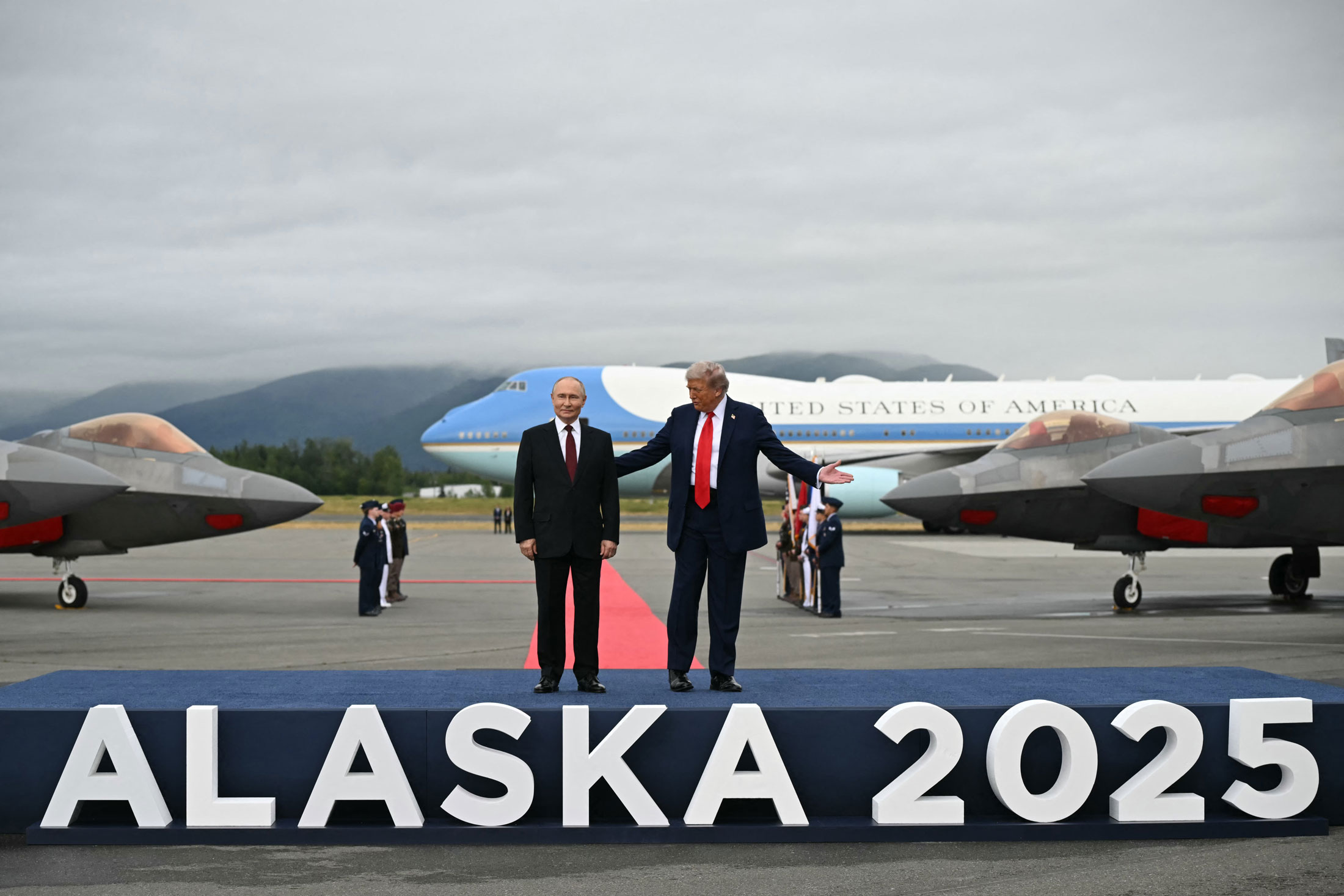
    Putin and Trump in Anchorage, Alaska, August 15 2025 (Getty)

    And therein lies Putin’s trap. His plan for the endgame in the war is to do everything in his power to convince Trump – his new best buddy and business partner – that he is behaving reasonably, making concessions, bending over backwards to keep dialogue open. At the same time, he will lay down a series of conditions that Zelensky will refuse to accept.

    At which point Europe will be forced to choose between heroic and principled words about refusing to compromise Ukraine’s sovereignty – which would mean supporting Ukraine’s war effort without US assistance – and an ignoble compromise with the Kremlin.

    Take the “land swaps” which Trump has mentioned so many times. In reality, that’s a reference to Putin’s demand that Kyiv surrender control of the third of Donetsk and a small sliver of Luhansk provinces that he has so far failed to take. In exchange, Putin proposes to withdraw from small chunks of Sumy and Kharkiv provinces that he occupies, and also drop his claim on the remainder of Kherson and Zaporizhia. Effectively he’s demanding some very valuable and heavily defended real estate – including the fortress cities of Kramatorsk, Sloviansk and Konstantinovka – in exchange for land that he has not yet been able to conquer.

    Amazingly, Trump has reportedly agreed that this is a reasonable price for Kyiv to pay for peace. Yet Zelensky cannot surrender this territory either politically or practically. Tens of thousands of Ukrainians have died defending those positions, and it’s possible that his troops would refuse orders to withdraw even if he tried to make them. And Ukraine’s ultranationalists would be literally up in arms over such a betrayal, making Ukraine instantly ungovernable.

    The brutal truth is that for the past three years the Europeans have been lying to Ukraine and themselves

    Putin has laid a similar political minefield for Zelensky and his European allies over legal recognition of the territories he has occupied. Again, Trump is reportedly in favor of forcing Kyiv to de jure recognize Crimea as Russian, while leaving the rest of occupied Ukraine in a legal limbo. Again, such a humiliation would be political death for any Ukrainian leader who made it and incur the armed wrath of legions of angry, heavily armed, well-organized and politically vocal veterans groups such as Azov.

    Putin has dozens more such humiliations in store for Kyiv and its backers before he is ready to end his assault on Ukraine. On the economic front, his wish list includes the lifting of sanctions, a resumption of flights and the unfreezing of billions of Central Bank assets. On the geopolitical front, he wants a constitutional guarantee that Ukraine will never join Nato and restrictions on weapons and troops NATO can deploy to border countries such as the Baltic states, Romania and Poland, as well as an assurance of no more Nato eastward expansion to Moldova and Georgia.

    In Ukraine, he would demand the enshrinement of Russian as an official language, granting Russian-speaking regions the right to their own education and examinations, and the restoration of the properties of the wing of the Ukrainian Orthodox Church which remains loyal to the Moscow Patriarchate. He would also insist on scrapping Ukrainian laws banning Soviet symbols and suppressing the memory of Soviet-era war heroes and cultural figures, in addition to allowing towns to restore demolished monuments to Russian czars and writers. Putin would have Kyiv un-ban Russian-language radio and TV stations and newspapers, as well as political parties sympathetic to Moscow, and unfreeze the assets of the 5,000 people sanctioned for being pro-Russian by Ukrainian presidential decree.

    That’s to mention just the top dozen of Putin’s demands. Some he will get, some he won’t. But we can be sure that he will push for all of them, and more.

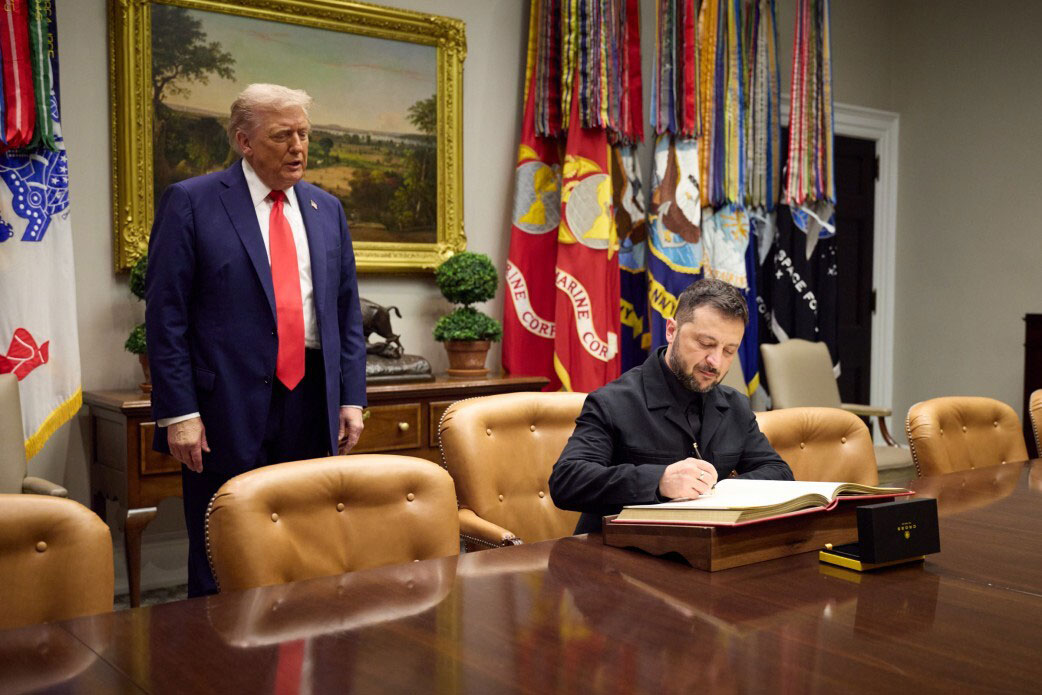
    Zelensky signs the guest book following his meeting with Trump in Washington, August 19, 2025 (Getty)

    The question for Europe is stark: what will they do if and when Ukraine refuses to submit? If Trump is fine about surrendering the remainder of Donbas, we can be sure that he’s not likely to take a stand against Putin over such details as statues of Pushkin or the rights of the suppressed Russian Church (a major grievance for religious-minded MAGA supporters).

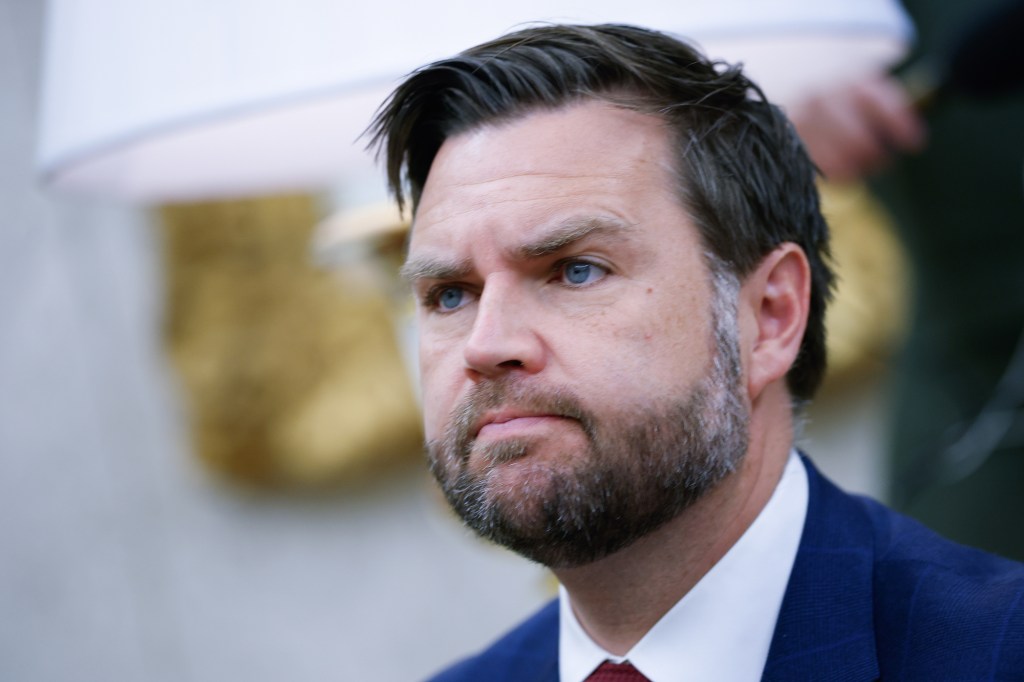
    J.D. Vance has made his position on Europe clear. “This is your neck of the woods… you guys have got to step up and take a bigger role in this thing,” the Vice President said earlier this month. “If you care so much about this conflict you should be willing to [fund] this war yourself.” The US, for its part, “wants to bring about a peaceful settlement to this thing, we want to stop the killing,” he added. Trump has repeatedly promised to do his best to play the peacemaker. But if the Ukrainians and their allies don’t wish to agree, Washington will walk away. “Keep fighting,” wrote Trump last week. “Good luck.”

    The brutal truth is that for the past three years the Europeans have been lying to Ukraine and themselves. In the spring of 2022, Europe, led by Boris Johnson, encouraged Zelensky to fight on and promised Ukraine “as much support as they need for as long as they need it.” Ukraine kept its part of the bargain, and with the help of hundreds of billions in military and financial aid pushed Putin’s far larger army back from over half of the territory it once occupied.

    That’s an extraordinary achievement. But it hasn’t been enough to win. And by this point many of Kyiv’s most passionate defenders in Europe are starting to acknowledge that there is little military or political point in fighting on. Others, like the Baltic nations, disagree.

    For those allies who believe that it’s time to call it a day, the main point that remains to be decided is how Ukraine’s reduced new borders can be protected in a way that Putin will not dare to challenge. Starmer and Emmanuel Macron’s idea of putting NATO boots on the ground is foolish and misunderstands that the basis of Putin’s paranoid logic in starting the war was to avoid precisely that outcome.

    The “NATO Article 5-like” security guarantees of which Italy’s Giorgia Meloni spoke in Washington this week (albeit accompanied by extravagant air quotes) sound formidable. The problem is that security guarantees have to be credible to work. And will Putin believe that Starmer or Macron will send their voters’ sons to fight over Donbas, when they have already said that their proposed minuscule peacekeeping force will be “backstopped” by US air power?

    Of more practical use is a proposal to create a network of air defences made of Patriot batteries and drones along the length of Ukraine’s border, funded by Europe. That’s what Ukraine’s reported offer to buy $100 billion in US weaponry is about, and includes a staggering $50 billion to develop new-generation drones in partnership with the world’s biggest experts in Ukraine itself.

    Ben Wallace, the former UK defense secretary, has called Trump the “appeaser-in-chief” and warned that the peace process could be “another Munich 1938,” when independent Czechoslovakia was sacrificed to Hitlerite aggression. But that is a bad analogy. At Munich, Sir Neville Chamberlain failed to avert war. Today’s Ukraine, with western help, has failed to win a war. But neither have they lost. Instead, like Finland in 1941, they have heroically fought a much stronger adversary to a halt and saved 80 percent of their country and now face a bloody, attritional stalemate.

    Putin would like nothing more than for Europe to encourage Ukraine to fight on, and to lose even more of their land and independence. The question Ukraine’s friends must ask themselves today is whether it’s time to choose an unjust peace over a righteous but never-ending war.

  • Can Friedrich Merz save Germany from irrelevancy?

    Can Friedrich Merz save Germany from irrelevancy?

    Friedrich Merz arrived in Washington this week alongside Europe’s most senior leaders, ostensibly to coordinate the continent’s response to Trump’s Ukraine designs. Here was Germany’s moment to demonstrate the leadership it perpetually claims to seek – a chance to shape the conversation that will determine Europe’s security architecture for years to come. Instead, before the Chancellor could even present his case to Americans, his own foreign minister Johann Wadephul delivered a masterclass in diplomatic self-sabotage from Berlin.

    Germany must play “an important role” in any future peacekeeping mission in Ukraine, declared the CDU politician, before categorically ruling out German soldiers on Ukrainian soil. “That would presumably overwhelm us,” he explained with the sort of defeatist precision that has become his government’s signature. In a single sentence, Wadephul had kneecapped his own Chancellor’s negotiating position, advertising Germany’s limitations rather than its capabilities to anyone listening.

    Nothing feeds populists like politics’ inability to address change

    This wasn’t merely unfortunate timing – it was the latest installment in a pattern of cabinet colleagues undermining Merz’s already tentative efforts at international leadership. Whether on defense spending, migration policy or economic reform, the Chancellor finds himself repeatedly ambushed by ministers who seem determined to advertise Germany’s unwillingness to shoulder serious responsibilities. One might call it capitulation before the first battle was fought, but this represents something more systematic: the crystallization of a political culture that has made strategic irrelevance into an art form.

    Here lies the exquisite tragedy of modern Germany: a nation trapped between its aspirations and its neuroses, too large to be irrelevant yet too terrified to actually lead. While Merz and other European leaders huddle in the White House, desperately hoping to dissuade Trump from striking a deal at Kyiv’s expense, political Berlin sends its familiar signal: Yes, we speak of responsibility. No, we won’t actually take it.

    The coalition has made itself thoroughly comfortable in this culture of irresponsibility. Vice Chancellor Lars Klingbeil offered a textbook example of political evasion in his recent television interview, declaring that “naturally we must also assume responsibility as Europeans when it comes to security guarantees.” Whether this involves troops, training, money or something else entirely “must all be clarified in the coming days.” What sounds like commitment is actually an escape hatch – the political equivalent of agreeing to meet for lunch “sometime soon.”

    Few politicians dare acknowledge the challenges that Russian imperial ambition actually poses to Germany. CDU foreign policy expert Roderich Kiesewetter represents a rare voice of clarity, reminding his colleague Wadephul that European peace cannot be guaranteed without military backing – including ground troops if necessary. Germany, Kiesewetter argues, cannot lead from Central Europe whilst simultaneously refusing engagement where it matters. The mathematics are brutal but simple: you cannot exercise leadership whilst advertising your unwillingness to pay its price. Yet this is precisely Germany’s chosen strategy, demanding a seat at the top table whilst openly declaring vast swathes of policy off-limits.

    Chancellor Merz understands that Germany cannot define its role through economic power alone. Since taking office, he has tentatively begun moving Germany back towards leadership responsibility. But the resistance is formidable – within his own party, throughout the coalition, and amongst a public that has grown comfortable with foreign policy free-riding. The result is that Germany is stuck in an interstitial position: too significant to be ignored, too anxious to genuinely lead. Whilst Washington discusses Ukraine’s and Europe’s future, Berlin resembles a spectator at its own continent’s strategic deliberations. It wanted to be an actor yet seems content remaining in the audience.

    This dysfunction extends far beyond foreign policy. The coalition’s domestic paralysis mirrors its international timidity. When asked about the government’s future direction, Klingbeil couldn’t even feign enthusiasm for his own coalition. Rather than articulating any compelling vision, he made clear that he views this partnership as little more than a marriage of convenience – one held together primarily by fear of the far-right Alternative für Deutschland party (AfD). Defining oneself solely in opposition to populists represents political dwarfism of the highest order. Those serious about defeating populism cannot practice politics purely ex negativo. They must offer positive alternatives, compelling visions, genuine leadership. Instead, Klingbeil offered warmed-over social democratic orthodoxy: higher taxes for high earners.

    But lack of revenue isn’t Germany’s problem. Rather, astronomical debt and a bloated welfare state burden the republic with obligations that will eventually crush future generations. Precisely when populists will find their richest hunting grounds. If Klingbeil genuinely wants to defeat populism, he must confront Germans with uncomfortable truths: they will need to work more and longer to save the pension system. Social spending must be cut – the state cannot continue housing every applicant in city centers. Real change requires discomfort for those who have arranged their lives at public expense.

    Klingbeil should also cease attacking coalition partners who dare speak inconvenient truths. When Trade Minister Katherina Reiche recently demanded Germans work harder, this wasn’t pandering to the right – it was acknowledging a bitter reality. The coalition catastrophically underestimates German citizens by assuming they cannot handle genuine reforms. The necessary cuts would be entirely explicable. Everyone understands that deterring Russia carries costs. Everyone can calculate that fewer young workers cannot indefinitely finance more retirees’ pensions. This requires basic arithmetic, not advanced mathematics.

    The irony is exquisite: by merely managing stagnation, the coalition achieves precisely what Klingbeil claims to oppose. Nothing feeds populists like politics’ inability to address change. If the Union and SPD continue this path, they can watch the AfD overtake them in the next election. Germany’s predicament extends beyond coalition politics to a fundamental crisis of strategic imagination. The country that once produced visionaries like Adenauer and Erhard, the architects of post-war European integration, now struggles to articulate any coherent vision of its role in a rapidly changing world.

    This matters far beyond Germany’s borders. Europe desperately needs German leadership as it confronts Russian aggression, Chinese economic warfare, and American strategic uncertainty. Instead, it receives hesitation, half-measures and the perpetual promise that someone else will handle the difficult decisions. The tragedy is that Germany possesses the resources, influence and historical experience necessary for genuine leadership. What it lacks is the political courage to embrace the responsibilities that leadership entails. Until Berlin overcomes its preference for strategic irrelevance over strategic engagement, Europe will remain dangerously dependent on powers whose interests may not align with European security.

    Germany’s choice is stark: lead or become irrelevant. The current strategy of wanting influence without responsibility represents the worst of both worlds and is a recipe for strategic marginalization disguised as pragmatic restraint. The question is whether German politicians will recognize this reality before their nation’s window for meaningful leadership closes entirely. Current evidence suggests they may prefer the comfort of managed decline to the challenges of actual leadership. If so, Germany’s partners should plan accordingly.

  • Will Trump kill Britain’s pharma industry?

    Will Trump kill Britain’s pharma industry?

    The global trading system is adjusting to the tariffs levied by the United States: for most goods they look likely to settle at roughly 15 percent. The microchip industry will carry on much as before, the auto manufacturers will adjust, and even if it means drinking more Californian instead of French wine, the drinks trade will settle down. There is just one exception: pharmaceuticals. President Trump is determined that drugs should be manufactured on American soil. And if he follows through on that, Britain risks losing one of its last major industries.

    The tariffs on pharma imports will start with just a few percentage points, but the plan is for them to escalate very quickly. “In one year, one and a half years maximum, it’s going to go to 150 percent and then it’s going to go to 250 percent because we want pharmaceuticals made in our country,” Trump said yesterday. It is a punitive level, and one that will force the major drug companies to shift production to the US, or else see their sales and profits wiped out.

    In fairness, the President has a point. The drugs industry has long treated the American market as a source of easy profits, with prices for the same medicine on average 2.7 times higher in the US than in the rest of the world. In effect, it keeps the entire global industry afloat. Even worse, it has also side-stepped American corporate taxes by manufacturing elsewhere, declaring the bulk of the profits in other countries and shipping the final pills across the Atlantic. Ireland in particular has created a booming industry making drugs for the American market – Ringaskiddy in County Cork is even known as Viagra village – but so have Switzerland and the UK. Overall, it is a bad deal for American consumers, and it is easy to see why Trump wants to change it.

    The trouble is, unless we can find a way to carve out an exemption, the UK looks like it will be one of the major losers. Life sciences is one of our few remaining major industries, led by giants such as AstraZeneca and GSK. AZ’s CEO Sir Pascal Soriot has already discussed moving the company’s headquarters and listing to the US. True, drugs companies can always just ramp up their manufacturing operations in the US, as both Astra Zeneca and GSK have said they will, but with the bulk of their revenues, research and profits in the US, it may only be a matter of time before they relocate completely.

    Trump may be mistaken in believing that domestic manufacturing is a matter of national security, although he is right that US prices are too high.

  • Trump has brought the Swiss to heel

    The Swiss president and economy minister are rushing to Washington in a last-ditch attempt to reverse Donald Trump’s decision to impose a devastating 39 per cent tariff on Swiss exports. That decision landed in Bern with the force of a punch to the stomach. Officials were blindsided and the stock market and Swiss franc slumped. The tariff, higher than what the EU or UK received, threatens the very foundations of Switzerland’s export-led economy. With just one days before the tariffs come into effect, the mood in Bern is one of quiet panic.

    Right up until the announcement Switzerland thought it had done everything right. It sent billions in investment to the US and removed nearly all industrial tariffs on American goods. It signed up early to US-led sanctions against Russia, and in recent years all but dismantled its once-sacrosanct banking secrecy regime at Washington’s request. Switzerland went from being a truly neutral country to towing the line on pretty much everything the US requested. And now none of this deference appears to have counted at all. The Swiss have been hit with one of the harshest tariffs imposed on any US trading partner. In truly humiliating fashion, the new tariffs were announced by Trump on Switzerland’s national day. Now, in a move that smacks of desperation, the Swiss president is making a last-minute, uninvited dash to Washington to plead for mercy. Her mission is so urgent it was launched without a formal White House invitation, in the hope perhaps of securing a face-to-face meeting.

    The blow could hardly have landed harder. The US is by far Switzerland’s largest export market. Pharmaceuticals, luxury watches and precision machinery are all heavily reliant on American buyers. Shares in flagship companies like UBS, Richemont and Roche tumbled after the announcement. Analysts immediately downgraded growth forecasts. The Swiss franc fell. What was once a model trade relationship now threatens to upend the country’s economy. Swiss officials had expected perhaps 10 or 15 per cent tariffs, but nothing on this scale.

    What makes the blow even harder to swallow is who got off lightly. The EU, of which Switzerland isn’t a member, secured a 15 per cent tariff in its deal with Washington. The UK got a 10 per cent rate. Swiss officials entirely expected to be treated on similar terms, if not better. Switzerland had gone further than most, scrapping all industrial tariffs on US imports and pledging nearly $150 billion in American-bound investment. Instead, it was hit with a 39 per cent levy, one of the highest Trump has imposed on any country. The sense of humiliation is acute. Switzerland believed it was a trusted ally. It’s now wondering if that trust was hopelessly naïve.

    The humiliation wasn’t just economic. It was personal. Last Thursday President Karin Keller-Sutter held what officials now describe as a “disastrous” phone call with Trump. For weeks, Swiss negotiators believed they were on track to secure a deal close to the UK’s 10 per cent at most. Instead, Trump made it clear that was off the table. “The woman was nice, but she didn’t want to listen,” he told reporters after the call. He raged about the trade deficit. Reports from Washington suggest that all Trump had focused on was that Switzerland’s deficit was “stealing money” from the US. The next day, when he imposed the 39 per cent tariff, the Swiss press called it Keller-Sutter’s “greatest fiasco”. Blick compared it to the country’s worst military defeat, at the Battle of Marignano in 1515, when Swiss forces were decisively defeated by the French.

    A country that once prided itself on independence is learning that deference earns no favors in the age of Trump

    At the centre of Trump’s wrath is Switzerland’s vast pharmaceutical sector. Companies like Novartis and Roche dominate Swiss exports to the US. Pharmaceuticals alone account for nearly 50 per cent of Swiss exports. Trump wants the Swiss to cut prices and shift production to America. But the real trigger for the tariffs was the trade imbalance: a $39 billion deficit. Much of that imbalance comes from gold bullion, which merely passes through Switzerland to be refined. More confusing still, both gold and pharmaceuticals are, at least for now, exempt from the new tariffs. Which leaves the Swiss scratching their heads – if the problem isn’t what’s being taxed, what’s Trump punishing them for?

    The answer may be that Switzerland was playing by the wrong rulebook. In Bern, officials approached the talks with the US as technocrats, expecting that transparency, fairness, and compliance would be rewarded. They believed in offers that made sense on paper, pledging investment, scrapping tariffs, and upholding the international order. But Trump didn’t focus on that. Perhaps he just wanted spectacle. Perhaps he just wanted to win. “The problem is the Swiss believe we have to make reasonable and honest offers,” one person close to the negotiations told the Financial Times. “We are not good at international power politics”. That misreading of the moment has left Switzerland exposed and scrambling. The goal now appears to be to offer Trump something, anything, that might convince him to reverse course.

    Behind closed doors, the Swiss government is hurriedly assembling a package of concessions. Agriculture is said to be on the table, despite fierce opposition from Swiss farmers who have already vowed vehemently to fight any changes. There’s also talk of revisiting the contentious deal for the F-35 fighter jets Switzerland ordered from Lockheed Martin, after Washington requested up to 1.3 billion Swiss francs more than the agreed price. Analysts say opening the contract to further concessions could become part of Bern’s pitch. Officials are also said to be pushing pharma giants to pledge fresh investment in the States, and to lower prices of pharmaceuticals sold there, though the Swiss government has no legal means to compel them. Energy purchases, particularly American LNG, may also be part of the mix. However, Switzerland is a landlocked and nuclear-powered country, and barely uses gas. In short, it seems the Swiss now are preparing to offer a little bit of everything. Whether that’s enough for Trump remains to be seen.

    The deeper reckoning is with Switzerland’s foreign policy. In recent years, Switzerland has gradually surrendered its cherished neutrality, not just in rhetoric but in action. It caved on bank secrecy when Washington demanded it. It signed up to US-led sanctions on Russia, aligning itself with Nato positions it once studiously avoided. The once proudly neutral country has become, in effect, a loyal US satellite state, but without the protection or reciprocity the Swiss government thought that status was supposed to guarantee. And now, the Swiss find themselves targeted with the harshest tariffs. It turns out that compliance may not afford privileges. A country that once prided itself on independence is learning that deference earns no favours in the age of Trump. Analysts speculate that Trump’s tariff is less about economics and more about projecting strength against an easy target.

    The spectacle of Switzerland grovelling for a better tariff rate, rushing to Washington with watches, LNG pledges and budget sweeteners, is more than a diplomatic embarrassment. It marks the end of an era.  A small, rule-abiding country can no longer rely on predictability in global affairs. Switzerland believed that concessions would shield it from geopolitical storms. But it now finds itself alone, humiliated, and economically exposed. Trump’s tariff is a brutal reminder that global trade isn’t governed by fairness, it’s governed by leverage. And in this game, the Swiss have discovered, deference counts for nothing.

  • Why J.D. Vance is right about Germany

    Why J.D. Vance is right about Germany

    This week, US Vice President J.D. Vance leveled a blistering critique at Europe, accusing it of “committing civilizational suicide,” and Germany in particular of bringing about its own demise, saying:

    “If you have a country like Germany, where you have another few million immigrants come in from countries that are totally culturally incompatible with Germany, then it doesn’t matter what I think about Europe… Germany will have killed itself, and I hope they don’t do that, because I love Germany and I want Germany to thrive.”

    While some dismissed his remarks as yet another post-Munich Security Conference jab, Vance insisted his concerns for Germany were sincere. And he seems to have a point.

    While the US watches these developments from afar, the German mainstream media continues to push the narrative that the country needs 400,000 “skilled workers” annually. This is despite the fact that nearly four million able-bodied people of working age already receive benefits, almost half of whom are non-German citizens. When you include those with German passports who were born overseas, the number rises to around 64 percent. So, where did it all go wrong for Germany on migration and refugee policy?

    It began with the Gastarbeiter (“guest workers”) invited during the post-war economic boom under Chancellor Konrad Adenauer and his minister for economic affairs (and future Chancellor) Ludwig Erhard. Starting in 1955, Germany recruited labour from Greece, Italy, Spain, and Turkey. What began with 300,000 workers in the 1960s ballooned to 2.6 million by 1973. The introduction of family reunification turned these guests into permanent residents. Although there were efforts to curb immigration and encourage return migration as late as the 1990s, they met with little success. Germany is simply a nicer place to live than Turkey, even if Germans of Turkish origin set off fireworks to celebrate Erdogan’s election victories.

    The floodgates were fully thrown open in 2015 by then-Chancellor Angela Merkel, when she allowed Syrian migrants to enter Europe. Millions of asylum seekers and economic migrants made their way across Europe with little to no vetting. Even though the Syrian civil war has come to an end, almost none want to return home, and a combination of family reunion and lax borders means that asylum seekers keep coming in large numbers.

    In contrast to the Netherlands and Denmark, Germany has not produced a comprehensive recent cost-benefit analysis of migration. No official lifetime cost estimates exist. Yet the consequences are increasingly visible: rising violent crime, public schools where students of migrant backgrounds make up 42 percent of the pupils (with some schools reaching 90 percent), cultural fragmentation, and an overburdened welfare and healthcare system. Even Germany’s once-abundant tax revenues are no longer enough. A €172 billion (approximately $119 billion) budget shortfall looms, worsened by promises such as a special pension for mothers. Meanwhile, the government is floating the idea of a “Boomer-Soli,” a new tax on “big pensions” above €1,000 ($1,158) per month.  

    The warning lights are flashing, but the government continues to kick the can down the road. Painful, necessary reforms to the welfare state, pensions, and immigration policy are endlessly postponed or even ignored.

    Instead, policymakers debate introducing migrant quotas in public schools, some of which already serve only halal food and have reportedly abandoned Christmas celebrations in favor of mandatory Ramadan events.

    Meanwhile, thousands of individuals in Germany have faced lawsuits for sharing memes, voicing criticism, or insulting politicians. Most of these cases were brought by politicians from the left: the Green party, the Free democrats (FDP) and the Social Democratic party (SPD).  In one case, a pensioner was subjected to a police search and later sentenced simply for sharing a meme. A journalist from a right-wing populist publication received a suspended prison sentence and a fine for posting an image of former Interior Minister Nancy Faeser edited so that she was holding a sign that read: “I hate freedom of speech.”

    Economically, things look equally bleak. After a disastrous trade deal between the EU and the Trump administration, Germany’s once-mighty automotive industry faces another blow amid already collapsing revenues. Even the unions seem more focused on climate activism and class struggle than job security. Well-paid industrial jobs, they hope, will be preserved by the “green economy.” Some hope.

    After five years without significant economic growth, any rational politician should be deeply alarmed. Instead, Chancellor Friedrich Merz touts vague promises that 61 companies are ready to invest €631 billion ($730 billion) in Germany. He seems to hold the misguided view that subsidies alone can salvage what remains of Germany’s crumbling economic model.

    It is a sobering reality when the Vice President of a foreign country appears more concerned with Germany’s future and problems than its own political class.