Tag: Israel

  • What would an Israeli occupation of Gaza look like?

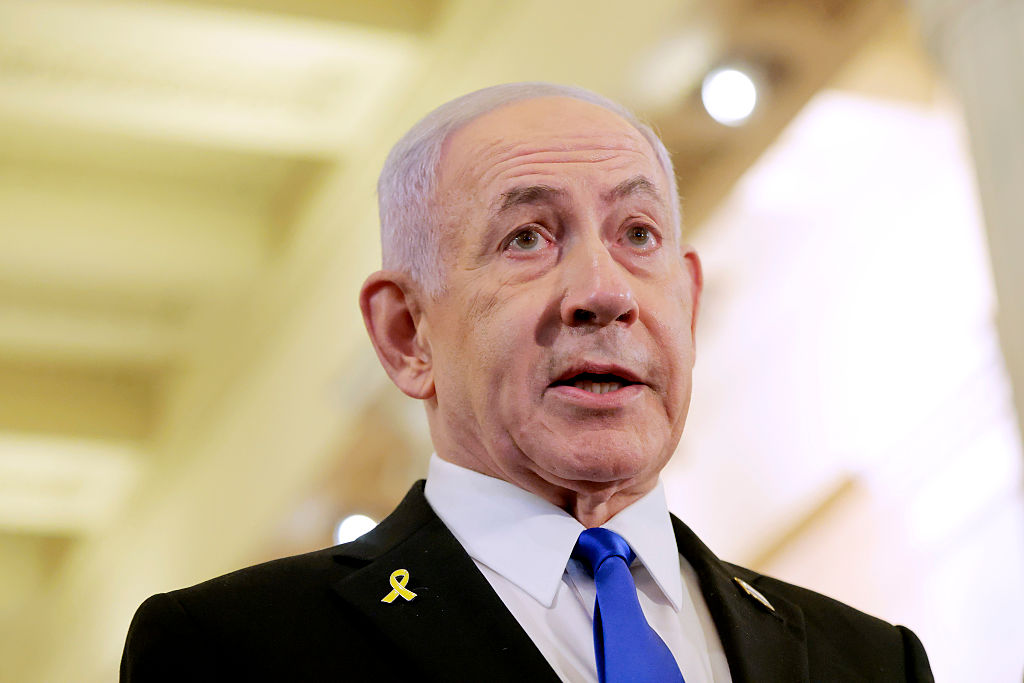
    In a decision of historic weight, the Israeli government has formally approved a plan to expand its military operation and establish full control over the Gaza Strip. This has come despite the opposition of Chief of Staff Eyal Zamir, who raised pointed warnings during a meeting that began at 6:00 pm Israeli time last night and stretched late into the night. 

    Tensions between Zamir and Prime Minister Benjamin Netanyahu surfaced throughout the protracted session, with several ministers directly challenging the chief of staff over his stance. Eventually, the Political-Security Cabinet voted by an “overwhelming” majority to endorse Netanyahu’s proposal to defeat Hamas through a combination of military occupation, strategic disarmament, and post-conflict governance.

    The new plan confirms what had been building for weeks: Israel is preparing to enter Gaza City and take direct control over what remains of Hamas’s operational stronghold. It is the most decisive phase of the war yet, and it carries with it a magnitude of risk, cost, and complexity that has few historical parallels in modern Israeli warfare.

    According to the statement released by the Prime Minister’s Office, the cabinet adopted five foundational principles to conclude the war. Firstly, the disarmament of Hamas, followed by the return of all hostages, living and deceased. Thirdly, the full demilitarisation of the Gaza Strip and permanent Israeli security control over Gaza. And finally, the establishment of an alternative civilian government – one that is neither Hamas nor the Palestinian Authority.

    These are not abstract aims. They reflect the growing consensus in Jerusalem that the status quo is unsustainable, and that partial solutions – international pressure, containment, diplomacy – have all run their course.

    Israel already controls a large percentage of the Gaza Strip. Through successive operations, including the recent “Gideon’s Chariot” campaign, the IDF has cleared and now holds areas such as Rafah, Beit Hanoun, Beit Lahia, and large sections of Khan Yunis and Jabalia. But the northern corridor, including Gaza City, remains contested, and that is where the war will now focus.

    Who will take responsibility for civil life in Gaza once the guns fall silent?

    The cabinet’s decision follows months of strategic stalemate. Despite substantial battlefield success, Hamas remains operational. Crucially, the hostages taken during the 7 October 2023 attacks, while mostly returned (some alive and many not), have become pawns in a gruesome psychological campaign. Palestinian terrorist groups have refused further negotiations, releasing sickening propaganda videos of emaciated captives, including footage of one digging what he was forced to declare was his own grave. The videos are not just acts of cruelty but calculated provocations aimed at breaking Israeli will.

    That effort has failed. The government has now resolved to act, believing that the only way to secure Israel’s future and to rescue the remaining hostages is to dismantle Hamas physically, structurally, and politically.

    As part of this next phase, the IDF will initiate what is expected to be the largest civilian evacuation of the war, directing nearly one million Gazans from the north into central zones. There, humanitarian corridors and aid operations are being scaled up to accommodate a population already displaced multiple times. Israel insists that civilians will be kept outside combat zones, and aid will be delivered systematically under military supervision.

    Yet the challenges remain immense. Militarily, the IDF will be entering terrain that Hamas knows intimately, where tunnels, traps, and guerrilla tactics are expected. Politically, the idea of long-term Israeli ‘security control’ over Gaza without actual annexation or direct governance presents an unsolved riddle: who will take responsibility for civil life once the guns fall silent?

    Netanyahu has said Israel does not seek to govern Gaza. But the cabinet also rejected the Palestinian Authority as a viable alternative, owing to its corruption and unwillingness to properly abandon support for terrorism. The prospect of bringing in external Arab forces remains vague and possibly unworkable without significant international coordination and legitimacy.

    Still, for Israel, the calculus has shifted. The events of 7 October were not simply an outrage, they were a turning point. The goal now is not merely deterrence, but dismantlement. Not another ceasefire, but an end-state.

    Twenty years ago, Israel unilaterally withdrew from Gaza. Within a month, the rockets resumed. Within two years, Hamas ruled the enclave. The promise of that disengagement, peace through distance, collapsed under the weight of ideology and violence. What is being attempted now is, in essence, a reversal of that failure. To re-enter Gaza not to reoccupy it in perpetuity, but to crush the architecture of terror and replace it with something not yet defined but necessarily different.

    This may not be clean. It may not be swift. It may not even succeed. But for a government that sees no other viable path, and a public that, though divided, largely refuses to live under the threat of another 7 October, Netanyahu and his cabinet see it as the only course left to pursue.
  • Trump starts Christmas now

    Trump starts Christmas now

    There’s no small irony in the fact that Texas Democratic state legislators, fleeing a congressional redistricting attempt by Texas’s Republican majority, have sought shelter in Illinois. They’re acting like political refugees in what is, in fact, the most gerrymandered state in the country.

    Look at Illinois District 13, which snakes up from the Missouri border nearly to the gates of Indiana, bisecting the state (and District 15) like Illinois’s small intestine. Chicago is a very populous city, but the state has carved up its Congressional districts like a turducken, giving us as many (D-Chicagos) as humanly possible.

    The Illinois Democratic machine has had an outsized influence on American politics, much less Illinois politics, for decades. Its favorite son, Barack Obama, even became president. Now that Texas is serving up a gerrymandering machine that’s just as powerful, and just as corrupt, Illinois is offering asylum. That’s rich.

    Cockburn has been to both states. They both offer occasional moments of grace punctuated by millions of acres of cow manure. May they gerrymander each other out of existence and let a non-corrupt state devoted to direct democracy, wherever that may exist, take control of Congress.

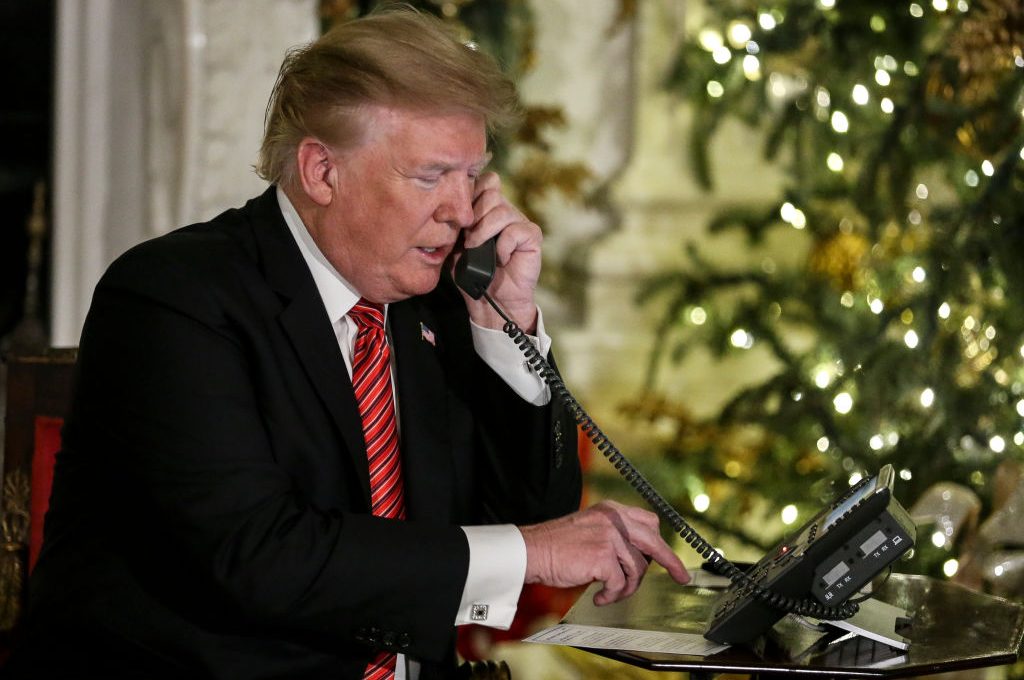
    With Trump, Christmas starts now

    It’s August, which means that Christmas is just around the corner. While Cockburn hangs around the house drinking spritzes and swatting mosquitos on the patio, the White House has announced it’s time to receive applications to help with Christmas decorations and to perform at holiday open houses. ’Tis the season, I guess! To the administration’s credit, they didn’t announce they’re officially renaming the holiday The First Lady Melania Trump Christmas Spectacular.

    While countless school choirs and dance teams will certainly bring the jolly, Cockburn would like to see various administration figures appear as part of the festivities. Director of National Intelligence Tulsi Gabbard can finally reveal who was behind the cover-up of the Santa Files (not David Sedaris’s, the real ones). Pete Hegseth can dress up as Santa and send selfies to the group chat. We look forward to Barron Trump’s Christmas Crypto Bash. Most prominently, J.D. Vance can fulfill his destiny by dressing as Buddy the Elf and proclaiming “Santa? I know him!!!” – a nice summary of his relationship with President Trump.

    On our radar

    UP ON THE ROOFTOP Joined by several men in suits this morning, President Trump took questions from the roof of the White House. Apparently, he was surveying the building for his recently announced $200 million ballroom.

    RUSSIA RUSSIA RUSSIA Pam Bondi directed the DoJ to launch a grand jury investigation into allegations that the Obama administration manufactured intelligence about 2016 election interference.

    EPSTEIN UPDATE Ghislaine Maxwell has been transferred to a minimum security prison in Bryan, Texas. Meanwhile, Bill and Hillary Clinton are set to be deposed by the House Oversight Committee this October for their connection to Epstein.

    Going Postal

    News broke this week (in the New York Post, appropriately enough), that the paper is soon to begin publishing a California edition, called the California Post. These happy tidings are almost enough to make Cockburn want to move back to California, where he spent some very happy, idle months at the Chateau Marmont in the 80s, and also the 90s.

    Regardless, this is great news for California’s bleak, bland, hyper-woke media offerings, punctuated only by the occasional conservative opposition blog, Adam Carolla X account or grouchy late-night AM radio hosts. An active Page Six alone will help burst the Hollywood PR bubble, and Cockburn relishes the idea of holding Gavin Newsom and Karen Bass’s feet to the fire on any number of issues. Newspapers aren’t, in fact, dead. They’re just not giving people something that they want to read. And as much as they hate to admit it, everyone wants to read the Post.

  • Israel’s plan to occupy Gaza is a last resort

    Israel’s plan to occupy Gaza is a last resort

    Reports last night from Israeli Channel 12 quoting a senior official in Prime Minister Benjamin Netanyahu’s office have confirmed what has long been rumored, feared and for some, awaited: the decision has been made to occupy the Gaza Strip. This is not yet formal policy, pending cabinet approval, but the trajectory is now unmistakable. The prelude has ended. The war is entering a new, graver phase.

    Western commentary will, as usual, rush to treat this as a moral failure of Israeli restraint, or as the inevitable result of hawkish ideology. Yet that interpretation is not only false, it is profoundly dishonest and the opposite of the truth. The occupation of Gaza is not a first resort. It is, tragically, the last. And it is an outcome born of many missteps by many international actors, including the UK. 

    For 22 months, Israel has pursued every conceivable alternative. When the United States and international community demanded a surge in humanitarian aid, Israel complied. When ceasefire negotiations gained momentum, Israel displayed unprecedented flexibility, including territorial compromises around the Morag axis. When Hamas rejected yet another comprehensive offer mediated by Egypt, Qatar and the US, it was not for lack of effort by Jerusalem or Washington. It was the result of a calculated decision by Hamas to extract political and material gain by prolonging conflict.

    For a while, it looked like it might all go the other way. The timeline speaks for itself: Israeli envoys traveled to Doha in early July; by mid-month, a new draft agreement was on the table. The US special envoy, Steve Witkoff, was scheduled to fly to Doha on July 23 to finalize the deal. But by then, Hamas had already sabotaged the process, following a Western joint statement led by Britain’s Foreign Secretary David Lammy, calling for an unconditional end to the war and an unrestricted flow of aid. From the UK, Hamas recognized that it could secure its objectives without giving up the hostages. It raised new demands, withdrew consent on earlier terms and collapsed the negotiations entirely.

    The hostages remain starving underground. The war grinds on unrelentingly. And the challenging humanitarian situation will not end yet.

    To this, some Western governments have responded with gestures of abstract symbolism. In September, the UK, France, Canada and others are set to recognize a Palestinian state, ostensibly to reinvigorate the peace process. But as Shany Mor, lecturer in political thought at Reichman University, has noted, symbolic actions which incentivize maximalist violence do not break cycles of war, they perpetuate them. The July 21 statement did not bolster diplomacy. It destroyed it.

    Israel is now faced with the consequences of that destruction. The IDF, reportedly reluctant to engage in renewed full-scale combat, has nonetheless been preparing a range of military scenarios, including encirclement strategies and targeted incursions. Yet none offer a quick resolution. The reality is that without a decisive shift on the ground, the hostages will starve to death in captivity, Hamas will not be deterred and Gaza will remain a base for Palestinian jihadist aggression.

    Some argue that occupation will not bring peace. Perhaps not. But what the critics fail to answer is: what will? Not diplomacy – that has been exhausted. Not incentives – those have been lavished. Not restraint – that has only emboldened the most violent actors. Hamas has not surrendered, moderated or compromised. It has neither proposed a viable end-state nor shown any interest in the norms of conflict expected by civilized states. Instead, it has starved its captives and its own civilians for propaganda, hoarded aid and continued to fire into Israeli towns.

    The decision to occupy Gaza is not born of ideology but necessity. It is not an act of vengeance but of grim strategic calculation. And it has been made only after every alternative was tried, and each was thwarted by an opponent committed to endless war. Internally, those who pushed for this outcome all along will now be inclined to argue that they were the realists 20 months ago, and even 20 years ago when they opposed Israeli disengagement from Gaza in the first place.

    It will bring new criticism, especially from the Western press and political class, which has grown adept at condemning outcomes without tracing their causes. But this condemnation cannot erase the facts. As much as Israel is choosing this path, it has also been chosen for it, by a jihadist movement that values leverage over lives, spectacle over peace and whose only reliable negotiating tactic is to demand the rewards of surrender while offering none. And by a coalition of international actors determined to scupper every diplomatic or military step Israel had towards victory over ruthless Palestinian jihadism and maximalism.

    All of this signposting could be performative distraction from a different but no less decisive Israel-American action about to unfold. This would be similar to the elaborate pre-12 Day War playbook used when Netanyahu and Trump put out misleading signals before their coordinated joint actions. 

    If the occupation proceeds, it may be long, costly and fraught with danger. But it may also be the only remaining way to establish the minimal conditions of security and order. The problem of Gaza, tragically, has not left Israel with a choice. It has left it with a burden.

  • Ann Coulter: On immigration, Trump 2.0 and the Epstein Files

    Ann Coulter: On immigration, Trump 2.0 and the Epstein Files

    Ann Coulter, an American author, lawyer and conservative media pundit, joined Freddy Gray on the Americano podcast last Friday to discuss why she backs the UK’s Reform party, why she supports Trump in his second term, what’s really going on with the Epstein files and more.

    Here are some highlights from their conversation.

    Why don’t politicians follow through on illegal immigration promises?

    Ann Coulter: Americans have been voting not to give illegals benefits, to deport them, to make sure they can’t vote, for now almost half a century, and the politicians will never give it to us. That was what was so striking about Boris Johnson and Donald Trump. Oh my gosh, they really seemed to mean it. At least with Trump, every single rally for 18 months, the chant was, “build the wall,” the signs “build the wall,” their etchings “build the wall” and he gets it (the presidency). And he doesn’t build the wall.

    Freddy Gray: What do you think is the real factor there? Is it the economy? Is it that businesses just have that way of pressuring? I mean, I think with what’s now called the Boris wave of the huge influx of immigration during Boris Johnson’s premiership, really, it was pressure from the Treasury to make sure that wages are suppressed because everyone was worried about Covid and so on. Is that the real driving factor?

    AC: Well, there are at least two driving factors. For the Republicans, it’s the donors. They want the cheap labor, which it’s worth pointing out as the as the cliché goes, cheap labor is only cheap for the employer. It’s the middle class that are subsidizing the rich’s poor labor or cheap labor. They are nannies. They are cooks. They are, you know, farm workers because they accept massive amounts of welfare, which leads to the other special interest group supporting illegal immigration, and that’s the entire Democratic Party, because illegals are accepting so much social welfare. Which party do they vote for and their kids can vote in? I mean, now the number of anchor babies who are of voting age is probably 20 million.

    On the future of the UK

    FG: You’ve been spending some time with Reform. What do you like about them in particular?

    AC: Immigration. Immigration. Immigration.

    FG: You think they will make good on their promises? Because quite often we see these parties, when they get into power, they can’t actually make good on.

    AC: Yeah. To take two little examples, Boris Johnson and first-term Donald Trump. That was stunning. It’s been happening in the US for 20 years. It’s been a bigger issue for us, I think. And states, I mean, this was back in the early 70s. Texas voted to have no free public education for illegals, and the Supreme Court, very left wing, overturned it. And that’s when Justice Brennan, incidentally, made up the concept of anchor babies. The court never ruled on it. No legislature has passed it.

    FG: Please explain what an anchor baby is.

    AC: An illegal pregnant Mexican runs across the border and drops a baby. The baby is allegedly an American citizen. No court has ever found that. No legislature. It was just dropped in a footnote of this Justice Brennan opinion. Maybe that’s a side note, but it’s a big, big problem in some hospitals along the border. 80 percent of the babies born are born to illegal aliens. El Chapo. You’ve heard of him? The big, massive drug lord? When his wife got pregnant, she’d run across to San Diego and drop a baby. They’re all American citizens. I’ll just give you one more. I think it was Sinaloa cartel. The cartels are just monstrous. I don’t want to hear about, you know, Hamas throwing rocks and dropping a few bombs. The cartels are beheading people. They are beheading Americans. They are committing heinous, hideous crimes.

    Ann’s disappointment with the first Trump administration

    FG: I think it is fair to say you were disappointed, even fuming, about about the first Trump administration, which was funny because at one point you were pretty much the only American who supported him.

    AC: Yes! Oh, before he got in, I was worried… I was still yelling at him for some things. I guess, it was like March. He wasn’t hiring the right people during the transition. That was a bad sign. It was February or March. I showed up in the Oval Office, and like I say, I never told anyone this, but he told people. I just stood at the resolute desk, haranguing him, hectoring him. I was not the first one to use the F- word, but once it got used… Well it was about, you’re not keeping your promises; you’re you’re not building the wall; you’ve done nothing on the wall; you’re only pushing for tax cuts. The moment when he got really angry, which I think really speaks in his favor, was when I said, “You’re governing like Jeb Bush.”

    FG: The Big, Beautiful Bill upsets fiscal conservatives, but it does give a lot of money to the border. I think it’s probably a mixed bag for people of a conservative disposition. What would you say?

    AC: Yes. I mean, overall, but I can’t blame Trump alone for this. It’s hard to cut anything. You know, a good motto is, “There are a lot of bad Republicans. There are no good Democrats.” So I kind of hate my party. I’m totally with Elon. If they could cut government by 90 percent, the world would be a better place. They’re mostly useless bureaucrats spending their days trying to make our lives worse. First – and I should say I’m not against tax cuts; I think they’re good and important – it’s just that that’s all we’ve ever gotten from the Republican Party. And what was special and different about Trump was he seemed to care about middle America and working class America. He was going to bring back manufacturing. No more stupid wars. The whole America first and mostly immigration, immigration, immigration. So when he blows off those three unusual and important parts of his campaign and does what a Bush would have done. Yes. It was a little disappointing.

    FG: We’re almost 200 days into Trump’s second term. How many marks out of ten would you give Trump in his second terms?

    AC: I guess nine. He gets one taken away for not releasing the Epstein stuff.

    Epstein, Israel, Saudi Arabia?

    FG: Why won’t he release it? Is it because there is evidence of him?

    AC: I think he has donors who are involved. Yeah. And also a favored country in the US. I’ve been following it since 2006. I spent part of my time in Palm Beach, where the whole story broke and the Palm Beach Police were great. National media did not cover it… We were thinking maybe it was like a concierge operation where he runs the sex shop for for rich guys like the private clubs, but that doesn’t make any sense. He would have done it free. I mean, I’m trying to answer the question of where he got his money. He was getting a lot of money. Coincidentally, all the ones he was getting money from are gigantic Israel supporters. All of them. Some foreign country has to be behind it. So you basically get down to, “Is it Saudi Arabia, or is it Israel?”

    Are tariffs good for the US?

    FG: Are you pro-tariffs?

    AC: Totally pro-tariffs. I’m with Trump on it. It needs to be fair, and we have been giving it away. That’s one thing, just for years and years and years, and I’m sick of the free-traders. We’ve been trying your way for 50 years. Manufacturing has been wiped out. We used to have, like, 20 million people working in manufacturing. I think when I wrote Adios America, or maybe it was in Trump We Trust, I don’t know, we were down to like 11 million. The working class and the middle class has been suffering enormously. And I noticed Wall Street is doing quite well. So how about let’s try not having this – what is called free trade. And I think Trump is right. It’s unfair trade.

  • The internet doesn’t know what a Nazi is

    The internet doesn’t know what a Nazi is

    Two things happened online in the past week or so, both online, both quite mad. First was the spread of a podcast clip – hosted by “men’s health” influencer Myron Gains – featuring a rainbow coalition of Gen-Z Americans discussing whether Germany’s 1930s Jews had done something to make the Nazis hate them. They reimagined Hitler as someone who simply had to perpetrate a genocide because the Jews deserved it. The second event was an American Eagle jeans advertisement starring Sydney Sweeney. One of these moments caused a meltdown about the rise of Nazism, and it wasn’t the podcast.

    Within hours of the jeans campaign going live, Sweeney – who is guilty of nothing but taking a presumably sizable paycheck to model some pants – was being accused of Nazi dog whistling due to a word play in the ad: she claimed to have “great genes/jeans.” In response came TikTok video essays and lengthy X threads and a cacophony of chatter from talking heads debating just how sinister the ad is. This kind of feverish reaction would be far more credible if the people getting so worked up were consistent.

    The critics of the Sweeney ad – largely younger and leftist – are part of a growing population of Americans able to spot Nazi resurgences everywhere except, weirdly, those instances of actual attacks on Jews. I don’t remember seeing so many TikToks about the unprecedented rise of anti-Semitism in the real world following the shooting of two Israeli embassy staffers in Washington, DC, or after the Jew-hating arson attack in Boulder, Co., last in June.

    The willingness of people to spot the specter of Nazism in meaningless examples is a worrying trend seen across the American political spectrum, from Candace Owens all the way to the National Education Association and Ana Kasparian. The Nazis and Hitler have become an all-purpose escalatory device – something you throw at your enemies to score a point – rather than representatives of an unparalleled human tragedy targeting the Jews. For the crowds calling for Sydney Sweeney and American Eagle’s cancelation, the Holocaust is a tool, a crude rhetorical device.

    As time passes and the Holocaust moves from living memory to a historical abstraction, this trend will only worsen. When you don’t have survivors sitting there telling you what they saw with their own eyes, the Holocaust becomes just another weapon in the culture wars.

    On one level, none of this feels important. Who cares if some random people see visions of eugenics in a commercial with an attractive actress? But as survey after survey reveals, young people in America are becoming not merely apathetic towards Israel, but actively hostile towards Jews. An Anti-Defamation League survey published recently found that nearly 25 percent of Americans thought that the recent attacks on Jews in Pennsylvania, DC, and Boulder were “understandable;” even more worrying, a further 15 percent said that this violence against American Jews – not Israelis, not anyone involved in anything happening in Gaza – was “necessary.” This is the context in which any diminishing of Nazism must be seen. The decentering or blame of Jews in the story of the Holocaust is a deliberate ploy to erode sympathy, to strip away the barely there taboo against anti-Semitism among young people. 

    So yes, while it’s easy to laugh at those who see wisps of the Nazis in every facet of American life, for American Jews, it’s no laughing matter.

  • Israel, you’ve gone too far

    Israel, you’ve gone too far

    If any other country in the Middle East had behaved as monstrously as Israel has in recent weeks, the jets would be lined up on our runways ready to do a bit of performative bombing. Never mind BDS (boycott, divestment and sanctions) and diplomatic pressure. I mention this because those of us who support Israel, and have done so largely uncritically since October 7 2023, need the scales to fall from our eyes a little – for the good of Israel, as well as the good of those starving Palestinians.

    I have been to Israel many times, as a journalist, as a holiday-maker, as a friend. I accept without demurral the argument that it is the region’s only democracy – and a liberal democracy at that – surrounded on all sides by authoritarian failed states which wish to see it wiped from the face of the Earth. I subscribe to the notion, too, that if Palestine got what Palestine wants – from the river to the sea and all that vainglorious spite – then they would turn one of the most remarkable countries in the world into a variant of Somalia within about six months (if that), no matter how much money its gullible white liberal well-wishers poured into the place. I have an absolute lack of respect for the impoverished Arab countries that are governed, in the main, by bloodthirsty and intellectually challenged religious maniacs, just as I have an absolute lack of respect for the rich Arab countries that were lucky enough to find a reservoir of oil in their sandpits and have created odious totalitarian slave states as a consequence.

    This may be unfair, but I have the distinct feeling that the Arab culture, when allied to Islam, makes for a uniquely toxic mindset; one fueled by absolutism, hatred and a disrespect for human life. I despise the feral savages of Hamas and was wholly in support of Israel’s incursion into Gaza, even if, at the time, I thought it might be more useful to begin by lobbing a few missiles at Tehran. Why not target the organ grinder rather than its imbecilic monkeys? Equally, I have a fierce loathing of the Keffiyeh Klan, the deluded legions of affluent western liberals who have embraced anti-Semitism with gusto and when asked to identify the sins of the world have only one answer.

    In short, I am instinctively, politically, morally and pragmatically on the side of Israel. I do not wish our country to recognize Palestine as a sovereign state (and my Prime Minister Keir Starmer’s decision to do so is a crass genuflection to his idiot backbenchers. Just what is it you are recognizing, you abject little man?). Nor do I think, pace Starmer, that Palestinians have “an inalienable right” to independent statehood. Just to press the point home, I believe that from the Maghreb to the Levant and then eastwards, over those vast dunes, into what was once much better off when it was called Persia, corrupt and vindictive regimes govern a corrupt and vindictive culture, one that is responsible for much of the misery in the world. Israel, then, is an oasis – which is why we cannot afford to allow it to pollute its own waters. And that seems very much like what it is doing right now.

    If you are already howling that I have swallowed Hamas propaganda, and that either it is Hamas who is stopping the aid getting through or that the far-from-starving Palestinians are tucking into three square meals per day, eggs Benedict, shrimp étouffée, bananas Foster and so on, then you are laboring under a delusion. If virtually every non-aligned observer in the world, including the President of the USA, believes that the people of Gaza are starving to death and Israel is primarily responsible, then that’s good enough for me, frankly.

    Of course Hamas has looted aid convoys and of course it lies to the press and the press is often far too quick to report what it says as being the truth. But that does not alter the fact that people – largely blameless people – are dying and that Israel is in large part to blame. Of course this conflict has, in the West, become hideously polarized and so it is all too easy simply to continue repeating the mantra that everybody is against Israel and one should believe only what one hears from the mouth of Benjamin Netanyahu and the IDF press office. (Even in that case, Netanyahu accepts that there are several areas where assistance has not made it through.) But if you sign up to that credo, you are morally lost. We have to form opinions based upon the evidence that is put before us, not have them devolve from partisan loyalties, no matter how well-founded those loyalties might be.

    It has to be said that the United Nations should be held primarily responsible for the partisan nature of the debate. Supposedly neutral, it has vilified Israel at every turn, just as in the past 20 years it has entertained resolution after resolution condemning Israel while ignoring every other transgression which occurs anywhere else on Earth. It came as no surprise to discover that Hamas terrorists were actively involved in UN programs. As soon as that was revealed, the awful secretary-general, Antonio Guterres, should have resigned. Meanwhile, we should take our leave of an organization which cleaves to the palpably stupid view that the wrongs of the world are the consequence of colonialism, except when those wrongs are committed by Israel. It is very far from being a force for good. Instead, it has become a force for disseminating demonstrably absurd post-Marxist delusions.

    I do not have a solution to the crisis. Frankly, Donald Trump’s idea of turning the Gaza Strip into a kind of Las Vegas, except with falafel in place of T-bone steak, has much to commend it, but that simulacrum of Sodom should not be built over the bodies of dead children. We support Israel because of its erudition and its strength but most of all because it has decency. Had decency. Please let it get that decency back.

  • A chat with the Princess of Iran

    A chat with the Princess of Iran

    The Princess of Iran is casual over email. Noor Pahlavi, the 33-year-old eldest daughter of Iran’s Crown Prince in exile, Reza Pahlavi, is American-born, a potential heir to the Iranian throne and ready for regime change in the Middle East.

    “Hi it’s been a crazy couple of weeks,” she wrote me a few days after the US plopped some 400,000 pounds of bombs on the Islamic Republic’s nuclear sites. That same week, Reza began to appear across Western media, calling for rebellion within Iran and support from without: “This is our Berlin Wall moment.”

    Reza is the son of the last Shah of Iran. His family has become a symbol of a Persian, pre-Islamist Iran, and Reza casts himself as the transitory figure to lead the country into a more liberal post-regime future. Whether that future involves a republic or a restoration of the constitutional monarchy must be left up to the people, he consistently says. Should they choose the latter, he has self-effacingly suggested he would accept the responsibility.

    This means that Noor, an impeccably styled New Yorker who works in venture capital, has a shot at the throne. In fact, following Reza’s reign, she may be the most viable successor. This raises a question: is she simply an American businesswoman, or is she a future empress?

    The rules for the Persian line of succession are messy. The most detailed potential source of guidance comes from Iran’s pre-Revolution constitution, which declared that the Shah must be succeeded by his closest male heir. But Reza has only three daughters. The closest thing he has to a male heir is his nephew, Keykhosrow Jahanbani – a man about whom zero public information seems to exist. But Keykhosrow is partially descended from the family that the Pahlavis toppled to take the throne, the Qajar, and a caveat in the constitution forbids a Qajar from ever holding power again. So this 50-something-year-old dispossessed royal, wherever he is, doesn’t have a chance. That leaves us with the Pahlavi daughters. The old constitution, according to some Iranians, could permit Reza to nominate one of these three as heir.

    As for Noor: the State Department couldn’t dream up a more ideal Iranian royal. She was born in DC, raised in Maryland’s suburbs, graduated from Georgetown University (magna cum laude) in psychology and is involved in a variety of human-rights philanthropy networks. The Pahlavi dynasty’s lineage is Muslim, but the women are certainly not the hijab-wearing type. On the contrary: Noor is one of New York’s more glamorous denizens; She pops up at the Hamptons and galas in designer gowns and runs in a designer crowd, and the Arabian editions of Vogue and Harper’s Bazaar play up her blending of Persian fashion with Western styles at events in New York and Paris. Her allure has become a symbol to Iranians in exile of the banished Persian empire’s wealth and luster.

    Noor’s idea of post-regime Iran combines that fragrant vision of Persia with something that sounds an awful lot like liberalism. She wants an Iran “where Persian culture is celebrated rather than washed away” and one “where citizens can love who they want, practice whatever religion they want.” She says the regime is “weaker than it’s ever been” and bemoans “outside forces” keeping it on life support.

    But whether she sees herself leading that nation is a trickier question. Should the regime fall, I ask her, would she return to Iran?

    “I personally would love to spend time in Iran and help see the Iran Prosperity Project, which my dad and many others have been working on, come to fruition,” she tells me. The answer doesn’t exactly betray ambitions for lifelong dominion, and at no point in our correspondence did she indicate plans to remain in Iran long-term. If she were harboring regal ambitions, you’d expect her to take on a more public-facing political role than she has – the jump from venture-capital principal to princess isn’t small.

    What about her siblings, then? The second daughter, Iman, works in finance as well. She maintains a lower public profile than her older sister, but she brought Reza his first son-in-law, Bradley Sherman, a Chicago-born, Jewish New Yorker. This marriage may have inquisitive minds asking an intriguing question: could an American Jew be the future leader of Iran?

    No, probably not. But Dick Cheney can dream. Historically, Iranians haven’t accepted rulers of non-Iranian lineage. But the marriage – a glitzy Parisian party earlier this year – shows just how starkly the family contrasts with the Islamic Republic. If the wedding had taken place in Tehran, it’d be a death sentence for the couple.

    The connections with the Jewish people are political as well as familial: in 2023, Reza accepted an invitation from Benjamin Netanyahu to visit Israel, where he prayed at the Western Wall. Add to this the fact that he saw Israel’s bombardment of Iran as a springboard for regime change in the country, and it certainly appears that he and Bibi are at least tenuous allies.

    Iman, however, rarely appears at such political events and is less visibly involved in her father’s campaigning. She appears basically Americanized and does not play up her royalty in any public way – Iranians familiar with the family say she was raised as an American, not a Persian queen in the wings.

    Same goes for the youngest daughter, Farah, who attends the University of Michigan and seems to be living an essentially American youth, complete with summer internships and UMich vs. Ohio State football games. (If she were handed the throne, you have to wonder whether Buckeye fans would side with ousted ayatollah.) But, as with Iman, Farah’s upbringing doesn’t seem designed to prepare her for monarchy.

    All of this poses a problem for Reza, should the Iranian people choose to restore his dynasty. He and his wife, now empty-nesters, recently sold their Maryland home (listed for $3 million), and they seem to spend much of their time in Paris, where Reza’s elderly mother lives. Within Iran, there’s definite nostalgia for the Pahlavis and hope for their return: Reza’s face appears at protests across the country. But even the Iranians yearning for his family’s return must recognize its improbability. And it’s unclear how this royal line – absent from its homeland for nearly 50 years and thoroughly Americanized – can survive its patriotic patriarch’s death. This explains in part why some in the Iranian dissident movement look to leaders other than Reza, such as the journalist Masih Alinejad and the lawyer Nasrin Sotudeh, who still lives in Iran. Homesick, patriotic, glamorous – the Pahlavis may one day return to Iran. But their exile from the life their family once lived may not. 

  • UNESCO is America’s toxic ex

    UNESCO is America’s toxic ex

    “I’m having financial problems,” a long-ago ex-girlfriend desperately messaged me some years after our third breakup, before tossing a convoluted word salad trying to make a case that I should give her money. I refused and told her that although I felt very sorry for her, it would be better for both of us if we had no further contact. Fortunately, we haven’t. As President Trump cuts America’s ties with the United Nations Educational, Scientific and Cultural Organization for the third time, this would seem to be the best approach.

    UNESCO was founded in 1945 to advance the cause of international peace through intellectual and cultural programs under the auspices of the newly created United Nations. Anyone familiar with the history of the world over the last eighty years can tell you how well that has gone, but the United States was long foundational to UNESCO’s work, at times contributing as much as 25 percent of its annual budget. This was certainly generous for an organization that claims 194 member states and twelve associate members, especially considering what UNESCO has done with the funds.

    Announcing the U.S. withdrawal last week, State Department spokeswoman Tammy Bruce said “continued involvement in UNESCO is not in the national interest” of the US because “UNESCO works to advance divisive social and cultural causes and maintains an outsized focus on the UN’s Sustainable Development Goals, a globalist, ideological agenda for international development at odds with our America First foreign policy.”

    In addition to the relationship yet again no longer working out for us, Bruce added that “UNESCO’s decision to admit the ‘State of Palestine’ as a Member State is highly problematic, contrary to US policy, and contributed to the proliferation of anti-Israel rhetoric within the organization.” Indeed, at UNESCO’s most recent executive board meeting in April, three of its agenda’s eleven “program issues” dwelled on Israel, which the organization has described as “occupied Palestine” or “the occupied Arab territories,” while referring to Jewish holy sites as “Palestinian World Heritage sites.”

    A UNESCO initiative discouragingly titled “Transforming MENtalities” seeks to “change mindsets and policies by…shedding light on how to successfully engage men and boys for gender equality” and blames “patriarchal masculinities” for playing “an important role in driving conflict and insecurity worldwide.” American parents might be forgiven for not wanting UN bureaucrats to tell them how to raise their sons in any circumstances, particularly at their expense, but one of this initiative’s “cornerstone” projects, released last November, is a report called “The Gender Equality Quest in Video Games,” which laments that women are underrepresented among video-game characters and video-game-industry professionals.

    Along with that pressing issue, UNESCO’s “Anti-Racism Toolkit” recommends governments acknowledge “structural racism” in their societies and implement “systemic changes” to address it. The recommended ways of doing so would appear to be unlawful across American institutions today. In a direct swipe at the US, which remains UNESCO’s highest contributor of funds, the Anti-Racism Toolkit claims that measures taken in response to Black Lives Matter and George Floyd are “limited” and require UNESCO’s sage help to expand. No thanks.

    Bruce’s statement concluded that “continued US participation in international organizations will focus on advancing American interests with clarity and conviction.” This has long been true. Ronald Reagan took the US out of UNESCO in 1984, citing corruption, mismanagement, outsized Soviet influence, and general anti-American bias, including a developing world plan to license journalists that seemed likely to censor international news coverage by American media. George W. Bush reentered the organization two decades later as a gesture toward restoring multilateralism in foreign relations but also as a cultural adjunct in the war on terrorism, and – yes – amid emotional assurances that UNESCO had changed. Trump pulled out again in 2018 over the Israel issue, only for a sorrowful Joe Biden to woo positive world opinion in 2023 by pledging to rejoin and pay over $600 million in supposedly outstanding dues accrued after Trump’s withdrawal. Some men send flowers.

    Our current breakup with UNESCO will not take effect until December 31, 2026, giving its meddlesome minders ample time to try to crawl back with more empty promises and false assurances that they have changed and will finally treat us right. But for the Trump administration, and all future US leaders, it would probably be best if we had no further contact.

  • What does Trump really want in Gaza?

    What does Trump really want in Gaza?

    UK Prime Minister Keir Starmer, French President Emmanuel Macron and the rest of Europe’s leaders are clear about what they want to see in Gaza: an immediate ceasefire, the release of the 50 remaining hostages in Hamas’s grasp, an acceleration of aid supplies and an end to a nearly two-year war that has turned the coastal enclave into a real-life version of Dante’s Inferno. Macron went one step further several days ago, announcing that France will recognize an independent Palestinian state at next month’s UN General Assembly meetings in New York. Starmer, under pressure from Labour backbenchers, is moving in a similar, albeit more conditional, direction. 

    Compare this to President Trump, who often has trouble articulating what US policy goals in Gaza are and what he actually envisions happening there. 

    The confusion started weeks into his second term, when Trump, hosting Israeli Prime Minister Benjamin Netanyahu at the White House, shocked the world by telling everybody that his grand plan for the war-shattered Palestinian territory was to expel the roughly two million Palestinians who lived there to make room for a bunch of resorts and spas. The Trump administration insisted that this plan – if you could call it that – was based the president’s humanitarian motives. It was simply too dangerous and chaotic for Palestinians to continue living in Gaza, the White House said. 

    It didn’t take long before Trump’s idea collapsed. Palestinians were universally opposed to the prospect of what would be a forced dislocation. Arab states like Egypt and Jordan, who would be relied on to take in the bulk of the Palestinians, vocally denounced it. The Arab League proposed an alternative that would keep the population in select areas of Gaza temporarily to buy time for a massive rebuilding to the tune of $53 billion. As the months went by, Trump largely moved on, claiming credit for compelling the Arab world to offer up their own ideas.

    Then, in March, Trump green-lit Netanyahu’s decision to resume the war after a six-week truce suspended hostilities with Hamas. That was the same truce that then-President Elect Trump vocally supported, and which his own envoy, Steve Witkoff, helped broker back in January. The ceasefire bought some quiet in Gaza, paved the way for a partial release of hostages and provided time for the two parties to negotiate a long-lasting end to the conflict. Netanyahu, however, was never particularly enthralled with the ceasefire, likely only signed on the dotted line because Trump insisted on his cooperation and believed – accurately – that Washington would eventually support a return to war. Whether this was a bid by Trump to increase the pressure on Hamas to sign a deal on Israel’s terms or due to frustration with the entire diplomatic process playing out at the time was unclear.

    Trump’s twists and turns on Gaza have only gotten more feverish since then. On some days, he appears willing to buck Israel, such as when he authorized Adam Boehler, his hostage envoy, to negotiate directly with Hamas in an attempt to get the last American hostage out of the enclave (it worked; Edan Alexander returned home in May). On other days, he doesn’t mention Gaza at all, viewing it as Israel’s problem to solve. Then a week passes and Trump sounds awfully like Netanyahu, as if he had a metamorphosis in his sleep, telling the Israel Defense Forces to “finish the job” and egging on the Israelis to push for a military solution to Hamas that simply doesn’t exist.

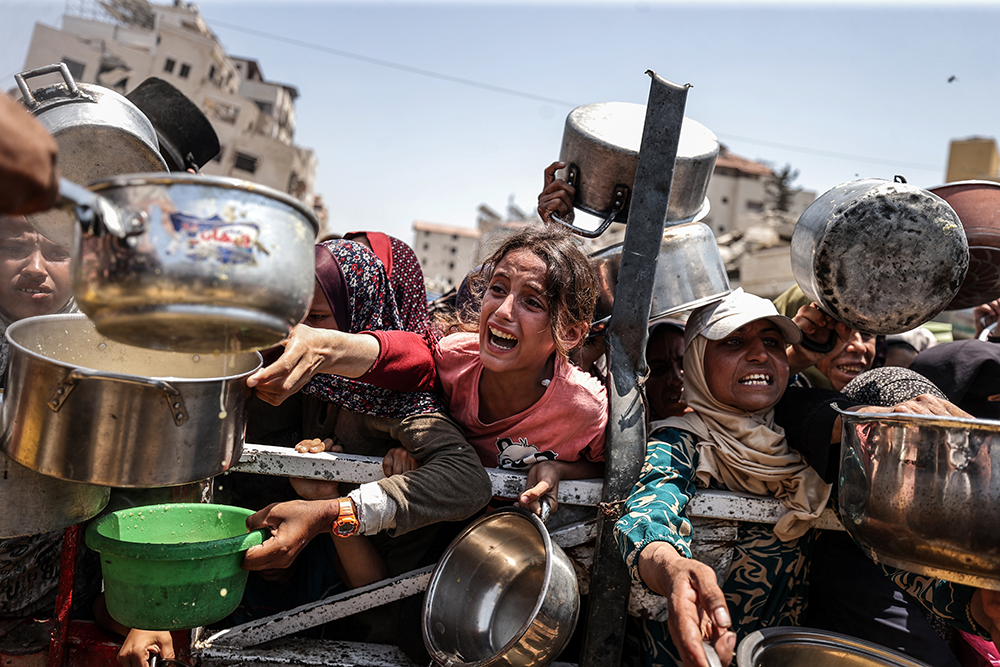
    This week, Trump sounds quite different, favoring his humanitarian side yet again. Asked whether he agreed with Netanyahu that there was no starvation in Gaza, the president said no and reiterated that everybody needed to step up – including the Israelis – to ensure food got into the area. “We can save a lot of people, I mean some of those kids,” Trump remarked. “That’s real starvation; I see it and you can’t fake that. So we’re going to be even more involved.” Even so, Trump largely blamed Hamas for stealing the humanitarian shipments, this despite the IDF’s own officers acknowledging in an internal assessment that evidence for aid diversion is lacking.

    All of this unleashes a swirl of questions, none of which we have answers too. Indeed, it’s likely Trump doesn’t have answers for them either. And that’s a big part of the problem.

    First and foremost, is Trump really committed to becoming the so-called peacemaker he packaged himself to be on the campaign trail? Right now, at least with respect to Gaza, it doesn’t look like it. He says one thing and does another. He castigates Israel for the humanitarian abomination that is unfolding under its watch but nevertheless continues to implement a US policy that defers to Netanyahu, who has demonstrated no interest in a peace agreement short of an outright surrender by Hamas. This is especially surprising because Trump knows he possesses leverage over the Israeli premier; it was only a month ago when Trump dressed down Israel in front of the cameras for threatening the ceasefire with Iran he announced hours earlier. The Israelis got the angry message, and the ceasefire has held to the present day. Is Gaza some kind of exception to the rule in Trump’s mind? 

    Another question we should ask: is Trump content to write-off Gaza as a problem Israel and the Arab world have to manage on their own? This would be a reasonable position to take; the United States, after all, doesn’t have core interests at stake in Gaza like Saudi Arabia, Jordan, Egypt, Lebanon and Israel do. The last thing Washington should be doing is plunging deeper into the Gaza muck. Yet time and again, Trump is content with following Netanyahu’s lead on this issue, to the point where one genuinely wonders whether he understands that American and Israeli interests aren’t completely aligned.  

    Trump doesn’t know what he wants. This serves Netanyahu’s strategy just fine.