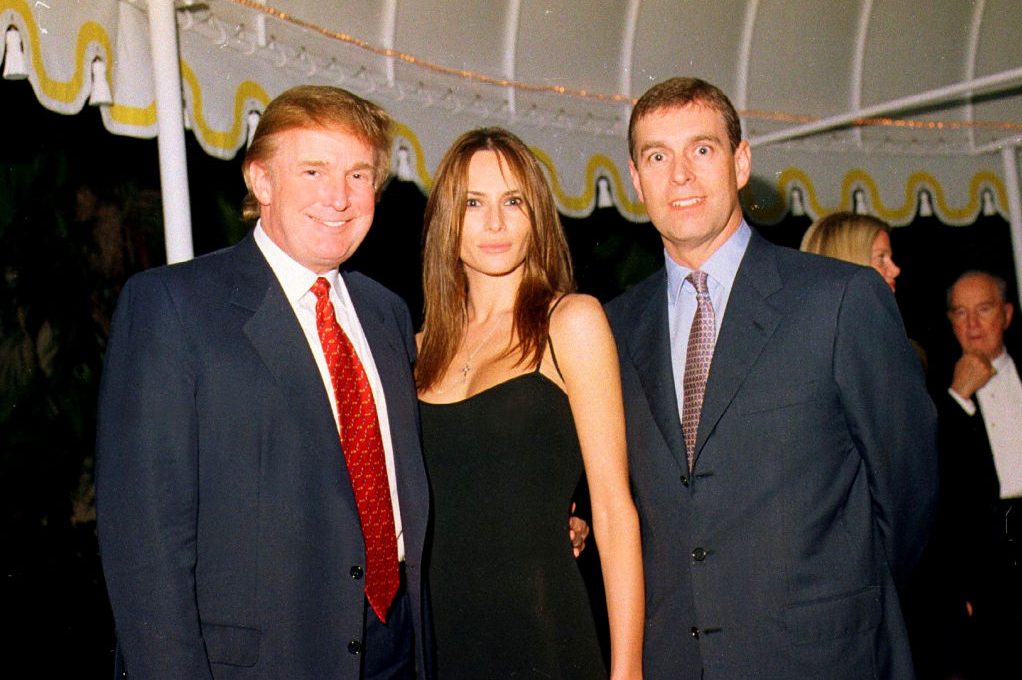
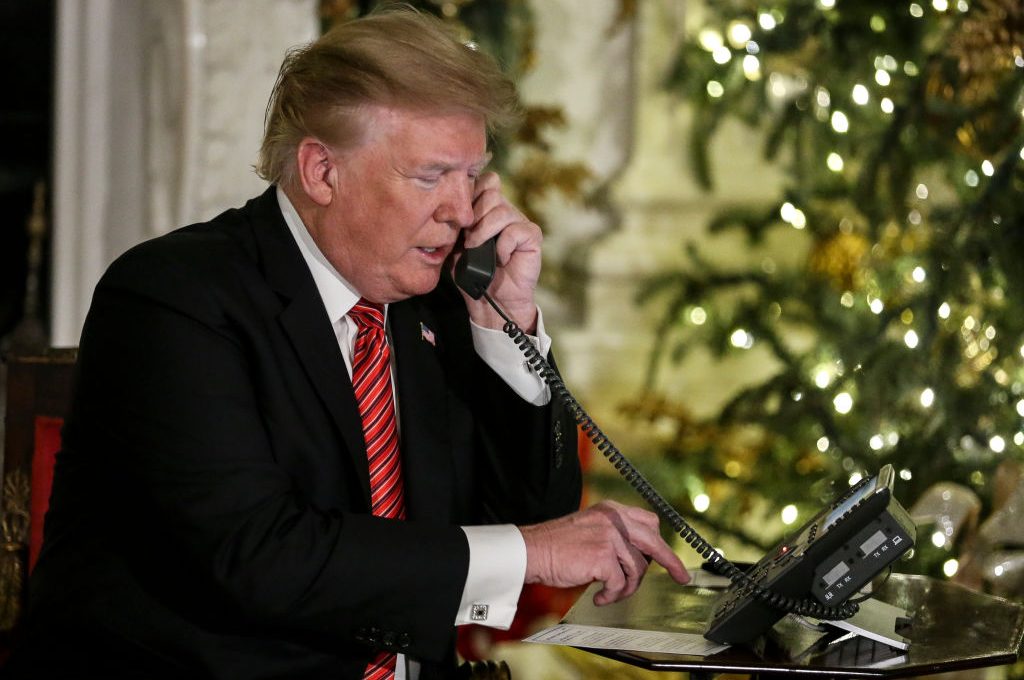
Good morning Britain. Donald Trump is flying to the United Kingdom today for his big state visit. Yet his Attorney General Pam Bondi seems to be going one step further. She appears to think that America, like Britain, ought to now be a country where you can go to jail for posting memes on Facebook.
Katie Miller, hosting Bondi on the Katie Miller Pod, said that Kirk’s murder last week was what happened when college campuses don’t take action against or expel students who harass conservative speakers. Using anti-Semitism as an example of left-wing campus “hate speech,” Bondi claimed in reply: “There’s free speech, and then there’s hate speech, and there is no place, especially now, especially after what happened to Charlie, in our society.”
Does the Attorney General know that “hate speech” is protected under the Constitution? She continued: “We will absolutely target you, go after you, if you are targeting anyone with hate speech, and that’s across the aisle.”
If this all gives you flashbacks to the days of social-justice warrior campus protests (“keep your hate speech off this campus!”) you’re not alone. Bondi didn’t elaborate on exactly what she meant by “targeting anyone with hate speech.” Did she mean people gloating over Kirk’s death, saying he deserved to die for his beliefs? That’s certainly hateful and disgusting, but is it illegal? Not in America.
Bondi’s fudge, whether it was purely idiotic or a more sinister attempt to roll back speech rights, expresses an outlook totally at odds with Kirk’s: he didn’t believe in hate speech. The idea that words can be dangerous is antithetical to his belief in dialogue and open debate.
And while the AG is going in on free speech, why not take on the free press as well? Trump announced that he’s brought a $15 billion defamation and libel lawsuit against the New York Times, singling out its endorsement of Kamala Harris as “the single largest illegal Campaign contribution, EVER.” You don’t have to like the New York Times – and Cockburn rarely does – to realize that a newspaper can endorse whoever it wants. This is a frivolous suit and one that demeans the office of the presidency.
It follows an active $10 billion lawsuit against the Wall Street Journal for its “bawdy Epstein birthday letter” story – a story that appears, for now at least to have been partially vindicated by subsequent developments, even if Team Trump continues to deny that the President ever drew the now infamous doodle in Epstein’s weird birthday book.
There’s also a defamation lawsuit against ABC (settled for $15 million) and an election interference lawsuit against CBS/Paramount (settled for $16 million). The Trump administration has understandable grievances against the many legacy media institutions which have for years smeared the Commander-in-Chief and peddled fraudulent tropes against him. But even if the White House thinks it’s constitutional to decide what these news outlets can and can’t publish, it isn’t. Trump voters may like the idea of “retribution” against the Fake News Complex, but almost nobody will have cast their vote for Donald Trump hoping he would clamp down on hate speech – something Kamala Harris would likely have done. Bondi ought to retract her statement immediately.
Is it wrong to bake cookies from a recipe addressed to a pedophile and sex trafficker? When I found the recipe for chocolate chip cookies on page 169 of Jeffrey Epstein’s birthday book, I read and re-read it expecting there to be some sinister inside joke, perhaps a hidden dash of adrenochrome or instructions to “massage” the dough. The surrounding page contains a woman’s redacted photograph and references Epstein’s “mentorship,” while the other 237 feel like a cross between various expressions of human depravity: part ransom letter, part porn magazine and part teenage girl’s diary. Where does an innocent cookie recipe fit in among this?
It is a prodigious recipe which makes about four times the amount of dough a sensible home baker should attempt, unless you happen to have a commercial grade stand mixer – the writer estimates between 60 and 80 cookies, depending on size. I managed somewhere around 100, enough to feed a small private island or all your “best pals.”
They’re actually quite good. The addition of five cups of ground oatmeal tempers the sweetness of the cookies and gives them a more substantial chewiness than your standard flour base. A half-cup of cocoa powder is a bit cosmetic, turning the cookies dark instead of their usual light brown, but adds a very slight bitter edge enhance the semi-sweet chocolate (I recommend a mix of chips and chunks). The recipe also instructs the baker to “mix all ingredients together in a large bowl,” but you should really cream your sugars and butter first to aerate and lift the dough.
The recipe appears to be taken from an urban legend passed around via chain mail in the 90s. “This is not a joke – this is a true story,” insists the tale of the Neiman Marcus Cookie recipe. It is a revenge story at its heart, about a customer wanting to get back at a waitress who sells him the recipe for “two-fifty” and adds a $250 charge to the tab. When the department store refuses to refund him, he sends the recipe to everyone he knows: “I’m sorry but this is the only way I feel I could get even, and I will.” It reads unnervingly like something out of the birthday book.
Perhaps all it means is that Epstein had a sweet tooth. His receipts from the jail commissary during his sentence in 2008 to 2009 seem to indicate he did. He purchased all sorts of sickening things, Business Insider reported: “Baby Ruths, Hershey’s bars with almonds, peanut M&M’s, Kit Kats, Almond Joys, Jolly Ranchers, PayDays, Milky Ways, Root Beer Barrels, and a Reese’s Crispy Crunchy Bar… chocolate cupcakes, chocolate cream cookies, fudge brownies, Oreos, Pop-Tarts, butterscotch drops, lemon drops, cinnamon graham crackers, bear-claw pastries, honey buns, apple-cider mix, and peanut-butter squeezers.” A grown man with a grocery list like this must be shamelessly perverse.
Despite knowing the recipe’s annoying but harmless origins, I feel the need to issue a disclaimer about the Epstein ties to everyone I offer them to. I told my roommates as they were mid-bite, as if I’d poisoned them and suddenly lost the courage to follow through with it. I wonder if I should leave it in a note by the plate for the workmen at my house: “Jeffrey Epstein cookies, take some.”
Still, it wouldn’t feel quite fair to say these cookies are spoiled by association. Hang on… isn’t this all just a horribly glib metaphor for the innocuousness of certain entries in the birthday book? Not exactly. Many of the innuendo-loaded letters from friends, girlfriends and “assistants” – who were instrumental in recruiting underage girls for sex work – do complicate things. The book raises questions about how much, exactly, the contributors knew about Epstein’s life, and whether they were aware of his crimes. Leave the cookies out of it.
The birthday book “Chocolate Chip Cookies”:
Ingredients:
2 cups butter
2 ½ cups sugar
2 cups brown sugar
4 eggs
2 tbl vanilla
4 cups flour
5 cups oatmeal (before grinding)
1 tsp salt
2 tsp baking powder
2 tsp baking soda
½ cup unsweetened cocoa
1 24oz bag chocolate chips (semi-sweet)
Directions:
Preheat oven to 350°. Grind 5 cups oatmeal in blender (will reduce to approximately 4 cups ground). Mix all ingredients together in a large bowl. Drop dough in rounded spoonfuls onto non-stick cookie sheet. Bake 8-10 minutes. (Makes approx 60-80 cookies depending on size.)
In May, Sky News asked Lord Mandelson, Britain’s Ambassador to the United States of America, if it was true that he’d stayed at Epstein’s Manhattan townhouse in June 2009, when the financier was in jail for soliciting prostitution from a minor. He replied flatly that he refused to answer any questions about Epstein. “I wish I’d never met him in the first place,” was all he would say on the subject.
No doubt Mandelson would rather forget – and that we all now ignore – how he used to lavish praise on Epstein. “Wherever he is in the world, he remains my best pal!” Mandelson, aka “the Prince of Darkness,” gushed in a birthday note to Epstein in 2003, which has now been revealed under the auspices of the Congressional Democratic House Oversight Committee. Mandelson even illustrated the note with a photo of himself wearing only a bathrobe in conversation with his greatest friend, who is fully dressed.
“Happy birthday, Jeffrey. We love you!!” the note concludes.
We all make mistakes. But it might be good if his lordship would now answer the question directly about whether he stayed with Epstein in 2009 – after Epstein had been given a weirdly lenient 13-month work-release sentence rather than the maximum 45-year jail sentence for the crime of raping girls as young as 14.
You’ll remember Prince Andrew stayed with Epstein in Manhattan in December, 2010. And it was good enough for royalty, surely it was good enough for a mere Labour party politician.
There is so much about the Epstein scandal that stinks to high heaven, no matter how grimly President Trump – who once described Epstein as “a terrific guy” and “a lot of fun to be with” – tells us the whole thing is a Democratic hoax.
There’s the question of whether Epstein did or did not kill himself – a question the FBI recently failed to settle recently when it confusingly released hours of camera footage from outside his cell.
And then there’s the question of how Epstein, a school teacher, became so obscenely rich. From whom or where did the money come? Also, isn’t it odd that modeling agent and frequent Epstein companion Jean-Luc Brunel, who like Epstein stood accused of raping and trafficking children, also apparently committed suicide while in prison in Paris in 2022 – also by hanging?
Add to that the recent transfer of Esptein’s close companion Ghislaine Maxwell to a minimum-security prison, apparently in contravention of Federal Bureau of Prisons regulations relating to the confinement of convicted sex offenders. The transfer was made just days after she had told Department of Justice officials she had never seen President Trump doing anything nefarious with Epstein. “They’re offering her something to keep her mouth shut,” DoJ Acting Deputy Chief Jospeh Schnitt told an undercover reporter shortly afterward.
The belief many people hold – too many, surely, to any longer be dismissed as just the fanciful imaginings of conspiracy theorists – is that the charismatic Epstein was running an industrial-scale honey trap operation on behalf of a foreign or domestic intelligence agency for the purpose of secretly recording highly influential people indulging whatever their particular perversion is in order later to exert control over them by means of blackmail.
“Thinking of voting against sending more arms to [REDACTED], senator? Fine, then presumably you also won’t mind your wife and constituents seeing this footage of you ecstatic in a gimp outfit/being fellated by a teenager/having acrobatic sex with an underage girl…” You get the gist. It doesn’t take much imagination to see why shadowy intelligence agencies might like to operate in this way. It’s relatively cheap, for one thing, and presumably highly effective.
The alternative, and the version of events we are now asked by the likes of FBI Director Kash Patel to believe, is that Epstein was simply history’s wealthiest and most prolific pedophile – indeed, that he, and he alone, molested “over one thousand young women,” according to the official report – but that when he wasn’t indulging in this depravity he liked nothing more than to throw swell parties for the rich and famous.
Which do you think is more likely? Whatever the reality, it seems increasingly likely we will never be told. Perhaps ultimately that’s all the answer we need.
This month marks exactly forty years since I became a literary agent. In that time I have been involved with many bestsellers but the publication last week of Entitled: The Rise and Fall of the House of York about Prince Andrew has been my most successful book. What makes it especially different is that I am not just its agent but also its author.
It has been a strange but exciting experience watching a project which has gestated for four years to finally see the light of day. The reaction has been overwhelming with the Daily Mail, which serialized the book over five days, calling it “The most devastating royal biography ever written” and interviews with media organizations all over the world.
The media has now moved from reporting the disclosures in the book to discussions on connected but wider issues raised such as the need for greater royal transparency – a subject I have campaigned on for many years – and to the future of the monarchy itself. The Australian Daily Telegraph has even written “Lownie’s book is the touchpaper for more revelations to come, and if the palace is implicated, even by oversight, it could be far more damaging than even the abdication of King Edward VIII 90 years ago next year.” Let us see.
As an historian, I am used to working with documents. This book, my first biography of a living person, is a departure as it relies almost entirely on interviews. Royal books are notoriously difficult to research. There is an omertà of silence around the British royal family with friendship circles that go back generations, tight non-disclosure agreements and a strong sense of loyalty and deference. Writing about the intelligence services was easier.
For the book, I approached some 3,000 former school friends, work colleagues, staff and business associates, of whom roughly a tenth agreed to be interviewed. What surprised me was how many agreed to go on the record – often the most senior officials – and can only surmise that they felt the story needed to be told.
My aim in writing the book has been to ask questions of the late Queen’s second son and to investigate evidence of financial corruption at the heart of the royal family.
This is not a message monarchists – and I count myself one of them – want to hear so there has been a lot of criticism of me as messenger. Another criticism has been the fact that I have included details of the couple’s private life. This is always a dilemma for a biographer where the inner life of the subjects must be addressed.
Much has been removed on advice mostly on grounds of privacy and taste. We debated at length questions such as whether Prince Andrew had a reputation to lose and where the boundaries lay with such a public figure. My feeling is his early sexual experiences shaped his later sexual behavior and that reporting credible evidence that he went through 40 women on a four-day official visit to Thailand paid for by the taxpayer was legitimate.
It is perhaps episodes such as these which may explain why none of the files relating to his time as special representative for trade and investment between 2001 and 2011 have been released in spite of numerous Freedom of Information requests from me over the last four years.
The Information Rights Departments of the Foreign Office and the Department of Business and Trade have skillfully deployed every possible exemption from health and safety and national security to commercial confidentiality and personal data, to ensure the files – some of which by law should have been deposited in the National Archives after 20 years – remain closed.
Frame the request too widely and it will be rejected on the grounds it will be too expensive to search. Narrow the request and one is told the department holds nothing. If one does manage to secure the odd piece of paper it will be almost entirely redacted in black.
Why are these files so important? They would reveal who Prince Andrew took on his trips, who they saw and what business might have been done. I already know from talking to diplomats that he brought along his daughters, with all the attendant security costs, giving them a Filofax of contacts to expand their networks.
Others on the trips included Jeffrey Epstein as well as Andrew’s business partners David and Jonathan Rowland who were able to shoehorn into the schedule meetings pertinent to them rather than for the promotion of British trade.
What it might also confirm is the long list of demands that were sent ahead ranging from an insistence that drinking water be served at room temperature to Weetabix being provided at breakfast. One girlfriend was impressed to see among his luggage what appeared to be a surfboard. He sheepishly had to admit it was an ironing board to ensure, even though he stayed at five-star hotels, that his trousers were always neatly pressed.
In many ways, Entitled is a tragi-comedy – the story of how a popular royal couple fell from grace. I am interested to see how it may play out.
There’s an old saying that revenge tastes best when served cold. The late Virginia Giuffre has gone a step further by serving up her final helping of vengeance against Prince Andrew by publishing her sure-to-be-revelatory memoir, Nobody’s Girl, from beyond the grave this October. Giuffre collaborated with the writer Amy Wallace on a 400-page book that is expected to divulge in no doubt excruciatingly painful and embarrassing detail, the various relationships that she had with the notorious likes of Jeffrey Epstein, Ghislaine Maxwell and – of course! – the Duke of York himself.
Announcing the book, her publisher Knopf claimed that it would offer “intimate, disturbing, and heartbreaking new details about her time with Epstein, Maxwell, and their many well-known friends, including Prince Andrew.” Although Giuffre died by suicide in Australia in April this year, at the age of 41, she sent Wallace an email expressing her wish that the book should be published in any event, saying that: “The content of this book is crucial, as it aims to shed light on the systemic failures that allow the trafficking of vulnerable individuals across borders. It is imperative that the truth is understood and that the issues surrounding this topic are addressed, both for the sake of justice and awareness.”
Knopf supposedly paid millions of dollars for the memoir, matching the rumored multi-million pound settlement that Giuffre reached with Prince Andrew in 2022 out of court, which allowed him to avoid the potentially disastrous – and legally hazardous – prospect of testifying in court in the civil sexual assault case that she brought against him.
It was widely speculated that Andrew was informed by his family (or, at least, his late mother) that if he was not entirely certain that the case would go in his favor that he would have to pay up, but that if he was not cleared in a public forum that he would no longer have a place in the royal family. This has largely proved to be the case ever since, and although the Duke occasionally appears, embarrassingly and briefly, at set-piece events such as Christmas get-togethers at the royal country retreat of Sandringham, he has effectively become a non-person.
Will the book be great literature? That seems doubtful
Although Andrew might wish that his withdrawal from public life is enough, that seems unlikely to be the case. The rumors surrounding his behavior with Giuffre (and others) are sufficiently widespread and persistent firstly for a recent biography of him, Entitled, to be a number one bestseller in the United Kingdom (although some critics, including me, found the book to be a relentless hit job that grew wearying long before the end) and now for the publication of Nobody’s Girl to be one of the biggest literary events of the year, perhaps even the decade.
Will the book be great literature? That seems doubtful, but it will, without any doubt, be essential reading for anyone who is interested in the downfall of wealthy and powerful men. It’s not even impossible that it might have some light to shed on that most vexed and controversial of issues, namely whether her tormentor Jeffrey Epstein really did repent of his sins long enough to commit suicide, or whether someone else stepped in during one of the convenient periods that the prison CCTV cameras were turned off.
In any case, Giuffre’s book will be unmissable proof that, even with its author no longer present to point the finger, she is still wholly capable of causing reputational damage to the great and the not-so-good. Many of those surviving may have breathed a sigh of relief at her death. This news has proved that such an exhalation would have been deeply premature.
“Many would have preferred this book not to be written, including the Yorks themselves.” So Andrew Lownie begins his coruscating examination of the lives of Prince Andrew and Sarah “Fergie” Ferguson, which has excited significant media attention due to its scandalous revelations. Lownie, a historian and literary agent, has pivoted away from an earlier, more conventional career as a biographer of John Buchan and Guy Burgess to the self-appointed role of royal botherer-in-chief. After earlier, similarly scabrous books about the Mountbattens and the Duke and Duchess of Windsor (formerly Edward VIII and his wife, Wallis Simpson), he now finds his first contemporary targets, and the results are predictably marmalade-dropping.
Prince Andrew’s decline in public popularity over the past decade, exacerbated by stories of his ill-considered friendship with Jeffrey Epstein and rumors of the sexual abuse of the underage Virginia Giuffre, was capped by his disastrous 2019 interview with a disgusted-looking Emily Maitlis, a presenter on Britain’s Channel 4, in which he tried and failed to salvage his reputation with a series of bizarre admissions that made him look both stupid and sinister. Today, he has an uneasy relationship with members of the wider royal family, who would like to be shot of him but are reluctant to cast off one of their own; and suspicions persist that it will only take one more scandal for him to be banished to reputational Siberia.
Entitled, then, is designed to serve two complementary but distinct purposes. It is the first serious attempt to deal with the life story of a grotesque man who was nicknamed “Baby Grumpling” shortly after his birth in 1960. He was his mother’s favorite child, but even she acknowledged that he was “not always a little ray of sunshine about the house.” The bullying, arrogant boy who would rhetorically ask his Gordonstoun contemporaries “You do know who I am?” would grow up a lonely, essentially friendless figure. Even the knowledge that “Randy Andy” was, in the words of one former lover, “a well-built gentleman” would eventually become his undoing. Lownie writes that Andrew reputedly slept with more than 1,000 women, of whom by far the most notorious (supposedly) was Giuffre, who eventually won an out-of-court settlement rumoured to have been around £10 million.
But Entitled also aims to delve beneath the benignly useless exterior of Ferguson – described by one source as “all high jinks and jolly hockey sticks and practical jokes.” Lownie suggests she is rather a pitiful figure who has clung to her ex-husband’s coat-tails in an attempt to maintain her status and income alike. She has always suffered insecurity about her appearance and weight, but her financial illiteracy was such that a court case revealed: “Sarah had explained her actions by saying she was drunk, was trying to help a friend and in debt.” Perhaps only drink could account for the decision to write a series of lifestyle books entitled Madame Pantaloon.
Lownie achieves the near impossible: one almost feels sorry for Prince Andrew
Yet if Fergie comes across as an essentially comic character, the Duke of York is a villain. Lownie clearly loathes the man, who is depicted in the most unflattering light at virtually every turn. If one contemporary attempts to excuse the worst of his behaviour as being driven by shyness or a desire to help friends, another source, usually anonymous, will testify to his arrogance or snobbery or some other unpleasant trait. He gets some grudging credit for his courage during the Falklands War, in which he participated as a helicopter pilot; but it is made clear that the exaggerated reporting of his exploits was driven more by duty than genuine admiration. And by the time we are offered a minutely detailed account of his Epstein-triggered disgrace and downfall, Lownie achieves the near impossible: one almost feels sorry for Prince Andrew.
This is not a book that any of the royal family will enjoy reading. There are casually delivered revelations, such as Prince Philip (Elizabeth II’s consort) having had an adulterous affair with Ferguson’s mother Susan in the 1960s, that no other biographer has ever made public. And there is a discussion of Andrew and Harry having a fight in 2013, following which Harry allegedly told William how much he hated his uncle Andrew. Lownie concludes cheerily: “It is ironic that the Duke and Duchess of York, ostensibly the strongest defenders of the monarchy, may through their behavior between them have done most to hasten its demise.” It is hard not to believe that the author would relish such a downfall.
One cannot help wondering whether Entitled, which combines high-minded contempt and bitchy gossip in readable but seldom inspired prose, is the precursor to another, yet more scandalous account by Lownie of the younger members of the royal family, specifically Harry and Meghan. Perhaps it will be called Dumb and Dumber. In any case, this is a fascinating if oddly joyless book that will no doubt sell in huge quantities. But be prepared to feel queasy after this wallow in the dark side of noblesse oblige.
Hunter Biden re-entered the political limelight last month on 28-year-old Andrew Callaghan’s podcast, filling three hours with stories from his life, including his battle with drug addiction. Those three hours were apparently not enough. In a subsequent episode last week, Biden spent another hour giving his two cents about Jeffrey Epstein. That video has wracked up 1.3 million views and has landed him a $1 billion lawsuit from the First Lady.
Melania is kindly asking Hunter to apologize for and retract the following statements: “Epstein introduced Melania to Trump. The connections are, like, so wide and deep” and “Jeffrey Epstein introduced Melania, that’s how Melania and the First Lady and the President met… Yeah, according to Michael Wolff.”
So Hunter returned to Callaghan’s podcast yesterday. Sitting serenely in wire rocking chairs, Callaghan explained he was giving Hunter Biden a platform “to apologize to the First Lady for the statements that you made about her possible connection to Jeffrey Epstein.”
Biden paused and gracefully replied, “Uh, f*ck that.” He added with a laugh, “That’s not going to happen.” Biden explained that his statement was made based off reporting from the New York Times and statements made by Michael Wolff.
The podcast then cut to a Zoom call between Callaghan and Wolff. Callaghan asked if Epstein directly introduced Melania to Trump, and Wolff responded, “I don’t know what exactly the direct introduction- I think that [Epstein] was at that party where they met, so I mean, again, I think it’s very important to be clear about this, this was a circle of people who knew each other.”
Well, that’s old news now, isn’t it, Wolff? Cockburn is pretty sure even those living in the most remote recesses of the Earth have seen images of President Trump with Epstein.
Alas, while it’s not looking too likely Melania will squeeze any remorse from her accusers, she might at least get some money.
Jeffrey Epstein’s ghost, a specter of elite scandal, continues to haunt both the American presidency and British monarchy. Donald Trump, embodying the presidency’s assertive role, and Prince Andrew, entangled by Epstein ties, face persistent scrutiny. Court documents from Virginia Roberts Giuffre’s 2015 lawsuit against Ghislaine Maxwell, unsealed in 2024, name both amongst Epstein’s associates, fuelling public demands for clarity. A 2025 poll shows 58 percent of Americans follow the saga, with bipartisan calls for document releases reflecting a quest for justice. Trump’s confrontational playbook and the monarchy’s reserved silence, though starkly different, are each tailored to their institutional contexts, proving appropriate despite Epstein’s lingering shadow.
Trump’s playbook is defined by bold engagement. He rejects Epstein-related reports as “fake,” filing a July 2025 lawsuit against the Wall Street Journal over an alleged 2003 letter from Epstein. Through press conferences and social media, he labels the scandal a “hoax” driven by a hostile media, asserting he cut ties with Epstein after a 2004 dispute over staff poaching at Mar-a-Lago. In July 2025, Maxwell, serving a 20-year sentence for sex trafficking, told Deputy Attorney General Todd Blanche she saw no concerning behavior from Trump, per ABC News sources. This supports his defense, countering critics’ claims. Republican subpoenas targeting Bill Clinton’s Epstein ties (e.g., four 2002–2003 flights) redirect scrutiny, aligning with Trump’s strategy to challenge establishment tropes. His 2025 decision to withhold Epstein files, despite campaign pledges, aims to shield allies from media distortion. While some supporters – 33 percent of Republicans, per surveys – seek openness, most back his resistance to perceived bias. This approach suits the presidency’s need for visibility in a polarized landscape, where assertive leadership resonates with supporters expecting defiance against a critical press.
The monarchy’s playbook, conversely, is one of dignified restraint. Prince Andrew, after his flawed 2019 BBC Newsnight interview, withdrew from public duties in May 2020 and settled with Giuffre in 2022 for $16 million (£12 million), denying liability. Buckingham Palace issues brief denials, labeling allegations “categorically untrue.” This silence preserves the monarchy’s role as an apolitical symbol of continuity, avoiding spats that could erode its dignity. A new biography, Entitled by Andrew Lownie, detailing Andrew’s Epstein ties and financial misconduct, has heightened scrutiny, with only 9 percent public approval (YouGov, Q2 2025). Palace insiders discuss stripping Andrew’s titles – Duke of York, even “Prince”– via parliamentary action, a step Prince William may pursue as king, reflecting a cautious shift from King Charles III’s traditional approach. Andrew’s presence at events like Queen Elizabeth II’s 2021 memorial sparks criticism, but the monarchy’s restraint aligns with public expectations of regal composure, allowing time to temper public discontent.
These divergent playbooks suit their contexts. Trump’s confrontational strategy, leveraging Maxwell’s testimony and political tactics, fits the his style for bold leadership, meeting supporters’ expectations in a divided media environment. The monarchy’s silence, rooted in tradition, upholds its symbolic role, with title-stripping discussions showing measured adaptation to public pressure. Both approaches aim to preserve legitimacy, addressing the Epstein scandal in ways that reflect their unique roles: Trump’s visibility counters the media, while the monarchy’s restraint maintains national unity.
Epstein’s phantom persists through victims’ voices. Giuffre’s advocacy and Johanna Sjoberg’s testimony of misconduct lend weight to public demands, cutting through conspiracy tropes. Teresa Helm’s criticism of a potential Maxwell pardon highlights the human toll, resonating across ideologies. Bipartisan lawmakers pushing for Epstein document releases reflect a call for justice, not mere sensationalism, underscoring the scandal’s gravity.
Both navigate Epstein’s haunting legacy. Trump’s defiance, supported by Maxwell’s statement, aligns with his base’s distrust of media, though pardon speculation raises concerns. The monarchy’s silence faces accountability demands, as the Prince’s unpopularity fuels title removal calls. Yet, each playbook remains appropriate: Trump’s engagement suits a combative political arena, while the monarchy’s restraint preserves its symbolic gravitas.
Leadership demands balancing reputation with trust. Trump sustains his base’s confidence by challenging media stories, while carefully managing file releases. The monarchy, addressing Andrew’s titles, upholds its role whilst responding to concerns, avoiding perceptions of aloofness. Both confront victims like Giuffre and Helm, whose voices keep Epstein’s ghost alive.
Epstein’s shadow lingers, but Trump’s bold playbook and the monarchy’s cautious one each fit their purpose. For observers, the monarchy’s restraint reflects enduring tradition, adapting slowly to scrutiny. Trump’s defiance meets the MAGA movement’s need for action, navigating Epstein’s ghost with resolve suited to a polarized era.
There’s no small irony in the fact that Texas Democratic state legislators, fleeing a congressional redistricting attempt by Texas’s Republican majority, have sought shelter in Illinois. They’re acting like political refugees in what is, in fact, the most gerrymandered state in the country.
Look at Illinois District 13, which snakes up from the Missouri border nearly to the gates of Indiana, bisecting the state (and District 15) like Illinois’s small intestine. Chicago is a very populous city, but the state has carved up its Congressional districts like a turducken, giving us as many (D-Chicagos) as humanly possible.
The Illinois Democratic machine has had an outsized influence on American politics, much less Illinois politics, for decades. Its favorite son, Barack Obama, even became president. Now that Texas is serving up a gerrymandering machine that’s just as powerful, and just as corrupt, Illinois is offering asylum. That’s rich.
Cockburn has been to both states. They both offer occasional moments of grace punctuated by millions of acres of cow manure. May they gerrymander each other out of existence and let a non-corrupt state devoted to direct democracy, wherever that may exist, take control of Congress.
With Trump, Christmas starts now
It’s August, which means that Christmas is just around the corner. While Cockburn hangs around the house drinking spritzes and swatting mosquitos on the patio, the White House has announced it’s time to receive applications to help with Christmas decorations and to perform at holiday open houses. ’Tis the season, I guess! To the administration’s credit, they didn’t announce they’re officially renaming the holiday The First Lady Melania Trump Christmas Spectacular.
While countless school choirs and dance teams will certainly bring the jolly, Cockburn would like to see various administration figures appear as part of the festivities. Director of National Intelligence Tulsi Gabbard can finally reveal who was behind the cover-up of the Santa Files (not David Sedaris’s, the real ones). Pete Hegseth can dress up as Santa and send selfies to the group chat. We look forward to Barron Trump’s Christmas Crypto Bash. Most prominently, J.D. Vance can fulfill his destiny by dressing as Buddy the Elf and proclaiming “Santa? I know him!!!” – a nice summary of his relationship with President Trump.
On our radar
UP ON THE ROOFTOP Joined by several men in suits this morning, President Trumptook questions from the roof of the White House. Apparently, he was surveying the building for his recently announced $200 million ballroom.
RUSSIA RUSSIA RUSSIA Pam Bondi directed the DoJ to launch a grand jury investigation into allegations that the Obama administration manufactured intelligence about 2016 election interference.
EPSTEIN UPDATE Ghislaine Maxwell has been transferred to a minimum security prison in Bryan, Texas. Meanwhile, Bill and Hillary Clinton are set to be deposed by the House Oversight Committee this October for their connection to Epstein.
Going Postal
News broke this week (in the New York Post, appropriately enough), that the paper is soon to begin publishing a California edition, called the California Post. These happy tidings are almost enough to make Cockburn want to move back to California, where he spent some very happy, idle months at the Chateau Marmont in the 80s, and also the 90s.
Regardless, this is great news for California’s bleak, bland, hyper-woke media offerings, punctuated only by the occasional conservative opposition blog, Adam Carolla X account or grouchy late-night AM radio hosts. An active Page Six alone will help burst the Hollywood PR bubble, and Cockburn relishes the idea of holding Gavin Newsom and Karen Bass’s feet to the fire on any number of issues. Newspapers aren’t, in fact, dead. They’re just not giving people something that they want to read. And as much as they hate to admit it, everyone wants to read the Post.
Ann Coulter, an American author, lawyer and conservative media pundit, joined Freddy Gray on the Americano podcast last Friday to discuss why she backs the UK’s Reform party, why she supports Trump in his second term, what’s really going on with the Epstein files and more.
Here are some highlights from their conversation.
Why don’t politicians follow through on illegal immigration promises?
Ann Coulter:Americans have been voting not to give illegals benefits, to deport them, to make sure they can’t vote, for now almost half a century, and the politicians will never give it to us. That was what was so striking about Boris Johnson and Donald Trump. Oh my gosh, they really seemed to mean it. At least with Trump, every single rally for 18 months, the chant was, “build the wall,” the signs “build the wall,” their etchings “build the wall” and he gets it (the presidency). And he doesn’t build the wall.
Freddy Gray: What do you think is the real factor there? Is it the economy? Is it that businesses just have that way of pressuring? I mean, I think with what’s now called the Boris wave of the huge influx of immigration during Boris Johnson’s premiership, really, it was pressure from the Treasury to make sure that wages are suppressed because everyone was worried about Covid and so on. Is that the real driving factor?
AC: Well, there are at least two driving factors. For the Republicans, it’s the donors. They want the cheap labor, which it’s worth pointing out as the as the cliché goes, cheap labor is only cheap for the employer. It’s the middle class that are subsidizing the rich’s poor labor or cheap labor. They are nannies. They are cooks. They are, you know, farm workers because they accept massive amounts of welfare, which leads to the other special interest group supporting illegal immigration, and that’s the entire Democratic Party, because illegals are accepting so much social welfare. Which party do they vote for and their kids can vote in? I mean, now the number of anchor babies who are of voting age is probably 20 million.
On the future of the UK
FG: You’ve been spending some time with Reform. What do you like about them in particular?
FG: You think they will make good on their promises? Because quite often we see these parties, when they get into power, they can’t actually make good on.
AC: Yeah. To take two little examples, Boris Johnson and first-term Donald Trump. That was stunning. It’s been happening in the US for 20 years. It’s been a bigger issue for us, I think. And states, I mean, this was back in the early 70s. Texas voted to have no free public education for illegals, and the Supreme Court, very left wing, overturned it. And that’s when Justice Brennan, incidentally, made up the concept of anchor babies. The court never ruled on it. No legislature has passed it.
FG: Please explain what an anchor baby is.
AC: An illegal pregnant Mexican runs across the border and drops a baby. The baby is allegedly an American citizen. No court has ever found that. No legislature. It was just dropped in a footnote of this Justice Brennan opinion. Maybe that’s a side note, but it’s a big, big problem in some hospitals along the border. 80 percent of the babies born are born to illegal aliens. El Chapo. You’ve heard of him? The big, massive drug lord? When his wife got pregnant, she’d run across to San Diego and drop a baby. They’re all American citizens. I’ll just give you one more. I think it was Sinaloa cartel. The cartels are just monstrous. I don’t want to hear about, you know, Hamas throwing rocks and dropping a few bombs. The cartels are beheading people. They are beheading Americans. They are committing heinous, hideous crimes.
Ann’s disappointment with the first Trump administration
FG: I think it is fair to say you were disappointed, even fuming, about about the first Trump administration, which was funny because at one point you were pretty much the only American who supported him.
AC: Yes! Oh, before he got in, I was worried… I was still yelling at him for some things. I guess, it was like March. He wasn’t hiring the right people during the transition. That was a bad sign. It was February or March. I showed up in the Oval Office, and like I say, I never told anyone this, but he told people. I just stood at the resolute desk, haranguing him, hectoring him. I was not the first one to use the F- word, but once it got used… Well it was about, you’re not keeping your promises; you’re you’re not building the wall; you’ve done nothing on the wall; you’re only pushing for tax cuts. The moment when he got really angry, which I think really speaks in his favor, was when I said, “You’re governing like Jeb Bush.”
FG: The Big, Beautiful Bill upsets fiscal conservatives, but it does give a lot of money to the border. I think it’s probably a mixed bag for people of a conservative disposition. What would you say?
AC: Yes. I mean, overall, but I can’t blame Trump alone for this. It’s hard to cut anything. You know, a good motto is, “There are a lot of bad Republicans. There are no good Democrats.” So I kind of hate my party. I’m totally with Elon. If they could cut government by 90 percent, the world would be a better place. They’re mostly useless bureaucrats spending their days trying to make our lives worse. First – and I should say I’m not against tax cuts; I think they’re good and important – it’s just that that’s all we’ve ever gotten from the Republican Party. And what was special and different about Trump was he seemed to care about middle America and working class America. He was going to bring back manufacturing. No more stupid wars. The whole America first and mostly immigration, immigration, immigration. So when he blows off those three unusual and important parts of his campaign and does what a Bush would have done. Yes. It was a little disappointing.
FG: We’re almost 200 days into Trump’s second term. How many marks out of ten would you give Trump in his second terms?
AC: I guess nine. He gets one taken away for not releasing the Epstein stuff.
Epstein, Israel, Saudi Arabia?
FG: Why won’t he release it? Is it because there is evidence of him?
AC: I think he has donors who are involved. Yeah. And also a favored country in the US. I’ve been following it since 2006. I spent part of my time in Palm Beach, where the whole story broke and the Palm Beach Police were great. National media did not cover it… We were thinking maybe it was like a concierge operation where he runs the sex shop for for rich guys like the private clubs, but that doesn’t make any sense. He would have done it free. I mean, I’m trying to answer the question of where he got his money. He was getting a lot of money. Coincidentally, all the ones he was getting money from are gigantic Israel supporters. All of them. Some foreign country has to be behind it. So you basically get down to, “Is it Saudi Arabia, or is it Israel?”
AC: Totally pro-tariffs. I’m with Trump on it. It needs to be fair, and we have been giving it away. That’s one thing, just for years and years and years, and I’m sick of the free-traders. We’ve been trying your way for 50 years. Manufacturing has been wiped out. We used to have, like, 20 million people working in manufacturing. I think when I wrote Adios America, or maybe it was in Trump We Trust, I don’t know, we were down to like 11 million. The working class and the middle class has been suffering enormously. And I noticed Wall Street is doing quite well. So how about let’s try not having this – what is called free trade. And I think Trump is right. It’s unfair trade.