Tag: Putin

  • Putin’s trap: how Russia plans to split the western alliance

    Though you wouldn’t know from the smiles around the table at the White House this week, a trap has been set by Vladimir Putin designed to split the United States from its European allies. In Washington on Monday, Europe’s leaders, plus Sir Keir Starmer and Volodymyr Zelensky, agreed with Donald Trump that the killing in Ukraine should and can be ended as soon as possible. They lavished praise on Trump for reaching out to the Kremlin, despite having themselves treated Putin as a pariah for the past three years. And they even enthusiastically applauded the notion of security guarantees similar to NATO’s Article 5 “all-for-one and one-for-all” mutual defense clause as a way to safeguard Ukraine’s borders in the future.

    But behind every one of these apparently promising areas of agreement lurks a fatal misunderstanding of the intentions of the one man in the world who has the power to make the war stop – Putin.

    Let us not forget that the Washington talks were based on Trump and his team’s highly optimistic interpretation of what Putin had agreed to in Anchorage, Alaska. That team included precisely zero Russia experts capable of reading the hidden meaning behind Putin’s weasel words. Steve Witkoff, Trump’s leading point man on Kremlin affairs, is a real estate lawyer with no experience of diplomacy. And the last time that Trump himself spoke in person to Putin, in Helsinki in 2018, he was quickly persuaded by his Russian counterpart that Kremlin election interference was all just a big hoax.

    One of Putin’s great skills is appearing to be measured and constructive when in fact he’s being insincere, intransigent or plain threatening. Take his innocuous-sounding remarks at the post-summit Anchorage press conference. In order to achieve a long-term settlement in Ukraine, Putin said: “We need to eliminate all the primary root causes of the conflict.” Decoded, that is a clear reference to Putin’s historical thesis that Ukraine is an invented country that has been used for centuries by Russia’s enemies as a base from which to attack Moscow – and in his view remains so today. He called, apparently reasonably, for Trump to “consider all the legitimate concerns of Russia and reinstate a just balance of security in Europe and in the world on the whole.” But to Putin that “just balance” means a withdrawal of most Nato forces from countries along Russia’s borders.

    The remark that has caused most excitement among European leaders was Putin’s assurance that “naturally we are prepared to work on” Trump’s suggestion that “the security of Ukraine should be secured.” Trump and his team came away from Anchorage in the belief that Putin had acquiesced to western security guarantees – and Secretary of State Marco Rubio and Witkoff himself have been touting that as a major breakthrough.

    In truth it’s no such thing. Security guarantees were discussed at length during the abortive peace talks between Russia and Ukraine in Istanbul in April 2022, and detailed plans of what those guarantees might look like were included in three drafts of a peace deal that was never signed. Back then Russia, absurdly, tried to insist on itself being a guarantor of Ukraine’s security as in the Budapest Memorandum of 1994, and on having a veto over any intervention. But that point was never resolved after Europe promised Ukraine it could win the war in the field rather than compromise at the negotiating table.

    Trump was caught on a hot mic in the White House telling his European guests: “I think Putin wants to make a deal. You understand that? As crazy as it sounds!” In fact, it doesn’t sound crazy at all – Putin undoubtedly does want to make a deal. But what Trump has not yet grasped is that Putin wants to make it on his own terms.
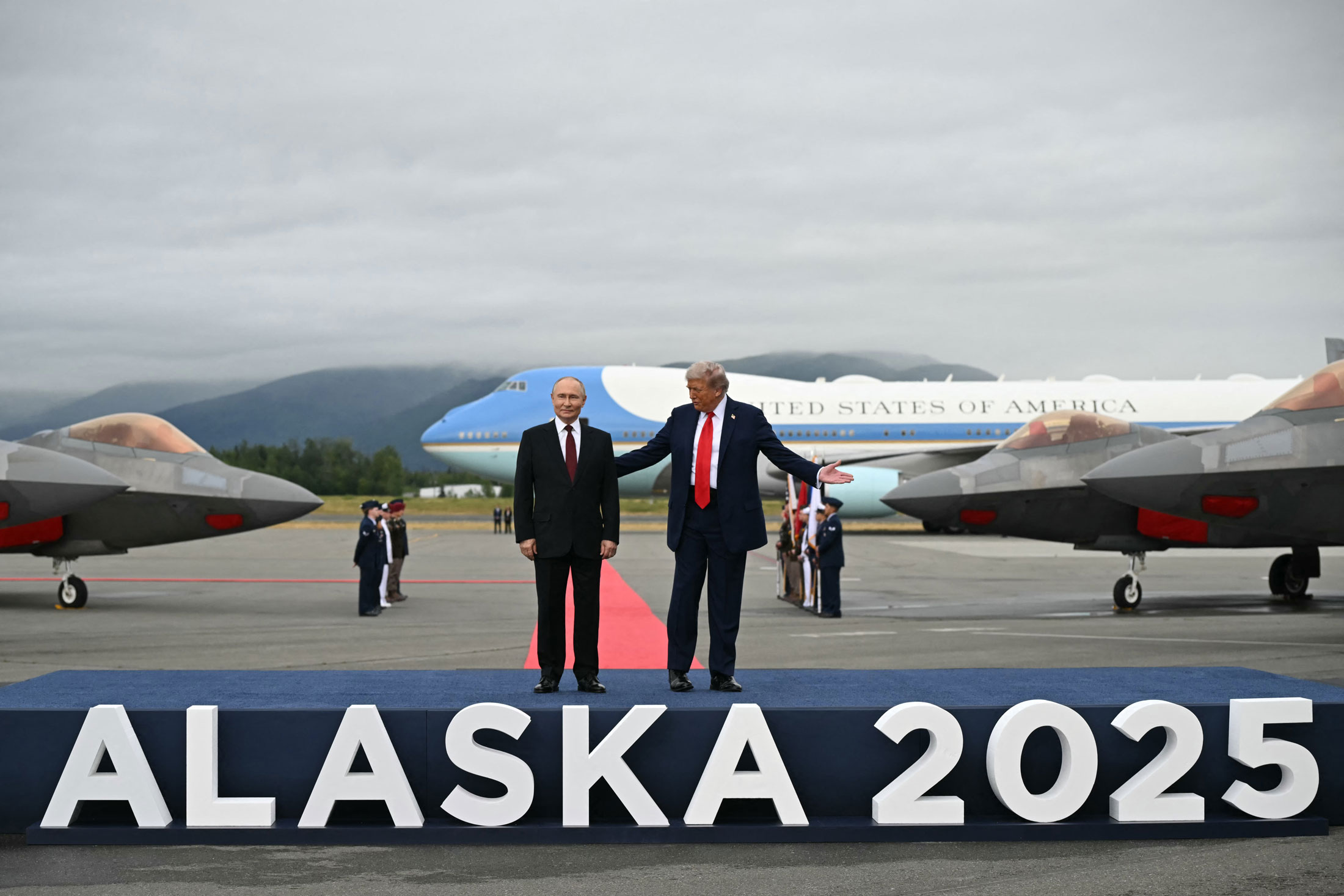
    Putin and Trump in Anchorage, Alaska, August 15 2025 (Getty)

    And therein lies Putin’s trap. His plan for the endgame in the war is to do everything in his power to convince Trump – his new best buddy and business partner – that he is behaving reasonably, making concessions, bending over backwards to keep dialogue open. At the same time, he will lay down a series of conditions that Zelensky will refuse to accept.

    At which point Europe will be forced to choose between heroic and principled words about refusing to compromise Ukraine’s sovereignty – which would mean supporting Ukraine’s war effort without US assistance – and an ignoble compromise with the Kremlin.

    Take the “land swaps” which Trump has mentioned so many times. In reality, that’s a reference to Putin’s demand that Kyiv surrender control of the third of Donetsk and a small sliver of Luhansk provinces that he has so far failed to take. In exchange, Putin proposes to withdraw from small chunks of Sumy and Kharkiv provinces that he occupies, and also drop his claim on the remainder of Kherson and Zaporizhia. Effectively he’s demanding some very valuable and heavily defended real estate – including the fortress cities of Kramatorsk, Sloviansk and Konstantinovka – in exchange for land that he has not yet been able to conquer.

    Amazingly, Trump has reportedly agreed that this is a reasonable price for Kyiv to pay for peace. Yet Zelensky cannot surrender this territory either politically or practically. Tens of thousands of Ukrainians have died defending those positions, and it’s possible that his troops would refuse orders to withdraw even if he tried to make them. And Ukraine’s ultranationalists would be literally up in arms over such a betrayal, making Ukraine instantly ungovernable.

    The brutal truth is that for the past three years the Europeans have been lying to Ukraine and themselves

    Putin has laid a similar political minefield for Zelensky and his European allies over legal recognition of the territories he has occupied. Again, Trump is reportedly in favor of forcing Kyiv to de jure recognize Crimea as Russian, while leaving the rest of occupied Ukraine in a legal limbo. Again, such a humiliation would be political death for any Ukrainian leader who made it and incur the armed wrath of legions of angry, heavily armed, well-organized and politically vocal veterans groups such as Azov.

    Putin has dozens more such humiliations in store for Kyiv and its backers before he is ready to end his assault on Ukraine. On the economic front, his wish list includes the lifting of sanctions, a resumption of flights and the unfreezing of billions of Central Bank assets. On the geopolitical front, he wants a constitutional guarantee that Ukraine will never join Nato and restrictions on weapons and troops NATO can deploy to border countries such as the Baltic states, Romania and Poland, as well as an assurance of no more Nato eastward expansion to Moldova and Georgia.

    In Ukraine, he would demand the enshrinement of Russian as an official language, granting Russian-speaking regions the right to their own education and examinations, and the restoration of the properties of the wing of the Ukrainian Orthodox Church which remains loyal to the Moscow Patriarchate. He would also insist on scrapping Ukrainian laws banning Soviet symbols and suppressing the memory of Soviet-era war heroes and cultural figures, in addition to allowing towns to restore demolished monuments to Russian czars and writers. Putin would have Kyiv un-ban Russian-language radio and TV stations and newspapers, as well as political parties sympathetic to Moscow, and unfreeze the assets of the 5,000 people sanctioned for being pro-Russian by Ukrainian presidential decree.

    That’s to mention just the top dozen of Putin’s demands. Some he will get, some he won’t. But we can be sure that he will push for all of them, and more.
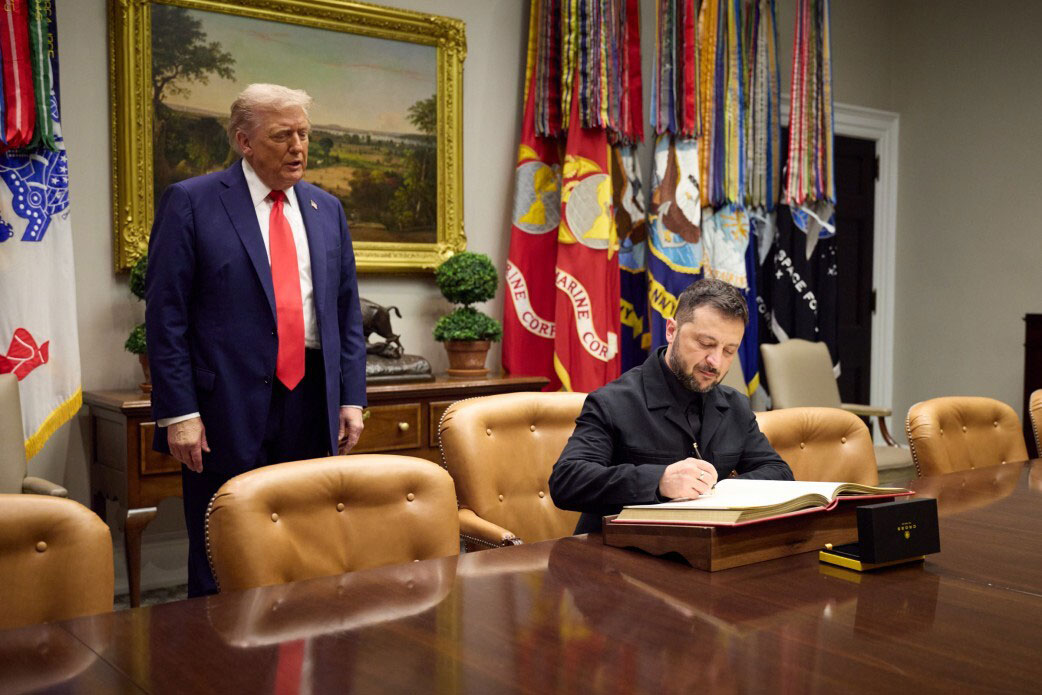
    Zelensky signs the guest book following his meeting with Trump in Washington, August 19, 2025 (Getty)

    The question for Europe is stark: what will they do if and when Ukraine refuses to submit? If Trump is fine about surrendering the remainder of Donbas, we can be sure that he’s not likely to take a stand against Putin over such details as statues of Pushkin or the rights of the suppressed Russian Church (a major grievance for religious-minded MAGA supporters).

    J.D. Vance has made his position on Europe clear. “This is your neck of the woods… you guys have got to step up and take a bigger role in this thing,” the Vice President said earlier this month. “If you care so much about this conflict you should be willing to [fund] this war yourself.” The US, for its part, “wants to bring about a peaceful settlement to this thing, we want to stop the killing,” he added. Trump has repeatedly promised to do his best to play the peacemaker. But if the Ukrainians and their allies don’t wish to agree, Washington will walk away. “Keep fighting,” wrote Trump last week. “Good luck.”

    The brutal truth is that for the past three years the Europeans have been lying to Ukraine and themselves. In the spring of 2022, Europe, led by Boris Johnson, encouraged Zelensky to fight on and promised Ukraine “as much support as they need for as long as they need it.” Ukraine kept its part of the bargain, and with the help of hundreds of billions in military and financial aid pushed Putin’s far larger army back from over half of the territory it once occupied.

    That’s an extraordinary achievement. But it hasn’t been enough to win. And by this point many of Kyiv’s most passionate defenders in Europe are starting to acknowledge that there is little military or political point in fighting on. Others, like the Baltic nations, disagree.

    For those allies who believe that it’s time to call it a day, the main point that remains to be decided is how Ukraine’s reduced new borders can be protected in a way that Putin will not dare to challenge. Starmer and Emmanuel Macron’s idea of putting NATO boots on the ground is foolish and misunderstands that the basis of Putin’s paranoid logic in starting the war was to avoid precisely that outcome.

    The “NATO Article 5-like” security guarantees of which Italy’s Giorgia Meloni spoke in Washington this week (albeit accompanied by extravagant air quotes) sound formidable. The problem is that security guarantees have to be credible to work. And will Putin believe that Starmer or Macron will send their voters’ sons to fight over Donbas, when they have already said that their proposed minuscule peacekeeping force will be “backstopped” by US air power?

    Of more practical use is a proposal to create a network of air defences made of Patriot batteries and drones along the length of Ukraine’s border, funded by Europe. That’s what Ukraine’s reported offer to buy $100 billion in US weaponry is about, and includes a staggering $50 billion to develop new-generation drones in partnership with the world’s biggest experts in Ukraine itself.

    Ben Wallace, the former UK defense secretary, has called Trump the “appeaser-in-chief” and warned that the peace process could be “another Munich 1938,” when independent Czechoslovakia was sacrificed to Hitlerite aggression. But that is a bad analogy. At Munich, Sir Neville Chamberlain failed to avert war. Today’s Ukraine, with western help, has failed to win a war. But neither have they lost. Instead, like Finland in 1941, they have heroically fought a much stronger adversary to a halt and saved 80 percent of their country and now face a bloody, attritional stalemate.

    Putin would like nothing more than for Europe to encourage Ukraine to fight on, and to lose even more of their land and independence. The question Ukraine’s friends must ask themselves today is whether it’s time to choose an unjust peace over a righteous but never-ending war.

  • The Alaska summit went much as expected

    The summit between Presidents Donald Trump and Vladimir Putin ended predictably, without a ceasefire deal or, it seems, assent on much else. Trump said “Many points were agreed to, and there are just a very few that are left,” but failed to offer any details. Even if true, the leftovers are critical, and the gulf between the two governments on the war remains huge. Critically, Putin cares more about security than image or economics, and understandably believes that he would lose leverage by agreeing to halt military operations before winning the concessions he demands from Ukraine.

    Nevertheless, the summit improved, however slightly, the prospects for negotiating an end to the war. With Moscow on the offensive, a peace that preserves Ukrainian sovereignty and independence requires that Kyiv talk with the Putin government. Diplomacy has stirred, however ineptly. Necessary now is getting Ukraine and Russia to negotiate, while encouraging both to be realistic. To end a conflict that is costing both sides dearly, Kyiv will have to lose territory and endure neutrality, while Moscow should accept a Ukraine that leans West politically and economically, though not militarily. Since battlefield success may have emboldened Putin, Trump should use the prospect of improving political relations and economic dealings with the West in an attempt to pull Moscow toward a compromise capable of delivering a stable peace.

  • Trump, Putin, and the hidden power of the Bering Strait

    Ahead of the Trump-Putin summit in Alaska to discuss Ukraine, President Trump said there would be “some land swapping.” He waxed lyrical about “prime real estate.” The summit’s location is a good example of land swaps and prime real estate and is in a region of growing geopolitical importance.  

    In 1867 Russia “swapped” Alaska for $7.2 million in a deal mocked as Seward’s Folly after Secretary of State William H. Seward who negotiated the exchange. It turned out to be a snip. Commercially viable oil was discovered three decades later and has brought in more than $180 billion in revenue since Alaska became a state in 1959.

    However, it’s not just the 49th state’s oil (and gas) which makes it so important, it’s the maxim which is so close to prime real estate agent’s hearts – “location, location, location.” Alaska sits on one side of the Bering Strait which separates the US from Russia. The Strait connects regions each country considers vital for trade and security – the North Pacific, and the Arctic. 

    Strategic thinking in Moscow increasingly views the entire Arctic coastline as a continuous domain stretching from Norway, across the top of Russia, and then down through the Bering Strait. The route links Russia’s Northern Fleet, based in Murmansk on the Arctic, to one of the main bases of its Pacific Fleet in Kamchatka. This is the Northern Sea Route, or NSR.

    The Arctic Ocean has begun to thaw seasonally, a trend expected to continue. This means the NSR is already navigable for cargo ships for at least three months a year without needing icebreakers. Ships taking this route from Asia to Europe can sail 5,000 fewer miles than via the Strait of Malacca and Suez Canal. Journey times are cut by at least ten days with concurrent savings in costs. The savings (including insurance) are even bigger if compared with the path around Cape Horn in Africa which some vessels now take due to the Houthis firing at ships in the Red Sea en route to Suez. 

    Russia charges vessels a tariff in parts of the NSR’s waters, all of which are within its Exclusive Economic Zone. Over the next few decades this source of revenue will increase concomitant with more frequent use, while Egypt will see a decline in fees for the Canal. The melting ice caps, and new shipping route, also make the Arctic’s untapped deposits of rare earth minerals, oil, and gas more accessible. The eight Arctic countries all hope to benefit from this but others, notably China, are also involved. 

    These are the reasons why more than a decade ago Russia began re-establishing its military power in the Arctic. It has reopened bases mothballed at the end of the Cold War and invested in new airfields, radar stations, and infantry equipped with “Arctic-proof” drones built to withstand the climate. 

    The Strait connects regions each country considers vital for trade and security – the North Pacific, and the Arctic

    This has drawn attention back to what was thought of as a conceptual relic of the Cold War – the Greenland-Iceland-UK (GIUK) Gap. This gateway to the Atlantic consists of the sea lanes the Russian Navy would need to pass through to strike targets in Europe or the Northeast American seaboard – hence President Trump’s interest in Greenland. The world’s largest island is the shortest route to the eastern parts of the US for Russian submarines and missiles. Controlling Greenland would allow the building of more radar stations and missile defense systems in addition to the Pituffik base which is home to part of US Space Force. It would also allow access to Greenland’s huge supplies of cobalt, uranium and lithium – metals upon which the Americans are overreliant on China. 

    It is to be hoped that President Trump knows some of this history and geography because the fate of Ukraine is connected to what happens in regions listed above. A victorious Russia would embolden Putin to continue pushing out in all directions – towards Moldova, the Baltics, Kazakhstan, and possibly even the Bering Strait. 

    The “Baker-Shevardnadze Line” across the Strait was agreed between the USSR and US in 1990. However, although Russia and the US later agreed that it marks their maritime border Russia never ratified the deal and said it would only observe it on a temporary basis.  Moscow is no position to seriously contest the line, or passage through the Strait, but may do in the future especially if it wins in Ukraine. There are even nationalist voices in Russia claiming Alaska is Russian and that the country was cheated out of its ownership. 

    However, Seward’s Folly is now a fully integrated part of the US, its economy, and its defense strategy, as reflected in the air bases and ballistic missile defense systems located in a state which is closer to Moscow than Washington, DC. As well as being keenly aware of the above, the US looks southward. So does Russia.

    The Aleutian Islands, for example, are part of Alaska and host some of America’s missile defense system. The chain stretches 1,000 miles across the southern part of the Bering Strait towards Russia’s Kamchatka Peninsula – home to Russia’s Pacific Fleet submarines and long-range fighter jets. Further south is the Fleet’s main base in Vladivostok. Everything is connected, and the gateway to the Arctic is the Strait.

    It’s importance waxes and wanes, 56 million years ago the region was tropical. It’s heating up again, in many ways.

  • Zelensky must give way

    Is Volodymyr Zelensky becoming a liability for the West and for his own country? We are entitled at least to pose this question as we (I mean America and Europe) are funding this war. 

    I ask because it is clear, and for years has been clear, that the conflict with Russia must end in a compromise, and the shape of that compromise should not be in doubt. Russia must be given a ladder to climb down and this must involve land. Ukraine must gain what from the start has been the great prize that Moscow has tried to deny it: an unshakeable place in the community of European democracies, with the military and economic guarantees from the West that make that place secure. 

    It was the then-British Prime Minister Boris Johnson who first framed the idiotic boast that now threatens to block progress towards such a settlement. “Not an inch!” he cried, to Ukrainian cheers, when he was prime minister. Perhaps he thought this was just the kind of thing you say for an easy headline and the whoops of the groundlings; but even he must have doubted that Russia could realistically be driven from everything it had gained, and Vladimir Putin be forced to grovel. Too many Western minds, I think, have been prey to the illusion that the second world war was a template for future conflict, and Hitler a template for Putin. Most wars, however, end in messy compromises, and that is how this one must end too. 

    Let me start with the issue of land. It would be stupid for a generalist columnist like me to feign the knowledge that will be needed once negotiations over new borders begin, but I will volunteer this: Crimea (it can at least be argued) is not historically part of Ukraine and only got tacked onto Ukraine when the Soviet Union had both of them among its many countries and regions. I spent time in Ukraine last year, choosing to talk not to soldiers, generals or politicians, but to the under-25s. If you seek the point on the dial when many younger Ukrainians’ refusal to contemplate ceding territory begins to waver, that place is Crimea.

    The fact is that neither side seems capable of winning, so let’s park the sermonizing and look for the compromise in which so many wars – just wars as well as unjust ones – have always ended

    Despite official assurances from Ukraine that most citizens are against a land-for-peace deal, other polls (and my own conversations) suggest that people don’t have principled objections to any ceding of land so much as serious doubts about whether Putin could ever be trusted to keep his word once a land-for-peace deal had been signed. 

    That then – the security side of the agreement which I suggested at the beginning of this column – is absolutely the nub of the entire settlement. I’m in no doubt that if the Ukrainian people could be convinced the settlement would be permanent, and backed to the hilt by the West, they would vote tomorrow for a treaty that gave Russia permanent possession of some of what it has already taken. 

    Let me anticipate at this point some readers’ objections. Firstly this: “Nothing agreed with Putin can he be relied upon to honor.” The trouble with this objection is that it is too strong. It means that even if he could be driven back to the old frontiers, and surrendered, he would try again later. I reply that he well might: that is why the security guarantees for Ukraine remain key. 

    Secondly this: “We must never reward Putin’s aggression.” I’m afraid that, ever since wars began, aggression has often been rewarded. This one, in which incalculable numbers of lives on both sides have already been lost, and if it continues many more will be, must not be accorded the status of a moral lesson for the ages. The fact is that neither side seems capable of winning, so let’s park the sermonizing and look for the compromise in which so many wars – just wars as well as unjust ones – have always ended. 

    And finally this: “We owe it to the Ukrainian military dead, brave men and women whose lives were sacrificed for their country, not to settle for less than victory.” Well, if so, does Russia not owe it to the greater numbers of Russian military dead whose lives were sacrificed for their country too? What do we owe the American or British dead whose sacrifice in Afghanistan was also for a noble cause? This logic, applying as it must to both sides of any conflict, leads only to madness.

    None of us should be at all confident that Putin is ready to deal. I suspect otherwise. The greater likelihood is that in any negotiations he will fall back on Moscow’s insistence that “the root causes” of this conflict must be tackled. By this he means Ukraine’s departure from the orbit of the Russian Federation. That is why security, not land, is what may prove the sticking point this time, because Ukraine’s departure from Moscow’s orbit must indeed be made secure. 

    But if not this summer or this year, then next summer and next year, when the West’s military support for Ukraine does not waver, and Moscow grows weary, this – security – must be at the heart of any negotiations. And those guarantees are up to us. 

    Which brings me back to Zelensky. Who can blame him? Perhaps years of war, years of acute personal tension, years of sticking doggedly to your guns, years in the eye of the storm when your whole country’s future rests on your shoulders, jam the flexibility of mind needed, not to fight but to deal. But there’s a real danger now that Zelensky’s apparent stubbornness over this “not an inch” business may so infuriate a temperamental US President that American (and with it European) resolve begins to fray. 

    Zelensky should not be digging in his heels on the question of land, and European nations should not be encouraging him to. Europe probably can’t save Ukraine without the Americans, and the Americans won’t save Ukraine unless there’s movement on conceding land. 

    The Ukrainian President must get off his high horse, and Europe should stop indulging his intransigence. It’s as simple as that. 

  • What Alaska means to Putin

    What Alaska means to Putin

    From the Kremlin’s point of view, holding a US-Russia summit in Anchorage, Alaska is an idea of fiendish brilliance. The venue itself determines the agenda. Literally half a world away from the petty concerns of the European continent, Donald Trump and Vladimir Putin can flex the vastness of their respective countries. Anchorage is an eight-hour flight from Washington D.C. and roughly the same distance from Moscow, flying over no other country but Russia for most of the way. By traveling to the point where their countries almost touch in the North Pacific, both leaders can feel justified in prioritizing issues that concern just the two of them, from arms control treaties to space cooperation to Arctic mineral rights. Seen from Anchorage, Ukraine seems a very distant and very local problem. 

    The summit is the brainchild of Yuri Ushakov, a veteran diplomat who joined the USSR’s foreign ministry in 1970. Ushakov is a wily old attack dog who learned the ways of Washington during a decade-long stint as Russian ambassador from 1998 to 2008. And in suggesting Alaska as a meeting point, Ushakov clearly knows how to flatter not only Trump’s ego but also his own President’s obsession with history. 

    For Putin, Russia’s conquest of northeast Asia and much of the coast of America’s Pacific Northwest is the founding myth of his country’s modern greatness. In the 16th century Muscovy and Spain had both defeated Muslim occupiers and began expanding into rich new worlds east and west – in Spain’s case, gold-rich America; in Muscovy’s, fur-rich Siberia. Spanish conquistadors and Russian Cossacks reached the Pacific from different sides and started settling colonies along the coasts. In 1776, the Spanish Crown ordered the foundation of San Francisco – in the form of a Franciscan Mission and garrisoned Presidio – in direct response to news that Catherine the Great had started assembling a major Russian fleet to grab the unclaimed territory of northern California. In the event, Catherine’s fleet was redeployed to fight a war with the Swedes, leaving most of California to the Spanish. Who was to say who was the more logical ruler of America’s north-west coast, distant Madrid or distant St Petersburg?

    For Putin, Russia’s conquest of northeast Asia and much of the coast of America’s Pacific Northwest is the founding myth of his country’s modern greatness

    From 1816 until 1842 the southernmost frontier of the Russian empire was 70 miles north of San Francisco at Fort Ross on the Russian River (hence the name). For a brief period in the early 19th century Russia had a colony on Kaua’i island in Hawaii. And until 1867 the modern state of Alaska with its 6,500-mile coastline was known as Russian America and was a possession of the czar’s. 

    In the wake of the Crimean War, during which a Royal Navy force bombarded and briefly occupied the port of Petropavlovsk on Kamchatka, Czar Alexander II realized he lacked the naval power to maintain control of his American colonies. He first offered Russian America to the British prime minister Lord Palmerston for the eminently logical reason that the territory was contiguous with British Columbia. Palmerston, however, was uninterested in acquiring half a million square miles of mostly unexplored North American wilderness. The only other plausible buyer was the US. But it took two years, and the distribution of tens of thousands of dollars in bribes to congressmen, for the Russians to persuade a reluctant secretary of state, William Seward, to write a cheque for $7.2 million for the Alaska Purchase – mocked at the time as “Seward’s Folly.” 

    Even today, Alaska still bears the stamp of its century and a half as part of the Russian empire. A third of Alaska’s population is Native American (by far the largest proportion of any US state) and most of the Aleut and Tlingit peoples still adhere to the Russian Orthodox faith. The major feature of every coastal town from Sitka to Kodiak is a distinctively Russian church, and there are communities of black-robed monks on out-lying islands – though most are Americans and their services are in English. Colonial echoes of Britain, France and Spain are commonplace in other countries, whether Anglican worshippers in Simla, French baguettes in Saigon or Spanish missions in California. Living echoes of a vanished Russian empire are much rarer and exist mostly in Alaska. 

    It is clearly flattering and heartwarming for Putin to meet his American counterpart on what was once Russian territory. Some more excitable western commentators have claimed that hosting a summit in Anchorage encourages Putin’s neo-imperial ambitions – including, supposedly, reclaiming the American lands sold by Alexander II. But the idea that “Alaska Nash” (Alaska is Ours) is anything other than a Russian pub joke is absurd. A roadside billboard bearing that slogan and featuring a map of Russia including all of Alaska has been doing the rounds of Twitter as supposed evidence of Putin’s revanchism. In fact it’s just a jokey advertisement for a real estate company called Alaska. 

    Rather than dog-whistling Russian imperialism, the location allows Putin to appeal to a bygone age of Russian-American cooperation where the two nations divided up large swaths of the world. The most recent example is, to Putin’s mind, the Yalta conference of February 1945 where Stalin, Roosevelt and Churchill pored over maps and divided spheres of influence in the crumbling Nazi empire. A similar carve-up of Ukrainian territory is exactly what Volodymyr Zelensky fears and he has spent the week since the summit was announced gathering European support to insist that no deal can be done over the heads of the Ukrainians. 

    Unfortunately for Kyiv, and for the Europeans, they’re not invited. It’s also highly likely that even if Putin and Trump reach some kind of a deal on a ceasefire, it will be largely on Russia’s terms. But it’s also possible that Moscow and Washington could agree on other, non-Ukraine related issues, such as getting Putin back on board with the New START treaty limiting the number of deployed nuclear weapons – the kind of deal that nuclear superpowers make between each other. And there is nothing that both Putin and Trump enjoy more than playing the role of imperial presidents.

  • Trump’s plan to smash the BRICS

    Trump’s plan to smash the BRICS

    Donald Trump has never lacked confidence. “I’m here to get the thing over with,” he said last week when announcing the meeting with Vladimir Putin. “President Putin, I believe, wants to see peace. And Zelensky wants to see peace. Now, President Zelensky has to get… everything he needs, because he’s going to have to get ready to sign something.”

    To many, that sounded like a variation on Trump’s much repeated election claim that he would end the Ukraine war in 24 hours: a grandiose statement that will probably bear little if any fruit this week. Indeed, the smart money is on the Alaska summit resulting in claims of a “historic breakthrough,” which will change little on the front lines.

    One of the challenges when assessing Trump’s administration has been how to separate the signal from the noise. The President’s personality and his stream of consciousness comments often give the impression of a man operating on instincts. Trump’s transactional instincts, though, made him think Putin would behave in a logical way – that the Russian leader would welcome the chance of a reset to calm an overheating economy, move Moscow away from the horrors of an estimated million men killed or wounded, and bring Russia back into the family of nations.

    The fact that, until now, Putin has rejected Trump’s overtures is revealing about the former’s view of the strength of his hand – as well as a misreading of his opposite number, something that is regularly reinforced in the Russian media’s lampooning of Trump.

    The President may have taken his time to play his cards, but he’s chosen a good time to play them – and not only in the case of Russia. The Alaska summit isn’t just about Ukraine: it’s a key point in an elaborate, even existential game of geopolitical chess that will define the coming decade, if not longer. It’s about Trump vs BRICS (Brazil, Russia, India, China and South Africa).

    Few paid much attention when the foreign ministers of Brazil, Russia, India and China first met on the sidelines of the UN General Assembly in New York in 2006, at the first summit in Yekaterinburg in Russia three years later, or when South Africa joined in 2010 to form the BRICS grouping. This has subsequently expanded to ten full members, with Egypt, Ethiopia, Iran and the United Arab Emirates joining as full members last year and Indonesia joining in January.

    BRICS represent half the world’s population and 40 percent of its GDP in terms of purchasing power

    Taken as a group, BRICS represent around half the world’s population and some 40 percent of its GDP in terms of purchasing power parity. Although the aims and ambitions of its members diverge on many topics – including on what BRICS can and should do – the underlying theme is that global economic power needs to be passed from the West to the developing world, and that, as a result, a more balanced global order will emerge.

    Trump has had the BRICS group in his sights for a while – especially the possibility that they might act to create an alternative to the US dollar. Soon after last year’s election, he declared: “We require a commitment from these countries that they will neither create a new BRICS currency nor back any other currency to replace the mighty US dollar, or they will face 100 percent tariffs and should expect to say goodbye to selling into the wonderful US economy.” For BRICS to succeed, he said, they would need to “go find another sucker.”

    Trump has repeatedly returned to the BRICS problem. “BRICS was put there for a bad purpose,” he said earlier this year, shortly before meeting Indian Prime Minister Narendra Modi. Indeed, the BRICS bloc provides, if not all, then at least a major part of the framework through which Trump’s economic policy has been constructed. Just last month, he said that tariffs would apply not only to the BRICS countries, but to any that align with what he called their “anti-American policies.” He spoke about BRICS again soon after, saying that if the original members “ever really form in a meaningful way, it will end very quickly.” He added that the US “can never let anyone play games with us.”

    It’s no coincidence, then, that the efforts to push Russia into a settlement in Ukraine are taking place now. Trump announced 50 percent tariffs against Brazil – something that led to President Lula da Silva, tellingly, to say he would confer with fellow BRICS members. Likewise, the President has said he will probably “send someone else” to the G20 meeting being held (for the first time) in South Africa because of that country’s “bad policies.”

    The President ’s main concern is the group might act to create an alternative to the US dollar

    Trump also knows that Russia’s economy is in a bad way. The US having used tariffs to squeeze Putin’s allies in BRICS, Moscow looks increasingly vulnerable. Indeed, recent economic news coming out of Russia is bad. Elvira Nabiullina, the governor of the central bank, warned in June: “We have adapted to some external challenges [but] now we are facing very turbulent times ahead.” Putin himself expressed that Russian officials not only had to be vigilant “not to allow stagnation or recession,” but also that it was crucial for Russia to “change the structure of our economy.”

    Although interest rates have been trimmed back to 18 per cent, things continue to look bleak. More than 50 coal producers have either closed or are closing. Steel production among the largest producers is down by a fifth, year on year. The chief executive of Domodedovo airport, one of the busiest in Russia – and, before the war, in Europe – is close to bankruptcy.

    Unseasonable frosts followed by extreme drought have had a dramatic impact on grain and food production, which have seen prices spike. The shortfalls compared with previous years are impacting Russia’s export economy and its foreign currency earnings.

    This comes on top of concerted action by the European Union to move away from Russian natural resources. A decade ago, Russia’s trade with the EU totaled around $420 billion a year. With sanctions, that had plummeted to roughly $60 billion last year; it’s projected to shrink further to only $40 billion this year. Alexander Grushko, the deputy foreign minister, warned last month that trade with the EU – once a linchpin of Russia’s economy – could “fall to zero” if current trends continue.

    Perhaps the best example to show the strain that Russia is under comes from seeing who sits behind its war economy. An estimated 40 percent of ammunition used on the front lines is supplied by North Korea – and significantly more in some places. Zvezda TV, a state-owned network run by the Russian defense ministry, has shown films of teenagers working in drone factories in Tatarstan, a region which has just seen the influx of a small army of industrial workers from North Korea – estimated to be 25,000-strong – to work as technicians, machinists and electronics assemblers.

    For all of Moscow’s tough talk, the reality is that minds are more focused than they have been since the start of the invasion. That’s why substantial groundwork has been done over the past few weeks – and why there’s more to the Alaska meeting than a photo opportunity.

    Trump’s push to get Russia to agree to a settlement – and the US’s efforts to encourage Kyiv to accept it – are part of a wider attempt to reshape the emerging multipolar new world order. Trump is not just gunning for Russia; he is trying to use US firepower against BRICS at the same time.

    Of the BRICS grouping, India is one country that Trump has had in his sights for a while. In 2020, relations between Trump and Modi were unusually warm. India was “one of the most amazing nations,” Trump declared. Things were similarly sweet when Modi visited the White House in February. Just as Trump sought to Make America Great Again, Modi was seeking to Make India Great Again. “When America and India work together, this MAGA plus MIGA becomes a mega partnership for prosperity,” Modi said.

    Trump has decided, however, to show that American power can focus minds. As India’s veteran external affairs minister S. Jaishankar put it, India sees its role as being to “engage America, manage China, cultivate Europe, reassure Russia, bring Japan into play, draw neighbors in, extend the neighborhood, and expand traditional constituencies of support.”

    That sounds sensible; but balancing acts are tricky to pull off. Deep ties between Moscow and Delhi, which go back to before Indian independence and which remained strong during the Cold War, have been maintained since the fall of the Berlin Wall. India pointedly abstained from a vote at the UN to condemn Russia’s invasion of Ukraine in February 2022 and has abstained on subsequent occasions, too.

    Apart from membership of BRICS, the heavy dependence on Russian military hardware – including the delivery of two warships built in Russian shipyards in recent months – and a formal agreement reached between the two countries at the end of 2023 to deepen collaboration, India has seen its trade with Russia boom in recent years.

    Before the 2022 invasion of Ukraine, trade between the two countries stood at around $12 billion a year; by the end of 2023, it had quintupled to $65 billion. Much of that was through the purchase of discounted oil – a great deal of which has in turn been sold on to markets elsewhere. So great have volumes been that India has overtaken Saudi Arabia as the biggest supplier of oil to Europe – impressive given that India is only a modest producer in its own right.

    That realisation is why Trump turned on Delhi last week, announcing a 50 percent tariff on Indian goods. India operates “strenuous and obnoxious trade barriers,” he said.

    But it was the fact that Delhi is siding with Moscow that underpinned his change of pace. The Indian government doesn’t “care how many people in Ukraine are being killed by the Russian war machine,” Trump said. Russia and India “can take their dead economies down together, for all I care”. While officials in India said the US charges were “unfair, unjustified and unreasonable,” Trump used the opportunity to announce a new trade deal with Pakistan, adding that the US would help develop the latter’s “massive oil reserves,” and that perhaps one day Pakistan will be “selling oil to India”.

    This is part of a coherent effort to use US economic and political power to frame the world of today and tomorrow. There is intention, in other words, behind the lining up of different pieces of the geopolitical jigsaw at a time when, as Xi Jinping told Putin: “There are changes, the likes of which we have not seen for 100 years.”

    Trump is not just gunning for Russia; he is trying to use US firepower against BRICS at the same time

    Together with China and their fellow BRICS members, Putin believes that Moscow is driving these changes. Trump feels that the US needs to stand in the way.

    At a Senate hearing shortly before Trump’s inauguration, the Secretary of State-designate Marco Rubio made the telling claim that “the post-war global order is not just obsolete, it is now a weapon being used against us”. He reiterated this at Nato headquarters in Brussels a few weeks later. This is why it is so essential to “reset the global order of trade,” he said.

    The view that we are in an age of existential competition is shared elsewhere. The influential Chinese scholar Liu Jianfei argues that not only is there a “great game” under way between rival superpowers, but this represents “a contest between national governance systems and the direction of global governance and international order.”

    The Alaska summit is a key moment in that contest – perhaps even a turning point.

    Of course, there’s a giant piece of the jigsaw missing here – and with good reason: China. The shadow-boxing between Trump and Xi is more nuanced, more intense and more evenly matched. That is where the battle over the global order goes next.

    For now, the question will be whether Trump’s grand strategy to break up the emerging multipolar order has enough force behind it to deliver the results he is hoping for. Or whether it might in fact strengthen, rather than weaken, those countries who feel their time has come.

  • How the Arctic could thaw US-Russia relations

    “It is in Alaska and in the Arctic that the economic interests of our countries converge and prospects for implementing large-scale mutually beneficial projects arise,” said Yuri Ushakov, Vladimir Putin’s long-time foreign policy adviser and former Russian ambassador to the United States, at a Friday press conference in Moscow. His words pointed to Arctic economic cooperation being firmly on the agenda when Donald Trump meets Vladimir Putin in Alaska on Friday. For Trump, a massively important commercial deal of this kind is his typical negotiating strategy. It’s the “Art of the Deal” – offer something big, lucrative and tangible, then leverage it to unlock political concessions. It’s the template Trump just used to broker a peace agreement between Rwanda and the Democratic Republic of Congo, where economic incentives were bound up with resolving a long-running security dispute.

    An Arctic agreement between the US and Russia could revive energy collaboration between the two countries on a breathtaking scale. A deal would be massively lucrative for both sides. The Arctic contains an estimated 13 per cent of the world’s undiscovered oil, roughly 90 billion barrels, and 30 per cent of its undiscovered natural gas. Russia controls around half of that, with explorers pointing to 2,300 million metric tons of oil and condensate, and 35,700 billion cubic meters of gas. It’s a bonanza tailor-made for Trump’s America First. Parlay US expertise and capital into these frozen assets and the pay-off would be staggering. The shipping upside is no less compelling. The Northern Sea Route offers the promise of slashing shipping times between Asia and Europe by up to 50 per cent. As melting ice slowly opens the Arctic lanes, that cut becomes ever more real: less fuel burned, no queueing at chokepoints, and avoidance of piracy hotspots. Pair that with a fleet of US oil champions and Arctic logistics savvy, and Trump suddenly holds a commercial deal that has the feel of an irresistible boardroom trophy.

    The US and Russia have been here before. In 2011 ExxonMobil struck a landmark deal with Russia’s Rosneft to explore and drill in the Russian Arctic, including the Kara Sea. It was a project worth tens of billions, giving Exxon access to vast untapped reserves and giving the Russians US technology and expertise. Drilling began, but the partnership was suspended in 2014 when western sanctions were imposed after Russia’s annexation of Crimea. Bringing it back to life, or using it as the template for new ventures, would be straightforward in commercial terms. The infrastructure, geological data and corporate relationships already exist. A revived Arctic partnership could go beyond oil and gas to include liquefied natural gas terminals, port upgrades, and joint development of the Northern Sea Route, binding the two economies together in one of the last great frontiers for energy extraction.

    There is no confirmation that the Arctic and Ukraine will be explicitly linked. Yet the logic is obvious enough and the hints coming from Moscow cannot be ignored. For Putin, the Arctic could be the sweetener that secures US agreement to a settlement on his terms in Ukraine. Moscow is unlikely to shift on the fundamentals: Crimea and the Donbas are written into Russia’s constitution as part of its territory. Any deal would lock in those gains, demand Ukraine’s demilitarisation and secure a buffer against Nato. Trump could claim an Arctic deal as a massive commercial win for the US and the end of a war which he insists was caused by Biden. Putin could gain Washington’s help in pushing Kyiv to accept the deal.

    Trump’s leverage is blunt. Kyiv’s very survival depends on American weapons and cash. By threatening to cut them off, Trump can force Zelensky to the table on terms Kyiv has long rejected. For Trump, this is straight from his negotiating playbook: create a crisis point, hold the most valuable card, and make sure everyone knows you are prepared to walk away. For Zelensky, the choice would be between accepting a peace agreement that leaves Ukraine truncated, or facing a war without US backing.

    Ukraine’s position is fragile. Its army is drained, its economy battered, and its war effort hinges on western aid. European and UK promises mean little without US firepower and financing. If Trump decides to pivot towards an Arctic bargain with Putin, Kyiv may need to fall in line or face the battlefield more or less alone. Zelensky can draw red lines, but without American support they’ll count for little.

    The EU and Britain would protest loudly, but they lack the leverage to block an American/Russian deal. Brussels, London, Paris and Berlin have all made clear that no settlement should be struck over Ukraine’s head, yet moral objections are no substitute for raw power. British, French and German support for Ukraine may not make much of a difference to the Russian advance if the war were to drag on without full US support.

    Kyiv would be furious about a deal on the Arctic linked to Ukraine. Zelensky has built his presidency on reclaiming occupied land and has vowed never to cede Crimea or the Donbas. A deal that locks in those losses would be denounced as a betrayal. London would echo the outrage, while Brussels would convene summits and issue condemnations. Yet despite the rhetoric, the Europeans would be powerless to change the outcome. The settlement would already be signed and control of US financing of the war firmly in Trump’s hands.

    Beyond the western alliance, the reaction would be far warmer. Much of the global south sees the war in Ukraine less as a clash over borders, and more as a drag on global trade and growth. For China, India and Brazil, an end to the war, even entirely on Russia’s terms, would be hailed as pragmatic diplomacy. Trump could present the Arctic bargain as proof that US-Russia cooperation can solve global problems, and this would help blunt criticism from Europe and the UK.

    The incentives for both Trump and Putin line up neatly. For Trump, it would be another Trump ‘deal’ in which commercial muscle underwrites a political settlement. Putin would keep his territorial gains and reopen the Arctic to US investment, and Ukraine would be left to make the best of a settlement it didn’t shape. Britain and the EU would be reduced to a role of bystanders.

  • How much of a say does Zelensky still have?

    Over 1,265 days of full-scale war, Volodymyr Zelensky has delivered almost as many nightly addresses to the nation. Only a handful have been truly decisive. There was one just hours before the invasion when he asked, “Do the Russians want war?” and vowed that Ukraine would defend itself. The next day, standing outside his office in Kyiv with his top officials, he told the world: “I’m here. We’re all here.” And last weekend, when he declared that Ukraine would not surrender its land to the occupier – and that the war must end with a just peace:

    “[Putin’s] only card is the ability to kill, and he is trying to sell the cessation of killings at the highest possible price. It is important that this does not mislead anyone. What is needed is not a pause in the killings, but a real, lasting peace. Not a ceasefire sometime in the future – months from now – but immediately. President Trump told me so, and I fully support it.”

    Zelensky has felt blindsided by Donald Trump’s decision to meet Vladimir Putin in Alaska this Friday to discuss Ukraine’s fate without Ukraine present. Putin has reportedly proposed a ceasefire – not an end to the war, but a temporary halt ahead of the next stage of talks – in exchange for Ukrainian territory. Ukrainian forces would have to withdraw from the entirety of the Donetsk region, leaving the 2,500 square miles – about a quarter of the region – that they still hold. 

    This includes fortress cities such as Pokrovsk, Kramatorsk and Sloviansk, the strongholds Russia can’t seize quickly. The Institute for the Study of War notes that while the Russian push towards Pokrovsk has picked up speed in recent weeks, Moscow has spent the last 18 months fighting for an area of just ten square miles. It took 26 months for Russian forces to advance seven miles from western Bakhmut to western Chasiv Yar. This battle began in April last year and ended only last week, with Russia bearing immense losses. Since January only, Putin has lost 100,000 troops, according to Nato chief Mark Rutte. 

    Accepting Putin’s offer would strip Ukraine of its main defensive line at the western edge of the Donetsk region, which it has fortified since 2014, leaving only open fields all the way to the Dnipro river. That is why Zelensky insists that any discussion of territory can only happen after the guns fall silent. The idea of Russia pulling back from parts of the Kherson and Zaporizhzhia regions in exchange for Donbas has been floated before, and this land swap could be agreed de facto but not de jure. But even that seems to be a fantasy at the moment, given that Putin will not give up his land corridor to Crimea, and Zelensky will not hand over hundreds of thousands of Ukrainians still living in the part of the Donetsk region under Kyiv’s control – people who oppose their homes being ceded to Russia.

    Zelensky insists that any discussion of territory can only happen after the guns fall silent

    Kyiv’s stance was backed this week in a joint statement by European leaders, whom Zelensky has been calling to forge a united negotiating position to present to Trump before Alaska. “Meaningful negotiations can only take place in the context of a ceasefire or reduction of hostilities,” it read. “We remain committed to the principle that international borders must not be changed by force. The current line of contact should be the starting point of negotiations.”

    With Europe behind him, Zelensky tried to appeal to Trump on Saturday. In his speech, Zelensky reminded the American president that Ukraine had backed all of Trump’s earlier proposals, including an unconditional ceasefire and talks with the Russians in Istanbul, even while Moscow stalled and bombed Ukrainian cities. No one, Zelensky said, doubts America’s power to end the war. The mere threat of secondary sanctions on Russia and its allies had been enough to drag Putin out of his bunker and into negotiations. “The President of the United States has the leverage and the determination,” Zelensky said, leaving hanging the question of why Trump is not using them.

    Ukrainians have seen where appeasing an aggressor leads. Putin was allowed to take Crimea, and that led to the occupation of parts of the Donetsk and Luhansk regions. No punishment followed when he massed over 100,000 troops on Ukraine’s borders – and that led to the full-scale war, further occupation and hundreds of thousands of deaths. 

    “Putin wants to exchange a pause in the war, in the killings, for the legalization of the occupation of our land,” Zelensky warned. “We will not allow this second attempt to partition Ukraine. Knowing Russia, where there is a second, there will be a third. That is why we stand firm on clear Ukrainian positions.”

    Finally, Zelensky turned to the Ukrainian people, many of whom were protesting outside his office just two weeks ago after the government attacked anti-corruption agencies, to thank them for standing with him. A new poll from the Kyiv International Institute of Sociology shows 76 per cent strongly oppose Russia’s proposed peace deal. If even half were in favour of peace at any price, Zelensky might have been tempted to respond differently to Putin’s offer. But as Ukrainians are afraid that without cast-iron security guarantees, Russia will start the war again, they expect their president to fight for a lasting peace. 

    “Independence is built on dignity,” Zelensky said. “Fear and concessions do not make nations safe. Russia’s desire to rule over Ukrainian territory will remain just that – a desire – for as long as Ukrainians stand shoulder to shoulder, helping the army and the state.”

  • Talks with Trump will be a boon for Putin

    Talks with Trump will be a boon for Putin

    With just a day to go until the expiry of his ultimatum to Vladimir Putin to halt the war on Ukraine or face dire consequences, Donald Trump has once more reset the clock. Trump intends to meet in person with President Vladimir Putin of Russia as soon as next week, the New York Times has reported. That summit will be followed by a second, trilateral meeting including Trump, Putin and President Volodymyr Zelensky of Ukraine, Trump reportedly told top European leaders in a conference call on Wednesday night.

    The announcement came after Trump’s envoy, real state developer Steve Witkoff, met Putin for three hours of talks at the Kremlin. Trump wrote on social media that he had “updated some of our European Allies” about the Witkoff talks. “Everyone agrees this War must come to a close, and we will work towards that in the days and weeks to come.”

    A week before, Trump had professed himself “disappointed” with Putin’s continuous broken promises and moved up a previous 50-day deadline for the Kremlin to cease fire to just eight days – an ultimatum due to expire this Friday. And just hours before he hinted that he was ready for direct talks with Putin, Trump followed through on a threat to impose secondary sanctions on countries which imported Russian oil. “India… doesn’t care how many people in Ukraine are being killed by the Russian War Machine,” Trump said before announcing a 25 per cent tariff on Indian exports to the US due to begin in 21 days. Whether Trump will now actually impose those tariffs in light of his new plan to open talks with Putin is unclear. 

    Trump has offered a quick route to the end of the war. The bad news is that it’s likely to be on Putin’s terms. 

    Trump, famously, considers himself a master of the art of the deal. He favours high-profile, face-to-face summit meetings with world leaders, whether friend or foe. In 2018 he met Putin in Helsinki for a long meeting that cosplayed the high-stakes summits between Ronald Reagan and Mikhail Gorbachev that laid the groundwork for the end of the Cold War. But no deals resulted from that Trump-Putin summit, despite the fact that Putin was at the time already illegally occupying Crimea and his proxies controlled parts of eastern Ukraine. Instead, the main soundbite was Trump appearing to side with Putin over his own intelligence establishment on the subject of Russian interference in the 2016 US elections. 

    “No prior president has ever abased himself more abjectly before a tyrant,” wrote the late Republican Senator John McCain, decrying Trump’s toadying to Putin as a “disgraceful performance”. 

    This time, the stakes for a Trump-Putin summit will be much higher. People are dying every day, Russian troops are relentlessly advancing, and Ukraine faces critical shortages of air defence missiles and military manpower. Trump has repeatedly vowed to bring an end to the conflict in Ukraine, and has made several threats to impose devastating sanctions on Moscow’s oil and gas clients if Putin does not comply. The pressure will be on for Trump to actually persuade, cajole or force Putin to stop his air and ground offensives in Ukraine. 

    It’s significant that Europe will be completely sidelined from the proposed talks. Clearly, Trump expects to present whatever he agrees with Putin to the rest of the world as a fait accompli

    But in one important sense, direct talks between Washington and Moscow will break a deadlock. Putin has resisted being seen to bow before US pressure. At the same time, the full-scale sanctions threatened by Trump would wreak chaos on the world economy by removing the 10 per cent of the world’s oil supply provided by Russia from markets, sending energy prices spiralling. The result of this standoff has been a near-farcical game where Putin pretended to negotiate while Trump pretended to assemble a formidable battery of imaginary sanctions. 

    That phase of phoney negotiations will soon be over. The next question is what incentive Putin will have to end a war that he believes that he is winning. Russian forces appear to be accelerating their encirclement of the strategic railhead of Pokrovsk in Donbas and are advancing towards Kharkiv. At the same time political unrest in Kyiv is growing, both over Zelensky’s disastrously misguided attempt to bring anticorruption agencies under his control as well as the forced conscription of men into Ukraine’s severely depleted army. Desertions of Ukrainian troops from the front line are, reportedly, soaring. Head of Ukrainian Military Intelligence General Kyrylo Budanov has warned that the country could face a military collapse this summer. Putin can be forgiven for believing that time is on his side. 

    The stark answer to what Putin wants is that he is not fighting for land but rather is fighting to subordinate Ukraine and, as he sees it, prevent it from becoming a threatening Western proxy. That’s importantly different to destroying Ukraine, occupying Ukraine, exterminating all Ukrainians, or other hysterical assessments of the Kremlin’s intentions. 

    But Putin has been very clear from the start of hostilities that he will not countenance Ukraine as a member of Nato. He also demands limits on the Ukrainian military and the restoration of rights to Russian language speakers and adherents of the Moscow-loyal party of the Ukrainian Orthodox Church. Most importantly, Putin wants regime change in Kyiv, which means the end of Zelensky – who is already six-and-a-half years into a five-year presidential term.  

    How many of Putin’s demands will Trump concede during their face-to-face negotiations? Many Ukrainians will ask what right Trump has to negotiate over their heads – exactly what President Joe Biden vowed never to do? Many Ukrainians fear that they are about to be sold down the river in a great power stitch-up reminiscent of the 1945 Yalta carve-up of post-war Europe.

    “The war must end [but] it must be done honestly,” tweeted Zelensky on Wednesday after a conference call with Trump alongside other European leaders. “We all need a lasting and reliable peace. Russia must end the war that it itself started.”

    Trump’s apparent answer to Europeans’ concerns has been to symbolically offer a follow-up trilateral meeting involving himself, Putin and Zelensky to give at least an illusion of Ukrainian participation.

    That seems to be a recipe for disaster. Putin hates Zelensky for defying him and turning the short, victorious war he planned into a long and bloody quagmire. Zelensky hates Putin for massacring and abusing thousands of his people – as well as for sending murder squads to Kyiv with orders to murder him in the first days of the war. Zelensky and Trump had a cordial meeting in Rome at Pope Francis’ funeral – but the bad blood after Zelensky’s humiliation in the Oval Office in February persists. Meeting Zelensky would legitimise him as the leader of a sovereign Ukraine, which is anathema to Putin. In short, the meeting is as unlikely as it would be disastrous if it ever happened. 

    The good news is that in calling for direct talks with Putin, Trump has offered a quick route to the end of the war. The bad news is that it’s likely to be on Putin’s terms.