Tag: Travel

  • Fresh tracks in ancient territories

    Fresh tracks in ancient territories

    By complete fluke, my delayed shuttle bus rose through the Coast Mountains at dusk. I pressed against the window, outing myself as a tourist amid seasonaires snoozing through another spectacular sunset. Hot pinks and deep purples streaked between towering pines, transforming the outline of snow-capped peaks. I’d crash with local friends for a month, with support from Vail Resorts to explore stories beyond the slopes. Tales of Whistler Kids ski school were already family lore – I’d once visited as a 10-year-old, buzzing to see snow.

    Stuck at Vancouver International, I’d pulled up a chair at Salmon n’ Bannock on the Fly – Canada’s only Indigenous restaurant in an airport. As travelers, how often do we pause to ask whose land we’re actually on? I wasn’t thinking about that in 2000, and neither were my parents as we geared up for our first big ski trip. Flatbreads, wild fish and game dishes made clear I was on unceded First Nations territory. 
    Tourism Whistler/Justa Jeskova

    The mountains I’d flown to ski are sacred. They belong to the Squamish and Lil’wat Nations, whose knowledge and care shape these lands. Building luxury tourism here is complicated, no doubt. But done thoughtfully, tourism can support cultural preservation, benefitting Indigenous communities directly.

    Jet lag had me blinking snowflakes from my eyelashes, beholden to The Bunker café’s 7.30 a.m. opening every day for a week. I acclimated among a revolving cast of resilient mountain-town types, fueling up for another perfect ski day (or a 15-hour bar shift). Baristas balked at $2,500 room rental listings as I shared a maple bacon croissant with Marina, fresh from a three-week Chilean trek (her dry food arrived by horse – Canadians are tough, I was discovering).

    “You see brown bears on your walk home from the bar in summer,” she said. “I just keep walking, fast. Too cold to see ’em now. Too cold to ski! I’m not going up there.”
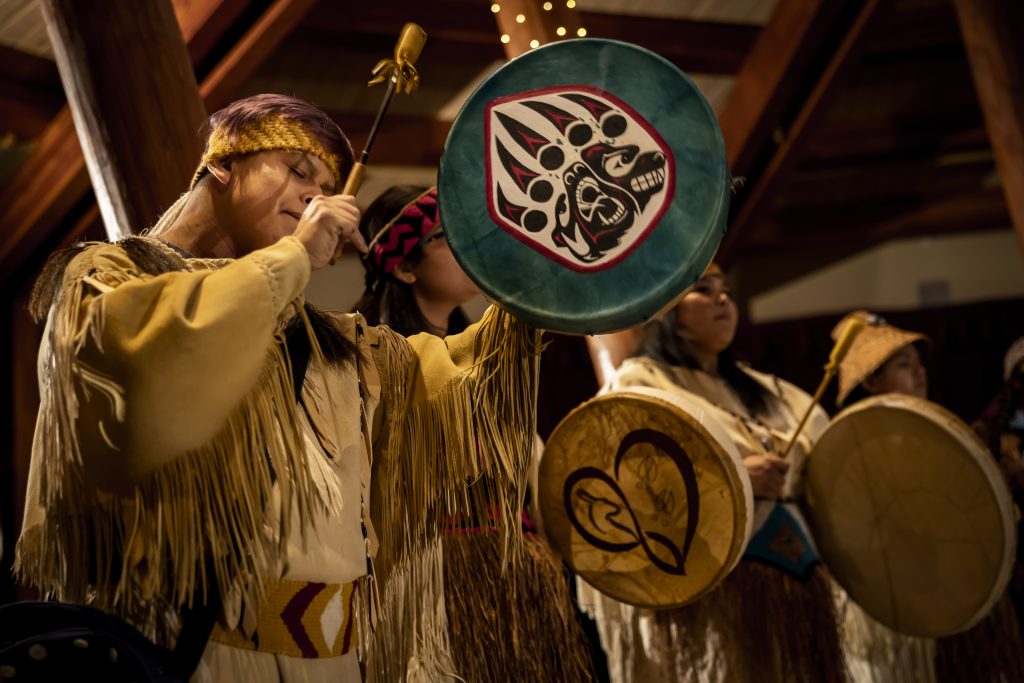
    SLCC Winter Feast, Squamish Lil’wat Cultural Centre Tourism Whistler/Justa Jeskova

    Bunking in with friends gave me a rare chance to get to know the Whistler Blackcomb behind the brochures. During a long, cold snap (at -15°C/ 5°F, the term hardly seemed adequate), I skipped the mountain to explore the Squamish Lil’wat Cultural Center, one of Vail Resort’s partners. A museum-gallery-café hybrid, it’s filled with carvings and canoes, offering Indigenous-led forest walks, workshops and storytelling. The Audain Art Museum is home to massive Northwest Coast cedar masks, alongside a collection of moody Emily Carr landscapes. I was reminded to swerve any gift shop replicas.  

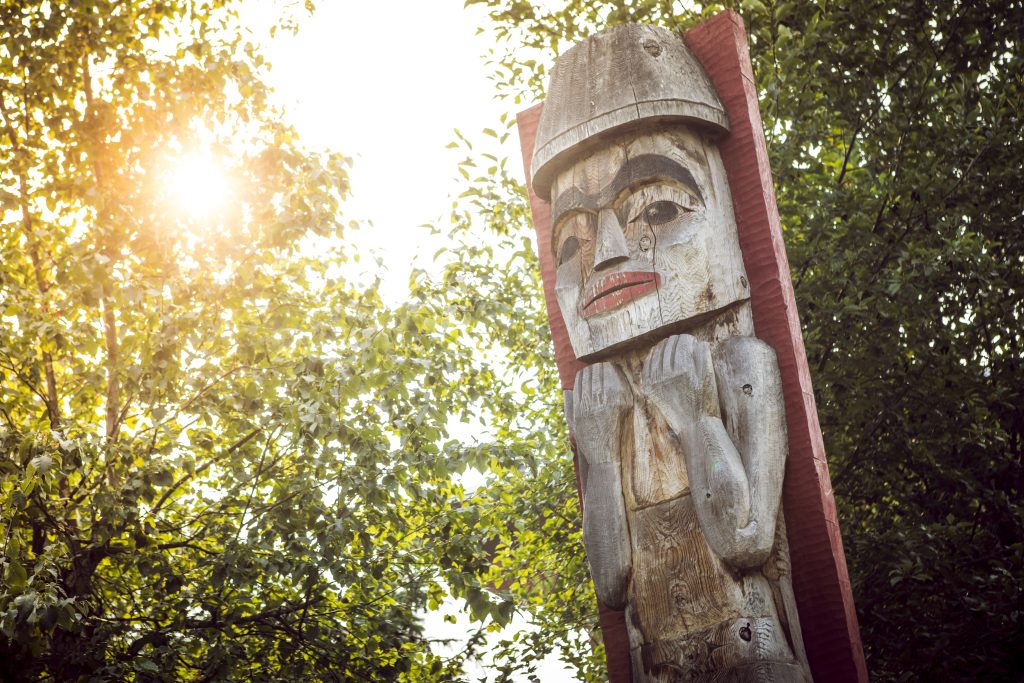
    The resort highlights its roots, offering quiet invitations to reflect – like the Peak 2 Peak gondola, its cabins wrapped in Indigenous art. Dotted between Whistler Village Stroll’s thumping bars and clubs are public installations, towering carved Welcome Figures and First Nation statues depicting nature, strength and legend. More snow-covered carvings peek mythically from the slopes. “The Squamish and Lil’wat Nations have agreements with the resort,” my museum guide said. “There are programs now for revenue sharing, employment and training.”
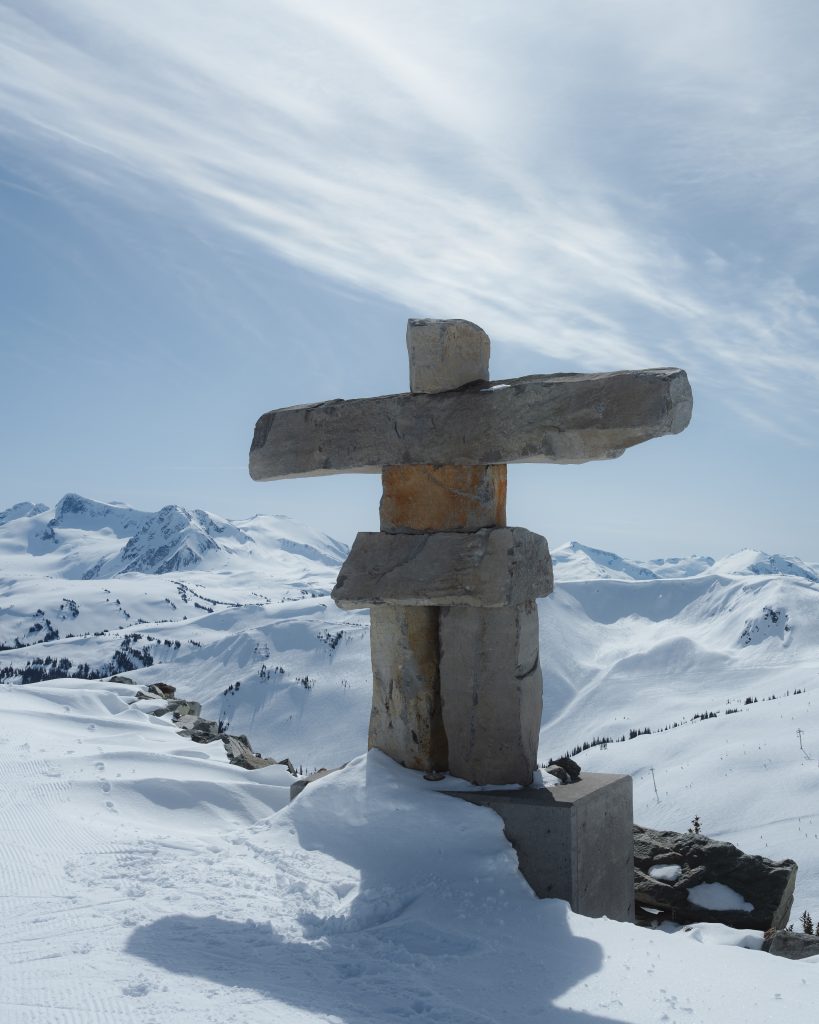
    Matt Sylvester

    With a new appreciation for the land’s history, I wanted to explore. A trip highlight: Phoebe from Black Tie Ski Rentals pulling up at my friends’ place with three pairs of boots and skis. What luxury, to skip the usual queue in a stuffy rental shop. Owner Todd’s team had dubbed me “aggressive” based on my emailed stats, sparing me the embarrassing shop weigh-in. Village-level exchanges with free swaps make them worth every Canadian dollar, especially in unpredictable conditions.

    Something I’d been wary of: TikTok-famous lift queues snaking through town on peak days. On weekdays in February, I found almost none. On weekends, beating the lines just meant getting out early. Pro tip: avoid “the maze” – the Whistler Gondola entrance – and head straight to the Fitz, Garb or Emerald chair route. While tourists wait, you’ll already be carving first tracks down Raven. That, plus a breakfast roll from Splitz Grill, became my daily ritual (after a quick check of Whistlerpeak.com’s webcams). I skied – and ate – like a local: $12 chicken udon at Samurai Bowl and late-night Fuji Market dashes for half-price sushi.

    The biggest resort in North America, Whistler Blackcomb’s stats justify the hype. More than 200 runs, 8,050 acres of skiable terrain, 16 bowls and three glaciers for me to throw myself down. I found powder-filled chutes and bowls, tree runs spaced just right and wide-open groomers, plus terrain parks to please the pickiest of park rats. 

    Embracing my “aggressive” label, I took the Glacier Express to boot-hike Spanky’s Ladder, and drop into Garnet, Diamond, Ruby and Sapphire Bowls. Some of the most thrilling – and humbling – skiing I’ve done, helped by a hip flask of Baileys. A shift from three weeks of drought and sun to 20+ cm of fresh came fast, conditions swinging from wind-packed and crusty in exposed areas to buttery soft in sheltered bowls.

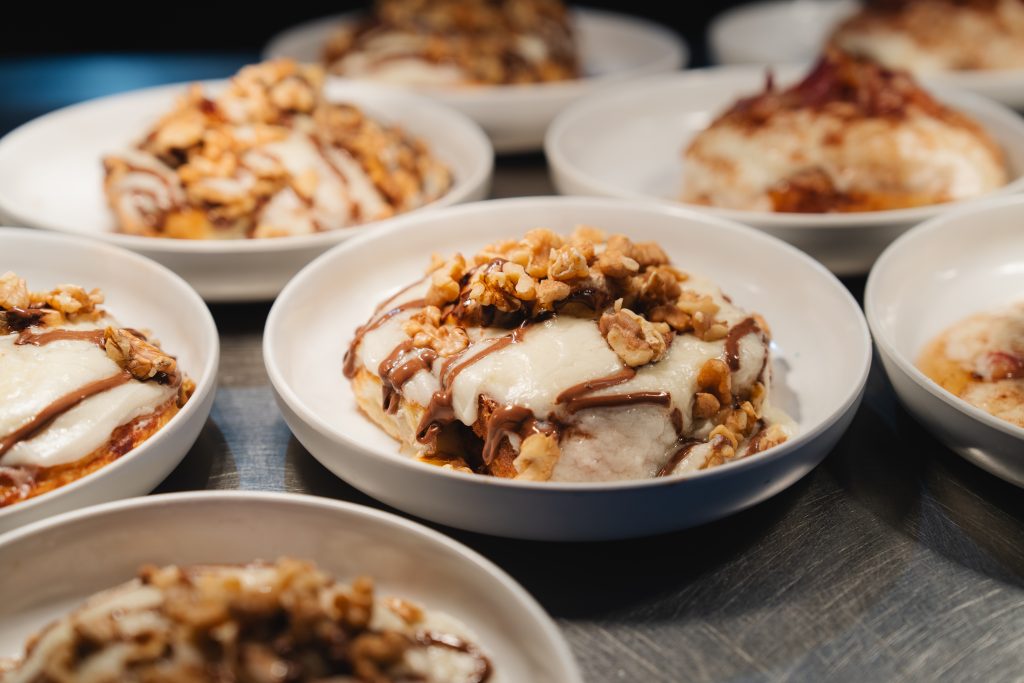
    At 7:15 a.m. on a freezing Tuesday, I understood why the die-hards keep coming back (and why lock-ins at Irish bars aren’t advised on ski trips in your 30s). Two espressos down, I joined Dawn Patrol – Whistler Heli-Skiing’s grounded-flight backup. That kicked off several packed days organized by Vail, showing me lines I’d never have found solo. There’s quiet magic in slipping away before the village stirs, carving through untouched powder in total silence. My guide pointed out off-the-map runs only locals know, and by 9 a.m., I was buzzing on adrenaline and sugar. Chic Pea’s oven-fresh cinnamon buns were a fine reward for the brutally early start.
    Lunch arrived at Christine’s on Blackcomb, where well-heeled skiers gather for panoramic views, charcuterie boards and rich massaman curry. A local friend jealous of my rather posh itinerary had shared a review: “Order a Bloody Caesar (vodka, clamato juice, Tabasco and celery salt). They used to make you apologize to a turtle if you asked for a plastic straw.” Now, local produce is hauled up the mountain by gondola – a logistical challenge that speaks to their commitment to high-quality sourcing.

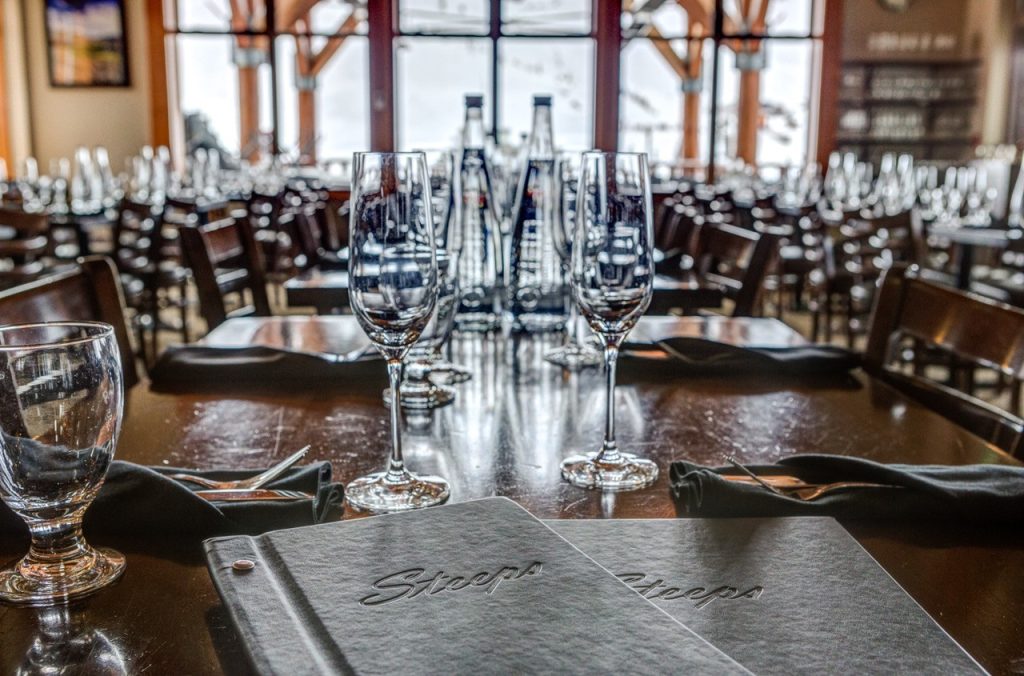
    Another elevated experience came via a six-course Winemaker Lunch at Steeps Grill & Wine Bar: beautiful regional bottles, delicate plates and 1,850 vertical meters between punters and a red wine nap (the lift’s there if you lack hubris). Also delicious: Spirit Bear coffees and Ravens Brewing beers on the sunny patio at Raven’s / Sḵewḵ’ / Yecwlào7 – the first Indigenous-inspired restaurant at the Creekside Gondola summit. 

    The Fairmont delivers peak mountain lodge luxury – cozy fireplaces and big panoramic windows. Ski-in/ski-out access sees guests swap skis for hot chocolates by an on-slope fire. The Mallard Lounge has the buzz everyone’s looking for after a day on the hill. Vida Spa’s heated pools, jacuzzis and private barrel saunas are undeniably luxe (I kept it real with a Meadow Park membership). The Gold floor offers a hotel-within-a-hotel setup, with a private concierge and lounge designed for eating cheese in fluffy robes. Fog rolls over the pines as Blackcomb Gin is poured out, infused with cedar tips and Pemberton hops.
    Tourism Whistler/Justa Jeskova

    At the base of Blackcomb, staying here drops you into the center of nightlife that stretches far beyond boot-stomping and Burt Reynolds shots (those rum-and-butterscotch shooters show up everywhere). Evenings aren’t about the usual ski “scene” so much as subcultures – part fur-trim and velvet ropes, part champagne super-soakers, part open-mic night chaos. Vallea Lumina is a sort-of multimedia night walk through an old-growth forest, gently sharing ancestral stories. Fire & Ice features St’át’imc Nation hoop dancers telling the story of Spo7ez, an ancestral village buried by a massive rockslide – said to be triggered by the mythical Thunderbird to restore peace. It’s a powerful reminder of Indigenous values of coexistence. 

    Helicopter tours with Blackcomb Helicopters offer the perspective needed to grasp Whistler’s scale. Every hour in the air is offset by forest preservation on Quadra Island, once earmarked for development. Banking over Whistler Peak, I watched glacier walls glow electric blue. Below, skiers traced threads across vast mountainsides, heading for hidden bowls of powder caches. Our pilot pointed out the Cheakamus Community Forest, co-managed by the Lil’wat and Squamish Nations with the resort. Indigenous knowledge shapes modern conservation, ensuring the land is treated with respect.

    Whistler Blackcomb delivers on every skier’s dream – but its heart lies in the land’s history and the people working hard to honor it.

    Amy’s trip was supported by Vail Resorts. 

    Rates at the Fairmont Chateau Whistler start from $600 per night (7-night minimum) in winter, and $407 per night (2-night minimum) in summer.

    Now is also the best time to lock in the Epic Pass at its lowest price of the year, with expanded access to Verbier and the 4 Vallées, plus the new Epic Friend Tickets for 2025/26 season giving friends of Epic Pass holders major discounts.

    More at: www.epicpass.com | www.fairmont.com/whistler

  • A Greyhound ride through an unsettled America

    There were years when, like many others, I dreamed of crossing America coast to coast, riding the Greyhound bus. It was the thing to do – a rite of passage. For those who never made it, all is not lost: Joanna Pocock has done it for us. Twice. 

    In 2006, fending off depression after her third miscarriage and the death of her sister, Pocock took the Greyhound from Detroit to Los Angeles, “running away from loss”. Seventeen years later she has gone back, looking for the motels, diners, cities, suburbs and truck stops encountered on that first trip, and she is stunned by what she finds – stations closed or pared back, with nowhere to wash, rest or buy food. “Everything is stacked against you unless you have a car, a full tank of gas, an iPhone and a credit card linked to an array of apps.” She fears for the have-nots.

    Greyhound is a road trip like no other, a personal memoir interwoven with history, anthropology and landscape. Looping between past and present, Pocock observes the microcosmic universe of the bus. There is a young woman softly reading the Bible aloud to her daughter; a woman crocheting a bedspread; a man arrested for carrying drugs. Other companions include stressed-out workers, crazies, charmers, bigots, conspiracy theorists and the homeless. Once, cigarettes and food were shared; now, smoking is banned and phones have replaced conversation. She senses increasing desperation.

    Pocock gives us others who have rolled across the land: Simone de Beauvoir, Jack Kerouac, John Steinbeck – the pages are studded with illustrious names. Beauvoir rode the Greyhound in 1947 and her account of it in America Day by Day reads like a Who’s Who of postwar intellectual celebrities, among them Le Corbusier, Marcel Duchamp and Kurt Weil. A bartender asked how Sartre was getting on. Fast food and juke boxes were an amusing discovery – fame shed a rose-tinted light. At least Beauvoir took the bus; the male writers had their own wheels. 

    In The Air-Conditioned Nightmare Henry Miller made his feelings clear: “We recklessly plunder the Earth under the maniacal delusion that this insane activity represents progress.” Pocock homes in on that plundering. Irish-Canadian, she grew up in a tranquil American suburb. “No one told us that the fuel needed to prop up our lifestyles was destroying the Earth.” She doesn’t hate America; she loves the place. She is just appalled by what has been done to it in the name of progress. An environmentalist campaigner, she repeatedly celebrates the endangered beauty of the landscape and delights in the radiance of light and colour.

    Pocock won a prize for her first book, Surrender, a loving study of Montana, where she and her husband spent two years – “the best place we had ever lived”. How different from what she discovers as she travels now: millions of gallons of waste oil dumped in rivers and canals; chemicals contaminating the land, causing disease and birth defects. Decrepitude co-existing with gentrification.

    She name checks towns romanticized by old songs: St Louis, Tulsa, Amarillo, Albuquerque… then hits us with the contemporary reality. In Phoenix, “the hottest city in the US,” if skin touches the tarmac in summer it can result in third-degree burns; in winter it’s -5° C. It now has a bus kerbside pickup in a six-lane road with no access to water or shelter.

    The relentless desire for progress and growth encompasses intensive cattle farming – calves force-fed growth hormones, surrounded by shit that’s rainbow-colored from chemicals; antibiotic-resistant fecal dust blowing in the wind. During one stretch, as the bus passed a cattle pen the length of a freight train, a mother called to her children: “Hey, look kids, that’s where they make the meat!”, the verb hideously capturing the action. On both trips Las Vegas attracts Pocock’s most caustic condemnation: “A human folly… an environmental catastrophe; the ecological devastation necessary for it to exist.” Occasionally she’s buoyed up by hope, meeting volunteers working in urban farming, planting trees and growing food outside the system, sometimes illegally.

    In the years between the journeys Pocock herself changes. She has a teenage daughter; she calls her husband for a morale boost. And at fiftysomething she is sexually invisible. On her first trip she was propositioned, chatted up. In Albuquerque a conversation in a bar led to a long dinner. There was chemistry. Looking back, she admits: “In another life I most certainly would have said yes.” Instead, they met up for breakfast and he showed her Georgia O’Keefe’s Ghost Ranch.

    Despite the apocalyptic passages, Greyhound is not a misrerabilist read. Pocock’s rage is infectious and energizing; her prose vivid. In unexpected places she finds kindness and generosity. There is both darkness and brilliance here: affection and laughter brighten the pages of this fierce, accusatory, tender and unforgettable book.

  • Snowshoeing with septuagenarians

    Snowshoeing with septuagenarians

    Wading through breakup grief, I’d hit the haziest stage of recovery, somewhere between lying horizontal in dark rooms, and shaving my head. Short of purchasing clippers, I’d resolved to write about wellness travel.

    Clad in regulation white cotton pajamas in the Western Ghats of India, my lifestyle habits had been judged (hard) and my thoughts about aging, recalibrated. A vigorous wellbeing regimen had revealed my 34-year-old body to be pushing 40, metabolically. Confronting? Yes. Salvageable? Also yes. (More mindfulness, fewer cigarettes, and – my addition – no men). Next stop: I’d pull on my hiking boots for a flight out of sweltering Mumbai, to icy Tokyo. 

    Post-Covid, Japan dominates algorithms and bucket lists. Perhaps it’s looming mortality, but the world is taken with this nation that makes good living (and long living) seem effortless. I’d explore their ancient concept of “ikigai,” which loosely translates to finding a daily reason for being, and unlocking longevity through quiet purpose.

    I connected to Hokkaido, the second-largest island of Japan, to begin eight days of snowshoeing past remote farmsteads and along clifftops. Something about strapping foreign objects to my shoes was appealing – an arbitrary challenge in tough conditions, that’s what satisfied people did, wasn’t it? Perhaps the mineral-rich hot springs awaiting me each evening would smooth my wrinkles.

    Bopping around convenience shops had the immediate effect of an SSRI – in-store blenders whizz pre-chopped fruit, vending machines dispense hot tea, and strawberry sandwiches decorate the shelves. I stomped to the Kushiro Prince Hotel with armfuls of fresh mochi, steeled to shake hands with a group of strangers.

    The lobby revealed my adventitious new family, twice my age. Rick the surgeon, George the calisthenics enthusiast, and Karen – “the least ‘Karen’ Karen,” she assured me. There were Andy and Andy, an Aussie couple celebrating 40 years of marital bliss, and Jean, continuing a tradition of adventures once shared with her late husband. “I wanted to see if I could still do it,” she shared.

    Philip, just turned 80, established himself as my favorite, challenging group leader Yuta on trek lengths and hill gradients. “Have you heard of ‘tech neck’?” pressed Rick, interrupting my note-taking with medical concerns.

    The initiation was characteristically direct: snow coverage would be unpredictable, even patchy in places. Climate change was happening. Aided by trains and coaches, we’d cover ground from Kushiro’s vast wetlands to Utoro, a hot-spring town on the western coast of the Shiretoko Peninsula. “These experiences won’t be available in the future. How do we go forward?” The same question I’d asked myself, raiding Mumbai sports shops for walking poles with snow baskets. “Remember, your center of gravity will be different. Make sure you relax. Widen your stance.”

    We spied rare tancho red-crowned cranes before catching a local train to Ochiishi, slipping on ice between moored ships in an eerily remote fishing village. Days of snow crunching underfoot were punctuated by casually outstanding fish lunches, and long drives to new walking locations. Traipsing along a slippery boardwalk through Nemuro’s wintry landscape, I fell flat on my back, victim of a rotten plank. Stepping down into the snow-covered wetlands, ducking through gnarled trees, I discovered my friend Phil on all fours. “Don’t help me up! You have to keep me young!” A mutual-preservation society was forming fast.

    “One nice thing is that this group has gelled in one day,” Yuta quipped, as I faced the wind, and held out my hand.

    We shuffled single-file as deer, eagles and the odd fox provided the only company. Yuta shouted above the din: “Can I interest anyone in a hot beverage?!” Crouching behind a lighthouse, he dispensed cocoa and chocolate biscuits while our teeth chattered, and we blinked away spray from Pacific waves. 

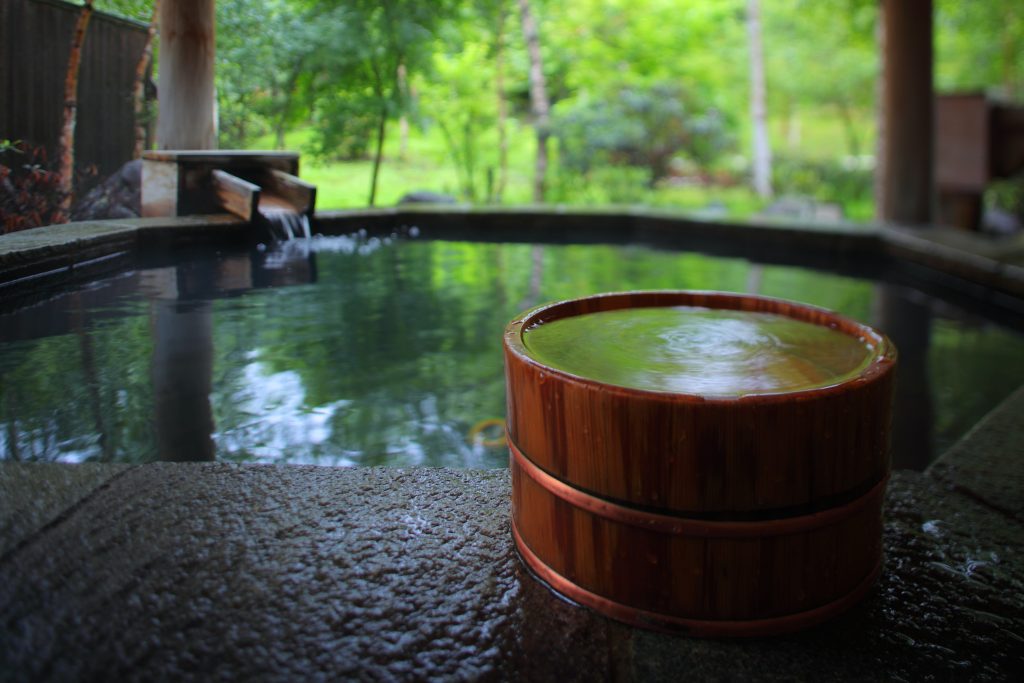
    That night’s accommodation, a traditional Japanese inn with folded bedding on tatami floors, cozy yukatas (bathrobes), and communal onsen baths (strictly nude), lifted the spirits. “I could sit here all day,” Jean sighed, melting into 107-degree waters. Discovering Japan’s heated toilet seats, I’d thought the same. Strategic flannel placement for modesty brought the laughs. “I think there’s an art to it,” nodded Andy, matter-of-factly tackling nipple coverage.

    A ceremonial dinner featured spiky, scarlet Hanasaki crab from southeastern Hokkaido. Hot pot, local fish and miso soup smoothed tired frowns while sake flowed. “This is ‘Shabu shabu’ – it’s an onomatopoeia,” Yuta explained, miming broth splashing. When Nick, our second guide, kindly entertained us with his bamboo flute, I feared my healing journey had overcorrected.

    Philip cemented our friendship during a secluded forest walk. “Right now, we’re where bears fart,” he announced, surveying the vast emptiness. I loved him already. We rubbed 3,000-year-old volcanic ash between our fingers, surveying trees lying uprooted from poor soil. When Yuta showed us ‘Old man’s beard’ moss, the translation proved entertaining: “Men must drink this when they cheat on their wives.” “For… virility?” someone ventured. “No – the opposite.”

    I asked Yuta about ikigai, and whether he’d found his telling Japan’s stories. “I love my job. You find something you enjoy, and become the best you can. It’s better if it helps other people. Plus I get to explore, sit in the onsen… and eat good food.”

    “Have you been to the onsen?” I asked Phil on a long walk home, towards warmth. “Have I been to the Johnson?” he misheard, and I didn’t correct him.

    Later in the week, unseasonable temperatures thawed saltwater Lake Furen-ko, canceling plans of ice-fishing. The disappointment was palpable – it can’t be avoided, a warmer world is already reshaping traditional experiences. Yuyado-Daiichi Inn, our penultimate accommodation set within mountains and streams, helped matters. Surrounded by outdoor thermal baths worthy of Snow White, guests spot martens, squirrels and birds scampering past sparkling waters as snowflakes land on their noses. Though the rare Blakiston’s fish owl remained elusive, each animal sighting felt restorative.

    Rock fish dinners were devoured entirely except for bones and eyes, served with scallop rice. Spirits couldn’t be dampened by a snowstorm canceling a walk around Lake Mashu-ko; too many fireside sakes inspired an impromptu yukata photoshoot. My inner Brit inevitably surfacing – blame the rice wine – I found myself joining a chant aimed at Rick “the Doc” to take his off completely. Yuta’s mortified shushing restored order in this land of quiet refinement.

    More drinking awaited at Kitakobushi Shiretoko Hotel in Utoro, on the edge of the Sea of Okhotsk. Nobody complained about the sleek, bottomless lobby bar, nor the saunas facing the ocean for sunset. I found myself hitting the gym with Rick, George and Phil – not before Phil had rushed upstairs for his “emergency shorts.” “I want to live long and explore like him,” George nodded. So did I, I realized.

    Post-treadmill, one of Phil’s better discoveries was the self-service booze counter, where he uncovered a whiskey his grandfather had worked on in Kentucky. “I can’t believe they have this. This is incredible.” I advised perhaps swerving the shots, after he spoke Spanish to the man frying tempura (“Si señor!”) and commanded the robotic tray collector whizzing around the concourse to “sit.”

    Morning “jammies” (yukata) encounters starting to feel convivial, I realized I’d miss my new friends. Promising to attend Phil’s 81st birthday celebrations, I understood that ikigai isn’t found, it’s lived: putting one foot in front of the other. It’s really that simple.

    For further information on Hokkaido Snow Tour please visit walkjapan.com. Priced from £3,252 (JPY 638,000) per person based on double occupancy.