Category: Life

  • Snowshoeing with septuagenarians

    Snowshoeing with septuagenarians

    Wading through breakup grief, I’d hit the haziest stage of recovery, somewhere between lying horizontal in dark rooms, and shaving my head. Short of purchasing clippers, I’d resolved to write about wellness travel.

    Clad in regulation white cotton pajamas in the Western Ghats of India, my lifestyle habits had been judged (hard) and my thoughts about aging, recalibrated. A vigorous wellbeing regimen had revealed my 34-year-old body to be pushing 40, metabolically. Confronting? Yes. Salvageable? Also yes. (More mindfulness, fewer cigarettes, and – my addition – no men). Next stop: I’d pull on my hiking boots for a flight out of sweltering Mumbai, to icy Tokyo. 

    Post-Covid, Japan dominates algorithms and bucket lists. Perhaps it’s looming mortality, but the world is taken with this nation that makes good living (and long living) seem effortless. I’d explore their ancient concept of “ikigai,” which loosely translates to finding a daily reason for being, and unlocking longevity through quiet purpose.

    I connected to Hokkaido, the second-largest island of Japan, to begin eight days of snowshoeing past remote farmsteads and along clifftops. Something about strapping foreign objects to my shoes was appealing – an arbitrary challenge in tough conditions, that’s what satisfied people did, wasn’t it? Perhaps the mineral-rich hot springs awaiting me each evening would smooth my wrinkles.

    Bopping around convenience shops had the immediate effect of an SSRI – in-store blenders whizz pre-chopped fruit, vending machines dispense hot tea, and strawberry sandwiches decorate the shelves. I stomped to the Kushiro Prince Hotel with armfuls of fresh mochi, steeled to shake hands with a group of strangers.

    The lobby revealed my adventitious new family, twice my age. Rick the surgeon, George the calisthenics enthusiast, and Karen – “the least ‘Karen’ Karen,” she assured me. There were Andy and Andy, an Aussie couple celebrating 40 years of marital bliss, and Jean, continuing a tradition of adventures once shared with her late husband. “I wanted to see if I could still do it,” she shared.

    Philip, just turned 80, established himself as my favorite, challenging group leader Yuta on trek lengths and hill gradients. “Have you heard of ‘tech neck’?” pressed Rick, interrupting my note-taking with medical concerns.
    The initiation was characteristically direct: snow coverage would be unpredictable, even patchy in places. Climate change was happening. Aided by trains and coaches, we’d cover ground from Kushiro’s vast wetlands to Utoro, a hot-spring town on the western coast of the Shiretoko Peninsula. “These experiences won’t be available in the future. How do we go forward?” The same question I’d asked myself, raiding Mumbai sports shops for walking poles with snow baskets. “Remember, your center of gravity will be different. Make sure you relax. Widen your stance.”

    We spied rare tancho red-crowned cranes before catching a local train to Ochiishi, slipping on ice between moored ships in an eerily remote fishing village. Days of snow crunching underfoot were punctuated by casually outstanding fish lunches, and long drives to new walking locations. Traipsing along a slippery boardwalk through Nemuro’s wintry landscape, I fell flat on my back, victim of a rotten plank. Stepping down into the snow-covered wetlands, ducking through gnarled trees, I discovered my friend Phil on all fours. “Don’t help me up! You have to keep me young!” A mutual-preservation society was forming fast.

    “One nice thing is that this group has gelled in one day,” Yuta quipped, as I faced the wind, and held out my hand.

    We shuffled single-file as deer, eagles and the odd fox provided the only company. Yuta shouted above the din: “Can I interest anyone in a hot beverage?!” Crouching behind a lighthouse, he dispensed cocoa and chocolate biscuits while our teeth chattered, and we blinked away spray from Pacific waves. 

    That night’s accommodation, a traditional Japanese inn with folded bedding on tatami floors, cozy yukatas (bathrobes), and communal onsen baths (strictly nude), lifted the spirits. “I could sit here all day,” Jean sighed, melting into 107-degree waters. Discovering Japan’s heated toilet seats, I’d thought the same. Strategic flannel placement for modesty brought the laughs. “I think there’s an art to it,” nodded Andy, matter-of-factly tackling nipple coverage.

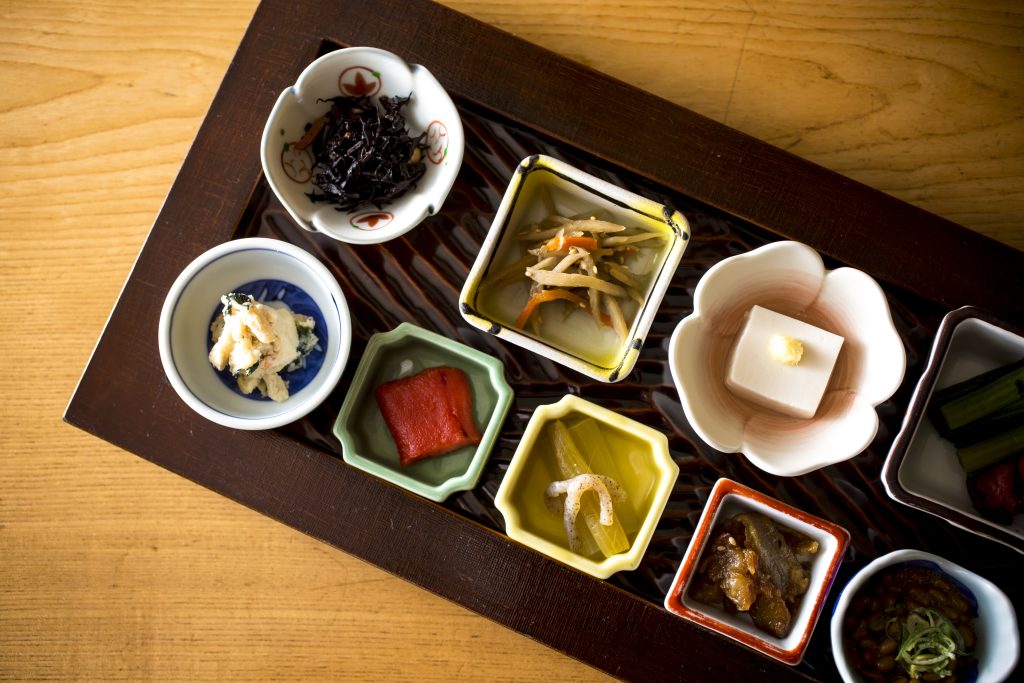
    A ceremonial dinner featured spiky, scarlet Hanasaki crab from southeastern Hokkaido. Hot pot, local fish and miso soup smoothed tired frowns while sake flowed. “This is ‘Shabu shabu’ – it’s an onomatopoeia,” Yuta explained, miming broth splashing. When Nick, our second guide, kindly entertained us with his bamboo flute, I feared my healing journey had overcorrected.

    Philip cemented our friendship during a secluded forest walk. “Right now, we’re where bears fart,” he announced, surveying the vast emptiness. I loved him already. We rubbed 3,000-year-old volcanic ash between our fingers, surveying trees lying uprooted from poor soil. When Yuta showed us ‘Old man’s beard’ moss, the translation proved entertaining: “Men must drink this when they cheat on their wives.” “For… virility?” someone ventured. “No – the opposite.”

    I asked Yuta about ikigai, and whether he’d found his telling Japan’s stories. “I love my job. You find something you enjoy, and become the best you can. It’s better if it helps other people. Plus I get to explore, sit in the onsen… and eat good food.”

    “Have you been to the onsen?” I asked Phil on a long walk home, towards warmth. “Have I been to the Johnson?” he misheard, and I didn’t correct him.
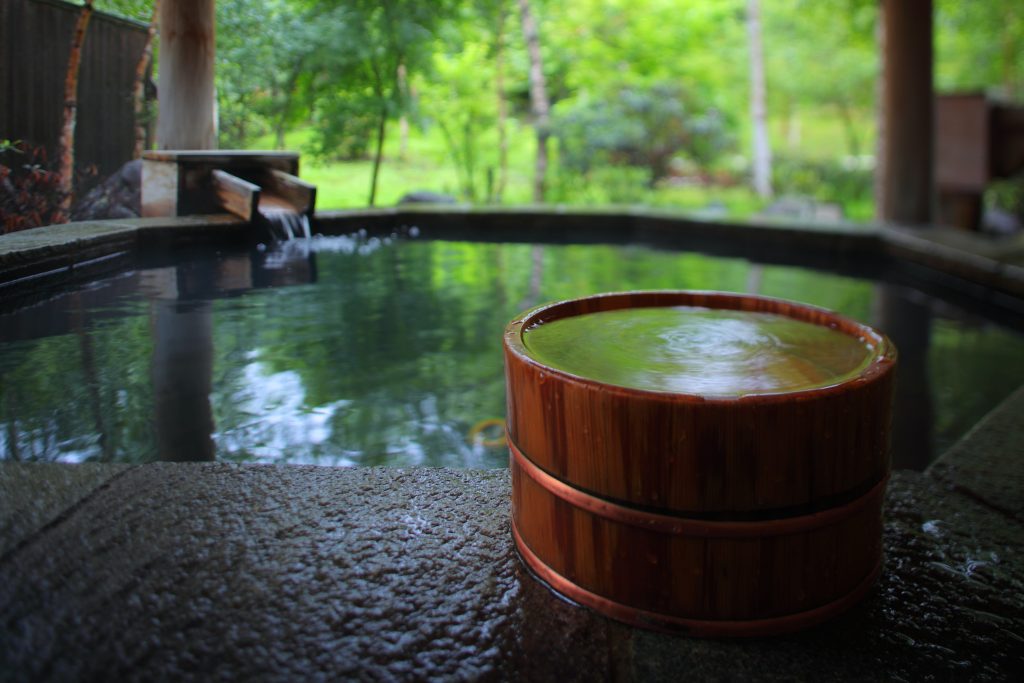
    Later in the week, unseasonable temperatures thawed saltwater Lake Furen-ko, canceling plans of ice-fishing. The disappointment was palpable – it can’t be avoided, a warmer world is already reshaping traditional experiences. Yuyado-Daiichi Inn, our penultimate accommodation set within mountains and streams, helped matters. Surrounded by outdoor thermal baths worthy of Snow White, guests spot martens, squirrels and birds scampering past sparkling waters as snowflakes land on their noses. Though the rare Blakiston’s fish owl remained elusive, each animal sighting felt restorative.

    Rock fish dinners were devoured entirely except for bones and eyes, served with scallop rice. Spirits couldn’t be dampened by a snowstorm canceling a walk around Lake Mashu-ko; too many fireside sakes inspired an impromptu yukata photoshoot. My inner Brit inevitably surfacing – blame the rice wine – I found myself joining a chant aimed at Rick “the Doc” to take his off completely. Yuta’s mortified shushing restored order in this land of quiet refinement.

    More drinking awaited at Kitakobushi Shiretoko Hotel in Utoro, on the edge of the Sea of Okhotsk. Nobody complained about the sleek, bottomless lobby bar, nor the saunas facing the ocean for sunset. I found myself hitting the gym with Rick, George and Phil – not before Phil had rushed upstairs for his “emergency shorts.” “I want to live long and explore like him,” George nodded. So did I, I realized.

    Post-treadmill, one of Phil’s better discoveries was the self-service booze counter, where he uncovered a whiskey his grandfather had worked on in Kentucky. “I can’t believe they have this. This is incredible.” I advised perhaps swerving the shots, after he spoke Spanish to the man frying tempura (“Si señor!”) and commanded the robotic tray collector whizzing around the concourse to “sit.”

    Morning “jammies” (yukata) encounters starting to feel convivial, I realized I’d miss my new friends. Promising to attend Phil’s 81st birthday celebrations, I understood that ikigai isn’t found, it’s lived: putting one foot in front of the other. It’s really that simple.

    For further information on Hokkaido Snow Tour please visit walkjapan.com. Priced from £3,252 (JPY 638,000) per person based on double occupancy. 

  • Sydney Sweeney, Gwyneth Paltrow and the misogynists

    Dear God, please help me. The winged monkeys of incel outrage have mobilized in their millions. Basement warriors have exerted more sputum and energy than the average American would find imaginable. And all because of a 27-year-old actress, best known for starring in a romcom with Glen Powell, who, when I last checked, was spared such opprobrium. But we are in a different age, and if you are a woman, you’re fair game.

    In the Fifties, there might have been an outraged headline. “Pretty young blonde woman wears denim jeans to promote a product!” But in 2025, Sydney Sweeney is less a thespian and more a product in her own right. In the great carnival of modern celebrity, where every gesture is dissected and every utterance weaponized, she’s a moving target. For the uninitiated, Ms. Sweeney is the doe-eyed, large-breasted darling of Euphoria and The White Lotus who has been taken to pieces because of an American Eagle jeans campaign that dared to employ the tagline “has great jeans/genes.” A harmless pun, one might think, a bit of cheeky wordplay to sell denim to the TikTok generation. But no.

    Those who wanted to be outraged have been. There have been accusations of “Nazi propaganda” and “eugenics endorsement.” Their logic, such as it is, hinges on the word “genes” evoking some sinister nod to genetic purity. Sweeney, admittedly, shares the blame as a producer and star of the campaign, but I doubt she had any hand in crafting the copy. American Eagle’s chief marketing officer described it as “potentially one of the biggest gets in American Eagle history.” The backlash was swift, with none other than the Juicy hitmaker Doja Cat lampooning the ad on TikTok and commentators decrying Sweeney’s silence as complicity.

    Alas, this is not the first time that such outrage has been brought out into the open. Sweeney has long been a lightning rod for conservative fetishization and progressive scorn because she has large breasts and dares to be unashamed of exhibiting them in low-cut tops. Her appearance on Saturday Night Live last year even prompted a Spectator piece hailing her as a return to “real body positivity.” The right venerates her as someone whom their bedroom-dwelling representatives can pin their hopes and dreams upon; the left merely detests her as a symbol of all that is rotten about their country today. The American Eagle debacle is merely the latest chapter in this ongoing culture war, where a young woman wearing a pair of denim jeans is less a reflection of her talent than a Rorschach test for society’s obsessions.

    If it’s any consolation to her, a senior figure in the industry has recently found themselves at the epicenter of peculiar controversies. Compared to the opprobrium exhibited towards Gwyneth Paltrow, who has been ritually humiliated by the publication of Amy Odell’s Gwyneth: The Biography, Sweeney has it easy. When Paltrow was Sweeney’s age, she was subjected to a similar degree of prurient fascination. She was the most-talked-about actress of her generation, a muse for Harvey Weinstein, an Oscar winner for Shakespeare in Love (over Cate Blanchett, who deserved it more for Elizabeth), and an object of ridicule for her tears on that night and for her famous boyfriends. Ben Affleck, Brad Pitt, anyone else who was there and available – Paltrow was sneered at for her naked lust for fame. Even in the pre–social media age, she went viral.

    Two and a half decades later, her successors have come for Sydney Sweeney. It has become acceptable to sneer at a beautiful woman of a certain age because, in some sense, she deserves it, and we have to be aware that in this sharp, cold Instagram age, daring to use your looks to advertise a product will lead to your being ridiculed and belittled. Gwyneth had it before her, and someone else will have it after her. The millions that she will make from the company are cold company when all that Sweeney sees on social media the misogyny leveled at her. But that, alas, is the game, and it has been like that since the inception of the industry, even if things seem only to be getting worse. Dear God, please help us.

  • Lunch with Thomas Straker, the chef vilified by the restaurant world

    Lunch with Thomas Straker, the chef vilified by the restaurant world

    “It was a heavy week,” sighs Thomas Straker, explaining why he recently ended up on a drip in New York. He’s been nicknamed Britain’s “bad boy chef,” and his fans love him. He owns two restaurants in Notting Hill and has 2.6 million Instagram followers: not far off Nigella. Another restaurant is coming in Manhattan, so he has been spending a lot of time there. “Post-service, out late, every night” he says.

    Straker Industries has many divisions: he runs a YouTube channel, has a butter range and is about to launch his own olive oil. On the day we meet, I spot him sauntering down Golborne Road towards his restaurant Acre for our interview. He’s wearing a “Game Eater” cap and a T-shirt with his own name on it, tucked into his Adidas tracksuit pants. He’s a mere 40 minutes late. “I dragged myself to Pilates this morning,” he tells me. He likes to get his top off in his videos.

    He has an air of Withnail – lazy hair, hazy eyes, serrated cheekbones – and he stalks similar parts of London. Straker is that evergreen currency: Notting Hill swank, updated for 2025, and it still has much going for it. He stops to say “hey” to a babe a couple of times during the interview.

    Straker has a completely normal background for a Notting Hill celebrity but an abnormal one for a popular chef these days. He grew up shooting and foraging in Herefordshire, and his father was the second-in-command of the SAS and deputy director of NATO Special Forces in Afghanistan.

    A misspent youth did not land him at Sandhurst, but at cookery school. He worked afterwards at the Dorchester and Heston Blumenthal’s Dinner, and then became the private chef to Sir Leonard Blavatnik, the third richest man in the UK. “When Covid came around,” he says, “I saw more food videos come up and thought I should try to do that. I was working in the States for a family of five. It didn’t take me all day to make breakfast, lunch and dinner, so I made good use of my afternoons.” Two years later, he had become so popular on social media that he was able to open his first restaurant, Straker’s.

    Straker’s kitchen burnt down earlier this year. On the first weekend of May he woke up to 200 missed calls. It’s “not been particularly fun the past few months,” he says. “You suddenly go from a very comfortable, high-turnover business to a zero-turnover business… It’s been incredibly stressful financially.” The restaurant reopened at the end of June. It is difficult to book a table, given how busy it is.

    We eat in Acre, his new brunch and lunch restaurant. He orders an iced matcha with agave honey for himself, and some pan con tomate ($8) for both of us –”I literally had this twice yesterday,” he says. Acre is meant to be more casual, more affordable, more in keeping with the post-Covid desire for expediency and comfort than Straker’s. “You want to make it affordable as possible for your customers, but we’re ultimately running a business,” he says. “But this is definitely an accessible way to come and have some good food. It’s not dirt cheap because we’re not using shit products, but we’ll be doing cod here instead of sea bass over there.”

    A teenage girl having brunch with her father comes over to our table. She’s doing her GCSE art project, and they’ve been asked to paint a building. She painted Straker’s because she loves his videos so much, and she shows it to him. He smiles: “Top grades for you! Let’s buy it off you!”

    He then tells me about the olive oil he’s got coming out: “So I was in Soho at 3 a.m. the day before I ran the London marathon… I got carried away.” That evening, he met a man from Puglia who insisted he made the best olive oil around, and that he would send Straker a bottle. “I was amazed it arrived,” Straker said. It was good, and now you’ll be able to buy Thomas Straker’s “Donna Franca” olive oil this autumn.

    Po-faced restaurant industry types are suspicious of him. A couple of chefs have bad-mouthed him to me over the past few months. The popular Instagram page “SluttyCheff” went viral with a satirical account of working as a woman in Straker’s kitchen: “Thank you guys… for welcoming me with such massive muscle-y open arms.” In 2023, he posted a picture of himself with the chefs at his restaurant: all eight were white men, and he got in trouble for it in the papers. I ask him if he thinks he’s been unfairly treated. There’s a long pause. “I’m thinking about what I want to say and what I should say.”

    At the time, he expressed some regret over it and says now that he was “scapegoated for an industry-wide thing. But that’s in the past… I’m having a good run. That is only down to how hard I work with my team, how hard they work. Everyone has an equal opportunity in the business.”

    He’s often accused of just riding the coattails of online hype. “If people want to be like ‘Oh he’s not a chef, he’s an Instagram chef,’ they can fucking say what they want,” he says. “Open your fucking restaurant, whatever. I’m doing my own thing. It did piss me off for a bit, but now I’m just level. I know what I’m doing… I don’t feel unfairly treated. It always comes around in the end.”

    You get a sense that the world might be bending towards Thomas Straker. Jonathan Nunn, who edits the left-wing food magazine Vittles, recently posted about how he respects Straker for not trying to hide how posh he is. “Thomas Straker is just repeatedly posting pics hanging out with David Cameron or cradling Boris Johnson’s baby.” When Straker isn’t in London, he spends time at Carole Bamford’s Daylesford estate, producing online content from the Cotswolds.

    America now beckons. He is taking over a site formerly overseen by Keith McNally (another enfant terrible of the restaurant world) and they’re “just about to go into building work.” I wonder what America will make of him. They tend to love posh Brits, less so gobby ones. Oasis didn’t travel well across the Atlantic; Hugh Grant did. It will be interesting to see how Straker lands. In spirit, he is both Grant and the Gallaghers.

    When I ask what he gets up to in New York, he shows me a tattoo of a naked lady on his shoulder, done for him by a guy called “Bang Bang.” He grins like a teenager. Being Thomas Straker looks like fun.