Category: Life

  • I made the Epstein cookies

    Is it wrong to bake cookies from a recipe addressed to a pedophile and sex trafficker? When I found the recipe for chocolate chip cookies on page 169 of Jeffrey Epstein’s birthday book, I read and re-read it expecting there to be some sinister inside joke, perhaps a hidden dash of adrenochrome or instructions to “massage” the dough. The surrounding page contains a woman’s redacted photograph and references Epstein’s “mentorship,” while the other 237 feel like a cross between various expressions of human depravity: part ransom letter, part porn magazine and part teenage girl’s diary. Where does an innocent cookie recipe fit in among this?

    It is a prodigious recipe which makes about four times the amount of dough a sensible home baker should attempt, unless you happen to have a commercial grade stand mixer – the writer estimates between 60 and 80 cookies, depending on size. I managed somewhere around 100, enough to feed a small private island or all your “best pals.”

    They’re actually quite good. The addition of five cups of ground oatmeal tempers the sweetness of the cookies and gives them a more substantial chewiness than your standard flour base. A half-cup of cocoa powder is a bit cosmetic, turning the cookies dark instead of their usual light brown, but adds a very slight bitter edge enhance the semi-sweet chocolate (I recommend a mix of chips and chunks). The recipe also instructs the baker to “mix all ingredients together in a large bowl,” but you should really cream your sugars and butter first to aerate and lift the dough. 

    The recipe appears to be taken from an urban legend passed around via chain mail in the 90s. “This is not a joke – this is a true story,” insists the tale of the Neiman Marcus Cookie recipe. It is a revenge story at its heart, about a customer wanting to get back at a waitress who sells him the recipe for “two-fifty” and adds a $250 charge to the tab. When the department store refuses to refund him, he sends the recipe to everyone he knows: “I’m sorry but this is the only way I feel I could get even, and I will.” It reads unnervingly like something out of the birthday book.

    Perhaps all it means is that Epstein had a sweet tooth. His receipts from the jail commissary during his sentence in 2008 to 2009 seem to indicate he did. He purchased all sorts of sickening things, Business Insider reported: “Baby Ruths, Hershey’s bars with almonds, peanut M&M’s, Kit Kats, Almond Joys, Jolly Ranchers, PayDays, Milky Ways, Root Beer Barrels, and a Reese’s Crispy Crunchy Bar… chocolate cupcakes, chocolate cream cookies, fudge brownies, Oreos, Pop-Tarts, butterscotch drops, lemon drops, cinnamon graham crackers, bear-claw pastries, honey buns, apple-cider mix, and peanut-butter squeezers.” A grown man with a grocery list like this must be shamelessly perverse.

    Despite knowing the recipe’s annoying but harmless origins, I feel the need to issue a disclaimer about the Epstein ties to everyone I offer them to. I told my roommates as they were mid-bite, as if I’d poisoned them and suddenly lost the courage to follow through with it. I wonder if I should leave it in a note by the plate for the workmen at my house: “Jeffrey Epstein cookies, take some.”

    Still, it wouldn’t feel quite fair to say these cookies are spoiled by association. Hang on… isn’t this all just a horribly glib metaphor for the innocuousness of certain entries in the birthday book? Not exactly. Many of the innuendo-loaded letters from friends, girlfriends and “assistants” – who were instrumental in recruiting underage girls for sex work – do complicate things. The book raises questions about how much, exactly, the contributors knew about Epstein’s life, and whether they were aware of his crimes. Leave the cookies out of it.

    The birthday book “Chocolate Chip Cookies”:

    Ingredients:

    • 2 cups butter
    • 2 ½ cups sugar
    • 2 cups brown sugar
    • 4 eggs
    • 2 tbl vanilla
    • 4 cups flour
    • 5 cups oatmeal (before grinding)
    • 1 tsp salt
    • 2 tsp baking powder
    • 2 tsp baking soda
    • ½ cup unsweetened cocoa
    • 1 24oz bag chocolate chips (semi-sweet)

    Directions:

    Preheat oven to 350°. Grind 5 cups oatmeal in blender (will reduce to approximately 4 cups ground). Mix all ingredients together in a large bowl. Drop dough in rounded spoonfuls onto non-stick cookie sheet. Bake 8-10 minutes. (Makes approx 60-80 cookies depending on size.)

  • It’s a frustrating time to be a college football fan

    It’s a frustrating time to be a college football fan

    Another pigskin season kicks off, and despite the multitudinous sins committed against the game and its culture by ESPN, university presidents, major conference commissioners, take-the-money-and-run athletes and other votaries of Mammon, I’m once again giving it the old college try. Which is why I picked up my copy of Lindy’s College Football Preview the other day. (Lindy’s ranks my local team, the University of Buffalo Bulls, 85th in nation –we’re movin’ on up!)

    It’s a frustrating time to be a college football fan. Tradition is sacked by the almighty buck, as it typically is in the land of the dollar bill, and healthy sentiments and institutional affections are warped, processed and sold back to us in tawdry and expensive packages.

    Conference realignments have placed Pacific Coast schools Stanford and Berkeley in the now transcontinental Atlantic Coast Conference. They have swelled the Big Ten to the Big (and decidedly Unbeautiful) Eighteen, stretching that proud and sturdy beast of the Midwest on a rack that runs from Seattle to Piscataway, New Jersey. And they are on the verge of adding Northern Illinois to the Mountain West Conference, even though the highest point in the Land of Lincoln is merely a mound.

    Those Krazy Kampus Kut-ups who abolished sex and disappeared free speech are also into repealing geography, though I am reliably told by one who knows that hierarchs at the University of Southern California, which gutted the PAC-12 by defecting to the Big Eighteen, have realized, to their consternation, that there is no Chief Engineer Scotty to beam Trojan teams from Los Angeles to College Park, Maryland, in a trice (or a transporter). But still, I am that most mingy and contemptible thing: a fan. So I put my dudgeon on hold, leafing through Lindy’s and enjoying the names of this year’s gridiron gladiators.

    I can report both generational change and constancy, onomastically speaking. White jock names beginning with a C, usually hard – Colt, Colton, Cade, Caden, Cody, Cole, Cam and Chase – still rule the upper-level playground, but among black players there has been a decline in apostrophic forenames. African appellations are on the rise: my favorite this year belongs to Olasunkonmi Agunloye, defensive tackle for the Florida International Panthers. Fortunately for the FIU announcers, he has a nickname: Su.

    Other outstanding handles in the 2025 college football season include Cal linebacker Buom Jock; NC State running back Hollywood Smothers; Marshall right guard Jalen Slappy; and the jazzy Utah State running back Miles Davis. Arizona has a Rhino (left tackle Tapa’atoutai) and a Genesis (safety Smith). In the names that fit category, Central Florida’s Gaard Memmelaar is… a guard. Nomenclature is destiny. Finally, Pitt wide receiver Censere Lee’s full name, spoken without an intermediate breath, makes the classic epistolary valediction redundant.

    There are more Deuces – or even Duces, presumably born to Mussolini nostalgists – than Bills. In fact, I found not a single Bill in a starting lineup of any of the 136 major-college teams. Don’t even ask about Ed, Joe, LeRoy, Warren, or any name of the heroes of my youth. The names may have changed and respect for geography gone the way of the dropkick, but college football has been under indictment for more or less the same crimes – commercialism, degrading academics, cheating, broken bones – since the early 1900s, when academic luminaries like Harvard president Charles W. Eliot and frontier-thesis historian Frederick Jackson Turner campaigned for the game’s diminution – or even abolition.

    Perhaps the most errant prediction ventured by the critics came in the New Republic from economist Glenn E. Hoover, who prophesied hopefully in 1926 that the rise of professional football would “do for college football what it has done for college baseball, to wit, remove it from the spotlight, render it an innocuous thing and plunge it into oblivion.” Uh, no.

    The last nationally prominent abolitionist was University of Chicago president Robert Maynard Hutchins, who convinced his school’s trustees to drop football after the Maroons completed an abysmal 1939 season, lowlighted by an 85-0 loss to Michigan. Hutchins rejected suggestions that Chicago merely drop down in class, saying it would be “worse to be beaten by Beloit and Oberlin” than to get trounced by the Wolverines. Not that Hutchins wasn’t open to compromise: he endorsed former Harvard president A. Lawrence Lowell’s proposal that teams play only one game a year, and that against their greatest rival.

    By the way, the University of Chicago – which refielded a team in 1969 – opens its 2025 season on September 6 against Carnegie Mellon. If anyone offers you the Maroons and 85 points, take the bet.

    This article was originally published in The Spectator’s September 15, 2025 World edition.

  • Medics make the worst patients

    Medics make the worst patients

    Apart from three Covid years, the German rock cover band Five and the Red One (named, so they say, because one of them has a “fire mark”) have played a free concert on the Cours in a village in Provence every summer since 2008. I first saw them in 2009 when my three daughters were teenagers. The four of us, along with our friends Monica and André, who were then in their mid-sixties, stood together near the front jumping up and down and singing along. Some of the wee ones who sat on their fathers’ shoulders behind us might have children of their own by now.

    Last year a rowdy coterie let the well-built 6’3” guy who owns the expensive hat shop in the village crowd-surf and, discovering the burden was beyond them, let go. As he fell he narrowly missed crushing tiny Monica. Before Saturday’s concert she said she wouldn’t be joining me in the mosh pit this year. “I’ve got to stop sometime,” she said. Understandable, but sad nonetheless. End of an era.

    American Cathy stepped up as a late substitution. She’s going through a difficult time; her marriage ended in April and, as often happens when an individual is stressed, she’s become accident-prone. Her body can’t keep up with her brain. At the village’s Bastille Day celebrations, she fell and banged her head on the way back from buying the second round of drinks of the evening; the third minor head injury she’s sustained in a year.

    Onlookers told us she was out cold for a full minute. Medics are the worst patients. By the time her colleague Tina and I got to her she was sitting on the curb beneath a plane tree telling everyone she was a doctor and to cancel the ambulance. Pointing to Tina, she said: “She’s a doctor too. I’m OK.”

    I’d cleaned the slightly bleeding wound under the hair at her left temple by the time the ambulance arrived a few minutes later, lights flashing and sirens blaring. Despite her protestations, the pompiers insisted on checking her over. “You look fine, Madame, but come with us. Two minutes.” The ambulance doors closed behind them. After what seemed like an age we heard laughing and the doors opened. “At least I got to sit in the ambulance with the young hot guys. I wanna dance to ‘September.’”

    I gave the lead singer a hug which landed somewhere between maternal and teenage fangirl

    Ten minutes later, arms aloft, she led the entire dance floor in a conga line round the square. Unlike the French, I hate that sort of thing but in order to keep the patient under observation, I put my hands on her waist and followed. A row of outstretched arms formed a tunnel and the long line stooped to dance through.

    Afterward, we bumped into my friends Charlotte and Ed. As I introduced Cathy, they stared. I turned. The dancing and bending had reopened her wound and blood was pouring thickly down her face and neck. Grateful as I was to have Cathy at my side in the mosh pit on Saturday, I knew I couldn’t let her out of my sight.

    The performers kicked off with the Steve Miller Band’s “The Joker.” They looked, sounded and moved as a rock band ought – a mesmerizing and nostalgic spectacle. The audience of about a thousand souls roared in appreciation. David, the lead singer, effortlessly held the performance together, much as the conductor and soloist would for an orchestra.

    The mosh pit was, as usual, a heaving, beery, stomping, sweaty mess. People of all ages and nationalities forgot their worries for a few hours and joyfully sang and danced as one. I turned to watch the crowd during “Sweet Child O’ Mine,” and saw Monica and André coming to join us. For a while she and I held hands as we danced. Things got a little wilder during “(I Can’t Get No) Satisfaction,” and as the band began to play “Should I Stay or Should I Go,” a favorite of mine, Monica left. Wise move. A few bars in, the crowd went mental.

    I’m not very big in flip-flops and Cathy’s shorter than me. Soon we were swamped by huge guys, dripping in sweat, either barging into us or trying to engage. But, slight as I am, I spent 50 years in the environs of Glasgow and they soon backed off.

    A glorious three-part, revved-up sing-along to “Twist and Shout” brought things down from the febrile heights of posh-boy punk and to the finale, “Highway to Hell.”

    Afterward, when the DJ took over, I saw David, whom I know slightly, on the square and gave him a hug which landed somewhere between maternal and teenage fan girl. Apart from his sodden Robert Plant curls, he was transformed from rock singer back into an ordinary 40-year-old German father-of-three.

    I asked him how the village compared to other venues. “We don’t do any other gigs,” he said. “I’m forming another band and writing my own stuff, but this band stopped touring when we started having families and only gets together once a year for this. We do it for fun. Stay there. Don’t move. I want you to meet my uncle. He’s a really cool guy…”

    This article was originally published in The Spectator’s September 15, 2025 World edition.

  • My clandestine night at the theater

    My clandestine night at the theater

    The poster for the Edinburgh University Shakespeare Company’s production of Much Ado About Nothing had a hippie design, with flowers and psychedelic colors. “In a false quarrel there is no true valour,” announced one flyer. Quite pointedly, I had not been invited to see the play, but I decided I should go and so when the Pleiades were low in the sky and an old lion was roaring in the valley, I set off from my farm in Kenya.

    First light rose over the Aberdares as bright-faced children hefting satchels ran alongside the road to school. In the Rift Valley I joined the suicidal game of driving in Africa, dodging matatu taxis and Congo-bound trucks, reaching the joyous mayhem of Nairobi hours later. I lounged about at the Muthaiga Club for the rest of the day, chatting with fellows at the bar about beef cattle. After the ritual humiliation of airport security, I settled down for the flights to Scotland.

    Near Waverley Station I checked in to my Premier Inn room and sat for a while on the single bed, or stood at the window like Larkin’s Mr. Bleaney, watching the frigid wind tousling the clouds. What was needed, I decided, was a disguise. On the Royal Mile, I browsed “See Ya Jimmy!” tam o’shanters, with attached ginger wigs and beards, plus tartan kilts and sporrans. An Indian shop sold fetching cowboy hats. On Cockburn Street I found huge dark glasses with mirror lenses. In the end, I settled for a big woolly hat, then wandered past bagpipe players all day, hoping not to bump into anybody who might recognize me.


    I felt regret for the hurt I had caused him, this boy of mine playing Claudio at the end of his university days

    I arrived at the Pleasance Theatre minutes before the curtain went up. The house thronged with undergraduates dressed for freezing Edinburgh New Town flats, loudly enjoying themselves before the play began. I sank deeply into a seat right at the back of the auditorium, with the woolly hat pulled down over my ears and my coat collar raised. The production was staged not in Renaissance Sicily, but a hippie scene, like 1960s London – as if the guys in Withnail and I had finally met some women.

    I sat with rapt anticipation, hanging on every line, not really because I like this play; I was searching for a different kind of meaning. I waited for Claudio – his every stage entry, his every line and all his silences. His expressions, his movement, were dearest to me and so familiar, since I had held him in my arms as my newborn son in the delivery room 22 years before. I had loved him as a baby, as a toddler with golden spun hair, the barefoot lad who got thorns in his toes on the farm, the youthful cross-country runner and the young man who had been my closest friend.

    During the interval, I slipped out, smoked a cigarette in the street, then ducked back in to catch the second half. As I strained my eyes across the length of the theater, I saw my boy had changed in the months since I was last with him, his face altered by encounters, adventures and thoughts from which I had become remote – a change, I felt, that was hard to recognize and from which I was excluded. It made me unutterably sad, wishing I could reach out with long arms to embrace and kiss him. “O, what men dare do! What men may do! What men daily do, not knowing what they do,” said Claudio. All the dialogue had become a series of clues, of messages passing between us. We hadn’t spoken since I broke up with his mother, you see, and I was now with another woman.

    Before the applause had ended, I jammed the woolly hat down over my ears again, hunched into my overcoat and sped out into Edinburgh’s night. I trod quietly down the cobbled streets back to the Premier Inn, where I ordered a burger and a pint. I felt a perverse sense of accomplishment that I had not been seen. Then I felt deep regret for the hurt I had caused him, this boy of mine playing Claudio at the end of his university days. And also my daughter, who would be seeing the play the next night.

    Early next morning, heading for the train at Waverley Station, I passed a glass screen on which I saw these words engraved for all travelers to see: “O what a tangled web we weave/ When first we practise to deceive.” I nodded in agreement: “Yes, you’re right, Sir Walter Scott.” And then there was another of his quotes up there, speaking to me: “Life is dear even to those who feel it as a burden.”

    This article was originally published in The Spectator’s September 15, 2025 World edition.

  • The problem of the progressive middle class

    The problem of the progressive middle class

    A month or two ago, Rod Liddle had the audacity to write in The Spectator that the besetting problem of modern civilization is the middle class, while implying that something ought to done about it. Reading the article, I was reminded of an entry made by Harold Nicolson in his diary early in 1939 where he observes, à propos the homogenization of the modern world, “Even revolution is becoming bourgeois.”

    While it is a matter of historical record that most revolutionaries from the early 19th century onward, in France, Russia and elsewhere, have sprung from the middle classes, Nicolson’s readers (if he still has any) in the first quarter of the 21st century will recognize at once what he is complaining of, roughly 100 years after the children of the commercial and industrial middle classes began attending university, for reasons more financial and social than intellectual, whence they depart under the illusion that they are now educated, thinking persons. In fact, they are at best half-educated and unthinking people who reflexively and unhesitatingly adopt the thought, ideas, opinions and language that happen to be fashionable at any given time among the bourgeoisie.

    Directly following World War One, a significant portion of the middle class developed a romantic view of the progressive or revolutionary mind in politics and social thought as well as the arts, and indeed in what it imagined to be intellectualism itself; a disposition it mistook for a credentialed profession and accepted as a badge of sophistication and superior social status.

    For the western (and westernizing) bourgeoisie, the maintenance of cultural health, vigor and what it calls “creativity” is a matter of progressive intellectual and artistic breakthroughs corresponding with technological advances in the scientific, business and industrial worlds. Similarly, what it calls a “vibrant” culture is one whose highest value is novelty for its own sake, conceived as progress toward “truth” as the word is understood in a fully rationalized, secularized and trivialized age.

    “Novel” ceased a century and a half ago to refer to what it did in the 18th century, when the literary form signified by the same word – a fictional prose work at some length – was developed. Today, anything “novel” means something previously unheard of, and even unimagined; unprecedented, startling and preferably shocking. (Flannery O’Connor employed a similar aesthetic in her fiction to opposite ends, for the reason she herself gave when explaining why her characters are so often freaks. To the hard of hearing you have to shout, she said, and for the nearly blind you have to draw large and startling pictures.)

    Inevitably, the desire for relentless novelty promotes the dissemination of the most extreme ideas, theories, creations, absurdities and fantasies, including those claimed by their inventors and proponents to be “scientific” though they are defiantly anti-scientific: for example, the current claim that a biological man endowed with both an X and a Y chromosome can be surgically transformed into a biological woman with two Xes. “La raison a ses principes que le cœur ne doit pas nier.”

    The progressive middle class believes in everything and anything – and thus in nothing at all

    In one of their inimitable films, Laurel and Hardy are handymen summoned to Oxford University to perform various small jobs, among them the repair of a broken window sash. Attempting to secure the upper frame, Laurel inadvertently brings the thing down upon his head. The blow transforms him into a don who spouts academic gibberish until the window strikes him on the head a second time and he reverts to being Stan Laurel once more.

    Analogously, intellectualism untethered from intellect and untempered by wisdom has turned masses of hitherto sensible people, many if not most of them representatives of the professional middle classes, into blithering self-righteous poseurs of the sort that are presently afflicting Great Britain with their highly disruptive and frequently illegal demonstrations on behalf of Just Stop Oil, Palestine Action, “human rights” and numerous other middle-class causes. Orwell, famously, saw it all coming, though foresight was insufficient to cure him of his own socialist sentiments, delusions and beliefs, no matter his innate English common sense. Perhaps, had he lived past middle age, he might have learned better. (Then again, perhaps not, the middle-class disposition toward progressive liberalism being nearly ineradicable.)

    The famous saying often attributed to Chesterton – that the danger for the religious unbeliever is not that he is liable to believe in nothing, but rather that he is likely to believe in anything – comes to mind. Today, the progressive middle class (which is so large a portion of that class) believes, paradoxically, in everything and in anything – and thus in nothing at all. At bottom, it is nihilistic, which is what makes it so dangerous a social and political force. It is indeed, as Liddle perceives, a civilizational menace, and one that needs to be dealt with – starting, perhaps, with the almost wholly unrestrained legal profession that has aligned itself in western countries with the enemies of majority rule, constitutional government and democracy itself.

    Harold Nicolson ended his diary entrance with the simple statement: “I hate it all. I hate it all.” So, one gathers, does Rod Liddle. So do I. And so should we all. “À bas la bourgeoisie!”

    This article was originally published in The Spectator’s September 15, 2025 World edition.

  • Beneath the foam of the Pisco Sour cocktail lies a border feud

    Beneath the foam of the Pisco Sour cocktail lies a border feud

    The Pisco Sour is poured by Maria, my business partner’s wife and the quiet boss of a small empire of bars and restaurants. It is served in the living room, the windows cracked open, friends drifting in and out, the kids out of school. It has rained and something in the air has lifted. Then comes the coupe glass: perfectly chilled, capped in silken foam, dots of bitters shaped like a closing parenthesis. I’ve had Pisco Sours before. But this one makes sense.

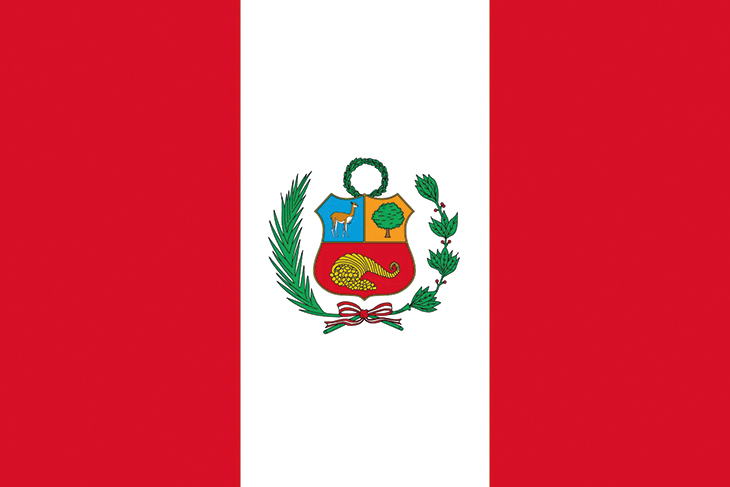
    In Peru, the drink is practically sacred, served at protests and presidential inaugurations alike

    The ingredients shouldn’t work – harsh grape brandy, raw citrus, egg – but in the glass, they harmonize. Chocolate at the edge, grape in the middle, something like spring itself underneath. Not refreshing in the LaCroix sense, but fecund. Alive. South American, like it’s been filtered through jungle and stone.

    And look at it. No over-the-top garnish, no sugar rim, no pipette of nonsense. Just balance. A drink that could have debuted last week at Brooklyn’s Long Island Bar and sparked a thousand imitators. But it didn’t. The Pisco Sour is a century old, born in a smoky Peruvian saloon during Prohibition, and it’s barely changed since.

    Still, don’t let its understated nature fool you. Beneath that soft foam lies a border feud, a renamed city, embargoes, lawsuits and a cocktail so beloved it became a matter of national identity for two countries, each unwilling to let it go.

    Victor Morris didn’t go to Peru to make cocktails – he went to build a railroad. A Mormon from Salt Lake City with a wooden leg and a gambler’s streak, he landed in the Andes in the early 1900s to work for the Cerro de Pasco Railway. But Lima got under his skin: the climate, the chaos and a local woman kept him there.

    In 1916, he opened Morris’ Bar just off the city center, a wood-paneled refuge for expats dodging Prohibition. He served American classics, but when he swapped pisco for whiskey in a sour, something clicked. Someone – maybe Morris, maybe a young bartender such as Mario Bruijet, who worked at Morris’ – added egg white and bitters and the drink took off. By the 1920s, the Pisco Sour had graduated to hotel bars and high society. Morris didn’t live to see it. He died in 1929, broke and fading. His bar closed. His drink lived on.

    The Pisco Sour didn’t stay in Lima. Like a catchy tune, it drifted – first to Peru’s provinces, then across the border to Chile. And that’s where the trouble began.

    In Chile, the drink got a makeover. Egg white? Optional. Bitters? Passé. The proportions skewed sharper, sweeter – less opera house, more dance hall. It was still a Pisco Sour, but louder, brasher, like a cover band hitting the same notes with more reverb. Chileans loved it. Peruvians squinted.

    The problem wasn’t just style. It was the spirit itself. Pisco, in Peru, is a craft –distilled once, no water added, from eight grape varieties grown in regulated regions. It’s complex, like a wine that’s been to therapy. Chilean pisco, distilled multiple times, is cleaner, punchier and often blended with water to smooth it out. Both are pisco, but they’re cousins, not twins. And when two countries claim the same drink, made with their own spirit, the question becomes: who owns it? Chile answered with geography. In 1936, it renamed a dusty mountain town Pisco Elqui, planting the country’s flag in the name itself. Peru countered with patrimony. Pisco, it argued, was the country’s soul – born in the Port of Pisco, codified by law, etched into its history.

    The fight got petty quickly. In the 1960s, Chile banned Peruvian pisco imports. Peru hit back with trademarks and pride. Both nations declared their own National Pisco Sour Day – Peru’s on the first Saturday in February, Chile’s on May 15. Even today, Peruvian pisco can’t be sold as “pisco” in Chile, and Chilean bottles are snubbed in Peruvian competitions. Pisco Sour is less a cocktail than a liquid border dispute.

    Step into a bar in Lima – Carnaval, La Emolientería – and the Pisco Sour arrives with a touch of ceremony. The bartender moves with quiet precision, shaking until the egg white lifts into a fine, glossy cap. Three drops of bitters land like punctuation and the drink sits there, upright and weightless. It tastes the way Peru feels: elegant, historical, a little wistful.

    In Santiago, it’s a different energy entirely. At places like Chipe Libre, the sour is stripped down – no egg white, no bitters, just lime and pisco on a joyride. It’s bright, fast and a little loud. Gone before you can overthink it.

    Each country pours its own identity into the glass. Peru’s pisco is tightly defined – single distillation, no aging, no dilution, rooted in native grapes such as Quebranta and Italia. The result is earthy, floral and a little stern. Chile’s is looser, broader – grapes like Pedro Ximénez and Muscat, often aged in oak, distilled more than once and brought to proof with water. It’s softer on the edges, a little flashier, often more familiar to drinkers of Cognac or Armagnac. Both drinks are good. But Peru’s carries the weight. It’s the version closest to what Morris might have poured behind his bar a century ago.

    Today, the Pisco Sour is enjoyed everywhere – from beach bars in Valparaíso to rooftop lounges in Tokyo. In Peru it’s practically sacred, served at protests and presidential inaugurations alike. In Chile, it’s more playful – no foam, no ritual, just lime and spirit and heat. The feud between them still simmers, but the drink has outgrown the fight. What matters is that it endures. No garnish, no gimmick, just balance. A drink that can hold a hundred years of history and still feel light in the hand.

    Tonight, it wasn’t a symbol or a battle. It was a coupe glass after the rain, clinked around a living room with the windows cracked. And it tasted like something lifting.

    The Peruvian Pisco Sour


    The classic. Creamy, balanced and defiant.

    – 2 oz Peruvian pisco (La Diablada, acholado style, is my go-to)

    – 1 oz fresh lime juice

    – ¾ oz simple syrup

    – 1 egg white

    – 3 dashes Angostura bitters

    Dry shake (no ice) everything but the bitters for 10 seconds. Then shake again with ice.  Strain into a chilled coupe. Dot the foam with bitters – triangle, always. Sip like you mean it.

    The Chilean Pisco Sour

    Tangier, louder and a little unbuttoned.

    – 2 oz Chilean pisco (try Lapostolle)

    – 1 oz fresh lime or lemon juice

    – 1 oz simple syrup

    – (Optional) ice chips or a cube

    Shake hard with ice and strain into a rocks glass. No egg white. No bitters. Add a lime wheel if you must – but only if you’re drinking it outdoors.

    Cheers to borders, blur and a drink worth arguing over.

    This article was originally published in The Spectator’s September 15, 2025 World edition.

  • Locatelli has entered the premier league of museum dining

    Locatelli has entered the premier league of museum dining

    Does your museum feel tired and run down? Is the entrance unwelcoming? The bookshop shabby? The restaurant a mere café? If so, call Annabelle Selldorf, the German-American architect whose talent and sensitivity have made her the go-to person for reviving weary museums.

    Her recent transformation of the Frick in New York has been widely acclaimed and she will soon start work on the Wallace Collection in London. But the latest masterwork has seen Selldorf sprinkle her fairy dust on the Sainsbury Wing of London’s National Gallery.

    Those with long architectural memories will recall how in 1984, the then Prince of Wales christened the proposed new wing of the Gallery “a monstrous carbuncle on the face of a much-loved and elegant friend.” His criticism resulted in a new design by Robert Venturi and Denise Scott Brown, a pleasant enough postmodern essay with a harmonious nod to the architecture of the original 1830s building.

    While the Sainsbury Wing had good gallery spaces, I always found the other facilities rather dismal. Selldorf has said “let there be light”: visitors are immediately uplifted as they arrive in a double height lobby at what is now the new main entrance.

    Selldorf’s work has also coincided with an inspirational re-hang of the collection. If you haven’t been to the National Gallery recently, hasten and remind yourself that some of the world’s greatest paintings are in Trafalgar Square. And, praise the Lord – or at least the National’s director Sir Gabriele Finaldi – it now has a restaurant worthy of the quality of the rest of the place.

    Inspired by the Raphaels, Leonardos, Antonellos, Uccellos and Titians of the collection, the new restaurant Locatelli – helmed by the eponymous Giorgio Locatelli – is full-throttle Italian. And for my money, Giorgio has long been one of the very best chefs in town.

    The room is handsome and understated with plenty of natural light, marble-top tables, taupe banquettes and a big horseshoe of a bar knocking out very sophisticated cocktails for those who have now graduated from the Aperol Spritz. The brave-hearted may wish to try a “Breakfast Martini” – an alluringly brain-numbing combination of gin, Cointreau, lemon juice and marmalade. The back wall of the restaurant is home to Paula Rego’s huge mural, “Crivelli’s Garden,” and the other walls are bare, sensibly not competing with the Old Masters around the corner.

    The menu is admirably short and sharp with five antipasti (£12 to £17), five pastas (£16 to £28) and four main courses (£19.50 to £36) including some of the obvious classics like parma ham and melon, tagliatelle al ragù or pasta alla norma. This is all immensely reassuring as Italian cooking is not a ceaseless search for novelty.

    Indeed, unlike so-called “fine dining,” whatever that really is, the Italian repertoire is about a recognition of tradition and a respect for ingredients. Italian chefs do not put lipstick on a pig. But the very best ones – like Locatelli – beautifully and carefully walk the line between history and the future. So things get lightened up, basics get reexamined and a few new ingredients creep in.

    Italian chefs do not put lipstick on a pig. The best ones walk the line between history and the future

    A good example is the beauty and simplicity of one of the first courses, the seasonal mixed salad. Enticingly arranged and well-chosen salad leaves are invigorated with an absolutely delicious rendition of the classic Italian giardiniera, which includes pickled vegetables such as carrots, cauliflower and celery. The vinegar is often rather too in-your-face, but in this case it is balanced, fresh and invigorating. It was a perfect curtain-raiser to the beef tagliata.

    In Italy, if you can’t face the heroic dimensions of a bistecca alla Fiorentina – the world’s greatest and biggest T-bone steak – tagliata (thick slices of grilled steak served with something like an arugula salad) is the best alternative. Locatelli’s version is as good as any I’ve had in Italy. In this case the steak was ribeye of a super quality, immaculately cooked – it really must be rare – and dished up with a melange of eggplant, tomatoes and red onions.

    Dessert was out of the question. This time my lunch was solo as number one daughter and dog were trapped on a slow train. I cannot wait to return as the fritto misto on a neighboring table was giving me come-hither looks.

    Wines are well chosen and available by the bottle, carafe or glass. Locatelli is also open on Friday nights, which will be very useful for pre-theater diners. For the moment – and long may it continue – this restaurant is definitely in the premier league of museum and gallery dining.

    This article was originally published in The Spectator’s September 15, 2025 World edition.

  • The cult of Erewhon

    The cult of Erewhon

    “So naturally the first thing I did when I got to California was go to Erewhon and get their hot bar because I have no self-control. I personally love Erewhon,” says Marianna Moore, a food influencer with nearly one million followers, a beautiful face, slightly gross online recipes and comic flair. She then tucks into a plate of tofu sticks, kelp noodles, Japanese sweet potato and buffalo cauliflower. At the end, she says with a smirk: “Was this worth $28? I don’t know! I couldn’t tell you.” She keeps on munching.

    I’ve not been able to find the seaweed gel or lion’s mane mushrooms in the form they are sold in Erewhon

    Having been studiously following food content on Instagram for nearly a year, I am finally finding my feet in the thicket of viral trends. I had been dimly aware, almost subconsciously, of this strange word – “Erewhon” – that kept coming up before I watched Marianna walk viewers through her purchases. Suddenly it dawned on me: this was the enduring, relentlessly current, ever-more viral, perennially hot upgrade to Goop, Gwyneth Paltrow’s much-ridiculed wellness brand. Nobody is ridiculing Erewhon, though. The vibe is one of full-throated fascination and adoration. Obsession – worship, even.

    What exactly is Erewhon? (Besides an anagram of “nowhere” and the title of Samuel Butler’s 1872 satirical novel about a utopia where being unhealthy is a crime.)

    The iteration I’m most interested in is a chain of Los Angeles health shops. But it has become so culturally huge, so celeb-dense, that in 2018, Kanye West tweeted about “Erewhon drip” – which entered the lexicon as “a trying/not-trying outfit of fleece, sweats and one athletic sandal,” as Vanity Fair put it.

    “No establishment has ever seemed so perfectly evocative of its city,” gushed theCut in a 2023 longread about the “paradisiacal enterprise.” The Hollywood Reporter has branded Erewhon “the world’s most extravagant market.”

    Paparazzi live in its carparks. The Beckhams, Kardashians and Biebers are regulars. Some people go daily, like artist Alex Israel. “It’s the quintessential LA experience once provided by fashion boutique Fred Segal,” he says. “In the 1990s, teenagers like me used to save up our money to buy anything we could. We’d just want to be there: studying the brands, the music and the other shoppers’ outfits, cars and attitudes. And now Erewhon is top of that list, giving the Day-Glo LA fantasy to all who visit, every day of the week.”

    Now more than ever it feels as though the chain, which began as one Fairfax outlet in 2011 and has rapidly expanded to ten outposts, is the apotheosis in a crowded market of a way of life that is both furiously zeitgeisty and end-times in feel. When else, but in times of utter chaos – rampant homelessness; drug use and crime; political fury and disillusionment; a yawning gap between rich and poor – would a shop that sells jars of honey for $30 or $20 smoothies, such as Hailey Bieber’s Strawberry Glaze Skin, which apparently contains “collagen peptides, hyaluronic acid, sea moss gel and coconut cream,” become such an obsession?

    California has the highest poverty rate in the whole of the US, at around 19 percent, yet this is a place where “sustainably foraged full spectrum algae” jostle with “organic vanilla collagen creamer” – and both fly off the shelves.

    Erewhon was actually founded in Cambridge, Massachusetts, in 1966 as a hippyish organics and health-food store, by Michio and Aveline Kushi, Japanese macrobiotics evangelists keen on “alternative” cancer treatments. They moved to California and opened their first market in 1969, only to be saved from the brink of bankruptcy by an employee, who bought them out in 1979 – and whose widow sold the business in 2011 to Tony and Josephine Antoci.

    I am curious about what effect, if any, owning a $58 Erewhon water bottle will have on me

    Tony is a businessman who made a mint in food supply and Josephine is the one who decides what goes in the store. They’ve been called the “Murdochs of macrobiotics.” Each new store is designed immaculately. They do not participate in any marketing or advertising – that all explodes, every day, of its own accord.

    Los Angeles may be out of reach for some, but social media is recreating Erewhon’s recipes and posting them online, so I was able to sample some of the magic for myself. It’s curiously obvious. I’ve not been able to find the seaweed gel or lion’s mane mushrooms in the form they are sold in the sanctified aisles of Erewhon, but I could find a way to recreate its iconic kale salad, courtesy of a home cook operating out of a Boston suburb.

    It was delicious. I’d long thought kale was old hat: horrible when raw and scratchy when cooked, but chopped up finely, combined with seeds, avocado and cannellini beans and drenched in a dressing of pistachio nuts, garlic, olive oil, herbs and maple syrup, it became beautiful. I got a sense of light-hearted virtue and smugness in eating it. It was as if I was finally eating the right thing, the most maximally nutritious pinnacle of all nutritional science.

    I plan to make the Erewhon peanut butter and jelly bars next, which of course I didn’t know about until another influencer excitedly claimed she had recreated them. She reported it like the bars were so well known that her audience would immediately drop everything and grab their oats and mixing bowls. (They probably did.)

    And truth be told, swept up in Erewhon fever, I have ordered, for $58, a water bottle from the store. I am curious about what effect, if any, owning it will have on me.

    This article was originally published in The Spectator’s September 15, 2025 World edition.

  • The best bargain burgundies

    The best bargain burgundies

    Apropos the subject of this column, videlicet, wine, a friend told me an arresting story about the once-famous British theater critic and playwright Kenneth Tynan (1927-1980). Sometime in the 1960s, when the prickly Gamal Abdel Nasser ruled Egypt, Tynan went sailing on the Nile. One night, he came ashore to enjoy dinner at the Luxor Hotel. The wine list was impressive. He ordered a famous bottle that cost practically nothing. The head waiter swept over to tell him, so sorry, they’d drunk the wine out. Tynan manfully looked again at the list and asked for the second best bottle. Alas, the waiter replied, that wine, too, had been exhausted. “Well, what do you recommend?” Tynan asked. To which the answer was: “We have no wine of any kind.”

    That hasn’t happened to me yet. But it is a truth universally acknowledged that a lover of Burgundy must be in want of a bargain. The storied vineyards and famous names are eye-wateringly expensive. Take a step down from the Montrachets and Romanée-Contis and you are still talking about serious pelf, a solid three figures usually. So I set myself the task of performing a public service and finding some burgundies that were both delicious and easy, or at least easier, on the wallet.

    Much have I travell’d in the realms of gold (and red),/ And many goodly bottles drunk. Two realms in particular I wish to bring into what Keats might call your “ken,” Saint-Romain and Maranges. Have you heard of either? Although still little-known here, these villages on the Côte de Beaune are fast becoming trendissimus. Santenay lies southwest and Saint-Aubin to the north.

    The hip winemaker Nicolas Potel, son of the famous vintner Gerard Potel, died in a car accident at 56 in June. But he left behind a great winery called Domaine de Bellene.  Created in 2005, the house is quietly organic, features old vines and makes a suite of chardonnays, aligotés and pinot noirs. (Did you know that aligoté, which names both a grape and an appellation, is the second-most widely planted white varietal in Burgundy after chardonnay? Nor did I.)

    Potel actually dropped his prices by 10 percent a couple of years ago. A 2022 Saint-Romain chardonnay “vieilles vignes,” can be yours for about $60, not bargain basement, but still a bargain. It is fresh yet succulent, full in the mouth and bristling with minerally afterthoughts and adumbrations.

    Close by in Saint-Romain is Domaine Henri & Gilles Buisson. The Buisson family has been padding about the area for a millennium. In days of yore they were farmers, mostly, selling to négociants. In 1947, Henri and Marguerite began bottling wine and established the domaine. Their son Gilles took over, and his sons run the house today. Robert Parker has high praise for their 2021 Saint-Romain pinot noir “Sous Roche,” “a medium- to full-bodied, fleshy and supple wine evocative of plums, raspberries and rose petals.” Another commentator notes that the vines average about 50 years old and feature low, highly concentrated yields. “There is great purity to this organically grown fruit and the ultimate wine is somewhat rustic in nature with notes of wild red fruits in the nose and flavors.” A bottle can be yours for about $70.

    One more Saint-Romain, the 2022 “Les Cinq Climats” chardonnay from Alain Gras, one of the most celebrated vintners in this until-recently uncelebrated spot. Tasters have discerned a hint of hazelnut, toast and vanilla pod in the wine. I concur and will add the five climats that contributed grapes to the wine merge in a harmonious, well balanced and food-friendly ensemble. Expect to pay between $45 and $60 a bottle for this excellent wine.

    Let’s head over to Maranges, which is nestled between the Côte-d’Or and the Saône-et-Loire. It is home to seven premiers crus climats, devoted almost exclusively to pinot noir and chardonnay. Red wines from the appellation may also claim the title Côte de Beaune-Villages.

    Domaine Maurice Charleux et Fils – the fils in question being Vincent, who now runs the house – dates from 1894 and covers less than ten hectares (about 25 acres), predominantly limestone streaked with clay. Their production is small: fewer than 3,500 cases per year. The 2023 Bourgogne Rouge, about $33, is berry-bright and floral. The 2022 Premier Cru pinot noir “La Fussière” comes from 35- to 50-year-old vines. It, too, is well-balanced and boasts added layers of complexity sumptuousness. It is a steal at about $42.

    Charleux also makes an inviting chardonnay. I had a bottle of the 2022 vintage with a plank of hearty grilled salmon au poivre and asparagus. It was the perfect clean accompaniment to the food, tartly ripe in the mouth, fruit and acid in salubrious harmony. Another steal at $34 – if you can find it. Tynan would have been happy to have snagged a bottle for his ultimately abstemious meal on the banks of the Nile.

    This article was originally published in The Spectator’s September 15, 2025 World edition.

  • Confessions of a bear hunter

    Confessions of a bear hunter

    Southwest Virginia, October. Gravel groaned under my creek-numbed feet. I looked up at a mountain laid out like a fist and I climbed toward the most violent knuckle. But before I got there, the world turned on its side. I don’t know for sure why I collapsed. Maybe it was food poisoning, maybe a heart attack. I felt my face resting on cold stone and gripped the dark walnut of my rifle stock as I passed out.

    Eleven hours later, a new day started. A distant pickup truck with glass-pack mufflers fired up, then idled in a deep rumble. I stood – before the sun came up – and did squats for warmth, surprised I felt as good as I did, but I had a decision to make: walk off the mountain or hunt my way out. May as well hunt.

    I did not grow up hunting bears, and bear hunting is as different from deer hunting as cage fighting is from arm wrestling. More effort, yes, but even more than that, because in bears we see ourselves. Because we’ve castrated him, turned him from wild animal to plush toy. Because we’ve forgotten our tangled past. But I was here to understand it. And to get meat for my family and fat for my friend in Choctaw, Mississippi.

    Songbirds chattered and a dead fog masked the valley. My head throbbed and I shivered as I sipped a cold batch of rehydration salts. And the mountain top teased me, lying just a hundred feet upslope. Distant dogs yapped, searching. In time, the sounds came more quickly. Their individual voices, distinct as yours or mine, blended and rose, choir-like. Then all hell broke loose.

    I’d never killed a bear before. I’d hunted other animals: deer, rabbits, doves, ducks, turkeys and so on

    The dogs’ gleeful barks told me they had driven a bear up into a tree, and I imagined them circling and trying to channel their inner cat and climb.

    Feeling stronger than I should have, I started uphill toward them. The most natural thing would have been for a bear or a dinosaur to step out of the thick primeval woods. Neither did, but indentations through the leaf litter told a story I trusted so I followed the trail down the knife ridge toward the road that lay a couple miles away.

    My plan was this: sneak along as slowly as I could manage, like eight hours for one mile slow. If I took a bear, I’d dress it, load my pack, hang the rest and walk out. The mountain was a refrigerator, so no meat would be lost waiting for my return.

    When the wind blew, I moved. I scratched the leaves to emulate a turkey. Then I’d stand stock-still, listening for any footfall and watching for movement in the vertical world of trees. I’d squat. Study the signs and listen. And so it went, until the sun lay low across the mountain. Bears were omnipresent ghosts.

    Something shifted – on the mountain and within me. Everything fell in new rhythms. The limbs of two oaks nearly intertwined as they dropped elongated acorns, pat-pat, pat-pat. A thick-chested hickory dropped large round nuts in rarer thuds. And beechnuts landed like bugs’ feet on the dry leaves.

    The leaves were turned up where bears had been eating and there were signs of fresh scat. It wouldn’t get any better than that. So I sat and waited. The animals, I reckoned, would come from the thicker slope. So just over the crest I tucked into the base of a broad oak. Now and again I tossed stones to imitate falling acorns and rubbed them together to imitate squirrels’ teeth grinding on hickory nuts. In time, related or not, squirrels came in. Then turkeys. Then deer. And I willed bears.

    When the sun dropped over the ridge, strands of spider silk glowed like blown glass. The temperature dropped. Bear dogs sounded, back in their kennels, resting for tomorrow. In the dying light, thermal currents snatched my scent safely away.

    I felt it was about to happen. I stood, leaned into the oak and mouthed what I could recall of that old bear hunters’ incantation, “Now surely we and the good black things, the best of all, shall see each other.”

    Then there it was. “Nita,” as my friends in Choctaw, Mississippi know it. I raised my rifle. An American black bear, weighing about 100 pounds or so, stopped and rooted. And I watched him. He had not a clue I was there. There was an intimacy to watching it all unfold so close to me that I could hear the acorns and the hickory nuts popping and grinding in his jaws.

    I’d never killed a bear before. I’d hunted other animals: deer, rabbits, squirrels, doves, ducks, turkeys and so on, since I was five or so. But I’d never killed a bear. We didn’t have them to hunt. They’d been nearly extirpated in Mississippi, where I grew up.

    My finger considered the trigger. I settled the crosshairs. And when he turned, I lowered my gun and backed away. It wasn’t that I couldn’t pull the trigger, rather that I didn’t feel impelled to do so. It just wasn’t necessary. The adventure was complete. Being so near a wild bear unmolested was the perfect punctuation. That was the climax. There’s just no explaining some things. This was one. I walked off the mountain.

    But soon I was back in the mountains with my bow. And that time I walked away with a bear. But that’s a different story.

    This article was originally published in The Spectator’s September 15, 2025 World edition.