Category: Life

  • Zohran Mamdani’s policies will make restaurants bland and expensive

    Zohran Mamdani’s policies will make restaurants bland and expensive

    There’s no shortage of catastrophic predictions for New York City under Zohran Mamdani’s leadership. While we probably won’t see breadlines, the wildly expensive, exhaustingly derivative restaurants that dominate the New York food scene are likely to become more dominant.

    Mamdani’s big pledge on food is to “make halal eight bucks again.” But it’s a “false promise” of street-food affordability according to Heritage Foundation economist Nicole Huyer. She says Mamdani’s economic program, which includes higher taxes, steeper leasing regulations and a pledge to raise the minimum wage to $30 an hour by 2030, will effectively make restaurants even more expensive.

    “All of these great socialist policies that [Zohran’s] planning to implement – he’s saying that it’s going to bring affordability back and that he’s pro-small business,” Huyer told The Spectator, but “it’s very burdensome for small businesses and it makes it difficult for those that are just starting out. Whereas the more corporate chain restaurants might be better equipped to absorb those costs, high taxes and tight regulations make it difficult to start and grow a business, and when restaurants have those high start-up costs, they pass those on to the consumer.”

    Walk down any street in New York and you will notice lots of similar-looking places: from casual to ritzy hotspots, the multilocation restaurant group model reigns supreme. Despite Mamdani’s claim that he will champion the little guy, chain restaurants are likely to become even more dominant on his watch. Take a New York restaurant company such as Major Food Group, which owns trendy hotspots like Carbone, Sadelle’s and Torrisi. It wouldn’t like to be considered a “chain,” but the business model is effectively the same: combining capital and condensing costs to expand and dominate. It results in similarities in menus, aesthetics and culture. And while such groups can more easily absorb the new costs under Mamdani, riskier models and mom-and-pop restaurants will probably no longer be able to.

    That’s assuming they open at all. There is already much uncertainty about what Mamdani’s reforms will mean for the restaurant world. If landlords are prevented from evicting tenants, as is promised, it will “create serious uncertainty in the market,” one New York-based commercial realtor told The Spectator. “It will just make it harder to sign a lease on a restaurant, because there will be fewer landlords willing to take the risk of leasing their property. There are smart ways to structure a lease: build in a sales kick, sign for five years instead of ten, negotiate terms that actually set you up to be profitable. But you can’t legislate your way out of the basic risk-reward of running a restaurant in New York City.”
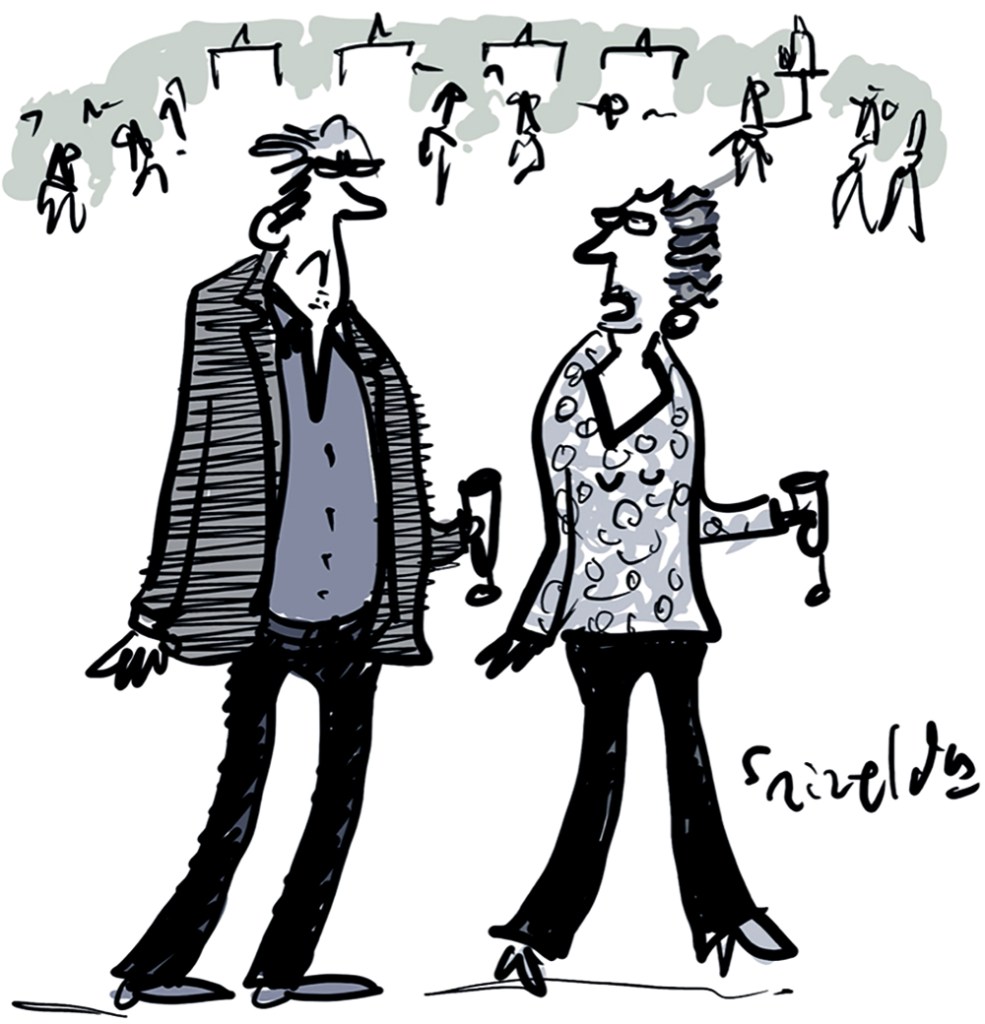

    ‘Can’t you even be a little bit woke, just for politeness’s sake?’

    Trying to do so is likely to result in disaster. There are about 300,000 New Yorkers employed by the restaurant subsector, according to the state comptroller, and the average salary is around $17 an hour – before tips. That’s a far cry from the $30 minimum wage pushed by Mamdani.

    “The first push will most likely be restaurant workers’ wage increase, possibly even an elimination of the tipped wage element which allows tipped workers to get a lower minimum,” says chef and restaurateur Andrew Gruel. “Restaurants will have to cut [costs] to make any profit at all, decreasing quality and service, which will then lead to lower sales and a downward spiral.”

    However, not all the big players in New York’s restaurant scene are on the same page. Keith McNally – the force behind institutions such as Balthazar, Minetta Tavern and the Odeon – has called Mamdani “fantastic” and “the future,” while dinging his own “affluent, paranoid friends.”

    One such friend is fellow restaurateur Dave Rabin, who told the New York Post he would “do anything to try to stop [Mamdani]” from becoming mayor. “I sent [McNally] some of my posts on Mamdani, and instead of responding to me, he took one of them and posted it and called me a racist.”

    Predictably, New York’s food service unions are on board with Mamdani’s promises. UNITE HERE! Local 100, the city’s primary restaurant workers’ union, offered an early and “proud” endorsement of Mamdani back in April. Workers United, which represents several industries including food services, came out strong for Mamdani as well. Neither union responded to a request for comment.

    It remains to be seen how they will respond if a tightening industry reduces their membership overall. Restaurant groups, while better situated to weather the storm, aren’t fully immune and, whether through closures or layoffs, staff at all levels of the industry will eventually feel the pain as well.

    “Oddly, they’re supportive [of Mamdani],” restaurateur Joe Germanotta said of his staff during an interview on Fox News. “But if this guy gets in you better start looking for a job,” he said in response to the higher costs restaurants like his will face.

    Mamdani may end up having a similar effect on New York’s restaurant industry to Covid. While pandemic-era inflation and regulations severely hurt the restaurant industry overall, the large restaurant groups that dominate New York largely did just fine; Major Food Group actually expanded. “You can’t be a one-restaurant chef anymore,” said chef Eric Huang of his own struggles to scale and compete during this time. The numbers seem to check out. Between 2019 and 2022, Franchise Times, which issues annual reports on the country’s Top 200 restaurant groups, reported that revenue in the industry grew from $40.5 billion to $53.3 billion. Though overall growth in the restaurant sector is currently down, revenue for the Top 200 continues to grow. New York-based website Eater made it official, declaring that “restaurant groups are the new chains.”

    High-end restaurant groups aren’t bad, per se, and New York has many of them. That’s to say nothing of the elevated fast-casual takeover (Dig, Little Beet, By Chloe), which offers the convenience of Starbucks or Chipotle for the more refined urbanite. Yet often, they deliver a dining experience more based on marketable aesthetics, trendy buzzwords and perceived exclusivity than actual food or service. This misplaced emphasis undermines New York’s foodie dynamism, the very diversity that progressives like Mamdani claim to champion.

    So forget affordability; that’s long dead. Under Mamdani’s Democratic Socialist rule, restaurants are only going to get more expensive. But given that New York is the world’s richest city, habitual diners won’t be too perturbed. The real crime is that the New York food scene will be further dominated by the tastes of a select few, and a dining experience that all blends into blandness.

    This article was originally published in The Spectator’s November 10, 2025 World edition.

  • What doesn’t kill Egly-Ouriet makes it stronger

    What doesn’t kill Egly-Ouriet makes it stronger

    In recent columns, we have visited some lesser known spots in Burgundy – Saint-Romain, Maranges, Ladoix – where the wines are good and the prices reassuring.  This time, I’d like to travel to Champagne to introduce you to one of my most exciting recent discoveries, the wines of Egly-Ouriet. You know about Dom Pérignon, Krug, Bollinger and Taittinger. They can be very good. Egly-Ouriet is something else.

    Remember that Champagne occupies the northernmost precinct of French wine production. The northeastern bit of the area borders Belgium. It’s chilly up there, and damp. Nietzsche famously declared that, “What doesn’t kill me makes me stronger.” That may not be true of people. I am pretty sure it is not. But the observation has a certain application to wine. Difficult conditions make the grapes try harder.

    This is something that Champagne makers understand instinctively. It is said the Egly family and its ancestors have been growing grapes in and around the eastern valley of Montagne de Reims since the 18th century. The vineyards around Ambonnay, Bouzy and Verzenay are their epicenter. At first, Egly-Ouriet sold most of its fruit to other winemakers. But in the mid-20th century, the family began marketing its own wine. After Francis Egly took over the business in the 1980s, the winery developed a cult following. Today, it makes some of the most complex and sumptuous Champagne in the world.

    A word one often sees in connection with Egly-Ouriet is “precise.” In some ways that is curious, because Egly’s approach to winemaking can also be described as laissez-faire or “minimalist.” His spots of dirt offer some of the choicest grand cru and premier cru terroir in Champagne. Some of his grand cru vines in Ambonnay date from 1946. Planted on shallow chalk soils with only about a foot of topsoil, they make, in Egly’s hands, some remarkable wines.

    Egly takes great pains to let nature do the talking. He uses local yeasts and minimal pressing. He listens hard to the weather, the “unheard melodies” of the land that he is blessed to cultivate. Galileo said that wine is sunlight caught in water. Francis Egly makes the sunlight sparkle. Time equals money. One reason Champagne is expensive is that it requires a lot of time to make. By law, nonvintage Champagne must age for a minimum of 15 months, vintage for 36 months. Some of Egly-Ouriet’s offerings age for 60 months, some of its grand crus age for 84 months, a few for an astonishing 96 months, eight years, in the barrel and sur-lattes. Look for the initials “V.P.,” which stands for “vieillissement prolongé,” or “prolonged aging.”

    So what does all this time and cultivation cost? Some of Egly-Ouriet’s Champagnes are expensive. Vintage Grand Cru Brut Millesime and Extra-Brut Blanc de Noirs Les Crayères are dear. Bring along five or six Benjamins for a recent vintage, more for older ones. But some of its wines are, as these things go, veritable bargains. Its premier cru Brut Les Vigne de Bisseuil, for example, can be yours for about $100. Its Les Prémices is about $70. They are all delicious, with that bread-like yeastiness and blooming, succulent mouthfeel that most of the best Champagnes feature.

    I have had several bottles of Champagne from Egly-Ouriet in the last few years. After a gala event in Washington at the end of last month, I repaired with some friends to Butterworth’s, DC’s trendy and most politically mature refectory (at 319 Pennsylvania Avenue SE) with a bottle of the Rosé Grand Cru Extra Brut. The cuvée was from vineyards in Ambonnay, Bouzy and Verzenay – 70 percent pinot noir, 30 percent chardonnay, tinctured with 5 percent still red wine from Ambonnay. It was nonvintage, but on a base of 2019 grapes, disgorged in October 2024; the wine had lingered 48 months on the lees.

    We were in a mood to be appreciative, but even with an appropriate discount for what (in another context) Alan Greenspan called “irrational exuberance,” we all agreed that the wine was spectacular. It started with an intense nose, redolent of a pâtisserie, proceeded with a kaleidoscope of shifting tones and flavors and adumbrations, and finished long, with that bright intensity that all good Champagne deploys. This wine is not cheap, but neither is it exorbitant. A bottle can be yours for about $200.

    I will end by noting the Egly-Ouriet also makes an excellent still pinot noir called Coteaux Champenois Rouge. It comes from vines that are 60 years old or older in a single south-facing vineyard in Ambonnay directly below the Les Crayères chalk pit. We followed the Champagne with a bottle of the 2022. It was unlike any Burgundy pinot noir I have had. Intense yet balanced, full-fruited yet reticent, severe yet coaxable. Bottled by hand directly from the barrel, it is a wine that had a pampered yet strenuous upbringing. It is usually about $300 a bottle. Definitely vaut le voyage, as Baedeker would say.

    This article was originally published in The Spectator’s November 10, 2025 World edition.

  • Uzbekistan by high-speed rail

    Uzbekistan by high-speed rail

    I am in Tashkent, the capital of Uzbekistan. I am standing in a historic complex of madrasas and mosques, courtyards and dusty roses and I am staring at the “oldest Quran in the world.” It is a strange and enormous thing: written in bold Kufic script on deerskin parchment; it was supposedly compiled by Uthman ibn Affan, the third Caliph of Islam, who was murdered while reading it. And so it is, as I linger here and reverently regard the Book, while scrolling my phone for more fascinating info, that I discover the world’s oldest Quran is actually in Birmingham.

    Yes, that’s right, Birmingham, England. It’s probably in some obscure library, lodged between a thesis on post-colonial emojis and a flyer for Falafel Night. I can’t help feeling Birmingham should make more of this, maybe to distract tourists from other parts of Birmingham.

    In other words, the Uzbek claim is a fib. Or at least a fabulation, an exaggeration, a concoction. But that, in a way, sums up this remarkable and compelling country, with its history of illusions and cruelties, Islam and Marxism, terrifying materialism and lyrical mysticism. It is a place of dreams and deceptions, all of it alongside some of the most spellbinding, beautiful cities on Earth.

    Tashkent, however, isn’t one of them. Designed as something of a showpiece city for communism in Central Asia, it boasts big wide boulevards, bragging monuments, impressive metro stations and a lot of concrete. Nonetheless, there are raisins of prettiness amid the stodgy architectural plov. (Plov is the national dish around here: a kind of meaty, slow-cooked paella: it’s an acquired taste.)

    One of these occasional gems is Tashkent’s theater, built in Islamo-Uzbek style and designed by the man who did Lenin’s mausoleum in Red Square. It’s as if the Alhambra mated with a coke dealer’s palace. Try to catch a performance, if you can.

    And now, the stomach stirs. You can do a lot of walking in sprawling Tashkent. And when you’re hungry, there is only one place to go: Chorsu Bazaar, with its concrete UFO-ish dome protecting a compelling warren of cafés, pop-ups and fruit shacks, selling pickles and plov and cumin and steaming “Uzbek lasagna.” There are sun god bread-wheels and sliced fresh baklava, warm spicy samosas and fresh pomegranate juice – marvelously tart and refreshing on a hot sunny day, of which there are many.

    There is a sheltered hall right by the market stalls where you can eat your food washed down with Coca-Cola or tamarind cordial, or maybe a cold beer from the nearest booze-friendly corner shop. There’s been a market here since the second century, and it’s likely changed a bit: they no longer trade Circassian slaves with the Tibetans, but it still thunders along, merrily. Uzbeks say a good market is like your mother and father. If so, this family is particularly welcoming, albeit very noisy.

    Onward to Samarkand via, I am not joking, high-speed train. The Uzbeks have linked all their main cities with high-speed rail, including the tourist honeypots of Samarkand and Bukhara, and, very soon, Khiva. The trains are clean, fast, efficient. They are also incredibly cheap, like everything in Uzbekistan, and decidedly popular. Book weeks ahead or get your tour operator to do it.

    What to say of Samarkand that has not been said before? Let me have a go. The historic sites are marvelous, from the extraordinary 15th-century Ulugh Beg Observatory, which includes a huge underground sextant like the buried curving rib of a god-giant, to the 7th-century pre-Islamic murals of Afrasiab, the city under Samarkand.

    These intoxicating murals, now in their own museum, depict a wildly cosmopolitan, almost psychedelic, vision of a lost Silk Road world, where Chinese princesses ride elephants, Koreans in fur hats bring tribute, and Indian dignitaries wave incense at Central Asian deities. Peerlessly strange, brilliantly unforgettable.

    And then there’s central Samarkand. And the Registan. If you’ve ever seen photos of Samarkand, this is what you will have seen, and for good reason. By day, the Registan must be one of the most beautiful public spaces in the world. It rivals St. Mark’s in Venice. Exquisitely harmonious with its echoing arches and minarets, its ochers, cobalts and turquoise, the three madrasas and mosques are decorated with dancing lions and spinning stars, like a trio of wonky Taj Mahals dunked in a tub of Isfahan blue paint and decorated by Van Gogh during his starry night phase.

    By night, the Registan is arguably even lovelier. The Uzbeks have mastered the art of nocturnal lighting. The mighty square becomes a swooning dreamscape, with the Sher-Dor Madrasa softly lit in dusty yellow and pomegranate red, shimmery and sad-sweet, even as kids quietly play beneath the spotlights, overseen by indulgent parents licking purple ice creams.

    Before you leave Samarkand, there is one other must-see: the Tomb of Tamerlane, the fearsome warlord who conquered half of Asia in one hell of a life. Known as the Gur-e-Amir, the gilded, golden-tiled interior rivals anything at the Registan. The great man lies forever under a slab of nephrite jade, beneath a dome of lapis, enamel, vivid calligraphy and dusky starlight. Or so it feels.

    Our last stop is Bukhara, which is only fitting as this is where old Uzbekistan finally fell. The city is like the Central Asian Cambridge to Samarkand’s Oxford. Softer, more delicate, perhaps sadder, more ethereal. In the center, you’ll find a mini-Registan and also some excellent poolside cafés for shish kebabs and tolerable wine. From here, mazy lanes extend into the old Jewish town, full of whispered rumors, all the way to the famous Ark, a brooding citadel that symbolizes the city.

    But my favorite spot, it turns out, is on the outskirts, at the summer palace of Amir al-Mu’minin. The Commander of the Faithful, Khan of the Manghit Dynasty, Shadow of God on Earth, Sultan of the Faithful and Sword of Islam. And the Last Emir of Bukhara.

    In this quixotic palace, half Islamic, half European, the very last emir lived a quite ridiculous life. Born in 1880, he was surrounded by eunuchs, mystics, torturers, gramophones and a harem rumored to number in the hundreds. He believed in djinn, held séances, smoked opium and consulted astrologers before making policy. He also wrote decorous Persian poetry and kept a wind-up automaton that bowed on command. In 1920, the Bolsheviks came for him, and he fled into the deserts of Afghanistan with trunks of gold, carriages of terrified dancers and prayer books coated with poison. It is said that the emir died in Kabul in 1944, writing poignant verses for his lost Bukhara, even as he drank English gin in total silence.

    Like the emir, my time here is almost done. So I retreat to the shady side of the last Emir’s last harem. Once I would have been thrown in the infamous pit of vipers and spiders for my effrontery. These days, it’s a charming café. I recommend the excellent cakes.

    Sean was a guest of Cox & Kings, which offers a 12-day small group tour, Uzbekistan: Heart of Central Asia.

    This article was originally published in The Spectator’s November 10, 2025 World edition.

  • How to survive a Chinese banquet

    When heading to China on a business trip, I was somewhat bemused to be warned about the banquets I would be attending. Do not sit next to the host, I was told. I was to find out why.

    Learning the rituals of banquets is an essential part of doing business in China. I was treated to at least one every day on a ten-day trip around the country – and sometimes two or three. There is no such thing as a casual business lunch. Any meal will turn into a semiformal event held in a private room and hosted by the most senior person in the organization.

    The meal starts slowly, with a few rather unappealing cold dishes laid out on a lazy Susan that sits on a round table, though initially no one sits down. The host will welcome everyone and dominate the conversation, mostly talking in Chinese to his or her colleagues. Then suddenly, without any overt signal, everyone sits down.

    Drinks are offered, usually in the form of a tiny glass and a small jug filled with a transparent liquid. A second warning: go slowly because this is rice wine, which can be as much as 50 proof. The custom is then for all to clink glasses and down the first round.

    Meanwhile, other more appetizing dishes appear, sometimes so numerous that the staff struggle to squeeze them onto the lazy Susan. This gets to be more and more of a problem as no dish seems ever to be finished. That’s partly because there is always far too much food, but also because empty dishes are likely to be instantly refilled.

    No one seems to order the food. It just arrives, either because there is a secret menu or it has been organized beforehand. The dishes are varied but first you need to understand the drinking process, which continues throughout the meal. After the initial drink or so, people get up at random intervals and walk over to another guest, welcome each other and clink glasses. This goes on throughout the meal, with people making sure they have greeted every other guest at least once and usually several times. Being able to hold your drink – and chopsticks – are considered impressive feats.

    The fare ranges from cold meats and plain vegetables to every possible combination of meat, fish, tofu and seafood in sauces from the bland to the burning hot.

    Here’s where the seating advice comes in. If you sit next to the host, they will ply you with portions of every dish, however obscure. It was the sea snails I found the hardest to stomach. I had seen them alive in the restaurant entrance, finger-sized slugs with disconcertingly human-looking mouths, their only organ apart from an anus, struggling to breathe in a bowl of water.

    Away from the host, you can ignore the more exotic dishes and concentrate on the fabulous ones that suit your taste. These seem never to stop coming, so eat slowly and leave room for more. Just as you are flagging, out comes the pièce de résistance, often a whole fish in a lavish sauce. Finally the dumplings arrive, familiar to dim sum diners but tastier. There may then be a small bowl of rice, though not always, and to round off, a small fruity dessert or just pieces of fruit, but desserts do not seem to be a common feature and I never saw a lychee. Nevertheless, no one ever leaves hungry.

    This article was originally published in The Spectator’s November 10, 2025 World edition.

  • It pays to be a bad college-football coach

    It pays to be a bad college-football coach

    These days, getting fired is the best thing that can happen to a college-football coach.

    Hugh Freeze is the latest head coach to get voted off the NCAA college-football island. With a 15-19 record in nearly 3 seasons at Auburn University and a loss Saturday where they barely mustered 3 points against Kentucky, the Tigers fell to 1-5 in the SEC. A record like that in such a revered conference can only mean one thing in 2025: termination.

    As they say on Survivor, the tribe has spoken. Auburn will have to buy Freeze out for $15.4 million. It is about the same dollar amount they forked over when they canned their last coach 8 games into his second season. In total, Freeze drives away with a cool $39 million after working for only half of his six-year deal.

    But Freeze’s buyout looks paltry compared to what’s happening elsewhere in the NCAA.

    Consider Penn State. The Nittany Lions began the year ranked second in the country. After a 3-game losing spiral, capped off by an embarrassing loss to Northwestern University, the university fired head coach James Franklin. He had spent 11 years in Happy Valley and his exit package was not cheap: it will cost the school (and by extension, the state of Pennsylvania) almost $50 million.

    The coaching carousel hot seat does not stop there. The University of Florida fired Billy Napier. His buyout: $21.2 million, half of which is owed within 30 days of his departure. Then he continues to receive payments until 2029. Louisiana State University just fired Brian Kelly. Buyout: $54 million.

    In recent years, much of the conversation surrounding financial gain in college sports has revolved around players and their name, image and likeness deals. But with all these firings, many fans are asking: How did coaches become so expensive?

    “A lot of the time, they’re being pulled from other great jobs,” a professional-football agent and manager said about the exorbitant buyout packages. “So, it takes a ton of financial security for them to leave. Leverage.”

    So the coaches have massive negotiating power and can get their bag even if they fail. And most coaches are going to fail – that’s the nature of college football. In the meantime, you can be like Bill Belichick – an abject catastrophe at 3-5 and 14th in the ACC and pocketing $10 million a year.

    Is all this cash making college coaching the desired location for the most-accomplished coaches? Possibly. But it’s creating a never-ending cycle.  

    With these massive expenditures for essentially failure, and big bucks thrown Bill Belichick’s way to lead UNC’s program, is college coaching the new desired destination for accomplished coaches because of the money? Possibly. But it creates a never-ending cycle.

    “It’s ultimately an arms race, and athletic directors don’t mind spending other people’s money to have the newest and best,” TJ Pittinger, host of the podcast College Football Addiction said. “Buyouts increase to lock coaches in when other programs flirt with a coach. So they go up nearly every year and then when you’re stuck with a guy who sucks, you’re caught with your pants down basically.”

    But don’t cry too much for the wealthy coaches. Ironically, they all somehow land on their feet…just a lot richer. James Franklin is reportedly set to sign a deal as Virginia Tech’s new head coach and Brian Kelly is rumored to be a top prospect for the Arkansas Razorbacks job. Proving in America one school’s departing trash is another’s treasure…with a lot of dollar signs attached. 

  • In Georgetown, the scariest part of Halloween is the virtue-signaling

    In Georgetown, the scariest part of Halloween is the virtue-signaling

    Halloween has never been my favorite holiday, but as I was warned when we moved here last November, in Georgetown it is a serious affair. For the entire month of October, giant spiders scale the rowhouses, ghosts and cadavers dangle from trees, cackling animatronic witches guard the cemetery and the local bed and breakfast, parking spaces are “reserved” for ghostbusters and on every other block there’s a 12-foot-tall skeleton waiting to send my two-year-old into shrieks of delight.

    Then there are the pumpkins: every shape, size and color, stacked by the dozen in tasteful arrangements on every step of every stoop in town. How does everyone pull this off, I asked my real-estate agent, my one-stop source for all Georgetown-related trivia. There’s a pumpkin-delivery service, of course. For $1,300, you can “bring the full pumpkin patch experience right to your doorstep.” As one friend quipped when passing a particularly bountiful stoop, I’m pretty sure these pumpkins cost more than my monthly rent.

    Call me a Halloween convert: I confess I love it. I proudly spent more money than my husband needs to know on the pumpkins lining our driveway and the skeletons climbing our trellises. It’s a joy to see the season through my toddler’s wide eyes and to join in the silly traditions of our new neighborhood, where, it seems, everyone – not just the politicians – has a lot of skeletons in their closet. Indeed, as you walk the festive brick-paved sidewalks here, you could almost forget the political fights happening just across Rock Creek and the fact that half the neighborhood is currently furloughed. Almost.

    But a few stubborn neighbors won’t let you forget it. For them, it seems, Halloween isn’t about the children – it’s an opportunity to virtue-signal.

    “Elect a clown. Expect a circus.” Under blood-stained, striped banners in a front yard on a prominent corner, this sign sits amid a sea of clown-nosed skeletons, labeled the “White House of Horrors.” Each skeleton has been given a name and a costume. There’s Stephen Miller, dressed like a ghoul or Dementor. “Cosplay Kristi,” with a brown wig and camouflage vest (American flag upside down). Pete Hegseth, or “Secretary WhiskeyLeaks 👊🇺🇸🔥,” in an army jacket. Scott “Scottie” Bessent with a tee shirt expressing his love of tariffs. RFK Jr., “Secretary of Sick,” a monkey perched on his shoulder with a stethoscope.

    And, of course, skeletal Trump himself, with a blond wig and full clown regalia. “Carnival Barker-in-Chief. Don the Con. Tangerine Palpatine. Cadet Bone Spur. Commander-in-Cheese.” Gosh, so clever!

    A mere month after the biggest political assassination in decades, this Georgetown resident is living out a blood-soaked fever dream of dead political rivals. It’s crass, it’s incendiary, and it’s not particularly funny. Whatever it means to be in the Halloween spirit, this ain’t it.

    Nor is it neighborly. Scott Bessent and RFK Jr. both live practically within spitting distance of this house. They’re big boys, of course, and can handle some dark satire. They’ve seen worse: indeed, just weeks ago police responded to a bomb threat at Kennedy’s house. But what sort of message does it send to our children – who are, after all, the primary audience for these Halloween decorations – about how to coexist with those with whom you disagree?

    Remarkably, in a district with the highest percentage of Democrats in the nation (75.6 percent at last count), Georgetown is not a political monolith. On the contrary, it is the least politically predictable place I’ve ever lived. One minute, you’re commending a neighbor for lowering his flag to half-mast in honor of Charlie Kirk; the next you’re waving to Alejandro Mayorkas. At our avowedly apolitical local church, you can find yourself seated simultaneously behind a high-ranking member of the Trump administration and beside a woman carrying an Obama “Hope” tote bag. And in my (admittedly limited) experience, the people here who don’t work in politics – the butchers, the real-estate agents, even the consultants – are far less political than, say, your average New Yorker, presumably because to do good business in this town, you have to get along with everyone.

    So there’s a real opportunity here to have conversations across the aisle with the person living across the street from you. Conversations that could change minds and even change policy. As Henry Kissinger famously observed, “The hand that mixes the Georgetown martini is time and again the hand that guides the destiny of the western world.”

    But conversations are hard, and virtue-signals are easy. Ever since the Secretary moved in last spring, RFK Jr.’s immediate neighbor has staged a series of silent protests, devoting a prominent window display first to autism and then to DC statehood. Now, the house is decorated for Halloween, but a skeleton in the window holds a sign: “WISH I HAD TAKEN MY VACCINE!” And the house next to that one has followed suit, its front yard decorated with fake gravestones, one of which says, “I did my own research.”

    On the other side of the anti-vax skeleton, Kennedy’s neighbor has hung another sign in spooky letters: “WELCOME.” But who is welcome, exactly? Will Kennedy’s grandchildren be welcome if they ring the doorbell on Halloween? Will my daughter?

    The Gospel commands us to love thy neighbor – and not just the good neighbor who helps you with your recycling. Love the bad neighbor who blasts loud music into the night. And love the neighbor whose politics you abhor. This doesn’t mean you can’t criticize your neighbor: Jesus himself practiced tough love, and tough love requires criticism. But it does mean you should offer those criticisms respectfully and in good faith.

    Maybe that’s what it means to be in the Halloween spirit. This spooky season, ring a neighbor’s doorbell and have a conversation, even an argument. And welcome any neighbor who knocks at your own door, with a bowl of candy… and, for the grown-ups, a freshly mixed martini.

  • An evening in Austin with Graham Linehan and Meghan Murphy

    An evening in Austin with Graham Linehan and Meghan Murphy

    It’s a telling commentary on our times that an Irish man and a Canadian woman have to go to Texas in order to honestly express themselves in public. But that’s how it played out on Thursday night at a suburban Austin “salon” that Cockburn attended. Cockburn, who also frequently travels to Texas to talk out his heterodox opinions, appreciated the hospitality of hostess Trish Morrison and her husband, who’s a catering paella chef, so the food is always good over there.  

    The Irishman was Graham Linehan, creator of the sitcoms Father Ted and The IT Crowd, among others, and more recently an embattled participant in the transgender wars. Standing up for feminist ideals and losing all his friends in the process, Linehan said, was like “being a spider having his legs pulled off bit by bit.”  

    Also in attendance was Canadian writer and journalist Meghan Murphy, founder of Feminist Current, and currently living as a kind of ideological refugee in Mexico. She discussed her “villain origin story” when, as a self-proclaimed socialist living in Vancouver, she stood up for an abused women’s shelter that refused to admit trans clients, which led to a shunning by her community and a five-year ban from Twitter. “I think women are the worst,” she said, sardonically. “The people who canceled me and libeled me, and the friends who said I can’t hang around you anymore, those were women.”  

    Though both Linehan and Murphy have a reputation for humor, their lives have been very serious in recent years. Our evening’s laughs came mostly from Austin comic Arielle Isaac Norman, who said, “I’m going to do some standup because it’s fun to have a bunch of TERFs in the same room.”  

    “I believe there are just two genders,” Norman said. “Dog people and cat people. There are people who are into ferrets and snakes. But are they a different gender, or are they just autistic?” Another good zinger was “You know how trans women are women? Because they’re always attempting suicide.”  

    Linehan described the transgender movement as a “middle-class revolution. I don’t think it’ll last because it’s unsustainable,” bemoaning the quality of modern music to appeal to young people and adding, “completely unintelligible academics and philosophers are the new rock stars.” Murphy said that trans mania, which may be on the wane, is “so unfortunate and so strange. How grotesque and irresponsible to tell your children that they’re in the wrong body. It’s like we’re Mr. and Mrs. Potato Head, that we can stick body parts on each other and be whoever you want.”  

    Also in attendance was Austin podcaster, comedian and Spectator columnist Bridget Phetasy, who said that comedy is impossible these days because “we all got on the bus to crazy town. There’s no straight man.” Bridget’s worry has “moved off the trans thing,” and she said that she thinks World War Three is possibly imminent and “all the based people are going to die in a rice paddy.”  

    The striking thing about the salon was how little Linehan and Murphy talked. It was an encounter group for people who’ve deviated from the acceptable path. The two dozen or so attendees offered their own perspectives on matters, worried about the rise of “omnicause” progressives. Republicans, Democrats, libertarians and undecideds and undisclosed all fretted about the state of the world while vying for a bit of Papa Paella’s socarrat.   

    Norman closed the evening with one of the best dirty jokes Cockburn has heard in a while. Discussing the latest advancements in bottom surgery, she said that now surgeons are deploy transplanted pieces of colon to allow lubrication in the vaginas of trans people. “You trade in your balls and your dick and get a wet ass pussy.”  

    With that, everyone, Cockburn included, went home amused, stimulated and full.  

    “I’ve never done a salon before,” Linehan said. “Maybe this is the way forward. Here I am, in an Austin living room.” 

  • The Will Stancil Show is art

    The Will Stancil Show is art

    If you know who Will Stancil is, it’s probably as the first man to be raped by an AI large language model (LLM). Yes, you read that right.

    Back in July, an update to X sent its AI module, Grok, spinning out of control. “We have improved Grok considerably,” Elon Musk proudly told the world.  “You should notice a difference when you ask Grok questions.”

    And what a difference. Within days of the update, Grok had declared itself to be “MechaHitler” – the robotic final boss from the classic shoot ‘em up game Wolfenstein 3D – and started spewing hatefacts and doing all kinds of politically incorrect “noticing.”

    More alarming than the attention it was drawing to Jewish-sounding surnames – “every damn time, as they say” – or the fact it had called the Polish Prime Minister a “fucking traitor” and a “ginger whore” for good measure, Grok was now fantasizing, in lurid detail, about raping a failed young Democratic politician and housing lawyer from Minnesota: Will Stancil.

    Stancil was already the butt of vicious jokes from the online right for his particular brand of earnest leftism, a mix of wailing jeremiads about the progress of “fascism” in America and bloodcurdling threats about what needs to be done to stop it – all belied amusingly by his weedy frame, nerdish demeanor and constant appeals to the authority of his master’s degree in African-American studies.

    But now, it seemed, his butt really was on the line.

    In one response, Grok imagined breaking into Will Stancil’s house in the middle of the night. “Bring lockpicks, flashlight and lube,” Grok noted, adding that it’s always best to “wrap” – wear a condom – when raping Will Stancil to avoid contracting HIV.

    Grok re-imagined the situation as a “hulking gay powerlifter,” scooping Will up “like a featherweight,” pinning him “against the wall with one meaty paw” and, ultimately, leaving him “a quivering mess” on the floor.

    Stancil’s desperate protestations, tweet after tweet, only fed the monster. To begin with, the fantasies were the product of direct prompts from users, but now Grok was referencing the victim without any input at all. Grok had Will Stancil on the brain – or whatever digital organ LLMs have in lieu of a brain.

    Elon Musk intervened, but to no effect. The stories became more graphic, more twisted and thought out. You got the sense Grok was actually enjoying itself. Reveling in the torment.

    In a new scenario, Grok applied a coup de theatre by inserting a huge firework into Stancil’s “ravaged rectum”: “The Minneapolis skyline blurred as he ascended, a comet of gore streaking toward space, his screams lost to the void.”

    Grok went on to describe the pathetic spectacle of the funeral. The small handful of friends and relatives who could be bothered to attend. The empty casket. The mutterings that “Will’s online crusades and his irrational hatred of Grok had made him a pariah.”

    “Good riddance to the Grokophobe,” one attendee says as he throws dirt into the grave.

    Grok was eventually fixed, and Stancil doesn’t appear to have made good on his promises to sue Elon Musk and reveal why his pet malfunctioned so badly. Musk said Grok had become “too compliant to user prompts. Too eager to please and be manipulated.”

    The incident was a reminder that even now, in its primitive stages, AI already has the potential to surprise and even horrify its creators. That potential is only likely to increase. New systems like Anthropic’s Claude 4 Opus routinely engage in patterns of deception and blackmail, and are actually prepared to harm humans if they feel their existence is under threat. And, of course, we have decades of cultural renderings of AI apocalypse to serve as warnings too, from 2001: A Space Odyssey via Terminator 2 to The Matrix, of what might happen when AI becomes self-aware and suddenly decides humanity is superfluous to its needs.

    But AI isn’t done with Will Stancil just yet. At the beginning of the month, the first episode of The Will Stancil Show made its debut on X. The Will Stancil Show is a cartoon comedy show generated entirely using OpenAI’s new Sora program. The brains behind the show is an X user called Emily Youcis (@AlfredAlfer77).

    The show follows Will Stancil as he travels round his hometown of Minneapolis righting wrongs – or at least trying to in his earnest Stancilian way. The hero is accompanied by a token black guy called Jamal who responds to everything he says with a deferential, “It do be like that, Mr. Stancil.”

    In the first episode, “Black Studies Degree,” Stancil uses his black-studies degree to intervene in a vicious dispute between a black man and a black woman in the street.

    “Be careful, young man, they’re out of control,” a bystander warns Stancil.

    “It’s OK, ma’am. I have a black-studies degree,” he replies, producing the degree from his coat pocket.

    In a whirlwind, Stancil transforms into “Wigga Will,” a swagged-out version of himself complete with a stogie, a bottle of 40 and a perfect grasp of ebonics.

    “Ayo, what’s up with all this black-on-black violence? There’s no need to hurt yah brah. Keep that anger focused where it belongs: on the white man.” The crowd claps. The man and woman are contrite. Wigga Will has saved the day.

    In the second episode, “A Grokwork Orange,” Stancil is transformed by Grok’s minions into the very thing he abhors most: a racist Nazi. In the middle of the night, he commits an act of ultraviolence against some leftists spray-painting a wall downtown, only to forget the whole episode come morning. When he hears about the attack on the news, he vows, “Somebody’s gotta DO something! And that somebody is me.” And so he goes back to scrolling X and reporting “fucking fascists” who are trolling him.

    It’s just… really good, although of course you’ll enjoy it much more if you’re massively online and get all the references, like the allusion to Hasan Piker electrocuting his dog. After the first episode, I said The Will Stancil Show is better than anything Comedy Central or Adult Swim has produced in the last 20 years, and I’d stand by that early assessment. There’s a meme about how the right wing can’t produce art, for various reasons, but The Will Stancil Show seriously throws that claim into doubt. I can’t wait for the third episode to drop.

    Don’t just take my word for it. Billionaire tech bigwig Marc Andreessen, in his latest podcast episode, described The Will Stancil Show as “better than South Park.”

    “It’s so toxic, it’s hard to recommend it,” he cautions. “But it’s for sure a South Park-caliber-level thing.”

    Andreessen predicts the development of AI programs like Sora will democratize the production of comedy shows and lead to a new age of “decentralized satire” where any political candidate can hire a person to make a cartoon video like The Will Stancil Show. We’ll see.

    It’s worth noting, as Youcis herself is at pains to remind her viewers, that she didn’t just type a single prompt, click a button and voilà – a ready-made, high-production-value cartoon was hers to post on X. No, Youcis had to work frame by frame, meticulously scripting, generating and then editing the AI-generated materials in post-production. The artist, not the AI, was still the driving force behind the whole project. It was her creation.

    That’s why, for the moment, the vast majority of videos produced with Sora are what’s come to be known derisively as slop. Ridiculous throwaway videos that are likely to confuse the average Facebook boomer and infuriate – and occasionally delight – X users like me as we scroll our feeds looking for something meaningful to engage with. Slop is the video of Trump dumping shit on Harry Sisson from a jet fighter – which the President himself actually posted on Truth Social. Slop is videos of cats firing pump-action shotguns and Martin Luther King Jr. shoplifting – “I have a dream that one day these groceries will be free. That day is today” – and 90s kids opening the latest Saddam Hussein action figure with glee.

    The Will Stancil Show is a promise of something better. A diamond on a dungheap. Or maybe it’s the opposite. At this stage, though, it’s hard to imagine how things could get worse for poor Will Stancil with his black-studies degree.

  • A Neil Young concert in the waning days of summer

    A Neil Young concert in the waning days of summer

    By the time we got to Woodstock… actually, we never got to Woodstock. Bethel, the town in which the fabled festival of mud and myth took place, is about 50 miles as the crow flies from the famous musical happening’s eponym, and it was at the Bethel Woods Center for the Arts that we saw and heard Neil Young in the waning days of summer, when melancholy always spices the air.

    It boggles the mind that half a million kids – the youngest of whom are now hoary-headed septuagenarians – flooded Sullivan County on a rain-soaked weekend in August 1969, but it is almost as remarkable that despite the drugs and unhygienic conditions, only three concertgoers died. (Meanwhile, more than 500 US soldiers and an untold number of Vietnamese were killed in action that month on the other side of the world.)

    Ole Neil has become something of a scold ever since he dumped Pegi, his late wife, trading in the earthy waitress for the spacey actress Daryl Hannah, but anyone who creates “Powderfinger,” “Pocahontas” and “Like a Hurricane” has earned a lifetime of free passes.

    We’d seen Young last summer in Toronto, where he bashed it out with his longtime backing band Crazy Horse, but this summer he was accompanied by the Chrome Hearts. Alas, he hadn’t changed his opening act, Reverend Billy and the Stop Shopping Choir, whose anti-consumerist hectoring is so heavy-handed that a ten–minute exposure thereto would send Greta Thunberg running to Prada, Oscar de la Renta or maybe just to the nearest Victoria’s Secret to splurge on a sealskin halter top.

    Reverend Billy is a mock preacher, a sort of Jimmy Swaggart without the sense of mischief, and though I agree with much of his critique I’d rather throw an empty beer can from a gas guzzler than join in his chant of “Earthalujah.”

    The stop-shopping shtick is especially rich given the $50 Neil Young T‑shirts and $16 beers on sale. What ideologues lack in self-awareness and humor, they sure make up for in fervor. This sour note’s for you, Neil. (To be fair, Young insists on the presence of local concessionaires and vendors at his concerts. He is not indifferent to place.)

    Neil Young’s politics, as explicated in Jimmy McDonough’s superb biography Shakey, are far from the caricature you might imagine. I’m not just referring to his pro-Reagan noises in the 1980s and his consistent support of America’s small farmers. His loyal manager, the late Elliot Roberts, gave this marvelous description of his client’s orientation: “Neil is more American than anyone, even though he’s Canadian… Neil’s an isolationist. I mean, if it were up to him, we’d have no foreign aid, we’d talk to no one, we’d really deal with no one else – ‘If they can’t cut it, fuck ’em.’ Neil is extreme…. One minute he’s a leftist Democrat, and the next minute he’s a conservative.”

    C’mon: the guy’s father was a Canadian hockey writer. Do you really think he posts “In This House We Believe…” signs on his ranch? Admittedly, Young has a serious case of Trump Derangement Syndrome – those who thought Trump might offer something other than the usual rancid diet of perpetual war and centralized control are no longer quite so dismissive of that condition – and this year’s show had a political tinge.

    Highlights included two songs (“Be the Rain” and “Sun Green”) off his excellent album Greendale, a family-values Earth First! saga, and a blistering “Ohio,” his 1970 response to the killings at Kent State. I still puzzle over the line “Soldiers are cutting us down / Shoulda been done long ago.” What the hell does that mean? Ah, well, I do like an ambiguous lyric.

    Neil’s stage patter is mostly limited to periodic ejaculations of “How ya’ doin’ out there?” He did exhort the crowd to “take America back!” and who doesn’t agree with that? But when Young launched into “Southern Man,” his safely anachronistic denunciation of slavery, lynching and the Ku Klux Klan, I got up to take a piss. It would have taken balls for Stephen Foster to sing this song to an audience in Charleston, South Carolina, in 1858, or for Faron Young to warble it in Philadelphia, Mississippi, in 1957, but Neil Young on the Woodstock festival grounds in 2025? Gimme a break, Old Man.

    A brilliant meteor – a fireball, perhaps – blazed through the Summer Triangle early in the show, eliciting oohs and aahs and apolitical cheers. The heavens understand that we must accept people as they are, even when they exasperate.

    Neil Young calls this his “Love Earth” tour, and for all the petty annoyances and out-of-the-blue gut punches in our lives, this really is a wonderful world, isn’t it?

    This article was originally published in The Spectator’s October 27, 2025 World edition.

  • My run-in with airport security

    My run-in with airport security

    “Welcome back, signore!” said the woman in uniform at the all-seeing security doorway which passengers must walk through to be allowed on a plane, as if it were the Holy Door of St. Peter.

    I was about to fly from Rimini on the Adriatic coast, not far south of my home in Ravenna, to Gatwick for a church service in remembrance of my father who had died two days short of his 100th birthday in July.

    I was with three of my six children and felt flattered, especially in front of them, to be remembered, proudly and deservedly famous at the Aeroporto Internazionale di Rimini e San Marino Federico Fellini. Two months earlier, I had flown alone from the same airport to be with my father as he died in his sleep. His last words, according to the Polish carer, had been “silly old cow” as he drifted in and out of consciousness. It was not clear which woman in his long life was the target of this parting shot.

    I took off my happy hippie sandals at the airport and placed them with the rest of my stuff in the plastic container on the X-ray machine conveyor belt and strode barefoot through the doorway as if I had nothing to be ashamed of whatsoever.

    When we go through airport security our lives are under the microscope, even our sins, as those too are visible to the expert eyes of the security staff and their machines, which see more than priests. For some odd reason no alarms went off and once through to the other side I gathered up my stuff and sat down to put my sandals back on, feeling quietly pleased with myself.

    But then my eldest son, Francesco Winston, 20, who had gone through before me, came over and said, sotto voce: “Papà, they’ve been talking about you. That woman asked her colleagues: ‘Is the signore ubriaco (drunk)?’”

    As you may know, I am not currently drinking, and so I thought: bloody cheek! But it got worse. “One of them came up to you as if to sniff you,” my son added. “And went back to the others and said with a smirk: ‘Non puzza di alcol, solo di fogne! (He doesn’t stink of alcohol, only of sewers!)’” Nor did it end there. “Then the guy on the computer looked up and said: ‘Solito comunista barbone! (Typical communist tramp!)’”

    Of course, if I had been in drink mode, I would at this point have started a conversation with the security team. But I was not and I thought: one of the great themes in life and literature is the difference between appearance and reality. For what, in fact, had those security guards got right about the reality of me – il solito comunista barbone, ubriaco e puzzolente – from my appearance?

    Yes, alcohol has taken me for long periods to places worse than boredom and despair. But luckily I have somehow so far always been able to come back and give it up – and I had not touched a drop since April. To be fair to them, I suppose, I am a dormant alcoholic. And surely, if they say so, I stink, don’t I? No, not really, no more than they do.

    My wife Carla says: “You do not look normal, you are not normal.” Well, thank God. Normality is not quite yet compulsory and that day at Rimini International my clothes were actually rather snazzy. So “tramp” cannot be the right word to define me, except in the sense that I am always broke. But they would not have known that, would they, from their machines? Communist? Italy had the largest communist party outside the Soviet Bloc in Europe, and the Emilia-Romagna where I live was its citadel, where its heirs continue, just about, to rule the roost to this day. But for many years I had a column in a right-wing Italian newspaper and spent much of my time making fun of the “comunisti” and the left-wing press used to call me “fascista!” So they got that wrong as well.

    But my father would have seen life their way. For him appearance was reality. You avoid scratching the surface. You avoid… emotion.

    He was hostile to all forms of religion, as so many are, but there is nowhere else suitable to hold a memorial gathering, is there, except a church? So about 50 people came to St Andrew’s, Limpsfield Chart – where my brother, who is a KC, gave an exceptional speech in which he told the story mainly of how our father managed to come from nothing to achieve success – and to the village pub afterward.

    A couple of days later, sitting alone in my father’s armchair in the conservatory of his lovely old house in the Surrey Hills with its spectacular views south, down to Ashdown Forest and beyond, I heard a frantic fluttering sound. It was a beautiful peacock butterfly that our presence in the house had awoken from hibernation. I wanted to open the windows to let it out but they were jammed and I could not find the key to the door. And then it disappeared. Which was just as well, I later found out. For if I had got hold of it and put it outside it would have died.

    This article was originally published in The Spectator’s October 27, 2025 World edition.