With bated breath, diehard sports fans in America and across the globe waited to see what LeBron James’s “The Second Decision,” meant for the NBA icon’s future. Retirement? A team change? Another son being gifted – ahem – earning an NBA draft pick?
“Everyone’s on pins and needles across the country,” the host said in the anticipated video. “You ready to go, LeBron?”
Then, a pause for unnecessary dramatic effect. “LeBron, fans want to know where you’re taking your talents this year. What’s your decision?”
“In this fall, man this is tough,” James’s bad acting enunciates, “In this fall, I’m going to be taking my talents to Hennessy VSOP.” Hennessy is a cognac brand. He was announcing a new brand deal. The host then asks,“And this was the conclusion you woke up with this morning?”
Well, LeBron, thanks for wasting our morning. What in the corny, cliche publicity stunt was this? Make fun of yourself, sure. But you really spent all this production money for a Hennessy ad. Bring back ’90s Ashton Kutcher – we just got Punk’d in the name of narcissistic, low-brow comedy.
James’s first posted about “The Second Decision” on social-media on Monday. It sent tickets for the Los Angeles Lakers final home game of the 2025-26 regular season through the roof. Prior to the post, the cheapest available ticket for the game started at $82. After the post, those prices soared to $580 each. To the fans who shelled out for what is now a non-historic game: try downing some Hennessy VSOP to drown those sorrows of getting financially played by your favorite athlete.
The “first” decision came, of course, more than a decade ago, when LeBron injected the nation’s sports fans with a dose of anxiety to announce his first major free-agency move. “The Decision,” as it was billed, was a television-ratings bonanza, during which he told the world he was “taking his talents to South Beach.”
Thus began what many consider to be the start of the modern super-team basketball era, where star players plot their moves together. In this case, it was Dwyane Wade, Chris Bosh and LeBron James leading the Miami Heat. It worked. The Miami Heat won back-to-back championships in 2012 and 2013.
So fans expected the “second” decision would be an announcement of equal import. Instead, today’s commercial announcement cheapened what was a first-of-its-kind moment.
It was a marketing ploy, designed to go viral and make money. Because why wouldn’t it be in 2025?
After all, James just went on popular Twitch streamer Kai Cenat’s stream a week ago. He joins the ranks of other celebs like Kevin Hart, Drake and Teyana Taylor to hit Cenat’s streams. Perhaps this is the new normal of media consumption. The cool kids in the club – or rather, the old kids as LeBron James is at 40 years old starting his NBA record 23rd season – want to compete digitally with 20-year-old influencers.
Some may call this marketing genius. But the best basketball player of the modern era does not need to do this. LeBron James’s wallet is loaded enough. Our laughs at this moment are not.
It is difficult to romanticize the political theater of Washington, DC, when you live so close to it. The absurdity feels routine after a while. You grow desensitized to the Machiavellian scheming, the name-calling, the ceremonial outrage. News outlets blast cinematic plot twists to the American public while quieter forces go unnoticed.
With September growing late and the humdrum heat and headlines of Washington refusing to break, I turned to film in an attempt to re-enchant myself with the city in which I live. I rewatched two movies which capture its deeper moods. In spite of their tonal differences, both struck me in their portrayal of life just apart from the curtain – Washington not as the center of power, but as a place shadowed by it.
The Exorcist, released months before the peak of the Watergate scandal in 1973, sees the city as tragic. Burn After Reading, released just before Obama’s first presidential victory in 2008, sees it as farcical. Both movies concern themselves with dramas beyond political life, and together they reveal something essential about the nature of evil and the psyche of Washington today.
In Burn After Reading, the Coen brothers turn their lens just outside the political core of Washington, looking at the lives of pompous bureaucrats and some gym employees who try to blackmail them. The satire is merciless, holding its characters in no great affection: they’re all too dim-witted to understand the machinery of power, too incompetent to ever truly wield it. The characters barely register meaning or evil at all. Their lives, in effect, are expendable, their frantic attempts to claw their way into power impotent, the evil they mire themselves in banal. The devil over Washington is set loose, free to work under the guise of everyday stupidity, as the authorities shrug and turn a blind eye.
The devil over Washington is set loose, free to work under the guise of everyday stupidity
The Exorcist, by contrast, casts Washington not as a city that is too self-serious, but as a city that is not serious enough. In spite of its setting, its backdrop is not political but spiritual – the worldly Jesuits of Georgetown cross paths with actresses and diplomats, while the political class hardly intrudes. Instead, the press of rational, intellectual life in Washington is represented by the medical community as they subject the disturbed young Regan to test after invasive test. Only when every avenue is exhausted do the doctors, almost embarrassed, recommend an exorcism – but even then as a last resort, a kind of placebo treatment dependent on the corresponding irrational belief of the patient.
For all its blasphemous convulsions, I find The Exorcist strikingly wholesome. Its rejection of cold reason in favor of faith implies a moral order that is weighty enough to withstand even absurd, improbable evil. The doctors – like the bumbling characters in Burn After Reading – are incapable of perceiving great evil and so cannot perceive great love. Their clinical detachment leaves them helpless before Regan’s possession. The Roman rite of exorcism performed by the ailing Father Merrin reaffirms Regan’s identity as a human being made in the image of the divine. Where the doctors offer cold procedure, the exorcism drips with love.
The Washington I live in feels caught between the moods of both movies, unable to decide whether it is a place of conviction or performance. The ironic detachment of 2008 still lingers, still pulls the spirit toward a desensitization and the impulse to treat every crisis as theater – but the spiritual dread of the 1970s has returned in new forms. Spiritual warfare is overtly present in the public dialogue. Violence is constantly in the background and evil is openly discussed, even as we strain to take moral language seriously.
Though we are closer to 2008 than 1973, I suspect that we are spinning closer in spirit to the Washington of the Nixon era; spiritual powers and principalities seem to undergird the spectacle, and both absurdity and rationality are thin veneers to stretch over very real darkness. What The Exorcist understood – and what Burn After Reading refused to entertain – is that evil can only be opposed by people who believe someone is worth saving. Washington in 2025 is still deciding which story it belongs to.
This article was originally published in The Spectator’s October 13, 2025 World edition.
On NPR, they were busy ignoring the Charlie Kirk assassination story by focusing on what really matters: this year’s Emmy Awards, which took place in Beverly Hills. I realized I didn’t recognize a single show – or actor. Then I remembered that I haven’t watched an actual television series in years. What is there to watch?
At its core, the reason is because everyone in Hollywood hates you
The Emmys are a celebration of TV stars I’ve never heard of, shows I don’t watch and a never-ending succession of narcissists delivering the same woke diatribes into the microphone. You hate Trump, too? That’s one we’ve never heard before, how original. The nation is eager to hear from the best supporting actress winner about how the right must atone for causing Kirk’s death. I await your suggestions, O Emmy winner!
The good news about these execrable awards shows is that they tend to expose who these people are in real life: fools with foolish political stances.
This same talent pool is the reason Hollywood and TV production are in such dire straits. The people in front of and behind the cameras are, almost without exception, people of the left. The decision-makers who pay them are not yet willing to do what must be done to prevent their steep slide into cultural irrelevance and economic collapse.
But, stricken with falling box-office revenues and realizing that going woke is making it go broke, Hollywood has recently made the slightest feint to the right. It is cynically exploiting certain “right-wing” aesthetics in a naked attempt to seem “unwoke,” but it is a paper-thin attempt at best.
For example, Disney recently announced it is going to be looking for pitches that appeal to young male audiences – stories free of the usual woke bromides. According to reports, Disney Studios is actively looking for movie ideas aimed at males aged 13 to 28 about “splashy global adventures and treasure hunts” that evoke “classic tales of heroism and exploration.”
Yes, if only Disney owned any adventure stories that could appeal to boys and young men! Like, I don’t know, some sort of giant epic space saga about a young knight, a gunslinger and robots, and they all get to use swords made of lasers. Or maybe they could make a series about swashbucking pirates, or marvelous superheroes with special powers? Ah well, never mind. I’m sure Disney will come up with something.
Just a few short years ago, it made a Buzz Lightyear spinoff movie that was all about Buzz and his black lesbian best friend. Imagine my shock when I heard most little boys had no interest in seeing it.
Taylor Sheridan, Hollywood’s token cowboy creator, has found enormous success with red-blooded all-American series such as Yellowstone (Montana ranchers) and Landman (Texas oil men), and he’s in development on even more stories set in the heartlands of America. But his stars and some of his storylines skew left wing. His creative choices and his hatred for President Trump reveal his true beliefs – and, let’s face it, no openly conservative creative would ever be allowed to enjoy the mainstream success that he has.
Even the new Superman movie was infected with tired talking points reminiscent of Kamala Harris’s presidential campaign. A major plot point revolved around Superman, the illegal “immigrant” to America. I guess that makes ET: The Unaccompanied Minor Extra-Terrestrial a sure thing.
Nothing coming out of Hollywood these days can truly appeal to the other half of the country the way it used to because even its weak attempts to do so (for example, the Formula One movie) are cast with actors who hate the right and producers, set designers, cinematographers and so on who secretly, or publicly, cheered a political assassination.
When the news of Kirk’s death was announced, a friend in Hollywood was on the phone with his producing partner, a normie Democrat. The friend heard the news and gloated. “Good. Awesome. One fewer of them for us to deal with.”
This is the sentiment of a large number of the people making television and movies in the United States. And we wonder why there never seems to be anything good to watch, and why so many shows are needlessly politicized with tacky left-wing messaging. At its core, the reason is because everyone in Hollywood hates you. They want to make two kinds of TV shows: one to entertain their political allies and the other to re-educate and indoctrinate their political foes.
A new Apple TV+ series that was set to premiere on September 26 perfectly exposes Hollywood’s clumsy approach to the right. The Savant stars Jessica Chastain as an all-knowing, genius undercover investigator who spends her nights on her computer “deep in extremist and alt-right online communities, trying to anticipate and stop domestic terror plots and hate-fueled violence before they happen.” Oh dear. Apparently her character is based on a real woman who works at the Anti-Defamation League and looks for “right-wing extremists” on the internet.
Imagine debuting this show a mere two weeks after a left-wing extremist deep in questionable online communities murders a right-wing activist. This premise is offensive and absurd – but to the creators and stars I’m sure it felt relevant and timely.
So, in the aftermath of Kirk’s murder and the wave of political violence that is happening on a regular basis in the United States, Apple wisely decided to shelve The Savant. Maybe they can make it relevant by totally rewriting it. May I suggest you have Chastain’s character go undercover in the furry communities on Discord?
But the structural problem with Hollywood is not going away. To them, the obstacle to success is not their lame story ideas that always make the bad guy a conservative. The problem is that you are still too stupid to agree with them.
This article was originally published in The Spectator’s October 13, 2025 World edition.
In 1908, the iconoclast writer Lytton Strachey – the bad boy of the Bloomsbury set – pointed a long finger at a stain on artist Vanessa Bell’s dress and asked, “Semen?” Later, Bell’s sister Virginia Woolf wrote: “With that one word all barriers of reticence and reserve went down… It was, I think, a great advance in civilization.”
Americans tend to think that the English are sexually repressed and too refined and cultured for such talk
I was recently in a bar in Bloomsbury – one that actually serves a “Virginia Woolf hamburger” – when talk among the young women at my table turned to men they knew who were, how should I put this, well-endowed. Of course, I’ve heard such talk before, but not in a long time and not in such anatomical detail. What, I wondered, would Virginia and her Bloomsbury set think of that conversation? A further “advance in civilization” – or the end of it?
Since then I have had numerous conversations like that one – usually with very posh and highly educated young women – or melancholic young men with size anxiety. Like the death of the novel or the rebirth of jazz, the big penis is one of those topics that turns up every so often and quickly disappears. And some will say: thank heavens for that! But not me.
Yes, I know it’s a rather juvenile subject, the silly stuff of schoolboys and bitchy socialites. Traditionally, it’s not been a fit subject for polite society or august journals like this one. But polite society is a thing of the past. We’re no longer in a Noël Coward world – instead, we’re living on Planet Porn where intelligent, kind men send dick-pics to strangers.
So how can I justify all this penis talk? Table talk in London these days is so relentlessly gloomy, so apocalyptic, so grown-up and dull that we need some irreverent juvenile banter to lighten things up. London society has become so serious, with its constant talk of free speech and the war in Gaza. We need more silly talk about sex and private parts that make us gasp and giggle.
And I know of no other topic to enliven a stuffy, dull dinner party full of tedious talk of children’s education, home renovations and holiday plans than to introduce the topic of the big penis. I once sat next to a very deaf old toff who was being asked about the size of his country estate by some rich touristy woman. He turned to me and asked, “What’s she saying?” “She wants to know,” I replied, “if you have a big penis.” Everyone gasped in horror, but the old boy couldn’t stop laughing.
I, too, have been on the receiving end of penis provocation. Once in a seedy club in Soho in the 1970s a very gay man asked if I would like to see his member. Clearly, he thought he could freak out an old, uptight heterosexual like me but I was determined not to back down. “Whip it out, toots,” I said “and let’s have a look.” That shut him up.
Americans tend to think that the English are sexually repressed and too refined and cultured for such talk, thanks to the Brideshead Revisited/Downton Abbey view of of the country. But on the contrary, they talk pure filth and swear all the time. And unlike Americans they use the C-word without embarrassment or regret.
Anyway, if my female friends are to be believed, suddenly every man in London has a large penis. What’s going on? Is this some kind of feminist payback for male obsession about breast size? Maybe it’s all about status; the must-have item for the modern woman who has everything?
I see it as part of a backlash against the progressive/liberal penis piety of the past few decades. We’re all meant to believe that size doesn’t matter and that such talk is symptomatic of “toxic masculinity” and conducted by macho morons. Well guess what: women think it’s fun – and funny – to talk about.
It’s often said that the personal is political – and nothing is quite so personal as the penis. Penis talk is even entering into political discourse. According to a 2014 YouGov poll, British Conservative voters are the political group most likely to agree that penis size matters (48 percent), while their Liberal Democrat counterparts feel strongly the other way, with 60 percent disagreeing.
There’s always been this idea among sections of the left that the authoritarian politician or personality needs to play the big powerful man because he feels inadequate about his penis size – and now they point to Donald Trump as proof. Sound ridiculous and disrespectful? I recall Trump and Marco Rubio bringing the topic into the mainstream. In the 2016 Republican primary, Trump rebuked his rival Rubio’s suggestion that his small hands meant you know what. “I guarantee you there’s no problem,” said Trump. “I guarantee.” True or false, for once I admire his indiscretion.
This article was originally published in The Spectator’s October 13, 2025 World edition.
Midnight. In preparation for a 5 a.m. rise I’d been asleep for two sweltering hours under the ceiling fan when the phone rang. It was a video call. Without glasses I don’t see well but recognized the caller as Jacob, a man I’d met in June when I’d been invited to a fancy villa near the coast for the night with old pals who were visiting friends of theirs. Jacob and I got on well. In the heated pool, having only just met, we sang: “Heaven… I’m in heaven…” At dinner I admired his string of huge black Tahitian pearls and he told me about his exotic social life in New York. We exchanged our best anecdotes. At the end of the week he called to see me at home in the cave. He took me for a posh lobster lunch during which, proving there was no end to his kindness, he commissioned a painting and invited me back to the villa for a night in August when he would be taking it for the month.
To demonstrate my late-in-the-day confidence, I punched the hornet in the face. It flew off but soon came back
The morning after that midnight call, I was due to join him and his house guests, five adults and seven teenagers, for a day at the beach. There was talk of chartering a boat for a short trip along the coast. I’ve never been on a boat down here and although I had rental admin – spreadsheets and banking – to do and was anxious about taking a day off, this would be the closest I was going to get to a holiday and I’d accepted.
Thinking the ringing phone meant the day out was to be canceled, I turned on my front, pulled the sheet over my back and, lying half propped on and behind a pillow, answered. In the dark I could just about see Jacob. “I can see your tits. You look sexy,” he said.
“No you can’t, I’m lying on them and there’s a pillow in the way. And in any case, you told me you haven’t been with a woman for 41 years.”
“I like tits!” Pulling the pillow up further, I said: “Really? Well, perhaps you’d like the Platonic ideal, but not these.” He said: “Come at 9:15 for breakfast and we’ll go to the beach in convoy.” Then, holding up a postcard of one of my paintings I’d given the hosts previously, he said: “I love the painting you’re doing for me now, but could you do me one like this too?” Squinting at the phone, I said: “Anemones. Golly – yes, thanks, but you’ll need to wait until spring…” When morning came, I arrived in good time to find that the boat which had been chartered had engine trouble and no replacement could be found. It was decided we would head to the beach, find water sports for the kids and then get a water taxi across the bay to a restaurant, Le Migon, at the far, quiet end of Pampelonne beach. Even this was a revelation. I’m lucky to get to a beach twice a year and then it’s usually just for a picnic.
At the end of his rental, exhausted after entertaining 29 people in a month, Jacob asked if the cave apartment was available and if so, could he come and have a quiet weekend here on his way to Spain to stay with more friends. It was. His visit coincided with the last village event of the summer, a weekend fête, with dodgems and other rides, and bands playing in the evenings.
After a late lunch in the village, we climbed back up the hill and sat at the table on my terrace undecided about what to do before we headed back down for the music later; whether to retreat to our respective caves for a nap or keep going. We settled for the latter at a gentle pace. After a while Jacob, engrossed in his phone, said: “This guy’s only 150 meters away.” “Really? Let me see. I might know him.” I looked at the photo which showed a man’s head and shoulders emerging from a pool. “No, never seen him before.” “What about this one?” Jacob said holding the phone up again. “Ew! Definitely wouldn’t know him from that angle.”
The following day, I made roast tarragon chicken and salad. As soon as we sat down to eat, a massive hornet appeared and dived toward Jacob’s plate. He shrieked and leapt aside in his chair. Then it came for me. Some years ago I decided, after a lifetime of being less than courageous, to stand up to aggressors. To demonstrate this late-in-the-day confidence, I punched the hornet in the face. It flew off but soon turned and came back, so I punched it again. Down it went. Jacob laughed and declared he should be more west of Scotland in his approach to potentially lethal stinging insects. “Where is it? Is it dead?” Jacob pointed to the insect floundering on the tiles beside a plant pot. “No, don’t kill it,” he said. I began counting it out: “One uh, two uh, three uh…”
At four, it got up and came back at me again. I raised my fist. It stopped six inches from my face, spun round and flew away. I remembered my late husband Jeremy’s words when I related a harrowing event in my earlier life: “Why didn’t you just punch him?” Why indeed.
This article was originally published in The Spectator’s October 13, 2025 World edition.
There’s a famously untranslatable expression in Virgil’s Aeneid: lacrimae rerum. Latin scholars, always fond of threshing things out, have devoted reams of analysis to proving just how untranslatable it is. As is typical of academics, however, they go to lots of trouble to establish its utter untranslatability – and then turn around and translate it anyway.
When pumpkins aren’t being cozy, they generally denote a sense of emptiness or artifice
Word for word, lacrimae rerum means “The tears of things” (or, depending on your school of thought, “The tears for things.”) But each scholar has his slant on the sadness. “The pathos of life,” says Kenneth Clark; “There are tears at the heart of things,” says Seamus Heaney; “Even here tears fall for men’s lot, and mortality touches the heart,” says Ronald Austin.
Though the phrase is difficult, the meaning is not. Some supposedly inanimate things really and truly have tears. I’ve seen them. It was in a not-particularly fancy Italian vegetable market, in the wintertime, snow on the ground and most of the Italians gone for the season. The outdoor stands were all empty, but you could go in and buy groceries from the enclosed space within. Inside, as you wandered among the canned beans and little bags of arborio rice, a clear dust curtain partially covered a door into a kind of greenhouse area. In there you could see empty tables covered in old pallets and wire baskets heaped into a corner.
And toward the back, lying limply on racks, there they were, the tears of things. They were enormous pumpkins from the previous fall. They’d clearly been frozen and thawed in more than a few frosts, and their immense bulk sagged down between the bars. Their orange skins were faded to brown and gray; their stems were rhinoceros hide. Yet amid their decrepitude they retained a kind of unexpected nobility. It’s hard to say why. Perhaps it was their dignity in adversity. Perhaps it was just that you could still tell they had once been beautiful prize pumpkins.
It was cold out in the greenhouse area, and all other plants and vegetables were long gone. It was just me and these strange pumpkins. I didn’t know what to do, and so as a good member of my generation, I took some pictures. When I looked at them later, they seemed a bit macabre. But at the time, macabre didn’t enter into it. It was mostly a kind of awe-inspiring sadness that these monumental pumpkins, left to freeze and thaw in a (temporarily abandoned) greenhouse, probably to be hurled on to the compost pile in spring, somehow still mattered – and nobody knew about it but me.
All I know is, if things can have tears, those pumpkins had tears. But can you imagine a more incongruous notion than a tearful pumpkin? Tears from a terrified onion, sure. Tears from a slighted tomato or string bean, maybe. But pumpkins? Pumpkins are festive, jolly, friendly things. They grimace jovially on doorsteps and are turned into pies and spiced lattes and comforting fall soups. Who are they to know the sorrow of the world?
Surely a vegetable has more life in it than a stone. But even stones, when all others are silent, can cry out
They are unlikely mourners and unlikely heroes. When pumpkins aren’t being cozy, they generally denote a sense of emptiness or artifice – Cinderella’s coach turns out to be only a pumpkin, as does the show-stopping projectile in Washington Irving’s The Legend of Sleepy Hollow. And Nathaniel Hawthorne’s epitome of shallowness, Feathertop, is a scarecrow with a pumpkin head brought to life by a witch. Yet beneath improbable surfaces heroism can lurk. Feathertop has his moment of truth when he glimpses his real features in a mirror and in that moment displays more greatness of heart – as his author scathingly remarks – than “thousands upon thousands of coxcombs and charlatans in the world, made up of just such a jumble of worn out, forgotten and good-for-nothing trash,” who still “live in fair repute and never see themselves for what they are. And why should my poor puppet be the only one to know himself and perish for it?”
And a pumpkin took on a starring role in modern history when ex-communist Whittaker Chambers picked one from his garden, cut off the top and scooped out the seeds, put three rolls of microfilm wrapped in wax paper inside, put the top back on, and set it carefully back in its patch. He feared that the documents, which incriminated his earlier associate Alger Hiss as a communist spy, might be stolen before they could be turned over to congressional investigators. But the pumpkin, lying innocently among its fellows, kept the evidence safe until Chambers could return 24 hours later with government representatives, who took it into their care. When revealed, this cache became known as the “Pumpkin Papers.”
The pumpkin almost wasn’t there. The Chambers family had not planted pumpkins that year; this was a volunteer seedling that had come up in the strawberry bed from a previous year’s planting. They let it stay, because they liked the look of the vines. The plant took over the patch and was covered in pumpkins, still green when Chambers came looking for one.
Chambers almost wasn’t there either. His memoir Witness reveals a sensitive man, driven almost to breaking point not only by the pressure of the Hiss case, but by anguish at exposing his former friends. Severely tempted to destroy both the evidence and himself, he made the pumpkin into the concrete symbol of his realization that if someone like him could somehow keep fighting evil, there was hope for the world – because it meant anyone could. Ultimately the pumpkin reignited the stalled Hiss case and dealt a heavy blow to communism in America.
Lacrimae rerum, the tears of things: when Aeneas speaks this phrase, he is looking at murals depicting the Trojan war, the deeds of dead friends and long-ago tragedies. But though the war is finished, the meaning of what has happened still permeates the physical world. Surely a vegetable has more life in it than a stone. But even stones, when all others are silent, can cry out.
This article was originally published in The Spectator’s October 13, 2025 World edition.
Anyone who writes about wine for a while finds himself coming back to old friends as the years go by. This wine here was actually fuller and more sumptuous in that vintage five years ago, while that wine over there really came into its own in the most recently released vintage.
Just as with people, some wines with early promise somehow go astray and never amount to much, while others that were disorganized and introverted when young suddenly blossom and turn outward as they age, the magic sunflowers of viticulture.
Most writers about wine will have similar stories. It’s a bit rarer for most of us, however, to get in on the ground floor and stand by while a new vineyard, fawn-like, is born, manages to stand up on its own and then goes trotting off. I have been privileged to do that with the Devin Nunes winery on California’s Central Coast, which brought its first vintage to the world just two years ago and is now on the threshold of introducing its third vintage, the 2023, to market.
Longtime readers will recall that I wrote about these wines a couple of years ago and peeked in briefly last year with an update. I have just been able to taste two 2023 wines pre-release and also went back to check on how the 2021 is coming along.
Nunes, a former congressman, teamed up with Mike Sinor, the founding winemaker at the storied Ancient Peaks Winery in Santa Margarita, to make two types of red. One is a cabernet called Patriot (there is also a Patriot Reserve), which is a solid, food-friendly cab that is forthright, well-structured and unapologetic. It’s a serious but unfussy wine that blooms and opens in the glass. You can get it direct from the winery for $50 ($120 for the reserve).
I like the Nunes cab. But the winery’s most distinctive wines are blends of Portuguese grapes – predominantly Touriga Nacional, Tinta Cão and Sezão – grown in the Paso Robles hills and the valleys beneath. These are some of the grapes used to make Port wine in Portugal, but the Nunes reds are nothing like Port. They are big, hot, fruity wines that seem a little shy at first but repay patience. I will wager you’ve never had anything quite like them. We opened the 2023 Hidden JEM (Cute! The initials represent the names of Nunes’s daughters) and the 2023 Reserve about four hours before tasting. We should have given them six or more. They were robust but taciturn at first but became more gregarious with the beef stew. We corked what we didn’t drink and found that they continued to blossom overnight and were even brighter and more complex the next day, with no perceptible loss of finesse or finish.
Does that mean that these wines will age well? It is too early to say. Check back with me in ten years. An encouraging sign is that the 2021 Central Coast (the precursor to Hidden JEM, which has a more complex cépage) is maturing nicely. I wrote about it two years ago, liked it, and was pleased to see that it had gained in complexity.
Nunes has been gradually increasing production, but the quantities of all his wines remain small: fewer than 500 cases. As I noted in a previous column, this is one reason that you will not be able to stroll down to your local wine emporium and pick up a bottle. Your best bet is look up the winery online and take a peek at its website. There, you can order the wines or, even better, become a member of the Devin Nunes wine club, which will guarantee you both a discount and a case or more of his delicious bottles every year.
I turn now to the public service I began last month with my introduction of Maranges and Saint-Romain, two small regions in Burgundy where the wines are delicious yet (for Burgundy) affordable.
Today, let me tell you about Ladoix, on the northern edge of the Côtes de Beaune, and Bachelet-Monnot, a wine that comes from vineyards within the Puligny and Chassagne communes, but which sells for a fraction of its close cousins with the fancier names. You will find both pinot noir and chardonnay in Ladoix. We had the 2023 Les Marnes Blanches from Domaine Faiveley, an elegant, aromatic chardonnay full (as the winery notes) of “subtle brioche and citrus flavors.” It can be yours for about $45.
This article was originally published in The Spectator’s October 13, 2025 World edition.
Sometimes, cooking is art. Other times, it’s science. When it comes to baking, both are involved, which is what can cause problems for those who are otherwise skilled in the kitchen. Whereas throwing together ingredients and tossing them in the slow cooker or on the grill can produce delicious results, baking demands precision.
I have experienced great successes when making a host of dishes that don’t require me to get overly scientific
A little too much sugar in the dough can cause cookies to flatten, caramelize or end up burned. Setting an oven to the wrong temperature – or failing to preheat – can produce bread or cakes that are unevenly cooked. Similarly, opening the oven door to check on things too often can result in temperature fluctuations that lead to an imperfect finished product. Insufficiently lubricating your baking vessel can prevent one from getting the baked goods out once they’ve finished cooking.
Even failing to bring your ingredients to the correct temperature prior to mixing can cause problems, as can overmixing your dough, which results in the production of too much gluten which, in turn, makes your creation sink, disappointingly, when it comes out of the oven.
These are all reasons why I, despite having a father famous for breads and cinnamon rolls, have never learned the craft. I have experienced great successes in the kitchen when making a host of dishes that don’t require me to get overly scientific. On numerous occasions, I’ve had requests to whip up a pot of Julia Child’s comforting soupe à l’oignon.
Pork shoulders and roasts have been demolished, as has a grilled Greek chicken, the recipe for which I made up and which exists only in my head as a list of ingredients. I have, though, recently dipped my toe into the world of baking and have found, thanks to modern conveniences, it’s not to be feared – so long as you’re willing to take a few shortcuts.
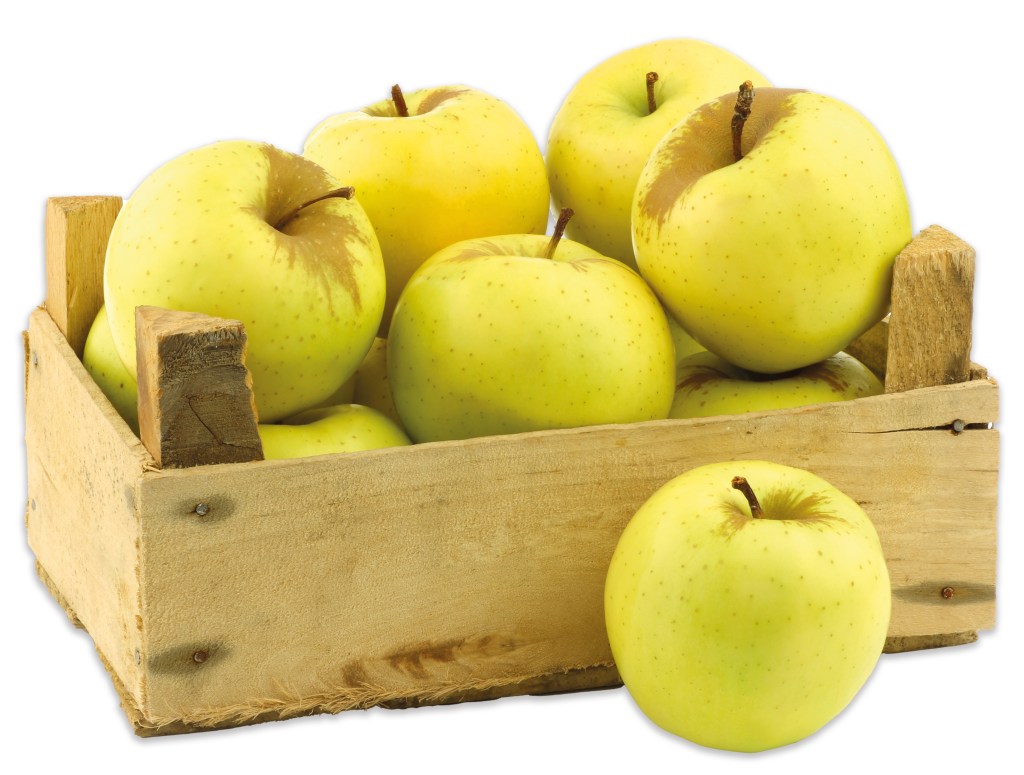
Cakes, for example, are fairly easy and not a bad place to start. I have made cakes from scratch, but honestly, the boxed versions are just as good. Pies, though, with their flaky crusts, long eluded me. At least they did until I found myself in possession of a large amount of Arkansas Black apples and decided to give pie-making a whirl. To make the crust, I went to the grocery store and purchased one, which is the most crucial step if a person who is not a baker wants to make an apple pie. And given that consumerism has almost become more American than mom, baseball and said pie, it’s a step that doesn’t culturally taint the final product.
Pre-shredded cheese, with cellulose added to keep it from clumping, fools no one. Frozen burger patties are a borderline abomination (although there are occasionally places and times for them).
The store-bought pie crust, though, while not quite as delicious as homemade, is more a vessel for the filling than the star of the show. A word of caution, though. Skip the frozen ones and go for a refrigerated variety. Pillsbury is surprisingly good, most likely because it’s made with lard rather than oil.
From there, it’s magnificently simple to get to a warm, delicious pie – one that can be adorned with a scoop of vanilla ice cream or drizzled with caramel. You could even go for both.
And if you serve it to your mother while watching a baseball game – even if your mom herself is a baker – she’ll be none the wiser about the shortcut you took.
[iStock]
THE CHEAT’S APPLE PIE
Makes: 1 x 9-inch pie
Takes: 30 minutes
Cooking time: 45-55 minutes
Store-bought pie crust
5-6 cups of thinly sliced apples
½-⅔ cup of white or brown sugar, depending on the tartness of the apples
⅛ tsp salt
1-1½ tbsp cornstarch, depending on the juiciness of the apples (use more for juicier fruit)
⅛ tsp each of cinnamon and/or nutmeg, if desired
Preheat the oven to 450°F.
Peel, core and slice apples and place them in a bowl.
Combine the dry ingredients and sprinkle over the apple slices, stirring well to ensure an even coating.
Place your crust in a greased 9-inch pie dish and pour the apple mixture into the crust.
Cover with the top crust and crimp the edges with a fork.
Bake at 450°F for ten minutes, then reduce the temperature to 350°F and bake for an additional 35 to 45 minutes.
Allow to cool for at least an hour, then celebrate your successful transition from mere cook to baker.
This article was originally published in The Spectator’s October 13, 2025 World edition.
In the global poker game of cultural repatriation – otherwise known as who nicked what from whom – the Greeks seriously upped the ante with the opening of the Acropolis Museum in 2009. This lavish display of archaeological treasures in a light-filled building designed by the Swiss architect Bernard Tschumi is, alongside the recently opened Grand Egyptian Museum in Cairo, an exemplar of such a building’s mission to educate and inspire.
In the tradition of polemic buildings, it is also a $200 million plea to return the Elgin Marbles from the British Museum to Greece. Since the request was first forcefully made by the actress and politician Melina Mercouri in the early 1980s, replies to it have been shrouded in a fog of academic sophistry: was Lord Elgin’s purchase of the marbles legal? Did the Turks have the right to sell them? Is the British Museum allowed to get rid of them? Just how descended from the Ancient Athenians are today’s Greeks? Blah, blah, blah…
My simple view is that the Marbles are poorly displayed in the British Museum and that they would bring greater joy to the world displayed in the context of Athens and the Acropolis Museum. Thankfully, the British Museum seems to be moving toward the idea of a loan agreement. Yippee! Or perhaps we should say: yassou! Please ship them to Athens asap with a Paddington Bear-style tag attached saying, “Return to sender… eventually.”
I am a long-term fan of the Greek kitchen, a taste I developed in the 1970s when I ate at least once a day in a splendid taverna in Cambridge, Massachusetts. I was surprised when I moved to England and found that Greek cuisine (which in London was mostly Cypriot) had a reputation for post-boozing, pre-hangover filler. If one went to a slightly smarter joint in Soho, the food was largely inconsequential as the real action centered around ouzo-drinking and exuberant plate-smashing – for which you were charged per plate. I imagine that the food at cheap Greek tourist destinations didn’t add much luster either.
So almost as bouleversant and certainly as welcome as the possible emigration of the Parthenon Marbles from Bloomsbury is the renaissance of Greek winemaking and the new appreciation of the virtues of Greek cuisine, both of which are well represented in the excellent Acropolis Museum Café and Restaurant, a refreshing pit stop after a morning’s worth of lekythoi, acroteria and caryatids. (By the way, five of the six caryatids from the Erechtheion are in the Acropolis Museum while the sixth is in – you guessed it – the British Museum.)
The restaurant has floor-to-ceiling picture windows and a fabulous view of the Parthenon-topped Acropolis. If you want a dramatic nighttime scene, they are open on Friday and Saturday evenings. With a view like that, the rest of the decor is irrelevant, but it is still comfortable: chrome-framed black chairs, a black tiled floor and glass-topped tables.
The menu includes many of the greatest hits along with enough neologisms to excite. Unlike a lot of museum restaurants, it is not just aimed at a captive audience. I began with an excellent cheese pie as baked on the island of Skopelos: a coil of flaky pastry looking as smart as anything in a Paris bakery window, stuffed with goat’s cheese and drizzled with honey and a shower of black and white sesame seeds. Superb. As was Lady G’s heroic, perfectly cooked plate of grilled vegetables with halloumi.
Helpings are more than generous; each one of our appetizers could have served two. Next up was a nicely seared bass fillet (farmed if you have to ask, but at least farmed in Greece), served with a silky parsnip puree and dressed with a well-seasoned sauce based on kakavia, the Greek fishermen’s stew, an ancestor of bouillabaisse.
My main course veered slightly toward fusion. Succulent marinated barbecued chicken thighs topped with yogurt sauce reclined on a bed of “corn pitas” which in another, newer world, might have been called tortillas. Is there some Greek/Mexican culinary rapprochement on the cards? A few days later on Patmos, I was served what could only be described as prawn tostadas. Go figure.
At any rate, all our food was zestfully prepared, beautifully presented and stayed on the right side of the threshold between sophistication and over-sophistication. Desserts, which looked so good, were out of the question. Let’s call it €50 a head.
The wine list is well-chosen and sensibly priced. We drank a delicious Malagouzia, which is quickly becoming one of my favorite white wines and is made from an ancient Greek grape rescued in the last half-century. Greek wine lists have become ever more intriguing, although I still derive an atavistic pleasure from half-liter bottles of industrial strength retsina: mea maxima culpa. Whoops, that’s Latin.
This article was originally published in The Spectator’s October 13, 2025 World edition.
It was stiflingly hot in the middle of the Pacific Ocean. I was exploring the eastern Galápagos Islands, living cheek-by-jowl on a former casino ship with a cast of characters plucked straight from a murder mystery novel: a former British supermodel, an Ecuadorian presidential candidate, the ex-drummer of a band who once supported the Who and an influencer couple who looked like they had stumbled off the set of Triangle of Sadness.
The stars of the show – and boy did they know it –were the sea lions
While the trip had all the ingredients to cook up an irresistible whodunit, I was not just there to inspect the wildlife on board but to observe the wildlife off it. The Galápagos Islands are a volcanic archipelago of 21 islands 600 miles off the coast of Ecuador, and they are rightly considered to be one of the greatest national parks on our planet. The islands are home to some 4,000 species, around 40 percent of which are found nowhere else on Earth.
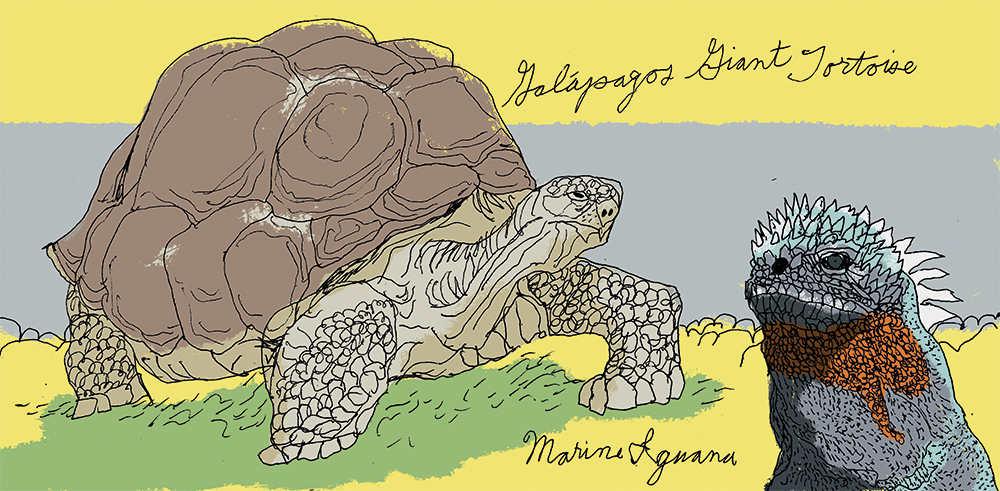
It is almost 500 years since the accidental discovery of these islands by Tomás de Berlanga in 1535. Berlanga was the bishop of Panama and he was tasked with travelling to Peru to mediate a dispute between Francisco Pizarro and the Spanish Crown. Midway through his journey, wild winds knocked him off course and he drifted towards an unknown island. Berlanga and his crew arrived cotton-mouthed, so parched they began to drink cactus water. Soon, they came across giant tortoises, sea lions and marine iguanas. “Like serpents!” Berlanga wrote to the Spanish king, describing his surreal encounter. “And so silly they don’t know how to flee.”
Three centuries later, in 1835, a 22-year-old naturalist named Charles Darwin sailed to the islands on HMS Beagle after completing a surveying mission of the South American coast. He was fascinated by the volcanic nature of the islands but, like Berlanga, was hardly enamored. “Nothing could be less inviting than the first appearance,” he recorded. But during his five weeks on the islands, living among fluttering finches and prickly pear cacti, Darwin’s theories of evolution began to take shape. In 1859, On the Origin of Species was published: we know it as the foundation of evolutionary biology.
I confess that I, too, was guilty of judging the islands too quickly. On first glance, many of them – with their harsh, rugged and sun-scorched terrain – can seem uninviting, even post-apocalyptic. But the magic of these islands is that once you get closer, a whole spectacle begins.
A trip to the Galápagos is, of course, a far more curated and bureaucratic affair than what would have taken place in Berlanga and Darwin’s day. The archipelago is a UNESCO World Heritage site and national park, so it is subject to strict conservation laws. The Ecuadorian government, along with various international organizations, works tirelessly to protect this fragile ecosystem, particularly as tourism increases.
Visitors must: obtain a transit control card, travel with an authorized guide, stay on marked trails and never feed or touch the animals. “Please do not touch the sea lions!” the guides – long-suffering but commendably patient – repeated, even as the sea lions, coquettish as ever with their cartoonish eyes, wobbled up to our ankles. It often felt like the wildlife had more freedom on these islands than we did.
[Eric Hanson]
Our voyage on yacht La Pinta looped east from Baltra to Santa Fé and San Cristóbal before swerving south to Española and Punta Suárez. As we boarded the dinghy to reach the islands themselves, a fleet of frigatebirds – known as the “pirates” of the sky – heralded our arrival, slicing through the wind with their black plumage and forked tails. A trip to the Galápagos Islands is pure theater. Each island is a different stage; each animal plays a different part. Visitors merely sit back and watch the show.
The overture began on South Plaza, one of the smallest islands in the archipelago, known for its fiery red carpetweed. It changes to purple, green and orange as the seasons shift. Creeping through the color were dinosaur-like marine iguanas, a remarkable example of natural selection and the only seafaring lizard in the world. South Plaza is also the place to spot the rare marine-land hybrid iguana, a mishmash of species with distinctive black coloring and long yellow stripes believed to be able to survive in both marine and terrestrial environments.
Next came Santa Fé (or Barrington) Island, one of the oldest in the archipelago. Unlike its neighbors, its formation stems from geological uplift rather than a volcanic eruption, creating a relatively flat terrain punctuated with prickly pear forests and crab-covered rocks. The island teemed with endemic species: the Santa Fé land iguana, Darwin’s finches, Galápagos hawks and swallow-tailed gulls, whose red-rimmed eyes made them look as though they hadn’t slept since 1535.
The stars of the show – and boy did they know it – were the sea lions, who sprawled across the rocks like Titian’s “Venus of Urbino.” If they weren’t basking in the sun they were lolloping onshore, flapping their fins like quarreling siblings and barking with an emphysemic honk. They showed no fear and were consummate performers. Thespians of the highest pedigree.
The easternmost island is San Cristóbal, which is composed of extinct volcanoes and lava fields. Darwin noted the remarkable tameness of the animals during his visit – and so did we. As we wound our way up a trail, it felt like the show’s crescendo had begun when we finally glimpsed the comical feet of a blue-footed booby. “Look! Love is in the air,” Pancho, our peppy, silver-haired naturalist exclaimed. A male frigatebird was just ahead of the booby, inflating his bright red throat pouch as if it were a whoopee cushion. Pancho explained that once puffed up – a process that can take half an hour – the males begin their mating call: shaking their wings, swaying their heads and drumming their bills on the pouch. Females hover above, judging the performance. “It’s a crazy time to be in the Galápagos,” Pancho grinned. “This is one of the best mating rituals to see.” It was 95 degrees and not yet 10 a.m., but for these frigatebirds, the action had begun.
Our curtain call came on Española Island, the southernmost point in the archipelago and the primary nesting site for the world’s entire population of waved albatrosses. Here we found “Christmas iguanas” – marine iguanas colored festive red and green – and colonies of wheeling, squawking seabirds. On the return from the trail, we paused to look at a Galápagos hawk’s nest: the apex predator of the islands. “Nature is full of surprises!” Pancho beamed once more, explaining that the female hawk mates with multiple males, leaving paternity an open question – the Mamma Mia! of the bird world.
The trip felt like one big open-air opera. Berlanga and Darwin may have escaped the constraints of modern-day tourism, but the wildness they encountered here remains unchanged by time. This is nature in its purest form: unscripted, unfiltered, unchained.
Saffron visited Ecuador and the Galápagos lslands with Metropolitan Touring. Yacht La Pinta offers four- and six-night itineraries around the islands with luxury cabins starting from US $5,870.
This article was originally published in The Spectator’s October 13, 2025 World edition.