Category: Europe

  • The steady erosion of academic rigor in German schools

    The steady erosion of academic rigor in German schools

    German teachers are a privileged species. Most of us enjoy the status of a Beamter, a tenured civil servant. We can be dismissed only after a serious criminal conviction, we are exempt from social-insurance contributions and even our mortgage rates are lower. Such comfort discourages dissent. Yet, after more than 25 years as a pampered Beamter, I find myself overwhelmed, not by the teaching load or the students, but by the accelerating erosion of academic standards.

    Having taught English, history and Latin at four different Gymnasien, I have learned that challenging students is now frowned upon by both bureaucrats and politicians. Nearly all my colleagues agree that standards have plummeted. A mathematics teacher tells me that assignments he set 20 years ago for his older students would now be beyond even the brightest. One thing is certain: the children are not to blame.

    The decline began in 1964, when philosopher Georg Picht published The German Education Catastrophe, calling for a drastic expansion in the number of college-eligible high-school graduates. Until then, only those who graduated from a Gymnasium, the equivalent of a selective high school, qualified. Picht’s alarmism found ready ears. In 1960, 7 percent of students left school with college-level results; today, more than half do. The inflation of academic credentials accelerated with the 1999 EU Bologna reforms, which dismantled the traditional and rigorous European degree structure and replaced it with the Anglo-American model. Only medicine and law escaped. The effect has been the slow death of Germany’s once-superb vocational system. Many small- and medium-sized businesses no longer offer apprenticeships but almost anyone who has finished high school can find some comfy course at college. More than 70 German universities now offer degrees in gender studies. It’s dumbing all the way down.

    As college places were massively expanded, the Gymnasien had to lower their entry thresholds to keep pace with the demand for more and more students. Since 2002, in my own state of North Rhine-Westphalia, parents have had the right to choose their child’s secondary school, regardless of their teachers’ recommendations. Children deemed unready for the Gymnasium are admitted and, once enrolled, bureaucratic obstacles prevent them from being moved to a more suitable high school.

    The deterioration has been striking in my subjects. Since 2007, students have been allowed to use dictionaries in English exams, which discourages them from memorizing vocabulary. That same year, the Zentralabitur – a centralized state exam – replaced teacher-written finals. Previously, each school designed its own papers, tailored to what had been taught. Now, vague, homogenized curricula require little factual knowledge. History was replaced by the nebulous goal of “intercultural communicative competence.”

    Objective grading once relied on the Fehlerquotient (number of grammatical errors per hundred words). This was derided as “too rigid,” replaced by an imprecise points system designed to boost marks. Marks are awarded for trivialities, such as “structuring” a text. Students quickly learn the formula: use a few stylistic devices – enumerations, metaphors, repetitions – and you can be seen to analyze anything. Teaching to the test has replaced teaching to think. Real objectivity would require blind marking, external examiners and anonymized papers – none of which exist.

    When I attended a Gymnasium in the 1980s, advanced English students were required to study an entire Shakespeare play. Later, this became selected scenes, then scenes from film versions. In 2023, the Bard was dropped entirely, replaced by the study of “questions of identity and gender.”

    Since 1970, North Rhine-Westphalia has had only eight years of non-leftist control over education. Progressivism now permeates every level. Among teachers, Green sympathies are disproportionately high. Of the 17 newspaper articles used in exams between 2020 and 2025, not one came from a conservative source. The Guardian and the New York Times dominate.

    Behind all this lies the creed of “competence orientation.” Grammar, spelling and factual knowledge are dismissed as obsolete. It is enough to “communicate effectively.” Why, then, read Shakespeare? Why learn a soliloquy by heart? In biology and geography, exams no longer test knowledge but the ability to interpret pre-packaged “material” – charts, graphs and snippets of text. A colleague who marks geography papers believes anyone with common sense and patience has a decent chance of passing.

    Latin, too, has been softened. Translation from German to Latin is banned as it is “too difficult.” Lessons are increasingly padded with Roman culture and history.

    When the state exam was introduced, most teachers welcomed it because it meant less work. I realized something had gone horribly wrong when I graded a history paper by a gifted pupil who provided precise dates, facts and definitions. The new state syllabus allowed only limited marks for such content. I only managed to salvage her grade by awarding her full points elsewhere.

    Across all subjects, measurable trivia has replaced genuine learning. Multiple choice has supplanted multiple perspectives. Today’s “competence orientation” manufactures compliant consumers who consult Wikipedia or ChatGPT for ready answers. To criticize “competence orientation” is near-heresy; every mainstream party endorses it. It was introduced in my state under a Green minister, continued by a Liberal and remains untouched under a Christian Democrat. For the left, it serves egalitarianism; for Liberals, it produces plentiful but pliant employees. The Christian Democrats’ acquiescence is harder to fathom. But the result of all this is clear enough. In 2011, a student of mine wrote at the end of a Shakespeare exam: “Students don’t have to learn any more facts. Studying in this way is boring. Students will die of boredom.” If only I could have given her full marks.

    This article was originally published in The Spectator’s December 8, 2025 World edition.

  • Why are we so obsessed with Hitler’s penis?

    We care about Adolf Hitler’s penis, as a society. Quite a lot, it seems. A British documentary claims, finally, to have solved the mystery of the Nazi leader’s schwanz – was it big or was it small? – and to have proven, beyond a shadow of a doubt, that the famous chant of “Hitler’s only got one ball,” a favorite among British soldiers, wasn’t just an idle insult.

    The key evidence is genetic: a blood-stained piece of fabric from the Hitler bunker. The documentary filmmakers tested it against a sample from one of Hitler’s closest living relatives to make sure the blood was his. And it was. That meant his genome could be sequenced and then analyzed for genetic clues about his personality, health and, of course, his manhood.

    A similar venture in 2014 failed when the disgraced historian David Irving sold filmmakers a strand of the Führer’s hair – only for it to turn out to be someone else’s. The documentary puts to bed some persistent myths about Hitler, not least of all the secret Jewish ancestry thing. Hitler was not secretly Jewish. But what about his penis? A missing nucleotide base suggests Hitler had Kallmann Syndrome, a condition that affects the onset and course of puberty and can lead to various forms of genital malformation, as well as lifelong low testosterone. Around10 percent of sufferers will have a micro-penis: a very small penis, typically less than 2.7 inches in length when erect. But none of this proves anything. It doesn’t prove Hitler had a micropenis or any other kind of physical anomaly, not even low testosterone. It just makes these things more probable.

    As we might expect, the documentary relies more on innuendo and supposition than hard fact. There is, at least, a medical report from the early 1920s that says Hitler had an undescended right testicle. Otherwise that’s it. The report was only discovered in 2010, so it can’t have been the basis of the famous chant. The film asks why Hitler would have asked to be cremated. Was he trying to hide something? The answer, actually, is that he made the request late in the war, after he saw the mess Italian partisans made of his old friend Mussolini and his mistress, Clara Petacci. He didn’t want to suffer the same fate. But surely something must have been really bugging Hitler to make him so power-mad? Surely he must have been compensating for something to want to invade Czechoslovakia and then Poland, and then France and then Norway and then, fatefully, the Soviet Union? No normal man with a normal penis would want to do that.

    Here we reach the crux of the matter. I’m not about to launch a defense of Hitler and his virility. But I do think it’s worth asking, quite seriously, why we believe any of this matters. There is a “small penis theory of history,” and its target is always those who might once, before the advent of Leopold von Ranke, have been called “Great Men”: towering figures who, for good or ill, decided the fate of nations and whole epochs. This theory has a wide currency. You’ll hear it at middle-class dinner parties. You’ll read it in tabloid papers and “serious” books, too. Virtually every ruler, especially a ruler of a more dictatorial bent, is accused at some point of having a small penis. In our own time, Vladimir Putin has been; and, of course, Donald Trump, including by former porn star Stormy Daniels.

    Perhaps the most insidious variant of this tendency is something I call the gay interpretation of history. Rather like the Whig view of history, which sees everywhere and at all times a move towards the sunny uplands of “progress,” this degraded vision sees everywhere and at all times a move out of the closet into open homosexuality.

    Julius Caesar, Alexander the Great, Achilles and Patroclus, the Spartans at Thermopylae, cowboys, pirates, soldiers, martial artists – any male figure from history is liable to be branded a repressed homosexual.

    I was on the receiving end of such claims myself when I appeared in the 2022 Tucker Carlson documentary The End of Men, which was about plummeting testosterone levels and some of the things young men are doing to reclaim their masculinity. Those things included lifting weights, cleaning up their diets, doing martial arts, shooting guns and just spending time with other like-minded young men. The trailer for the documentary, which featured a montage of these activities, was greeted with howls of derision in the media. Talking heads and celebrities, everyone from Stephen Colbert and Cenk Uygur to George Takei, announced virtually in unison that The End of Men was a barely concealed gay Nazi fever-dream.

    In his celebrated book The Four Loves, published in 1960, C.S. Lewis offered a withering rebuttal to the claim male friendship harbors a secret – or not-so-secret – sexual core. “Those who cannot conceive of Friendship as a substantive love but only as a disguise or elaboration of Eros betray the fact they have never had a friend,” he said.

    It’s easy to blame Freud, the man who did more than anyone else, perhaps, to place sexuality at the center of our understanding of, well, everything. Yet, as much as I don’t like the Viennese witch-doctor, I’m not sure that’s right. There’s a reductive tendency in western thought that stretches back longer than the early 20th century.

    We can say, though, with some certainty what the effects are. The reaction to The End of Men is a fine illustration: instead of empowering young men to improve their lives, society tells them to distrust their instincts and desires, to retreat from friendship and ambition and, for heaven’s sake, not to make a noise. “We castrate and bid the geldings be fruitful,” said Lewis; we make “men without chests.” Lewis meant that metaphorically, but it’s also true in the most literal sense. Men possess a psychological and emotional depth and a range of needs that can’t be reduced to the heat between their legs. The sooner we appreciate that, the sooner we’ll understand the best – and worst – of what men have to offer. Until then, our conception of men will remain small, shriveled and not much use for anything.

    This article was originally published in The Spectator’s December 8, 2025 World edition.

  • Fact check: are the NYT’s experts right about UK immigration?

    Fact check: are the NYT’s experts right about UK immigration?

    Yesterday’s release of immigration figures by Britain’s Office of National Statistics didn’t make for particularly pleasant reading. While net migration had fallen to around 200,000 in the 12 months to June, much of this was down to an unusually high exodus of people, with 693,000 leaving the country over the same period. Many of those leaving were under the age of 30.

    That news, however, seemed to prompt something approaching gloating over at the New York Times, which published a piece yesterday headlined: “The British Public Thinks Immigration Is Up. It’s Actually Down, Sharply.” To labor the point, the piece was accompanied by a picture of anti-migration protestors in Scotland. The not-so-subtle subtext being: what a bunch of gammon thickos the anti-migration lot are in the UK.

    The piece went on to chastise Home Secretary Shabana Mahmood, saying her “fiery rhetoric does not entirely match the reality” of migration, as well as Nigel Farage, Kemi Badenoch and the British public at large:

    Britain’s political elites are focusing the public’s attention on migration in ways that are not always accurate, especially when it comes to describing the scale of the flow of people into the country, experts say. That is helping to create a gap between how people perceive immigration in Britain and the facts.

    Hmmm, what are the facts though? And do they actually match the NYT’s version of reality?

    When you strip away the net migration figures – which are influenced by people leaving the country – and look at immigration alone, you perhaps get a clearer picture of the situation.

    The NYT rightfully mention that immigration was down last year from 1.3 million to around 898,000. But it rather neglects to mention the fact that this is still stupendously high in the history of the British Isles. It only looks like a sharp fall if you compare it to the peaks of 1.4 million in 2023.

    In fact, if you don’t count the Boriswave surge in immigration post-2020, last year would have been the highest recorded immigration since records began.

    In other words, it looks like the British public are far more in tune with the realities of immigration than the so-called experts advising the US paper of record.

    It looks like it’s gammons 1 – NYT 0.

  • How damaging could the Ukraine corruption scandal be for Zelensky?

    How damaging could the Ukraine corruption scandal be for Zelensky?

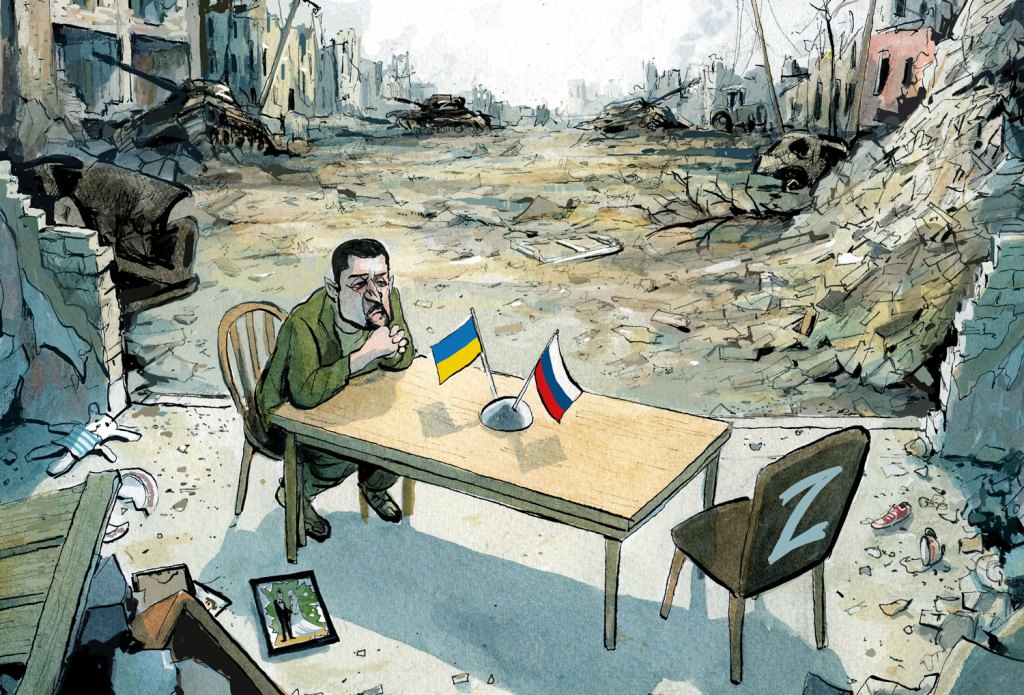
    Andriy Yermak, the cryptic aide who shadowed Volodymyr Zelensky through every phase of the war, resigned Friday after anti-corruption investigators searched his office and house. Yermak was the center of Zelensky’s wartime team – and the consequences of his resignation could be far reaching. 

    In an evening address, Zelensky thanked Yermak for representing Ukraine’s negotiating position in recent tense talks with the United States, “as it should be” and stressed that it had “always been patriotic,” while urging Ukrainians to ignore rumors around the resignation. He said he would begin consultations on a new chief of staff immediately. With more talks looming, he underlined that, in wartime, every institution must stay focused on defending the state. Meetings with the American side, he added, are expected in the coming days. 

    But Yermak rarely acted on his own; he was, in many ways, an extension of Zelensky. He handled the tough, unappealing tasks for the wartime president. He appeared to control the President’s decisions, because the President wanted it so. “Firing him feels like prosecuting his own actions,” an official  said. “On a personal level, it feels like a betrayal because half of Yermak’s actions come from the President,” he added. 

    Since the beginning of Russia’s invasion, Yermak followed Zelensky from bunker meetings to front-line inspections and wielded enormous influence behind closed doors. Over the years, his controlling nature earned him disdain across the board. “He’s a control freak with a psychopathic nature, a maniac for power,” said a senior Ukrainian official. “Letting him go gives a second chance for the President to reset everything.”

    For years, both Washington and Brussels have pressed Zelensky to move Yermak aside, convinced that the presidential chief of staff exercised an outsize, often questionable influence over the country’s wartime decision-making. The drive to push out Yermak peaked last week as a major corruption scandal blew open in Kyiv. The probe alleges a $100 million kick-back scheme inside state-run energy company Energoatom, involving senior officials and Zelensky’s close allies. Yermak, though not then directly implicated, became the focal point of the backlash. 

    Even Zelensky’s party, dormant up to now, rebelled against him last Thursday, urging the President to remove Yermak. Zelensky pushed back – only to reverse his decision a week later, when anti-corruption agencies came to Yermak himself and searched his home on Friday.

    In July tensions flared when the government abruptly moved against the National Anti-Corruption Bureau (NABU), a step widely read as an attempt to stop investigators who had begun circling too close to Bankova, the presidential administration. This was followed by largest public protests since the war, diplomatic pushback and a very clear signal that the move had gone too far. Within days, the administration reversed course. Officials have now confirmed that the government’s summer attempt to bring NABU under control was connected to an effort to contain the same investigations that have now broken into the open. 

    Within Zelensky’s team, some have suggested that the pressure to remove Yermak is coming from the United States, where the FBI has been quietly coordinating with NABU on the corruption investigations. They say the Energoatom case was only the first of four probes expected to surface. “Everybody around Zelensky understands that the President cannot survive the next episodes without giving a sacrifice,” one official said. That sacrifice, allies told the President, must have been Yermak. By that point, Yermak had isolated himself so much that he was left with no real supporters besides Zelensky himself.

    “Mr. Yermak’s resignation as Chief of Staff allows for a much-needed political reset at a critical time in the negotiations over Ukraine’s future,” Michael Carpenter, former NSC senior director for Europe under the Biden administration, told The Spectator. He praised the investigation for looking into allegations about Zelensky’s ”core team.” 

    To his detriment, Yermak united people who otherwise would not work together. People really hate him. Even those who owe him everything say he’s impossible to deal with”, the source noted.

    The way Yermak ran things looked very familiar to anyone who knows post-Soviet politics. It was all about loyalty, personal ties and small clans competing for influence. But this isn’t just a Yermak problem. These old habits never really disappeared in Ukraine, even as a war raged. 

    Ukrainians perceive Zelensky as different from much of his team. They do not view him as corrupt – and many believe he genuinely wants to do the right thing. But after so many years of being let down by the state and system, there’s a real sense of resignation that not even a total war can fully change how politics work. And if things stay as they are, it’s only a matter of time before the blame stops with Yermak and lands on Zelensky. 

  • Zelensky risks coup or civil war

    Zelensky risks coup or civil war

    Kyiv

    When is the price of peace ever fair? War does not determine who is right, only who is left, Bertrand Russell wisely observed. Very often conflicts come down to a numbers game – and on the numbers Ukraine is losing. Despite losing more soldiers, Russia is winning on the battlefield and unlike Ukraine hasn’t even begun mass mobilization. 

    Donald Trump’s proposed peace deal won’t turn the clock back on Ukraine’s borders, or compensate Ukraine for Russian aggression and war crimes, or even punish Putin personally for starting a horrific and needless war that has claimed as many as 500,000 lives. If anything, the deal rewards him. 

    But Trump hopes his proposal will draw a line in the sand to stop the relentless bloodshed.  

    That is not a redline that Volodymyr Zelensky appears prepared to sign up to, though. In an urgent address to the nation on Friday night, Zelensky said this was “one of the most difficult moments in our history.” The choice was, “a life without freedom, dignity and justice, while being expected to trust someone who has already attacked us.” The current price of peace, on the terms of the 28-point plan, is too high for him. 

    Zelensky is at least engaging with the peace process and will talk with Trump later this week. Yet however tough his talks with Trump are, they will be far easier than the conversations he will have with his own countrymen and within his own parliament. It is hard if not impossible to find a single voice in Ukraine that backs the peace plan in the current form, or even in a diluted form.

    A source close to Zelensky, from his ruling Servant of the People party, said the existing plan risks fracturing the country. “It’s a stupid decision. If he doesn’t change it, he will lose the party. 

    “Local governments might say this deal is a betrayal, this is not a good deal and we do not recognize it. They could declare themselves as separate entities, while other parts might respect the deal. There will be a lot of violence during the process.”

    Others in the parliament agree.  “The lives of the people who live in the areas that we have to give away will be ruined, their culture, their religion, they face torture and deportation to Russia where they will be forced to join the military and fight against Ukraine,” Ivanna Klympush-Tsintsadze, a deputy in the opposition European Solidarity party, told me. “This deal shows that might is right. It will be impossible to ratify.”

    Chief among concerns is how the military might react to a bad deal. It is feared that soldiers who have lost friends in hard-fought battles over land they are being told to hand back might take matters into their own hands – and could even be prepared to stage a military coup.

    “If Zelensky agrees to this deal or one like it, he’d have to worry about the more nationalistic and patriotic units,” Harry, 27, from the American Midwest, who is serving with the Ukrainian infantry told me. “I’ve served with these guys, they are elite, big dudes full of steroids who love their country. Units like Azov, the 3rd assault, they would take exception. I don’t know how far it would go, but it could be anything from a demonstration to a full coup.”

    The displeasure of soldiers and veterans could be expressed in snap elections that the peace plan states must happen within 100 days of an agreement being reached. This would effectively be a referendum on Zelensky and the deal that he has struck. It is at this moment that the entire power dynamics of the country will likely change and could see veterans enter the parliamentary system in a significant way.

    The thorniest issue of all is the proposal to surrender land, as yet unconquered by Russia, to Russia. The plan calls for Ukraine to cede the eastern Donbas region and accept Russia’s de facto control of other parts of Ukraine where the frontline would be frozen. In reality, it would mean an evacuation of these areas and be the bitterest of pills for a proud country to swallow.  

    A proposed security guarantee might be a marginally easier sell. The US has presented the Ukrainians with a draft agreement of a security guarantee modeled on NATO’s Article 5, which would commit the US and European allies to treat an attack on Ukraine as an attack on the “transatlantic community.” If formalized, the agreement would mean that if Russia were to try to repeat its attempted capture of Kyiv in 2022, this time it would be met by the armies of the US and Europe. Under the plan, Ukraine would have to give up aspirations to join NATO, but in reality they would become a de facto member. 

    NATO troops would be banned from Ukrainian soil under the plan, but they could be based on the border in Poland, armed to the teeth with modern weapons and war planes and ready to roll at a moment’s notice if Russia attacks Ukraine. An arrangement that will also help to sharpen European militaries that are rusty and reduced since the end of the Cold War. 

    And while Ukraine would have to accept a significant reduction in its army from 900,000 to 600,000, most members of society are now military trained – every citizen is supposed to be either in the military or for the military – and, like Israel, could mobilize large numbers of civilians very quickly.    

    The negative reaction to the proposal within Ukraine could, of course, just be the first stage of grief and eventually Ukrainians will come to terms with Trump’s offer, or an offer modeled on it. But if they don’t agree to his timeline, Trump has threatened to cut the supply of weapons and intelligence.  

    And in typical fashion, he also offered a financial inducement. Ukraine will get $100 billion from frozen Russian assets to help rebuild the shattered country. This will be invested in a joint fund with the US; both will share the profits. Peace is profitable.

    The biggest obstacle to this deal progressing any further is not really Zelensky but the people of Ukraine. By and large, they believe that in practice the deal would offer only a temporary ceasefire, and allow Russia to regroup before launching another effort to reunite the Russian Empire. History would tend to agree with them.  

    The staunch patriotism of Ukrainians should command the respect of the world. Ukraine is a proud nation that prioritizes nothing more than dignity. There can be defeat, they say, as long as it comes with dignity. This deal is short on dignity; it is fair to say it is dishonorable. But Ukrainians must also be aware that they are losing the war. Are they also going to lose this opportunity to at least explore peace?

  • Why Europe can’t go it alone on Ukraine

    Why Europe can’t go it alone on Ukraine

    Who will pay for Ukraine’s war effort now the Trump administration has turned off the financial taps? European leaders have expressed themselves ready and willing to take up the burden, with European Commission President Ursula von der Leyen affirming that “if we continue to believe that Ukraine is our first line of defense, we need to step up our assistance.”

    Individual countries have come up with generous funding packages – most open-handed of all being Germany, which has recently pledged more than €3 billion in direct funding. But that’s just a drop in the ocean compared to what Ukraine says it needs. With more than 40 percent of GDP destroyed and the tax base completely wrecked by the war, it’s not just Ukraine’s military spending but also its public services which are dependent on international handouts. At present, Kyiv’s war effort is facing not just a crisis in manpower but also a serious funding crunch.

    So far, the financial support of western allies has been Kyiv’s superpower and force multiplier. Without it, Ukraine’s economic collapse at the outset of the war would have quickly translated into military collapse, too. Ukraine also enjoys the goodwill of world financial institutions such as the International Monetary Fund, the World Bank and the European Bank of Reconstruction and Development – as well as of international lenders who have collectively agreed to overlook the fact that Ukraine is effectively in default on its own debt.

    That’s an advantage that Russia, by contrast, absolutely lacks. Cut off from international money markets, Moscow is forced, more or less, to balance its own books, borrow from its own major companies and print more money to fund its war production. But Ukraine’s reliance on outside funding is also a strategic weakness, leaving Kyiv entirely dependent on the goodwill of outsiders to continue the fight. Kyrylo Shevchenko, the former head of Ukraine’s Central Bank, calls the system “donornomics” – defined as “the fragile system where Ukraine’s fiscal survival depends on how far its allies are willing to go.”

    How much cash does Ukraine need to fight Russia and survive as a functioning state? The basic figure that the Verkhovna Rada, Ukraine’s parliament, approved for defense and security this year was 2.2 trillion hryvnias, or $54 billion – equivalent to approximately 26 percent of Ukraine’s GDP. But that sum eats up more than half of Ukraine’s depleted tax take, so Kyiv needs to find additional money to fund everything else from healthcare, pensions and education to government salaries.

    ‘Come on Donald, amuse me.’

    Ukraine’s 40 percent budget deficit has to be covered in one of three ways – from direct donations from allied countries, from internationally backed debt and, potentially, from Russian state funds currently held in G7 countries. That’s not even counting military expenses directly shouldered by Ukraine’s backers – most expensively the vital air defenses such as Patriot batteries which cost $1 billion dollars each and fire missiles costing around $4 million a shot. With Russian missile and drone attacks now regularly topping 600 projectiles a night, it’s a small wonder that Reuters has estimated the real cost of the war to be up to $150 million a day. Ukrainian eyes are focused on getting hold of Russia’s sovereign wealth funds, which were frozen at the beginning of the war. Estimates vary, but at least $250 billion of the Kremlin’s money is held in various G7 countries. At least €150 billion of that sum is parked in Belgium’s Euroclear, a depository system used by governments and central banks around the world to hold their hard currency assets. There is, as yet, no legal way that Belgium, the European Union, the United Nations or any other national or international body can just confiscate that money.

    Indeed, many European leaders including French President Emmanuel Macron have warned that doing so would seriously jeopardize Europe’s reputation of having respect for the rule of law in the eyes of other sovereign investors such as China, Saudi Arabia and Qatar – and trigger sovereign capital flight that could quickly bankrupt the continent.

    Instead, western finance officials have been dreaming up various legal workarounds that would allow the funds to remain formally the property of the Russian government, while in practice making them available for Ukraine’s use. In October last year, the G7/EU came up with a scheme known as the Extraordinary Revenue Acceleration loans mechanism, which created a $50 billion loan backed by the interest payments from Russian capital without touching the capital itself. But with the war effort burning through that sum annually, this year European leaders have attempted to create a similar loan package involving the whole sum.

    The idea of this Special Purpose Vehicle (SPV) – also known as the Reparations Loan – has been to create a €140 billion loan backed by Russia’s Euroclear capital that would be lent to Ukraine and, notionally, repaid by Ukraine once Ukraine is paid back by Russia for wartime damages. The trouble is, reparations are vanishingly unlikely and are not even a subject of discussion in any iteration of peace talks with the Russians. On the contrary, the Kremlin very much does want its cash back – and it is very likely to make that, along with the lifting of sanctions, a key demand once negotiations begin in earnest. In other words, handing over Russia’s money to Ukraine could become an obstacle to peace.

    On a practical level, too, the small print of the SPV means that Belgium would be on the hook if and when Russia sues for its money back. Bart De Wever, the Belgian Prime Minister, has refused to sign off on the loan unless all European nations share the risk. So far, they have refused – not least because Europe’s national bankers are legally forbidden from issuing or backing loans that have next to no chance of ever being repaid. The practice is known as “bad-faith lending,” and has been much abused by China in recent years as a way to grab strategic real estate across Africa and Asia in lieu of loan repayments. And since seizing Ukrainian assets isn’t the EU’s style, European taxpayers will ultimately be liable for the entire sum of the loan when the Russians inevitably refuse to pay war damages to Ukraine, forcing Kyiv to default.

    Despite the shaky legal and political foundations of the SPV, “Kyiv sees these assets as the main pillar of budget stability for 2026-2027,” says Shevchenko. Indeed, securing a reparations loan from the EU is key to Kyiv’s parallel negotiations with the International Monetary Fund, from which Ukraine is hoping to secure a four-year multibillion-dollar extension of its existing $11 billion credit facility. But Ukraine has no real plan to repay the IMF except out of the SPV – effectively, one loan paying for another. European states do this kind of thing all the time – but they, unlike Ukraine, have predictable revenues and single-figure deficits. “The plan is risky,” says Shevchenko. “Without a deal, Kyiv’s $60 billion [budget] gap could deepen fast.”

    Though using Russian assets to help Ukraine sounds like a panacea, many in Kyiv are also crying foul over Brussels’ suggestion that €45 billion of the SPV money be used right away to repay last year’s G7/EU Extraordinary Revenue Acceleration loan. More egregious still to Ukrainians has been German Chancellor Friedrich Merz’s suggestion that much of the SPV money be spent on arms for Ukraine manufactured by expensive European suppliers such as Germany, cutting Kyiv out of the picture. That is, more or less, what happened to the lion’s share of US aid which was never paid out to Kyiv at all and was instead sent to US defense contractors to replace old military equipment dispatched to Ukraine. And as the SPV-Reparations loan will be disbursed by the European Union, the temptation to buckle to lobbyists and spend the money inside the EU, pork barrel-style, will be high.

    In addition to massive physical destruction, Russia’s invasion has also disrupted two key structural elements of Ukraine’s economy – access to cheap Russian gas, which was the secret to the competitiveness of much of the country’s industry, and cash income from transit of Russian gas to Europe. Remarkably, for the first three years of the war Ukraine continued to quietly move Gazprom gas across its land and into the EU via a network of pipelines to Slovakia. As late as last year, Kyiv was using the $900 million annual transit fees paid by Moscow (via a Swiss subsidiary) to help fund its war effort. Those payments, bizarrely, made Gazprom one of Ukraine’s biggest wartime budget contributors.

    Some of Gazprom’s gas was even re-imported into western Ukraine’s Lviv and Ivano-Frankivsk provinces having looped through Slovakia, creating the legal fiction that the gas was European. It’s the same story with Russian crude oil pumped to Slovakia, the Czech Republic and Hungary via the Druzhba pipeline – which in fact crosses Ukrainian territory and generated precious revenue for Kyiv.

    Under pressure from Brussels, Ukraine shut down most Russian gas transit at the start of this year, and is now moving to close down the Druzhba oil pipeline too. But that leaves Ukraine dependent on liquefied natural gas (LNG) imported from halfway across the world – and which costs up to three times as much as piped Russian gas. Early this month, under the auspices of Europe’s Partnership for Transatlantic Energy Cooperation, Ukraine’s Naftogaz signed agreements on the supply of at least 300 million cubic meters of American LNG with the Polish company ORLEN. Such western-provided supplies will, Kyiv hopes, be enough to keep heating and electricity going over the coming winter. But there’s no way Ukraine’s heavy industries can return to their prewar competitiveness with energy costs tripled.

    The long-term outlook for a postwar Ukraine is as bleak as its current cashflow. A rapid damage and needs assessment, prepared by the Ukrainian government with the World Bank, UN and European Commission, estimates immediate recovery and reconstruction needs to be approximately $524 billion over the next decade – roughly 2.8 times Ukraine’s 2024 GDP. The good news is that official creditors – including holders of Kyiv’s government debt – have agreed to pause Ukraine’s debt service until the end of March 2027 pending restructuring. But with Kyiv already struggling to make ends meet without repaying its debts, that’s as useful as a chocolate teapot.

    Underlying Kyiv’s coming cash crunch is a fundamental disconnect between Europe’s undoubtedly sincere desire to support Ukraine and the reality that the UK, France and Germany are facing serious fiscal crises of their own. Promises to support Ukraine are of a piece with European NATO members’ pledges to commit 5 percent of their GDP to defense spending by the end of the decade – both declarations are, for the most part, unfunded. Yet senior Brussels bureaucrats such as António Costa, President of the European Council, continue to make sweeping pledges – including in person to Ukrainian President Volodymyr Zelensky. “Today we will make the political decision to ensure Ukraine’s financial needs until 2026 and into 2027,” Costa told Zelensky last month. “We are not tired and we are here to continue to support Ukraine diplomatically, politically, militarily and financially.”

    Costa isn’t lying – Europe’s material and political support for Ukraine will undoubtedly continue. The question is at what level – and for how long. The story so far of Europe’s engagement with Ukraine has been one of big pledges followed by considerably smaller deeds – and that was before Trump took away Uncle Sam’s billions. Unfortunately for Kyiv, there’s little to suggest that Europe has the means or the will to actually provide Ukraine as much as it needs, for as long as it needs.

    This article was originally published in The Spectator’s November 24, 2025 World edition.

  • How the Ukrainian far right is preventing peace

    How the Ukrainian far right is preventing peace

    Since the start of the Russian invasion of Ukraine in February 2022, discussion of the Ukrainian far right has been verboten in western media, largely because one of Vladimir Putin’s stated war aims is the “denazification” of Ukraine. Putin’s claim that Ukraine is a Nazi state has been recycled by Russian propagandists and the western party line has consistently been that while the Ukrainian military does have far-right strains, they are marginal and inconsequential. This may have been true in 2022, but things have changed significantly after almost four years of war. Today, far-right figures control some of Ukraine’s strongest military units, and neo-Nazi ideology is displayed openly in the Ukrainian ranks.

    The latest evidence of this came on November 4, when Volodymyr Zelensky handed out military awards to soldiers fending off the Russian offensive in the Donetsk region. As shown in photos published on Zelensky’s official Telegram and X accounts, some of the soldiers receiving the awards had patches with symbols that looked suspiciously like the emblem of Hitler’s SS. The unit flags adorning the walls told a similar story: the Azov brigade’s insignia is a variation of the Nazi Wolfsangel, while the Chervona Kalyna brigade’s ensign emulates the red-and-black flag of the Ukrainian Insurgent Army, a far-right militia that played an instrumental role in the Holocaust in western Ukraine and massacred tens of thousands of Poles in the regions of Volhynia and Eastern Galicia between 1943 and 1945. Zelensky was photographed with these two flags in the background.

    Both the Azov and the Chervona Kalyna brigades form part of Ukraine’s 1st Azov corps, a unit that comprises tens of thousands. The corps is led by Denys Prokopenko, the commander of the Azov regiment that defended Mariupol in 2022 before being captured by the Russians. He and his men were eventually freed from captivity in a prisoner exchange and their “heroic resistance” was praised by the western media. What was often left out of the gushing puff pieces was Prokopenko’s background. In the 2010s, Prokopenko was a member of a far-right Ukrainian soccer-hooligan association called the “White Boys Club.” A quick browse through its Facebook page shows frequent glorification of Nazi units such as the 14th Waffen Division of the SS (also known as the 1st Galician division). In 2014, Prokopenko joined the nascent Azov. His platoon was nicknamed “Borodash” (bearded man) for its insignia, which featured a bearded Nazi Totenkopf. In spite of appearing to like the aesthetics, Prokopenko has denied that he or the men serving under him have far-right sympathies.

    But the 3rd Army Corps, comprising some 40,000 men and widely heralded as Ukraine’s strongest military formation, is commanded by an even more sinister figure, Brigadier General Andriy Biletsky. In 2010, Biletsky publicly stated that Ukraine must “lead the white nations of the world in a final crusade for their survival, a crusade against the Semite-led Untermenschen.” In 2014, after being held as a political prisoner, he founded the Azov volunteer battalion to fight the Russian-backed separatists in the Donbas. From 2014 to 2022, human-rights organizations described widespread use of torture by Azov fighters against civilians in the Donbas and western media routinely reported on how this white-supremacist, fascist and neo-Nazi paramilitary unit served as a model for violent far-right extremists all over the world. In 2016, Biletsky also established the far-right political party National Corps, which the US State Department called a “nationalist hate group” in 2018.

    In those days, contrary to Russian propaganda, the Ukrainian people had little affinity for the extremist ideology of Biletsky and the Azov movement. Although Biletsky managed to get himself elected to the Ukrainian parliament, his party only received 2 percent of the vote in the 2019 elections. In other words, prior to the war, Azov was a fringe phenomenon.

    That changed in 2022. After the Azov’s capture and release by the Russians, figures such as Prokopenko and Biletsky became national and international heroes overnight. From a regiment in 2022, Azov grew to a brigade in 2023 and a full corps this year. Today, its members are among the most admired men in the country.

    There’s a reason Zelensky is so resistant to signing an armistice, especially one involving territorial losses. In promoting such men as Prokopenko and Biletsky, the President has potentially created a monster. If their ideologies are as suspected, Ukraine is now in the position of Germany in 1918. Fighting a war of attrition against an opponent with vastly more resources, manpower and firepower, Ukraine is bound to lose, or at the very least to suffer major losses. After World War One, the Dolchstoßlegende – the stab-in-the-back myth – spread around Germany. It convinced many Germans that the country hadn’t lost the war on the battlefield but had instead been betrayed by citizens on the home front – Jews, mainly. After years of Ukrainian and western media hyping up the Ukrainian army and predicting a Russian collapse, an unfavorable peace risks creating Ukraine’s own version of the Dolchstoßlegende, with Zelensky playing the role of the Jewish scapegoat.

    If a ceasefire is signed, it is far from clear whether Prokopenko and Biletsky, who believe in victory at any cost, will lay down their arms. Between them, they command tens of thousands of Ukraine’s best troops. Well-equipped, well-trained and ideologically motivated, these units have the potential to be Ukraine’s very own Freikorps, and Prokopenko and Biletsky may well lead their own Kapp Putsch or march on Kyiv in the event of an American-mediated diktat.

    While some armies have neo-Nazis, in Ukraine some neo-Nazis have armies. The threat they pose to a democratic and prosperous postwar Ukraine is obvious.

    This article was originally published in The Spectator’s November 24, 2025 World edition.

  • A decade after Bataclan, France is more divided than ever

    A decade after Bataclan, France is more divided than ever

    Ten years ago on Thursday, Islamist terrorists massacred 130 people in a coordinated attack across Paris. It was the heaviest loss of life on French soil since World War Two, and those who perished – as well as the 350 who were wounded – were remembered yesterday in a series of commemorations. Emmanuel Macron visited the six sites where the terrorists struck, among them the Stade de France and the Bataclan concert hall, and the President inaugurated a memorial garden at Place Saint-Gervais, opposite Paris City Hall.

    According to the Élysée Palace ahead of proceedings, the day would be an opportunity for the nation “to honor the memory of those who lost their lives… and reaffirm its ongoing commitment to the fight against terrorism.” Since 2015 the DGSI have thwarted 80 Islamist terror plots but 50 attacks have been launched, 19 of which were fatal, nearly one every six months.

    The organizer of the day of remembrance is Thierry Reboul, who oversaw the opening ceremony of last year’s Paris Olympics. He said the commemorations would honor “the dead and the living, but also our culture, which was attacked that evening, with a moment of collective unity.”

    To bring France together is an admirable aim, but is it achievable? It has been tried before without success. A week after Islamists murdered the staff of Charlie Hebdo in January 2015, schools in France held a minute’s silence in their memory. In over 200 establishments students refused to respect the silence. A similar request for silence was made in 2023, in memory of the teacher Dominique Bernard, who was fatally stabbed in the schoolyard by an Islamist. Some pupils in 350 schools chose not to comply.

    These acts of rebellion should surprise no-one. A comprehensive study published in 2021 reported that 65 percent of Muslim students in French schools consider Islamic law superior to Republican law.

    The figure wouldn’t have surprised François Hollande, who was president of the Republic in 2015. He described the assault on Paris as “an act of war.” The following year a book was published, A President should not say that, in which Hollande confided in two journalists. “It’s true that there is a problem with Islam,” he told them. “No one doubts that…we can’t continue to have migrants arriving unchecked, especially in the context of the attacks.”

    If vast numbers of migrants from Africa continue to arrive unchecked, Hollande warned, “how can we avoid partition? Because that’s what’s happening: partition.”

    Since Hollande made those observations, unchecked immigration into France has reached record levels, prompting other significant politicians to warn of partition. “Today we live side by side,” said interior minister Gerard Collomb in his resignation speech of November 2018, “but tomorrow I fear we will live face to face.”

    In the two years since Hamas attacked Israel, anti-Semitism in France has reached “alarming” levels and a recent poll disclosed that 31 percent of 18- to 24-year-olds believed it acceptable to assault Jews because of the Gaza conflict.

    Synagogues have been burnt, Jews beaten up in the street and last week four pro-Palestinian protesters stormed a Paris concert hall, letting off flares and shouting threats as the Israel Philharmonic Orchestra performed. 

    On Monday, a package bomb exploded in the Montlucon agency of the German financial services company, Allianz, injuring one employee. Days earlier, the Toulouse branch of the company had its windows smashed. An extreme-left group claimed responsibility for the Toulouse attack, justifying it on the grounds that Allianz insures an Israeli drone manufacturer.

    The intimidation of the Israel Philharmonic Orchestra drew scant comment from far-left MPs. A minority, such as Thomas Portes of La France insoumise (LFI), celebrated the intrusion, declaring: “We must multiply these actions! We are on the right side.”

    “Islamo-Gauchisme” is now de rigueur among the far-left. Another LFI MP, Nathalie Oziol, stated earlier this year that it was wrong to blame the beheading of schoolteacher Samuel Paty in 2020 on “a Muslim fanatic.” Rather, it was an issue of “resources, hierarchy, and how the government views national education.”

    In an op-ed in Tuesday’s Le Figaro, the academic and expert on Islamism, Gilles Kepel, expressed his fear that the Islamists were exploiting the left’s useful idiocy to win the “cultural battle.” Certainly they are winning the hearts and minds of a growing number of young French Muslims.

    The Islamist attack last week on the holiday island of Oleron overshadowed the revelation that three women aged 18, 19 and 21 were charged with plotting to bomb a concert venue “in homage to bin Laden.” This is not an isolated case. Nearly 70 percent of people arrested on suspicion of terrorism are under 21 and over half are motivated by a desire to avenge Gaza.

    There was grief, poignancy and dignity across France as millions paused to remember that horrific evening in Paris ten years ago. But there will also be delusion. Not among the people, three-quarters of whom told a recent poll that they expect more Islamist attacks in the future, but among the political elite.

    France is not united; it is divided. To deny this reality dishonors the dead and endangers the living.

  • Is Germany ready for military service?

    Is Germany ready for military service?

    It’s finally crunch time for Boris Pistorius’s plan to reintroduce military service in Germany. Following a delay of several months thanks to the country’s snap federal election campaign at the start of the year, the defense minister’s new “Modernization of Military Service” draft law is currently being debated in Berlin.

    Under Pistorius’s proposals, all 18-year-olds will be asked to complete a questionnaire that will gauge their willingness and ability to carry out military service. For men, the quiz will be compulsory; for “other genders” – including women – it will be optional. Those who declare themselves willing to serve will be invited for a formal assessment for recruitment into the armed forces, while anyone refusing to fill out the questionnaire could face a fine. Volunteers will then be expected to serve a minimum term of six months. Bar unexpected delays, the new law is expected to come into effect from January 1, with medical exams for all potential recruits to be made compulsory by July 2027. 

    Conscription was suspended during Angela Merkel’s stint as chancellor in 2011. But so far, it appears that, despite earlier resistance to the idea of bringing it back, Berlin’s politicians are in broad agreement that resurrecting military service in some form is now a good idea. What they can’t seem to agree on, however, is what to do if Pistorius’s new law doesn’t bring in enough volunteers to plug the gaps in Germany’s armed forces.

    Pistorius has grand plans to grow the German army to 260,000 active troops and 200,000 reservists by 2035. But following years of financial cuts, along with a marked decline in employment conditions, the Bundeswehr has shrunk to a nearly all-time low of just over 182,000 active personnel. Many in Berlin – but in particular Chancellor Friedrich Merz’s conservative CDU party – want reassurance that, should the new military service law fail to bring in enough voluntary recruits, other means can be used to boost the army’s numbers.

    A working group of MPs from the CDU and Pistorius’s social democratic SPD have suggested that any shortfall in volunteer numbers into the armed forces could be made up through a randomized lottery. Defending the idea, CDU parliamentary leader Jens Spahn said this would ensure any compulsory recruitment was fair. Few in Berlin – and beyond – appear to agree.

    Blasting the proposal for a backup lottery, the head of the German army Carsten Breuer said it would be an ineffectual way of taking stock of the country’s manpower reserves in the event of an emergency. “From a military perspective,” he said, “it is crucial that the entire year group is examined.” This could only be achieved through blanket conscription, he added.

    Pistorius himself was also quick out of the gates to slam the idea of a lottery for plugging the gaps in the Bundeswehr, arguing that this would fail to bring in the best possible recruits. “One thing is clear,” he said. “If voluntary service isn’t enough, there will be no way around mandatory conscription.” Such a move, he added, would also act as a deterrent against an increasingly belligerent and provocative Russia. Hoping to make the Bundeswehr a more attractive employer and avoid having to resort to any kind of “plan B” measure, Pistorius’s draft law also lays out plans to improve pay and working conditions with the aim of improving the retention issues the armed forces have been plagued with in recent years.

    The dispute between Pistorius and members of the governing coalition to which he belongs has been ongoing ever since his draft law was introduced to the Bundestag in mid-October. A planned press conference between the CDU and SPD on the eve of the draft law’s first reading was canceled with hours to go, reportedly after an agreement to include the backup lottery in the legislation fell through. 

    Several weeks of wrangling later, there are few signs Pistorius or his parliamentary opponents are any closer to finding a resolution. “There’s really only one proposal,” senior CDU politician Norbert Rottgen told German media today defensively. “With the procedure we are proposing, everyone has the same chance, the same risk of being called upon. That is the equality we are upholding. Any better proposal is welcome.”

    Conspicuously absent from the discussion over a lottery versus mandatory conscription is any suggestion of how the government would force young Germans into the army – and how to punish those who don’t comply. It is safe to say that passing any sort of law allowing jail time or fines for such rebellious youths would go down like a lead balloon with younger voters. This most likely goes some way to explaining the degree of resistance any suggestions of mandatory conscription have been met with.

    Also unsurprisingly, the idea of bringing back military service of any kind is proving very unpopular with Germany’s youth – the demographic, of course, most directly affected by Pistorius’s new legislation. Enquiries into how to register as a conscientious objector are reportedly on the rise. Meanwhile, a study co-authored by the university of Hamburg found that only 14 percent of 18- to 29-year-old men who had never done military service before were willing to put themselves forward for it. According to another survey from INSA, only 20 percent of respondents aged between 18 and 29 were in favor of a lottery recruitment system. Interestingly, it found that on balance, more Germans preferred a return to mandatory conscription than any kind of lottery.

    The Hamburg study, however, may hold some good news for Pistorius. According to their research, even extrapolating just the small percentage of young Germans who expressed a willingness to volunteer for military service, Pistorious would be able to meet his target for bolstering the Bundeswehr’s numbers “without coercion.”

    With eight weeks left of the year, Pistorius is steadily running out of time to calm the disquiet around his draft law. He has held the honor of being Germany’s consistently most popular politician since he took up the post of defense minister nearly two years ago. But caught between a fractious Bundestag and an unimpressed public, will Pistorius’s military service law knock him off that top spot?

  • Why is it only left-wing leaders who are allowed to be young?

    Why is it only left-wing leaders who are allowed to be young?

    There was a time when the French left turned its nose up at all things American. Too low-brow for them. Not now. The victory of Zohran Mamdani in the New York mayoral race has caused much joie de vivre in left-circles.

    Jean-Luc Mélenchon, the Gallic Bernie Saunders and the leader of the far-left La France Insoumise, described Mamdani’s win as “very good news.”

    The general secretary of the center-left Socialist party, Olivier Faure, posted a smiley face on X above a headline in Le Monde, hailing Mamdani as “the youngest mayor in New York history.”

    Mamdani referenced his age during his victory speech in Brooklyn. “The conventional wisdom would tell you that I am far from the perfect candidate,” he proclaimed. “I am young, despite my best efforts to grow older. I am Muslim. I am a Democratic socialist. And most damning of all, I refuse to apologize for any of this.”

    There has been no need to apologize to much of the world’s mainstream media. His age and his religion have been a help not a hindrance to Mamdani’s rapid ascension.

    A puff-piece in Wednesday’s Guardian was typical. It praised his youthful vigor, particularly his “savvy social-media presence” and the way in which it was “energizing younger voters… who are hungry for generational and ideological change.”

    France’s left-wing Liberation newspaper took a similar line, characterizing Mamdani as “the idol of Generation Z” and the hope for a better future in the United States.

    Curiously, these newspapers have a different take on another political idol of Generation Z, France’s Jordan Bardella.

    The 30-year-old president of Marine Le Pen’s National Rally is routinely attacked for his age and his reliance on social media. When Mamdani promotes himself and his policies to his 3 million followers on TikTok he is being “savvy.” When Bardella addresses his 2.2 million followers he’s using it as a “propaganda tool.”

    For Mamdani, his youth is a virtue but with Bardella it’s a weakness. CNN has pointed to his “short career and lack of concrete experience,” while the Guardian depicted him as “too young and inexperienced.”

    This week Bardella was forced to defend his age during a television interview, saying his youth does not “discredit” him. Yet the same broadcaster made no reference to Mamdani’s age when discussing the possibility that he was the future of the Democratic party. The fact he was a little “too left” was perceived to be his only blemish.

    France’s international broadcaster, France24, believes that the victory of Mamdani will “galvanize” the French left. No doubt. But it will also be a boost for Bardella.

    He has become the face this year of the National Rally, eclipsing the de facto leader of the party, Marine Le Pen. In March she was disqualified from political life for five years after a Paris court ruled she had misused EU funds. Le Pen has appealed her conviction and the outcome will be known next February.

    Even if she overturns the sentence, there is a growing belief in France that Le Pen won’t be her party’s candidate in the 2027 presidential election. She has two disadvantages: her economic socialism, which remains a turn off for middle-class voters, and her last name.

    There are still a sizable number of voters, particularly among the over 60s, who, while they agree with her about the dangers of mass immigration and Islamism, still can’t bring themselves to cast a ballot for a Le Pen. The anti-Semitism of her father, Jean-Marie, is etched in their memory.

    Bardella is different. He does not suffer the sins of his father and he is also more economically liberal. Over the last year he has been courting big business and deftly drawing the distinction between himself and his mentor, Madame Le Pen.

    Bardella’s only disadvantage is his age. Or at least it was until this week. But Mamdani has done the Frenchman a favor. Next time Bardella is interrogated by a hostile journalist about his callowness he can simply namecheck the inspiring mayor of New York.

    Or is it only left-wing leaders who are allowed to be young?