The regime of North Korea has continued to exploit the war in Ukraine to spread its propaganda. This week we learned that Ukrainian children, abducted by Russia, are being sent to an infamous North Korean summer camp. The children have reportedly been taught to “destroy Japanese imperialists” and heard from North Korean soldiers who destroyed the USS Pueblo, a spy ship captured and sank by North Korea in 1968.
This Ukrainian children have been at the Songdowon International Children’s Camp, located near the port city of Wonsan on the country’s east coast. Well known as a popular tourist hotspot for North Korean elites, Wonsan has recently gained infamy for the newly-opened Wonsan-Kalma tourist resort, which has been not-so-affectionately nicknamed “North Korea’s Benidorm.” Wonsan, too, has a significant place in North Korean history. It was where Supreme Leader Kim Jong-un spent much of his childhood.
The children’s camp is hardly a new creation. Established in 1960 amid the backdrop of the Cold War, the camp became one additional facet of North Korean cultural diplomacy, as Pyongyang sought to develop ties with communist and communist-friendly countries. Whether from North Korea’s Cold War patrons of Russia and China or communist-sympathizing states further afield, such as Laos, Tanzania and even Syria, children would be sent to the camp to engage in a range of activities, including cooking, swimming, rock climbing, or marathon running. For the North Korean regime, the goal was simple: spread the virtues of socialism, North Korea-style, and become friends with like-minded states.
When the Cold War ended, the camp did not shut its doors. It continued to host around 400 children annually, and expanded its capacity to 1,200 following renovations in 2014. The camp of today includes a water park, private beach, and even a football pitch. In recent years, Songdowon has seen visitors not just from Russia and China, but also Vietnam, Mongolia and Mexico. There is no access to the internet.
The North Korean regime also forbids sustained interaction between foreign visitors and their North Korean campmates. After all, the Kim regime must ensure that the spread of outside information – even from so-called communist-friendly countries – is curtailed. The camp is subsided by the North Korean Socialist Patriotic Youth League, the country’s main youth organization, which also sends young North Koreans to the venue. For Pyongyang, any possibility to expound its anti-American and anti-Japanese worldview is an opportunity worth taking, even if the audience may be barely adults.
Although little is known about the Ukrainian abductees sent to North Korea, cooperation between Pyongyang and Moscow in areas beyond security looks to continue to grow, especially as peace in Ukraine looks evermore elusive. North Korea and Russia signed a mutual defense pact in June 2024, but these renewed ties were not limited to the domain of security. It was no coincidence that only a week after the ink was dry, Grigory Gurov, head of the Russian Federal Agency for Youth Affairs, announced that around 250 Russian children, mainly from the Russian Far East, would visit Songdowon, making them one of the first groups to visit the camp following North Korea’s draconian three-year border closure, owing to coronavirus, in January 2021.
Russia and North Korea are yet to respond to the reports that Ukrainian abductees are being sent to Songdowon. Pyongyang will probably just say the children were participating in a cultural exchange – helping out an ally. We need only go back to February this year when Russia’s ambassador to North Korea, Alexander Matsegora, announced that how “hundreds of wounded [Russian] soldiers” fighting against Ukraine were being treated in North Korean hospitals, epitomizing the “brotherly attitude” between the two Cold War allies.
The Kremlin pulled out all the stops for the visit of Donald Trump’s son-in-law Jared Kushner and special envoy Steve Witkoff to Moscow yesterday. Accompanied by Putin’s envoy Kirill Dmitriev, Witkoff and Kushner strolled through crowds on Red Square with minimal security after lunching at a fancy restaurant on Petrovka street. Not coincidentally, Chinese foreign minister Wang Yi was also in town for a meeting with Russian Security Council head Sergei Shoigu, where Russia affirmed its support for Beijing’s One China policy.
It was a sophisticated piece of great power signaling intended to send a multi-part message to Donald Trump. First and foremost, the Kremlin was showing off its new solidarity with China – the DragonBear alliance ready to step up as the world’s next dominant superpower. Second, it was demonstrating that Russia regards Ukraine as a mere detail in a much larger geopolitical realignment where three great powers carve up the world between them and Europe is relegated to a yapping irrelevance. Third, by walking Witkoff through the streets of Moscow – including a stroll past the TsUM department store with its window displays piled with luxury, sanctions-busting Western goods – the Kremlin was showing off the Russian capital’s obvious wealth, stability and security. This is a city that hasn’t noticed there’s a war on, went the Kremlin’s not-so-subliminal message. It’s a city where top officials can stroll through crowds with no fear of being accosted by angry citizens.
Even as he talks about a peace plan for Ukraine, Vladimir Putin believes that the world is going his way. Yes, his economy has been battered by huge war expenses and sanctions – and is about to be battered a whole lot more by Ukrainian attacks on shadow fleet tankers at sea, on oil terminals and refineries. But all in all, Putin has good reason to believe that his opponents and rivals from Washington to Brussels to Kyiv are in worse shape than he is. And that belief is the wellspring of his stubborn insistence on sticking to his maximalist war aims. Even as European leaders and Volodymyr Zelensky whittle down the White House’s 28-point peace plan – dubbed the “28PPP” – the Kremlin seems to be going in the opposite direction, insisting that the 28PPP does not go far enough in Russia’s favor.
The very fact that Washington is so eager to talk peace is seen by the Kremlin as a sign of weakness, argues former Russian diplomat Boris Bondarev, the most senior Russian official to defect to the West in protest at the 2022 invasion. “The emergence of such a US initiative signals, in Putin’s view, that Washington is capitulating … not because it has suffered losses but because it is tired, frightened and eager to avoid involvement,” wrote Bondarev in a recent essay. From Russia’s point of view, Trump is “declaring the impotence of a superpower incapable of defending its own interests.” Worse, Trump “does not understand that once a state pledges support to an ally, it cannot abandon that promise so ostentatiously,” says the former diplomat.
The Trump administration has already indicated it is willing to recognize both the Donbas and Crimea as Russian. More significantly, even prominent pro-Ukraine Senator Lindsey Graham has made it clear that the US will never contemplate Ukraine in Nato – something that has long been obvious but which former US Secretary of State Antony Blinken refused, fatefully, to put on paper on the eve of the war. With Kyiv’s most powerful one-time ally already conceding these fundamental points at the very beginning of talks, why would Putin not be tempted to push for even more?
On the front lines in Ukraine, Russia is positioning itself for further advances on the ground. The grim and protracted battle for control of the Donbas town of Pokrovsk – which Putin announced had fallen this week – have distracted attention from much larger Russian advances in the south around Zaporizhzhia. Russian forces occupied some 193 square miles of territory in November, mostly in this sector, four times more than in September. The Kremlin’s troops are now just around 12 miles from the provincial capital of Zaporizhzhia – the third largest city on the eastern bank of the Dnipro river after Kharkiv and Donetsk – and are moving to surround Hulaipole. Moscow’s ruthless and systematic air war against Ukraine’s energy grid is moving towards its grim goal of plunging whole regions into winter darkness.
In Kyiv the political mood is febrile. Last week Volodymyr Zelensky was forced to fire his closest adviser and right-hand man Andriy Yermak after anticorruption police investigating an ugly $100 million embezzlement scheme of defense construction funds raided his home. The war profiteering scandal has already claimed several of Zelensky’s top ministers and friends. This week Ukrainian MPs blocked the start of parliamentary proceedings with chants of “government out!”
According to Zelensky’s former spokesperson Iullia Mendel, “Ukraine’s parliament is paralyzed … The country’s long-simmering political crisis has now reached its boiling point.” Political analyst Volodymyr Petrov, a longstanding friend and mouthpiece of Zelensky’s, claimed in a television interview on Tuesday that found Zelensky “tired of us … I feel like he’s decided to send us all to hell … he’s tired of explaining to all of us why the fuck we need this war.” He also predicted, without producing evidence, that “by 15 December we will sign a ceasefire and Zelensky will leave.”
Zelensky himself has been touring European capitals to drum up diplomatic and financial support, exchanging hugs on the steps of Paris’ Elysee Palace with his stalwart supporter – and critics say, fellow lame-duck – French President Emmanuel Macron. Characteristically upbeat, Macron claimed that a new round of European sanctions against shadow fleet tankers that carry some 40 per cent of Russia’s oil will soon bring Russia to its knees. ‘I truly believe that in the coming weeks, the pressure on Russia’s economy and its ability to finance the war will change dramatically,’ said Macron.
Yet even as he spoke, the European Central Bank effectively killed off Europe’s plan to raise a €140 billion ($163 billion) “reparations loan” backed by frozen Russian assets on the grounds that the loan would violate EU treaties. “This shows the hard limits of ‘donor-onomics’,” says former head of Ukraine’s Central Bank Kirilo Shevchenko. “Europe wants to support Ukraine at scale, but no major institution wants to underwrite the legal and political risks tied to Russia’s immobilized assets.” The proximate result of that decision is that Kyiv is fast running out of options to finance a continued war.
Even former Ukrainian foreign minister Dmytro Kuleba, a long-time stalwart of talks with Ukraine’s allies for the first three years of the war, admits that “the time has come to acknowledge a deep and painful truth” that “Ukraine is facing a tactical defeat … as soon as we recognize that and face it, we can start rebuilding our future.”
With military disaster and political crisis stalking Kyiv, an economic squeeze rendering Europe strategically impotent and a US administration in a hurry to do a peace deal at almost any price, it’s small wonder that Putin believes that time and destiny are on his side. Yet at the same time, as Kuleba pointed out, Ukraine remains independent and free, for all Putin’s attempts to crush it. And as long as that remains true what Putin has achieved is not victory but a very bloody annexation of the Donbas, leaving the remaining 80 per cent of Ukraine beyond his command.
The urge to run from danger is only human. It was palpable when air raid sirens sounded as I left the Ukrainian city of Dnipro, which is close to the front line and under relentless attack nightly from Russian drones. Five MiG-31 aircraft were in the air, Telegram channels with access to reliable intelligence reported. The warplanes can be armed with either the Iskander ballistic missile – which travels at up to 5,400mph – or the Kinzhal hypersonic missile, top speed 7,700mph. So fast there wasn’t enough time to find a shelter. We sat in traffic with bated breath, waiting.
A deep boom resonated through the mini-bus and two colleagues of mine began praying. Was it an intercept or an impact – or a Patriot defense battery firing? We still don’t know. And, more importantly, we wondered where, exactly, the other incoming missiles were heading. As the tension mounted in our stationary vehicle, I glanced out the window: people ambled slowly back from work under yellow streetlights; they smoked, they shopped, they seemed more concerned with the cold than impending death from above.
For some: flight; for others: fight. Ukrainians succumbing to the understandable desire to run as far away from the war as possible has been a big problem for the country since long before Donald Trump unveiled his plan for a peace deal. Last year, Ukrainian President Volodymyr Zelensky lowered the conscription age from 27 to 25. But nine in every ten conscripts is failing to report for duty, a close advisor of Zelensky told me. It is estimated that the number of fighting-age men who have fled Ukraine is almost equivalent to the size of the 900,000-strong Ukrainian army. Polish border guards have processed 99,000 men aged 18-22 in the past two months alone.
“If 90 people out of 100 are escaping the army, the nation is not ready to fight anymore,” the advisor said. “The problem with joining the military is that people think it’s forever, until the war is over. So basically you’re going to eventually die on the front line. This is an existential problem for Ukraine now. We have already lost seven million people who have moved out of the country since the war began. If conscription is expanded, it would maybe force out an extra two million. But what’s going to be the future of the country demographically? The best way now is to take the least bad peace deal possible. The Russians still have other moves to go, they can do internal mobilization – they still have reserves.”
Roman Kostenko, a former military commander and current parliamentary deputy, said “80 percent [of soldiers] are now running away from training centers, and the country is doing nothing to bring them back or create conditions so that they are afraid to run away and do their duty.”
If the Ukrainian army was twice its current size – as it should be if all who were conscripted had answered the call – perhaps it could have fended off the current Russian advance into the city of Pokrovsk and stopped the Russians pushing forward the front line, thereby bolstering Zelensky’s hand in negotiations with the US.
Zelensky negotiates from a position of weakness. Battlefield losses are mounting and the front line is moving in the wrong direction. His administration is also engulfed in a corruption scandal centered on the energy industry, which is currently being crippled by Russian attacks. This is his – and his country’s – bleakest moment since the war began in February 2022.
If Pokrovsk does fall, the next major city in Vladimir Putin’s sights will be Dnipro, 50 miles to the west – which might shortly afterward find itself within shelling distance. Instead of nightly attacks by MiG-31s, Dnipro, which is home to one million Ukrainians, could face 24-hour bombardment. Its resilient residents, swelled already by tens of thousands of people fleeing from the Russian advance, could at that point finally decide to leave en masse.
Volodymyr Miller, the deputy mayor of Dnipro, called for the conscription age to be lowered even further to help defend his city. “The conscription rules have to change. I would even say that they should have been changed sooner. There are too many people not helping. Either you’re on the front or you’re for the front. And if you don’t have that in society, then the war will be tougher,” he said.
Some, however, think Ukraine can go it alone and that further conscription is unnecessary. Standing next to the smoldering wreckage of the public broadcaster Suspilne, which was attacked with a barrage of Shahed suicide drones just hours beforehand, Ivanna – a university lecturer in rocket science – said: “We’re not going to stand down. We’ll be here to the very end. I believe in my defenders, I trust they will defend our city.”
This optimistic assessment of Ukraine’s chances of success prevails across the country. True, this is a view born, perhaps, of necessity while the fighting continues. Failure is not an option: the alternative is death. But to bring the fighting to a close, very few people say they will accept the compromises outlined in Trump’s peace deal – especially ones that involve giving away any land. In a recent poll, 75 percent of Ukrainians said they would reject a plan that forfeited territory, while just 17 percent said they would accept such a deal. Why should they, they argue, when Putin’s aim is to reunite the Russian empire and that a peace deal will, in fact, allow him to regroup before invading again. It has been angrily dismissed by many in the West as a capitulation agreement authored by Russia.
The counter view to war is fast diminishing in Ukraine. Those who have fled the country in order to avoid being conscripted would, no doubt, account for a big block of those in favor of ending the fighting if Trump’s peace deal is signed. Within 100 days of the deal being agreed, national elections would have to take place, which would effectively act as a referendum on the agreement. However, it is unclear whether these absconding conscripts would be allowed to vote – or if they would even be prepared to put their head above the parapet and give the Ukrainian government their details, for fear of prosecution. The country’s anti-war sentiment is being hollowed out.
The view from the front line of Trump’s deal – and that of Ukraine’s military and civil leadership – is skeptical. Harry, 27, an American with Ukrainian roots, joined the Ukrainian army almost four years ago. He fought in the infantry, going into Russia as part of a reconnaissance unit, but when his injuries became problematic, he joined a drone team – reasoning that it was better to be the hunter than the hunted.
“The problem with conscription is a lot of Ukrainians don’t trust the army and I don’t blame them,” he told me. “There have been too many poorly planned missions that lead to unnecessary deaths. You have to ask if this juice is worth the squeeze, as we say in the US. Too many units are trying to be on the offensive and this is 90 percent a defensive war now. We need to be building defenses with pushes here and there to keep the Russians on their toes.
“With the peace deal that Trump is pushing, there is no incentive for Putin to stop – he’ll just keep going. It’s a Russian wishlist. What’s the point of what we’ve been doing if we give up everything? I don’t see the army accepting it.”
A fellow serviceman, a drone operator who mounts strike missions deep into Russia, attacking military logistics hubs and fuel depots, believes that further conscription could turn the tide and there is no need to take the US deal. “Russian soldiers are paid much more than our soldiers, but if we paid more than them we could attract a lot of fighters, mercenaries from other countries. With the new sanctions Russia will soon struggle to pay its own troops. We can win if that happens, if we keep our resolve.”
War is still the most likely outcome of the peace process, not least because Putin hasn’t put his name anywhere near the proposed deal – and may never do so, following reports of a security guarantee that would park NATO troops and warplanes on Poland’s border, ready to be unleashed at a moment’s notice if he steps out of line. The deal is not the point for Putin – the point is the chaos and instability it has uncorked.
To outsiders, it seems foolhardy to continue a war that is scything down the flower of Ukraine’s youth, especially when the odds of winning oscillate between low and impossible. Since the Ukrainian parliament was frozen in aspic under martial law in 2022, the country has become more militaristic, more steeped in blood, more patriotic. Those who don’t want to fight have left. Peace will be a hard sell. Yet at a time when the majority of young people in the West readily admit they wouldn’t fight for either their country or their way of life, there is something deeply admirable and honorable about the Ukrainians who have stayed to take up arms – and their never-say-die spirit.
As Moscow and Washington prepare for talks on the latest version of Donald Trump’s peace plan, leaked recordings of a conversation with US envoy Steve Witkoff have thrown a spotlight on to senior diplomat Yuri Ushakov. It seems he, not Foreign Minister Sergei Lavrov, is the prime mover behind Russia’s negotiating position.
The stature of Lavrov, once a legend in the diplomatic community, has steadily diminished since 2014, when he wasn’t even consulted before Vladimir Putin decided to annex Crimea. Every year since then, the now-75-year-old minister has petitioned Putin to be allowed to retire; every year this is denied. Instead, Lavrov remains confined to a role of repeating threadbare talking points to audiences who frequently and openly disbelieve him. Even the crucial security cooperation relationships with China, North Korea, India and Iran are handled these days by Sergei Shoigu, the former defense minister and now secretary of Russia’s security council, who is already sometimes being called “Russia’s other foreign minister.”
This puts into context the overheated tales that Lavrov, who disappeared from public view for a couple of weeks, was being punished after a proposed Putin-Trump summit in Budapest was called off last month. Allegedly this was because Lavrov was too inflexible when talking to his US counterpart, Marco Rubio.
Yet, Lavrov doesn’t freelance these days. The steadily-grumpier minister simply speaks the lines he is given and, tellingly, he is now back in circulation. When asked about the claims during a state visit to Kyrgyzstan, President Putin denied his minister had fallen into disgrace: “He reported to me, told me what he would be doing and when. That’s exactly what he’s doing.” Most likely, Lavrov was simply ill. With power increasingly in the hands of septuagenarians, the Kremlin seems to try to suppress news of any incapacities, presumably to avoid drawing attention to the potential fate of the 73-year-old President (who, despite lurid rumors to the contrary, appears still in good health).
In any case, Lavrov’s position is arguably irrelevant and certainly had no effect on Russia’s negotiating position. This reflects Ushakov’s growing centrality in both the process and helping shape Putin’s own ideas, with once-influential figures such as Lavrov and former security council secretary (and hawk’s hawk) Nikolai Patrushev becoming marginalized. The 78-year-old Ushakov is another foreign ministry veteran: after a year as deputy foreign minister under Boris Yeltsin in the late Nineties, he then spent almost a decade as ambassador to Washington, before becoming deputy head of the presidential administration and then presidential aide for foreign policy in 2012. The position of presidential aide in the Russian system is an ambiguous one. It can be little more than an honorific sinecure but, if Putin chooses, it can also be one of his right-hand and hatchet men. Ushakov is decidedly of the latter kind.
He has for a long time been something of a fixture of high-level meetings between Putin and US presidents, a silent figure in the background, sometimes meeting the media afterwards to give the Kremlin’s spin. Yet, while he may lack Lavrov’s abrasive charisma, Ushakov has proven not only to be a survivor – his own trajectory from advocate of the US-Russia détente to hawk has both mirrored and influenced Putin’s.
As ambassador, he was keen to promote Russo-American business ties, and this persists in warped form in his support for Kirill Dmitriev, CEO of the Russian Direct Investment Fund, in trying to seduce a commercially-minded White House with dreams of lucrative deals. After returning to Moscow, though, Ushakov became increasingly more skeptical about the US and, especially, European intentions. Between 1986 and 1992, he was minister-counselor at the Soviet and then Russian embassy to Denmark. A diplomatic colleague from then, who has kept in occasional touch with him since, noted: “He didn’t just change to reflect Putin’s views, he genuinely came to feel – especially after the Revolution of Dignity [in Ukraine] – that the West had turned against Russia.”
Ushakov hardly needed coaching from Witkoff on how Trump should be handled, being an experienced America hand. Then again, letting Witkoff feel he could school the wily Russian may have been intended to woo the amateur diplomat. Such double-think is a key part of Ushakov’s playbook: his approach tends to be less overtly confrontational than Lavrov’s, but no less ruthless.
For all that, Ushakov is a pragmatist. While there are some in Putin’s circle taking a more ideological (or downright greedy) position, urging the President to string the Americans on while imposing Russia’s terms on Ukraine by force, Ushakov appears to be advocating for the exploration of a deal that could allow Russia to declare a triumph. As a British diplomat put it: “Ushakov doesn’t seem committed to a deal at any price, but nor is he totally opposed to one. To be honest, that is about the best we can hope for in the current situation.”
Andriy Yermak, the cryptic aide who shadowed Volodymyr Zelensky through every phase of the war, resigned Friday after anti-corruption investigators searched his office and house. Yermak was the center of Zelensky’s wartime team – and the consequences of his resignation could be far reaching.
In an evening address, Zelensky thanked Yermak for representing Ukraine’s negotiating position in recent tense talks with the United States, “as it should be” and stressed that it had “always been patriotic,” while urging Ukrainians to ignore rumors around the resignation. He said he would begin consultations on a new chief of staff immediately. With more talks looming, he underlined that, in wartime, every institution must stay focused on defending the state. Meetings with the American side, he added, are expected in the coming days.
But Yermak rarely acted on his own; he was, in many ways, an extension of Zelensky. He handled the tough, unappealing tasks for the wartime president. He appeared to control the President’s decisions, because the President wanted it so. “Firing him feels like prosecuting his own actions,” an official said. “On a personal level, it feels like a betrayal because half of Yermak’s actions come from the President,” he added.
Since the beginning of Russia’s invasion, Yermak followed Zelensky from bunker meetings to front-line inspections and wielded enormous influence behind closed doors. Over the years, his controlling nature earned him disdain across the board. “He’s a control freak with a psychopathic nature, a maniac for power,” said a senior Ukrainian official. “Letting him go gives a second chance for the President to reset everything.”
For years, both Washington and Brussels have pressed Zelensky to move Yermak aside, convinced that the presidential chief of staff exercised an outsize, often questionable influence over the country’s wartime decision-making. The drive to push out Yermak peaked last week as a major corruption scandal blew open in Kyiv. The probe alleges a $100 million kick-back scheme inside state-run energy company Energoatom, involving senior officials and Zelensky’s close allies. Yermak, though not then directly implicated, became the focal point of the backlash.
Even Zelensky’s party, dormant up to now, rebelled against him last Thursday, urging the President to remove Yermak. Zelensky pushed back – only to reverse his decision a week later, when anti-corruption agencies came to Yermak himself and searched his home on Friday.
In July tensions flared when the government abruptly moved against the National Anti-Corruption Bureau (NABU), a step widely read as an attempt to stop investigators who had begun circling too close to Bankova, the presidential administration. This was followed by largest public protests since the war, diplomatic pushback and a very clear signal that the move had gone too far. Within days, the administration reversed course. Officials have now confirmed that the government’s summer attempt to bring NABU under control was connected to an effort to contain the same investigations that have now broken into the open.
Within Zelensky’s team, some have suggested that the pressure to remove Yermak is coming from the United States, where the FBI has been quietly coordinating with NABU on the corruption investigations. They say the Energoatom case was only the first of four probes expected to surface. “Everybody around Zelensky understands that the President cannot survive the next episodes without giving a sacrifice,” one official said. That sacrifice, allies told the President, must have been Yermak. By that point, Yermak had isolated himself so much that he was left with no real supporters besides Zelensky himself.
“Mr. Yermak’s resignation as Chief of Staff allows for a much-needed political reset at a critical time in the negotiations over Ukraine’s future,” Michael Carpenter, former NSC senior director for Europe under the Biden administration, told The Spectator. He praised the investigation for looking into allegations about Zelensky’s ”core team.”
To his detriment, Yermak united people who otherwise would not work together. People really hate him. Even those who owe him everything say he’s impossible to deal with”, the source noted.
The way Yermak ran things looked very familiar to anyone who knows post-Soviet politics. It was all about loyalty, personal ties and small clans competing for influence. But this isn’t just a Yermak problem. These old habits never really disappeared in Ukraine, even as a war raged.
Ukrainians perceive Zelensky as different from much of his team. They do not view him as corrupt – and many believe he genuinely wants to do the right thing. But after so many years of being let down by the state and system, there’s a real sense of resignation that not even a total war can fully change how politics work. And if things stay as they are, it’s only a matter of time before the blame stops with Yermak and lands on Zelensky.
It was summer 2022. Ukraine had just taken back Kyiv, people were returning to the city, and the mood was one of euphoria, triumph and success. I was having dinner with a Ukrainian official in a neon-lit seafood restaurant in the center of the city, the curfew nearing. “If this ends like the West Germany or Korea scenario, that would be the best outcome,” I said to him. He snapped at me: “You want me to tell my relatives in Kherson that they will never live in Ukraine?”
Three years later, and even that unwelcome outcome is now far from what Kyiv is being offered by the Trump administration. Reports suggest that Ukrainian officials have agreed to a modified version of the initially leaked 28-point plan, stressing that the agreement is contingent on “sensitive issues” being settled directly between President Volodymyr Zelensky and Donald Trump. But a source familiar with the discussions said that Zelensky is not likely to visit Washington this week as he requested time to consult with the European leaders.
Kyiv has accepted the structure of the deal as it no longer believes it has a better option. Reports of Ukraine’s acceptance came as Moscow warned that any final version must adhere to the “spirit and letter” of the Trump-Putin talks in Alaska suggesting Russia expects its demands to be cemented in the agreement.
Trump’s push for a peace plan came at the weakest political and military position Ukraine has been in since the start of the war. The political class was distracted by a corruption scandal, public morale strained after months of Russian attacks and the government bracing for another hard winter. It was against that backdrop that Zelensky sent a senior official to tell Washington that “we are ready to work seriously on a plan,” one senior official said.
In Miami, Zelenskiy’s national security council head, Rustem Umerov, met with President Trump’s special envoy Steve Witkoff and son-in-law Jared Kushner. Kushner’s involvement was taken in Kyiv as a sign Trump was personally engaged. It came sometime after Witkoff had met with Russia’s middle-man Kirill Dmitriev in Miami in October, where Dmitriev had discussed a potential plan of agreement with the US side.
Parts of the potential negotiation framework, sources say, were already known to the Ukrainians, but not as the 28-point document that later would be leaked to the press. “Some parts of the plan definitely existed. There were many plans coming back and forth,” a Ukrainian official told me.
The proposal, criticized in both the US and Europe, originally laid out a settlement built on territorial concessions and strict limits on Ukraine’s security options. It required a full Ukrainian withdrawal from Donbas, the creation of a demilitarized buffer zone effectively left on Russia’s side, and the de facto recognition of Russian control over Crimea, Luhansk and Donetsk. The front line in Kherson and Zaporizhzhia would be frozen, Ukraine’s military capped at 600,000 personnel and Kyiv barred from pursuing NATO membership or hosting foreign troops.
The US says Ukraine has now agreed to work with a modified version of this plan. One reported change is that the cap on Ukraine’s armed forces has been raised to 800,000, but beyond that, the scope of the revisions remains opaque. A Ukrainian source says that the new plan includes a form of US security guarantees for Ukraine and it may require congressional approval, but did not disclose details. For now, the substance of the updated proposal remains largely unknown.
The war of attrition has exhausted the Ukrainian Army and society. Today, frontline units complain of having to spend longer periods at the positions while the rest of the country continues to live. Those in the trenches have grown angry at their compatriots who drink in the bars and go about their days.
But even those in relative safety in Kyiv are not truly safe. The nightly attacks, massive rocket barrages and drones, keep them awake and in the basements every other day. In the background of peace talks in Geneva, Russia launched one of the largest attacks in weeks against Kyiv and other cities on Monday night.
As Zelensky’s envoy headed to America last week, a corruption scandal had taken over Ukraine. Everyone from taxi drivers to government sources spoke of the “Mindichgate” in Kyiv that implicated the president’s inner circle and his partner Timur Mindich in a scheme through which he and other high-level officials had enriched themselves by $100 million.
In Washington, officials appear to have read this moment as an opening to push a deal on Zelensky. A day after Zelensky met with his party, parts of the document had already begun circulating.
“You cannot say no to these people,” remarked a Ukrainian official who said that Dmitriev has sold Witkoff, who had been to Russia multiple times but was yet to make a trip to Kyiv, a bright plan for a joint Russian-American future. “If you’re in the middle, you get punches from both sides,” he added.
If you strip the proposal down to its core, everything turns on security guarantees and that’s the part so far undefined by the plan. “Without security, any kind of deal is useless,” one senior Ukrainian official said. For Russia, any deal that guarantees Ukrainian security in the future with US protection is unacceptable. Three years later, meeting the same official in the same neon-lit restaurant, he explained why: “Trump rationalizes Russia. He thinks they want to make returns, that they’re ready to exit the war if they see it as advantageous,” while “Russia has always viewed the United States as a strategic opponent and is interested in the strategic defeat of the United States.”
So far, Ukrainian officials see no real appetite in Washington to offer the kind of security guarantees that would make any deal long-lasting. The reason, they argue, is that Moscow opposes it, and the US seems unwilling to cross that line. When I asked another senior official whether leaving Ukraine without credible guarantees would amount to a strategic win for Russia and a loss for the US, he answered bluntly: “If the US does not care for its power,” he said, “why should I?”
On Sunday, Ukrainian drones attacked the Shatura Power Station located about 75 miles east of Moscow. The 1,500-megawatt gas-fired facility provides heat and power to the residents of Shatura, a town of about 33,000. The drone attack caused three transformers at the plant to catch fire, and a local official said, “All efforts are being taken to promptly restore heat supply,” to the town. According to Reuters, the drone strike was “one of Kyiv’s biggest attacks to date on a power station deep inside Russia.”
Sunday’s attack on the power plant in Shatura came two weeks after Ukrainian drones and missiles hit power infrastructure in the Russian cities of Belgorod, Voronezh and Taganrog. Meanwhile, the Russian military has launched hundreds of attacks on Ukraine’s electric grid.
Attacks on power plants have long been an integral part of modern warfare. As I explained on my Substack in June in “The Enemy Of My Enemy Is My Electricity Provider,” during the Korean and Vietnam wars, the US military repeatedly attacked electricity infrastructure. During the First Iraq War, the US-led bombing campaign nearly destroyed Saddam Hussein’s electricity infrastructure. The campaign included 215 sorties aimed at Iraq’s grid. Cruise missiles outfitted with “blackout bombs,” which used tiny carbon filaments to short-circuit the Iraqi grid, were also used. Before the war, Iraq had about 9,500 megawatts of electricity generation capacity. By the time the bombing stopped, that had been reduced to about 300 megawatts. One analyst concluded that the attacks “virtually eliminated any ability of the Iraqi national power system to generate or transfer power.”
War planners bomb power grids for an obvious reason: electric grids are our Mother Networks. Electricity is the world’s most important form of energy. All our key societal systems depend on the electric grid. If you destroy your adversary’s grid, you weaken their entire society, including their ability to wage war.
While militaries have long targeted electric infrastructure, the Ukraine-Russia war marks a turning point. More than any conflict in history, this war has been about electricity. In the 45 months since Russia invaded Ukraine, the two sides have launched an unprecedented number of attacks on each other’s electric grids. And now, under the terms of a proposed peace deal put forward by the Trump administration, Russia could get half of the electricity generated from the Zaporizhzhia Nuclear Power Plant – the world’s sixth-largest nuclear power station – as part of the spoils of the war.
Never before has a functioning power plant, much less a massive nuclear power plant, been part of a peace settlement. Here’s a close look at the electricity war, with a special focus on Zaporizhzhia.
When Russia invaded Ukraine in February 2022, Russian President Vladimir Putin declared he made the move to “demilitarize and denazify” Ukraine. He would later say that Ukrainians should throw out the “drug addicts and neo-Nazis” who were running the government.
Whatever Putin’s justification for invading Ukraine, the reality is that the fighting has largely been focused on capturing land and destroying energy infrastructure. In early 2024, Dixigroup estimated that Russia had launched nearly 2,000 missiles and drones against Ukraine’s energy sector. In January, a Ukrainian official claimed that Russian forces had launched nearly 1,300 strikes on Ukraine’s energy sector, including “attacks on more than 800 electricity substations, distribution and power lines, more than 250 strikes on energy generation facilities and more than 30 on gas facilities.”
Last week, the Trump administration released a 28-point plan that has been hailed and decried for what it includes and what it doesn’t. On Thursday, the Hoover Institution’s Niall Ferguson declared on X that the plan is a “reasonable basis for negotiations” and that “realistically, Ukraine has never been in a position to defeat Russia.” On Friday, Noah Rothman, a writer at National Review, slammed the plan, calling it a “violation of the American national character,” and “an abdication of our duty to preserve the post-Cold War global order that Americans were blessed to inherit.”
While the deal includes a lot of vague language about security guarantees, economic cooperation, and how “all ambiguities of the last 30 years will be considered settled,” one of the clearest tenets of the plan is point 19, which says: “The Zaporizhzhia Nuclear Power Plant will be launched under the supervision of the International Atomic Energy Agency, and the electricity produced will be distributed equally between Russia and Ukraine, 50:50.”
As the peace talks continue in Geneva, it’s not clear how the IAEA would manage the ZNPP, which has been shut down and is now under the control of Russian forces.
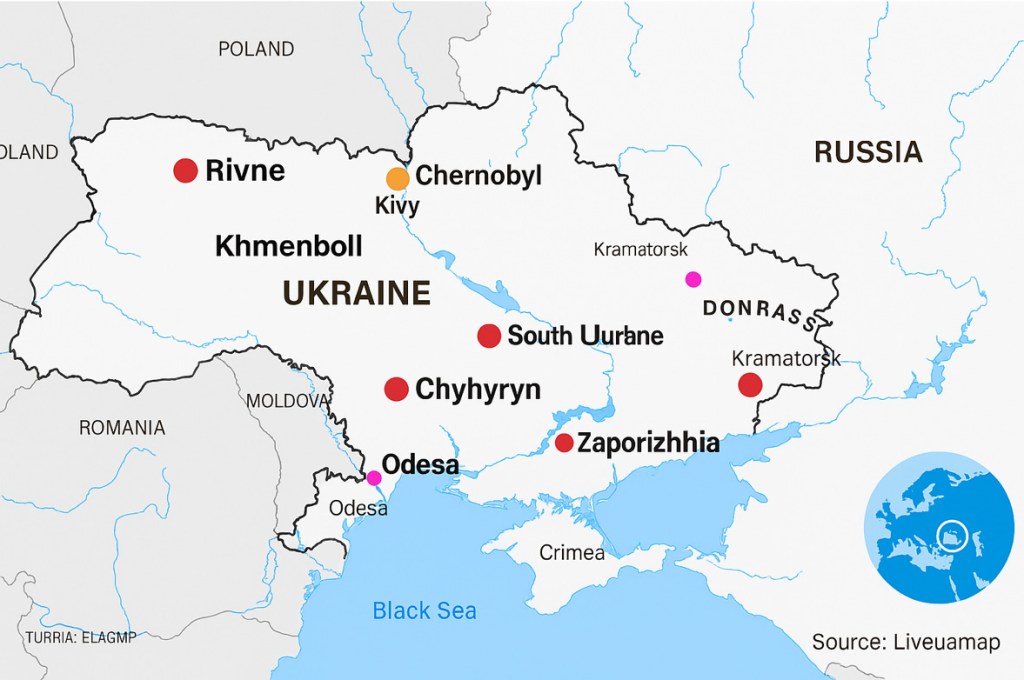
Seizing the ZNPP was among Russia’s first objectives in its invasion of Ukraine. Russian forces captured the plant on March 4, 2022, just eight days after Putin launched the invasion. It was the first time an operating civil nuclear power plant came under armed attack. As shown above, the plant is located in southern Ukraine, about 360 miles southeast of Kyiv.
The ZNPP was built by the Soviet Union between 1984 and 1995 near the city of Enerhodar, on the southern shore of the Kakhovka Reservoir. It has six VVER-1000 reactors and has a total generation capacity of 5,700 megawatts. Before the war, Zaporizhzhia was a key electricity provider to the Ukrainian grid. It generated about 40 terawatt-hours of electricity annually, or about 20 percent of the country’s electricity use. The plant was connected to Ukraine’s grid through multiple 750 kV and 330 kV lines. Over the course of the war, those lines have been damaged numerous times. That has forced the plant to run emergency diesel generators to cool the reactors and spent fuel. According to the IAEA and other news outlets, the plant has lost access to external electricity supplies 10 times since the war started.
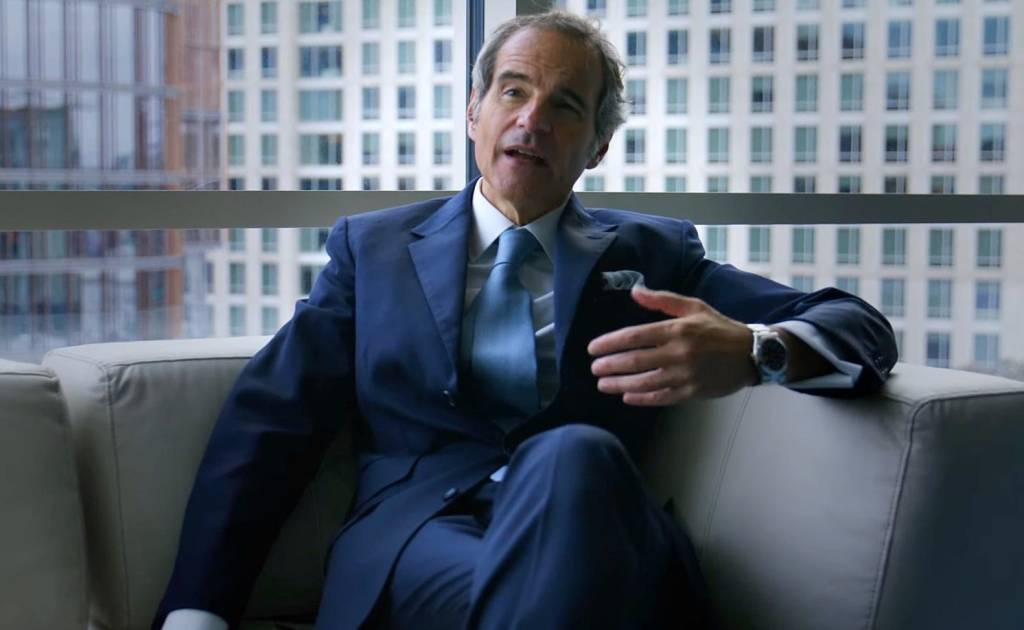
The IAEA and industry journals have repeatedly described nuclear safety at Zaporizhzhia as “fragile,” not because of the condition of the reactors, but because its off-site power and cooling water arrangements rely on very thin margins of safety. In late October, the plant was reconnected to the grid after it lost external power for more than a month. After power was restored, IAEA Director General Rafael Mariano Grossi said: “What was once virtually unimaginable – a nuclear power plant regularly losing off-site power – has unfortunately become a common occurrence during this devastating war. However, this was the most challenging loss of power event we have experienced so far. I would especially like to extend my thanks to the technicians – on both sides of the frontline – who have been working hard in recent days to restore power in very difficult circumstances.”
The power plant has been part of peace discussions since March, when Trump suggested that the US should take control of Ukraine’s nuclear plants. He said, “American ownership of those plants could be the best protection for that infrastructure.” Regardless of who controls ZNPP, it’s unclear when the plant might be able to start producing power again.
IAEA Director General Rafael Mariano Grossi, in a still shot from his interview in our 2024 five-part docuseries, Juice: Power, Politics & The Grid
In June, Grossi declared there was “no way to restart” the plant in the near term, citing insufficient cooling water, an unstable power supply, and the need for extensive inspection after years offline in a war zone. “We are not in a situation of imminent restart of the plant,” he said. “Far from that, it would take quite some time before that can be done.”
Last month, a Brookings report estimated that Ukraine’s energy infrastructure is “deeply damaged” and is operating at “about a third of its pre-invasion capacity.” It continued saying that Russia’s ongoing bombardment of the Ukrainian power grid is intended to “cripple Ukraine’s economy and undermine its population’s resolve to resist Russian aggression, with the ultimate goal of compelling the Kyiv government to surrender.” It went on to report that rebuilding Ukraine’s tattered energy sector could cost some $90 billion.
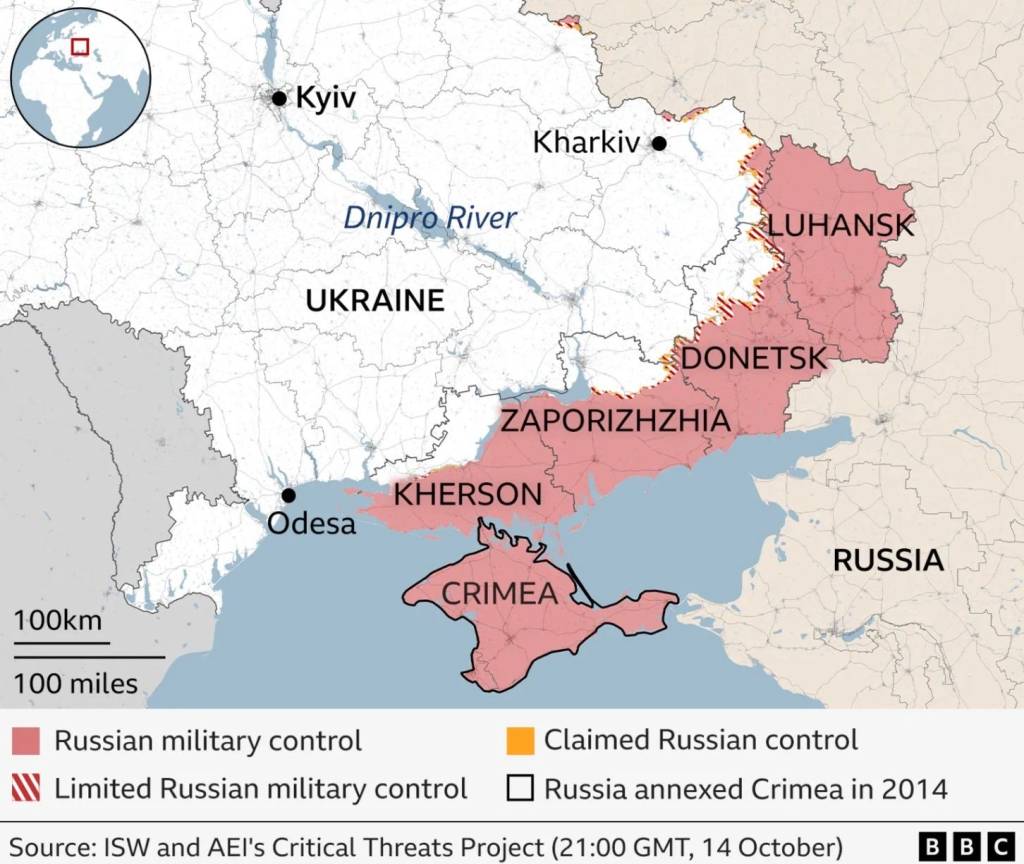
It’s impossible to know whether a peace deal will actually happen, or if it happens, how long it might last before Russia invades Ukraine again. But it’s also easy to see why Russia wants to control all or part of the ZNPP. As seen in the BBC map above, Russia has seized much of southern Ukraine. To hold that territory and keep the population under control, it will need electricity and lots of it. Building a plant the size of the ZNPP would likely cost about $60 billion. Even if Russia only gets half of the juice from ZNPP, the cost to replace that much nuclear generation capacity would be on the order of $30 billion. And remember, due to sanctions, Russia doesn’t have much extra cash.
By Monday night, the BBC was reporting that the Ukrainians were ready to accept parts of the 28-point peace plan, but it was unclear whether the ZNPP proposal would be part of the deal. Other news outlets claimed that the Geneva meetings had produced an “updated and refined” agreement. Another reported that the Kremlin has already rejected the updated deal.
Again, we can’t know how the peace talks will play out. Putin may be content to let the war drag on and to continue pounding Ukraine’s power infrastructure until Kyiv and other major cities are left in the dark as winter approaches. Perhaps he believes by stalling, he can wring more concessions out of the US and Ukraine.
During World War Two, the Russian dictator Josef Stalin declared the conflict was a “war of engines and octanes.” The Russia-Ukraine conflict has become a war of electrons, substations and power plants – a battle where plunging cities into darkness and weaponizing winter can be as lethal as any drone swarm or missile barrage.
At a time when western commentators are tying themselves in knots trying to parse the ongoing Ukraine peace discussions, the Russian media is suddenly strikingly united in its coverage. There is a common misperception that, like their Soviet forebears, the Russian press simply reproduces some standard party line, day in, day out. In fact, there is often surprising pluralism, with different newspapers having their own interests and angles. However, the Kremlin does impose its will when it comes to especially important or sensitive matters, with editors receiving tyomniki, informal but authoritative guidance from the presidential administration on lines to take and topics to avoid. When the press is speaking in one voice, that voice is Putin’s.
A day of uncertainty followed when news of the proposed 28-point peace plan for Ukraine first dropped. But now, the Russian media is back in lockstep, providing a useful insight into what the Kremlin wants to communicate to both foreigners and its own subjects.
In the heavyweight government paper Rossiiskaya Gazeta, Fyodor Lukyanov, one of the most prominent foreign policy scholars often deployed to put a gloss on the official line, contributes a piece under the headline “Realism and the Impossible: Why Ukraine won’t be forced to immediately accept the 28-point peace plan.” In it, he argues that “the primary means, frankly,” for Russia to achieve its goals in the conflict “is military force”: “As long as hostilities continue, leverage remains. As soon as they cease, Russia finds itself alone (we harbor no illusions) in the face of coordinated political and diplomatic pressure.”
It is hardly coincidental that this comes just as European leaders put forward their own version of the original plan, which keeps NATO membership open and punts key issues such as the exchange of territory to be resolved after negotiations have started, while demanding an end to the fighting as their precondition. The Russian press is united in – not necessarily groundlessly – regarding the European variant as a spoiler: why should Moscow pause its attacks and give Ukraine a chance to regroup, only to risk there being no agreement after months of fruitless filibustering on Kyiv’s part? As the business paper Kommersant puts it, “Kyiv’s European allies are seeking amendments to the Trump plan for Ukraine that will make it unacceptable to Moscow.”
In which case, the common message is that Russia is perfectly willing to keep fighting. Many papers quote Putin’s words from a televised meeting of the country’s security council on Friday, that while: “Russia is ready for peace negotiations, it is also satisfied with the current dynamics of the [special military operation], which are leading to the achievement of its goals by military means.”
The implication is that until Putin knows that he is going to get at least his key demands from any agreement, he will continue to unleash his armies, missiles and drones on the Ukrainians. The nationalist Tsargrad news site, which has recently been implicitly critical of Putin, suggesting he should be even more aggressive, put it starkly: “Russia’s position hasn’t changed: if Zelensky doesn’t agree to Moscow’s terms, Russian troops will continue their offensive deep into Ukraine.”
Just as Ukraine, Europe and the US are being warned that Moscow is not desperate for a deal, Russians are being prepared for disappointment. The newspaper Trud offers up upbeat bombast from Konstantin Kosachev, deputy speaker of the Senate, that the West has “abandoned Ukraine… It can’t withstand continued military action without consolidated western external support, which it no longer has. But it’s also not ready for negotiations, because they’ll have to be conducted from the position of the losing side, not the winner.”
Most of the commentary is rather more sober, though. The business press may be eyeing up the possibility of sanctions relief, but in the main the papers are trying to strike a balance between caution and optimism. Gazeta.ru’s military observer may argue that “Ukraine should agree to Trump’s plan without conditions,” but there is absolutely no consensus that it will.
Some commentators suggest that Zelensky cannot risk alienating the nationalist wing at home by making any agreement, others that European leaders – who are undoubtedly being presented as the villains of the peace – will succeed in sabotaging the process. Noting that “senior EU officials have been diligently fanning the flames for the past few years,” Izvestiya nonetheless reassures its readers that “time is currently playing against the Europeans and Kyiv.”
This, after all, is the Kremlin’s main point: that Russia is winning regardless. To Ukraine and the West, it holds out the threat that if this round of negotiations fails, any future peace terms will be rather harsher. To Russians, it offers a prospect not just of peace, but of victory – so long as they stay the course.
When is the price of peace ever fair? War does not determine who is right, only who is left, Bertrand Russell wisely observed. Very often conflicts come down to a numbers game – and on the numbers Ukraine is losing. Despite losing more soldiers, Russia is winning on the battlefield and unlike Ukraine hasn’t even begun mass mobilization.
Donald Trump’s proposed peace deal won’t turn the clock back on Ukraine’s borders, or compensate Ukraine for Russian aggression and war crimes, or even punish Putin personally for starting a horrific and needless war that has claimed as many as 500,000 lives. If anything, the deal rewards him.
But Trump hopes his proposal will draw a line in the sand to stop the relentless bloodshed.
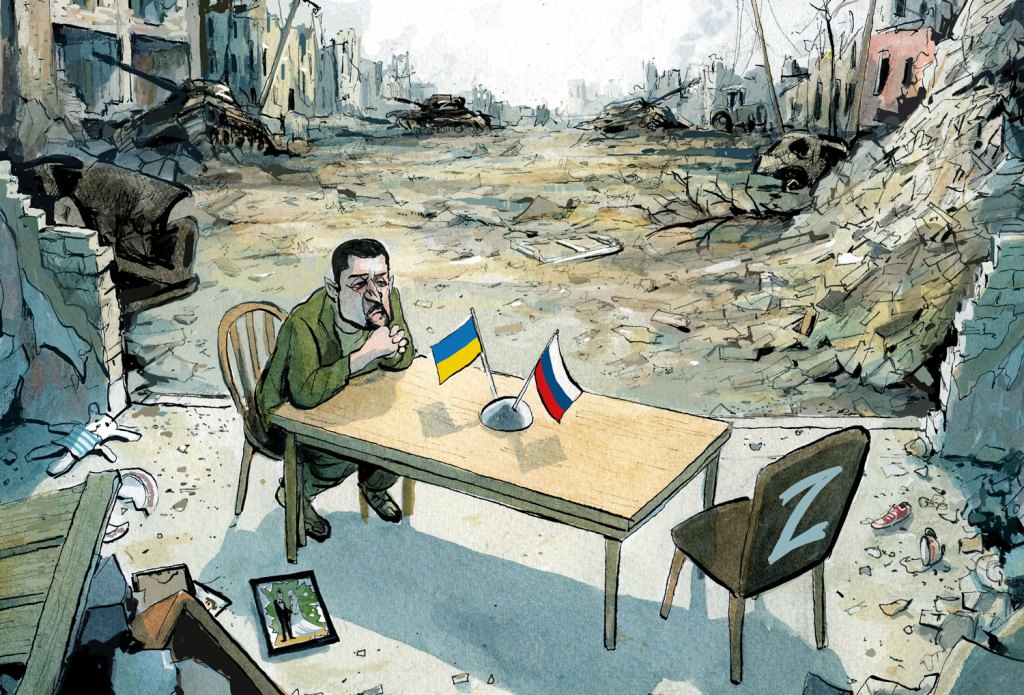
That is not a redline that Volodymyr Zelensky appears prepared to sign up to, though. In an urgent address to the nation on Friday night, Zelensky said this was “one of the most difficult moments in our history.” The choice was, “a life without freedom, dignity and justice, while being expected to trust someone who has already attacked us.” The current price of peace, on the terms of the 28-point plan, is too high for him.
Zelensky is at least engaging with the peace process and will talk with Trump later this week. Yet however tough his talks with Trump are, they will be far easier than the conversations he will have with his own countrymen and within his own parliament. It is hard if not impossible to find a single voice in Ukraine that backs the peace plan in the current form, or even in a diluted form.
A source close to Zelensky, from his ruling Servant of the People party, said the existing plan risks fracturing the country. “It’s a stupid decision. If he doesn’t change it, he will lose the party.
“Local governments might say this deal is a betrayal, this is not a good deal and we do not recognize it. They could declare themselves as separate entities, while other parts might respect the deal. There will be a lot of violence during the process.”
Others in the parliament agree. “The lives of the people who live in the areas that we have to give away will be ruined, their culture, their religion, they face torture and deportation to Russia where they will be forced to join the military and fight against Ukraine,” Ivanna Klympush-Tsintsadze, a deputy in the opposition European Solidarity party, told me. “This deal shows that might is right. It will be impossible to ratify.”
Chief among concerns is how the military might react to a bad deal. It is feared that soldiers who have lost friends in hard-fought battles over land they are being told to hand back might take matters into their own hands – and could even be prepared to stage a military coup.
“If Zelensky agrees to this deal or one like it, he’d have to worry about the more nationalistic and patriotic units,” Harry, 27, from the American Midwest, who is serving with the Ukrainian infantry told me. “I’ve served with these guys, they are elite, big dudes full of steroids who love their country. Units like Azov, the 3rd assault, they would take exception. I don’t know how far it would go, but it could be anything from a demonstration to a full coup.”
The displeasure of soldiers and veterans could be expressed in snap elections that the peace plan states must happen within 100 days of an agreement being reached. This would effectively be a referendum on Zelensky and the deal that he has struck. It is at this moment that the entire power dynamics of the country will likely change and could see veterans enter the parliamentary system in a significant way.
The thorniest issue of all is the proposal to surrender land, as yet unconquered by Russia, to Russia. The plan calls for Ukraine to cede the eastern Donbas region and accept Russia’s de facto control of other parts of Ukraine where the frontline would be frozen. In reality, it would mean an evacuation of these areas and be the bitterest of pills for a proud country to swallow.
A proposed security guarantee might be a marginally easier sell. The US has presented the Ukrainians with a draft agreement of a security guarantee modeled on NATO’s Article 5, which would commit the US and European allies to treat an attack on Ukraine as an attack on the “transatlantic community.” If formalized, the agreement would mean that if Russia were to try to repeat its attempted capture of Kyiv in 2022, this time it would be met by the armies of the US and Europe. Under the plan, Ukraine would have to give up aspirations to join NATO, but in reality they would become a de facto member.
NATO troops would be banned from Ukrainian soil under the plan, but they could be based on the border in Poland, armed to the teeth with modern weapons and war planes and ready to roll at a moment’s notice if Russia attacks Ukraine. An arrangement that will also help to sharpen European militaries that are rusty and reduced since the end of the Cold War.
And while Ukraine would have to accept a significant reduction in its army from 900,000 to 600,000, most members of society are now military trained – every citizen is supposed to be either in the military or for the military – and, like Israel, could mobilize large numbers of civilians very quickly.
The negative reaction to the proposal within Ukraine could, of course, just be the first stage of grief and eventually Ukrainians will come to terms with Trump’s offer, or an offer modeled on it. But if they don’t agree to his timeline, Trump has threatened to cut the supply of weapons and intelligence.
And in typical fashion, he also offered a financial inducement.Ukraine will get $100 billion from frozen Russian assets to help rebuild the shattered country. This will be invested in a joint fund with the US; both will share the profits. Peace is profitable.
The biggest obstacle to this deal progressing any further is not really Zelensky but the people of Ukraine. By and large, they believe that in practice the deal would offer only a temporary ceasefire, and allow Russia to regroup before launching another effort to reunite the Russian Empire. History would tend to agree with them.
The staunch patriotism of Ukrainians should command the respect of the world. Ukraine is a proud nation that prioritizes nothing more than dignity. There can be defeat, they say, as long as it comes with dignity. This deal is short on dignity; it is fair to say it is dishonorable. But Ukrainians must also be aware that they are losing the war. Are they also going to lose this opportunity to at least explore peace?
The rumor reverberating around Kyiv is that the FBI has been leaning on Ukrainian anti-corruption police to investigate Zelensky’s inner circle in order to force him to swallow the bitter US peace deal. Trump, as they say, has put the screws, or the feds, on Zelensky.
The National Anti-Corruption Bureau – which is unravelling a $100 million war-profiteering scandal that has implicated many of Zelensky’s closest political allies – has denied the accusation point blank, and there’s not a single shred of evidence that it is true.
Nevertheless, Mykola Kniazhytskyi, a member of the opposition in the Ukrainian parliament and hardly a friend of Zelensky, told me, “A lot of people are saying anti-corruption bodies are taking orders from the United States to undermine Zelensky, to make him do the deal.”
That the rumor exists and has gained currency within the country crystallizes how Ukrainians have come to view their relationship with America: where once they looked east to find a belligerent state using its secret police to try to control their country, now they look west.
The rumor also reveals how Ukrainians regard democracy and its guardian institutions: they don’t much care for them right now. In a time of war, the fight against corruption is subordinate to survival. It’s heretical in Ukraine to suggest that the country might benefit from elections to give its leader a democratic mandate and a stronger arm to bargain with. Elections would be complicated to stage during, no doubt, but they were managed during the US Civil War in 1864, so why not now? Ukrainians – even those who despise Zelensky – shrug at the suggestion and say, first, defeat the existential threat.
However, the rumor does convey one probable truth: that Trump is desperate to make a peace deal happen at almost any cost, as he has been promising the world he would end the war for years.
The proposed deal, which in its current state would codify Putin’s maximalist demands, would be a political death sentence if Zelensky were to accept it. Russian would become an official state language, the Ukrainian army (already too small to fend off Russian aggression) would be slashed by 60 percent, land in the Donbas – as yet unconquered – would be given away and many foreign weapons and all foreign troops would be banned from holding the peace.
“It is a plan for the capitulation of Ukraine, agreed by the US,” a Ukrainian party leader told me. There is neither a majority in the parliament for the deal, nor in the country.
Yet there are some who are cautiously optimistic. They dare to think that politics is back. First, the anti-corruption investigation has applied defibrillator paddles to the moribund parliament, shocking it back into life. Deputies are demanding the head of Andriy Yermak – Zelensky’s chief of staff who is accused of siphoning off funds earmarked for building defenses to protect Ukraine’s energy infrastructure. If he goes, it is hoped a full-scale clean-out of dead wood will follow. Not exactly a general election, but at least a political change. So far Zelensky is refusing to bow to pressure and fire Yermak. This has only increased speculation that Zelensky himself may have something to hide.
There would be necessary compromises on both sides, but the 28-point plan might actually work. It is a starting point for serious negotiations.
A senior source close to Zelensky, who worked on the failed Russian-Ukraine peace deal in 2022 told me, “Trump is the only person in the world right now who wants to end the war. We choose to fight rather than surrender. Putin has his own plans to continue. China wants to supply both sides. Europe wants us to fight the Russians so they don’t have to. Only Trump is serious about peace.”
But how much is the famously conciliatory Vladimir Putin really willing to compromise on? He has the whip hand. His troops are on the march, slowly taking land in the Donbas and the southern flank Zaporizhzhia. He is paralyzing the Ukrainian energy grid with strikes, plunging the country into cold and darkness as winter bites. (As I write this, my Kyiv hotel is briefly hit by a blackout before the backup generator kicks in. Across the city people access an app to find out their daily allowance of electricity, usually three hours in the morning, three at lunch and three in the evening.)
Trump hopes that his new sanctions will help bring Putin to heel, even though the old ones didn’t really bite and history tells us that Russians are no strangers to suffering and dying for their country – and now they have state propaganda telling them they are fighting a just war against a Nazi threat.
Zelensky has cautiously welcomed the plan, saying he is ready for “honest work” with the US to “bring about a just end to the war.” He said he will speak to Trump soon to discuss it.
The devil, as always, is in the detail. The document states that Ukraine will be given “reliable security guarantees,” but some commentators have questioned if that is possible if NATO troops are banned from Ukrainian soil, certain classifications of weapons are forfeited and the Ukrainian army is effectively neutered. Sources close to the president’s office, however, believe this issue can be circumvented by having rapid reaction NATO forces stationed in Poland and also by building large arms warehouse in Poland with vast stores of weapons that can be accessed in an emergency. If similar creative solutions can be found for other issues there is a glimmer of hope.
However, if a good deal cannot be struck there may be danger for Trump. So far, many Americans have ignored the media’s attempts to characterize his high-risk strategy of engaging with both sides as appeasement, or that he is in the pocket of Putin. They understand that you don’t make peace with your enemies – and that sometimes heads need to be knocked together. The process is infinitesimally less important than the outcome. Yet the benefit of the doubt they have afforded Trump may be withdrawn if it appears that he is trying to ram a capitulation deal down the neck of the plucky Ukrainian nation standing up to the world’s number one bully.
Zelensky can’t sell the current proposal to his nation, nor can Trump sell it to his. Of course, Trump can always simply walk away if it falls apart and blame everyone else, which is possibly the most likely outcome at this stage. Yet it may yet turn out that in even brokering this proposed pact, Trump has become party to a Faustian bargain.