The Portuguese guest wanted an egg, but she didn’t want it to look like an egg. She came down to breakfast with her seven-year-old son and asked me to disguise two eggs by frying them on both sides so the yolks didn’t show.
I’ve been getting to grips with the dietary habits of the traveling public all summer – so much so that I’m almost used to a peculiar trend that I can only describe as pretend veganism. My B&B guests seem to be balanced on a capricious meat-vegan knife-edge which defies all logic and prediction, with most of them eating either some meat or some dairy, but not both. Only the French can generally be relied on to eat everything.
As a result, I wait until someone tells me what they want before offering them food. You can, however, have a good guess based on the amount of face jewelry. This Portuguese lady had a nose ring and had just come from touring the bottom end of the Mizen Head, in the extreme south of Ireland, where she had been camping in wigwams and tipis for so long that the child had demanded a night in a bed. When they arrived late, the little boy was so happy that he could be heard leaping on and off the king mattress.
The next morning I cooked a full Irish breakfast for another couple, whose nationality defied me until I narrowed it down to him being Scottish and she French or vice versa. I couldn’t work it out because their accents kept swapping, but they ate everything.
After they left, the Portuguese lady came down to the kitchen with her boy and said she smelled something wonderful. She did not want to sit in the dining room, so I let them sit at the kitchen table. Here we go, I thought, eyeing the self-service buffet.
The builder boyfriend insists this is cheaper, and we should only do the buffet. But he has no idea, because he doesn’t watch what happens when guests descend on it. They strip it from end to end, putting into bags what they can’t force down gullets, until you have to restock it daily, making it ten times the cost of doing everyone a fry-up.
Having successfully steered the Franco-Scottish couple into the dining room to serve them a finite breakfast, I attempted to intercept the Portuguese mother and child as they came down the stairs, but she breached the barricades and wandered about the kitchen, asking what the wonderful smell was. “Bacon and egg,” I informed her. “Would you like some?” She looked appalled. They didn’t eat meat.
I asked her to tell me, therefore, exactly what she wanted. Two eggs fried both sides, she said, explaining that the eggs must be made to look completely white and must not on any account run or be capable of having things dipped in them. Some brown toast. A cup of tea for her, black. And a cup of warm milk for the child… with cinnamon.
I began rifling through the larder and found some, to my amazement. They ate several helpings of cereal while I fried two eggs into a concrete-hard structure. One of these they then judged still too egg-like, so I had to fry it harder, whereupon they tucked into them, on thickly buttered toast.
After that, they went along the breakfast bar again, the child requesting more cinnamon to sprinkle on muesli. The BB came in at this point and gave the dis-appearing breakfast bar such a horrified look that I had to push him out in case he made a sarcastic comment. “Do you see how wrong you are now?” I asked him later. “Your simple self-service breakfast of cereals and toast leads to anarchy. You can’t allow unending bread-buttering and cereal-box-stripping to ensue. It’s anarchy, I tell you. Anarchy!”
Now that he had seen the bottomless breakfast in progress, I felt I was on stronger ground with my business plan of cooking every customer a fry-up, or nothing, and making them sit at a table in the dining room to eat it and then leave.
The Portuguese lady made breakfast so long, serving and re-serving herself and her son cereals and yogurts, that in the end even the child got bored with sprinkling cinnamon and went back upstairs to jump on and off the bed. After an hour, in a desperate bid to make breakfast end, I asked her where she was heading next. I already knew, of course.
They’re all tearing round the Ring of Kerry in a desperate hurry to get to the Cliffs of Moher, before driving cross-country to Dublin to fly home and boast about how they’ve “done” the Wild Atlantic Way, the invention of which is genius marketing by the Irish tourist board, because it spreads the tourist spend around the entire island of Ireland, and inserts an element of panic into it.
The sheer weight and speed of tourism this summer, with Europeans desperate to get from Dublin to Dingle, Donegal and Derry in the driving rain, for reasons they don’t entirely understand, has meant that people like us in the boondocks are fully booked because we take the overflow from more famous places.
The Portuguese lady said they were heading to Killarney next, but she wanted to see castles on the way. “You have to see castles when you come to Ireland, don’t you?”
I said I wasn’t sure that you did. Possibly she was thinking of Scotland. I said there was a small ruined tower nearby. She said she wanted a castle that was big and fancy. Was this nearby castle big and fancy?
What she wanted from Ireland made no more sense than her egg. So I told her the castle was amazing and she’d love it. And with that, she finally relinquished her grip on the Kellogg’s Crunchy Nut and hurried off to see an old turret with the top missing.
This article was originally published in The Spectator’s September 29, 2025 World edition.
A well-known writer in the 1930s – I think John Dos Passos – compared Southern California to the lower-left corner of a board that has been tipped in that direction and into which everything in the rest of the country that is not nailed down slides. In the 21st century the mental, cultural and ideological equivalent of that geographic locality is a venerable and once mighty institution, the national Democratic party, whose name is synonymous with it.
Throughout the 20th century, the party maintained a strong and consistent identity which accurately and effectively represented its constituency – an alliance that included the working classes, the labor unions, the small farmers, black people, the public educational establishment, colleges and universities, the arts and bohemia. Since, roughly speaking, Barack Obama’s first administration, it has grown steadily less identified with practical interests and concrete policies and more with feelings, attitudes, identities and states of mind, nearly all of them “progressive” or frankly revolutionary. In fact, the most bizarre have no political content or substance at all, being in essence purely existential.
Today, the Donkey party is the party of the aggrieved, the resentful, the angry, the neurotic, the desperate, the illogical, the delusional, the irrational, the unchurched, the metaphysically uncentered, the unattached and childless, the anti-social, the resentful, the failures and the congenitally rebellious – all those not nailed down or secured to anything, beginning with themselves. They are the product, or rather the detritus, of an anti-traditional, aggressively secular, excessively technological, overly connected, trivialized and wholly commercialized and urbanized society divorced from nature and the direct experience of it that had been basic to human existence until a couple of hundred years ago.
I have read that the most unhappy people in America today are white, educated, upper-middle-class, liberal women, having in common so many of the characteristics enumerated above. Of course, it would be absurd to suppose that they are the sole cohort in western societies who, in their mental and emotional confusion, imagine that their misery, and that of the world, is plausibly attributable to such abstract historical bogeys as “imperialism,” “slavery,” “bourgeois capitalist society,” “religion,” “the patriarchy” and “sexism,” “men” and “white people.” In fact, were it possible to identify any single agency as the party responsible for what Sigmund Freud (in a wholly different context) called the “discontents” of modern civilization, it would be liberals and liberalism itself – though even that would be a gross historical and human generalization, never mind that liberals have been chiefly responsible for the modern tendency to think in abstract, generalized and completely ahistorical terms.
The Democratic party’s electorate, like its leadership, is heavily comprised of people who can never be happy and satisfied and who are consequently a danger to society, to the political system and to themselves. They are not, however, a majority of the voting citizens of this country; most likely, they never will be, however closely national elections in the United States continue to be run. Nonetheless, the party continues to be critically influential among the sort of people who are best positioned to amplify and extend its power through non- or anti-democratic institutions and organizations that give it a strength a good deal greater than is justified by its support among voters.
The Donkey party is the party of the aggrieved, the resentful, the angry, the neurotic, the desperate, the illogical
The imbalance between popularity and power is most obvious among the western democratic nations in Great Britain, which would partially account for the recent assertion (if true) of a columnist for the London Daily Telegraph that Americans view her as being on the path to extinction. To a greater extent even than the US, the UK is ruled, not by representative government, but by lawyers, quangos, NGOs, bureaucracies and the loosely assorted cranks and fanatics whom George Orwell, in the 1930s, described in shorthand as the sandal-wearers and fruit-juice drinkers in the capital city and elsewhere. Such people, as I say, can never be happy anywhere save in the next world (in which they don’t believe), and so they will continue until the crack of doom to agitate, to organize, to demonstrate, to dream up and advocate dangerously absurd legislation, and in other ways make life miserable for the sane democratic majority they hold in contempt and despise.
On the other side of the Atlantic it is the Democratic party, not the US, that is headed for extinction unless it discovers – and quickly – the means to reimagine, redefine, repurpose and reintroduce itself for the whole of the American public. Failing that, it will go the way of the Whigs in the antebellum era, the Progressive party before the Great War and the Liberal party in Britain immediately following it.
To judge from accounts of the convocation of the Democratic National Committee in Minnesota at the end of last month, where the committee chairman raged against the “king with swollen ankles” in the White House and another party official spoke of “fascism in a red tie,” it is nowhere close to identifying that means. I think it was the most recently failed former candidate for US vice-president who made reference to “that thing in the White House.”
The Democrats remain convinced that they lost the election last year not on account of the caliber of their candidates or the content of their policies, but rather through the clumsy presentation of them. Even if they were right about that, they haven’t corrected their “message” yet – and show no signs of understanding how to do so. Critics have called them tone deaf. The truth is, the Democrats are stone deaf, their hearing destroyed by their own high-decibel shouts and screams against the Great Sauron in the White House.
This article was originally published in The Spectator’s September 29, 2025 World edition.
Eleven Madison Park, perhaps the finest of New York’s fine-dining establishments, is adding select meat dishes back to its prix fixe menu after an ill-fated foray into veganism after the pandemic. Chef Daniel Humm announced the move in the New York Times, citing all the predictable reasons for ditching a plant-based menu.
First and foremost: the finances. “It’s hard to get 30 people for a corporate dinner to come to a plant-based restaurant,” Humm told the Times, noting the negative feedback from diners over the years. Still, he framed the move in moral terms, explaining how he didn’t “realize that [the vegan menu] would exclude people.” To this, I can only muster an eye roll.
Couching hard-nosed business calculations in a moral epiphany feels apt for Humm, now more celebrity food guru than elite restaurateur, who spends his time whining about the fragile “global food system” and “social inequalities” in between sherpa-guided meditations in the wilderness. There’s an implicit dig in the framing – how could I expect that my clientele just wouldn’t be as socially conscious as I am? – but Humm was about the only one surprised.
EMP went vegan in 2021 as urban elites rushed to out-do each other in the embrace of social causes. Critics and diners alike were skeptical, the Times notes (the paper gave a lukewarm review of the “plant kingdom’s uncanny valley” at the time). Yet Humm still clung to veganism over what he called the “anxiety” of being labeled a “hypocrite.”
Eleven Madison Park, as with all elite institutions, can get away with stunts like veganism for a time
Political pundits speak endlessly of institutional inertia, the inability of a government, bureaucracy or corporation to shift once set in its ways. Less discussed is the all-too-human inertia that typically accompanies it. New social identities were formed in the Covid era; defending “the Science,” rejecting “whiteness,” being an “ally” and fighting for “climate justice” – all necessary components of being a Good Person. Of course, it was mostly phony; the laptop class didn’t simultaneously discover the gospel of mid-century leftism, but was simply following the herd. Yet the proclamation of earnest concern was itself a critical part of this identity and, even as vibes shift and fads wane, it’s only human to resist admitting what a phony you’ve been all along.
Eleven Madison Park, as with all similarly situated elite institutions, can get away with stunts like veganism for a time by relying on their cultural clout. The Times sets the tone of legacy media discourse, the pedagogies of Harvard and Yale trickle down to lesser universities seeking to emulate elite sensibilities – and as this particular restaurant goes, so goes the restaurant industry. After all, Humm’s consistent three Michelin stars are viewed with envy by elite conclaves from New York to Shanghai, and earning the rank of World’s Best Restaurant in 2017 only added to its already inaccessible prestige. Of course other restaurants have followed its lead.
Over the past few years on the New York restaurant scene, it’s been hard to miss the explosion of pretentious veganism among far lesser establishments than Eleven Madison Park. After what critics dubbed Humm’s “watershed moment,” one can’t be too careful reading over a dimly lit menu – or else one runs the risk of unsuspectingly ordering a lab-grown entrée (which advocates have delicately and rather grimly branded “plant-based protein”).
New York’s 1,165 “vegan-friendly” restaurants range from fine dining to upscale casual and even fast food, but the city’s vegan scene pales in comparison to what you’re likely to find even in a provincial American supermarket. A typical big-box grocery store now stocks more than 100 “plant-based” options, with 65 percent sneaking at least one vegan option into the meat aisle. Good luck walking into Whole Foods without accidentally coming home with some seitan “chicken” or butter-free cookies.
But as the fates of academia and media show, broadly unpopular fads can only coast so far on clout before the institution itself takes a hit. The Ivies, for centuries upheld as the gold standard of education, have never experienced more scrutiny than they do now in the age of diversity, equity and inclusion. Mainstream media outlets will be the first to tell you of the existential threat they face as Americans turn to independent outlets and podcasts for more “honest” news. And as for the restaurant industry, it’s adapt or die, as the saying goes – and Humm has clearly chosen survival.
Besides a handful of hippies, the market just isn’t there yet for such a vast variety of vegan menus
The push for veganism isn’t going away entirely; lab-grown-food technology will continue to improve and both committed ideologues and savvy investors will keep seeking larger inroads. But just as the Times, from its vaunted position, can effectively signal to the liberal establishment when it’s gone too far and must pull back, so too can Eleven Madison Park send the same message to the restaurant world. Humm’s embrace of veganism served as a pivotal moment for the industry in 2021, but his reversal may now send the opposite signal for the future.
Besides a handful of hippies, the market just isn’t there yet for such a vast variety of vegan menus. And restaurants will now get the overdue memo that it’s socially acceptable to admit the obvious.
This article was originally published in The Spectator’s September 29, 2025 World edition.
I remember the day I heard my culinary hero Daniel Humm had decided to make Eleven Madison Park’s menu plant-based. It was as profound as the day Princess Diana died and as pivotal as the birth of my first child, Lily Elvis.
The news tore the joy from my heart as well as all the love and respect I had for Humm. The toil, tenacity and sheer stamina it took him to earn his three Michelin stars is extraordinary.
Who am I to criticize one of the greatest chefs alive today? I’m a nobody. Yes, I’ve worked at three-Michelin-starred restaurants, served Queen Elizabeth II and starred in the BBC’s Great British Menu but I’m just a cook: nothing more and nothing less.
But after cooking for 30 years and running my own place, Fyre in Perth, Australia, for three, I know a thing or two about what people want to eat – and what they don’t.
Which is why, two years ago, I banned vegans from my restaurant. I still stand by the post I made on Facebook at the time: “Sadly all vegans are now banned from Fyre (for mental health reasons). We thank you for your understanding. Xx.”
A diner was not happy that I didn’t offer her a vegan option. Things escalated and I banned her tribe. They’re quite a nasty bunch and they’ve been leaving a lot of one-star reviews online, trying to ruin my business. But now I appear to have been vindicated.
That said, the sickness of veganism lasted quite some time. Humm retained three Michelin stars because the rest of his “show” was immaculate.
A close friend of mine, a chef called John Evans, told me he had arranged a dinner at Eleven Madison Park. I seriously questioned his sanity. Why would you spend all that money on a plate of plants? It really was beyond me.
John returned from New York and said the experience was surreal. “But what about the food,” I enquired – “tell me, tell me.” His silence spoke volumes. Diplomatically, he focused on the experience, the tour of the kitchen, how regimented everything was. The look in his eyes told me the food itself was, at best, “meh.”
The restaurant game is hard enough as it is. Try making a dollar today with the laws that are in place, the taxation, government regulations, employee liability insurance, workers’ compensation, property fees (more than $25,000 per annum in my little place), minimum wage, penalty rates, cost of goods. The list goes on. Why are we still doing this? The answer is simple: for the pure love of showing our guests what we have taken decades to learn – the blood, sweat and tears that go into that crème brulée are far beyond your wildest dreams.
Eleven Madison Park continued its high level of service, stunning surroundings and even better back-of-house standards. But come on, Daniel, there’s only so many dishes you can make with dashi, tofu and lemongrass – and at $365 per guest, you’re really taking the piss. So when the news broke about the return of the vital protein, meat, to his menu, it was almost as if I had been holding my breath for four long years.
I hate to think about the debt that Humm has probably accrued over those years. And the reason for the return to meat? Financial! I could have told you that four years ago, Chef Humm. It matters not the standard of your cuisine; the customer is king and key to the success of any eating house.
You cannot maintain a financially stable business by restricting the dietary options. Fewer than 2 percent of humans wandering this planet of ours eat plant-based diets. Most do so due to their religious beliefs, and many are below the poverty line – $365 might be their annual food budget.
Then consider the mental stability of some of those wonderful vegans, particularly in the West. My business was targeted by a bunch of lunatics. I had to physically throw these people off my premises. What “normal” human is ejected from an eatery (if they aren’t intoxicated, at least)?
So thanks, Daniel Humm, the journey was epic. Best of luck: head down, bum up and remember, #saynotovegans.
This article was originally published in The Spectator’s September 29, 2025 World edition.
All butter is made from carbon, but not all butter is carbon butter. This is the name being given to a new environmentally friendly, 100 percent ethical lab-made food product. There’s not an udder, churn or milkmaid in sight.
Carbon butter is yet another one of those foods of the future we’re told about, with wide-eyed, breathless enthusiasm, that will transform the way we eat as well as our health, save the planet and make sure there are enough calories to go round when the world hits a population of 10 billion, at some point in the next decade or two.
A few years ago, it was cockroach milk – four times more nutritious than cow’s milk, said Bloomberg, excitedly – plant-based meat and “cultured oil.” Now, it’s the turn of carbon butter.
Carbon butter is the brainchild of the Bill Gates-backed food-tech company Savor. It’s made by passing carbon dioxide, green hydrogen and methane over a metal catalyst to produce a soft, semi-solid fat – butter, or so the people at Savor would have you believe, anyway.
One thing Savor won’t tell you is that carbon-butter has a colorful past. The company’s eyes are fixed on tomorrow
According to a recent puff piece in the Carbon Herald, “This revolutionary product aims to answer the growing need for a sustainable food chain solution that offers a reliable alternative to agriculture-dependent oils.” This is about saving the planet. And, of course, you’re supposed to marvel at the fact that two of the very gases that are “killing” planet Earth – carbon dioxide and methane – are being used to make “this revolutionary new product.”
Savor operates a 25,000 square foot facility in Batavia, Illinois. It already produces a number of different artificial fats, including alternatives to palm oil, milk fat and cocoa butter, all using a range of “methane- and carbon-based inputs.”
Savor’s first production run took place last year and the company is aiming to produce 100 kilograms a week of artificial fat before scaling up to become a full commercial facility. The Carbon Herald points to a “strong interest and demand for more of these alternative goods,” claiming that “many Michelin-star restaurants and leading figures from the food industry” have welcomed the product with open arms.
One thing Savor definitely won’t tell you is that carbon butter has a long, colorful past. The company’s eyes are fixed firmly on tomorrow. With good reason.
The first ever carbon butter was called coal-butter, because – you guessed it – it was made from coal. Coal-butter was developed in the 1930s when Nazi Germany was looking for ways to guarantee its access to key resources before World War Two.
Most important was oil. Germany is blessed with huge coal reserves, but little oil. German industry and the Wehrmacht would need oceans of the stuff when war came. German scientists set about finding a way to produce synthetic oil from coal, since both are forms of carbon. Franz Fischer and Hans Tropsch eventually came up with a solution, which involved lobbing steam and oxygen at coal to break it apart into carbon dioxide and hydrogen; these were then passed over a metal catalyst, yielding liquid fuel.
Fischer and Tropsch, though they didn’t know it at the time, had actually killed two birds with one stone. Germany had a fat problem too, and this new method could be used to address that as well.
The German appetite for fat was massive – some 1.5 million tons a year by the mid-1930s – but only half of that demand could be met using domestic sources. Linseed oil from South America, soybeans from Asia and whale blubber from the Arctic were all necessary – and all were vulnerable to naval blockade.
A chemist called Arthur Imhausen realized that all you needed to do was add glycerin to the paraffin-like residue of the Fischer-Tropsch process and you’d have an edible fat – at least theoretically. He partnered with chemical giant IG Farben (which would later manufacture Zyklon-B) and began to make quantities of Speisefett, the world’s first synthetic edible fat.
Speisefett wasn’t very appetizing – white, waxy and tasteless – so Imhausen added diacetyl, a flavoring now used in microwavable popcorn, and salt, and then he added some beta-carotene to make the fat look yellowy, like real butter.
Exit Speisefett, enter “coal-butter.” The Nazi leadership was over the moon and the Führer himself gave an official dispensation to disregard Imhausen’s Jewish heritage. He was now a “full Aryan,” and just in time. But there was still the matter of coal-butter’s safety. Since the plan was to use it in military rations, it had to be fit for those fighting.
This is where the story gets darker – much darker. The Nazis had a ready supply of human guinea pigs in their growing network of concentration camps, and that’s exactly where they looked to do their testing. Around 6,000 inmates at the Sachsenhausen concentration camp were fed coal-butter and monitored closely. A scientific paper published in 1943 triumphantly reported that “thousands of tests… confirmed the high value of synthetic cooking fat and made it the first synthetic food in the world to be approved for human consumption.” Of course, there was no mention of where the “thousands of tests” had been conducted – or on whom.
You might reasonably object, after hearing this strange little story, that it has nothing to do with the value of carbon butter as a food in 2025. You’d be right about the logical use of the reductio ad Hitlerum, of course, but actually, this story does have some bearing on whether or not we should eat the stuff today.
As with pretty much all these ‘foods of the future’ we simply don’t know what long-term consumption will do to us
After the war, British intelligence got hold of documents that suggested the Nazi scientists had been extremely selective in their choice of data to prove the safety of coal-butter. When animals had been given it, the effects were alarming. Long-term consumption caused severe kidney problems and even stripped the bones of calcium. Dogs refused to eat it.
In the final months of World War Two, coal-butter was given to U-boat sailors, but they had an average life expectancy of 60 days – far too short to garner anything about its effects – and they were miles underwater. Poor sods.
In truth, as with pretty much all these so-called “foods of the future,” we simply don’t know what long-term consumption will do to us. Humans have no history of eating fat made from gases passed over a metal plate, drinking “milk” made from ground-up cockroaches or eating endlessly replicating meat cells grown in a stainless-steel bioreactor (that’s what lab-grown meat is by the way, and it’s also how cancers behave).
Many of these foods have already been approved for human consumption by the FDA and the bar for licensing still remains dangerously low. The companies that make these products supply their own safety data, for heaven’s sake. Something smells pretty rancid to me, and it’s not the butter. Sorry – “butter.”
This article was originally published in The Spectator’s September 29, 2025 World edition.
I adore broccoli, but I despise seeing it shrink-wrapped and kidnapped in the grocery store. The sight of those slightly compressed, yellowing florets sweating under fluorescent morgue lighting is a rude tap on the shoulder from dystopia.
That’s why I was in my basement in late August, cleaning out the propagation tent while everyone else was still at the beach.
My goal each year is to enjoy homegrown broccoli with Christmas dinner. In this corner of the Mediterranean, that’s about as likely as a French civil servant answering the phone after lunch. But with precision timing and bloody-mindedness you can pull it off. And after years of suffering those supermarket specimens, I’m determined to.
My first real broccoli came from my grandfather’s garden in Shropshire, England when I was eight. Packed off to give my parents some peace toward the end of the summer holidays, I can still remember the sweet and nutty taste of the broccoli. Forty years later, I’m still chasing that memory – except now I’m attempting it in the deep south of France, where the locals think I’m deranged.
Mid-October is when village gardens here enter hibernation. The neighbors’ tomatoes are done, the last melons have liquefied in the weeds and the French – true to national instinct – down tools entirely. Even the old boys who usually loiter by their potagers vanish into their wine cellars.
But I’m out there with my squadron of “Marathon” and “Green Magic” seedlings, started under grow lights earlier this month. The margin for error is narrow. Too early and they bolt in the lingering heat. Too late and the cold hits before they’ve formed heads, leaving them in vegetative purgatory until February. If cabbage white moths breach your defenses, you’ll be garnishing Christmas dinner with steamed baby caterpillars. Wait for a spring planting? Hopeless. The heat always comes too soon.
After this summer’s brutality, I’m happy to return to cool-season gardening. The sun stops trying to murder you, mosquitoes surrender and the garden becomes habitable again. But mostly, I persevere because it irritates my fellow villagers. Especially Yannis.
He materialized at my gate, summoned by the news that the Englishman was trying too hard again. I remember when a mutual acquaintance first mentioned him: “You must meet Yannis – he’s a permaculturist!”
I vowed then to avoid him. “Permaculturist” in these parts means “organizer of perpetual garden meetings” – lofty communal aspirations that only ever exist in PowerPoint. Mercifully, he vanishes for months on “humanitarian projects” in Africa, returning just in time to explain everything you’re doing wrong.
He wandered in, uninvited, to inspect my late-season tomatoes, still producing thanks to obsessive care. “Tomates encore?” he asked, grimacing without tasting one. Like so many Frenchmen, Yannis diagnoses problems without evidence or solicitation.
Ignoring my vigorous young broccoli – their blue-green leaves already showing that vitality you never see in stores – he zeroed in on a half-full sack of peat I’d been using as a knee cushion. He tutted and wagged his index finger inches from my face. Unless you’ve experienced this cultural absurdity, it’s hard to grasp an adult deeming this appropriate behavior toward another adult. But I live in France and incredulity keeps me out of jail. Next, he spotted my admittedly over-engineered tomato frame – built to outlast civilization but supporting plants that never reached halfway up. Then came his coup de grâce: “Attends, mais tu ne pailles même pas?” – essentially, “Don’t you even mulch, bro?” That pushed me over the edge. “Ça va ton jardin?” I snapped.
Of course, he doesn’t have one. I watched an initial flash of irritation give way to the realization that it was time to bugger off. And off he buggered – all the way back to N’Djamena. I’ll think of him distributing laminated composting guides to nomadic tribes while I’m harvesting broccoli heads the size of softballs.
Come December, when I cut into one of those heads, the stem will snap clean, releasing the cold-green scent of chlorophyll and victory – nothing like the slightly fetid ghosts rotting in the grocery store. The florets will be tight as a secret whispered only once, that profound blue-green that seems to hold the light. Steam them for exactly four minutes and they taste of hazelnuts and rebellion.
The locals slow as they pass my gate, craning their necks at the “exotic” bok choi and the militaristic rows of winter leeks. They rarely comment, but their disbelief is palpable. Most of all, I do it because getting my hands on real broccoli in the winter feels like pulling one over on the system. It’s an almost illicit pleasure.
And when Yannis inevitably drifts back in spring, my rows will be perfectly mulched, the last winter broccoli on my plate, and it will taste like I’m back in Shropshire. Some things are worth looking ridiculous for.
This article was originally published in The Spectator’s September 29, 2025 World edition.
On a suffocatingly humid Friday morning in August, I sat in a rental car parked outside the home of Thom Robb, the leader of the Ku Klux Klan, wondering if I should knock on his door. A shirtless, muscle-bound, heavily tattooed carpenter who lived down the road – and swore he wasn’t racist or a Klansman – said Robb was “a really nice guy” who wouldn’t mind my turning up at his house without an appointment.
Klansmen, I reckon, aren’t “nice” guys by definition, and as Robb’s mean-sounding dog barked at me from the other side of his fence, I feared the neighbor was setting me up to get my head blown off. I wondered if Arkansas, the only state in the Union where they’ll throw you in prison for failing to pay your rent, had a stand-your-ground law that would justify Robb spraying a few bullets in my general direction. I wanted to leave, but I knew I’d probably never again be in the backwoods of Arkansas with an opportunity to meet one of the country’s most notorious racists. I really wanted to meet this man, for reasons I still do not completely understand.
I met Justin, a portly young man who, when I asked if he was from Harrison, said ‘unfortunately, yes’
Why was I visiting Arkansas solo in August, the swampiest month of the year in a state that sees comparatively few visitors from outside the region? Arkansas may not lead the country in much, but it has had its share of colorful nicknames: the Bear State, the Toothpick State, the Land of Opportunity, Rackensack and the Natural State. It has the Ozark Mountains; it was the home state of the “Man from Hope,” Bill Clinton; it has the most Walmart locations per capita and hosts the company’s headquarters; it is the birthplace of cheese dip. But it is often overshadowed by its Deep South neighbors. A popular YouTuber, for example, rates it as only the second most redneck state in America, behind Mississippi. And while Mississippi and Alabama typically place 49th and 50th in poverty and other socioeconomic metrics, Arkansas usually lands 46th or 47th – forgettable in its sub-mediocrity.
That’s a shame, because, as I found out this summer, it’s a strangely appealing place, full of surprises. Who knew the second-most redneck state in the country was also full of antique shops, bookstores and charming small towns with perfect squares? Places like Leslie, Conway, Wilson, Mountain Home and Pocahontas are virtually unknown outside the state but are as delightful as any small towns I’ve visited anywhere in America. But I didn’t travel to Arkansas to sightsee.
My primary purpose was to explore two communities accused of racism. Harrison and the neighboring hamlet of Zinc, population 90, have been jointly branded the “most racist town” in the US thanks to a pair of men named T(h)om: Robb, whose Christian Identity Church and KKK headquarters are in the unincorporated backwoods between the two places, and Tom Bowie, a Zinc resident who’s been labeled “America’s most racist man” in a host of viral YouTube videos. I also wanted to visit Return to the Land, an intentional “whites only” community three hours to the east.
Robb’s pontificating gave me a headache, but I still had more racists to meet
For a place with a serious PR problem, Harrison – with its quaint town square and appealing shops – made an unexpectedly good first impression, though a barbershop just off the square with a Confederate flag out front isn’t something you see in most states. Outside the bustling Town House Café on the square, I met Justin, a portly young man who, when I asked if he was from Harrison, said “unfortunately, yes.” I asked him if the YouTubers who’ve accused Harrison of being the “most racist town” were accurate and he said, “I think they’re very accurate.” A gay man, Justin said the town was full of bigotry of all sorts and insisted he planned to leave as soon as he finished nursing school.
Elsewhere in Harrison, I met a young couple about to leave their home for the long commute to their jobs at the Trump store in Branson, Missouri. The young man was wearing a T-shirt depicting a muscle-bound Donald Trump and the phrase, “Everyone Wants to Be Trump, Until it’s Time to Do Trump Stuff.” Both insisted that theirs isn’t a racist town. “The most popular kids in high school were black,” said the woman. On the gravel road leading to the KKK compound, the shirtless man who said Robb was a nice guy also maintained that neither Harrison nor Zinc is racist. “He’ll show you his church,” he said of Robb, “just stop by his house.”
He then gave me directions to the house, which is right around the corner from the compound. On the way there, I met Tom Bowie and his wife, who were hauling jugs of water back to their home. I told him that his racist musings on YouTube had helped several black creators make a lot of money and he didn’t disagree. His wife insisted that Arkansas was considered racist long before her husband moved to the state from Maryland. She said he was speaking “truths” that others were too afraid to. Some of these included her contentions that “the Indian people that come over here do not know nothing” and “the Jews run a lot of things.”
I don’t know if Robb has a side hustle – I imagine being head of the KKK renders you unemployable – or if he draws a salary as the head of the Knights party and pastor of the Christian Identity Church, but the man has a pleasant two-story home with a wide porch and an expansive lawn. I let his dog bark for a bit to see if Robb would come out to greet me. When he didn’t, I drove to the gates of the compound, which were locked. A middle-aged woman – you guessed it, white – who introduced herself as Rebecca was parked outside the gate. I told her I had a travel YouTube channel called Mad Traveler and liked to visit offbeat places, which is true and seemed more innocuous than saying I was a journalist. She promised to go get Robb. Five minutes later he arrived, driving a white Jeep with a novelty Confederate flag license plate on the front.
Robb is 78 and gives off a grandfatherly vibe, at times grasping, Biden-like, for words. “I don’t like to waste my time with most YouTubers,” he said. “But Rebecca said you seemed nice.” I hopped in my car and followed him up the gravel path between rows of American flags toward the KKK headquarters. Robb wore jeans, a checked short-sleeve button-down shirt, and a cowboy hat. He was initially cordial, but when we walked by a sign listing the Ten Commandments and I asked him if being a Klansman was compatible with the Golden Rule (love thy neighbor), he grew combative. “So, that’s why I can’t understand why people don’t love their heritage,” he said. “They claim to believe in the commandments, but they don’t love the people. They’re willing to watch white people being genocided, and they don’t care.”
There wasn’t much to see. The church – whose parishioners are roughly half Klan members, Robb said – was unremarkable. The KKK headquarters could have been a branch of State Farm if it weren’t for the black-and-white photos of hooded Klan members at rallies of yesteryear on the walls. We sparred a bit unproductively. Robb kept asking me to “name a white neighborhood where I’d be afraid to visit.” I explained that if he looked up my YouTube channel, he’d see I wasn’t afraid to go anywhere. I had just recently visited some of South Africa’s most notorious black townships and found nothing but nice people in them. He insisted that he wasn’t giving Harrison or Zinc a bad name and pointed to modest population growth in the area. “People want to live in safe white areas,” he said.
Democrats and those who list their pronouns on social media are unlikely to be accepted
Robb’s pontificating gave me a headache, but I still had more racists to meet that day, outside the tiny town of Ravenden. Return to the Land is a 160-acre community with a private membership of “a few dozen,” according to the co-founders, Eric Orwoll and Peter Csere. One must apply to join, and only straight white people who are Christian or not “militant” atheists are accepted. As I drove the lonely country roads of northeast Arkansas heading to their compound, I saw numerous Trump flags and a massive billboard that said “TRUMP WON – BIDEN CHEATED.”
Ravenden is 97 percent white. I asked Orwoll, 35, why it was necessary to restrict non-whites since such people would be unlikely to apply anyway. “America is becoming less white so unless we have intentional spaces for white Americans, there’s no guarantee that’s going to be an option for my kids and grandkids and they should at least have that option,” he said, noting that he grew up in Southern California but “no longer feels welcome there” due to immigration. A burly man named Scott, who wore a heavy plaid shirt despite the heat, said, “We want to live around other whites… and you never know, it only takes one business to bring in tons of foreign workers, change the whole demographics of the town.” Scott told me there’s no requirement to be a Republican but acknowledged that Democrats and those who list their pronouns on social media would be unlikely to be accepted. Csere, 34, is a former liberal who founded a vegan commune in Ecuador where he lived for nine years. He said he didn’t want to live near gay people because he claimed that they are more likely to molest children. Days before I arrived, the New York Times published a deeply critical piece on the Arkansas community, noting that Csere was once arrested in Ecuador for stabbing a miner (he says it was self-defense and was apparently never convicted of a crime) and stands accused of stealing tens of thousands of dollars from the vegans. The Times also rehashed a story from London’s Daily Mail that Orwoll and his ex-wife, who also lives in the community, used to livestream sex acts on a porn website, where her profile said she was into men, women and trans people.
I steered clear of all these allegations because I was primarily interested in why they felt the need to form this community, but nevertheless Orwoll and the rest were on edge in the wake of the Times hit piece. I asked him, his fiancée Allison and Scott if they’d rather live with white liberals or black conservatives. They all said they preferred white liberals because they could possibly change their politics. But this question and others I asked irritated Orwoll, who said I was “ruder and pushier” than reporters from the New York Times and CNN. Apparently, he thought that since I’m generally conservative, I was coming to town to tell them what a great idea their community was and was disappointed that wasn’t the case.
I had recently taken a 23andMe DNA test which revealed that I have 5 percent African ancestry. Orwoll said this blemish wouldn’t “necessarily” scuttle my application should I choose to apply to Return to the Land, but he made it sound like it was a strike against me. I wanted to interview some of the women in the community, but Orwoll said he couldn’t recommend me, since I didn’t seem “friendly” to their goals.
On my way out, I went to say goodbye to Steve, a Canadian who had been cordial to me when I arrived. He was hammering nails into his half-built home, listening to loud country and western songs with liberal use of the n-word and other racial epithets including “coons.” Apparently, Eric had by that point sent a Telegram message to the community advising them to steer clear of me. Steve wouldn’t look at me or shake my hand when I extended it to him. “Nah, I’m good,” he said, turning his back.
This article was originally published in The Spectator’s September 29, 2025 World edition.
I wasn’t supposed to understand Potato language. It was my parents’ speech device, employed when wishing to discuss certain apparently secret subjects in front of my brother and me. While chewing over some esoteric topic, they would suddenly lapse into Potato language, a.k.a “P-language” or just “P.” Being a young child, the subject matter didn’t interest me – I was more intent on trying to figure out why on a whim they’d switch to speaking a discordant, discombobulated version of our everyday language.
Unknown to them, from the age of about seven I gradually became bilingual in P and by ten, I was fluent. As I grew older, I realized the point of converting to P was to discuss topics not intended for our ears.
As neither of our parents ever spoke to us in P, we didn’t speak it to them and as a teenager I discovered, to my surprise, that my brother had never picked it up. Being sensible and slightly older than me, he probably regarded it as a linguistic abomination.
P-language is constructed by inserting the letter “p” at strategic points in a word – generally before or after each syllable, depending on the word. The word “potato” would be spoken as “puh-po-tuh-pay-tuh-po.” Gibberish perhaps, but occasionally useful gibberish. The word “gibberish” is not, though, merely a description of nonsensical babble. It may refer to a linguistic game in which words are modified by the insertion of specific letters, as in P. Other examples are Pig Latin and Eggy Peggy.
For more serious and practical usage, a multitude of artificially constructed languages, or “conlangs,” have been created over many years. One of the most widely used is the international auxiliary language Esperanto – a universal language devised in the 19th century by Polish-Jewish ophthalmologist Ludwik Zamenhof. It’s intended to be simple to learn, with phonetic spelling and uncomplicated grammar. Among other conlangs is International Sign Language, offering a means of communicating with those who are deaf. Polari was an argot used within the British gay community before homosexuality was decriminalized in 1967. Fictional conlangs abound within literature and film, such as Elvish in The Lord of the Rings and Klingon in Star Trek.
In my later teenage years, I confessed to my parents my long-standing fluency in their supposed secret lingo and P has since occasionally proved handy. A few weeks ago, my mother and I were in a café when we became aware of a couple at a table a little too close to ours sitting in silence, occasionally glancing at us as we quietly mulled over an old family matter. Noticing the eavesdropping, we spoke in P only to remark on the fact of the attention before returning to chatting again in plain English about a banal subject.
This incident was a rarity but I am keen to preserve the language within my family. My two great-nieces are aged two and three and their highly receptive brains would probably cotton on to it easily. I’m not sure what their parents would make of their great-aunt chattering in gobbledygook, so I’ll wait a few years. Their parents might adopt the “if you can’t beat them, join them” approach – or simply warn the children of an impending visit by the eccentric great-aunt, with her tongue-twisting parlance.
This article was originally published in The Spectator’s September 29, 2025 World edition.
When this century began, we were complaining (or I was) of the ubiquity of absolutely to signal agreement. The interjection has been around for 200 years. (It occurs in Jane Eyre, 1847.) It became objectionable by overuse. At least it was amenable to jokey tmesis by inserting a suitable expletive: abso-bloody-lutely.
But now I reach for my throwing-slippers when someone on the radio says: “One hundred percent.” It can be a hundred percent, hundred percent or (in the mouth of Gen Z) hundo P.
Even odder is the development of an emoji with its own meanings. I had supposed that 100 meant 100 percent, implying agreement. But the immediate figurative reference is to examination marks (which to be sure are 100 percent when the mark is 100). So the emoji implies full marks for the interlocutor, not absolute agreement by the writer.
This emoji is labeled U+1F4AF by Unicode, the system that enables characters and scripts (168 of them, from Old Uyghur to Samaritan) to be used online. Unicode is also to blame for the lamentable use of emoticons online as a substitute for words. Unicode encodes 3,790 emojis, some I admit quite useful, such as the waning gibbous moon symbol.
Arabic numerals such as 100 are already translingual. There is no need to vocalize them in any particular language: you don’t have to say to yourself “hundred” or “cien” when reading one. But the “hundred points symbol” has two main figurative meanings: either “Full marks” or “Keep it real.” If someone had said “Keep it real” to me, I’d have thought it a criticism, like “Don’t be daft.” But it is regarded as friendly support, in the sense of “Keep authentic and truthful.”
In India, more charmingly because less familiarly, they still use cent per cent, an old-fashioned way of saying completely. The Indians speak of “a cent per cent success,” but if I said that, it would increase the percentage of blank stares I receive.
This article was originally published in The Spectator’s September 29, 2025 World edition.
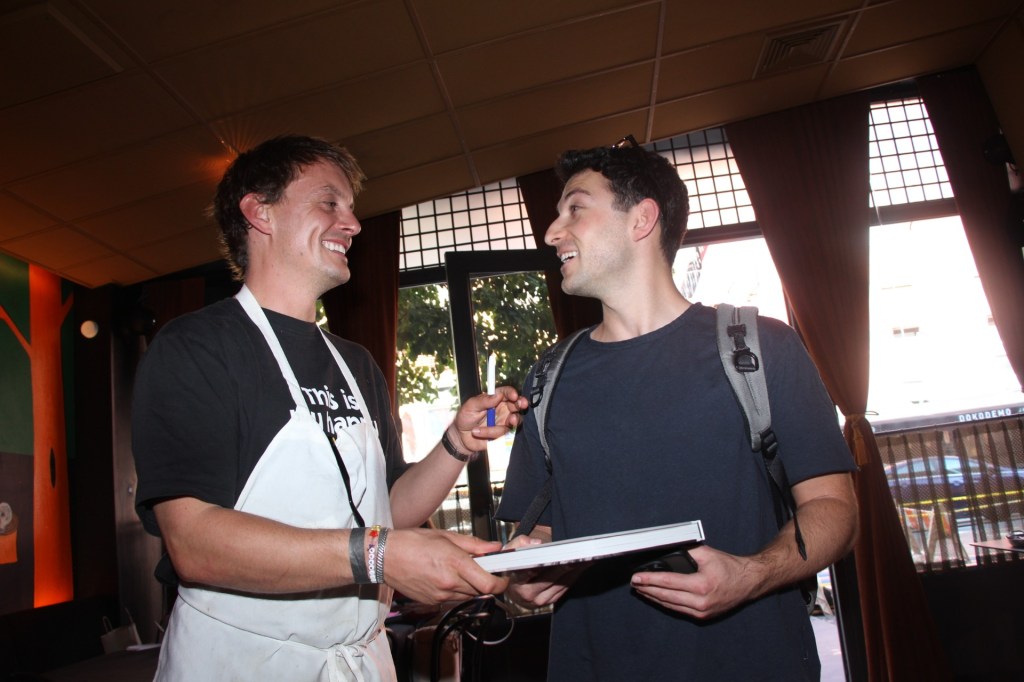
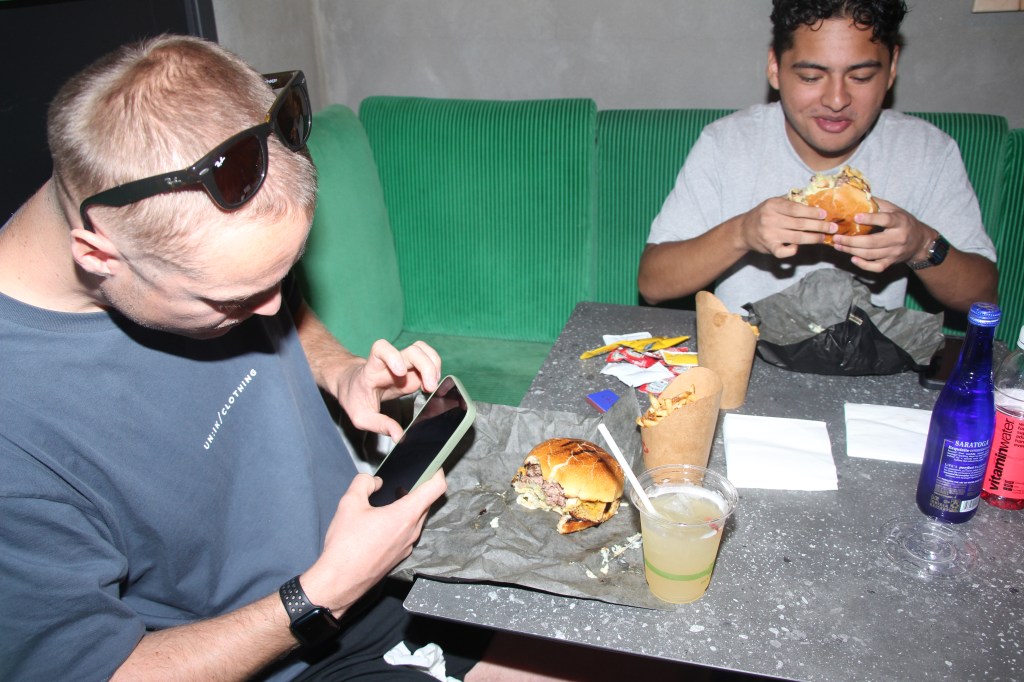
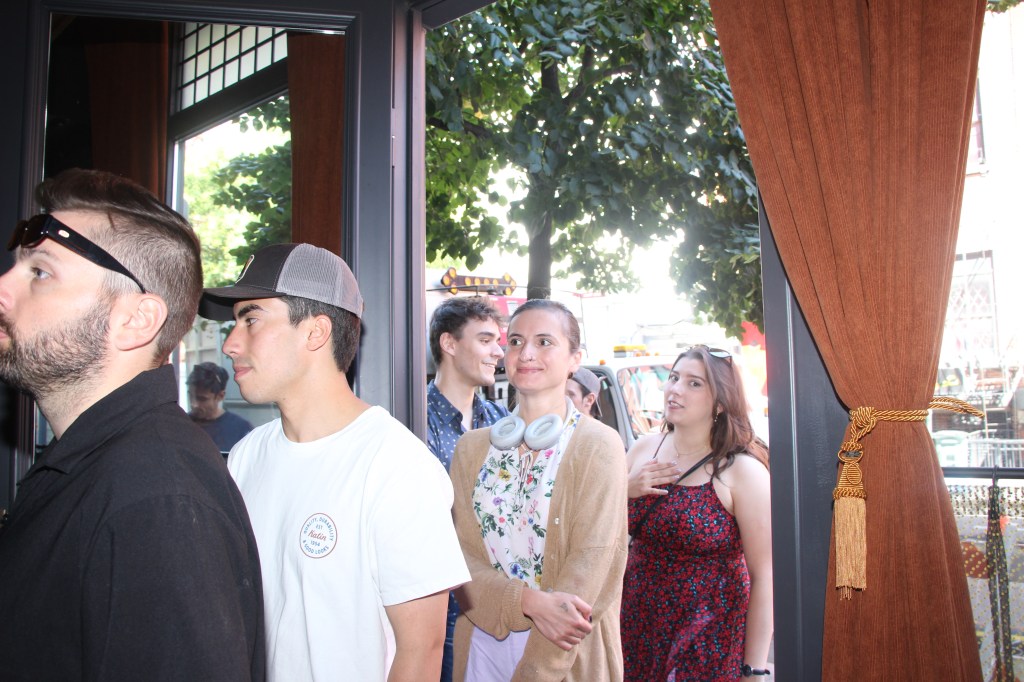
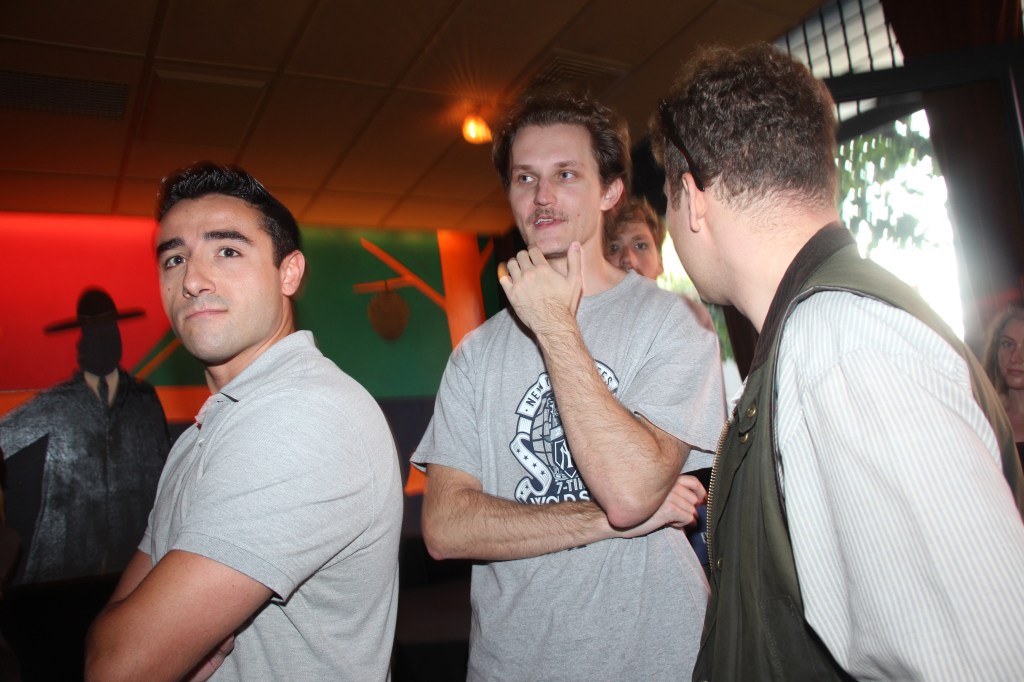
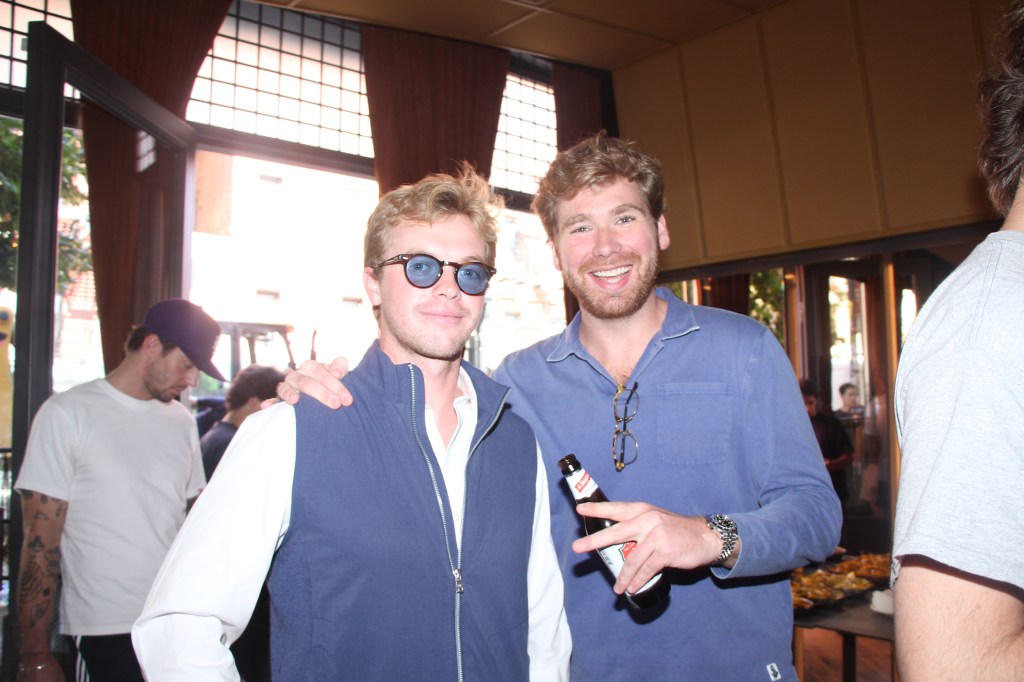
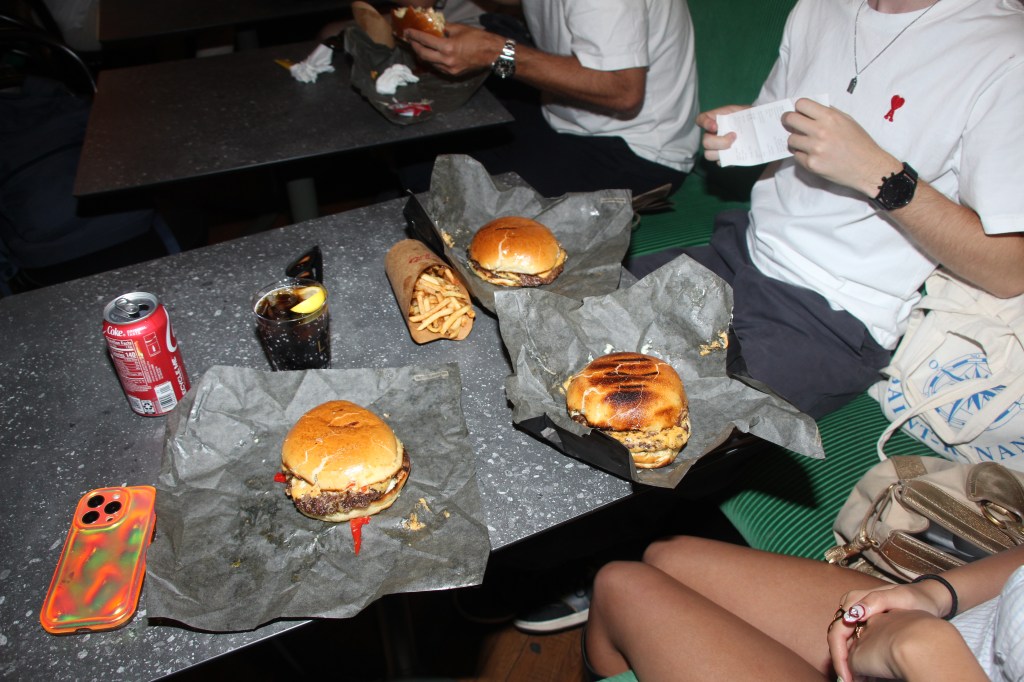
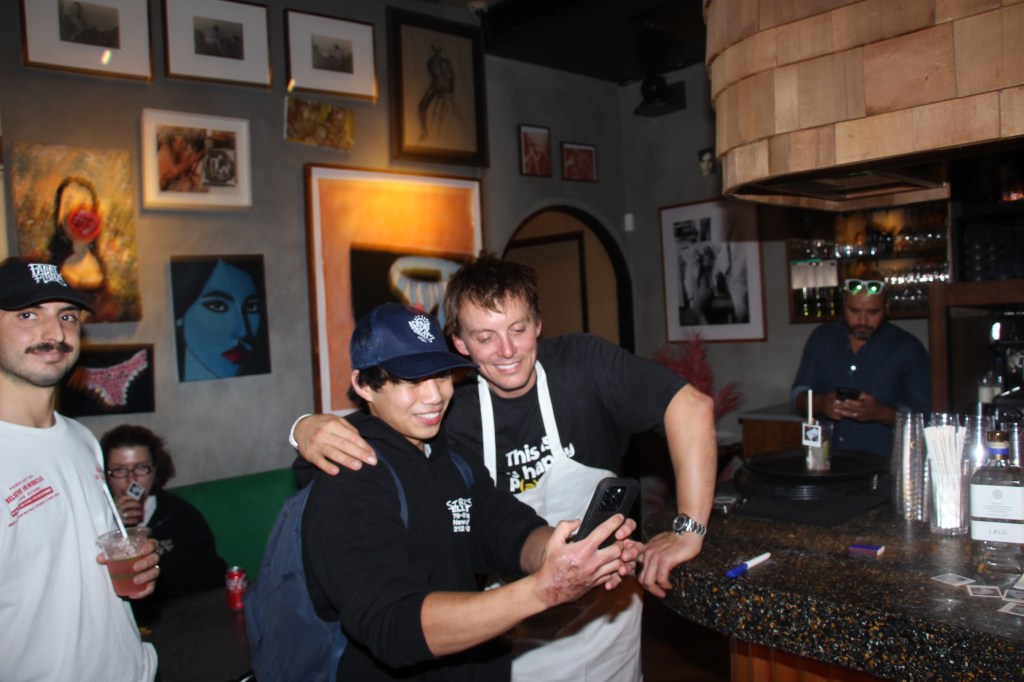
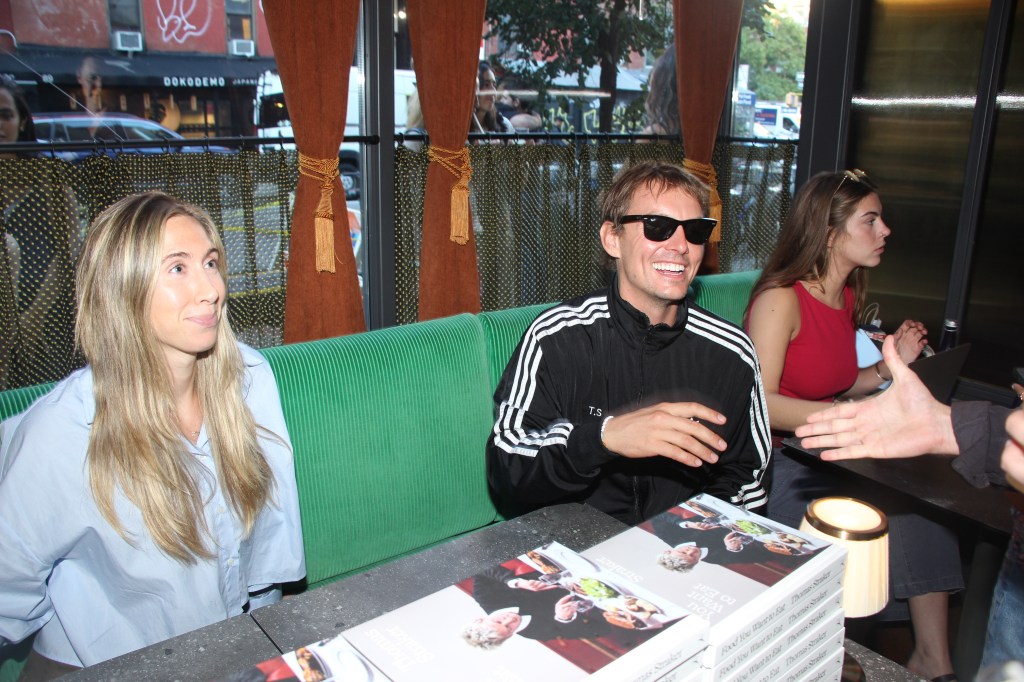
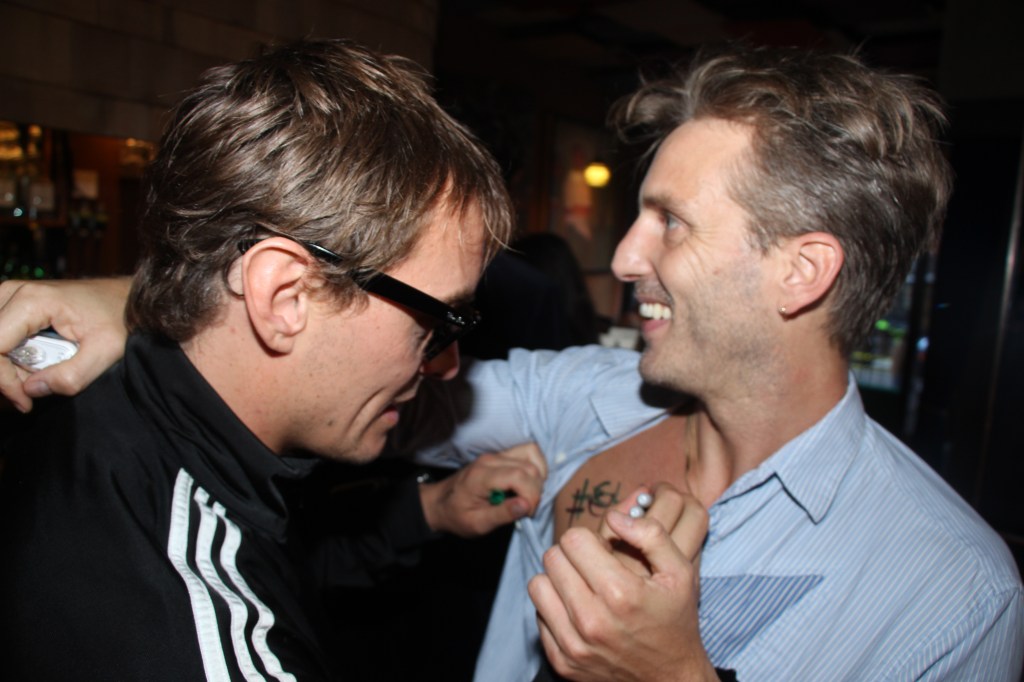
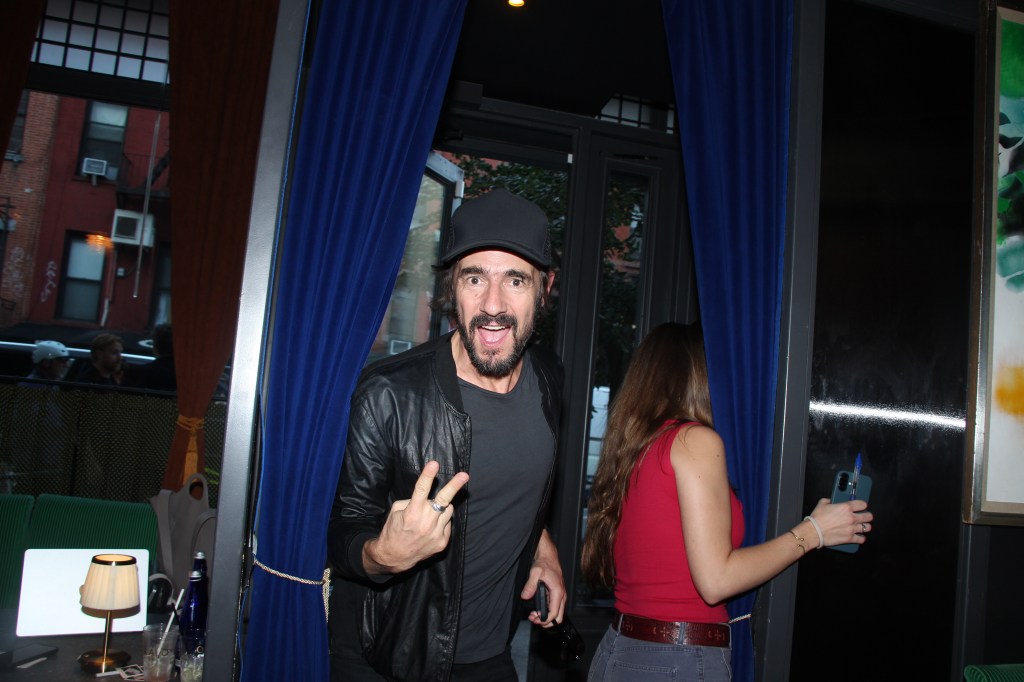
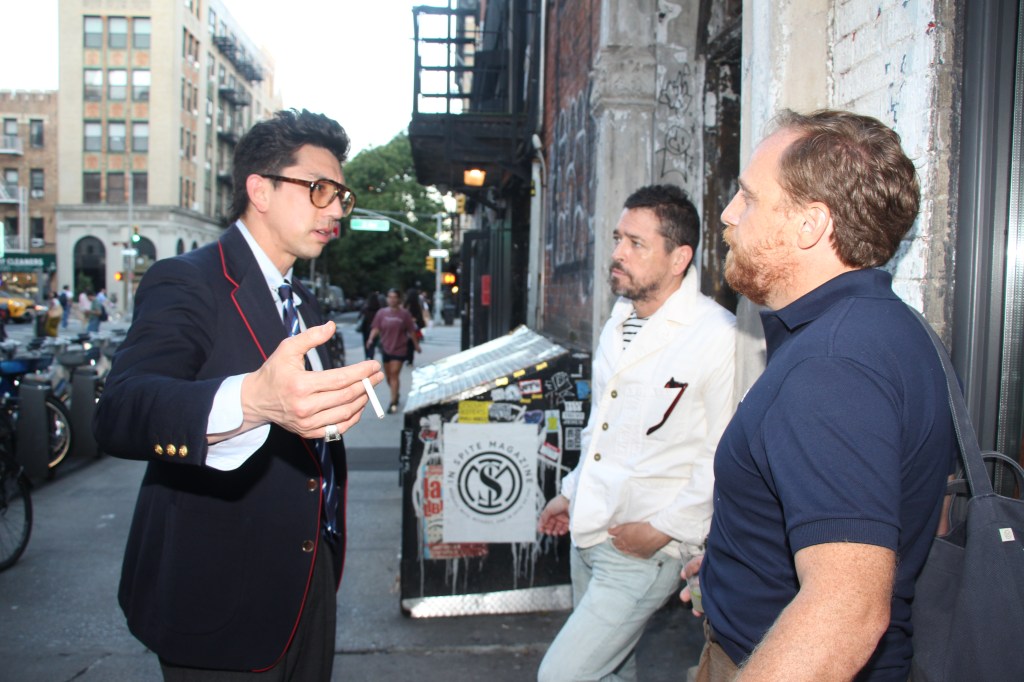
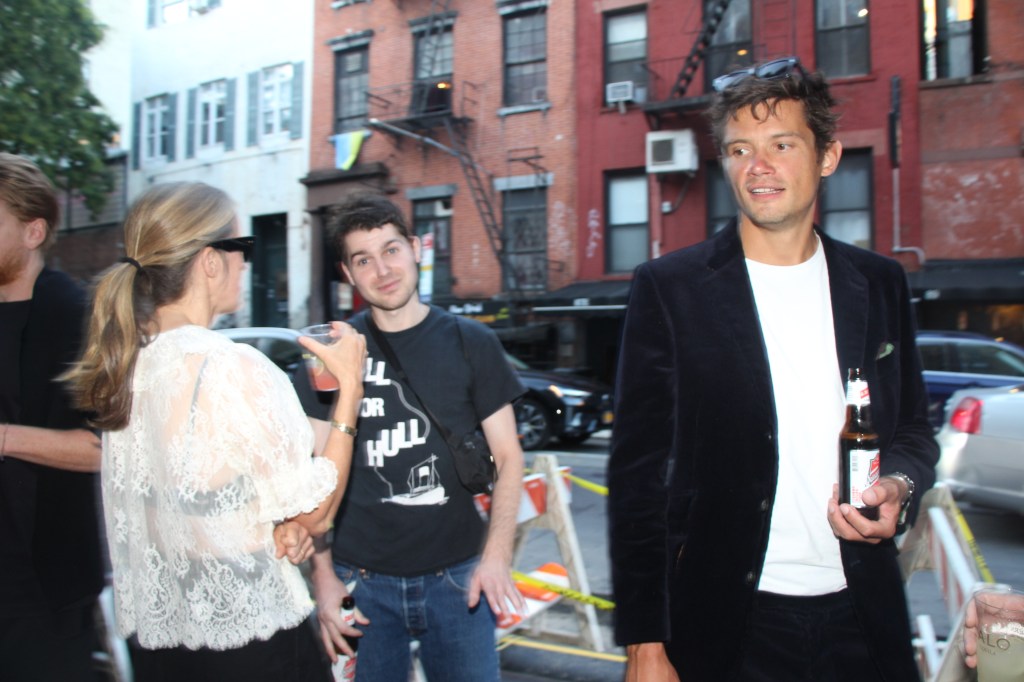
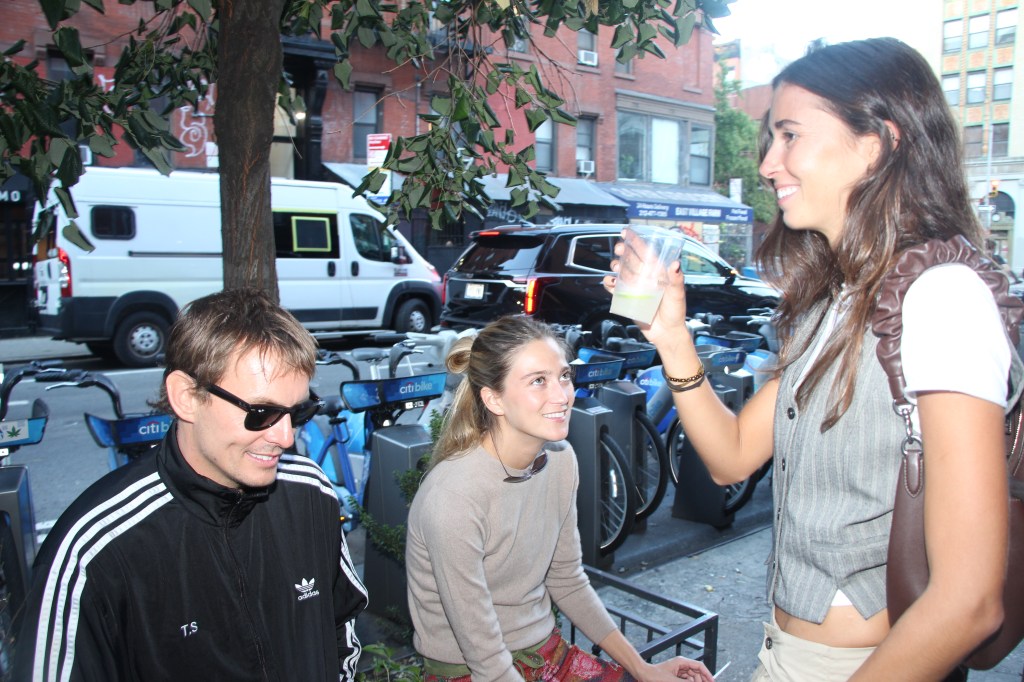
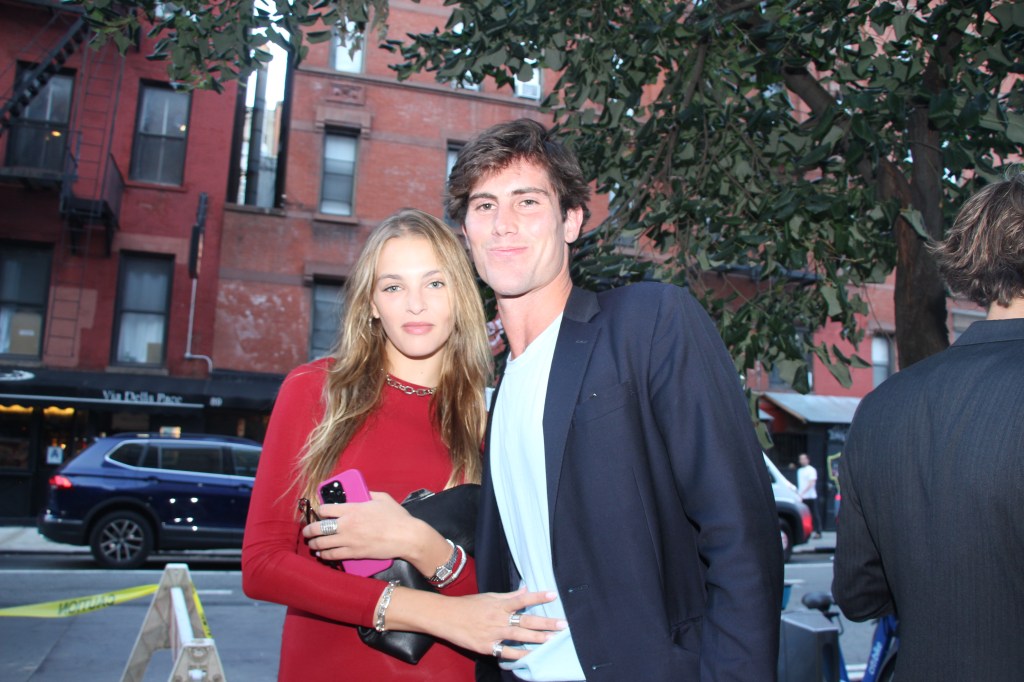
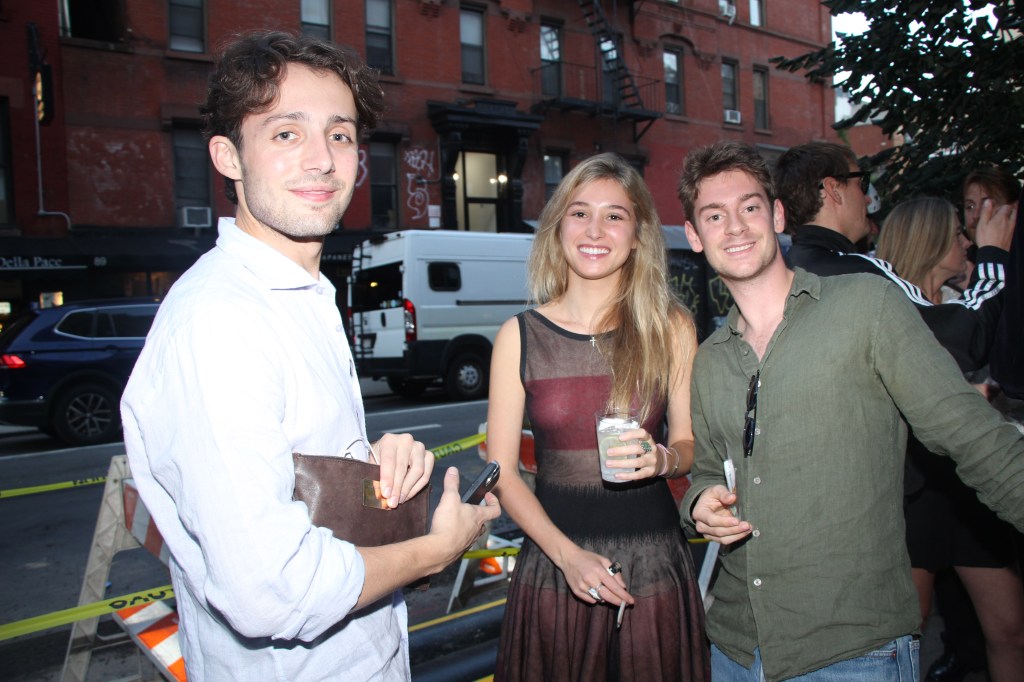
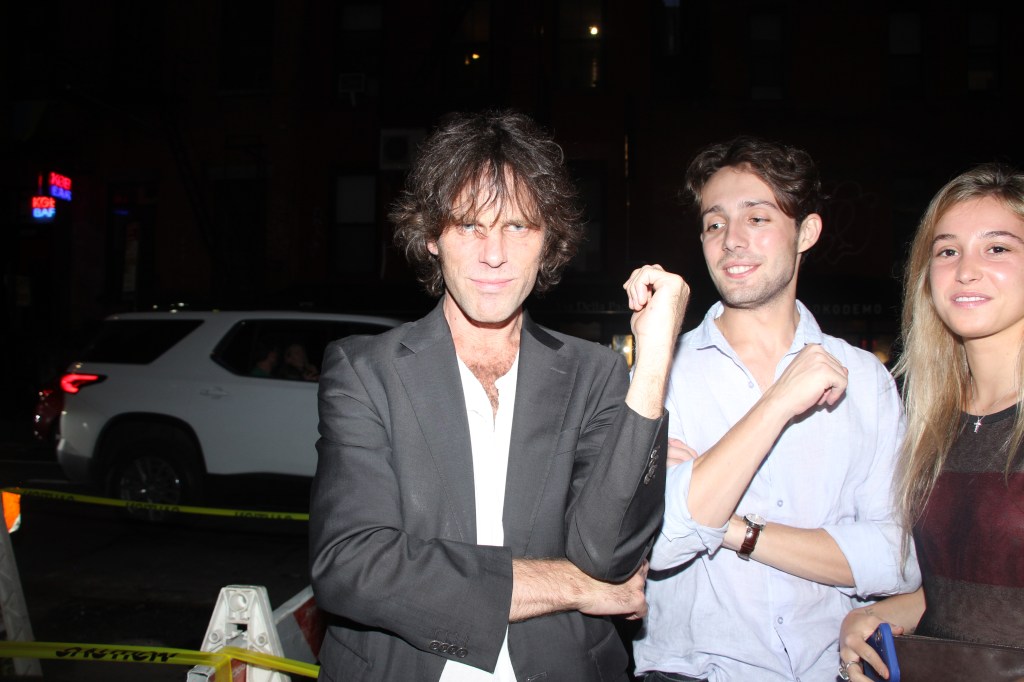
One has to know how to spin plates to be a top chef. And Thomas Straker’s multitasking talents were on full display last week at a pop-up in New York hosted by The Spectator to launch his new cookbook where he not only served smash burgers and fries himself but also signed copies of his book.
Straker, for the uninitiated, is a British chef, restaurateur and entrepreneur whose star rose during lockdown when he began posting viral home-cooking videos to TikTok. Then came the butter-making videos, racking up billions of views, followed by his business All Things Butter. Early next year, Straker opens his first New York restaurant in the location of Keith McNally’s old Lucky Strike.
His debut, bestselling cookbook Food You Want To Eat has been hungrily awaited by his 5 million social media followers. One of them, Angel, a trucker from New Jersey said:
“Gordon Ramsay used to be my favorite. But now it’s Tom. The way how he cooks, he’s not in a rush. And my guy got swag, super swag. I try to reenact everything he does. To be honest it doesn’t come out the same but I try my best.”
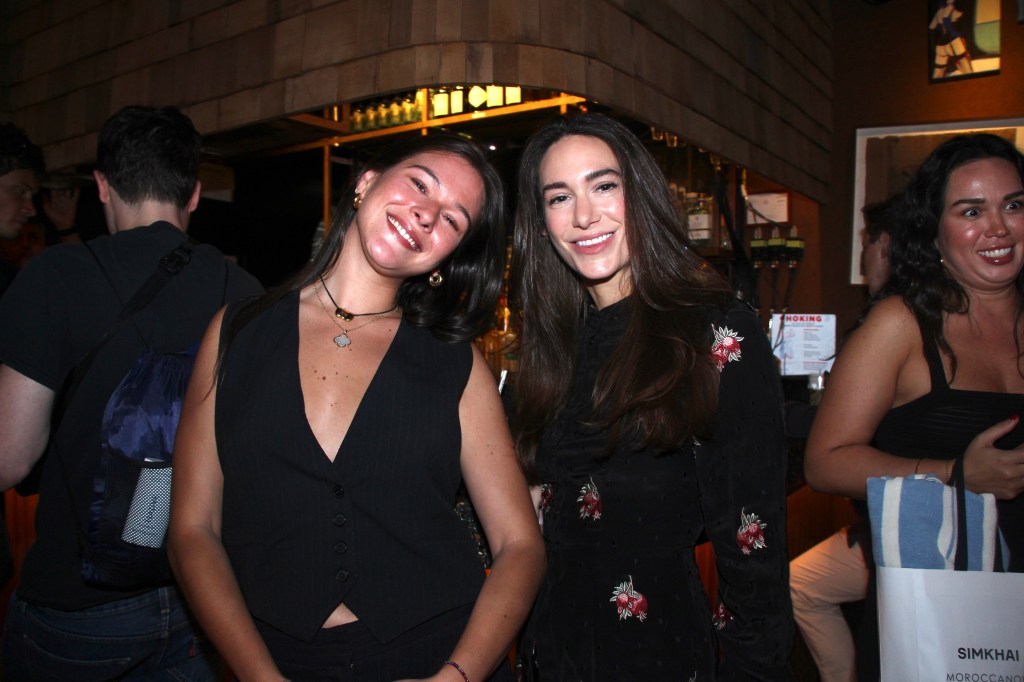
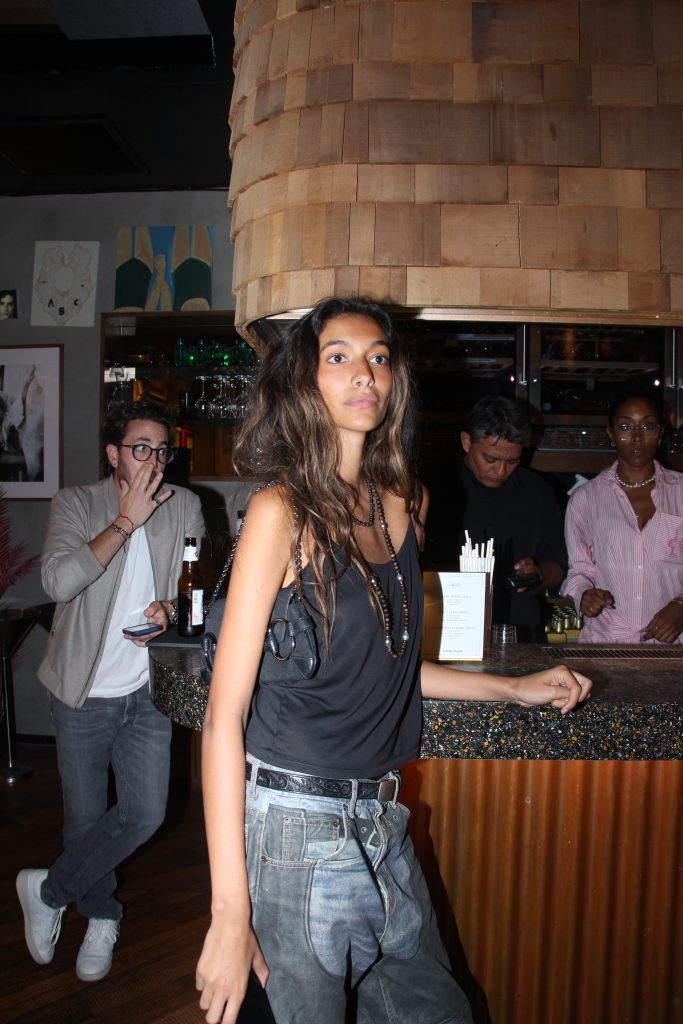
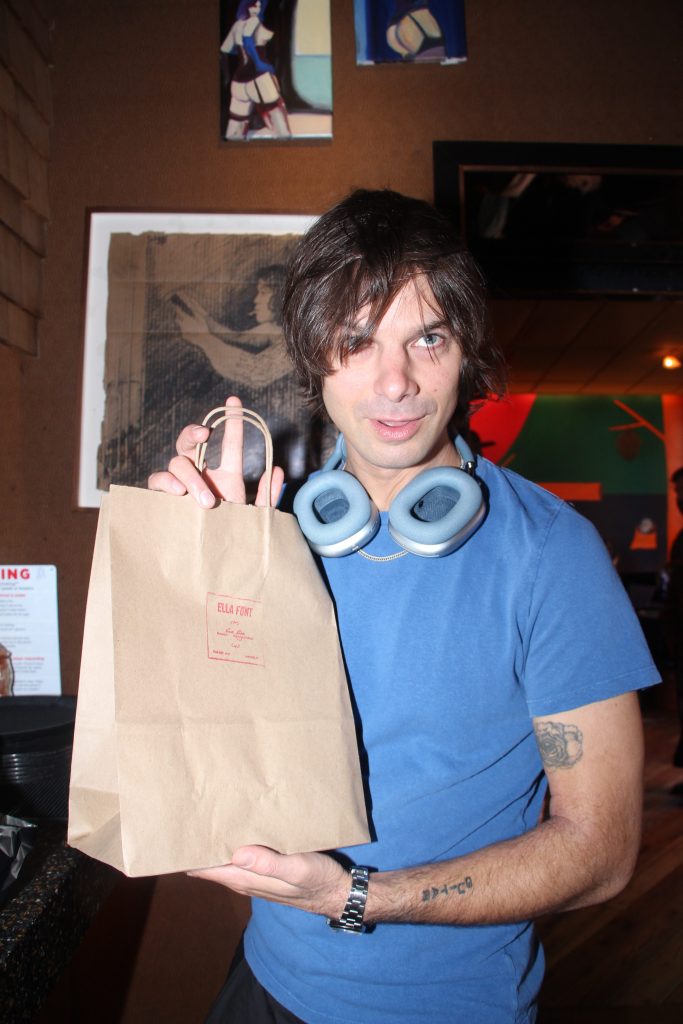
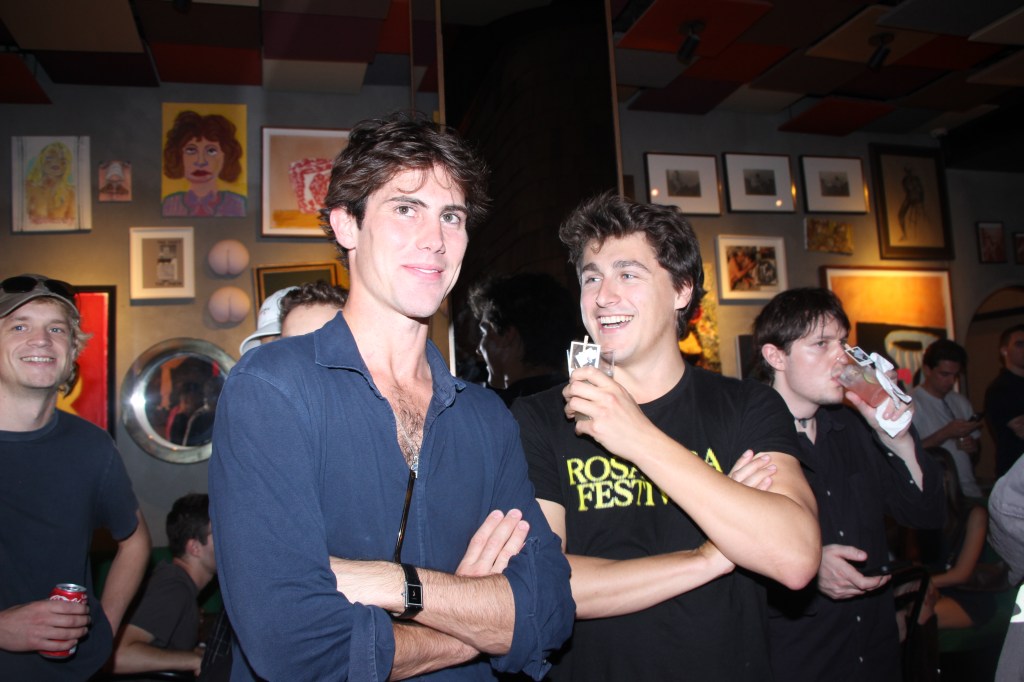
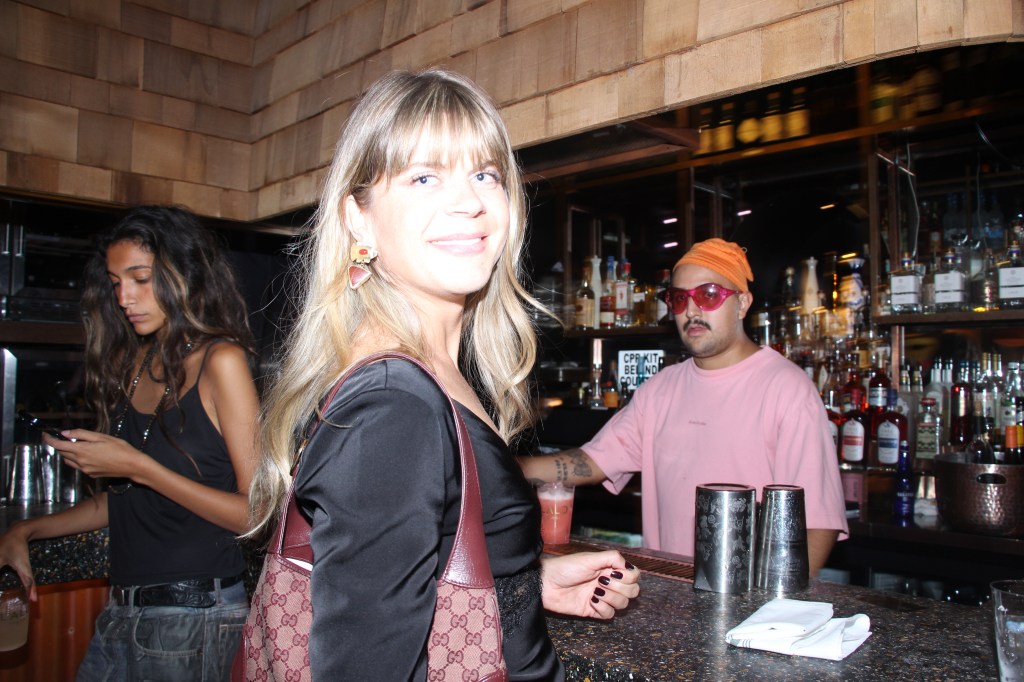
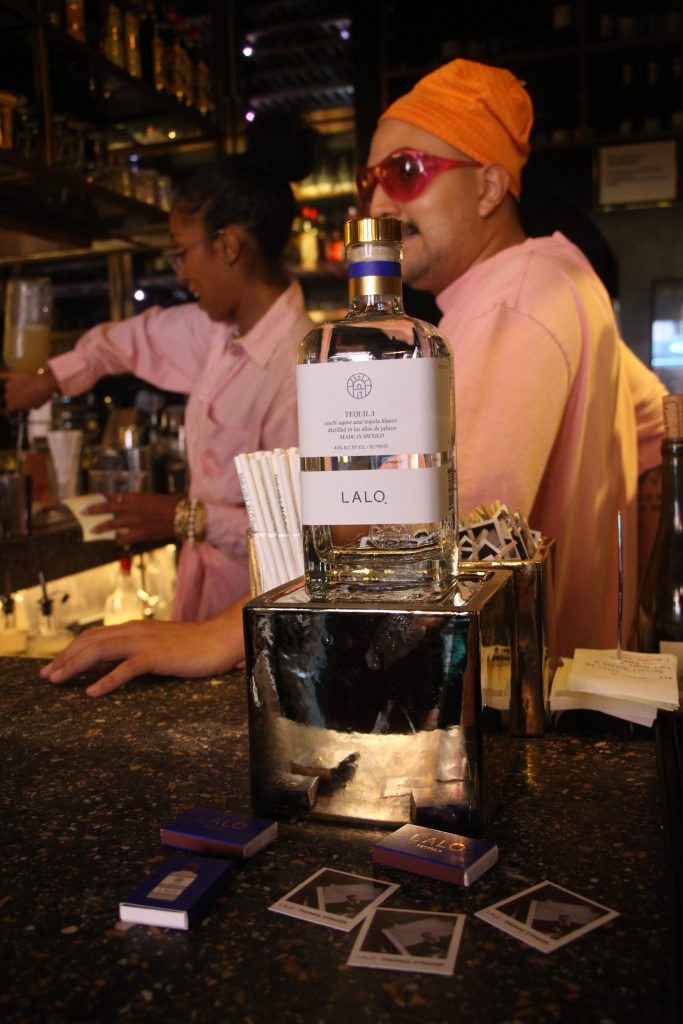
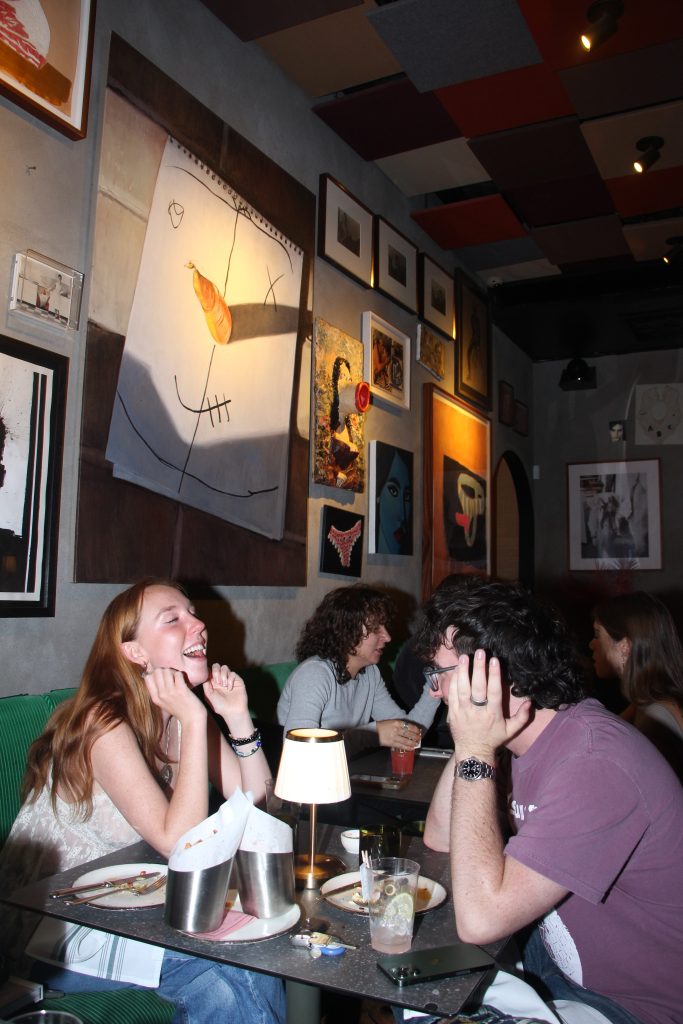
Straker mingled with guests at Lounes Mazouz’s Ella Funt in the East Village, where watermelon margaritas flowed thanks to tequila provided by event partner LALO Tequila, and he signed books for guests, each with a personal note.
Guests at the party included writer Dana Brown, designer Fred Castleberry, artist Christopher Brooks, interior designer Amanda Brooks, musician Jackson Scott, model Nour Rizk, art director Thomas Hayo, PR boss Savannah Engel and The Spectator’s own Kate Andrews, Zack Christenson and Orson Fry.
Thomas Straker (Lily Burgess/The Spectator)Actress Marina Hambro and PR boss Savannah Engel (Lily Burgess/The Spectator)(Lily Burgess/The Spectator)(Lily Burgess/TheSpectator)(Lily Burgess/TheSpectator)(Lily Burgess/TheSpectator)(Lily Burgess/TheSpectator)Model Nour Rizk (Lily Burgess/The Spectator)(Lily Burgess/The Spectator)(Lily Burgess/The Spectator)The Spectator‘sOrson Fry and DJ Luigi Sambuy (Lily Burgess/The Spectator)Restauranteur Eugenia Oswaldt (Lily Burgess/The Spectator)(Lily Burgess/The Spectator)
(Lily Burgess/The Spectator)
(Lily Burgess/The Spectator)
Thomas Straker and Lounes Mazouz (Lily Burgess/TheSpectator)Art director Thomas Hays (Lily Burgess/The Spectator)Designer Fred Castleberry, writer Dana Brown and The Spectator‘sZack Christenson (Lily Burgess/The Spectator)Amanda Brooks, Callum Dearden and Harley Griffiths (Lily Burgess/The Spectator)(Lily Burgess/The Spectator)Art dealer Anna Castellini and The Spectator‘sOrson Fry (Lily Burgess/The Spectator)Photographer Niccolo Rommano (Lily Burgess/The Spectator)Artist Jara Lopez Sastre, middle, and Jasper Greig, right (Lily Burgess/The Spectator)Musician Jackson Scott (Lily Burgess/The Spectator)